
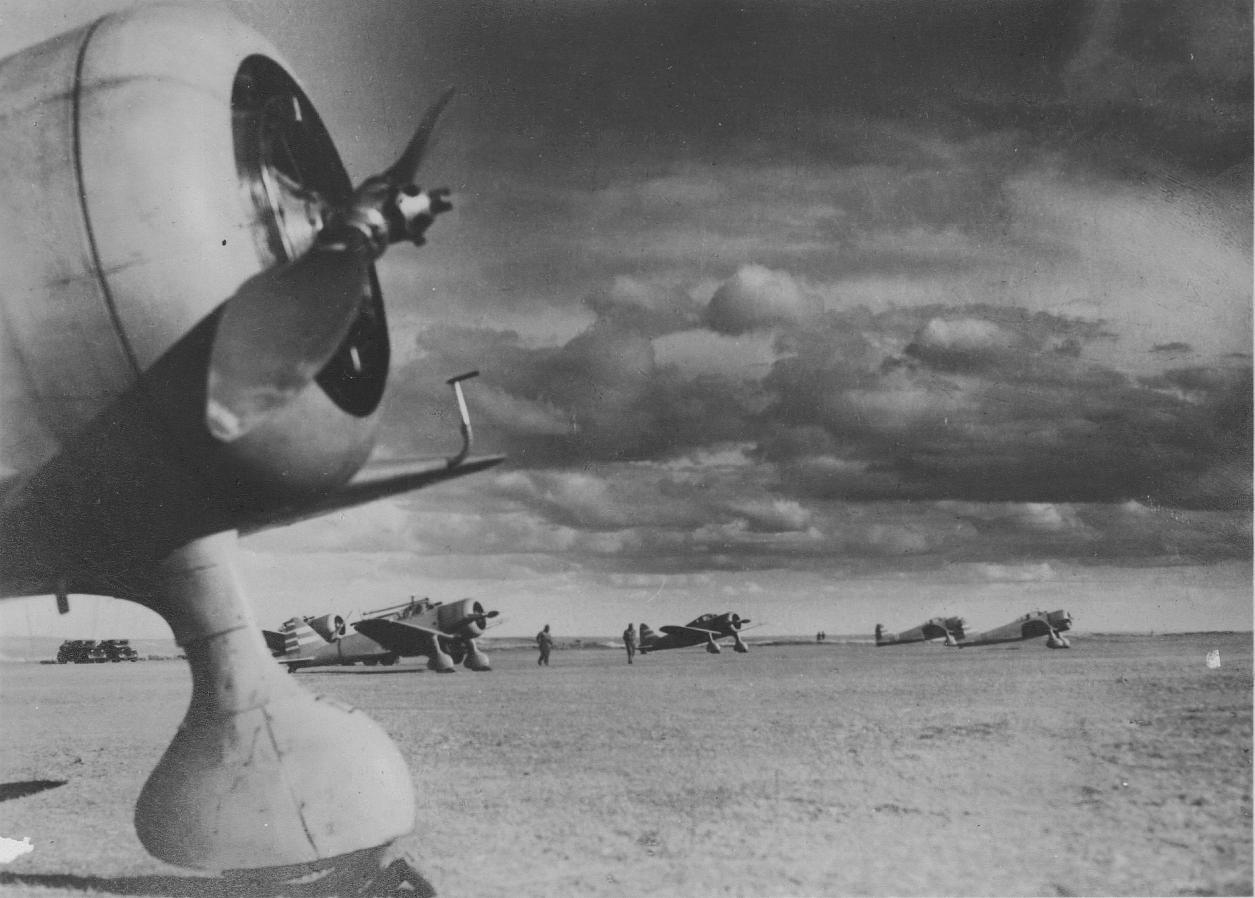
Nakajima Ki-27
“Nate”
The Imperial Japanese Army’s first modern monoplane fighter — a fixed-gear featherweight that out-turned everything at Nomonhan, then was left behind the moment the war it helped start turned modern.
The Ki-27: Japan’s first modern fighter, built to turn
In the mid-1930s the Imperial Japanese Army was still flying open-cockpit biplane fighters, and it knew it was falling behind. In 1935 it invited Nakajima, Mitsubishi and Kawasaki to compete for a new monoplane fighter. Nakajima’s answer, designed by a team under Hideo Itokawa — later famous as the father of Japanese rocketry — grew out of a private-venture prototype and first flew on 15 October 1936. In the 1937 fly-off it beat the Kawasaki Ki-28 and Mitsubishi Ki-33, and was adopted as the Army Type 97 Fighter.
The Ki-27 was a study in a single idea: turn. Itokawa’s team gave it a very large wing for its weight, an enclosed cockpit, all-metal stressed-skin construction — and, deliberately, a fixed, spatted undercarriage, judging that retracting gear added weight and complexity the design didn’t need. The result was a nimble, forgiving fighter that could out-manoeuvre almost anything in the sky, flown by pilots who prized the tight dogfight above all else.
That philosophy met its great test in 1939 at Nomonhan (the Battle of Khalkhin Gol), an undeclared border war with the Soviet Union. Against Polikarpov I-15 biplanes and I-16 monoplanes the Ki-27’s agility told — but the campaign also exposed the trade the Army had made. The same lightness that made it turn so well meant no armour, no self-sealing tanks and only two rifle-calibre machine guns. When faster, heavier, better-protected fighters arrived in the Pacific from 1942, the Nate had nothing left to answer with.
01The Nakajima Ki-27’s design contest: how Itokawa’s turn-fighter beat Mitsubishi and Kawasaki
The Army’s 1935 requirement pitted three prototypes against each other: Nakajima’s Ki-27, the Mitsubishi Ki-33 en de Kawasaki Ki-28. The Kawasaki entry was faster in a straight line, but the Army’s fighter pilots valued manoeuvrability above speed, and the Ki-27 turned tighter than either rival. Nakajima had also refined the wing across several prototypes, settling on a broad, low-loading planform that gave the fighter its famous agility. It was ordered into production and formally adopted as the Army Type 97 Fighter on 28 December 1937 — the aircraft that finally brought the Japanese Army’s fighter arm into the monoplane age.
What makes the Ki-27 special
A wing built for the tightest turn
The Ki-27’s defining feature is its large, low-loaded wing. Itokawa’s team traded outright speed for a very low wing loading, giving the fighter an extraordinarily tight turning circle. In the hands of a skilled pilot it could out-manoeuvre virtually any contemporary, and its agility set the template for the Army fighters — the Ki-43 and beyond — that followed it.
Fixed gear — on purpose
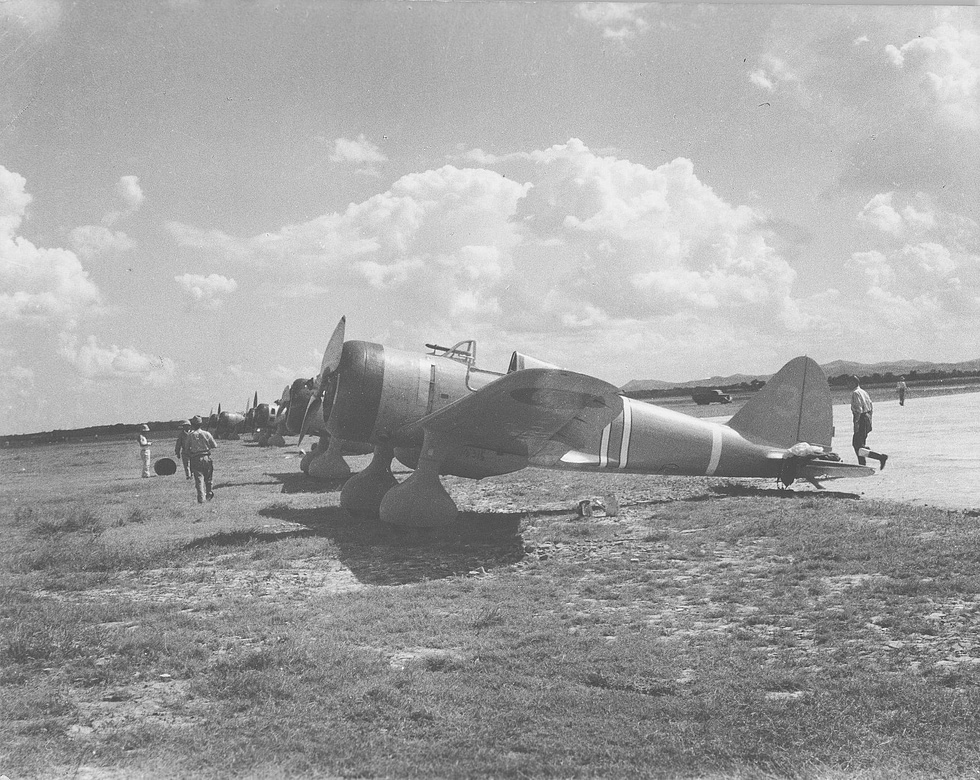
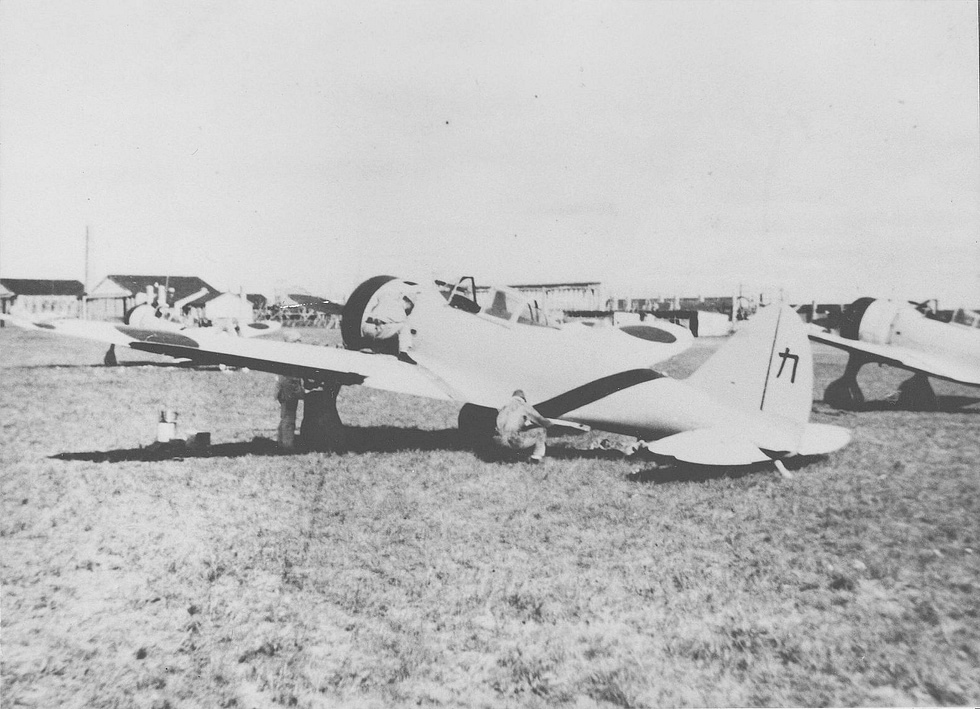
Where Western designers were racing to retract their undercarriage, Nakajima kept the Ki-27’s wheels down and faired in streamlined “spats.” The team judged that retracting gear cost weight and complexity out of proportion to the modest drag it saved on a light, relatively slow fighter. It looked dated even in 1939, but it kept the aircraft simple, light and easy to maintain in the field.
Armed for 1937, not 1942
Power came from a Nakajima Ha-1 nine-cylinder radial of roughly 650–780 hp depending on variant, and the armament was just two 7.7 mm machine guns. There was no armour for the pilot and no self-sealing fuel tanks. It was a lethal dogfighter against 1930s opposition and dangerously under-gunned and vulnerable against the fighters of 1942.
02The Nakajima Ki-27’s fixed undercarriage: why Japan’s best 1930s fighter kept its wheels down
By the late 1930s retractable landing gear was becoming standard on front-line fighters, so the Ki-27’s fixed, spatted wheels marked it as a transitional design. The choice was deliberate. On a lightweight fighter that cruised well below the speeds where undercarriage drag dominates, Nakajima calculated that the weight, cost and mechanical risk of a retracting system outweighed the small speed gain. The spats streamlined the wheels enough to keep performance respectable, and the fixed gear was rugged and simple to service from rough forward strips in Manchuria and China. Nakajima’s very next fighter, the Ki-43 Hayabusa, finally adopted retractable gear.
03The Nakajima Ki-27’s fatal flaw: agility bought with no armour
The Ki-27 was designed around a doctrine that prized the turning dogfight, and every kilogram mattered to that goal. So it carried no armour plate for the pilot and no self-sealing fuel tanks, and its firepower was limited to two rifle-calibre 7.7 mm guns. Against Soviet and Chinese aircraft of the late 1930s this was tolerable. Against the heavier guns and rugged construction of Allied fighters from 1942 — and against opponents who refused to turn with it and instead used speed and diving attacks — the Nate’s fragility became decisive. A single burst was often enough to bring one down. It is the classic early-war Japanese bargain: superb agility, paid for in survivability.
Nakajima Ki-27 full specifications
Airframe & Performance
- Bemanning
- 1
- Lengte
- 7.53 m
- Spanwijdte
- 11.31 m
- Hoogte
- 3.25 m
- Leeggewicht
- ~1,110 kg
- Loaded weight
- ~1,790 kg
- Max speed
- ~470 km/h at ~3,500 m (Ki-27b)
- Serviceplafond
- ~12,000–12,250 m
- Bereik
- ~625–635 km (up to ~1,700 km with drop tanks)
- Bewapening
- 2 × 7.7 mm Type 89 MGs · light bombs optional
Propulsion & Programme
- Motor
- 1 × Nakajima Ha-1 nine-cylinder radial
- Power
- ~650–780 hp (variant-dependent)
- Undercarriage
- Fixed, spatted
- Designer
- Hideo Itokawa (Nakajima)
- First flight
- 15 October 1936 (prototype)
- Adopted
- Army Type 97 Fighter, Dec 1937
- Built
- ~3,368 commonly cited (Nakajima & Mansyu)
- Unit cost
- No reliable public figure
- Cost per flight hour
- No reliable public figure exists
04The Nakajima Ki-27’s cost: why no reliable price exists
The Ki-27 was a wartime Imperial Japanese Army product, procured inside a state war economy and never sold on an open market, so no dependable unit price or cost-per-flight-hour figure survives in the public record. Nor do standard English-language references — History of War, WW2DB, Military Factory — carry one. Any precise dollar or yen figure attached to a Nate should be treated as an unsourced estimate. Even the total built is uncertain: the most-cited number is about 3,368, but the split between Nakajima and the Manchurian firm Mansyu, and the overlap with the closely related Ki-79 trainer, means totals up to roughly 3,400 appear in the literature.
From monoplane breakthrough to war’s-end trainer
First flight
Nakajima’s prototype flies on 15 October, growing out of a private-venture design led by Hideo Itokawa.
Adopted as the Type 97 Fighter
The Ki-27 wins the Army fly-off against the Kawasaki Ki-28 and Mitsubishi Ki-33 and enters production.
Combat debut over China
Ki-27 units enter the Second Sino-Japanese War, outclassing Chinese Curtiss Hawk III biplanes.
Nomonhan / Khalkhin Gol
The Nate becomes the Army’s main fighter in the undeclared border war with the USSR, duelling Polikarpov I-15s and I-16s.
The most numerous Army fighter
At the outbreak of the Pacific War the Ki-27 is still Japan’s most common fighter, serving over Malaya, Burma and the Philippines.
Passed over by the Oscar
The retractable-gear Nakajima Ki-43 Hayabusa replaces the Nate in front-line units; Thailand receives about a dozen Ki-27s.
Trainer and kamikaze
Withdrawn to advanced training, surviving Ki-27s are pressed back into service as kamikaze aircraft in the war’s final year.
The sole survivor raised
A Ki-27 ditched in Hakata Bay in 1945 is salvaged and restored — today the only substantially complete original, at Tachiarai, Japan.
From the record: twelve Ki-27 stories
Itokawa’s turn-fighter
The man who designed the Nate later became the father of Japanese rocketry.
Read the full story
Wheels down by choice
The Nate kept its fixed, spatted undercarriage on purpose.
Read the full story
Its defining battle
At Khalkhin Gol the Ki-27 was the Imperial Japanese Army’s main fighter against the USSR.
Read the full story
Turn versus dive
The Nate out-turned the I-16 — but the I-16 could run and dive away.
Read the full story
Hiromichi Shinohara
The Army’s top Nomonhan ace ran up a large — and disputed — score before he was killed.
Read the full story
The overclaim problem
Japanese Nomonhan kill claims ran far ahead of Soviet losses.
Read the full story
Beating the Hawks
Over China the Nate dominated the Chinese biplane fighters it met.
Read the full story
Still the most numerous
On the day the Pacific War began, the Ki-27 was Japan’s commonest fighter.
Read the full story
Passed over by the Oscar
The Ki-43 Hayabusa — the Nate with retractable gear — took its place.
Read the full story
The Royal Thai Nates
Thailand flew about a dozen Ki-27s — and took them into combat.
Read the full story
Trainer, then kamikaze
Obsolete by 1944, surviving Nates were flown into the enemy.
Read the full story
The last complete Nate
Only one substantially original Ki-27 survives — raised from a bay in 1945.
Read the full story
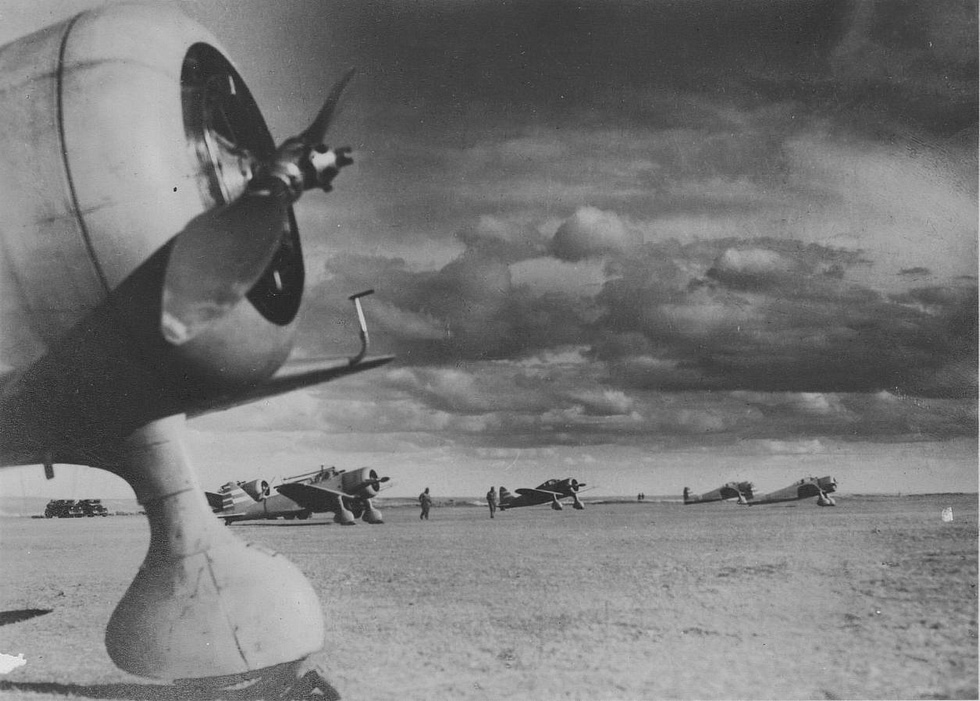
The Ki-27 in pictures
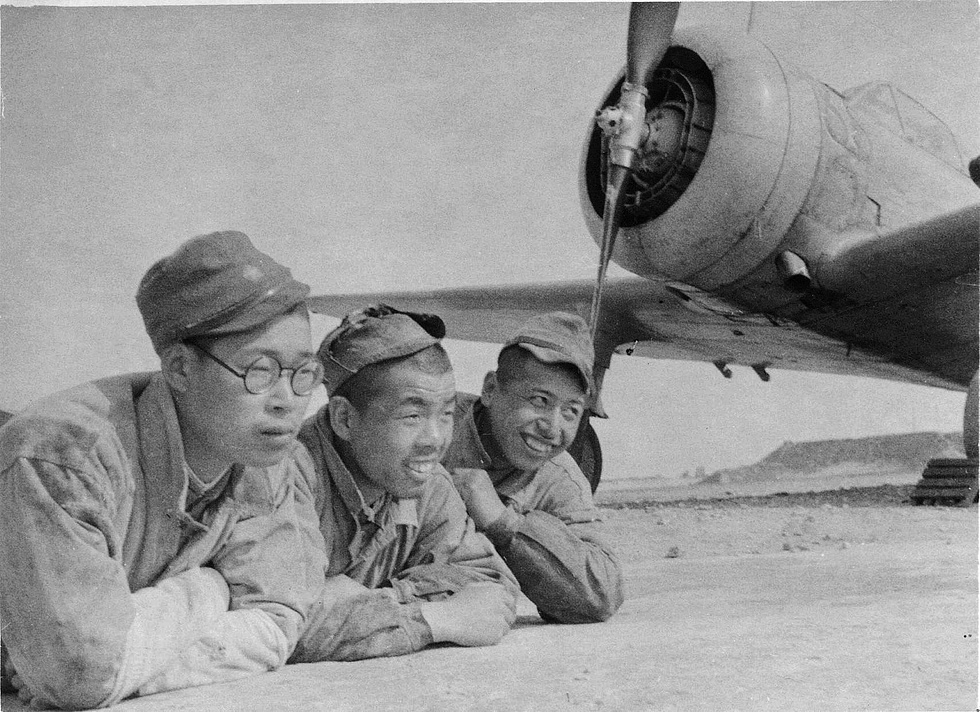
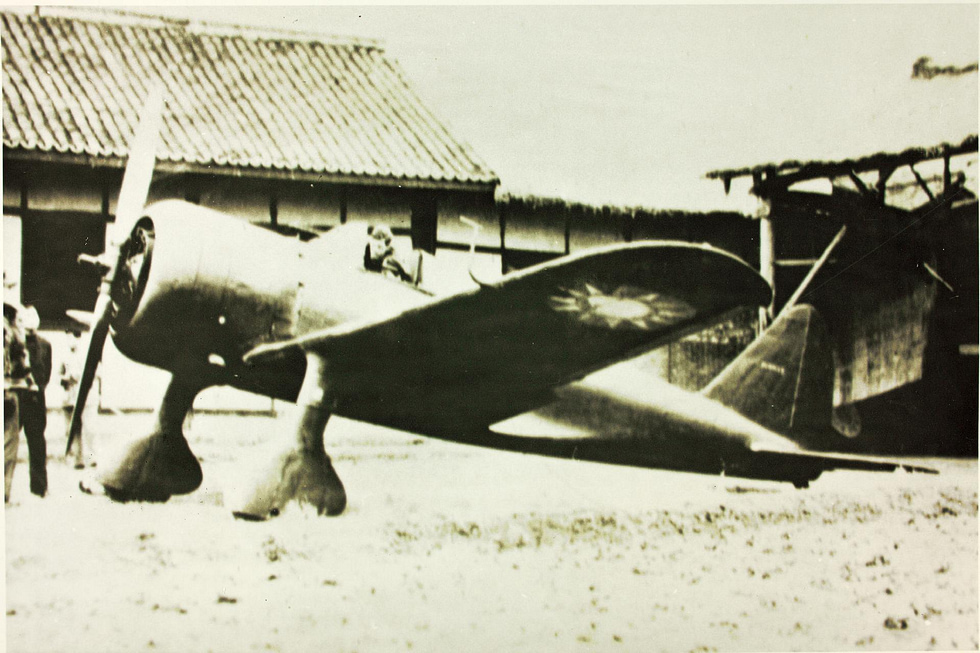
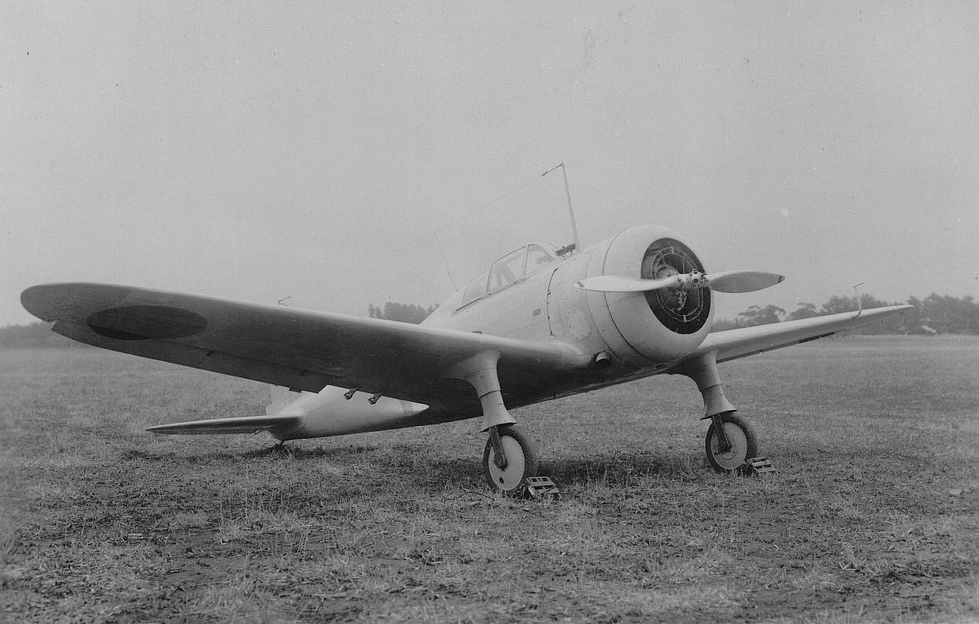
The Ki-27 in motion
Rex’s Hangar: Nakajima Ki-27 — The Nimble “Nate.” A dedicated aircraft-history breakdown of the Ki-27’s design, its Nomonhan combat and its slide into obsolescence — the most thorough single video on the type.
Where the Ki-27 flew
The Ki-27’s war, in numbers
The Ki-27 was a genuinely dangerous dogfighter in 1939 and the backbone of the Japanese Army’s fighter arm into 1942. Its combat record is dominated by Nomonhan and the early China and Pacific campaigns — though the eye-catching kill tallies claimed there were, like all wartime scores, heavily inflated.
Compare the combat record of every military aircraft. Kill figures for Nomonhan are contested and widely regarded as overclaimed.
Everything people ask about the Nakajima Ki-27
Can I fly in a Nakajima Ki-27?
What was the Ki-27’s Allied reporting name?
How manoeuvrable was the Ki-27?
Why did the Ki-27 have fixed landing gear?
What replaced the Ki-27?
How many Ki-27s were built?
Are any Ki-27s left today?
You can’t fly the Nakajima Ki-27.
These, you can.
Some legends only live in museums — others are fuelled and waiting. MiGFlug has put civilians in real military jet cockpits since 2004.
 Fly the L-39 AlbatrosThe world’s most-flown jet trainer — aerobatics included
 Fly the F-104 Starfighter“The missile with a man in it”
 Fly the MiG-21The Cold War’s most-produced jet
 Vlieg met de T-33 Shooting StarAmerica’s first jet trainer
 Fly the DH VampireA piece of early jet history
 Fly the S.211Agile Italian jet trainer
 Fly the MB-326The classic Aermacchi jet
 Fly the MiG-15The Soviet legend of the Korean War
Continue the tour
Every fact, checked
- History of War — Nakajima Ki-27Design origins, the 1937 fly-off and the aircraft’s combat career and limits.
- World War II Database (WW2DB)Development history, variants and production figures.
- Military FactoryDimensions, weights and performance data for the Ki-27b.
- Pacific WrecksSurviving airframes, wrecks and the Ki-27’s service across the Pacific theatre.
- Aviation of JapanReference on the Royal Thai Air Force’s Ki-27 operations and markings.
- Smithsonian National Air and Space MuseumBackground reference on Imperial Japanese Army fighter development.
- Tachiarai Peace Memorial MuseumHome of the only substantially complete surviving Ki-27.
- Wikimedia Commons — Ki-27 imagesSource of the public-domain wartime photographs used on this page.