
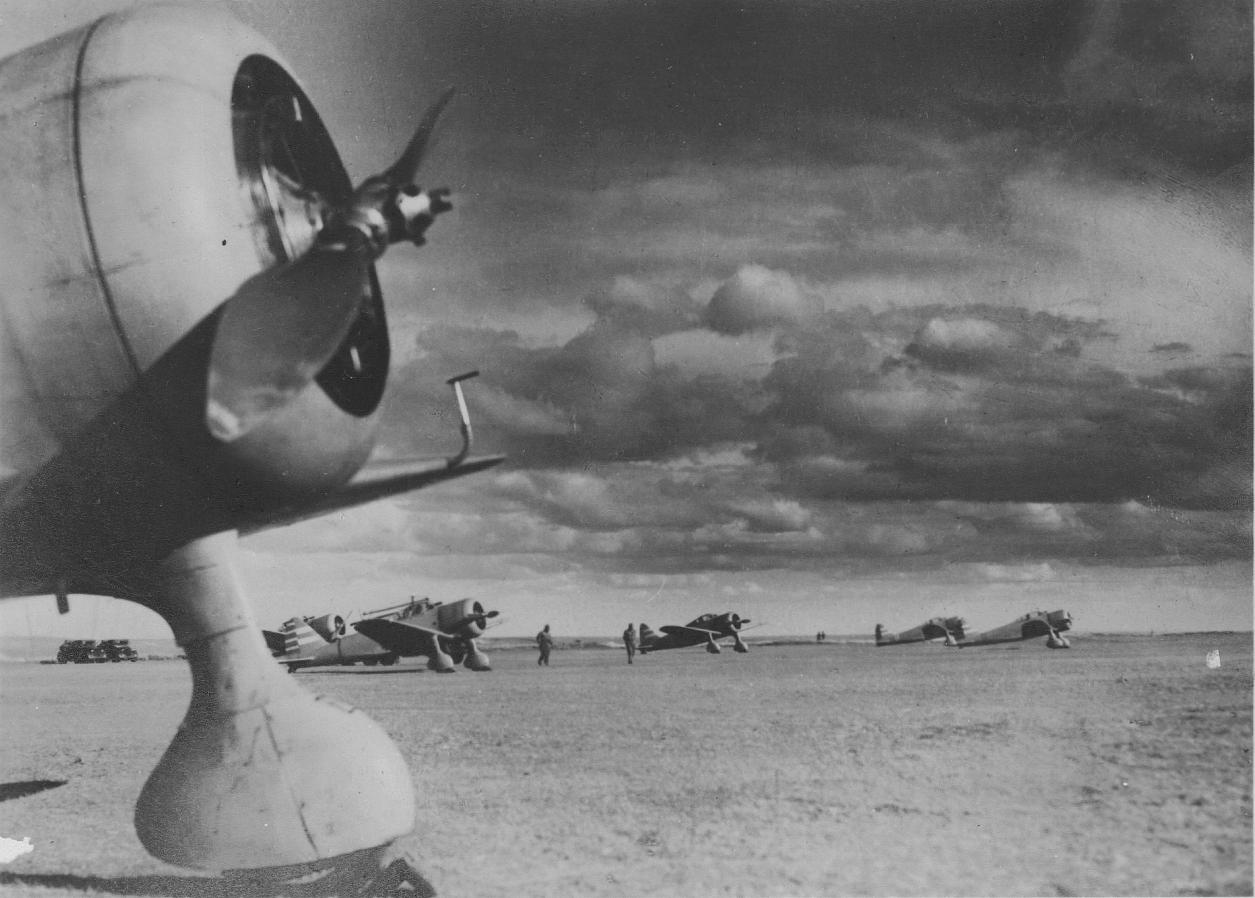
Nakajima Ki-27
“Nate”
The Imperial Japanese Army’s first modern monoplane fighter — a fixed-gear featherweight that out-turned everything at Nomonhan, then was left behind the moment the war it helped start turned modern.
The Ki-27: Japan’s first modern fighter, built to turn
In the mid-1930s the Imperial Japanese Army was still flying open-cockpit biplane fighters, and it knew it was falling behind. In 1935 it invited Nakajima, Mitsubishi and Kawasaki to compete for a new monoplane fighter. Nakajima’s answer, designed by a team under Hideo Itokawa — later famous as the father of Japanese rocketry — grew out of a private-venture prototype and first flew on 15 October 1936. In the 1937 fly-off it beat the Kawasaki Ki-28 and Mitsubishi Ki-33, and was adopted as the Army Type 97 Fighter.
The Ki-27 was a study in a single idea: turn. Itokawa’s team gave it a very large wing for its weight, an enclosed cockpit, all-metal stressed-skin construction — and, deliberately, a fixed, spatted undercarriage, judging that retracting gear added weight and complexity the design didn’t need. The result was a nimble, forgiving fighter that could out-manoeuvre almost anything in the sky, flown by pilots who prized the tight dogfight above all else.
That philosophy met its great test in 1939 at Nomonhan (the Battle of Khalkhin Gol), an undeclared border war with the Soviet Union. Against Polikarpov I-15 biplanes and I-16 monoplanes the Ki-27’s agility told — but the campaign also exposed the trade the Army had made. The same lightness that made it turn so well meant no armour, no self-sealing tanks and only two rifle-calibre machine guns. When faster, heavier, better-protected fighters arrived in the Pacific from 1942, the Nate had nothing left to answer with.
01The Nakajima Ki-27’s design contest: how Itokawa’s turn-fighter beat Mitsubishi and Kawasaki
The Army’s 1935 requirement pitted three prototypes against each other: Nakajima’s Ki-27, the Mitsubishi Ki-33 and the Kawasaki Ki-28. The Kawasaki entry was faster in a straight line, but the Army’s fighter pilots valued manoeuvrability above speed, and the Ki-27 turned tighter than either rival. Nakajima had also refined the wing across several prototypes, settling on a broad, low-loading planform that gave the fighter its famous agility. It was ordered into production and formally adopted as the Army Type 97 Fighter on 28 December 1937 — the aircraft that finally brought the Japanese Army’s fighter arm into the monoplane age.
What makes the Ki-27 special
A wing built for the tightest turn
The Ki-27’s defining feature is its large, low-loaded wing. Itokawa’s team traded outright speed for a very low wing loading, giving the fighter an extraordinarily tight turning circle. In the hands of a skilled pilot it could out-manoeuvre virtually any contemporary, and its agility set the template for the Army fighters — the Ki-43 and beyond — that followed it.
Fixed gear — on purpose
Where Western designers were racing to retract their undercarriage, Nakajima kept the Ki-27’s wheels down and faired in streamlined “spats.” The team judged that retracting gear cost weight and complexity out of proportion to the modest drag it saved on a light, relatively slow fighter. It looked dated even in 1939, but it kept the aircraft simple, light and easy to maintain in the field.
Armed for 1937, not 1942
Power came from a Nakajima Ha-1 nine-cylinder radial of roughly 650–780 hp depending on variant, and the armament was just two 7.7 mm machine guns. There was no armour for the pilot and no self-sealing fuel tanks. It was a lethal dogfighter against 1930s opposition and dangerously under-gunned and vulnerable against the fighters of 1942.
02The Nakajima Ki-27’s fixed undercarriage: why Japan’s best 1930s fighter kept its wheels down
By the late 1930s retractable landing gear was becoming standard on front-line fighters, so the Ki-27’s fixed, spatted wheels marked it as a transitional design. The choice was deliberate. On a lightweight fighter that cruised well below the speeds where undercarriage drag dominates, Nakajima calculated that the weight, cost and mechanical risk of a retracting system outweighed the small speed gain. The spats streamlined the wheels enough to keep performance respectable, and the fixed gear was rugged and simple to service from rough forward strips in Manchuria and China. Nakajima’s very next fighter, the Ki-43 Hayabusa, finally adopted retractable gear.
03The Nakajima Ki-27’s fatal flaw: agility bought with no armour
The Ki-27 was designed around a doctrine that prized the turning dogfight, and every kilogram mattered to that goal. So it carried no armour plate for the pilot and no self-sealing fuel tanks, and its firepower was limited to two rifle-calibre 7.7 mm guns. Against Soviet and Chinese aircraft of the late 1930s this was tolerable. Against the heavier guns and rugged construction of Allied fighters from 1942 — and against opponents who refused to turn with it and instead used speed and diving attacks — the Nate’s fragility became decisive. A single burst was often enough to bring one down. It is the classic early-war Japanese bargain: superb agility, paid for in survivability.
Nakajima Ki-27 full specifications
Baseline note: the figures below describe the Ki-27b (Army Type 97 Fighter Model B, Otsu) of 1939–42, the mark built in by far the largest numbers and the one that fought at Nomonhan, over China and through the opening months of the Pacific War. Deltas for the earlier Ki-27a (Ko), for the experimental Ki-27 KAI and for the Manshu Ki-79 trainer are given in grey. Japanese Army data of the period were quoted at normal loaded weight and standard atmosphere; published figures vary between Japanese, German and English-language references by a few kilogrammes and a few horsepower, and the disagreements that matter are flagged where they occur.
Dimensions & weights
- Crew
- 1
- Length
- 7.53 m (24 ft 8 in)
- Wingspan
- 11.31 m (37 ft 1 in)
- Height
- 3.25 m (10 ft 8 in); Japanese sources generally give 3.28 m (10 ft 9 in), the difference being tail-down attitude rather than a change to the aeroplane
- Wing area
- 18.56 m² (199.8 sq ft)
- Aerofoil
- Nakajima NN-2 modified, 16 per cent thickness at the root tapering to 8 per cent at the tip — a house section developed in-house rather than a licensed foreign profile
- Wing structure
- Cantilever low wing, all-metal three-spar stressed skin with flush riveting over most of the surface, straight leading edge and tapered trailing edge, split flaps
- Fuselage
- All-metal semi-monocoque; control surfaces fabric-covered
- Empty weight
- 1,110 kg (2,447 lb)
- Loaded weight
- 1,790 kg (3,946 lb)
- Wing loading
- 96.4 kg/m² (19.8 lb/sq ft) at loaded weight — the lowest of the three 1936 competitors and the single number that won the contest
- Power loading
- 2.52 kg/hp (5.56 lb/hp); 3.43 kg/kW
- Undercarriage
- Fixed cantilever main legs in large trousered spats, tailskid; trainer conversions had the spats stripped off and the skid replaced by a tailwheel
- Protection
- None. No pilot armour, no self-sealing tanks, no fire suppression — weight the Army deliberately declined to carry, and the reason a single burst of ShKAS fire was usually enough
Performance
- Maximum speed
- 470 km/h (292 mph) at 3,500 m (11,480 ft)
- Maximum speed, prototype trials
- 468 km/h (291 mph) recorded at Tachikawa in 1937, slower than both rivals
- Maximum speed, Ki-27 KAI
- 475 km/h (295 mph); the 1940 lightened experimental pair, never put into production
- Cruising speed
- 350 km/h (217 mph) at 3,500 m (11,480 ft)
- Time to 5,000 m
- 5 min 22 s (to 16,400 ft)
- Rate of climb
- 15.5 m/s (3,050 ft/min), the mean rate implied by the timed climb rather than an instantaneous sea-level figure
- Service ceiling
- 12,250 m (40,190 ft); a strikingly high number for a 710 hp fighter, and several English-language references quote closer to 10,000 m (32,800 ft). The higher figure comes from Japanese data and is repeated by most standard works
- Normal range
- 627 km (390 miles) on internal fuel
- Ferry range
- ~1,710 km (~1,060 miles) with two underwing drop tanks — the fit that let Ki-27 units follow the advance into Malaya and Burma
- Manoeuvrability
- The type’s entire case. Sustained turn radius and roll rate were better than anything it met before the I-153 and A6M, and Japanese Army doctrine was built around them to the exclusion of almost everything else
- For comparison: Polikarpov I-16 Type 10
- 448 km/h (278 mph) — slower flat out, but able to dive away from a Ki-27 at will, and later I-16 marks were faster still
- For comparison: Nakajima Ki-43-I
- 495 km/h (308 mph) — the successor bought 25 km/h and retractable gear for a great deal of development pain
- For comparison: Curtiss P-40E
- 580 km/h (360 mph) — a deficit of 110 km/h (68 mph) that no turn rate could answer, and the reason 1942 ended the Ki-27’s front-line career
Propulsion & systems
- Engine
- 1 × Nakajima Ha-1 Otsu (Ha-1b) Kotobuki nine-cylinder air-cooled radial
- Engine lineage
- Kotobuki (“longevity”) grew out of Nakajima’s 1925 licence for the Bristol Jupiter, reworked with lessons taken from the Pratt & Whitney Wasp into the first wholly Japanese-designed air-cooled nine-cylinder radial; first prototype June 1930
- Displacement
- 24.1 l (1,471 cu in); bore 146 mm (5.75 in), stroke 160 mm (6.30 in)
- Take-off power
- 529 kW (710 hp)
- Rated power
- 582 kW (780 hp) at 2,900 m (9,510 ft)
- Supercharger
- Single-stage, single-speed geared centrifugal; full-throttle height about 2,900 m (9,510 ft), above which power fell away steadily
- Propeller
- Two-blade variable-pitch metal airscrew; the earliest airframes flew on fixed-pitch units, and Nippon Gakki (Yamaha) contributed a lightened integral-spar blade design
- Fuel
- Internal capacity is inconsistently reported across sources and no single figure is safe to quote; the 627 km normal and ~1,710 km ferry ranges bracket it. Ki-27b carried two ~130 l (~29 imp gal) jettisonable underwing tanks
- Cowling and cooling
- Long-chord NACA-form cowling with adjustable trailing gills; the Ki-27b introduced a revised oil cooler installation, the most visible of the mark’s changes after the canopy
- Cockpit
- Fully enclosed sliding canopy — a first for an Imperial Japanese Army fighter, and initially resisted by pilots who wanted the open cockpit they had flown on the Ki-10. The Ki-27b hood was reprofiled with more glazing aft to answer complaints about rearward view
- Gunsight
- Optical telescopic sight on early aircraft, projecting through the windscreen; a reflector sight replaced it on later production
- Radio
- Fit was inconsistent and sets were frequently unserviceable. A great deal of Ki-27 formation flying was done on hand signals, wing-rocking and coloured streamers, which is one reason Japanese and Soviet accounts of the same engagement so rarely agree on what happened
- Trainer configuration
- Ki-27a-KAI and Ki-27b-KAI conversions and the Manshu Ki-79 removed the spats, fitted a tailwheel and, on the Ki-79b and Ki-79d, added a second open cockpit; the Ki-79 substituted a 510 hp Hitachi Ha-13a for the Kotobuki
04The Nakajima Ki-27’s cost: why no reliable price exists
The Ki-27 was a wartime Imperial Japanese Army product, procured inside a state war economy and never sold on an open market, so no dependable unit price or cost-per-flight-hour figure survives in the public record. Nor do standard English-language references — History of War, WW2DB, Military Factory — carry one. Any precise dollar or yen figure attached to a Nate should be treated as an unsourced estimate. Even the total built is uncertain: the most-cited number is about 3,368, but the split between Nakajima and the Manchurian firm Mansyu, and the overlap with the closely related Ki-79 trainer, means totals up to roughly 3,400 appear in the literature.
Armament & payload
Two rifle-calibre machine guns were the whole of the Ki-27’s armament, and the Army decided that was enough
The Ki-27 carried a pair of synchronised 7.7 mm Type 89 machine guns in the upper cowling, firing through the propeller disc between the cylinder banks, with about 500 rounds apiece. That was the same armament the Army had given the Ki-10 biplane in 1935, and it was already thin: two rifle-calibre guns threw roughly a quarter of the weight of fire of a cannon-armed Polikarpov I-16 Type 17, and the Ki-27 had no armour or self-sealing tanks to absorb the difference. The Koku Hombu accepted this trade knowingly. Every kilogramme not spent on guns, armour or fuel was a kilogramme returned to wing loading, and wing loading was what the Army had bought.
At Nomonhan the arithmetic held up just well enough to be misleading. Japanese pilots who could get inside a Soviet fighter’s turn generally got their firing pass, and two guns at close range against an unarmoured I-15 were sufficient. Against armour plate and armoured windscreens — which the Soviets fitted during the campaign — and later against Allied types with self-sealing tanks, two 7.7 mm guns were simply not a weapon system. Late-production aircraft substituted a 12.7 mm Ho-103 for one of the rifle-calibre guns on some airframes, but this was never universal and came far too late to matter. Ammunition capacities, the extent of the Ho-103 fit and the underwing bomb clearances all vary between sources and between operators; Manchukuo and Thai practice is particularly poorly documented.
Gun
- 2 × 7.7 mm Type 89 fixed machine guns, cowling-mounted above the engine and synchronised to fire through the propeller disc
- Approximately 500 rounds per gun; the Type 89 fixed gun was a Vickers-derived design firing the 7.7 × 58 mm semi-rimmed round at a cyclic rate of about 900 rounds per minute
- Some late-production and rebuilt aircraft carried 1 × 12.7 mm Ho-103 (Army Type 1, a Browning derivative) in place of one 7.7 mm gun — a partial and inconsistent upgrade, not a production standard
- No wing guns were ever fitted. The three-spar wing had no bays for them and the Army had no interest in the weight
- Both guns were reachable in flight, so stoppages could sometimes be cleared — a real advantage of cowling mounting over wing installations
Air-to-air
- No guided air-to-air weapon existed anywhere during the Ki-27’s service life; the two cowling guns were the entire air-to-air armament
- Guns were harmonised for close range, consistent with a doctrine that expected the pilot to be inside 200 m before opening fire
- The real air-to-air asset was the turn. Soviet pilots at Khalkhin Gol were explicitly instructed to refuse a turning fight and to attack from height in pairs and fours, which is the tactical verdict on the Ki-27 in a single sentence
- Warrant Officer Hiromichi Shinohara of the 11th Sentai claimed 58 Soviet aircraft on the type between 27 May and 27 August 1939, including a claimed eleven in one day over Tamsak-Bulak, before being shot down by I-16s on 27 August
- Claim totals of this kind are unverified against Soviet loss records and should be read as claims, not as scores.
Air-to-surface guided
- None, and the card is kept because the absence is the point — a 1936 lightweight fighter had exactly one weapon, the machine gun
- Guided air-to-surface weapons reached no air force anywhere until long after the Ki-27 had left front-line service
- Ground attack, where it happened, meant strafing with the same two rifle-calibre guns and accepting the exposure of a fixed-gear aeroplane with no armour
- Ki-27 units in China and Manchuria strafed columns, airfields and river craft on this basis, with results that reflected the calibre
Bombs
- Ki-27b introduced underwing racks for 4 × 25 kg (55 lb) bombs, the only offensive external load the type was cleared for
- Ki-27a as built had no bomb provision at all
- The load was for harassment of troops and soft-skinned transport, not for any serious attack role; 100 kg total was trivial even by 1939 standards
- In 1945 some Ki-27s and Ki-79s were fitted with up to ~500 kg (~1,100 lb) of explosive for special-attack (tokko) sorties — a load the airframe was never stressed for, on a one-way flight where that did not matter
- Bomb-rack fits on export and Manchukuo aircraft rest mainly on photographs rather than on official clearance data.
Rockets
- None. No Ki-27 carried rocket projectiles in service, in any air force
- Japanese air-launched rockets did not appear until the closing period of the war, by which time the Ki-27 was a training aeroplane
- Neither the wing structure nor a 710 hp engine offered any margin for the weight and drag of such stores
- The one exception in spirit rather than in fact is the special-attack conversion, which turned the whole aeroplane into the warhead
Pods & other stores
- 2 × ~130 l (~29 imp gal) jettisonable underwing drop tanks on the Ki-27b, raising ferry range to about 1,710 km (1,060 miles)
- No gun pods, no reconnaissance pods, no external sensors of any kind — the type had no electrical or structural provision for them
- Camera gun provision for gunnery training and the assessment of claims, though its use was patchy and its absence is one reason Nomonhan claim totals cannot be reconciled
- Trainer conversions removed the wheel spats and the guns and added nothing; the Manshu Ki-79b and Ki-79d added a second cockpit in place of equipment
- What the Ki-27 conspicuously did not carry: armour, self-sealing tanks, a reliable radio, or oxygen equipment adequate to the ceiling the specification claimed
Three typical loadouts
- Fighter sweep, Khalkhin Gol, June 1939
- Two 7.7 mm Type 89 guns with full ammunition, no external stores, no armour, no radio worth the weight. In this trim the aeroplane weighed under 1,790 kg (3,946 lb) and out-turned everything the VVS could put over the Halha river — which was exactly as much of an advantage as the Soviets chose to allow it.
- Bomber escort and airfield attack, China, 1938–40
- Ki-27b with four 25 kg bombs on underwing racks and both guns loaded, escorting Ki-21 and Ki-30 formations and strafing on the way home. The bomb load was negligible; the escort role was the point, and against the Chinese Air Force and its Soviet volunteer squadrons the Ki-27 held air superiority for roughly two years.
- Special attack sortie, home islands, spring 1945
- Guns and gunsight often removed, up to ~500 kg (~1,100 lb) of explosive lashed beneath a nine-year-old training airframe, one pilot and enough fuel for one direction. On 16 February 1945 the 39th Educational Flight Regiment scrambled sixteen Ki-79 trainers from Yokoshiba against Task Force 58 aircraft, lost six with five pilots killed, and damaged perhaps one Hellcat.
Sourcing caveat: ammunition loads, the Ho-103 retrofit and export-operator weapons fits are the least reliably documented parts of the Ki-27 record. Japanese wartime unit documentation was extensively destroyed in August 1945, and much of what circulates in English traces back to a small number of post-war compilations. Where authorities conflict, the more conservative figure is given here and the conflict is named.
Variants
Two production marks, a Manchurian trainer family and roughly 3,400 airframes account for the whole Type 97 line
The Ki-27 began as Nakajima’s private Type P.E. and was formalised by a Koku Hombu specification of June 1935 for a low-wing monoplane to replace the Ki-10 biplane. Kawasaki offered the liquid-cooled Ki-28 and Mitsubishi the Ki-33, a land-based derivative of the Navy’s A5M. The Ki-28 was the fastest of the three at 485 km/h (301 mph) and climbed better than the Nakajima; the Ki-27 was the slowest. Nakajima’s chief engineer Yasushi Koyama had built his aeroplane around extreme structural lightness and the lowest wing loading in the contest, and when the three met at the Army’s Aerotechnical Research Institute at Tachikawa in 1937 the Ki-27 out-turned both rivals decisively. The Army chose turn, and kept choosing it for the next eight years.
That decision is the most consequential thing about the Ki-27. The type genuinely dominated over China from March 1938 and gave the Army a fighter arm it could believe in. But the doctrine it validated — manoeuvrability first, speed, protection and firepower a distant second — was written into the requirement for its own successor, and through the Ki-43 Hayabusa it shaped Japanese Army fighter design until the Ki-84. The Ki-43 was drawn by the same firm to the same instinct: the specification of December 1937 demanded 500 km/h and a climb to 5,000 m in five minutes, but insisted that manoeuvrability be at least equal to the Ki-27’s. When the first prototype flew in January 1939 and pilots found it less agile than the aeroplane it replaced, Nakajima had to fit butterfly combat flaps to the eleventh prototype to buy the turn back — and simultaneously developed the lightened Ki-27 KAI as a fallback in case the whole Hayabusa programme failed. The ancestry is not a metaphor; it is a straight line, wing section and all.
Nomonhan, from May to September 1939, is where the argument was tested and where the record becomes genuinely contested. Japanese claims for the campaign ran to between 1,252 and 1,340 Soviet aircraft destroyed. Post-Soviet archival research puts total VVS losses at about 250 machines, of which roughly 208 were combat losses — so the Japanese claim overstates by a factor of five or six. Soviet claims against the Japanese were similarly inflated, running to several hundred aircraft against a peak Japanese theatre strength of about 255. Japanese records admit 162 aircraft lost in combat including 96 Ki-27s by one accounting, or 64 total write-offs of which 51 were Ki-27s by another; even the admitted figures do not agree with each other. Both sides believed they had won the air battle, and both were wrong about the other’s losses by a wide margin. Anyone quoting a single clean number for Khalkhin Gol is quoting one side’s wishful arithmetic.
- Nakajima Type P.E. and Ki-27 prototypes (1936–37, 3 prototypes plus 10 pre-production)
- First flight 15 October 1936 at Ojima. Pre-production aircraft introduced the enlarged wing and revised canopy that defined the production standard.
- Ki-27a — Army Type 97 Fighter Model A (Ko) (1937–40, ~565 built)
- First production mark, accepted late 1937. Framed canopy with limited rear glazing, no bomb racks, telescopic gunsight on early airframes. Equipped the units that fought over China and carried the bulk of the early Nomonhan fighting.
- Ki-27b — Army Type 97 Fighter Model B (Otsu) (1939–42, 1,492 built including 50 by Tachikawa)
- The definitive mark: reprofiled canopy with better all-round vision, revised oil cooler, and underwing racks for four 25 kg bombs or two drop tanks. Everything the Ki-27 did in the Pacific War it did as a Ki-27b.
- Ki-27a-KAI and Ki-27b-KAI (conversions, ~150 and ~225 respectively)
- Advanced trainer conversions of time-expired fighters: spats removed, tailskid replaced by a tailwheel, armament usually deleted. From 1943 this was the type’s principal occupation.
- Ki-27 KAI (1940, 2 built)
- Lightened experimental pair with reduced wing loading and 475 km/h (295 mph), developed as insurance against the Ki-43 failing. Abandoned once the Hayabusa’s combat flaps solved its manoeuvrability problem.
- Mansyu Ki-79a / Ki-79b / Ki-79c / Ki-79d (1942–45, 1,329 built at Harbin)
- Advanced trainer derivative built by Manshukoku Hikoki Seizo KK in Manchuria, with a 510 hp Hitachi Ha-13a in place of the Kotobuki. Ki-79a and Ki-79c single-seat, Ki-79b and Ki-79d two-seat. More Ki-79s were built than Ki-27a fighters.
- Manchukuo Imperial Air Force (export, small numbers from 1940)
- Ki-27s supplied to the Japanese puppet state’s air arm, flown alongside Japanese units in Manchuria and used for border patrol rather than serious combat.
- Royal Thai Air Force B.Kh.12 (export, from 1942)
- Thailand’s Ki-27s replaced its Curtiss Hawk 75Ns and were the RTAF’s principal fighter for the rest of the war. Thai pilots are credited with damaging two P-51s and shooting down one P-38 and one P-51 — the Ki-27’s last credible air-to-air successes anywhere.
- Captured and Indonesian aircraft (1945–49)
- Ki-27s and Ki-79s seized by Indonesian republican forces at Malang, Yogyakarta and elsewhere in 1945 and pressed into service with the nascent AURI. Most were destroyed during the Indonesian National Revolution.
Production and survivors. Totals differ by source: 3,339 in German references, 3,368 in the standard English account and 3,399 elsewhere, the discrepancies turning on whether prototypes, KAI conversions and the Ki-79 are counted. Roughly 2,020 fighters came from Nakajima, 50 from Tachikawa and 1,329 Ki-79 trainers from Manshu in Manchuria; production ended in 1942 for the fighter and 1945 for the trainer. Survivors are vanishingly few. One original Ki-27b exists: a special-attack aircraft that suffered engine failure in April 1945 and force-landed in Hakata Bay, recovered during reclamation work in September 1996 and restored for display at the Tachiarai Peace Memorial Museum in Chikuzen, Fukuoka Prefecture — its pilot, Lieutenant Toshihiro Watanabe, was rescued, transferred to another Ki-27 and did not survive his next sortie, and the restoration was completed partly with wheel components donated by the manga artist Leiji Matsumoto. One Mansyu Ki-79b, an ex-Indonesian machine, survives at the Satria Mandala Armed Forces Museum in Jakarta; it is a Ki-27 derivative rather than a Ki-27. Beyond those two airframes there are only excavated relics and wreck components in Japan, China, Mongolia and Russia. No Ki-27 is airworthy, and none is preserved outside Japan and Indonesia.
From monoplane breakthrough to war’s-end trainer
First flight
Nakajima’s prototype flies on 15 October, growing out of a private-venture design led by Hideo Itokawa.
Adopted as the Type 97 Fighter
The Ki-27 wins the Army fly-off against the Kawasaki Ki-28 and Mitsubishi Ki-33 and enters production.
Combat debut over China
Ki-27 units enter the Second Sino-Japanese War, outclassing Chinese Curtiss Hawk III biplanes.
Nomonhan / Khalkhin Gol
The Nate becomes the Army’s main fighter in the undeclared border war with the USSR, duelling Polikarpov I-15s and I-16s.
The most numerous Army fighter
At the outbreak of the Pacific War the Ki-27 is still Japan’s most common fighter, serving over Malaya, Burma and the Philippines.
Passed over by the Oscar
The retractable-gear Nakajima Ki-43 Hayabusa replaces the Nate in front-line units; Thailand receives about a dozen Ki-27s.
Trainer and kamikaze
Withdrawn to advanced training, surviving Ki-27s are pressed back into service as kamikaze aircraft in the war’s final year.
The sole survivor raised
A Ki-27 ditched in Hakata Bay in 1945 is salvaged and restored — today the only substantially complete original, at Tachiarai, Japan.
From the record: twelve Ki-27 stories
Itokawa’s turn-fighter
The man who designed the Nate later became the father of Japanese rocketry.
Read the full story
Wheels down by choice
The Nate kept its fixed, spatted undercarriage on purpose.
Read the full story
Its defining battle
At Khalkhin Gol the Ki-27 was the Imperial Japanese Army’s main fighter against the USSR.
Read the full story
Turn versus dive
The Nate out-turned the I-16 — but the I-16 could run and dive away.
Read the full story
Hiromichi Shinohara
The Army’s top Nomonhan ace ran up a large — and disputed — score before he was killed.
Read the full story
The overclaim problem
Japanese Nomonhan kill claims ran far ahead of Soviet losses.
Read the full story
Beating the Hawks
Over China the Nate dominated the Chinese biplane fighters it met.
Read the full story
Still the most numerous
On the day the Pacific War began, the Ki-27 was Japan’s commonest fighter.
Read the full story
Passed over by the Oscar
The Ki-43 Hayabusa — the Nate with retractable gear — took its place.
Read the full story
The Royal Thai Nates
Thailand flew about a dozen Ki-27s — and took them into combat.
Read the full story
Trainer, then kamikaze
Obsolete by 1944, surviving Nates were flown into the enemy.
Read the full story
The last complete Nate
Only one substantially original Ki-27 survives — raised from a bay in 1945.
Read the full story
The Ki-27 in pictures
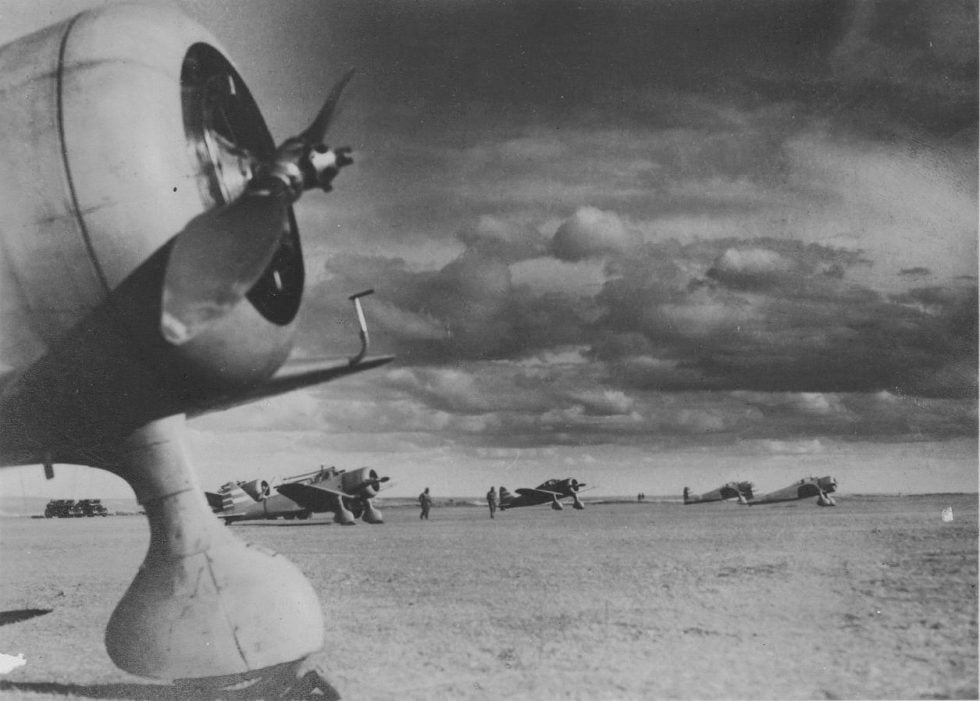
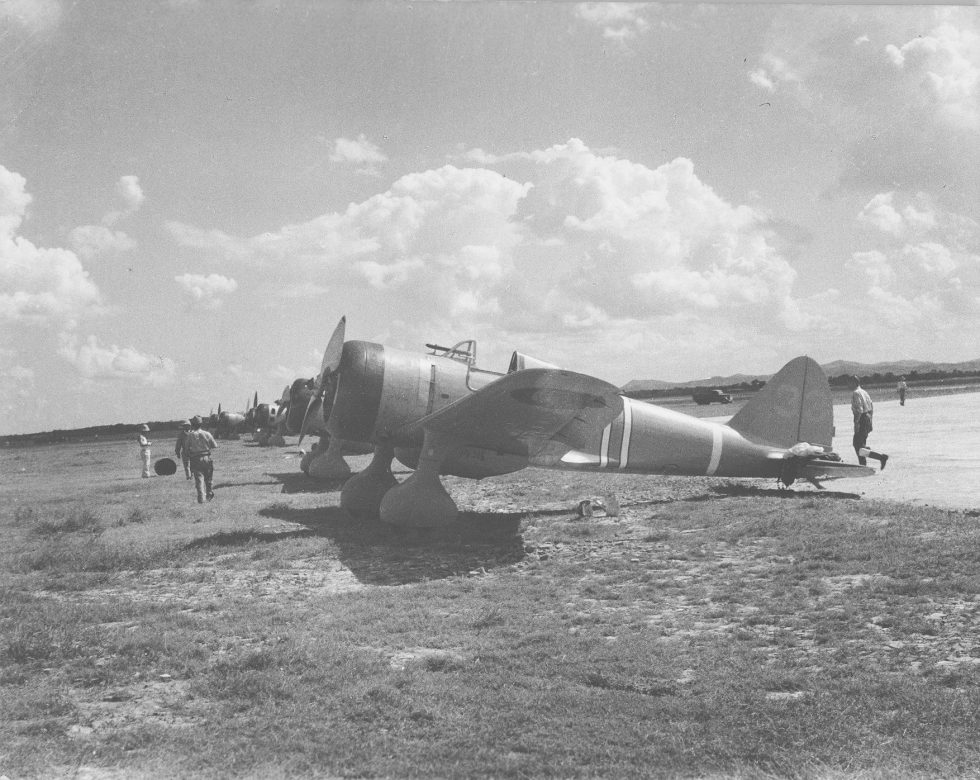
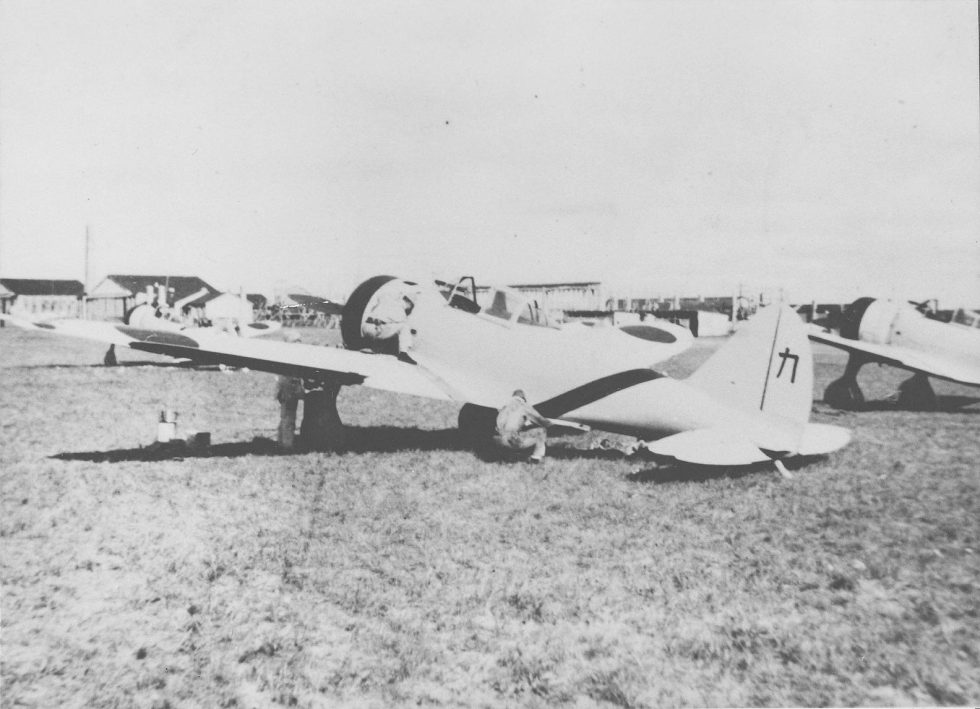
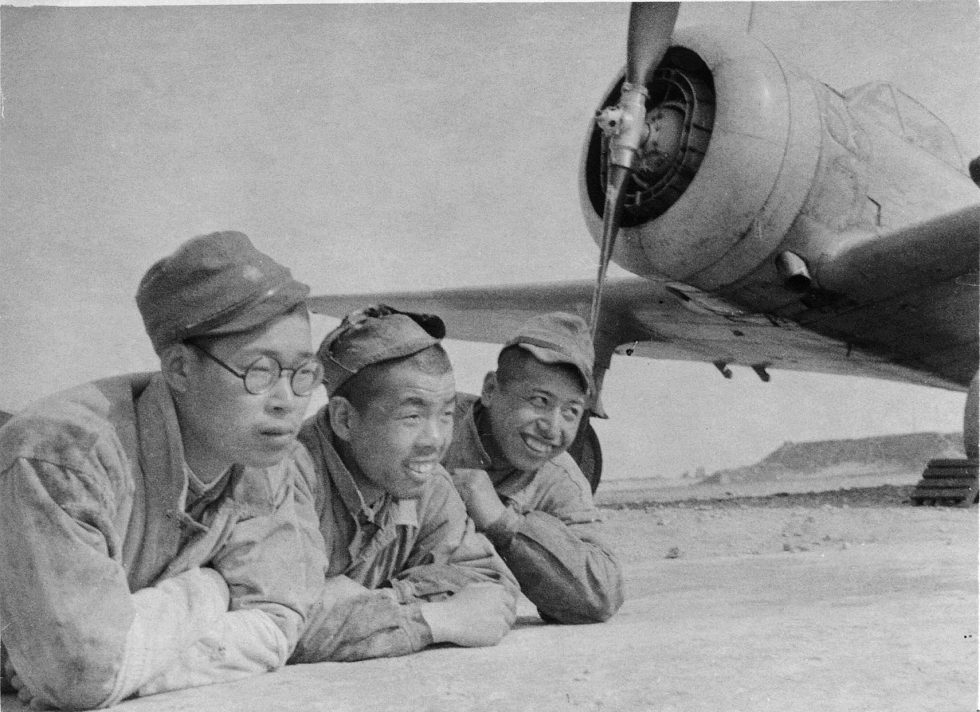
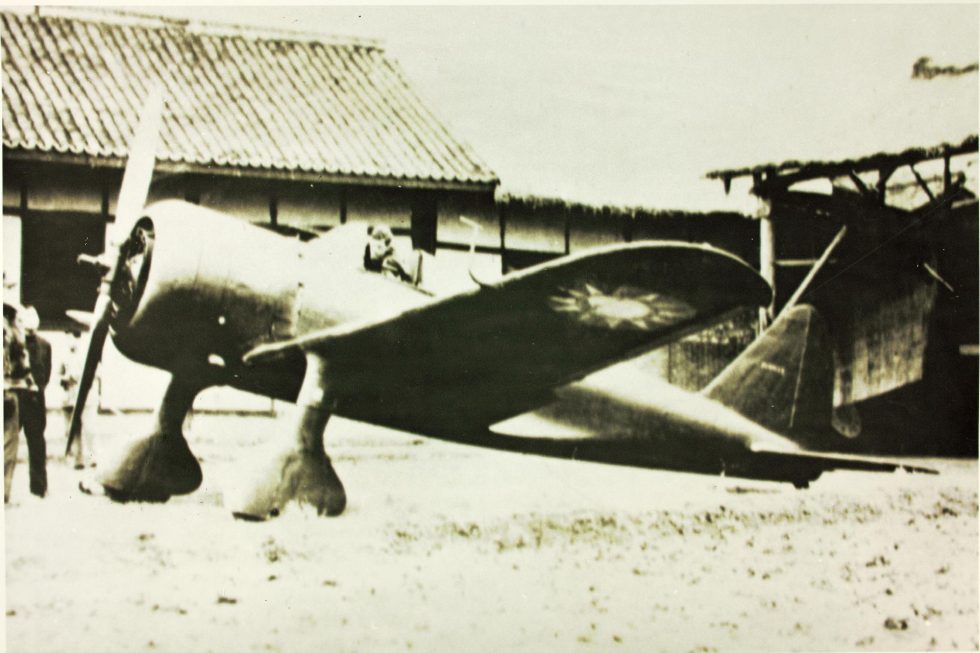
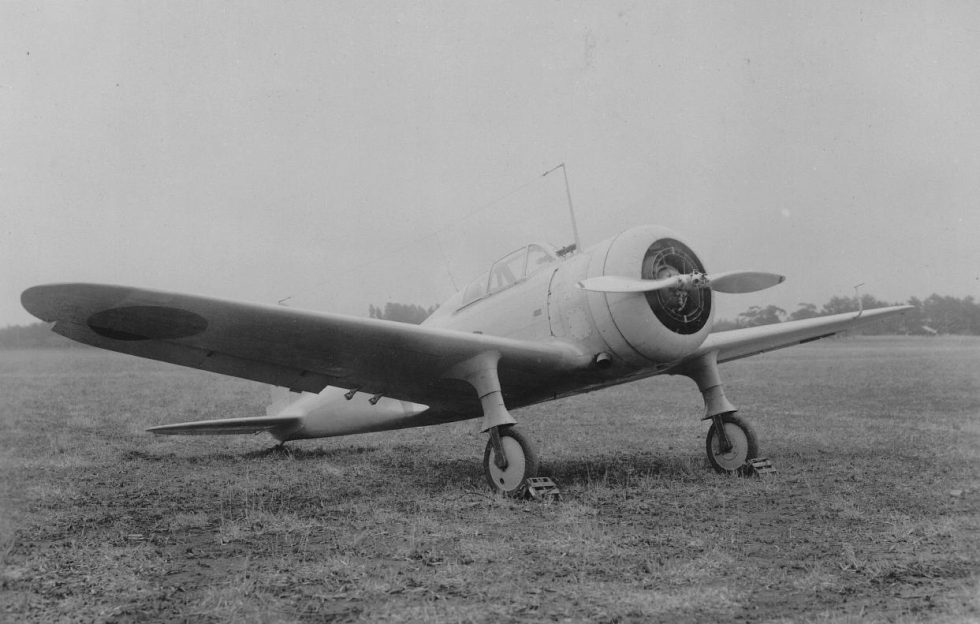
The Ki-27 in motion
Rex’s Hangar: Nakajima Ki-27 — The Nimble “Nate.” A dedicated aircraft-history breakdown of the Ki-27’s design, its Nomonhan combat and its slide into obsolescence — the most thorough single video on the type.
Where the Ki-27 flew
The Ki-27’s war, in numbers
The Ki-27 was a genuinely dangerous dogfighter in 1939 and the backbone of the Japanese Army’s fighter arm into 1942. Its combat record is dominated by Nomonhan and the early China and Pacific campaigns — though the eye-catching kill tallies claimed there were, like all wartime scores, heavily inflated.
Compare the combat record of every military aircraft. Kill figures for Nomonhan are contested and widely regarded as overclaimed.
Everything people ask about the Nakajima Ki-27
Can I fly in a Nakajima Ki-27?
What was the Ki-27’s Allied reporting name?
How manoeuvrable was the Ki-27?
Why did the Ki-27 have fixed landing gear?
What replaced the Ki-27?
How many Ki-27s were built?
Are any Ki-27s left today?
You can’t fly the Nakajima Ki-27.
These, you can.
Some legends only live in museums — others are fuelled and waiting. MiGFlug has put civilians in real military jet cockpits since 2004.
 Fly the L-39 AlbatrosThe world’s most-flown jet trainer — aerobatics included
 Fly the F-104 Starfighter“The missile with a man in it”
 Fly the MiG-21The Cold War’s most-produced jet
 Fly the T-33 Shooting StarAmerica’s first jet trainer
 Fly the DH VampireA piece of early jet history
 Fly the S.211Agile Italian jet trainer
 Fly the MB-326The classic Aermacchi jet
 Fly the MiG-15The Soviet legend of the Korean War
Continue the tour
Every fact, checked
- History of War — Nakajima Ki-27Design origins, the 1937 fly-off and the aircraft’s combat career and limits.
- World War II Database (WW2DB)Development history, variants and production figures.
- Military FactoryDimensions, weights and performance data for the Ki-27b.
- Pacific WrecksSurviving airframes, wrecks and the Ki-27’s service across the Pacific theatre.
- Aviation of JapanReference on the Royal Thai Air Force’s Ki-27 operations and markings.
- Smithsonian National Air and Space MuseumBackground reference on Imperial Japanese Army fighter development.
- Tachiarai Peace Memorial MuseumHome of the only substantially complete surviving Ki-27.
- Wikimedia Commons — Ki-27 imagesSource of the public-domain wartime photographs used on this page.