
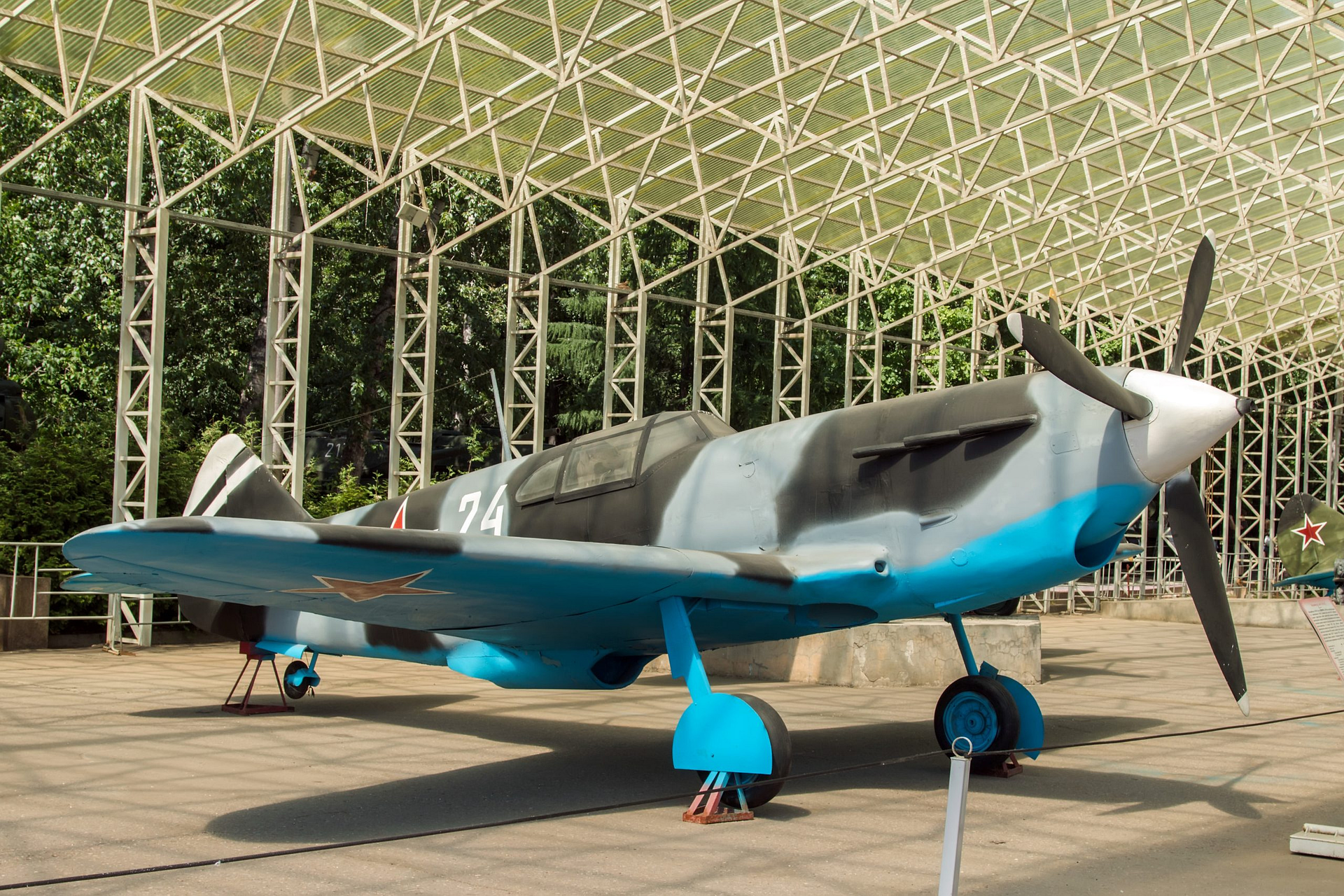
Lavochkin-Gorbunov-Gudkov LaGG-3
The wooden warrior of 1941
A Soviet WWII fighter carved almost entirely from resin-impregnated wood — heavy, underpowered and unloved by its pilots, yet tough enough to bring them home. Re-engined with a radial, its airframe became the superb La-5.
The LaGG-3: the wooden fighter the Soviet Union built out of necessity
In the late 1930s the Soviet Union needed a modern fighter to face the Messerschmitt Bf 109, and it needed one that did not devour the aluminium its factories could barely supply. The answer came from a three-man team — Semyon Lavochkin, Vladimir Gorbunov and Mikhail Gudkov — whose initials gave the aircraft its name. Their prototype, the I-301, first flew in the spring of 1940 and was accepted, after modification, as the LaGG-3.
Its defining feature was its material. Where other nations built fighters of light alloy, the LaGG-3 was made overwhelmingly of wood — not ordinary timber but delta-drevesina (“delta wood”), birch veneer impregnated with phenol-formaldehyde resin and hot-pressed into a dense, fire-resistant laminate as strong as some aluminium alloys. Wood and resin were non-strategic materials that could be worked in furniture-grade factories, freeing scarce duralumin for bombers. It was a clever wartime economy — but it came at a price.
That price was weight. The wooden structure was heavy, and when Stalin ordered the type’s range increased, the extra fuel made it heavier still. Bolted to the single Klimov M-105 V12, which never had power to spare, the LaGG-3 was sluggish in the climb and the turn and unforgiving to poorly trained pilots. According to a much-repeated pilots’ joke, the letters LaGG really stood for Lakirovanny Garantirovanny Grob — the “varnished guaranteed coffin.” Historians debate whether front-line airmen truly coined the phrase or whether it was pinned on the aircraft later, but the reputation stuck.
And yet the LaGG-3 had one genuine virtue that the joke obscured: it was tough. Its wooden structure did not splinter and spall the way thin metal did when hit; it soaked up cannon strikes and machine-gun fire and kept flying. With self-sealing tanks and a robust airframe, it brought many pilots home from fights that would have destroyed a lighter aircraft, and it made a steady gun platform against German bombers. Flown well, especially in the later, lightened production batches, it was far from helpless.
The LaGG-3 fought hardest in the desperate years of 1941 to 1943 — over Moscow and Leningrad, at Stalingrad, in the Caucasus and above the Baltic and Black Seas with the naval air arms — before newer fighters pushed it into second-line, training and reconnaissance duties. Its most important legacy, though, was not what it did but what it became. When Lavochkin’s team replaced the heavy inline engine with a powerful Shvetsov M-82 radial, the same wooden airframe was transformed into the La-5 — and, through it, the La-7, among the finest Soviet fighters of the war. The unloved wooden warrior was the seed of a dynasty.
01The LaGG-3’s delta-wood construction: how the Soviets built a fighter without aluminium
Delta wood (delta-drevesina, also called lignofol) was made by impregnating thin birch veneers with a phenol-formaldehyde resin and pressing them under heat into a hard, dense laminate. The result was strong, resistant to fire and immune to the corrosion that plagued metal aircraft — but heavier than the aluminium alloys used elsewhere. The Soviets adopted it deliberately: with duralumin reserved for bombers and in chronically short supply, a fighter that could be built largely of wood and resin in dispersed, low-skill-tolerant workshops was a strategic advantage in itself. The wing was even made detachable to ease transport and field repair. The trade-off — weight, and the labour-intensive, irritating job of sanding the laminate — was accepted as the cost of building fighters in the numbers the war demanded.
What makes the LaGG-3 special
An airframe of resin-bonded wood
The LaGG-3 was built overwhelmingly from delta wood — birch veneer impregnated with bakelite-type resin and hot-pressed into a laminate as strong as light alloy but far heavier. Wood was chosen to conserve the aluminium the USSR could not spare, and it made the aircraft fireproof and rugged. The penalty was a fighter that was always fighting its own weight.
The Klimov M-105 — and a chronic power deficit
Power came from a single Klimov M-105 liquid-cooled V12, about 1,050 hp early on and roughly 1,210 hp in the boosted M-105PF. It was never quite enough for so heavy an airframe, and the intended more-powerful M-106 was cancelled. The result was modest speed and a laboured climb that defined the type’s reputation.
A hub cannon — and a fighter that took a beating
The standard late armament was a 20 mm ShVAK cannon firing through the propeller hub plus a 12.7 mm UBS machine gun, with underwing rails for rockets or light bombs. What set the LaGG-3 apart was durability: its wooden structure did not fragment like metal when hit, and it repeatedly carried damaged aircraft — and their pilots — home.
02The LaGG-3’s engine problem: why Stalin’s range order cost it dearly
The light I-301 prototype was genuinely quick, but the production LaGG-3 was ordered to carry far more fuel — roughly doubling its range at Stalin’s insistence — and the extra tanks added weight the Klimov M-105 could not overcome. Contemporary verdicts were blunt: the aircraft was “too heavy for the engine installed.” The hoped-for M-106 never materialised, so designers instead spent the type’s whole career fighting the weight back out of it — deleting guns and fuel tanks, cleaning up the aerodynamics and fitting the boosted M-105PF. The best batches, notably the aerodynamically refined Series 66, were genuinely competitive fighters — but they arrived too late to rehabilitate the LaGG-3’s name.
03From LaGG-3 to La-5: the radial engine that changed everything
The LaGG-3’s single greatest contribution was its airframe. In 1942, with the inline-engined fighter falling behind, Lavochkin’s team grafted a powerful air-cooled Shvetsov M-82 (ASh-82) radial onto the wooden fuselage. The transformation was dramatic: the same basic aircraft, now with far more power, became the La-5, judged superior in trials and rushed into production. It led directly to the La-5FN and the superb La-7 — frontline fighters that helped win air superiority over the Eastern Front. The “guaranteed coffin” had fathered one of the best fighter families of the war.
Full LaGG-3 specifications
Airframe & Performance
- Bemanning
- 1
- Lengte
- ~8.81 m
- Spanwijdte
- ~9.80 m
- Hoogte
- ~2.70 m
- Leeggewicht
- ~2,620 kg
- Max takeoff weight
- ~3,300 kg
- Max speed
- ~549–575 km/h (by series)
- Serviceplafond
- ~9,500 m
- Bereik
- ~650 km (up to ~1,000 km ferry)
- Klimsnelheid
- ~900 m/min
Propulsion, Armament & Programme
- Motor
- 1 × Klimov M-105P/PF V12
- Power
- ~1,050–1,210 hp (by variant)
- Construction
- Delta-wood & birch plywood
- Bewapening
- 1 × 20 mm ShVAK + 1 × 12.7 mm UBS; rockets/bombs
- First flight
- Spring 1940 (I-301 prototype)
- Built
- ~6,528 (1941–1944)
- Unit cost
- No reliable public figure (state product)
- Cost per flight hour
- No reliable figure exists
04The LaGG-3’s cost: why no reliable price or per-hour figure exists
The LaGG-3 was a Soviet state product built to conserve strategic materials, never sold on an open market, so no trustworthy flyaway unit price survives in the public record. Its whole rationale was cheapness — wood and resin instead of aluminium, dispersed factories tolerant of unskilled labour — but that was measured in war-economy terms, not dollars. A modern “cost per flight hour” figure is a peacetime accounting metric that was neither computed nor published for wartime Soviet fighters: no reliable cost-per-flight-hour number exists for the type, and any precise figure you see attached to it should be treated as invention rather than record.
The LaGG-3: from wooden hope to stepping stone
A wooden fighter is designed
Lavochkin, Gorbunov and Gudkov begin work on a modern fighter built from resin-bonded wood to spare scarce aluminium.
First flight
The I-301 prototype flies in the spring; after modifications for greater range it is standardised as the LaGG-3.
Into battle
The LaGG-3 enters service and fights in the defence of Moscow and Leningrad during the German invasion.
The radial conversion
Lavochkin fits a Shvetsov M-82 radial to the wooden airframe, creating the far superior La-5 — the type’s great legacy.
Stalingrad and the fleets
LaGG-3s serve at Stalingrad and the Caucasus and fly hard with Baltic and Black Sea naval aviation.
Pushed to the second line
Outclassed by newer fighters, the LaGG-3 shifts to training, air defence and reconnaissance; the refined Series 66 appears.
Production ends
The last LaGG-3s leave Factory 31 in Tbilisi, which switches to the Yak-3; about 6,528 have been built.
Legacy in the La-5 and La-7
The wooden airframe lives on in the Lavochkin radial fighters that helped win air superiority over the Eastern Front.
From the front: twelve LaGG-3 stories
Three designers, one aircraft
La-G-G: Lavochkin, Gorbunov and Gudkov gave the fighter their initials.
Read the full story
A fighter made of wood
With aluminium reserved for bombers, the LaGG-3 was built from resin-impregnated birch laminate.
Read the full story
The “varnished guaranteed coffin”
Pilots joked that LaGG stood for Lakirovanny Garantirovanny Grob.
Read the full story
Too heavy for its engine
Stalin’s order to add fuel and range piled weight onto an already heavy airframe.
Read the full story
Tough enough to fly home
Wood did not splinter like thin metal — the LaGG-3 soaked up damage and kept flying.
Read the full story
Kaberov over Kronstadt
Naval ace Igor Kaberov fought Stukas and Bf 109s in a damaged LaGG-3 defending Kronstadt.
Read the full story
The men who scored on it
Baltic ace Gerasim Kostylev is credited with close to 30 victories, many on the LaGG-3.
Read the full story
Finnish LaGG-3s
Finland flew a handful of captured LaGG-3s against their former owners.
Read the full story
Guarding the sea lanes
Over the Baltic and Black Seas the LaGG-3 protected fleets and convoys long after front-line units re-equipped.
Read the full story
“Soviet Georgia”
A LaGG-3 series 66 of the 88th Fighter Regiment carried a Georgian dedication on its fuselage.
Read the full story
The best came last
Continuous lightening and clean-up made the final LaGG-3 batches genuinely competitive — too late.
Read the full story
The seed of a dynasty
The wooden LaGG-3 airframe, re-engined with a radial, became the La-5 and then the La-7.
Read the full story
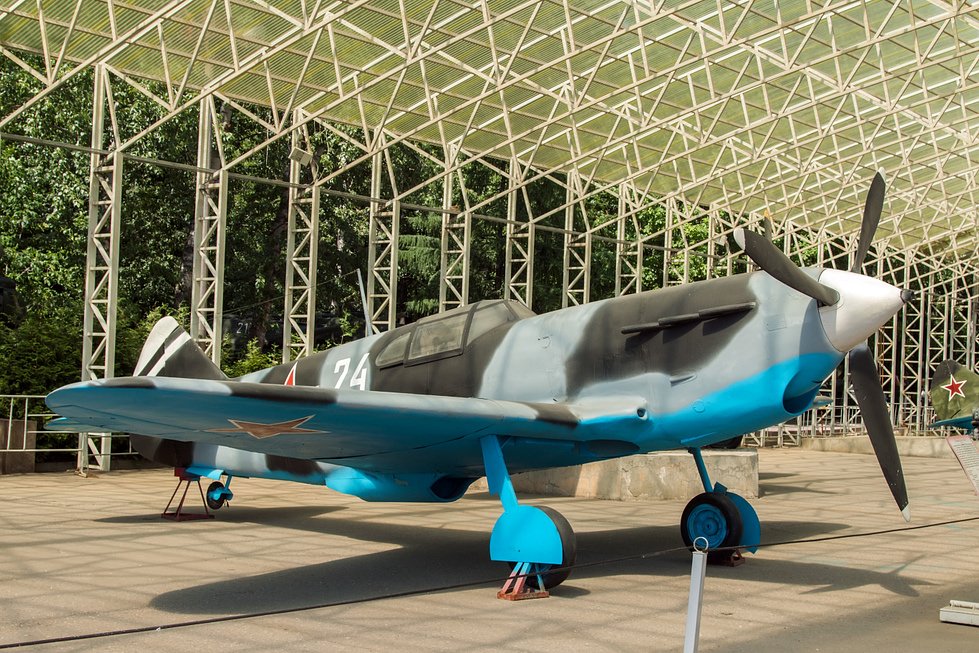
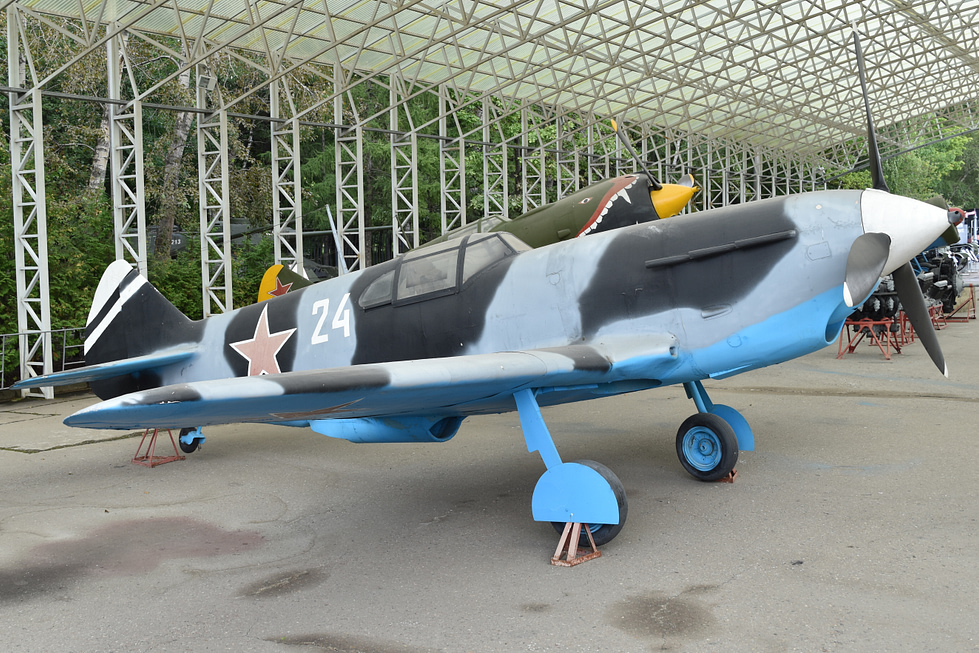
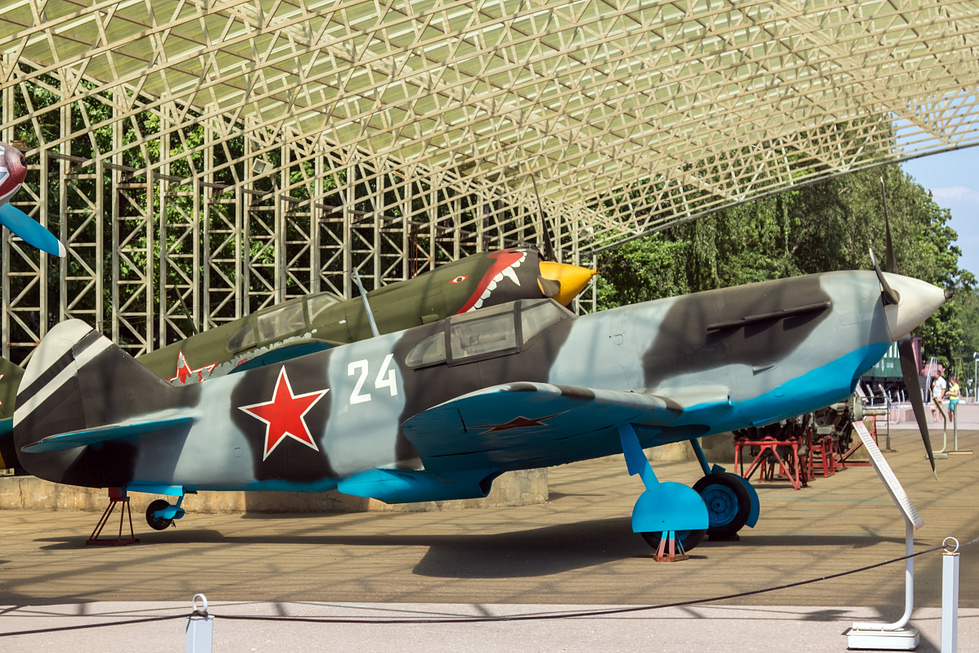
The LaGG-3 in pictures
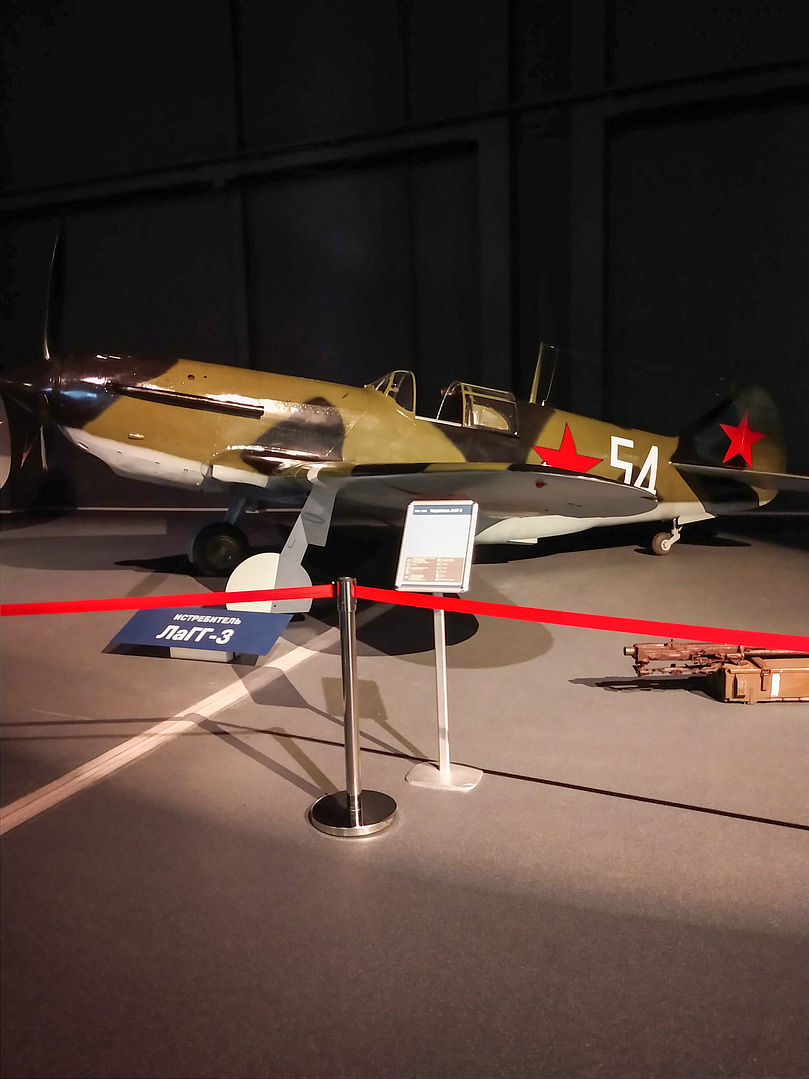
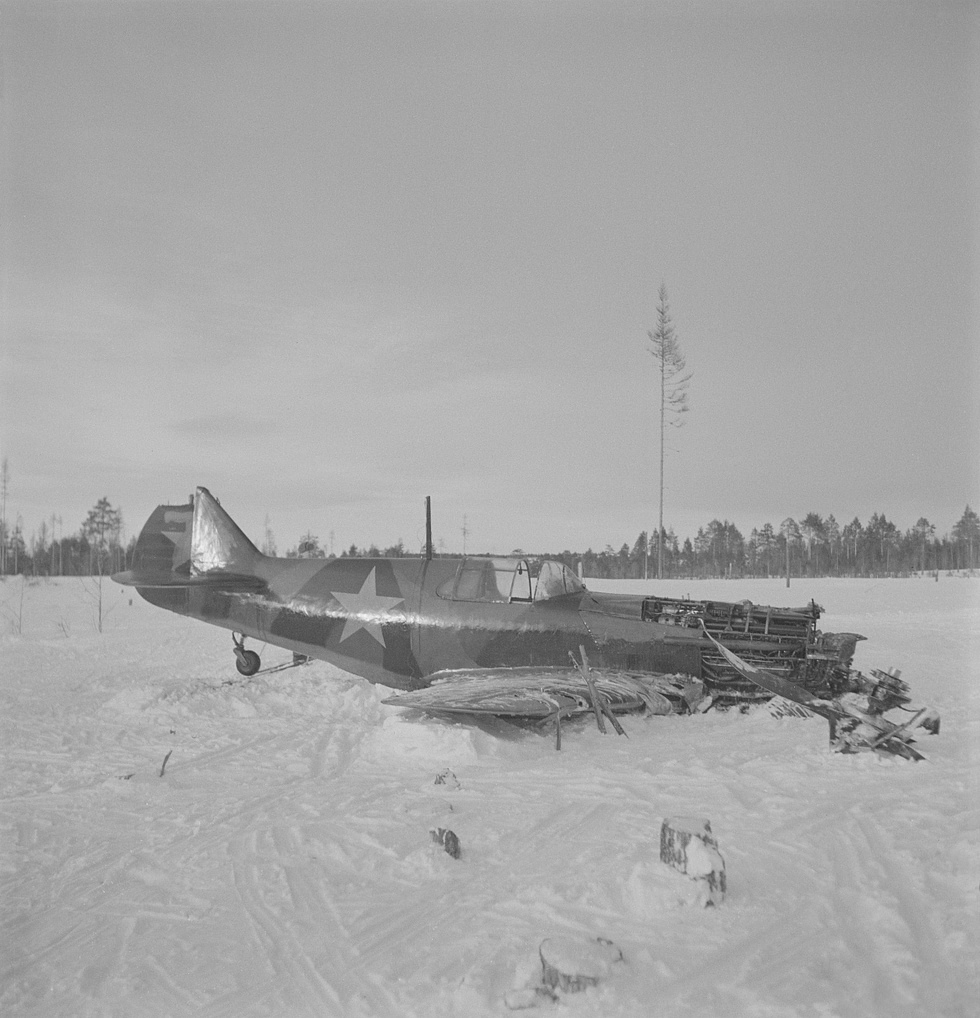
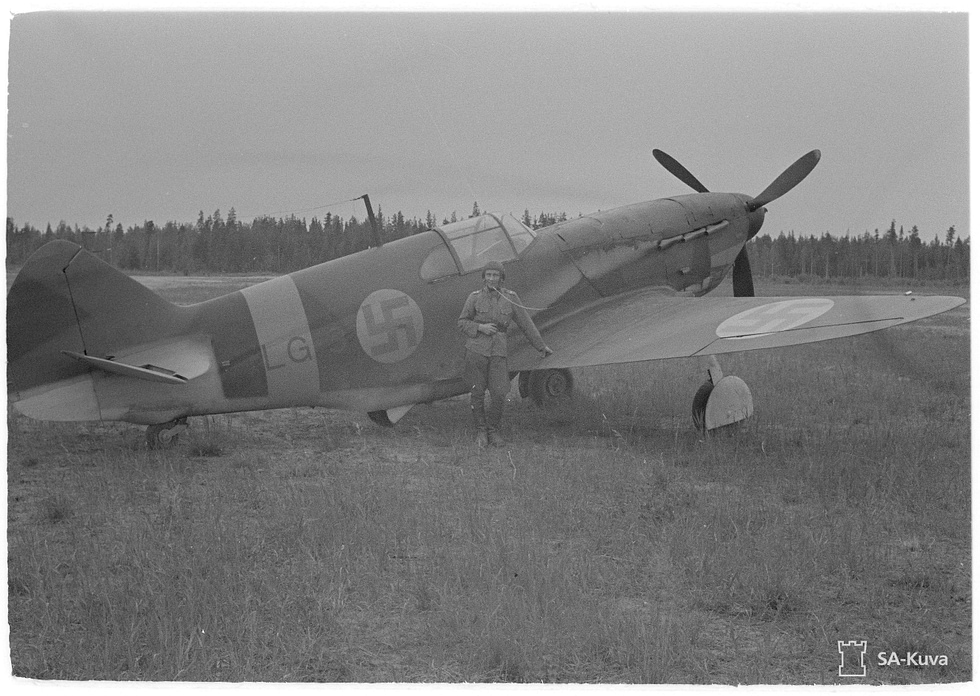
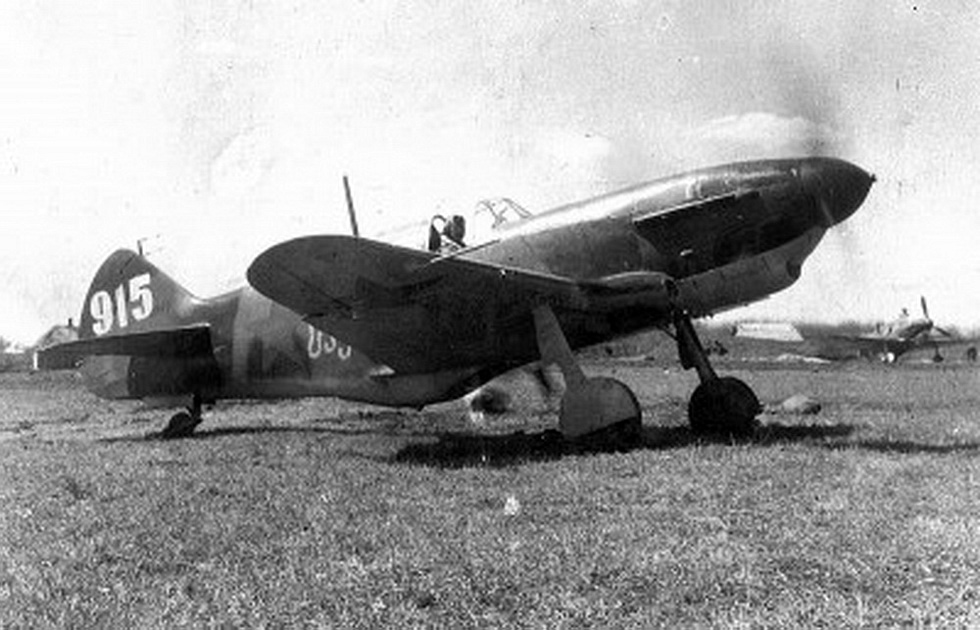
The LaGG-3 in motion
Aviation Tales: LaGG-3 — Failure or Necessary Stepping Stone? A documentary history of the wooden fighter, its troubled development and its evolution into the Lavochkin radial fighters.
Where the LaGG-3 flew
The LaGG-3’s war: outgunned, but never a walkover
The LaGG-3 fought its hardest battles in 1941–43, the grimmest years of the war in the East. It was outclassed in a dogfight by the Messerschmitt Bf 109F and paid a heavy price, but it was a steady gun platform against German bombers, absorbed damage that would have destroyed a lighter fighter, and served on long after front-line units re-equipped — especially with the Baltic and Black Sea fleets.
Compare the combat record of every military aircraft. Figures are best-available estimates and are hedged where sources disagree.
Everything people ask about the LaGG-3
Can I fly in a LaGG-3?
Why was the LaGG-3 made of wood?
What did “LaGG” stand for?
Was the LaGG-3 any good?
How is the LaGG-3 related to the La-5?
How fast was the LaGG-3?
How many LaGG-3s were built?
Are any LaGG-3s left today?
You can’t fly the LaGG-3.
These, you can.
Some legends only live in museums — others are fuelled and waiting. MiGFlug has put civilians in real military jet cockpits since 2004.
 Fly the L-39 AlbatrosThe world’s most-flown jet trainer — aerobatics included
 Fly the F-104 Starfighter“The missile with a man in it”
 Fly the MiG-21The Cold War’s most-produced jet
 Vlieg met de T-33 Shooting StarAmerica’s first jet trainer
 Fly the DH VampireA piece of early jet history
 Fly the S.211Agile Italian jet trainer
 Fly the MB-326The classic Aermacchi jet
 Fly the MiG-15The Soviet legend of the Korean War
Continue the tour
Every fact, checked
- George Mellinger — LaGG & Lavochkin Aces of World War 2 (Osprey)Authoritative on the pilots, units and combat history of the type.
- GlobalSecurity.org — LaGG-3Production totals (6,528), factories, series count and service summary.
- MilitaryFactory — Lavochkin LaGG-3Reference specification table: dimensions, weights, speed, ceiling and armament.
- 1C Game Studios — IL-2 “Great Battles” developer museumWell-researched engine, series and pilot detail (Kostylev, Kamozin).
- Stormbirds — Legends of the East: LaGG-3 and La-5Narrative history of the design, nickname and evolution to the La-5.
- WW2DB — LaGG-3Cross-reference specification sheet for the type and its variants.
- Gordon & Khazanov — Soviet Combat Aircraft of the Second World War, Vol. 1Standard scholarly reference for LaGG-3 development and production.
- Igor Kaberov — Swastika in the GunsightBaltic Fleet pilot memoir with first-person LaGG-3 naval combat.