
Saab 105
“Sk 60”
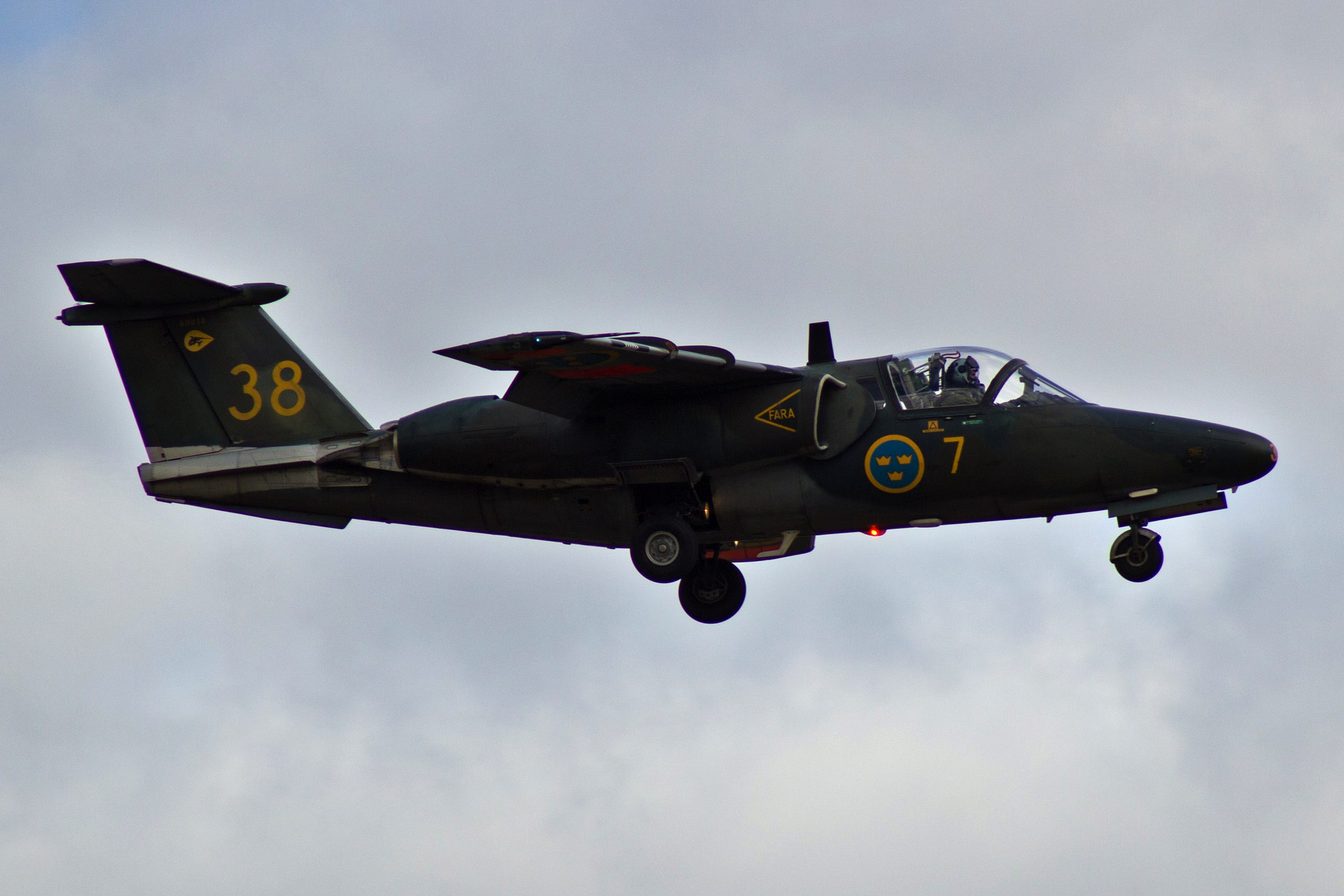
The twin-engine, side-by-side jet Saab built on its own initiative — Sweden’s Sk 60 trainer, light-attack and liaison aircraft, and the longest-serving Saab aeroplane ever flown.
The jet Saab built before anyone ordered it
By the early 1960s Saab was riding high on the success of the Mach-2 J 35 Draken, and the company decided to gamble. With no government order in hand, it began a private venture — a compact twin-engine jet that could replace Sweden’s ageing de Havilland Vampire trainers and, Saab hoped, sell to civil and export customers as well. The Swedish Air Force signed a development contract in 1962, and the first of two prototypes made its maiden flight on 29 June 1963.
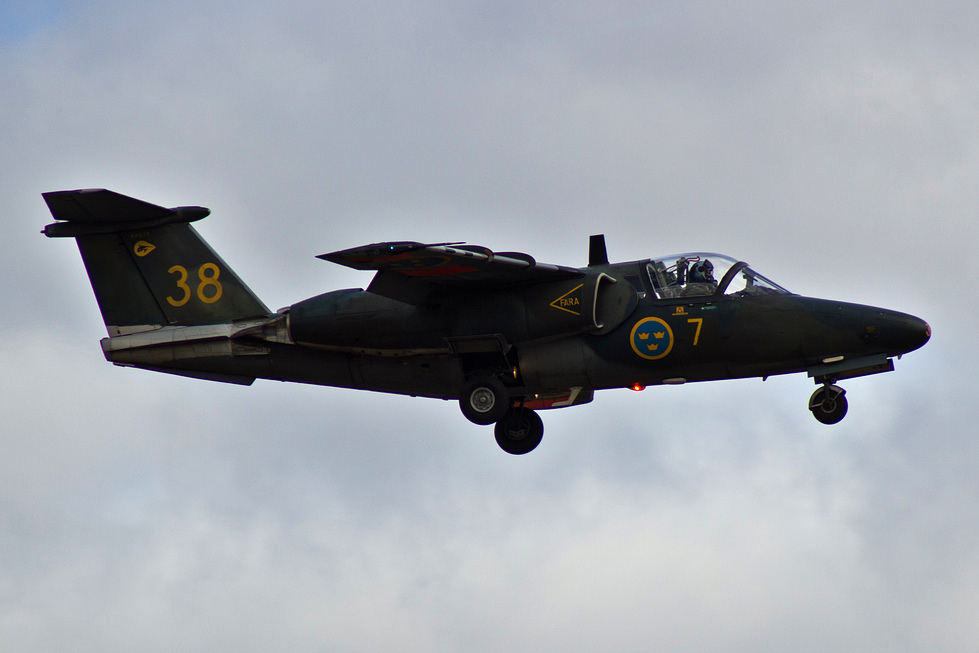
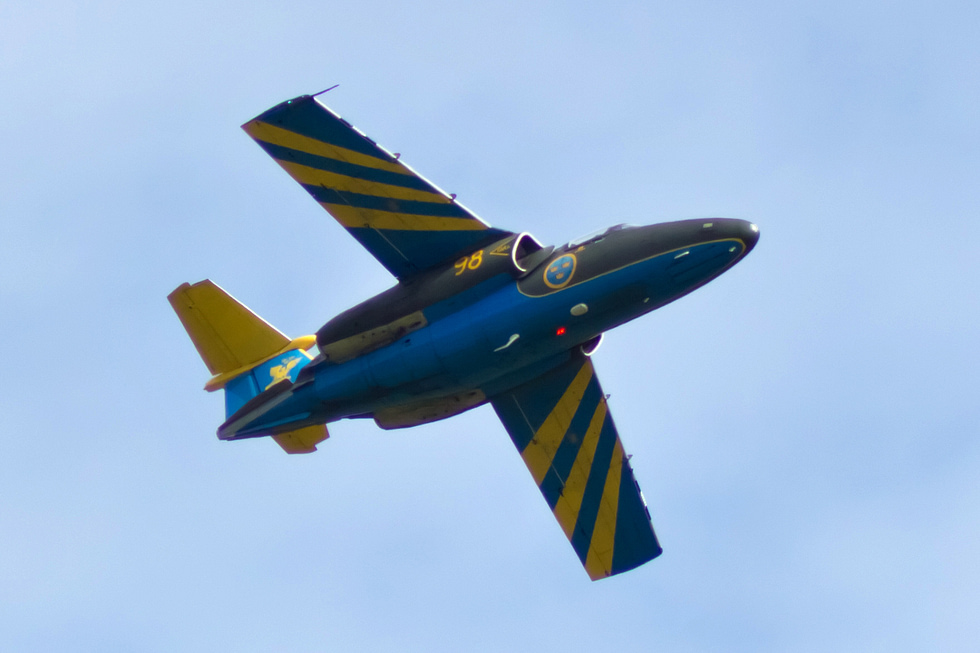
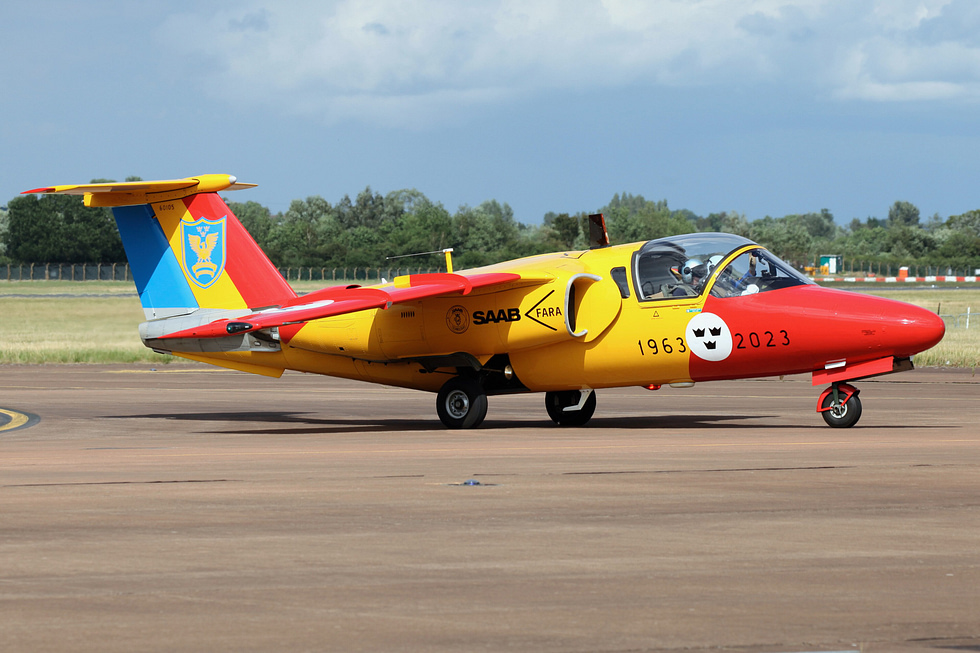
The design that emerged was unusual for a light jet: a shoulder-mounted wing with pronounced anhedral, a T-tail, two small turbojets buried in the fuselage, and — most distinctively — a side-by-side cockpit under a wide bubble canopy. Instructor and student sat shoulder to shoulder, and with the ejection seats removed the cabin could carry four for liaison work. Swedish service began in 1966–67 under the designation Sk 60.
What kept it flying was versatility. The same airframe trained pilots, carried guns and rockets as the light-attack Sk 60B, and flew photo-reconnaissance with a camera nose as the Sk 60C. When its original French engines became uneconomical, Sweden re-engined much of the fleet with the modern Williams FJ44 turbofan in the 1990s — a single upgrade that carried the type all the way to its retirement on 18 June 2024, roughly 57 years after it entered service. Austria, the only export buyer, flew its own version into 2020.
01The Saab 105’s private-venture gamble: how a company bet became a 60-year career
Saab conceived the 105 in the late 1950s and early 1960s without a firm requirement to build to. The company reasoned that Sweden would soon need to replace its Vampire trainers and that a nimble twin-jet might also find civil buyers as an executive or liaison aircraft. The civil market never materialised, but the military bet paid off spectacularly: Sweden ordered the type, Austria became an export customer, and the aircraft was continually adapted — attack, reconnaissance, liaison and, in the 1990s, a complete new engine. What began as a speculative side-project became one of Saab’s most enduring products, serving for the better part of six decades.
What makes it special
Two engines, sitting side by side
Most jet trainers of the era used a single engine and seated the instructor behind the student. The Saab 105 did the opposite: two turbojets for thrust and a safety margin, and a side-by-side cockpit under a wide canopy so the instructor could watch the student’s hands, eyes and instruments directly. The roomy fuselage doubled as a four-seat cabin for liaison flights once the ejection seats were removed.
A schoolroom jet that carried guns
The trainer was never just a trainer. Fitted with ejection seats and six hardpoints, the same airframe flew as the light-attack Sk 60B — gunsight, podded 30 mm cannon, 135 mm rockets and bombs — and as the camera-nosed reconnaissance Sk 60C. In Swedish war planning the fleet was a genuine dispersed light-strike reserve, not a paper one.
A new heart at thirty: the FJ44 re-engining
When the original Turboméca Aubisque engines became uneconomical to support, Sweden re-engined much of the fleet with the modern Williams FJ44 turbofan (Swedish designation RM15) from the mid-1990s, redesignating the aircraft Sk 60W. Lighter, thriftier, quieter and more powerful, the new engine extended the type’s life by roughly two more decades.
02The Saab 105’s side-by-side cockpit: why Saab broke with the tandem tradition
Tandem seating — student in front, instructor behind — was the norm for jet trainers, and it survives on the Hawk and Alpha Jet today. Saab chose a side-by-side layout instead. The advantage is pedagogical: an instructor sitting next to the student can see exactly where the student is looking, what the hands are doing and which instruments are being scanned, and can intervene more naturally. The wide fuselage that made this possible also gave the aircraft a genuine second life as a four-seat liaison and staff-transport machine — simply remove the ejection seats and add passenger chairs. The trade-off is a slightly wider, draggier fuselage than a slim tandem trainer, but for a subsonic multirole jet that mattered little.
03The Saab 105’s engine swap: how the Williams FJ44 bought two extra decades
By the early 1990s the Saab 105’s original Turboméca Aubisque turbofans were reaching the end of their supportable life — parts were scarce and running costs were climbing. Rather than retire the airframe, Sweden signed a contract (commonly dated to November 1993) to re-engine the fleet with the Williams FJ44, a clean-sheet small turbofan originally developed for business jets. Around 96 aircraft were converted to Sk 60W standard, with re-deliveries running from about 1996; budget cuts had trimmed the programme from an original plan of roughly 115. The FJ44 was lighter, far more fuel-efficient, quieter and cleaner, and delivered a little more thrust. It is the single main reason the Sk 60 was still flying front-line training sorties in the 2020s. (Programme dates vary slightly between sources; treat them as approximate.)
Full specifications
Airframe & Performance (Sk 60)
- Bemanning
- 2 side-by-side (up to 4 seats, no ejection seats)
- Lengte
- ~10.8 m
- Spanwijdte
- 9.5 m
- Hoogte
- ~2.7 m
- Vleugelgebied
- ~16.3 m²
- Leeggewicht
- ~2,510–2,565 kg
- Max takeoff weight
- ~4,050–4,150 kg (Sk 60)
- Max speed
- ~770 km/h (Sk 60) · ~970 km/h / Mach 0.8 (105Ö)
- Serviceplafond
- ~12,000 m (Sk 60)
- Bereik
- ~1,900 km
Propulsion, Armament & Production
- Engines (original)
- 2 × Turboméca Aubisque (RM9), ~7.3 kN each
- Engines (re-engined)
- 2 × Williams FJ44 (RM15), ~8.4 kN each — Sk 60W
- Engines (105Ö / export)
- 2 × General Electric J85, ~12.7 kN each
- Hardpoints
- 6 (Sk 60B): 30 mm gun pods, 135 mm rockets, bombs
- First flight
- 29 June 1963
- Built
- 192 (incl. 2 prototypes); ~150 Sweden, 40 Austria
- Unit cost
- No reliable public figure
- Cost per flight hour
- No reliable public figure
04The Saab 105’s operating costs: why no reliable price exists
The Saab 105 was procured mainly by two national air forces under state contracts, and no consistent public flyaway unit price or cost-per-flight-hour figure exists for it in open sources. What is documented is the logic of its economics: the whole point of the 1990s Williams FJ44 re-engining was to cut running and maintenance costs, and Sweden judged the upgraded Sk 60 cheap enough to keep flying basic training for another two decades rather than buy a new type. Any precise dollar figure attached to a Saab 105 should be treated as an estimate.
From company gamble to Saab’s longest career
A private venture
Saab launches the 105 on its own initiative; the Swedish Air Force signs a development contract in 1962.
First flight
The first prototype makes its maiden flight on 29 June 1963.
Enters service as the Sk 60
The first production aircraft reach F 5 Wing at Ljungbyhed; operational training service begins as the Sk 60.
Attack, recon and export
Sk 60C reconnaissance conversions begin with a camera nose; Austria starts receiving 40 J85-powered Saab 105Ö (1970–72).
Team 60 takes to the sky
The Swedish Air Force forms the six-ship Team 60 display team; Sk 60D/E liaison conversions appear.
The FJ44 re-engining
A contract (dated to Nov 1993) re-engines around 96 aircraft with the Williams FJ44 as the Sk 60W; re-deliveries from ~1996.
Austria bows out
The Austrian Air Force retires its Saab 105Ö after about 50 years, thereafter relying on the Eurofighter.
A successor arrives
The first Grob G120TP turboprops (Swedish Sk 40) are delivered as the Sk 60’s basic-training replacement.
The long goodbye
Sweden formally retires the Sk 60 after ~57 years — the longest-serving Saab aircraft ever.
From the cockpit: twelve Saab 105 stories
The jet Saab built before anyone asked
The Saab 105 flew as a company gamble, not a government order.
Read the full story
Sitting side by side
An unusual cockpit choice that made teaching easier.
Read the full story
The trainer that carried guns
The Sk 60B turned the schoolroom jet into a striker.
Read the full story
The Sk 60C’s long nose
A camera-packed snout turned it into a photo-recon platform.
Read the full story
Team 60 over Sweden
Six trainers became one of Europe’s long-running display teams.
Read the full story
Guarding neutral skies
Austria’s Saab 105Ö stood alert when nothing else could.
Read the full story
A new heart at thirty
Swapping engines kept the Sk 60 flying into the 2020s.
Read the full story
Saab’s longest-serving aircraft
About 57 years in Swedish service — a company record.
Read the full story
Four seats, no ejection
Pull the ejection seats and it became a staff shuttle.
Read the full story
The ones that got away
Saab chased sales far beyond Austria — mostly in vain.
Read the full story
Finding an heir
Sweden spent years hunting for a Sk 60 successor.
Read the full story
The long goodbye
A heritage flight keeps a few Sk 60s aloft.
Read the full story
The Saab 105 in pictures
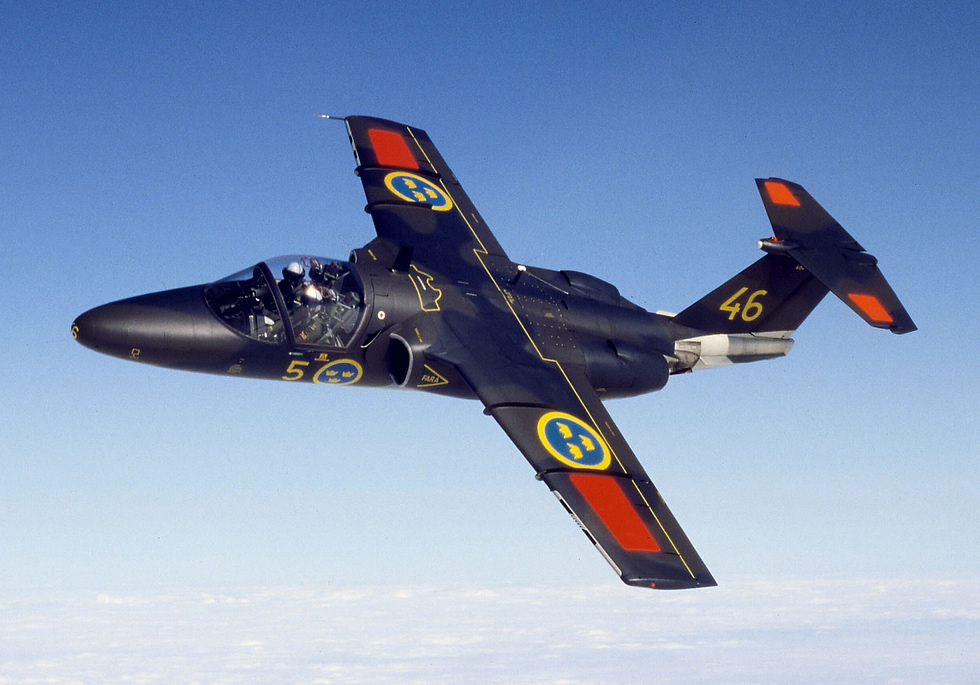
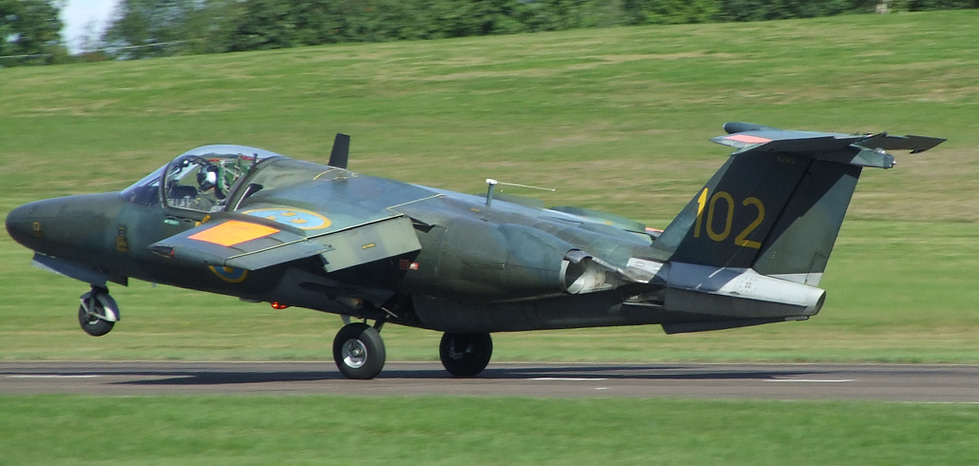
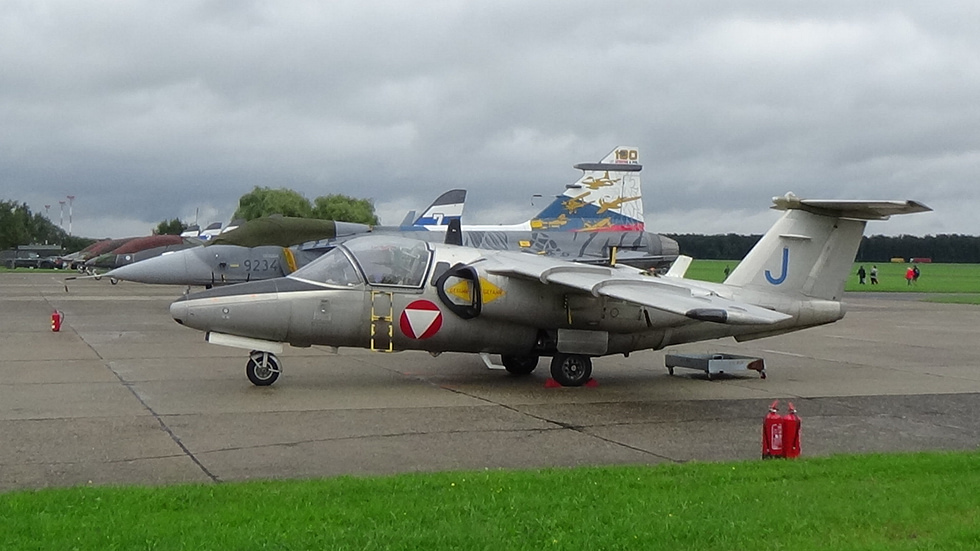
The Saab 105 in motion
A dedicated Saab 105 / Sk 60 video feature is on the way. Video coming soon. In the meantime, explore the photo gallery above and the twelve cockpit stories for the full picture of Sweden’s side-by-side jet.
Where the Saab 105 flew
A trainer that could fight
The Saab 105 never fought a war, but it was built to do far more than teach. Fitted with ejection seats and six hardpoints, the same jet trained Swedish and Austrian pilots, carried guns and rockets as a light-attack aircraft, flew photo-reconnaissance, and stood air-policing alert over neutral Austria. Its real record is one of endurance rather than kills.
Compare the combat record of every military aircraft. Figures as of July 2026.
Everything people ask about the Saab 105
Can I fly in a Saab 105?
How fast is the Saab 105?
Is the Saab 105 still in service?
Who flew the Saab 105?
What replaced the Sk 60?
Why did Saab build a twin-engine trainer?
What is the difference between the Sk 60 and the Saab 105Ö?
You can’t fly the Saab 105.
These, you can.
Some legends only live in museums — others are fuelled and waiting. MiGFlug has put civilians in real military jet cockpits since 2004.
 Fly the L-39 AlbatrosThe world’s most-flown jet trainer — aerobatics included
 Fly the F-104 Starfighter“The missile with a man in it”
 Fly the MiG-21The Cold War’s most-produced jet
 Vlieg met de T-33 Shooting StarAmerica’s first jet trainer
 Fly the DH VampireA piece of early jet history
 Fly the S.211Agile Italian jet trainer
 Fly the MB-326The classic Aermacchi jet
 Fly the MiG-15The Soviet legend of the Korean War
Continue the tour
Every fact, checked
- GlobalSecurity — Saab 105 / Sk 60Development history, first-flight date, Aubisque engines, Sk 60C reconnaissance and Swedish fleet numbers.
- Vintage Aviation News — First Flight of the Saab 105First-flight date, 192 built, six hardpoints and the June 2024 Swedish retirement.
- The War Zone — Sweden’s Saab 105 retired after 57 yearsSide-by-side layout, roles by variant, Team 60 and the Grob G120TP / Sk 40 replacement.
- AeroTime — Sweden retires the Saab 105The 18 June 2024 retirement and the replacement training arrangements.
- Plane-Encyclopedia — Saab 105Private-venture origin, four-seat cabin, variant roles and export attempts including the Finnish 105S.
- HandWiki — Engineering: Saab 105Williams FJ44 re-engining detail (contract, numbers, Sk 60W) and J85 export-version thrust.
- flugzeuginfo.net — Saab 105 dataAirframe dimensions, weights, ceiling and J85 thrust for the 105Ö.
- Blog Before Flight — Austria says goodbye to the Saab 105Austrian farewell tour, end-2020 grounding and the shift to the Eurofighter.