
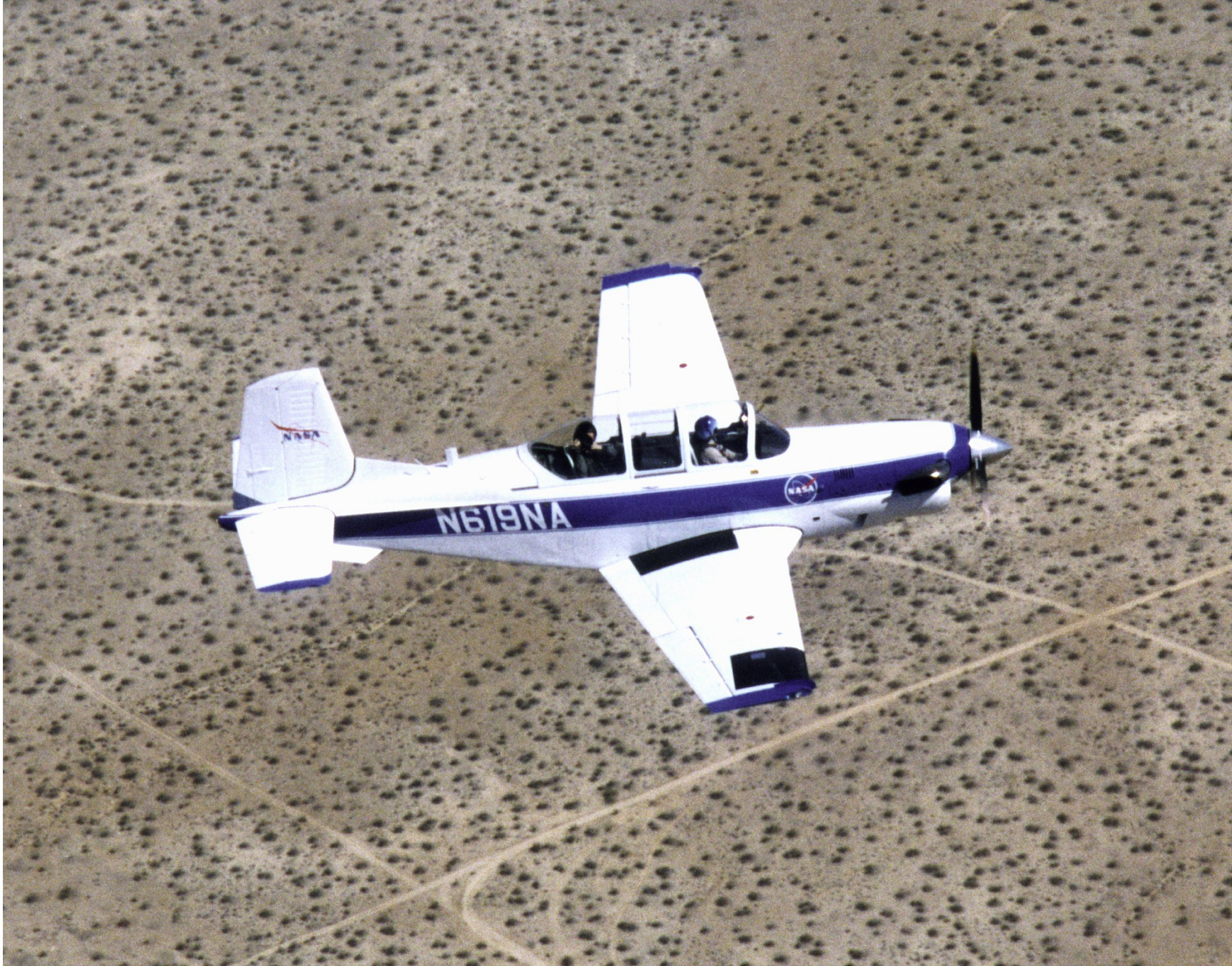
Beechcraft T-34
“Mentor”
The Bonanza-derived tandem trainer that taught generations of American and allied pilots — a piston lightplane turned turboprop workhorse that stayed in the training role for more than sixty years.
How the Beechcraft T-34 Mentor became the West’s primary trainer
In the years after the Second World War, Walter Beech gambled that the military would need a modern replacement for its war-surplus trainers. Rather than design from scratch, Beechcraft took the wing, tail surfaces and powerplant thinking of its sleek civilian Model 35 Bonanza and wrapped them around a new, narrow fuselage with two seats in tandem — student in front, instructor behind. The company-funded prototype, the Beechcraft Model 45, first flew on 2 December 1948.
The armed forces took their time, but the aircraft they eventually bought was almost unchanged. The US Air Force adopted it as the T-34A in 1953 and the US Navy followed with the T-34B in 1954, both powered by a Continental piston engine of around 225 horsepower. Docile, aerobatic and cheap to run, the Mentor taught tens of thousands of ab-initio pilots the fundamentals before they moved on to jets. Beechcraft, Canadian Car & Foundry in Canada and Fuji in Japan all built the type under licence.
By the late 1960s the piston Mentor was ageing, and Beechcraft answered with the aircraft that would define the type’s second life: the T-34C Turbo Mentor. First flown on 21 September 1973, it swapped the piston engine for a Pratt & Whitney Canada PT6A-25 turboprop, deliberately derated to about 400 shaft horsepower to prolong its life and keep training costs down. The US Navy made it the backbone of its primary flight training for decades, and the last examples soldiered on until roughly 2015–2016 before the Beechcraft T-6 Texan II finally took over.
Beyond US service the Mentor spread across dozens of air forces from Argentina to Taiwan, some flying armed T-34C-1 light-attack versions. And when military examples were retired, a huge civilian following adopted them: today the T-34 is one of the most popular ex-military warbirds in the United States, flown in formation teams and aerobatics — a role that, in the 1990s and 2000s, would expose a hard lesson about the fatigue life of a 1950s wing.
01The Beechcraft T-34 Mentor’s Bonanza roots: a civilian design drafted into uniform
The Mentor was not a clean-sheet military aeroplane. Beechcraft built it around proven Bonanza structure — famously sharing wing and tail design philosophy with the civilian Model 35 — but replaced the Bonanza’s cabin with a slim tandem cockpit and its distinctive V-tail with a conventional tail. That heritage made the Model 45 cheap to develop and easy to certify, and gave it the light, responsive handling that made it such an effective first aircraft for a student pilot. The commonality also made the type inexpensive to maintain, a major reason it stayed in service, in one form or another, for well over sixty years.
What makes the T-34 Mentor special
A Bonanza in uniform
The Mentor borrowed the Beechcraft Model 35 Bonanza’s wing and tail engineering and mated it to a new tandem fuselage. The result was light, aerobatic and forgiving — exactly what an ab-initio trainer needs — while sharing enough with a mass-produced civilian aircraft to stay cheap to build and maintain.
From piston to PT6A turboprop
The original T-34A/B used a Continental O-470 piston of roughly 225 hp. In 1973 Beechcraft re-engined the airframe with a Pratt & Whitney Canada PT6A-25 turboprop for the T-34C, giving students turbine experience while derating the engine to about 400 shp for economy and long life.
Built to be forgiving
As a primary trainer the Mentor was designed to be honest and predictable — stable, benign at the stall and fully aerobatic within limits (+6/−3 g). That docility is why so many air forces chose it, and why it later became a favourite of the civilian warbird and formation-flying community.
02The Beechcraft T-34C Turbo Mentor’s engine: why the Navy derated a turboprop
The PT6A-25 fitted to the T-34C is capable of far more than the aircraft uses. Its thermodynamic core can produce well over 700 shaft horsepower, but in the Turbo Mentor it is deliberately flat-rated to around 400 shp. Derating a turboprop like this trades raw performance for reliability, predictable handling and dramatically longer time between overhauls — all priorities for an aircraft whose job is to fly thousands of training hours safely and cheaply. It also gave student pilots their first taste of turbine engine management without overwhelming performance.
03The Beechcraft T-34 Mentor’s wing-spar Airworthiness Directives: the 1999–2004 fatigue crisis
The Mentor was designed in the early 1950s, before modern fatigue-life requirements, for a gentle training career. When civilian owners began flying surplus T-34s hard in aerobatics and simulated air-combat rides, cumulative high-g loading found the limits of the original wing. A right wing separated in flight over Rydal, Georgia in April 1999, and further fatal break-ups followed, culminating in a Houston accident in December 2004. The FAA responded with a series of Airworthiness Directives — g-load and airspeed limits, then repetitive wing-spar inspections, and finally an emergency AD in December 2004 that effectively grounded the fleet pending inspection. Approved spar-reinforcement kits later returned many aircraft to flight. Figures and attributions here follow the FAA and AOPA accounts.
Beechcraft T-34 Mentor full specifications
Airframe & Performance (T-34C)
- Bemanning
- 2 · tandem (student & instructor)
- Lengte
- 8.75 m (28 ft 8 in)
- Spanwijdte
- 10.16 m (33 ft 4 in)
- Hoogte
- ~2.9 m (9 ft 7 in)
- Max takeoff weight
- ~1,950 kg (4,300 lb)
- Max speed
- ~515 km/h (280 kn) · T-34C
- Kruissnelheid
- ~396 km/h (214 kn)
- Serviceplafond
- ~7,600 m (25,000 ft)
- Bereik
- ~1,100 km (600 nmi)
- g limits
- +6 / −3
Propulsion & Programme
- Engine (T-34C)
- 1 × P&WC PT6A-25 turboprop
- Power (T-34C)
- ~400 shp (derated)
- Engine (T-34A/B)
- Continental O-470 piston, ~225 hp
- First flight
- 2 Dec 1948 (Model 45) · T-34C 1973
- Built
- ~2,000+ all variants (estimate)
- Primary users
- USAF, US Navy & ~20 air forces
- Unit cost
- No reliable modern figure (historical trainer)
- Cost per flight hour
- No reliable public figure
04The Beechcraft T-34 Mentor’s operating costs: why no reliable figure exists
Because the T-34 was a government-procured trainer bought over many decades and, later, a privately owned warbird, there is no single credible flyaway price or cost-per-flight-hour figure in the public record. The 1950s piston Mentors were low-cost aircraft — on the order of tens of thousands of dollars each in period terms — and the turboprop T-34C was valued chiefly for keeping training costs low. Any precise operating-cost number quoted for the type today should be treated as an estimate rather than an official figure.
The T-34 Mentor from prototype to warbird
First flight
The company-funded Beechcraft Model 45 prototype, derived from the Bonanza, first flies on 2 December.
USAF adopts the T-34A
The US Air Force orders the piston Mentor as its primary trainer; first deliveries follow that autumn.
US Navy T-34B
The Navy adopts its own variant with differential braking and revised controls for carrier-pilot training.
Turbo Mentor first flight
The T-34C flies with a Pratt & Whitney Canada PT6A-25 turboprop, derated to about 400 shp.
T-34C enters Navy service
The Turbo Mentor becomes the US Navy’s standard primary trainer, a role it holds for decades.
First wing-spar break-up
A civilian T-34 loses a wing during mock air combat over Georgia; the FAA issues its first restrictive AD.
Emergency grounding
After further fatal break-ups, an emergency Airworthiness Directive effectively grounds the civilian fleet pending spar inspection.
Retirement from US service
The last US Navy T-34Cs are withdrawn as the Beechcraft T-6 Texan II completes the takeover of primary training.
From the flight line: twelve T-34 Mentor stories
From Bonanza to battlefield
Beechcraft turned its civilian Model 35 Bonanza into the military Model 45 trainer on its own money.
Read the full story
Front to back
The tandem layout put the student in front and the instructor behind, the classic primary-trainer arrangement.
Read the full story
The turboprop leap
In 1973 Beechcraft swapped the Mentor’s piston engine for a PT6A turboprop to create the T-34C.
Read the full story
Built under licence
Mentors rolled off production lines in Canada and Japan as well as the United States.
Read the full story
Mentors of many flags
From Argentina to Taiwan, dozens of air forces adopted the T-34 as a trainer.
Read the full story
Taiwan’s enduring fleet
The Republic of China Air Force remains one of the type’s major current operators.
Read the full story
Argentina’s armed Mentor
The T-34C-1 added hardpoints, turning the trainer into a light-attack aircraft.
Read the full story
The warbird boom
Surplus Mentors became one of America’s most popular ex-military aircraft.
Read the full story
Air combat for civilians
Some operators used T-34s to sell adversary-style dogfight and upset-training rides.
Read the full story
When the wings came off
A run of in-flight wing separations from 1999 revealed a fatigue problem in the original spar.
Read the full story
Save the Mentor
FAA groundings and new spar kits kept the fleet flying rather than ending it.
Read the full story
Why “Mentor”?
The name captured the aircraft’s single purpose: to guide new aviators into the air.
Read the full story
The T-34 Mentor in pictures
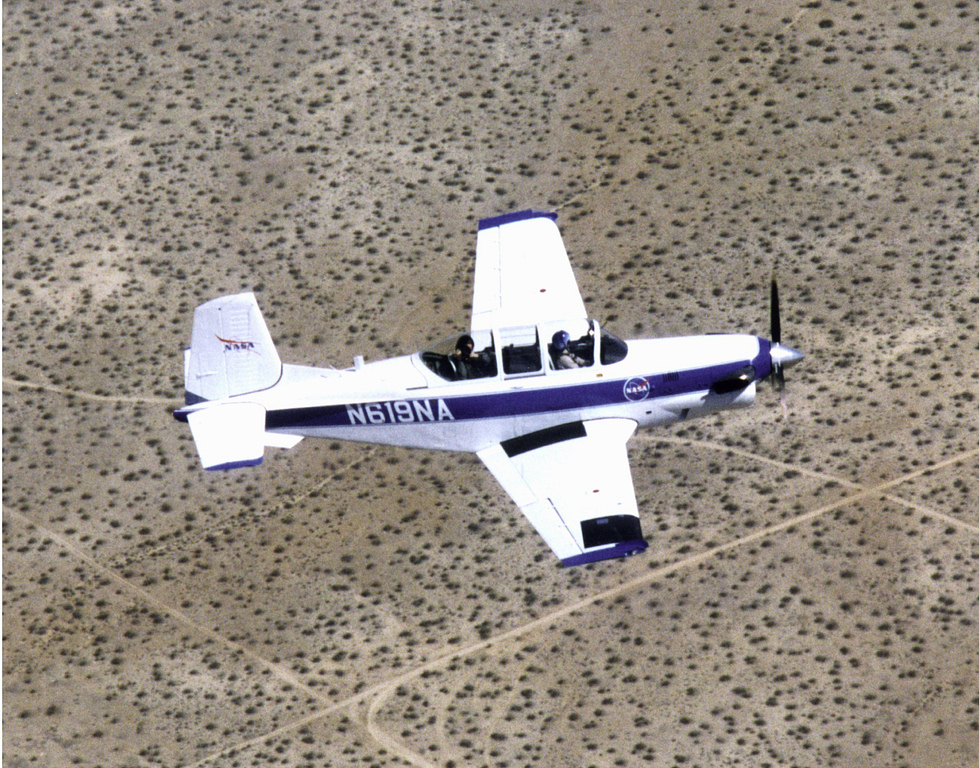
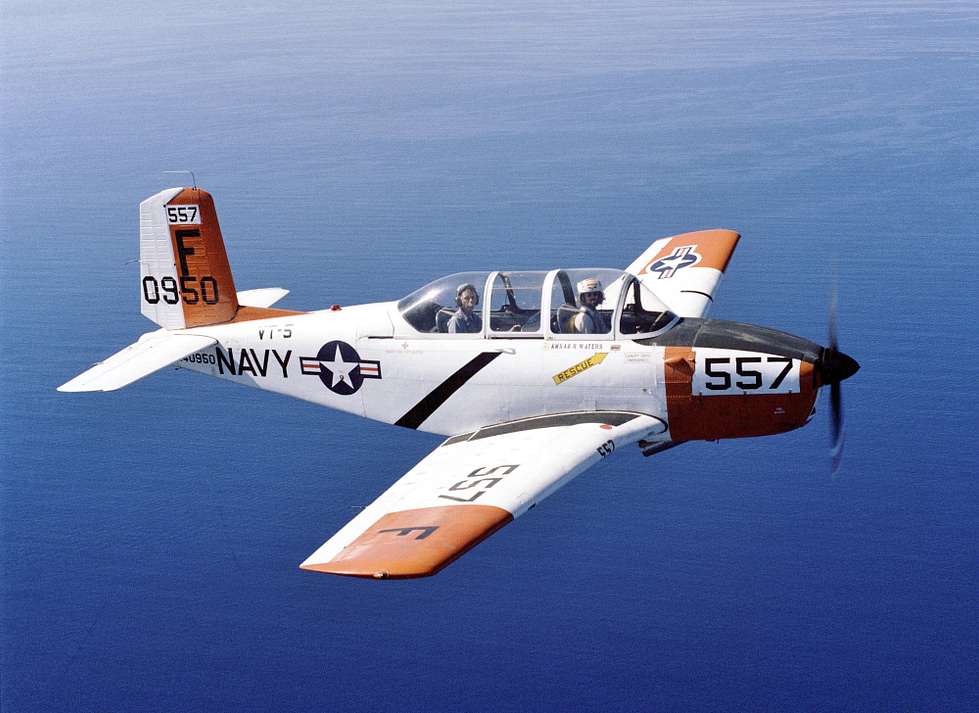
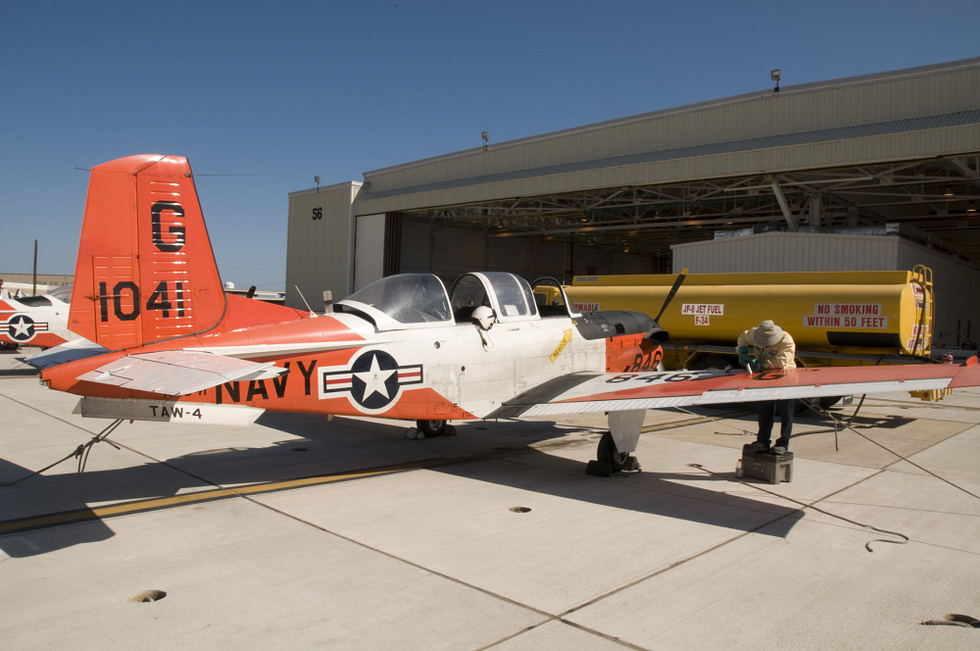
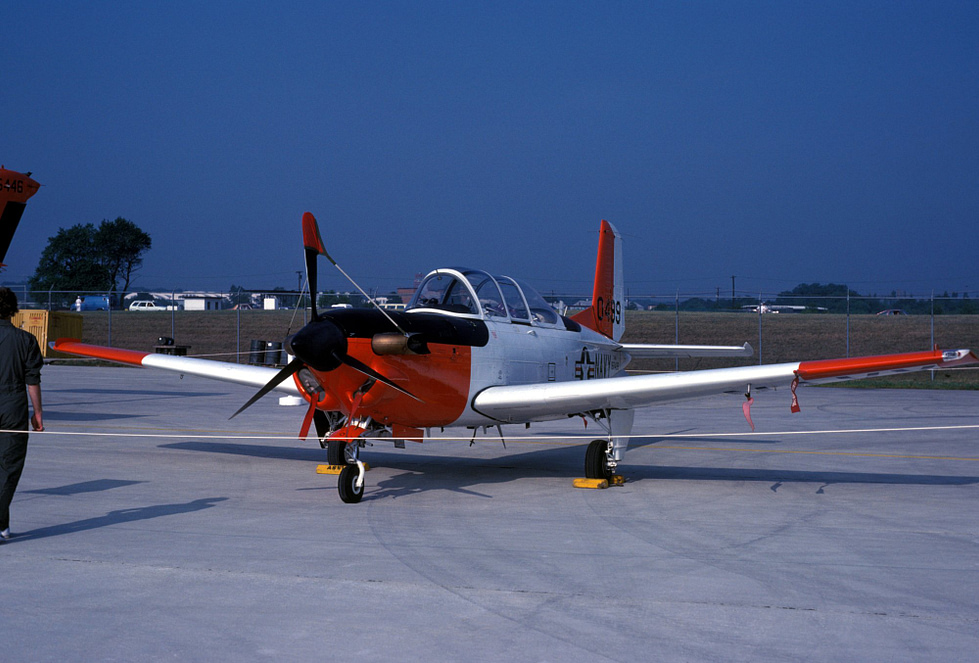
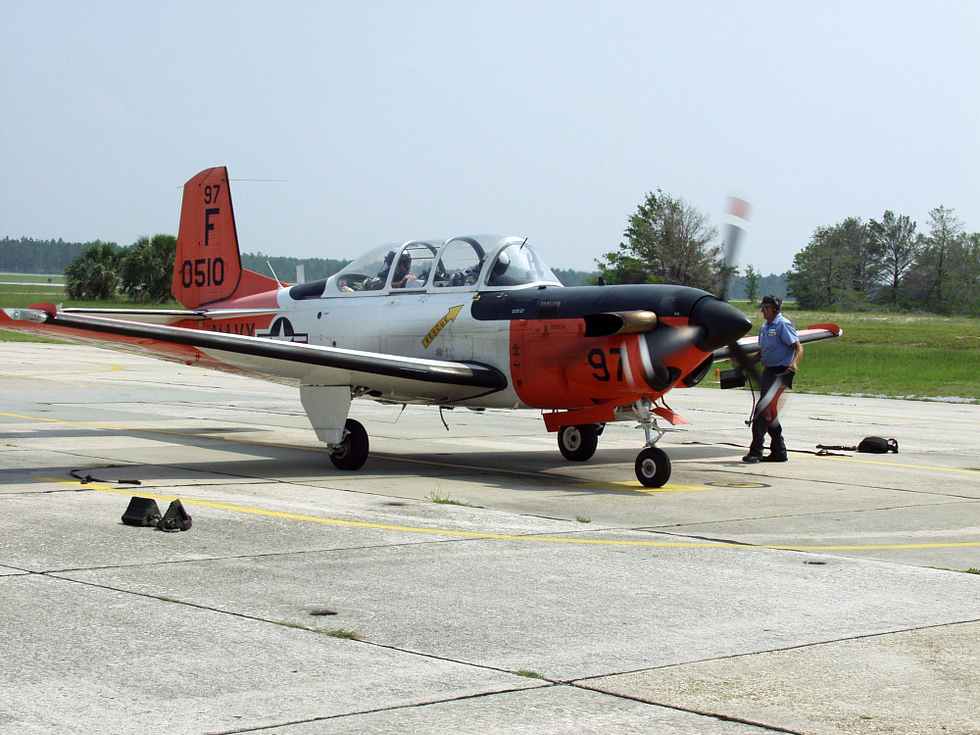

The T-34 Mentor in motion
Commemorative Air Force: What do you know about the T-34 Mentor? A short warbird-org profile of the type, its history and how it flies, from one of the largest flying-warbird operators.
Where the T-34 Mentor flew
The Beechcraft T-34 Mentor by the numbers
The Mentor never made its name in combat — it made it in the training command. Its record is one of longevity and reach: a single, forgiving design that outlasted the jets it fed pilots to, spread across dozens of air forces, and found a whole second life in civilian hands.
The T-34C was eventually replaced in US service by the Beechcraft T-6 Texan II, its direct turboprop successor.
Everything people ask about the T-34 Mentor
Can I fly in a Beechcraft T-34 Mentor?
What is the Beechcraft T-34 Mentor?
What is the difference between the T-34B and the T-34C Turbo Mentor?
Is the T-34 Mentor related to the Beechcraft Bonanza?
Why were T-34 Mentors grounded in 2004?
Who still flies the T-34 Mentor?
How fast is the T-34 Mentor?
What replaced the T-34 in US service?
You can’t fly the Beechcraft T-34 Mentor.
These, you can.
Some legends only live in museums — others are fuelled and waiting. MiGFlug has put civilians in real military jet cockpits since 2004.
 Fly the L-39 AlbatrosThe world’s most-flown jet trainer — aerobatics included
 Fly the F-104 Starfighter“The missile with a man in it”
 Fly the MiG-21The Cold War’s most-produced jet
 Vlieg met de T-33 Shooting StarAmerica’s first jet trainer
 Fly the DH VampireA piece of early jet history
 Fly the S.211Agile Italian jet trainer
 Fly the MB-326The classic Aermacchi jet
 Fly the MiG-15The Soviet legend of the Korean War
Continue the tour
Every fact, checked
- National Museum of the US Air Force — Beech T-34A MentorUSAF fact sheet: first flight, engine and production of the piston Mentor.
- NAVAIR — T-34 TurbomentorOfficial US Navy specifications and role for the T-34C.
- Naval History & Heritage Command / NNAMNavy service history and replacement by the T-6 Texan II.
- FAA — Lessons Learned: Beechcraft T-34The 1999–2004 wing-spar accidents and the resulting Airworthiness Directives.
- AOPA — T-34 Wing Spar Regulatory BriefAD numbers and the inspection and modification requirements.
- Smithsonian Air & Space — “Save the Mentor”The grounding and the effort to keep the warbird fleet flying.
- GlobalSecurity — T-34 MentorProduction numbers, variants and operator overview.
- Vintage Aviation News — Boneyard Files: T-34 MentorProduction, operators and the type’s retirement and warbird career.