
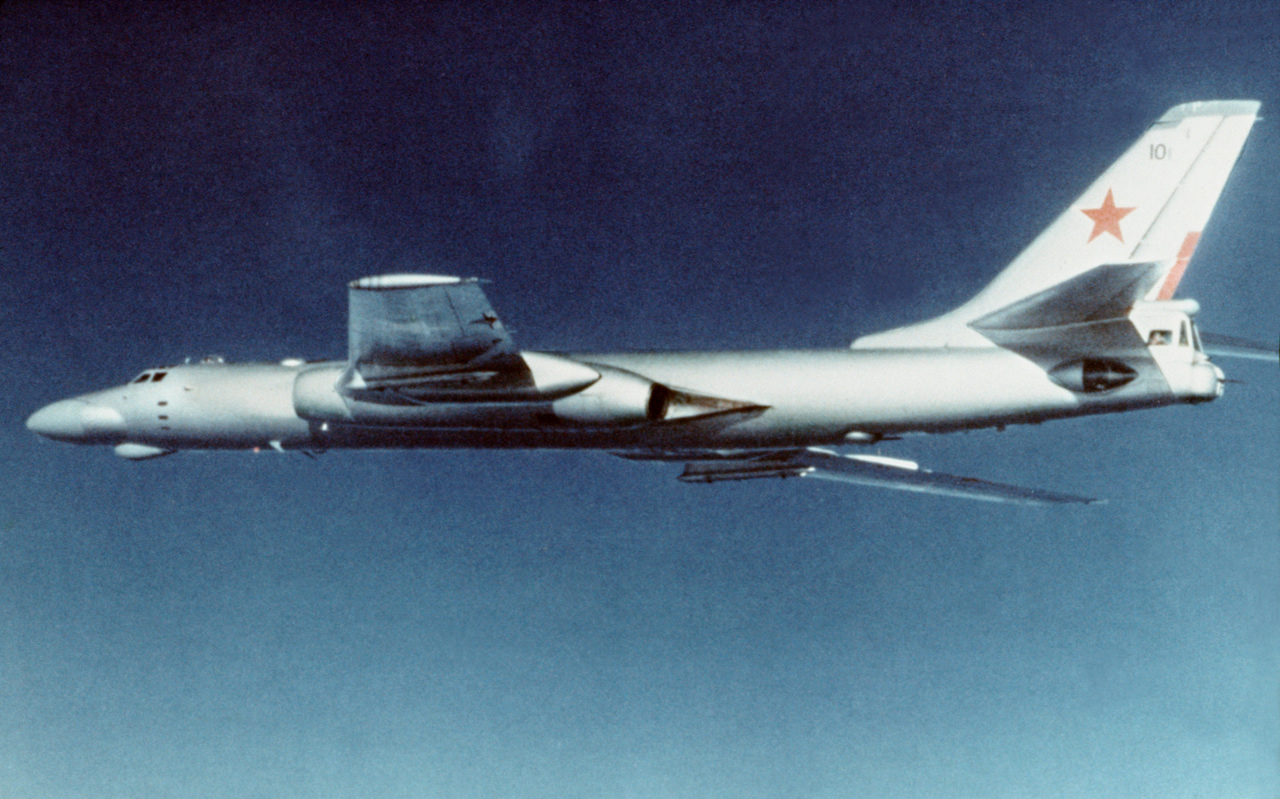
Tupolev Tu-16
“Badger”
A Soviet swept-wing twin-jet medium bomber of the early 1950s — a Cold War mainstay for nuclear strike, anti-ship missile carriage, reconnaissance and electronic warfare, and the ancestor of China’s still-flying Xian H-6.
The Soviet jet bomber that defined a Cold War generation
By the late 1940s the Soviet Union wanted a jet bomber that could carry a heavy load a long way at high subsonic speed. The answer came from the Tupolev design bureau and was made possible by one component above all: the powerful Mikulin AM-3 turbojet. The definitive prototype, known internally as aircraft “88,” first flew on 27 April 1952 and entered service in 1954. NATO gave it the reporting name “Badger.” Its Western public debut came when nine flew over Red Square on May Day 1954.
The Tu-16 was built around a 35-degree swept wing with the two large engines set into the wing roots against the fuselage. In its first role it was a free-fall nuclear and conventional bomber. But its most lasting significance was as a platform that kept changing jobs: as air defences improved and a subsonic bomber became harder to push over a target, the Soviets repeatedly re-engineered it to launch large anti-ship and land-attack cruise missiles — the AS-1 Kennel, AS-5 Kelt and AS-6 Kingfish — from standoff range. Reconnaissance, electronic-warfare, ELINT and tanker versions followed, so that a single airframe spawned a dozen distinct sub-types.
Roughly 1,509 were built in the USSR between 1953 and 1963, and the type served for decades in Soviet long-range and naval aviation before Russia retired it around 1993. It was exported to Egypt, Iraq and Indonesia, and saw combat in the Arab–Israeli wars and the Iran–Iraq War. Its design also outlived its parent air force: in 1957 the USSR licensed production to China, where it became the Xian H-6 — a separate aircraft, covered in its own exhibit, that remains in front-line Chinese service today.
01The Tu-16 Badger’s family tree: one airframe, a dozen missions
Few Cold War aircraft were adapted as widely as the Tu-16. The baseline Badger-A was a free-fall bomber, some with a heated bomb bay for nuclear weapons. Missile carriers followed — the Badger-B (Tu-16KS) with the AS-1 Kennel, the Badger-C with the large K-10 anti-ship missile, and the Badger-G with the AS-5 Kelt and later AS-6 Kingfish. Alongside these came dedicated photo-reconnaissance and maritime-reconnaissance versions (Badger-E/F), a family of electronic-warfare and ELINT aircraft (Badger-D/H/J/K/L) for jamming and signals collection, and tanker variants.
The airframe even crossed into civil aviation: Tupolev reused the Tu-16’s wing, engines and structure to create the Tu-104, one of the world’s first operational jet airliners, which flew in 1955. Exact variant counts and dates differ between sources and are best read as approximate, but the breadth is not in dispute — the Badger was less a single bomber than a whole toolbox built on one design.
What makes it special
Big engines buried in the wing roots
The Tu-16’s two large Mikulin AM-3 turbojets (later RD-3M) were set into the wing roots, tight against the fuselage, rather than hung in separate underwing pods. Combined with a 35-degree swept wing, this kept the wing aerodynamically clean for high subsonic speed and placed the thrust close to the centreline — which helped keep the heavy aircraft controllable if one engine failed.
From free-fall bomber to standoff missile carrier
The Tu-16’s most important evolution was doctrinal. As defences improved, a subsonic bomber over a target became a liability, so the Soviets turned it into a launch platform. Successive variants carried large cruise missiles — the AS-1 Kennel, AS-5 Kelt and AS-6 Kingfish — letting it strike ships and land targets from well beyond gun and short-range missile defences without flying over them.
Wingtip-to-wingtip aerial refuelling
Some Tu-16 tankers used a refuelling method with no Western equivalent: fuel was passed from one aircraft’s wingtip to another’s, rather than through a trailing hose-and-drogue behind the tanker. It was a demanding technique that extended the bomber’s reach; later variants adopted a more conventional probe-and-drogue system.
02The Tu-16 Badger as a missile carrier: Kennel, Kelt and Kingfish
The anti-ship mission was where the Tu-16 mattered most in later life. Soviet Naval Aviation used it to carry heavy cruise missiles that could be launched from tens of kilometres away, turning a 1950s bomber into a credible threat to surface ships — a doctrine later inherited by the supersonic Tu-22M Backfire. The AS-1 Kennel was an early turbojet-powered missile resembling a small swept-wing jet; the AS-5 Kelt was used in anger by Egypt in 1973; and the larger, faster AS-6 Kingfish gave the type a long-range, high-speed weapon. Precise ranges and performance figures for these weapons vary between sources and were often classified, so they should be treated as approximate.
03The Tu-16 Badger and the Xian H-6: how the design outlived the USSR
In September 1957 the Soviet Union agreed to licence Tu-16 production to China. The first Chinese-assembled aircraft flew in 1959, and the first fully Chinese-built example — designated H-6 — flew in 1968. Where the USSR retired its Tu-16s by the early 1990s, China kept the basic airframe in production and service, repeatedly upgrading it into modern cruise-missile-carrying variants such as the H-6K and H-6N.
The two aircraft are best kept distinct: the H-6 is a licence-built descendant, not the same aircraft, and its modern forms differ substantially in engines, avionics and weapons. The Xian H-6 has its own exhibit in this museum. What the shared lineage shows is the durability of the original Tupolev design — roughly seventy years after the Tu-16’s first flight, its direct descendant is still flying.
Full specifications
Figures are broadly for the standard Soviet Tu-16 and mix official and estimated data. Several values — weight, ceiling, speed and engine thrust — differ between sources and are hedged accordingly.
Airframe & Performance
- Bemanning
- 6–7
- Lengte
- ~34.8 m
- Spanwijdte
- ~33 m
- Hoogte
- ~10.4 m
- Max takeoff weight
- ~75,800–79,000 kg (sources vary)
- Max speed
- ~960–1,050 km/h (about Mach 0.8–0.85)
- Serviceplafond
- ~12,800–15,000 m (sources vary)
- Bereik
- ~4,800–5,800 km (with load; varies)
- Bomb load
- ~3,000 kg typical · up to ~9,000 kg
Propulsion, Armament & Cost
- Engines
- 2 × Mikulin AM-3 (later RD-3M) turbojet
- Thrust (each)
- ~86–93 kN (~8,750–9,500 kgf)
- Defensive guns
- 6–7 × 23 mm AM-23 cannon in turrets
- Main missiles
- AS-1 Kennel, AS-5 Kelt, AS-6 Kingfish
- Roles
- Bomber, missile carrier, recon, ELINT/EW, tanker
- First flight
- 27 April 1952 · in service 1954
- Built (USSR)
- ~1,509 (1953–1963)
- Unit cost
- No reliable public figure
- Cost per flight hour
- No reliable public figure
04The Tu-16 Badger’s operating costs: why no reliable price exists
The Tu-16 was a Soviet state military product, never sold on an open dollar market, so there is no credible public flyaway unit price or cost-per-flight-hour figure for the type. Any specific dollar amount attached to it should be treated as an estimate rather than a sourced number.
What can be said is that the aircraft was built in large numbers — around 1,500 in the USSR alone — and served for roughly four decades, which points to a design that was economical to produce and maintain by the standards of its era. The same logic of stretching an established, affordable airframe is why the licence-built Chinese H-6 line was kept alive and upgraded long after the original.
From jet bomber to Cold War missile carrier
Design begins
The Tupolev bureau works on a swept-wing jet bomber, made possible by the powerful new Mikulin AM-3 turbojet.
First flight
The definitive prototype, aircraft “88,” flies on 27 April, reaching over 1,000 km/h on test.
Enters service
The Tu-16 joins Soviet long-range aviation; nine make a public debut over Red Square on May Day.
An airliner is born
Tupolev reuses the bomber’s wing and engines for the Tu-104, one of the world’s first jet airliners.
Missiles and exports
Missile-carrier variants enter service; the USSR licences the design to China (1957) and exports to Indonesia (1961).
Destroyed on the ground
In the opening strike of the Six-Day War on 5 June, Israel destroys Egypt’s entire Tu-16 bomber force on the ground.
Standoff strike
In the Yom Kippur War, Egyptian Tu-16s launch AS-5 Kelt cruise missiles at Israeli targets from a distance.
The Iran–Iraq War
Iraqi Tu-16s and Chinese-built H-6s fly long-range bombing raids on Iranian cities and targets.
Soviet type retired
Russia withdraws its Tu-16s; the Chinese H-6 derivative carries the basic design on into the present day.
Twelve Tu-16 Badger stories
“Badger” from the West
NATO slotted the new bomber into its B-for-bomber reporting-name scheme.
Read the full story
Faster than predicted
On its 1952 tests the prototype exceeded the speed its engineers had forecast.
Read the full story
The airliner inside the bomber
The Tu-16’s wing and engines became the basis for the Tu-104 jetliner.
Read the full story
The Navy’s ship-killer
Soviet Naval Aviation turned the Badger into a cruise-missile platform against ships.
Read the full story
Wingtip to wingtip
Soviet Tu-16 tankers passed fuel from one aircraft’s wingtip to another’s.
Read the full story
Badgers over the equator
Indonesia received missile-armed Tu-16s in the early 1960s.
Read the full story
Grounded by politics
Indonesia’s Badger fleet was grounded when Soviet spares dried up.
Read the full story
Thirty bombers, one morning
Egypt’s Tu-16 force was destroyed on the ground in the Six-Day War.
Read the full story
Kelt missiles at a distance
In 1973 Egyptian Tu-16s struck back by launching standoff missiles.
Read the full story
The long-range raider
Iraqi Tu-16s and H-6s bombed deep into Iran in the 1980s.
Read the full story
A dozen aircraft in one
From the same airframe came bombers, spies, jammers and tankers.
Read the full story
The design that outlived its country
The USSR retired the Tu-16, but its Chinese descendant still flies.
Read the full story
The Tu-16 in pictures
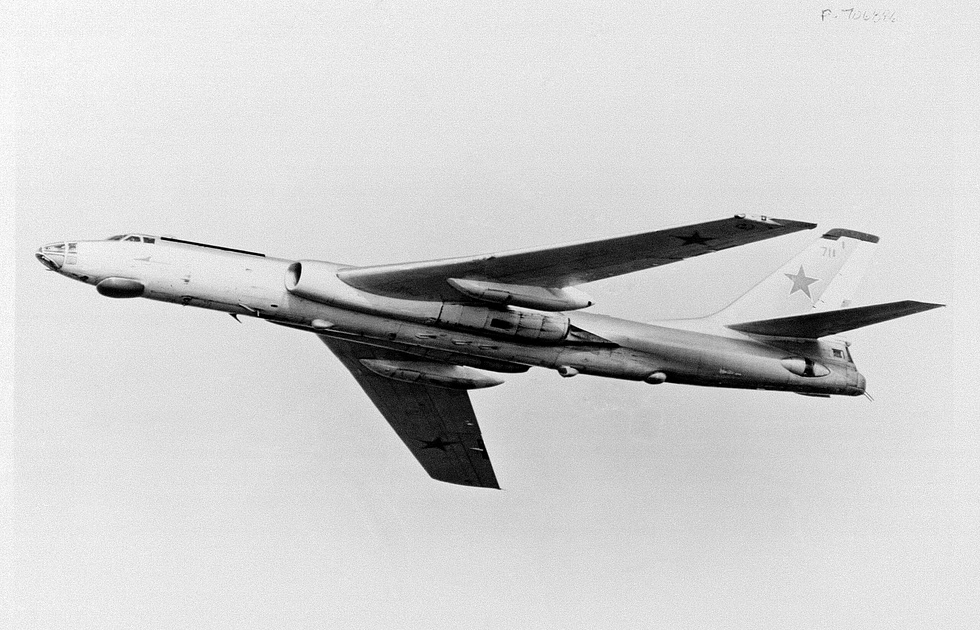
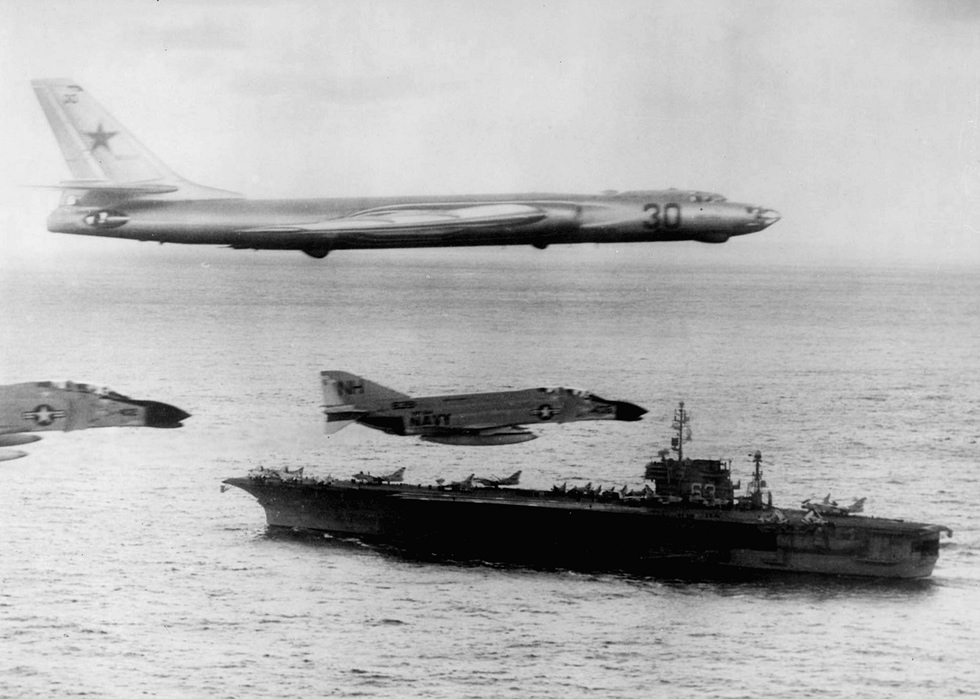
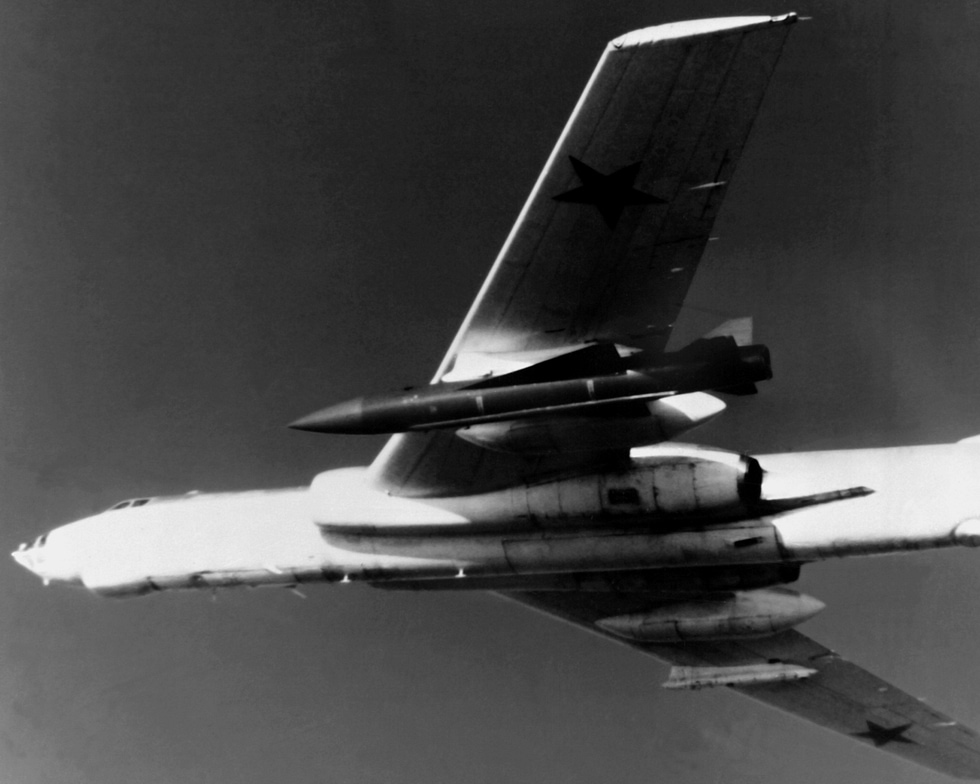
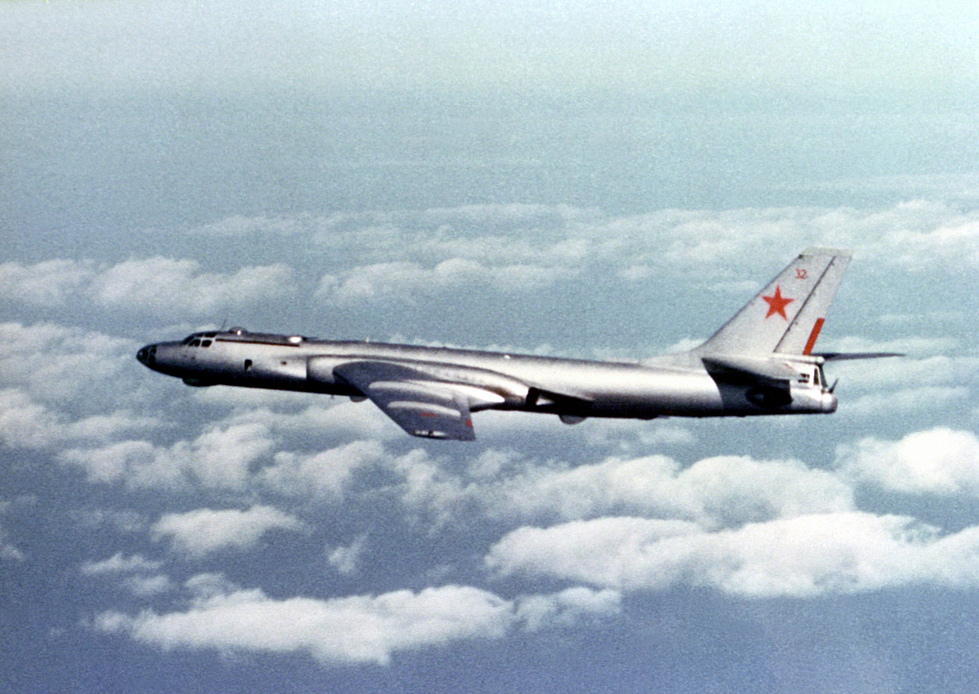
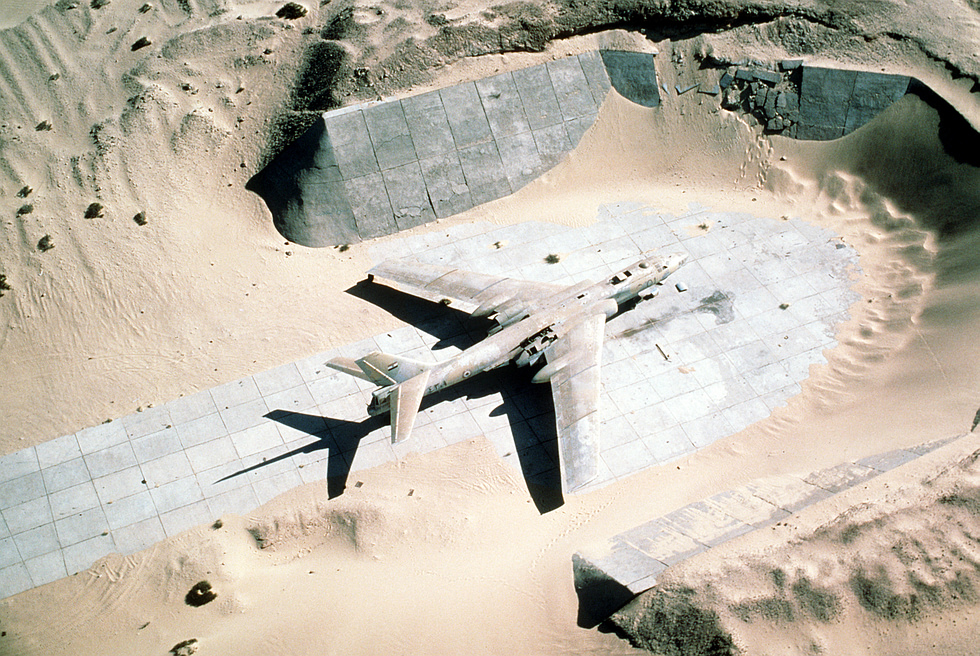
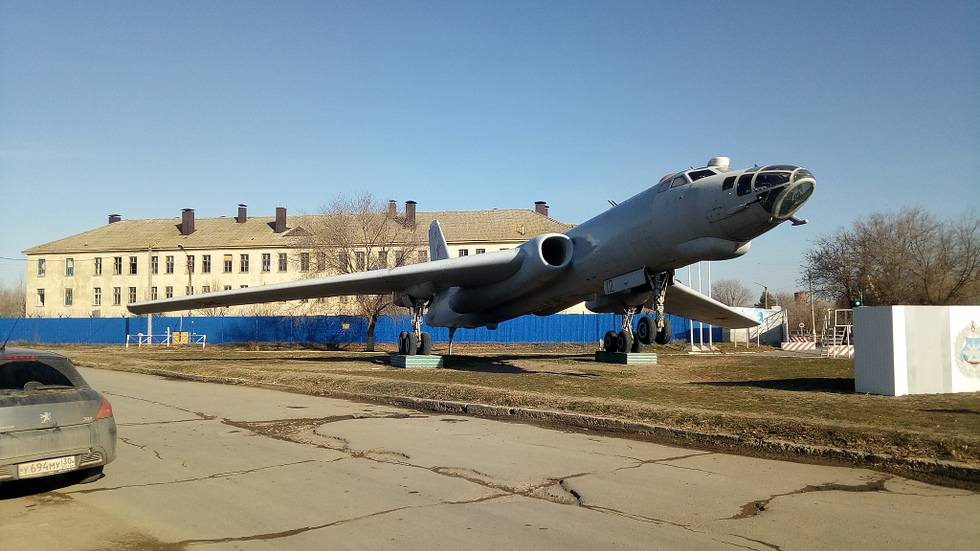
The Tu-16 in motion
A curated video feature for the Tupolev Tu-16 is coming soon. In the meantime, explore the photo gallery above and the operator map below.
Where the Tu-16 flew
The record that defines it
The Tu-16’s combat history is bound up with the Cold War’s regional conflicts. In Egyptian hands it suffered one of the war’s starkest losses — an entire bomber force destroyed on the ground on the first morning of the 1967 Six-Day War — before a rebuilt force launched AS-5 Kelt standoff missiles at Israeli targets in 1973. Iraq flew Tu-16s and Chinese H-6s on long-range raids in the Iran–Iraq War. For its main operator, the Soviet Union, the type’s significance lay less in air-to-air combat than in its role as a nuclear-capable bomber and, above all, a naval missile carrier able to threaten ships from standoff range.
Compare the combat record of every military aircraft. Figures as of July 2026.
Everything people ask about the Tu-16
Can I fly in a Tu-16?
Is the Tu-16 the same as the Chinese H-6?
How fast is the Tu-16?
What missiles did the Tu-16 carry?
Was the Tu-16 used in combat?
How many Tu-16s were built?
Is the Tu-16 still in service?
You can’t fly the Tu-16.
These, you can.
Some legends only live in museums — others are fuelled and waiting. MiGFlug has put civilians in real military jet cockpits since 2004.
 Fly the L-39 AlbatrosThe world’s most-flown jet trainer — aerobatics included
 Fly the F-104 Starfighter“The missile with a man in it”
 Fly the MiG-21The Cold War’s most-produced jet
 Vlieg met de T-33 Shooting StarAmerica’s first jet trainer
 Fly the DH VampireA piece of early jet history
 Fly the S.211Agile Italian jet trainer
 Fly the MB-326The classic Aermacchi jet
 Fly the MiG-15The Soviet legend of the Korean War
Continue the tour
Every fact, checked
- GlobalSecurity.org — Tu-16 Badger overviewDesign origin, service history and the type’s Soviet operational record.
- GlobalSecurity.org — Tu-16 specificationsDimensions, weights and performance figures used for the spec table.
- GlobalSecurity.org — Tu-16 variantsThe Badger A-to-L family: bomber, missile, recon, ELINT and tanker versions.
- Federation of American Scientists — Tu-16 BadgerThe nuclear-strike and naval missile-carrier roles in Soviet forces.
- MilitaryFactory — Tupolev Tu-16Specification baseline, armament and production overview.
- AirVectors (Greg Goebel) — The Tupolev Tu-16 “Badger”Detailed development history, variants and the wingtip-refuelling technique.
- Warfare History Network — The Sinai Air Strike, 5 June 1967The destruction of Egypt’s Tu-16 bomber force in the Six-Day War.
- Aces Flying High — The Soviet Era of the Indonesian Air ForceIndonesia’s Tu-16KS fleet, the West New Guinea dispute and its retirement.