
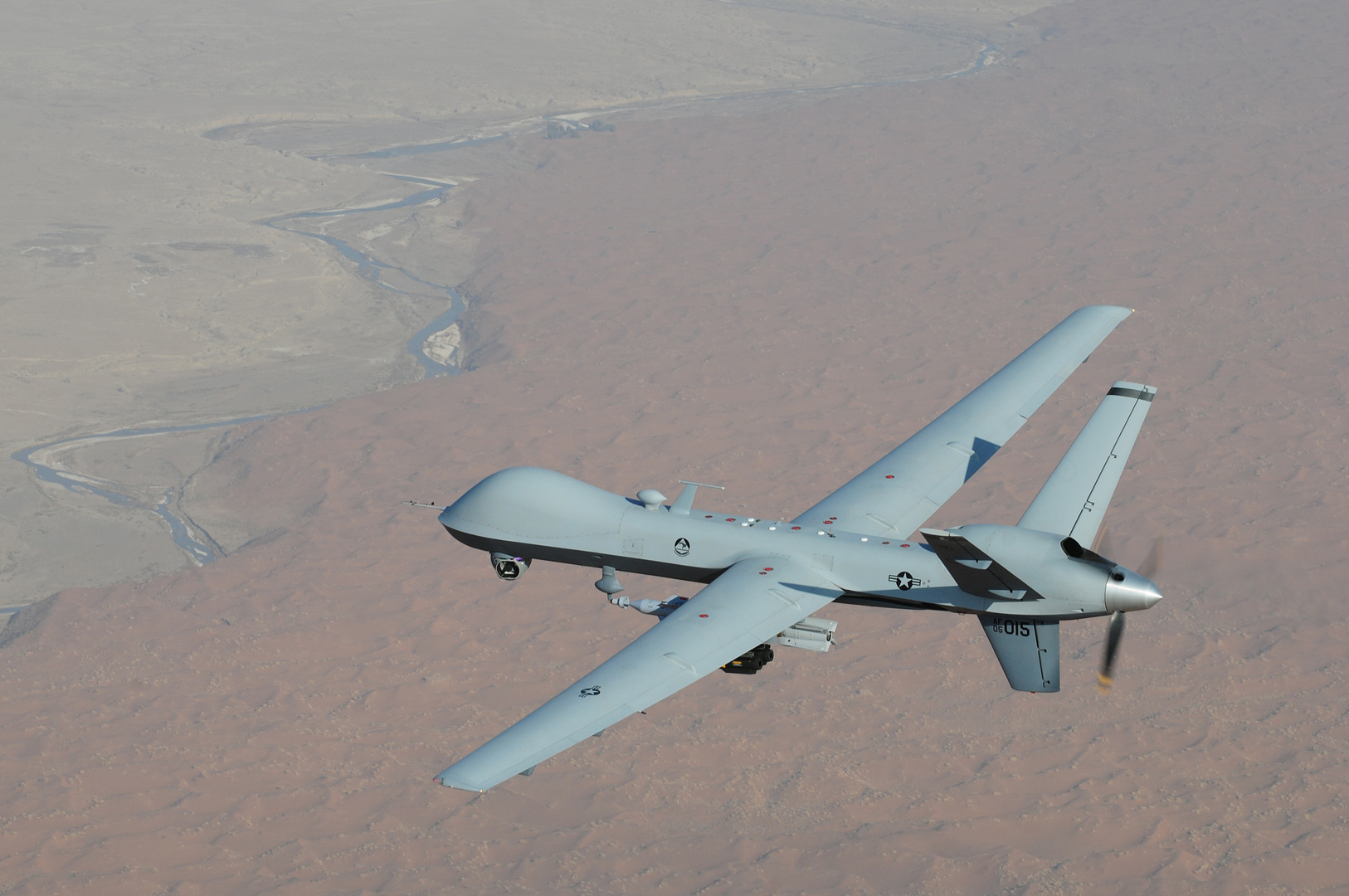
General Atomics MQ-9 Reaper
“Hunter-Killer”
The armed drone that reshaped modern war — a turboprop-powered unmanned aircraft built to watch a target for a full day and then strike it, flown by a two-person crew half a world away.
The drone that made “hunter-killer” a doctrine
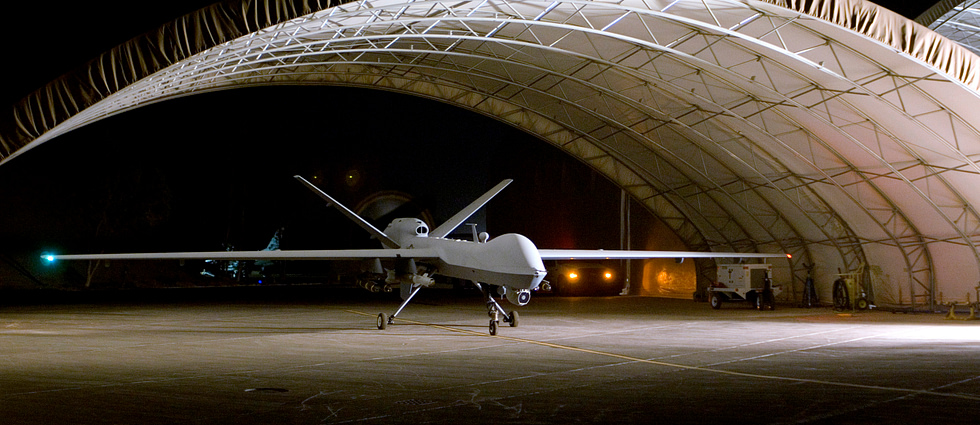
The General Atomics MQ-9 Reaper is the aircraft that turned the armed drone from an experiment into a permanent feature of modern war. It grew out of the piston-engined MQ-1 Predator, which had shown in the early 2000s that an unmanned aircraft could not only watch a target but shoot at it. General Atomics Aeronautical Systems answered with a larger, far more powerful turboprop development — originally called Predator B — conceived from the outset as a “hunter-killer”: a single machine for persistent surveillance e strike. It first flew in 2001 and entered U.S. Air Force service in 2007.
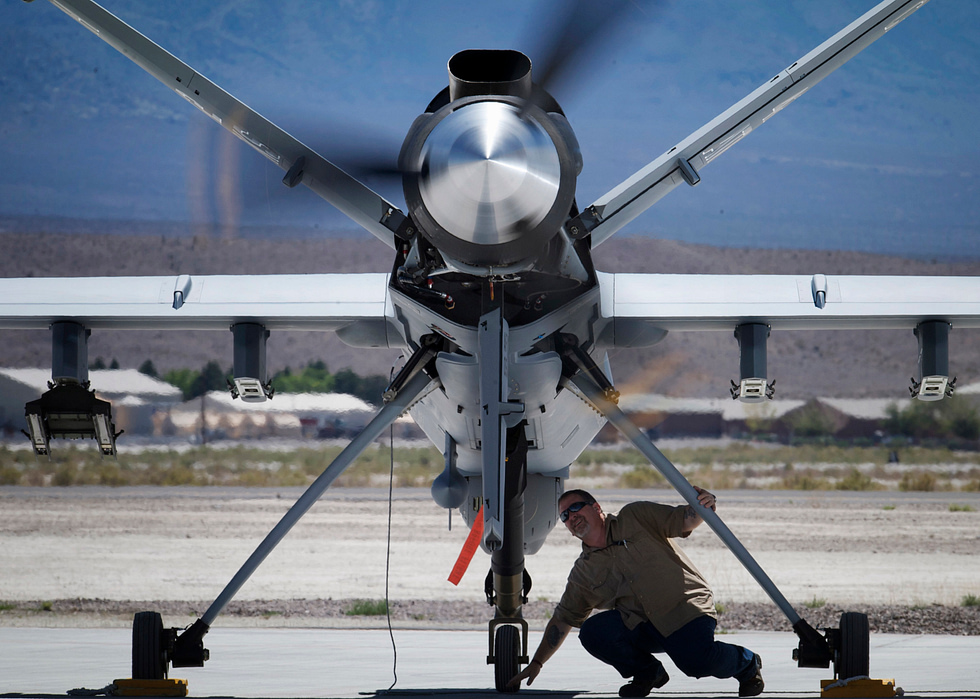
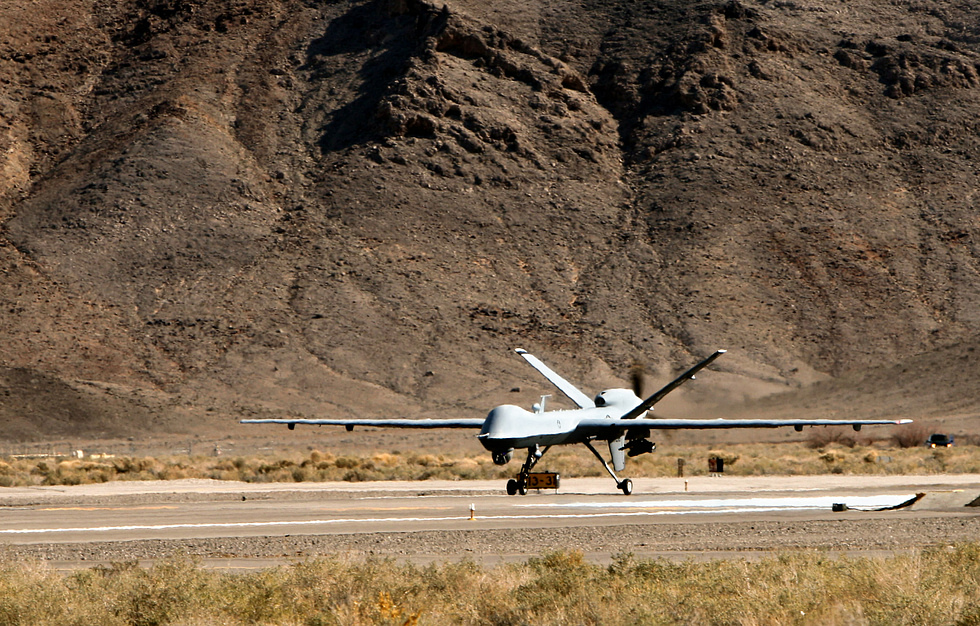
What makes the Reaper distinctive is not speed — it cruises at a few hundred kilometres an hour — but persistence and reach. Powered by a roughly 900-shaft-horsepower Honeywell turboprop, it can stay airborne for more than 27 hours, loitering over a target while its Multi-Spectral Targeting System sensor ball streams video to operators. It is flown by a two-person crew, a pilot and a sensor operator, who sit in a ground control station and command the aircraft over a satellite link from thousands of kilometres away. Its hardpoints carry AGM-114 Hellfire missiles and laser- and GPS-guided bombs, so the same aircraft that finds a target can also engage it.
That capability made the Reaper central — and deeply controversial — in two decades of counterterrorism operations across Afghanistan, Iraq, Yemen, Somalia and Pakistan. Supporters argue it lets commanders study a target for hours and strike with precision; critics point to civilian casualties and to the questions raised by killing at a distance. Casualty figures for drone strikes are genuinely contested and are usually given as wide, uncertain ranges rather than firm numbers. The Reaper has also proved vulnerable outside permissive skies: one was brought down over the Black Sea by a Russian fighter in 2023, and several have been lost to Houthi fire over Yemen.
01The MQ-9 Reaper’s hunter-killer concept: how one drone merged surveillance and strike
Before the Reaper, surveillance and strike were usually separate jobs done by separate aircraft. A reconnaissance platform found a target; a strike aircraft was then vectored in, often after the moment had passed. The armed Predator hinted at another way, and the MQ-9 was built to deliver it: a persistent aircraft that could hunt a target for hours with its sensors and, when cleared, kill it with its own weapons — without handing off to anyone else.
This collapsing of the “kill chain” into one long-endurance airframe is the Reaper’s real innovation. It let commanders watch a location develop over an entire day and strike a fleeting opportunity in minutes. It is also exactly what makes the aircraft contentious: the same persistence and precision that its advocates praise are, to its critics, what enabled a style of remote, protracted warfare whose human costs remain fiercely debated.
What makes it special
Persistence and remote piloting
The Reaper’s defining trait is time on station. Its Honeywell turboprop and large fuel load give it more than 27 hours of endurance, so a single aircraft can watch a target across a full day and night. It is flown not from a cockpit but from a ground control station: crews launch and recover it locally, then hand control to operators who fly it over a satellite link from thousands of kilometres away, rotating shifts through a mission.
Sensor-and-weapon fusion
The nose ball is the MTS-B Multi-Spectral Targeting System — infrared and daylight cameras, a laser designator and an illuminator — often paired with a synthetic-aperture radar. Because the aircraft can self-designate its own targets and carry AGM-114 Hellfire missiles and GBU-12 / GBU-38 guided bombs, the platform that finds a target can also strike it, without waiting for another aircraft.
The hunter-killer doctrine
The MQ-9 was the first unmanned aircraft designed from the start to both hunt and kill. By merging long-endurance surveillance with an organic strike capability, it collapsed the traditional kill chain into one airframe and made persistent armed overwatch a routine tool — a shift that reshaped how the U.S. and its allies fought insurgencies, and one that remains ethically contested.
02The MQ-9 Reaper’s crew: who actually “flies” a Reaper
An MQ-9 has no one on board, but it is not autonomous: it is remotely piloted by a crew of two — a rated pilot and an enlisted sensor operator — working side by side in a ground control station. For the U.S. Air Force many of these crews sit at bases such as Creech Air Force Base in Nevada, commuting to a war fought on the other side of the planet. Take-off and landing are usually handled by a local launch-and-recovery team over a line-of-sight link, after which control is handed to the mission crew flying via satellite. The term the Air Force prefers — remotely piloted aircraft — is meant to stress that a human is always in the loop.
03The MQ-9 Reaper in contested airspace: why a slow drone gets shot down
The Reaper was optimised for permissive skies — long loiter over areas without serious air defences. It is large, slow and not stealthy, which makes it an easy target where an enemy has capable fighters or surface-to-air missiles. That vulnerability has been demonstrated repeatedly: in March 2023 a Russian Su-27 forced a U.S. MQ-9 down over the Black Sea, and from 2023 onward Houthi forces shot down a string of Reapers over Yemen. Because each aircraft costs tens of millions of dollars while the weapons downing them can cost far less, these losses have sharpened a debate about how survivable large drones really are in a contested war.
Full specifications
Airframe & Performance (MQ-9A)
- Equipe
- 0 aboard (2 remote: pilot & sensor operator)
- Comprimento
- ~11 m (36 ft)
- Envergadura
- ~20.1 m (66 ft)
- Altura
- ~3.8 m (12.5 ft)
- Peso vazio
- ~2,223 kg
- Max takeoff weight
- ~4,760 kg (10,500 lb)
- Max speed
- ~445 km/h (240 kn)
- Teto de serviço
- ~15,240 m (50,000 ft)
- Endurance
- ~27 hours (MQ-9A)
- Faixa
- ~1,850 km (1,000 nmi)
Propulsion, Systems & Cost
- Motor
- 1 × Honeywell TPE331-10GD turboprop
- Power
- ~900 shp (~670 kW)
- Payload
- ~1,700 kg (3,750 lb)
- Sensors
- MTS-B multi-spectral targeting, SAR
- Armamento
- AGM-114 Hellfire; GBU-12, GBU-38, GBU-49/54 bombs
- First flight
- 2 February 2001 (Predator B)
- USAF service (IOC)
- October 2007
- Built
- 300+ (in production)
- Unit cost
- ~$30 million (aircraft, estimate)
- Cost per flight hour
- ~$3,500–5,000 (commonly cited estimate)
04The MQ-9 Reaper’s operating costs: what an armed drone actually costs
Cost figures for the Reaper vary with how you count. The U.S. Air Force has quoted a system unit cost of about $56.5 million (fiscal 2011) — but that price bundles four aircraft with their sensors, a ground control station and the satellite link, not a single airframe. Per-aircraft figures widely cited in reporting on combat losses sit around $30 million. Cost-per-flight-hour estimates commonly fall in the low thousands of dollars — often quoted around $3,500–5,000 — far below a manned fighter, which is a large part of the Reaper’s appeal. Treat any single number as an estimate: totals depend heavily on the variant, the sensor fit and whether the ground segment is included.
From Predator B to a global armed drone
Predator B begins
General Atomics starts a private-venture turboprop development of the Predator — larger, more powerful, and designed to carry a real weapons load.
First flight
The Predator B prototype flies on 2 February 2001, proving the turboprop concept behind what would become the Reaper.
Designated MQ-9A
Following the armed Predator’s success, the U.S. Air Force designates the turboprop aircraft MQ-9A and buys early examples.
Named “Reaper”
The Air Force assigns the name Reaper — the first name chosen to reflect a lethal hunter-killer role rather than pure reconnaissance.
Enters service
The first Reaper wing stands up and the type reaches initial operational capability in October, deploying to Afghanistan and Iraq.
The counterterror decade
The Reaper becomes central to persistent strike and surveillance across Afghanistan, Iraq, Pakistan, Yemen and Somalia — and to the civilian-casualty debate that surrounds it.
Exports expand
Allies field the Reaper and the new MQ-9B SkyGuardian / SeaGuardian across Europe, Asia and beyond, from RAF Protector to maritime patrol.
Losses in contested skies
A Russian Su-27 downs a U.S. Reaper over the Black Sea (March 2023); Houthi forces shoot down a series of Reapers over Yemen.
Twelve stories from the Reaper era
From Predator to Predator B
A piston-engined spy drone that could shoot led to a turboprop built to hunt and kill.
Read the full story
Why it is called “Reaper”
The U.S. Air Force picked a deliberately lethal name for a deliberately lethal aircraft.
Read the full story
The first true hunter-killer
One airframe now did a job that used to take several aircraft and a chain of hand-offs.
Read the full story
Flying a war from Nevada
Reaper crews commute to combat, then drive home for dinner.
Read the full story
A full day overhead
Persistence, not speed, is the Reaper’s weapon.
Read the full story
The unblinking eye
The nose ball turns a slow aircraft into a persistent, all-weather watcher.
Read the full story
Hellfire and Paveway
The aircraft that finds the target can also strike it.
Read the full story
The casualty debate
Precise weapons did not settle the argument over who dies in a drone strike.
Read the full story
Downed by a Russian fighter
A dangerous intercept over international waters forced a Reaper into the sea.
Read the full story
A costly target
Cheap air defences have downed tens of millions of dollars of drone.
Read the full story
Reapers over Europe and beyond
Allies adopted the Reaper for their own long-endurance missions.
Read the full story
SkyGuardian and SeaGuardian
A new generation stretches the Reaper into maritime patrol and civil airspace.
Read the full story
The Reaper in pictures
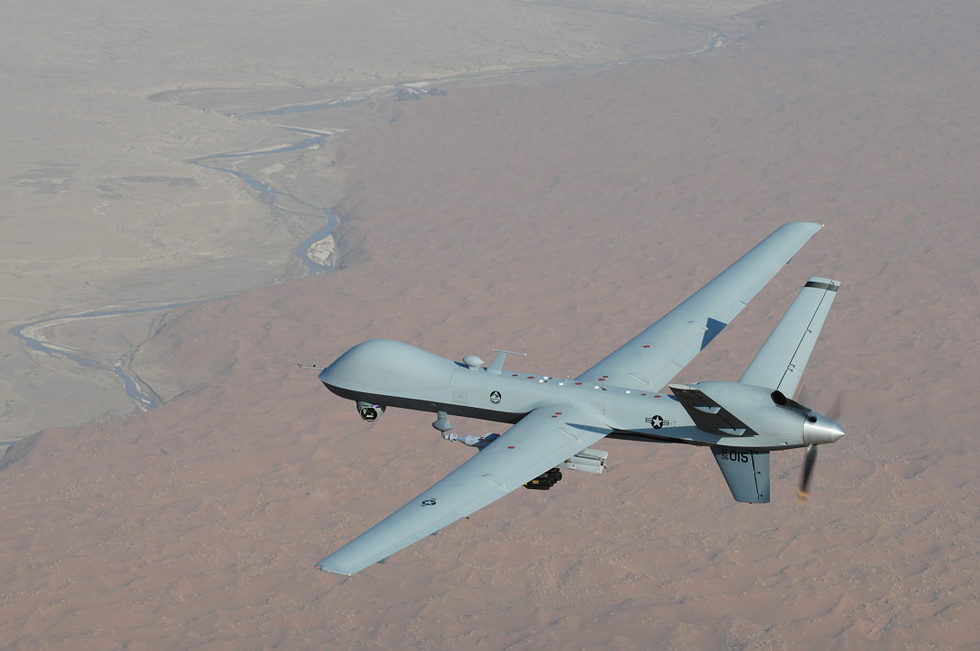
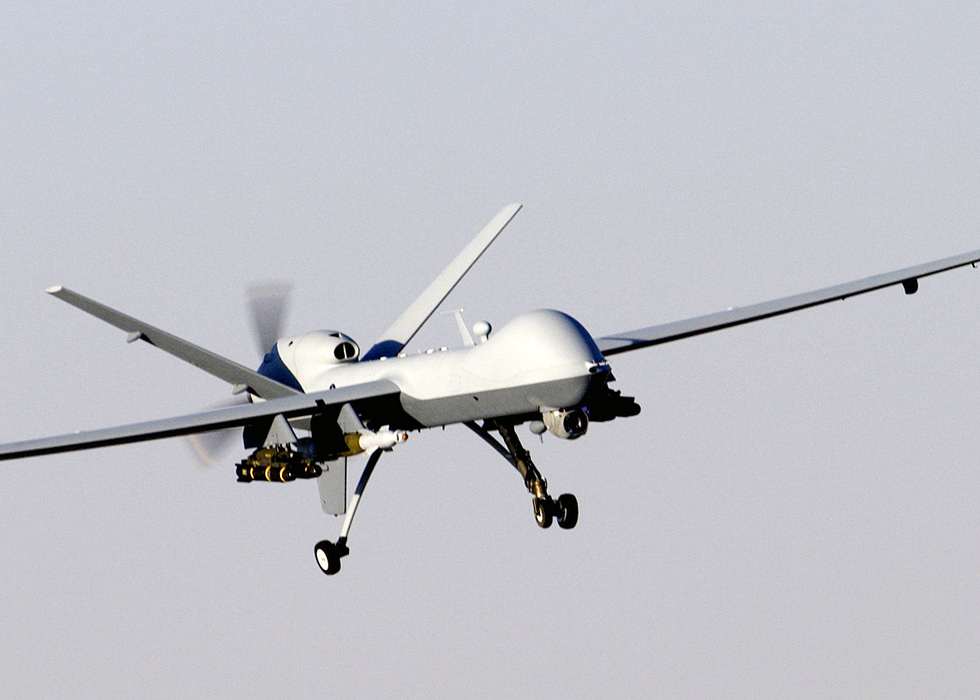
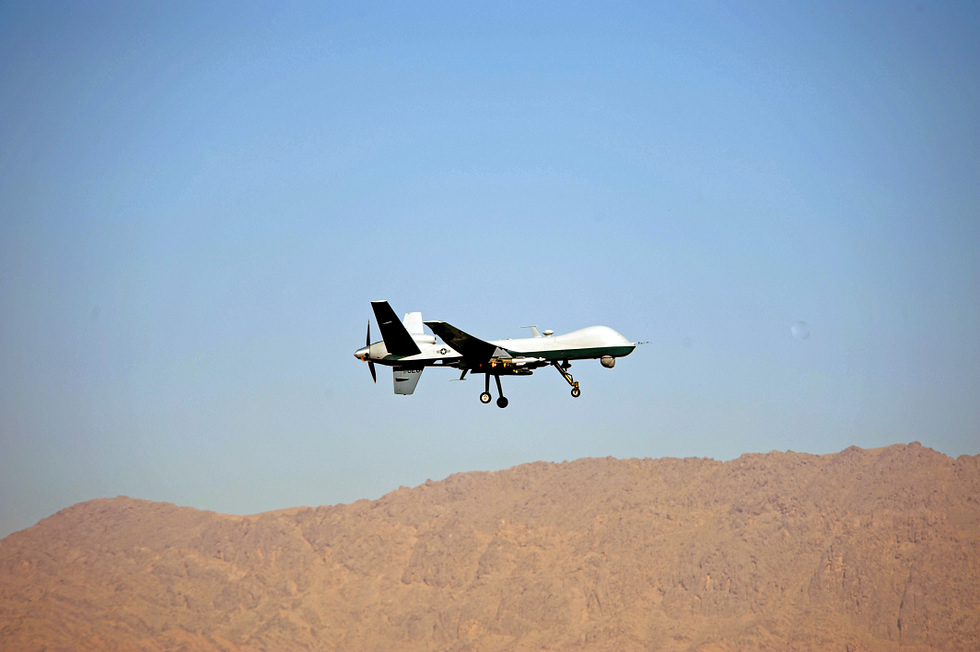
The Reaper in motion
A verified, high-authority video feature is coming soon.
Where the Reaper flies
The record that defines it
The Reaper’s record is not written in air-to-air kills but in persistence and precision strike. It has flown countless armed surveillance sorties over two decades of counterterrorism operations, and it has become the emblem of remote warfare — both for its supporters and for its critics. Its combat story also includes its own vulnerability: in contested skies, this slow, non-stealthy aircraft can be shot down.
Casualty figures for drone strikes are genuinely contested and are best read as wide, uncertain ranges rather than firm totals. Compare the combat record of every military aircraft. Figures as of 2026.
Everything people ask about the MQ-9 Reaper
Can I fly in an MQ-9 Reaper?
Is the MQ-9 Reaper a drone?
What weapons does the MQ-9 Reaper carry?
How long can an MQ-9 Reaper stay in the air?
How fast is the MQ-9 Reaper?
Who operates the MQ-9 Reaper?
Have MQ-9 Reapers been shot down?
How much does an MQ-9 Reaper cost?
You can’t fly the Reaper — nobody can.
These, you can.
Some legends only live in museums — others are fuelled and waiting. MiGFlug has put civilians in real military jet cockpits since 2004.
 Fly the L-39 AlbatrosThe world’s most-flown jet trainer — aerobatics included
 Fly the F-104 Starfighter“The missile with a man in it”
 Fly the MiG-21The Cold War’s most-produced jet
 Pilote o T-33 Shooting StarAmerica’s first jet trainer
 Fly the DH VampireA piece of early jet history
 Fly the S.211Agile Italian jet trainer
 Fly the MB-326The classic Aermacchi jet
 Fly the MiG-15The Soviet legend of the Korean War
Continue the tour
Every fact, checked
- U.S. Air Force — MQ-9 Reaper fact sheetOfficial primary source for dimensions, engine, payload, armament and unit cost.
- General Atomics Aeronautical SystemsManufacturer material on the MQ-9A and the MQ-9B SkyGuardian / SeaGuardian family.
- Designation-Systems.net (Andreas Parsch)Development history, first flight and variant lineage from Predator B to MQ-9B.
- The War Zone (TWZ)Reporting on the 2023 Black Sea incident and the Yemen Reaper shootdowns.
- Air & Space Forces MagazineCoverage of Reaper losses, operations and per-aircraft cost figures.
- The Bureau of Investigative JournalismLong-running tracking of drone-strike casualties, and why the figures are contested.
- Atlantic CouncilAnalysis of the Houthi campaign against U.S. Reapers and its wider implications.
- Airforce TechnologyThe RAF transition from the MQ-9A Reaper to the MQ-9B Protector RG.1.