
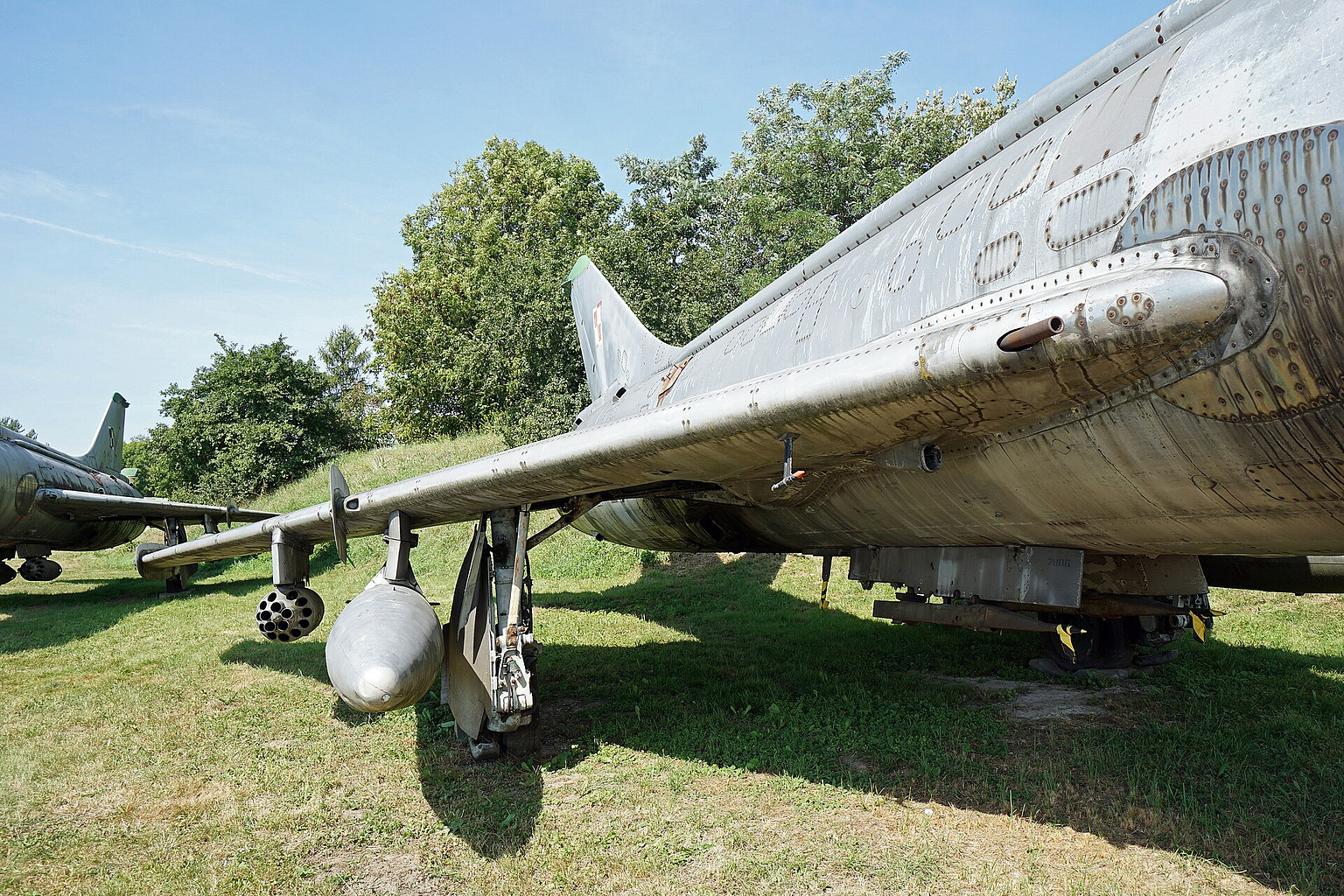
Sukhoi Su-7 “Fitter”
The Soviet Union’s big, fast swept-wing fighter-bomber — loved for its speed and toughness, cursed for its thirst, its short reach and the long runways it demanded. The fixed-wing father of the variable-geometry Su-17/22 that followed.
The Fitter: a fast, thirsty workhorse of the Cold War
The Sukhoi Su-7 was the aircraft that put the Sukhoi bureau back in business. Pavel Sukhoi’s design office had been closed in 1949; when it reopened in 1953, one of its first tasks was a new front-line fighter to counter the swept-wing jets of the day, notably the North American F-86 Sabre. The prototype, designated S-1, first flew on 7 September 1955 behind a single, powerful Lyulka AL-7 turbojet, and it was fast — comfortably supersonic, with sharply swept 60-degree wings.
As a pure interceptor the design was overtaken by the delta-winged Su-9 and the MiG-21. But its size, speed and load-carrying ability suited it to another job, and it was reworked into the Su-7B fighter-bomber. In this form it entered Soviet service around 1959–1960 and became a mainstay of Soviet Frontal Aviation’s ground-attack force through the 1960s and into the 1970s.
The Su-7 earned a divided reputation. Pilots praised it as strong, stable and honest at speed — a steady gun and bombing platform that could absorb punishing battle damage and still bring its pilot home. But it was also notoriously thirsty and short-legged: the thrusty AL-7 drank fuel so fast that combat radius was often only a couple of hundred kilometres, and the underwing pylons were frequently taken up by drop tanks rather than weapons. Its highly swept wing gave it high takeoff and landing speeds and a hunger for long concrete runways — a serious drawback for an aircraft meant to work from rough forward airfields.
Cheap, rugged and available, the Fitter was widely exported across the Warsaw Pact and to client states in the Middle East, Africa and Asia. It saw hard combat: as India’s ground-attack workhorse in the 1971 Indo-Pakistani war, and with Egypt and Syria in the 1967 and 1973 Arab-Israeli wars, where Fitter units took heavy losses. Sukhoi’s answer to the runway and range problems — a variable-geometry “swing wing” grafted onto the same fuselage — became the Su-17 (exported as the Su-20/22), a separate and much longer-lived family. The Su-7 was its fixed-wing ancestor.
01The Su-7’s origins: how a Sabre-chasing fighter became a fighter-bomber
When the Sukhoi bureau reopened in 1953 it was set to work on a front-line fighter able to match Western swept-wing jets such as the F-86 Sabre. The result, the S-1 prototype of 1955, was a big, single-engined, sharply swept aircraft built around the powerful Lyulka AL-7. It was genuinely fast, but as an air-superiority fighter it was soon eclipsed by lighter, more agile designs. Rather than abandon it, Sukhoi turned the airframe’s strengths — speed, ruggedness and load — toward ground attack, producing the Su-7B fighter-bomber that entered service at the end of the decade. It was a common Cold-War story: a fighter that found its real career hitting targets on the ground rather than in the air.
What makes it special
One big, thirsty turbojet
The Su-7 was built around a single Lyulka AL-7F-1 afterburning turbojet of roughly 90–100 kN in reheat — a lot of thrust for its day, giving the Fitter genuine supersonic speed and a strong climb. The price was fuel consumption: the AL-7 drank so hard that the Su-7’s combat radius was often only a couple of hundred kilometres, a defining limitation of the whole design.
The 60-degree swept wing — and the runway problem
The Fitter’s thin, sharply swept wing (around 60°) was ideal for supersonic dash but demanded very high takeoff and landing speeds. Approaches came in around 300 km/h, and the aircraft needed long runways — awkward for a jet meant to fly from rough forward airfields. Twin brake parachutes helped pull it up after landing.
Rugged enough to bring you home
What pilots valued most was toughness. The Su-7 was simple, strong and able to absorb heavy battle damage and keep flying — Indian aircraft reportedly returned to base with major structural damage in 1971. That same rugged fuselage became the basis of the swing-wing Su-17, which fixed the runway and range problems the Su-7 could never fully shake.
02The Su-7’s short legs: why a supersonic jet had so little reach
The Su-7’s biggest weakness was range. Its single Lyulka AL-7 was powerful but extraordinarily thirsty, and the airframe’s internal fuel could not keep up. In practice the Fitter’s combat radius on a low-level strike mission was frequently only around 200–300 km, and pilots routinely had to hang drop tanks on the underwing pylons — the very stations they would otherwise use for bombs and rockets. A supersonic fighter-bomber that had to choose between fuel and firepower was a hard tool to use well, and the short reach shaped how every operator employed the type. Solving it was one of the main drivers behind the variable-geometry Su-17 that followed.
03The Su-7BKL: skis, rockets and parachutes to tame the runway
The Fitter’s high landing speed and long takeoff run were a constant problem for an aircraft supposed to operate from unpaved forward strips. The Su-7BKL variant was Sukhoi’s attempt to help: it added strengthened landing gear (early experiments even fitted skid-style skis alongside the mainwheels for soft ground), larger twin braking parachutes, and provision for rocket-assisted takeoff using jettisonable solid-rocket boosters (SPRD units) to shorten the ground roll. These were work-arounds rather than cures — the real fix, a variable-geometry wing that could sweep forward for slow flight, arrived only with the Su-17.
Full specifications
Airframe & Performance (Su-7BKL)
- Equipe
- 1
- Comprimento
- ~16.6 m (incl. probe ~17 m)
- Envergadura
- ~9.31 m
- Altura
- ~4.99 m
- Loaded weight
- ~13,600 kg (MTOW up to ~15,200 kg)
- Max speed
- ~Mach 1.7 · ~2,150 km/h at altitude
- Teto de serviço
- ~17,600 m
- Raio de combate
- ~200–450 km (notoriously short)
- First flight
- 7 September 1955 (S-1 prototype)
- Built
- ~1,800+ all variants (1957–1972)
Propulsion & Armament
- Motor
- 1 × Lyulka AL-7F-1 afterburning turbojet
- Thrust
- ~66 kN dry · ~94 kN with afterburner
- Guns
- 2 × 30 mm Nudelman-Rikhter NR-30
- Pontos de fixação
- Underwing & fuselage pylons
- Ordnance
- ~2,000 kg: bombs, rocket pods, drop tanks
- Primary role
- Fighter-bomber / ground attack
- Origin
- Sukhoi OKB, Soviet Union
- Cost per flight hour
- No reliable public figure
04The Su-7’s operating costs: why no reliable figure exists
The Su-7 was a Soviet state product, supplied to the Soviet forces and to allied air arms on political and barter terms rather than sold on an open dollar market, so a firm flyaway unit price simply does not exist in the public record. Estimates in the low single-digit millions of US dollars are sometimes quoted, but these should be read as order-of-magnitude guesses rather than sourced figures. No credible cost-per-flight-hour number exists for the type in open sources either. What is well documented is the operational cost of its thirst: the AL-7’s fuel appetite meant the Su-7 spent much of its payload capacity simply carrying enough fuel to reach and return from a target.
From Sabre-chaser to swing-wing ancestor
Sukhoi reopens
Pavel Sukhoi’s design bureau reforms and is tasked with a swept-wing front-line fighter to match Western jets like the F-86 Sabre.
First flight
The S-1 prototype flies on 7 September behind a single Lyulka AL-7 turbojet — fast, big and sharply swept.
Production begins
Series manufacture starts; the design is reworked from pure fighter into the Su-7B fighter-bomber.
Enters service
The Su-7 joins Soviet Frontal Aviation as a supersonic ground-attack aircraft around 1959–1960.
Widely exported
The Fitter is supplied across the Warsaw Pact and to client states in the Middle East, Africa and Asia.
The swing-wing testbed
The Su-7IG, a Su-7 fitted with variable-geometry outer wing panels, flies — the direct ancestor of the Su-17.
Six-Day War
Egyptian and Syrian Su-7s fly ground-attack sorties against Israel; many are lost, a number destroyed on their airfields.
India’s workhorse
Indian Air Force Su-7s fly roughly 1,500 offensive sorties in the Indo-Pakistani war, praised for absorbing heavy damage.
October War
Egyptian and Syrian Fitters again fly intensive ground-attack missions and again suffer heavy losses to defences.
Retirement
Superseded by the swing-wing Su-17/22 and later types, the Su-7 is withdrawn from Soviet and most export service.
Twelve Su-7 Fitter stories
Answering the Sabre
A reborn Sukhoi bureau was told to build a swept-wing fighter to match the West.
Read the full story
The S-1 takes off
On 7 September 1955 the prototype flew — comfortably supersonic from the start.
Read the full story
One engine, endless thirst
The AL-7 gave the Fitter its speed — and its crippling fuel appetite.
Read the full story
A jet that needed a lot of concrete
High approach speeds and a long ground roll made the Su-7 hungry for runway.
Read the full story
Skis, rockets and parachutes
The Su-7BKL bolted on every trick Sukhoi could find to shorten the ground run.
Read the full story
India’s ground-attack workhorse
IAF Su-7s flew around 1,500 offensive sorties in the 1971 war with Pakistan.
Read the full story
The jet that came home in pieces
Indian Su-7s reportedly returned to base with damage that should have downed them.
Read the full story
Caught on the ground
Many Egyptian and Syrian Su-7s were destroyed at their bases in the Six-Day War.
Read the full story
The October War
Egyptian and Syrian Fitters flew intensive strikes — and again took heavy losses.
Read the full story
A Warsaw Pact staple
Cheap, rugged and available, the Fitter spread across the Soviet bloc and beyond.
Read the full story
From fixed wing to swing wing
The Su-17 grew directly out of the Su-7, keeping its fuselage but adding a movable wing.
Read the full story
A pilot’s honest brute
Fast, stable and strong — but demanding, thirsty and always short of range.
Read the full story
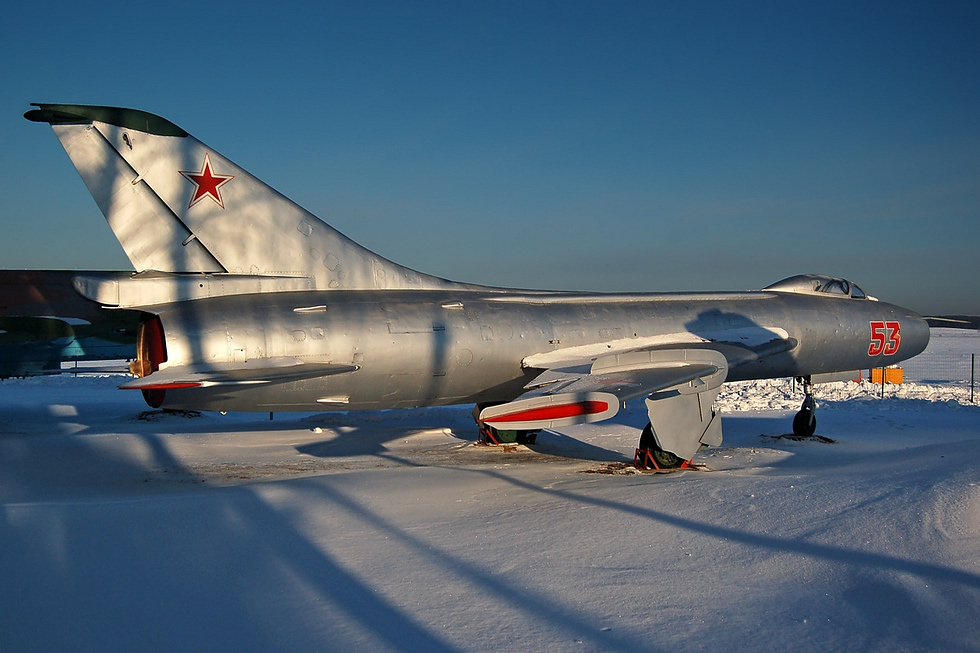
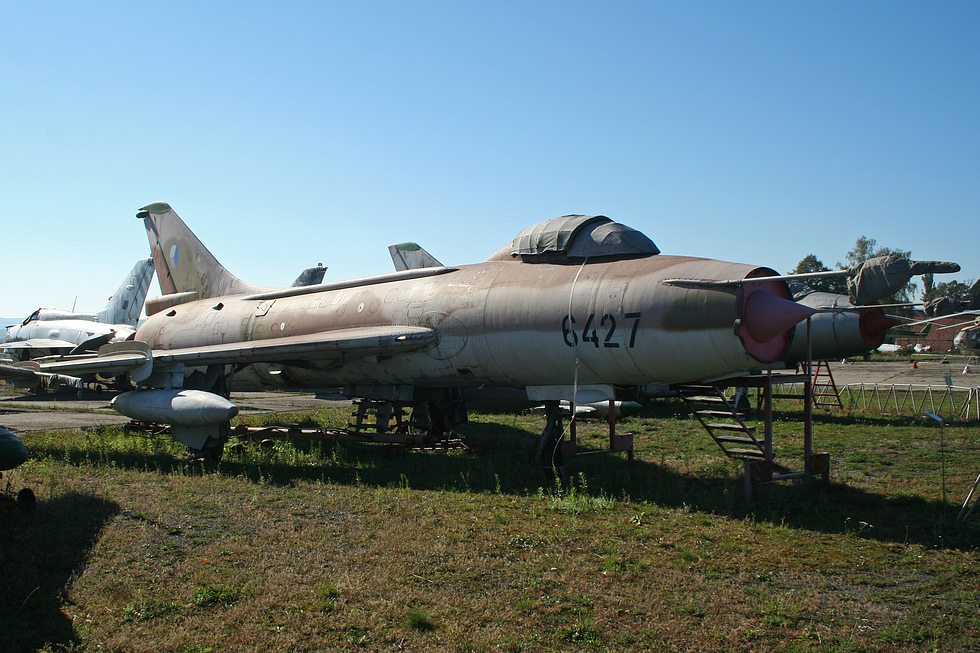
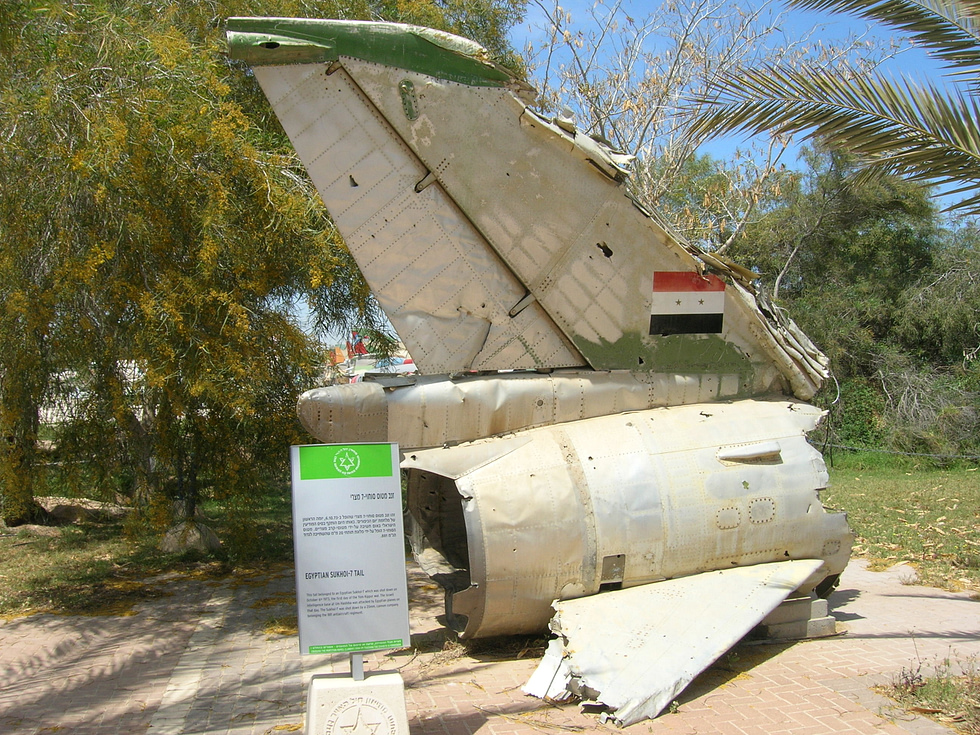
The Su-7 in pictures
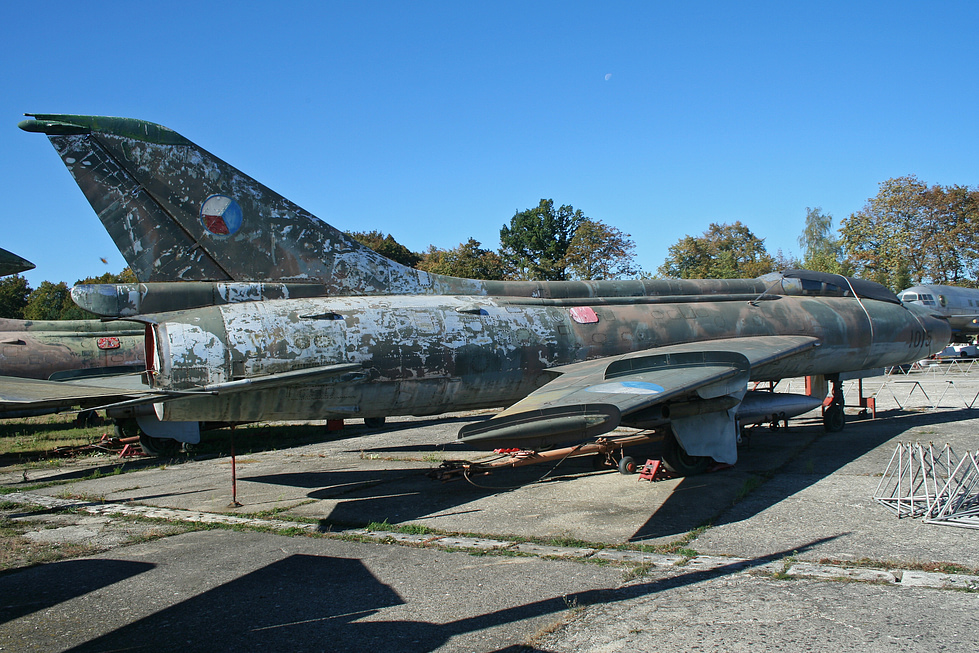
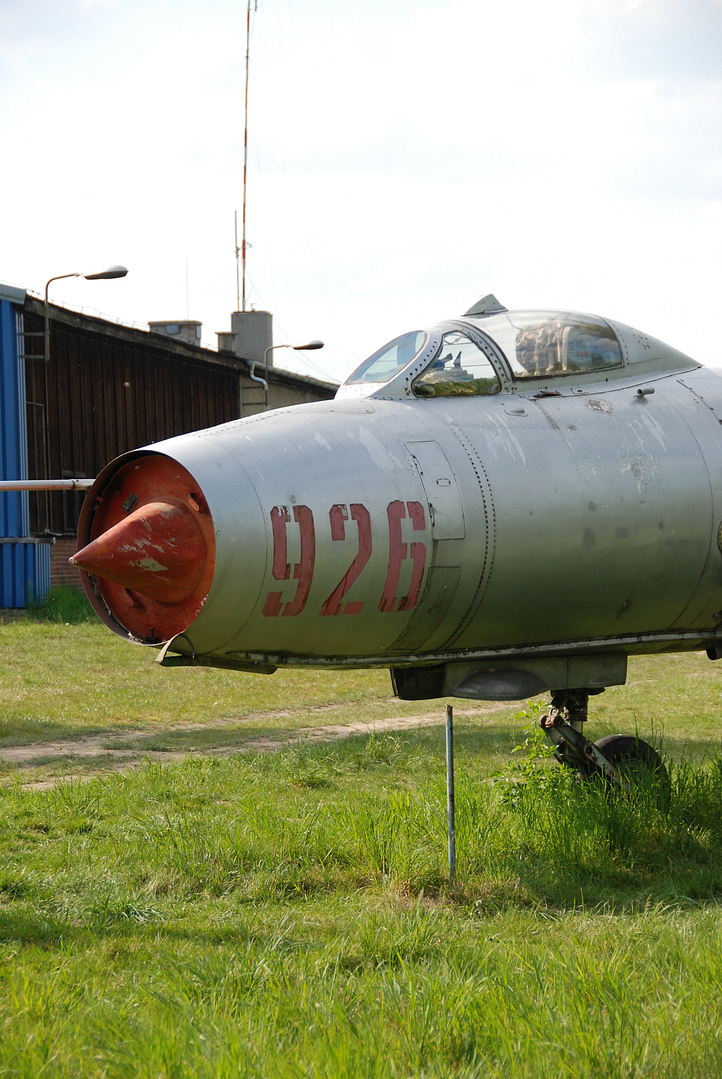
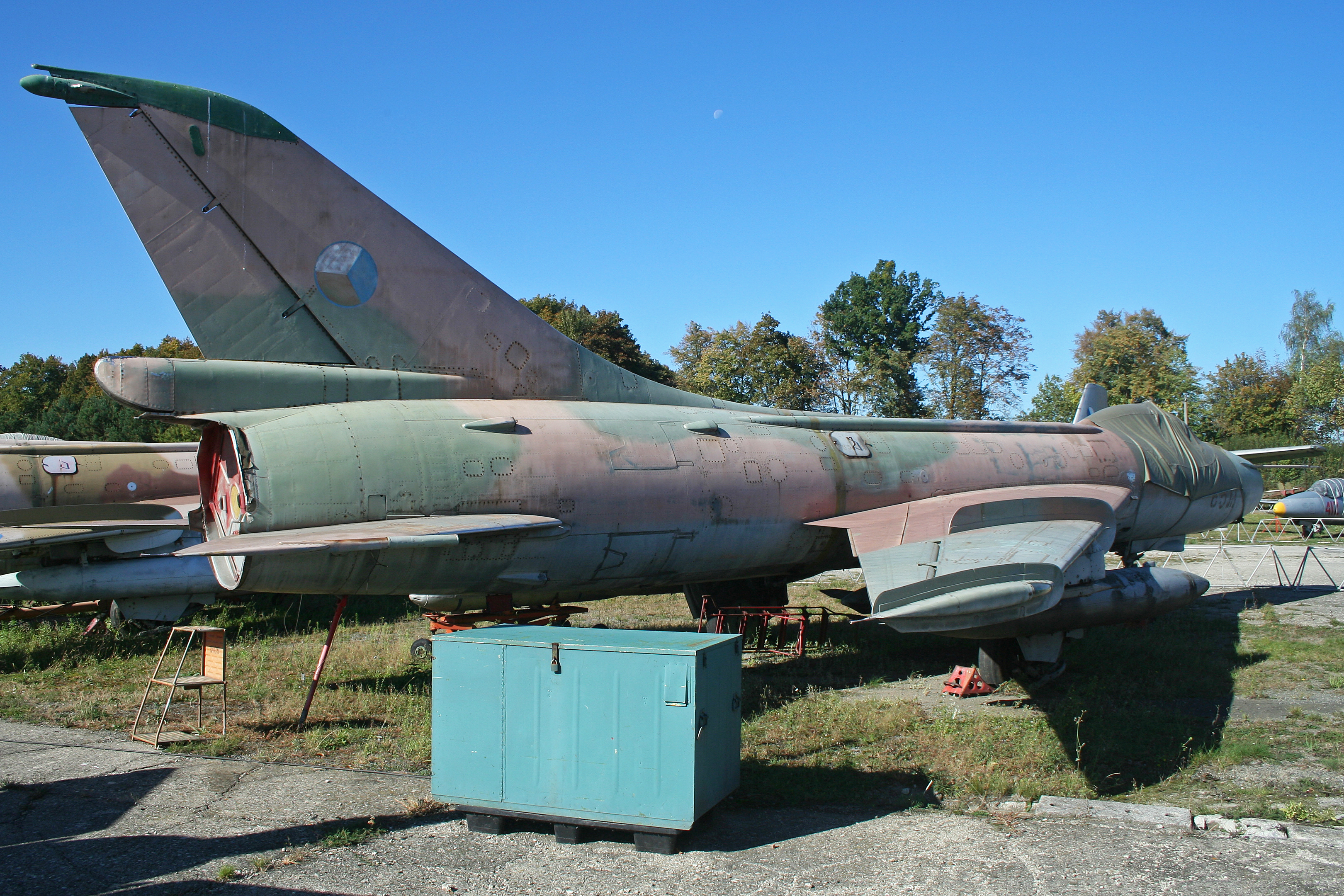
The Su-7 in motion
Video coming soon — we are still sourcing a suitably high-quality, authoritative film of the Su-7 to feature here. In the meantime, explore the photo gallery above and the stories from the cockpit.
Where the Fitter flew
A workhorse of ground attack
The Su-7 was a fighter-bomber, and its combat history is written in ground-attack sorties rather than aerial victories. It flew hard and often at low level against heavy defences: as India’s main strike aircraft in the 1971 Indo-Pakistani war, and with Egypt and Syria against Israel in 1967 and 1973. In every case it took real losses — to interceptors, anti-aircraft fire and, in 1967, to airfield strikes that caught many on the ground. What crews remembered was its speed and its ability to survive damage that should have brought it down.
Compare the combat record of every military aircraft. Figures as of July 2026.
Everything people ask about the Su-7
Can I fly in a Su-7?
What was the Su-7 used for?
How fast was the Su-7?
Why did the Su-7 have such a short range?
Is the Su-7 the same as the Su-17 or Su-22?
Which countries flew the Su-7?
Is the Su-7 still in service?
You can’t fly the Su-7.
These, you can.
Some legends only live in museums — others are fuelled and waiting. MiGFlug has put civilians in real military jet cockpits since 2004.
 Fly the L-39 AlbatrosThe world’s most-flown jet trainer — aerobatics included
 Fly the F-104 Starfighter“The missile with a man in it”
 Fly the MiG-21The Cold War’s most-produced jet
 Pilote o T-33 Shooting StarAmerica’s first jet trainer
 Fly the DH VampireA piece of early jet history
 Fly the S.211Agile Italian jet trainer
 Fly the MB-326The classic Aermacchi jet
 Fly the MiG-15The Soviet legend of the Korean War
Continue the tour
Every fact, checked
- Military Factory — Sukhoi Su-7 (Fitter-A)Development history, specifications and operator list.
- GlobalMilitary.net — Su-7 FitterSpecifications, performance figures and combat-history summary.
- Pickled Wings — “Fast and Fiendish”Handling, the runway problem, the Su-7BKL and the type’s toughness.
- Bharat-Rakshak — Indian Air Force Su-7Indian service, the 1971 war and the Fitter’s reputation for absorbing damage.
- Supersonic Aircraft Encyclopedia — Su-7Performance data and design overview.
- The Aviation Geek ClubFeature articles on Su-7 operations and the wider Fitter family.
- AirVectors — The Sukhoi Su-7 & Su-17Detailed technical development of the Su-7 and its swing-wing successors.
- National Museum of the US Air ForceReference for preserved Soviet fighter-bomber airframes.