
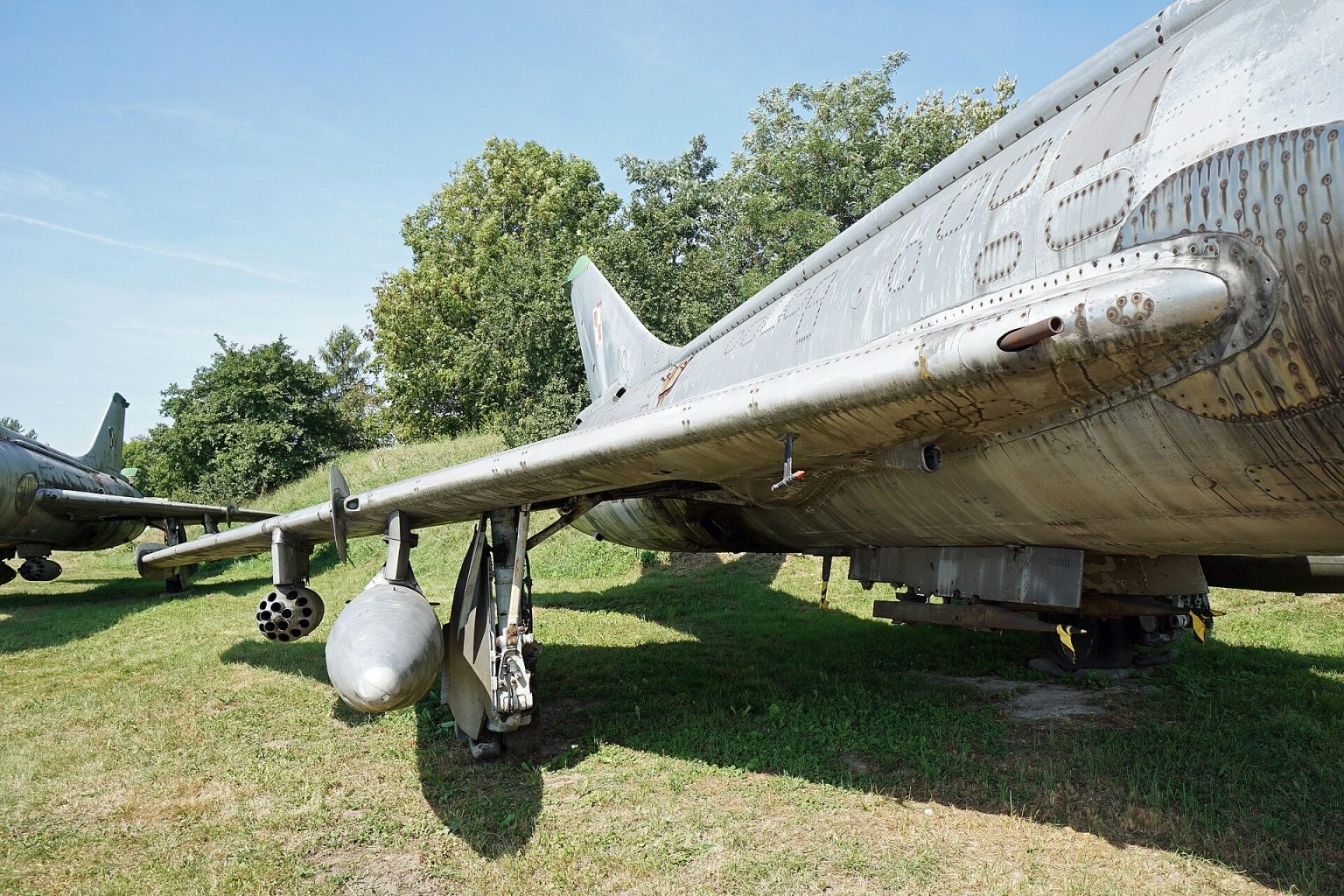
Sukhoi Su-7 “Fitter”
The Soviet Union’s big, fast swept-wing fighter-bomber — loved for its speed and toughness, cursed for its thirst, its short reach and the long runways it demanded. The fixed-wing father of the variable-geometry Su-17/22 that followed.
The Fitter: a fast, thirsty workhorse of the Cold War
The Sukhoi Su-7 was the aircraft that put the Sukhoi bureau back in business. Pavel Sukhoi’s design office had been closed in 1949; when it reopened in 1953, one of its first tasks was a new front-line fighter to counter the swept-wing jets of the day, notably the North American F-86 Sabre. The prototype, designated S-1, first flew on 7 September 1955 behind a single, powerful Lyulka AL-7 turbojet, and it was fast — comfortably supersonic, with sharply swept 60-degree wings.
As a pure interceptor the design was overtaken by the delta-winged Su-9 and the MiG-21. But its size, speed and load-carrying ability suited it to another job, and it was reworked into the Su-7B fighter-bomber. In this form it entered Soviet service around 1959–1960 and became a mainstay of Soviet Frontal Aviation’s ground-attack force through the 1960s and into the 1970s.
The Su-7 earned a divided reputation. Pilots praised it as strong, stable and honest at speed — a steady gun and bombing platform that could absorb punishing battle damage and still bring its pilot home. But it was also notoriously thirsty and short-legged: the thrusty AL-7 drank fuel so fast that combat radius was often only a couple of hundred kilometres, and the underwing pylons were frequently taken up by drop tanks rather than weapons. Its highly swept wing gave it high takeoff and landing speeds and a hunger for long concrete runways — a serious drawback for an aircraft meant to work from rough forward airfields.
Cheap, rugged and available, the Fitter was widely exported across the Warsaw Pact and to client states in the Middle East, Africa and Asia. It saw hard combat: as India’s ground-attack workhorse in the 1971 Indo-Pakistani war, and with Egypt and Syria in the 1967 and 1973 Arab-Israeli wars, where Fitter units took heavy losses. Sukhoi’s answer to the runway and range problems — a variable-geometry “swing wing” grafted onto the same fuselage — became the Su-17 (exported as the Su-20/22), a separate and much longer-lived family. The Su-7 was its fixed-wing ancestor.
01The Su-7’s origins: how a Sabre-chasing fighter became a fighter-bomber
When the Sukhoi bureau reopened in 1953 it was set to work on a front-line fighter able to match Western swept-wing jets such as the F-86 Sabre. The result, the S-1 prototype of 1955, was a big, single-engined, sharply swept aircraft built around the powerful Lyulka AL-7. It was genuinely fast, but as an air-superiority fighter it was soon eclipsed by lighter, more agile designs. Rather than abandon it, Sukhoi turned the airframe’s strengths — speed, ruggedness and load — toward ground attack, producing the Su-7B fighter-bomber that entered service at the end of the decade. It was a common Cold-War story: a fighter that found its real career hitting targets on the ground rather than in the air.
What makes it special
One big, thirsty turbojet
The Su-7 was built around a single Lyulka AL-7F-1 afterburning turbojet of roughly 90–100 kN in reheat — a lot of thrust for its day, giving the Fitter genuine supersonic speed and a strong climb. The price was fuel consumption: the AL-7 drank so hard that the Su-7’s combat radius was often only a couple of hundred kilometres, a defining limitation of the whole design.
The 60-degree swept wing — and the runway problem
The Fitter’s thin, sharply swept wing (around 60°) was ideal for supersonic dash but demanded very high takeoff and landing speeds. Approaches came in around 300 km/h, and the aircraft needed long runways — awkward for a jet meant to fly from rough forward airfields. Twin brake parachutes helped pull it up after landing.
Rugged enough to bring you home
What pilots valued most was toughness. The Su-7 was simple, strong and able to absorb heavy battle damage and keep flying — Indian aircraft reportedly returned to base with major structural damage in 1971. That same rugged fuselage became the basis of the swing-wing Su-17, which fixed the runway and range problems the Su-7 could never fully shake.
02The Su-7’s short legs: why a supersonic jet had so little reach
The Su-7’s biggest weakness was range. Its single Lyulka AL-7 was powerful but extraordinarily thirsty, and the airframe’s internal fuel could not keep up. In practice the Fitter’s combat radius on a low-level strike mission was frequently only around 200–300 km, and pilots routinely had to hang drop tanks on the underwing pylons — the very stations they would otherwise use for bombs and rockets. A supersonic fighter-bomber that had to choose between fuel and firepower was a hard tool to use well, and the short reach shaped how every operator employed the type. Solving it was one of the main drivers behind the variable-geometry Su-17 that followed.
03The Su-7BKL: skis, rockets and parachutes to tame the runway
The Fitter’s high landing speed and long takeoff run were a constant problem for an aircraft supposed to operate from unpaved forward strips. The Su-7BKL variant was Sukhoi’s attempt to help: it added strengthened landing gear (early experiments even fitted skid-style skis alongside the mainwheels for soft ground), larger twin braking parachutes, and provision for rocket-assisted takeoff using jettisonable solid-rocket boosters (SPRD units) to shorten the ground roll. These were work-arounds rather than cures — the real fix, a variable-geometry wing that could sweep forward for slow flight, arrived only with the Su-17.
Full specifications
Baseline note: the figures below describe the Sukhoi Su-7BKL (NATO Fitter-A), the rough-field ground-attack mark built at Komsomolsk-on-Amur plant No. 126 from 1965 to 1972 with the Lyulka AL-7F-1 turbojet, wheel-skid main undercarriage, provision for rocket-assisted take-off and twin brake parachutes. Where the BKL and the earlier Su-7BM differ the BM figure is given too, because the two are the same aeroplane with different landing gear and the brief for this page treats them together. It is the right baseline because the Su-7 that mattered was the fighter-bomber, not the fighter: 1,429 of the roughly 1,847 built were Su-7B derivatives, and everything the type is remembered for — Sinai, the Golan, the Punjab — was flown by a BM, a BKL or an export BMK. Deltas for the original Su-7 day fighter, the first-generation Su-7B, the export Su-7BMK and the two-seat Su-7U are in grey. One boundary must be drawn before anything else. The variable-geometry Su-17, Su-20 and Su-22 family grew directly out of this airframe, by way of a single converted Su-7BM flown with pivoting outer wing panels in 1966, and it shares the Su-7’s fuselage cross-section, its nose intake and much of its systems. It is nevertheless a separate type with its own page, with a different wing, a different engine in most marks, a different avionics fit and roughly twice the useful load. Nothing on this page describes an Su-17, and NATO’s reporting names encode the split: Fitter-A is the fixed-wing Su-7, and every later Fitter suffix from B onwards belongs to the swing-wing aircraft. Five cautions about the numbers themselves. First, dimensions: 16.80 m long, 9.31 m span and 4.99 m high is the set carried by the great majority of modern sources, but aviastar prints 17.37 m, 8.93 m and 4.57 m for the same aeroplane, and the length difference is almost certainly the nose air-data boom; the two sets must never be mixed. Second, the wing loading of 434.8 kg/m² that circulates in English tables corresponds to a weight of 14,783 kg, which is neither the normal take-off weight of 13,570 kg nor the maximum of 15,210 kg; the arithmetic is done properly below. Third, the maximum speed is widely given as 2,150 km/h with a Mach number of 1.74 appended, and the two cannot both be true at altitude — 2,150 km/h above 11,000 m is about Mach 2.0, and Mach 1.74 up there is about 1,850 km/h. Fourth, the SPRD-110 booster is often listed as "29.4 kN (13,300 lbf)"; 29.4 kN is 6,610 lbf, and 13,300 lbf is the pair. Fifth, the published mark-by-mark production figures sum to 1,972 aircraft, not the 1,847 usually quoted as the total; the discrepancy is unresolved in the open literature and most probably lies in the trainer count.
Dimensions & weights
- Crew
- 1 — one pilot flying the aeroplane, aiming the guns, setting the bomb sight and navigating by map, stopwatch and radio compass, with no second crewman and no navigation computer worth the name. The Su-7U, Su-7UM and Su-7UMK (NATO Moujik) added a second cockpit ahead of the first with full dual controls, bought at the price of one fuselage fuel tank and, on many airframes, the port cannon
- Length overall
- 16.80 m (55 ft 1 in) on the convention used by almost every modern source. Aviastar and several older compilations give 17.37 m (57 ft 0 in), which is very probably the same aeroplane measured over the nose air-data boom. The Su-7U trainer is longer again, the second cockpit being inserted rather than substituted
- Wingspan
- 9.31 m (30 ft 7 in). A figure of 8.93 m (29 ft 4 in) appears in a minority of references; 9.31 m is the better attested and is the number that reconciles with the quoted wing area. Either way this is a very short span for a 15-tonne aeroplane, and it is the root of everything the Su-7 could not do
- Height
- 4.99 m (16 ft 4 in); the 4.57 m (15 ft 0 in) found in some tables belongs to the same divergent set as the 8.93 m span and the 17.37 m length
- Wing area
- 34 m² (370 sq ft). Thirty-four square metres is not much wing for an aircraft that routinely took off at fifteen tonnes, and the consequences run through every other number on this page: a high wing loading, a landing speed of 340–360 km/h, a long ground roll and an unforgiving approach
- Wing planform
- Mid-set swept wing, 60° leading-edge sweep — with two full-chord boundary-layer fences on each side and a thin symmetrical section. It was drawn in 1953 for a supersonic day fighter and it does that job well. It was never redrawn when the aeroplane became a bomb truck, which is the single design decision that defines the type
- Empty weight
- 8,940 kg (19,709 lb) for the Su-7BKL. Sources spread from about 8,330 kg (18,365 lb) to 8,940 kg across the fighter-bomber marks, the lighter figures generally describing the earlier Su-7B; aviastar gives 8,636 kg (19,039 lb) for the export Su-7BMK
- Normal take-off weight
- 13,570 kg (29,917 lb) with full internal fuel and a light stores load. The original Su-7 day fighter, carrying no bombs and less fuel, came out around 12,000 kg (26,455 lb)
- Maximum take-off weight
- 15,210 kg (33,532 lb); aviastar gives 14,800 kg (32,629 lb) for the Su-7BMK. The gap between normal and maximum is 1,640 kg — rather less than the nominal 2,000 kg stores capacity, which is a polite way of saying that a fully loaded Su-7 was over its comfortable weight before it left the ground
- Internal fuel
- ~3,220 kg (7,099 lb), roughly 3,955 litres (1,045 US gal) in fuselage and wing tanks on the Su-7BM and about 3,925 litres on the BKL. The first-generation Su-7B held only about 3,455 litres; the wing tanks and the external dorsal fuel piping added on the BM are the most visible recognition feature between the marks, and they were added because the AL-7F-1 drank faster than anyone had budgeted for
- External fuel
- 2 × PTB-600 drop tanks, 600 litres each (2 × 159 US gal), normally on the two ventral stations; larger 950-litre tanks were also used, the Su-7BM having made the inboard wing pylons "wet" to take them. This is the aeroplane’s central compromise: on any mission longer than a short hop the tanks were not optional, and the stations they occupied were stations that could not carry bombs
- Hardpoints
- 4 on the Su-7B and Su-7BM — two under the fuselage and two under the wing. From the Su-7BKL a second pair of outboard wing pylons was added, giving six. The count flatters the aeroplane: with two tanks aboard the practical ordnance load was two bombs on a four-station aircraft and four on a six-station one, which is why a supersonic fighter-bomber of fifteen tonnes routinely went to war with 500 kg of bombs
- Maximum external load
- ~2,000 kg (4,409 lb), and only over a very short radius with no drop tanks. Compilations quoting up to 4,000 kg for the Su-7 are describing structural pylon ratings rather than anything a squadron could take off with; 1,000 kg with two tanks is the honest operational figure and the one that made the type’s reputation as a poor payload-range aircraft
Performance
- Maximum speed, altitude
- 2,150 km/h (1,336 mph / 1,161 kn) clean at high altitude. Aviastar gives 1,700 km/h (1,056 mph) for the export Su-7BMK, which is a laden rather than a clean figure; the S-1 prototype reached 2,170 km/h in 1957 testing. The Mach 1.74 appended to the 2,150 km/h figure in several tables is inconsistent with it at altitude and should be discarded
- Maximum Mach number
- About Mach 2.0 clean — and almost entirely theoretical. With two drop tanks and two bombs the Su-7 was a high-subsonic aeroplane, and the profile it actually flew was low, fast and straight. Fitter pilots spent their careers below 1,100 km/h
- Maximum speed, sea level
- 1,150 km/h (715 mph), Mach 0.94 — the number that mattered. The Su-7 was fast down low, faster than the Hunters and Mystères it flew alongside in Indian service, and that speed is a large part of why it survived the ground fire it flew into
- Service ceiling
- 17,600 m (57,700 ft) clean. Aviastar quotes 15,150 m (49,700 ft) for the Su-7BMK in a representative load. Neither number had much to do with the type’s working life, which was spent between fifty and five hundred metres
- Rate of climb
- 160 m/s (31,500 ft/min) initial, clean and light. This is fighter-grade climb and a reminder of what the airframe originally was: the Su-7 is a 1955 day fighter carrying bombs, not a bomber that happens to be fast
- Combat radius
- ~300–350 km (186–217 mi / 162–189 nmi) on a low-level profile with about 1,000 kg of bombs and two drop tanks; a hi-lo-hi profile stretches it towards 450 km. This is the number that damns the aeroplane. A supersonic strike fighter whose useful reach was two hundred miles could hit the front and the immediate rear of it, and nothing else
- Range, maximum
- 1,650 km (1,025 mi / 891 nmi) with external tanks, clean of ordnance. Aviastar gives 1,450 km (901 mi) for the Su-7BMK. This is a ferry figure and has no operational meaning whatever; it is quoted here only because it is the number most often printed as "range"
- Take-off run
- 950 m (3,120 ft) in a representative configuration, and much longer at maximum weight on a hot day — figures beyond 1,300 m (4,265 ft) are routinely cited for a fully loaded Su-7B. Two SPRD-110 boosters cut it by roughly a third. The runway performance, not the payload, was the constraint that governed where the type could be based
- Landing run
- 700 m (2,300 ft) with brake parachutes streamed. Without them it was far longer, and long enough on a wet or icy strip to be a routine hazard; the Su-7BKL’s wheel brakes were fitted with an alcohol spray to keep them from cooking. Twin chutes replaced the single chute of the earlier marks precisely because one was not enough
- Landing speed
- 340–360 km/h (211–224 mph) on approach — extraordinarily fast, a direct consequence of 34 m² of 60°-swept wing. Combined with poor forward visibility over the long nose and the absence of any instrument landing system, it made bad-weather recovery genuinely dangerous. Czechoslovakia lost thirty aircraft to accidents in twenty-seven years of operating the type
- Wing loading
- 399 kg/m² (81.7 lb/sq ft) at normal take-off weight; 447 kg/m² (91.6 lb/sq ft) at maximum. The 434.8 kg/m² reprinted in English tables matches no published weight for this aeroplane and appears to be an arithmetic slip
- Thrust-to-weight ratio
- 0.71 at normal take-off weight (94.1 kN of afterburning thrust against 133.1 kN of weight); 0.63 at maximum take-off weight. Good for 1959, and the reason the aeroplane accelerated away from trouble even when it could not turn with it
- Load factor limit
- +7 g clean — reduced substantially with external stores, and in practice the manoeuvre limit that mattered was the one imposed by the bombs on the pylons rather than by the airframe. The Su-7 was structurally strong; this is the same toughness that brought so many of them home
Propulsion & systems
- Engine
- 1 × Lyulka AL-7F-1 afterburning turbojet — the mark that gives this page its baseline, introduced on the Su-7BM and retained on the BKL and BMK. The original Su-7 fighter and the first Su-7B flew on the plain AL-7F. Successive service standards ran AL-7F-1-100, -150, -200 and -250, the suffix denoting the certified overhaul life in hours: a first-generation engine that lasted a hundred hours between shop visits, improved to two hundred and fifty by the end. Specific fuel consumption on the AL-7F-1-250 is quoted at 0.9 kg/kgf/h
- Thrust, military
- 66.6 kN (6,800 kgf / 15,000 lbf) dry. The earlier AL-7F gave about 63.7 kN (6,500 kgf)
- Thrust, afterburning
- 94.1 kN (9,600 kgf / 21,200 lbf). Aviastar quotes the AL-7F-1 at 10,110 kgf, a rating that belongs to later engines of the family; militaryfactory prints 22,150 lbf. The spread across sources is about five per cent and does not change any conclusion
- Rocket-assisted take-off
- 2 × SPRD-110 solid-fuel boosters — 29.4 kN (3,000 kgf / 6,610 lbf) each for roughly ten to fifteen seconds, bolted to the rear fuselage flanks and jettisoned on a parachute after burnout. Introduced with the Su-7BKL in 1965. Tables listing "29.4 kN (13,300 lbf)" have converted the pair rather than the bottle. Rocket bottles are not a refinement; they are what an air force fits when the aeroplane cannot get off the runway it has
- Deceleration
- Twin brake parachutes, plus alcohol-cooled wheel brakes — the pair replacing the single chute of the Su-7B and Su-7BM. On the BKL the chutes deploy from a fairing at the base of the fin. Along with the SPRD bottles they are the clearest physical admission that this airframe’s field performance was marginal, and the two features should always be read together
- Undercarriage
- Retractable tricycle, with skids alongside the mainwheels on the Su-7BKL — the KL suffix stands for kolyosno-lyzhnyy, wheel-and-skid. The idea was to let the aircraft use unpaved and damaged strips by spreading the load; it worked well enough to justify 267 aircraft, and not well enough to be adopted on the export BMK, which reverted to plain wheels with flush wells
- Air intake
- Circular nose intake with a translating conical centrebody — the classic first-generation Soviet supersonic arrangement, shared with the MiG-21 and the Su-9. It works, and it costs the aeroplane its nose: there is no room for a radar dish of any size, which is why the Su-7 never had, and never could have had, a real strike radar
- Ranging radar and sight
- SRD-5M Kvant ranging radar in the intake centrebody, with an ASP-5ND gyro gunsight (NATO called the radar High Fix). It measures range to a target the pilot has already found with his eyes; it does not search, it does not map ground and it cannot find anything in cloud. Weapon delivery on the Su-7 was visual, in daylight, in clear weather, or it did not happen
- Nuclear delivery system
- PBK-2 toss-bombing computer, on the Su-7BM and later Soviet-service marks — for the loft or over-the-shoulder delivery of a single tactical bomb, the aircraft pulling up to throw the weapon forward and escaping in a half-Cuban eight. Export Su-7BMKs were built without it, and this is the single most consistent difference between a Soviet aircraft and a customer’s
- Warning and navigation
- SRO-2 IFF transponder, ARK-10 radio compass, radio altimeter, and SPO-2 Sirena-2 radar-warning receiver on later builds — and, critically, no instrument landing system. An aeroplane that lands at 350 km/h with no ILS and poor forward view is one that cannot safely recover in weather, and the accident records of every operator reflect it. Individual box designations vary between marks and between customers; treat this list as representative rather than universal
- Ejection seat
- Sukhoi OKB’s own design, of the KS family shared with the Su-9 and Su-15 — usable from ground level above roughly 140 km/h, which is to say not a zero-zero seat. Compilations that credit the Su-7BMK with zero-zero capability are mistaken; no seat of this generation had it, and low-level ejection from a Fitter hit by ground fire was frequently fatal
- Flight controls
- Irreversible hydraulically boosted controls throughout, with an all-moving tailplane — the S-1 was the first Soviet aircraft to fly with a one-piece slab tailplane, and it is the feature that made controllable supersonic flight possible on the type. Pilots of every operator praised the handling: heavy, honest, stable as a gun platform and completely predictable right up to the point where the fuel ran out
- Unit cost
- Not published — no Soviet internal accounting price for the Su-7 has been released, and the export contracts with Egypt, India, Iraq and Syria were settled in state-to-state credits, barter and political terms rather than at a listed unit price. Any dollar figure quoted for a Fitter-A is an invention
04The Su-7’s operating costs: why no reliable figure exists
The Su-7 was a Soviet state product, supplied to the Soviet forces and to allied air arms on political and barter terms rather than sold on an open dollar market, so a firm flyaway unit price simply does not exist in the public record. Estimates in the low single-digit millions of US dollars are sometimes quoted, but these should be read as order-of-magnitude guesses rather than sourced figures. No credible cost-per-flight-hour number exists for the type in open sources either. What is well documented is the operational cost of its thirst: the AL-7’s fuel appetite meant the Su-7 spent much of its payload capacity simply carrying enough fuel to reach and return from a target.
Armament & payload
The Su-7 carried two excellent cannon and almost no bombs, and the reason was fuel
The Su-7B family is armed like the day fighter it was drawn as and loaded like an aircraft that has been asked to do something else. Two 30 mm Nudelman-Rikhter NR-30 cannon sit in the wing roots with seventy rounds apiece — a genuinely formidable gun, heavier-shelled than anything in NATO service at the time, and the weapon with which Indian Su-7s shot down Pakistani fighters in 1971. Everything hung underneath is an afterthought bolted onto a design that had no space left for it.
The arithmetic is brutal and it is the whole story of the type. Four hardpoints on the Su-7B and Su-7BM, six from the Su-7BKL, a nominal 2,000 kg of stores — and an AL-7F-1 so thirsty that two of those stations went to drop tanks on any mission that was not a raid on the far side of the airfield fence. What a Fitter-A actually took to war, over and over, in Sinai and the Golan and the Punjab, was two 500 kg bombs or two rocket pods and two tanks. A fifteen-tonne supersonic aeroplane delivering half a tonne of ordnance to a target two hundred kilometres away is not an efficient machine, and no amount of affection for it changes the sum.
There is one further absence worth naming plainly, because it separates the Su-7 from the Su-17 that replaced it: the Su-7 had no guided air-to-ground weapon of any kind, ever, on any mark. No Kh-23, no laser designator, no television seeker, nothing. Aiming was done by eye through an ASP-5ND sight, in daylight, in clear weather, from an aircraft with no ground-mapping radar. That is not an oversight of the export models — it is the state of the type from first flight to last. Weapon fits varied widely by operator and by year; Soviet aircraft carried a nuclear channel that no export customer received, and Indian, Egyptian and Iraqi Su-7s were loaded to local practice with locally available stores.
Gun
- 2 × 30 mm Nudelman-Rikhter NR-30 in the wing roots, 70 rounds per gun, 140 total. A short-recoil gas-operated single-barrel cannon firing a 410 g projectile at around 780 m/s and some 850–900 rounds per minute.
- The magazine is the limitation, not the gun. Seventy rounds is about four seconds of firing per weapon; a Fitter pilot got two or three passes and then had a very fast, very heavy aeroplane with nothing left to shoot.
- Gun gas ingestion into the nose intake could surge the AL-7 — the pompazh that Polish and Czechoslovak pilots complained about persistently. Firing both cannon at altitude was a manoeuvre approached with respect.
- These were the Su-7’s only air-to-air weapons and they worked: Indian Air Force Su-7BMKs are credited with shooting down at least two Pakistani Shenyang F-6s in December 1971 with cannon fire alone.
- Many Su-7U and Su-7UM trainers were built with the port cannon deleted to compensate for the weight of the second cockpit.
Air-to-air
- No air-to-air missile was ever cleared for the Su-7, of any mark. The card is kept because the absence is a defining fact: this is a supersonic fighter-bomber that entered service in 1959 and left it in the 1990s without ever carrying a guided air-to-air round.
- The type’s entire air combat capability was its two NR-30 cannon, an ASP-5ND sight and an SRD-5M ranging radar that could measure distance to a target the pilot had already seen.
- The original Su-7 day fighter of 1957–1960 was gun-armed for the same reason: it predated the R-3S (AA-2 Atoll) in Soviet fighter-bomber service, and by the time that missile was common the Su-7 had been reassigned to ground attack.
- Claims that the Su-7BMK could carry R-3S rounds appear occasionally in secondary compilations and are not supported by any primary source or photograph; the pylons were never wired for it.
- In practice the Fitter’s air-to-air doctrine was to run away fast and low. It was very good at that.
Air-to-surface guided
- None, on any Su-7, ever. No guided air-to-ground weapon was carried, cleared or trained for by any operator across thirty-five years of service.
- Weapon aiming was purely visual through the ASP-5ND sight, in daylight and clear weather. There was no ground-mapping radar, no laser ranger, no designator and no television link.
- This is precisely the gap the Su-17 family was built to close: the Kh-23 (AS-7 Kerry) radio-command missile and the Delta guidance pod arrived with the Su-17M, on a different aeroplane with a different wing. That capability belongs on the Su-17 page, not this one.
- The one guided weapon a Soviet Su-7BM could deliver was a nuclear bomb thrown by a PBK-2 toss computer — guided in the sense that the aeroplane, not the weapon, did the aiming.
Bombs
- 2 × FAB-500 general-purpose 500 kg bombs on the wing pylons is the classic strike load, and with two drop tanks aboard it is also the maximum. 4 × FAB-500 was possible on six-pylon aircraft over a very short radius.
- FAB-250 250 kg bombs, up to four; ZAB incendiary and RBK cluster dispensers were also carried, and Indian and Arab operators used locally held Western and Soviet stores interchangeably where fusing allowed.
- Nuclear: Soviet Su-7BM and later marks were cleared for a single tactical bomb of the 8U49 family, roughly 1–10 kilotonnes, carried asymmetrically on the port ventral station with a tank to starboard and delivered by loft toss. Poland held Soviet-owned weapons for its Su-7s under the Wisła arrangements.
- Export aircraft were not nuclear-capable. The Su-7BMK was built without the PBK-2 channel, and this is the cleanest single distinction between a Soviet Fitter and a customer’s.
- The bomb load is the type’s indictment. A Hunter FGA.9 of the same era, subsonic and much cheaper, carried a comparable load considerably further.
Rockets
- UB-16-57U pods, sixteen 57 mm S-5 rockets each — the standard Soviet close-support store of the period and the load Egyptian, Syrian and Indian Su-7s flew most often against vehicles, artillery and dug-in troops.
- UB-32 pods, thirty-two S-5 rockets each, on later and six-pylon aircraft. Two of these represent a genuinely heavy area-suppression punch for a few seconds.
- S-24 heavy 240 mm rockets, one per wing pylon — a 235 kg unguided rocket with a large blast-fragmentation warhead, fired at standoff against hard point targets and air-defence sites.
- Rockets suited the Su-7 better than bombs did. They were light, they could be fired from the fast, flat, low pass the aeroplane wanted to fly anyway, and their accuracy did not depend on the ballistic computer the aircraft did not have.
Pods & other stores
- 2 × PTB-600 drop tanks on the ventral stations, and larger 950-litre tanks on the wet inboard wing pylons of the Su-7BM and later. Not a pod so much as a permanent tax on the weapons load.
- 2 × SPRD-110 rocket-assisted take-off bottles on the rear fuselage of the Su-7BKL — 29.4 kN each for ten to fifteen seconds, jettisoned by parachute after burnout. They occupy no hardpoint, which is the only good thing about needing them.
- No reconnaissance, targeting, electronic-warfare or jamming pod was standard on any Su-7. A small number of aircraft carried improvised camera fits in service, but there was no production reconnaissance variant.
- No in-flight refuelling capability of any kind, on any mark. Given the type’s fuel consumption this is the second half of the range problem and there was never any prospect of fixing it on this airframe.
Three typical loadouts
- Standard interdiction strike
- 2 × FAB-500 on the wing pylons, 2 × PTB-600 drop tanks on the ventral stations, 140 rounds of 30 mm. The everyday fit of every operator: one tonne of bombs, a radius of roughly 300 km, and no margin for anything going wrong. This is the load that flew almost 1,500 Indian sorties in December 1971.
- Close support, maximum ordnance
- 4 × UB-16-57U rocket pods, or two pods and 2 × FAB-250, no drop tanks, internal fuel only. Radius collapses to something under 200 km, which is acceptable only when the front line is close and the airfield is behind it — the Golan in 1973, or the Punjab. Rocket-assisted take-off bottles were often fitted for this fit at full weight.
- Soviet nuclear strike, Su-7BM
- One 8U49-family tactical bomb of 1–10 kt on the port ventral station, one PTB-600 tank to starboard for balance and reach, clean wings. Delivered by loft toss on PBK-2 cues with an escape turn. Held at readiness by Soviet, Polish and Czechoslovak regiments; never available to an export customer.
Sourcing caveat: Su-7 weapon fits are reconstructed from Soviet manuals, Warsaw Pact operator documentation and the memoirs of Indian, Egyptian and Iraqi crews, and the line between what was cleared and what was routinely loaded is often blurred. Store designations differ between Soviet and export aircraft and between the same customer’s aircraft in different years. Nuclear-weapon details for the Su-7BM rest on post-1991 Polish and Czech disclosures rather than on Russian documentation, and specific weapon indices should be treated as the best available reading rather than as settled fact.
Variants
The Su-7 changed its landing gear and its fuel tanks, and then it changed its wing and became something else
The Su-7 line runs from the S-1 prototype flown by Andrei Kochetkov on 7 September 1955 to the last Su-7BKL delivered in 1972, and across seventeen years it received exactly three substantial improvements: a better engine and more fuel on the Su-7BM, skids and rocket bottles and twin chutes on the Su-7BKL, and a second seat on the Su-7U. The wing, the intake, the sight and the payload-range problem are the same at the end as at the beginning.
That is because Sukhoi already knew where the real fix lay. In 1963 the bureau and TsAGI began work on a variable-geometry wing that kept the Su-7’s inner panels fixed and pivoted only the outer sections — a cheap conversion that could be retrofitted to the existing fuselage. One Su-7BM was rebuilt as the S-22I, or Su-7IG, and Vladimir Ilyushin flew it on 2 August 1966. Take-off and landing distances, range and endurance all improved together, and the production aircraft that followed as the S-32 entered service in 1970 as the Su-17.
That aeroplane, and its Su-20 and Su-22 export derivatives, is a separate type with its own page. It shares the Su-7’s fuselage, nose intake and much of its systems, and the last Su-22M4s were still flying combat missions in the 2010s — but the swing wing, the later AL-21F and R-29 engines, the guided weapons and roughly double the useful load make it a different aircraft with a different set of numbers. Everything below this line belongs to the fixed-wing Su-7 alone. NATO drew the boundary in the same place: Fitter-A is the Su-7, and every later Fitter suffix is an Su-17, Su-20 or Su-22.
- S-1 and S-2 (1955–1956, prototypes)
- The 60°-swept supersonic day fighter that started everything, first flown 7 September 1955 by Andrei Kochetkov and publicly shown at Tushino in June 1956. The first Soviet aircraft to fly with a one-piece all-moving tailplane; the S-1 reached 2,170 km/h and 19,000 m in testing.
- Su-7 (1957–1960, 132 built)
- The production day fighter, sometimes retrospectively called Su-7A. Gun-armed, no bombing capability worth the name, AL-7F engine. Frontal Aviation found it fast and short-legged, kept it until 1965 and quietly concluded that the MiG-21 was the better fighter. Its real value was the airframe it left behind.
- Su-7B (S-22, 1960–1962, 431 built)
- The first fighter-bomber: four hardpoints, ground-attack sight and stores wiring, still on the AL-7F and still with only 3,455 litres of fuel. It defined the type’s working shape and exposed its central flaw within a year of entering service.
- Su-7BM (1963–1965, 290 built)
- The important mark: AL-7F-1 engine, wing fuel tanks and external dorsal fuel piping taking internal capacity to about 3,955 litres, wet inboard wing pylons, and the PBK-2 toss computer for tactical nuclear delivery. Half this page’s baseline figures come from here.
- Su-7BKL (1965–1972, 267 built)
- The rough-field mark and the other half of the baseline: skids beside the mainwheels (kolyosno-lyzhnyy), provision for two SPRD-110 rocket bottles, twin brake parachutes and alcohol-cooled brakes. Every one of those features exists because the aeroplane could not otherwise operate from the strips it was expected to use.
- Su-7BMK (1967–1971, 441 built, export)
- The most-built single mark: a simplified Su-7BM for export with the nuclear channel deleted, plain wheels in flush wells, and progressively some of the BKL’s improvements including the extra wing pylons. Egypt, Syria, India, Iraq, Algeria, Afghanistan and North Korea all flew it, and every combat action in the Su-7’s history was flown on one. Egypt’s first batch of fourteen had barely arrived when Israeli aircraft destroyed them on the ground in the opening hours of the Six-Day War on 5 June 1967; some 185 more Su-7BMK and Su-7UMK followed between 1967 and 1972 and were worked hard through the War of Attrition and the Yom Kippur War. Syria took 25 after 1967 and had about eighty ready for combat in October 1973, where their low-level attacks proved genuinely hard for Israeli interceptors to catch and where they were shot down in numbers all the same; the Soviet Union replaced 35 of them, and Syrian Fitters flew on into the 1990s. Iraq contracted for 34 in 1965 with deliveries from spring 1967 and ordered twenty more that July. The heaviest use of all was Indian: six squadrons, some 140 aircraft, flew close to 1,500 offensive sorties in the fourteen days of the December 1971 war — more than any other type in the Indian Air Force — at a rate reaching six sorties per pilot per day. Fourteen were lost by Indian accounting and nineteen by some Pakistani ones, overwhelmingly to anti-aircraft fire, and three to F-6s against at least two F-6s shot down in return. What the Su-7 earned in that fortnight was not a reputation for effectiveness but a reputation for coming home: Wing Commander H. S. Mangat brought one back with half its rudder shot away and an unexploded missile lodged in the intake, and stories of that kind attach to this aircraft in a way they attach to very few others.
- Su-7U, Su-7UM, Su-7UMK Moujik (1966–1972, 411 built in total)
- Two-seat conversion trainers, the prototype first flown 25 October 1965. A second cockpit ahead of the first cost a fuselage fuel tank and, on many airframes, the port cannon; maximum stores load fell to about 2,500 kg. A type that landed at 350 km/h with no ILS badly needed a trainer, and the UMK was exported alongside the BMK.
- S-22I / Su-7IG (1966, one conversion)
- One Su-7BM rebuilt with fixed inner wing panels and outer sections pivoting between 28°, 45° and 62°; first flown 2 August 1966 by Vladimir Ilyushin. It fixed the field performance and the range in one stroke and led directly to the Su-17. The Su-17, Su-20 and Su-22 are a separate type and are covered on their own page.
- S-23, S-25 and S-26 (1961–1965, testbeds)
- The other attempts on the same problem: blown flaps on the S-25, abandoned because the benefit did not justify the plumbing; JATO and skid-gear trials that produced the Su-7BKL. Worth listing because they show a bureau that understood exactly what was wrong with its aeroplane and could only partly fix it.
- 100LDU (1973–1974, one conversion)
- An Su-7U rebuilt with canard foreplanes and a longitudinal stability augmentation system, flown as a control-configured-vehicle testbed for the Sukhoi T-4 and, in the end, for the fly-by-wire flight control laws of the Su-27. The Su-7’s least-known and arguably most consequential descendant.
The Su-7 has no fleet section because none survives in service anywhere. Soviet regiments gave up the type between 1977 and 1986 as Su-17s and MiG-27s arrived; Czechoslovakia retired its 64 Su-7BM, 31 Su-7BKL and trainers in 1990 after losing thirty aircraft in accidents, and Poland withdrew its aircraft in June 1990 under the arms-control arrangements of that year. India retired its Su-7BMKs in 1986, Egypt in the mid-1980s, and Syria kept a dwindling number flying into the 1990s. Afghanistan’s survivors were consumed by accidents and the war. One widely mirrored compilation still lists North Korea as a current operator of about 28 Su-7BMK and Su-7UMK delivered in 1971; no recent edition of IISS The Military Balance carries them, and they should be regarded as long withdrawn, with any airframes remaining as stored hulks rather than as a fleet. Production totals are themselves unsettled: the mark-by-mark figures quoted above sum to 1,972 aircraft against the 1,847 usually given as the grand total, and the discrepancy most likely sits in the trainer count. Survivors are original airframes throughout — nobody has ever built a replica Su-7, and the type’s value on the collector market is far too low to justify one — and something on the order of sixty to eighty are preserved as museum exhibits, gate guards and training airframes, concentrated in Poland, the Czech Republic, Slovakia, Russia, Ukraine and India. The Central Air Force Museum at Monino, the Polish Aviation Museum in Kraków, the Prague Aviation Museum at Kbely and the Indian Air Force Museum at Palam all hold examples. None is airworthy anywhere in the world, none has flown since the 1990s, and the AL-7F-1’s hundred-to-two-hundred-fifty-hour overhaul life makes it improbable that one ever will again.
From Sabre-chaser to swing-wing ancestor
Sukhoi reopens
Pavel Sukhoi’s design bureau reforms and is tasked with a swept-wing front-line fighter to match Western jets like the F-86 Sabre.
First flight
The S-1 prototype flies on 7 September behind a single Lyulka AL-7 turbojet — fast, big and sharply swept.
Production begins
Series manufacture starts; the design is reworked from pure fighter into the Su-7B fighter-bomber.
Enters service
The Su-7 joins Soviet Frontal Aviation as a supersonic ground-attack aircraft around 1959–1960.
Widely exported
The Fitter is supplied across the Warsaw Pact and to client states in the Middle East, Africa and Asia.
The swing-wing testbed
The Su-7IG, a Su-7 fitted with variable-geometry outer wing panels, flies — the direct ancestor of the Su-17.
Six-Day War
Egyptian and Syrian Su-7s fly ground-attack sorties against Israel; many are lost, a number destroyed on their airfields.
India’s workhorse
Indian Air Force Su-7s fly roughly 1,500 offensive sorties in the Indo-Pakistani war, praised for absorbing heavy damage.
October War
Egyptian and Syrian Fitters again fly intensive ground-attack missions and again suffer heavy losses to defences.
Retirement
Superseded by the swing-wing Su-17/22 and later types, the Su-7 is withdrawn from Soviet and most export service.
Twelve Su-7 Fitter stories
Answering the Sabre
A reborn Sukhoi bureau was told to build a swept-wing fighter to match the West.
Read the full story
The S-1 takes off
On 7 September 1955 the prototype flew — comfortably supersonic from the start.
Read the full story
One engine, endless thirst
The AL-7 gave the Fitter its speed — and its crippling fuel appetite.
Read the full story
A jet that needed a lot of concrete
High approach speeds and a long ground roll made the Su-7 hungry for runway.
Read the full story
Skis, rockets and parachutes
The Su-7BKL bolted on every trick Sukhoi could find to shorten the ground run.
Read the full story
India’s ground-attack workhorse
IAF Su-7s flew around 1,500 offensive sorties in the 1971 war with Pakistan.
Read the full story
The jet that came home in pieces
Indian Su-7s reportedly returned to base with damage that should have downed them.
Read the full story
Caught on the ground
Many Egyptian and Syrian Su-7s were destroyed at their bases in the Six-Day War.
Read the full story
The October War
Egyptian and Syrian Fitters flew intensive strikes — and again took heavy losses.
Read the full story
A Warsaw Pact staple
Cheap, rugged and available, the Fitter spread across the Soviet bloc and beyond.
Read the full story
From fixed wing to swing wing
The Su-17 grew directly out of the Su-7, keeping its fuselage but adding a movable wing.
Read the full story
A pilot’s honest brute
Fast, stable and strong — but demanding, thirsty and always short of range.
Read the full story
The Su-7 in pictures
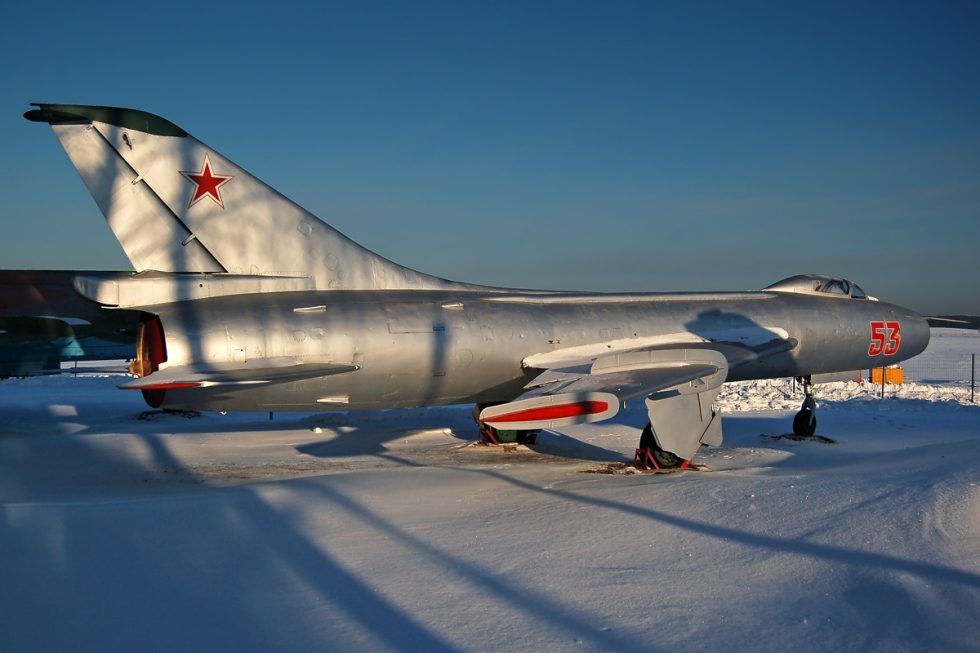
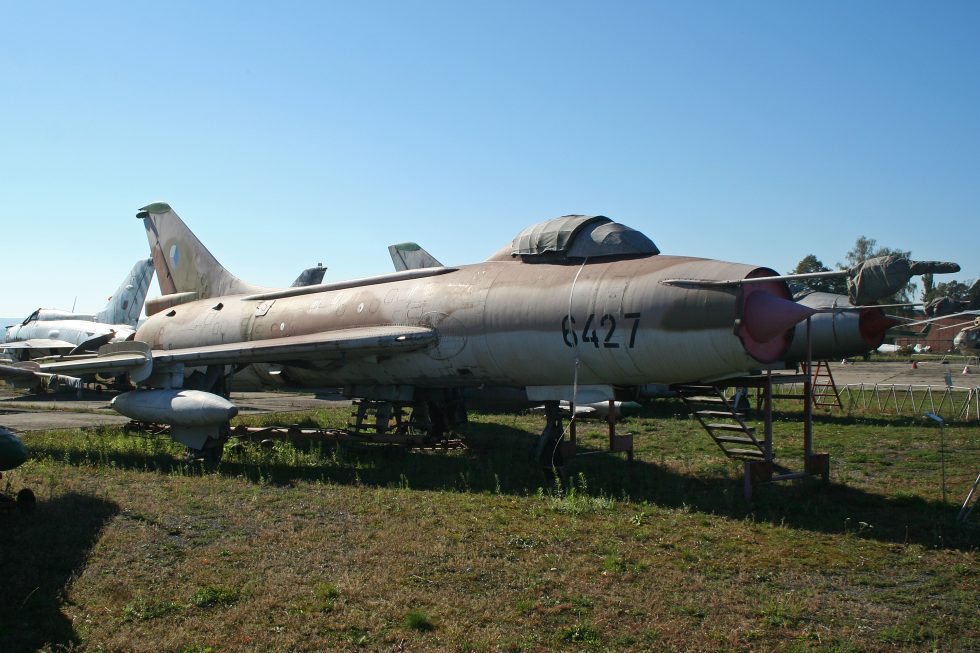
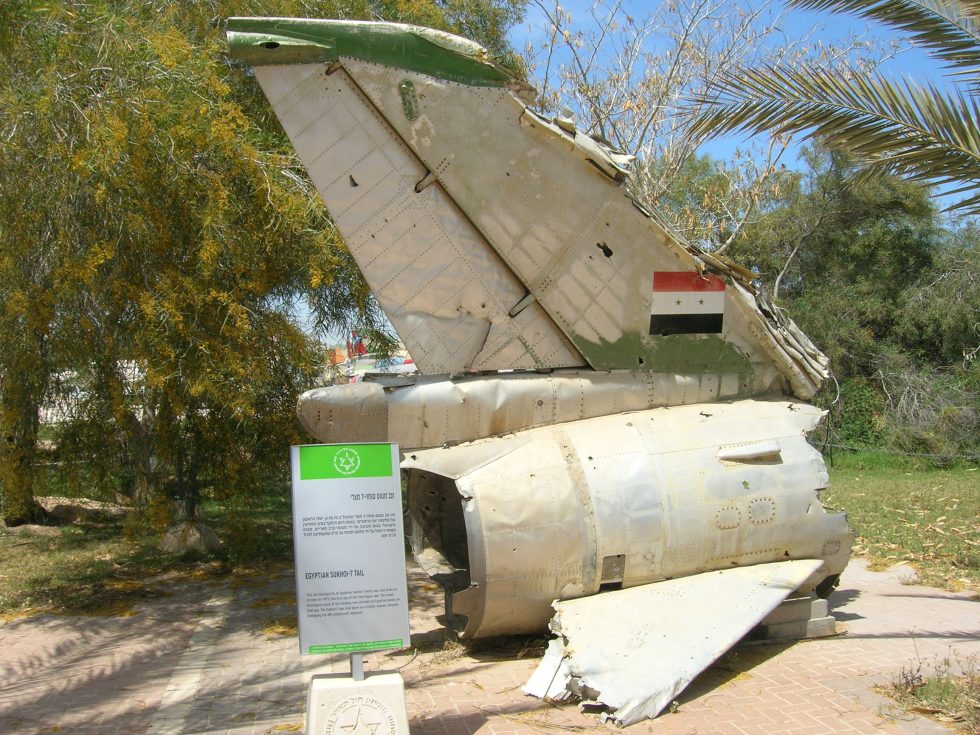
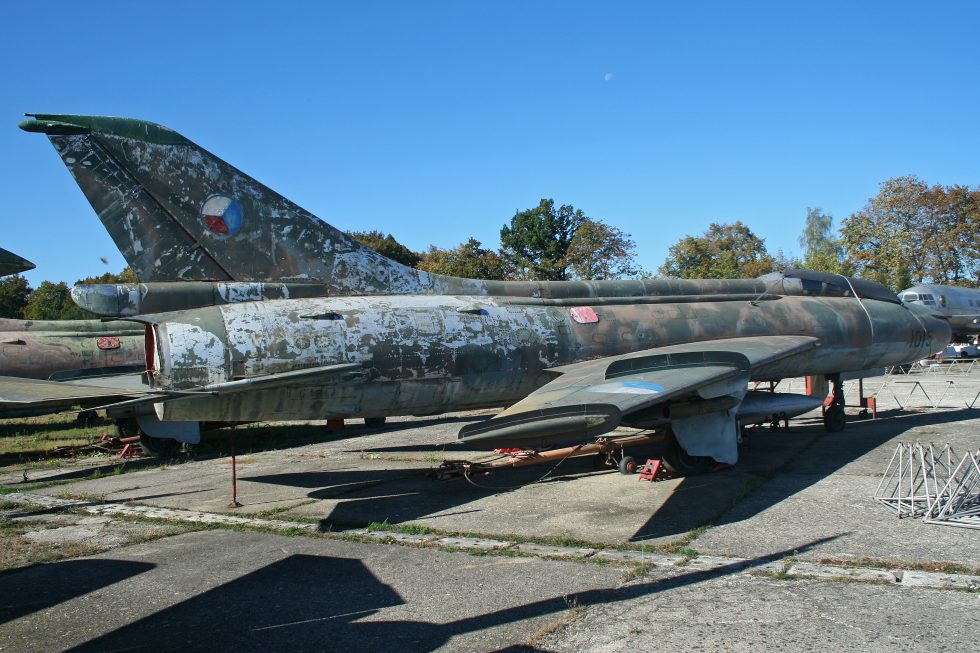
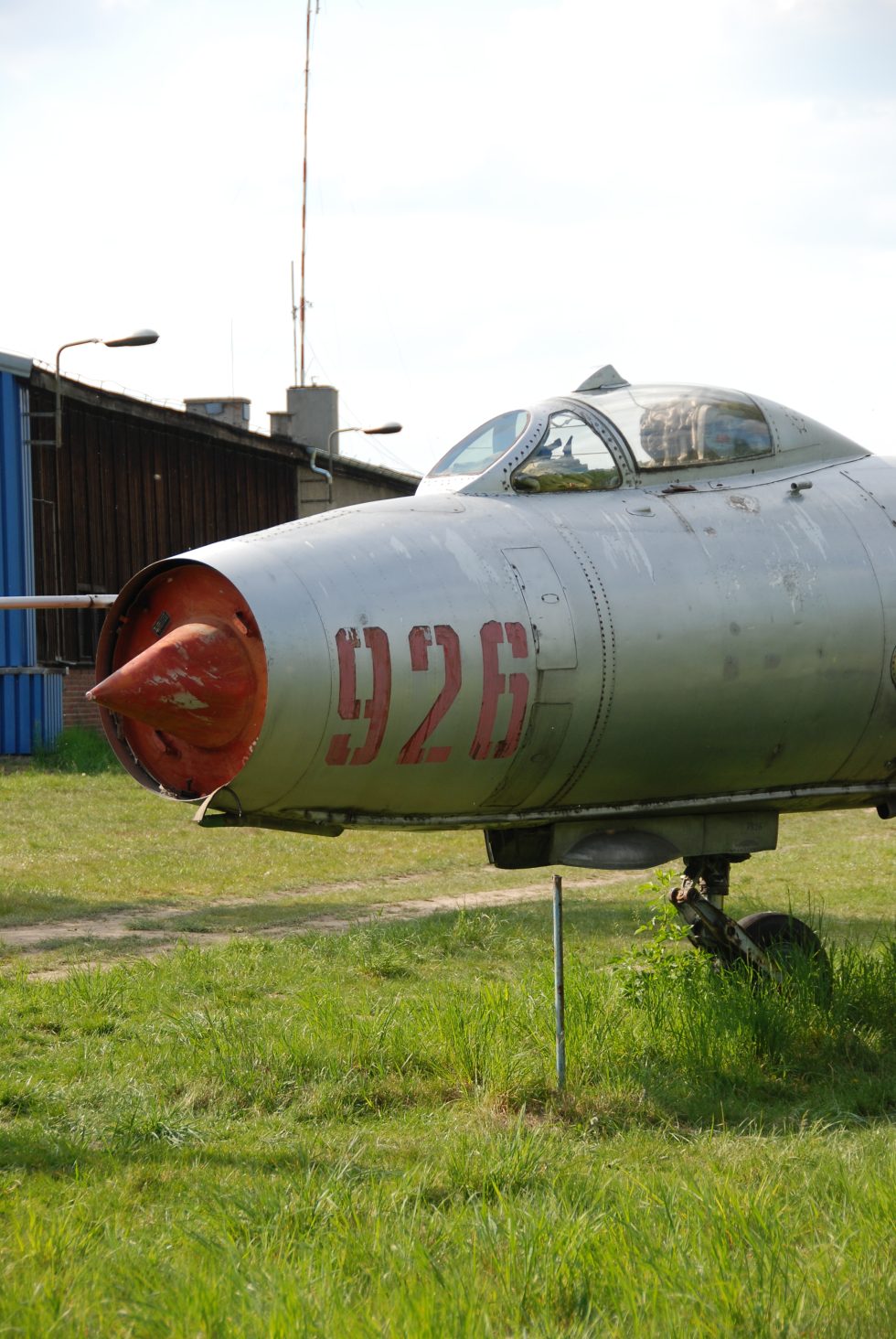
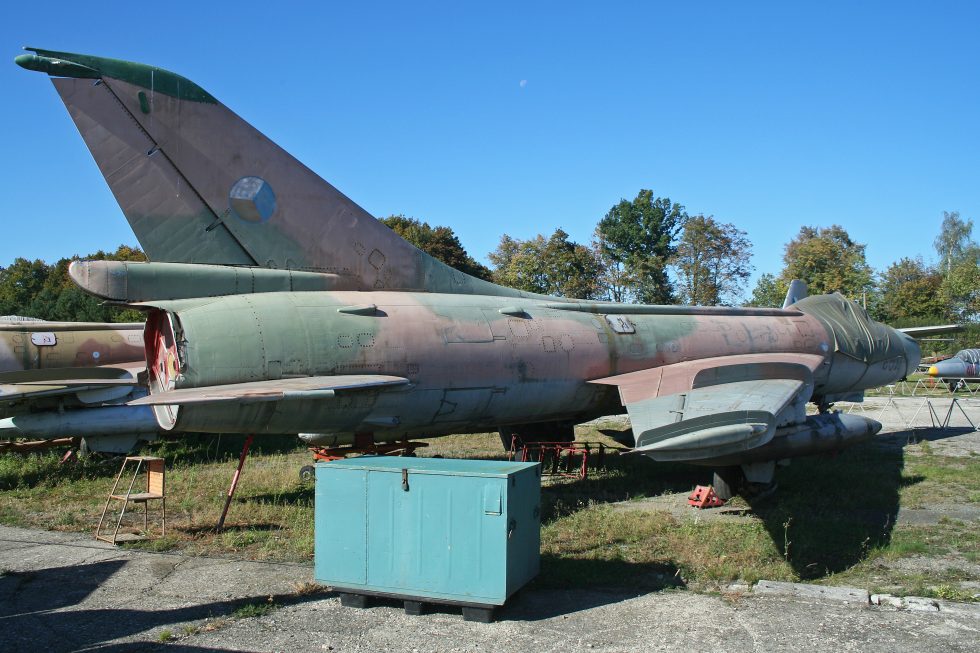
The Su-7 in motion
Video coming soon — we are still sourcing a suitably high-quality, authoritative film of the Su-7 to feature here. In the meantime, explore the photo gallery above and the stories from the cockpit.
Where the Fitter flew
A workhorse of ground attack
The Su-7 was a fighter-bomber, and its combat history is written in ground-attack sorties rather than aerial victories. It flew hard and often at low level against heavy defences: as India’s main strike aircraft in the 1971 Indo-Pakistani war, and with Egypt and Syria against Israel in 1967 and 1973. In every case it took real losses — to interceptors, anti-aircraft fire and, in 1967, to airfield strikes that caught many on the ground. What crews remembered was its speed and its ability to survive damage that should have brought it down.
Compare the combat record of every military aircraft. Figures as of July 2026.
Everything people ask about the Su-7
Can I fly in a Su-7?
What was the Su-7 used for?
How fast was the Su-7?
Why did the Su-7 have such a short range?
Is the Su-7 the same as the Su-17 or Su-22?
Which countries flew the Su-7?
Is the Su-7 still in service?
You can’t fly the Su-7.
These, you can.
Some legends only live in museums — others are fuelled and waiting. MiGFlug has put civilians in real military jet cockpits since 2004.
 Fly the L-39 AlbatrosThe world’s most-flown jet trainer — aerobatics included
 Fly the F-104 Starfighter“The missile with a man in it”
 Fly the MiG-21The Cold War’s most-produced jet
 Fly the T-33 Shooting StarAmerica’s first jet trainer
 Fly the DH VampireA piece of early jet history
 Fly the S.211Agile Italian jet trainer
 Fly the MB-326The classic Aermacchi jet
 Fly the MiG-15The Soviet legend of the Korean War
Continue the tour
Every fact, checked
- Military Factory — Sukhoi Su-7 (Fitter-A)Development history, specifications and operator list.
- GlobalMilitary.net — Su-7 FitterSpecifications, performance figures and combat-history summary.
- Pickled Wings — “Fast and Fiendish”Handling, the runway problem, the Su-7BKL and the type’s toughness.
- Bharat-Rakshak — Indian Air Force Su-7Indian service, the 1971 war and the Fitter’s reputation for absorbing damage.
- Supersonic Aircraft Encyclopedia — Su-7Performance data and design overview.
- The Aviation Geek ClubFeature articles on Su-7 operations and the wider Fitter family.
- AirVectors — The Sukhoi Su-7 & Su-17Detailed technical development of the Su-7 and its swing-wing successors.
- National Museum of the US Air ForceReference for preserved Soviet fighter-bomber airframes.