
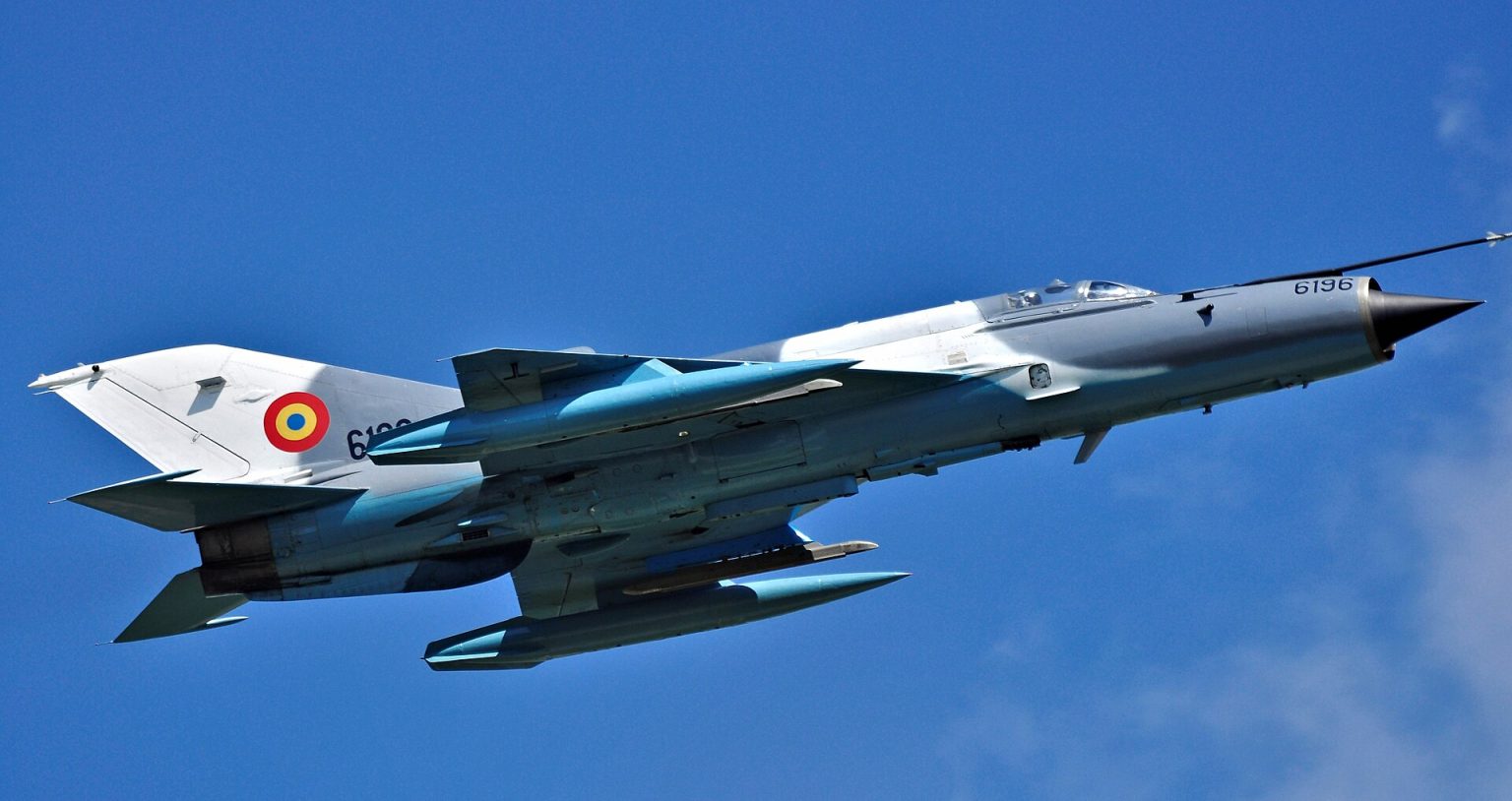
Mikoyan-Gurevich MiG-21
“Fishbed”
The most-produced supersonic aircraft in history — a cheap, rugged Soviet dart that armed some 60 air forces, fought in nearly every Cold War proxy conflict, and remains one of the very few fighters a civilian can still fly supersonic today.
Eleven thousand, and counting
The MiG-21 was born from the air-combat lessons of Korea, where subsonic MiG-15s and F-86 Sabres taught Soviet designers that the next fighter had to be light, supersonic, and simple enough to build in enormous numbers. After a run of experimental prototypes exploring swept versus delta wings, the delta won. The definitive aircraft first flew in the mid-1950s and entered Soviet service around 1959 as a clear-weather point-defence interceptor — a “MiG-15 for the supersonic age.”
Its defining claim is scale. It is the most-produced supersonic aircraft in history and the most-produced jet fighter of the post-war era: cross-checked totals cluster above 11,000, counting Soviet, Czechoslovak and Indian licence-built airframes. Add China’s reverse-engineered Chengdu J-7/F-7 — roughly 2,400 more, a line that outlived the Soviet original — and the Fishbed family becomes the single most common fast jet the world has ever known.
No aircraft has been so widely shared, so widely flown, or so widely fought. Around 60 nations put it on their flight lines, and it fired shots in nearly every Cold War proxy war — over the Red River Delta against American Phantoms, over Sinai against Israeli Mirages, over Kashmir against Pakistani jets. India flew it for 62 years, retiring its last MiG-21 only in September 2025. And uniquely among Cold War fighters, you can still climb into one and go supersonic yourself.
01The MiG-21’s numbers: how a cheap delta became the most-produced supersonic jet ever
Production totals for the MiG-21 are so large they are hard to pin down precisely — credible tallies run from about 11,000 to nearly 12,000. The Soviet Union built roughly 10,645 between 1959 and 1985; Czechoslovakia added about 194; and India’s HAL built around 650–660 under licence. China’s Chengdu J-7 / F-7 — a reverse-engineered derivative — contributed roughly 2,400 more, in production right up to 2013.
That scale is the whole story. A jet cheap enough to build by the thousand and simple enough to maintain from a rough forward strip could be sold to almost anyone, which is exactly why it ended up in some 60 air forces on every inhabited continent. The MiG-21 didn’t win the Cold War in the sky — it simply was the Cold War in the sky, more than any other aircraft.
What makes it special
The tailed delta wing
The Fishbed’s signature is a thin tailed delta: a low-drag delta wing for supersonic dash and high-altitude interception, plus a conventional tailplane that pure-delta rivals like the Mirage III left off. The tail restored pitch control and let the jet use flaps — taming the delta’s brutal landing speeds and making a Mach-2 airframe genuinely flyable by conscript-trained pilots.
Ruthless simplicity
The design philosophy was rugged, cheap and mass-producible: few systems, tough landing gear, tolerance for rough airstrips, and easy field maintenance. That minimalism is why more than 11,000 could be built and why 60 nations — many with little infrastructure — could afford and sustain it. A triumph of “good enough, by the thousand” over gold-plated complexity.
Tumansky power — and the range penalty
The definitive MiG-21bis carried the Tumansky R-25-300 afterburning turbojet — around 70 kN in reheat, enough for Mach 2.05 and a ferocious climb. The trade-off was brutal: tiny internal fuel gave a combat radius of only about 370 km, earning the MiG-21 a reputation as a superb short-range knife-fighter with almost no legs.
02The MiG-21’s delta: why it kept the tail the Mirage threw away
A pure delta wing is wonderful at supersonic speed and terrible at low speed: it has to land fast and nose-high, and it can’t easily carry trailing-edge flaps. France’s Mirage III accepted those penalties. Mikoyan-Gurevich did not — they bolted a conventional horizontal tailplane behind the delta. That tail gave back crisp pitch control and allowed proper flaps, cutting approach speeds to something a mass-conscript air force could handle safely. It is the single design choice that made a Mach-2 interceptor buildable by the thousand and flyable by the many.
03The MiG-21’s short legs: a knife-fighter that couldn’t stay long
Everything about the MiG-21 was optimised for a fast climb, a supersonic dash and a quick kill — not endurance. Its internal fuel was tiny, giving a combat radius of only around 370 km even in the later bis. Pilots learned to fight in short, violent bursts and get home. It made the Fishbed a superb close-in interceptor scrambled against an incoming raid, and a poor choice for anything that needed to loiter or reach out — the exact opposite trade-off from its stablemate the MiG-25.
Full specifications
Baseline note: the figures below describe the MiG-21bis (izdeliye 75), the last and heaviest Soviet production mark and the standard most long-term operators finished on. Deltas for the 1960 MiG-21F-13 day fighter and the 1970 MiG-21MF export standard are given in grey.
Dimensions & weights
- Crew
- 1
- Length, including nose probe
- 15.76 m (51 ft 8 in)
- Fuselage length, probe excluded
- 14.10 m (46 ft 3 in)
- Wingspan
- 7.15 m (23 ft 6 in)
- Height
- 4.13 m (13 ft 6 in)
- Wing area
- 23.0 m² (247.6 sq ft)
- Wing leading-edge sweep
- 57° delta
- Empty weight
- 5,843 kg (12,880 lb) — F-13 4,871 kg (10,740 lb); MF 5,350 kg (11,800 lb)
- Normal take-off weight
- 8,725 kg (19,235 lb) — F-13 7,100 kg (15,650 lb); MF 8,150 kg (17,970 lb)
- Maximum take-off weight
- 10,400 kg (22,930 lb) — F-13 8,625 kg (19,015 lb); MF 9,400 kg (20,725 lb)
- Hardpoints
- Four underwing plus one centreline — F-13 and PF had two underwing only
- Maximum external stores
- ~2,000 kg (~4,410 lb), in practice far less once a drop tank is fitted
- Wing loading at normal weight
- 379 kg/m² (77.6 lb/sq ft)
Performance
- Maximum speed at 13,000 m
- 2,175 km/h (1,351 mph), Mach 2.05 — F-13 2,125 km/h (1,320 mph)
- Maximum speed at sea level
- 1,300 km/h (808 mph)
- Service ceiling
- 17,500 m (57,400 ft) — the lighter F-13 reached 19,000 m (62,300 ft); MF 17,300 m (56,760 ft)
- Initial rate of climb
- 225 m/s (44,300 ft/min)
- Time to 17,000 m
- 8 min 30 s (to 55,800 ft)
- Range on internal fuel
- 1,210 km (752 miles)
- Range with one 490 l tank
- 1,470 km (913 miles); ~1,800 km (~1,120 miles) with three tanks
- Combat radius
- ~370 km (~230 miles) hi-lo-hi with two bombs and one tank
- Take-off run
- 800 m (2,625 ft)
- Landing run
- 550 m (1,805 ft) with brake chute
- Load factor limit
- +8.5 g — earlier marks were held to +7.0 g
- Thrust-to-weight at normal weight
- 0.81, rising to 1.13 on the emergency reheat rating
Propulsion & systems
- Engine
- One Tumansky R-25-300 afterburning turbojet — F-13 R-11F-300; MF R-13-300
- Thrust
- 40.2 kN dry (9,040 lbf), 69.6 kN with reheat (15,650 lbf), and 97.1 kN (21,830 lbf) on the emergency rating available below 4,000 m for up to three minutes — F-13 56.4 kN (12,680 lbf); MF 63.7 kN (14,320 lbf)
- Internal fuel
- ~2,880 l, about ~2,390 kg (~5,270 lb) — F-13 ~2,340 l; MF ~2,650 l; the SMT carried ~900 l more in a swollen spine
- Radar
- RP-22SMA Sapfir-21, NATO Jay Bird: roughly 30 km search and 15 km lock against a fighter-sized target, no look-down capability — the F-13 had no radar at all, only an SRD-5MK Kvant ranging set in the intake centrebody
- Sights & navigation
- ASP-PFD-21 gyro gunsight, RSBN-5S short-range navigation, SAU-23ESN autopilot, and either the Lazur-M or Polyot ground-control data link that flew the aircraft to the intercept
- Electronic warfare
- SPO-10 Sirena-3M radar-warning receiver only; jamming came from an external SPS-141 Siren pod, and Soviet-standard aircraft carried no internal chaff or flare dispensers
- Ejection seat
- KM-1M, usable from zero height above 130 km/h (81 mph) — the F-13 used the SK-1, which drew the canopy down over the pilot and killed several men on low-level ejection
- First flight
- 16 June 1955 (Ye-4 delta prototype); the MiG-21bis flew in 1971
- Service entry
- 1959 (MiG-21F); 1972 (MiG-21bis)
- Number built
- ~11,500 MiG-21s (10,645 Soviet, 194 Czechoslovak, ~660 Indian) plus ~2,400 Chengdu J-7 and F-7 — the most-produced supersonic aircraft in history
04The MiG-21’s operating costs: the cheap supersonic fighter
Low cost was the entire point of the MiG-21 — it is precisely what allowed more than 11,000 to be built and 60 nations to afford them. But firm dollar figures do not reliably exist: it was a Soviet state product, and export prices varied enormously by variant, year and buyer. Period estimates for export models circulate in the low single-digit millions of US dollars, but treat these as unverified secondary figures. No credible cost-per-flight-hour number exists in open sources either. What is certain is the comparison: where a contemporary Western interceptor cost a fortune, the Fishbed was built and sold like a rifle.
Armament & payload
The MiG-21bis went to war with one cannon and four short-range missiles, and that was very nearly the whole story
A twin-barrel 23 mm GSh-23L under the belly and two to four infrared missiles on the wing pylons is what a MiG-21 actually carried on the overwhelming majority of its combat sorties. Four underwing stations and a centreline point suggest about two tonnes of stores, but the centreline was almost always taken by a drop tank, because without one the aircraft had barely half an hour of useful endurance — so a realistic strike fit was two bombs and two rocket pods with no missiles at all. Soviet doctrine never asked for more: the MiG-21 was a ground-controlled interceptor that a radar operator flew to a firing position by data link, and its guided air-to-surface capability never grew beyond one beam-riding weapon on one interceptor mark. Fits diverged sharply by mark and operator — Indian Bisons carried R-77 and R-73, Romanian LanceRs carried Israeli Python 3 and laser-guided bombs, and Chinese J-7s used the entirely separate PL-series family, none of which is interchangeable with Soviet stores.
Gun
- One GSh-23L twin-barrel 23 mm cannon in a ventral fairing, 200 rounds, roughly 3,400 rounds per minute.
- The MiG-21F-13 instead carried a single 30 mm NR-30 with 30 rounds; the earlier MiG-21F had two of them.
- The gun was deleted entirely on the MiG-21PF and early PFM interceptors — a doctrinal bet on missiles that Vietnam comprehensively discredited.
- The GP-9 ventral pod restored a GSh-23L with 200 rounds to gunless marks, at the cost of the centreline tank station.
- Muzzle blast from the GSh-23L was violent enough to disturb the ranging radar and, on early installations, to feed gun gas into the intake and flame the engine out.
Air-to-air
- R-3S (AA-2 Atoll), a reverse-engineered AIM-9B: rear-hemisphere only, easily decoyed, and the type's standard weapon for twenty years.
- R-3R (AA-2-2 Advanced Atoll), semi-active radar homing, paired with the Sapfir-21 on radar-equipped marks.
- R-13M and R-55, improved infrared rounds with better seekers and more manoeuvre margin than the original Atoll.
- R-60 and R-60M (AA-8 Aphid), a light close-combat missile the MiG-21bis carried in pairs on twin launchers — the best air-to-air weapon the type ever had as standard.
- Upgrades went much further: R-73 (AA-11 Archer) and R-77 (AA-12 Adder) on the Indian MiG-21 Bison, Rafael Python 3 on the Romanian LanceR C, and PL-5 and PL-8 on Chinese J-7s.
Air-to-surface guided
- Effectively none in Soviet service. The MiG-21 was built as an interceptor and was never given a working precision-attack fit.
- The single exception was the Kh-66 Grom, a beam-riding missile developed specifically for the MiG-21PFM and guided by that aircraft's RP-21 radar. It demanded a steady shallow dive, was accurate only in good visibility, and saw very limited use.
- The related Kh-23 (AS-7 Karen) family went to the MiG-23 and Su-17 instead; the MiG-21 lacked the cockpit space and the data link for it.
- Western-supported upgrades finally closed the gap: the Romanian LanceR A carried a Litening targeting pod, laser-guided bombs and the Israeli Opher infrared-guided bomb.
- The Indian Bison upgrade deliberately added no air-to-surface guided capability at all — every rouble went into air combat.
Bombs
- FAB-100, FAB-250 and FAB-500M-62 general-purpose bombs; two FAB-500s was a heavy, short-legged and rarely flown load.
- RBK-250 and RBK-500 cluster dispensers, and ZAB-500 incendiary bombs.
- Multiple-ejector racks allowed four FAB-100s on a single inboard pylon.
- Soviet-operated aircraft were wired for one low-yield tactical nuclear store on the centreline; exported aircraft were not.
- Carrying a real bomb load meant giving up the centreline tank, which cut the combat radius to well under 300 km — the reason MiG-21 strike sorties were always short-range affairs flown from forward strips.
Rockets
- UB-16-57UM and UB-32 pods firing 57 mm S-5 rockets, up to 64 rounds across four pods.
- S-24B 240 mm heavy rockets, one per pylon, used against point targets and radar sites by Soviet, Indian and Arab operators.
- Later upgrades added B-8M1 pods with 80 mm S-8 rockets, a considerable step up in accuracy and warhead weight.
- Unguided rockets, not guided weapons, were the MiG-21's real ground-attack armament for almost its entire career.
Pods & other stores
- 490-litre drop tanks on the centreline and, from the MiG-21bis, on the inboard wing pylons; an 800-litre centreline tank existed but was uncommon.
- SPS-141 and SPS-142 Siren active jamming pods — the only electronic self-protection most MiG-21s ever carried.
- The MiG-21R carried interchangeable centreline pods for daylight cameras, night photography, ELINT or air sampling, with ECM fairings on the wingtips.
- SPRD-99 rocket-assisted take-off bottles for short, hot or high strips.
- Upgrade programmes added targeting and navigation pods that the original never anticipated, chiefly Litening on the Romanian LanceR.
Three typical loadouts
- Point-defence intercept
- 2 × R-13M (AA-2D Atoll) inboard, 2 × R-60M (AA-8 Aphid) outboard, 1 × 490 l centreline tank, 200 rounds for the GSh-23L. Ground-controlled to the merge; total sortie time under an hour.
- Battlefield strike
- 2 × FAB-500M-62 inboard, 2 × UB-16-57UM rocket pods outboard, no centreline tank, 200 rounds for the gun. Radius roughly 300 km, flown low and fast from a forward strip.
- Transit and ferry
- 3 × 490 l tanks on the centreline and both inboard pylons, 2 × R-3S outboard for self-defence. About 1,800 km between refuelling stops.
Round counts, pylon limits and cleared stores differ between the F-13, MF and bis, and again between the Soviet domestic, Warsaw Pact and third-country export standards, which were deliberately downgraded in radar and identification equipment. Where authorities disagree the figures above follow the best-attested Soviet MiG-21bis standard. Chinese J-7 and F-7 armament is a separate lineage built around PL-series missiles and is not interchangeable with any of it.
Variants
Every MiG-21 after 1961 was an argument about radar, fuel and thrust fought on a wing that never changed
The MiG-21 was designed in the mid-1950s as a lightweight clear-weather day fighter: a gun, no radar, and roughly forty minutes of fuel. Almost every variant that followed tried to add back something the original had deliberately left out — radar, then a second pair of missiles, then the internal cannon that had been removed, then more fuel, then more thrust. Each addition cost weight, and the delta wing stayed essentially as drawn.
The line falls into three generations. The first, ending with the MiG-21F-13, was a gunfighter that could not fly at night. The second, PF through MF, bought all-weather intercept at the price of a deleted gun that combat forced back on. The third, the MiG-21bis, finally solved the thrust problem with the R-25-300 and is the mark most long-term operators retired from. Running alongside the Soviet line were two independent production programmes that outlived it: HAL at Nashik in India, and Chengdu in China, whose J-7 became a separate aircraft in all but ancestry.
- MiG-21F-13 (izdeliye 74, 1960–65; ~130 Soviet, 194 Czechoslovak as the Aero S-106)
- Clear-weather day fighter: one NR-30 cannon, two K-13 missiles, no radar, SK-1 seat, two pylons. The lightest and highest-flying mark of them all, and the one China copied.
- MiG-21PF and PFM (izdeliye 76 and 94, 1962–68)
- First all-weather marks. RP-21 radar in a widened intake centrebody, no internal gun — an error patched with the GP-9 ventral pod. The PFM added a sideways-opening canopy, blown flaps and the Kh-66 missile.
- MiG-21M and MF (izdeliye 96 and 96F, 1968–74)
- The export standard and the most widely flown version of the aircraft. R-13-300 engine, internal GSh-23L, four pylons, RP-22 radar on the MF. Licence-built in India as the Type 88.
- MiG-21SMT and MT (izdeliye 50 and 96T, 1971–72; ~280 and 15)
- A brute-force answer to the fuel problem: a swollen dorsal spine holding roughly 900 extra litres. Pilots hated the handling and the further loss of rearward view, and many spines were later cut back to MF size.
- MiG-21bis (izdeliye 75, 1972–85; ~2,000 Soviet plus ~220 Indian)
- The definitive mark. R-25-300 with a three-minute emergency reheat rating, strengthened structure cleared to +8.5 g, more internal fuel, R-60 capability. Built in two standards: Lazur-M data link, and the autopilot-equipped bis-SAU.
- MiG-21U, US and UM "Mongol" (1962–85)
- Two-seat conversion trainers, progressively based on the F-13, PFM and MF. The UM is the version most surviving fleets and every civil warbird operator still fly.
- HAL Type 77, Type 88 and Type 75 (India, 1966–87; ~660 built)
- Indian licence production at Nashik, escalating from assembly of MiG-21FL kits to complete manufacture of the bis airframe and the R-25-300 engine. The largest programme outside the Soviet Union.
- Chengdu J-7 and F-7 (China, 1966–2013; ~2,400 built)
- A reverse-engineered MiG-21F-13 that outlived its parent by decades. The J-7E introduced a genuinely new double-delta wing worth roughly 45 per cent more turn performance, and the F-7M, F-7PG, F-7BGI and F-7NI were sold across Asia and Africa.
- MiG-21-93 and MiG-21 Bison (India, 2001–08; 125 converted)
- Phazotron Kopyo pulse-Doppler radar, helmet-mounted sight, R-73 and R-77. Credited with shooting down a Pakistani F-16 in February 2019, a claim Pakistan denies, and retired on 26 September 2025.
- MiG-21 LanceR (Romania, 1995–2002; 110 converted)
- An Aerostar and Elbit rebuild in strike (A), trainer (B) and air-defence (C) forms, the C with Elta EL/M-2032 radar and Python 3. Europe's last combat MiG-21s, withdrawn in May 2023 after a fatal accident.
Designations overlap badly. The same izdeliye number often covered separate domestic, Warsaw Pact and third-country builds with different radar and identification fits, and several export designations describe aircraft that were internally identical. Soviet production totals here follow the Gorky, Moscow and Tbilisi plant figures as published by Gordon and Komissarov; Chinese totals are estimates and no authoritative Chengdu figure has ever been released.
Seventy years of the Fishbed
First flight
The definitive delta-winged prototype flies, after a run of experimental Ye-series aircraft testing swept versus delta wings.
Public debut
The new fighter is shown to the world at the Tushino air display near Moscow.
Enters service
The MiG-21 joins the Soviet Air Force as a clear-weather supersonic point-defence interceptor.
India adopts it
The Indian Air Force begins its 62-year relationship with the type — the longest of any operator.
The Chinese copy
China reverse-engineers the MiG-21 into the Chengdu J-7/F-7 — a line that will build ~2,400 aircraft into 2013.
Combat over Vietnam
North Vietnamese MiG-21s begin hit-and-run supersonic passes against US F-4s and F-105s.
Decisive over Dacca
IAF MiG-21FLs win air superiority in the Indo-Pakistani War and fly the pinpoint strike on the Governor’s House in Dacca.
The definitive bis
The MiG-21bis, with the R-25-300 engine, enters production as the final major variant.
Soviet production ends
After ~10,645 built, the Soviet MiG-21 line closes — but the type flies on for four more decades.
India retires the last
The Indian Air Force flies its final MiG-21 sortie in September 2025, closing the Soviet-built Fishbed era after ~66 years.
Supersonic flights restart
MiGFlug restarts civilian supersonic MiG-21 flight experiences — once again the only way for a civilian to break the sound barrier.
From the flight line: twelve Fishbed stories
“The best flying job in the world”
US ace Robin Olds reportedly said the best flying job on Earth would be MiG-21 pilot.
Read the full story
Operation Diamond — the stolen MiG
In 1966 Israel’s Mossad persuaded an Iraqi pilot to defect with his MiG-21.
Read the full story
The deadliest interceptor over Hanoi
North Vietnam’s MiG-21s bled US strike packages with supersonic hit-and-run passes.
Read the full story
“Colonel Toon” — the ace who may never have existed
A mythical North Vietnamese ace supposedly downed in 1972 — probably a composite.
Read the full story
More than eleven thousand
No supersonic aircraft has ever been built in greater numbers.
Read the full story
Sixty flags on one airframe
From Finland to Cuba to Vietnam, roughly 60 nations flew the MiG-21.
Read the full story
The long, hard love affair
India flew the MiG-21 for 62 years — and mourned it at the end.
Read the full story
China’s copy outlived the original
The reverse-engineered J-7/F-7 stayed in production decades after the Soviet line closed.
Read the full story
The strike on the Governor’s House
IAF MiG-21s flew the pinpoint rocket attack that helped end the 1971 war.
Read the full story
Still fighting at sixty
A MiG-21 Bison was lost in the 2019 India–Pakistan clash — six decades on.
Read the full story
The supersonic pencil
Pilots dubbed the slim, needle-nosed jet the “supersonic pencil.”
Read the full story
The one you can still fly
MiGFlug keeps the Fishbed flyable — a civilian can still go supersonic in one.
Read the full story
The Fishbed in pictures
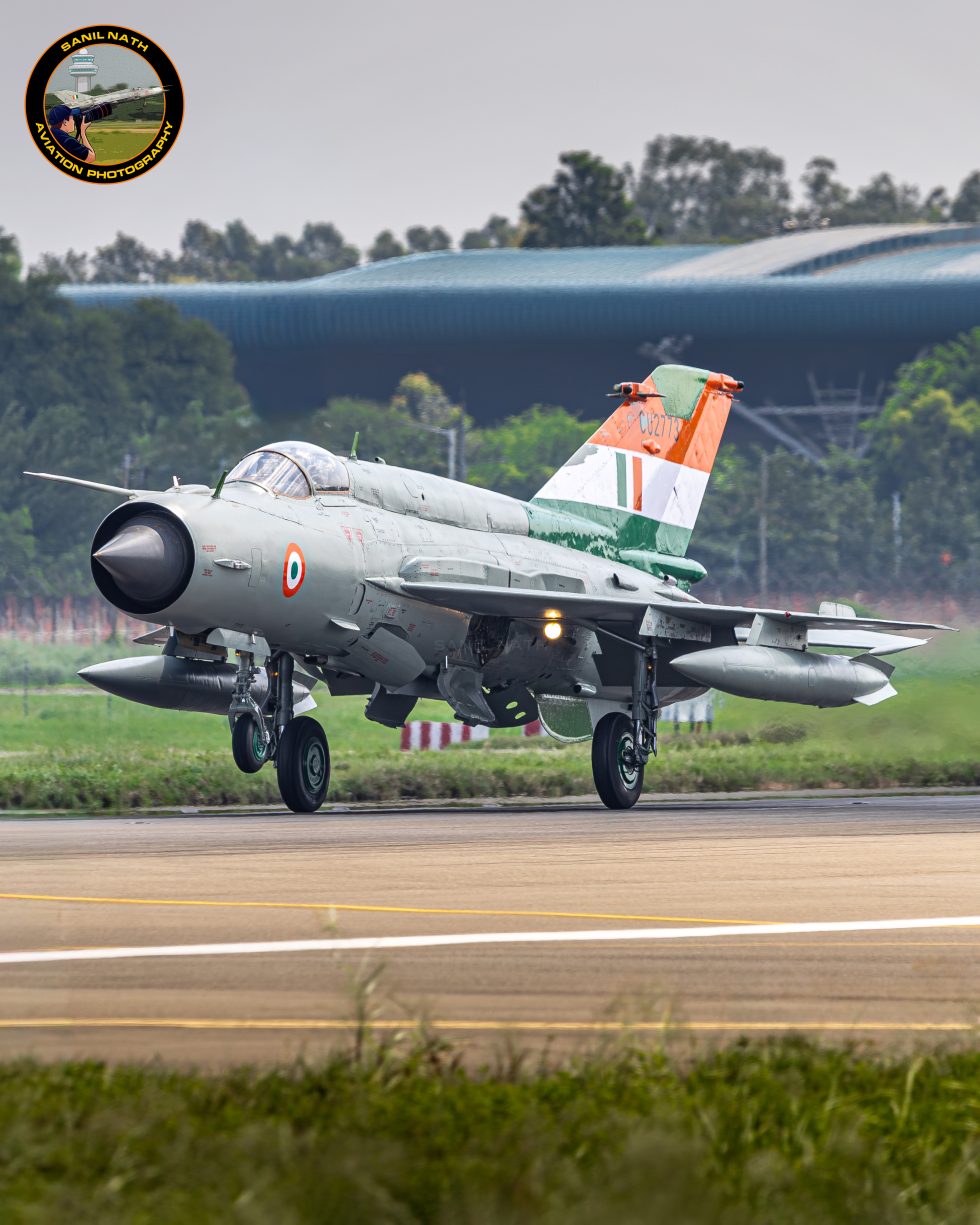
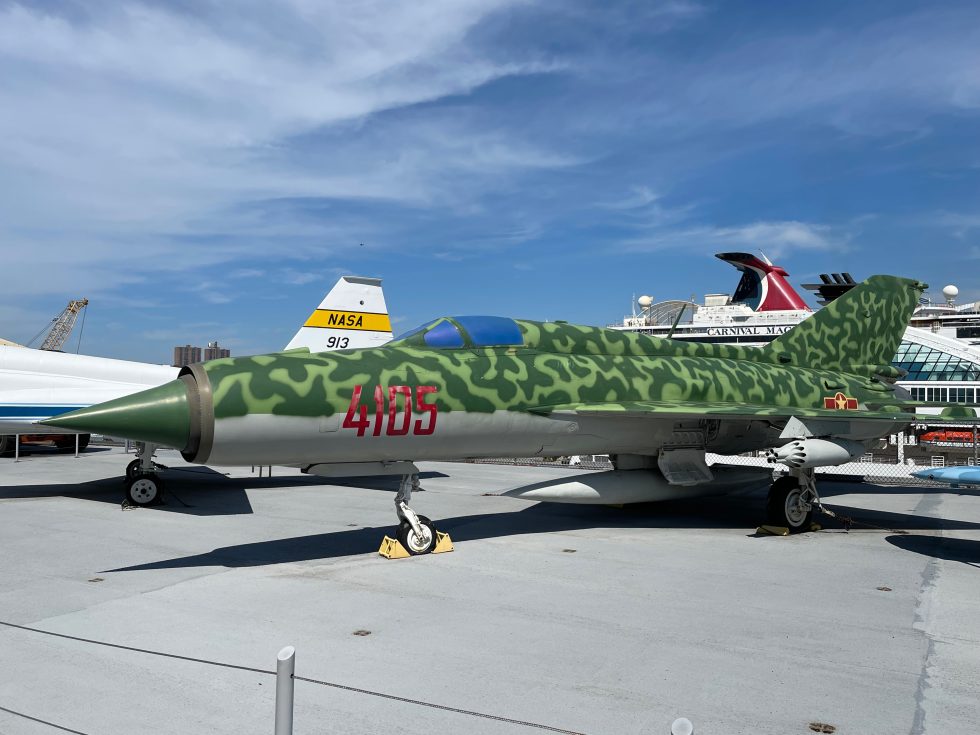
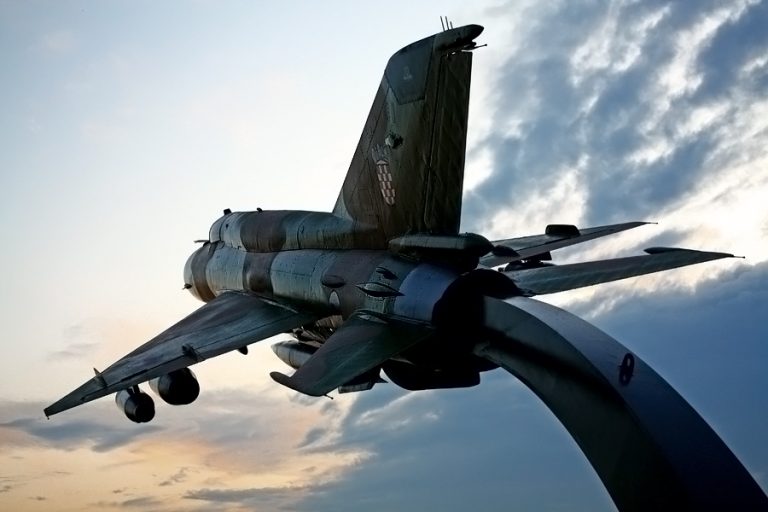
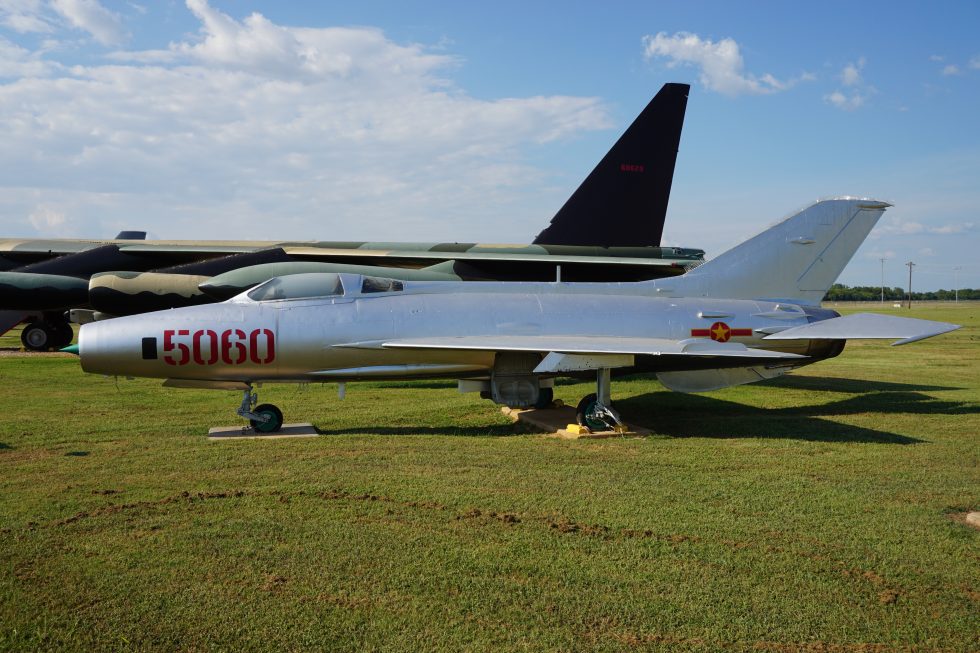
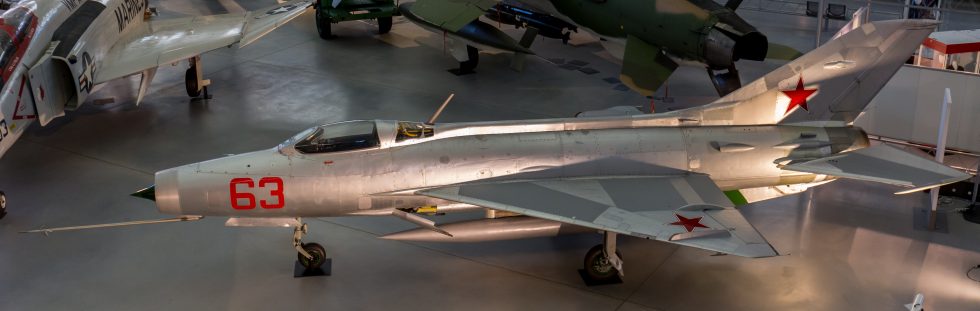
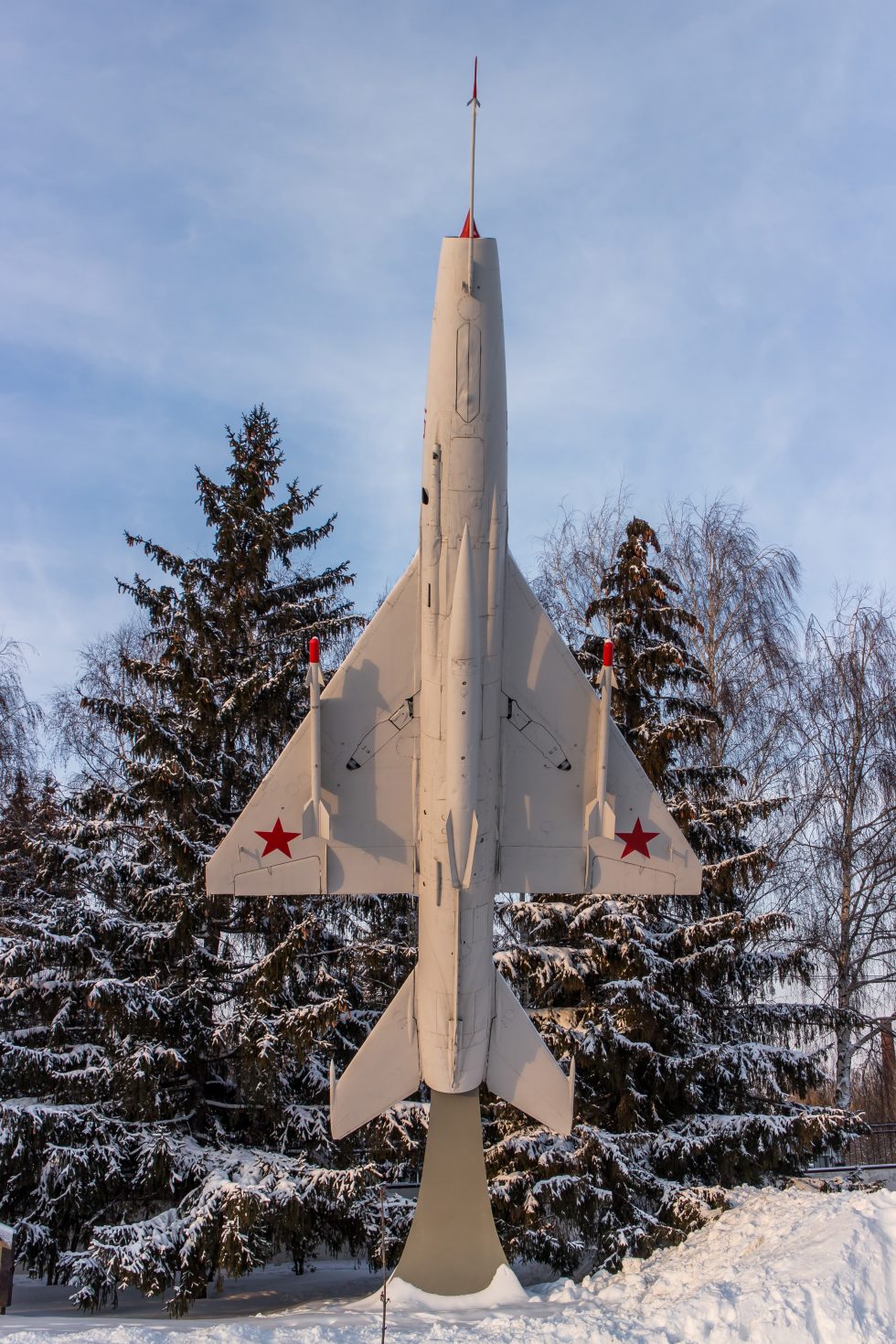
The Fishbed in motion
A documentary look inside the MiG-21 — the little jet that armed the world.
Where the Fishbed flew
Operators today
The MiG-21 has almost left front-line service, and what survives is mostly Chinese-built
The Soviet-built MiG-21 is now within a few years of vanishing from operational squadrons. Romania retired its LanceRs in May 2023, Croatia stood down Europe's last operational fleet at the end of 2024, and India — by far the largest operator outside the Warsaw Pact, with 872 airframes taken on charge and 482 of them lost in accidents — flew its final sortie at Chandigarh on 26 September 2025. What is left of the original aircraft is a short list of small, thinly supported fleets in Africa, the Caribbean and North Korea. The larger surviving population is the Chengdu J-7 and F-7, a Chinese licence-derived MiG-21 that is counted on this chart with the type named in each row.
These are estimates, and for this type they are unusually soft. Counting policy: Chinese-built J-7 and F-7 aircraft are included, because they are licence-derived MiG-21s and are where most surviving airframes now sit; each row names what the operator actually flies. The Chinese figure is the least reliable entry here — the 2025 World Air Forces directory still listed close to 400, while Chinese and Western analysts describe the type as all but withdrawn from the PLAAF, so treat it as an upper bound. Syria is omitted deliberately: its air force was largely destroyed in the strikes that followed the fall of the Assad government in December 2024 and no credible current count exists. Libya, Yemen, Mali, Mozambique, Zimbabwe and Guinea are omitted because their listed airframes could not be corroborated as operational rather than stored. Many aircraft counted on paper are grounded, in deep overhaul, or cannibalised for spares. Sources: IISS The Military Balance and FlightGlobal World Air Forces; entries that could not be corroborated are omitted.
The most combat-tested jet ever
The MiG-21 fired shots in nearly every major Cold War proxy conflict, and its published kill/loss records are among aviation’s most politically contested — always cite them as claims, not settled scores. What is beyond dispute is the sheer breadth of its fighting career.
Compare the combat record of every military aircraft. Figures as of July 2026.
Everything people ask about the MiG-21
Can I fly a MiG-21?
How fast is the MiG-21?
How many MiG-21s were built?
Is the MiG-21 still in service?
What was its biggest weakness?
What did the MiG-21 fight in?
Who built it under licence?
Why was it built?
You can actually fly the MiG-21.
Pick your cockpit.
Some legends only live in museums — others are fuelled and waiting. MiGFlug has put civilians in real military jet cockpits since 2004.
 Fly the L-39 AlbatrosThe world’s most-flown jet trainer — aerobatics included
 Fly the F-104 Starfighter“The missile with a man in it”
 Fly the MiG-21The Cold War’s most-produced jet
 Fly the T-33 Shooting StarAmerica’s first jet trainer
 Fly the DH VampireA piece of early jet history
 Fly the S.211Agile Italian jet trainer
 Fly the MB-326The classic Aermacchi jet
 Fly the MiG-15The Soviet legend of the Korean War
Continue the tour
Every fact, checked
- Airpower Asia — “The Iconic MiG-21”Detailed production breakdown, combat records and pilot quotes — the richest single source.
- National Security JournalThe MiG-21 as the most-produced supersonic jet in history; production and service overview.
- MILAVIA — MiG-21 specificationsEngineering and performance data for the bis variant.
- flugzeuginfo.netIndependent specification and production cross-check.
- The AviationistIndia’s 62-year MiG-21 retirement (September 2025).
- The War Zone (TWZ)Retirement context and the type’s long, hard Indian service.
- The National InterestThe 1971 Indo-Pakistani War and the MiG-21’s combat role.
- Israeli Air Force Museum, HatzerimOperation Diamond and the defected MiG-21 “007”.