McDonnell Douglas F-15 Eagle — History, Specs & Stories

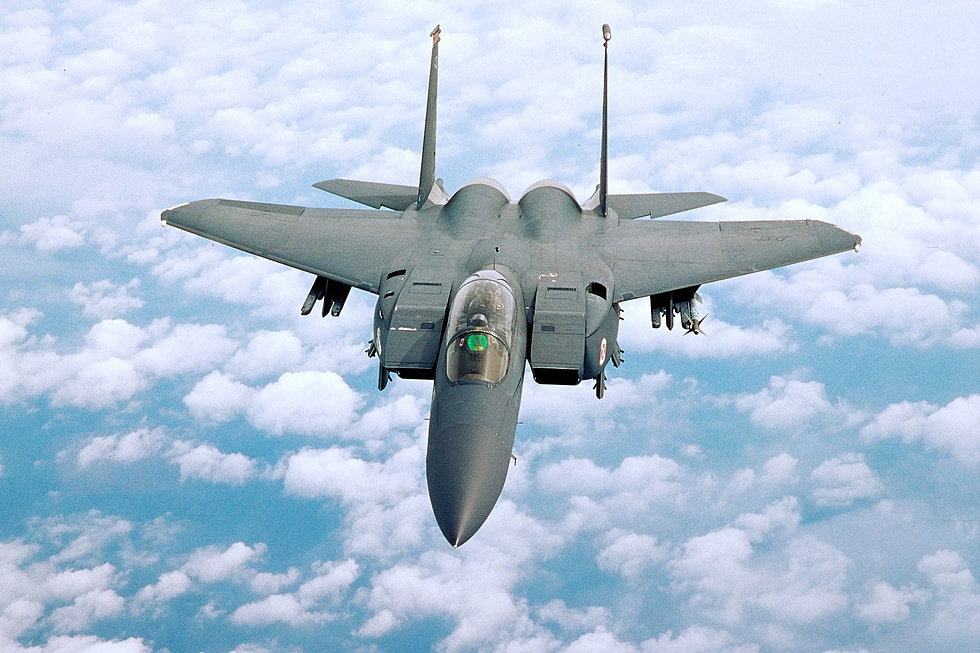
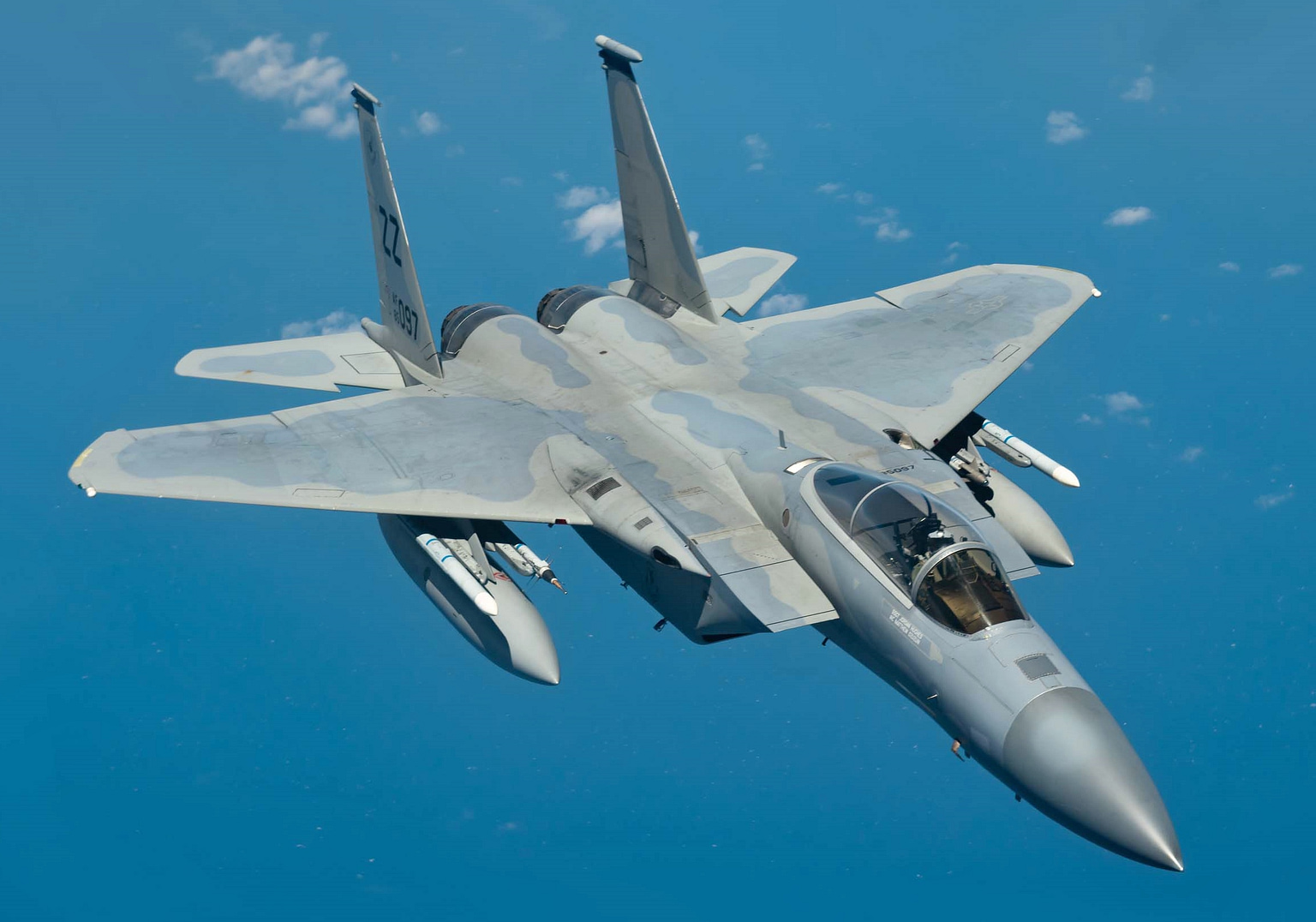
McDonnell Douglas F-15C Eagle in flight
Aircraft MuseumAir SuperiorityF-15 Eagle

McDonnell Douglas F-15
“Eagle”

The West’s definitive air-superiority fighter — a big-winged, twin-engine dogfighter built on the mantra “not a pound for air-to-ground.” Across American, Israeli and Saudi service the F-15 has an air-to-air record no other modern fighter can match: roughly 104 kills and no confirmed air-to-air losses.

~104Air-to-air kills claimed
0Confirmed air-to-air losses
Mach 2.5+Top speed
1976–presentIn frontline service
Photo: Airman 1st Class Matthew Seefeldt · U.S. Air Force (public domain)
RoleAir-superiority fighterEraCold War – presentEngine2 × Pratt & Whitney F100OriginUSA · McDonnell DouglasStatusFrontline / air superiorityCan a civilian fly the F-15?
The Story

The Eagle that never lost

The F-15 was born out of alarm and disappointment. In 1967 the Soviet Union unveiled the giant MiG-25 “Foxbat” at Domodedovo, and Western analysts — overestimating it — feared a new super-fighter. At the same time, dogfights over Vietnam were exposing how poorly heavy, missile-only interceptors like the F-4 Phantom handled nimble MiGs. The U.S. Air Force’s answer was the F-X study and a single, ruthless design rule: “not a pound for air-to-ground.” This would be a pure air-superiority fighter, optimised to win the dogfight and nothing else.

McDonnell Douglas won the contract on 23 December 1969. The F-15A first flew on 27 July 1972, the two-seat F-15B followed in 1973, and the type entered service in 1976 with the 1st Tactical Fighter Wing at Langley. Improved F-15C and D models arrived from 1979 with more fuel, provision for conformal tanks and better avionics. Around 1,200 A/B/C/D Eagles were built.

What followed made the F-15 a legend. Israeli Eagles opened the scoreboard in 1979 and gutted the Syrian Air Force over the Bekaa Valley in 1982; American F-15Cs scored the largest single haul of the 1991 Gulf War; Saudi Eagles added kills of their own. The aggregate air-to-air record — often quoted as 104 to 0 — is best framed honestly as no confirmed air-to-air losses: adversaries have periodically claimed an Eagle, but none has been substantiated with wreckage or corroboration.

A pure air-superiority fighter with a thrust-to-weight ratio above one — the F-15 can accelerate while pointing straight up.Not a pound for air-to-ground — the rule that shaped the Eagle
01The F-15 Eagle’s origin: how the MiG-25 scare created the West’s best dogfighter

The F-15 is, in a sense, a child of the MiG-25. When the Foxbat appeared in the late 1960s, its huge wing and blistering speed convinced Western intelligence that the Soviets had built a maneuverable super-fighter — a misreading only corrected after Viktor Belenko defected with one to Japan in 1976. But the fear did its work: it pushed the U.S. Air Force to fund a fighter that could out-fly anything in the sky.

Combined with the hard lessons of Vietnam — where agile MiG-17s and MiG-21s embarrassed heavier American jets — the F-X programme produced an aircraft with an enormous wing, low wing loading and two powerful afterburning turbofans. The result had a thrust-to-weight ratio above one at combat weight, letting the Eagle accelerate vertically. The Foxbat scare had, ironically, produced its own antidote.


Design & Engineering

What makes the F-15 special

01

Big wing, brute thrust

The Eagle’s defining trait is its enormous ~56.5 m² wing and low wing loading, paired with two afterburning turbofans. Together they give a thrust-to-weight ratio greater than one at combat weight — the F-15 can accelerate while climbing vertically. That excess energy is exactly what wins turning dogfights and lets the jet zoom to extreme altitude.

02

Look-down, shoot-down radar

The AN/APG-63 pulse-Doppler radar (later upgraded to AESA) gave the Eagle true look-down/shoot-down capability — the ability to pick low-flying targets out of ground clutter. Paired with the AIM-7 Sparrow, later the AIM-120 AMRAAM, and the AIM-9 for close-in work, crews could detect, identify and kill before the enemy knew the fight had begun.

03

Twin F100 turbofans

Two Pratt & Whitney F100 afterburning turbofans (the -PW-100/-220/-229 series) each produce roughly 23,500–29,000 lbf of thrust, driving the Eagle past Mach 2.5. Two engines also mean redundancy — an Eagle can lose one and still fly home, a margin that has saved airframes and crews more than once.

02The F-15 Eagle’s thrust-to-weight: why it can climb straight up

Most fighters trade away energy in a hard turn or a steep climb. The F-15 was designed so it did not have to. With a big low-loaded wing generating lift cheaply and two F100s producing more thrust than the jet’s combat weight, the Eagle has surplus power in almost every part of the envelope. It can point its nose at the sky and keep accelerating — the same energy margin that let a stripped “Streak Eagle” shatter eight time-to-climb records in 1975, and that lets a combat Eagle regain lost speed and altitude faster than its opponent.

03The F-15 Eagle’s radar and missiles: winning before the merge

Air combat since the 1970s has been decided as much by sensors as by turning ability. The APG-63 gave the F-15 a long-range pulse-Doppler picture with genuine look-down/shoot-down performance, so a low-flying target could no longer hide in ground return. Married to the semi-active AIM-7 Sparrow and later the fire-and-forget AIM-120 AMRAAM, that radar let Eagle crews shoot at range and turn away — the pattern behind many of the type’s Gulf War kills, where Iraqi jets were destroyed before they ever detected the Eagle hunting them.


Technical Data

Full F-15C specifications

Dimensions & weights

Crew
1 (F-15C); 2 (F-15B/D/E and F-15EX two-seat)
Length
19.43 m (63 ft 9 in)
Wingspan
13.05 m (42 ft 10 in)
Height
5.63 m (18 ft 6 in)
Wing area
56.5 m² (608 sq ft)
Empty weight
12,700 kg (28,000 lb) F-15C; 14,380 kg (31,700 lb) F-15E
Normal takeoff weight
20,200 kg (44,500 lb) F-15C
Max takeoff weight
30,845 kg (68,000 lb) F-15C; 36,740 kg (81,000 lb) F-15E
Internal fuel
~6,100 kg (~13,455 lb) F-15C internal

Performance

Max speed
2,655 km/h (1,650 mph / Mach 2.5) at altitude
Max speed, sea level
1,450 km/h (900 mph / Mach 1.2)
Cruise speed
917 km/h (570 mph)
Rate of climb
254 m/s (50,000 ft/min) and above
Service ceiling
20,000 m (65,000 ft)
Combat radius
~1,970 km (~1,220 mi) F-15C; ~1,270 km (~790 mi) F-15E on a strike profile
Ferry range
~5,550 km (~3,450 mi) with conformal and external tanks
Takeoff run
274 m (900 ft)
Landing run
1,067 m (3,500 ft) without drag chute
Load factor
+9 g (−3 g)

Propulsion & systems

Engines
2 × Pratt & Whitney F100-PW-100 / -220 (F-15A–D); F100-PW-229 or F110-GE-129 on later F-15E, export marks and the F-15EX
Thrust each
65.3 kN (14,670 lbf) dry / 105.7 kN (23,770 lbf) with afterburner — F100-PW-220
Thrust each, F100-PW-229
79.1 kN (17,800 lbf) dry / 129.4 kN (29,100 lbf) with afterburner
Cannon
1 × M61A1 Vulcan 20 mm (940 rounds on the F-15C, ~6,000 rounds/min)
Hardpoints & max ordnance
11 stations (F-15E adds conformal tank racks); ~10,400 kg (~23,000 lb) of stores on the F-15E
Radar
AN/APG-63 upgraded to APG-63(V)3 AESA on the F-15C; APG-70 then APG-82(V)1 AESA on the F-15E and F-15EX
Ejection seat
McDonnell Douglas ACES II (zero-zero)
First flight
27 July 1972 (F-15A); 11 December 1986 (F-15E Strike Eagle)
Service entry
January 1976 (USAF, 1st Tactical Fighter Wing, Langley AFB)
Built
~1,700 (all marks including licence-built F-15J; production continues with the F-15EX)
Unit cost
~US$30 million (F-15C, 1998 dollars); ~US$90 million flyaway for the F-15EX
Cost per flight hour
~US$29,000 (F-15C) and ~US$30,000 (F-15E), USAF reimbursable rates; figures move year to year and depend on the accounting basis
04The F-15 Eagle’s cost: what an air-superiority fighter is worth

Historic flyaway figures for the F-15A/C cluster around US$30 million apiece (roughly $29.9M is commonly cited), though such numbers vary by variant, year and how you count development. Operating costs are harder still: no single reliable public cost-per-flight-hour figure exists for the A–D Eagle, and quoted numbers depend heavily on the accounting method and the fleet’s age. What is clear is that the F-15 was a deliberately expensive, no-compromise machine — the opposite philosophy to the cheap, mass-built MiG-21 it was meant to defeat. The new-build F-15EX Eagle II carries a far higher modern price tag again.


Armament & payload

What the F-15 Eagle carries

The F-15A through F-15D were built for one job: air superiority, with a gun, radar missiles and heat-seekers and famously “not a pound for air-to-ground”. The F-15E Strike Eagle rewrote that in 1986 — a strengthened two-seat airframe with conformal tanks, terrain-following radar and a weapons systems officer, which turned the Eagle into one of the most capable deep-strike aircraft in service. The lists below cover both roles; not every store is cleared on every mark.

Gun

  • M61A1 Vulcan 20 mm six-barrel rotary cannon, internal in the starboard wing root
  • 940 rounds on the F-15C; ~500 rounds typical on the F-15E
  • Rate of fire ~6,000 rounds per minute

Air-to-air

  • AIM-7F / AIM-7M Sparrow — semi-active radar homing, the Eagle’s original long-range shot
  • AIM-9L / AIM-9M / AIM-9X Sidewinder — infrared, short range
  • AIM-120A/B/C/D AMRAAM — active radar, replaced the Sparrow from the early 1990s
  • Python-4 / Python-5 and Derby on Israeli F-15s
  • AAM-3, AAM-4 and AAM-5 on Japanese F-15J/DJ

Air-to-surface

  • AGM-65 Maverick — electro-optical and infrared marks
  • AGM-88 HARM — anti-radiation
  • AGM-130 — rocket-boosted standoff weapon derived from the GBU-15
  • AGM-84 Harpoon and SLAM-ER on the F-15K and F-15SG
  • Rafael Popeye (AGM-142 Have Nap) on Israeli F-15I
  • AGM-158 JASSM cleared for the F-15E and F-15EX

Bombs

  • GBU-10, GBU-12 and GBU-24 Paveway laser-guided bombs
  • GBU-31 and GBU-38 JDAM — GPS/INS guided
  • GBU-39 Small Diameter Bomb
  • Mk 82 and Mk 84 unguided general-purpose bombs
  • CBU-87 and wind-corrected CBU-103 cluster munitions
  • B61 nuclear gravity bomb — F-15E certified

Rockets & pods

  • LAU-3 and LAU-131 launchers with Hydra 70 unguided rockets
  • AN/AAQ-13 navigation and AN/AAQ-14 targeting pods (LANTIRN)
  • AN/AAQ-33 Sniper XR advanced targeting pod
  • AN/ASQ-236 Dragon’s Eye radar mapping pod
  • AN/ALQ-131 and AN/ALQ-184 electronic countermeasures pods
  • Legion Pod infrared search and track on the F-15EX

Other stores

  • Conformal fuel tanks — FAST packs on the F-15C, CFTs with tangential weapon racks on the F-15E
  • Three 610 US gal (2,309 l) external drop tanks
  • AN/ALE-45 chaff and flare dispensers
  • EPAWSS electronic warfare suite on the F-15E and F-15EX
  • AMBER and Eagle Weapon Rack multi-store racks on the F-15EX

Typical F-15 loadouts

F-15C air superiority CAP
4 × AIM-120C AMRAAM on the fuselage corners, 4 × AIM-9M/X Sidewinder on the wing pylon rails, full 940-round magazine for the M61A1, and three 610 gal external tanks for time on station.
F-15E deep strike
Two conformal fuel tanks, 9 × GBU-38 JDAM (or 4 × GBU-31) on the tangential racks, a Sniper or LANTIRN targeting pod plus the navigation pod, and 2 × AIM-120 with 2 × AIM-9 for self-defence.
F-15EX heavy air-to-air
Up to 12 × AIM-120 AMRAAM carried on AMBER racks with conformal tanks fitted — roughly double an F-15C load, and the reason Boeing markets the type as a missile truck alongside stealth fighters.

Clearances differ by variant, operator and software block. Israeli, Japanese, South Korean, Singaporean and Qatari Eagles carry national weapons not on the USAF list, and some stores shown here are cleared only on the F-15E, F-15EX or specific export marks.


Variants

Every major F-15 Eagle variant

F-15A / F-15B
The original single-seat fighter and its two-seat trainer, with the AN/APG-63 radar. 384 F-15A and 61 F-15B built. Retired from USAF front-line service; some served with Air National Guard units into the 2000s.
F-15C / F-15D
Improved single- and two-seat models from 1979 with more internal fuel, provision for FAST pack conformal tanks, a higher maximum takeoff weight and progressively upgraded radars, ending with the APG-63(V)3 AESA. 483 F-15C and 92 F-15D built; the backbone of USAF air superiority for four decades.
F-15E Strike Eagle
Two-seat dual-role deep-strike derivative, first flown in 1986. Strengthened airframe rated for 16,000 flight hours, conformal fuel tanks with tangential weapon racks, LANTIRN pods, terrain-following radar and a rear-cockpit weapons systems officer. 236 built for the USAF.
F-15J / F-15DJ
Japanese air superiority variant, the great majority licence-built by Mitsubishi Heavy Industries with Japanese avionics and weapons. 213 delivered, making Japan the largest operator outside the United States; a portion are being modernised as the F-15JSI.
F-15I Ra’am
Israeli Strike Eagle derivative with indigenous electronic warfare systems and Israeli weapons integration. 25 delivered from 1998, flown alongside Israel’s earlier F-15A–D air superiority fleet.
F-15S / F-15SA
Saudi strike variants: 72 F-15S delivered from 1995, followed by the far more capable F-15SA with APG-63(V)3 AESA radar, fly-by-wire and two extra wing stations. 84 new-build F-15SA plus upgrades of the surviving F-15S fleet.
F-15K Slam Eagle
South Korean Strike Eagle with F110-GE-129 engines, Harpoon and SLAM-ER integration and Korean systems. 61 delivered.
F-15SG
Singaporean variant with the APG-63(V)3 AESA radar and F110 engines. 40 delivered; several are based in the United States for training.
F-15QA Ababil
Qatari model closely related to the F-15SA/EX standard, with fly-by-wire controls, AESA radar and large-area cockpit displays. 36 ordered.
F-15EX Eagle II
The current-production Boeing model for the USAF: fly-by-wire flight controls, APG-82(V)1 AESA radar, EPAWSS electronic warfare suite, an open mission systems architecture and stations for up to twelve air-to-air missiles. 104 aircraft planned, replacing ageing F-15C/D units.
F-15 S/MTD and F-15 ACTIVE (testbeds — never operational)
Research aircraft, not service variants. The F-15 S/MTD (Short Takeoff and Landing / Manoeuvre Technology Demonstrator) added canards and two-dimensional thrust-vectoring nozzles; it was later rebuilt by NASA as the F-15 ACTIVE with axisymmetric vectoring nozzles, and finally as the Intelligent Flight Control System testbed. One airframe, used purely for flight research.

Production totals are the commonly published build figures for each mark and exclude prototypes and rebuilds; F-15EX numbers are planned procurement and continue to change.


Timeline

Fifty years of the Eagle

1965–68

F-X studies

The USAF studies a dedicated air-superiority fighter, spurred by the MiG-25 and poor air-combat results over Vietnam.

23 Dec 1969

McDonnell Douglas wins

MDD is selected to build the F-15 under the strict “not a pound for air-to-ground” rule.

27 Jul 1972

F-15A first flight

The prototype Eagle flies for the first time; the two-seat F-15B follows in 1973.

Jan–Feb 1975

Streak Eagle records

A stripped F-15A sets eight time-to-climb records, reaching 30,000 m in 207.8 seconds.

1976

Enters service

The F-15 joins the 1st Tactical Fighter Wing at Langley AFB.

27 Jun 1979

First blood

An Israeli F-15 downs Syrian MiG-21s — the type’s first air-to-air kills, before America ever fired one in anger.

Jun 1982

Bekaa Valley

Israeli F-15s and F-16s destroy scores of Syrian aircraft for no air-to-air losses.

13 Sep 1985

Satellite kill

Maj Wilbert Pearson’s F-15A launches an ASM-135 missile and destroys the Solwind satellite in space.

1991

Desert Storm

USAF F-15Cs score around 33 aerial victories over Iraq — the Eagle’s largest single haul.

2021

F-15EX Eagle II

A new-build Eagle enters U.S. service, extending the line past its fiftieth year.


Stories & Eyewitnesses

From the flight line: twelve Eagle stories

Record / Undefeated

No Eagle ever shot down in a dogfight

~104 kills, zero confirmed air-to-air losses across three air forces.

Read the full story
Across Israeli, American and Saudi service the F-15 has claimed roughly 104 air-to-air kills for no confirmed air-to-air losses — the best record of any modern fighter. Adversaries have periodically claimed to have downed an Eagle, but none of those claims has been substantiated with wreckage or corroboration, so the figure is best framed honestly as “no confirmed losses” rather than an exact tally.
Record / Streak Eagle

A stripped F-15 out-climbed everything

In 1975 a lightened Eagle set eight time-to-climb records.

Read the full story
In January and February 1975 a specially stripped F-15A (72-0119), some 2,800 lb lighter than standard, shattered eight time-to-climb records — reaching 30,000 m in just 207.8 seconds, faster than dedicated interceptors and even space-bound rockets to that altitude. That same F-15A is now preserved at the National Museum of the United States Air Force.
Survival / One-wing landing

An Eagle flew home missing a wing

In 1983 an Israeli F-15D landed after losing most of a wing in a collision.

Read the full story
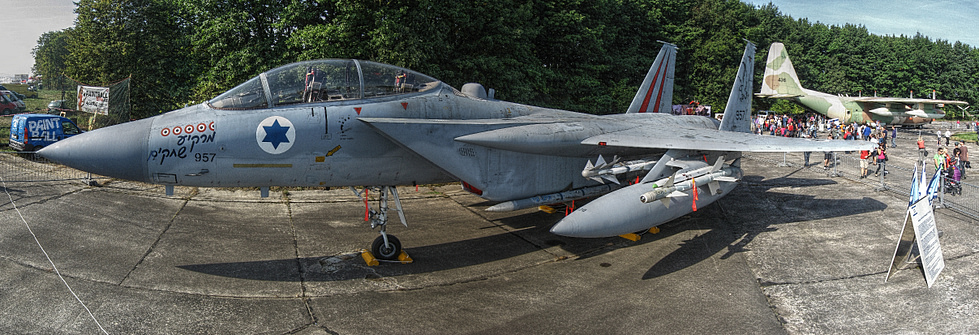
During a 1983 training exercise over the Negev, Zivi Nedivi’s F-15D (Baz 957) collided with an A-4 Skyhawk and lost most of its right wing. The huge lifting fuselage and sheer engine thrust kept the Eagle flying; Nedivi held it together and landed at around 260 knots. The jet was repaired and flew again — a testament to the airframe’s design margins.
Record / Satellite killer

The only fighter to score a kill in space

In 1985 an F-15A destroyed a satellite with an ASAT missile.

Read the full story
On 13 September 1985, Major Wilbert “Doug” Pearson zoom-climbed his F-15A and launched an ASM-135 anti-satellite missile that destroyed the defunct Solwind P78-1 satellite roughly 555 km up. It remains the only time a crewed fighter has scored a kill in space — earning Pearson the nickname of aviation’s “first space ace.”
Combat / Bekaa Valley

Israel gutted the Syrian Air Force

In June 1982 F-15s helped down scores of Syrian jets for no losses.

Read the full story
Over the Bekaa Valley in June 1982, Israeli F-15s and F-16s — backed by AWACS control and ruthless SAM suppression — destroyed around 80 or more Syrian aircraft across the campaign for no air-to-air losses. It was one of the most lopsided air battles in history, and it made the Eagle’s reputation as the world’s premier air-superiority fighter.
Combat / Desert Storm

F-15Cs opened the air war over Iraq

In 1991 Eagles scored around 33 of the coalition’s aerial kills.

Read the full story
When the 1991 Gulf War began, USAF F-15Cs led the fight for air superiority, downing MiG-29s, MiG-25s, MiG-23s, Mirage F1s and Su-types — around 33 confirmed victories, many against Iraqi jets that never detected the Eagle hunting them. The only two U.S. F-15 losses of the war were F-15E strike jets lost to ground fire, not to enemy aircraft.
Rivalry / Cope India

The dogfight that shocked the Eagle

In 2004 outnumbered F-15Cs were bested by Indian jets in an exercise.

Read the full story
At the 2004 Cope India exercise, U.S. F-15Cs flew under restrictive rules and heavily outnumbered against Indian Su-30s, Mirage 2000s and MiGs — and lost engagements. The result was seized on to help justify buying the stealthy F-22, though in balanced, real-world matchups the Eagle remains formidable. It was a reminder that no aircraft is unbeatable in every scenario.
Design / Not a pound for air-to-ground

The purest air-superiority fighter of its era

The F-15 was banned from carrying strike weapons by design.

Read the full story
The whole F-15 programme was governed by one rule: not a pound of weight for air-to-ground capability. Everything was optimised to win the air battle. Ironically, the airframe proved so capable that it later spawned the superb F-15E Strike Eagle — a two-seat all-weather bomber — the exact mission the original design had been forbidden to touch.
Debut / Israel’s first Eagles

The F-15 went to war for Israel before America

The type’s combat debut came in Israeli hands in 1979.

Read the full story
The Eagle first drew blood not for the United States but for Israel. On 27 June 1979, IAF F-15s clashed with Syrian MiG-21s and scored the type’s first kills — one credited to Moshe Melnik using a Python 3 missile. Israel would go on to become one of the Eagle’s most successful operators, long before American F-15s saw serious air combat.
Tech / Look-down, shoot-down

Radar that finally saw the low threats

The APG-63 let crews win before the enemy knew the fight had begun.

Read the full story
The F-15’s AN/APG-63 pulse-Doppler radar solved a problem that had plagued earlier fighters: seeing low-flying targets against ground clutter. With genuine look-down/shoot-down capability and long-range Sparrow and AMRAAM missiles, Eagle crews could detect, sort and engage enemy aircraft at range — often destroying them before they realised they were being hunted.
Endurance / Eagle II

Fifty years on, the line still grows

New-build F-15EX Eagle IIs entered service in the 2020s.

Read the full story
Half a century after the F-15A first flew, the Eagle line is still expanding. The new-build F-15EX Eagle II — a heavily updated, digitally-controlled derivative with enormous weapons capacity — entered U.S. service in the 2020s to fly alongside stealth fighters. Few combat aircraft have ever stayed relevant, and in production, for so long.
Human / The MiG killers

A handful became aces in the Eagle

Some F-15 pilots scored multiple kills across the type’s wars.

Read the full story
The Eagle’s undefeated record was written by its crews. Israeli pilots ran up multiple victories over Lebanon and Syria, and American aviators added kills over Iraq in 1991 and later patrols. A small number of pilots scored enough to be considered aces in the type — men who trusted a fighter that, in their hands, simply never lost the air-to-air fight.

Gallery

The Eagle in pictures

A USAF F-15 Eagle in flight  the Wests definitive air-superiority fighter.
A USAF F-15 Eagle in flight — the West’s definitive air-superiority fighter.Photo: U.S. Air Force (Master Sgt. Thomas Meneguin) · Public domain
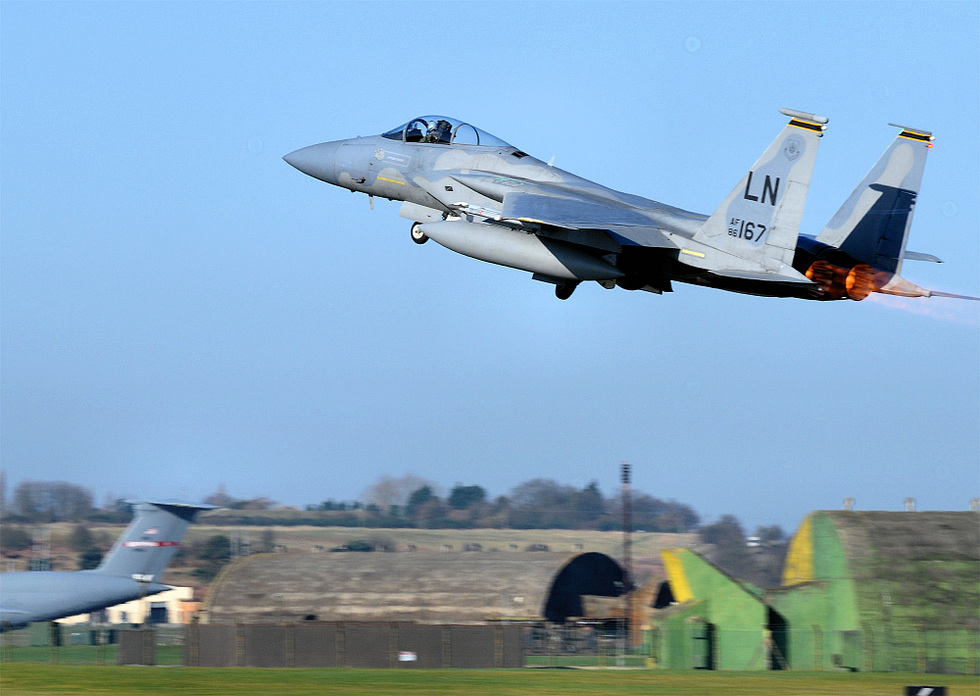
An F-15C of the 493d Fighter Squadron, serial 86-0167.
An F-15C of the 493d Fighter Squadron, serial 86-0167.Photo: U.S. Air Force · Public domain
An Israeli Air Force F-15D Baz  the operator that first took the Eagle to war.
An Israeli Air Force F-15D Baz — the operator that first took the Eagle to war.Photo: KGyST · CC BY-SA 3.0
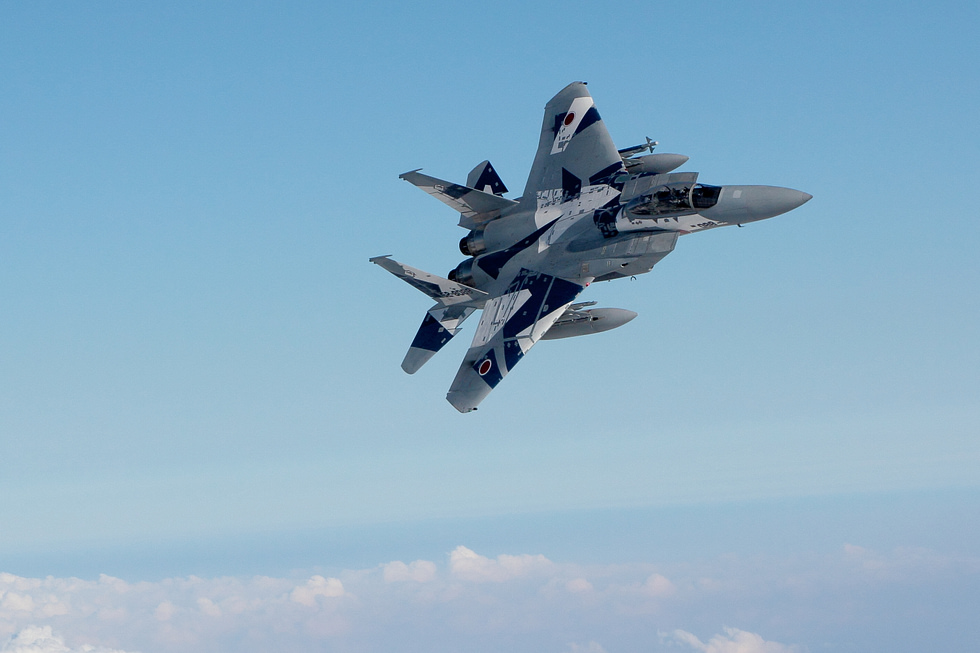
A Japan Air Self-Defense Force F-15J, licence-built by Mitsubishi.
A Japan Air Self-Defense Force F-15J, licence-built by Mitsubishi.Photo: JASDF · CC BY 4.0
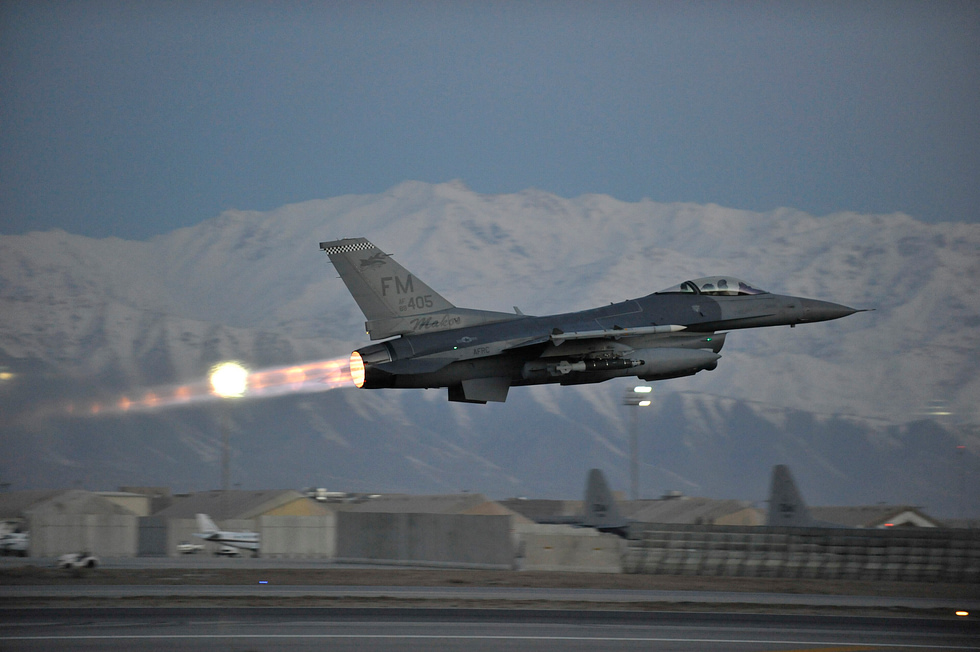
An F-15 climbing away in full afterburner  thrust-to-weight above one.
An F-15 climbing away in full afterburner — thrust-to-weight above one.Photo: U.S. Air Force · Public domain
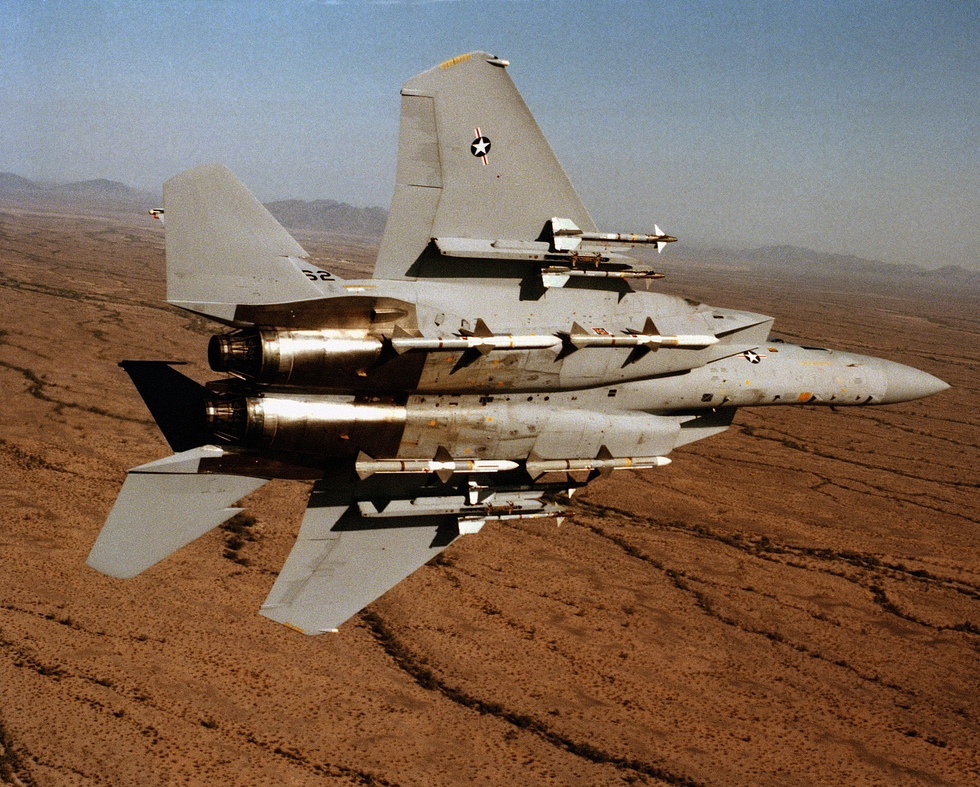
The underside of an armed F-15 Eagle, showing its missile fit.
The underside of an armed F-15 Eagle, showing its missile fit.Photo: U.S. Air Force · Public domain

Watch

The Eagle in motion

A documentary look at the F-15A–D Eagle is coming soon.


Watch

The F-15 Eagle in motion

Mustard — one of the most-watched F-15 Eagle films on YouTube.


Operations

Where the Eagle flies


Operators today

F-15 Eagle fleet strength by operator

Unlike most of the aircraft in this museum, the F-15 is still very much in service — and still in production. The United States remains the largest operator by a wide margin, but the export Eagles matter: Japan built its own under licence, and Saudi Arabia, Israel, South Korea, Singapore and Qatar all fly substantial fleets.

United States~400
Saudi Arabia~230
Japan~200
Israel~80
South Korea~60
Singapore~40
Qatar~30

Estimated fleet strength, rounded to the nearest ten or fifty. These are airframes on charge, not aircraft available to fly: across every operator a meaningful share sits in storage, in depot maintenance or part-way through an upgrade programme, and the United States figure in particular spans three quite different marks (a shrinking F-15C/D force, the F-15E, and the F-15EX still being delivered). Compiled from open published order and delivery records cross-checked against standard reference surveys of world air forces; where sources disagreed we rounded down and hedged rather than pick a precise-looking number. The operations map above shows more countries than this chart, because it includes former operators with no current fleet.


Combat Record

The undefeated air-superiority fighter

The F-15’s air-to-air record is unique among modern fighters: across American, Israeli and Saudi service it is credited with roughly 104 kills for no confirmed air-to-air losses. That figure is an aggregate, and enemy claims of downed Eagles have surfaced over the years — but none has ever been substantiated, so it is best cited as “no confirmed losses.”

~104Air-to-air kills claimed
0Confirmed air-to-air losses
3Air forces that scored with it

Compare the combat record of every military aircraft. Figures as of July 2026.


Questions & Answers

Everything people ask about the F-15 Eagle

Can I fly in an F-15?
No. The F-15 is an active frontline air-superiority fighter, so there are no civilian rides in one. However, you can fly in several genuine military jets today — see the options at migflug.com/flights-prices/.
How fast is the F-15?
Mach 2.5+ at altitude (around 2,650 km/h) — and with a thrust-to-weight ratio above one, it can accelerate while climbing vertically.
Is the F-15 really undefeated?
No F-15 has been confirmed shot down in air-to-air combat. The often-quoted “104-0” is an aggregate across American, Israeli and Saudi service; enemy claims exist but none is substantiated, so it is best phrased as “no confirmed air-to-air losses.”
Is the F-15 still in service?
Yes — the United States, Israel, Japan and Saudi Arabia all fly F-15s in 2026. The older C/D models are gradually being replaced by the new-build F-15EX Eagle II.
How does the F-15 compare with the Su-27?
They are closely matched, and outcomes are decided by pilots, tactics and support. The 2004 Cope India exercise showed the Eagle can be beaten under the right conditions — but in real combat the F-15 remains undefeated.
How many F-15s were built?
Around 1,200 A/B/C/D air-superiority Eagles, with figures varying slightly by source. Production of the new F-15EX continues separately.
What is the difference between the F-15 and the F-15E?
The A/B/C/D are single-purpose air-superiority fighters. The F-15E Strike Eagle is a two-seat, all-weather strike derivative — a different mission, covered in its own exhibit.
Why was the F-15 built?
As a dedicated air-superiority fighter, prompted by the MiG-25 scare and poor air-combat results over Vietnam — built under the rule “not a pound for air-to-ground.”

Sources & Further Reading

Every fact, checked