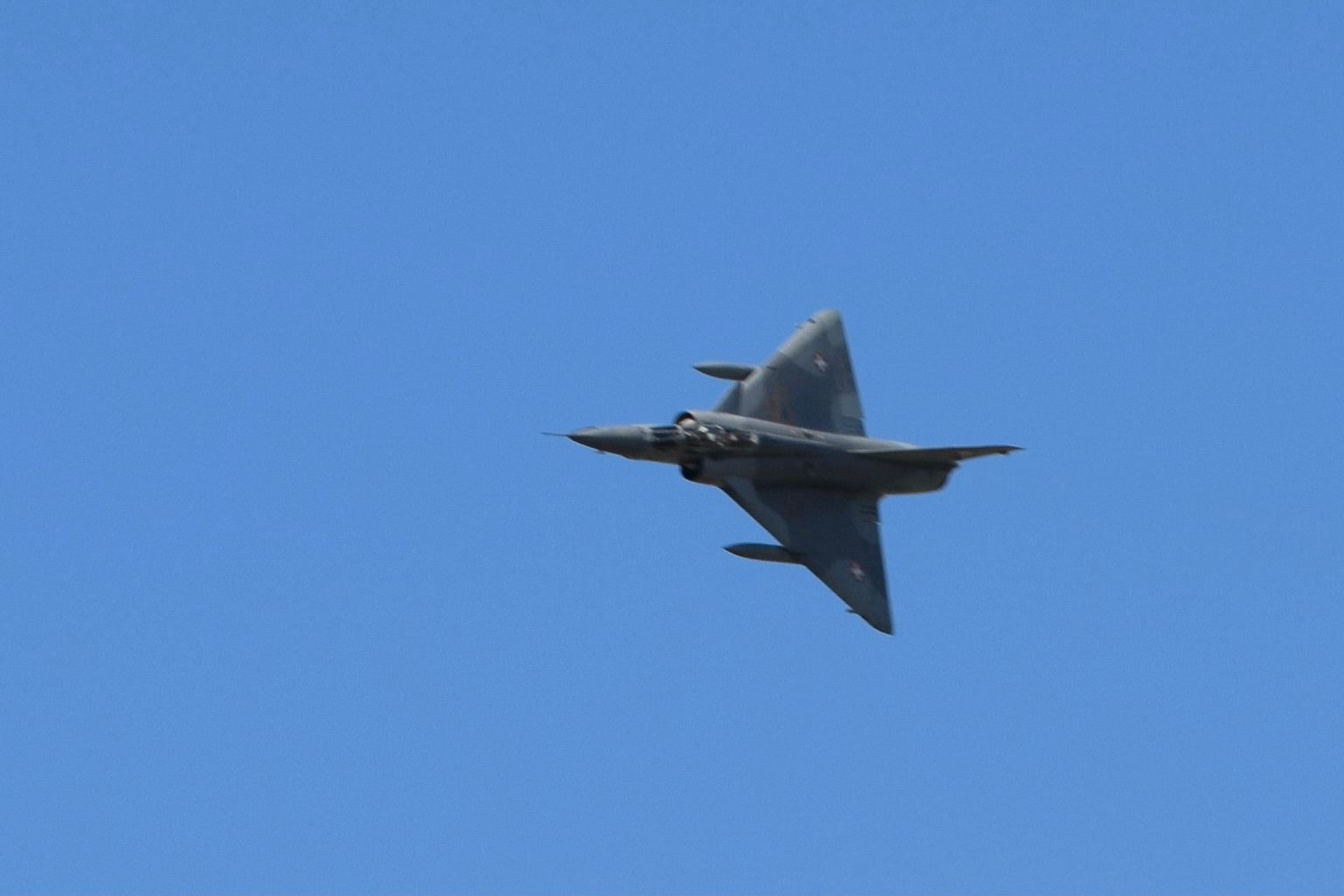
Dassault Mirage III / Mirage 5
The Delta That Won a War in Six Days
France’s tailless delta became one of the Cold War’s most successful fighters — a Mach-2 interceptor that led Israel to victory in 1967, fought from the Falklands to the Border War, spawned the Nesher and the Kfir, and armed some 21 nations across five continents.
The Mirage III: France’s Mach-2 delta
The Mirage III was France’s answer to a 1953 requirement for a lightweight, all-weather supersonic interceptor. Dassault’s tailless research aircraft, the MD.550 Mystère-Delta, first flew in June 1955; refined and re-engined, it pointed the way to the definitive prototype. The Mirage III 001 first flew on 17 November 1956, and in May 1958 the Mirage IIIA became the first Western European aircraft to sustain Mach 2 in level flight. The production Mirage IIIC entered Armée de l’Air service on 19 December 1961.
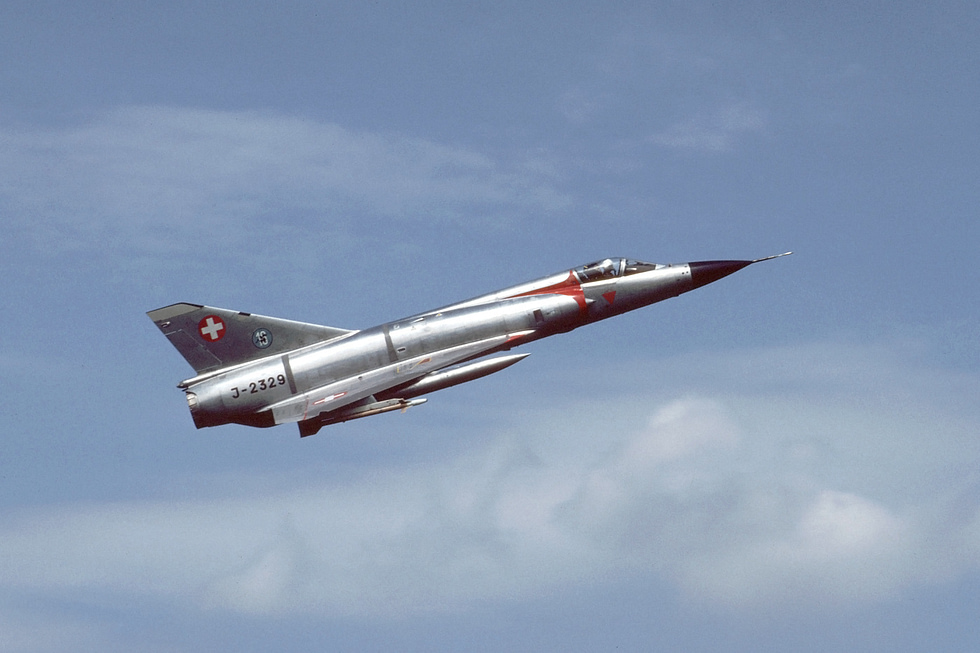
Its signature is the pure, tailless low-set delta wing with a leading-edge sweep near 60°. The delta gave a large wing area, generous internal fuel, a strong simple structure and superb high-speed, high-altitude performance — at the cost of high induced drag, rapid energy bleed in hard turns, and high take-off and landing speeds. Some variants carried a jettisonable SEPR liquid-fuel rocket booster for a rapid zoom-climb to intercept altitude.
The design spawned a huge family. The Mirage 5 was a simplified clear-weather ground-attack export version, the nose radar deleted for more fuel and ordnance; the Mirage 50 added the more powerful Atar 9K50. About 1,400+ Mirage III/5/50 were built in roughly 90 versions, serving some 21 nations — licence-produced in Australia, Switzerland and Belgium, and the direct basis for Israel’s IAI Nesher and, with a US J79 engine, the IAI Kfir.
01The Mirage III’s legend: how a French delta became the free world’s most battle-proven fighter
The Mirage III’s reputation was forged not over France but over the Middle East. On 5 June 1967, Israeli Mirage IIICJ deltas spearheaded Operation Focus, gutting Arab air forces on the ground and then sweeping the skies in the Six-Day War. Israeli Mirages went on to rack up scores of kills through the War of Attrition, becoming the free world’s most famous MiG-killer — and export orders poured in on the strength of it.
When France embargoed arms to Israel in 1969, Tel Aviv reverse-engineered the Mirage 5 into the home-built Nesher, which fought in the 1973 Yom Kippur War, and then the re-engined Kfir. The same airframe defined Cold War air defence for Switzerland, Australia and apartheid-era South Africa, and fought Britain’s Sea Harriers over the Falklands in 1982. Few Western fighters of the era travelled so far or fought so widely.
What makes the Mirage III special
The tailless delta wing
A large-area thin delta with ~60° leading-edge sweep gave the Mirage III outstanding Mach-2 speed, a high service ceiling, generous internal fuel and a rugged structure with no separate tailplane. The trade-off was aerodynamic: high induced drag, fast energy bleed in hard turns, no flaps (the trailing edge is all elevons) and consequently high take-off, approach and landing speeds — brilliant in the vertical, punished in a slow turning fight.
The SNECMA Atar 9 turbojet
A single Atar 9C afterburning turbojet (~60 kN with reheat) fed by two side intakes with movable half-cone “souris” centrebodies that managed shock waves for efficient supersonic flow. Robust, easy to maintain and widely licence-built, the Atar made the Mirage cheap to operate and export. Later Mirage 50s and upgrades used the more powerful Atar 9K50.
A simple, robust Mach-2 interceptor
The Mirage III packed genuine Mach-2 capability into an affordable, maintainable, easily-exported airframe. An optional jettisonable SEPR rocket booster could be fitted under the fuselage for a rapid zoom-climb to high-altitude targets — a neat, low-tech performance boost typical of the aircraft’s pragmatic design philosophy.
02The Mirage III’s delta: brilliant fast, brutal slow
The pure delta is a straight-line and high-altitude star but a handful in a knife-fight. With no flaps, the Mirage III had to land fast and nose-high, needed a long take-off run, and drained its energy quickly in hard, sustained turns. Pilots learned to fight it in the vertical and in a slashing high-speed pass, and never to bleed it slow. It is the exact opposite trade-off from a tailed delta like the MiG-21, which kept a tailplane and flaps to tame those landing speeds — but the Mirage’s clean delta was faster and simpler, and it sold to the world on that promise.
03The Mirage III’s rocket booster: a low-tech shortcut to altitude
To reach high-flying bombers fast, the Mirage III could carry a jettisonable SEPR liquid-fuel rocket motor under its belly for a searing zoom-climb. It was a pragmatic, low-tech answer to a hard problem — extra altitude performance bolted onto an affordable airframe rather than designed in at great expense. Together with the licence-built Atar and the clean delta, it captured the Mirage’s whole philosophy: genuine Mach-2 interception, done cheaply enough that some 21 air forces could buy and sustain it.
Full specifications (Mirage IIIE)
Baseline note: the figures below are for the Mirage IIIE, the multirole strike-fighter of 1964 — the most numerous single mark, the most widely exported, and the definitive expression of the design. Deltas for the IIIC interceptor, the IIIR reconnaissance aircraft and the radarless Mirage 5 attack version are given in grey.
Dimensions & weights
- Crew
- 1 (2 in the IIIB, IIIBE and IIID trainers, both cannon deleted)
- Length
- 15.03 m (49 ft 4 in) — IIIC 14.73 m (48 ft 4 in); Mirage 5 about 0.5 m longer again, all of it nose
- Wingspan
- 8.22 m (27 ft 0 in)
- Height
- 4.50 m (14 ft 9 in)
- Wing area
- 34.85 m² (375 sq ft)
- Wing
- Tailless delta, about 60° leading-edge sweep, elevons only. No tailplane, no flaps, nothing to trade
- Empty weight
- 7,050 kg (15,540 lb)
- Normal take-off weight
- 9,600 kg (21,160 lb)
- Max take-off weight
- 13,700 kg (30,200 lb)
- Internal fuel
- ~2,940 L (~647 imp gal / ~777 US gal) — the type's defining shortage
- External fuel
- 2 × 1,700 L ferry tanks (2 × 449 US gal), or 1,300 L, 625 L and supersonic-rated 500 L tanks
- Hardpoints
- 5 — one centreline, two inboard wing, two outboard wing (Mirage 5 and 50: 7)
- Max external load
- ~4,000 kg (~8,820 lb) on paper; far less in any usable runway length
- Wing loading
- 275 kg/m² (56.4 lb/sq ft) at normal take-off weight
Performance
- Max speed, altitude
- 2,350 km/h (1,460 mph) at 12,000 m, Mach 2.2
- Max speed, sea level
- 1,390 km/h (864 mph), Mach 1.14
- Rate of climb
- 83 m/s (16,400 ft/min)
- Service ceiling
- 17,000 m (55,800 ft)
- Zoom ceiling, SEPR rocket lit
- ~24,000 m (~78,700 ft) — a ballistic arc, not a place to loiter
- Combat radius
- ~1,200 km (~745 miles) with external tanks, and much less on a low-level profile
- Ferry range
- 3,335 km (2,072 miles) with two 1,700 L tanks
- Take-off run
- 1,600 m (5,250 ft) at maximum weight — the single number that shaped the aircraft's career
- Landing run
- 700 m (2,300 ft), brake parachute streamed
- Approach speed
- 315–345 km/h (196–214 mph, 170–185 kt)
- Thrust-to-weight
- 0.65 at normal take-off weight, reheat lit
- Load factor
- +7 g
Propulsion & systems
- Engine
- 1 × SNECMA Atar 09C-3 afterburning turbojet (IIIC: Atar 09B; Mirage 50, Cheetah C and IIING: Atar 09K-50)
- Thrust
- 41.97 kN (9,440 lbf) dry, 60.8 kN (13,670 lbf) with reheat (Atar 09K-50: 70.6 kN / 15,870 lbf)
- Auxiliary rocket
- SEPR 841 or 844 jettisonable liquid-fuel motor, 14.7 kN (3,300 lbf), nitric acid oxidiser; the 844 burnt ordinary jet fuel instead of TX2
- Radar
- Thomson-CSF Cyrano II, magnetron-based, roughly 30 km (19 miles) on a fighter-sized target, ground mapping to about 20 km, no look-down capability whatsoever (IIIC: Cyrano Ibis, air-to-air only; IIIR: no radar, five cameras; IIIS: Hughes TARAN 18; Mirage 5: none)
- Navigation
- Marconi continuous-wave Doppler navigation radar in the undernose bulge, TACAN, twin-gyro platform
- Sighting
- Optical gyro gunsight with radar ranging; no head-up display until the 1980s upgrades brought one
- Self-protection
- None as built. Radar-warning receivers, Barax and Barracuda jammer pods and Alkan chaff dispensers were retrofitted piecemeal from the 1970s
- Ejection seat
- Martin-Baker Mk 4 (RM4) series, licence-built in France; not a zero-zero seat (the Israeli Nesher introduced a zero-zero Martin-Baker)
- First flight
- 17 November 1956 (Mirage III-001); Mirage IIIC October 1960
- Service entry
- July 1961, Armée de l'Air, Mirage IIIC; first Mirage IIIE delivered 14 January 1964
- Number built
- ~1,400 Mirage III/5/50 airframes by Dassault, plus Australian and Swiss licence production
04The Mirage III’s cost and spec figures: why the numbers vary
There is no single authoritative unit-cost figure for the Mirage III. It was built across roughly 90 versions over three decades, and export prices varied enormously by variant, year and customer; period estimates cluster in the low single-digit millions of US dollars (1960s money), but treat these as indicative only. The performance figures shift by source and sub-variant too — maximum take-off weight is quoted anywhere from ~12,700 kg to ~13,500 kg, and the service ceiling from ~17,000 m to ~20,000 m. The values above are rounded to the Mirage IIIE and should be read as representative rather than exact.
Armament & payload
The Mirage III killed with cannon far more often than with the missiles it was built around
Dassault sold the Mirage III as a missile-armed interceptor: one big radar round on the centreline, two infrared rounds on the wings, cannon almost as an afterthought. In the wars the aircraft actually fought, that ranking inverted. The Matra R.530 was heavy, slow to settle and blind against anything below the horizon, and it scored nothing at all during the Six-Day War, so Israeli pilots killed with the 30 mm DEFA and then with their own Shafrir. As a bomber the type was honest but cramped — five pylons, a nominal 4,000 kg, and a take-off run that charged interest on every kilogram of it. Fits varied enormously by mark, operator and decade: a 1962 French IIIC and a 1998 Pakistani ROSE III share an airframe and almost nothing else.
Gun
- 2 × 30 mm DEFA 552 / 552A revolver cannon in the lower forward fuselage, 125 rounds per gun
- About 1,300 rounds per minute each at roughly 815 m/s (2,674 ft/s) muzzle velocity — something under six seconds of firing
- On the Mirage IIIC the SEPR rocket pack occupied the ammunition bay: fit the rocket and you flew with no guns at all
- Israel specified the IIICJ without rocket provision precisely so it could always carry both cannon, and was comprehensively vindicated
- Deleted entirely on the two-seat IIIB, IIIBE and IIID; retained on the Mirage 5, Nesher, Kfir and Cheetah
Air-to-air
- Matra R.530, 195 kg (430 lb), interchangeable semi-active radar or infrared seeker heads, about 18 km (11 miles) — one only, centreline only
- Matra R.550 Magic and Magic 2 from 1976, 89 kg (196 lb), about 10 km (6 miles): a genuinely modern dogfight round bolted to an ageing aeroplane
- AIM-9B Sidewinder from the outset, later AIM-9J and AIM-9P on export fleets, on the outer wing pylons
- Rafael Shafrir 1 and Shafrir 2 on Israeli aircraft; Python 3 and the U-Darter on the Atlas Cheetah
- Hughes AIM-4 Falcon on the Swiss Mirage IIIS, the only mark built around an American fire-control system
Air-to-surface guided
- Nord AS.30, 520 kg (1,150 lb) radio-command missile with a 230 kg warhead, about 11 km (7 miles) — and a single pilot flying the missile and the aeroplane at the same time
- AS.30L laser-guided version on later upgraded fleets, dependent on an external designator pod or a second aircraft
- AM.39 Exocet, 670 kg (1,480 lb), on Pakistan's Mirage 5PA3 with the Thomson-CSF Agave radar — the only genuinely anti-ship member of the family
- Laser-guided bombs and Denel stand-off glide weapons on the Atlas Cheetah C, three decades after the airframe was designed
- Nothing at all on the baseline Mirage 5, which had no radar and, for most customers, no designator either
Bombs
- Up to ~4,000 kg (~8,820 lb) across five pylons in theory; two 454 kg (1,000 lb) bombs plus two drop tanks was the honest working load
- French 250 kg and 400 kg bombs, US Mk 82 227 kg (500 lb) and Mk 83, and retarded versions of both for low-level delivery
- Matra Durandal anti-runway penetrators and later BAP-100 sticks, a natural fit for a fast, straight-line attacker
- AN-52 free-fall tactical nuclear bomb, roughly 6–25 kt, on the centreline of French Mirage IIIEs from 1972 until 1991
- Cluster and fragmentation stores widely used by South African, Israeli and Pakistani operators; accuracy came from the pilot, not the aircraft
Rockets
- Matra Type 155 pod, 18 × 68 mm SNEB rockets, the standard French wing store
- Matra JL-100 combined pod, 19 × 68 mm SNEB plus 250 L of fuel in one body — a neat and very French answer to the type's chronic fuel shortage
- Matra 116M nineteen-round pods and local equivalents on export fleets
- Israeli and South African operators fielded locally produced 68 mm and 2.75 in launchers
- Rockets and cannon did most of the real ground-attack work, because neither needed a designator, a second crewman or a working radar
Pods & other stores
- Drop tanks of 500 L and 625 L (supersonic-rated), 1,300 L, and 1,700 L ferry tanks; the 1,700s were subsonic-only and almost always fitted
- A 410 L fuel tank could replace the SEPR rocket motor in its bay — roughly a twenty-minute swap on the flight line, and the choice most squadrons quietly made
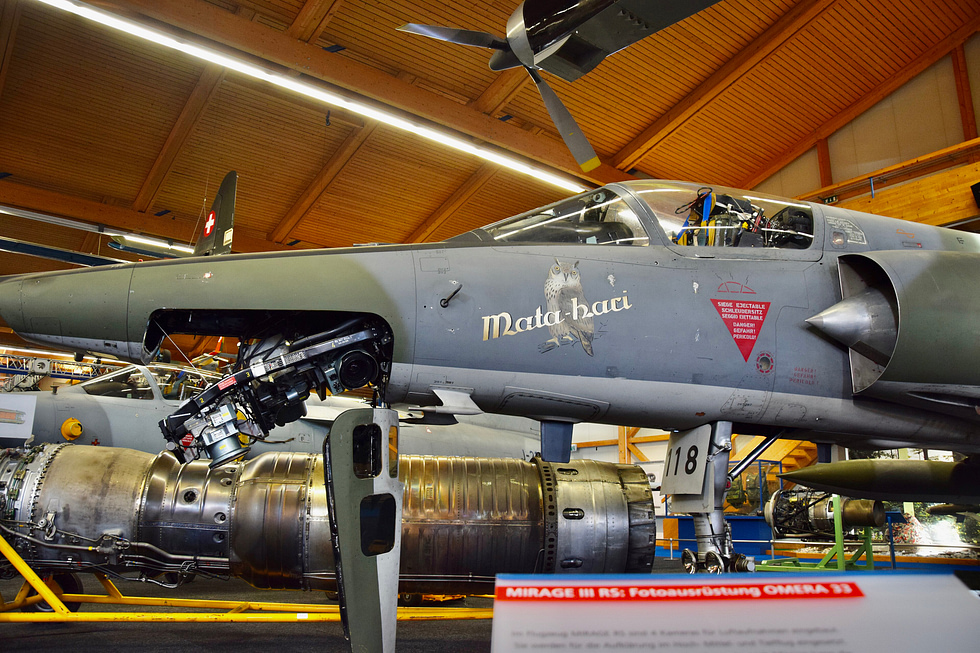
- Mirage IIIR and IIIRD reconnaissance nose with up to five OMERA cameras in place of the radar, plus interchangeable ventral pods for infrared linescan or side-looking radar
- Thomson-CSF Barax and Barracuda jamming pods and Alkan chaff and flare dispensers, all retrofitted from the 1970s onwards
- Brake parachute in the tail cone — not an accessory on a delta that crossed the threshold at 315 km/h
Three typical loadouts
- Alert interception, French Mirage IIIC, 1965
- 1 × Matra R.530 on the centreline, 2 × AIM-9B Sidewinder on the wing pylons, 2 × 30 mm DEFA 552 with 125 rounds each, no external fuel. Clean wings, a fast climb, and roughly one pass before the fuel state sent you home.
- Nuclear strike, French Mirage IIIE, 1980
- 1 × AN-52 tactical nuclear bomb on the centreline, 2 × 1,700 L ferry tanks inboard, 2 × Matra R.550 Magic outboard, 2 × 30 mm DEFA. Low, fast, one-way in planning terms, and the reason France kept the IIIE on strength until 1991.
- Anti-shipping strike, Argentine Dagger, Falklands 1982
- 2 × Mk 82 227 kg (500 lb) bombs inboard, 2 × 1,300 L drop tanks outboard, 2 × 30 mm DEFA, no air-to-air missiles on most sorties. Flown from the mainland with no aerial refuelling, it bought about two minutes over the target area.
Weapon fits are compiled from Dassault and Armée de l'Air documentation, Jane's entries and operator sources, and they conflict freely. The 4,000 kg external figure is a structural limit rather than an operational one; at anything approaching it the Mirage III needed a runway few of its operators had. Export fits diverged sharply after the 1967 French embargo, and the Israeli, South African and Pakistani rebuilds carry weapons Dassault never cleared.
Variants
The Mirage III made Dassault a global exporter, and then other people finished the design
The Mirage III began as a loser. Dassault's answer to a 1952 French specification for a lightweight all-weather interceptor was too small, so the company enlarged it, gave it a tailless delta wing and an Atar turbojet, and flew the III-001 on 17 November 1956. On 24 October 1958 a pre-production Mirage IIIA reached Mach 2.2 in level flight, the first Western European aircraft to do so, and the order books opened. Around 1,400 Mirage III, 5 and 50 airframes followed from Dassault alone, plus licence production in Australia and Switzerland. It is the aeroplane that turned a French firm into a global arms exporter.
The delta bought that speed at a fixed price. With no tailplane, every pitch input came from the elevons, which meant every turn was paid for in lift and then in energy; the aircraft accelerated superbly, climbed superbly, held height superbly, and bled speed catastrophically the moment a pilot pulled hard. It also needed 1,600 m of runway to get airborne at weight and crossed the threshold at 315 km/h. Dassault knew this. The Milan of 1969 sprouted retractable nose foreplanes nicknamed "moustaches"; the Mirage IIING of 1982 added fixed canards, wing root extensions and fly-by-wire. Neither sold. Everyone else fitted canards anyway.
The other engine of the family tree was politics. When de Gaulle embargoed the fifty Mirage 5s Israel had already paid for in 1967, Israel built its own — the Nesher, then the J79-engined Kfir — and the engineers and drawings behind those aircraft later reappeared in South Africa as the Atlas Cheetah. Dassault's best customer became its most effective competitor.
- Mirage IIIC (1960–1964; 95 for France, 72 for Israel, 16 for South Africa)
- The pure interceptor. Cyrano Ibis radar, Atar 09B, one R.530 and two Sidewinders, and provision for the SEPR rocket pack in place of the gun ammunition. Israel's IIICJ deleted the rocket and kept the cannon; it became the highest-scoring Mirage of all.
- Mirage IIIB / IIIBE / IIID (1959 onwards; 63 for France plus export batches)
- Two-seat trainers, fuselage stretched about a metre, both cannon and the radar removed. The IIIB-2(RV) trained Mirage IV crews in aerial refuelling with a dummy probe.
- Mirage IIIE (1964–1970s; 183 for France, plus Argentina, Brazil, Spain, Lebanon, Pakistan, Venezuela and South Africa)
- The definitive multirole mark: a 300 mm fuselage plug for an avionics bay, Cyrano II with air-to-ground modes, Doppler navigation radar, TACAN and the Atar 09C-3. This is the Mirage III most people mean.
- Mirage IIIR / IIIRD (1963 onwards; 70 for France, plus export)
- Reconnaissance. Radar replaced by a camera nose carrying up to five OMERA cameras, IIIE airframe with simplified avionics, and both 30 mm cannon retained — unusually for a recce type, it could shoot back. The IIIRD added infrared linescan and side-looking radar pods.
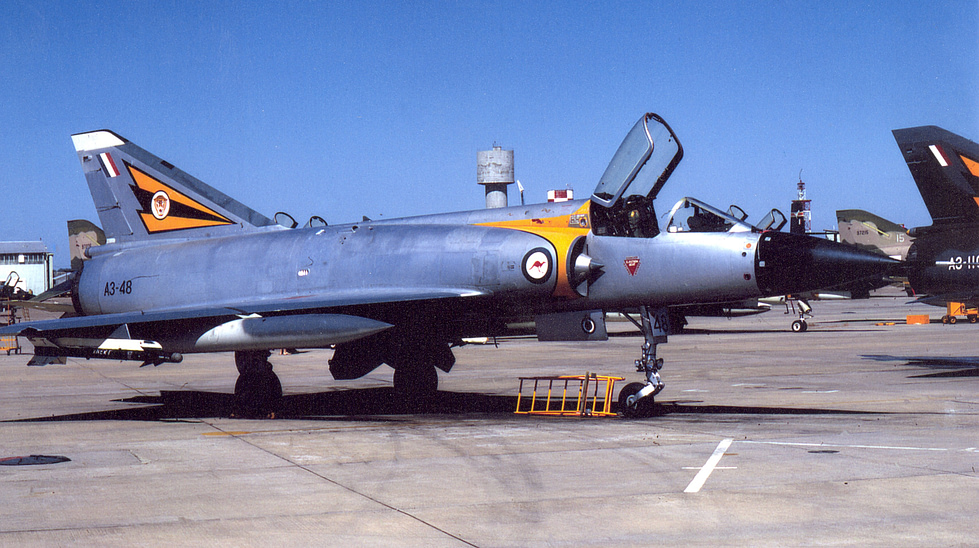
- Mirage IIIO and Mirage IIIS (1963–1969; 100 Australian, 36 Swiss)
- Licence production. Australia built 98 of its 100 IIIOs at Government Aircraft Factories, retiring them in 1988 and selling fifty to Pakistan. Switzerland's F+W Emmen built the IIIS around the American Hughes TARAN 18 fire control and AIM-4 Falcon, and fitted canards and a new wing leading edge in the 1988 refit.
- Mirage 5 and Mirage 50 (1967–1980s; Belgium 106, Libya 110, Egypt 101, Pakistan 92, France 50, Peru 40 and others)
- Israel's idea: strip the radar out of the nose, put fuel and avionics there instead, add two more pylons, and sell a clear-weather attack aircraft for less money. It worked everywhere the weather cooperated. The Mirage 50 re-engined the same airframe with the 70.6 kN Atar 09K-50; Chile's canard-equipped Pantera and Venezuela's 50EV were the best of them.
- IAI Nesher and Dagger (1969–1974; 61 built, 51 single-seat and 10 two-seat)
- Israel's embargo-busting Mirage 5 with Israeli avionics, a zero-zero Martin-Baker seat and Shafrir missiles. It claimed over a hundred kills in the Yom Kippur War. Thirty-nine went to Argentina as the Dagger, flew 153 sorties in the Falklands from mainland bases without refuelling, and lost eleven aircraft — nine to AIM-9L Sidewinders from Sea Harriers.
- IAI Kfir (1973 onwards; about 220 built)
- The Mirage 5 rebuilt around the General Electric J79, 83.4 kN in reheat against the Atar's 60.8 kN, with a widened rear fuselage, a fin-root cooling intake and, from the C2, the canards Dassault never sold. Twenty-five were leased to the US Navy and Marines as the F-21A to play the MiG-23.
- Atlas Cheetah (1986–1990s; 16 Cheetah D, 16 Cheetah E, 38 Cheetah C)
- South Africa's rebuild of its embargoed Mirage IIIs with Israeli help: canards, a new main spar, a drooped and dog-toothed leading edge, a refuelling probe, helmet-mounted sight and pulse-Doppler radar, with roughly half the original airframe replaced. The Cheetah C used the Atar 09K-50 and served until the Gripen arrived in 2008.
- Mirage III/5 ROSE (1995–2000s; roughly 67 airframes rebuilt)
- Pakistan's Retrofit Of Strike Element programme: FIAR Grifo M3 multi-mode radar, new head-up display, multi-function displays, HOTAS, radar warning receiver and navigation-attack system, grafted onto ex-Australian, ex-Libyan, ex-Lebanese and ex-Spanish airframes. Separately, the Mirage 5PA3 gained the Agave radar and the AM.39 Exocet.
Production totals differ between sources; the family figure of 1,403 Dassault-built Mirage III/5/50s comes from the factory-records study by Chenel, Liébert and Moreau and does not treat Australian and Swiss licence assembly consistently. Nearly every operator has gone: France retired the IIIC in 1988, Australia the same year, South Africa's Cheetahs in 2008, Argentina's upgraded Fingers in 2015. The exception is Pakistan, which spent thirty years buying other air forces' cast-off Mirages to keep the fleet flying and rebuilt roughly sixty-seven of them under Project ROSE. A retirement date of 2025 came and went while JF-17 deliveries caught up, and as of 2026 the Pakistan Air Force still fields something like ninety Mirage III and Mirage 5 airframes across four squadrons, an operational conversion unit and the Combat Commanders' School. Seventy years after the III-001 first flew, Pakistan is effectively the type's last operator.
Operators
The Dassault Mirage III gave twenty air forces a Mach 2 fighter they could actually afford to run.
France flew 468 Mirage III and 5 airframes, but the delta’s reputation was made abroad: Israel’s 1967 victories sold it to South Africa, Australia, Switzerland, Argentina, Pakistan, Brazil and Spain, while the simplified Mirage 5 and re-engined Mirage 50 reached Belgium, Libya, Egypt, Peru, Colombia, Chile, Venezuela, Gabon, Zaire and Abu Dhabi. Pakistan and Egypt still fly refurbished examples in the mid-2020s. Mirage 5 and 50 deliveries are listed with the Mirage III; second-hand transfers mean the same airframe can appear under several countries.
In service with
- Pakistan Air ForcePakistan · largest ever Mirage III/5 fleet, around 156 at peak, built from new IIIEP/5PA aircraft and second-hand French, Australian, Libyan, Spanish and Lebanese airframes; ROSE upgrades; retirement by the JF-17 in progress
- ~100 · 1968–
- Egyptian Air ForceEgypt · Mirage 5SDE, 5E2, 5SDD and 5SDR delivered 1974–84 plus ex-UAE aircraft in 2004; residual fleet reported into the mid-2020s
- ~40 · 1974–
Formerly operated by
- French Air ForceFrance · 95 IIIC, 183 IIIE, 58 Mirage 5F, 62 two-seat IIIB/BE and 70 IIIR/RD
- 468 · 1961–1994
- Israeli Air ForceIsrael · 72 IIICJ, 4 IIIBJ, 2 IIIRJ and 60 IAI Nesher; survivors sold to Argentina
- ~138 · 1962–1982
- Royal Australian Air ForceAustralia · 49 IIIO(F), 51 IIIO(A) and 16 IIID, mostly built by GAF; 50 sold to Pakistan in 1990
- 116 · 1964–1988
- Libyan Air ForceLibya · 53 Mirage 5D, 32 5DE, 15 5DD and 10 5DR; survivors sold to Pakistan 2004–05
- 110 · 1971–2003
- Belgian Air ForceBelgium · 63 Mirage 5BA, 16 5BD and 27 5BR, SABCA-built; 25 transferred to Chile as Elkans
- 106 · 1970–1993
- Argentine Air ForceArgentina · 17 IIIEA, 4 IIIDA, 22 ex-Israeli IIICJ/BJ, 39 IAI Dagger and 10 ex-Peruvian Mirage 5P; fought in the Falklands
- 92 · 1972–2015
- Swiss Air ForceSwitzerland · 1 IIICS, 36 IIIS, 3 IIIBS, 2 IIIDS and 18 IIIRS, largely built in Switzerland; IIIRS reconnaissance jets last to go
- 60 · 1964–2003
- South African Air ForceSouth Africa · IIICZ, IIIEZ, IIIBZ, IIIDZ, IIID2Z, IIIRZ and IIIR2Z; many rebuilt as Cheetahs
- 58 · 1963–1992
- Chilean Air ForceChile · Mirage 50C/FC/DC upgraded to Pantera and 25 ex-Belgian Mirage 5 Elkans
- 42 · 1980–2007
- Peruvian Air ForcePeru · Mirage 5P, 5P3, 5P4 and two-seaters; 10 passed to Argentina in 1982
- 40 · 1968–2002
- Brazilian Air ForceBrazil · 22 F-103E (IIIEBR), 6 F-103D and 4 IIIBBR
- 32 · 1972–2005
- United Arab Emirates Air ForceUnited Arab Emirates · 12 Mirage 5AD, 14 5EAD, 3 5DAD and 3 5RAD for Abu Dhabi; survivors sold to Egypt
- 32 · 1974–2004
- Spanish Air ForceSpain · 24 IIIEE (C.11) and 7 IIIDE (CE.11); 20 later sold to Pakistan
- 31 · 1970–1992
- Venezuelan Air ForceVenezuela · IIIEV, Mirage 5V/DV and new-build Mirage 50EV/DV; survivors converted to Mirage 50 standard
- 26 · 1973–2009
- Colombian Air ForceColombia · 14 Mirage 5COA, 2 5COD and 2 5COR, upgraded to 5COAM/CODM
- 18 · 1972–2009
- Zairean Air ForceZaire · 11 Mirage 5M and 3 5DM delivered; last six returned to France in 1989
- 14 · 1975–1989
- Lebanese Air ForceLebanon · 10 IIIEL and 2 IIIBL, grounded in the 1970s and sold to Pakistan in 2000
- 12 · 1968–
- Gabon Air ForceGabon · Mirage 5G/G2 and 5DG/DG2; flying stopped in the mid-1990s
- 11 · 1978–2006
- Ecuadorian Air ForceEcuador · 4 Mirage 50V and 2 50DV gifted by Venezuela in 2009, never operational
- 6 · 2009–
21 operators, 2 current. Quantities are airframes taken on charge; dates are first delivery to last retirement. Air forces with a MiGFlug Order of Battle page are linked (1 so far); the rest follow as the database grows.
Seven decades of the Mirage III
Mystère-Delta flies
Dassault’s MD.550 tailless proof-of-concept makes its first flight on 25 June, pointing the way to the delta.
Mirage III 001
The definitive prototype first flies on 17 November at Melun-Villaroche.
First to Mach 2 in Europe
In May the Mirage IIIA sustains Mach 2 in level flight — a Western European first.
Enters service
The Mirage IIIC interceptor joins the Armée de l’Air on 19 December.
The Six-Day War
Israeli Mirage IIICJ deltas lead Operation Focus and dominate the air, making the type’s reputation.
Embargo and the Nesher
France embargoes Israel; Israel begins building its home-grown Mirage 5 copy, the Nesher (first flight September).
The Yom Kippur War
Mirage IIIs and Neshers fight across Sinai and the Golan, claiming large numbers of Arab aircraft.
Falklands
Argentine Mirage IIIs and Israeli-built Daggers fight British Sea Harriers over the South Atlantic.
The long fade-out
Switzerland retires the Mirage IIIS in 2003; Pakistan keeps upgraded Mirage III/5 (Project ROSE) flying into the 2020s.
From the flight line: twelve Mirage III stories
The Delta That Won a War in Six Days
On 5 June 1967 Israeli Mirage deltas opened the Six-Day War and swept the skies.
Read the full story
Dagger vs Harrier over the Falklands
In 1982 Argentine Mirages and Israeli-built Daggers fought the Royal Navy’s Sea Harriers.
Read the full story
The Embargo That Built the Nesher
France froze arms to Israel in 1969; Israel simply built its own Mirage.
Read the full story
From Nesher to Kfir
Israel married the Mirage 5 airframe to a US J79 engine to create the Kfir.
Read the full story
Switzerland’s Cavern Mirages
Neutral Switzerland flew licence-built Mirages from mountainside caverns until 2003.
Read the full story
Australia Builds Its Own
Australia licence-built the GAF Mirage IIIO, then sold 50 to Pakistan.
Read the full story
The Pure-Delta Bargain
The tailless delta was a rocket in a straight line, a handful in a turn.
Read the full story
Pakistan’s Forever Fighter
Project ROSE turned a 1960s interceptor into a 21st-century workhorse.
Read the full story
South Africa’s Border War Delta
SAAF Mirages flew hard over Angola and Namibia, then became the Atlas Cheetah.
Read the full story
First to Mach 2 in Europe
In May 1958 the Mirage IIIA held Mach 2 in level flight — a European first.
Read the full story
The Rocket-Boosted Interceptor
A jettisonable SEPR rocket gave the Mirage a searing zoom-climb.
Read the full story
The Jet That Sold Everywhere
About 1,400+ Mirages in 90 versions served 21 nations on five continents.
Read the full story
The Mirage III in pictures
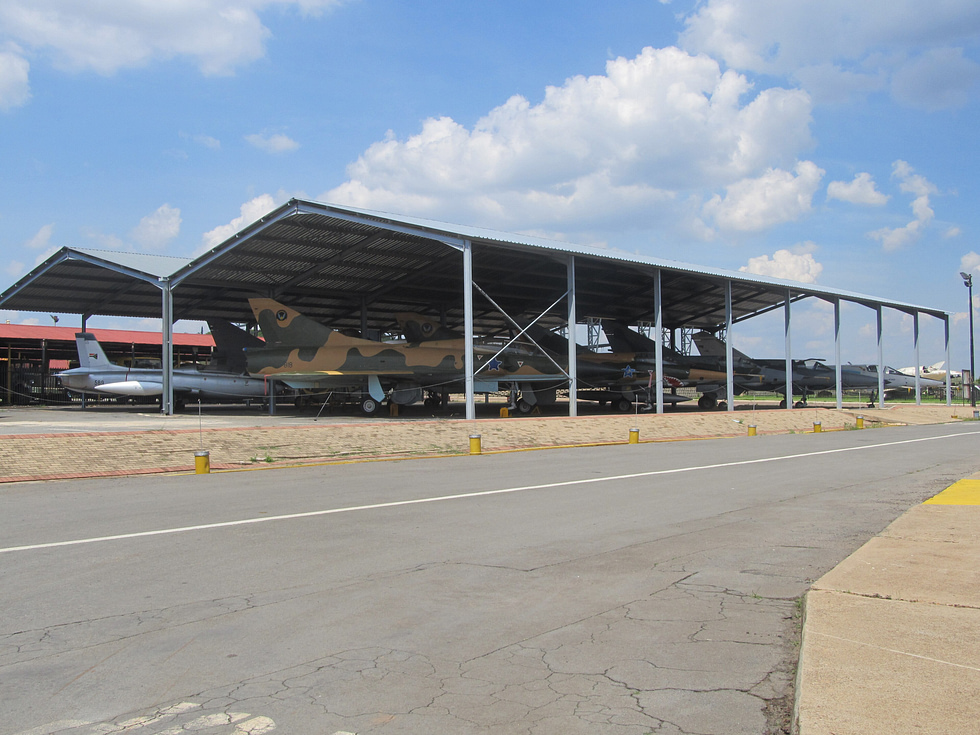
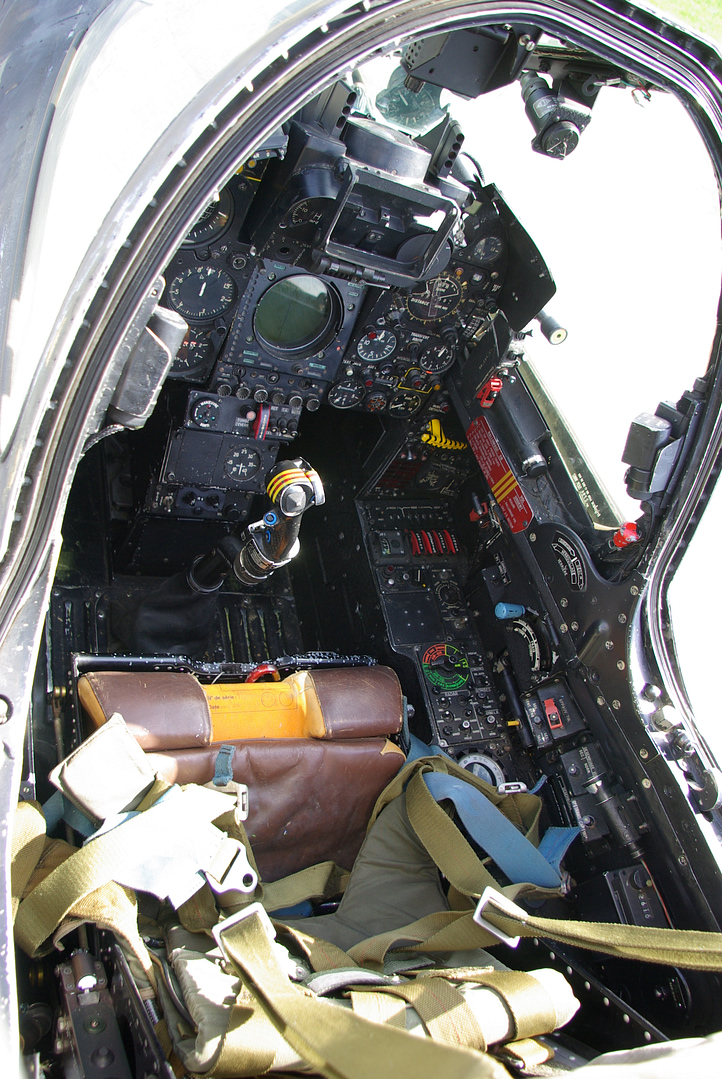
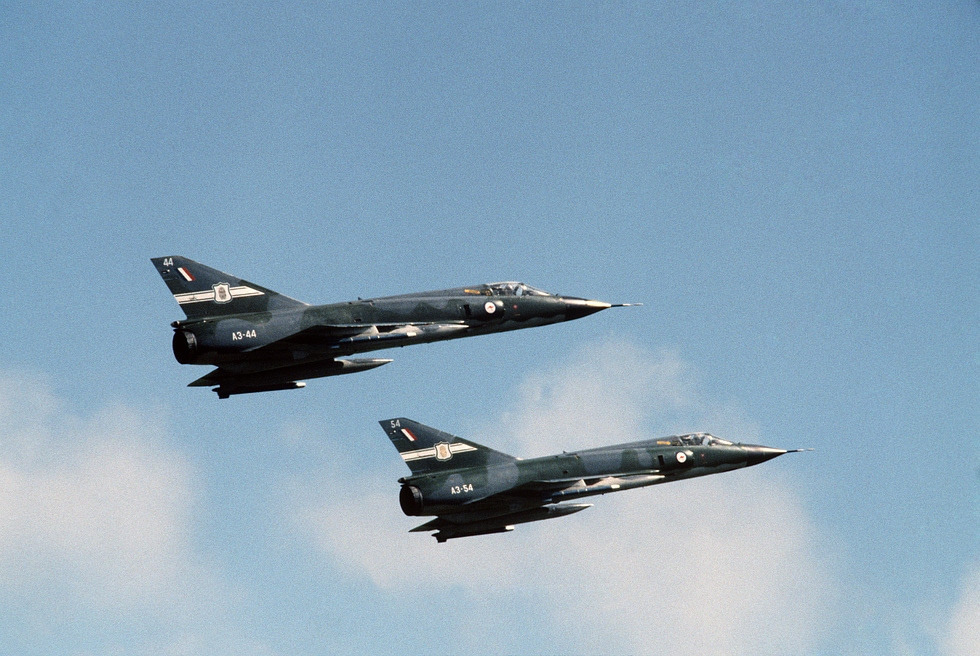
The Mirage III in motion
A dedicated Mirage III video is coming soon — we’re verifying the clip and its embed rights before adding it here.
The Mirage III / 5 in motion
Not A Pound For Air To Ground — one of the most-watched Mirage III / 5 films on YouTube.
Where the Mirage III flew
One of the Cold War’s most battle-proven deltas
The Mirage III fought from the Middle East to the South Atlantic across four decades, and its published kill/loss tallies are fiercely contested between national and independent sources — always cite them as claims, not settled scores. What is beyond dispute is the breadth of its fighting career.
Compare the combat record of every military aircraft. Figures as of July 2026.
Everything people ask about the Mirage III
Can I fly in a Mirage III?
How fast is the Mirage III?
Is it hard to fly because of the delta wing?
Is the Mirage III still in service?
What’s the difference between the Mirage III and the Mirage 5?
How is it linked to the Kfir?
How many were built?
Mirage III vs MiG-21?
You can’t fly the Mirage III.
These, you can.
Some legends only live in museums — others are fuelled and waiting. MiGFlug has put civilians in real military jet cockpits since 2004.
Continue the tour
Every fact, checked
- Dassault Aviation — official Mirage III pageManufacturer history, production numbers and variant overview.
- GlobalSecurity.org — Mirage IIIDevelopment, design and service background.
- MilitaryFactory.com — Mirage III specificationsAirframe and performance data cross-check.
- FlyaJetFighter.com — Falklands 1982Sea Harrier vs Argentine Mirage III and Dagger.
- GlobalMilitary.net — Mirage III / 5 / 50Specifications and operator list (2026).
- Military Watch MagazinePakistan’s Mirage upgrades and Project ROSE.
- Smithsonian MagazineThe air war in the Falklands.
- Fighter-Planes.com — Mirage IIISpecs, history and combat record.