
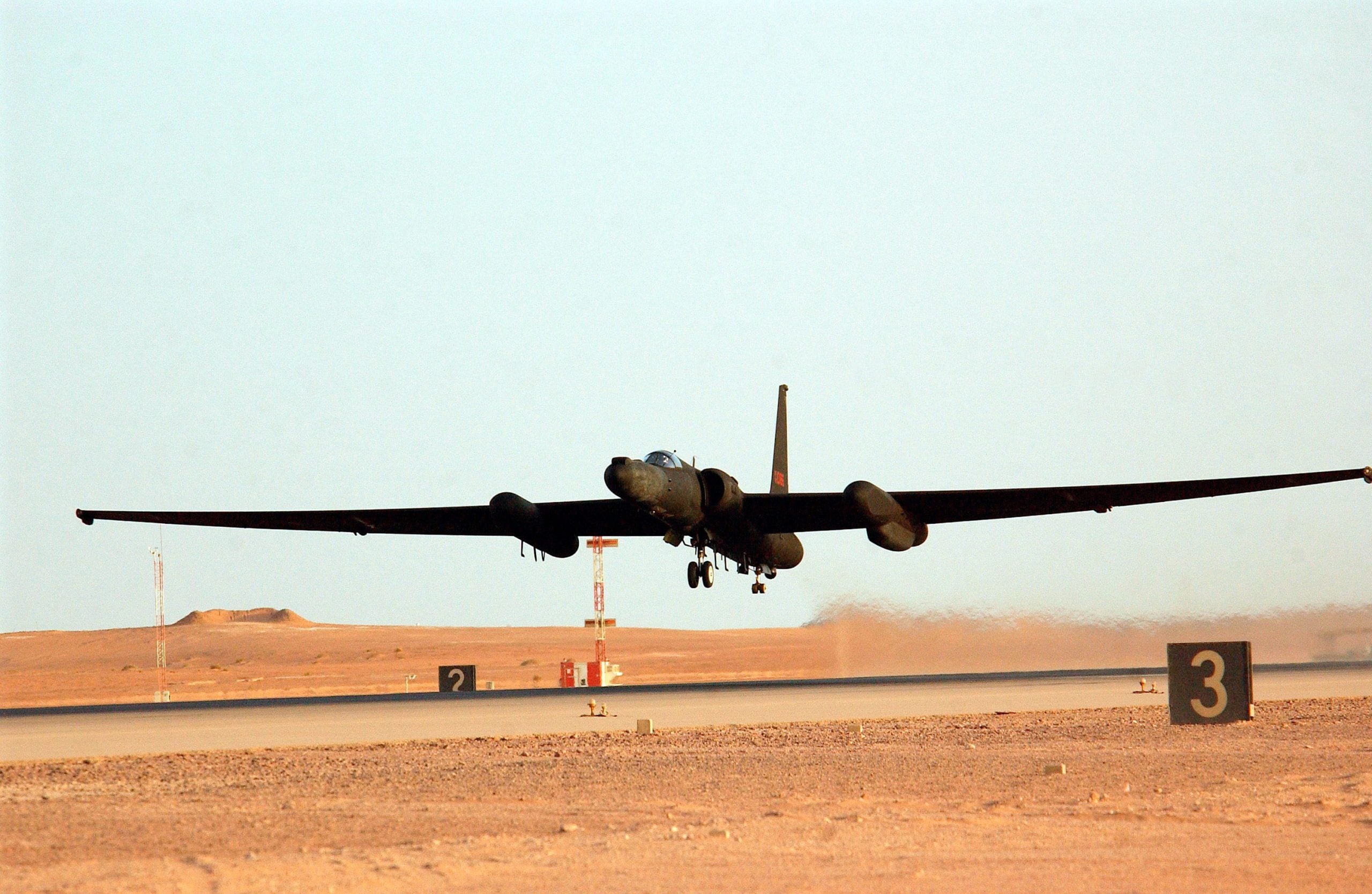
Lockheed U-2
“Dragon Lady”
A jet-powered glider built to fly at the edge of space — the Cold War spy plane that photographed the Soviet Union, triggered two of the century’s great crises, and is somehow still flying seventy years after its first flight.
The spy plane that flies at the edge of space
In the early 1950s the West was blind. Stalin’s Soviet Union was a closed continent, and no aircraft could fly high enough to photograph it without being shot down. The answer came from Lockheed’s secret Skunk Works in Burbank, where Clarence “Kelly” Johnson proposed something radical: strip a jet to almost nothing, bolt on enormous glider-like wings, and fly it so high that Soviet fighters and missiles simply could not reach it. Built in secret for the CIA under Project Aquatone, the U-2 first flew on 1 August 1955.
The concept worked. From 1956 the U-2 cruised above 70,000 feet over the Soviet Union, mapping airfields, missile sites and factories from the stratosphere while the world below never knew it was there — until 1 May 1960, when a Soviet missile finally reached one and the myth of invulnerability shattered over Sverdlovsk. Two years later a U-2 found the Soviet missiles in Cuba that started the Cuban Missile Crisis, and another was shot down over the island, killing its pilot.
What is astonishing is that the U-2 never went away. It was supposed to be a stopgap, replaced first by the SR-71, then by satellites, then by drones. Instead the fleet was rebuilt, re-engined and re-sensored again and again. The modern U-2S still flies today from Beale Air Force Base — a seventy-year-old design carrying twenty-first-century radars and cameras, its retirement repeatedly announced and repeatedly delayed.
01The U-2’s “coffin corner”: flying where the air is too thin to fly
At its cruising altitude of over 21,000 metres, the U-2 lives in a trap pilots call the “coffin corner.” The air is so thin that the speed at which the wing stalls and the speed at which airflow over it goes supersonic and buffets are almost the same — by some accounts separated by only a handful of knots. Fly a little too slow and the aircraft stalls; a little too fast and it shakes itself toward structural failure. For hours at a time, the pilot must hold the jet inside that razor-thin band, in a pressure suit, at the very edge of controllable flight. It is one of the most demanding sustained flight regimes in all of aviation.
What makes it special
A glider wing and an astronaut’s suit
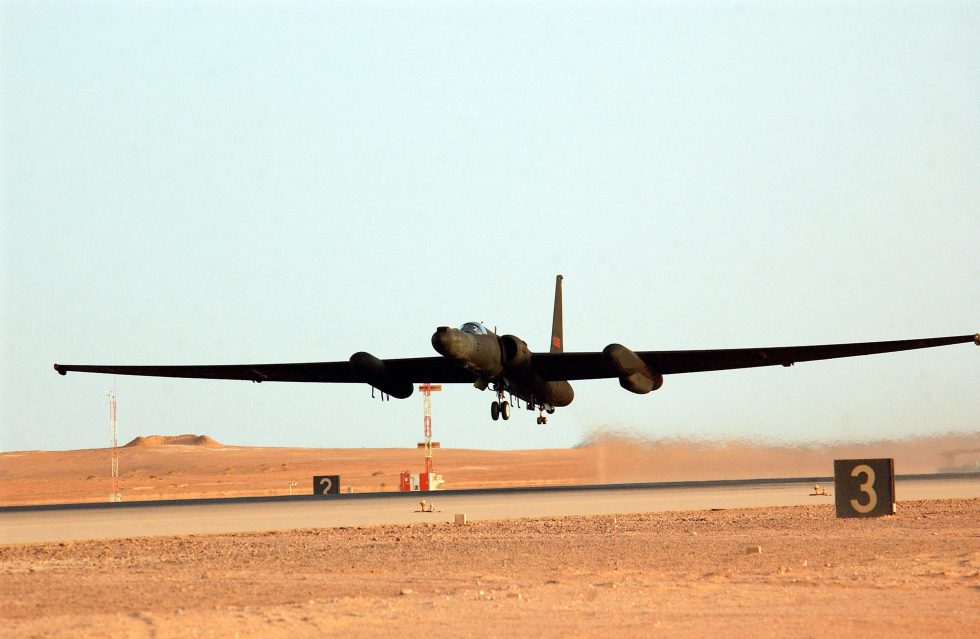
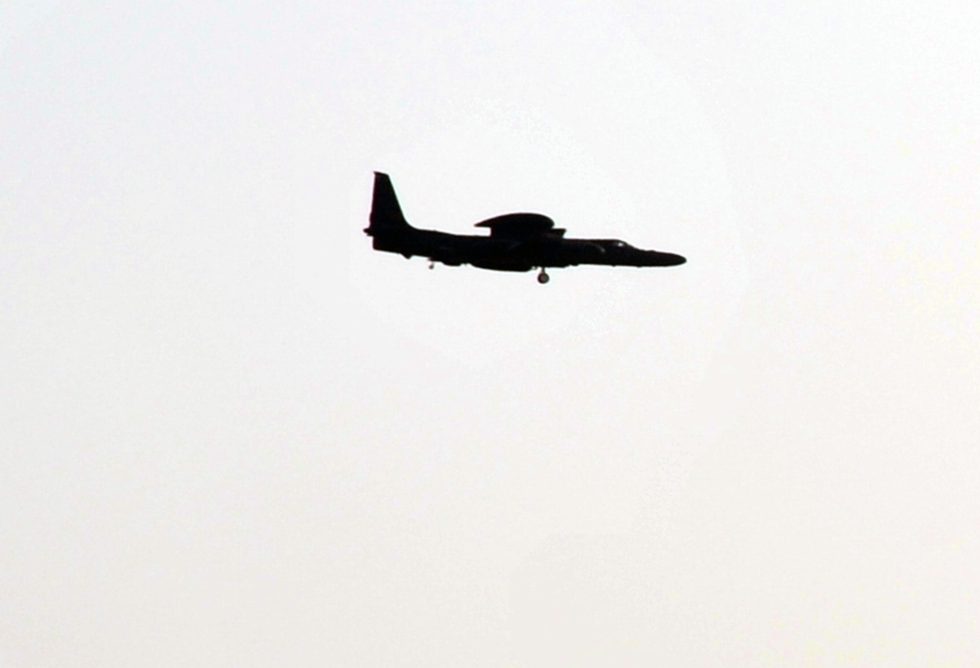
The U-2 is essentially a powered glider. Its enormous high-aspect-ratio wing — spanning roughly 31 metres on a fuselage under 20 metres long — generates the lift needed to fly in air one-twentieth as dense as at sea level. Above 70,000 feet a cabin leak would be fatal in seconds, so the pilot flies in a full pressure suit much like an astronaut’s, breathing pure oxygen for missions that can last more than ten hours.
A flying sensor platform
The airframe exists to carry sensors. Over seventy years the U-2 has hauled wet-film cameras, then the huge optical-bar camera, and today the SYERS-2 multispectral imager, the ASARS-2 synthetic-aperture radar that maps ground through cloud, and a powerful signals-intelligence suite. A single aircraft can photograph, radar-map and eavesdrop on a battlefield in one pass — which is why it keeps outliving its replacements.
The hardest landing in aviation
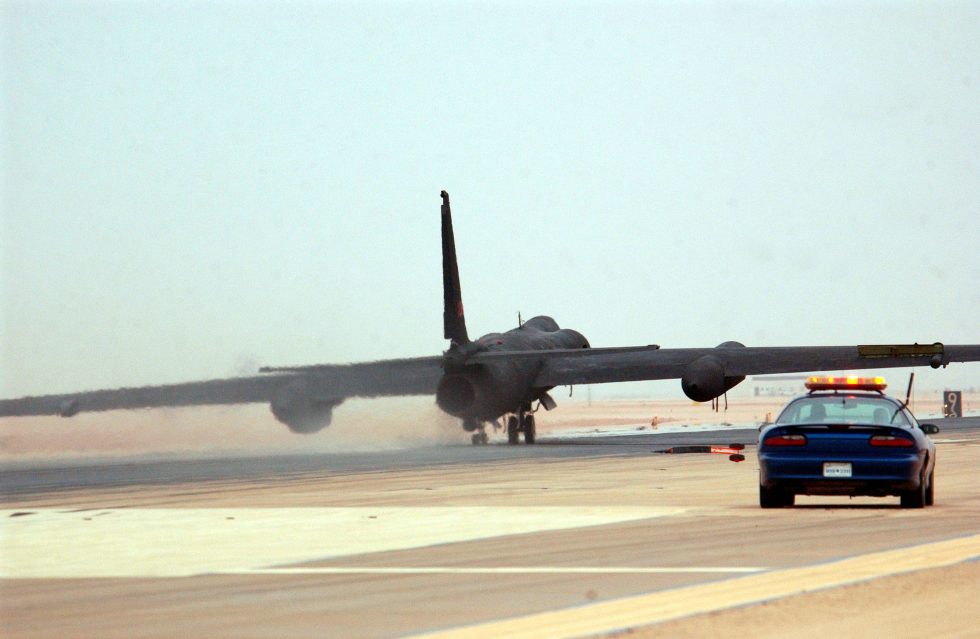
The U-2 lands like nothing else. It rides a bicycle undercarriage — two wheels on the centreline — balanced in flight by jettisonable outrigger wheels called “pogos.” The huge wing refuses to stop flying, and the pilot can barely see forward, so a second U-2 pilot chases each landing in a high-speed chase car, calling out the last few feet by radio until the jet settles onto the runway.
02The U-2’s wing: why a spy plane looks like a sailplane
To fly in the near-vacuum of the stratosphere, the U-2 needed a wing that could still generate lift where the air is desperately thin. Kelly Johnson’s answer was a long, slender, high-aspect-ratio wing straight out of sailplane design, mated to the lightest possible airframe. The result flies beautifully high but is fragile and unforgiving low down: it is reluctant to descend, sensitive to gusts, and structurally limited. Early airframes traded ruggedness for altitude — a bargain that let the U-2 see over the Iron Curtain when nothing else could.
03The chase car: why every U-2 landing needs a car on the runway
Because the U-2 sits on a bicycle undercarriage and its pilot — helmeted, in a pressure suit, behind a long nose — can barely see the runway, landing it unaided is close to impossible. So the Air Force pairs every landing with a chase car: a fast performance saloon driven by another qualified U-2 pilot who races down the runway behind the aircraft, watching the wheels and calling the height in feet over the radio — “two… one… hold it…” — until the jet stalls gently onto the tarmac. Once stopped, the wing tips down onto skids and the ground crew re-fit the pogos to taxi it in.
Full specifications
Baseline note: the figures below describe the U-2S — the U-2R and TR-1A airframes re-engined from 1994 with the General Electric F118-GE-101, which is what every USAF Dragon Lady flying today is. Deltas for the original 1955 U-2A and the J75-powered U-2C, and for the two-seat TU-2S trainer, are in grey. Two figures in this table are genuinely contested rather than secret: the wingspan, where Jane’s and the USAF fact sheet disagree by two feet, and the service ceiling, which the Air Force will only describe as "above 70,000 ft". Both are given as they are published rather than reconciled.
Dimensions & weights
- Crew
- 1 (TU-2S: 2 in tandem, the instructor sitting behind and above in a raised second cockpit with its own periscope, because there is no seeing past the pupil)
- Length
- 19.20 m (63 ft 0 in); the original U-2A was 15.11 m (49 ft 7 in)
- Wingspan
- 31.39 m (103 ft 0 in) per Jane’s; the USAF fact sheet publishes 32.0 m (105 ft 0 in). The U-2A spanned 24.38 m (80 ft 0 in) — the U-2R of 1967 is a much larger aeroplane wearing the same name
- Height
- 4.88 m (16 ft 0 in)
- Wing area
- 92.9 m² (1,000 sq ft), aspect ratio about 10.6 — sailplane proportions on a jet
- Aerofoil
- NACA 63A409 at the root, 63A406 at the tip — thin, laminar and unforgiving; the wing is what makes the aeroplane and also what makes it dangerous
- Empty weight
- 7,260 kg (16,000 lb)
- Maximum take-off weight
- 18,140 kg (40,000 lb); the U-2A grossed barely half that
- Internal fuel
- ~11,170 litres (~2,950 US gal; ~2,456 imp gal) of JPTS, a low-volatility, low-freezing, thermally stable fuel made specifically for this aircraft and costing over three times the price of JP-8
- Mission payload
- 2,270 kg (5,000 lb) across the nose, the Q-bay behind the cockpit, two underwing superpods and a dorsal canoe
- Undercarriage
- Bicycle: forward main wheels just behind the cockpit, rear main wheels behind the engine, the rear unit steered through the rudder pedals. Two jettisonable outrigger "pogos" hold the wings level for taxi and take-off and fall away on the roll; titanium skids protect the wingtips on landing
- Wing loading
- 195 kg/m² (40 lb/sq ft) — about a third of a contemporary fighter’s, and the reason it can fly at 21,000 m at all
Performance
- Cruise speed
- 763 km/h (474 mph; 412 kn) true, Mach 0.715, at 21,900 m (72,000 ft)
- Stall speed
- 120 km/h (75 mph; 65 kn) indicated
- Coffin corner
- At operating altitude the low-speed stall and the high-speed Mach buffet close to within roughly 10 kn of each other, and the aircraft cruises within about 5 kn of the stall for most of a mission. Slow down and the wing lets go; speed up and the tail meets compressibility. Either one loses altitude, and losing altitude over a defended country is how the mission fails
- Service ceiling
- Above 21,300 m (70,000 ft) — the only figure the USAF will publish. Jane’s gives 24,400 m (80,000 ft), and a NASA ER-2 set a class record at 20,479 m (67,190 ft) in level flight in 1998
- Rate of climb
- 45.7 m/s (9,000 ft/min) initial
- Time to altitude
- 18,300 m (60,000 ft) in 12 minutes 30 seconds
- Range
- 11,280 km (7,010 mi; 6,090 nmi)
- Endurance
- 12 hours typical. A TU-2S flew 11,100 km (6,000 nmi) in 14 hours over all 48 contiguous states in 2025 to mark the type’s 70th year
- Lift-to-drag ratio
- 25.6 — engine out it glides at roughly 23:1, which is a fair sailplane and a terrifying aeroplane
- Fuel consumption
- 410 kg/h (910 lb/h) in the cruise
- Thrust-to-weight
- 0.425
- Landing technique
- Fully stalled onto the runway from about 0.6 m (2 ft). The high-lift wing floats in ground effect and will not settle until the wing is stalled, and the bicycle gear cannot absorb a drop from much above that, so a second U-2 pilot chases the aircraft down the runway in a high-performance car at over 190 km/h (120 mph) calling the height off the ground over the radio. This is not a stunt or a tradition — it is the published procedure
- Handling at low level
- Unpowered manual controls sized for the thin air at 21,000 m. Down low the same controls need brute force and huge deflections, and the aircraft is acutely sensitive to crosswind. A yaw string is taped to the canopy, as on a glider, because fuel imbalance between the wing tanks shows up as a skid long before anything else tells the pilot
- Cockpit pressure altitude
- Equivalent to 8,500 m (28,000 ft) — only partially pressurised. Pilots pre-breathe pure oxygen for an hour to purge nitrogen, and it is still not enough: since 2001 more than a dozen U-2 pilots have suffered decompression sickness, with permanent brain injury in nine cases. Longer sorties and busier cockpits over Afghanistan raised oxygen demand and with it the risk, and pilots now exercise during the pre-breathe to help clear nitrogen faster
Propulsion & systems
- Engine
- 1 × General Electric F118-GE-101 non-afterburning turbofan — a derated relative of the B-2’s engine, fitted from 1994 (U-2A: Pratt & Whitney J57-P-37A turbojet; U-2C and TR-1A: J75-P-13B, which needed a hydrogen-peroxide-fed start at altitude if it ever flamed out)
- Thrust
- 75.6 kN (17,000 lbf) — the re-engine gave more thrust for less fuel, added about 1,200 m (4,000 ft) of ceiling and removed the flame-out problem that had killed pilots
- Fuel
- JPTS, developed by Shell for this aircraft in 1955; manufacturing the first few hundred thousand gallons caused a nationwide shortage of a household insecticide that shared a feedstock
- Radar imagery
- Raytheon ASARS-2A synthetic aperture radar in the nose, with ASARS-2B/2C integration under way — spot and search modes at ranges out past 160 km, through weather and at night, which no camera can do
- Electro-optical imagery
- SYERS-2C multispectral electro-optical and infrared sensor — ten bands, day and night, the primary imaging payload of the modern fleet
- Signals intelligence
- Airborne Signals Intelligence Payload (ASIP) in a superpod, with the older Senior Ruby and Senior Spear collection packages preceding it; the aircraft can gather imagery, signals and air samples on the same sortie
- Datalinks
- Senior Span and Senior Spur satellite terminals in a dorsal fairing for beyond-line-of-sight relay, alongside line-of-sight links — the reason a Dragon Lady can be a communications node for other people’s aircraft as well as a collector
- Life support
- David Clark S1034 full-pressure suit and helmet; one hour of pre-breathing 100 per cent oxygen before engine start to purge nitrogen from the blood, continued on a portable bottle during the drive to the aircraft; food taken through a tube in the faceplate
- Cockpit and avionics
- Glass cockpit from the 1990s, then the Avionics Tech Refresh contracted in 2020 and fielded from 2023: open-architecture mission systems, new processors and a rewritten pilot interface, deliberately built so new payloads and software could be added without touching the airframe
- Defensive systems
- Radar warning receivers and, on some fits, self-protection jamming. There is no gun, no missile and no meaningful kinematic escape. Altitude was the defence in 1955, warning and standoff are the defence now, and the S-75 proved on 1 May 1960 that altitude alone had stopped being enough
- First flight
- 1 August 1955 — unintentionally, when Article 341 lifted off during a high-speed taxi run at Groom Lake because the wing simply would not stay on the ground; the official first flight followed on 4 August. U-2R 28 August 1967; TR-1A August 1981; U-2S October 1994
- Service entry
- 1956; the first deep overflight of the Soviet Union was flown on 4 July 1956, over Leningrad and Moscow, by a CIA pilot in an aircraft with no national markings
- Number built
- 104 production airframes in total (49 U-2A, 6 U-2D, 12 U-2R, 1 U-2R(T), 33 TR-1A, 2 TR-1B and 1 new-build ER-2), plus later conversions. Lockheed delivered the first 20 for US$22.5 million, and came in US$3.5 million under budget
04The U-2’s cost: why there is no clean price tag
The U-2 has been built and rebuilt in small numbers over seventy years — originally for the CIA in deep secrecy, later for the Air Force — so there is no single, clean unit price in the public record. Figures that circulate are estimates spread across very different eras and standards, and the aircraft flying today have been so thoroughly re-engined and re-sensored that the airframe is almost the least valuable part. Cost-per-flight-hour numbers are similarly slippery: any precise dollar figure you see attached to a U-2 should be read as an order-of-magnitude estimate, not a sourced fact.
Armament & payload
The U-2 has never carried a weapon of any kind, and the six cards below describe what it carries instead
This is the cleanest statement that can be made about the Dragon Lady’s armament: there is none. No gun, no missile, no bomb, no rocket, no hardpoint, no provision. The absence is original and deliberate — Kelly Johnson’s CL-282 proposal deleted the landing gear and the combat load factors to buy altitude, and when General Curtis LeMay walked out of a briefing on it in 1954 saying he had no interest in an aeroplane with no wheels and no guns, he had understood the design perfectly and simply disagreed with it.
What the U-2 carries is 2,270 kg of sensor spread across a detachable nose, the Q-bay behind the cockpit, two underwing superpods and a dorsal canoe, and the modularity of that arrangement is the real reason a 1955 design is still flying in 2026. Noses are swapped between missions. Superpods take whole new payloads. The 2023 avionics refresh rebuilt the aircraft around open mission systems specifically so that this could keep happening. Sensor fits vary by tail number, by detachment and by tasking, and some current payloads — particularly signals intelligence packages and anything to do with the aircraft’s role as a battle-management node — are classified; what follows is the publicly documented baseline, not a complete list.
Armament
- None carried, ever. The U-2 is unarmed, has always been unarmed, and has no hardpoint, pylon, rail or bay from which any weapon could be released.
- The design decision was made before the first metal was cut: deleting combat load factors and weapon provision was how Lockheed bought the altitude the mission required.
- Nor is there defensive armament, chaff, flares in the conventional sense, or an escort concept. Two U-2s were shot down by S-75 batteries — over Sverdlovsk on 1 May 1960 and over Cuba on 27 October 1962 — and neither could have done anything about it.
- The nearest thing to lethal equipment ever issued was for the pilot: a cyanide L-pill, withdrawn in 1960 after the CIA realised a pill breaking inside a pressure suit would kill the wearer, and replaced by a single poisoned needle hidden in a silver dollar.
Electro-optical imagery
- SYERS-2C (Senior Year Electro-Optical Reconnaissance System) — the primary imaging sensor of the modern fleet, a multispectral electro-optical and infrared system working across ten bands, day and night, at long slant range
- It sits in the interchangeable nose, which is swapped between sorties in hours; the mission is defined by which nose is fitted, not by modifying the aeroplane
- Its ancestry runs straight back to the Baker and Perkin-Elmer optics of 1955, whose "B" camera used a 36-inch lens on 6,000 ft reels of polyester-based film and resolved about 23 cm on the ground from 70,000 ft — imagery good enough to count aircraft on Soviet airfields and settle the "bomber gap"
- No weapon is associated with this or any other U-2 sensor. The aircraft finds; something else strikes.
Radar imagery
- ASARS-2A (Advanced Synthetic Aperture Radar System) in the nose, with ASARS-2B and 2C integration under way — spot and search imaging past 160 km, through cloud and at night
- Radar is what lets a single-sensor aeroplane be tasked reliably: an optical mission is at the mercy of the weather over the target, a radar mission is not
- ASARS-2 was the reason the TR-1A existed at all — 33 aircraft built from 1981 specifically to stand off the inner-German border and see Warsaw Pact armour without crossing it
- Again, no weapon. ASARS imagery has cued a great many strikes over Iraq, Afghanistan and Syria; none of them were flown by the aeroplane that produced the picture.
Film cameras
- The Optical Bar Camera, a wet-film panoramic camera that photographed enormous swathes in a single pass at resolution that survived seventy years of digital progress without being bettered for area coverage
- It flew its last operational sortie from Beale AFB in July 2022, ending film reconnaissance in the United States Air Force. Crews were kept current on it anyway, because nothing digital covers ground that fast
- The lineage is the A camera of 1956 (three 24-inch trimetrogon cameras), then Baker’s B camera, then the long-focal-length LOROP cameras the Taiwanese Black Cats used from international waters after 1968
- The film had to be flown home and developed, which is the whole difference between 1962 and now: Major Heyser’s Cuban photographs of 14 October 1962 took a day to reach an interpreter’s light table.
Signals intelligence
- ASIP (Airborne Signals Intelligence Payload) in a superpod — the current wideband collection system, replacing the older Senior Ruby (ELINT) and Senior Spear (COMINT) packages
- The U-2 can run imagery, radar and signals collection on the same sortie, and take air samples for nuclear detection while doing it — a job it has done since the 1950s and did again over the Chinese balloon in February 2023, where U-2 passes established that the payload carried signals-intelligence antennas and solar arrays to power them
- Senior Span and Senior Spur satellite terminals in the dorsal canoe push the take off the aircraft in near real time, turning a collector into a relay
- None of this is armament, and none of it is defensive. The aircraft listens; it does not jam, and it cannot shoot.
Pods, bays & open architecture
- Four carriage locations: the detachable nose, the Q-bay behind the cockpit (the original camera bay, still the largest volume on the aircraft), two underwing superpods introduced with the U-2R, and the dorsal canoe
- The superpods are the reason the U-2R exists in the shape it does — they let a single airframe carry a sensor suite that would otherwise need two aeroplanes, and they carry no weapon and no fuel
- The Avionics Tech Refresh, contracted in 2020 and fielded from 2023, rebuilt the aircraft around open mission systems so payloads and software could be swapped without touching the airframe; in December 2020 a U-2 became the first military aircraft to fly an artificial-intelligence algorithm as a working part of the crew
- NASA’s two ER-2s use the same bays for atmospheric chemistry, wildfire mapping and satellite-instrument test — the same aeroplane, the same pods, no weapon on either.
Three typical mission fits
- Standing theatre ISR (Osan, Al Dhafra, Akrotiri, Fairford)
- SYERS-2C nose or ASARS-2A nose, ASIP in one superpod, Senior Span or Spur in the dorsal canoe, no weapon of any kind. Ten to twelve hours at 21,000 m, one pilot in a pressure suit, imagery and signals down the satellite link as they are collected.
- Cold War deep overflight (1956–1960, and never again after Powers)
- B camera in the Q-bay with 6,000 ft of film, a tracking camera, sometimes an ELINT receiver, and nothing else. Unmarked aeroplane, no national insignia, cover story pre-written, cyanide capsule optional and mostly declined. Nine hours over hostile territory with no defence but altitude.
- Civil and scientific (NASA ER-2, Palmdale)
- The same airframe in white, carrying MODIS and ASTER satellite-instrument analogues, atmospheric samplers and infrared fire-mapping sensors in the Q-bay and superpods. Flown by NASA pilots in the same pressure suits, chased down the runway by the same kind of car.
Sourcing caveat: sensor identifications come from USAF fact sheets, Lockheed Martin product material, the Air & Space Forces Magazine almanac and the CIA’s own declassified programme history (Pedlow and Welzenbach, 1992). Specific fits by tail number and any current classified payloads are not public, and the historical camera figures are calculated from published lens focal lengths and resolving power rather than quoted directly. Where a sensor has been withdrawn — the Optical Bar Camera in 2022 — that is stated rather than left in the list.
Variants
Lockheed built two entirely different aeroplanes under one designation, and the second one is still flying
Everything before 1967 is one aircraft and everything after it is another. The U-2A and U-2C were 80-foot-span, roughly eight-tonne machines flown by the CIA over the Soviet Union with almost nothing to protect them: fragile, badly behaved, and lost at a rate that would be unthinkable now. The U-2R of 1967 is 30 per cent larger in every dimension, carries far more fuel and payload, and is a fundamentally more survivable aeroplane. When the type was rebranded TR-1A in 1981 to make a tactical procurement politically easier, and then quietly redesignated U-2R again in 1992, no metal changed at all.
Two episodes define the type’s reputation and both belong to the small early aircraft. On 1 May 1960 Francis Gary Powers flew Operation GRAND SLAM, the 24th deep-penetration overflight and the first intended to cross the Soviet Union end to end, from Peshawar to Bodø. One of three S-75 missiles detonated behind him at 70,500 ft over Sverdlovsk; another destroyed a Soviet interceptor sent up after him, killing its pilot. Powers survived, the wreck was recovered largely intact, the American cover story collapsed in public over the following week, and the Paris summit collapsed with it. Two and a half years later, on 14 October 1962, Major Richard Heyser brought back the photographs of Soviet medium-range ballistic missiles at San Cristóbal that began the Cuban Missile Crisis — and on 27 October Major Rudolf Anderson was shot down over Cuba and killed, the only combat death of the crisis, for which he received the first Air Force Cross.
The third strand is Taiwanese. The 35th Squadron, the Black Cats, flew 19 U-2s over mainland China from 1961 under CIA cover. Five were shot down over the mainland, three of those pilots killed and two imprisoned for seventeen years; one more was lost on an operational mission off the coast and seven in training. Ten pilots died out of twenty-six trained. It is the highest price anyone paid for this aeroplane, and it is the part of the story least often told.
- U-2A (1955–; 49 built)
- The original: J57 turbojet, 80 ft span, no ejection seat on the earliest aircraft, and a reputation for killing its pilots. Flew every Soviet overflight from 4 July 1956 to 1 May 1960.
- U-2C (13 converted)
- Re-engined with the more powerful J75 and given enlarged intakes, which raised the ceiling and made the flame-out problem worse. The variant most Cold War imagery came from.
- U-2D (6 built)
- Two-seat infrared and missile-detection research aircraft, not a trainer. The second seat carried a systems operator, not an instructor.
- U-2F and U-2G (5 and 2 converted, from 1961)
- The F added air refuelling, extending range from about 4,000 to 8,000 nmi and endurance past 14 hours — and immediately ran into the limit nobody had costed, which was the pilot. The G added an arrester hook, wing spoilers and strengthened gear for aircraft carrier trials, which worked and were never operationally used.
- U-2R (first flight 28 August 1967; 12 built)
- The redesign that saved the programme: 30 per cent larger, far more fuel, a proper ejection seat, and underwing superpods that turned a single-sensor aircraft into a multi-intelligence one.
- TR-1A (first flight August 1981; 33 built, deliveries to October 1989)
- Structurally identical to the U-2R but sold to Congress as a tactical reconnaissance aircraft for Europe, carrying ASARS-2 and improved countermeasures. Based at RAF Alconbury from 1983. Redesignated U-2R in 1992 when the pretence was no longer needed.
- TR-1B, U-2R(T), TU-2S (2 built, 1 built, 5 converted)
- The two-seat trainer, with the instructor raised behind the pupil. Given how the aircraft lands, the existence of a trainer at all was a late and overdue concession.
- U-2S (31 converted, from October 1994)
- The current aircraft: F118-GE-101 turbofan in place of the J75, GPS, new sensors, glass cockpit. Lighter, thirstier by less, roughly 4,000 ft more ceiling, and no more altitude flame-outs. Every USAF U-2 flying today is one of these.
- ER-2 (1 new-build, 1 converted; NASA, 1981–present)
- The civil derivative, N806NA and N809NA, flown from Palmdale for atmospheric chemistry, Earth observation and wildfire mapping. One set a world altitude record for its weight class in 1998. The only non-military operator the type has ever had.
- Export variants (none; two foreign operators, both covert)
- The U-2 was never exported in any normal sense. RAF pilots flew CIA aircraft from Turkey in 1958–1960, paid through a secret MI6 account and covered as Met Office employees; Taiwan’s 35th Squadron flew CIA-supplied aircraft under ROCAF markings until 1974. Both were joint operations, not sales.
Closing caveat, and the fleet arithmetic, since there is no operator chart on this page: the United States Air Force is the sole military operator, with NASA flying two ER-2s as a civil derivative from Palmdale. The published inventory is 27 U-2S and 4 TU-2S, all assigned to the 9th Reconnaissance Wing at Beale AFB, California, with standing detachments at RAF Akrotiri in Cyprus, RAF Fairford in England, Osan in South Korea and Al Dhafra in the United Arab Emirates. The retirement story is the point: the Air Force has tried to divest this aircraft repeatedly — in the 2006 Quadrennial Defense Review, again around 2011, and hard in the FY2015 budget request, which proposed killing it to fund the RQ-4 Global Hawk — and Congress has refused every time, on the grounds that the U-2 flies higher, carries more, and takes sensors the Global Hawk cannot. In 2021 the service set a 2026 retirement date and this time began executing: the first airframe, 80-1085, was dismantled and flown to AMARG at Davis-Monthan in December 2025. Congress then wrote into the FY2026 defence appropriations that no funds may be used to divest "or prepare to divest" more than eight aircraft, and funded US$55 million of programmed depot maintenance to be done at Beale rather than at Palmdale. The 1st Reconnaissance Squadron is still training new pilots. On the record to date, betting on a firm end date for the Dragon Lady has been a losing bet for twenty years.
Seventy years at the edge of space
Project Aquatone
The CIA and Lockheed’s Skunk Works, under Kelly Johnson, secretly begin the high-altitude reconnaissance aircraft that becomes the U-2.
First flight
Test pilot Tony LeVier lifts the first U-2 off the secret Groom Lake site on 1 August — the aircraft leaps into the air far sooner than expected.
Overflying the USSR
U-2s begin flying reconnaissance over the Soviet Union in July, photographing targets from above 70,000 feet.
The Powers shootdown
On 1 May a Soviet SA-2 missile downs Francis Gary Powers near Sverdlovsk; his capture triggers the U-2 Crisis and a collapsed superpower summit.
Cuba
U-2 photos reveal Soviet missiles in Cuba. On 27 October Major Rudolf Anderson is shot down over the island — the only combat death of the Cuban Missile Crisis.
The Black Cats
Taiwanese ROCAF pilots fly CIA U-2s over mainland China; several are shot down by Chinese missiles, with pilots killed or captured.
Re-engined U-2S
The fleet is rebuilt around the efficient General Electric F118 engine, becoming the U-2S that still serves today.
Still on station
A U-2 tracks a Chinese high-altitude balloon across the US in 2023; planned retirements are repeatedly pushed back as the fleet keeps flying.
From the cockpit: twelve Dragon Lady stories
The plane Kelly Johnson built in secret
Skunk Works promised the CIA a spy plane in months — and delivered.
Read the full story
The jet that wouldn’t stay on the ground
On its first taxi test, the U-2 accidentally flew.
Read the full story
Photographing a closed continent
From 70,000 feet, U-2 cameras mapped the USSR in secret.
Read the full story
Gary Powers falls to earth
A Soviet missile finally reached a U-2 — and the pilot lived to be paraded.
Read the full story
The photos that started the crisis
A single U-2 flight found the missiles in Cuba.
Read the full story
The only man killed in the crisis
Major Rudolf Anderson died over Cuba on 27 October 1962.
Read the full story
Taiwan’s secret U-2 pilots
ROCAF crews flew CIA U-2s over China — and paid a heavy price.
Read the full story
Flying in a spacesuit
U-2 pilots fly for hours sealed in a full pressure suit.
Read the full story
The car chasing the plane
Every U-2 landing is shadowed by a sports car on the runway.
Read the full story
Wheels that fall off on takeoff
The U-2’s balancing wheels drop away as it climbs.
Read the full story
The spy plane that outlived its replacements
The SR-71, satellites and drones all failed to kill the U-2.
Read the full story
A seventy-year-old on the front line
The modern U-2S still flies real-world missions in the 2020s.
Read the full story
The Dragon Lady in pictures
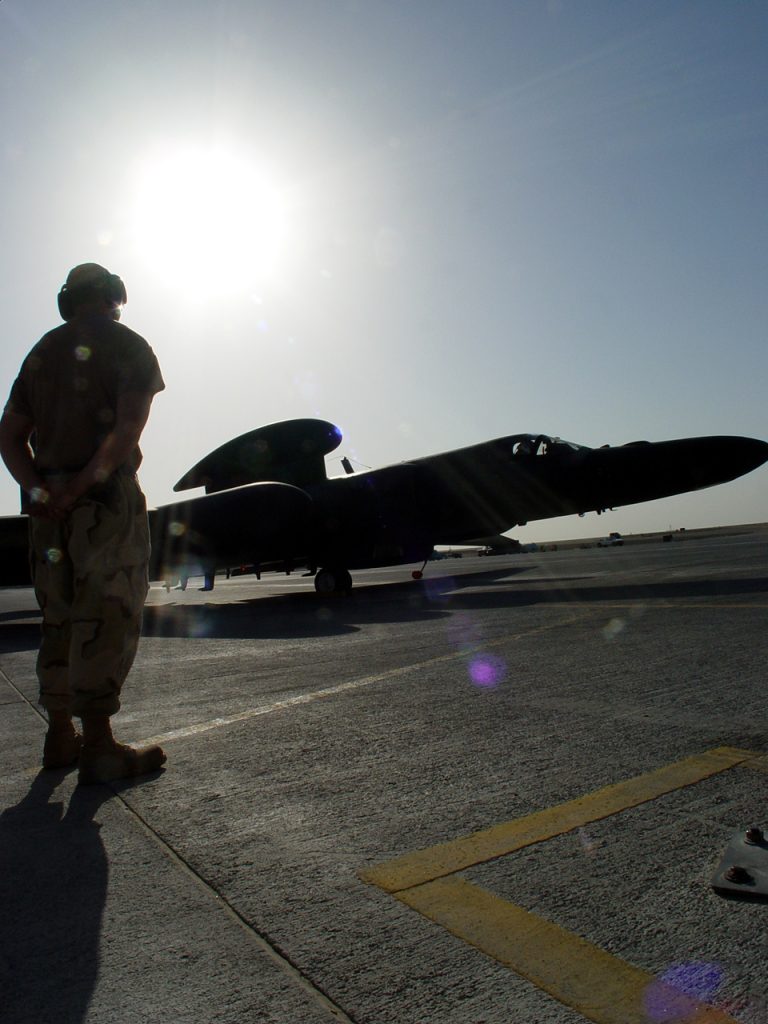
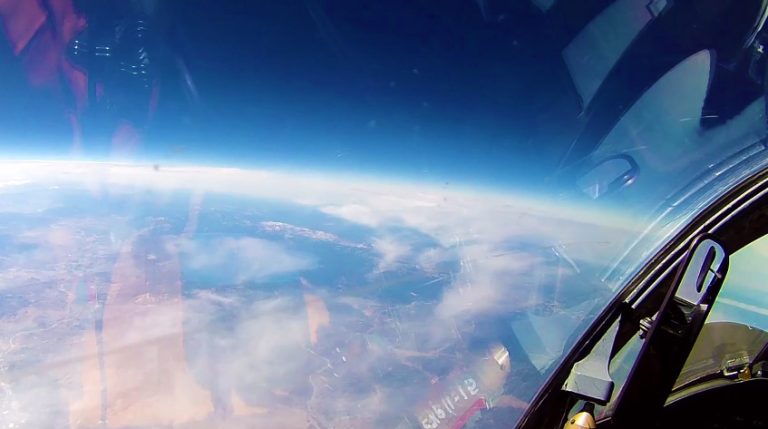
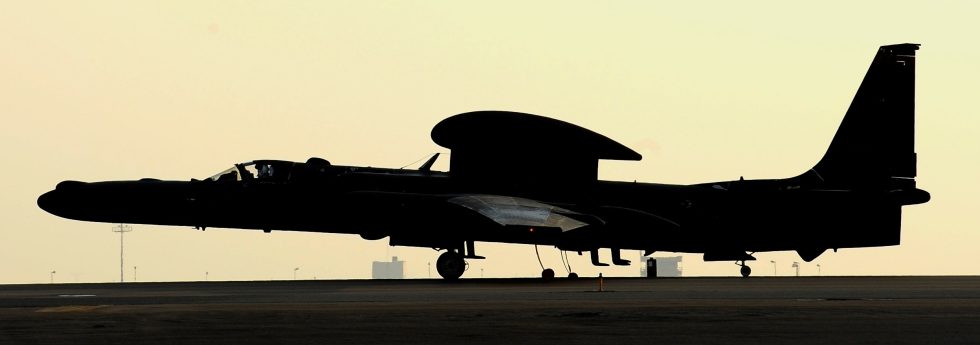
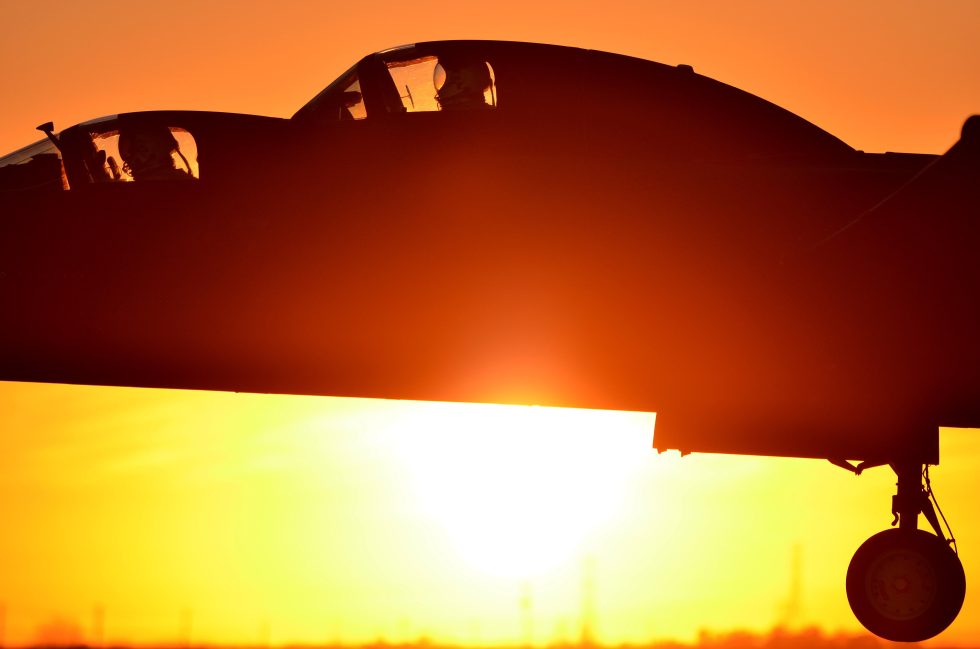
The Dragon Lady in motion
Video coming soon. We are still selecting the best public-domain and documentary footage of the U-2 Dragon Lady in flight and on its remarkable chase-car landings. Check back shortly.
The U-2 Dragon Lady in motion
Sam Eckholm — one of the most-watched U-2 Dragon Lady films on YouTube.
Where the Dragon Lady flew
The score that defines it
The U-2 is a spy, not a fighter — it carries no weapons and has never fired a shot. Its record is written in what it saw and in what it cost: aircraft lost to Soviet, Cuban and Chinese missiles, and pilots who paid with their freedom or their lives so their governments could see over the horizon.
Compare the combat record of every military aircraft. Figures as of July 2026.
Everything people ask about the U-2
Can I fly in a U-2?
How high can a U-2 fly?
Is the U-2 still in service?
Who was Gary Powers?
What happened to the U-2 in the Cuban Missile Crisis?
Why is the U-2 so hard to land?
Did Taiwan really fly the U-2?
You can’t fly the U-2.
These, you can.
Some legends only live in museums — others are fuelled and waiting. MiGFlug has put civilians in real military jet cockpits since 2004.
 Fly the L-39 AlbatrosThe world’s most-flown jet trainer — aerobatics included
 Fly the F-104 Starfighter“The missile with a man in it”
 Fly the MiG-21The Cold War’s most-produced jet
 Fly the T-33 Shooting StarAmerica’s first jet trainer
 Fly the DH VampireA piece of early jet history
 Fly the S.211Agile Italian jet trainer
 Fly the MB-326The classic Aermacchi jet
 Fly the MiG-15The Soviet legend of the Korean War
Continue the tour
Every fact, checked
- CIA — The U-2 ProgramAgency history of Project Aquatone, the overflights and the Powers incident.
- National Museum of the USAF — The Powers IncidentOfficial account of the 1 May 1960 shootdown of Francis Gary Powers.
- U.S. Air Force — U-2S fact sheetPrimary source for engine, dimensions, ceiling, range and crew figures.
- Imperial War Museums — U-2 and the Cuban Missile CrisisThe reconnaissance flights and the loss of Major Rudolf Anderson.
- The National Interest — Taiwan’s Black Cat U-2 pilotsThe covert ROCAF-CIA overflights of China and their losses.
- Air & Space Forces Magazine — U-2S Dragon LadyModern fleet, sensors, basing and upgrade programmes.
- Smithsonian National Air and Space MuseumDesign, altitude and the demands of high-altitude flight.
- Code One Magazine — Early History of the U-2Lockheed’s own account of the Skunk Works design and first flight.