
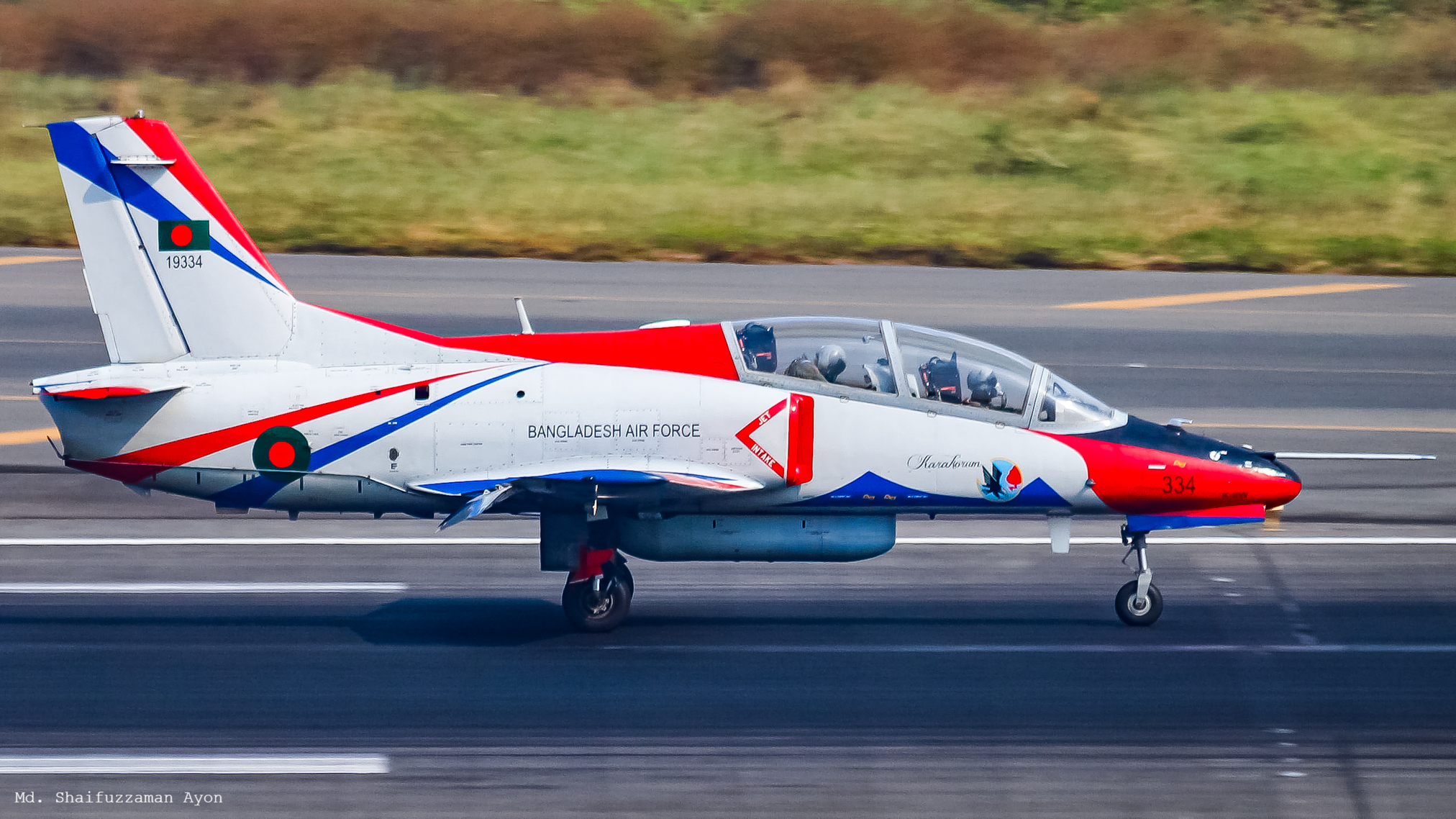
Hongdu JL-8 / K-8
“Karakorum”
The affordable Sino-Pakistani jet trainer that quietly conquered the world — the aircraft on which pilots from Pakistan to Zambia, Myanmar to Bolivia learn to fly fast jets.
The K-8 Karakorum: the trainer that taught the world to fly jets
Most famous fighters are built to fight. The K-8 Karakorum was built to teach — and in doing so it became one of the most quietly successful military aircraft of its generation. Named after the Karakoram mountains that straddle the China–Pakistan border, it is the physical embodiment of the two countries’ long defence partnership, and today it is the standard jet trainer of well over a dozen air forces across Asia, Africa and Latin America.
The programme began in 1986, when China’s Nanchang / Hongdu Aircraft Corporation and the Pakistan Aeronautical Complex (PAC) agreed to jointly develop a modern basic-to-advanced jet trainer, with Pakistan reportedly funding around a quarter of the work. Development started in 1987, and the first prototype flew on 21 November 1990. The original plan leaned on Western technology — a Garrett turbofan and Collins avionics — but US export restrictions on China after 1989 forced a redesign around the Ukrainian Ivchenko-Progress AI-25TLK engine, and later the Chinese domestic WS-11. The type entered service in 1994.
What made the K-8 a hit was not performance but value. It is a clean, docile, low-wing tandem two-seater that is cheap to buy, cheap to fly and easy to maintain — forgiving enough for a student’s first jet sortie, yet capable enough to serve as a lead-in fighter trainer and, with five hardpoints, a light attack aircraft. For air forces that could never afford a Hawk or an Alpha Jet, it was exactly the right aeroplane at the right price.
The result was an export success that few Western trainers have matched. Egypt built its own K-8E under licence; Pakistan flies it with the famous Sherdils aerobatic team; and operators from Zimbabwe, Zambia, Namibia, Sudan, Ghana and Tanzania to Myanmar, Sri Lanka, Bangladesh, Bolivia and Venezuela have made it a genuinely global aircraft. More than 500 have been built, and in China the domestic JL-8 remains a mainstay of PLA Air Force pilot training.
01Why the K-8 Karakorum is named after a mountain range on the China–Pakistan border
The Karakoram is one of the great mountain ranges of the world, running along the frontier between China and Pakistan and home to K2, the second-highest peak on Earth. The Karakoram Highway that crosses it has long been the physical symbol of the two countries’ friendship. Naming their jointly developed trainer the Karakorum (the aircraft uses the K-spelling) was a deliberate nod to that partnership — the aircraft was, quite literally, a bridge between the two nations’ aerospace industries. In Chinese service the same aircraft carries the designation JL-8 (Jiaolian-8, “trainer-8”).
What makes the K-8 Karakorum special
A jet designed by two countries at once
The K-8 is one of the few combat-capable aircraft co-developed by two nations from the start. China’s Hongdu (Nanchang) led the airframe; Pakistan’s PAC shared the funding and the work and became the launch operator. That partnership gave both countries a modern trainer they could build, support and export themselves — and gave the aircraft a ready-made customer base across the developing world.
The engine that changed mid-programme
Early prototypes were built around the American Garrett TFE731 turbofan. When US restrictions on China followed 1989, the design was re-engined around the Ukrainian Ivchenko-Progress AI-25TLK (about 16.9 kN), which powers most export K-8s. China later fitted its domestic WS-11, a derivative of the same engine, to the JL-8 — freeing production from foreign supply.
Trainer by day, light attacker by need
Under the wings and belly sit five hardpoints rated for around 1,000 kg — a gun pod, rockets, bombs or short-range air-to-air missiles. That lets one cheap airframe do two jobs: teach cadets to fly and fight, and fly real counter-insurgency and light-strike missions for air forces that cannot afford dedicated attack jets. Later K-8P / K-8W variants added a modern glass cockpit and head-up display.
02The K-8 Karakorum’s engine saga: from Garrett to Ivchenko to the Chinese WS-11
When the K-8 was conceived, the plan was thoroughly international: an American Garrett TFE731 turbofan and Western avionics, sold to a Chinese-Pakistani airframe. The 1989 arms embargo on China ended that. The programme pivoted to the Ukrainian Ivchenko-Progress AI-25TLK, a reliable, economical turbofan of roughly 16.9 kN thrust that has powered the bulk of exported K-8s ever since. To insulate domestic production from foreign politics, China then developed the WS-11 — a home-built derivative of the AI-25 — for the JL-8. The result is that a “K-8” in one country and a “JL-8” in another may not share the same engine at all, which is worth remembering when comparing published performance figures.
03The K-8 Karakorum as a light attack aircraft: cheap firepower for smaller air forces
For many of its operators the K-8 is not only a schoolhouse aircraft but the closest thing they have to a combat jet. Its five hardpoints can carry a 23 mm cannon pod, unguided rocket pods, light bombs and short-range missiles such as the PL-5 or PL-7, up to about a 1,000 kg load. Myanmar and Sudan, among others, have used the type for counter-insurgency and light strike. It is not a survivable front-line attacker — it is subsonic and lightly protected — but for policing borders and supporting ground troops on a tight budget, a fleet of armed K-8s is a great deal more affordable than a squadron of fast jets.
Full K-8 Karakorum specifications
Baseline: the export K-8 Karakorum as delivered from the late 1990s onward with the Ukrainian Ivchenko-Progress AI-25TLK turbofan — the aeroplane Pakistan, Venezuela, Bangladesh, Bolivia, Myanmar and most of the African customers actually fly. Deltas for the original Garrett/Honeywell TFE731-engined aircraft, for the Egyptian K-8E, and for the Chinese JL-8 and L-11 with the WS-11 are in grey. Three warnings before reading the numbers. First, almost every published K-8 table is a composite: the airframe is constant, but the type has flown behind three different engines of three different ratings and few sources say which one their performance column describes. Second, the reference literature disagrees on details that ought to be settled — height is printed as both 4.21 m and 4.1 m, external stores as both 943 kg and 1,000 kg, initial climb as both 27 m/s and 30 m/s. Third, and most important, there is no independent flight-test literature on this aeroplane at all. Virtually every figure below traces back to CATIC and Hongdu sales material or to national air force handouts, and none of it has been audited by anyone outside the programme.
Dimensions & weights
- Crew
- 2, in tandem on Martin-Baker Mk 10L rocket-assisted zero-zero ejection seats, full dual controls, the rear (instructor's) seat raised under a one-piece forward-hinged canopy. Zero-zero seats on a basic trainer were not universal in 1990 and are one of the reasons the aeroplane sold
- Length
- 11.60 m (38 ft 1 in)
- Wingspan
- 9.63 m (31 ft 7 in) — no wingtip tanks, no tip rails, unchanged on every mark
- Height
- 4.21 m (13 ft 10 in) a good many tables print 4.1 m (13 ft 5 in); the difference is almost certainly whether the fin-tip aerial is counted, not a variant
- Wing area
- 17.02 m² (183.2 sq ft)
- Aspect ratio
- 5.4:1 — a short, stiff, low-set wing with a straight taper and only a token leading-edge sweep. Nothing about it is clever, and that is the point: it stalls predictably, recovers from a spin conventionally and tolerates being flown badly by a pupil
- Wing planform
- Low-mounted cantilever monoplane, all-metal stressed skin in aluminium alloys, single-slotted trailing-edge flaps, no leading-edge devices, airbrake under the rear fuselage
- Empty weight
- 2,687 kg (5,924 lb)
- Maximum take-off weight
- 4,330 kg (9,546 lb) with external stores
- Internal fuel
- ~780 kg (~1,720 lb) in two fuselage bladder tanks and one wing integral tank
- External fuel
- Two drop tanks of 250 litres (66 US gal / 55 Imp gal) each on the inboard pylons
- Maximum external stores
- ~943 kg (~2,079 lb) on five stations Chinese marketing material and several English-language references round this to 1,000 kg (2,205 lb); the per-pylon limit of 250 kg (551 lb) is consistent across sources, so the disagreement is about the centreline, not the wing
- Wing loading
- 254 kg/m² (52.1 lb/sq ft) at maximum take-off weight
- Thrust-to-weight
- 0.40 at maximum take-off weight on the AI-25TLK, and around 0.55 at a clean training weight — enough for honest aerobatics and nowhere near enough to be mistaken for a fighter
- Design airframe life
- 8,000 flight hours — a deliberately generous figure for a machine sold to air forces that intended to fly it hard and keep it for thirty years
Performance
- Maximum level speed
- 800 km/h (497 mph, 432 kn) at sea level
- Limiting Mach number
- M0.75 — the airframe is subsonic by design and has no area-ruling, no all-moving tailplane and no pretensions
- Initial rate of climb
- 27 m/s (5,315 ft/min) 30 m/s (5,906 ft/min) is quoted for TFE731-engined aircraft at a lighter weight; the AI-25TLK is the heavier and thirstier engine of the two
- Service ceiling
- 13,000 m (42,650 ft)
- Range, two drop tanks
- ~2,250 km (~1,398 miles, ~1,215 nm) — the ferry figure, and the one that lets a customer collect its own aircraft in short hops
- Combat radius
- ~375 km (~233 miles, ~202 nm) with a light strike load, which is the honest measure of the type as a counter-insurgency aeroplane
- Endurance
- ~3 hours clean, which in practice is flown as three separate training sorties rather than one long one
- Load factor limits
- +7.33 g / −3.0 g — full aerobatic clearance, including the spinning and unusual-attitude work that a basic jet trainer exists to teach
- Spinning
- Cleared for intentional spins with a conventional recovery. This is the single most valuable thing about the aeroplane as a trainer and it is why it replaced the T-37 in Pakistani service rather than something faster
- Take-off and landing distance
- No manufacturer figure is consistently published. Numbers in the region of 410 m for the take-off run circulate widely but cannot be traced to a primary source, and are omitted here rather than repeated
- Cockpit environmental limits
- Air-conditioning and pressurisation rated for ambient conditions from −40 °C to +52 °C (−40 °F to +126 °F) — a specification written for Gulf and African customers, not for Nanchang
Propulsion & systems
- Engine, baseline
- One Ivchenko-Progress AI-25TLK two-shaft turbofan of 16.9 kN (3,800 lbf), built at Motor Sich in Zaporizhzhia. A derated, simplified relative of the AI-25TL that powers the L-39 Albatros, and therefore an engine with several thousand airframes' worth of service history behind it before the K-8 ever flew
- Engine, original
- One Garrett — later AlliedSignal, then Honeywell — TFE731-2A-2A geared turbofan of 16.01 kN (3,600 lbf) with digital electronic engine control and hydromechanical back-up. Some tables print 15.6 kN (3,500 lbf), the base TFE731-2 rating; the two figures are the same engine family at different ratings, not two engines
- Engine, Chinese production
- One WS-11, the AI-25TLK built under licence in China, of the same 16.9 kN (3,800 lbf). Aircraft so fitted are designated L-11 in Chinese service
- Why three engines
- The programme was designed around the TFE731. The American arms embargo that followed the June 1989 Tiananmen killings made that engine politically impossible for Chinese-built aircraft, so Hongdu turned to Ukraine, and then to a Chinese licence copy. Egypt, not being under embargo, kept the American engine
- Engine architecture
- AI-25TLK: twin-spool, bypass ratio about 2:1, three fan and low-pressure stages plus nine high-pressure stages, annular combustor. TFE731: geared front fan, which is quieter and more economical but a more complex and more expensive thing to overhaul in a country without a turbofan industry
- Intakes
- Fixed lateral intakes above the wing root with splitter plates, feeding a single engine in the rear fuselage. The engine is removed rearward, which is a genuine maintenance advantage over designs needing the tail off
- Flight controls
- Conventional manual surfaces driven through a rigid push-rod system with electrical and hydraulic actuation of secondary surfaces. No fly-by-wire on any production mark — the K-8V testbed exists precisely because the standard aircraft has none
- Landing gear
- Retractable tricycle gear with a steerable nose wheel and hydraulic brakes, tracked wide enough and sprung soft enough for the rough strips several export customers actually operate from
- Avionics, export standard
- Rockwell Collins EFIS in both cockpits, UHF/VHF radios, TACAN, ADF and ILS to customer specification, AlliedSignal environmental control system. The K-8P adds a head-up display, multi-function displays and integrated GPS
- Weapons system
- Fixed optical or head-up sight with a gun camera, five external stations, no radar of any kind on any production mark. Weapons training on the K-8 is aiming practice, not sensor practice
04The K-8 Karakorum’s operating costs: why it sells on price
The K-8’s whole appeal is economy, yet precise cost figures are scarce because most sales are government-to-government and the numbers are rarely published. Export flyaway prices are commonly estimated at around US$3–4 million per aircraft — a fraction of a Western advanced trainer — and reported package deals support that order of magnitude (for example, Bolivia’s six-aircraft order was reported at roughly US$58 million all-in). A firm, official cost per flight hour is not published; as a light, single-turbofan trainer it is far cheaper to operate than a fast jet, but any specific dollar-per-hour figure you see should be treated as an estimate rather than a sourced fact.
Armament & payload
The K-8 hangs its gun in a pod and lifts under a tonne of stores, and for a dozen small air forces that makes it the only aeroplane on the base that can hit anything
The K-8 was built as a trainer and armed as an afterthought that turned out to be the whole sales pitch. There is no built-in gun: the 23 mm cannon hangs in a pod on the centreline, and four wing pylons rated at 250 kg each carry the rest. Total external load is about 943 kg, which is roughly a fifth of what a Hawk 200 lifts and about a twelfth of a Su-25. Nobody at Nanchang pretended otherwise.
What that modest capability bought was disproportionate. For an air force with a dozen aircraft and no combat type at all — Zambia, Namibia, Ghana, Bolivia, Sri Lanka before the Kfirs — the armed K-8 is simultaneously the basic trainer, the weapons trainer, the aerobatic display aeroplane and the only thing on the base that can put ordnance on a target. That is a genuinely useful proposition for a defence budget measured in tens of millions rather than billions, and it is the single clearest reason the type outsold every Western competitor in Africa.
The limits are equally clear and worth stating plainly. There is no radar, no laser designator on the standard aircraft, no guided air-to-ground weapon of any kind, and no self-protection suite. Bomb aiming is done by eye through a fixed sight in a shallow dive, from an aeroplane with no armour and a 4.3-tonne all-up weight. Against an opponent with man-portable missiles, that is a dangerous way to earn a living, and Myanmar has flown exactly those missions. Fits vary enormously by customer. Egyptian, Pakistani and Venezuelan aircraft were delivered to three different avionics standards, and several African operators are believed never to have bought the gun pod at all, which makes any single armament table for the type partly fictional.
Gun
- One 23 mm cannon pod on the centreline station — the only gun the type carries, and it is bolted on, not built in. Removing it frees the fifth pylon for a store or nothing at all
- The weapon is generally identified as the Chinese-built twin-barrel Type 23-3, the domestic equivalent of the Soviet GSh-23L, firing 23 × 115 mm ammunition. Published round counts for the pod vary and no manufacturer figure is reliably in print
- Aimed through a fixed optical sight, or a head-up display on K-8P and later standards. There is no ranging radar and no lead-computing solution, so deflection shooting is taught the old way
- Gun camera fitted for scoring and debriefing, which on a training aeroplane is arguably the more valuable half of the fit
- Several export customers are reported never to have taken the pod, using the aircraft purely for flying training
Air-to-air
- PL-5 infrared-homing missile on the outboard pylons — a Chinese development of the Soviet K-13 / AA-2 "Atoll", itself a copy of the early Sidewinder, in progressively improved PL-5B and PL-5E forms
- PL-7 infrared missile, a Chinese derivative of the French Matra R.550 Magic, credited to the type in Chinese marketing material though rarely photographed on it
- Both are rear-aspect or limited all-aspect heat-seekers cued by a fixed sight. There is no radar, no helmet sight and no datalink: the pilot must see the target, point the aeroplane and listen for a tone
- In practice this is an air-policing and armed-trainer capability — intercepting a light aircraft or a smuggler, not fighting another fighter. No K-8 has ever been credited with an air-to-air kill
Air-to-surface guided
- None on the standard K-8, K-8E, K-8P or JL-8. This is not an omission in the sources: the classic aeroplane has no guided air-to-ground weapon whatsoever, and no sensor with which to deliver one
- The K-8NG of 2021 changes that on paper, offering the TL-10 and TL-20 small precision missiles and even the YJ-9E light anti-ship missile, together with 50 kg and 100 kg laser-guided bombs
- Whether any K-8NG has been sold, let alone fired one of these weapons, is not established in open sources; the variant is best treated as a marketing proposal until a customer appears
- Operators wanting precision from a light aircraft have generally bought something else — which is precisely the gap the Super Tucano and the A-29 exploited
Bombs
- Chinese 50 kg, 100 kg and 250 kg general-purpose bombs, four maximum, one per wing pylon
- 250 kg is the hard per-station limit, so a full bomb load is four bombs and nothing else — no gun pod, no tanks, and a combat radius under 400 km
- Practice bomb carriers with 3 kg and 10 kg smoke and inert stores, which is what the overwhelming majority of K-8 bomb sorties have actually carried
- Laser-guided 50 kg and 100 kg weapons appear only in K-8NG literature, and require a designator the aircraft does not normally carry
Rockets
- 57 mm unguided rocket pods, generally the twelve-round type, two carried — the standard Chinese light attack fit and the weapon most often seen under an operational K-8
- 90 mm rockets appear in some Chinese export brochures for the type; corroboration in service photography is thin
- Salvo or ripple firing through the same fixed sight used for the gun. Accuracy is a function of dive angle discipline and nothing else
- For counter-insurgency work this is the K-8's real weapon: cheap, plentiful and adequate against unarmoured targets in the open
Pods & other stores
- Two 250-litre drop tanks on the inboard pylons, which is what turns a 400 km radius into a 2,250 km delivery flight
- The 23 mm gun pod itself, which occupies the centreline station and is the aircraft's only podded weapon
- No targeting pod, no reconnaissance pod, no electronic warfare or countermeasures pod on any production standard. There are no chaff and flare dispensers as standard, which for an aeroplane flown on counter-insurgency strikes is a serious omission
- A towed-target installation has been offered for gunnery training; it is not known to have been widely bought
Three typical loadouts
- Weapons conversion, Risalpur or Zhuhai
- Centreline 23 mm gun pod, two practice bomb carriers with 3 kg inert stores on the inboard pylons, outboard pylons empty. Forty minutes on a range circuit, a gun camera film and a debrief — the sortie the aeroplane was designed around and the one it has flown tens of thousands of times
- Counter-insurgency strike, Myanmar or Sudan pattern
- Two 250 kg bombs inboard, two 57 mm rocket pods outboard, gun pod on the centreline. Radius under 400 km, no countermeasures, no armour, deliveries flown visually in a shallow dive. This is the loadout in which K-8s have actually gone to war, and it is a thin margin
- Armed reconnaissance and air policing
- Two PL-5 infrared missiles outboard, two 250-litre drop tanks inboard, gun pod on the centreline. Long endurance, a heat-seeker for a slow intruder and a gun for a warning pass — the mission several small operators bought the type for and the one it is least badly suited to
Sourcing caveat: there is no published K-8 weapons manual in the public domain and no independent inventory of what each customer bought. The store list above is assembled from CATIC and Hongdu export literature, national air force imagery and the specification tables of the reference works, all of which describe what the aeroplane can carry rather than what any particular squadron holds. The 23 mm pod's ammunition capacity, the availability of 90 mm rockets and the entire K-8NG guided-weapon suite are the least well attested items here.
Variants
Three engines, two designations and one licence line at Helwan: the K-8 is a family defined by who was allowed to sell China parts
The K-8 is the rarest thing in the modern aircraft business: a genuinely joint programme between two developing states that produced a genuinely successful aeroplane. Design work began at Nanchang in 1987 under chief designer Shi Ping, with a Pakistani team under Air Commodore Muhammad Younas embedded in it, and Pakistan taking a stake in the programme conventionally reported at 25 per cent. The name came from Pakistan's President Zia-ul-Haq, who proposed Karakoram after the range along the border the two countries share. The first aircraft flew on 21 November 1990 with Colonel Yang Yao at the controls.
Two designations run in parallel and are constantly confused. K-8 is the export aeroplane; JL-8 is the same machine in Chinese service, where JL stands for jiaolianji, trainer. Add the engine question and the picture gets worse: Chinese aircraft with the licence-built WS-11 are separately designated L-11. A table headed simply K-8 may describe any of three powerplants.
Why it sold is not mysterious. The aeroplane is straightforward, robustly built, cleared for spinning, fitted with Martin-Baker seats and Western instruments, and offered at a price no Western manufacturer could approach — with Chinese state credit attached, no human-rights conditions, and a willingness to set up a production line in the customer's own country. Egypt's 1999 contract with CATIC was worth $347.4 million and included exactly that: assembly at the Aircraft Factory at Helwan beginning in 2000, ending with something close to complete local manufacture. No European or American firm was going to offer Cairo that deal for a basic trainer.
- K-8 (first flight 21 November 1990; initial batch of 24 aircraft from 1992)
- The original export aeroplane with the Garrett TFE731-2A-2A, Collins EFIS and Martin-Baker Mk 10L seats. Eighteen of the first batch went to China and six to Pakistan, which received them in 1994 and displayed the type at the Pakistan Day parade on 23 March that year.
- K-8P (Pakistan; 6 delivered 1994, 75 ordered 1995, further batches since)
- The Pakistan Air Force standard, later aircraft with a head-up display, multi-function displays, integrated GPS and the AI-25TLK in place of the embargoed American engine. Assembled and progressively part-manufactured at the Aircraft Manufacturing Factory at Kamra, and flown by the Sherdils display team from November 2009, replacing the T-37.
- K-8E (Egypt; contract signed 1999, assembly from 2000)
- The Egyptian aeroplane, TFE731-engined and reportedly incorporating some 33 airframe and avionics changes to Egyptian requirements, assembled at Helwan under the Arab Organisation for Industrialisation. The size of the programme is genuinely disputed: the AOI describes a $347.4 million contract for 60 aircraft over five years, while other references describe 80 Chinese-supplied kits followed by 40 locally produced aircraft for a total of 120. All three numbers are in print.
- JL-8 (People's Liberation Army Air Force; six delivered June 1998)
- The Chinese service version with the AI-25TLK and Chinese avionics, which displaced the CJ-6 and JJ-5 from the middle of the PLAAF training pipeline and became the standard basic jet trainer of the Chinese air force and naval aviation.
- L-11 (from the mid-2000s; roughly 100 delivered)
- JL-8 airframes with the Chinese licence-built WS-11 in place of the imported Ukrainian engine — the point at which the programme stopped depending on a foreign supplier for its powerplant.
- K-8W / JL-8W (Venezuela 18 from 2010, Bangladesh 16, Myanmar)
- An improved cockpit with head-up display and, critically, an aeroplane containing no American parts and therefore free of United States export licensing. This is the variant that made sales to countries under Western embargo possible, and it is not a coincidence that Venezuela was the launch customer.
- K-8VB (Bolivia; 6 ordered, further aircraft announced)
- A Bolivian equivalent of the K-8W, delivered from 2011 and flown as both trainer and the Bolivian air force's only armed jet.
- K-8V (test aircraft only)
- A variable-stability in-flight simulator with an analogue fly-by-wire system, used in China to research handling qualities and to train test pilots. Not a production standard and never exported.
- K-8NG (revealed 2021)
- The Next Generation proposal: new avionics, a glass cockpit and a guided-weapon suite including the TL-10, TL-20 and YJ-9E. No confirmed export order is in the public record, and Hongdu's own attention has moved to the far more capable JL-10.
Two corrections and one honest reckoning. First, production: the figure of about 1,000 aircraft is often repeated, but the best-attested total is lower — on the order of 700 to 750 built between 1990 and the early 2020s, at a peak rate of roughly two dozen a year. Series production for the Chinese air force has effectively ended; the Shijiazhuang Flying College flew its last JL-8 training sorties on 25 May 2024, and Hongdu now offers the K-8NG rather than building the old aeroplane in quantity. Second, display teams: the JL-8 is not flown by the August 1st team, which has used the J-5, J-7 and, since 2009, the J-10. The Chinese JL-8 display team is the Red Falcons, formed in 2011 at the Aviation University flight training base; the K-8's other display unit is Pakistan's Sherdils, nine K-8Ps at Risalpur since 2009. Third, safety. The public accident record includes fatal losses at Risalpur in January 2025, in Zimbabwe in February 2025 and in Bolivia in March 2021, where a crashing aircraft killed a civilian on the ground at Sacaba, alongside non-fatal ejections in Pakistan in 2015, Venezuela in 2022, Myanmar in 2023 and Sri Lanka in March 2025. For a fleet of several hundred aeroplanes flown hard by inexperienced pilots in a dozen air forces with very different maintenance standards, that is not an alarming record. But it is also not a complete one: neither China nor Myanmar publishes losses, so no meaningful accident rate for the type can be calculated, and anyone who quotes one is guessing.
Operators today
The K-8 is the most widely flown jet trainer outside the Western alliance, and most of its operators have nothing else
Three decades of sales have put the type into roughly fifteen air forces across Asia, Africa and South America. The pattern is consistent: China and Pakistan fly it in bulk as the middle rung of a large training pipeline, Egypt built its own, and everyone else bought between four and twenty aircraft as a combined trainer, display machine and light strike force. That last group is the interesting one, because for Zambia, Namibia, Ghana, Bolivia and Zimbabwe the K-8 is not a step towards a combat aeroplane — it is the combat aeroplane.
These are estimates and they should be read with real scepticism. Sources: Jane's World Air Forces, IISS The Military Balance and FlightGlobal World Air Forces, cross-checked against national air force orders of battle. The Chinese figure of about 350 for the air force comes from Jane's and the naval aviation figure from The Military Balance; both predate the Shijiazhuang Flying College's retirement of the type in May 2024, so the true current number is probably lower. Egypt is the worst case: published counts run from 50 aircraft credited as in service to 120 delivered, and the truth is not determinable from open sources — the higher figure is used here because it matches the Helwan production record. The Pakistani number is a delivery total, not an audited inventory; a widely repeated estimate of about 40 in service dates from 2010 and cannot be reconciled with the 81 aircraft ordered in 1994 and 1995 plus later batches. Bangladesh's 15 is the best-sourced entry here, from FlightGlobal World Air Forces 2024 after the 2018 loss. The African and South American entries are delivery totals from the reference literature rather than counts of flyable aircraft, and Sudan's fleet in particular cannot meaningfully be assessed while the civil war continues. Ghana, Namibia and Tanzania are confirmed operators whose fleet sizes could not be corroborated to a single figure and are therefore omitted from the chart rather than guessed at; Angola appears in some operator lists and is excluded for the same reason.
From joint venture to global trainer
The partnership is agreed
China’s Nanchang / Hongdu and Pakistan’s PAC agree to jointly develop a modern jet trainer; Pakistan takes a reported ~25% share.
Development begins
Full-scale development starts, initially planned around a Garrett engine and Western avionics.
The embargo forces a rethink
US restrictions on China after 1989 close off the American engine and avionics; the design pivots to the Ukrainian AI-25TLK.
First flight
Prototype K-8-001 makes its maiden flight on 21 November 1990.
Enters service
The K-8 enters service; Pakistan becomes the launch operator and a co-producer.
Egypt builds its own
Egypt assembles the K-8E locally (via the Arab Organization for Industrialization), ordering well over 100 aircraft.
The Sherdils and a Latin American wave
Pakistan’s Sherdils display team adopts the K-8; Venezuela and Bolivia sign export deals, extending the type into Latin America.
The world’s trainer
With 500+ built and 15+ operators across three continents, the K-8 / JL-8 remains a standard basic and advanced trainer — and a light attacker where needed.
Twelve stories behind the K-8 Karakorum
A jet born of a friendship
The K-8 grew out of the decades-old defence partnership between China and Pakistan.
Read the full story
Why “Karakorum”
The aircraft is named for the mountain range dividing China and Pakistan, home to K2.
Read the full story
The engine that had to change
US sanctions after 1989 forced the K-8 off its planned American engine.
Read the full story
The K-8E built on the Nile
Egypt liked the K-8 so much it built its own under licence.
Read the full story
The Sherdils and their smoke
Pakistan’s aerobatic team turned the humble trainer into a crowd-pleaser.
Read the full story
The continent’s favourite jet trainer
Across Africa, the K-8 quietly became the default way to train jet pilots.
Read the full story
A trainer sent to war
In Myanmar the K-8 has been used as a genuine attack aircraft — and has taken losses.
Read the full story
The Karakorum crosses the Atlantic
Bolivia and Venezuela brought the Chinese trainer to South America.
Read the full story
Karakorums over the island
Sri Lanka’s small K-8 fleet became part of its air force’s training and display flying.
Read the full story
The K-8W in Bengal
Bangladesh flies an upgraded K-8W with a modern cockpit.
Read the full story
One airframe, many names
K-8, K-8P, K-8E, K-8W, K-8VB, JL-8, L-11 — the family tree is a map of its customers.
Read the full story
The quiet best-seller
While fighters grab headlines, the K-8 became one of the most widely exported jets of its age.
Read the full story
The K-8 Karakorum in pictures
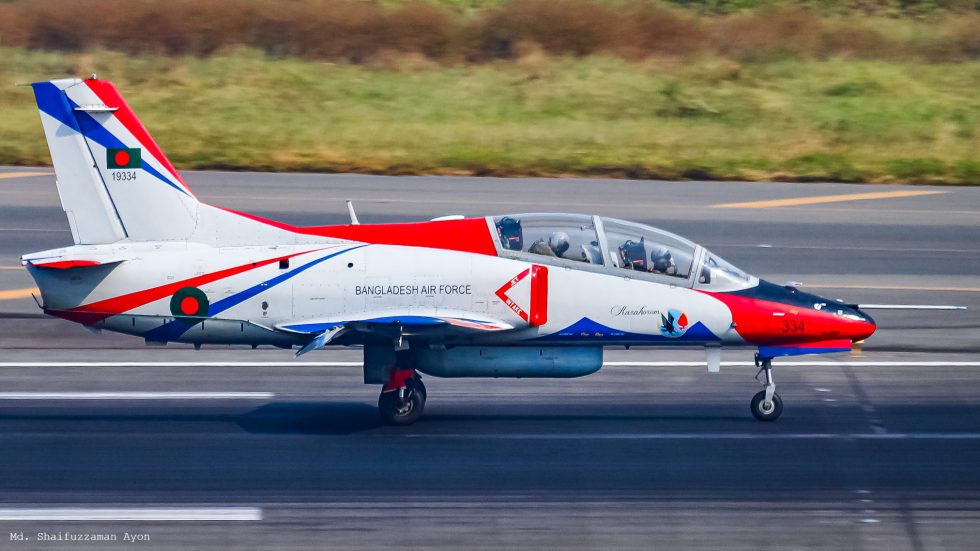
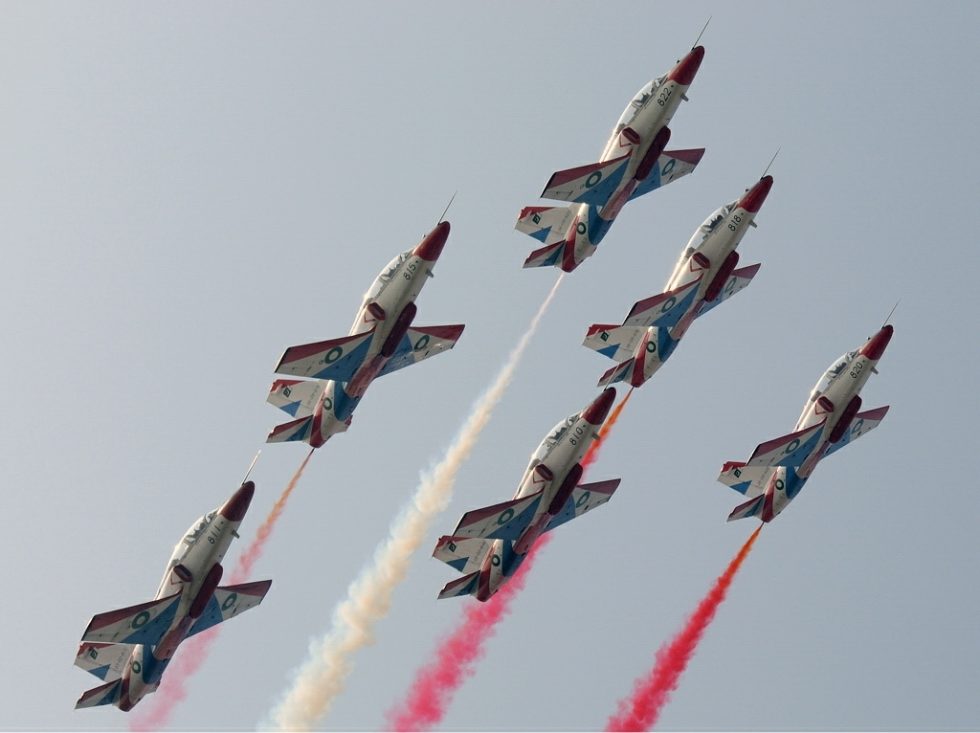
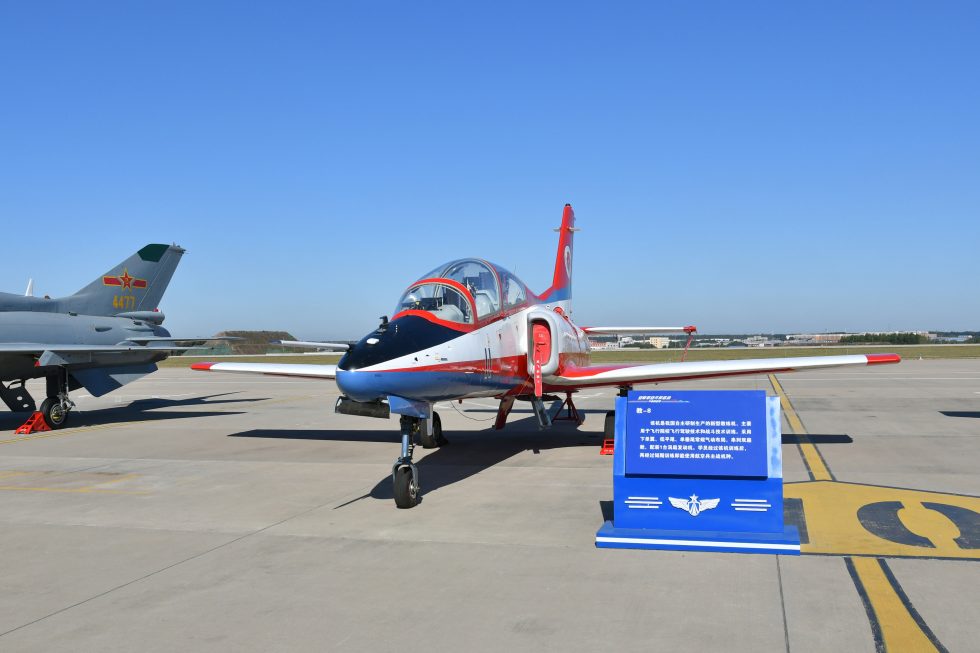
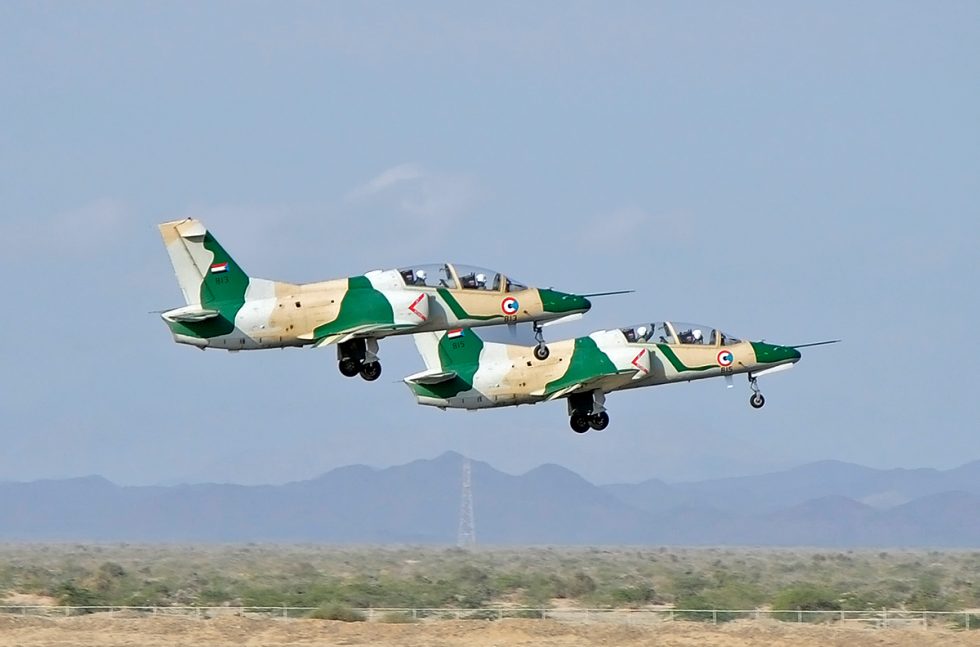
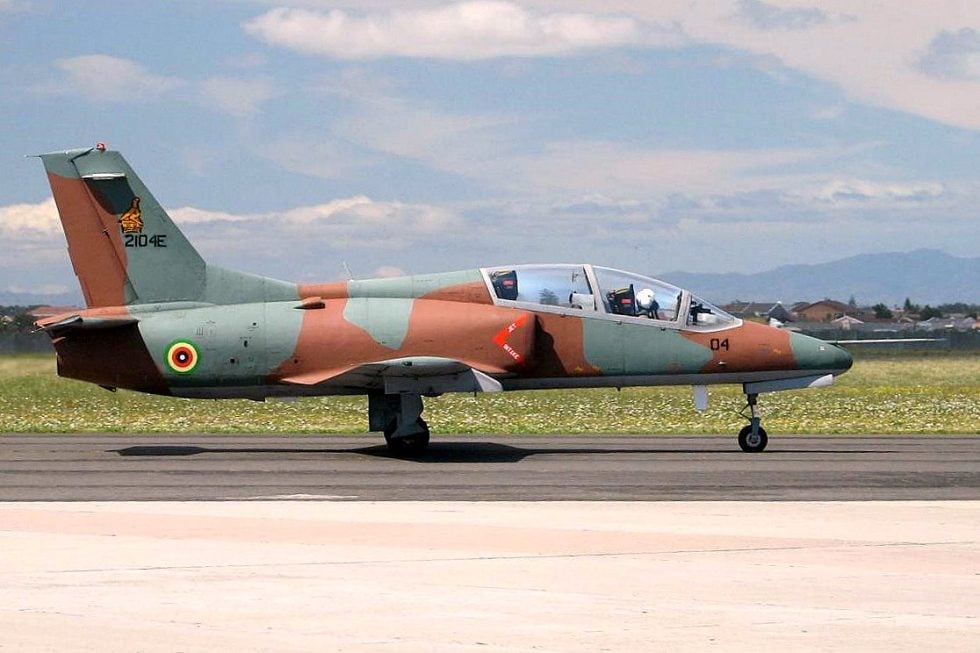
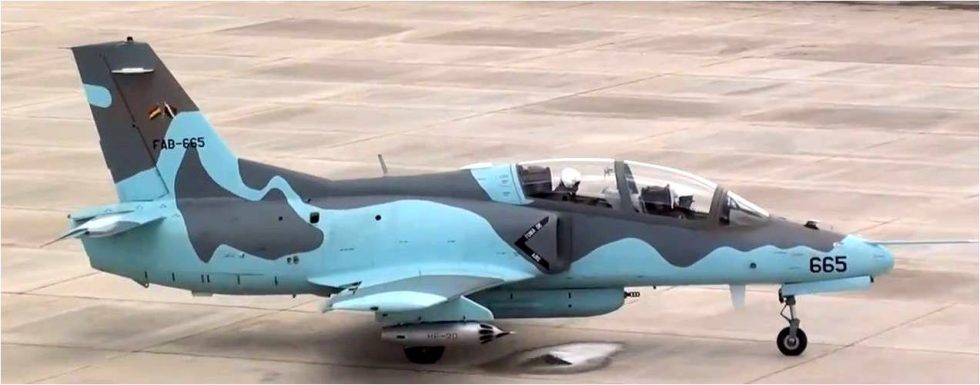
The K-8 Karakorum in motion
JL-8 / K-8: The Affordable Trainer and Light Attack Jet Transforming Air Forces Worldwide — a concise overview of the aircraft’s design, variants and global service.
Where the K-8 Karakorum flies
The K-8 Karakorum in service
The K-8 is a trainer first, and it has no air-to-air combat record to speak of. Its service story is written in scale and reach rather than kills: it is one of the most widely operated jet trainers in the world, and for several air forces it doubles as a light attack aircraft flown in real counter-insurgency and border operations — sometimes taking losses to ground fire.
Compare the combat record of every military aircraft. Figures as of 2026 and, where contested, hedged.
Everything people ask about the K-8 Karakorum
Can I fly in a K-8 Karakorum?
What is the K-8 Karakorum?
Why is it called the Karakorum?
What engine does the K-8 use?
How fast is the K-8 Karakorum?
Which countries operate the K-8?
Is the K-8 used in combat?
How much does a K-8 cost?
You can’t fly the K-8 Karakorum.
These, you can.
Some legends only live in museums — others are fuelled and waiting. MiGFlug has put civilians in real military jet cockpits since 2004.
 Fly the L-39 AlbatrosThe world’s most-flown jet trainer — aerobatics included
 Fly the F-104 Starfighter“The missile with a man in it”
 Fly the MiG-21The Cold War’s most-produced jet
 Fly the T-33 Shooting StarAmerica’s first jet trainer
 Fly the DH VampireA piece of early jet history
 Fly the S.211Agile Italian jet trainer
 Fly the MB-326The classic Aermacchi jet
 Fly the MiG-15The Soviet legend of the Korean War
Continue the tour
Every fact, checked
- Airforce Technology — K-8 KarakorumDevelopment history, specifications, variants and operator order figures.
- Military Factory — Hongdu JL-8 / K-8First-flight date, performance data and production totals.
- Defense Industry DailyExport deals and the K-8 in light-attack service, including Myanmar.
- Hush-Kit — K-8 pilot reviewFirst-hand pilot assessment of the aircraft’s handling and role.
- Centre for Information Resilience — K-8 guideReference on Myanmar’s combat use of the K-8.
- All-Aero — Hongdu JL-8 / K-8Operator list and per-country order quantities.
- Pakistan Aeronautical Complex (PAC)Manufacturer reference for the K-8 as a co-produced aircraft.
- FAIAeronautical records and classifications reference.