
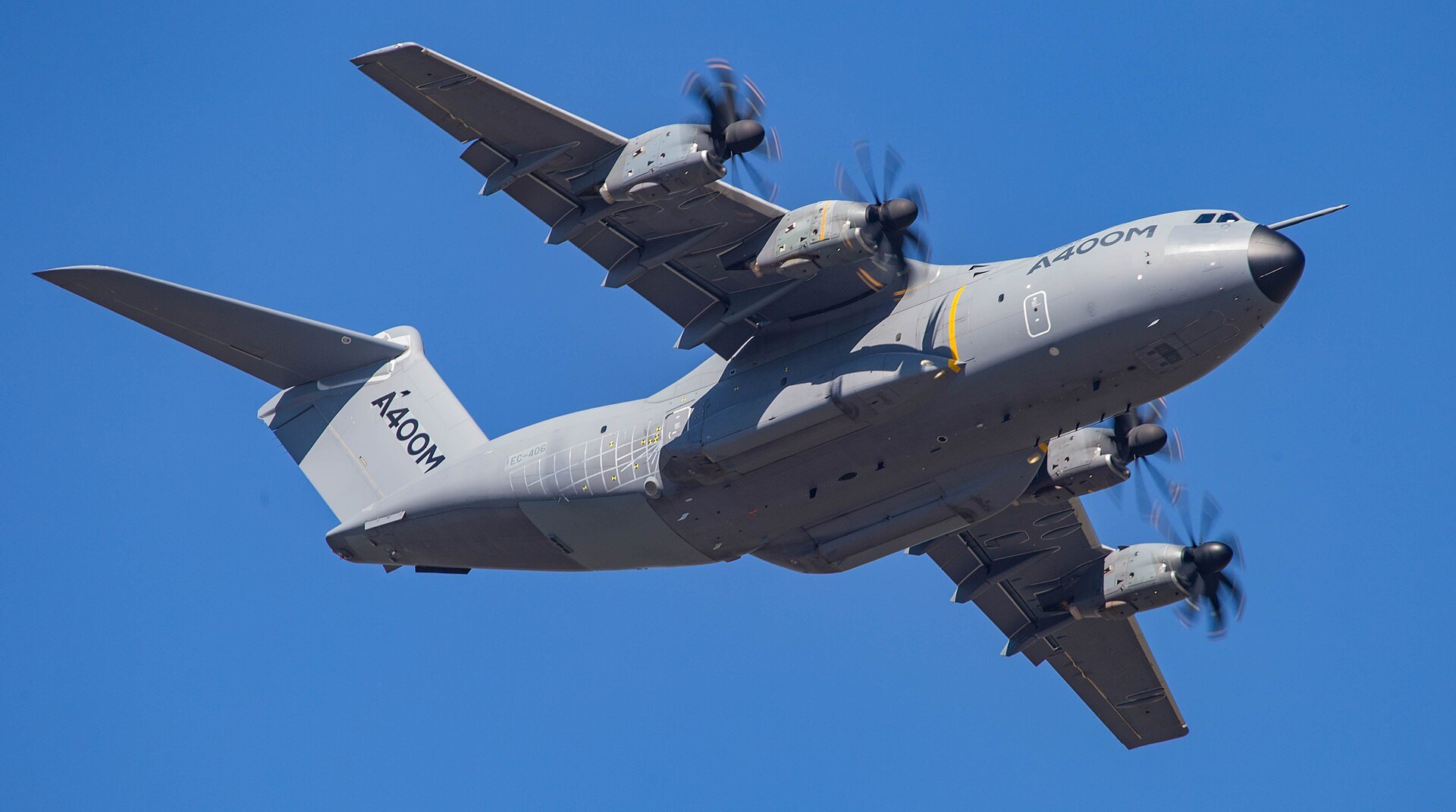
Airbus A400M Atlas
Europe’s Airlifter
Europe’s biggest joint military aircraft programme: a turboprop airlifter that flies almost as fast and high as a jet, lands on short dirt strips and refuels other aircraft: late and over budget, but now hard at work.
The A400M Atlas: how Europe built its own airlifter
For decades Europe’s air forces moved their troops in American C-130 Hercules and Franco-German Transall C-160s, aircraft that by the 1990s were small, slow and ageing. Talks about a common replacement began in the 1980s under the name Future Large Aircraft, and after years of national bargaining seven nations, Germany, France, Spain, the United Kingdom, Turkey, Belgium and Luxembourg, signed a contract in 2003 through the joint armaments agency OCCAR. Airbus would build an aircraft sized between the C-130 and the C-17, able to carry outsize loads such as helicopters and armoured vehicles over strategic distances and land them on short, unprepared strips. Final assembly went to Seville in Spain.
The design was ambitious. Rather than jets, Airbus chose four huge turboprops, the TP400-D6, which MTU describes as the most powerful Western turboprop at 11,000 shp each, so the aircraft could cruise at up to Mach 0.72 and still operate from short strips. The engines, built by a four-nation consortium, and their control software caused the worst delays. The aircraft first flew from Seville on 11 December 2009, years behind plan, and a 2010 renegotiation was needed to keep the programme alive. GlobalSecurity puts the overrun at about €6.2 billion. The first delivery, to France, finally came in 2013, and in May 2015 a crash near Seville, caused by engine-control software, killed four crew.
Once in service, the Atlas, as the Royal Air Force and others call it, proved its worth. A400Ms supported French operations in the Sahel, flew relief to disaster zones, lifted thousands of people out of Kabul in August 2021 and evacuated civilians from Sudan in 2023. They have carried military aid destined for Ukraine, refuel fighters and, increasingly, helicopters, and fly routine logistics for every operator. Airbus lists 178 aircraft on order for ten nations, including Malaysia, Indonesia and Kazakhstan, and a global fleet that has logged more than 200,000 flight hours. MTU reported in 2026 that the TP400 had passed one million engine flight hours.
01The A400M’s troubled development: from FLA to the 2010 rescue
The A400M was born of politics as much as engineering. Each partner nation wanted work for its industry, and the 2003 contract used a commercial approach in which Airbus took on fixed-price risk for development and production. The engines were to be developed by Europrop International, a consortium of Rolls-Royce, Safran, MTU and ITP Aero, and the decision to build an entirely new turboprop, with complex full-authority digital engine-control software, proved the critical path.
By 2009 the programme was years late, and Airbus warned that it could not continue on the original terms. After months of negotiation, the customer nations agreed in 2010 to share additional costs and adjust contract terms, and Airbus booked large charges. GlobalSecurity puts the total overrun at about €6.2 billion. Several nations later reduced their orders, and some aircraft were offered for resale. The early aircraft were delivered with limited tactical capabilities, which were added through a long series of software and hardware upgrades over the following decade.
02The A400M at Kabul: Europe’s evacuation
When Kabul fell to the Taliban in August 2021, European nations launched their own evacuation flights alongside the much larger American operation. France, Germany, Spain, Belgium, the United Kingdom and others used A400Ms, often shuttling between Kabul and staging bases in the Gulf or Central Asia. The aircraft’s self-protection systems and its ability to make steep, tactical approaches suited the threat environment around the airport.
The first German flight, on 16 August, attracted criticism at home after it left with only seven evacuees aboard, as crowds overwhelmed the airport and the crew could not safely wait. Later flights carried far larger numbers, and German, French, Spanish and British A400Ms together flew thousands of people out over the following days. The operation, alongside the 2023 evacuations from Sudan, showed that Europe now had an airlifter capable of working into contested airfields at long range without depending on American aircraft.
What makes the A400M Atlas special
Propellers that turn in pairs
The A400M’s two eight-bladed propellers on each wing turn in opposite directions, each pair rotating down between its engines. The arrangement balances the powerful twisting forces, improves airflow over the wing and lets Airbus use a smaller fin. With four TP400-D6 engines of 11,000 shp each, the aircraft cruises at Mach 0.68 to 0.72, close to jet speeds, and climbs to 40,000 ft, according to Airbus.
A hold four metres square
The cargo hold has a cross-section of about 4 m by 4 m and a volume of 340 cubic metres, large enough for outsize loads such as heavy helicopters and armoured vehicles that do not fit a C-130. Airbus gives the maximum payload as 37 tonnes, with work under way to raise it to 40 tonnes. It can carry 116 fully equipped paratroopers or up to 66 stretchers for medical evacuation.
Short strips and tanker hoses
Despite its size, the A400M can land on runways of less than 750 m and on soft, unprepared surfaces, using a multi-wheel undercarriage that can kneel to ease loading. It can carry 51 tonnes of fuel and act as a tanker through hose-and-drogue pods or a centre-line unit, refuelling both jets and, after a long development, helicopters. Airbus says it is certified for airdrops of loads up to 25 tonnes.
03The A400M’s national versions and capabilities
- A400M: the single production standard, built in successive capability standards with added tactical functions.
- Atlas C1: Royal Air Force designation; based at RAF Brize Norton.
- T.23: Spanish Air and Space Force designation.
- Tanker configuration: wing hose-and-drogue pods and an optional cargo-hold refuelling unit; helicopter refuelling cleared for some users.
- Firefighting kit: Airbus has tested a roll-on, roll-off water-dropping kit.
- Medevac and special operations: configurations for intensive-care evacuation, low-level flight and paradrops from up to 38,000 ft.
Airbus A400M Atlas specifications
Specifications
- Crew
- 3 to 4 (two pilots, loadmaster; optional third pilot)
- Length
- 45.1 m (148 ft)
- Wingspan
- 42.4 m (139 ft 1 in)
- Height
- 14.7 m (48 ft 3 in)
- Max take-off weight
- 141,000 kg (310,850 lb)
- Max payload
- 37,000 kg (81,600 lb)
- Powerplant
- 4 × Europrop International TP400-D6 turboprops, 11,000 shp (8,200 kW) each
- Cruise speed
- Mach 0.68–0.72
- Range
- 20 t (44,000 lb) over 3,400 nmi (6,300 km)
- Service ceiling
- 40,000 ft (12,200 m)
- Field length
- landings on runways under 750 m (2,460 ft)
- Cargo hold
- about 4 m × 4 m cross-section; 340 m³ (12,000 cu ft)
- Capacity
- 116 paratroopers or 66 stretchers
- Fuel
- 51 tonnes; tanker and receiver
Costs & production
- Unit cost
- No single published price; press estimates commonly put the cost per aircraft well above €150 million once development overruns are included
- Cost per flight hour
- Hedged order-of-magnitude estimate: roughly €10,000–20,000, based on four TP400 engines’ fuel burn plus crew and support; official figures are not routinely published
- Production
- 178 ordered by ten nations; final assembly in Seville
- Programme
- Launch contract 2003; first flight 2009; first delivery 2013; overrun about €6.2 billion (GlobalSecurity)
04The A400M’s operating costs: a premium airlifter
The A400M sits between the C-130 and the C-17 in size and capability, and its costs reflect that. Its development overrun, put at about €6.2 billion by GlobalSecurity, was shared between Airbus and the customer nations after the 2010 renegotiation, and per-aircraft costs quoted in parliamentary debates and the press vary widely depending on whether development is included. We therefore give only a hedged indication that the price per aircraft is commonly reported well above €150 million.
Hourly costs are not routinely published. We give an order-of-magnitude estimate of €10,000 to 20,000 per flight hour, based on fuel burn for four large turboprops plus crew and support; real figures depend on availability, support contracts and national accounting. Early in service, availability was poor because of engine gearbox and other technical issues, which raised costs per hour flown; Airbus and the nations have worked through support contracts to improve it.
The A400M Atlas from Future Large Aircraft to Kabul
Future Large Aircraft
European nations begin studying a common replacement for the C-130 and Transall.
Launch contract
Seven nations sign the A400M contract through OCCAR.
First flight
The A400M flies from Seville on 11 December, years late.
Programme rescued
Customer nations and Airbus agree revised terms to share cost overruns.
First delivery
France receives the first production A400M.
RAF and Luftwaffe
The Royal Air Force and German Air Force receive their first aircraft.
Seville crash
MSN023 crashes on a test flight on 9 May; four of six crew are killed.
Kabul and 100 deliveries
A400Ms fly evacuees from Kabul; Airbus marks the 100th delivery and 100,000 fleet flight hours.
Sudan evacuation
European A400Ms evacuate civilians from Sudan.
A million engine hours
MTU reports that the TP400-D6 fleet has passed one million flight hours.
Stories & eyewitnesses: the A400M Atlas
Seville, 9 May 2015
Three engines, one software fault.
Read the full story
Kabul, August 2021
Europe’s airlifter in its biggest evacuation.
Read the full story
Wadi Seidna, 2023
Out of Sudan under fire.
Read the full story
Sahel supply line
Keeping French forces supplied in Mali.
Read the full story
Atlas at Brize Norton
The RAF’s new tactical lifter.
Read the full story
Heavy drops from high altitude
Airdrops from 150 ft to 38,000 ft.
Read the full story
Refuelling helicopters
A tanker for rotors as well as jets.
Read the full story
One million engine hours
The TP400 grows up.
Read the full story
The A400M in pictures
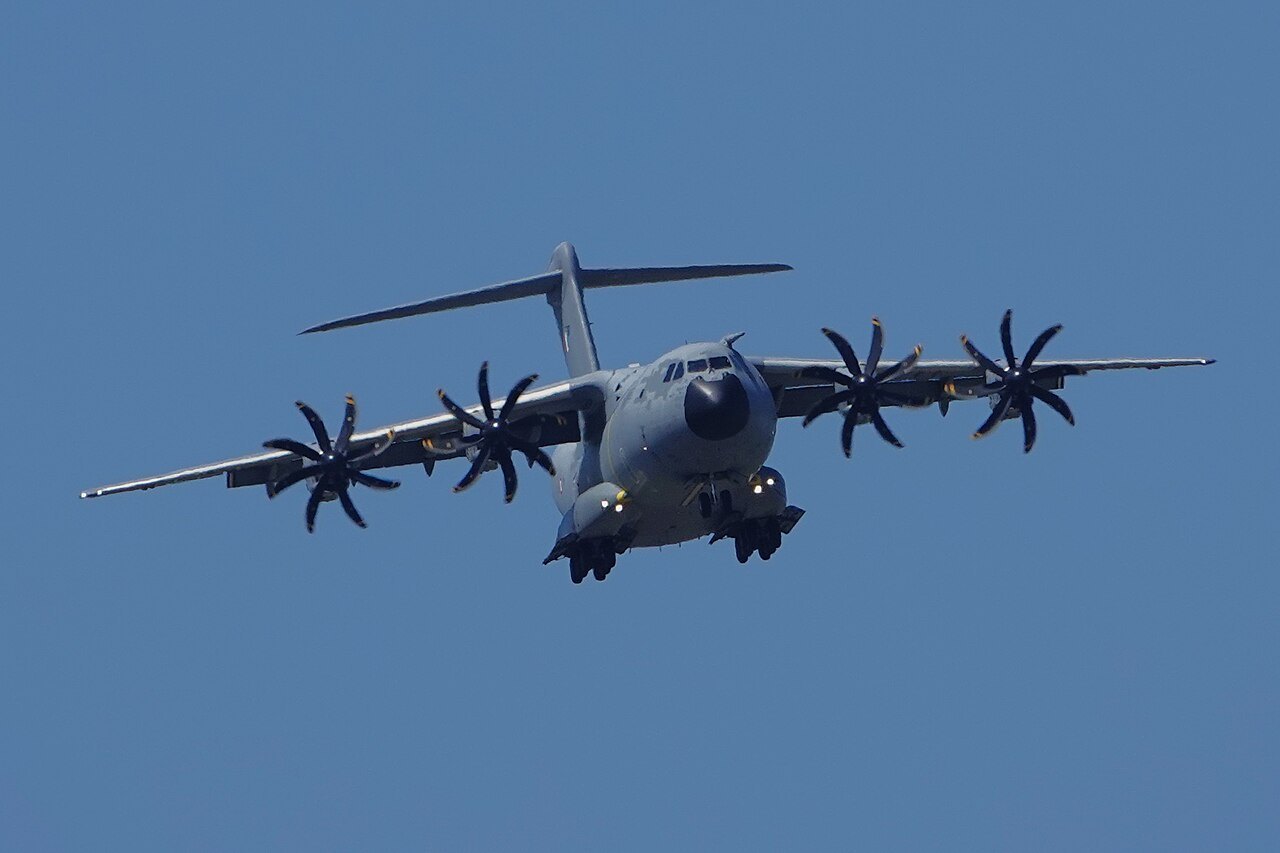
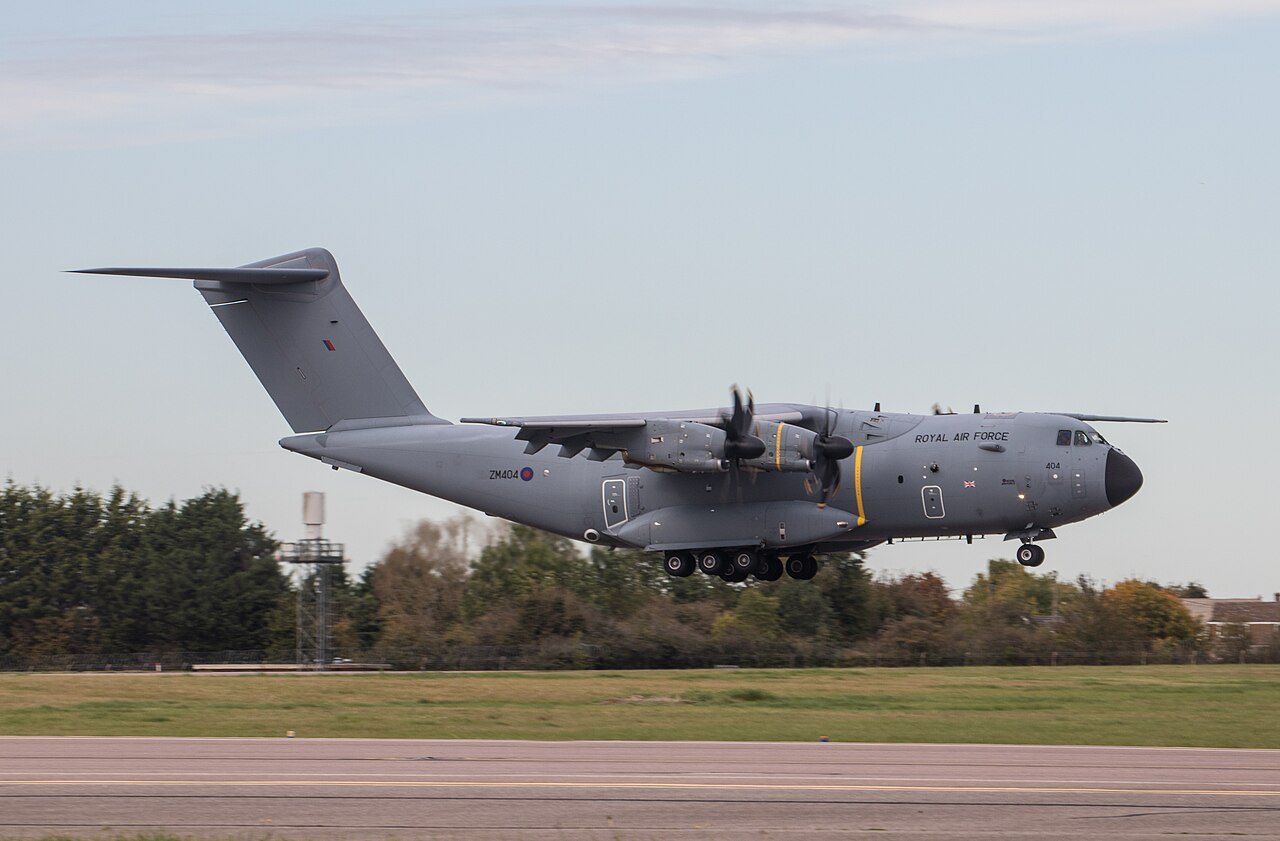
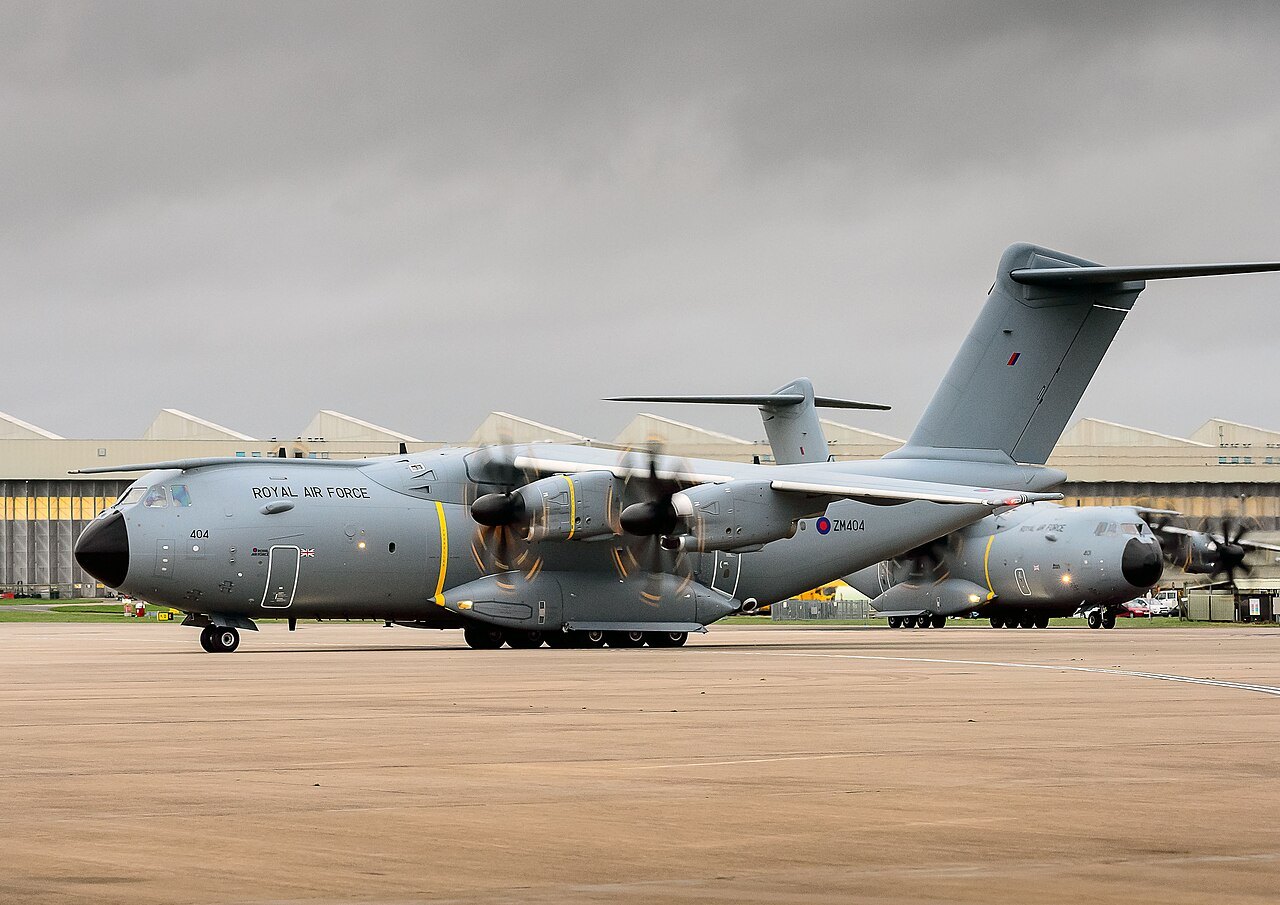
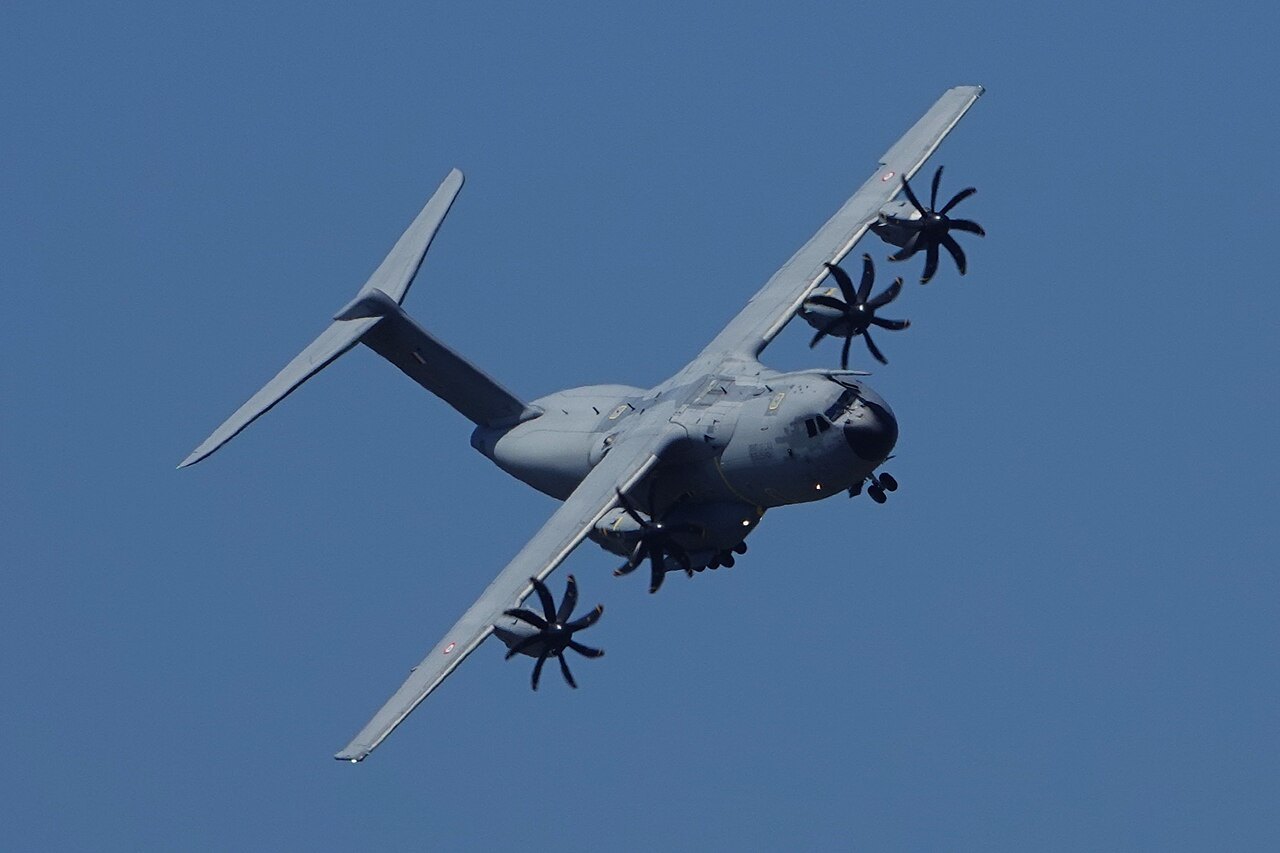
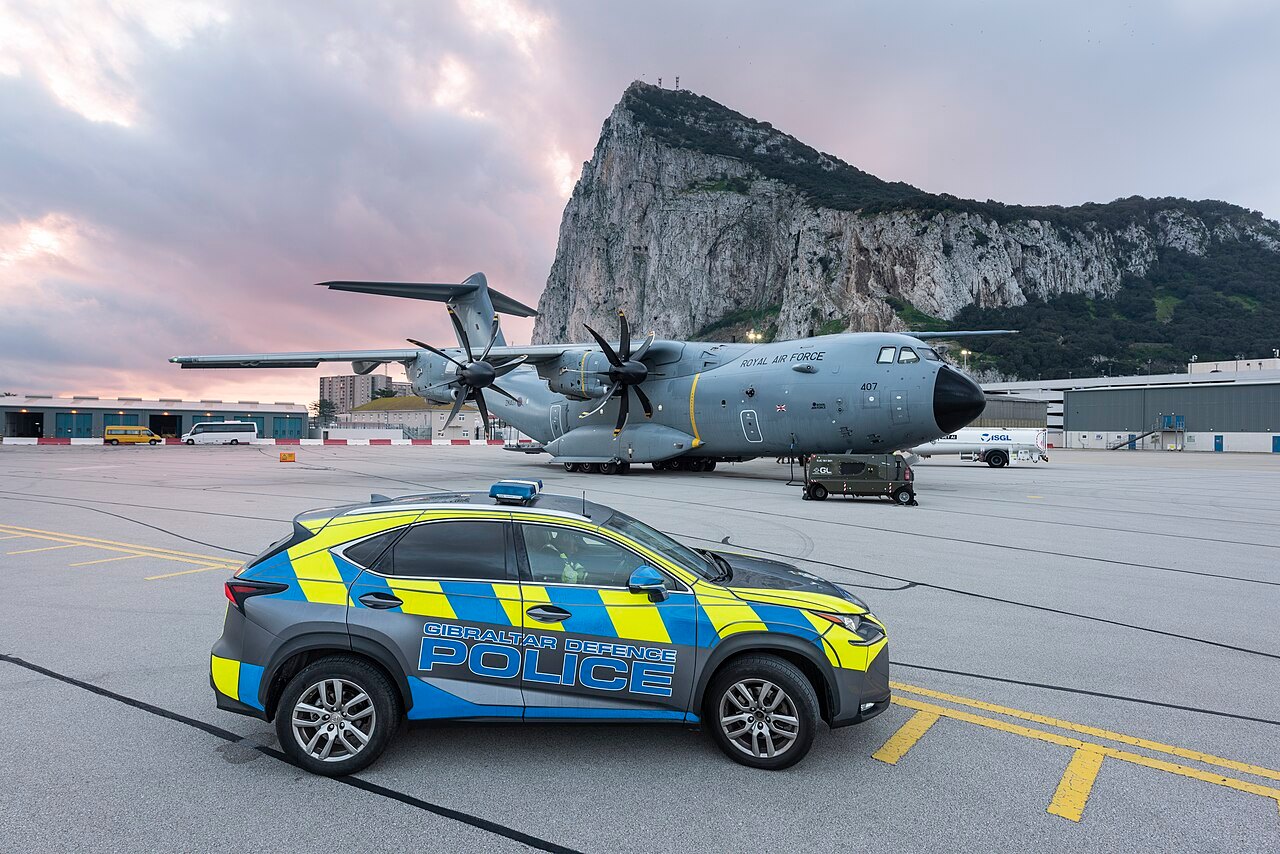
Where the A400M flies and flew
The A400M Atlas’s record
The A400M is an unarmed transport and tanker, but it has flown in support of operations in the Sahel and the Middle East, evacuations from Kabul and Sudan, and humanitarian relief. Its main loss was the 2015 test-flight crash at Seville. The numbers below are Airbus and MTU figures for capability and use.
See how training and combat types compare in the military aircraft statistics database. Figures are approximate.
Everything people ask about the A400M
Can I fly in a Airbus A400M Atlas?
Who builds the A400M?
How much can the A400M carry?
Which countries fly the A400M?
Why does the A400M use propellers instead of jets?
Why is it called Atlas?
Is the A400M bigger than the C-130?
You can’t fly the A400M.
These, you can.
Most of this museum you can only look at. These genuine military jets you can fly yourself with MiGFlug — with aerobatics and time on the controls.
 Fly the L-39 AlbatrosThe world’s most-flown jet trainer — aerobatics included
 Fly the F-104 Starfighter“The missile with a man in it”
 Fly the MiG-21The Cold War’s most-produced jet
 Fly the T-33 Shooting StarAmerica’s first jet trainer
 Fly the DH VampireA piece of early jet history
 Fly the S.211Agile Italian jet trainer
 Fly the MB-326The classic Aermacchi jet
 Fly the MiG-15The Soviet legend of the Korean War
Continue the tour
Every fact, checked
- A400MAirbus: specifications, payload-range, airdrop and tanker capabilities, orders and fleet hours
- A400MGlobalSecurity: first flight, overrun, 2015 Seville crash and 100 deliveries
- TP400-D6MTU Aero Engines: power, consortium partners and one million flight hours
- Europrop InternationalEngine consortium: TP400-D6 and engine-hour milestone
- A400M programmeOCCAR, the joint armaments agency managing the programme (programme page not opened)
- C-17 Globemaster IIIBoeing: the larger strategic airlifter for comparison