
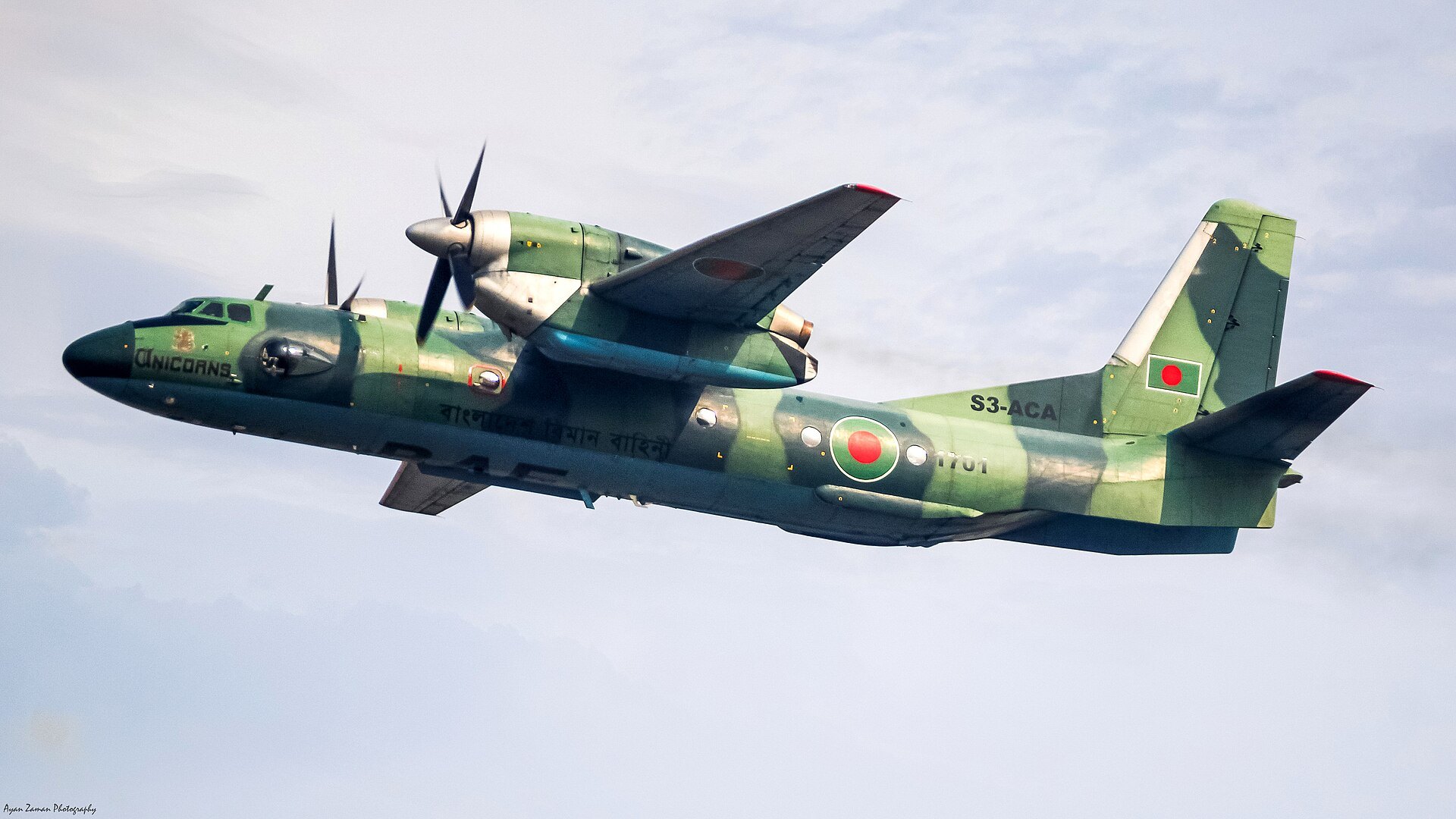
Antonov An-32
The Hot-and-High Specialist
An An-26 with engines almost twice as powerful, built for India’s Himalayan airstrips, the An-32 became the backbone of Indian tactical airlift and a rugged freighter, firefighter and bomber for some 20 other countries.
The An-32: how an export order shaped a Himalayan workhorse
On 31 May 2008 an Indian Air Force An-32 descended through thin air on to a gravel strip at Daulat Beg Oldi, near the Karakoram Pass, at about 16,600 ft (5,065 m) above sea level, one of the highest landing grounds in the world. It was the first fixed-wing landing there for decades, and it was a fitting moment for the Antonov An-32. The aircraft exists largely because India wanted a transport that could do exactly that. The Kyiv bureau took the proven An-26, kept its fuselage and sliding rear ramp, and replaced its engines with the much bigger Ivchenko AI-20 turboprops of the An-12, mounted high above the wing to swing larger propellers.
The prototype flew on 9 July 1976 and was shown at the Paris Air Show the following year. The new engines transformed the airframe’s performance at high temperatures and high elevations, where the An-26 struggled, at the price of greater fuel burn and a peculiar look: nacelles perched on top of the wing, enlarged tail surfaces and a big ventral fin. The Soviet Air Forces were content with the An-26 and bought relatively few, so the An-32 was above all an export aircraft. India ordered it in large numbers in the early 1980s, deliveries began in 1984, and the Indian Air Force, where it has been known as the Sutlej, became by far its largest operator.
Production in Kyiv ran from 1982 until about 2012, with roughly 370 aircraft completed for operators in Asia, Africa, Latin America and Eastern Europe. It hauled supplies to Himalayan posts, dropped paratroops, flew relief into cyclone and earthquake zones, and in Iraq and Sri Lanka was used as a bomber. India’s fleet has been modernised to An-32RE standard under a 2009 contract with Ukraine worth about USD 400 million, but the programme was disrupted by war in Ukraine, and the type’s long record is also marked by losses, including an aircraft that vanished over the Bay of Bengal in 2016 with 29 people aboard, a mystery that took more than seven years to solve.
01The An-32’s Indian career: from Ladakh to the Andaman Sea
India’s interest in a high-performance light transport grew from its experience supplying posts in Ladakh and the north-east, where the An-12 and older types operated on the edge of their limits. The An-32 offered a payload of more than six tonnes, a ramp that let vehicles and supplies be loaded without ground equipment, and engines with enough power to lift that load from strips such as Leh and Thoise in summer heat. Deliveries began in 1984 and the type equipped several squadrons, flying air maintenance missions, paratroop training, casualty evacuation and VIP and logistic flights.
The aircraft became part of every Indian disaster relief effort, from earthquakes in Gujarat and Kashmir to floods in the north-east and the 2004 Indian Ocean tsunami. Its high-altitude work culminated in landings at Daulat Beg Oldi, Fukche and Nyoma in 2008, reopening advanced landing grounds that had not seen fixed-wing aircraft in years. Even after the arrival of the C-130J and C-17, the An-32 remained the numerical backbone of the Indian Air Force’s medium transport fleet, and plans in the 2020s called for further upgrades at Indian repair depots to keep roughly 100 aircraft flying.
02The An-32 upgrade: a programme caught between two wars
In 2009 India signed a contract with Ukraine worth about USD 400 million to extend the life of its An-32 fleet and modernise it to An-32RE standard, with new avionics, improved navigation and communications equipment, upgraded crew seats and an extended service life. Under the plan the first 40 aircraft were to be upgraded in Ukraine and the rest at the Indian Air Force’s No. 1 Base Repair Depot in Kanpur, with Ukrainian kits and support.
The work proceeded, but Russia’s seizure of Crimea and the war in the Donbas from 2014 slowed supplies of parts from Ukrainian factories, and the full-scale invasion of 2022 disrupted the programme further. India responded by increasing domestic work on the fleet, including efforts to certify locally produced components. Reports in 2024 indicated plans to upgrade around 60 more aircraft by the end of the decade at Kanpur and Chandigarh. For a type designed in Kyiv and powered by engines from Zaporizhzhia, keeping the Indian fleet airworthy has become as much a diplomatic and industrial challenge as an engineering one.
What makes the An-32 special
The An-32’s engines above the wing
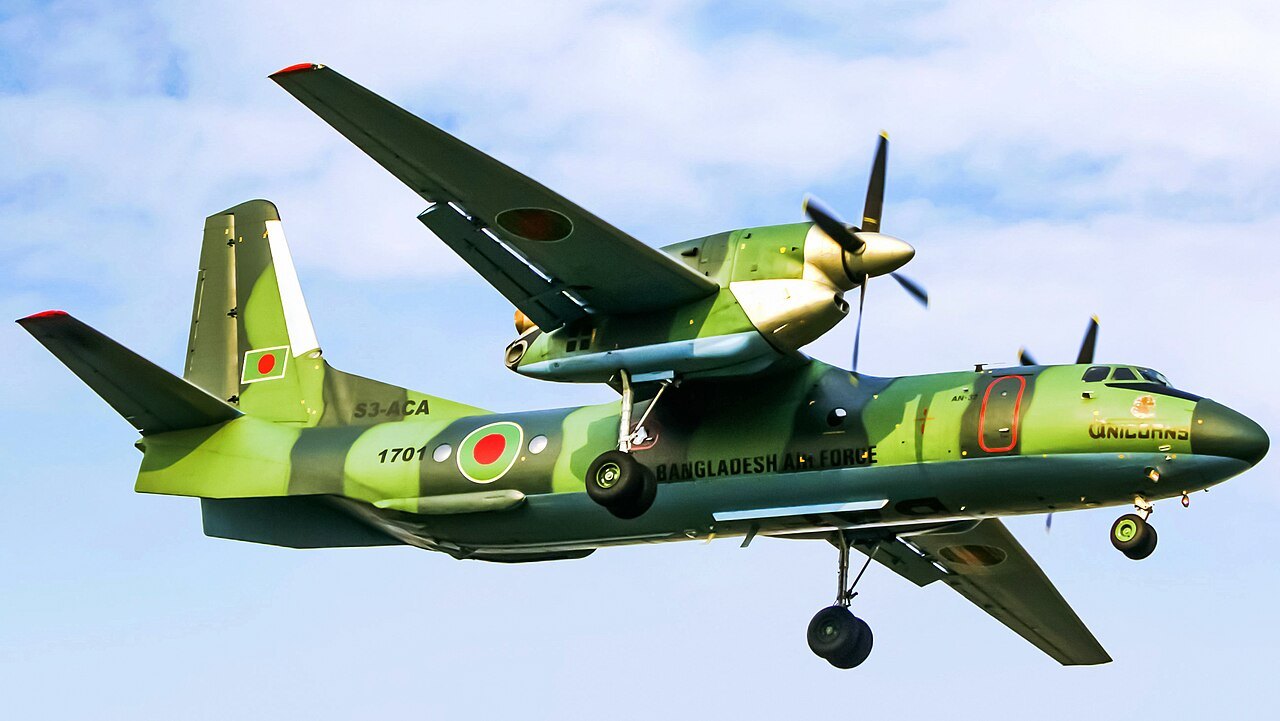
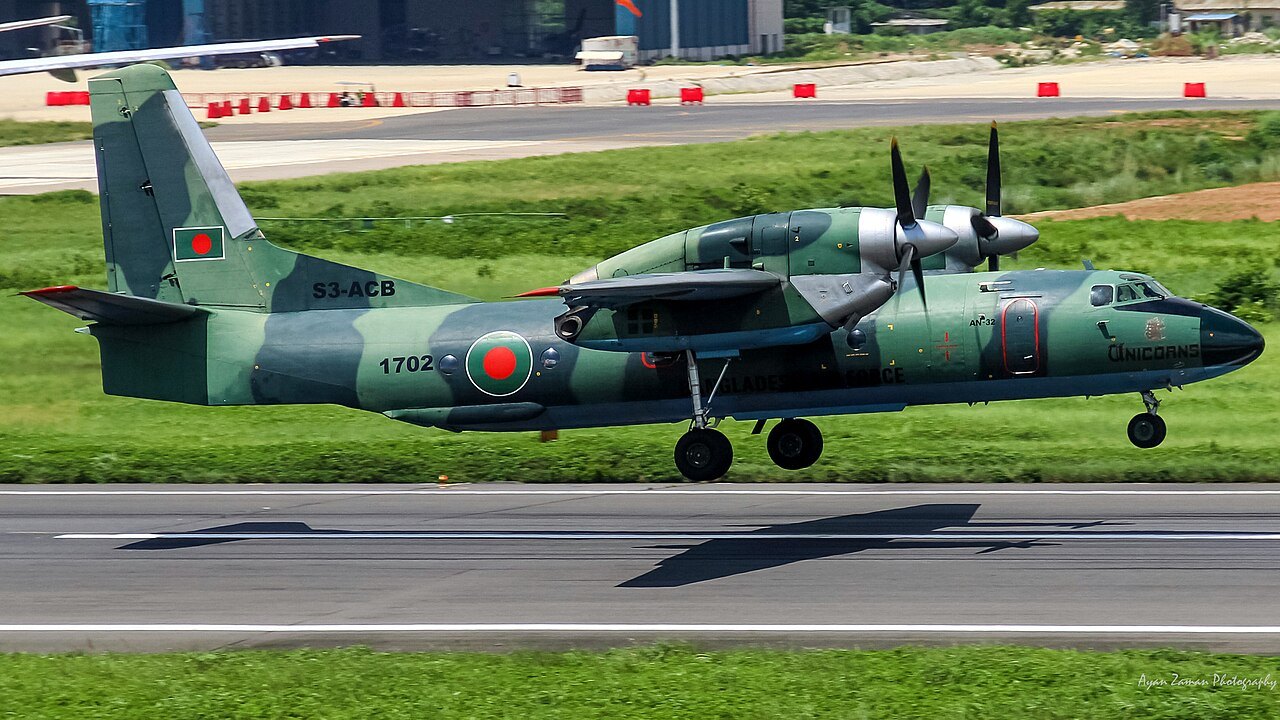
The most obvious change from the An-26 is the engine installation. The AI-20DM turboprops, derived from the four-engined An-12’s powerplant, deliver about 5,100 shp each, nearly twice the An-26’s output. To clear the ground with larger propellers, and to reduce the risk of debris ingestion on unpaved strips, Antonov mounted the nacelles on top of the wing rather than beneath it. The result looks ungainly, but it gives the An-32 the power margin to take off from hot and high airfields that the An-26 could only use lightly loaded.
The An-32’s ramp and hold
The An-32 kept the An-26’s clever rear door, which can either be lowered as a ramp or slid forward under the fuselage for air-drops and truck-bed loading. The hold accepts vehicles, pallets and containers of up to about 6.7 tonnes in total, or around 42 paratroopers or 50 passengers on side seats, and an on-board hoist and conveyor allow crews to load without ground equipment. That self-sufficiency is what makes the aircraft valuable at advanced landing grounds in the Himalaya and at remote strips in Africa and Latin America.
The An-32 in extreme climates
Antonov designed the An-32 to operate in temperatures up to about +55°C and from airfields at elevations up to about 4,500 m, according to GlobalSecurity’s summary of manufacturer data. Enlarged tail surfaces and triple-slotted flaps help low-speed handling, while the high wing and strong landing gear tolerate rough strips. Its operational record across more than 20 countries, with over 1.2 million flight hours logged by the fleet, shows that these were not brochure claims: the aircraft has worked in deserts, jungles, island chains and the high mountains.
03The An-32’s variants: from Firekiller to Rolls-Royce power
- An-32: baseline military transport with AI-20M engines.
- An-32A: civil version, built in small numbers.
- An-32B: improved version with AI-20DM engines and better payload, the main production model.
- An-32B-100 / -110 / -120: modernised versions with payload raised to about 7.5 tonnes and revised avionics.
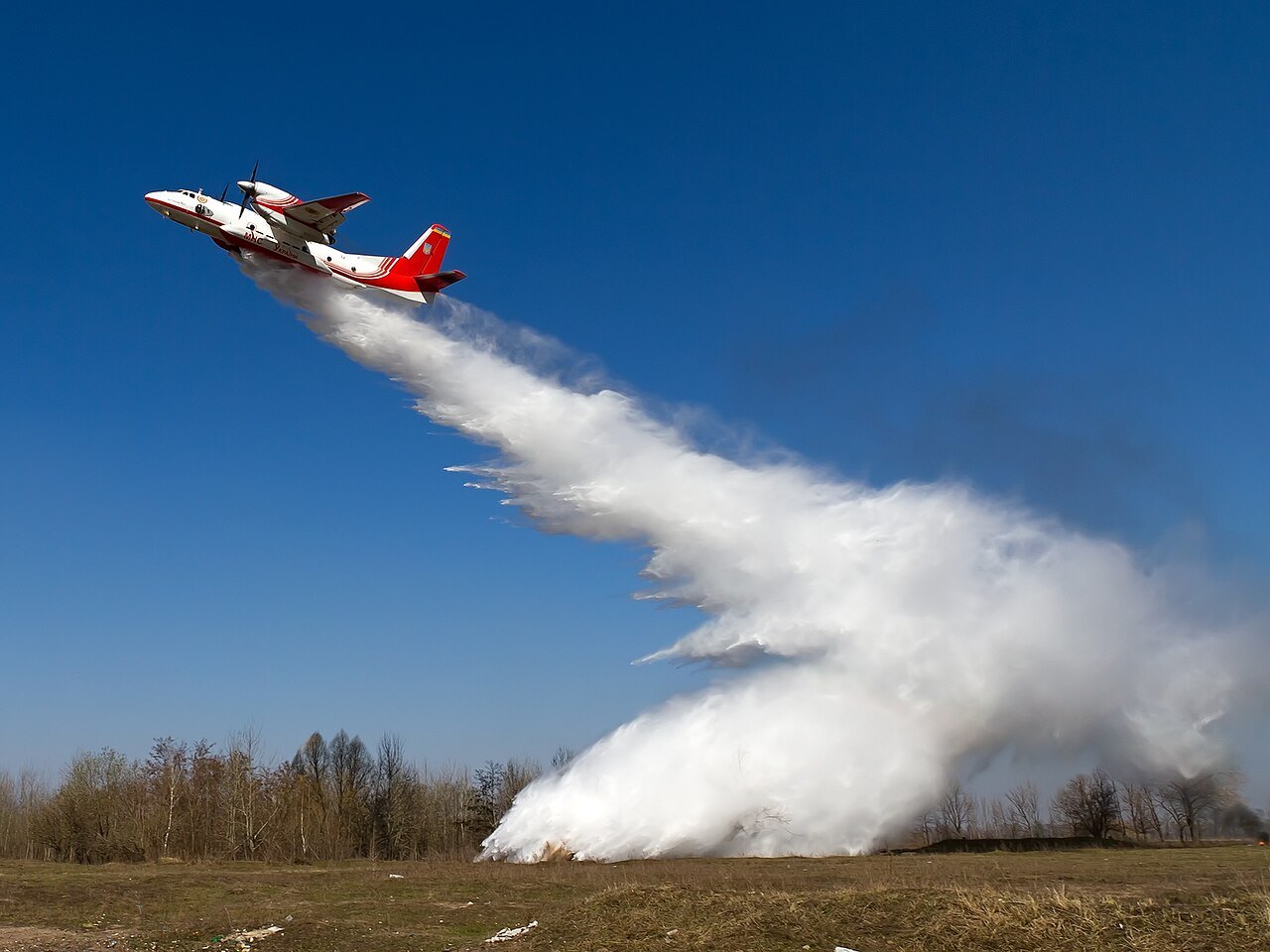
- An-32P Firekiller: firefighting version carrying about 8 tonnes of water or retardant in external tanks, dropped from 40–50 m at 240–260 km/h.
- An-32MP: maritime patrol version.
- An-32RE: India’s life-extended and modernised fleet standard.
- An-32B-300: proposed version with Rolls-Royce AE 2100 engines of 4,600 shp, not put into series production.
The variety reflects Antonov’s effort to sell the type to civil and military users after the Soviet market disappeared, and a number of aircraft were converted from one standard to another during their service lives. All production took place in Kyiv, and as large export orders dried up in the 2000s the line wound down, with the last new aircraft delivered around 2012.
Antonov An-32 specifications
Specifications
- Crew
- 4 (two pilots, navigator, flight engineer)
- Capacity
- about 42 paratroopers, 50 passengers or 6,700 kg (14,771 lb) of cargo
- Length
- 23.78 m (78 ft 0 in)
- Wingspan
- 29.20 m (95 ft 10 in)
- Height
- 8.75 m (28 ft 8 in)
- Empty weight
- 16,800 kg (37,038 lb)
- Max take-off weight
- 27,000 kg (59,525 lb)
- Powerplant
- 2 × Ivchenko AI-20DM turboprops, 3,812 kW (5,112 shp) each
- Maximum speed
- 530 km/h (329 mph)
- Cruise speed
- 470 km/h (292 mph)
- Range
- about 2,500 km (1,553 mi)
- Service ceiling
- 9,500 m (31,200 ft)
Costs & production
- Unit cost
- No reliable new-build price published
- Upgrade
- About USD 400 million (2009 contract) to modernise and life-extend India’s fleet of about 100 aircraft
- Cost per flight hour
- No official figure. A hedged estimate of roughly USD 3,000 to 5,000 per hour reflects the two large AI-20 turboprops’ fuel burn, a crew of four and maintenance of life-extended airframes, by comparison with similar-sized turboprop freighters
- Production
- About 370 built in Kyiv, 1982–c. 2012 (GlobalSecurity: more than 350)
04The An-32’s operating costs: power has a price
The An-32’s defining feature, engines almost twice as powerful as the An-26’s, is also its main cost driver. The AI-20 family was designed in the 1950s for the An-10 and An-12 and burns considerably more fuel than modern turboprops of similar power. For operators flying from sea-level bases on routine logistics, that makes the An-32 more expensive to run than the An-26 or Western types such as the C-295; for those working in the Himalaya or at hot desert strips, the extra power is the reason to own one.
Maintenance costs have risen since 2014 because many spares, engines and overhaul services come from Ukraine, and supply chains have been disrupted twice. India’s response, shifting more work to its own base repair depots, is partly about cost and partly about security of supply. No operator publishes an hourly cost, so the range given in the table above is an estimate rather than a published rate.
The An-32 from 1976 to the Indian fleet of today
First flight
The prototype, a re-engined An-26, flew on 9 July 1976.
Paris debut
The An-32 was shown to Western observers at the Paris Air Show.
Indian order
India ordered the type in large numbers, eventually some 125 aircraft, and deliveries began in 1984.
Series production
Production began in Kyiv, primarily for export.
Tsunami relief
Indian An-32s flew relief to the Andaman and Nicobar Islands after the Indian Ocean tsunami.
Daulat Beg Oldi
An IAF An-32 landed at Daulat Beg Oldi on 31 May 2008, at about 16,600 ft one of the world’s highest airstrips.
Upgrade contract
India and Ukraine signed a contract worth about USD 400 million to modernise the fleet to An-32RE standard.
Iraqi bombers
The Iraqi Air Force used An-32Bs as improvised bombers against Islamic State.
Lost over the Bay of Bengal
An IAF An-32 disappeared on 22 July 2016 between Chennai and Port Blair with 29 aboard.
Arunachal crash
An IAF An-32 crashed on 3 June 2019 after leaving Jorhat; all 13 aboard were killed and the wreck was found eight days later.
Wreck found
An Indian autonomous underwater vehicle located the 2016 wreck at a depth of about 3,400 m.
Stories & eyewitnesses: the An-32 in the mountains and at sea
The An-32 at Daulat Beg Oldi
Reopening one of the world’s highest airstrips.
Read the full story
The An-32 that vanished over the Bay of Bengal
Twenty-nine people lost on a routine courier flight.
Read the full story
The An-32 in the Arunachal jungle, 2019
An eight-day search across mountain forest.
Read the full story
The An-32 as a bomber in Iraq
A transport pressed into the fight against Islamic State.
Read the full story
The An-32 in Sri Lanka’s civil war
Freighter, troop carrier and occasional bomber.
Read the full story
The An-32 and the 2004 tsunami
Relief flights to the Andaman and Nicobar Islands.
Read the full story
The An-32P Firekiller
A military freighter turned water bomber.
Read the full story
The An-32 and Ukraine’s engineers in India
A partnership tested by war.
Read the full story
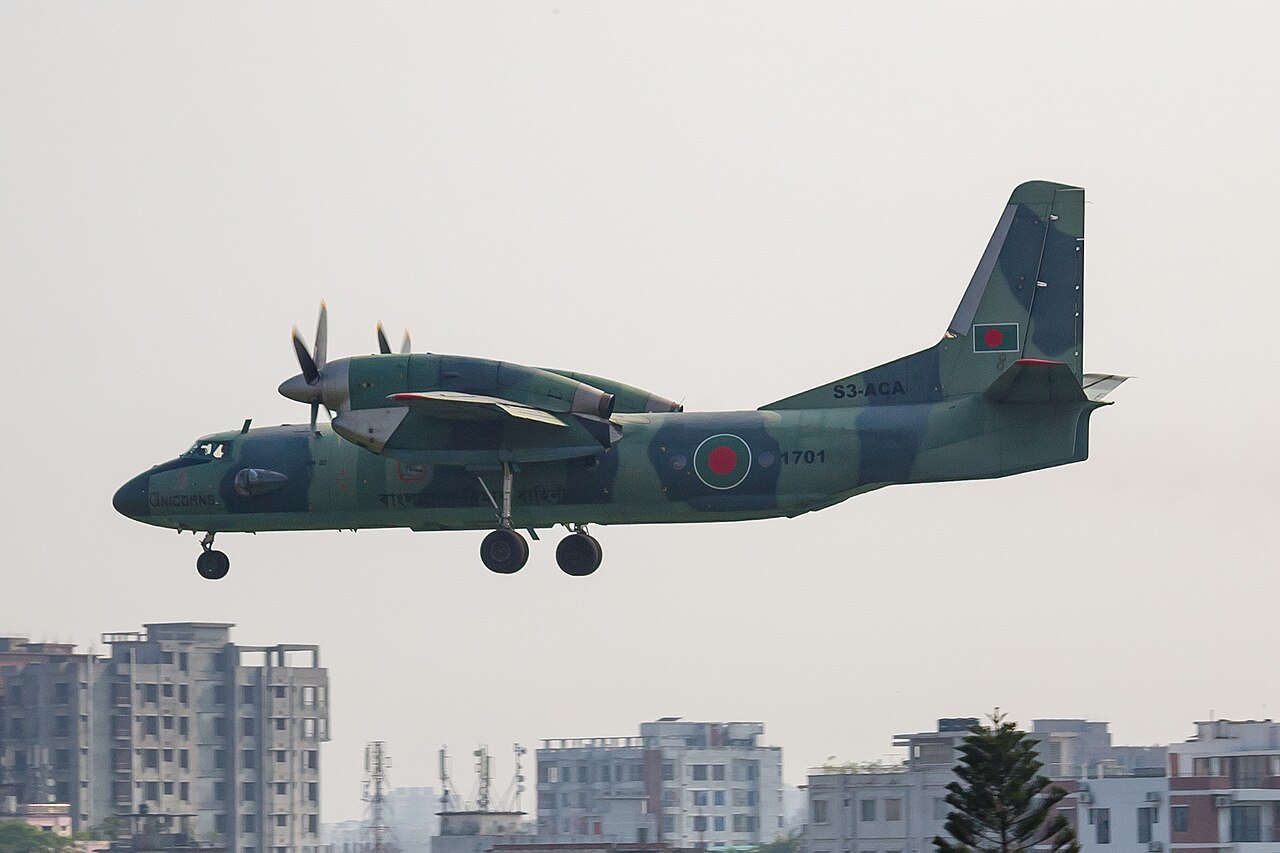
The An-32 in pictures
Where the An-32 flies and flew
The An-32’s record
The An-32 is above all a support aircraft: its service record is one of air maintenance to mountain posts, paratroop drops, disaster relief and medical evacuation, with India the largest user. In Sri Lanka and Iraq it was also pressed into service as an improvised bomber.
See how training and combat types compare in the military aircraft statistics database. Figures are approximate.
Everything people ask about the An-32
Can I fly in an Antonov An-32?
What is the NATO reporting name of the An-32?
Why are the An-32’s engines on top of the wing?
Who operates the most An-32s?
How many An-32s were built?
What happened to the An-32 lost in 2016?
How is the An-32 different from the An-26?
You can’t fly the An-32.
These, you can.
Most of this museum you can only look at. These genuine military jets you can fly yourself with MiGFlug — with aerobatics and time on the controls.
 Fly the L-39 AlbatrosThe world’s most-flown jet trainer — aerobatics included
 Fly the F-104 Starfighter“The missile with a man in it”
 Fly the MiG-21The Cold War’s most-produced jet
 Fly the T-33 Shooting StarAmerica’s first jet trainer
 Fly the DH VampireA piece of early jet history
 Fly the S.211Agile Italian jet trainer
 Fly the MB-326The classic Aermacchi jet
 Fly the MiG-15The Soviet legend of the Korean War
Continue the tour
Every fact, checked
- An-32 Cline (Antonov)GlobalSecurity: production, operators, flight hours, climate limits
- Press Information Bureau, Ministry of Defence: wreckage of IAF An-32 locatedJanuary 2024 release on the discovery of the 2016 wreck
- Indian Air ForceOperator; transport fleet and An-32 role
- Antonov CompanyManufacturer; An-32 variants and modernisation
- Aviation Safety NetworkAccident records for the 2016 and 2019 IAF losses
- Yefim Gordon and Dmitriy Komissarov, Antonov’s Turboprop Twins (Midland, 2003)Book: An-24/26/30/32 family development and operators