
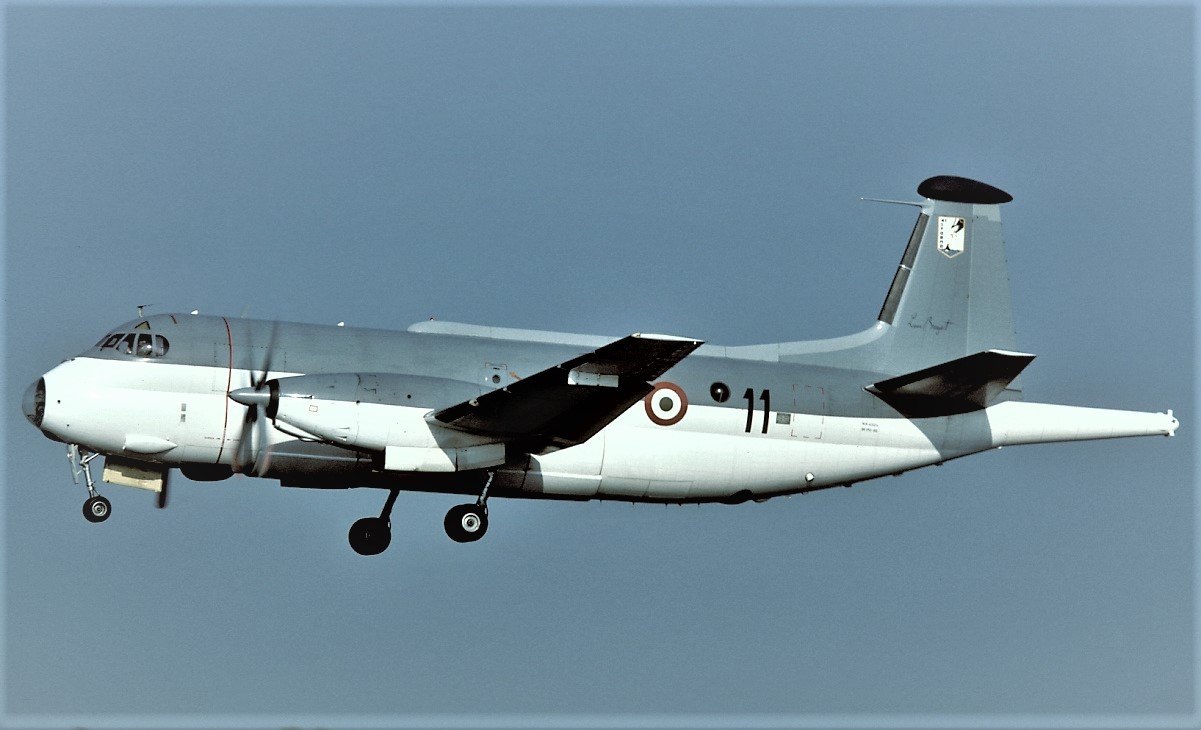
Breguet Atlantic
and Dassault Atlantique 2
The only post-war maritime patrol aircraft designed from a clean sheet for the job: a NATO-born twin-turboprop submarine hunter that has spent six decades over the Atlantic, the Mediterranean and the Sahel.
The Atlantique: how a NATO competition produced a purpose-built submarine hunter
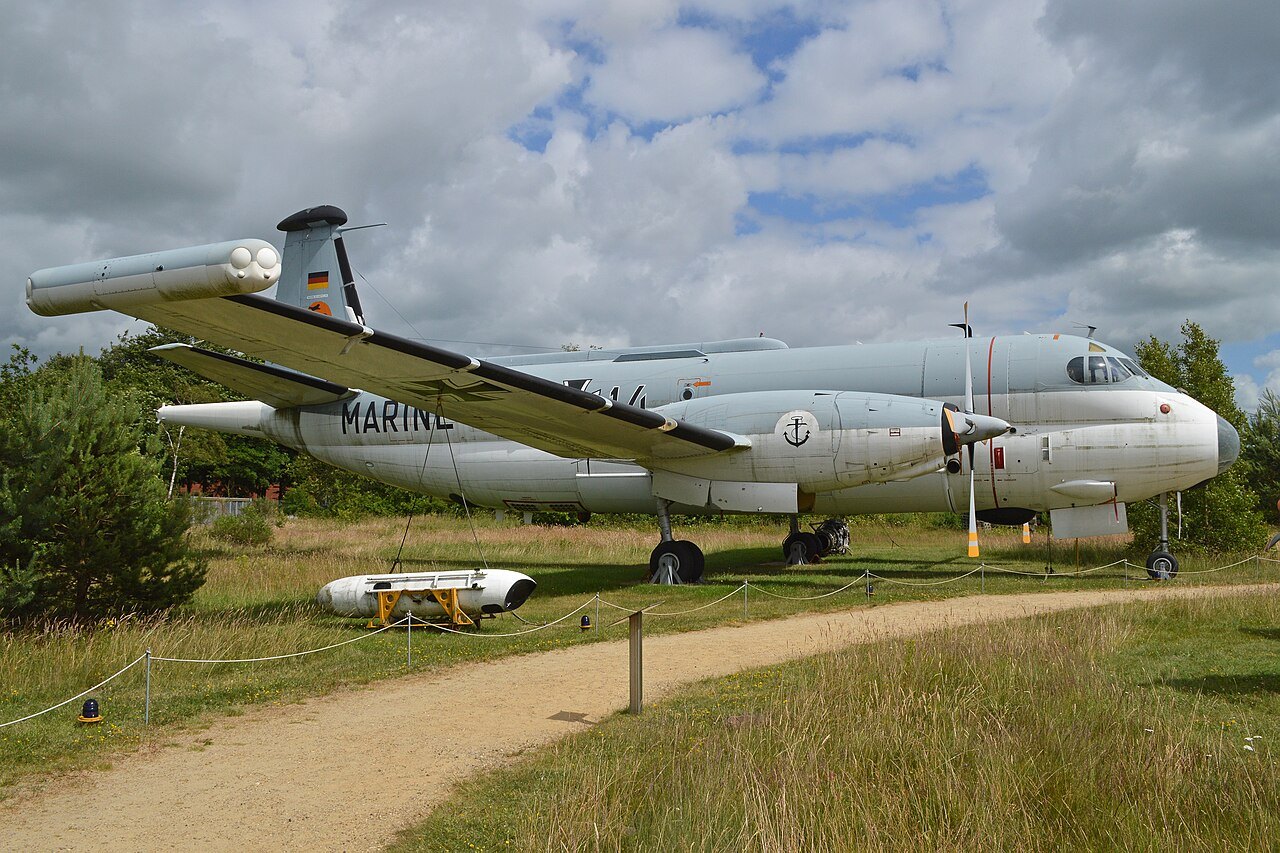
In the late 1950s NATO wanted a common successor to the Lockheed Neptune, the piston-engined patrol aircraft that most European navies were flying against the growing Soviet submarine fleet. The alliance ran a design competition and Breguet’s Br.1150 won it. Rather than adapting an airliner, as the Americans would with the Electra-based Orion, Breguet drew a twin-turboprop aircraft around the mission itself: a deep “double-bubble” fuselage with a pressurised upper deck for a crew of about twelve and an unpressurised lower lobe housing a long weapons bay, a retractable radar under the belly, and a magnetic anomaly detector in a long tail sting. The first prototype flew from Toulouse on 21 October 1961, and a multinational consortium, SECBAT, was formed to build it.
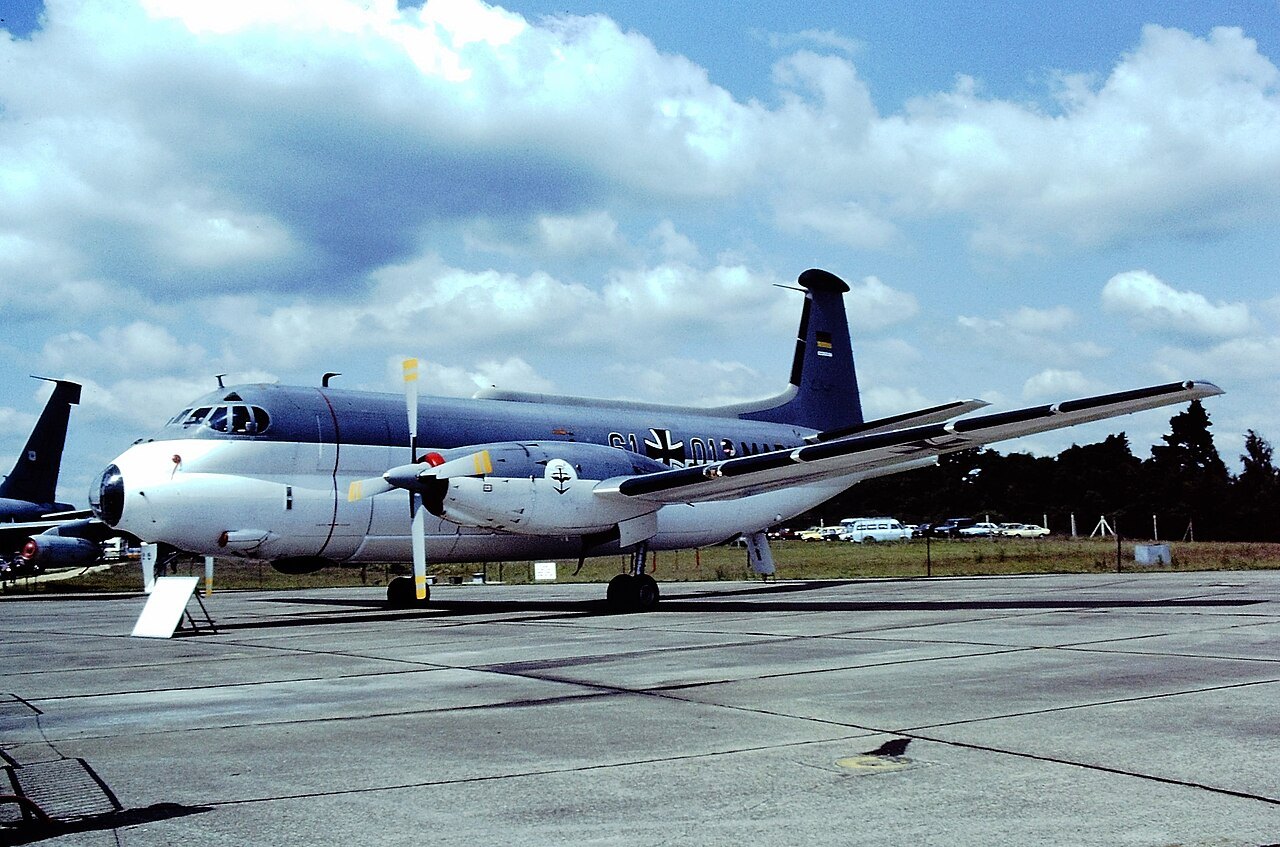
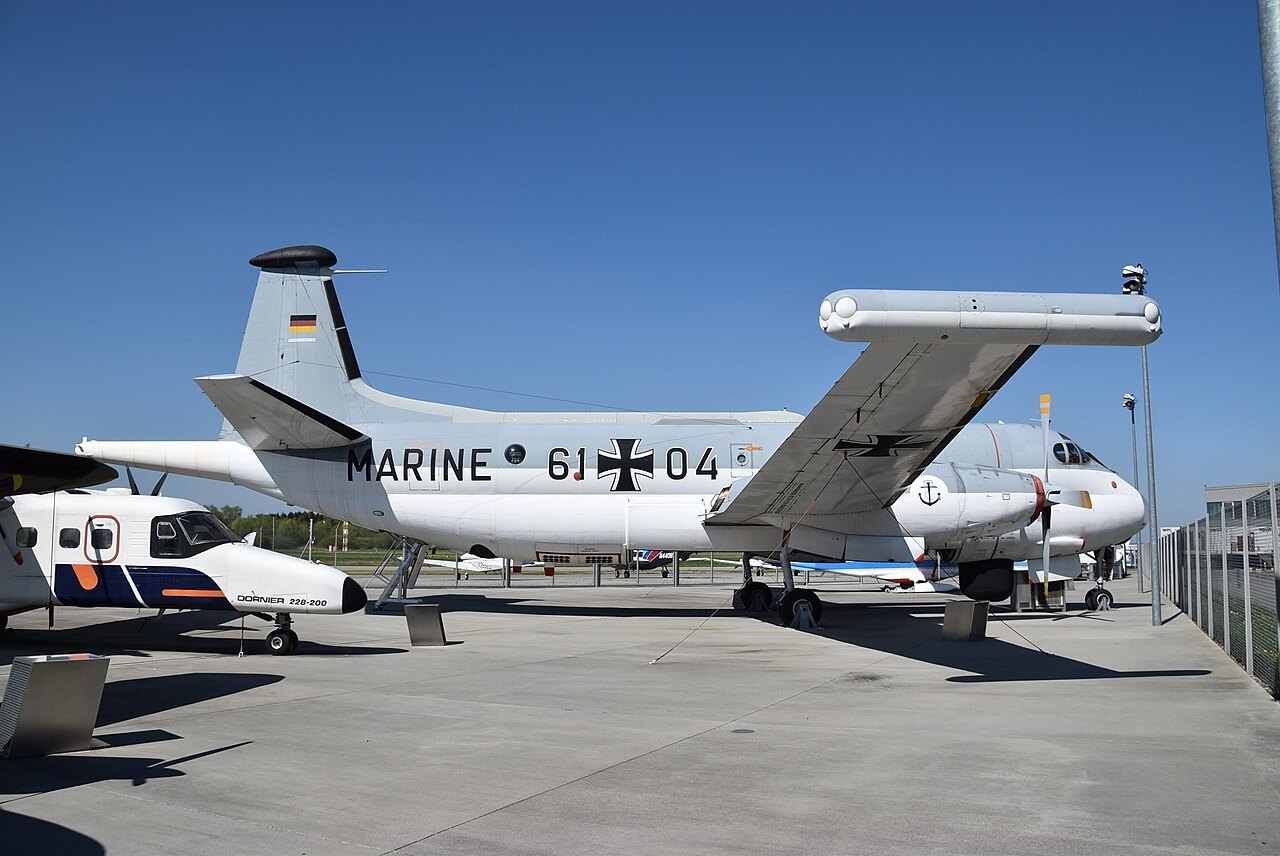
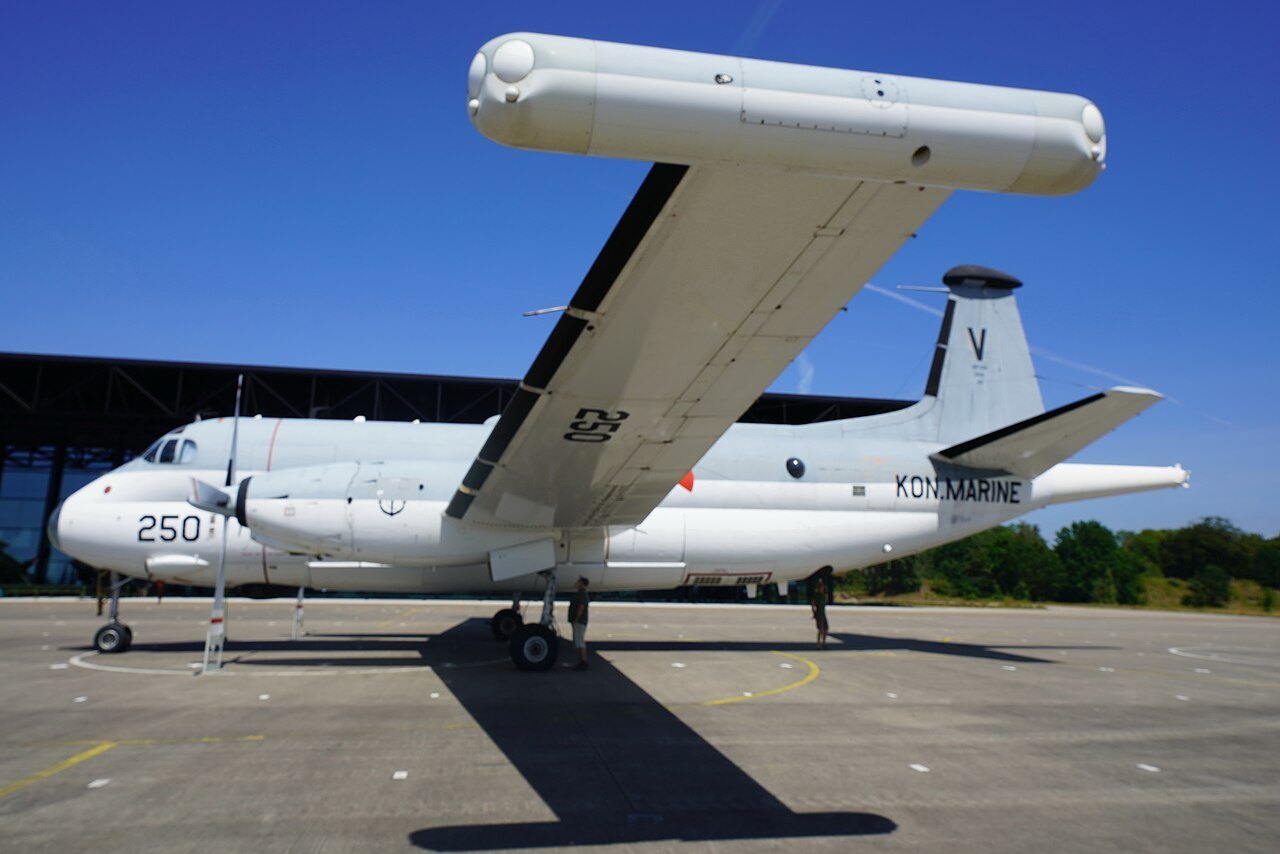
The Atlantic was a true European programme. French, German, Belgian, Dutch and Italian firms shared the airframe, and the Rolls-Royce Tyne engines were built with partners in France and Belgium. France took 40 aircraft, West Germany 20, the Netherlands nine and Italy 18, and Pakistan later bought three ex-French machines, for a total of about 87. Crews loved the endurance and the low-level handling; maintainers did not always love the complexity. The Dutch lost several aircraft and switched to the P-3C Orion in the early 1980s, the Germans replaced theirs with Orions in 2005, and Italy flew its fleet until 2017, when ATR 72MPs took over. The type also served Pakistan for more than three decades, its three aircraft becoming the backbone of that navy’s long-range patrol force until P-3C Orions replaced them in 2012.
France chose a different path. Instead of buying an American type it ordered a modernised design, first called Atlantic Nouvelle Génération and then Atlantique 2, built by Dassault after it absorbed Breguet. Converted prototypes flew from Toulouse-Blagnac on 8 May 1981, and 28 production aircraft followed from 1989. The ATL2 has since become one of the busiest aircraft in the French inventory, hunting submarines in the Atlantic while also flying long overland surveillance and strike missions over Mali, Iraq and Syria. Eighteen have been upgraded to Standard 6 with a new radar and acoustic processing, intended to keep them flying into the mid-2030s. Flown from Lann-Bihoué in Brittany, the ATL2 remains the French Navy’s only long-range maritime patrol aircraft, protecting among other things the approaches used by France’s own ballistic missile submarines.
01The Atlantique’s origins: NATO’s common patrol aircraft
NATO’s requirement for a Neptune replacement was an early attempt at a shared European weapons programme. A large field of designs was examined, and Breguet’s Br.1150 was selected. The thinking was ambitious: one aircraft type, built across several countries and flown by several navies, would cut costs and simplify logistics across the alliance.
In practice only part of the dream came true. France and West Germany were the launch customers, the Netherlands and Italy followed, and Britain went its own way with the jet-powered Nimrod. Even so, the SECBAT consortium (with Breguet as lead, Dornier and other German firms, SABCA and SONACA in Belgium, Fokker and Aeritalia) built a single, coherent aircraft. Dassault later described it as the only maritime patrol aircraft designed specifically for that mission rather than adapted from an airliner.
The design choices show it. The high aspect ratio wing and two big Tynes gave efficient loiter at low level; the crew deck was laid out as a tactical operations room; and the weapons bay could carry torpedoes, depth charges and mines, later joined by Exocet anti-ship missiles. The trade-off was cost and maintenance. Two engines gave less redundancy than the four-engined Orion, a point that weighed heavily on the Dutch after their losses.
02The Atlantique 2 over land: from Chad to Iraq
The Atlantic’s most surprising career has been over the desert. Its long endurance, quiet loiter, large crew and powerful sensors made it a natural intelligence and command platform long before drones were common. In 1987, during Opération Épervier against Libyan forces in Chad, a signals-intelligence Atlantic served as an airborne headquarters, with intercepted communications decoded and translated on board.
The Atlantique 2 took this further. During the 1999 Kosovo campaign French ATL2s flew surveillance flights over the Balkans. In January 2013, in Opération Serval in Mali, ATL2s dropped laser-guided GBU-12 bombs on jihadist forces, an unusual role for an anti-submarine aircraft. In 2015, under Opération Chammal, they flew ISTAR and forward air control missions over Iraq and Syria, carrying out their first strike there on 19 August 2015. For years ATL2s also supported French operations across the Sahel.
The overland work came at a price: heavy use of an airframe already dating from the 1980s. The Standard 6 upgrade, with a Thales Searchmaster radar, a new acoustic system and a new electro-optical turret, was designed to restore its edge at sea for the submarine-rich 2020s.
What makes the Atlantique special
The double-bubble fuselage
The Atlantic’s cross-section is two circles stacked on top of each other. The upper lobe is pressurised and holds the flight deck, the tactical crew stations, rest bunks and a galley for missions of well over twelve hours. The lower lobe is unpressurised and contains a long weapons bay, able to carry torpedoes, depth charges, mines or anti-ship missiles. Sonobuoys are launched from the rear fuselage. It is a layout that only makes sense if the aircraft is designed for patrol from the start, which is exactly what Breguet did.
Two Tynes and a long wing
Two Rolls-Royce Tyne turboprops of about 6,100 shp each drive large four-blade propellers. The combination of big engines and a high aspect ratio wing lets the aircraft dash to a search area at around 300 knots, then loiter for hours at low level, often with one engine at reduced power to save fuel. Typical missions in the ATL2 run to 10 hours or more and the aircraft can stay airborne for up to about 18 hours. The engines were built by a European partnership, keeping the whole aircraft a European product.
Sensors that hunt submarines
The Atlantique’s classic tools are a retractable belly radar for surface search and periscope detection, sonobuoys dropped in patterns to listen for submarines, and a magnetic anomaly detector in the tail sting that senses the steel hull of a submerged boat. The ATL2 added digital acoustic processing, a forward-looking infrared turret and electronic support measures. The Standard 6 upgrade introduced the Thales Searchmaster AESA radar and a new digital acoustic processing system, giving a crew of about twelve far more information to sift on long patrols.
03The Atlantique’s crew: twelve people and a long day
An Atlantique 2 typically carries around twelve crew: two pilots and a flight engineer on the flight deck, a tactical coordinator who runs the mission, a navigator, radar, electronic warfare and acoustic operators, and observers in the nose and side bubbles. Long missions are divided into watches, and the aircraft has bunks and a galley so that crews can rest and eat during transits.
The work is patient and repetitive. Over the Atlantic the crew may spend hours laying sonobuoy fields and listening for faint acoustic signatures, coordinating with frigates and submarines, then closing for a magnetic anomaly pass at very low level. Over land the same crew stations become an intelligence cell, watching roads and compounds through the electro-optical turret for hours and passing targets to fighters or dropping their own laser-guided bombs.
Dassault Atlantique 2 specifications
Specifications
- Crew
- About 12
- Length
- 31.62 m (103 ft 9 in)
- Wingspan
- 37.42 m (122 ft 9 in) including wingtip pods
- Height
- 10.89 m (35 ft 9 in)
- Empty weight
- 25,700 kg (56,659 lb)
- Max take-off weight
- 46,200 kg (101,854 lb)
- Powerplant
- 2 × Rolls-Royce Tyne RTy.20 Mk 21 turboprops, about 4,500 kW (6,100 shp) each
- Maximum speed
- 648 km/h (350 kn)
- Patrol speed
- About 315 km/h (170 kn)
- Ferry range
- About 9,000 km (4,900 nmi)
- Endurance
- Up to about 18 hours
- Service ceiling
- 9,145 m (30,000 ft)
- Climb rate
- 14.7 m/s (2,900 ft/min)
- Armament
- Up to about 3,500 kg internally: Mk 46 or MU90 torpedoes, depth charges, mines, AM39 Exocet anti-ship missiles, GBU-12 laser-guided bombs
Costs & production
- Unit cost
- No reliable public figure for a new ATL2; the type was built in a single French order in the 1980s and 1990s
- Cost per flight hour
- No official figure published; for a twin-turboprop patrol aircraft of this size an estimate in the order of EUR 10,000 to 25,000 per hour is plausible, based on published rates for comparable types such as the P-3 Orion
- Production
- About 87 Atlantic 1 (1960s to early 1970s) and 28 Atlantique 2 (from 1989)
- Programme
- Standard 6 upgrade of 18 French ATL2s with Thales Searchmaster radar and new acoustic processing, intended to keep the type in service to about 2035
04The Atlantique’s variants: from Br.1150 to Standard 6
- Br.1150 Atlantic (Atlantic 1): original production version for France, West Germany, the Netherlands and Italy, later also Pakistan.
- German SIGINT Atlantic: a small number of West German aircraft converted for signals intelligence, flown until the type’s German retirement in 2005.
- Atlantique 2 (ATL2): Dassault’s modernised version for France, first flown in 1981 and delivered from 1989, with new avionics, radar, acoustic processing and Exocet capability; 28 built.
- ATL2 Standard 6: upgrade of 18 aircraft with Thales Searchmaster AESA radar, a new digital acoustic system, a new electro-optical turret and new tactical consoles.
- Atlantique 3 / ATL3: proposed further development with new engines and glass cockpit that was offered but not built.
05The Atlantique’s operating costs: what a patrol hour means
Neither Dassault nor the French Navy publishes a cost per flight hour for the ATL2. What is clear is that it is an expensive aircraft to run: a crew of a dozen, two large turboprops and a demanding sensor suite on an airframe whose design dates to the late 1950s. Ageing parts and overland deployments in harsh desert conditions added to the burden, and French parliamentary reports repeatedly flagged low availability in the 2010s.
As a rough guide, publicly quoted hourly rates for the four-engined P-3 Orion and similar patrol aircraft sit in the low tens of thousands of dollars, so a figure in the order of EUR 10,000 to 25,000 per hour for the ATL2 is a reasonable estimate rather than an official number.
The Atlantique from NATO drawing board to Standard 6
NATO picks Breguet
The Br.1150 design is selected in a NATO competition for a common successor to the Neptune.
First flight
The first prototype flies from Toulouse on 21 October 1961.
Into service
Deliveries to the French and West German navies begin; the SECBAT consortium shares production across Europe.
Netherlands and Italy
Dutch and Italian Atlantics are in service, bringing the European fleet to about 87 aircraft.
Pakistan
Pakistan buys three ex-French Atlantics, its first long-range maritime patrol aircraft of this class.
Atlantique 2 flies
The first ATL2 prototype, converted from an Atlantic airframe, flies from Toulouse-Blagnac on 8 May 1981.
Chad
A French SIGINT Atlantic acts as an airborne headquarters during Opération Épervier.
ATL2 deliveries
The French Navy receives its first production Atlantique 2 in October 1989.
The Atlantique incident
On 10 August a Pakistan Navy Atlantic is shot down by Indian Air Force MiG-21s near the Rann of Kutch; all 16 aboard are killed.
Germany retires its fleet
West Germany’s successor navy replaces its Atlantics with ex-Dutch P-3C Orions.
Bombs over Mali
In Opération Serval, French ATL2s drop GBU-12 laser-guided bombs on jihadist forces.
Italy bows out
Italy retires its last Atlantics, leaving France as the only operator.
Stories & eyewitnesses: the Atlantique at sea and over the desert
Rann of Kutch, 1999: sixteen dead in a border shoot-down
The most controversial moment in the Atlantic’s history happened over a salt marsh.
Read the full story
Chad, 1987: an airborne headquarters
Long before drones, an Atlantic listened in on a desert war.
Read the full story
Mali, 2013: a submarine hunter drops bombs
Opération Serval turned the ATL2 into a strike aircraft.
Read the full story
Iraq, 2015: first strike under Chammal
The ATL2 joined the coalition air war against the Islamic State.
Read the full story
Farnborough, 1968: a crash at the show
A display at Britain’s biggest air show ended in tragedy.
Read the full story
The Dutch losses: why the Netherlands switched to Orions
Three crashes ended a small fleet’s career early.
Read the full story
Toulouse-Blagnac, 8 May 1981: the ATL2 takes off
Dassault’s test crew gave the Atlantic a second life.
Read the full story
Italy’s Atlantics: 45 years over the Mediterranean
The Aeronautica Militare flew the type longer than anyone except France.
Read the full story
Gatow and Soesterberg: Atlantics you can see
Retired German Atlantics went to museums in two countries.
Read the full story
The Atlantique in pictures
Where the Atlantique flies and flew
The Atlantique’s record
Designed for the Cold War submarine hunt, the Atlantic has spent much of its life over land: signals intelligence in Chad, surveillance over Kosovo, and strike and forward air control in Mali, Iraq and Syria. Its darkest day came in 1999, when a Pakistani Atlantic was shot down by Indian fighters.
See how training and combat types compare in the military aircraft statistics database. Figures are approximate.
Everything people ask about the Atlantique
Can I fly in a Breguet Br.1150 Atlantic / Dassault Atlantique 2?
What is the difference between the Atlantic and the Atlantique 2?
Who flies the Atlantique today?
How long can the Atlantique stay airborne?
Has the Atlantique been used in combat?
Why was a Pakistani Atlantic shot down in 1999?
What will replace the Atlantique 2?
You can’t fly the Atlantique.
These, you can.
Most of this museum you can only look at. These genuine military jets you can fly yourself with MiGFlug — with aerobatics and time on the controls.
 Fly the L-39 AlbatrosThe world’s most-flown jet trainer — aerobatics included
 Fly the F-104 Starfighter“The missile with a man in it”
 Fly the MiG-21The Cold War’s most-produced jet
 Fly the T-33 Shooting StarAmerica’s first jet trainer
 Fly the DH VampireA piece of early jet history
 Fly the S.211Agile Italian jet trainer
 Fly the MB-326The classic Aermacchi jet
 Fly the MiG-15The Soviet legend of the Korean War
Continue the tour
Every fact, checked
- Atlantique 2Dassault Aviation: first flight crew 1981, production launch, first delivery 1989, SECBAT partners
- Br 1150 AtlantiqueGlobalSecurity: fleet numbers per country, German and Italian replacement programmes
- Atlantique Maritime Patrol AircraftNaval Technology: ATL3 proposal, sensors and weapons
- Aerial Incident of 10 August 1999 (Pakistan v. India)International Court of Justice case page; 2000 judgment on jurisdiction
- Militärhistorisches Museum Flugplatz Berlin-GatowGerman Air Force museum displaying a retired Atlantic
- Nationaal Militair Museum, SoesterbergDutch military museum holding a retired Atlantic