
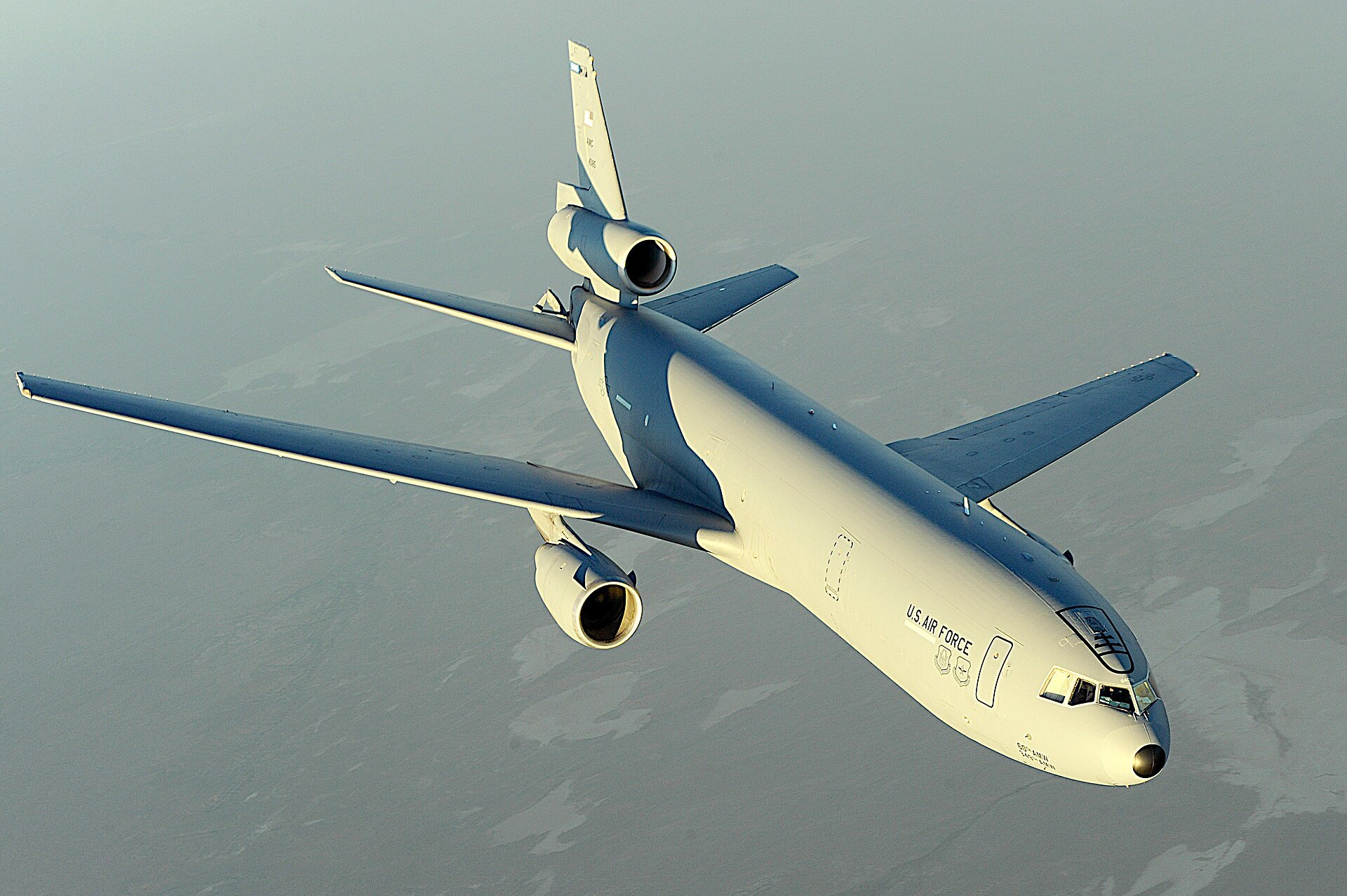
McDonnell Douglas KC-10 Extender
The DC-10 That Went to War
A DC-10 airliner rebuilt as a tanker and freighter, the KC-10 dragged fighter squadrons across oceans, fuelled the Libya raid and Desert Storm, and retired in 2024 after 43 years with only one aircraft lost.
The KC-10: how a widebody airliner became America’s strategic tanker
The 1973 Yom Kippur War taught the US Air Force a hard lesson. When it airlifted supplies to Israel, most European allies refused landing rights, and the transports had to stage through the Azores. A tanker that could also carry cargo would let fighters and transports fly straight across an ocean without depending on foreign bases. The Air Force launched the Advanced Tanker/Cargo Aircraft programme, and in December 1977 chose the McDonnell Douglas DC-10-30CF convertible freighter over the Boeing 747, largely because it could use shorter runways. The KC-10A Extender first flew on 12 July 1980 and entered service in March 1981 with Strategic Air Command at Barksdale Air Force Base, Louisiana.
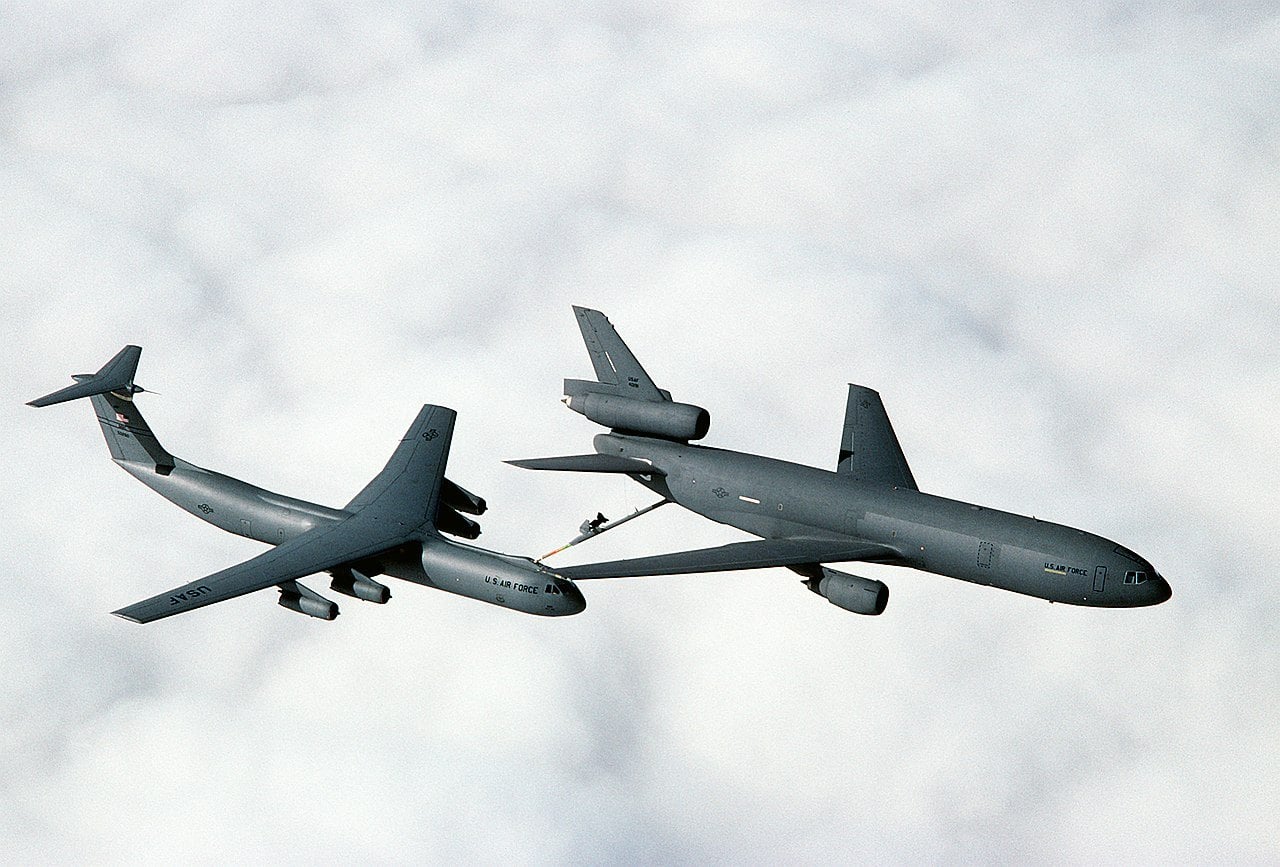
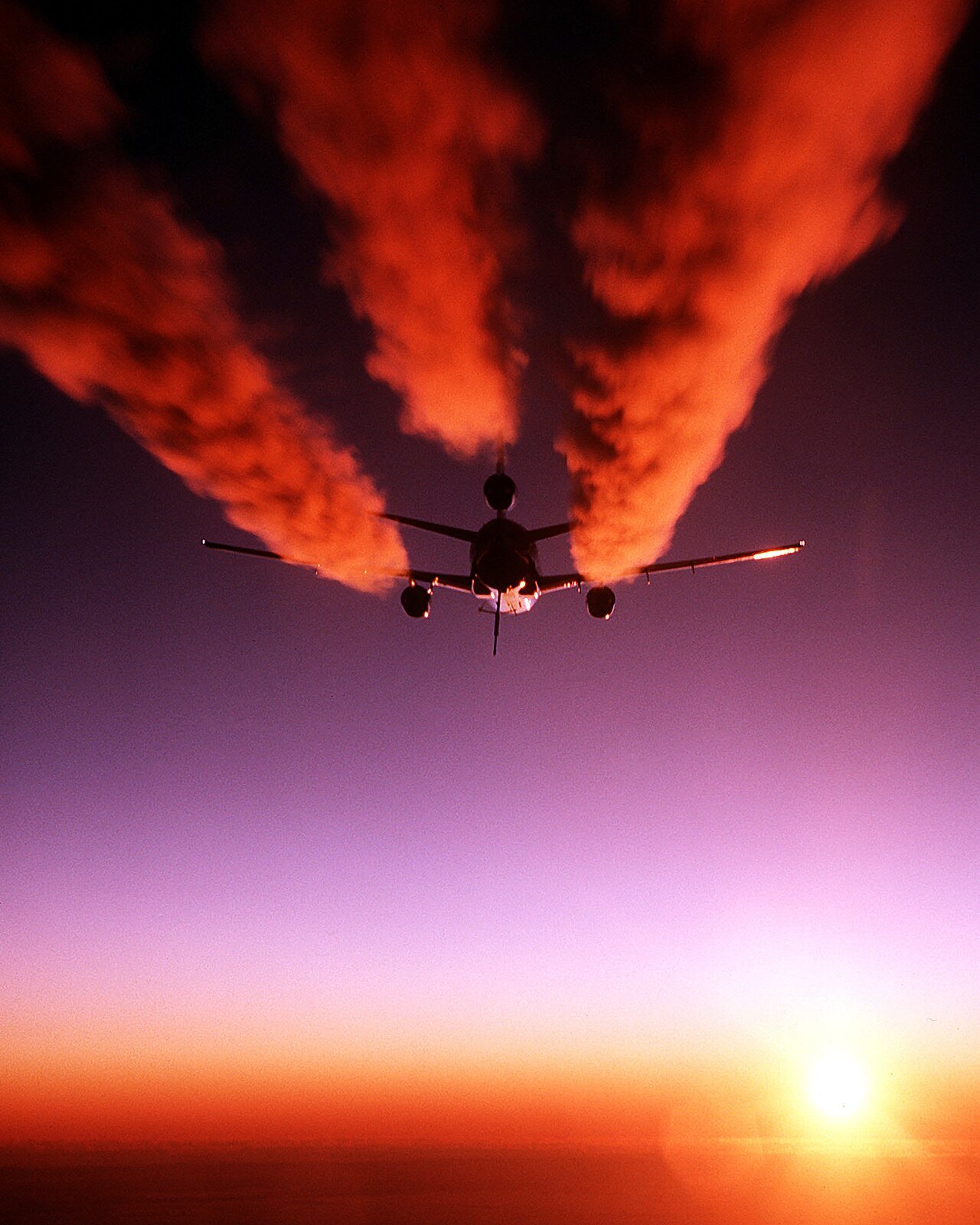
The KC-10 was a big step beyond the KC-135. It kept most of the DC-10’s wide cabin and its large cargo door, and added fuel tanks in the lower holds, giving it about 356,000 lb of fuel, much of it transferable. It carried both a boom and a hose-and-drogue in the tail, so it could refuel Air Force, Navy, Marine and allied aircraft on the same mission, and it had its own refuelling receptacle so tankers could refuel each other. Its signature job was the “fighter drag”: shepherding a squadron of fighters across the Atlantic or Pacific while carrying their mechanics, spares and baggage in the cabin. Only 60 were built, and they flew from Barksdale, March, Seymour Johnson, McGuire and Travis.
The KC-10 went to war often. It refuelled the F-111s of the 1986 raid on Libya, carried and fuelled the build-up of Operation Desert Shield, and was at the heart of the Desert Storm tanker force. It flew over the Balkans, over American cities after 11 September 2001, and through two decades of operations in Afghanistan, Iraq and Syria. But its three engines and DC-10 systems were increasingly hard to support once airlines stopped flying the type, and the Air Force chose to retire it before the older KC-135. The last combat sortie was flown in October 2023, and the final aircraft left Travis Air Force Base for the boneyard in Arizona on 26 September 2024, ending 43 years of service.
01The KC-10’s war record: from El Dorado Canyon to the last sortie
The KC-10’s first major test came in April 1986, in Operation El Dorado Canyon, the US strike on Libya. France and Spain refused overflight, so F-111s from RAF Lakenheath had to fly around the Iberian peninsula and through the Strait of Gibraltar, a round trip of more than 6,000 miles. KC-10s and KC-135s refuelled them several times on the way out and back; the KC-10s also acted as airborne command posts for the operation.
In 1990 and 1991 the KC-10 was indispensable to Desert Shield and Desert Storm, first dragging fighters to Saudi Arabia while carrying their support equipment, then refuelling strike packages over the Gulf. The Air Force reported that the tanker fleet as a whole made about 51,700 refuellings and delivered 125 million gallons of fuel without missing a scheduled rendezvous. In Operation Allied Force over Kosovo in 1999, KC-10s flew 409 missions, and after September 2001 they flew hundreds of Operation Noble Eagle patrols over the United States and more than 1,390 missions over Afghanistan and Iraq by the mid-2000s. Their final combat sortie was flown in October 2023.
What makes the KC-10 special
Boom and drogue on one aircraft
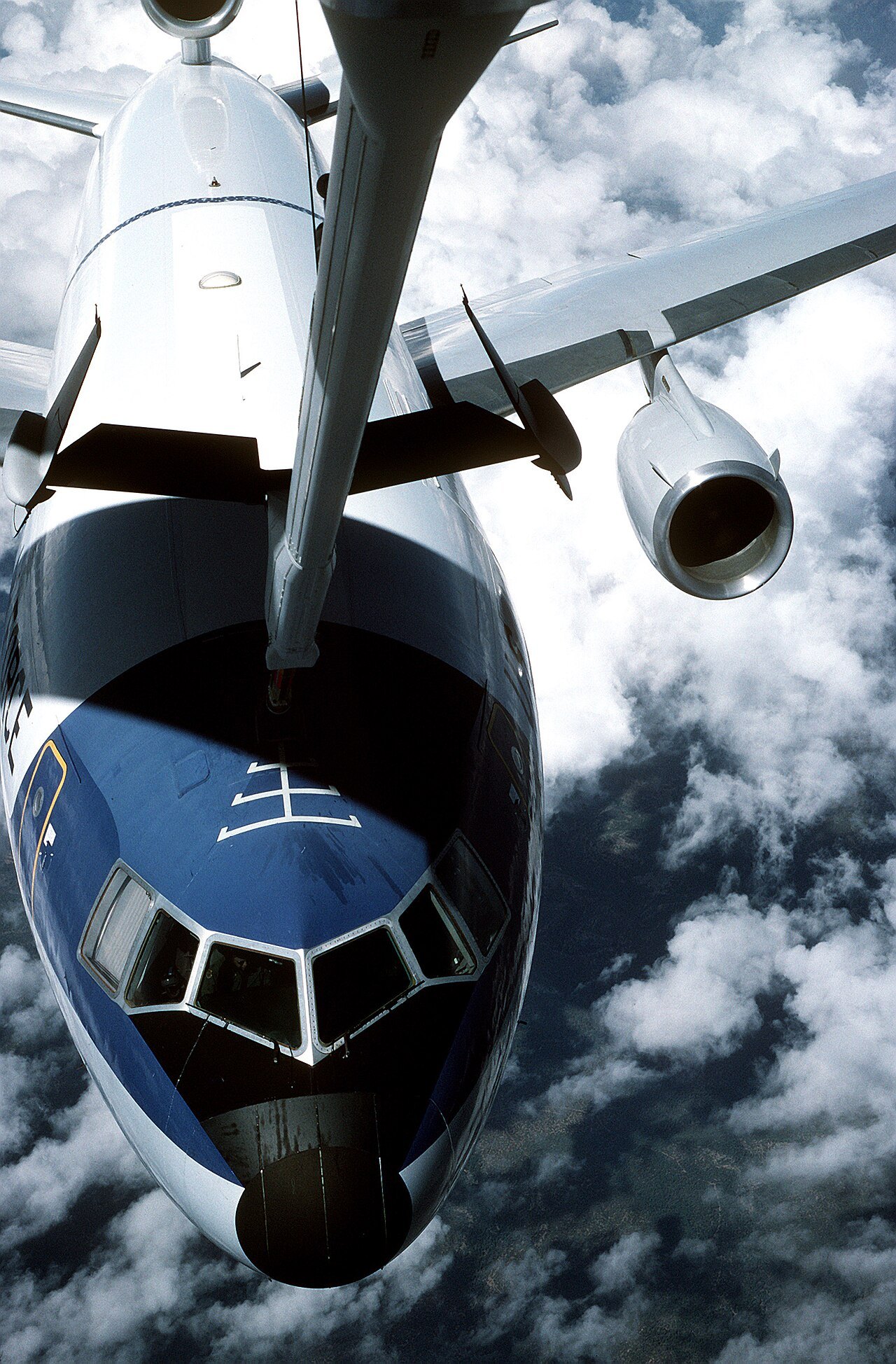
The KC-10 was the first US Air Force tanker built with both a flying boom and a hose-and-drogue system in the tail, so it could refuel Air Force receivers and probe-equipped Navy, Marine Corps and allied aircraft on the same sortie without a change on the ground. Many were later fitted with wing pods too. The boom used a digital fly-by-wire control system and could pass about 1,100 US gallons a minute; the drogue about 470. The boom operator sat in a rear-facing seat, not lying prone as on the KC-135, looking out through a wide window.
A real freighter
Because the KC-10 was based on the DC-10-30CF convertible freighter, it kept a large side cargo door and a cargo-handling floor. The Air Force rated it at up to 75 people with about 146,000 lb of cargo, or about 170,000 lb in an all-cargo configuration, and it could carry 25 standard pallets. That made it a strategic transport in its own right. Moving a fighter unit overseas often needed only KC-10s: they carried the people and equipment and kept the fighters topped up along the way.
Tanker for tankers
The KC-10 had its own refuelling receptacle above the cockpit, so it could take fuel from another KC-10 or a KC-135. Tankers could refuel each other on long transoceanic flights, extending their range and the fighters’ with them. With its fuel, the KC-10 was said to nearly double the nonstop range of a fully loaded C-5 transport. Its unrefuelled ferry range was more than 11,000 miles, enough to reach almost any theatre from the United States. Pairs of KC-10s often flew together on deployments for exactly that reason.
02The KC-10’s family: KC-10A, KDC-10 and K-DC-10
- KC-10A Extender: 60 built for the US Air Force between 1979 and 1988; later upgraded with modern avionics and, on some aircraft, wing refuelling pods.
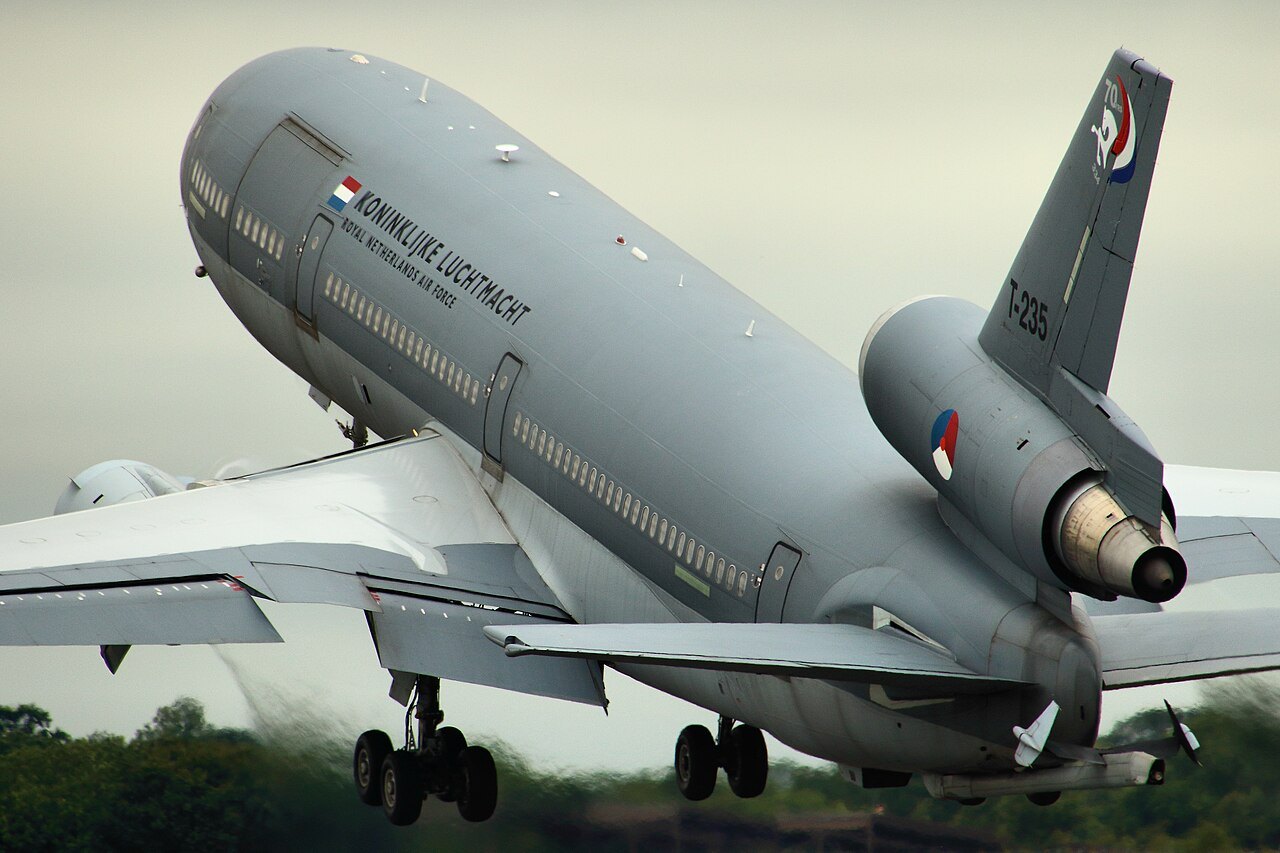
- KDC-10: two DC-10-30CF airliners converted for the Royal Netherlands Air Force in the 1990s, with a remote-vision boom; retired in 2021.
- K-DC-10: a small number of DC-10s converted by the contractor Omega Aerial Refueling Services to provide commercial tanker support to the US Navy and others.
McDonnell Douglas KC-10A Extender specifications
Specifications
- Crew
- 4 (pilot, co-pilot, flight engineer, boom operator)
- Length
- 55.35 m (181 ft 7 in)
- Wingspan
- 50.41 m (165 ft 4.5 in)
- Height
- 17.70 m (58 ft 1 in)
- Empty weight
- 109,328 kg (241,027 lb)
- Max take-off weight
- 267,620 kg (590,000 lb)
- Fuel capacity
- about 161,500 kg (356,000 lb)
- Cargo
- up to about 76,560 kg (170,000 lb), or 75 passengers with about 66,000 kg (146,000 lb)
- Powerplant
- 3 × General Electric CF6-50C2 turbofans, 233.5 kN (52,500 lbf) each
- Maximum speed
- about 996 km/h (619 mph)
- Range
- about 7,040 km (4,400 miles) with cargo; ferry range more than 18,500 km (11,500 miles)
- Service ceiling
- 12,727 m (42,000 ft)
- Boom offload rate
- about 4,180 litres (1,100 US gal) per minute
Costs & production
- Unit cost
- About US$88.4 million (fiscal 1998 constant dollars, US Air Force fact sheet basis)
- Cost per flight hour
- Hedged estimate: roughly US$20,000–30,000 per hour in its later years, based on three-engine fuel burn and rising support costs once the DC-10 left airline service; no consistent official figure published
- Production
- 60 built for the USAF, 1979–1988
- Programme
- Selected 1977; first flight 1980; in service 1981–2024
03The KC-10’s operating costs: why the newer tanker retired first
The KC-10 was younger than the KC-135, carried more fuel and could do more, yet it retired first. The reason was support. With only 60 aircraft and almost no DC-10s left in airline service, parts and engineering support became costly, and the three CF6 engines burned more fuel than the twin-engined KC-46 that was arriving. The Air Force also needed crews and maintainers for the new tanker, and a small fleet type is expensive to keep in proportion to its size.
Contractor logistics support for the fleet ran to large sums each year, and the Air Force argued that retiring the KC-10 would free money and people for the KC-46. Congress slowed the drawdown for a time, but the last aircraft left in September 2024. Any hourly figure is an estimate rather than an official number.
The KC-10 from the ATCA competition to the boneyard
Lesson of the Yom Kippur airlift
Denied European bases, the US Air Force sees the need for a tanker that can also carry cargo.
DC-10 selected
In December the DC-10-30CF wins the Advanced Tanker/Cargo Aircraft competition over the Boeing 747.
First flight
The KC-10A flies on 12 July at Long Beach.
Into service
The first KC-10 joins Strategic Air Command at Barksdale AFB in March.
El Dorado Canyon
KC-10s refuel the F-111s that strike Libya from England.
Barksdale fire
A KC-10 is destroyed by an explosion and fire during maintenance; one person dies.
Production ends
The 60th and last KC-10 is delivered.
Desert Storm
KC-10s are central to the coalition tanker force over the Gulf.
Kosovo
KC-10s fly 409 missions during Operation Allied Force.
Noble Eagle
KC-10s refuel the fighter patrols over American cities after 11 September.
Last combat sortie
The KC-10 flies its final combat mission in October.
Retirement
The last KC-10 leaves Travis AFB for the Arizona boneyard on 26 September.
Stories & eyewitnesses: the KC-10 from Libya to the last flight
El Dorado Canyon
The long way round to Libya.
Read the full story
Barksdale, 1987
The only KC-10 lost.
Read the full story
Desert Shield: the fighter drags
Moving an air force across the Atlantic.
Read the full story
Allied Force, 1999
409 missions over the Balkans.
Read the full story
Noble Eagle
Tankers over American cities.
Read the full story
Twenty years on one tanker
A career spent on the Extender.
Read the full story
The Dutch KDC-10s
Two tankers for a small air force.
Read the full story
Omega’s civilian tankers
The DC-10 tanker in private hands.
Read the full story
The last flight
Travis to the boneyard, September 2024.
Read the full story
Where to see a KC-10
Museum pieces after 43 years.
Read the full story
The KC-10 in pictures
Where the KC-10 flies and flew
The KC-10’s record
The KC-10 flew combat support in every major US air operation from 1986 to 2023. Its record is measured in missions and fuel, and in the fact that only one aircraft was lost, on the ground, in 43 years.
See how training and combat types compare in the military aircraft statistics database. Figures are approximate.
Everything people ask about the KC-10
Can I fly in a McDonnell Douglas KC-10 Extender?
Is the KC-10 a DC-10?
Is the KC-10 still flying?
Why did the KC-10 retire before the older KC-135?
How many KC-10s were built?
Was a KC-10 ever lost?
You can’t fly the KC-10.
These, you can.
Most of this museum you can only look at. These genuine military jets you can fly yourself with MiGFlug — with aerobatics and time on the controls.
 Fly the L-39 AlbatrosThe world’s most-flown jet trainer — aerobatics included
 Fly the F-104 Starfighter“The missile with a man in it”
 Fly the MiG-21The Cold War’s most-produced jet
 Fly the T-33 Shooting StarAmerica’s first jet trainer
 Fly the DH VampireA piece of early jet history
 Fly the S.211Agile Italian jet trainer
 Fly the MB-326The classic Aermacchi jet
 Fly the MiG-15The Soviet legend of the Korean War
Continue the tour
Every fact, checked
- KC-10 Extender fact sheetUS Air Force official specifications, capacities and unit cost
- KC-10A ExtenderCapacities, range, retirement and crew accounts
- Air Mobility Command MuseumHome of the first production KC-10, 79-0433
- National Museum of the United States Air ForcePreserved KC-10 and tanker history
- Air & Space Forces Magazine: KC-10 retirement coverageFinal combat sortie and last flight
- Gulf War Air Power Survey (US Air Force, 1993)Desert Storm tanker statistics
- Omega Aerial Refueling ServicesContractor DC-10 tanker operations