
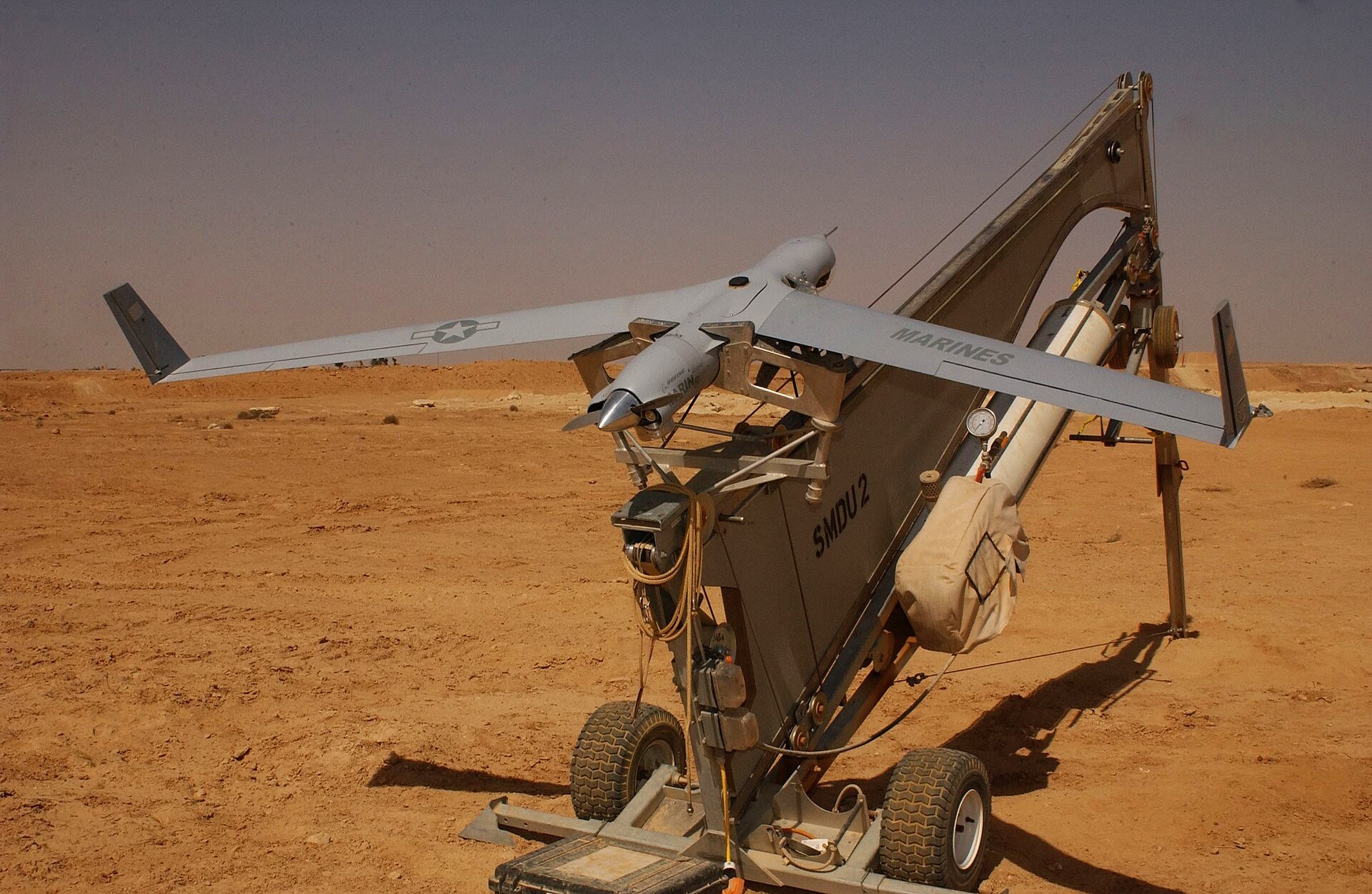
Boeing Insitu ScanEagle
The tuna-spotter that went to war
Designed to find tuna for fishing boats, the catapult-launched ScanEagle became one of the most widely used small military drones, flying hundreds of thousands of hours over Iraq, Afghanistan and the world’s oceans.
The ScanEagle: how a fish-finding drone became a military workhorse
From August 2004 the US Marines in Iraq had a new kind of eye in the sky. A drone not much bigger than a large model aircraft was fired off a pneumatic catapult and, many hours later, came back and caught a rope hanging from a tall pole with a hook on its wingtip. The ScanEagle needed no runway, no airfield and only a handful of people, and it could circle over a convoy route or a town for most of a day. The US Air Force later recorded that it had flown more than 456,000 combat hours and 57,000 sorties for the Marines alone. For a drone weighing under 20 kg empty, it became one of the most hard-worked military aircraft of its era.
The ScanEagle began as something far more peaceful. Its maker, Insitu of Washington State, had developed a small drone called SeaScan to help fishing boats find schools of tuna and to collect weather data. Boeing saw military potential, and the two companies worked together on a militarised version; initial testing took place in 2002, and in 2003 a ScanEagle demonstrated a 15.2-hour flight in Oregon. The Marine Corps bought it in 2004, the US Navy in 2005 and the US Air Force in late 2006 for base protection. Boeing bought Insitu outright in July 2008, for about US$400 million according to Defense Industry Daily.
Its appeal lay in its simplicity. The ScanEagle carries a stabilised day or infrared camera, flies for 20 hours or more and is launched and recovered from almost anywhere, including the decks of destroyers and patrol ships. It is unarmed. It has watched over pirates off Somalia, coastal targets off Libya and drug smugglers in the Pacific, and has counted seals in the Bering Sea. More than 20 countries have bought it, and in 2022 the United States sent 15 to Ukraine. Iran even copied it, after claiming to have captured one.
01The ScanEagle at sea: navies, coast guards and pirates
The ScanEagle’s launch-and-catch system made it a natural fit for ships, which have no room for a runway. The US Navy contracted for it in 2005 and flew it from destroyers, amphibious ships and patrol craft. In April 2009, when Somali pirates held Captain Richard Phillips of the Maersk Alabama in a lifeboat in the Indian Ocean, a ScanEagle launched by the US Navy helped watch the stand-off that ended in his rescue.
In 2011 the destroyer USS Mahan flew ScanEagles over Libya during NATO’s Operation Unified Protector, and Insitu later said the system had been used to great effect, as AIN Online reported. In 2013 the US Coast Guard used a ScanEagle from a cutter in the eastern Pacific during the seizure of a large cocaine cargo from a fast boat, the first time a cutter-based drone had taken part in a drug interdiction. Navies from the Netherlands, Italy, Brazil, Indonesia and others followed; the Brazilian Navy signed for six aircraft with launch and recovery equipment in December 2019 through the US Foreign Military Sales programme.
02The ScanEagle and Iran’s Yasir copy
On 4 December 2012 Iranian television showed what it said was a US ScanEagle captured after it had violated Iranian airspace over the Gulf. The commander of the Revolutionary Guards’ navy claimed the capture; the US Navy said none of its ScanEagles was missing. Iran then said it had captured two more and, later that month, that it was starting production of a copy.
In September 2013 Iran unveiled the Yasir, delivered to its army ground forces. David Cenciotti of The Aviationist reported that it appeared to be a modified copy of the ScanEagle, with a twin-boom tail and an inverted V tail in place of the original’s tailless layout. Several were shown in Tehran, some partly dismantled to fit in a carrying case. Whatever the truth of the capture, the episode showed how widely the small drone had spread, and how easily such a simple aircraft could be imitated.
What makes the ScanEagle special
The Skyhook
The ScanEagle lands without landing. It flies into a rope hanging from a tall pole, catches it with a hook on its wingtip and is left dangling, ready to be unhooked. Insitu called the system Skyhook; the US Air Force described it as a pole-and-hook recovery that removed the need for a runway. Combined with a pneumatic catapult, it allowed the drone to work from small ships, remote outposts and the backs of trucks, which is where much of its success came from.
Small but persistent
With a wingspan of about 3.1 m and a small two-stroke engine of about 1.5 hp, the ScanEagle sips fuel. The US Air Force gives its endurance as more than 20 hours; Boeing quoted loiter of more than 24 hours. A Block D aircraft set a type record of 22 hours 8 minutes at Boeing’s range in Boardman, Oregon. That persistence, rather than speed or payload, was the point: a camera that could watch one place for a whole day.
Not only for war
Because it started life as a civil aircraft, the ScanEagle has always had peaceful users. Boeing recorded its use to detect weeds in Australia, to count seals and other wildlife in the Bering Sea, and to track wildfires in Alaska. In 2008 the US National Oceanic and Atmospheric Administration test-flew it from a fisheries research ship, and a civil version later became one of the first drones certified by the US Federal Aviation Administration for commercial flights.
03The ScanEagle’s variants: from SeaScan to ScanEagle 3
- SeaScan: Insitu’s original civil drone for fish-spotting and weather data.
- ScanEagle (Blocks A to E): the military production standard, with day or infrared camera turrets; the US designation was later MQ-27.
- NightEagle: a Block E aircraft with an infrared camera for night operations, announced in 2009.
- ScanEagle 2: introduced in October 2014 with a heavy-fuel engine, a larger nose able to carry day and night sensors together and more electrical power, at the cost of shorter endurance.
- ScanEagle 3: a larger development first shown publicly in 2018.
- ScanEagle X200: a civil version with a restricted type certificate from the US FAA.
- Yasir: Iran’s unlicensed copy, shown in 2013.
Boeing Insitu ScanEagle specifications
Specifications
- Crew
- None (remotely piloted; ground team of about four)
- Length
- about 1.55–1.71 m (5 ft 1 in–5 ft 7 in), depending on version
- Wingspan
- 3.11 m (10 ft 2 in)
- Max take-off weight
- about 26.5 kg (58 lb)
- Payload
- about 5 kg (11 lb)
- Powerplant
- 1 × two-stroke piston engine, about 1.5 hp (1.1 kW), pusher propeller
- Maximum speed
- about 148 km/h (80 kt)
- Cruise speed
- about 111 km/h (60 kt)
- Endurance
- 20+ hours (US Air Force)
- Service ceiling
- above 16,000 ft (4,900 m) (Boeing)
- Armament
- None
Costs & production
- Unit cost
- About US$3.2 million (2006) for a complete system of four aircraft, a ground station, launcher and Skyhook, as commonly reported
- Cost per flight hour
- Hedged estimate: probably in the hundreds of US dollars for the aircraft itself, based on a 1.5 hp engine and a 20 kg airframe; much of the real cost lies in the crew and support, often bought as a contractor-operated service; no official figure exists
- Production
- Thousands of aircraft; Boeing reported more than 800,000 combat flight hours by 2014
- Programme
- Testing from 2002; US Marine Corps from 2004, US Navy from 2005; Boeing bought Insitu in 2008
04The ScanEagle’s operators
In US service the ScanEagle has been flown by the Marine Corps, the Navy, the Air Force and the Coast Guard, and by civil agencies including NOAA. Boeing noted that eight allied nations had adopted it early on. Later users include Australia, Canada, the United Kingdom’s Royal Navy, the Netherlands, Italy, Japan, Singapore, Malaysia, Indonesia, the Philippines, Colombia, Brazil, Kenya, Cameroon, Lebanon, Iraq, Afghanistan, Lithuania, Romania and Pakistan, among others; Defense Industry Daily described it as having achieved wide adoption among US allies.
In August 2022 the United States announced that it would give Ukraine 15 ScanEagles as part of a US$775 million aid package, the first time the type was included, as PBS NewsHour reported. ScanEagles supplied to the Afghan army were reported among the equipment that fell into Taliban hands in 2021.
The ScanEagle from fishing boats to front lines
Military testing
Boeing and Insitu begin testing the ScanEagle.
15-hour demonstration
A ScanEagle demonstrates a 15.2-hour flight in Oregon.
Iraq
Deployed to Iraq with the First Marine Expeditionary Force from August 2004.
US Navy
The US Navy contracts for the ScanEagle and begins flying it from ships.
US Air Force
The US Air Force acquires a system in late 2006 for base protection.
Boeing buys Insitu
Boeing acquires Insitu in July 2008.
Maersk Alabama
A US Navy ScanEagle supports the stand-off with Somali pirates in April 2009.
Libya
The destroyer USS Mahan flies ScanEagles during Operation Unified Protector.
Iran’s claim
Iran claims to have captured a ScanEagle; the US Navy says none is missing.
ScanEagle 2
Insitu introduces the ScanEagle 2; Boeing reports more than 800,000 combat hours.
Ukraine
The United States announces 15 ScanEagles for Ukraine in August 2022.
Stories & eyewitnesses: the ScanEagle at work
Looking for tuna
A drone designed for fishermen.
Read the full story
Fifteen hours over Oregon
2003: proof of endurance.
Read the full story
With the Marines in Iraq
2004: the first deployment.
Read the full story
The Maersk Alabama stand-off
April 2009: a camera above the lifeboat.
Read the full story
From a destroyer over Libya
2011: Operation Unified Protector.
Read the full story
Iran’s captured ScanEagle
December 2012: a claim on television.
Read the full story
Counting seals in the Bering Sea
A drone for wildlife.
Read the full story
Fifteen for Ukraine
August 2022: a new kind of aid.
Read the full story
The Brazilian Navy signs up
A typical foreign sale.
Read the full story
The ScanEagle in pictures
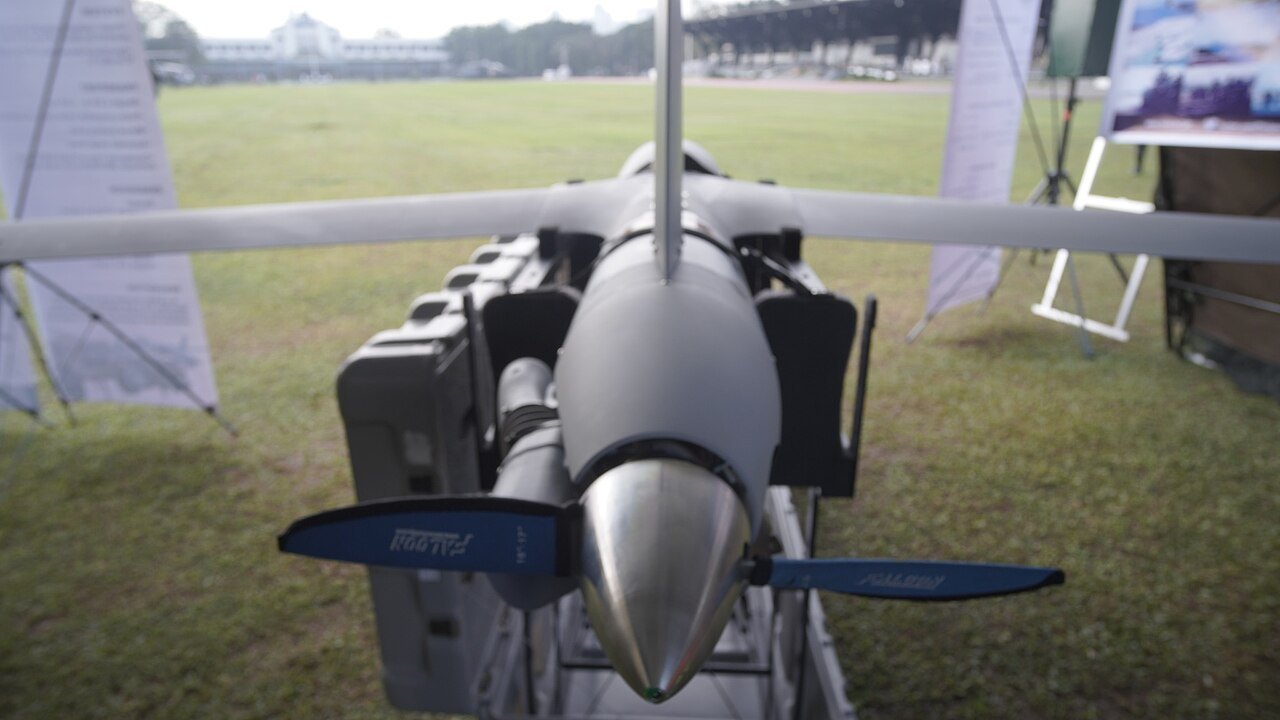
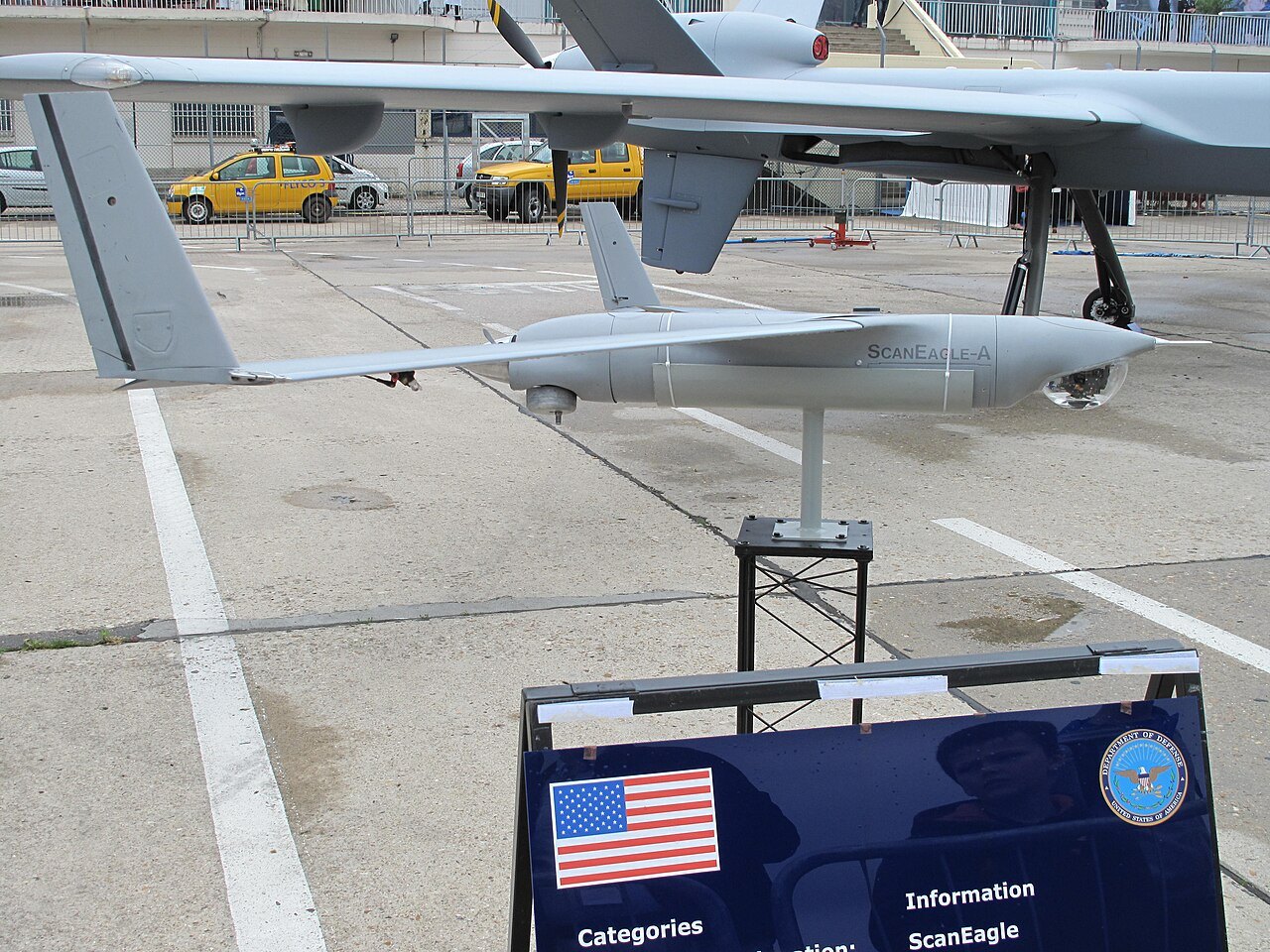
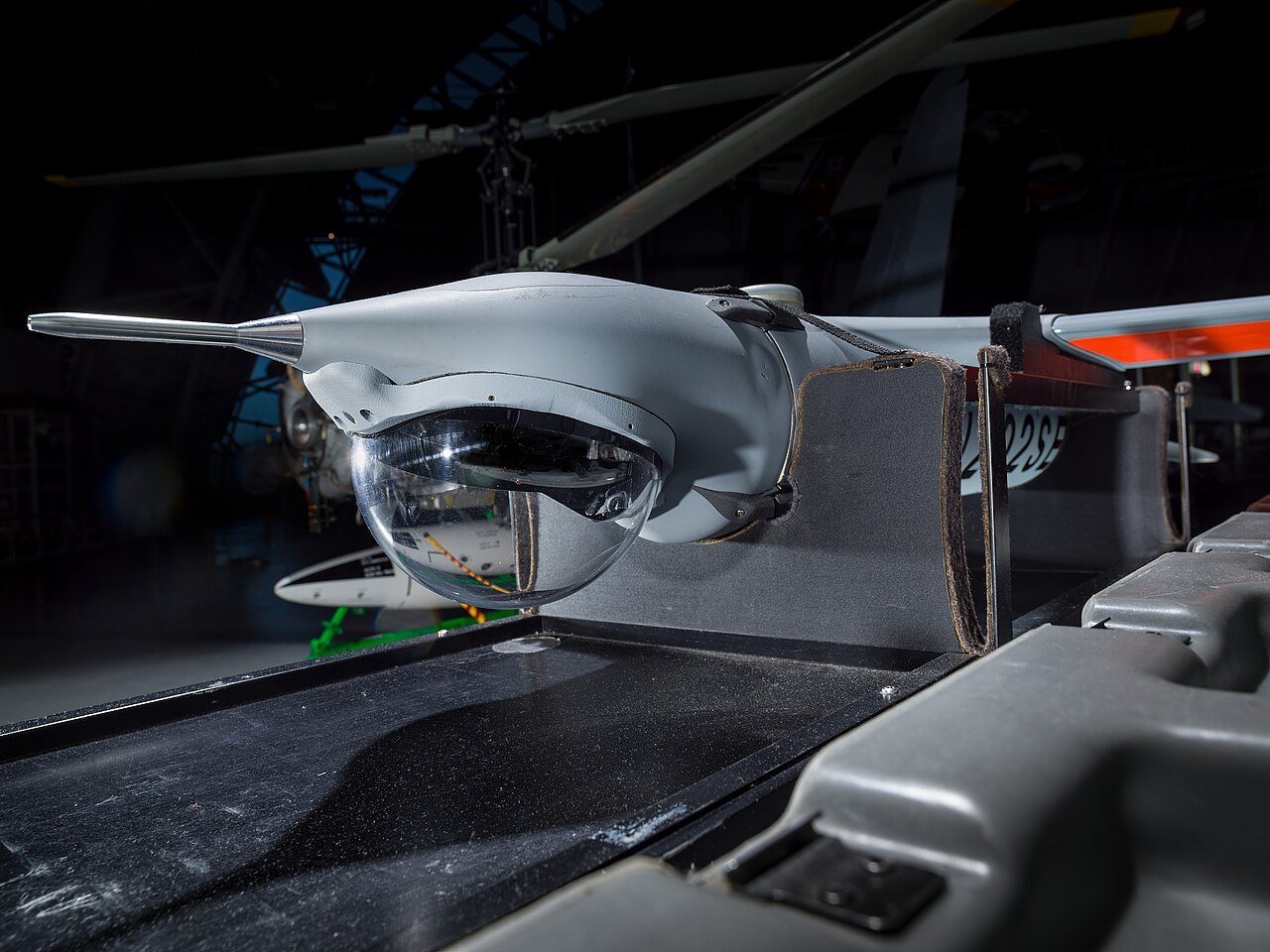
Where the ScanEagle flies and flew
The ScanEagle’s record
The ScanEagle is unarmed. Its record is one of reconnaissance hours, flown for US forces in Iraq and Afghanistan, at sea against piracy and smuggling, and for many allied forces. The figures below come from the US Air Force and Boeing.
See how training and combat types compare in the military aircraft statistics database. Figures are approximate.
Everything people ask about the ScanEagle
Can I fly in a Boeing Insitu ScanEagle?
Is the ScanEagle armed?
How does the ScanEagle take off and land?
How long can a ScanEagle stay in the air?
Who makes the ScanEagle?
Did Iran capture a ScanEagle?
You can’t fly the ScanEagle.
These, you can.
Most of this museum you can only look at. These genuine military jets you can fly yourself with MiGFlug — with aerobatics and time on the controls.
 Fly the L-39 AlbatrosThe world’s most-flown jet trainer — aerobatics included
 Fly the F-104 Starfighter“The missile with a man in it”
 Fly the MiG-21The Cold War’s most-produced jet
 Fly the T-33 Shooting StarAmerica’s first jet trainer
 Fly the DH VampireA piece of early jet history
 Fly the S.211Agile Italian jet trainer
 Fly the MB-326The classic Aermacchi jet
 Fly the MiG-15The Soviet legend of the Korean War
Continue the tour
Every fact, checked
- Scan Eagle fact sheetUS Air Force: roles, Skyhook, endurance, Marine Corps combat hours and sorties
- From Dolphins to Destroyers: The ScanEagle UAVDefense Industry Daily: origins, Boeing acquisition of Insitu, operators
- Scan Eagle Proved Worth Over Libya, Maker Insitu SaysAIN Online, Chris Pocock, September 2011: Operation Unified Protector
- Iran has unveiled a new drone based on a captured U.S. Boeing ScanEagleThe Aviationist, David Cenciotti, September 2013: capture claim and Yasir copy
- U.S. announces $800 million more military aid for UkrainePBS NewsHour, August 2022: 15 ScanEagles for Ukraine
- Brazilian Navy Details ScanEagle AcquisitionUAS Vision, December 2019: FMS package contents