
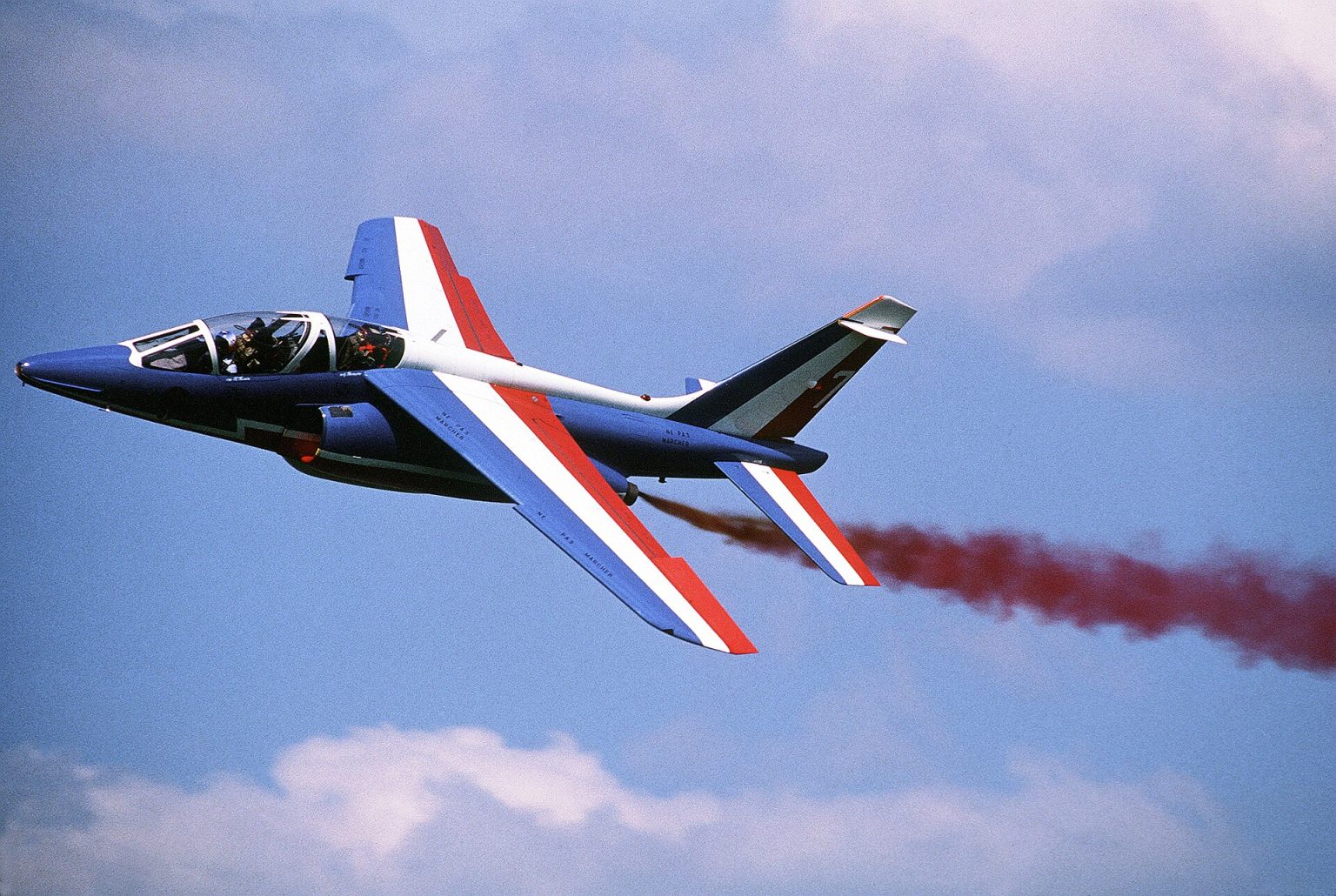
Dassault/Dornier Alpha Jet
The Franco-German workhorse
One airframe, two nations, two jobs — a nimble twin-engine jet built by France and West Germany to teach fighter pilots and, in German hands, to fly low and hit hard. Four decades on it still trains, tows targets and plays the aggressor from Africa to the airshow circuit.
One jet, two very different jobs
By the late 1960s France and West Germany both needed a modern jet to replace ageing trainers and light-strike types — and both wanted to build it at home rather than buy American. In 1969 they agreed to do it together. France’s Breguet (soon absorbed into Dassault) teamed with Germany’s Dornier, their joint design beat a competing proposal, and in 1970 the two governments signed off on a shared programme. The result flew for the first time on 26 October 1973.
What made the Alpha Jet unusual is that the same airframe was asked to do two quite different things. France wanted an advanced trainer to school its fast-jet pilots; West Germany wanted a light attack and close-air-support aircraft to replace the Fiat G.91 and fly low against Warsaw Pact armour. So the partners built two versions — the French Alpha Jet E with a rounded training nose, and the German Alpha Jet A with a pointed nose, attack avionics and a hard-hitting cannon — on one common design.
It worked. Roughly 480 were built, France’s Patrouille de France display team adopted it in 1981, and export orders followed across Africa, the Middle East and Asia. Germany later judged it surplus and sold its fleet abroad; today Alpha Jets still train pilots in Egypt and Morocco, fly light strikes in Nigeria, and turn up in civilian hands as target-tugs, aggressors and airshow stars — some owned by the world’s largest private air forces.
01How France and Germany built one Alpha Jet for two opposite missions
The programme was a genuine 50/50 collaboration. Dassault-Breguet built the forward fuselage, Dornier built the wings and rear fuselage, and Belgium’s SABCA joined in on components; final assembly lines ran in both France and Germany. The clever part was the split specification: rather than compromise on a single jet that suited neither air force, the partners agreed a common airframe and engine and then diverged on nose, avionics and armament.
France’s Alpha Jet E (“Ecole”, school) kept things light and forgiving for student pilots. West Germany’s Alpha Jet A (“Appui”, support) added a nav/attack system, a laser rangefinder option, a 27 mm Mauser cannon pod and the plumbing for bombs and rockets. It is one of the cleaner examples of a multinational defence project actually delivering two tailored aircraft from one shared design — and doing it on time.
What makes the Alpha Jet special
Two small turbofans — and a safety net
The Alpha Jet is powered by two SNECMA-Turbomeca Larzac 04 turbofans of roughly 13 kN (about 1,350 kgf) each. Modest thrust, but two engines meant a student could lose one and still fly home — a real advantage over single-engine trainers of the era. The efficient turbofans also gave long endurance and a low fuel bill, which is exactly what a training fleet flying thousands of hours a year wants.
One airframe, split into trainer and striker
The same wing, fuselage and engines carried two different mission fits. The French E model was a clean advanced trainer; the German A model was a light-attack jet with a nav/attack system and a centreline cannon pod. Later Egyptian MS1/MS2 variants and the enhanced Alpha Jet 2 pushed the attack side further with updated avionics and Magic air-to-air missiles.
Rugged, simple and cheap to run
The Alpha Jet was built to operate from rough or short strips, take a beating and keep flying with basic maintenance — qualities that made it a favourite of African and Middle-Eastern air forces on tight budgets. That same simplicity is why so many now fly as civilian warbirds and contractor jets: they are affordable to buy, easy to keep airworthy and cleared for demilitarised private use.
02The Larzac engines: why two small turbofans beat one big one for training
The Larzac 04 was developed jointly by France’s Turbomeca and SNECMA specifically for this class of aircraft. Each engine is a compact two-spool turbofan giving around 13 kN of thrust — not much on its own, but the pairing gives the Alpha Jet genuine twin-engine redundancy. For a trainer, that matters enormously: an engine failure on take-off or in the circuit is survivable, letting instructors push students harder than they safely could on a single-engine jet. The bypass design also sips fuel compared with the pure turbojets it replaced, keeping the cost-per-hour low across fleets that fly constantly.
03Alpha Jet E vs Alpha Jet A: the trainer and the tank-buster
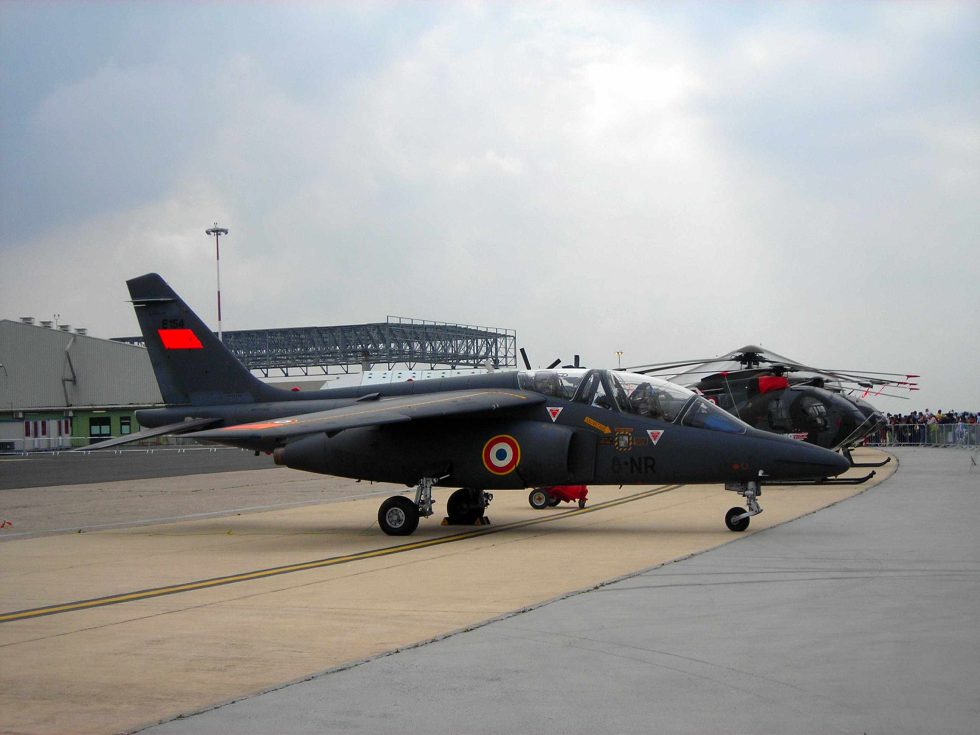
Look closely and you can tell the two apart by the nose. The French Alpha Jet E has a rounded, deeper nose optimised for docile training handling. The German Alpha Jet A has a sharper, more pointed nose housing attack-oriented kit, and it carried a serious punch: a 27 mm Mauser BK-27 cannon in a centreline pod, plus bombs, rockets and Magic missiles on underwing pylons. West Germany bought 175 of the A model to fly low-level close air support against a feared Warsaw Pact armoured thrust — a role it held until the Cold War ended and the fleet was declared surplus.
Full specifications
Baseline note: the figures below describe the Alpha Jet E, the French trainer standard — 176 production aircraft delivered to the Armée de l’air from 1977, the version the Patrouille de France has flown since 1981, and the version every African and Gulf export customer bought. Deltas for the German Alpha Jet A close-support aircraft, for the Egyptian MS1 and MS2, and for the unsold Alpha Jet 2 / NGEA and Lancier / ATS proposals are in grey. Five things need settling before the tables begin. First, the engine. This page names the Larzac 04-C6, as the brief does and as the engine’s own literature does — the Larzac 04 variant list gives the 04-C6 and the later 04-C20 as the Alpha Jet engines. The most widely reproduced online specification box for the Alpha Jet instead names the 04-C5 at 13.24 kN, which is the same thrust to within a rounding error; the C5 was the early production standard and the C6 the definitive one, and no source reachable from here settles which engine sat in which airframe on which date. Take the designation as contested and the ~13.2 kN as firm. Second, the two aeroplanes. France wanted a jet trainer and Germany wanted a Fiat G.91 replacement, and rather than build two aircraft the programme built one airframe with two front ends: the French E has a rounded nose and deliberately austere avionics, the German A a sharp pointed nose containing a Doppler navigation radar, a weapon-aiming system, a yaw damper, nosewheel steering and extra hardpoints. The brief calls the German nose a "ranging radar" and that is the one thing in the brief worth correcting: the German installation is a Doppler navigation set, and the laser rangefinder in the Alpha Jet story belongs to the Egyptian MS2, which pairs a Thomson-CSF laser rangefinder and head-up display with a Sagem Uliss 81 inertial nav/attack system. Third, production. Dassault gives 512 aircraft built, 329 of them exported. The operator arithmetic lands in the same place — 176 France, 175 Germany, 33 Belgium, 45 Egypt, 24 Morocco, 24 Nigeria, 7 Côte d’Ivoire, 7 Cameroon, 6 Qatar, 5 Togo, plus prototypes — so the figure of 93 that appears against the German Air Force in some operator lists is not the fleet size but some later snapshot of it. Germany bought 175. Fourth, the gun. There is no gun in the aeroplane. Every Alpha Jet that has ever fired at anything did so with a pod on the centreline, and which pod depended on who bought it: a 30 mm DEFA 553 for France and the French-supplied exports, a 27 mm Mauser BK-27 for Germany. Fifth, the load factors. The +12 / −6.4 that tables quote are ultimate structural figures, not flight-manual limits, and reading them as everyday allowances will mislead you about what a training aeroplane stressed for a 7,500 kg take-off weight actually does.
Dimensions & weights
- Crew
- 2 — tandem, the rear seat stepped up, under one long canopy. The Alpha Jet never entered service in any other configuration. The single-seat TST was a German transonic-wing testbed, not a fighting variant, and the German decision to take a two-seat trainer as its light attack aircraft meant the Luftwaffe went to war notionally carrying a second man and a second seat where the Fiat G.91 it replaced had carried fuel and structure
- Length
- 13.23 m (43 ft 5 in). Published tables give the same overall length for the round-nosed French E and the pointed German A, which is worth a raised eyebrow given how different the two noses look, and is probably an artefact of everyone copying one table
- Wingspan
- 9.11 m (29 ft 11 in) — short. The wing is shoulder-mounted and swept, with fixed leading edges and no slats or leading-edge devices of any kind. That omission is the single largest cost saving in the design and it is why the aeroplane stalls where it does
- Height
- 4.19 m (13 ft 9 in) to the top of the fin
- Wing area
- 17.5 m² (188 sq ft)
- Aspect ratio
- 4.8 — low enough to keep gust response civilised down low, which mattered more to the Germans flying nap-of-the-earth close support than to the French flying circuits at Tours
- Empty weight
- 3,515 kg (7,749 lb)
- Gross weight, clean
- 5,000 kg (11,023 lb) — two crew, full internal fuel, nothing on the pylons. This is the training weight and the one the handling figures below belong to
- Maximum take-off weight
- 7,500 kg (16,535 lb). Half as much again as the clean weight, and the gap between those two numbers is the whole argument of the Franco-German programme: France paid for the 5,000 kg aeroplane and Germany paid to certify the 7,500 kg one
- Internal fuel
- ~1,520 kg (~3,351 lb) in wing and fuselage tanks
- External fuel
- 2 × 310 l (2 × 82 US gal, 68 imp gal) on the inboard wing pylons
- Maximum external stores
- ~2,500 kg (~5,512 lb) across five hardpoints — one centreline and four underwing. In practice the centreline is almost always the gun pod, so the useful ordnance load is four wing stations
- Wing loading
- 286 kg/m² (58.5 lb/sq ft) at 5,000 kg, rising to 429 kg/m² (87.8 lb/sq ft) at maximum take-off weight. Derived here from the published area and weights rather than quoted from a source, because the sources do not quote it
Performance
- Maximum speed
- 1,000 km/h (621 mph, 540 kn) at sea level
- Limiting Mach number
- M 0.86 — widely quoted but absent from the primary specification tables, so treat it as the working figure rather than a certified one. The airframe is area-ruled and honest into the high subsonic range; it was never intended to go supersonic and does not
- Stall speed, flaps and undercarriage down
- 167 km/h (104 mph, 90 kn)
- Stall speed, clean
- 216 km/h (134 mph, 117 kn) — the price of a fixed-leading-edge wing, and nearly 50 km/h higher than with everything hanging out
- Landing speed
- 170 km/h (106 mph, 92 kn)
- Rate of climb
- 57 m/s (11,220 ft/min) at sea level
- Time to 9,145 m
- Under 7 min (30,000 ft)
- Service ceiling
- 14,630 m (48,000 ft) — genuinely high for a trainer, and a consequence of a clean high-bypass installation in a light airframe rather than of any special design effort
- Combat range, lo-lo-lo
- ~610 km (~380 mi, ~330 nmi). A range, not a radius; halve it and subtract for reserves and time over target before believing anything about reach
- Combat range, hi-lo-hi
- ~1,095 km (~680 mi, ~591 nmi)
- Ferry range
- 2,940 km (1,830 mi, 1,590 nmi) with drop tanks — the figure that let ex-Luftwaffe airframes be delivered across Europe under their own power in the 1990s clearances
- Take-off run
- 410 m (1,350 ft)
- Landing run
- 610 m (2,000 ft). Together with low-pressure tyres and a designed ten-minute turnaround, this is what made the type usable from semi-prepared strips in west Africa long after its European owners had sold it
- Load factor
- +12 / −6.4 ultimate. Not the flight-manual limit, and not comparable with the operating limits quoted for fighters
Propulsion & systems
- Engines
- 2 × SNECMA/Turbomeca Larzac 04-C6 turbofans — the joint Franco-French engine programme (SNECMA and Turbomeca) chosen over the American General Electric J85 specifically so that Alpha Jet exports would not need United States clearance. France financed the engine development outright. That single decision is why the aeroplane could be sold to Egypt, Morocco, Nigeria, Qatar, Togo, Cameroon and Côte d’Ivoire without a word from Washington, and it is the most consequential engineering choice in the programme
- Rated thrust
- 13.2 kN (~2,970 lbf) each, ~26.5 kN (~5,940 lbf) total. The Alpha Jet 2 / NGEA proposal raised this with the Larzac 04-C20
- Bypass ratio
- 1.04 — a true turbofan, and unusual in a trainer of this generation, where the competition was largely straight turbojets. It is why the fuel figures are as good as they are
- Engine dry weight
- 295 kg (650 lb) each
- Engine dimensions
- 1,187 mm long (46.7 in), 452 mm (17.8 in) inlet diameter — small enough that an engine change is a flight-line job rather than a hangar one
- Specific fuel consumption
- 73 kg/(kN·h) at maximum thrust
- Thrust-to-weight
- 0.54 at the 5,000 kg clean weight, falling to 0.36 at maximum take-off weight. The second number is the one that explains why a fully loaded Alpha Jet A in a hot climate is an unhurried aeroplane
- Air intakes
- Fixed, unswept, no variable geometry — another deliberate simplification. The airframe was shaped to the area rule but nothing about the induction system was allowed to become expensive
- Flight controls
- Fully powered, twin independent hydraulic systems with load-factor-limited artificial feel — a deliberate teaching aid, since the stick force a student feels is scaled to the g he is pulling
- Undercarriage
- Retractable tricycle, low-pressure tyres for semi-prepared surfaces. Nosewheel steering was a German addition on the Alpha Jet A and not fitted to the baseline French E
- Cockpit and escape
- Pressurised and air-conditioned, two Martin-Baker ejection seats — the pressurised cockpit was justified on training grounds (a comfortable student learns faster) and turned out to matter far more for the high-altitude transit legs the type flies as a contractor aggressor today
- Navigation and attack
- Austere on the E — twin-gyro platform, no radar, a simple sight. The German A adds a Doppler navigation radar and a weapon-aiming system; the Egyptian MS2 adds a Sagem Uliss 81 inertial nav/attack system, a Thomson-CSF laser rangefinder and head-up display and a digital multiplex databus; the unsold Alpha Jet 2 / NGEA proposed a fully integrated digital nav/attack suite derived from Mirage 2000 work, and the Lancier proposed AGAVE or Anemone radar with a forward-looking infrared imager and laser targeting. The austerity was a sales decision, not an oversight: a cheap aeroplane with no export-controlled boxes in it sells to people other aeroplanes cannot reach
- Hardpoints
- 5 — one centreline plus four underwing; the German A was given additional stations
- Turnaround
- 10 min design target between sorties, with wing pylons low enough to load standing up. For a training fleet this is a more important number than any performance figure on this page, because it sets how many students an airframe puts through per day
04What an Alpha Jet costs to buy and fly today
As a Cold-War government programme, the Alpha Jet never had a clean open-market list price; period estimates put the flyaway cost in the low single-digit millions of dollars, but treat that as an order-of-magnitude figure. What is better documented is the second-hand and civilian market: surplus ex-military Alpha Jets have changed hands for a few hundred thousand to a couple of million dollars depending on condition and hours, which is part of why they are so popular with private warbird owners and adversary-air contractors. Operating costs are far lower than a frontline fighter — one reason the type has found a long second life outside the military. Any precise dollar figure attached to a specific airframe should be read as an estimate.
Armament & payload
The Alpha Jet has no gun of its own, and the pod it borrows tells you which country bought it
Nothing is built into the airframe. Five hardpoints carry roughly 2,500 kg, the centreline almost always carries a gun pod, and the four wing stations carry everything else — which for most of this aeroplane’s working life has meant rocket pods and iron bombs. France podded a 30 mm DEFA 553; Germany podded a 27 mm Mauser BK-27 and added the hardpoints and the aiming system to use it properly. That difference, and the pointed nose that went with it, is the whole distinction between a trainer that can drop bombs and a light attack aircraft that can teach.
The consequence shows up in combat records. Nigerian and Cameroonian Alpha Jets fighting Boko Haram, and Moroccan Alpha Jets fighting the Polisario Front in the Western Sahara, have used the gun, unguided rockets and unguided bombs — the armoury of a 1960s attack aeroplane, delivered by a 1970s airframe, in the 2010s and 2020s. Every attempt to give the type precision weapons, from the Egyptian MS2’s laser rangefinder to the Lancier’s radar and FLIR, either stopped at the proposal stage or reached only a handful of airframes. Weapon fits vary sharply by operator and by mark, national clearance lists are not public, and several of the stores commonly attributed to the type in secondary sources cannot be confirmed against a primary clearance document.
Gun
- No internal gun on any mark. The gun is a centreline pod, and it occupies the hardpoint that would otherwise take a bomb.
- France and French-supplied exports: 30 mm DEFA 553 pod, 150 rounds — 30 × 113 mm, about 1,300 rounds per minute, 765–815 m/s muzzle velocity, gun weight 83 kg.
- Germany (Alpha Jet A): 27 mm Mauser BK-27 pod, 150 rounds — 27 × 145 mm, 1,000–1,700 rounds per minute selectable, 1,100 m/s, 260 g projectile, gun weight 100 kg. A materially harder-hitting weapon than the DEFA, and the clearest single sign that the German aircraft was bought to fight.
- 150 rounds is roughly six to nine seconds of firing. Gun attacks on the Alpha Jet are single-pass affairs.
- The Patrouille de France removes the gun pod entirely and fits a smoke generator in its place.
Air-to-air
- Marginal, and honestly so. With no radar of any kind on the E or the A, air-to-air work is visual, short-range and defensive.
- AIM-9 Sidewinder, wingtip or pylon-mounted. Integration of the AIM-9L was the surviving element of the Luftwaffe’s 1980s upgrade after the ambitious Improved Combat Efficiency programme was cancelled in 1988 and replaced by an austere package.
- Matra R550 Magic, and the Magic 2 on the proposed Alpha Jet 2 / NGEA.
- The gun pod is a real air-to-air weapon for this aircraft against helicopters and light aircraft, and the Lancier proposal listed anti-helicopter work as a mission.
- No beyond-visual-range capability has ever been fitted or proposed for a production Alpha Jet.
Air-to-surface guided
- Effectively none in service. This card exists to say so plainly: the overwhelming majority of Alpha Jets flying today cannot deliver a guided weapon.
- The Egyptian MS2’s Thomson-CSF laser rangefinder and head-up display improved unguided delivery accuracy; it is a rangefinder, not a designator, and does not by itself confer laser-guided weapons.
- The Lancier / Alpha Jet 3 ATS proposal added a laser targeting system, FLIR and AGAVE or Anemone radar, and was pitched for anti-shipping work. No customer bought it.
- Nigeria’s 2011–2013 upgrade of part of its fleet for counter-insurgency work is the closest any operator has come to a modern strike fit, and even there the weapons employed against Boko Haram have been unguided.
Bombs
- Conventional low-drag and retarded bombs in the 250 kg and 500 lb classes on the four wing stations — the everyday load for every operator that has used the type in anger.
- Practice bomb carriers and dispensers, which is what most of the fleet’s bomb racks have actually carried, given that the type’s primary job was always training.
- Cluster and dispenser weapons were part of the German close-support fit; specific munitions attributed to the Luftwaffe Alpha Jet A in secondary sources are not consistently corroborated and are not listed here.
- Total external load is ~2,500 kg, but a realistic strike fit with a gun pod, two drop tanks and useful fuel reserve leaves two stations, and the practical bomb load is far below the paper maximum.
Rockets
- The type’s real weapon. Pods of 18 or 19 tubes, 68 mm or 70 mm calibre, on the wing pylons.
- 68 mm French rockets (Thomson-Brandt / TDA family) on French-supplied aircraft; 70 mm FFAR and CRV7-family rockets on aircraft in the wider market.
- Used operationally by Nigeria against Boko Haram, by Cameroon in the Far North, by Morocco against the Polisario Front and by Nigerian aircraft supporting ECOMOG in Liberia from 1990.
- Cheap, plentiful, unguided and indiscriminate — which is both why the Alpha Jet remains useful to small air arms and why its combat record in west Africa deserves to be read with care.
Pods & other stores
- 2 × 310 l drop tanks on the inboard wing pylons — the difference between a 610 km lo-lo-lo range and a 2,940 km ferry.
- Reconnaissance pods: battlefield reconnaissance was one of the two roles the Luftwaffe formally bought the Alpha Jet A for, alongside close support.
- Smoke generator pod in the gun position for the Patrouille de France, whose aircraft also carry nose-mounted searchlights and have had the gunsight removed for visibility.
- Electronic warfare and chaff/flare dispensers on some operators’ aircraft; contractor aggressor operators have added modern mission equipment that has no counterpart in any air force fit.
- Travel pods and ferry equipment — unglamorous, and a large part of what the fleet actually carries day to day.
Three typical loadouts
- Advanced training sortie, Alpha Jet E
- Clean, or a single centreline gun pod for gunnery work, plus practice bomb carriers on the inboard pylons. Two crew, full internal fuel, about an hour and a quarter of useful sortie. This is the configuration in which the overwhelming majority of the type’s million-plus flight hours were flown.
- Close support, Luftwaffe Alpha Jet A
- 27 mm Mauser BK-27 pod on the centreline, two 68/70 mm rocket pods inboard, two bombs or a dispenser weapon outboard, low level, Doppler navigation, no external fuel. Short legs by design — the Luftwaffe fought the Central Front from its own doorstep and never needed the range.
- Counter-insurgency strike, Nigeria or Cameroon
- 30 mm DEFA pod on the centreline, two rocket pods, one or two bombs, one drop tank, single pilot in the front seat. Unguided throughout, flown from a semi-prepared strip, turned round in minutes. This is what an Alpha Jet has most often done in combat in the last fifteen years.
Sourcing caveat: hardpoint count, store capacity, gun calibres and rocket-pod sizes come from the type’s published specification; gun performance figures come from the DEFA and Mauser BK-27 data. Operator-specific clearances are not public documents, and where a secondary source attributes a particular munition to a particular air force without corroboration it has been left out of these cards rather than repeated. Loadouts are representative reconstructions consistent with the hardpoint layout and the recorded operational use, not transcriptions of any single mission order.
Variants
One airframe, two national front ends, and a decade of upgrade proposals nobody bought
The Alpha Jet exists because France and Germany wanted different aeroplanes and agreed, in July 1969, to build one anyway. The Breguet-Dassault-Dornier TA501 was selected in July 1970; work was split so that Dassault built the front and centre fuselage, Dornier the wing, tail and rear fuselage, and SABCA in Belgium the nose and flaps, with two final assembly lines and roughly 4,500 people employed on the programme in each country. The French prototype flew from Istres on 26 October 1973, the German from Oberpfaffenhofen in January 1974, and the first production aircraft in November 1977.
What followed is the part worth studying. The French got the trainer they asked for and still fly it. The Germans got a close-support aircraft that was obsolete as a war-fighting proposition within a decade of delivery, cancelled its ambitious mid-life upgrade in 1988, began disposing of the fleet in 1992 and sold the aircraft off at prices — Thailand paid a reported US$27,000 an airframe in 1999 — that had more to do with the roughly DM100,000 a month it cost to store each one than with what the aeroplane was worth. That fire sale seeded almost every civil, warbird and contractor Alpha Jet flying today.
Dassault built 512 Alpha Jets, 329 of them exported. Ten air forces bought them new. The upgrade proposals that would have kept the production line open — the Alpha Jet 2, the Lancier, the naval trainer — found no customers at all.
- Alpha Jet E (1977–1985, 176 for France)
- The baseline French advanced trainer: rounded nose, austere avionics, no radar, optional 30 mm DEFA gun pod. The version on which this page’s figures are based, and the version the Patrouille de France has flown since 1981.
- Alpha Jet A (1979–1983, 175 for West Germany)
- The close support and battlefield reconnaissance version. Pointed nose with Doppler navigation radar, more extensive weapon-aiming system, yaw damper, nosewheel steering, additional hardpoints, 27 mm Mauser BK-27 pod. Germany paid the additional development cost. Eighteen were deployed to Turkey during the 1991 Gulf War as a NATO reassurance measure.
- Alpha Jet 1B / 1B+ (1978–1980, 33 for Belgium)
- Belgian aircraft assembled by SABCA; the 1B+ upgrade added a laser-gyro inertial system, GPS and a head-up display. Moved to Cazaux in France in 2005 for initial operational training, retired December 2019, and 25 sold to Top Aces in July 2020.
- Alpha Jet MS1 (from 1978, 30 for Egypt)
- Egyptian trainer standard under the 17 September 1978 licence agreement with the Arab Organization for Industrialization: four aircraft built complete in France, 26 assembled from knock-down kits at Helwan. Up to 160 Egyptian-built aircraft were projected; nothing like that number was built.
- Alpha Jet MS2 (early 1980s, 15 for Egypt)
- The armed Egyptian version: Sagem Uliss 81 nav/attack system, Thomson-CSF laser rangefinder and head-up display, digital multiplex databus. Replaced MiG-17s in the ground attack role where the MS1 replaced L-29s and MiG-15s in training. Cameroon also received MS2s.
- Alpha Jet 2 / NGEA (proposed from the mid-1980s, no new-build sales)
- MS2 avionics plus a fully integrated digital navigation and attack system, Matra Magic 2 air-to-air missiles and uprated Larzac 04-C20 engines. Egyptian aircraft were brought to a comparable standard; nobody bought the aeroplane as a new build.
- Alpha Jet 3 / ATS "Lancier" (proposed, never built)
- The ambitious one: AGAVE or Anemone radar, forward-looking infrared, laser targeting, integrated digital cockpit, all-weather ground attack plus anti-shipping and anti-helicopter roles. A serious attempt to turn a trainer into a light combat aircraft, and a complete commercial failure.
- Alpha Jet Maritime / Marine 3 (proposed, never built)
- A navalised carrier-capable trainer for the Aéronavale. Not proceeded with; French naval pilots continued to train in the United States.
- Alpha Jet TST (from 1982, German trials aircraft)
- Single-seat testbed with a supercritical transonic wing, flown by the German Air Force for aerodynamic research. The only single-seat Alpha Jet.
- B.J.7 and Alpha Jet E+ / Al-Ghait (export redesignations and conversions)
- B.J.7 is the Royal Thai Air Force designation for the ex-Luftwaffe Alpha Jet A, flown by 231 Squadron at Wing 23, Udorn. Morocco upgraded its 24 Alpha Jet E to E+ standard in 2008, and separately converted aircraft to the Al-Ghait configuration for cloud-seeding work — probably the most unexpected second career any Alpha Jet has had.
Closing caveat: production totals here are Dassault’s own — 512 built, 329 exported — and reconcile reasonably with the sum of the ten launch customers’ orders. Delivery-year ranges vary by a year or two between sources. The figure of 93 that appears against the German Air Force in some operator tables is not the number Germany bought; Germany took 175. Cameroon is variously given seven or six aircraft. The Alpha Jet 2, Lancier and Maritime entries describe proposals as marketed, not aircraft flown, and the exact avionics fit offered in each shifted over the decade they were being pitched.
Operators
A single Franco-German programme that produced two quite different aeroplanes — the French Alpha Jet E trainer and the German Alpha Jet A light attack aircraft — and whose operator list was then rewritten by Germany selling its entire fleet on.
Dassault and Dornier built 512 Alpha Jets, 329 of which Dassault records as exports — two figures the manufacturer publishes side by side, and which cannot both be reconciled with its own statement that France and Germany each ordered 175, so no split between home and export production is asserted here. The programme was split down the middle: France ordered 175 Alpha Jet E advanced trainers (E for école) while the Luftwaffe ordered 175 Alpha Jet A close-support machines to replace the Fiat G.91, with a different nose, different avionics and a different job. France is still the defining operator and holds the largest military fleet — 42 aircraft at 31 December 2025, flying the adversary and operational-transition role at Cazaux and equipping the Patrouille de France — but Germany retired its fleet between 1992 and 1998 and became the world’s biggest second-hand Alpha Jet dealer, sending 50 to Portugal, 25 to Thailand, 12 to Britain and the remainder to civilian adversary-air and test contractors. Egypt, which assembled its own aircraft at Helwan, is the second-largest military operator and is now shopping for a replacement trainer; Canada’s Top Aces holds the largest fleet of any kind. Quantities in the table are airframes on charge with that operator at the date given in the note — for a current operator the fleet believed held now, for a former operator the number that service held at its peak, stated as such in each note. Where no credible current figure is published the entry is a range or a tilde estimate and the note says why. Historical totals ever acquired — the 175 Germany took on charge, the 24 delivered to Morocco, the 45 delivered to Egypt, the 25 Thailand received — live in the notes, so second-hand airframes are not counted twice in the quantity column.
Current strength, largest fleet first. Where a figure is a range or an estimate the bar is drawn at the middle of it and the number keeps its published form.
In service with
- French Air and Space ForceFrance · 42 Alphajet held for fighter-pilot training and the Patrouille de France at 31 December 2025 on the 2026 edition of Chiffres clés de la défense, down from 47 a year earlier; 175 Alpha Jet E taken on charge from 1979, replacing the T-33, Fouga Magister and Mystère IVA; student pilot training on the type ended in 2023 and the survivors now fly operational transition and Red Air adversary work at Cazaux with ETO 1/8 Saintonge, ETO 2/8 Nice and EE 3/8 Côte d’Or, plus eight with the Patrouille de France, which has flown the type since 1981
- 42 · 1979–
- Egyptian Air ForceEgypt · 45 taken on charge and delivered in 1982–83 — 30 Alpha Jet MS1 (4 built by Dassault, 26 assembled by the Arab Organization for Industrialization at Helwan under the licence agreement of 17 September 1978) and 15 Alpha Jet MS2 with Uliss 81 nav/attack, laser rangefinder and HUD (4 from Dassault, 11 from knock-down kits); about 24 are believed still airworthy and roughly 20 are flown on advanced flying training, the whole fleet reported brought to MS2 standard. Egypt has no published official figure and is seeking up to 36 new trainers in a first tranche to replace the type. Egypt signed a pilot training and Alpha Jet maintenance agreement with Nigeria in September 2024.
- 20–24 · 1982–
- Top AcesCanada · not an air arm — a civilian contract adversary-air company, so these airframes are counted again under their original military owners; 60 held in all, 35 Alpha Jet A of ex-Luftwaffe and ex-QinetiQ origin and 25 Alpha Jet 1B bought from Belgium in 2020, with about 19 active in Canada and Europe and the rest in long-term storage as at 2026; the three airframes listed separately under Air Affairs Australia may sit inside this total; flown as Red Air and electronic warfare training assets under contract to the Canadian Armed Forces (with 414 Squadron) and to the Bundeswehr, the Canadian CATS contract running to 2029
- 60 · 2014–
- Royal Moroccan Air ForceMorocco · 24 Alpha Jet E delivered between 1979 and 1981 from French production, split between a training squadron and a COIN squadron at Meknès; flown on strike missions against the Polisario Front in the Western Sahara War, with one shot down in December 1985; one aircraft modified as the Al-Ghait with a Sperry weather radar; the survivors were upgraded to E+ standard from 2008 and about 19 remain listed
- ~19 · 1979–
- Royal Thai Air ForceThailand · 25 ex-Luftwaffe Alpha Jet A bought in 1999 at about one million baht (roughly US$27,000) each to replace the OV-10 Bronco in the border patrol role; designated B.J.7 and nicknamed Hunter, flown by 231 Squadron of Wing 23 at Udon Thani; about 19 remain, upgraded locally as the Alpha Jet TH with a new mission computer, secure datalink and AIM-9 Sidewinder capability, and due to be replaced along with the F-5E/F TH by a single squadron of 12–14 aircraft in fiscal 2031–35
- ~17 · 2000–
- Nigerian Air ForceNigeria · Between eight and thirteen flying; no operator figure is published and the range reflects that. 24 Alpha Jet A were taken on charge from 1981, new-build from Dornier rather than ex-Luftwaffe, and fifteen have been lost to combat or accidents; about eight remained in service at the end of 2024. Five more were bought from the United States in 2015, one of which has since crashed. Twelve surplus French Alpha Jet E were bought through Sofema, announced on 4 December 2024, six to be restored to flying condition and six to be broken for spares; at least four had arrived by April 2025 and no source states how many of the six are now flying. One aircraft was lost on 6 December 2025 on a post-maintenance test flight near Karabonde in Niger State, both pilots ejecting safely.
- 8–13 · 1981–
- Cameroon Air ForceCameroon · seven Alpha Jets taken on charge, delivered in 1984 to BA 301 at Garoua; about six are still held and published listings suggest only about four are serviceable. Cameroon publishes no official figure, so the count is an estimate. The figure of 27 that circulates in some Alpha Jet operator tables is an error: it exceeds the number ever delivered and appears alongside other figures in the same table that are known to be wrong.
- ~6 · 1984–
- Togolese Air ForceTogo · five Alpha Jet E from French production delivered in 1981 to replace armed jet trainers; still carried as an operator in current listings, but no published figure gives how many remain airworthy
- ~5 · 1981–
Formerly operated by
- German Air ForceGermany · 175 Alpha Jet A close-support aircraft taken on charge up to 1983, first German production aircraft flown 12 April 1978 and deliveries from March 1979, replacing the Fiat G91R/3; Germany trained its pilots in the United States and used the Alpha Jet as a strike aircraft, with weapons training flown from Beja in Portugal, and upgraded the fleet under the Improved Combat Efficiency programme from 1985; 18 deployed to Turkey during the 1991 Gulf War; phase-out began in 1992 with 45 kept for lead-in fighter training and the last aircraft left service in 1998, storage costing a reported DM100,000 a month; 50 went to Portugal in 1993 (five as spares donors), 42 were offered to Poland in 1995, 25 went to Thailand and 12 to Britain in 1999, and the balance went to civilian operators including Top Aces and the Flying Bulls
- 175 · 1979–1998
- Portuguese Air ForcePortugal · 50 ex-Luftwaffe Alpha Jet A acquired in 1993 to replace the T-38 Talon and Fiat G.91, five of them used for spares; flown by Esquadra 103 Caracóis at Beja, first mission 6 October 1993, and by the Asas de Portugal display team; 28,516 flying hours accumulated before the last flight on 13 January 2018, after which the squadron was kept in being awaiting a new aircraft
- 50 · 1993–2018
- Belgian Air ComponentBelgium · 33 Alpha Jet E ordered on 13 September 1973 in two batches of 16 and 17 and delivered from 1978, with final assembly carried out in Belgium; upgraded by SABCA to Alpha Jet 1B+ standard with laser-gyro INS, GPS and a HUD, the first re-delivered in 2000; latterly pooled with the French fleet at Cazaux and phased out in 2019, with the last 25 airframes and a quantity of spares sold to Top Aces the following year
- 33 · 1978–2019
- QinetiQUnited Kingdom · not an air arm — a British test and evaluation contractor, originally the Defence Evaluation and Research Agency and from 2001 QinetiQ, flying on the military register from Boscombe Down; 12 ex-Luftwaffe Alpha Jet A bought in 1999 as chase and flight-test platforms because too few Hawks were available for the role, of which only six were returned to flying condition and six were kept for spares; used by the Empire Test Pilots’ School and retired on 31 January 2018, the whole fleet and its spares then being sold to Top Aces in June 2019
- 12 · 1999–2018
- Qatar Emiri Air ForceQatar · six Alpha Jet E from French production, ordered in 1979 as the opening move of a major expansion of the air force and delivered from 1980 for training and light attack; now carried on the Qatari retired list, but no published source gives the year they were withdrawn or where the airframes went, so no end date is stated here
- 6 · 1980–
- Ivory Coast Air ForceIvory Coast · six Alpha Jet CI entered service in October 1980 and a seventh was bought in 1983 after a follow-on order for six was cancelled; long since withdrawn, though no withdrawal date is published — the French destruction of the Ivorian air force at Yamoussoukro in November 2004 accounted for two Su-25s and several Mi-24s, and no source confirms an Alpha Jet among them
- 7 · 1980–
- Air Affairs AustraliaAustralia · not an air arm — a civilian contractor flying for the Australian Defence Force; three ex-Luftwaffe Alpha Jet A supplied by Discovery Air Defence, later Top Aces, from the third quarter of 2017 under the Jet Air Support trial, based at RAAF Base Williamtown for Australian Army joint terminal attack controller training and sea-skimming missile simulation for the Royal Australian Navy; the company, bought by QinetiQ in December 2022, no longer lists the type, and no end date for the contract is published
- 3 · 2017–
15 operators, 8 current. Dates are first delivery to last retirement, and the basis of the quantity column is stated above. Air forces with a MiGFlug Order of Battle page are linked (10 so far); the rest follow as the database grows.
From Cold-War compromise to civilian warbird
France and Germany team up
The two nations agree to jointly develop a common trainer / light-attack jet; Breguet-Dassault and Dornier win with their design.
First flight
Prototype 01 flies at Istres on 26 October, piloted by Jean-Marie Saget.
Production standard flies
The first production-configuration Alpha Jet takes to the air, clearing the way for deliveries.
French service entry
The Alpha Jet E enters service with the French Air Force as its advanced trainer on 30 January.
Germany and the Patrouille de France
Luftwaffe Alpha Jet A close-support jets arrive; in 1981 the Patrouille de France adopts the type for its displays.
Combat in Africa, surplus in Europe
Nigeria flies Alpha Jets on ECOMOG operations in Liberia; a reunified Germany declares its fleet surplus and begins selling it abroad.
European operators bow out
Portugal and Britain’s QinetiQ test fleet retire their Alpha Jets, ending the type’s front-line European career.
A long second life
Egypt, Morocco, Nigeria and others still fly it; civilian operators run demilitarised Alpha Jets as aggressors, target-tugs and airshow jets.
From the flight line: twelve Alpha Jet stories
A jet born of compromise
France wanted a trainer, Germany wanted a striker — so they built both from one design.
Read the full story
Backbone of the Patrouille de France
Since 1981 the Alpha Jet has been the mount of France’s national aerobatic team.
Read the full story
The Cold War tank-buster
West Germany’s 175 Alpha Jet A strikers were built to fly low against Warsaw Pact armour.
Read the full story
Three thousand sorties over Liberia
Nigerian Alpha Jets flew intensive combat missions supporting ECOMOG peacekeepers in the 1990s.
Read the full story
Strikes over the Western Sahara
Moroccan Alpha Jets hit Polisario forces during the long Western Sahara conflict.
Read the full story
Two engines, one confident student
Twin turbofans gave instructors the confidence to push trainees harder.
Read the full story
The first demilitarised fighter jets
The Flying Bulls’ Alpha Jets were the first ex-military jets licensed for civilian flight.
Read the full story
Playing the enemy for hire
Private contractors fly Alpha Jets as “red air” to train front-line pilots.
Read the full story
The RAF’s pace-setter
Britain’s QinetiQ flew Alpha Jets as fast target and support jets until 2018.
Read the full story
Building them under licence
Egypt assembled its own Alpha Jets and developed upgraded MS variants.
Read the full story
From Doha to Bangkok
Export Alpha Jets served across the Middle East and Asia as well as Africa.
Read the full story
Still working after fifty years
A 1970s design that never stopped finding new roles.
Read the full story
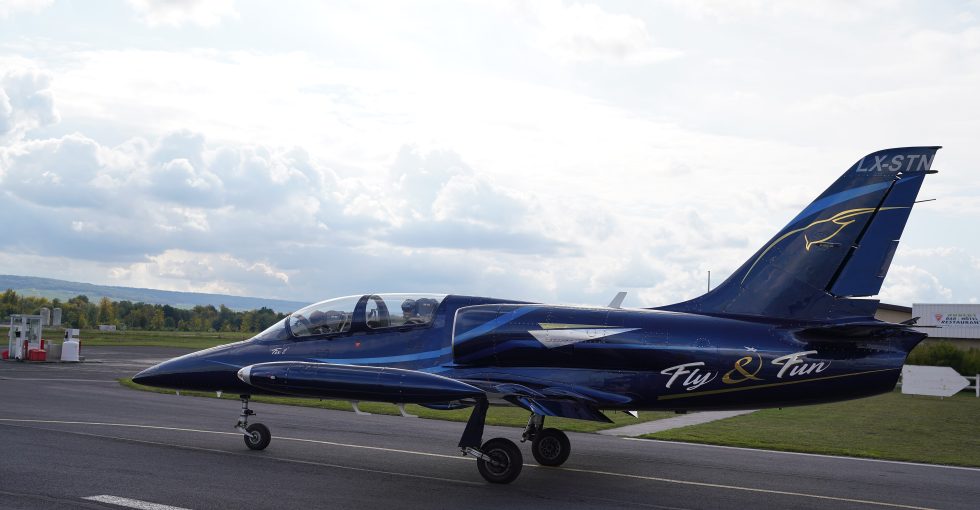
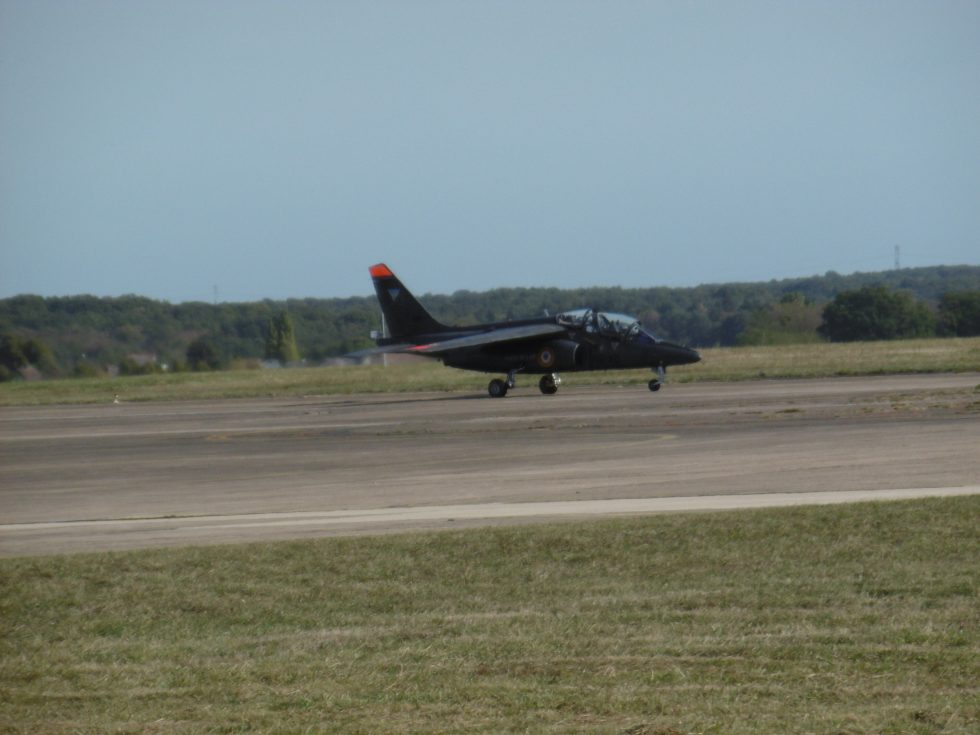
The Alpha Jet in pictures
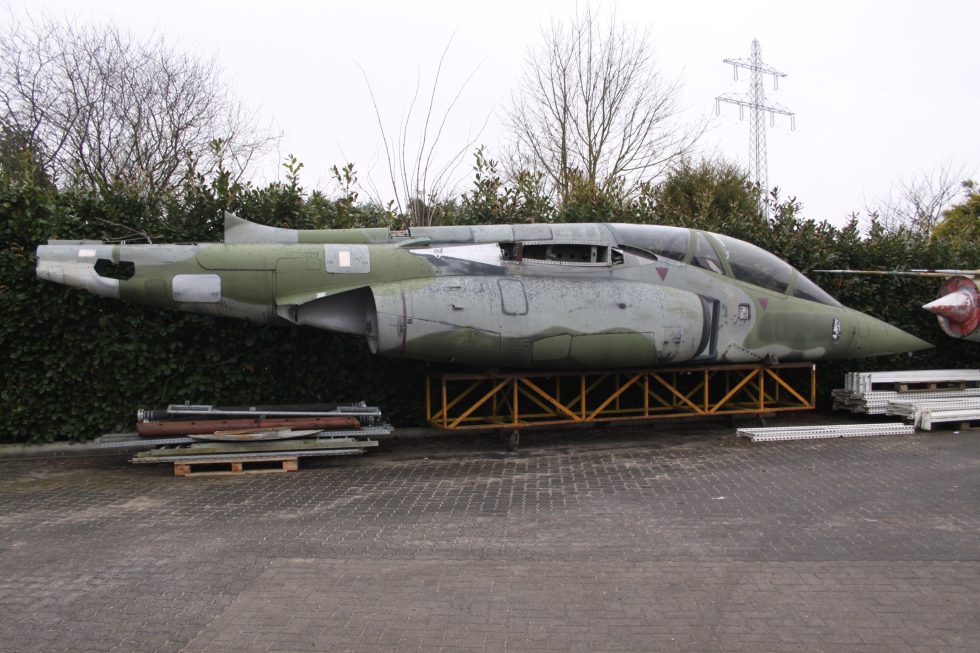
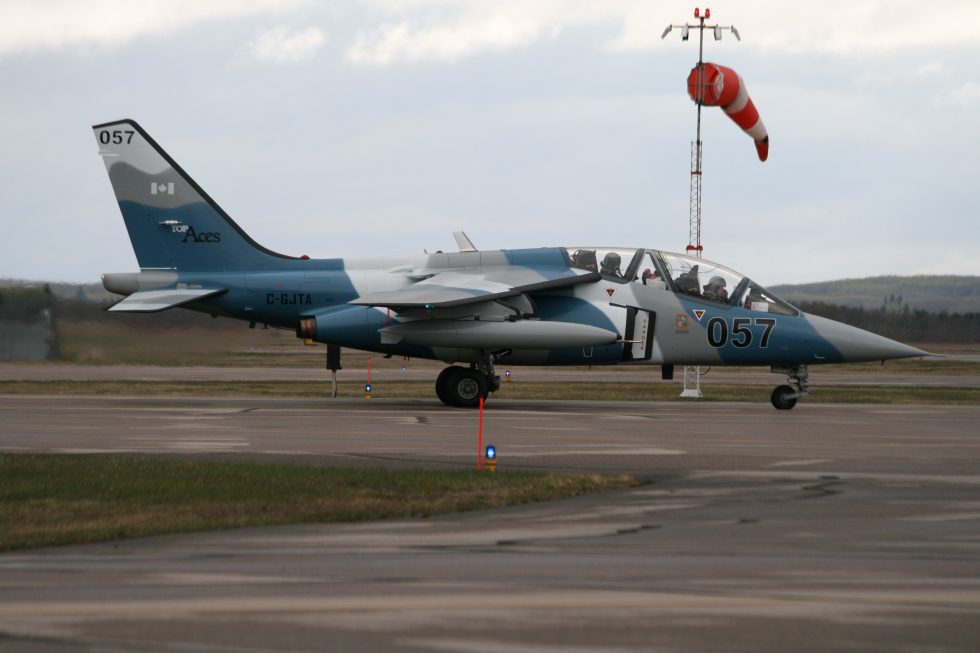
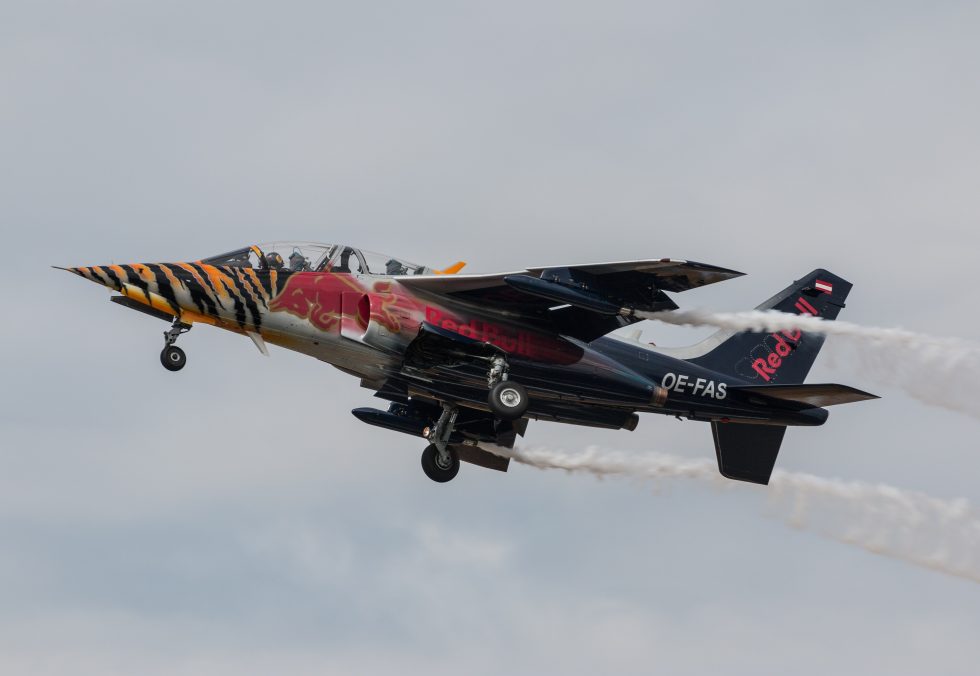
The Alpha Jet in motion
A dedicated video feature for the Alpha Jet is coming soon. In the meantime, look for Patrouille de France display footage and Flying Bulls demonstrations to see the type in its element.
The Alpha Jet in motion
WELT — one of the most-watched Alpha Jet films on YouTube.
Where the Alpha Jet flies
Where it actually fought
The Alpha Jet was designed as a trainer and a close-support jet, not an air-superiority fighter, and its combat record reflects that. Its fighting has been done in the light-attack role — above all in Africa, where Nigerian, Moroccan and other operators flew it in real wars. Precise sortie and loss figures are hard to verify and should be treated as approximate.
Compare the combat record of every military aircraft. Figures as of July 2026 and, for the Alpha Jet, necessarily approximate.
Everything people ask about the Alpha Jet
Can I fly in an Alpha Jet?
Who built the Alpha Jet?
What is the Alpha Jet used for?
How fast is the Alpha Jet?
How many Alpha Jets were built?
Is the Alpha Jet still in service?
Why does it have two engines?
You can’t fly the Alpha Jet.
These, you can.
Some legends only live in museums — others are fuelled and waiting. MiGFlug has put civilians in real military jet cockpits since 2004.
 Fly the L-39 AlbatrosThe world’s most-flown jet trainer — aerobatics included
 Fly the F-104 Starfighter“The missile with a man in it”
 Fly the MiG-21The Cold War’s most-produced jet
 Fly the T-33 Shooting StarAmerica’s first jet trainer
 Fly the DH VampireA piece of early jet history
 Fly the S.211Agile Italian jet trainer
 Fly the MB-326The classic Aermacchi jet
 Fly the MiG-15The Soviet legend of the Korean War
Continue the tour
Every fact, checked
- Dassault Aviation — Alpha JetManufacturer history: joint programme, first flight, production numbers and operators.
- Military Factory — Alpha JetTechnical specifications, dimensions, engines and armament.
- Global Military — Alphajet operatorsCurrent and former operators, fleet numbers and combat use.
- Simple Flying — Alpha Jet guideDevelopment, variants and modern civilian operators including the Flying Bulls and Top Aces.
- Bolt Flight — Franco-German powerhouseNigerian ECOMOG operations, Patrouille de France use and post-military export.
- Key Military — Boscombe Down Alpha Jets retiredQinetiQ’s UK test fleet and its 2018 retirement.
- Aviation Report — Portuguese Alpha Jet final flightPortugal’s retirement of the type in 2018.
- Military Africa — Nigeria’s Alpha JetsContinued Nigerian combat use and fleet reactivation.