
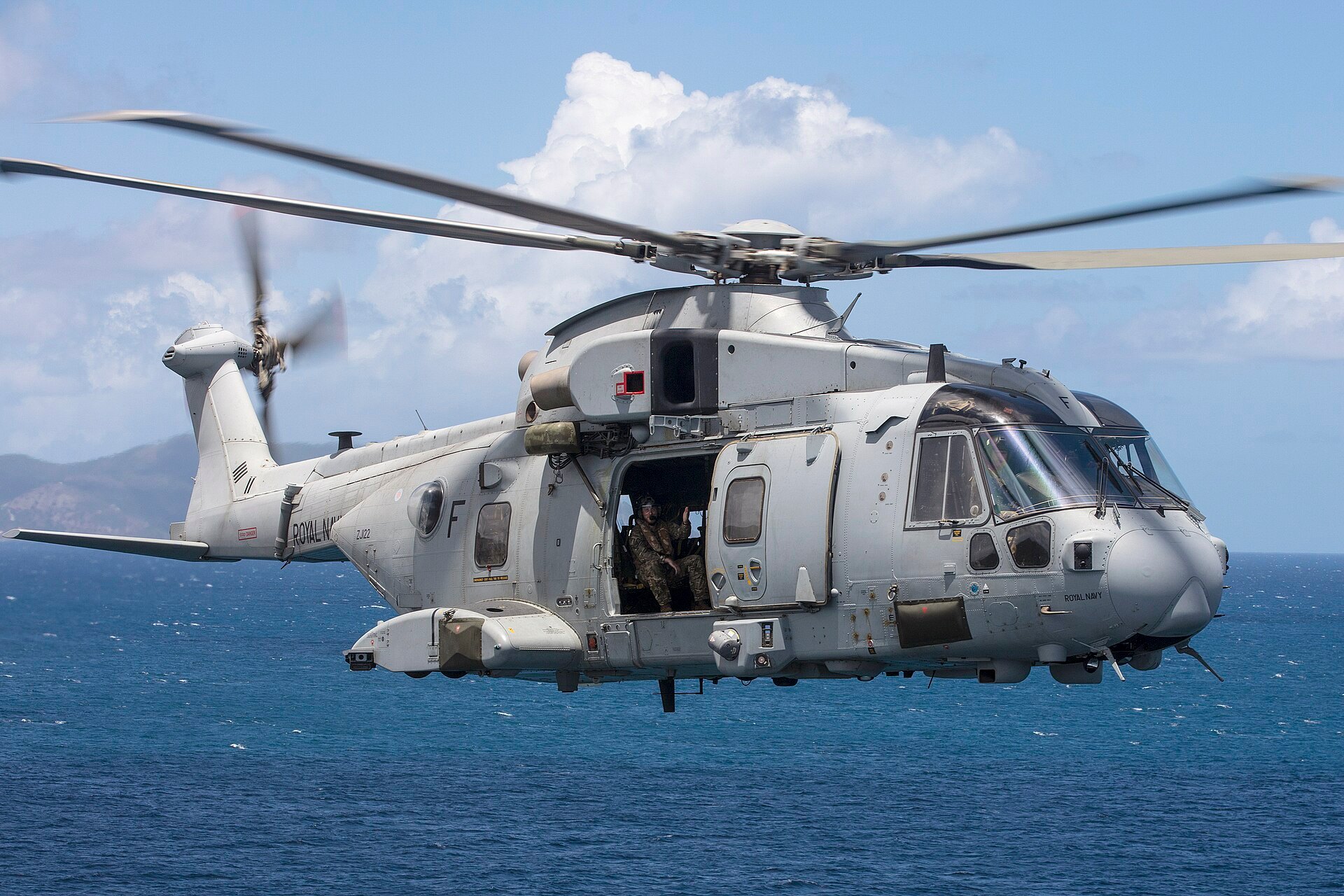
AgustaWestland AW101 Merlin
The Three-Engined Sea King Successor
The Anglo-Italian three-engined helicopter that replaced the Sea King: submarine hunter, commando carrier, Arctic rescuer and carrier radar picket, and a cancelled Marine One whose sales sparked scandals.
The Merlin: how Britain and Italy built a three-engined successor to the Sea King
By the late 1970s the Royal Navy’s Sea Kings were struggling to keep up with quieter Soviet submarines. In 1977 the Ministry of Defence asked for a replacement, and Westland proposed the WG.34, a three-engined helicopter about the size of a Sea King with more range and autonomy. Italy’s navy, flying Agusta-built Sea Kings, had the same problem, so Westland and Agusta formed a joint company, EH Industries, and the British government confirmed its participation in June 1981. The name was meant to be EHI 01, but a transcription error turned it into EH101. The first of nine pre-production aircraft, PP1, flew at Yeovil on 9 October 1987, piloted by chief test pilot Trevor Egginton, the man who had set the Lynx speed record a year earlier.
Development was slow and costly. A prototype was destroyed in 1993 and another in 1995, Canada cancelled a 50-aircraft order in 1993 at a cost of C$470 million, and the RAF would have preferred more Chinooks. But Britain ordered 44 anti-submarine Merlin HM1s and 22 RAF HC3 transports (the HM1s from 1991, the HC3s in 1995), and Italy 16 for its navy in 1995. The Royal Navy’s Merlin entered operational service in 2000. Its three engines, five-bladed BERP-derived rotor and active vibration control made it a very different machine from the Sea King, able to carry 24 seated troops, 16 stretchers or a Land Rover up its rear ramp. In 2007 the type became the AW101 after Westland and Agusta merged.
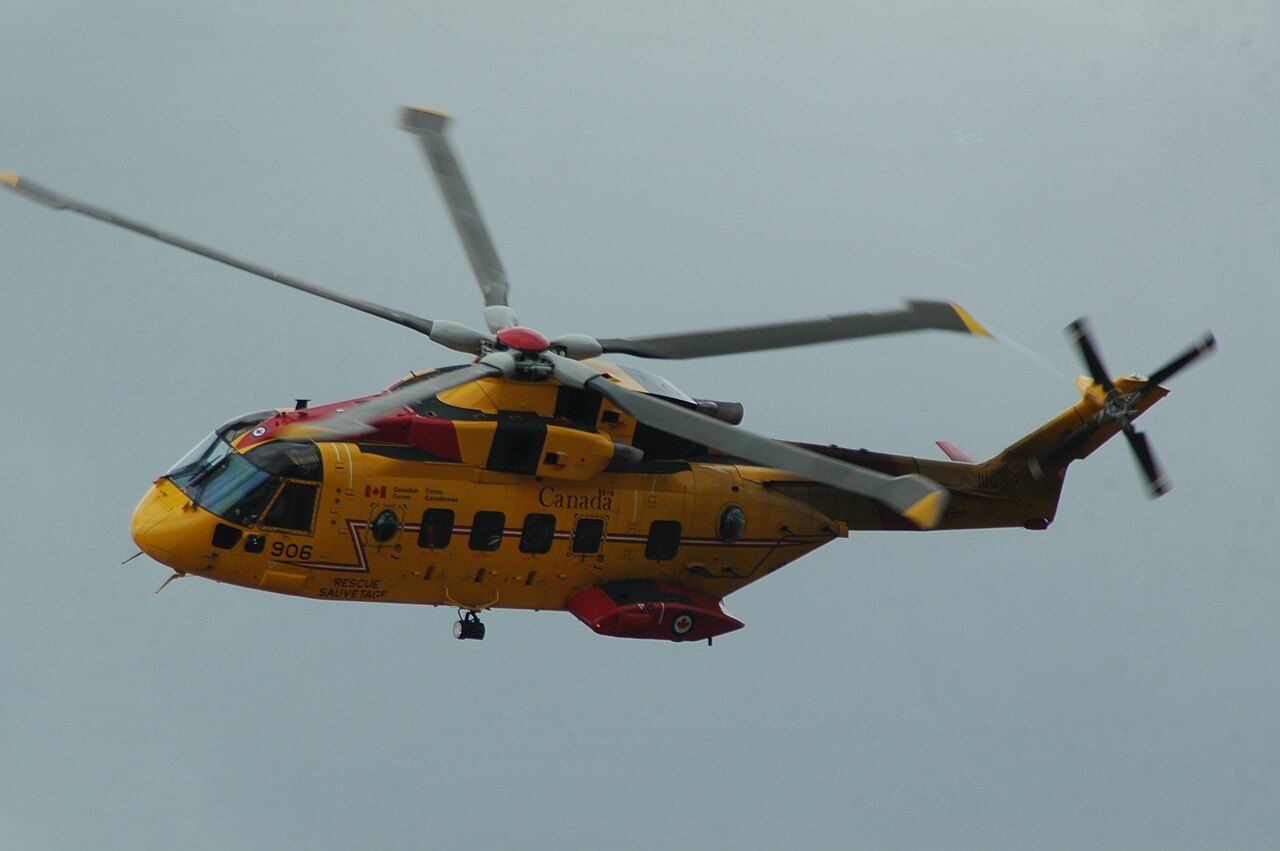
Customers followed, from Denmark, Portugal, Canada and Japan to Norway, Poland, Algeria, Saudi Arabia and Turkmenistan. RAF Merlins flew in Bosnia, Iraq and Afghanistan before passing to the Royal Navy’s Commando Helicopter Force, where 25 have been rebuilt as the folding, ship-capable Merlin HC4. Thirty HM2s hunt submarines from Culdrose, some carrying the Crowsnest radar that replaced the Sea King’s airborne early warning. Not every sale went well: a US presidential version was cancelled in 2009, and VIP deals in India and Indonesia ended in corruption scandals. The Royal Navy now plans to fly its Merlins until 2040, while Norway’s SAR Queens, Italy’s Caesars and Canada’s upgraded Cormorants keep the type busy far beyond British waters.
01The Merlin at war: Bosnia, Basra and Helmand
The Merlin HC3 entered RAF service with No. 28 Squadron at Benson in January 2001, and the type’s first operational deployment came in Bosnia in 2003. From 2004 RAF Merlins flew in southern Iraq on Operation Telic, where they became the main medical evacuation helicopter around Basra until Britain withdrew in June 2009; two pilots, Flight Lieutenants Kev Harris and Michelle Goodman, received the Distinguished Flying Cross for missions there. To find enough helicopters for Afghanistan, Britain bought six Danish AW101s in 2007 as the Merlin HC3A and formed a second squadron, No. 78.
In 2009 five Merlins were flying troops and supplies in Helmand. The deployment drew criticism because the aircraft initially lacked Kevlar armour, but by July 2010 the fleet was fully protected, and the Merlins allowed the Sea King detachment to leave Afghanistan in 2011. They themselves were withdrawn in June 2013 as British forces drew down. Two years later, at a parade at Benson in July 2015 attended by Prince Michael of Kent, the last of 25 RAF Merlins passed to the Royal Navy’s 845 Naval Air Squadron.
02The Merlin as a VIP helicopter: Marine One, India and Indonesia
The AW101’s size, three engines and quiet cabin made it attractive as a head-of-state transport, and by 2009 about 15 per cent of sales were VIP aircraft. The highest-profile order came from the United States, where a Lockheed Martin-led team won the competition to replace Marine One with the VH-71 Kestrel. Heavy customisation, cost overruns and political opposition killed the programme in June 2009, and the delivered aircraft were sold to Canada for US$164 million as spares for its CH-149 Cormorants.
India’s order went worse. In February 2010 it signed a US$753 million contract for 12 AW101s to carry the president and prime minister. Allegations that bribes worth almost US$68 million had been paid led India to suspend payments in 2013 and scrap the deal on 1 January 2014 after three aircraft had been delivered; senior Finmeccanica and AgustaWestland executives were tried in Italy, and India’s former air force chief denied wrongdoing. One of the undelivered Indian airframes later turned up in Indonesia, where an air force purchase opposed by the president and the armed forces commander ended with the helicopter sealed in a hangar with police tape in 2017. Indonesian investigators named suspects, a middleman was jailed in 2023, and the helicopter finally entered service in 2024.
What makes the Merlin special
Three engines
The Merlin uses three turboshafts, usually the Rolls-Royce Turbomeca RTM322, developed for the type and later used in the Apache and NH90, or the General Electric CT7. Canada chose it partly for the safety margin of a third engine over the North Atlantic, and they allow fuel-saving tricks: on a 486-nautical-mile flight to Jan Mayen in 2025, a Norwegian crew shut one engine down and saved about ten per cent of fuel per hour. Each engine has its own fuel tank, and an aerial refuelling probe can be fitted.
A rotor that fights vibration
The five-bladed main rotor, 18.6 metres across, uses carbon and glass blades edged with titanium alloy, their shape derived from the BERP blades first flown on the Lynx, improving efficiency and reducing noise. An active control of structural response system cuts airframe vibration by up to 80 per cent, sparing both crew and structure. The airframe is modular, built largely of aluminium-lithium alloy, de-iced for Arctic work and cleared from −45 to +50 °C.
A cabin with a ramp
The cabin is 6.5 m long, 2.3 m wide and 1.91 m high, with a rear ramp that takes a 3,050 kg load, enough for a Land Rover. It can carry 24 seated or 45 standing troops, 16 stretchers or cargo pallets, and the underslung hook lifts more than five tonnes. Naval anti-submarine versions instead fill the cabin with sonar processors and consoles; rescue versions carry hoists, searchlights and mission consoles for rescue specialists; the Japanese MCH-101 carries mine-hunting and mine-sweeping gear.
03The Merlin’s sensors: Blue Kestrel, sonar and the Crowsnest radar
The Royal Navy’s Merlin was conceived as an autonomous submarine hunter. The HM1 carried a Blue Kestrel 360-degree search radar, the FLASH dipping sonar, sonobuoys processed by the AQS903 system, derived from the AQS901 of the Nimrod maritime patrol aircraft, and four Sting Ray torpedoes or depth charges. The Merlin Capability Sustainment Programme, reported as costing between £750 million and £1.15 billion, rebuilt 30 aircraft as the HM2 with a new mission system, digital cockpit, electro-optical camera and multi-static sonar processing; the last was delivered in July 2016. Navy Lookout describes a Type 23 frigate’s towed array working with a Merlin as about the best anti-submarine combination available short of another submarine.
The HM2 also carries Crowsnest, a role kit that swaps the sonar suite for a repackaged Thales Searchwater radar and Cerberus mission system to give the Queen Elizabeth-class carriers airborne early warning. It ran about three years late: a limited pre-IOC version sailed with the 2021 carrier group, initial operating capability came in July 2023 and full capability at the end of March 2025, just before three Crowsnest Merlins sailed with HMS Prince of Wales. The Royal Navy plans to retire Crowsnest at the end of 2029.
AgustaWestland Merlin HM1 specifications
Specifications
- Crew
- 3–4 (pilot, observer, crewman)
- Capacity
- AW101: 24 seated or 45 standing troops, 16 stretchers or 3,050 kg (6,724 lb) internal; up to 5,440 kg (11,990 lb) underslung
- Length
- 19.53 m (64 ft 1 in) fuselage
- Main rotor diameter
- 18.59 m (61 ft)
- Height
- 6.62 m (21 ft 9 in)
- Empty weight
- 10,500 kg (23,150 lb)
- Max take-off weight
- 15,600 kg (34,390 lb)
- Powerplant
- 3 × Rolls-Royce Turbomeca RTM322-01 turboshafts, 1,566 kW (2,100 shp) each
- Cruise speed
- 278 km/h (173 mph; 150 kn); never-exceed speed 309 km/h (192 mph)
- Range
- 1,389 km (863 mi)
- Endurance
- About 5 hours
- Service ceiling
- 4,575 m (15,010 ft)
- Armament
- 4 × Sting Ray torpedoes or Mk 11 depth charges (HM1/HM2); door and window machine guns on transports; Marte anti-ship missiles on some Italian aircraft
Costs & production
- Unit cost
- India’s 2010 VIP order: US$753 million for 12 (about US$63 million each, including support); Indonesia’s proposed VVIP aircraft reported at US$55 million each (2015)
- Cost per flight hour
- No official figure published. Hedged estimate: among the costliest helicopters of its class to operate, likely well above US$10,000 per hour with support included, based on three turbines and Navy Lookout’s figure of about two maintenance hours per flying hour plus a major overhaul every 600 hours
- Production
- More than 180 sold by April 2009; built at Yeovil and Vergiate, with licence assembly by Kawasaki in Japan
- Programme
- UK requirement 1977; EH Industries formed early 1980s; first flight 9 October 1987; Royal Navy service 2000; HM2 and HC4 upgrades; out-of-service date 2040
04The Merlin’s variants: HM1 to HC4, Cormorant to SAR Queen
- PP1–PP9: nine pre-production prototypes, PP1 first flown 9 October 1987.
- Merlin HM1 / HM2: Royal Navy anti-submarine version, 44 built; 30 upgraded to HM2, some fitted for Crowsnest.
- Merlin HC3 / HC3A: RAF transport, 22 new plus six ex-Danish aircraft.
- Merlin HC3i / HC4 / HC4A: interim and full Royal Navy conversions of the 25 HC3/3As with folding rotors and tails and the HM2 cockpit.
- SH-101A, EH-101A, MH-101A: Italian Navy anti-submarine, early warning and amphibious support versions.
- HH-101A Caesar: Italian Air Force combat search and rescue, 15 delivered 2016–2020.
- CH-149 Cormorant: Royal Canadian Air Force search and rescue, with three more and an upgrade ordered in 2022.
- Model 512: Royal Danish Air Force rescue and transport Merlins.
- Models 514–516: Portuguese Air Force rescue, fishery protection and combat rescue Merlins, 12 in all.
- MCH-101 / CH-101: Kawasaki-assembled Japanese mine countermeasures and Antarctic transport versions.
- Model 612 SAR Queen: Norwegian all-weather rescue, 16 ordered.
- Model 614: Polish Navy anti-submarine and combat rescue, four.
- VH-71 Kestrel: cancelled US presidential version.
- VVIP versions: Saudi Arabia, Algeria, Nigeria, Turkmenistan and others.
05The Merlin’s operating costs: capability with a heavy maintenance bill
Large helicopters are maintenance-intensive, and the Merlin is no exception. Navy Lookout reported in 2015 that even with sophisticated self-diagnosis, a Merlin needed about two hours of maintenance for every hour flown and a major overhaul every 600 flying hours, taking around two months; the elderly Sea King ASaC7 it replaced needed ten times as much. With only 30 HM2s, half of them needed for front-line tasks at any time, Britain’s fleet has little slack.
Britain has chosen to upgrade rather than replace: £750 million to £1.15 billion (reports differ) for the HM2, £454 million for the HC4 life sustainment programme, and £269 million for Crowsnest. No operator publishes a reliable cost per flight hour, so the figure in the table is an estimate based on the type’s size, engines and maintenance burden, not an official number.
The Merlin from WG.34 to 2040
Sea King replacement
The UK issues its requirement; Westland proposes the three-engined WG.34.
EH Industries
Britain confirms its participation on 12 June in the Westland-Agusta joint venture.
First flight
PP1 flies at Yeovil on 9 October, flown by Trevor Egginton and Colin Hague.
Canada cancels
A new government cancels Canada’s EH101 order at a cost of C$470 million.
Launch orders
Britain orders 22 HC3s for the RAF and Italy orders 16 for its navy.
Royal Navy service
The Merlin HM1 enters operational service on 2 June.
First deployment
RAF Merlins deploy operationally to Bosnia.
Japan
Kawasaki delivers the first MCH-101 to the Japan Defense Agency on 3 March.
Afghanistan and Kestrel
RAF Merlins deploy to Helmand; the VH-71 presidential programme is cancelled.
To the Navy
Command of the RAF Merlin fleet passes to the Royal Navy on 30 September; HM2 reaches IOC.
SAR Queen
Norway’s AW101s begin rescue operations on 1 September.
Crowsnest complete
Crowsnest reaches full operating capability and sails with HMS Prince of Wales.
Stories & eyewitnesses: the Merlin at war, at sea and in the Arctic
PP1 lifts off at Yeovil
The Lynx record-breaker flew the first EH101.
Read the full story
The helicopter that swung an election
Canada ordered the EH101, cancelled it, then bought it again.
Read the full story
Medevac over Basra
RAF Merlins became southern Iraq’s air ambulance.
Read the full story
Five Merlins in Helmand
Armour arrived late; the Merlins stayed until 2013.
Read the full story
Fighting Ebola from the air
Three Merlins flew in Sierra Leone in 2014.
Read the full story
Eyes of the carrier
Crowsnest finally reached full capability in 2025.
Read the full story
The Marine One that never was
The VH-71 Kestrel ended up as Canadian spare parts.
Read the full story
Scandal in New Delhi
India cancelled a US$753 million VIP deal in 2014.
Read the full story
Police tape in Jakarta
An ex-Indian AW101 became court evidence in Indonesia.
Read the full story
SAR Queen to Jan Mayen
486 nautical miles over the Arctic Ocean on two engines.
Read the full story
Losses in the Channel and on Dartmoor
Two fatal Merlin Mk4 accidents in two years.
Read the full story
The Merlin in pictures
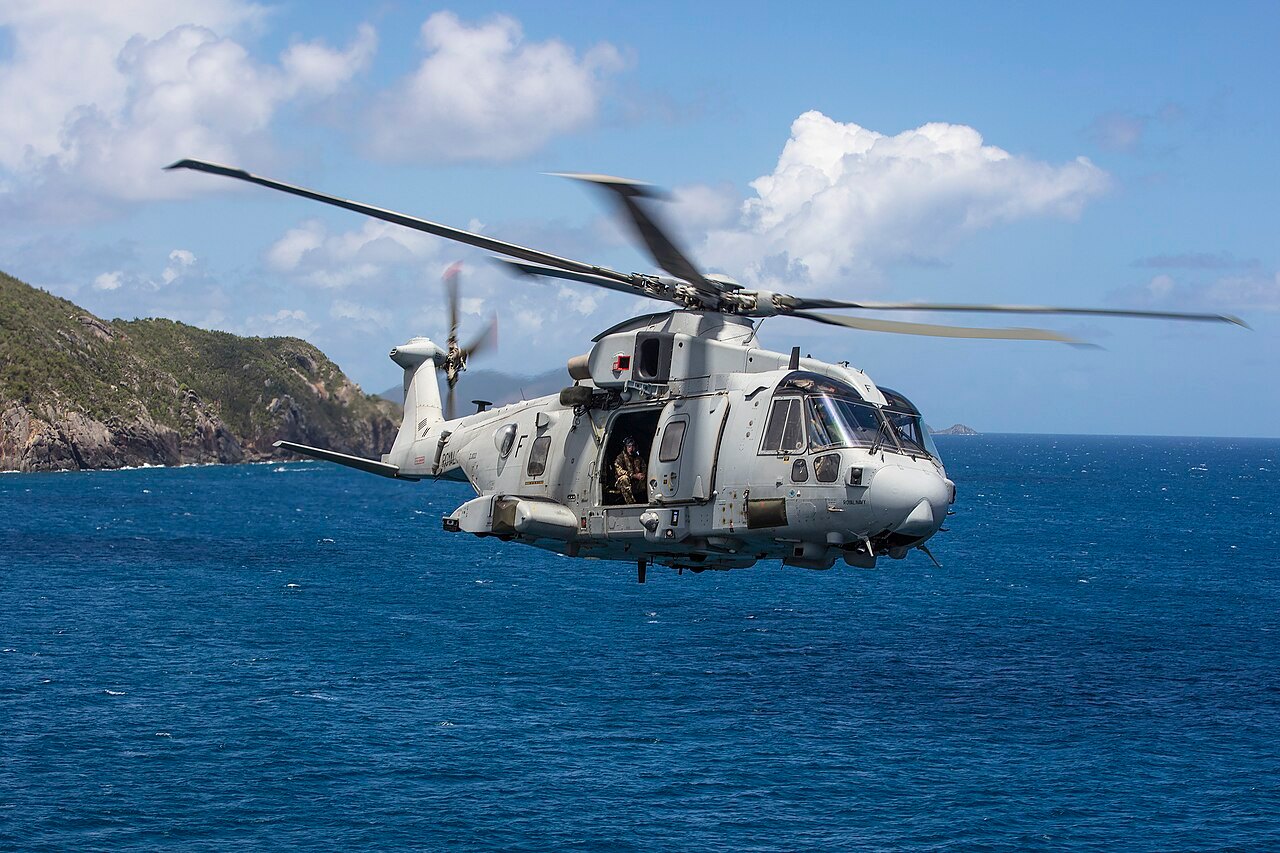
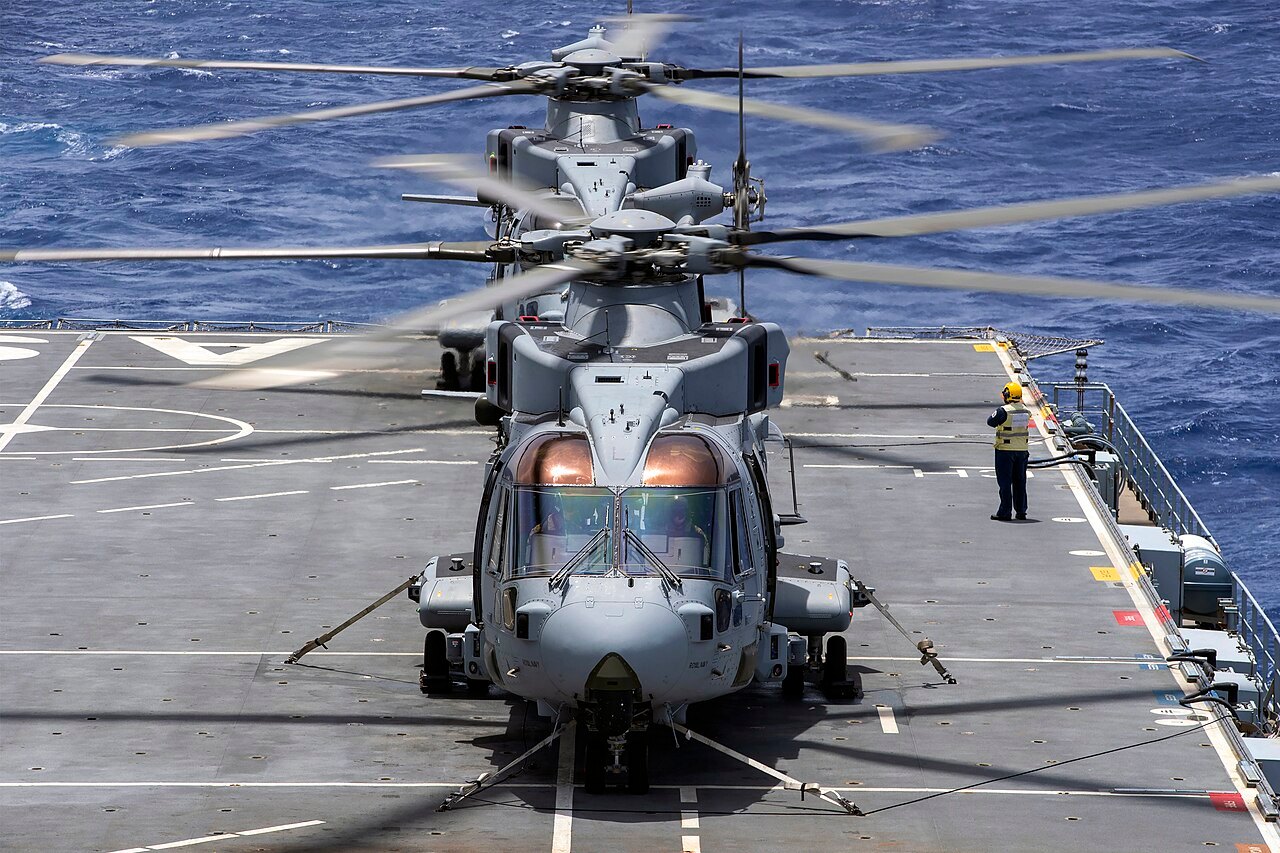
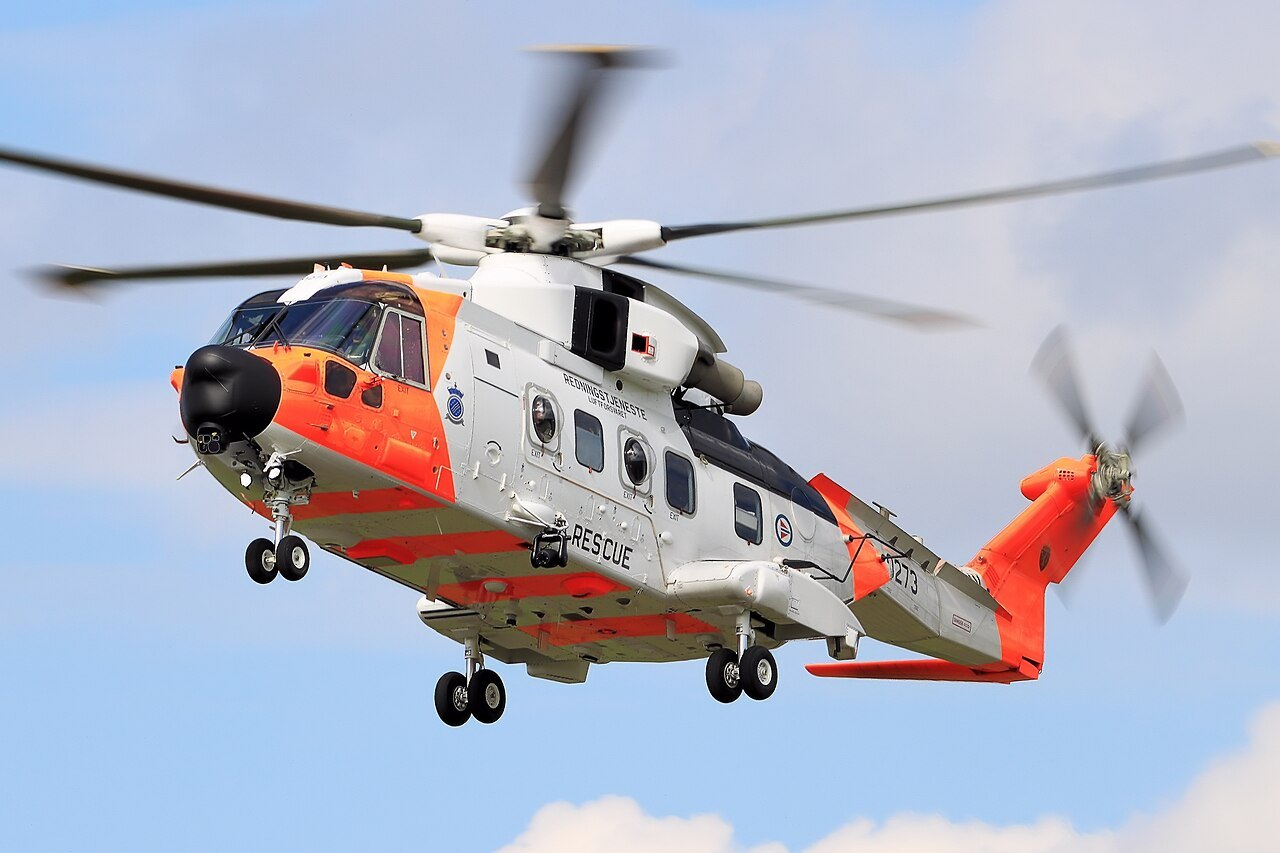
Where the Merlin flies and flew
The Merlin’s record
The Merlin has flown combat support in Bosnia, Iraq and Afghanistan, humanitarian missions from Sierra Leone to the Mediterranean, and countless rescues with Canadian, Danish, Portuguese, Italian and Norwegian crews. Its worst recent losses have come in training accidents, in 2024 and 2026.
See how training and combat types compare in the military aircraft statistics database. Figures are approximate.
Everything people ask about the Merlin
Can I fly in an AgustaWestland AW101 Merlin?
Why does the Merlin have three engines?
Why was it called the EH101?
What is the difference between the Merlin HM2 and HC4?
Was the AW101 going to be Marine One?
How many troops can a Merlin carry?
Who flies the AW101?
You can’t fly the Merlin.
These, you can.
Most of this museum you can only look at. These genuine military jets you can fly yourself with MiGFlug — with aerobatics and time on the controls.
 Fly the L-39 AlbatrosThe world’s most-flown jet trainer — aerobatics included
 Fly the F-104 Starfighter“The missile with a man in it”
 Fly the MiG-21The Cold War’s most-produced jet
 Fly the T-33 Shooting StarAmerica’s first jet trainer
 Fly the DH VampireA piece of early jet history
 Fly the S.211Agile Italian jet trainer
 Fly the MB-326The classic Aermacchi jet
 Fly the MiG-15The Soviet legend of the Korean War
Continue the tour
Every fact, checked
- First flight of the prototype (PP1) of the EH Industries EH101Vertical Flight Society Vertipedia on the 1987 first flight and its crew
- The Royal Navy’s Merlin helicopter fleet – bearing a heavy loadNavy Lookout on HM2, HC3/HC4, maintenance, Gritrock and Weald
- UK declared FOC for Crowsnest airborne surveillance and controlNaval News on Crowsnest’s delays, FOC and CSG25
- UK extends Merlin operations until 2040FlightGlobal on the extended out-of-service date
- Prince Michael of Kent attends service at RAF BensonBBC on the end of RAF Merlin service in 2015
- India scraps $753m Finmeccanica helicopter dealBBC on the cancelled Indian VIP order
- Another twist in Indonesia’s puzzling AW101 helicopter buyDefense News on the Indonesian AW101 saga
- First MCH-101 Helicopter Goes to Japan Defense AgencyKawasaki Heavy Industries, March 2006
- Fløy til Jan Mayen for første gang: – KrevendeForsvarets Forum on the SAR Queen’s first flight to Jan Mayen, August 2025
- SAR Queen helicopters are now operational in NorwayVertical on Norway’s AW101 rescue fleet
- Three dead in Royal Navy helicopter crash in DevonBBC on the June 2026 Sourton Down crash and the 2024 ditching
- Poland receives first AW101 Merlin anti-submarine helicopterShephard on the Polish Navy order