
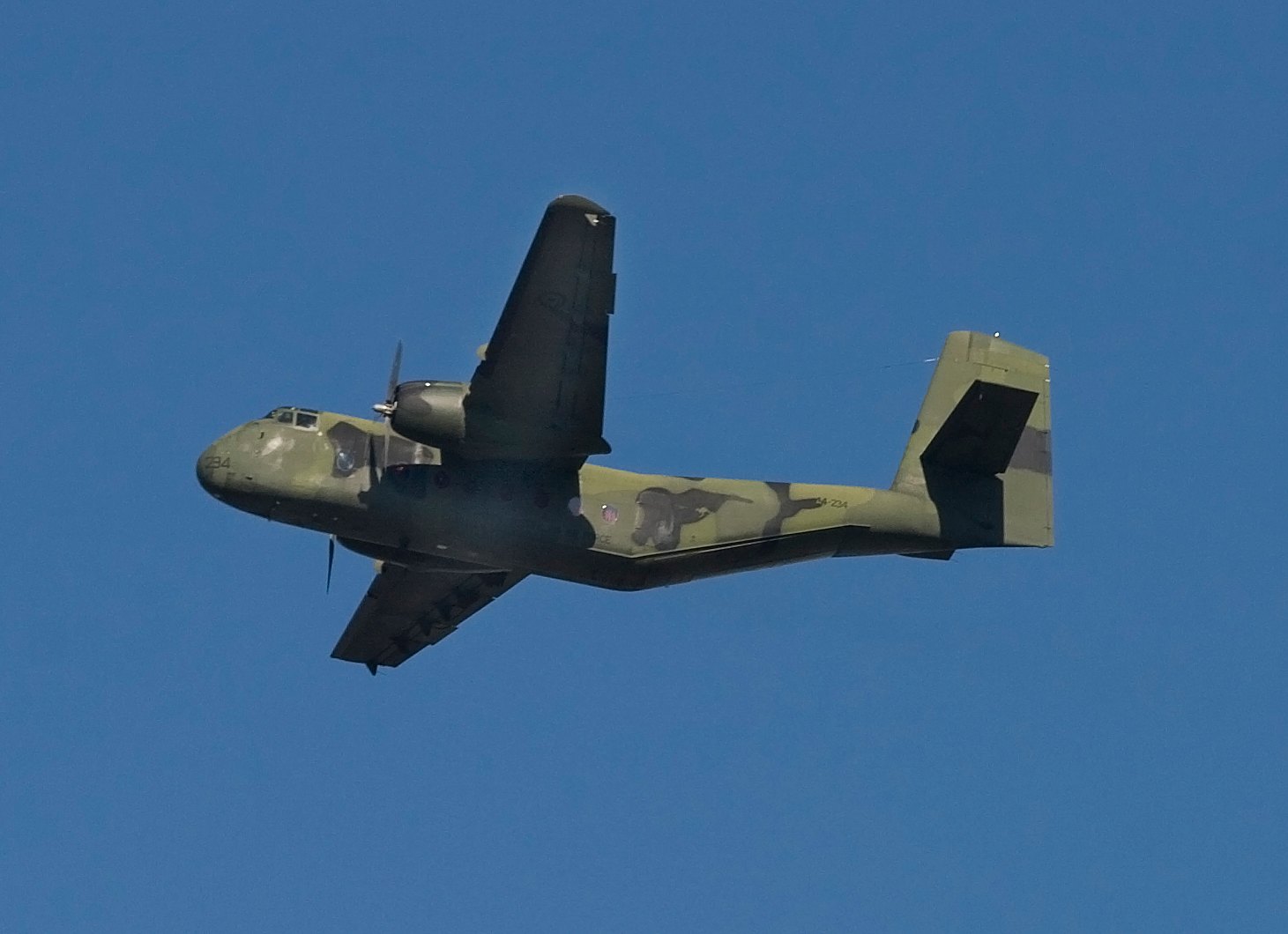
de Havilland Canada DHC-4 Caribou
The STOL Workhorse of Vietnam
The Canadian short-take-off transport that landed where nothing larger could, kept Vietnam’s isolated camps supplied, became the RAAF’s “Wallaby Airlines” and flew for Australia until 2009.
The Caribou: how a Canadian bush-plane maker built an army airlifter
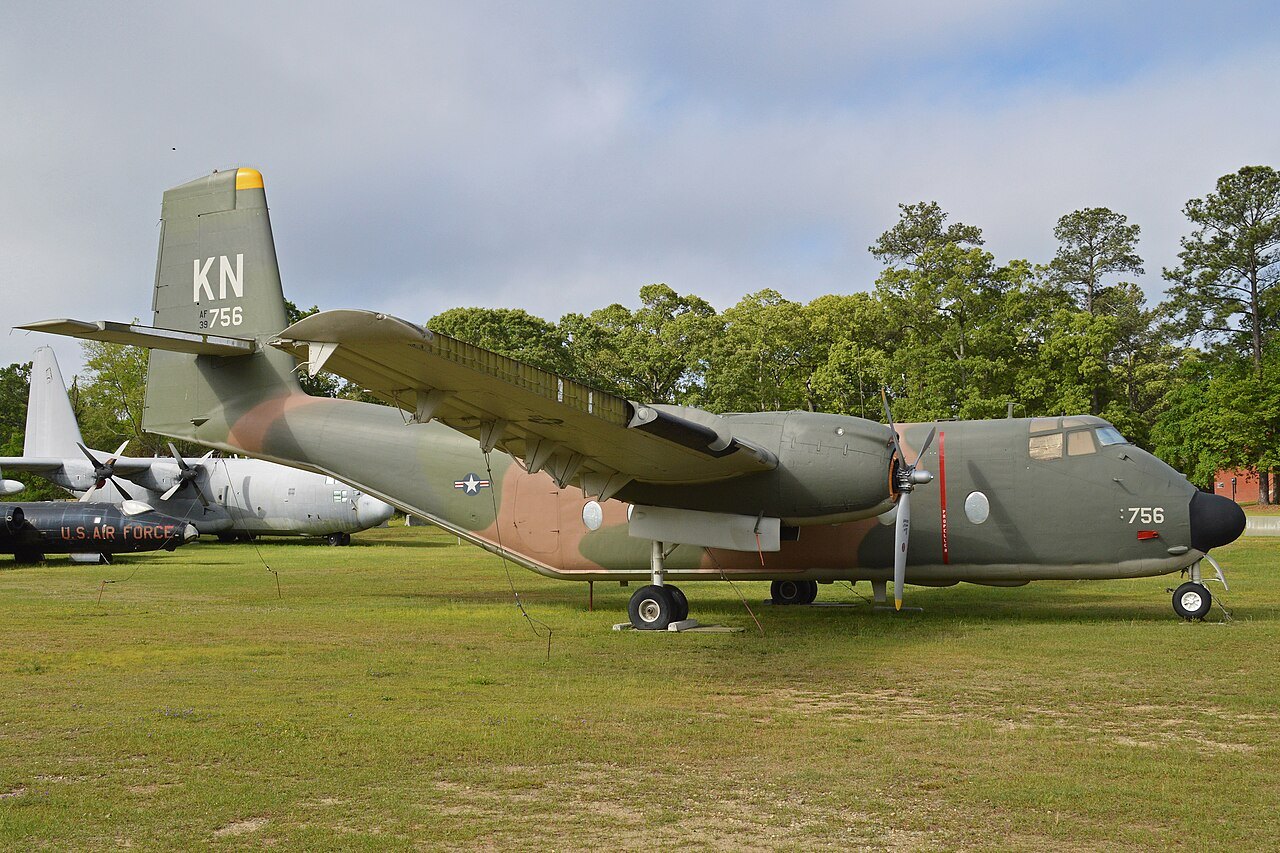
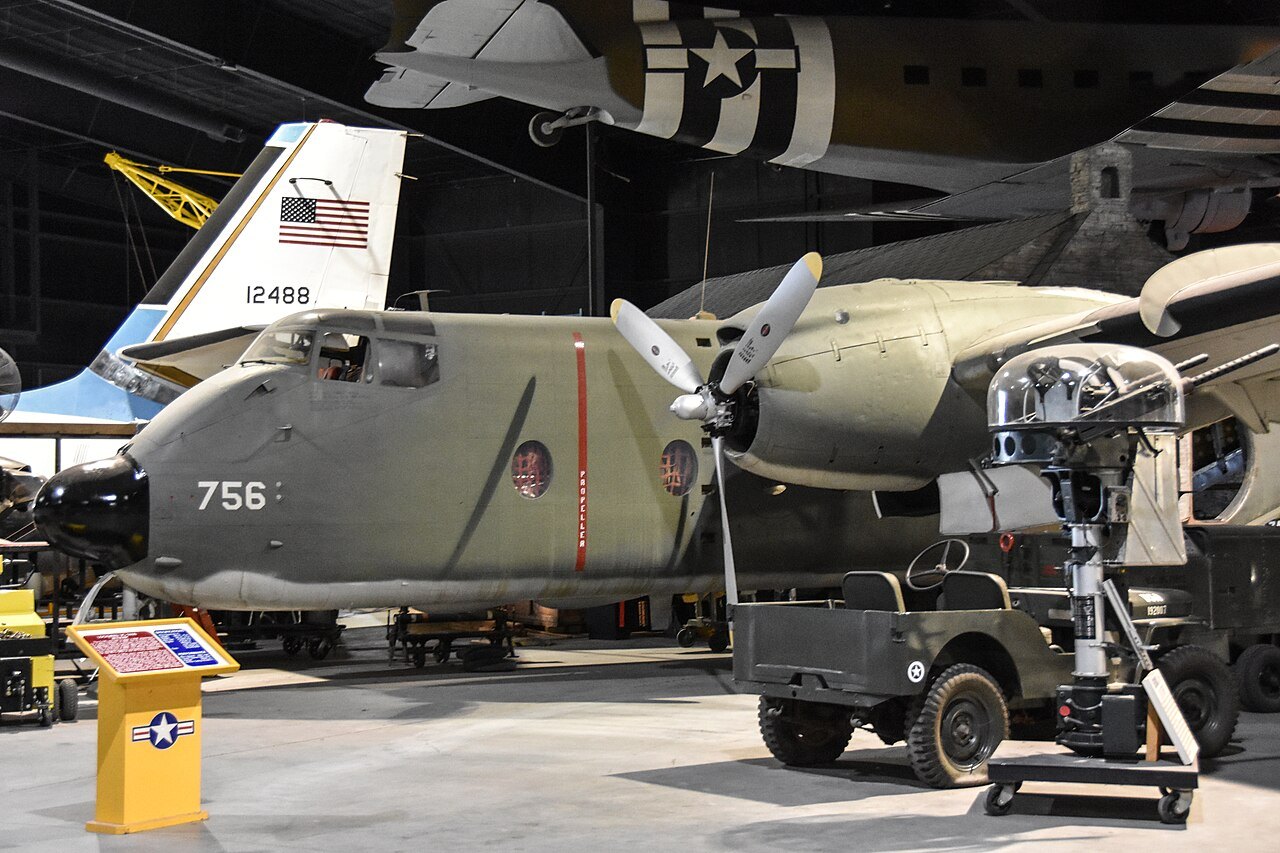
By the late 1950s de Havilland Canada had made its name with two rugged single-engined bush aircraft, the Beaver and the Otter, both bought in large numbers by the United States Army. The Army now wanted something bigger: a tactical airlifter that could carry troops and supplies to the front line, land on a short dirt strip and bring casualties out on the return trip. DHC’s answer, developed with help from Canada’s Department of Defence Production, was its first twin-engined design, the DHC-4 Caribou. It had a high wing with large flaps, two 1,450 hp Pratt & Whitney R-2000 radials, a sharply upswept rear fuselage with a loading ramp, and a cabin that could take 32 troops or two jeeps. The prototype flew on 30 July 1958.
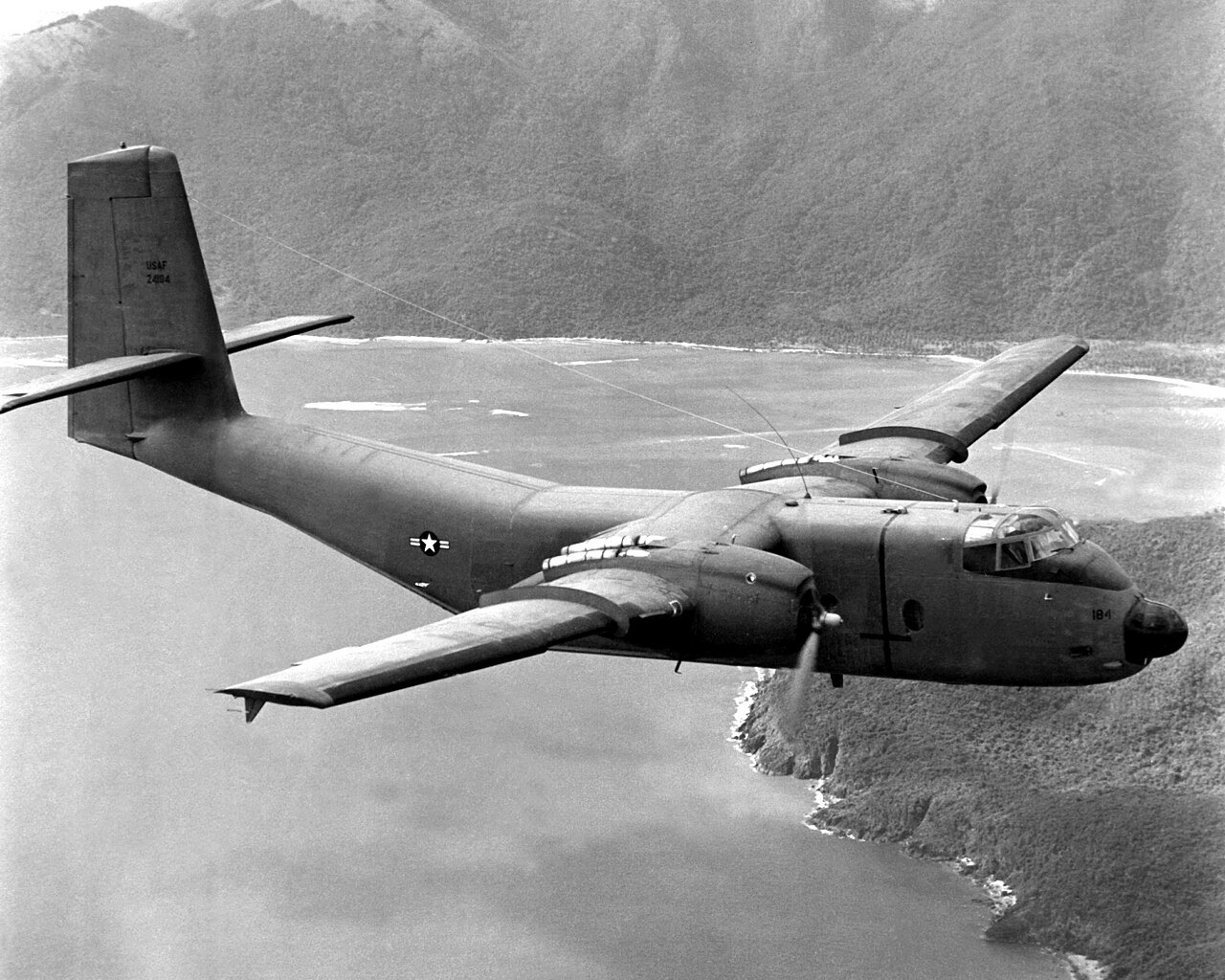
The Army bought five for evaluation and then ordered in quantity, eventually buying 159 as the AC-1, later CV-2. The Caribou could operate from strips of about 1,200 ft (365 m), and that ability made it the ideal aircraft for the war that was growing in Vietnam, where Special Forces camps and fire bases sat on runways too short for the C-123 Provider or the C-130 Hercules. But the Caribou also triggered an inter-service fight. The US Air Force argued that fixed-wing transports belonged to it. Under the Johnson-McConnell agreement of 1966 the Army surrendered its Caribous in exchange for a free hand with helicopters, and on 1 January 1967 the aircraft became the Air Force’s C-7.
In total 307 were built between 1958 and 1968. Australia, Canada, India, Malaysia, Spain, Kenya, Ghana and more than a dozen other air forces flew them, and the Royal Australian Air Force took them to Vietnam in 1964, where its crews became known by their callsign as “Wallaby Airlines”. The CIA-owned airline Air America flew Caribous in South East Asia, the Indian Air Force turned them into night bombers in 1971, and the RAAF kept them flying until November 2009. The design was stretched and given turboprops to become the DHC-5 Buffalo. Today a few Caribous still fly as civil freighters and museum aircraft, and the type certificate belongs to the revived De Havilland Canada.
01The Caribou and the Johnson-McConnell agreement: the aircraft the Army lost
The Caribou was, by the mid-1960s, the largest fixed-wing aircraft in the US Army inventory, and that was the problem. The Air Force regarded tactical airlift with fixed-wing aircraft as its own mission and saw the Army’s growing fleet of Caribous, and the larger DHC-5 Buffalo on order, as a challenge. The Army, for its part, wanted an unrestricted helicopter force, especially heavy-lift types like the CH-47 Chinook.
In April 1966 the two chiefs of staff, General Harold K. Johnson and General John P. McConnell, signed an agreement that settled the matter. The Army gave up its claim to fixed-wing tactical airlift, including the Caribou, and the Air Force dropped its objections to Army helicopters. On 1 January 1967, under the transfer known as Operation Red Leaf, six Army aviation companies were inactivated and their aircraft passed to six newly activated USAF Troop Carrier Squadrons, the 457th, 458th, 459th, 535th, 536th and 537th. The Caribous were redesignated C-7A and placed under the 483rd Troop Carrier Wing and the 834th Air Division, flying exactly the same missions with new crews.
02The Caribou with the RAAF: Wallaby Airlines in Vietnam
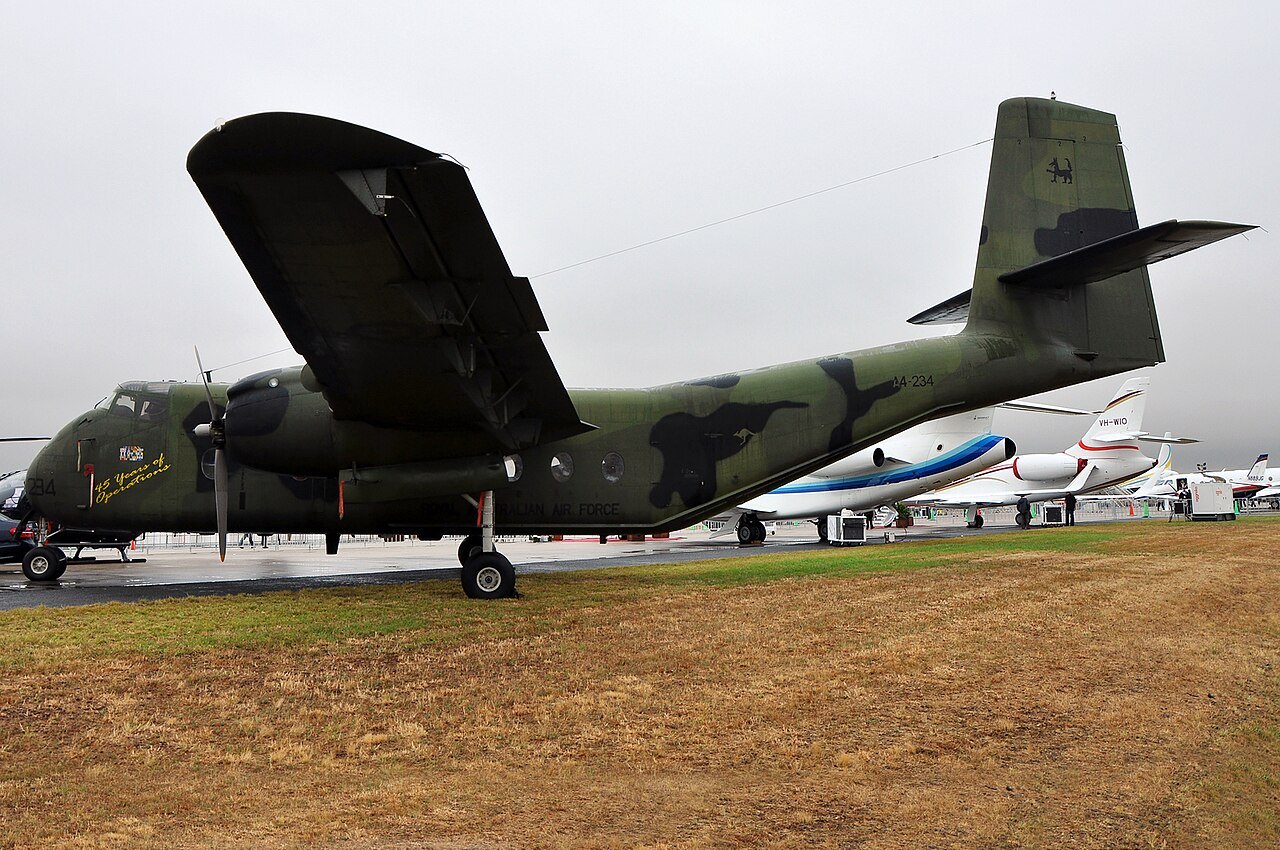
Australia ordered its first Caribous in 1963, and in July 1964 the RAAF Transport Flight Vietnam deployed to Vung Tau with seven aircraft. On 1 June 1966 it became No. 35 Squadron. Assigned to the US 834th Air Division, the squadron flew cargo, passenger and medical evacuation sorties throughout South Vietnam for Australian, South Vietnamese and American forces. Its radio callsign, “Wallaby”, gave it the nickname Wallaby Airlines, and the Australian War Memorial records it under that name.
The work was dangerous. Caribous often flew at low level into contested areas, were fired on several times and had aircrew wounded. Two aircraft were destroyed in accidents on poor strips and in bad weather, and another was destroyed by Viet Cong mortar fire at Thất Sơn in 1970. US commanders sent personnel to study the squadron’s methods, and its members received eight Distinguished Flying Crosses among other awards. No. 35 Squadron flew its last mission on 13 February 1972 and left on 19 February, the last RAAF unit to leave Vietnam.
What makes the Caribou special
Short-field performance
The Caribou’s high-aspect-ratio wing carried large double-slotted flaps, and its reversible-pitch propellers gave strong braking on landing. Jane’s gave a stall speed of 59 kn, and de Havilland Canada marketed the aircraft as able to work from runways of about 1,200 ft (365 m). In practice that let a loaded Caribou reach the small strips beside Special Forces camps and fire bases that larger transports could not use, and helped make it popular with bush operators long after its military career.
A ramp for jeeps
The upswept rear fuselage housed a loading ramp and doors that could be opened in flight. The cabin took 32 troops, 26 paratroopers, 22 stretchers or two jeeps, with a maximum payload of 8,740 lb (about 3.96 tonnes). Loads could be parachuted out of the rear, and the floor sat low enough for vehicles to drive straight in. For the Army it meant a single aircraft could deliver a howitzer crew, a vehicle or a pallet of ammunition directly to a forward position.
Twin Wasp reliability
Power came from two Pratt & Whitney R-2000-7M2 Twin Wasp 14-cylinder radials of 1,450 hp each, the engine family used in the Douglas DC-4 and C-54. They were proven, easy to maintain in the field and tolerant of rough handling. Maximum speed was about 187 kn and cruise 158 kn, slow by later standards, but the Caribou was built to deliver loads to difficult places, not to arrive quickly. In 1961 DHC flew a Caribou with turboprops, the step that led to the Buffalo.
03The Caribou’s variants: from YAC-1 to Turbo Caribou
- DHC-4: basic STOL transport.
- DHC-4A: version with increased take-off weight, the standard export model.
- YAC-1: five aircraft for US Army evaluation.
- AC-1 / CV-2A: first US Army production batch of 56, redesignated in 1962.
- CV-2B: second Army batch of 103 with strengthened structure.
- C-7A / C-7B: USAF designations for the 144 Army aircraft transferred in 1967.
- CC-108: Royal Canadian Air Force designation.
- Tp 55: one aircraft evaluated by the Swedish Air Force, 1962–65.
- DHC-4T Turbo Caribou: civil conversion with Pratt & Whitney Canada PT6A-67T turboprops by Pen Turbo Aviation.
de Havilland Canada DHC-4A Caribou specifications
Specifications
- Crew
- 2 pilots plus loadmaster
- Capacity
- 32 troops, 26 paratroopers, 22 stretchers or two jeeps
- Length
- 22.13 m (72 ft 7 in)
- Wingspan
- 29.15 m (95 ft 7.5 in)
- Height
- 9.68 m (31 ft 9 in)
- Wing area
- 84.7 m² (912 sq ft)
- Basic operating weight
- 8,283 kg (18,260 lb)
- Max take-off weight
- 12,927 kg (28,500 lb)
- Maximum payload
- 3,964 kg (8,740 lb)
- Powerplant
- 2 × Pratt & Whitney R-2000-7M2 Twin Wasp 14-cylinder radials, 1,450 hp (1,081 kW) each
- Maximum speed
- 346 km/h (215 mph; 187 kn) at 6,500 ft
- Cruise speed
- 293 km/h (182 mph; 158 kn) at 7,500 ft
- Stall speed
- 109 km/h (68 mph; 59 kn)
- Range
- 2,104 km (1,136 nmi) maximum fuel; 391 km (211 nmi) with maximum payload
- Service ceiling
- 7,560 m (24,800 ft)
- Climb rate
- 6.9 m/s (1,355 ft/min)
- Armament
- None
Costs & production
- Cost per flight hour
- No official figure published. Hedged estimate for a civil or heritage operator today: roughly US$2,500–5,000 per hour, based on two R-2000 radials burning in the order of 150–200 US gallons of avgas an hour combined, plus oil, engine overhaul reserves and maintenance of a 60-year-old airframe
- Production
- 307 built 1958–1968 by de Havilland Canada at Downsview, Toronto
- Programme
- First flight 30 July 1958; US certification 23 December 1960; US Army deliveries from 1961; RAAF retirement 27 November 2009
04The Caribou’s operating costs: why bush operators kept them
After military retirement many Caribous went to civil operators in places with short airfields and few roads: the highlands of New Guinea and Papua, Ecuador’s oil fields, Indonesia, Gabon and northern Canada. Ansett-MAL flew one in the New Guinea highlands from the early 1960s, and the municipal government of Puncak Regency in Papua bought one as recently as 2016. The attraction was simple: a payload of about four tonnes delivered to a strip that otherwise only a helicopter could reach.
The costs are those of any large piston twin. The R-2000s burn avgas, which is expensive and hard to find in remote regions, and need regular overhauls. That is why conversions such as the DHC-4T Turbo Caribou, with PT6A turboprops burning jet fuel, appeared. The hourly figure we give is an estimate with a stated basis, not a published number.
The Caribou from 1958 to the last RAAF flight
First flight
The DHC-4 prototype flies on 30 July.
US Army order
After evaluating five YAC-1s, the Army orders the type in quantity.
Army service
The first production aircraft are delivered to the US Army.
RAAF to Vietnam
The RAAF Transport Flight Vietnam deploys to Vung Tau in July.
Johnson-McConnell agreement
The Army agrees to give its Caribous to the Air Force; RAAF flight becomes No. 35 Squadron.
Becomes the C-7
Army Caribous pass to the USAF on 1 January; on 3 August a C-7 is destroyed by an outgoing US shell at Duc Pho.
Production ends
The 307th and last Caribou is completed.
Indian night bombers
Indian Air Force Caribous bomb Pakistani targets around Dacca in the Bangladesh war.
Wallaby Airlines comes home
No. 35 Squadron flies its last Vietnam mission on 13 February.
Hijack at Baucau
Civilians fleeing civil war in Portuguese Timor commandeer RAAF Caribou A4-140 and fly to Darwin.
RAAF retirement
A4-140, the last RAAF Caribou, retires on 27 November and goes to the Australian War Memorial.
Stories & eyewitnesses: the Caribou at war and in peace
Duc Pho, 3 August 1967
A Caribou was destroyed by a shell fired by its own side.
Read the full story
Wallaby Airlines
Australia’s Caribou crews earned a reputation and a nickname.
Read the full story
The only hijacked RAAF aircraft
Baucau, September 1975.
Read the full story
Caribous over Dacca
Indian crews turned transports into bombers in 1971.
Read the full story
Operation Red Leaf
Overnight, Army Caribou crews found themselves in the Air Force.
Read the full story
Jumping with the Golden Knights
The Army got one Caribou back.
Read the full story
Still flying at Albion Park
Two ex-RAAF Caribous remain airworthy in Australia.
Read the full story
Air America’s Caribous
The CIA’s airline liked short strips too.
Read the full story
Spain, India and a global fleet
The Caribou served more than twenty air forces.
Read the full story
The Caribou in pictures
Where the Caribou flies and flew
The Caribou’s record
The Caribou was unarmed, but it flew constantly in combat zones. In Vietnam US and Australian crews supplied camps and fire bases under fire, and losses came from ground fire, mortars, weather and even friendly artillery. In India’s 1971 war it was even used to drop bombs.
See how training and combat types compare in the military aircraft statistics database. Figures are approximate.
Everything people ask about the Caribou
Can I fly in a de Havilland Canada DHC-4 Caribou?
Why is the Caribou also called the C-7?
How short a runway does a Caribou need?
How many Caribous were built?
What was Wallaby Airlines?
Are any Caribous still flying?
What replaced the Caribou in Australia?
You can’t fly the Caribou.
These, you can.
Most of this museum you can only look at. These genuine military jets you can fly yourself with MiGFlug — with aerobatics and time on the controls.
 Fly the L-39 AlbatrosThe world’s most-flown jet trainer — aerobatics included
 Fly the F-104 Starfighter“The missile with a man in it”
 Fly the MiG-21The Cold War’s most-produced jet
 Fly the T-33 Shooting StarAmerica’s first jet trainer
 Fly the DH VampireA piece of early jet history
 Fly the S.211Agile Italian jet trainer
 Fly the MB-326The classic Aermacchi jet
 Fly the MiG-15The Soviet legend of the Korean War
Continue the tour
Every fact, checked
- 35 Squadron RAAF, VietnamAustralian War Memorial unit history, Wallaby Airlines
- ‘It was life or death’: the plane-hijacking refugees Australia embracedThe Guardian (Henriques-Gomes, 2021) on the A4-140 hijacking
- De Havilland C-7A CaribouNational Museum of the US Air Force fact sheet and its aircraft 62-4193
- The brave caribous in the dark: how a transport aircraft was converted into a bomberThe Probe (2021) on Indian Air Force Caribou bombing in 1971
- De Havilland DHC-4 CaribouHistorical Aircraft Restoration Society, operator of airworthy ex-RAAF Caribous
- Wallaby Airlines Returns to Air ForceAustralian Department of Defence on the re-formation of No. 35 Squadron, 2013
- 1967, Hiromichi Mine, 2nd prize, Spot NewsWorld Press Photo archive: the Duc Pho Caribou photograph
- De Havilland Canada Caribou A4-173Queensland Air Museum survivor page