
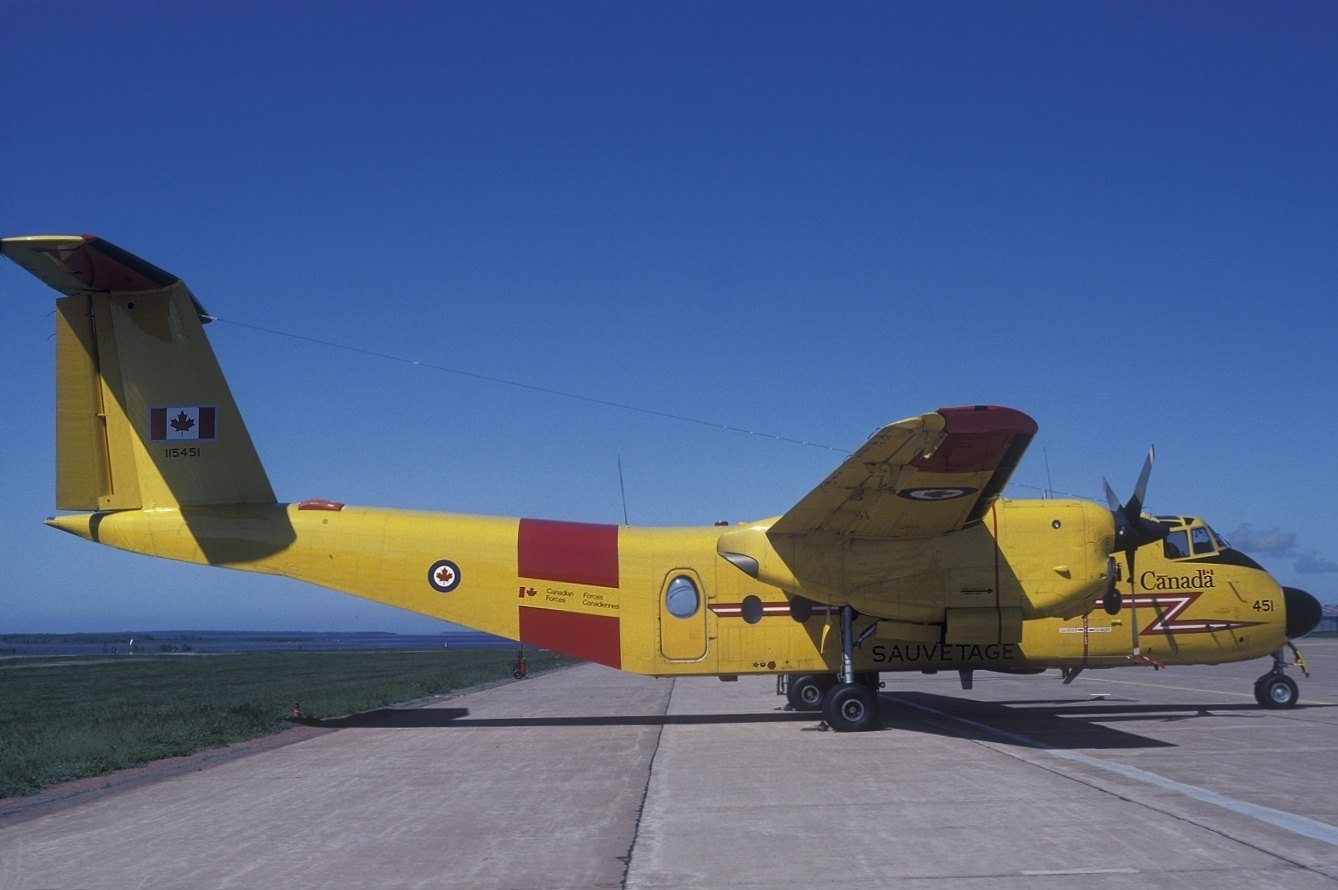
de Havilland Canada DHC-5 Buffalo
STOL Rescuer of the Rockies
The turboprop Caribou that took off in less distance than many light aircraft, flew UN missions in the Middle East, set climb records and searched Canada’s western mountains and coast for 55 years.
The Buffalo: how de Havilland Canada built the ultimate STOL transport
In 1962 the United States Army asked for a fixed-wing transport that could carry the same payload as its new CH-47 Chinook helicopter into the same short, rough strips. de Havilland Canada already had the DHC-4 Caribou in Army service, and in September 1961 it had flown a Caribou fitted with General Electric T64 turboprops. Its proposal, the DHC-5 Buffalo, was an enlarged Caribou with those engines, a T-tail and a bigger cabin. It won the competition in early 1963, the Army ordered four as the YAC-2, and the prototype flew on 9 April 1964. The Buffalo carried nearly twice the Caribou’s load and had even better short-field performance, and in 1965 one prototype went to Bien Hoa in South Vietnam for a three-month evaluation.
Then politics intervened. Under the 1966 Johnson-McConnell agreement the Army surrendered large fixed-wing transports to the US Air Force, which felt adequately equipped with the C-123 Provider, and no more American orders came. Canada stepped in, buying 15 DHC-5As as the CC-115, and Brazil and Peru followed. Production of the A model ended in 1972 but restarted in 1974 with the more powerful DHC-5D, which sold to Egypt, Kenya, Tanzania, Zambia, Sudan, Mauritania, Ecuador, Mexico, Oman, the UAE and others until December 1986. In total 122 were built. In 1976 a DHC-5D set time-to-climb records in its weight class, reaching 9,000 m in just over eight minutes.
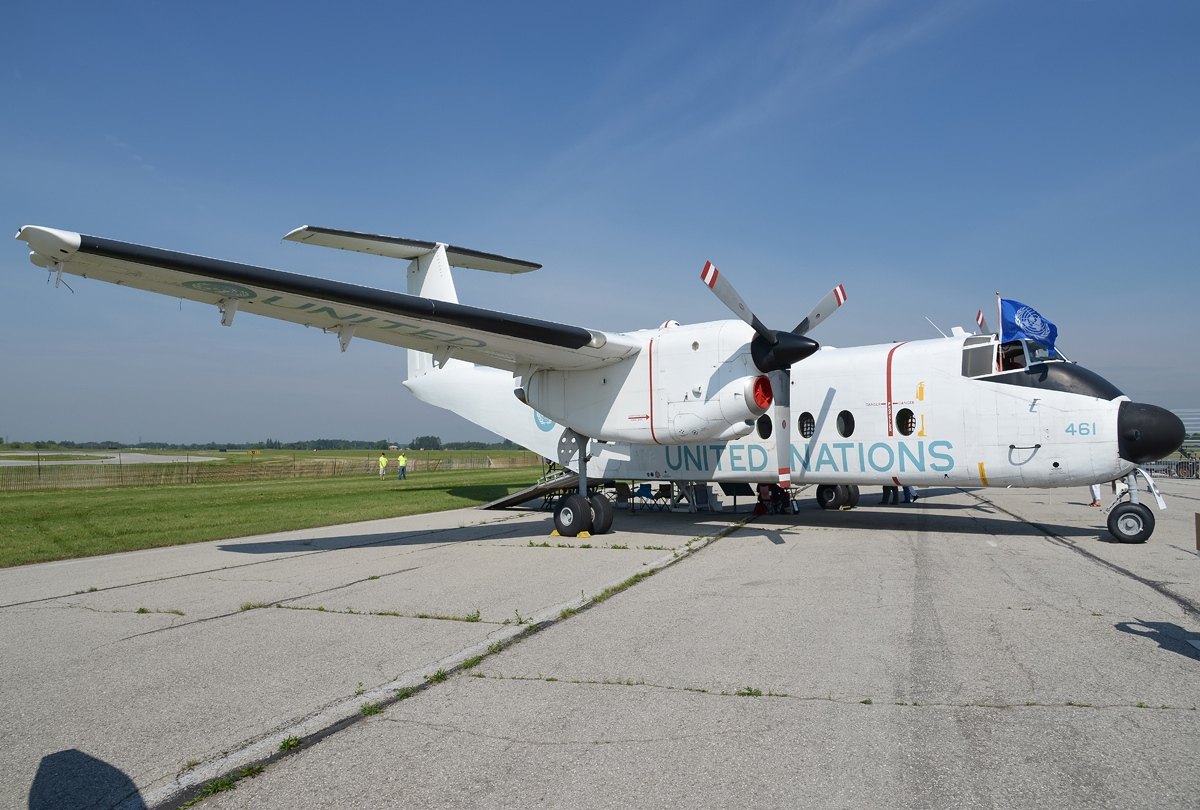
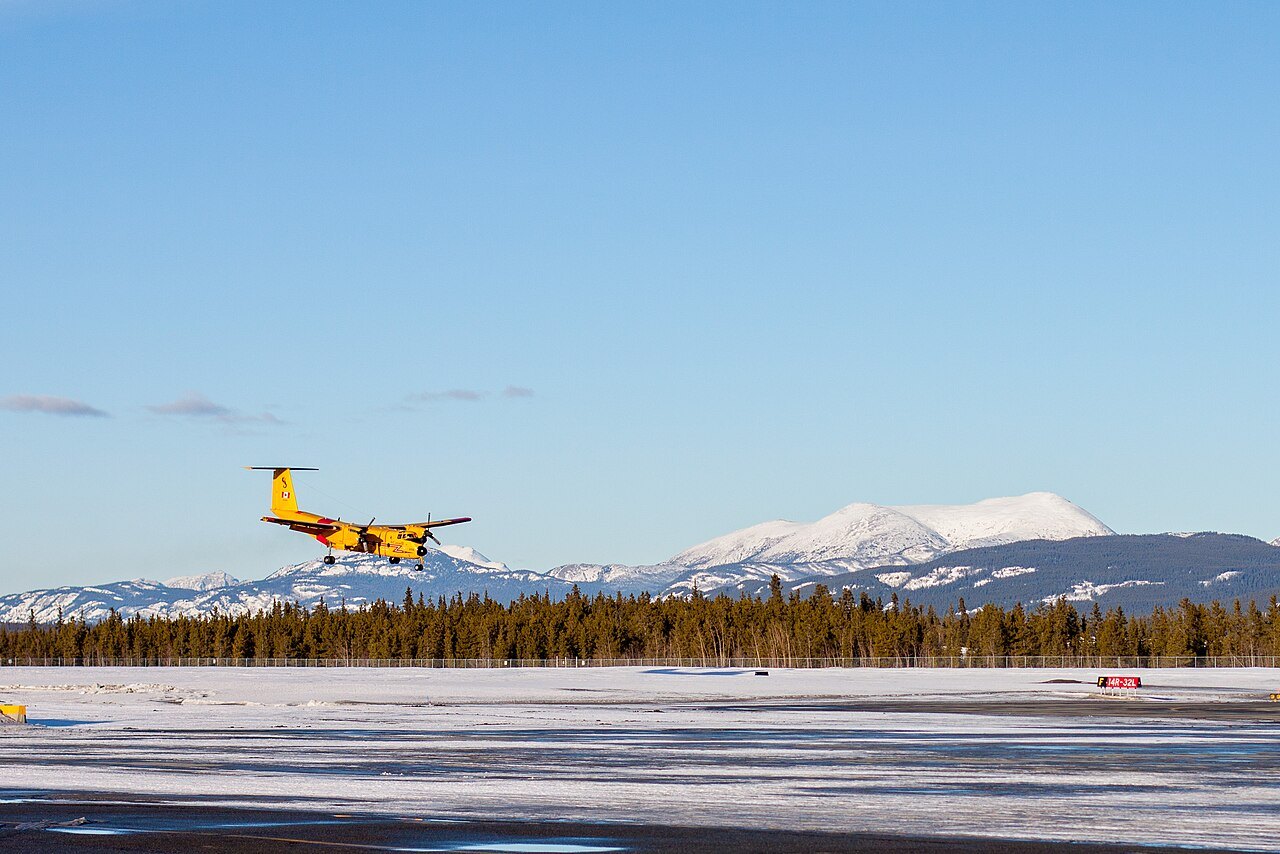
In Canadian service the Buffalo first flew tactical transport, then UN peacekeeping in the Middle East, where on 9 August 1974 Buffalo 461 was shot down by Syrian missiles with the loss of all nine on board, Canada’s worst single loss on a peacekeeping mission. From 1975 the fleet moved to search and rescue, and for decades its yellow-and-red aircraft were a familiar sight over the mountains and coast of British Columbia, latterly with 442 Squadron at Comox. NASA turned Buffalos into flying laboratories for powered-lift research. The RCAF retired its last two CC-115s on 15 January 2022 after 55 years, replacing them with the Airbus CC-295 Kingfisher, and the last operational aircraft is preserved at the Canada Aviation and Space Museum.
01The Buffalo 461 shoot-down: Canada’s worst peacekeeping loss
After the 1973 Yom Kippur War the second United Nations Emergency Force supervised the ceasefire between Egypt and Israel, and Canada provided logistics, signals, air and service units. Three Canadian Buffalos of No. 116 Transport Unit, painted UN white, flew a six-day-a-week schedule between the contingents. On 9 August 1974 CC-115 115461, the 16th Buffalo built, was flying Flight 51, a routine supply run from Ismailia to Damascus via Beirut, with five crew and four military passengers.
Shortly after the first officer, Captain Keith Mirau, received clearance to enter Syrian airspace, the aircraft was hit by a surface-to-air missile launched from a Syrian airfield, and moments later two more missiles destroyed it near the town of Ad Dimas. All nine on board were killed. A Canadian board of inquiry could not determine whether the attack was accidental or deliberate. The loss remains the largest single loss of Canadian life on a UN mission. In 1993 British Columbia made 9 August Peacekeepers’ Day, recognised nationally in 2008, and a fragment of the aircraft is displayed at the Canadian War Museum in memory of the “Buffalo Nine”.
02The Buffalo in search and rescue: 442 Squadron and the mountains
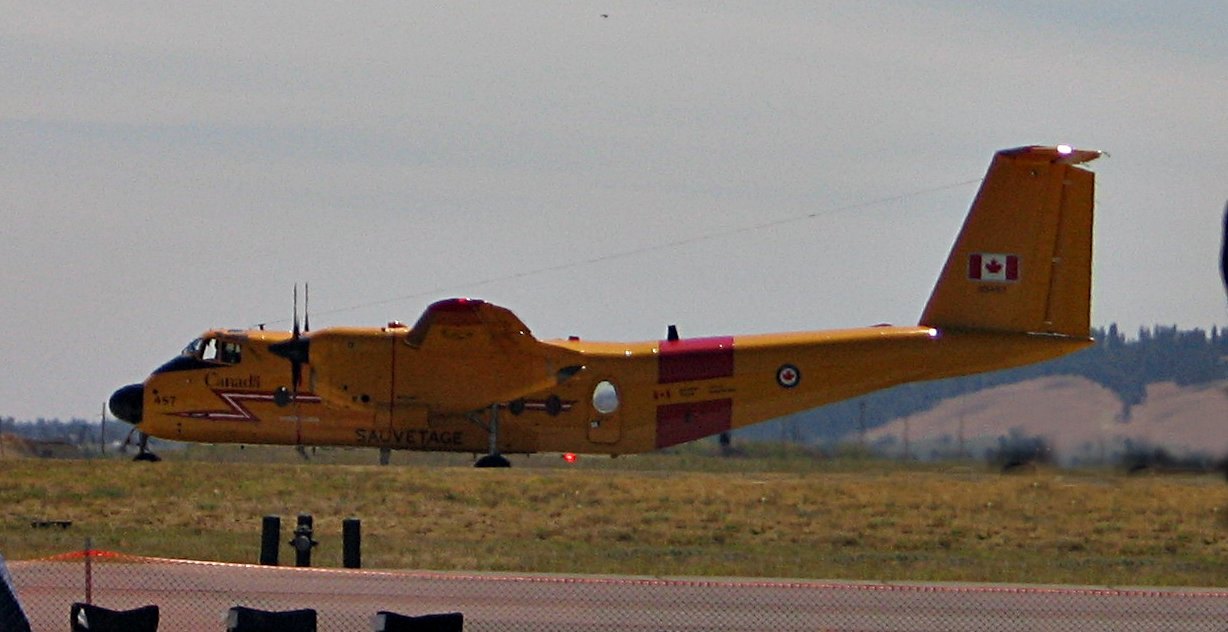
In 1975 Canada converted its Buffalos from tactical transport to domestic search and rescue. They served with 413, 424 and 442 Squadrons, and the drab and white schemes gave way to the high-visibility yellow and red that became the aircraft’s signature. Elsewhere in Canada the Buffalo was eventually replaced by the CC-130 Hercules, but on the Pacific coast its slow-flight handling suited the job exactly: searching narrow valleys, steep mountainsides and coastal inlets, often below cloud, and dropping supplies or search and rescue technicians close to a crash site or a boat in trouble.
Replacing it took years. Canada tried from 2002 to find a new fixed-wing SAR aircraft; the C-27J was long favoured, then the process was relaunched as an open competition. In December 2016 Airbus won with the C295, to be known as the CC-295 Kingfisher. On 15 January 2022 the last two operational CC-115s flew their final mission with 442 Transport and Rescue Squadron at 19 Wing Comox. National Defence marked the end of 55 years of service, and the commanding officer, Lieutenant-Colonel Rhonda Stevens, said Buffalo crews and maintainers were known for being “hardy and resilient”.
What makes the Buffalo special
STOL like a light aircraft
De Havilland Canada claimed that a DHC-5A at 41,000 lb could clear a 50 ft obstacle in 1,210 ft and land over one in 980 ft at 39,100 lb. Full-span double-slotted flaps, a large wing and powerful turboprops driving reversible propellers made it possible. Even the heavier DHC-5D, according to Jane’s, needed only an 850 ft landing run. Few transports of its size have matched those figures, and they made the Buffalo the natural choice for rough African strips and mountain rescues alike.
General Electric T64 power
The Buffalo used variants of the General Electric T64 turboshaft, an engine also used in heavy helicopters. In the DHC-5D the CT64-820-4 produced 3,133 shp (2,336 kW), driving three-bladed Hamilton Standard propellers 4.42 m across. Power-to-weight was exceptional for a transport, and in February 1976 a production DHC-5D used it to set time-to-climb records in the 12,000–16,000 kg class, reaching 3,000 m in 2 min 12.75 s, 6,000 m in 4 min 27.5 s and 9,000 m in 8 min 3.5 s.
A Caribou grown up
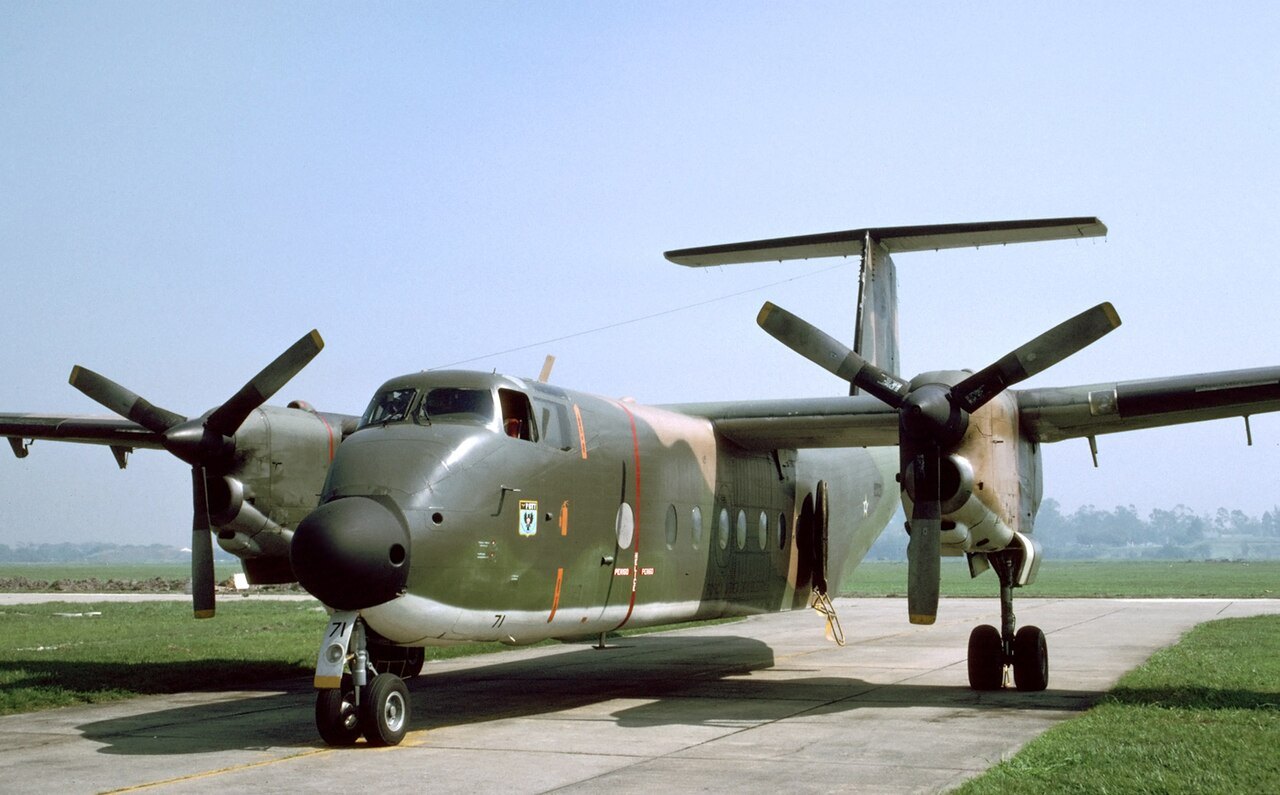
The Buffalo kept the Caribou’s basic layout, a high wing, upswept rear fuselage and rear ramp, but was larger in every direction and added a T-tail clear of the propeller wash. It could carry 41 troops, 24 stretchers or 18,000 lb of cargo, almost twice the Caribou’s payload. The cabin and ramp allowed vehicles and pallets to be loaded directly, and loads could be dropped by parachute. The airframe was also roomy and sturdy enough to make an excellent research platform.
03The Buffalo as a flying laboratory: augmentor wing, QSRA and air cushions
Three Buffalos became research aircraft. In 1972 a NASA C-8A was rebuilt by Boeing, de Havilland Canada and Rolls-Royce of Canada as the Augmentor Wing Jet STOL Research Aircraft, with a shortened wing, full-span slats and Rolls-Royce Spey engines whose cold bypass air was blown through slotted flaps while the hot exhaust left through swivelling nozzles derived from the Pegasus of the Harrier. It was flown jointly by NASA Ames and the Canadian government.
Another C-8A became the Quiet Short-Haul Research Aircraft, with a new swept supercritical wing and four Avco Lycoming YF102 turbofans mounted above it to exploit the Coandă effect. In 1980 it flew trials aboard the carrier USS Kitty Hawk, landing and taking off without arrester wires or catapult. A third, the XC-8A, tested an air cushion landing system for the USAF and Canada, riding on an inflated skirt in place of wheels.
04The Buffalo’s variants: from YAC-2 to DHC-5D
- YAC-2 / CV-7A / C-8A: four US Army evaluation aircraft, redesignated C-8A when transferred to the USAF in 1967.
- DHC-5A: first production model for Canada (CC-115), Brazil (C-115) and Peru.
- DHC-5D: from 1974, with 3,133 shp CT64-820-4 engines and higher weights; the main export model.
- DHC-5E Transporter: civil version, abandoned after the demonstrator crashed at Farnborough in 1984.
- DHC-5NG: Viking Air proposal from 2008 with PW150 turboprops and a glass cockpit; not built.
de Havilland Canada DHC-5D Buffalo specifications
Specifications
- Crew
- 3 (pilot, co-pilot, crew chief)
- Capacity
- 41 troops, 24 stretchers or 8,165 kg (18,000 lb) of cargo
- Length
- 24.08 m (79 ft 0 in)
- Wingspan
- 29.26 m (96 ft 0 in)
- Height
- 8.73 m (28 ft 8 in)
- Wing area
- 87.8 m² (945 sq ft)
- Empty weight
- 11,412 kg (25,160 lb)
- Max take-off weight
- 22,317 kg (49,200 lb)
- Powerplant
- 2 × General Electric CT64-820-4 turboprops, 2,336 kW (3,133 shp) each
- Cruise speed
- 420 km/h (261 mph; 227 kn) maximum, at 10,000 ft
- Stall speed
- 135 km/h (84 mph; 73 kn), flaps 40 degrees
- Range
- 1,111 km (600 nmi) with maximum payload; ferry 3,278 km (1,770 nmi)
- Service ceiling
- 9,450 m (31,000 ft)
- Climb rate
- 9.2 m/s (1,820 ft/min)
- Take-off distance
- 838 m (2,750 ft) to 50 ft; landing run 259 m (850 ft)
- g limits
- 2.5 g manoeuvring limit
- Armament
- None
Costs & production
- Cost per flight hour
- No official figure published. A hedged estimate of roughly US$3,000–6,000 per hour, based on two 3,000 shp-class turboprops burning in the order of 1,000–1,500 lb of jet fuel an hour combined plus maintenance for an out-of-production airframe; the RCAF’s final years of support were costlier than that because of ageing-fleet engineering
- Production
- 122 built 1965–1972 and 1974–1986 by de Havilland Canada at Downsview, Toronto
- Programme
- US Army competition won 1963; first flight 9 April 1964; RCAF service 1967–2022; type certificate now held by De Havilland Canada
05The Buffalo’s operating costs and the long search for a successor
By the 2000s Canada’s Buffalos were among the oldest aircraft in the RCAF, and keeping them airworthy demanded growing engineering effort as parts went out of production. The fleet shrank to six operational aircraft at Comox. Canada spent almost 15 years trying to replace them, from early studies in 2002 through a sole-source proposal for the C-27J, a relaunch, a 2015 request for proposals and the selection of the Airbus C295 in December 2016, with a contract for 16 aircraft.
Viking Air, which bought the de Havilland Canada type certificates in 2006, proposed a new-build DHC-5NG with Pratt & Whitney Canada PW150 engines, a glass cockpit and night-vision capability, and reported letters of intent, but it was not short-listed in Canada and was not built. Some DHC-5Ds remain in civil service in Africa on charter and UN work. Our hourly estimate is a reasoned range, not a published number.
The Buffalo from 1964 to its last rescue flight
Turbine Caribou
DHC flies a Caribou with T64 turboprops on 22 September.
Competition won
The DHC-5 wins the US Army’s STOL transport competition; four are ordered.
First flight
The prototype Buffalo flies on 9 April.
Paris and Vietnam
The prototype appears at the Paris Air Show; another is evaluated at Bien Hoa.
Canadian service
The first of 15 CC-115s join Canada’s armed forces.
Augmentor wing
NASA’s jet-powered augmentor wing Buffalo begins flight research; DHC-5A production ends.
Buffalo 461 and the DHC-5D
A Canadian UN Buffalo is shot down over Syria on 9 August; production restarts with the DHC-5D.
Climb records
A DHC-5D sets time-to-height records on 16 February.
Carrier trials
NASA’s QSRA Buffalo flies from USS Kitty Hawk without catapult or wires.
Farnborough crash
The DHC-5E demonstrator is destroyed in a heavy landing at the Farnborough Airshow.
Production ends
The 122nd and final Buffalo is completed in December.
Last RCAF flight
442 Squadron retires the last two operational CC-115s on 15 January.
Stories & eyewitnesses: the Buffalo in service
Flight 51
Nine Canadian peacekeepers killed over Syria, 9 August 1974.
Read the full story
Farnborough, 4 September 1984
A STOL demonstration went too far.
Read the full story
To 9,000 metres in eight minutes
A transport set time-to-climb records.
Read the full story
A Buffalo on an aircraft carrier
NASA’s QSRA landed on USS Kitty Hawk in 1980.
Read the full story
Libreville, April 1993
Zambia lost most of its national football team.
Read the full story
Bien Hoa, 1965
A three-month war trial for the prototype.
Read the full story
Yellow over the coast mountains
For decades the Buffalo was British Columbia’s rescue aircraft.
Read the full story
Tarma, June 1989
The deadliest Buffalo accident.
Read the full story
Where to see a Buffalo
Six preserved in Canadian museums.
Read the full story
The Buffalo in pictures
Where the Buffalo flies and flew
The Buffalo’s service record
The Buffalo was unarmed. Its record is one of UN peacekeeping in the Middle East, tactical transport for African and Latin American air forces, research flying with NASA and more than four decades of Canadian search and rescue. Its one shoot-down, Buffalo 461, remains a defining moment in Canada’s peacekeeping history.
See how training and combat types compare in the military aircraft statistics database. Figures are approximate.
Everything people ask about the Buffalo
Can I fly in a de Havilland Canada DHC-5 Buffalo?
How is the Buffalo related to the Caribou?
How short can a Buffalo take off?
What happened to Buffalo 461?
When did Canada retire the Buffalo?
How many Buffalos were built?
Where can I see a Buffalo?
You can’t fly the Buffalo.
These, you can.
Most of this museum you can only look at. These genuine military jets you can fly yourself with MiGFlug — with aerobatics and time on the controls.
 Fly the L-39 AlbatrosThe world’s most-flown jet trainer — aerobatics included
 Fly the F-104 Starfighter“The missile with a man in it”
 Fly the MiG-21The Cold War’s most-produced jet
 Fly the T-33 Shooting StarAmerica’s first jet trainer
 Fly the DH VampireA piece of early jet history
 Fly the S.211Agile Italian jet trainer
 Fly the MB-326The classic Aermacchi jet
 Fly the MiG-15The Soviet legend of the Korean War
Continue the tour
Every fact, checked
- Final operational flight of the CC-115 Buffalo aircraftNational Defence (2022): service history, Buffalo 461, quotes
- National Peacekeepers’ DayVeterans Affairs Canada on 9 August and the Buffalo 461 loss
- Last Operational CC-115 Buffalo Finds Final Resting Place at Canada Aviation and Space MuseumSkies Magazine (Thatcher) on 115452
- de Havilland Canada DHC-5A BuffaloCanadian Warplane Heritage Museum, Buffalo 461 tribute aircraft
- CC-115 BuffaloNational Air Force Museum of Canada
- Viking Proposes Resurrection Of DHC-5 BuffaloAVweb (Niles, 2008) on the DHC-5NG proposal
- Quiet Short-Haul Research Aircraft reportNASA technical report on the QSRA Buffalo conversion
- Air Cushion Landing Gear Applications StudyNASA (Earl, 1979) on the XC-8A air cushion landing system