
Lockheed A-12
“Oxcart”
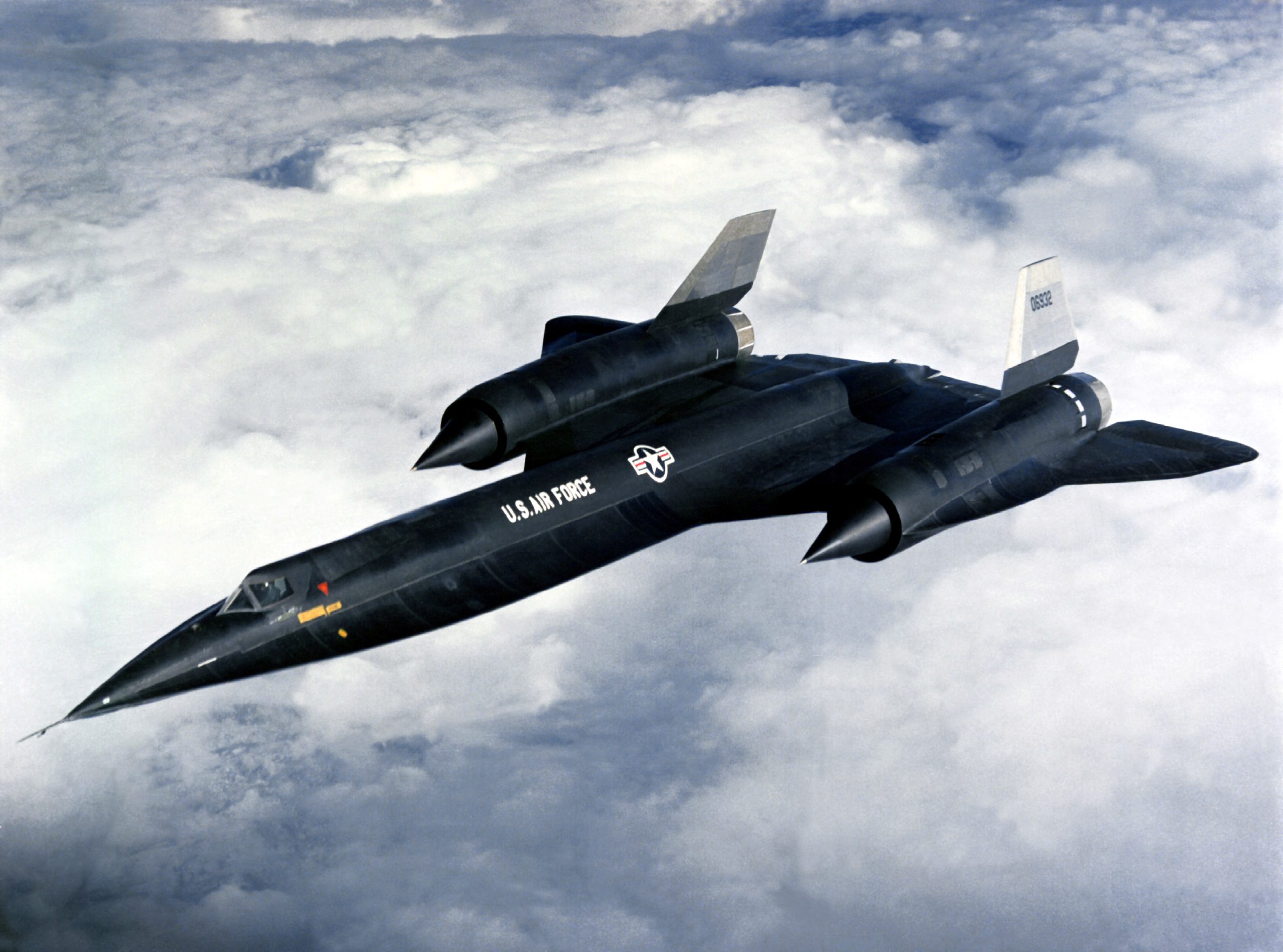
The CIA’s Mach-3 spy plane — a single-seat titanium machine that flew at 90,000 feet, and the secret predecessor that took to the air years before the more famous SR-71 Blackbird.
The spy plane that flew before the Blackbird
By the late 1950s the CIA’s subsonic U-2 was flying deep over the Soviet Union, but everyone in the programme knew its days were numbered — Soviet surface-to-air missiles were catching up. The Agency asked Lockheed’s Skunk Works and its chief designer Clarence “Kelly” Johnson for something radical: a reconnaissance aircraft so fast and so high that nothing could reach it. The answer, developed in total secrecy under Project OXCART, was the A-12.
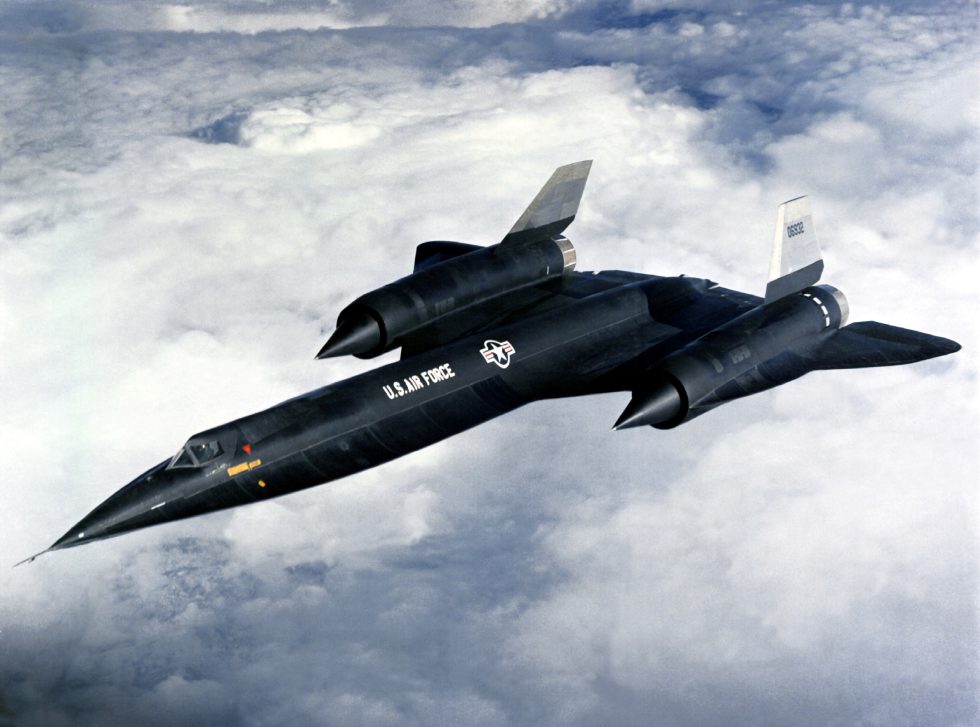
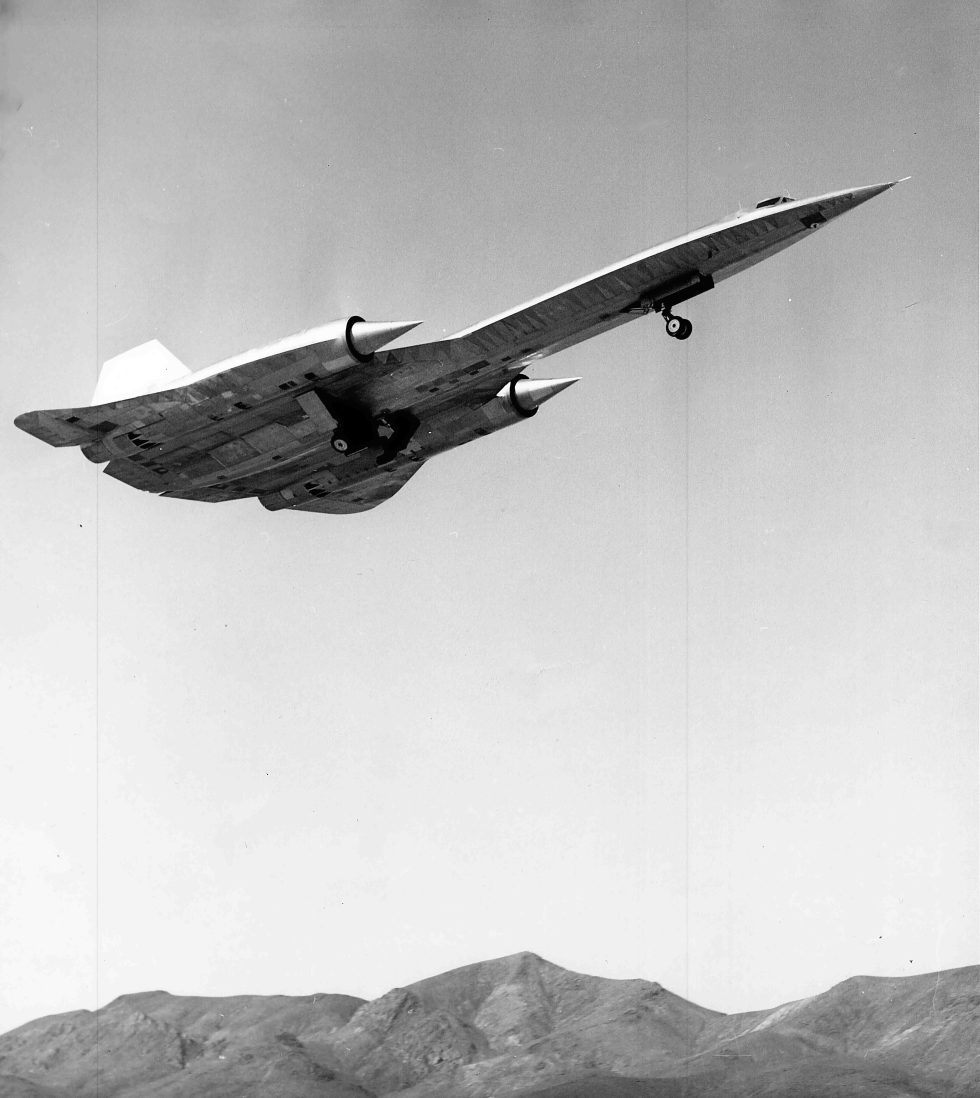
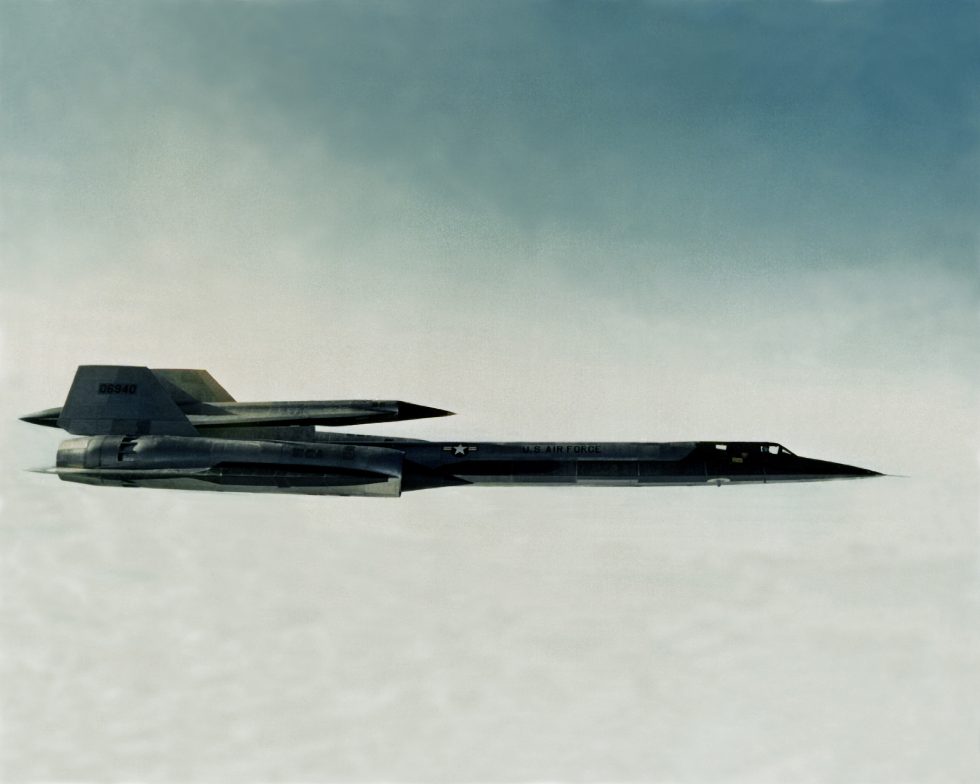
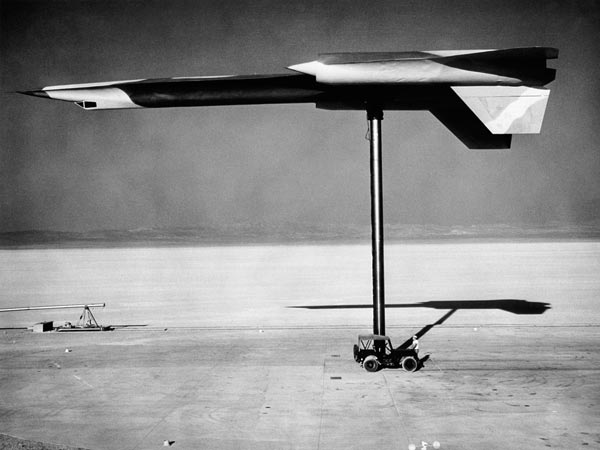
Built almost entirely of titanium to survive the searing heat of sustained Mach-3 flight, the single-seat A-12 first flew from the secret Nevada test site at Groom Lake (Area 51) on 26 April 1962. It could cruise at Mach 3.2 at around 90,000 feet — roughly 3,500 km/h at the edge of the stratosphere — outrunning any interceptor or missile then in existence. Only 15 were ever built.
The A-12 is often confused with the SR-71 Blackbird, and for good reason: the Blackbird is its direct descendant. But the A-12 came first. It was lighter, shorter, single-seat, slightly faster and higher-flying, and it belonged to the CIA — not the Air Force. It flew just one operational campaign, Operation Black Shield, over North Vietnam and North Korea in 1967–68, before President Johnson retired it in favour of the Air Force’s two-seat SR-71.
01A-12 vs SR-71: how the CIA’s Oxcart differs from the Air Force’s Blackbird
They look almost identical, but they are not the same aircraft. The A-12 came first — it flew in 1962, two and a half years before the SR-71 — and it was a CIA aircraft flown by civilian-status Agency pilots. It was single-seat, about six feet shorter and some 15,000 lb lighter than the Blackbird, and because it was lighter it flew marginally faster and higher.
The SR-71 was the U.S. Air Force’s two-seat follow-on: a pilot plus a reconnaissance systems officer, a longer and heavier airframe with a more prominent nose and chines, and a far larger suite of cameras, radar and sensors. The Blackbird flew for nearly three decades and became world-famous; the A-12 was retired in 1968, its very existence kept secret until the CIA declassified the OXCART programme in 2007. In short: the A-12 was the sharp, single-seat pathfinder; the SR-71 was the bigger, longer-serving production spy plane built on everything the A-12 proved.
What makes the A-12 special
A titanium airframe — and the first stab at stealth
Sustained Mach-3 flight heats an airframe past 250 °C, far beyond what aluminium can take, so Kelly Johnson built the A-12 overwhelmingly from titanium — a metal so hard and scarce that Skunk Works had to invent new tools and welding methods, and reportedly bought much of it covertly from the very country it was meant to spy on. Its sculpted chines both carried sensors and cut the radar cross-section, an early, pragmatic step toward what would later become stealth.
The J58 engine and its shape-shifting inlets
Power came from two Pratt & Whitney J58 afterburning turbojets, each about 145 kN in reheat, burning special heat-stable JP-7 fuel. The real magic was in the inlets: a translating spike moved up to 66 cm in and out to keep the supersonic shock-wave in exactly the right place, letting the engine breathe as a ramjet-like mixed-compression system at Mach 3. Taming that inlet was the programme’s hardest engineering problem.
Single-seat, Mach 3.2, 90,000 feet
Unlike the two-seat SR-71, the A-12 was flown by one pilot in a full pressure suit, essentially a spacesuit. Lighter than the Blackbird, it could sustain Mach 3.2 and reach a record Mach 3.29 at around 90,000 feet — roughly 20,000 ft higher than the U-2 and beyond the reach of any 1960s interceptor or missile. Its defence was not armour or guns; it was raw speed and altitude.
02The A-12’s ‘plasma stealth’: burning caesium to hide the exhaust
Even with its radar-cutting shape, the A-12 had a giveaway: the ionised exhaust plume from its engines lit up on enemy radar. Skunk Works’ answer, developed with the codename Project KEMPSTER, was to add a caesium-based additive (nicknamed A-50) to the fuel, seeding the exhaust with electrons to reduce its radar return — an early experiment sometimes called “plasma stealth.” Combined with the chined fuselage and radar-absorbing structure, it made the A-12 one of the first aircraft ever designed with its radar signature deliberately in mind.
03The A-12’s titanium problem: buying metal from the enemy
Titanium was the only metal that could survive Mach-3 skin temperatures, but in the early 1960s the United States had almost no domestic supply of the high-grade ore. By the most-repeated account, the CIA quietly set up front companies to purchase titanium on the world market — a significant share of it ultimately sourced from the Soviet Union, the very country the A-12 was built to overfly. The metal was also brutally difficult to machine: ordinary steel tools shattered on it, cadmium-plated wrenches caused it to fail, and even trace chlorine from tap water could corrode it, forcing Skunk Works to rewrite its entire manufacturing process.
Full A-12 specifications
Baseline note: every figure below describes a production A-12 in its final configuration — one pilot, two Pratt & Whitney J58 engines, a single camera bay, no weapons and no second seat — as flown by the Central Intelligence Agency between 1962 and June 1968. It is not an SR-71, which was longer, heavier, two-seat and Air Force; it is not a YF-12, which had a radome, a fire control officer and three missile bays; and it is not an M-21, which had a launch control officer and a drone on its back. Deltas for the trainer, the M-21 and the paper proposals are in grey. Five numbers need settling before the tables start. First flight: Lou Schalk lifted Article 121 off Groom Lake on 25 April 1962 in an unannounced hop of less than three kilometres at about six metres, wobbling badly because some navigation controls had been cross-connected, and put it down on the lakebed past the end of the runway; the official first flight was 30 April, forty minutes with the undercarriage locked down, during which the aircraft shed most of the titanium fillets off its left side. One widely read online account contradicts itself here, its text giving 26 April for the unofficial hop and its timeline giving 25 April for the hop and 26 April for the first flight; David Robarge’s CIA history, which is the primary published account, gives 25 and 30 April, and those are the dates used on this page. Empty weight: the declassified A-12 Utility Flight Manual does not state one, and the figures that circulate online cannot be traced to a document, so this page gives only the weights the manual does give. Ceiling: 25,900 m (85,000 ft) is the published service ceiling, 27,430 m (90,000 ft) was reached in August 1965, and the band actually worked on operations was lower than either. Thrust: 144.6 kN (32,500 lbf) is the standard uninstalled sea-level figure; installed thrust was much lower, and above about Mach 2 the engine was no longer the main producer of it at all. Name: the men who flew it called it Cygnus, at Jack Weeks’s suggestion, and the programme was Oxcart; Blackbird is a later label stretched over the whole family.
Dimensions & weights
- Crew
- 1 — a single pilot in a David Clark full-pressure suit, sealed and on oxygen for the whole sortie. The A-12 is the only member of the family flown by one man; the trainer, the M-21, the YF-12 and the SR-71 all carried two, and the second seat is the quickest way to tell them apart in a photograph
- Length
- 30.96 m (101 ft 7 in) — 1.78 m shorter than the SR-71’s 32.74 m and within a few centimetres of the YF-12. The SR-71 was stretched to carry more fuel and a second crewman; the A-12 never was, which is most of why it flew higher
- Wingspan
- 16.94 m (55 ft 7 in) — identical across the A-12, YF-12, M-21 and SR-71. The wing was the one part of the design nobody was willing to disturb
- Height
- 5.64 m (18 ft 6 in) over the canted fins, undercarriage down
- Wing area
- 166.8 m² (1,795 sq ft) — a modified delta of aspect ratio about 1.7, blended into the forward-body chines rather than joined to a fuselage in the conventional sense. Outer wing panels were beaded chordwise over spanwise corrugations so the skin could grow and shrink without buckling
- Chines
- about 40 per cent of total length — the sharp lateral edges running from the nose to the wing root, and the defining feature of the shape. They were put there for radar reasons and turned out to generate roughly a fifth of the aircraft’s total lift and to steady it in yaw. Truncating them for the YF-12’s radome cost that aircraft its directional stability and earned it three ventral fins
- Q-bay payload
- 1,130 kg (2,500 lb) — one camera and its film, carried in the single bay behind the cockpit. That is the entire useful load of the aeroplane. On the M-21 the Q-bay was deleted and a second cockpit put in its place
- Maximum take-off weight
- 53,070 kg (117,000 lb) as stated in the A-12 Utility Flight Manual of 15 September 1965. This is a take-off limit, not a maximum flying weight: an Oxcart normally left the ground well short of full tanks and topped up from a KC-135Q within minutes, so its heaviest moment came in the air, not on the runway
- Maximum landing weight
- 23,590 kg (52,000 lb) — under half the take-off limit, and the reason a curtailed sortie meant dumping fuel rather than simply coming home
- Internal fuel
- ~40,090 litres (~10,590 US gal, ~8,820 imp gal), about 30,980 kg (68,300 lb) of JP-7 at 0.773 kg/litre. Merlin’s AIAA study gives 69,800 lb for the family, so treat the last thousand pounds as a rounding argument. The integral tanks were sealed with some 3,050 m (10,000 linear feet) of fluorosilicone and leaked steadily on the ground: the structure was built loose so it would seal itself when heat closed the joints at speed
- Wing loading
- 317 kg/m² (65 lb/sq ft) at maximum take-off weight — very low for a Mach 3 aircraft, and the direct cause of the altitude advantage over the heavier SR-71
- Empty weight
- not published — stated plainly rather than guessed. The declassified flight manual lists take-off, landing and fuel weights but no empty weight, and the figures near 24,800 kg (54,600 lb) that appear on enthusiast sites cannot be traced to a primary document. What is documented is the comparison that mattered: the A-12 was the lighter aeroplane, and at the same Mach number it sat 600 to 1,500 m (2,000 to 5,000 ft) above the SR-71
Performance
- Maximum speed
- Mach 3.29 — about 3,500 km/h (2,180 mph) at 24,000 m. Mach 3.3 is the figure usually printed and Mach 3.2 the routine cruise ceiling in service; the difference is a test-card number against an operational one
- Supersonic cruise
- Mach 3.1 — about 3,290 km/h (2,045 mph), the speed flown on the first Black Shield sortie over North Vietnam and on most that followed. Below about Mach 2 the aircraft was draggy, thirsty and unhappy; it was designed to be fast, not to loiter
- Service ceiling
- 25,900 m (85,000 ft), quoted in the flight manual as "or higher" — an unusually candid piece of drafting for a document of that period
- Highest altitude flown
- 27,430 m (90,000 ft), August 1965 — the design goal, reached in testing. The A-12 is the highest-flying member of the Blackbird family, which is precisely what made its early retirement contentious
- Operational cruise band
- 22,980–24,780 m (75,400–81,300 ft) as recorded across operational testing — the honest working figure, well below the brochure ceiling and still above anything else then flying
- Rate of climb
- 59.9 m/s (11,800 ft/min) — brisk rather than spectacular. The A-12 did not climb to altitude so much as accelerate to it, trading Mach for height in a long shallow cruise-climb as fuel burned off
- Range
- 4,630 km (2,500 nm, 2,880 miles) as published, with 5,190 km (2,800 nm, 3,220 miles) demonstrated in flight test. Operational sorties were longer than either because they were refuelled twice, once south of Okinawa after take-off and once over Thailand before the run home
- Maximum endurance
- 7 h 40 min — the longest single A-12 flight, recorded in October 1966. Seven and a half hours sealed in a pressure suit, most of it at over 3,000 km/h, feeding through a tube
- Turning radius at cruise
- 138 km (86 miles) — the number that shaped Black Shield route planning more than any other. An A-12 could not turn inside North Vietnam, and on some profiles the turn carried it across the Chinese border whether anyone wanted it to or not
- Thrust-to-weight ratio
- 0.56 at maximum take-off weight — and largely beside the point above Mach 2, where most of the thrust stopped coming from the engines. See the inlet entry opposite
- Skin temperature
- 239–328 °C (462–622 °F) average across the airframe at cruise, with local peaks to 566 °C (1,050 °F) on the nacelle lips and leading edges. The outer windscreen panes reached 216 °C (420 °F) while the cabin behind them was held near 16 °C (60 °F). The aircraft grew several inches longer in flight
Propulsion & systems
- Engines
- 2 × Pratt & Whitney J58 (company designation JT11D-20B, service designation J58-1) afterburning bleed-bypass turbojets, nine-stage axial compressor, about 2,700 kg (6,000 lb) each. First engine run 24 December 1957; pre-flight testing completed 30 July 1962
- Dry thrust
- 91.2 kN (20,500 lbf) each, uninstalled at sea level
- Afterburning thrust
- 144.6 kN (32,500 lbf) each, uninstalled at sea level. The YF-12 literature prints 140.1 kN (31,500 lbf) for the same engine and Pratt & Whitney’s installed figures are lower again. Nobody is wrong; they are measuring different things
- Engine cycle
- bleed-bypass turbo-ramjet — above roughly Mach 2 about a fifth of the air leaving the fourth compressor stage was piped straight to the afterburner through six external tubes, so the engine turned progressively into something closer to a ramjet as it accelerated. It is the reason a J58 could run for hours at Mach 3.2 when every other turbojet of the period would have destroyed itself
- Air inlets
- axisymmetric with a translating spike — each spike moved up to 66 cm (26 in) aft as speed rose, holding the shock system where it belonged. At cruise the inlet produced about 54 per cent of net propulsive thrust, the ejector nozzle about 29 per cent and the engine itself only about 17 per cent. When the shock was expelled the resulting unstart collapsed thrust on one side instantly and threw the pilot hard sideways; curing it took the rest of the decade and was largely done on YF-12s after the A-12 had gone
- Interim engines
- 2 × Pratt & Whitney J75 of about 75.6 kN (17,000 lbf) — the first five A-12s flew on J75s and were limited to roughly Mach 2.0. A mixed J75/J58 flight was made on 5 October 1962 and the fleet was on J58s by early 1963. The two-seat trainer 60-6927 kept its J75s for its entire life and never flew at Mach 3
- Fuel and ignition
- JP-7, lit by triethylborane — JP-7 is so reluctant to burn that a lit match dropped into a puddle of it goes out, so a metered shot of pyrophoric TEB was injected to light the engine and each afterburner, giving the green flash seen on start-up. A caesium additive nicknamed "panther piss" was mixed into the fuel to damp the ionised afterburner plume and cut its radar return
- Structure
- 93 per cent titanium alloy — principally B-120VCA (about 13 per cent vanadium, 11 chromium, 3 aluminium), with A-110AT and C-120AV elsewhere, in skins 0.51 to 1.02 mm (0.020 to 0.040 in) thick. The ore was bought through third parties and front companies from one of the world’s leading exporters, the Soviet Union, which never discovered it was supplying the metal for the aircraft built to overfly it
- Radar cross-section measures
- shaping, wedges and ferrite — the chines, the inward-canted fins and the flat plan-view are the first case of an aircraft’s external shape being set by radar return and then reaching operational service. Triangular composite wedges of iron ferrite and silicon laminate, bonded with asbestos, were interlocked with titanium panels along the wing and chine edges. Specific cross-section figures near 0.01–0.02 m² circulate widely and are not officially confirmed; the declassified 1967 comparison document says only that both the A-12 and the SR-71 were "relatively low" when clean, and that the SR-71 was appreciably higher with its side-looking radar fitted
- Sensors and navigation
- one camera, star tracker, Birdwatcher — a single high-resolution camera in the Q-bay, three types qualified; an astro-inertial navigation system that shot stars through a window in daylight at 24,000 m because no other reference was good enough; and Birdwatcher, a telemetry set that transmitted the state of the critical systems to ground stations continuously. Birdwatcher is the only reason anything is known about the loss of Article 129
04The A-12’s cost: why there is no clean price tag
The A-12 was a black CIA programme, so it never carried a public flyaway price the way a normal Air Force jet does. Historical figures usually quote the whole OXCART programme — development, 15 aircraft, engines, the Area 51 test infrastructure and Black Shield operations — rather than a per-aircraft cost, and even those numbers were classified for decades. Any precise dollar figure you see attached to a single A-12 should be read as an estimate, not a sourced flyaway price. No credible cost-per-flight-hour figure exists in open sources either.
Armament & payload
The A-12 carried one camera, one man and no weapon of any kind
There is no armament section for an Oxcart, because the aircraft was built by an intelligence service rather than an air force and the whole design argument was that speed and altitude would do the work a weapon could not. The payload is a single camera in a single bay behind the cockpit, 1,130 kg (2,500 lb) of it, and that is the complete list. There are no hardpoints, no pylons, no bays that open downwards, no ejector racks and no gun. Three camera types were qualified for the Q-bay and only one could be carried at a time; the best of them laid down a continuous strip 117 km (63 nm, 72 miles) wide at roughly 0.3 m (1 ft) ground resolution, which in 1967 was better imagery than anything else in the world could return from a survivable altitude.
The one thing an Oxcart airframe ever carried outside its mould line was another aircraft. The two M-21s had a dorsal pylon between the fins for the Lockheed D-21, a ramjet-powered Mach 3.3 drone meant to fly one-way routes over targets too dangerous for a man, eject a camera hatch for mid-air recovery and destroy itself. That fit killed a man and ended the programme, and it is dealt with honestly in its own card below rather than filed under "stores". Everything here describes the CIA A-12 and the two M-21s. The YF-12A’s three AIM-47A Falcons and the SR-71’s multi-sensor bays belong to those aircraft and are covered on their own pages; no A-12 was ever wired for a weapon, and no operator variation exists because the CIA was the only operator.
The camera — the entire reason for the aeroplane
- A single high-resolution camera in the Q-bay, three types qualified and one carried per sortie. The best produced a continuous strip 117 km (63 nm) wide at about 0.3 m (1 ft) ground resolution — a wider swath than the SR-71 could manage, which was the A-12’s strongest card in the 1967 fly-off.
- Film was pulled from the aircraft on landing at Kadena, boxed and flown out the same day. Early Black Shield film went to the Eastman Kodak plant at Rochester, New York; later missions were processed at an Air Force centre in Japan so that commanders in Vietnam had the product within 24 hours of the aircraft touching down.
- The camera window was a quartz pane fused to its titanium frame by ultrasonic welding, a process invented for the job, because ordinary glass and ordinary bonding would not survive the heat.
- What the A-12 could not do was carry more than one thing at a time. The SR-71 shot photography and electronic intelligence simultaneously; the A-12 chose. That single sentence is most of the argument the CIA lost in 1966.
The Q-bay, and what would fit in it
- One bay, behind the cockpit, sized around one camera and its film magazines. It is the direct ancestor of the YF-12’s missile bays and the SR-71’s sensor bays, and it is the only volume on the aircraft available for a payload.
- The bay could not be reconfigured in flight and could not be shared. Fitting electronic countermeasures usually meant giving up sensor capacity, which is why the declassified comparison papers keep returning to the point that some A-12 sensors would "typically be removed to make room for ECM gear".
- On the M-21 the Q-bay was deleted altogether and a second pressurised cockpit built in its place for the launch control officer. An M-21 therefore carried no camera at all; the camera was in the drone.
- Nothing was ever carried externally on an A-12. There is no hardpoint anywhere on the airframe, and at 300 °C skin temperature and Mach 3.2 there was no realistic way to add one.
Electronic countermeasures and the SAM problem
- Defensive electronics, not weapons, were the A-12’s only active protection, and they had to compete with the sensors for space and power. The systems themselves remain largely undescribed in the open literature.
- They were used in anger. On 28 October 1967 a North Vietnamese site fired a single SA-2 at an Oxcart and missed; mission photography caught the launch smoke, the missile and its contrail.
- On 30 October 1967 Dennis Sullivan was engaged by at least six SA-2s on his second pass. Through the rear-view periscope he watched the contrails climb to about 27,400 m (90,000 ft) and converge; four detonated behind him, one within 100 to 200 m. Post-flight inspection found a metal fragment lodged against the wing tank support structure through the lower right wing fillet — debris rather than a warhead pellet, and the only battle damage an A-12 ever took.
- Growing Soviet-supplied SAM sophistication, and improving blip-to-scan performance in Soviet radars, is the first reason given in the CIA record for retiring the type. The aeroplane that could not be caught was becoming the aeroplane that could be seen.
Navigation, communications and Birdwatcher
- An astro-inertial navigation system tracked stars through an upward-facing window in broad daylight, because at 24,000 m and 3,300 km/h nothing on the ground could be used as a fix and no inertial platform of the period could hold accuracy over a four-hour sortie.
- Route accuracy was not a nicety. A camera strip 117 km wide is useless if the aircraft is 60 km off track, and with a 138 km turning radius there was no going round again.
- Birdwatcher, a continuous radio telemetry link, reported the critical parameters to ground stations throughout a flight. When Article 129 was lost on 5 June 1968 it was Birdwatcher that recorded starboard exhaust gas temperature above 860 °C (1,580 °F), fuel flow on that engine below 3,400 kg (7,500 lb) per hour and the aircraft descending through 20,880 m (68,500 ft). No wreckage was ever recovered; the accident report is built entirely on that telemetry.
- Cover was itself a system. The 1963 Wendover crash was reported to the press as an F-105 Thunderchief, witnesses were paid 25,000 dollars each in cash to keep quiet, and the 1968 loss of Jack Weeks was announced as an SR-71.
The D-21 — the only thing ever carried outside
- Lockheed D-21, initially the Q-12: a ramjet-powered reconnaissance drone 13.06 m (42 ft 10 in) long, 5.79 m (19 ft) in span, about 4,990 kg (11,000 lb) at launch, cruising above Mach 3.3 at 28,960 m (95,000 ft) with a range near 5,560 km (3,000 nm). Its Marquardt RJ43-MA20S-4 was a Bomarc engine rebuilt to run for an hour and a half instead of a few minutes.
- It was carried nose-up on a dorsal pylon between the M-21’s fins and released at speed. The camera and inertial unit sat in a jettisonable hatch that a JC-130 was to snatch out of the air; the drone then destroyed itself. Nothing was meant to come back.
- Four launches were attempted. 5 March 1966 released cleanly but the drone hung on the M-21’s back for several seconds; 27 April 1966 reached height and speed and was lost after 2,200 km to a hydraulic pump failure; 16 June 1966 flew the whole 2,870 km profile but failed to release its hatch.
- The fourth, on 30 July 1966, was flown straight and level instead of in the shallow outside pushover used before. The D-21 unstarted, struck the M-21, and Mach 3.2 airflow tore the forebody off the wing. Bill Park and Ray Torrick both got out; Park was picked up by helicopter, Torrick drowned when his pressure suit filled with water. Kelly Johnson cancelled the M-21 himself.
- The drone survived its mother ship. Rebuilt as the D-21B with a solid rocket booster and launched from B-52Hs, it flew four Senior Bowl missions over Lop Nor between 9 November 1969 and 20 March 1971, none of which returned usable film through the intended chain. Thirty-eight were built and twenty-one expended; the last one lost is in the Chinese Aviation Museum in Beijing.
What the A-12 never carried
- No gun, of any calibre, in any variant. No mounting, no port, no ammunition provision, no sight.
- No air-to-air missiles. The AIM-47A Falcon belongs to the YF-12A, which was built on the seventh, eighth and ninth airframes of this production line and is a different aircraft with a different nose. Tables that give the A-12 three Falcons have confused the two.
- No bombs, rockets, drop tanks, pods or external stores of any kind, and no air-to-ground mode in any of its equipment. The aircraft had no attack role, no strike derivative was ordered, and the Air Force’s reconnaissance-strike ambitions went to the RS-70 and then nowhere.
- No nuclear weapon, ever, in any form. The recurring claim that Oxcart was a bomber conflates it with the North American XB-70 Valkyrie, which shared the era and the Mach number and did have a bomb bay.
- No overflight of the Soviet Union — the one thing it was actually designed for. After Gary Powers was shot down in May 1960 President Kennedy stated publicly that such flights would not resume, and by 1965 satellites had made them unnecessary. The A-12 spent its whole operational life over targets it was never meant to see.
Three typical loadouts
- Black Shield sortie over North Vietnam, 1967
- One camera in the Q-bay, full internal fuel, ECM fitted at the cost of some sensor capacity. Take off from Kadena, refuel south of Okinawa, one or two photographic passes at about Mach 3.1 and 24,400 m (80,000 ft), withdraw to a second refuelling over Thailand, return to Kadena. Twenty-two such sorties were flown in 1967 alone; the first, on 31 May 1967, was flown by Mel Vojvodich against surface-to-air missile sites.
- Pueblo-crisis sortie over North Korea, 19 February 1968
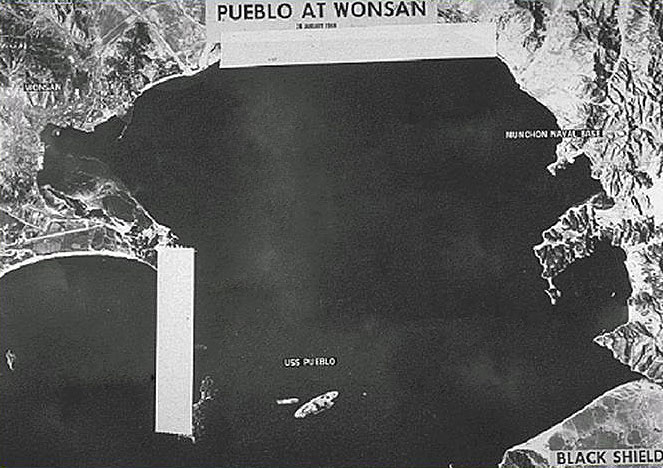
- Same fit, longer legs, and the first two-pass mission over North Korea. It photographed 84 primary and 89 bonus targets through 20 per cent scattered cloud and identified a new SA-2 site near Wonsan. The mission of 26 January 1968, flown by Jack Weeks, had already found USS Pueblo herself anchored in Wonsan Bay under guard by two patrol boats and three Komar-class missile boats.
- Tagboard launch sortie, M-21 and D-21, 1966
- No camera and no Q-bay: a launch control officer in the second cockpit and a 4,990 kg D-21 on the dorsal pylon. Accelerate to Mach 3.2 over the Pacific, verify ramjet airflow, push over and release. Flown four times off the California coast between March and July 1966, the last of them fatally.
Sourcing caveat: the A-12’s camera and countermeasures fits are still only partly declassified. The 117 km swath and one-foot resolution come from the CIA’s own 1967 A-12 versus SR-71 comparison papers, released through FOIA and written to make a case; the manufacturers and model numbers of the three qualified camera types are given inconsistently across the secondary literature and are not repeated here as fact. Mission counts follow the McIninch and Robarge CIA histories. Radar cross-section figures for this aircraft are not officially published, and any specific square-metre number should be treated as an estimate by someone outside the programme.
Variants
Fifteen Oxcart airframes flew, and three quite different aircraft grew out of them
The A-12 has almost no variants of its own and an enormous family. Eighteen airframes came off the Burbank line: thirteen A-12s, one of which was the two-seat trainer, two M-21 drone carriers, and three YF-12A interceptors taken from production slots seven, eight and nine and paid for by the Air Force rather than by Oxcart. Fifteen of those eighteen are A-12s and M-21s and belong on this page; the three YF-12As have their own.
The brief that this page was written from said thirteen single-seaters plus two trainers, which is not quite right and worth correcting: of the thirteen A-12s, twelve were single-seat and one, 60-6927, was the two-seat trainer. The other two airframes were the M-21s, which were two-seat but were launch aircraft rather than trainers.
The A-12 was also the aircraft that lost the argument. The Air Force wanted a two-seat reconnaissance Blackbird it could own and operate itself, and got the SR-71; the CIA wanted to keep the aircraft it had designed, paid for and flown. On 28 December 1966, five months before Black Shield began, the Bureau of the Budget settled it by terminating the A-12 programme with effect from June 1968. The NICE GIRL fly-off of October and November 1967, in which A-12s and SR-71s flew identical routes along the Mississippi an hour apart, came too late to matter and was inconclusive anyway: the A-12 had the wider camera swath and sat 600 to 1,500 m higher, the SR-71 collected kinds of intelligence the A-12 could not and carried more fuel. The faster, higher-flying aeroplane was retired first, and on 5 February 1968 Lockheed was ordered to destroy the tooling for all three types so that nobody could reopen the question.
- Archangel A-1 to A-11 (1958–1959 / none built)
- The design series that gives the aircraft its name — A-12 is the twelfth Archangel, not a US attack designation. A-4 to A-6 were small blended-body machines that could not make the range; A-7 to A-9 mixed a J58 with two Marquardt ramjets; A-10 and A-11 grew large and fast at the expense of radar return. The A-11 lost to Convair’s Kingfish on signature and won on performance, cost and Lockheed’s record of delivering the U-2 on time.
- A-12 (1962–1968 / 13 built, Articles 121–133)
- The production aircraft: single seat, one Q-bay, twin canted fins and non-metallic wedges added to the A-11 shape to bring the cross-section down. Twelve were ordered on 26 January 1960 for 96.6 million dollars covering design, manufacture and testing, roughly ~8 million dollars an airframe in 1960 money. The first five flew initially on J75s; the fleet made about 2,850 test flights from Groom Lake and 29 operational sorties from Kadena.
- A-12 trainer, "Titanium Goose" (1962–1968 / 1 of the 13, 60-6927)
- Two tandem cockpits, the rear one raised and slightly offset so the instructor could see forward and take control. It kept its J75 engines for its entire service life and so never flew at Mach 3, which did not stop it accumulating 614 flights and 1,076 hours — more than twice the hours of any other aircraft on the programme.
- M-21 (1963–1966 / 2 built, Articles 134–135)
- Mother ship for the D-21 under Project Tagboard: dorsal pylon between the fins, second cockpit for a launch control officer where the Q-bay had been, no camera of its own. M for mother, D for daughter. Cancelled after the fatal launch of 30 July 1966 that killed Ray Torrick and destroyed 60-6941.
- D-21 and D-21B (1964–1971 / 38 built, 21 expended)
- Not an A-12 variant so much as its payload, and the reason the M-21 existed. Ramjet-powered, Mach 3.3, one-way, with a jettisonable camera hatch. After the M-21 accident it was rebuilt with a rocket booster for underwing carriage by B-52Hs and flown on four Senior Bowl missions over the Lop Nor test site, 1969 to 1971, without a single hatch reaching a laboratory intact.
- YF-12A (1963–1979 / 3 built, Articles 1001–1003)
- The Air Force interceptor built on A-12 airframes seven to nine: truncated chines, a radome for the Hughes AN/ASG-18 radar, a second cockpit for a fire control officer, three ventral fins to recover the stability the radome cost, and three AIM-47A Falcons in converted Q-bays. First flight 7 August 1963; announced by President Johnson in February 1964 partly to give the still-secret A-12 somewhere to hide. It has its own page here.
- R-12 and RS-12 proposals (1962–1963 / none built under these names)
- Lockheed’s reconnaissance and reconnaissance-strike derivatives offered to the Air Force from late 1962, longer and heavier than the A-12 with a second crewman and more fuel. The strike half went nowhere; the reconnaissance half was ordered as six aircraft on 28 December 1962 and became the SR-71.
- SR-71A, SR-71B and SR-71C (1964–1999 / 32 built)
- The stretched two-seat Air Force development, 1.78 m longer, heavier, carrying more fuel and a far wider sensor fit, and the aircraft that ended the A-12. First flight 22 December 1964; first SR-71A into Kadena 8 March 1968; first operational SR-71 sortie over Vietnam 21 March 1968, thirteen days after the last A-12 mission over the same country. It has its own page here, and the two aircraft should not be confused: the A-12 is the shorter, lighter, single-seat CIA original that flew higher.
Closing note on losses and survivors. Six of the fifteen A-12 and M-21 airframes were destroyed, killing two pilots and one launch control officer: 60-6926 near Wendover, Utah on 24 May 1963 (pitot icing, Kenneth Collins ejected safely, reported to the press as an F-105); 60-6939 on approach to Groom Lake on 9 July 1964 (hydraulic failure, Bill Park ejected at about 60 m); 60-6929 on take-off from Groom Lake on 28 December 1965 (an electrician had swapped the pitch and yaw gyro harnesses of the stability augmentation system, Mel Vojvodich ejected at 45 to 60 m); M-21 60-6941 off California on 30 July 1966 (D-21 collision, Ray Torrick drowned); 60-6928 near Groom Lake on 5 January 1967 (fuel starvation, Walter Ray ejected but could not separate from the seat and was killed); and 60-6932 in the Pacific east of the Philippines on 5 June 1968 (engine over-temperature on a functional check flight, Jack Weeks killed, no wreckage recovered). Sources differ on whether the last of these was 4 or 5 June; the CIA timeline gives 5 June. All nine surviving airframes are original, none is a reproduction, and all are in the United States: 60-6924 at the Blackbird Airpark, Plant 42, Palmdale, California; 60-6925 on the flight deck of USS Intrepid, New York City; the trainer 60-6927 at the California Science Center, Los Angeles; 60-6930 at the U.S. Space and Rocket Center, Huntsville, Alabama; 60-6931 at CIA headquarters, Langley, Virginia, moved there from Minneapolis on 20 January 2007 over the objections of the Minnesota legislature and the volunteers who had maintained it; 60-6933 at the San Diego Air and Space Museum, Balboa Park; 60-6937 at the Southern Museum of Flight, Birmingham, Alabama; 60-6938 at Battleship Memorial Park beside USS Alabama at Mobile; and the surviving M-21, 60-6940, at the Museum of Flight in Seattle, displayed with a D-21 still on its pylon — the only place the pairing can be seen. Between them the fifteen aircraft flew 3,017 sorties and 5,080.9 hours. Frank Murray flew the last one, to Palmdale, on 21 June 1968, and the fleet sat there for nearly twenty years before the museums were allowed to have them.
From black project to Cold-War legend
Project OXCART begins
The CIA selects Lockheed’s design as the U-2’s successor; Kelly Johnson’s Skunk Works starts work on a Mach-3 titanium spy plane.
First flight at Area 51
On 26 April, test pilot Louis Schalk lifts the first A-12 off the secret Groom Lake runway; the official first flight follows days later.
Through Mach 3
After taming the notorious inlet and engine problems, the A-12 reaches its design speed of Mach 3 in July 1963.
Fully operational
The A-12 is declared operational in November 1965, setting speed and altitude marks of Mach 3.29 at 90,000 ft.
The M-21 drone tragedy
On 30 July a D-21 drone collides with its M-21 mother-ship after launch; both crew eject, but launch officer Ray Torick drowns.
Operation Black Shield
Deployed to Kadena, Okinawa, the A-12 flies its first operational mission over North Vietnam on 31 May — the type’s combat debut.
Pueblo — and retirement
An A-12 locates the seized USS Pueblo off North Korea in January; the last mission flies on 8 May, and the type is retired that year.
Out of the shadows
The CIA declassifies the OXCART programme; surviving A-12s go on public display for the first time.
Twelve stories from Project Oxcart
The U-2’s successor
When SAMs began threatening the U-2, the CIA wanted something no missile could touch.
Read the full story
A jet that did not exist
The A-12 was so secret that for decades the public knew only its bigger brother, the SR-71.
Read the full story
The titanium bought from the enemy
America had almost no titanium, so the CIA quietly bought it — partly from the USSR.
Read the full story
Born at Groom Lake
The A-12 turned a dry lakebed in Nevada into the world’s most secret airfield.
Read the full story
Taming the shock wave
The A-12’s hardest problem was not speed — it was making the engine breathe at Mach 3.
Read the full story
The M-21 and the D-21
A daring plan to launch a Mach-3 drone from the A-12’s back ended in tragedy.
Read the full story
The combat debut
After five years of testing, the A-12 finally flew for real — over North Vietnam.
Read the full story
Six missiles and a lucky pilot
A North Vietnamese SAM battery once fired a salvo at an A-12 — and left a fragment in its wing.
Read the full story
Finding a captured ship
When North Korea seized a U.S. Navy ship, an A-12 was sent to find it.
Read the full story
Flying a spacesuit at Mach 3
A-12 pilots wore full pressure suits and flew alone at the edge of space.
Read the full story
A dangerous aircraft to fly
Of the fifteen A-12s built, a third were lost in accidents.
Read the full story
Retired for the Blackbird
Barely a year into operations, the A-12 was grounded in favour of the SR-71.
Read the full story
The A-12 Oxcart in pictures
The A-12 Oxcart in motion
A dedicated video feature for the A-12 is coming soon. In the meantime, explore the gallery above and the twelve stories of Project Oxcart, from the secret first flights at Area 51 to the combat missions over North Vietnam and North Korea.
The A-12 Oxcart in motion
Megaprojects — one of the most-watched A-12 Oxcart films on YouTube.
Where the A-12 Oxcart flew
The mission that defines it
The A-12 never fired a shot — it was a spy plane, and its weapon was its camera. Its combat record is written in one campaign, Operation Black Shield, where its defence was simply that nothing could catch it. Every mission it flew, it flew alone, unarmed, and faster than any missile sent up to stop it.
Compare the combat record of every military aircraft. Figures as of July 2026.
Everything people ask about the A-12 Oxcart
Can I fly in an A-12?
What is the difference between the A-12 and the SR-71?
How fast was the A-12?
Was the A-12 ever shot down?
Why was the A-12 retired so quickly?
Is it true the A-12’s titanium came from the Soviet Union?
What was the M-21 and the D-21 drone?
Where can I see an A-12 today?
You can’t fly the A-12.
These, you can.
Some legends only live in museums — others are fuelled and waiting. MiGFlug has put civilians in real military jet cockpits since 2004.
 Fly the L-39 AlbatrosThe world’s most-flown jet trainer — aerobatics included
 Fly the F-104 Starfighter“The missile with a man in it”
 Fly the MiG-21The Cold War’s most-produced jet
 Fly the T-33 Shooting StarAmerica’s first jet trainer
 Fly the DH VampireA piece of early jet history
 Fly the S.211Agile Italian jet trainer
 Fly the MB-326The classic Aermacchi jet
 Fly the MiG-15The Soviet legend of the Korean War
Continue the tour
Every fact, checked
- CIA — A-12 OXCARTThe Agency’s own history of the programme: development, Black Shield, retirement and losses.
- CIA — OXCART vs BlackbirdOfficial rundown of how the A-12 differs from the SR-71.
- Air & Space Forces Magazine — “The Oxcart Story”Detailed development and test-programme timeline.
- Air & Space Forces Magazine — “Black Shield”The operational missions, pilots, SAM encounters and the Pueblo flight.
- Smithsonian MagazineVietnam, the CIA and the world’s fastest aircraft.
- Roadrunners InternationaleFirst-hand A-12 pilot and Area 51 programme history.
- The War Zone (TWZ)The caesium-fuel “plasma stealth” experiments.
- National Museum of the U.S. Air ForceReference for the YF-12 and preserved Blackbird-family airframes.