
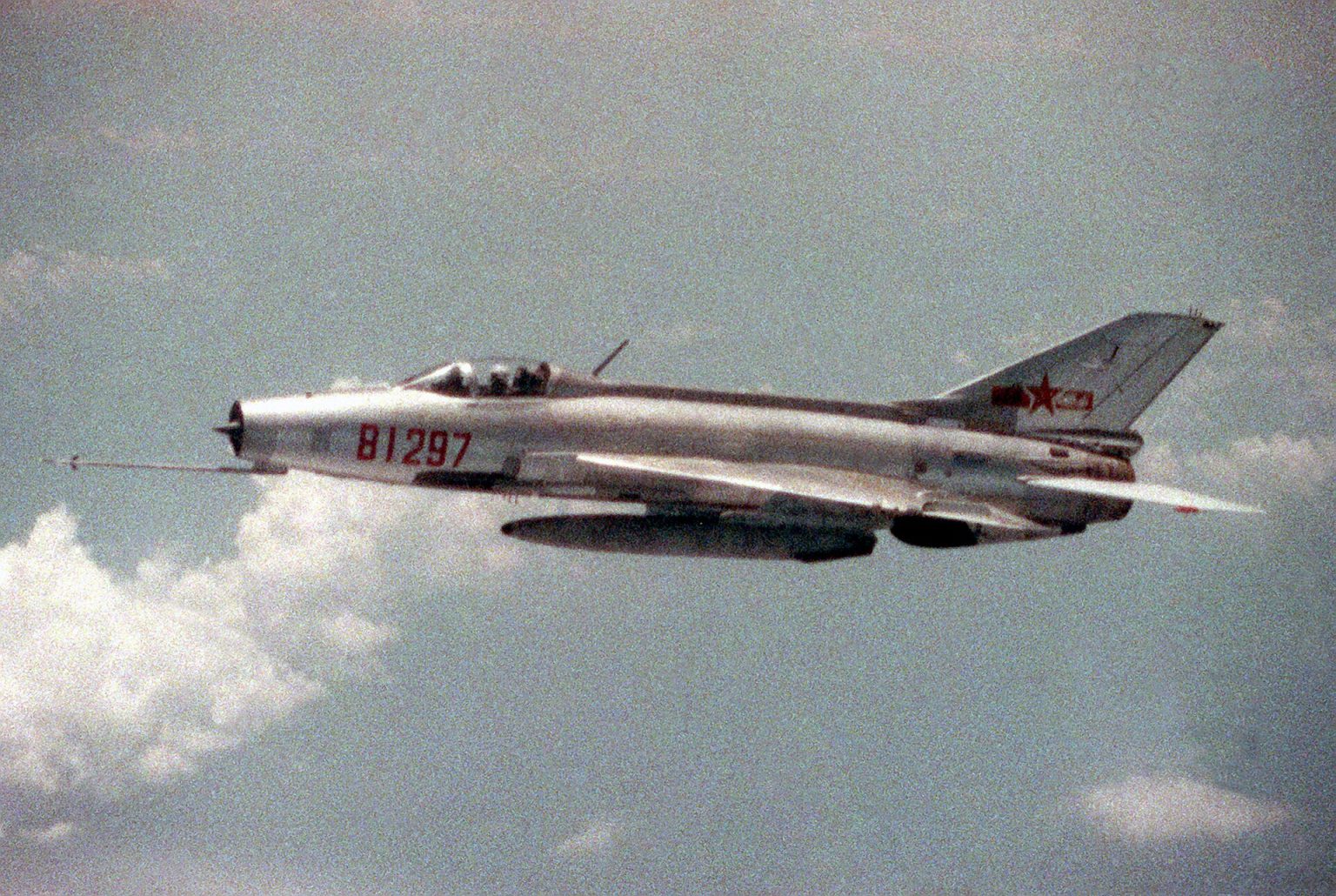
Chengdu J-7 / F-7
China’s MiG-21
The Soviet MiG-21, licence-built in China and then developed far beyond the original — reverse-engineered during the Sino-Soviet split, exported around the world as the F-7, and still the last MiG-21-lineage fighter in front-line service.
China’s MiG-21 — built from a blueprint the Soviets took back
In 1961, at the very end of a decade of Soviet-Chinese friendship, Moscow agreed to licence China to build its newest lightweight fighter, the Mikoyan-Gurevich MiG-21F-13. Within months the Sino-Soviet split hardened into open estrangement, Soviet advisers went home, and the promised technical package arrived incomplete. Rather than abandon the project, Chinese engineers at Shenyang and later Chengdu reverse-engineered much of the aircraft and its engine from a handful of sample airframes and partial drawings.
The Chinese version first flew on 17 January 1966 and entered service as the J-7. Progress was then badly disrupted by the Cultural Revolution, and a genuinely mature, reliable aircraft only emerged in the late 1970s and 1980s. But from that point China did something the Soviet Union never did with the MiG-21: it kept developing the design for another thirty years — new wings, new engines, Western and then indigenous avionics — and sold it across the world as the F-7.
That is the key thing to understand about the J-7. It began as a MiG-21, but it is not simply a copy frozen in the 1960s. Roughly 2,400 were built over an extraordinary 47-year production run, the double-delta J-7E and radar-equipped J-7G gave it capabilities the original never had, and export F-7s equipped some fifteen air forces. As Russia, India and others retired their Fishbeds, the J-7/F-7 became the last MiG-21-lineage fighter still guarding front lines.
01How the J-7 differs from the MiG-21 it started as
The earliest J-7 was very close to the Soviet MiG-21F-13: a single 30 mm cannon, a simple ranging radar and the MiG-21’s awkward forward-hinged canopy. Over the following decades China pulled the design steadily away from that starting point. The J-7II introduced a conventional rearward-opening canopy and a zero-zero ejection seat; export F-7M/P variants added Western avionics such as GEC-Marconi head-up displays; the J-7E replaced the pure delta with a more efficient double-delta wing that markedly improved manoeuvrability and range; and the final J-7G carried a small pulse-Doppler radar and modern PL-8/PL-9 missiles.
The result is a family that shares the MiG-21’s DNA and silhouette but diverged into its own line — developed longer, exported more widely and flown later than the Soviet original. This exhibit covers that Chinese line; for the Soviet aircraft it grew from, see the separate MiG-21 Fishbed exhibit.
What makes the J-7 special
A delta wing on a Chinese-built engine
The J-7 kept the MiG-21’s tailed-delta layout, but China had to build the powerplant itself. The Liyang WP-7, and later the more powerful WP-13, were domestic afterburning turbojets developed from the Soviet Tumansky R-11/R-13 — China’s first mass-produced supersonic engines and a major industrial milestone. Late models give roughly 64 kN of thrust in reheat, enough for about Mach 2.
The double-delta wing and better avionics
The biggest break from the MiG-21 came with the J-7E of the early 1990s, whose new double-delta (“cranked”) wing improved sustained turn, take-off and range. Avionics climbed from a simple ranging radar to Western export packages and finally the pulse-Doppler radar of the J-7G, giving a limited all-aspect capability — and a helmet-mounted sight — the original Fishbed never had.
Cheap, simple and built to export
Above all the J-7/F-7 was designed to be light, simple and inexpensive — an easy-to-fly, easy-to-maintain point-defence fighter that a modest air force could actually afford. That philosophy made it China’s best-selling combat aircraft, giving budget air forces across Asia and Africa supersonic capability for a fraction of the price of a Western jet.
02The J-7’s engines: China’s first supersonic turbojets
When Soviet support ended, China not only had to reverse-engineer the MiG-21’s airframe but also its Tumansky engine. The resulting Wopen WP-7, built at Liyang and Guizhou, was the country’s first mass-produced afterburning supersonic turbojet; the later WP-13 raised thrust and reliability. Getting these engines into series production was as significant for Chinese industry as the airframe itself, and the experience fed directly into later indigenous programmes.
03From F-7 to JF-17: the Super-7 that became a new fighter
In the late 1980s Chengdu worked with the US firm Grumman on a deeply modernised F-7 known as Super-7 or Sabre II, with a solid nose radar and side air intakes. The 1989 arms embargo ended American involvement, but the concept survived and was reworked with a Russian engine into the JF-17 Thunder, co-developed with Pakistan. In that sense the F-7’s export success produced a genuine successor — see the separate JF-17 Thunder exhibit.
Full specifications
Representative figures for a late single-seat variant (J-7G-class). Sources vary; contested values are given as ranges.
Baseline note: the figures below describe the double-delta J-7 — the J-7E of 1993 and the J-7G of 2004, with the cranked wing, four underwing pylons and the WP-13F turbojet. This is the aeroplane the Chinese aircraft industry finally made its own, and it is the fair basis for comparison with anything else flying in the 1990s. Deltas for the plain-delta J-7I and J-7II, for the export F-7M Airguard, for the F-7P and F-7PG Skybolt supplied to Pakistan and for the F-7BG and F-7BGI supplied to Bangladesh are given in grey. Four warnings before the numbers. First, and most important: the MiG-21 is a different aeroplane with its own page in this encyclopedia, and the two should not be blurred. The J-7 began as a licensed MiG-21F-13, but the licence was signed on 30 March 1962 into the wreckage of the Sino-Soviet split, the documentation that arrived at Shenyang was incomplete, several supplied parts were unusable, and Chinese engineers recorded solving 249 major problems and rewriting eight technical documents before the aircraft could be built. The hydraulics, the fuel arrangement, the canopy and the ejection seat were all reworked. By the time of the J-7E, three decades later, the wing itself was Chinese. Second, the specification tables in wide circulation are a hybrid: the empty weight of 5,292 kg quoted for the J-7E and F-7MG is the J-7II’s figure carried across unchanged, and the double-delta aircraft, with a larger wing, integral wing tanks, four pylons and heavier avionics, cannot weigh the same. Treat every weight here as approximate to within a couple of hundred kilograms. Third, the engine. Chinese sources and the Chinese-language record give the J-7E the WP-13F; Jane’s gives it a WP-7F of 63.7 kN in reheat and reserves the WP-13F for the F-7MG, F-7PG and F-7MF. The two ratings are within a kilonewton of each other and nothing much turns on it, but no single source is authoritative. Fourth, the NATO name. The Office of Naval Intelligence lists the type as Fishcan and the J-7E specifically as Fishcan-D, but a great deal of NATO and United States Department of Defense material simply calls it Fishbed, as it does the MiG-21. Both names are in genuine use.
Dimensions & weights
- Crew
- 1 — a single seat, a ranging radar and a ground controller. The two-seat conversion trainer is a separate aeroplane, the Guizhou JJ-7 (export FT-7), which took the fore and aft cockpits of an Egyptian-supplied MiG-21US as its pattern and is reckoned about 40 per cent different from the J-7II it is otherwise based on
- Length
- 14.885 m (48 ft 10 in) overall, including the nose probe. Essentially unchanged from the MiG-21 across the whole family; every J-7 improvement went into the wing, the systems and the tail, never into fuselage length
- Wingspan
- 8.32 m (27 ft 4 in) on the double-delta wing, against 7.15 m (23 ft 5 in) on the J-7I, J-7II, F-7M and the MiG-21. The J-7E gained exactly 1.17 m of span, and it is the single most consequential dimension on this page
- Height
- 4.11 m (13 ft 6 in) to the top of the fin, common to the family
- Wing area
- 24.88 m² (267.8 sq ft), against 23.00 m² (247.6 sq ft) for the plain delta — an increase of 1.88 m², or a little over eight per cent, for no increase in structural weight worth mentioning
- Wing planform
- Cranked double delta, 57° leading-edge sweep inboard and 42° outboard — the defining Chinese modification, proposed by Professor Sha Bonan of Northwestern Polytechnical University and carried through by chief designer Lu Yuying at Chengdu. The outer panel has conical camber on the leading edge, and the wing carries leading- and trailing-edge flaps that the MiG-21’s wing does not. The plain delta it replaced was a constant 57°
- Aspect ratio
- 2.8 — still a very low-aspect-ratio wing by any normal standard. The double delta does not make the J-7 a turning aeroplane in the F-16 sense; it makes it a much less bad one
- Empty weight
- 5,292 kg (11,667 lb) as published by Jane’s for the F-7MG. This is the J-7II’s number reused, and it is almost certainly 300–400 kg light for a double-delta aircraft with four pylons and integral wing tankage. No Chinese figure has ever been released to correct it
- Normal take-off weight
- 7,540 kg (16,623 lb) with internal fuel, the gun loaded and two air-to-air missiles
- Maximum take-off weight
- 9,100 kg (20,062 lb). The MiG-21bis is quoted at 8,800 kg on an unprepared surface and around 10,400 kg at maximum; the J-7 family never grew as heavy as the last Soviet marks because it never carried their radar
- Internal fuel
- ~2,500 litres (~2,000 kg, ~4,400 lb) — an inferred figure, not a published one. What is documented is the sequence of changes: the J-7I lost 100 litres to make room for its second gun, the J-7A regained it with underwing tanks, and the J-7E won it back again by deleting the port gun and adding integral tanks inside the new wing, at the same time replacing gravity refuelling with pressure refuelling
- External stores
- Five hardpoints — four underwing at 500 kg (1,100 lb) each and one centreline rated at 2,000 kg (4,410 lb) but in practice reserved for a 720 or 800-litre drop tank. The J-7II and every mark before it had only two underwing pylons; four is a J-7E change. Maximum ordnance is usually given as 1,600 kg (3,530 lb), sometimes 1,800 kg
- Wing loading
- 303 kg/m² (62.1 lb/sq ft) at normal take-off weight, 366 kg/m² (74.9 lb/sq ft) at maximum. On the plain-delta J-7II the same weights give 328 and 396 kg/m². That eight per cent reduction, together with the flaps and the cranked leading edge, is the whole of the J-7E’s advantage — and it was enough
Performance
- Maximum speed
- Mach 2.0 (2,175 km/h, 1,175 kt true) at 13,000 m (42,650 ft). The F-7BGI is advertised at Mach 2.2 by its Bangladeshi operator; nothing in the airframe or the engine supports that and the figure should be treated as sales material
- Maximum indicated speed
- 1,200 km/h (648 kt IAS) at low level, the structural and intake limit rather than a thrust limit
- Stall speed
- 210 km/h (113 kt IAS) clean. The double-delta wing and its flaps are what make this number tolerable; the plain delta bled speed alarmingly in a hard turn and had to be flown on the approach with a great deal of respect
- Rate of climb
- 195 m/s (38,400 ft/min) at sea level — about 24 per cent better than the J-7II, which is the clearest single measure of what the new wing and the WP-13F did together
- Service ceiling
- 17,500 m (57,400 ft). Identical to the MiG-21bis, and a reminder that the J-7 remained what the MiG-21 was: a high-altitude point-defence interceptor first and everything else afterwards
- Combat radius
- ~850 km (~460 nm) in the air-superiority role with drop tanks, about ten per cent further than the F-7M. Clean and on internal fuel the figure collapses to something under 400 km, which is why every operational photograph of a J-7 shows it with a belly tank
- Ferry range
- 2,200 km (1,190 nm) with three drop tanks. Some sources give 2,000 km; the difference is tank fit, not disagreement about the aeroplane
- Take-off run
- 600–700 m (1,970–2,300 ft). The plain-delta marks needed appreciably more, and short-field performance was one of the two things the J-7E was explicitly designed to fix. For an air force flying from short, hot, high strips in Africa and South Asia this mattered as much as turn rate
- Landing run
- 600–700 m (1,970–2,300 ft) with the brake parachute, which on all J-7s from the late J-7I onwards streams from the base of the fin rather than the rear fuselage — a Chinese change, and a visible way to date an airframe in photographs
- Manoeuvrability
- Approximately 45 per cent better than the F-7M on the manufacturer’s claim for the F-7MG and J-7E. It is a Chengdu marketing number and no independent test data exists, but Pakistani evaluation of the earlier Skybolt against the Dassault Mirage 5 concluded the Chinese fighter was better in every respect except range, and pilots who flew both the plain and cranked wings do not dispute the direction of the change
- g limits
- +8 / −3 as quoted for the F-7BGI, the last and structurally strongest of the line. Earlier plain-delta marks were held to lower limits, and the first domestic J-7 was deliberately built with about seven per cent more structural material than the MiG-21F-13, which made it stronger and slightly less agile
- Thrust-to-weight
- 0.87 at normal take-off weight in full reheat, 0.72 at maximum. Comfortably better than an early MiG-21F-13 and, on paper, in the same band as a clean F-16A — a comparison that flatters the J-7, because thrust-to-weight is the one contest a tiny aeroplane with a 1950s wing can win
Propulsion & systems
- Powerplant
- 1 × Liyang WP-13F afterburning turbojet — the Chinese development of the Soviet R-13-300, itself the engine of the MiG-21bis. Jane’s assigns the J-7E a WP-7F instead and gives the WP-13F to the F-7MG, F-7PG and F-7MF; Chinese sources give the J-7E the WP-13F from the start. The J-7I and J-7II flew on WP-7 and WP-7B
- Thrust
- 44.1 kN dry (9,920 lbf), 64.7 kN (14,550 lbf) with afterburning. The WP-7F is rated at 63.7 kN in reheat and the WP-7B of the J-7II at 59.8 kN. The 82 kN sometimes quoted for the F-7BGI in Bangladeshi material corresponds to no engine the type has ever flown and should be discarded
- Engine life
- 300 hours between overhauls, 900 hours total on the WP-13F. This was a headline improvement: the WP-7 of the first export F-7A had a mean time between overhauls of 100 hours, later doubled to 200. Chinese turbojets of this era were not long-lived, and engine hours governed how many aircraft an operator could actually put in the air
- Air intake
- Nose intake with three-position variable shock cone — introduced on the J-7I in place of the original fixed three-stage cone, and retained to the end of production. Every attempt to move the intake elsewhere and free the nose for a proper radar — the side-intake F-7CP and Sabre II, the chin-intake J-7FS and F-7MF — was abandoned. The nose intake is the reason the J-7 never carried a useful radar
- Fuel system
- Integral tanks in the double-delta wing, pressure refuelling — the J-7E replaced the MiG-21’s gravity refuelling. Chinese engineers also rearranged the fuel from the original forward-fuselage layout, which on the MiG-21 shifted the centre of gravity badly after roughly 45 minutes of flight, and enlarged the drop tanks to hold the trim
- Radar
- J-7E: a Chinese Pointer 2500 ranging radar — a set derived, via the Nanchang Q-5M, from the Italian radar of the AMX, squeezed into the J-7’s tiny shock cone. Ranging only, no search. J-7G: a Chinese fire-control radar developed from the Israeli EL/M-2032 that China obtained as an Elbit subcontractor on the Romanian MiG-21 LanceR, but with the antenna cut down so far that its 150 km range fell to a little over 60 km. F-7P: Italian FIAR Grifo-7 and then Grifo-Mk II, assembled under licence at Kamra. F-7PG and F-7NM: Grifo-MG. F-7TN and F-7GS: KLJ-6E, 30 km. F-7BGI: KLJ-6F
- Cockpit
- HOTAS, head-up display and one multi-function display on the J-7E — the first MiG-21 derivative anywhere to have any of the three. The J-7G added a single-piece windscreen in place of the three-piece unit, which is the quickest way to tell a J-7G from a J-7E in a photograph. The F-7BGI went to three multi-function displays and a full glass cockpit, and is the most modern MiG-21 cockpit ever built
- Sighting
- Helmet-mounted sight, slaved to the PL-8 — fitted from the J-7E and standard on all Pakistani aircraft from the F-7MP onwards. It has a real limitation: on the J-7E the helmet sight and the radar cannot both drive the missile seeker, and the pilot must choose one or the other before the merge
- Ejection seat
- HTY-4 or HTY-6 zero-zero seat under a rearward-hinged canopy. The original Soviet SK seat and its forward-hinged canopy, which used the canopy itself as a windblast shield, was judged unacceptable by the Chinese and replaced from the J-7IG onwards. Pakistani F-7MPs were delivered with the British Martin-Baker Mk 10 instead, which tells you how little the operator trusted the alternative at the time
- Self-protection
- Radar warning receiver and chaff and flare dispensers — new dispensers on the J-7E, an ARW9101 receiver able to store over a hundred threat emitters on the F-7PG. There is no jamming pod, no towed decoy and no infra-red missile approach warning on any J-7 ever built
- Navigation
- TACAN, radio compass, radar altimeter — with GPS and an inertial system added on the F-7PG, F-7GS and F-7BGI, along with ILS, VOR and DME. The Iranian F-7N is the odd one out: it was delivered with an AD2780 TACAN and all its instruments converted from metric to imperial units
- Structure
- All-metal, no composites — a composite forward fuselage was trialled on a J-7M testbed to rebalance the centre of gravity after lighter Western avionics were fitted, and rejected. Instead 130 kg of ballast went into the nose. The J-7HH and F-7NM used aluminium in place of magnesium alloy to survive maritime and tropical air
04The J-7’s cost: why the price is only an estimate
As a Chinese state product sold mostly through government-to-government deals, the J-7/F-7 has no firm published flyaway price. Export F-7s were widely reported at roughly US$2 million in the 1980s, with later upgraded versions often quoted around $3–5 million — figures that should be read as order-of-magnitude estimates rather than official numbers. No reliable public cost-per-flight-hour figure exists for the type. Whatever the exact sum, the aircraft’s selling point was clear: supersonic capability at a fraction of the cost of a Western fighter.
Armament & payload
The J-7 fought its entire fifty-year career without a single beyond-visual-range missile
Every J-7 ever delivered, from the first Shenyang-built aircraft of 1966 to the last F-7BGI handed over to Bangladesh in 2013, fights with a gun and a pair of short-range infra-red missiles. That is the whole of it. The nose intake left no room for an antenna, every attempt to move the intake to the sides or under the chin was abandoned before production, and so the type ended its life with a ranging set or, at best, a cut-down pulse-Doppler radar of about 60 km. There is no radar-guided missile on any J-7 in any air force. In a world where the AIM-120 entered service in 1991 and the PL-12 in the mid-2000s, this is the defining fact about the aeroplane.
Within those limits the armament improved a great deal. The early J-7 carried the PL-2, a Chinese K-13 that is itself a copy of an AIM-9B Sidewinder recovered over the Taiwan Strait in 1958 — a rear-aspect weapon that had to be manoeuvred into a narrow cone behind the target. By the J-7E the standard weapon was the PL-8, the Israeli Python 3 built under licence, cued by a helmet-mounted sight and capable of being fired well off the nose. That is a genuinely dangerous close-in combination, and it is why an aeroplane with no radar to speak of remained worth taking seriously inside ten kilometres. Pakistani F-7Ps carried AIM-9P Sidewinders alongside it, and Egyptian and Iraqi aircraft were wired for the French R.550 Magic.
Air-to-ground was, for most of the type’s life, a matter of iron bombs and rocket pods aimed through a gunsight. That did not stop anyone using it: Sri Lanka bought F-7BS fighters in 1991 precisely because the West would not sell it an attack aircraft and China would not sell it a Q-5, and then flew them against the Tamil Tigers for eighteen years. Only at the very end did precision arrive, on the Bangladeshi F-7BGI, which can carry Chinese laser-guided and satellite-guided bombs and has since been reported carrying Turkish Teber guidance kits. Chinese stores clearances have never been published for any J-7 mark. Several associations below rest on export brochures, on trade-fair mock-ups and on photographs of individual aircraft, and fits varied enormously between the fifteen-odd air forces that flew the type — a Pakistani F-7PG and a North Korean J-7I have almost nothing in common but the airframe.
Gun
- Type 30-1 30 mm cannon — the Chinese Nudelman-Rikhter NR-30, 60 rounds per gun. Heavy shell, low rate of fire, and a weapon that could and did destroy an aircraft with two or three hits
- The count moves about across the family. The first domestic J-7 had one, in the starboard wing root, copying the MiG-21F-13. The J-7I added a second to port at the cost of 100 litres of fuel. The J-7E deleted the port gun again to win the fuel back
- The J-7G, F-7MG and F-7PG restored the port gun, so the mature double-delta aircraft is a two-gun fighter again with 60 rounds a side
- Sixty rounds through an NR-30 is about four seconds of firing per gun. There is no second attack
- Gun aiming runs through the Type 956 head-up display and weapon-aiming computer on the F-7M and its descendants — a British set, later licence-built in China, and one of the most consequential things Britain ever sold Beijing. The JJ-7 trainer has no internal gun at all and carries a semi-recessed twin 23 mm pack on the centreline instead
Air-to-air
- PL-2 and PL-2B — the Chinese Vympel K-13 (NATO AA-2 Atoll), descended from a captured AIM-9B. Rear-aspect only. The standard fit on the J-7I and J-7II, and still the weapon of North Korea’s aircraft
- PL-5B and PL-5E — a much better rear-aspect infra-red missile, with the PL-5EII bringing all-aspect capability. The workhorse of the export fleet and of Sri Lanka’s F-7Gs
- PL-7 — the Chinese R.550 Magic. Carried alongside genuine French R.550s on Egyptian F-7IICs and on the Iraqi F-7Ms transferred through Jordan, and the primary weapon of the Tanzanian J-7G
- PL-8 — the Israeli Python 3 built under licence, off-boresight and helmet-cued. This is the missile that made the J-7E and J-7G worth flying, and integrating it on the earlier J-7IIH required 130 kg of ballast in the nose to hold the trim. PL-9C appears on later marks
- AIM-9P on Pakistani F-7P and F-7PG. No radar-guided missile of any kind has ever been carried by a J-7 — not the PL-11, not the PL-12, not the R-27. The nose is simply too small
Air-to-surface guided
- For four decades of production, none at all. The J-7 had no laser designator, no targeting pod, no data bus capable of talking to a guided weapon and no anti-radiation or anti-ship missile of any description
- The single exception is the Bangladeshi F-7BGI of 2012–13, which was given a stores management system and a head-up display computing constantly-computed impact and release points, and can carry Chinese laser-guided and satellite-guided bombs
- Bangladesh was reported in 2024 to be fitting Turkish Teber laser guidance kits to Mk 82-class bombs on its F-7 fleet, which if sustained makes the last J-7s the only precision-capable ones
- No J-7 in Chinese service ever carried a guided air-to-surface weapon. The People’s Liberation Army Air Force used it as an interceptor and gave ground attack to the Q-5 and later the JH-7
- This card is thin, and honestly so. An operator wanting precision from a Chengdu product in this period bought a JF-17, which is the aircraft the whole F-7 export business eventually turned into
Bombs
- Chinese 50, 100, 250 and 500 kg low-drag bombs on the four underwing stations, up to a nominal 1,600 kg of ordnance
- In practice a useful load is two 250 kg bombs inboard with missiles outboard and a centreline tank, because without the tank the aircraft has no range worth planning around
- All unguided until the F-7BGI, and all delivered by visual dive or level release. Sri Lanka flew exactly this profile against Tamil Tiger airstrips at Mullaitivu and Kilinochchi
- Myanmar’s F-7Ms have been used repeatedly for ground attack in the civil war since 2021, an employment for which the type is poorly suited and which has cost civilian lives on the ground
- There is no internal bay and no conformal carriage before the very late J-7G2 proposal. Everything hangs in the airflow, and a loaded J-7 is a slow, short-legged aeroplane
Rockets
- 57 mm pods of the UB-16 type inherited directly from the MiG-21, sixteen rounds each
- Chinese 55 mm pods of twelve rounds — the commonest fit on export aircraft
- Chinese 90 mm pods of seven rounds, for harder point targets
- On the J-7I the outer stations were originally rocket and bomb stations only; the F-7MP for Pakistan rewired them so they could also fire missiles, which is what turned four pylons into four useful pylons
- Rockets remain the type’s most-used air-to-ground weapon across Africa and South Asia, for the plain reason that they are cheap and the aircraft has no way of aiming anything better
Pods & other stores
- 480-litre underwing drop tanks on the inboard stations, introduced on the J-7A specifically to replace fuel lost to the second gun
- 720-litre centreline drop tank from the J-7II, and an 800-litre tank on later marks. Chinese engineers deliberately enlarged the MiG-21’s tanks to hold the centre of gravity steady in flight
- Photographic reconnaissance pods on the wing pylons of the Bangladeshi F-7MB — the only sensor pod the family ever carried
- Chaff and flare dispensers, new on the J-7E; a gun camera on the F-7B and F-7M whose film magazine could be changed in flight
- What is not carried: no electronic jamming pod, no targeting pod, no buddy refuelling store, no air-to-air refuelling probe of any kind. The J-7 flies as far as its tanks allow and then lands
Three typical loadouts
- Point-defence intercept
- Two PL-8 on the outboard wing stations, 720-litre tank on the centreline, both guns loaded. The mission the aeroplane was built for and the only one it does well: scramble, climb at 195 m/s under ground control, one pass, land. Endurance from brakes-off to brakes-on is well under an hour.
- Escort and combat air patrol
- Two PL-8 or PL-5EII outboard, two 480-litre tanks inboard, 720-litre tank on the centreline. Three tanks and two missiles is a J-7 at the practical limit of its usefulness, and it is how Pakistani F-7PGs of Nos. 17, 20 and 23 Squadrons are normally seen.
- Close air support, counter-insurgency
- Two 250 kg bombs or two 90 mm rocket pods inboard, two PL-5 outboard for self-defence, centreline tank. The Sri Lankan and Myanmar profile, flown visually against targets found by a ground observer, with no designator and no computed release before the F-7BGI.
Sourcing caveat: China has never published a flight manual or a stores clearance document for any J-7 variant. The weapon associations above are assembled from Chengdu and CATIC export brochures, from Jane’s entries that in several places copy those brochures, from Pakistani and Bangladeshi service statements, and from photographs. Where a weapon is named for a specific operator, that is because it is attested only for that operator.
Variants
Fifty-four designations, twenty-six of them for export, and two of them worth remembering
The J-7 ran from November 1964, when Shenyang began cutting components, to May 2013, when the last of sixteen F-7BGIs was handed over to Bangladesh. More than 2,400 were built in something over fifty designations, roughly half of them export models. It is a confusing list, and the confusion is structural: Roman numerals mark the factory development sequence, Latin letters the service sequence, J is the domestic prefix and F the export one, and a great many published tables mix all four systems inside a single row.
Two branches matter. The first is the plain-delta line, J-7I to J-7II to F-7M, which is the MiG-21F-13 gradually made buildable, then made saleable with British avionics. The second is the double-delta line, J-7E to J-7G to F-7BGI, which is a genuinely Chinese aeroplane wearing a MiG-21 fuselage. Between them sits the J-7III, an attempt to reverse-engineer the MiG-21MF from an Egyptian example, which produced a heavier aircraft with a real radar and much worse transonic manoeuvrability, and which the air force quietly abandoned as soon as the double-delta wing flew.
The export list is the largest of any Chinese combat aircraft and one of the largest of any fighter of the Cold War: Albania, Bangladesh, Egypt, Iran, Iraq (through Jordan), Myanmar, Namibia, Nigeria, North Korea, Pakistan, Sri Lanka, Sudan, Tanzania, the United States (for aggressor training) and Zimbabwe. Pakistan was the largest customer outside China and the most demanding one, and Pakistani requirements — a Western ejection seat, a real fire-control radar, a helmet sight — drove more of the type’s development than anything the People’s Liberation Army Air Force asked for.
- J-7, J-7I, J-7A, J-7IG and F-7A (1966–1981, 147 of the J-7I family plus small early batches)
- Preceded by twelve imported MiG-21F-13s (Type 1962) and fifteen assembled from Soviet kits (Type 62). The first domestically built aircraft was certified for series production on 28 December 1966, with seven per cent more structural material than the MiG-21F-13 — stronger, and a shade less agile. The J-7I added a second 30 mm gun, a variable three-position shock cone and a CL-2 ranging radar; the J-7IG finally replaced the Soviet forward-hinged canopy and its ejection system with a rearward-hinged canopy jettisoned before ejection. Twelve F-7As went to Albania and forty late J-7Is to North Korea, both as free military aid.
- J-7II / J-7B / F-7B (1978–, several hundred)
- WP-7B engine, 720-litre centreline tank, brake chute relocated to the fin base. This is the mass-production J-7 and the aircraft most export customers actually bought. Egypt took roughly a hundred F-7A and F-7II; sixty went to Jordan and thence to Iraq.
- J-7III / J-7C / J-7D (1984–1996, about 50)
- An all-weather fighter reverse-engineered from an Egyptian-supplied MiG-21MF, with a JL-7 radar, a twin-barrel 23 mm gun and a sideways-opening canopy. The enlarged radome cost drag and the extra weight cost transonic manoeuvrability. A dead end, and the air force said so.
- F-7M Airguard (1984–, 60 to Jordan and Iraq)
- The breakthrough export aircraft: British Sky Ranger 7M ranging radar, Type 956 head-up display and weapon-aiming computer, British air data computer and encrypted radio, American converter and radar altimeter. Lighter Western avionics shifted the centre of gravity, so 130 kg of ballast went into the nose.
- F-7MP and F-7P Skybolt (1988–1991, 20 + 40 and follow-on batches)
- Pakistan’s aircraft, with twenty-four changes over the F-7M including a Martin-Baker Mk 10 seat, Collins radios, an Italian Grifo-7 fire-control radar licence-assembled at Kamra — the first all-weather F-7 — and the first Chinese helmet-mounted sight. The F-7P moved to a Chinese HTY-4 seat and the wider-scanning Grifo-Mk II.
- J-7E (1990–2001, more than 260)
- The double-delta wing: 57° inboard, 42° outboard, span up 1.17 m, area up 1.88 m², leading- and trailing-edge flaps, conical camber outboard, integral wing tanks, four pylons instead of two. Plus the WP-13F, a head-up display, HOTAS and a helmet sight — the first MiG-21 derivative in the world to have any of them. First flight 18 May 1990, deliveries from August 1993.
- F-7MG / F-7PG / F-7NM / F-7NI (1996–2008, 57 + 9 to Pakistan, 12 each to Namibia and Nigeria)
- The double-delta wing put on the export market. The F-7PG replaced the Super Sky Ranger with a Grifo-MG fire-control radar and added GPS, a one-piece windscreen and a second gun; it equips Pakistan’s Nos. 17, 20 and 23 Squadrons to this day.
- J-7G, J-7L and F-7GS / F-7TN (2002–2010, up to about 96)
- More than thirty changes over the J-7E, chiefly a fire-control radar derived from the Israeli EL/M-2032 obtained on the Romanian LanceR programme, and a single-piece windscreen. First flight 28 June 2002, certified July 2004; sources put service entry variously at late 2004 and November 2006. The J-7L retrofitted the radar to surviving J-7Es. Sri Lanka took the F-7GS, Tanzania the cheaper F-7TN.
- F-7BG and F-7BGI (2006 and 2012–2013, 12 + 16)
- Bangladesh’s aircraft and the end of the line. The F-7BGI is the only export J-7 more capable than the domestic model it derives from: three multi-function displays, a full glass cockpit, a KLJ-6F radar and clearance for laser- and satellite-guided bombs. Its improvements were fed back into the never-exported J-7G2. The last one was delivered in May 2013.
- JJ-7 / FT-7 and the aerobatic marks (1985–, and 24 J-7EB from 1994)
- The two-seat trainer, built at Guizhou rather than Chengdu and patterned on an Egyptian MiG-21US, is about 40 per cent different from the J-7II beneath it: no internal gun, twin ventral fins, an enlarged dorsal spine. The unarmed J-7EB and J-7GB flew with the August 1st aerobatic team; all twenty-four J-7EBs were later rearmed and returned to squadron service.
Closing caveat: the J-7 is not the MiG-21, and this encyclopedia treats them separately — see the Mikoyan-Gurevich MiG-21 page for the Soviet aircraft, its own marks and its own combat record. What the two share is a fuselage, an intake and a first-generation delta wing. What they do not share is the double-delta wing, the Chinese fuel and hydraulic systems, the Chinese canopy and seat, the British and Israeli avionics of the export marks, or the fact that the Chinese aircraft outlived and outsold the Soviet one, staying in production until 2013, twenty-eight years after the last MiG-21 left a Soviet line. Production totals are approximate: more than 2,400 is the usual figure and is not sourced to any Chinese release. Survivors are numerous, in museums from Beijing to Tirana, and a substantial number of retired Chinese airframes were converted into target drones rather than scrapped — some of them shot down by J-10s in live-fire trials.
Operators today
China retired the J-7 in 2023, and ten other air forces still fly it
The People’s Liberation Army Air Force began withdrawing the J-7 in 2018 and declared the type retired at the end of 2023, a milestone Chinese and American analysts both marked as the moment the PLAAF became an all fourth- and fifth-generation force. Retired airframes were not all scrapped: a good many became target drones, and Chinese media has openly discussed their use as one-way decoys. Egypt, which bought around a hundred and once flew the largest export fleet, has long since put its survivors into storage or resold them to Iraq. Iraq’s own aircraft went in 2003, and Albania’s in 2004.
What is left is a fleet held together by Pakistan and by a scattering of air forces across South and South-East Asia and sub-Saharan Africa for which a supersonic interceptor at Chinese prices is still the only supersonic interceptor available. Pakistan alone accounts for roughly a third of the world total and is steadily replacing it with the JF-17 — an aircraft that exists because three successive attempts to redesign the F-7 with Grumman, first as Sabre II and then as Super 7, collapsed under American sanctions in 1989. Bangladesh grounded its fleet for review after an FT-7BGI crashed into a Dhaka school on 21 July 2025, killing at least thirty-five people, the deadliest accident in the type’s history.
These are estimates and they mix vintages: Pakistan, Bangladesh, Sudan and Zimbabwe are FlightGlobal World Air Forces 2026 figures reflecting late 2025, Myanmar and North Korea are World Air Forces 2024, Namibia 2023, Tanzania 2022, Sri Lanka the IISS Military Balance 2024. Counts include two-seat FT-7 conversion trainers where the source lists them separately. Many airframes counted on paper are stored, cannibalised or unflyable — Sri Lanka’s own reporting suggests only two or three of its six are serviceable, and North Korean readiness is widely put below fifty per cent. Three of the operators named in the brief for this page are omitted deliberately. China is out because the fleet was retired at the end of 2023. Egypt is out because its aircraft have been out of service for years and appear on no current inventory. Iran is out because its position cannot be stated honestly: twelve F-7Ms and FT-7s were on strength at the start of 2026, but nine or ten were destroyed on the ground at Isfahan by Israeli strikes on 7 March 2026 and one more at Yazd on 21 March, and no credible post-strike count exists. Sources: IISS The Military Balance and FlightGlobal World Air Forces; entries that could not be corroborated are omitted.
From licensed copy to global export fighter
The licence — and the split
The USSR agrees to licence China to build the MiG-21F-13, but the Sino-Soviet split soon cuts off technical support, leaving China to reverse-engineer much of it.
First Chinese flight
The Chinese-built prototype flies on 17 January 1966; the aircraft enters service as the J-7 the following year.
The J-7II matures
An improved J-7II with a rearward-opening canopy, zero-zero ejection seat and better engine becomes the mainstream production baseline.
The export drive
China markets the F-7M Airguard with Western avionics; Pakistan becomes the largest foreign buyer, later fielding the F-7P and F-7PG “Skybolt.”
The double-delta J-7E
The J-7E introduces a new double-delta wing, improving agility and range; it equips the PLAAF’s “August 1st” aerobatic display team.
The final J-7G
The J-7G, with a small pulse-Doppler radar and modern missiles, becomes the last and most capable Chinese version.
Production ends
Chinese production closes after roughly 2,400 aircraft and a 47-year run, with the final F-7BGI export batch delivered to Bangladesh.
The last Fishbeds
China retires its J-7s in earnest as J-10, J-16 and J-20 arrive, but export F-7s fly on — the last MiG-21-lineage fighters in front-line service.
Twelve stories from the J-7’s long life
The fighter China built from a torn-up deal
When Moscow walked out, Beijing built the MiG-21 anyway.
Read the full story
The canopy that opened the wrong way
Early J-7s inherited the MiG-21’s hazardous forward-hinged canopy.
Read the full story
China’s first supersonic engine
Copying the MiG-21 meant copying its engine too.
Read the full story
When an American firm tried to rebuild China’s MiG-21
A late-1980s deal to modernise the F-7 ended up seeding a new fighter.
Read the full story
The double-delta and the August 1st team
A new wing turned a twitchy interceptor into a display aircraft.
Read the full story
Skybolt: Pakistan’s Chinese MiG-21
Pakistan became the F-7’s biggest foreign champion.
Read the full story
F-7s on both sides of a war
Chinese MiG-21 copies flew for rival air forces at once.
Read the full story
China’s best-selling fighter
Some fifteen air forces bought the F-7.
Read the full story
From Harare to Khartoum
The F-7 became many African air forces’ first jet fighter.
Read the full story
The F-7’s accident record
Like the MiG-21, the F-7 is unforgiving to fly.
Read the full story
The last MiG-21 still on the front line
A design first flown in 1955 still guards borders today.
Read the full story
The PLAAF says goodbye to the J-7
China is closing out its own MiG-21 era.
Read the full story
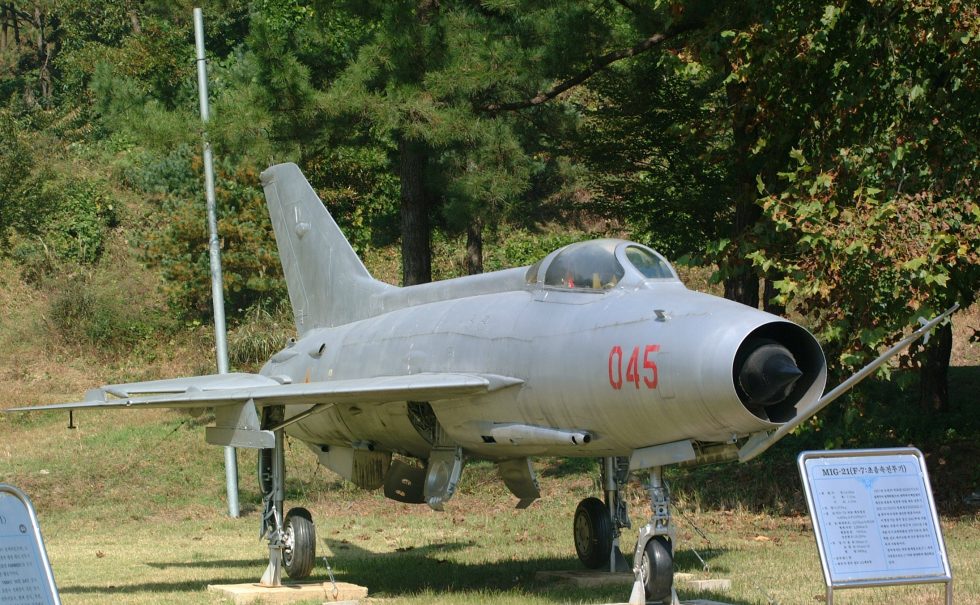
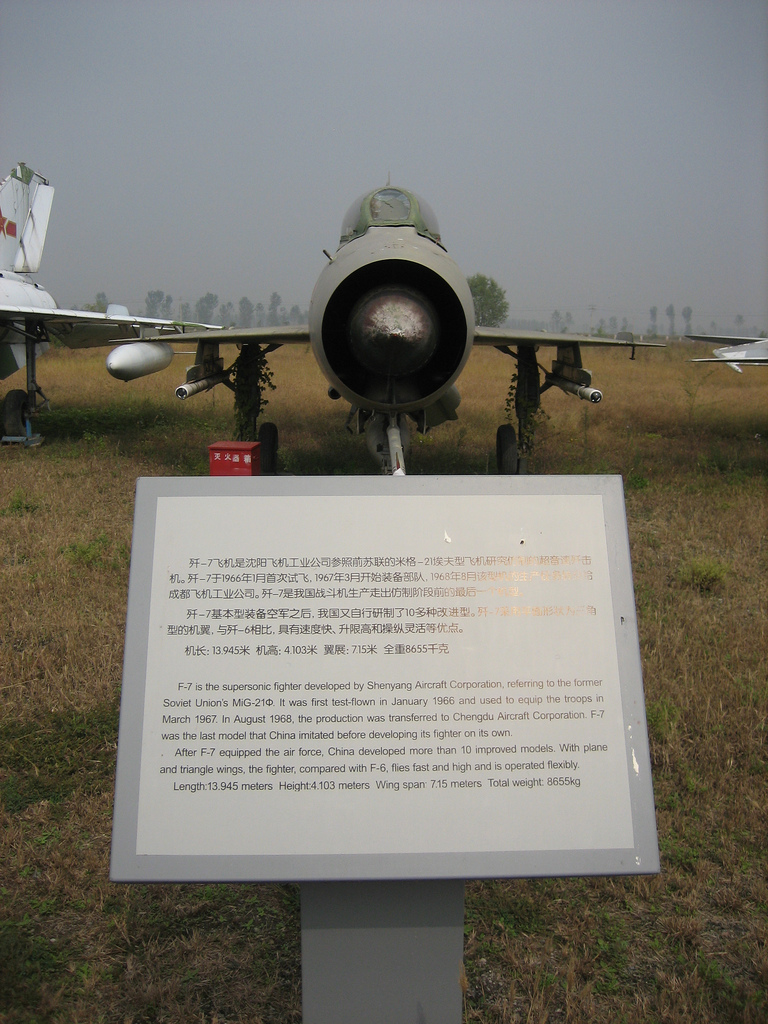
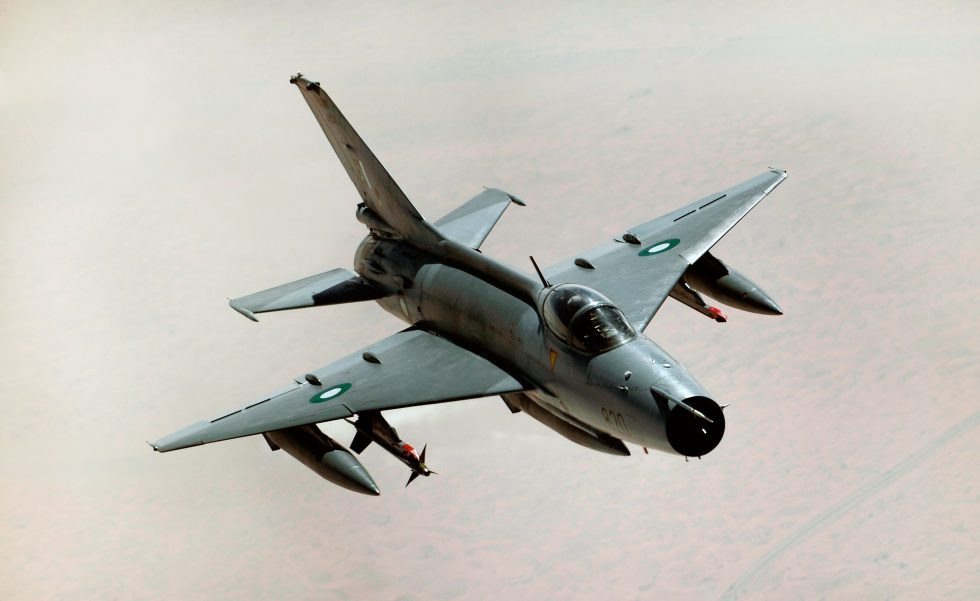
The J-7 and F-7 in pictures
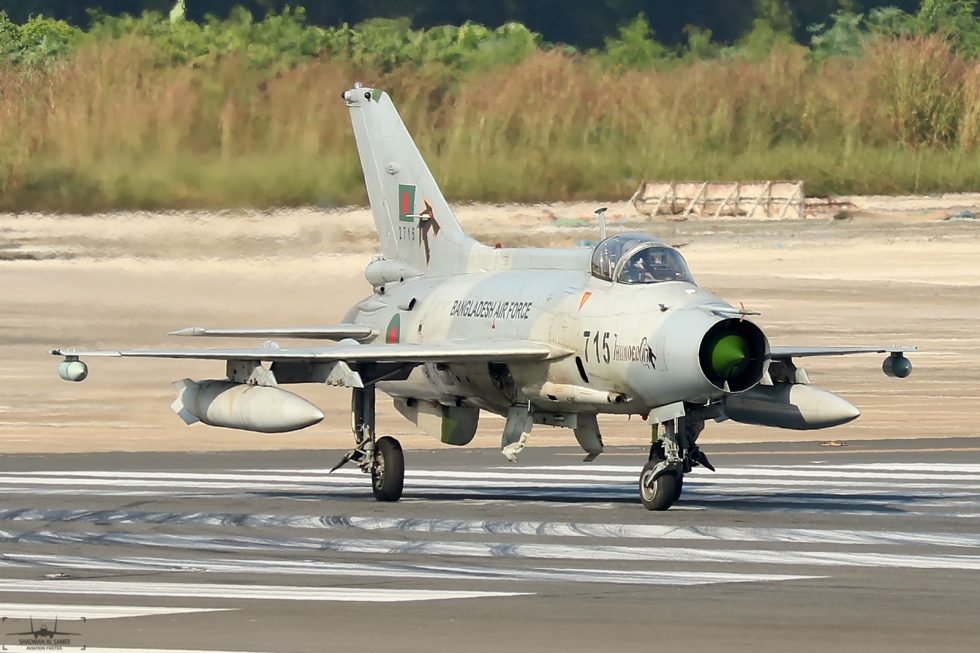
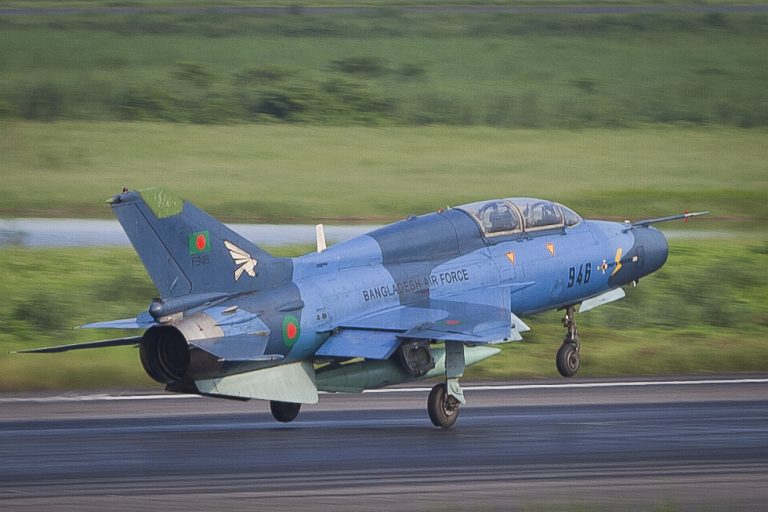
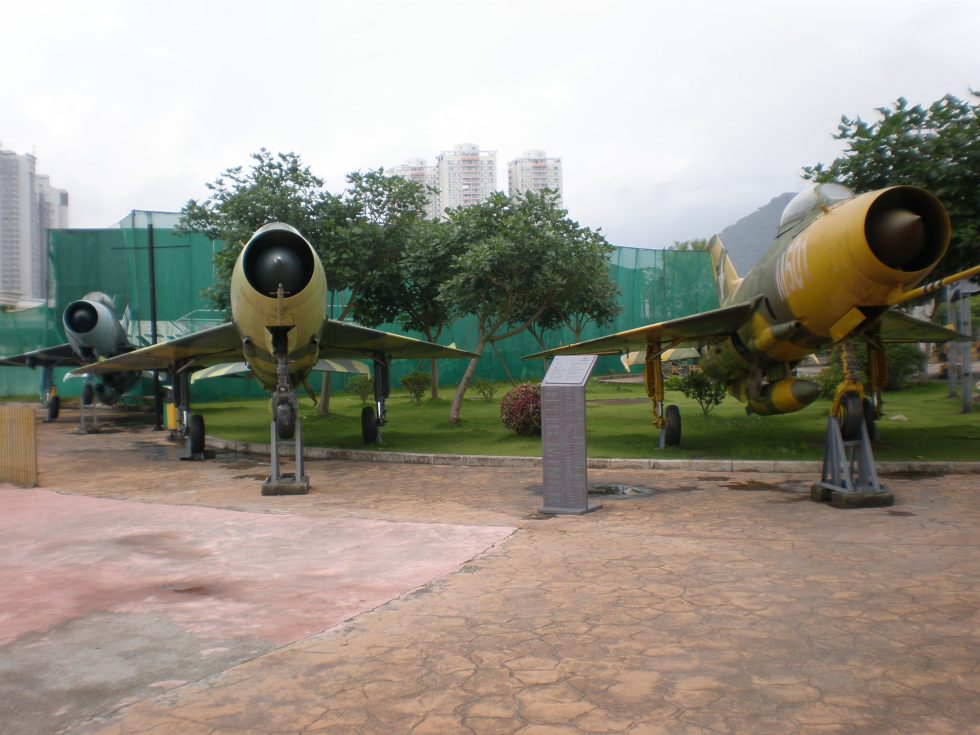
The J-7 in motion
A dedicated video feature for the Chengdu J-7 / F-7 is coming soon. In the meantime, explore the stories, specifications and operations map above.
The Chengdu J-7 in motion
European Defense — one of the most-watched Chengdu J-7 films on YouTube.
Where the J-7 and F-7 fly
A quiet workhorse, not a famous ace
The J-7/F-7 has no celebrated air-to-air record. In Chinese service it spent decades on point-defence alert; abroad it flew air-defence, border-patrol and ground-attack missions for a long list of export users, several of them in internal wars. Any specific kill claims for the type are poorly documented and should be treated with caution. Its real significance is measured differently — in numbers built, air forces equipped, and sheer longevity.
Compare the combat record of every military aircraft. Figures as of July 2026.
Everything people ask about the J-7 / F-7
Can I fly in a J-7?
Is the J-7 the same as the MiG-21?
How is the J-7 different from the MiG-21?
How many were built?
How fast is the J-7?
Who used the J-7 and F-7?
Is the J-7 still in service?
What replaced the J-7?
You can’t fly the J-7.
These, you can.
Some legends only live in museums — others are fuelled and waiting. MiGFlug has put civilians in real military jet cockpits since 2004.
 Fly the L-39 AlbatrosThe world’s most-flown jet trainer — aerobatics included
 Fly the F-104 Starfighter“The missile with a man in it”
 Fly the MiG-21The Cold War’s most-produced jet
 Fly the T-33 Shooting StarAmerica’s first jet trainer
 Fly the DH VampireA piece of early jet history
 Fly the S.211Agile Italian jet trainer
 Fly the MB-326The classic Aermacchi jet
 Fly the MiG-15The Soviet legend of the Korean War
Continue the tour
Every fact, checked
- GlobalSecurity.org — J-7 (Jianjiji-7) / F-7Development history, reverse-engineering after the Sino-Soviet split and service overview.
- GlobalSecurity.org — J-7 / F-7 variantsReference for the J-7I through J-7G and F-7 export variant progression.
- AirVectors (Greg Goebel) — MiG-21 & Chinese J-7Detailed technical history of the Chinese J-7 line within the wider MiG-21 family.
- Military Factory — Chengdu J-7 / F-7Specifications, production totals and operator list.
- Airforce Technology — J-7 / F-7 Fighter AircraftAirframe, engine and armament data for the type and its export models.
- The Aviation Geek ClubFeatures on the J-7’s MiG-21 lineage, the Super-7/JF-17 story and PLAAF retirement.
- 19FortyFiveAnalysis of the J-7 as the last MiG-21-lineage fighter and China’s phase-out.
- Military Watch MagazineCoverage of continued F-7/JF-17 manufacture and export operators.