
The strong, superbly agile Italian biplane that dominated the dogfights of the Spanish Civil War — and, in doing so, helped convince Italy that the age of the fighting biplane was not yet over.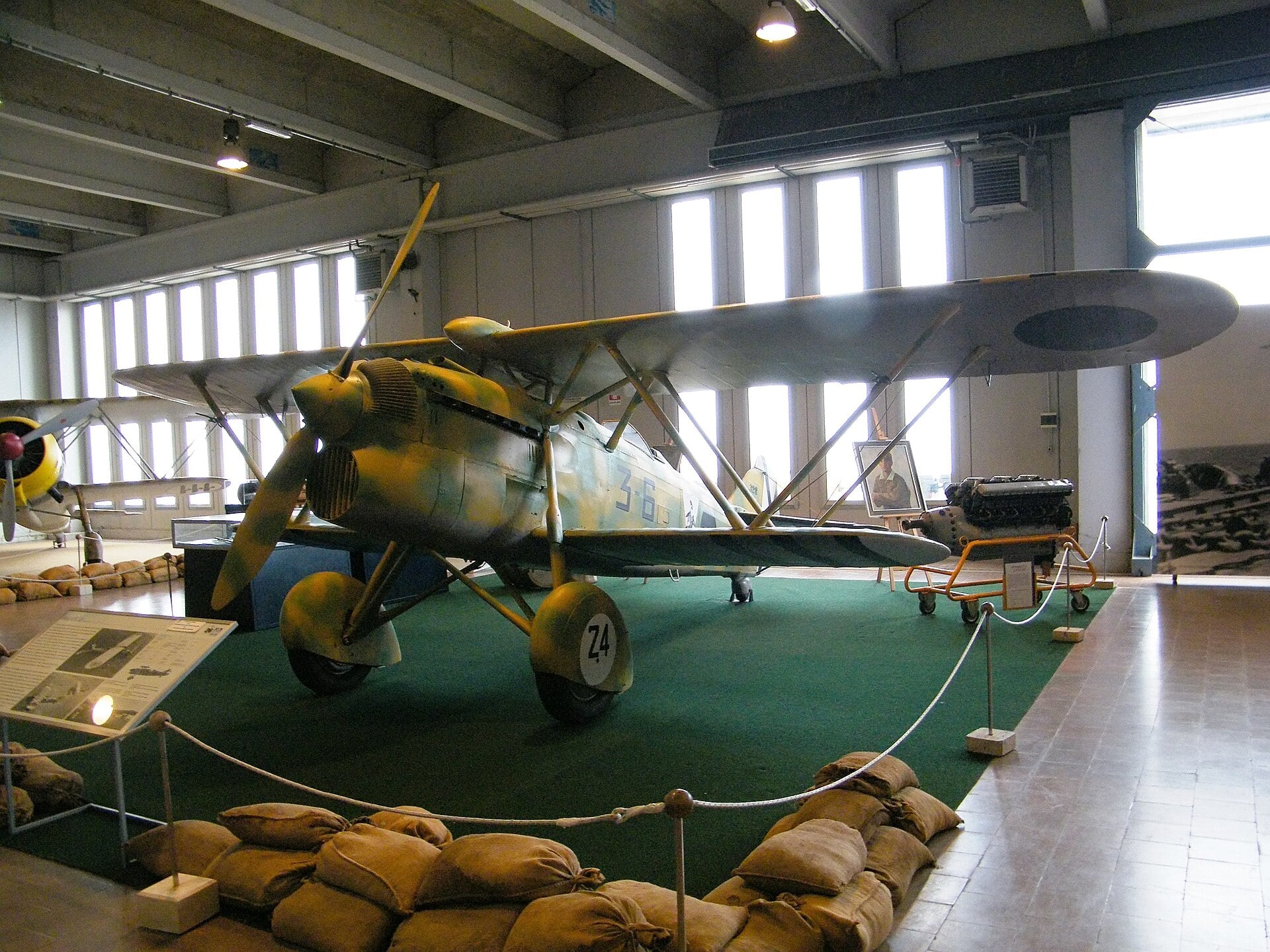
Fiat CR.32
King of the Spanish skies
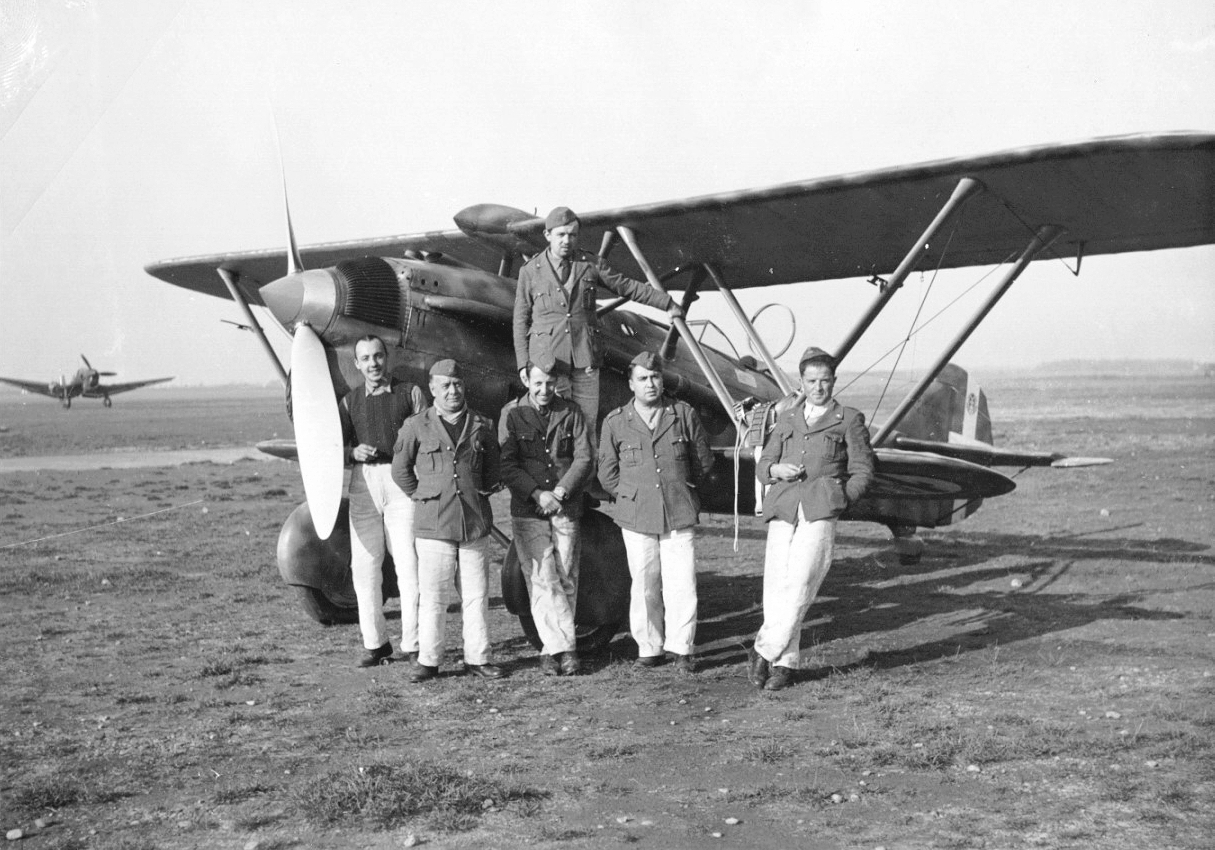
The Fiat CR.32: the biplane that ruled the Spanish skies
In the early 1930s, while the world’s air forces were still arguing about whether the future belonged to the biplane or the monoplane, Fiat’s chief designer Celestino Rosatelli produced what many consider the finest biplane fighter ever built. The CR.32, first flown in 1933, was compact, immensely strong and delightful to fly — a taut little sesquiplane that seemed to turn on a wingtip.
It was a refinement of Rosatelli’s earlier CR.30, built around a Fiat A.30 V12 of around 600 horsepower and armed, in its definitive form, with a pair of hard-hitting Breda-SAFAT machine guns. On paper it was unremarkable; in the air it was a thoroughbred, and the Regia Aeronautica’s display pilots made it famous across Europe with tight, immaculate aerobatics.
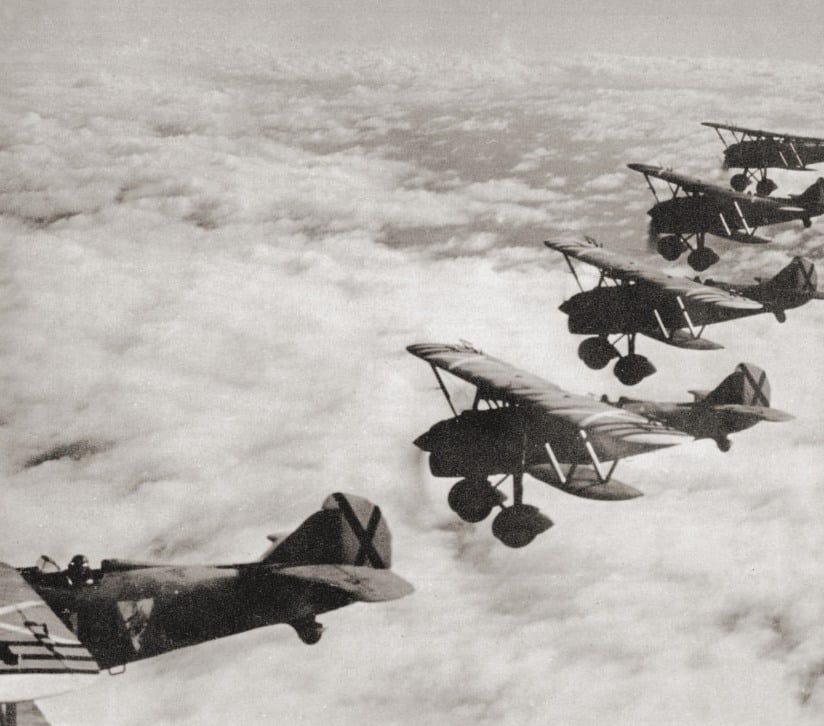
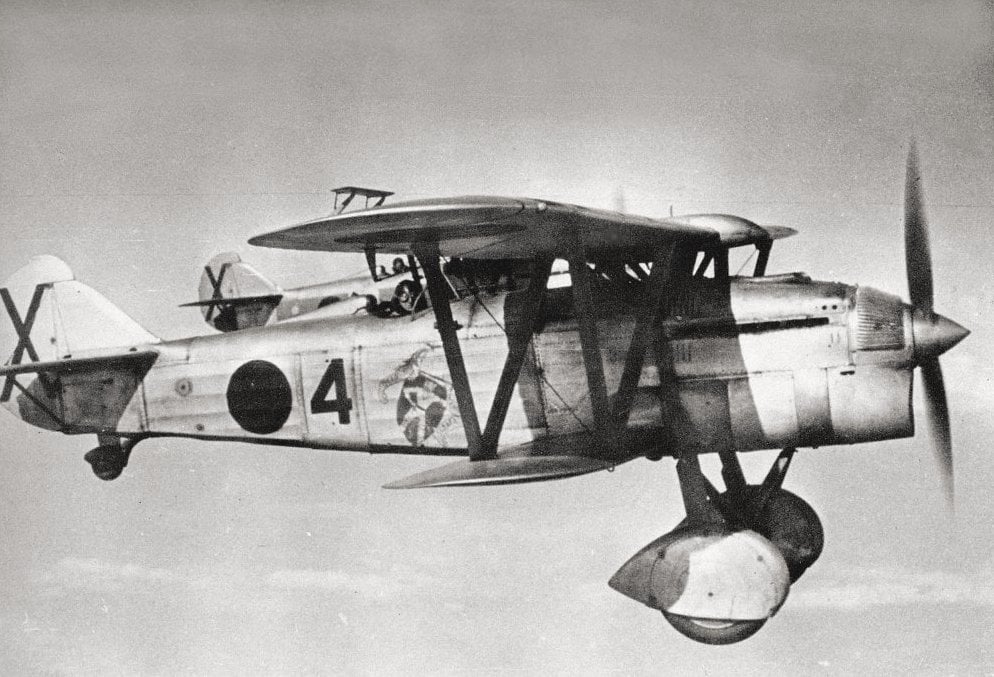
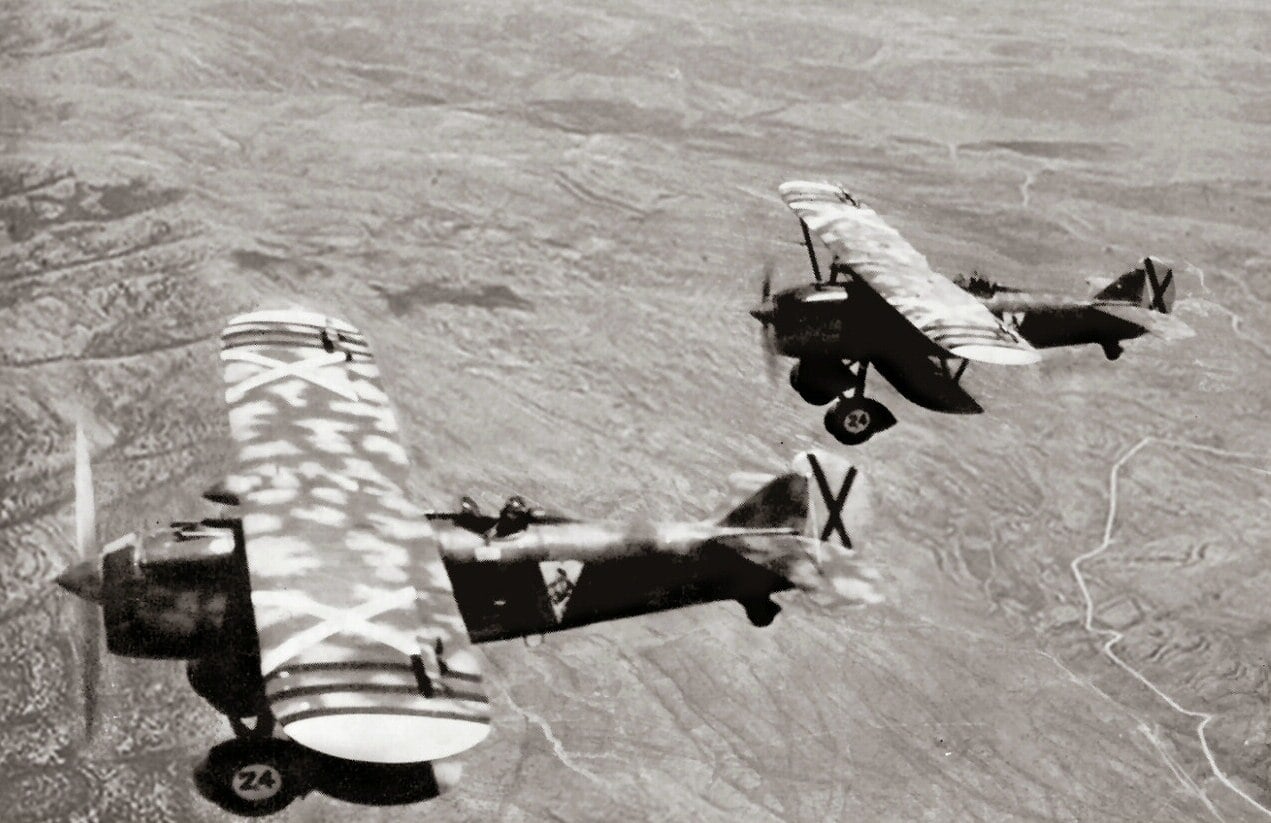
Its real fame, though, was won in war. When the Spanish Civil War broke out in 1936, Italy sent CR.32s and their pilots to fight for the Nationalists as the Aviazione Legionaria. Over Spain the little Fiat met the Soviet-supplied Polikarpov I-15 biplane and the fast I-16 monoplane — and, in the swirling low-level dogfights that characterised that war, it more than held its own. Flown well, the CR.32 was strong enough to take punishment, agile enough to out-turn almost anything, and reliable enough to fight day after day.
It produced aces. The leading Nationalist pilot, Joaquín García-Morato, scored the majority of his roughly 40 victories on the type, and Italian and Spanish pilots alike came to trust the Fiat completely. By the end of the war the CR.32 had become, in reputation, the master of the Spanish skies.
Therein lay a trap. The CR.32’s success arguably taught Italy the wrong lesson. It seemed to prove that a nimble biplane dogfighter still had a place in modern air combat — a conclusion that helped justify sending its biplane successor, the CR.42 Falco, into the Second World War, just as fast, heavily armed monoplanes were rendering such aircraft obsolete.
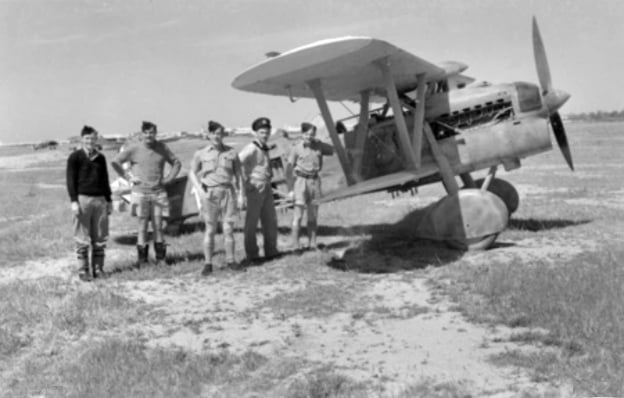
By 1940 the CR.32 itself was plainly out of date. Yet it fought on in the war’s opening rounds — in East Africa, over the Western Desert of North Africa and in the mountains of the Greek front — flying secondary fighter, ground-attack and night sorties until at last it was withdrawn. A few survive in museums today; none is airworthy. The CR.32 remains one of history’s great biplane fighters, and a cautionary tale about winning the last war too well.
01The Fiat CR.32 and the biplane-versus-monoplane debate of the 1930s
When the CR.32 first flew in 1933, the fighter world was genuinely divided. Monoplanes promised speed, but early examples were tricky to fly and their structures were still unproven; biplanes offered agility, strength and docile handling that pilots and air staffs trusted. The CR.32 was the biplane school’s finest argument — fast enough for its day, phenomenally manoeuvrable and rugged.
What tipped the balance was combat experience — and here the CR.32’s own record proved double-edged. Its dominance over Spain was read by many in Italy as proof that the agile dogfighter still ruled. Others, watching the fast Polikarpov I-16 dive in, fire and climb away at will, drew the opposite conclusion. Both were, in a sense, looking at the same aircraft. This debate is why the CR.32 matters far beyond its own service record.
02How good was the Fiat CR.32 really? Reading the Spanish Civil War record honestly
The CR.32’s reputation as the “king” of the Spanish air war is well earned but needs care. Nationalist and Italian claims from that chaotic, poorly documented conflict are difficult to reconcile with Republican records, and victory tallies from the 1930s should be treated as approximate. What is not in doubt is that the type was strong, dependable and superbly agile, and that in skilled hands it was a genuinely dangerous opponent that could out-turn the I-15 and frustrate the faster I-16.
Its weaknesses were equally real: it was slow by the standards of the coming decade and lightly armed with just two machine guns. The honest verdict is that the CR.32 was probably the best of the late biplane fighters — and that being the best of a type the future was leaving behind is a limited kind of triumph.
How Fiat and Rosatelli built the perfect biplane fighter
A jewel of a sesquiplane
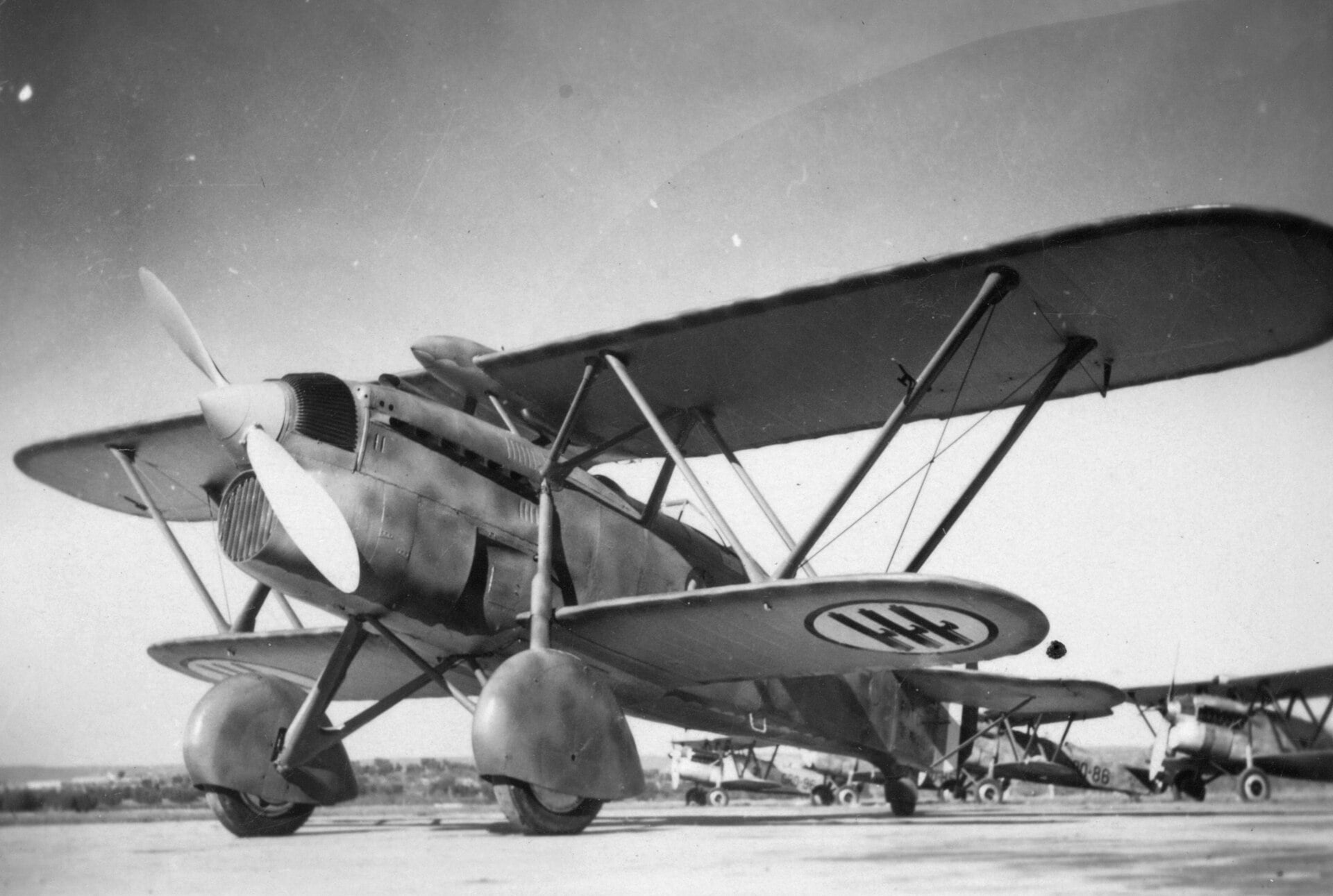
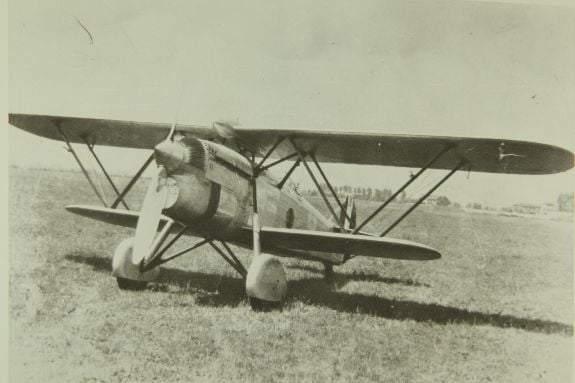
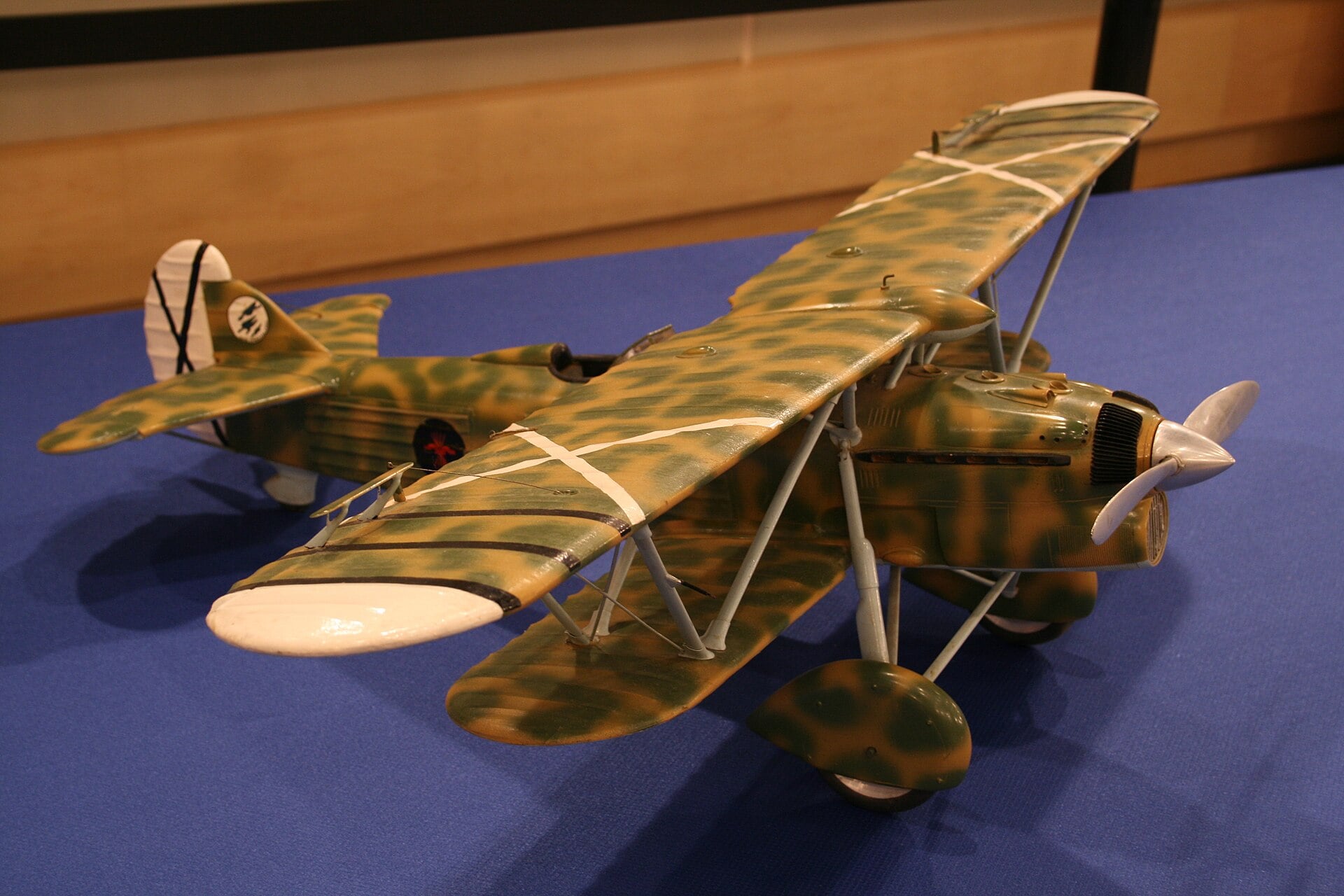
The CR.32 was a sesquiplane — its lower wing markedly smaller than the upper — built on a Warren-truss interplane strut arrangement that needed few bracing wires. The result was a compact, immensely strong airframe with light, beautifully harmonised controls that made it a natural dogfighter and a favourite of display pilots.
The Fiat A.30 V12
Power came from a Fiat A.30 RA liquid-cooled V12 of roughly 600 hp — modest, but smooth and reliable. It gave the CR.32 a top speed of about 360 km/h and, more importantly, the responsiveness and climb that a turning fight demanded. It was never fast, but it was always willing.
Breda-SAFAT guns
The definitive CR.32 carried two synchronised Breda-SAFAT machine guns — usually a pair of hard-hitting 12.7 mm weapons, though 7.7 mm guns and mixed fits were also used. Adequate against the lightly built aircraft of the mid-1930s, this modest battery would become a serious handicap against the armoured monoplanes of the next war.
03The Fiat CR.32’s agility: why pilots loved it and enemies feared the turn
Almost every account of the CR.32, friend or foe, returns to the same word: agility. The aircraft could enter and hold an extraordinarily tight turn, reverse quickly, and remain controllable to the edge of a stall. For a well-trained pilot that meant a defensive fight was rarely hopeless — a CR.32 that could not out-run an attacker could very often out-turn it, forcing the faster aircraft to overshoot.
The catch, already visible over Spain, was that a faster monoplane did not have to accept the turning fight. It could dive in from above, fire, and zoom-climb back out of reach, choosing when to engage. The CR.32 was the master of a game its newest opponents could simply decline to play — the central dilemma of every agile biplane in the monoplane age.
Fiat CR.32 — by the numbers
Baseline note: figures describe the Fiat CR.32 of the first production series, delivered to the Regia Aeronautica between March 1934 and February 1936 with the Fiat A.30 R.A.bis engine. This is the aeroplane that fought the Spanish Civil War and made the type’s name. Deltas in grey for the CR.32bis, ter and quater. Published figures for this aircraft vary more than usual: the tabulation reproduced in English-language sources from Cattaneo gives an empty weight of 1,455 kg and a maximum speed of 360 km/h, while Italian sources commonly give 1,325 kg and 375 km/h. Both are quoted below rather than silently averaged, because the difference probably reflects the lightened later series rather than a simple error. Height, stalling speed, take-off and landing runs and time-to-height come from the Italian tabulation, which is the only one that carries them.
Dimensions & weights
- Crew
- 1
- Length
- 7.47 m (24 ft 6 in)
- Wingspan
- 9.50 m (31 ft 2 in) upper wing
- Height
- 2.71 m (8 ft 11 in)
- Wing area
- 22.1 m² (238 sq ft) total, both wings
- Configuration
- Sesquiplane — the lower wing markedly shorter and narrower than the upper. Interplane struts arranged as a pair of Warren trusses on each side, with no flying or landing wires: Celestino Rosatelli’s signature, the reason the CR series is recognisable at a glance, and a genuine engineering advantage rather than a styling flourish
- Structure
- Welded steel and aluminium tube throughout. Duralumin skin over the nose, spine and lower tail; fabric on the fuselage sides and belly and over the whole of the wings and tail. Cattaneo calls the fuselage very robust for its date, and the survival records from Spain support him
- Empty weight
- 1,455 kg (3,208 lb); Italian sources give 1,325 kg (2,921 lb)
- Loaded weight
- 1,975 kg (4,354 lb); Italian sources give 1,865 kg (4,112 lb)
- Wing loading
- 89 kg/m² (18.3 lb/sq ft) — about three-quarters that of a Hawker Hurricane I, a little over half that of a Bf 109E and around a third that of a late-war fighter. Everything the CR.32 did well begins here
- Power loading
- 3.29 kg/hp (7.26 lb/hp) — poor, and the number that explains everything the CR.32 did badly. It was a 600 hp aeroplane in a decade that moved to 1,000 hp and then past it
- Internal fuel
- 350 litres (~92 US gal, 77 imp gal): a 325-litre main tank between engine and cockpit, plus a 25-litre auxiliary in a streamlined fairing in the centre section of the upper wing
- Ammunition
- 350 rounds per gun — generous, and at the 12.7 mm gun’s synchronised rate of 575 rounds per minute that is over half a minute of firing per gun, far more than a Spitfire’s fourteen seconds
- Undercarriage
- Fixed, in streamlined spats, with hydraulic shock absorbers and pneumatic brakes. Fixed gear cost perhaps 30 km/h and bought rough-field tolerance and simplicity — a defensible trade in 1933, indefensible by 1939
Performance
- Maximum speed
- 360 km/h at 3,000 m (224 mph at 9,840 ft); Italian sources give 375 km/h (233 mph) at the same height; the CR.32quater is quoted at 356 km/h (221 mph)
- Stalling speed
- 105 km/h (65 mph) — extraordinarily low, and the practical face of that wing loading
- Rate of climb
- 9.0 m/s (1,770 ft/min)
- Time to 6,000 m
- 14 minutes 25 seconds (19,685 ft) — slow, and a reminder that low wing loading buys turn, not climb, when there is no power behind it
- Service ceiling
- 8,800 m (28,870 ft); Italian sources give 8,250 m (27,070 ft)
- Range
- 781 km (485 miles)
- Take-off run
- 270 m (886 ft)
- Landing run
- 230 m (755 ft)
- Manoeuvrability
- The defining quality, and not a matter of opinion: the CR.32 could out-turn every fighter it met in Spain and most it met in 1940. The 4° Stormo flew formation aerobatics on the type over Rome, Berlin and half of South America precisely because it would do anything asked of it
- Structural strength
- The other defining quality. The Warren-truss cellule had no bracing wires to stretch or snap and took repeated hard manoeuvring without complaint, which is why Spanish and Italian pilots dived it hard against faster monoplanes and got away with it
- Against the Polikarpov I-16
- The Soviet monoplane was some 80 km/h (50 mph) faster and climbed better. The CR.32 beat it anyway, in 1936–38, by turning inside it and by being flown by better-trained pilots — a result that was true, was repeatable, and was catastrophically over-generalised
- Against 1940 opposition
- Hopeless in any fair fight. A Hurricane I was 160 km/h faster with eight guns. That CR.32 pilots in East Africa still shot down Hurricanes, Ju 86s and Hartebeests says a great deal about the pilots and very little about the aeroplane
Propulsion & systems
- Engine
- 1 × Fiat A.30 R.A.bis, water-cooled 60° upright V12 of 24.0 litres (1,464 cu in), bore 135 mm × stroke 140 mm, dry weight 480 kg (1,058 lb), geared drive. Four valves per cylinder on twin overhead camshafts, two spark plugs per cylinder. Widely said to derive its layout from the American Curtiss D-12 — the same ancestry claimed for the Rolls-Royce Kestrel — though the claim is not firmly sourced
- Power
- 447 kW (600 hp). Jane’s All the World’s Aircraft 1938 gives 600 hp at 2,000 rpm at sea level as the normal rating and 596 kW (800 hp) at 2,900 rpm for take-off; aircraft tabulations usually quote 600 hp at 2,600 rpm. The three figures are not reconcilable and the reader should treat 600 hp as the working number
- Fuel
- Not aviation spirit but a mixture of 55 per cent petrol, 23 per cent ethanol and 22 per cent benzol. This was an autarky decision, and it had consequences: China stopped buying CR.32s partly because importing alcohol and benzol for them was impractical
- Propeller
- Two-blade metal, 2.82 m (9 ft 4 in) diameter, pitch adjustable on the ground only — not in flight. In 1940 this was a decade behind the constant-speed units on every fighter it faced
- Cooling
- Water, centrifugal pump, chin radiator. Venezuelan CR.32quaters were delivered with an enlarged radiator for tropical operation
- Gunsight
- An optical sight was an optional fit on the first series. The CR.32ter existed largely to make a proper gunsight standard, along with a strengthened undercarriage — which is an unflattering thing to have to say about a front-line fighter three years into production
- Radio
- The RA.80-1 set was optional equipment on the first series and only became normal with the quater. Fighter units in Spain frequently flew without radio, which shaped tactics more than any performance figure did
- Other equipment
- Adjustable seat with the parachute stowed in the squab, oxygen system, fire extinguisher, gun camera, and an optional survey camera
- First flight
- 28 April 1933, prototype MM.201, from the Fiat works airfield at Turin
- Service entry
- First production aircraft with front-line units by the end of 1933; first production orders March 1934, equipping the 1°, 3° and 4° Stormi
- Number built
- ~1,052 in the standard tally; the Regia Aeronautica ordered 1,080 including two prototypes, 23 rebuilds and 52 unregistered aircraft for Hungary, and with 100 Spanish-built HA-132L Chirris the total is usually put at ~1,306 to ~1,332
- Retirement
- Last Italian front-line aircraft withdrawn in mid-April 1941 and sent to the fighter schools; night missions only by 1942. Spanish HA-132Ls, forty of them converted to two-seaters, flew as aerobatic trainers until 1953
04The Fiat CR.32’s operating costs: why the numbers are lost
Unlike modern jets, the CR.32 left almost no reliable cost-per-flight-hour record. It was a mid-1930s design produced in an era before such figures were tracked or published in the way they are today, and its operators — Fascist Italy, Nationalist Spain and a scattering of export customers — kept records that were incomplete then and are fragmentary now. Any specific hourly cost quoted for a CR.32 should be treated with suspicion.
What can be said is that the CR.32 was, by design, a relatively cheap and simple aircraft: a modest V12, a rugged airframe and light armament. That affordability was part of its appeal to smaller air forces and is one reason roughly 1,200 were built and the type was licence-produced in Spain long after Italy had moved on.
05A family of Chirri: the CR.32bis, ter and quater
The CR.32 evolved through several sub-types. The CR.32bis added two more machine guns in the lower wing and provision for light bombs, at some cost in agility; the CR.32ter and CR.32quater refined the equipment and lightened the aircraft again, the quater becoming the definitive single-seat fighter version. Spain’s licence-built machines, nicknamed “Chirri”, served long after 1939. Performance and armament varied between versions and sources; the figures above describe a representative CR.32.
Armament & payload
Two Breda-SAFAT guns were enough to win in Spain and not nearly enough afterwards
The CR.32 carried two synchronised machine guns on top of the cowling, firing through the propeller disc, with 350 rounds each. Early aircraft had the 7.7 mm Breda-SAFAT; the standard fit became a pair of the 12.7 mm weapon, and the two were also mixed. In 1936 that was a respectable battery, and against the unarmoured Polikarpovs and Tupolevs of the Spanish Republic it was more than adequate.
The Breda-SAFAT 12.7 mm was, however, a poor gun by any standard except reliability. It was an enlargement of the 7.7 mm design rather than a fresh one, chambered for the low-capacity 12.7×81 mm SR round; muzzle velocity was only 760 m/s against roughly 890 for a Browning M2, the gun weighed 28.9 kg, and the synchronised rate of fire was 575 rounds per minute. The high-explosive incendiary round, filled with 0.8 grams of PETN, was widely judged ineffective. Italian pilots liked the gun for its apparent reach and its dependability, and Italian armourers liked it because it never jammed, and both were judging it against the wrong yardstick. Italy entered the Second World War with fighters carrying two of these and sometimes two rifle-calibre guns, at a time when the RAF was fitting eight machine guns and moving to cannon.
Armament varied by sub-type and by unit: the CR.32bis added two 7.7 mm guns in the lower wing which squadrons routinely removed again to save weight, the ter and quater dropped them officially, and Chinese-contract aircraft carried Vickers 7.7 mm guns instead of Bredas.
Gun
- Standard fit: 2 × 12.7 mm (0.5 in) Breda-SAFAT above the engine cowling, synchronised, 350 rounds per gun. 700 rounds per minute unsynchronised, 575 synchronised; muzzle velocity 760 m/s (2,490 ft/s); cartridge 12.7×81 mm SR.
- Early and mixed fits: 2 × 7.7 mm Breda-SAFAT (900 rounds per minute, 730 m/s) on the first aircraft, and mixed one-of-each installations. The 7.7 mm round was the rimmed .303 British cartridge in Italian manufacture.
- CR.32bis: the two cowl 12.7 mm plus two 7.7 mm Breda-SAFAT Mod.1928Av in the lower wing — four guns. Discarding the wing pair to restore performance was a common field modification, which tells you what the pilots thought the trade was worth.
- CR.32ter and quater: back to two 12.7 mm, with a proper gunsight and, on the quater, a radio. Two guns remained the Italian fighter standard right through to the Fiat CR.42, G.50 and Macchi C.200.
- Export: Chinese aircraft were delivered with Vickers 7.7 mm guns, electric landing lights and, on some, radios — a reminder that the Breda was not universally admired even by customers.
Air-to-air
- No guided weapon existed. The cowl guns were the whole armament, and in Spain they were decisive.
- Spain, 1936–39: the first twelve CR.32s reached Spain on 18 August 1936; three days later Tenente Vittorino Ceccherelli shot down a Nieuport 52 over Córdoba. Between 365 and 405 Italian aircraft served, with a further 127 to 131 delivered to Nationalist units. The Aviazione Legionaria claimed 242 Polikarpov I-15s, 240 I-16s and 60 Tupolev SB bombers — the SB having been thought uninterceptable — for around 73 CR.32s lost.
- Joaquín García-Morato, the leading ace of the Spanish Civil War on either side, took 36 of his 40 victories on the CR.32, most of them in one aircraft coded 3-51, over 1,012 hours of operational flying. He was shot down once, by a novice he was training. He was killed on 4 April 1939, days after the war ended, performing low aerobatics in 3-51 for newsreel cameras.
- Other Nationalist aces on type: Capitán Manuel Vázquez Sagastizábal with 21⅓ before being killed on 23 January 1939, and Comandante Ángel Salas Larrazábal, who once took three SB-2s and an I-16 in a single sortie on 2 September 1938.
- 1940–41: still scoring, against the odds. On 11 June 1940 six CR.32s over El Adem claimed two Blenheims (actual British losses: two destroyed, two damaged) for nothing. In East Africa 410a and 411a Squadriglia shot down a Ju 86 and a 1 SAAF Hurricane on 17 June 1940 and went on doing it; Hungarian CR.32s destroyed three SB-2s over Csap on 29 June 1941 without loss.
Air-to-surface guided
- None carried. No guided air-to-surface weapon existed anywhere in 1933–41.
- What the CR.32 did in North Africa instead was strafe. Cattaneo notes that Italian CR.32 pilots in Libya in 1940 spent most of their sorties attacking ground targets rather than seeking air combat, and judges the results of "limited effectiveness" — a fighter of 1933 used as a light attack aircraft because there was nothing better available and nothing else it could usefully do.
- The same pattern held in East Africa once spares ran out: on 10 January 1941 there were 22 CR.32s serviceable in the colony, on 31 January fourteen, on 10 February eleven, on 5 March eight, and by mid-April none.
- Hungarian CR.32s flew ground support for the Hungarian Army in the 1939 Slovak border war and on the Eastern Front from June 1941, which was the only role left to them.
Bombs
- Two underwing hardpoints on later aircraft, principally the CR.32bis and the close-support variants.
- Loads: 1 × 100 kg (220 lb), or 2 × 50 kg (110 lb), or up to twelve small bombs of about 2 kg (5 lb) each on a light rack.
- A hundred kilogrammes is a nuisance load, and it is roughly what a Great War two-seater carried. It was used against troops, transport and airfields in Spain, Libya and East Africa.
- There were no dive brakes and no bombsight. Attacks were made in shallow dives from low level, which the CR.32’s structural strength made comfortable and its lack of speed made dangerous.
Rockets
- None carried, by any operator, at any time.
- Italy fielded no air-to-ground rocket in the CR.32’s service life, and the type was out of front-line use by April 1941 in any case.
- Worth recording because the CR.32’s successor, the CR.42, did end the war as a German-operated night ground-attack aircraft, and the two biplanes are routinely confused.
Pods & other stores
- Nothing that would today be called a pod. The CR.32’s external fit was the two bomb racks and nothing else.
- The equipment that mattered was internal and, revealingly, optional: the RA.80-1 radio, the optical gunsight and a survey camera were all listed as extras on the first production series rather than as standard.
- A gun camera, an oxygen system and a fire extinguisher were fitted as standard — the CR.32 was considered well equipped for its date, which says more about the date than about the aeroplane.
- No drop tanks, no external fuel of any kind. The 25-litre auxiliary tank in the upper-wing centre section is as close as the design came, and it was internal.
Three typical loadouts
- Fighter patrol, Grupo 2-G-3, Ebro front, 1938
- Two 12.7 mm Breda-SAFAT with 350 rounds each, full 350 litres, no bombs, no radio. Flown in the three-aircraft patrulla that García-Morato’s Patrulla Azul made famous, climbing above Republican formations and diving through the escort onto the bombers. Against I-15s and I-16s flown by less experienced pilots, it worked for three years.
- Bomber escort, Aviazione Legionaria, Jarama, February 1937
- Same two guns, close escort to Ju 52s and later SM.79s. On 18 February 1937 García-Morato’s three CR.32s met 36 I-15s escorting nothing at all and broke up the attack by climbing into it — the incident that earned him the Laureate Cross of Saint Ferdinand, and a fair illustration of what a turning biplane could still do in 1937.
- Ground attack, 410a Squadriglia, Italian East Africa, 1940–41
- Two 12.7 mm plus 2 × 50 kg bombs on the underwing racks, operating from unimproved strips at Makale and elsewhere with no prospect of spares or replacement. Strafing columns and airfields, escorting Ca.133s, and occasionally still shooting down Hurricanes. Fourteen enemy aircraft claimed by the squadriglia before it ceased to exist.
Sourcing caveat: the Spanish Civil War claim totals are irreconcilable between sources. The Italian figures of 242 I-15s, 240 I-16s and 60 SBs for 73 CR.32s lost come from De Marchi; another accounting has 175 of 376 Italian-shipped Fiats lost, 99 of them shot down, against only 88 I-15s downed by January 1939. Both cannot be right and the truth is probably nearer the second. Nothing in the correction disturbs the conclusion that the CR.32 dominated the air over Spain — but the margin was smaller than Rome believed at the time, and that misreading had consequences.
Variants
The CR.32 won the last war so convincingly that Italy went into the next one flying biplanes
The variant history of the CR.32 itself is short and unremarkable: a first series, a close-support bis, a ter that added the gunsight the aircraft should always have had, and a lightened quater with a radio. Rosatelli’s Warren-truss cellule was carried across all of them essentially unchanged, because it worked.
The consequential variant is not on this list under its own name. It is the Fiat CR.42 Falco, and it exists because of what happened in Spain. The CR.32’s dominance there, reinforced by the aerobatic displays the 4° Stormo flew over half of Europe, persuaded the Italian air ministry that the manoeuvrable biplane fighter remained a viable weapon of war in the era of the Bf 109 and the Spitfire. Cattaneo notes the direct line: the type’s outstanding handling and its popularity with its pilots sustained an official belief that the biplane still had a future. Four CR.32s were converted into CR.42 prototypes. By May 1939, with the Second World War four months away, CR.32s in bis, ter and quater form made up two-thirds of every fighter in the Regia Aeronautica: 288 in Italy and North Africa and 24 in East Africa.
On 10 June 1940 Italy declared war with 36 CR.32s and 51 CR.42s forming the operational fighter strength in Libya, and roughly 300 CR.42s delivered overall. Italy built 1,817 of them. In the autumn of 1940 the Corpo Aereo Italiano flew open-cockpit CR.42 biplanes from Belgian airfields against RAF Hurricanes in the closing stages of the Battle of Britain, and one of them sits in the RAF Museum at Hendon today because it force-landed in Suffolk. Cattaneo’s judgement is blunt: the light losses in the Battle of France had convinced the Regia Aeronautica that the type was more effective than it was. This is as clear a case of winning the last war as aviation history offers, and the CR.32 is the aircraft that taught the lesson.
- Fiat CR.30 (1932–34, the parent design)
- Rosatelli’s larger Warren-truss biplane, ordered in limited numbers and superseded within twelve months. The CR.32 is a smaller, cleaner, more compact CR.30 and shares its fuselage structure. Exported to Austria, China and Paraguay.
- CR.32 (March 1934 – February 1936, first series)
- Fiat A.30 R.A.bis of 600 hp, two 7.7 mm or two 12.7 mm Breda-SAFAT, gunsight and radio optional. The Spanish Civil War aeroplane.
- CR.32bis (from 1936, close support)
- Two 12.7 mm in the cowl plus two 7.7 mm in the lower wing, and underwing racks for 100 kg of bombs. The wing guns were frequently removed in the field to recover performance. Austria’s 45 aircraft were of this mark.
- CR.32ter (from 1937)
- Revised bis: gunsight fitted as standard, strengthened undercarriage, wing guns deleted.
- CR.32quater (1937–38, 337 for the Regia Aeronautica)
- Lightened ter with radio as standard; 356 km/h (221 mph) at 3,000 m. The most numerous single sub-type and the last.
- CR.33, CR.40, CR.40bis and CR.41 (1934–36, prototypes only)
- Attempts to push the formula further: the CR.33 with a 700 hp Fiat A.33 reached 412 km/h (256 mph) but only three were built; the CR.40 and CR.41 substituted Bristol Mercury and other radials. None entered production, and the effort that might have gone into a monoplane went here instead.
- Hispano HA-132L Chirri (from 1938, Spain; 100 built plus 49 rebuilds)
- Licence-built CR.32quater by Hispano Aviación. Forty were converted to two-seaters and served as aerobatic trainers with the Spanish Air Force until 1953 — twenty years after the prototype first flew.
- Export aircraft (1933–38: China, Austria, Hungary, Venezuela, Paraguay)
- China took 16 to 24 in 1933 with Vickers guns, and stopped buying because the alcohol-benzol fuel was impractical to import; all were lost by the fall of Nanjing in late 1937. Austria’s 45 passed to the Luftwaffe at the Anschluss in March 1938 and thence to Hungary, which operated 76 in all and still had 69 on strength on 6 May 1941. Venezuela took nine or ten quaters with enlarged radiators, struck off in 1943; Paraguay took four or five, too late for the Chaco fighting.
- Fiat CR.42 Falco (1938–44; 1,817 built)
- The consequence. A CR.32 with a 840 hp Fiat A.74 radial, 441 km/h (274 mph) and a 10,210 m ceiling — a magnificently built biplane that entered service in May 1939 and fought Hurricanes over Britain, Malta, Greece and the desert. Four CR.32s were converted as its prototypes. It was the last biplane fighter to be designed and put into large-scale production anywhere, and Italy paid for it.
- Captured and second-hand aircraft (1937–45)
- Six CR.32s were captured by Republican forces in Spain and at least one was shipped to the Soviet Union for evaluation. A CR.32 taken intact at Addis Ababa was flown to Zwartkop in South Africa in August 1941, toured publicly, served 6 Squadron SAAF as a hack and was scrapped in 1945. The Aeronautica Nazionale Repubblicana and the Italian Co-Belligerent Air Force both used surviving airframes after September 1943.
Survivors and reproductions: three aircraft are known to survive, all static, and none is airworthy; there are no flying reproductions. Two of the three are Spanish-built Hispano HA-132L Chirris rather than Italian-built CR.32s, a distinction usually glossed over on museum labels: C.1-328, donated by the Spanish Air Force in 1955 and displayed at the Italian Air Force Museum at Vigna di Valle on Lake Bracciano, and a composite HA-132 at the Museo del Aire at Cuatro Vientos in Madrid. The third, carrying the Italian military serial MM4666 and the markings of 92a Squadriglia, is displayed by the Italian Air Force at Rivolto near Codroipo. Given how many CR.32s were built — well over a thousand — and how central the type was to the air war in Spain, three static survivors is a thin inheritance, and two of those are the Spanish licence-built version.
From Turin drawing board to the last biplane wars
First flight
Celestino Rosatelli’s CR.32 makes its maiden flight on 28 April 1933, developed from the earlier CR.30. It enters Regia Aeronautica service the following year.
King of the Spanish skies
Italian Aviazione Legionaria and Spanish Nationalist CR.32s fight Republican I-15s and I-16s over Spain, winning a formidable reputation and producing aces such as Joaquín García-Morato.
Exported and licence-built
The CR.32 is sold to Hungary, Austria, China, Venezuela and Paraguay, and built under licence in Spain as the Hispano-Aviación HA-132 “Chirri”.
Obsolete, but still fighting
By Italy’s June 1940 entry into the Second World War the CR.32 is outdated, yet it flies front-line and secondary sorties in East Africa, North Africa, the Mediterranean and against Greece.
Second-line and night work
Outclassed by monoplanes, surviving CR.32s shift to ground attack, training and night duties before being withdrawn from combat.
Survivors and the Chirri
Spanish-built Chirris serve into the post-war years. A handful of CR.32s survive as museum exhibits — among them an example at the Italian Air Force Museum at Vigna di Valle — but none remains airworthy.
Twelve chapters in the Fiat CR.32’s story
The finest fighting biplane
Many historians rate the CR.32 the best biplane fighter ever built — the high-water mark of a design tradition.
The full story
King of the Spanish skies
Over Spain the CR.32 met the Soviet-built I-15 and I-16 — and in the dogfight it more than held its own.
The full story
García-Morato’s Fiat
The top Nationalist ace scored most of his roughly 40 victories flying the CR.32.
The full story
A victory that misled
The CR.32’s Spanish triumph helped convince Italy that the agile biplane still had a future.
The full story
Biplane versus monoplane
Against the fast Polikarpov I-16, the CR.32 faced a preview of the future.
The full story
The pride of the Regia Aeronautica
Before the wars, CR.32s dazzled European crowds with immaculate formation aerobatics.
The full story
The forgotten campaign
In the highlands of Italian East Africa the obsolete CR.32 fought on into 1941.
The full story
Ground attack over the sands
In North Africa the CR.32 traded the dogfight for the strafing run.
The full story
War in the mountains
CR.32s flew from Albania against Greece in the winter of 1940–41.
The full story
Spain builds its own
Spain liked the CR.32 so much it built the type under licence as the “Chirri”.
The full story
A biplane abroad
From Central Europe to South America, the CR.32 found foreign buyers.
The full story
Where to see a CR.32 today
For a fighter built by the thousand, remarkably few CR.32s survive.
The full story
The Fiat CR.32 in pictures
See the Fiat CR.32 in context
Why did a biplane become the star fighter of the Spanish Civil War — and what did that success cost Italy later? This detailed history follows the CR.32 from Rosatelli’s drawing board to the dogfights over Spain and its twilight service in the Second World War.
Video: “King Of The Skies In The Spanish Civil War | Fiat CR.32” by Rex’s Hangar (~173,000 views). Embedded via YouTube.
Where the Fiat CR.32 flew and fought
From its home plants in Turin the CR.32 spread across three continents: it made its name over Spain, soldiered on in Italy’s East and North African campaigns, and was exported and licence-built from Central Europe to South America. Hover or tap a country to see its part in the Chirri’s story.
Combat theatres mark where the CR.32 saw action, not the nationality of its pilots. Operator and fleet figures are approximate and vary between sources.
The Fiat CR.32, by the numbers
The CR.32’s record is dominated by a single conflict. Over Spain it was, by reputation, the outstanding fighter of the war; everywhere afterwards it was a brave anachronism. The figures below capture its scale and its most famous exploits rather than a precise, verified tally — air-war claims from the 1930s are notoriously hard to reconcile between sources.
Victory claims from the Spanish Civil War and the early Second World War vary widely between Italian, Spanish, Republican and British records; the figures above should be read as indicative of the type’s scale and reputation, not as a definitive score.
06Fiat CR.32 versus Polikarpov I-16: the dogfight that previewed the Second World War
The defining match-up of the Spanish air war pitted the CR.32 against the Soviet-built Polikarpov I-16 — and it is one of the most instructive fighter duels in history. The Fiat was a biplane: slower in level flight and in the dive, but able to turn inside almost anything. The I-16 was a stubby, fast monoplane that accelerated, dived and zoom-climbed far better than the CR.32 but could not match its turn.
The result depended entirely on who dictated the fight. A CR.32 pilot who could drag the I-16 into a turning battle often won; an I-16 pilot who used speed to make slashing dive-and-zoom attacks, refusing to circle, could fight on his own terms and escape. Neither aircraft was simply “better”. But the trend was unmistakable to anyone willing to see it: the fast monoplane chose the terms of combat, and in the next war that advantage would prove decisive. The CR.32 won many of these fights and still, in a deeper sense, lost the argument.
07Fiat CR.32 exports and the Hispano “Chirri”: a biplane fighter for smaller air forces
Few interwar fighters travelled as widely as the CR.32. Hungary and Austria bought it for their expanding air arms; China acquired a small batch that saw combat in the opening phase of the war with Japan; and in South America both Venezuela and Paraguay operated the type. For a smaller air force the appeal was obvious — the CR.32 was cheap, tough, forgiving to fly and combat-proven, exactly the qualities a limited budget rewarded.
Spain took the relationship furthest of all. Having flown the CR.32 to fame in its civil war, Spain built the aircraft under licence as the Hispano-Aviación HA-132 “Chirri”, and these machines served the Spanish air arm for years after 1939. Exact export and licence totals vary between sources, but the breadth of the CR.32’s foreign service is a measure of how good a light biplane fighter it was — and of how reluctant the world was to let the type go.
08The Fiat CR.32’s legacy: the finest biplane fighter and a lesson in timing
The CR.32’s place in history is oddly paradoxical. Judged purely as a biplane fighter it is one of the greats — arguably the finest of its kind, and certainly the most successful in combat, with a record over Spain that few rivals can match. Yet it is remembered almost as often as a cautionary tale: proof that an aircraft can win its war so convincingly that it teaches its makers the wrong thing.
Both readings are fair, and together they are why the CR.32 still repays study. It sits exactly on the hinge between two eras of air combat — the last, best expression of the agile biplane, flying into a decade that belonged to the fast monoplane. To understand why Italy took a biplane, the CR.42, to war in 1940 is to understand the CR.32 first. In that sense the little Fiat’s influence outlived its own front-line career by years, and its shadow falls across the whole story of Italian fighter aviation in the Second World War.
Fiat CR.32 — questions & answers
Can I fly in a Fiat CR.32?
No. Only a handful of Fiat CR.32s survive, all as static museum exhibits — there is no airworthy original and no company offers flights in one. However, you can fly in several genuine military jets today with an experienced fighter pilot beside you. See what’s bookable at migflug.com/flights-prices.
Why was the Fiat CR.32 so successful in the Spanish Civil War?
In the hands of skilled Italian and Spanish Nationalist pilots the CR.32 was strong, superbly agile and reliable, and it excelled in the tight-turning dogfights that dominated the Spanish air war of 1936–39. It fought Republican Polikarpov I-15 and I-16 fighters and produced leading aces such as Joaquín García-Morato. Its reputation as the “king” of the Spanish skies is well earned, though victory claims from that war are hard to verify precisely.
Did the CR.32 mislead Italian fighter doctrine?
Many historians argue that it did. The CR.32’s dominance in Spain seemed to prove that an agile biplane dogfighter was still viable, which encouraged the Regia Aeronautica to field the biplane Fiat CR.42 into the Second World War just as fast monoplane fighters were taking over. It is a widely cited example of the right lesson learned from the wrong war — though Italy’s limited supply of powerful inline engines also played a part.
Was the Fiat CR.32 obsolete by the Second World War?
Yes. By 1940 the CR.32 was outclassed by modern monoplanes, but it still served in secondary and ground-attack roles in East Africa, North Africa and the Mediterranean before being withdrawn from front-line use. Its biplane successor, the CR.42, carried the same idea a few years further — with the same result.
How many Fiat CR.32s were built and who used them?
Roughly 1,200 were built, though figures vary between sources. Besides Italy, the type was exported to Hungary, Austria, China, Venezuela and Paraguay, and it was built under licence in Spain as the Hispano-Aviación HA-132 “Chirri”, which served for years after the Spanish Civil War.
You can’t fly a CR.32 — but you can fly a fighter jet
The CR.32’s war belongs to history, and no airworthy example survives. But the thrill of flying a real fighter does not. With MiGFlug you can strap into a genuine jet — from the L-39 Albatros to a MiG-29 at the edge of space — with an experienced fighter pilot beside you.
 Fly the L-39 AlbatrosThe world’s most-flown jet trainer — aerobatics included
 Fly the F-104 Starfighter“The missile with a man in it”
 Fly the MiG-21The Cold War’s most-produced jet
 Fly the T-33 Shooting StarAmerica’s first jet trainer
 Fly the DH VampireA piece of early jet history
 Fly the S.211Agile Italian jet trainer
 Fly the MB-326The classic Aermacchi jet
 Fly the MiG-15The Soviet legend of the Korean War
Related aircraft
Where these facts come from
- Italian Air Force — Aeronautica MilitareMuseum & heritage of the Regia Aeronautica
- Key.AeroAviation history & the interwar Fiat fighters
- Imperial War MuseumsThe air war in Spain and the Mediterranean
- Smithsonian National Air and Space MuseumInterwar fighter development
- San Diego Air & Space MuseumArchive photography of the CR.32
- MiGFlug — AfterburnerMiGFlug’s own aviation magazine
Figures are drawn from museum and reference sources and cross-checked; where sources differ, the most commonly cited value is given, and estimates are flagged. Performance and armament varied between the CR.32’s sub-types and between individual aircraft.