
Grumman S-2 Tracker
The US Navy’s twin-radial carrier submarine-hunter — the first aircraft to carry the whole hunt-and-kill anti-submarine mission in one airframe, and now, decades on, a wildfire air tanker.
The Story
The Grumman S-2 Tracker: the carrier sub-hunter that did it all in one airframe
The Grumman S-2 Tracker does not have the glamour of a fighter or the drama of a bomber, but it solved one of the hardest problems the US Navy faced in the early Cold War — and it solved it so well that the basic design served for decades, spawned two important offspring, was flown by a dozen nations, and is still earning its keep today, more than seventy years after it first flew, as an aerial firefighting air tanker over California. Few aircraft have had so long or so varied a working life.
The problem the Tracker solved was anti-submarine warfare from an aircraft carrier. Finding and sinking a submarine is a two-part job: first you have to detect it, using radar, sonobuoys and other sensors, and then you have to attack it with torpedoes or depth charges. In the years right after the Second World War, the equipment to do both was so bulky that the US Navy had to split the task between two aircraft — a “hunter” packed with detection gear and a separate “killer” carrying the weapons, working together as a pair. It was cumbersome and inefficient. Grumman’s Tracker changed all that: it was the first purpose-built aircraft to combine the hunter and the killer in a single airframe, carrying the sensors, the crew to work them, and the weapons to attack, all in one machine.
“Before the Tracker, killing a submarine from a carrier took two aircraft working as a team. The Tracker did the whole job alone.”— the Tracker’s central breakthrough, in a sentence
To pack all that into one carrier aircraft, Grumman built a roomy, practical machine. The Tracker was a high-wing monoplane powered by two big Wright R-1820 Cyclone radial engines — the same reliable, long-lived engine family that had powered the B-17 — chosen for their dependability and their long endurance over the sea. It had a crew of four: two pilots up front and two sensor operators behind them, working the radar and the sonobuoys. Its wings folded upwards for stowage below a carrier’s deck, and it carried its torpedoes and depth charges in an internal weapons bay, keeping the airframe clean.
Grumman had a reputation for building tough, no-nonsense naval aircraft — the company was nicknamed the “Grumman Iron Works” — and the Tracker was very much in that tradition. It was not fast or sleek; with its deep fuselage, high wing and big radial engines it was frankly ungainly. But it was strong, forgiving to fly and easy to maintain aboard ship, and it could absorb the punishment of years of carrier operations. Those were exactly the qualities that mattered for an aircraft expected to fly long, dull, vital patrols day after day.
The Tracker bristled with the tools of the submarine hunt. A search radar in a retractable dome under the rear fuselage looked for submarines on the surface. A magnetic anomaly detector, or MAD, on a long boom that extended from the tail sensed the disturbance a submerged steel hull makes in the Earth’s magnetic field. Sonobuoys, stowed in the rear of the engine nacelles, were dropped into the sea to listen for submarines underwater. And under the starboard wing sat a powerful searchlight to illuminate a target on the surface at night. With all of this, a single Tracker crew could search a patch of ocean, detect a submarine, pin down its position and attack it — the complete anti-submarine sequence, from one aircraft.
The Tracker first flew in December 1952 and entered US Navy service in 1954 as the S2F — a designation that gave it its enduring nickname, the “Stoof.” It quickly became the standard carrier-based anti-submarine aircraft of the US Navy, flying from the decks of anti-submarine carriers throughout the 1950s and 1960s, patiently watching for the growing Soviet submarine fleet. It was rugged, reliable and much liked by its crews, and it was built in large numbers — well over a thousand by Grumman, with more built under licence in Canada by de Havilland Canada as the CS2F.
The threat the Tracker was built to counter grew steadily more serious through its career. The Soviet submarine fleet expanded rapidly in the 1950s and 1960s, and its boats became faster, deeper-diving and eventually nuclear-powered. To keep pace, the Tracker’s sensors and weapons were improved through successive marks, and it could carry not only conventional torpedoes and depth charges but, if the unthinkable came, a nuclear depth bomb — a stark reminder of how deadly serious the Cold War hunt beneath the waves had become.
Life aboard a Tracker was long and demanding. A patrol could last many hours, the four-man crew droning back and forth over an empty grey ocean while the sensor operators sifted the faint returns of radar and sonobuoy for the trace of a submarine that might not be there at all. It was patient, unglamorous work, punctuated by the sharp challenge of a night carrier landing at the end of it. Crews came to respect the honest, dependable aircraft that carried them through it, and the affection in the nickname “Stoof” was genuine.
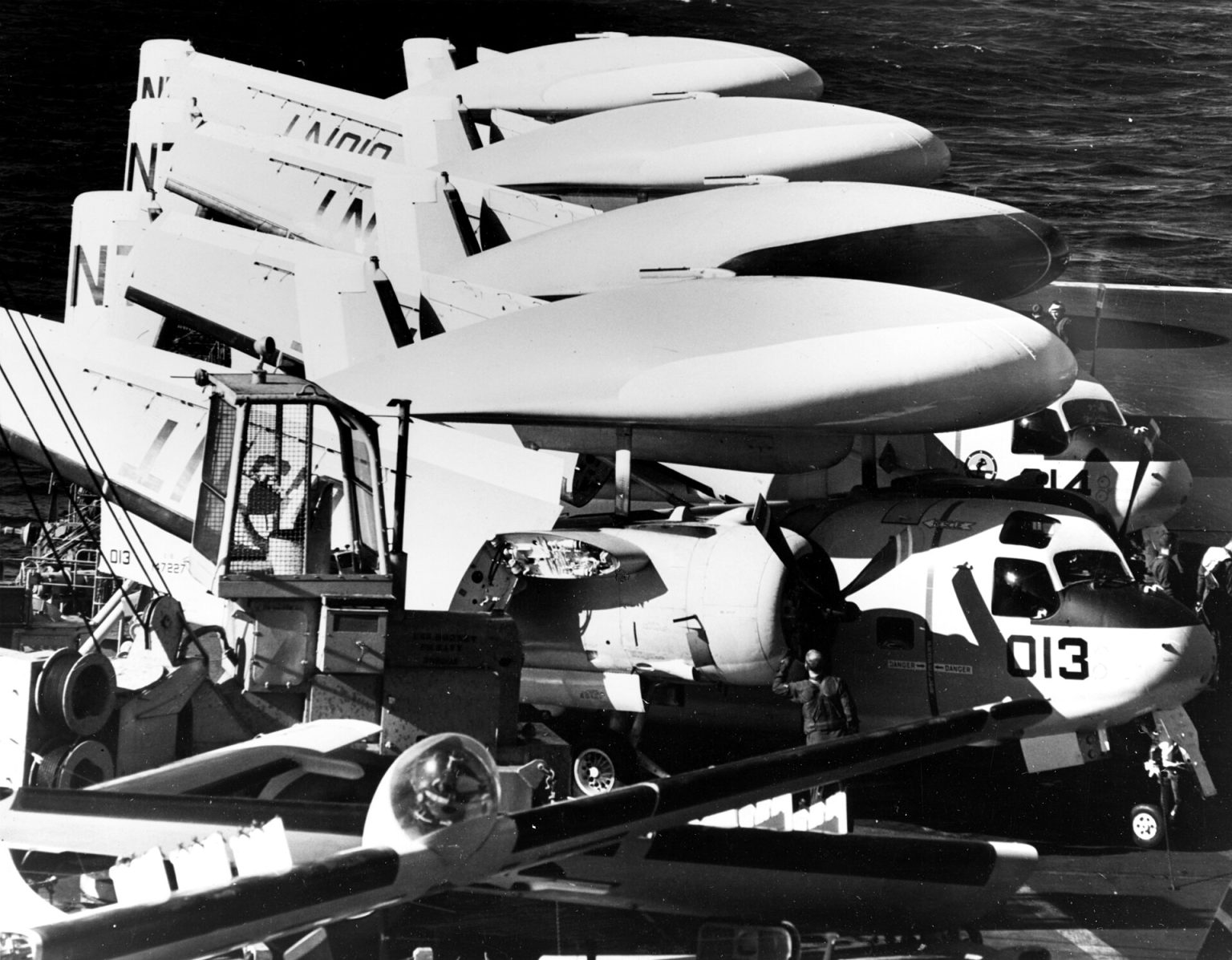
The Tracker’s roomy, dependable airframe proved so useful that Grumman developed two important variants that had nothing to do with hunting submarines. The first was the C-1 Trader, a carrier-onboard-delivery aircraft — a small transport used to fly people, mail and urgent spare parts out to carriers at sea. The second was more significant still: the E-1 Tracer, an airborne-early-warning aircraft fitted with a large fixed radar dome mounted above the fuselage, which earned it the nicknames “Willy Fudd” and “Stoof with a Roof.” The E-1 Tracer was the US Navy’s first purpose-built carrier early-warning aircraft, and it was the direct ancestor of the famous E-2 Hawkeye that still flies from American carriers today.
The Tracker was also one of the great export successes of Cold War naval aviation. Beyond the US Navy and the Canadian licence-built fleet, it was flown by Argentina, Australia, Brazil, Italy, Japan, the Netherlands, South Korea, Taiwan, Turkey, Uruguay and others — a dozen and more navies and air arms that needed a capable, affordable carrier or land-based submarine-hunter. Several nations flew Trackers from their own aircraft carriers, and some kept them in service long after the US Navy had moved on.
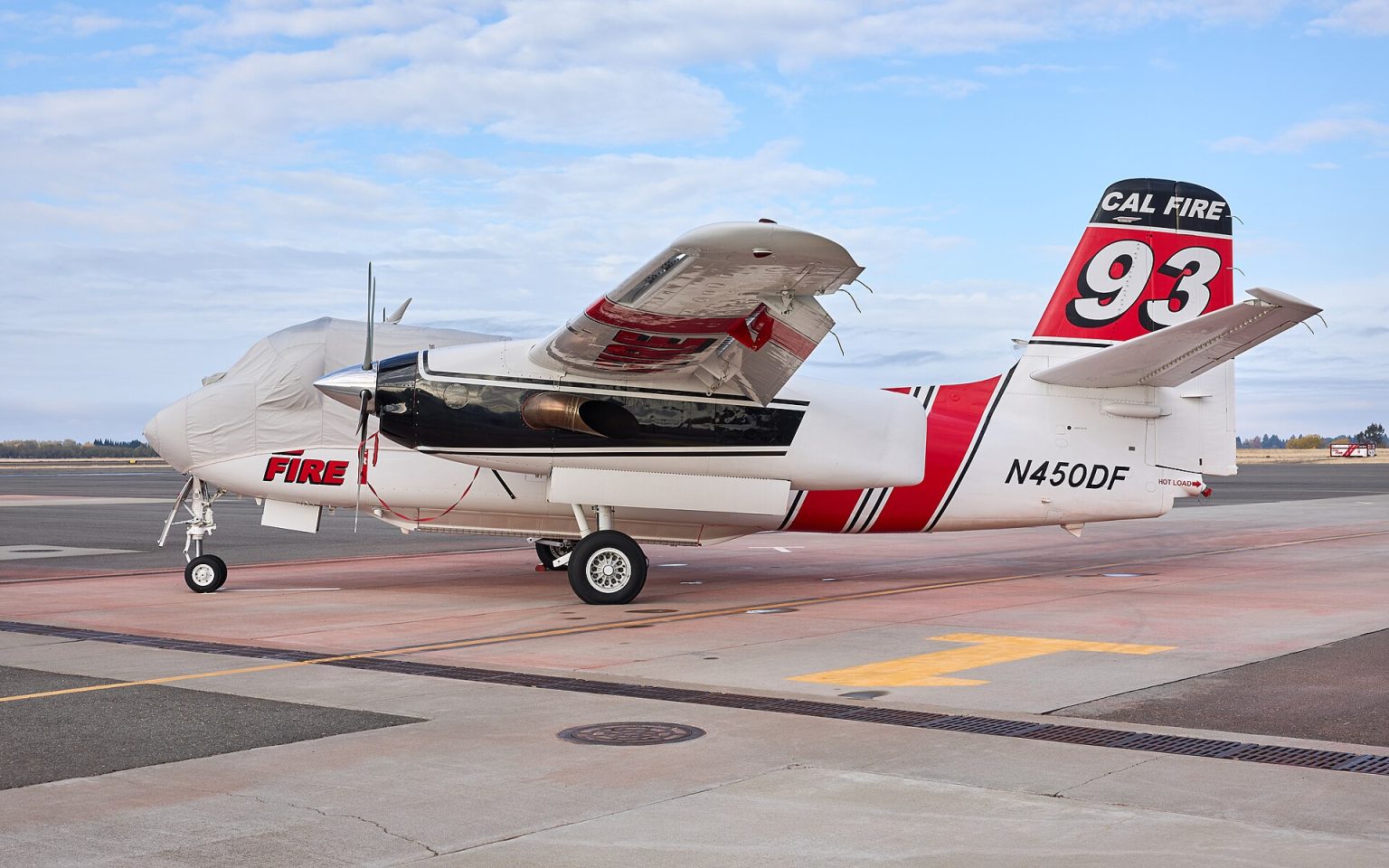
In American service the Tracker was gradually replaced from the mid-1970s by the jet-powered Lockheed S-3 Viking, a faster and more modern anti-submarine aircraft. But that was not the end of the Tracker’s story — not by a long way. Retired Trackers, with their strong airframes, good low-speed handling and useful load-carrying ability, turned out to make excellent aerial firefighting air tankers. Many were converted, and a number were re-engined with modern turboprops as the S-2T, dramatically improving their performance. These turbine Trackers still fly today with CAL FIRE, the California firefighting agency, dropping fire retardant on wildfires across the state. An aircraft first flown in 1952 remains in daily, dangerous, useful work in the 2020s — a remarkable testament to how sound Grumman’s original design really was.
01The hunter-killer breakthrough: one airframe, whole mission+
The Tracker’s single most important contribution was to combine the anti-submarine hunter and killer in one aircraft. In the late 1940s the detection gear and the weapons could not both fit in a single carrier aircraft, so the US Navy operated them in pairs: a “hunter” such as the radar-equipped Grumman AF-2W Guardian to find the submarine, and a separate “killer” AF-2S carrying the weapons, the two coordinating an attack together.
This was inefficient and demanding — two aircraft, two crews, and the constant problem of keeping them working together. As sensors and weapons shrank and improved, Grumman was able to design the Tracker around carrying all of it in one airframe. The S-2 could detect, localise and attack a submarine on its own, and that made it the first true single-airframe carrier hunter-killer — a genuine step change in how navies hunted submarines from the air.
02Twin Wright R-1820 Cyclones: reliable power for the long patrol+
The Tracker was powered by two Wright R-1820 Cyclone radial engines, a nine-cylinder design from one of the most successful and long-lived engine families in aviation history — the same basic engine that had powered the B-17 Flying Fortress. For an anti-submarine aircraft the choice made perfect sense: the Cyclone was rugged, well understood, and economical enough to give the endurance a patrol aircraft needs.
Two engines also gave a vital safety margin for hours of flying far out over the open ocean, where an engine failure in a single-engine aircraft could be fatal. The Tracker could patrol for many hours, throttled back for economy, and still had the power for a carrier takeoff when heavily loaded with fuel, sensors and weapons.
03The sensor suite: radar, MAD boom, sonobuoys and searchlight+
Finding a submarine in the ocean is one of the hardest tasks in warfare, and the Tracker carried a whole toolkit to do it. A search radar in a retractable radome under the rear fuselage detected submarines and ships on the surface. A magnetic anomaly detector (MAD) on a long boom, extended from the tail in flight, sensed the faint distortion a submerged steel submarine makes in the Earth’s magnetic field.
Sonobuoys — expendable listening devices — were carried in the rear of the engine nacelles and dropped into the sea to detect submerged boats by sound. And a powerful searchlight under the starboard wing could illuminate a surfaced target at night for attack. Together these sensors let one Tracker carry out the full search-to-strike sequence that had previously needed two aircraft.
04Folding wings and carrier operations+
The Tracker was a true carrier aircraft, and everything about it was shaped by the demands of the flight deck. Its high wings folded upwards and back to shrink the aircraft for stowage in the crowded hangar below deck, and it carried the sturdy undercarriage and arrester hook needed for carrier landings. Its high-wing layout gave the sensor operators a good downward view and kept the propellers well clear of the deck.
Good low-speed handling made the Tracker manageable in the demanding business of landing on a moving carrier, and its twin engines and long endurance suited the long, patient patrols of anti-submarine work. It operated from the US Navy’s dedicated anti-submarine carriers and, in foreign service, from the flight decks of Argentine, Australian, Brazilian, Canadian and Dutch carriers.
05The C-1 Trader: the Tracker as carrier delivery van+
The Tracker’s roomy, reliable airframe was quickly adapted to other jobs. The first offshoot was the C-1 Trader (originally the TF-1), a carrier-onboard-delivery aircraft — essentially a small transport version with the sensors and weapons replaced by a cabin for passengers and cargo. Its job was the unglamorous but essential one of ferrying people, mail and urgent spare parts out to aircraft carriers at sea.
The C-1 could carry a useful load out to a carrier hundreds of miles from land and, crucially, land back aboard, keeping the ship supplied without it having to return to port. Around ninety were built, and they served for many years; a specialised electronic version, the EC-1A, was also produced. The Trader kept the carriers connected to the shore long before the role passed to later aircraft.
06The E-1 Tracer: “Willy Fudd” and the first carrier AEW aircraft+
The most important Tracker offshoot was the E-1 Tracer, an airborne-early-warning aircraft. A fleet at sea is blind to low-flying threats beyond its ships’ radar horizon, so the Navy fitted a large radar into a fixed dome mounted above a modified Tracker airframe — a distinctive shape that earned it the nicknames “Willy Fudd” (from its original designation WF) and “Stoof with a Roof.”
Entering service in the late 1950s, the E-1 Tracer was the US Navy’s first purpose-built carrier-borne early-warning aircraft, orbiting ahead of the fleet to detect threats far beyond the range of the ships’ own radars. It was the direct predecessor of the Grumman E-2 Hawkeye, the carrier early-warning aircraft that replaced it and still flies from American carriers today — making the humble Tracker the ancestor of a capability the US Navy considers essential.
07The Canadian CS2F: licence production by de Havilland Canada+
The Tracker was important enough to Canada that it was built there under licence. De Havilland Canada produced around a hundred aircraft as the CS2F for the Royal Canadian Navy, which flew them in the anti-submarine role, including from the carrier HMCS Bonaventure. The Canadian Trackers were closely based on the American design but built to Canadian requirements.
Canada’s licence production is a measure of how well the Tracker fitted the needs of a serious maritime nation, and the Canadian aircraft served for many years. Some were later converted for other duties, and the CS2F is an important part of the Tracker’s wider story — one of several ways the basic Grumman design spread well beyond the US Navy.
08From S2F to S-2: the 1962 redesignation+
For its first decade the Tracker was known by the US Navy’s old designation system as the S2F — the second anti-submarine (S2) type from Grumman (F). Sailors pronounced “S2F” as “Stoof,” and the nickname stuck to the aircraft for the rest of its career.
In 1962 the United States adopted a single, unified aircraft designation system across all its armed forces, and the Tracker’s labels changed accordingly: the S2F-1 became the S-2A, the S2F-3 became the S-2D, and so on, while the TF-1 Trader became the C-1 and the WF-2 Tracer became the E-1. The aircraft themselves did not change — only the labels — which is why the same machine appears in sources as both the S2F and the S-2 depending on the date.
09Replacement by the Lockheed S-3 Viking+
By the early 1970s the US Navy wanted a faster, more modern carrier anti-submarine aircraft, with jet performance and a more advanced digital sensor and processing suite to keep pace with quieter, faster Soviet submarines. The answer was the Lockheed S-3 Viking, a jet-powered aircraft that began replacing the Tracker in US Navy squadrons from the mid-1970s.
The Viking was a generation ahead of the piston-engined Tracker and served for decades. But the Tracker was not simply scrapped: many foreign navies kept flying it for years afterwards, and the type found its remarkable second career fighting fires. The replacement marked the end of the Tracker’s front-line US Navy service, not the end of the aircraft — which in some forms is still flying today.
Design & Engineering
How the Tracker was built: one airframe for the whole hunt
The Tracker was engineered around a single goal — to carry the complete anti-submarine mission from a carrier deck in one aircraft — and its roomy, rugged design made it adaptable enough to serve for generations.
Hunter and killer in one
Sensors, crew and weapons all in a single airframe — the first carrier aircraft able to detect, localise and attack a submarine on its own, replacing the old hunter-plus-killer pair.
Twin radials, folding wings
Two reliable Wright R-1820 Cyclone radials for long endurance, a high wing that folded for the hangar, and an internal weapons bay — a true, practical carrier aircraft.
A full sensor toolkit
Search radar, a tail MAD boom, sonobuoys in the nacelles and a wing searchlight — everything needed to find a submarine and attack it, in one machine.
Specifications
Grumman S-2 Tracker specifications: dimensions, performance and cost
Baseline note: the figures below describe the S-2E and the S-2G, which share an airframe — the S-2G is an S-2E re-fitted with AN/AQA-7 DIFAR sonobuoy processing and an AN/ARR-75 receiver, not a new build. This is the long-fuselage, big-nacelle Tracker with 32 sonobuoy chutes, and it is the definitive version. Deltas for the original S2F-1 (S-2A), for the C-1 Trader and for the E-1 Tracer are in grey. Published S-2 tables disagree more than they should; Wikipedia’s specification block is labelled S-2F but carries long-fuselage dimensions, and the spread between authorities is stated below rather than averaged.
Dimensions & weights
- Crew
- 4 — two pilots side by side on the flight deck, and two sensor operators in the rear cabin working the radar and the acoustic gear. That single cabin is the aeroplane’s reason for existing: the men reading the sonobuoys and the men who could drop the torpedo were now in the same aircraft
- Length
- 13.26 m (43 ft 6 in). The S-2A and the Canadian-built CS2F were 12.80 m (42 ft 0 in), the shorter airframe being kept for Canada specifically so the aircraft would fit in HMCS Bonaventure’s hangar
- Wingspan
- 22.12 m (72 ft 7 in); 21.23 m (69 ft 8 in) on the S-2A and C-1A
- Width folded
- 8.3 m (27 ft) — the outer panels fold upwards and inboard to lie over the cabin roof, the port panel tucking behind the starboard one. Two hydraulic jacks in the wing roots run at 3,000 psi to do it, twice the pressure of the rest of the system
- Height
- 5.05 m (16 ft 7 in)
- Wing area
- 46.08 m2 (496 sq ft); some tabulations give 499 sq ft
- Aerofoil
- NACA 63A420 at the root, NACA 63A415 at the tip — a thick, high-lift section on a high wing, chosen for slow flight at low level rather than for speed
- Empty weight
- 8,505 kg (18,750 lb). Aero-web gives 19,033 lb for the same mark; the difference is equipment fit
- Maximum take-off weight
- 13,222 kg (29,150 lb). Other tables give 26,867 lb, which is a gross rather than a maximum figure. The 29,150 lb number is the one usually quoted for the S-2E
- Maximum payload
- ~2,182 kg (4,810 lb) between the internal bay and six underwing hardpoints — a small load by the standards of a land-based patrol aircraft and a large one for something that has to stop on a deck
- Sonobuoys carried
- 32 — stowed in chutes in the rear of the engine nacelles and dropped from there. Early marks carried 16; the enlarged nacelles of the S-2D and S-2E doubled it, which is most of what the D-model redesign was for
- The derivatives
- C-1A and E-1B — the Trader grosses 11,158 kg (24,600 lb) and carries nine passengers or 1,588 kg (3,500 lb) of freight; the Tracer grosses 12,065 kg (26,600 lb), spans 22.05 m (72 ft 4 in) and stands 5.13 m (16 ft 10 in) under its radome
Performance
- Maximum speed
- 426 km/h (265 mph / 230 kt) at sea level. Aero-web gives 251 mph for the S-2E; the Wikipedia table, labelled S-2F, gives 243 kt
- Patrol speed
- 241 km/h (150 mph / 130 kt) — the working number. Everything about the aeroplane is arranged around flying slowly, low, for a long time, in weather
- Service ceiling
- 6,400 m (21,000 ft); 20,100 ft in some tabulations. Irrelevant to the mission, which was flown a few hundred feet above the sea
- Rate of climb
- 9.3 m/s (1,830 ft/min)
- Range
- ~2,170 km (1,350 miles / 1,170 nmi)
- Endurance
- 9 hours — against the Fairey Gannet’s five to six. The Tracker traded the Gannet’s clever single-engine cruise for two ordinary radials and simply carried more fuel, and got a longer sortie out of the bargain
- Wing loading
- 236 kg/m2 (48.3 lb/sq ft) — modest, which is why a fully loaded Tracker could get off a straight-deck Essex or a light carrier like HMAS Melbourne and HMCS Bonaventure
- Search altitude
- Low, and for hours — radar search for a snorkel, sonobuoy patterns laid on a contact, and a MAD run at a few hundred feet to confirm it. The searchlight existed because a great deal of this was done at night
- C-1A Trader
- 451 km/h (280 mph) at 1,220 m (4,000 ft), ceiling 7,560 m (24,800 ft), range 1,786 km (1,110 miles) — a little faster than the Tracker because it carried none of the sensors
- E-1B Tracer
- 383 km/h (238 mph) at 1,220 m (4,000 ft), ceiling 4,816 m (15,800 ft), endurance 6 hours 50 minutes — that ceiling is the whole problem with the Tracer, because radar horizon is a function of height and 15,800 ft is not much of one
- S-2T turbine conversion
- Roughly 500 kg more payload — Taiwan’s 27 rebuilt aircraft took two Garrett TPE331-15AW turboprops of 1,227 kW (1,645 shp) each with four-blade propellers, in place of the Cyclones. Argentina’s six were converted by Israel Aerospace Industries to a comparable standard
Propulsion & systems
- Engines
- Two Wright R-1820-82WA Cyclone, nine-cylinder air-cooled radials, 1,137 kW (1,525 hp) each. A design of the late 1920s, still in production in the 1960s, and the reason the C-1 Trader was the second-to-last radial-engined aircraft in United States military service when it retired in 1988
- Propellers
- Three-blade constant-speed, fully feathering and reversible — reverse pitch matters on a wet deck and matters a great deal more on a fire line
- Wing fold
- Hydraulic, upwards and inboard — not the Grumman Sto-Wing. The E-1 Tracer had to go back to the Wildcat-pattern Sto-Wing, folding the panels rearwards along the fuselage sides, because its radome occupied the space above the fuselage that the Tracker’s wings fold into
- Search radar
- AN/APS-38 in a retractable ventral radome — lowered for search, retracted for transit and for deck operations
- Magnetic anomaly detector
- AN/ASQ-8 on an extending tail boom — run out behind the aircraft in flight to get the sensor clear of the airframe’s own magnetic signature, and retracted for landing. This is the single most recognisable feature of a Tracker in the air, and the Gannet had nothing equivalent
- Acoustic processing
- JULIE and JEZEBEL — JEZEBEL passive sonobuoy analysis with the AN/AQA-3 and later AQA-4 sets; JULIE active ranging using 60 explosive charges dispensed from the rear of the fuselage as sound sources. The S-2G conversion brought AN/AQA-7 DIFAR and active pinging sonobuoys, and the explosive charges went
- Electronic support measures
- Dorsal pod, later wingtip extensions — early Trackers carried the ESM antenna in a pod behind the cockpit hatches; later aircraft moved it to four rounded fairings on the wingtips, which is a quick way to date a photograph
- Searchlight
- 70 million candlepower on the starboard wing — for illuminating a surfaced or surfacing submarine at night before an attack. A crude device, and one that told the submarine exactly as much as it told the aircraft
- Sniffer
- Smoke particle detector on early marks — the American equivalent of the British Autolycus, sniffing for the diesel exhaust of a snorting submarine. It was deleted from later Trackers, as it was quietly ignored on the Shackleton, because it produced far more false contacts than real ones
- Turbine conversions
- Garrett TPE331 — the route by which this airframe is still flying. Taiwan and Argentina converted military aircraft; Conair in British Columbia built piston Firecats and turbine Turbo Firecats; Marsh Aviation produced the S-2F3AT that CAL FIRE flies. Same wing, same fuselage, different century
10The Tracker’s huge export career+
The Tracker was one of the most widely exported carrier and maritime-patrol aircraft of its era. Beyond the US Navy and the Canadian licence-built fleet, it was flown by Argentina, Australia, Brazil, Italy, Japan, the Netherlands, South Korea, Taiwan, Turkey and Uruguay, among others — well over a dozen operators in all. Several of them flew Trackers from their own aircraft carriers, including Argentina, Australia, Brazil and the Netherlands.
The reasons were straightforward: the Tracker was capable, rugged, affordable and available, and every maritime nation of the period needed to hunt submarines. Many operators kept their Trackers flying long after the US Navy retired its own, and Taiwan in particular operated modernised, turbine-converted Trackers into the twenty-first century. This breadth of service is a measure of how well the aircraft filled a role that so many navies needed filled.
11The Grumman S-2 Tracker’s operating costs: what the records show+
As with most Cold War military aircraft, there is no single reliable, transparent public figure for the Tracker’s unit cost, cost per flight hour or total programme cost. It was procured over many years, in many variants, for many customers, through government contracts and military-assistance programmes rather than at a transparent list price, and consistent lifetime figures are not available. Any single figure quoted for it should be treated with caution.
What can be said is that the whole point of the Tracker was efficiency: putting the complete anti-submarine mission into one relatively simple, twin-piston-engined airframe was far cheaper than operating pairs of hunter and killer aircraft, and cheaper than the fleets of ships that would otherwise be needed to cover the same ocean areas. Rather than invent numbers, we list the cost fields here as “not reliably recorded.”
12The “Stoof”: the Tracker and its nicknames+
The Tracker family collected a set of affectionate nicknames that tell its story. The original S2F designation, pronounced as a word, gave the anti-submarine Tracker its enduring nickname, the “Stoof.” It was a plain, workmanlike aircraft, and the name fitted its unglamorous, dependable character.
The airborne-early-warning E-1 Tracer, with its big fixed radar dome perched above the fuselage, naturally became the “Stoof with a Roof,” and also “Willy Fudd” from its original WF designation. These nicknames, still used fondly by those who flew and maintained the aircraft, capture the affection the Tracker earned across a long career — a rugged, honest aircraft that always got the job done.
13The firefighting afterlife: the S-2T and CAL FIRE+
The Tracker’s most remarkable achievement may be that it is still flying. When the aircraft was retired from military service, its strong airframe, good low-speed handling and useful load-carrying ability made it an excellent candidate for conversion into an aerial firefighting air tanker. Many were converted to drop fire retardant, and a number were re-engined with modern turboprop engines as the S-2T, transforming their performance.
These turbine Trackers are the backbone of the aerial firefighting fleet operated by CAL FIRE, the California Department of Forestry and Fire Protection, and they still fly today, attacking wildfires across the state. For an aircraft that first flew in 1952, remaining in front-line, dangerous, essential service into the 2020s is an extraordinary tribute to the soundness of Grumman’s original design — and a fitting final chapter for one of the great workhorses of naval aviation.
Armament & payload
The Tracker exists because the sensors and the weapons finally fitted in one aeroplane, and everything it carried follows from that
Before the Tracker, carrier anti-submarine warfare took two aircraft. The Grumman AF Guardian worked in hunter-killer pairs: an AF-2W carried the radar and found the submarine, and an AF-2S carried the weapons and attacked what the first one had found. Two airframes, two crews, two deck spots, and a conversation over the radio in between. The Tracker put both halves in one aeroplane — the first purpose-built single-airframe carrier anti-submarine aircraft anywhere.
That is not a story about weapons; it is a story about miniaturisation. By 1950 the radar, the sonobuoy receivers, the acoustic processing and the magnetic anomaly detector could all be squeezed into one fuselage alongside a bomb bay, and Grumman’s G-89 was the design that took the opportunity. Two prototypes and fifteen production aircraft were ordered together on 30 June 1950, before anyone had flown one. The armament that resulted is modest and entirely conventional: two torpedoes or one nuclear depth bomb inside, rockets and depth charges outside, and a great deal of equipment whose job was to find something rather than to destroy it. Fits changed substantially across marks and operators: the JULIE explosive charges vanished with the S-2G, the sniffer was deleted on later aircraft, Canadian CS2Fs and Dutch S-2Ns carried their own equipment standards, and the firefighting conversions carry no military equipment at all.
The internal weapons bay
- A torpedo bay in the fuselage belly, rated for two lightweight aerial homing torpedoes or one nuclear depth bomb
- Total payload across the bay and the six underwing hardpoints is usually given as about 2,182 kg (4,810 lb)
- The S2F-2 (S-2C) extended the bay asymmetrically to port to take a larger store, and gained slightly enlarged tail surfaces to cope. Seventy-seven were built and it was not repeated
- On the firefighting conversions this bay and the fuselage section around it were cut out entirely and replaced with a four-door retardant tank — which is how a submarine hunter became an air tanker without changing its wing
Torpedoes
- Two lightweight homing torpedoes internally, and up to four more on the underwing stations
- Types carried across the type’s life: Mk 34, Mk 41, Mk 43, Mk 44 and finally the Mk 46 — the whole sequence of American lightweight anti-submarine torpedoes from the early 1950s to the 1970s passed through this bomb bay
- Argentine S-2Es flew torpedo attacks on submarine contacts during the 1982 Falklands War, operating first from ARA Veinticinco de Mayo and then from the mainland after the carrier returned to port following the loss of ARA General Belgrano
- It was an Argentine Tracker that found the British task force from the carrier on 1 May 1982, in the run-up to the naval strike that the weather then made impossible
Depth charges & the nuclear store
- Conventional depth charges on the underwing hardpoints, and naval mines — the Mk 54 depth bomb was the standard American store of the period
- One nuclear depth bomb in the internal bay, as an alternative to the two torpedoes. This is not a footnote: a substantial part of the Tracker fleet’s deterrent value lay in the fact that a single-aircraft attack could be nuclear
- The logic was the same one that put nuclear depth charges on the Royal Air Force’s Shackletons from 1966 — against a fast, deep-diving nuclear submarine, a conventional weapon required a precision of fix that 1960s sensors could not reliably deliver, and a nuclear one did not
- No Tracker of any nation ever dropped either kind in anger
Underwing rockets & stores
- Six underwing hardpoints, used for rocket pods, conventional depth charges, additional torpedoes and external fuel
- High-velocity aircraft rockets were carried from the beginning — early S2F-1s were photographed armed with HVARs in 1954 — for use against a surfaced submarine or a small surface contact
- Nothing guided and nothing stand-off, at any point in the type’s service with any operator. The Tracker attacked by flying over the target
- The same hardpoints later carried nothing at all on the utility, training and carrier onboard delivery conversions, of which there were a great many: 207 TS-2A trainers, 51 US-2A transports and target tugs, and further US-2B, US-2C and US-2F conversions
The MAD boom, the searchlight & the sonobuoy chutes
- An AN/ASQ-8 magnetic anomaly detector on a boom that extended from the tail in flight and retracted for landing, putting the magnetometer clear of the aeroplane’s own iron. A MAD contact is a confirmation, not a search tool: it works only when you are almost on top of the submarine
- Sonobuoy chutes in the rear of the engine nacelles — 16 on early marks, 32 on the S-2E and S-2G. Putting them in the nacelles rather than the fuselage is the reason the D-model got its enlarged nacelles, and the reason the later Tracker looks subtly different from the early one
- A 70-million-candlepower searchlight on the starboard wing, for the night attack on a surfaced boat
- Sixty explosive JULIE charges dispensed from the rear of the fuselage as active sound sources for semi-active ranging, worked with the AN/AQA-3 and AQA-4 sets. The S-2G’s active sonobuoys and AN/AQA-7 made them redundant and they were removed
- Smoke dispensers in groups of three on the port underside of each nacelle, for marking a datum on the sea
What the Tracker did not carry
- No gun of any kind — no fixed gun, no flexible mounting, no turret, in any variant
- No air-to-air weapon and no guided air-to-surface weapon, ever
- No armour and no self-defence provision. The E-1 Tracer derivative carried no weapons at all, only the AN/APS-82 radar in its 17 ft by 5 ft dome, and the C-1 Trader carried mail
- A proposed AS-2D night attack conversion under Operation Shed Light, which would have made a strike aircraft of it, was never built
Three typical loadouts
- Carrier anti-submarine patrol, S-2E, mid-1960s
- Two Mk 44 homing torpedoes in the bay, 32 sonobuoys in the nacelle chutes, MAD boom stowed for transit and run out on contact, AN/APS-38 radome extended, searchlight and smoke markers available. Nine hours available, flown at 130 knots a few hundred feet above the sea. Flown by the sea control squadrons from Essex-class anti-submarine carriers, and by 816 Squadron from HMAS Melbourne.
- Nuclear alert loadout
- One nuclear depth bomb in the internal bay in place of the torpedoes, sonobuoys and MAD as normal. A single aircraft, a single weapon, and a fix good to within a mile or two rather than a hundred yards — which was the whole reason the weapon existed.
- CAL FIRE initial attack, S-2F3AT, today
- Up to 4,542 litres (1,200 US gal) of retardant, 3,785 litres (1,000 US gal) as the standard initial-attack load, in a four-door tank where the torpedo bay used to be; two Honeywell turboprops of 1,650 hp; one pilot. Twenty-three of these are on strength with CAL FIRE, dispersed across the state so that an aircraft can be over a new fire within about twenty minutes.
Sourcing caveat: the sensor and armament description follows the Grumman and United States Navy literature summarised on Wikipedia, which flags its own sensors-and-armament section as unreferenced, cross-checked against Francillon’s Grumman Aircraft since 1929 and Sullivan’s S2F Tracker in Action. The 4,810 lb payload and the nuclear depth bomb capability are both widely reported and neither is documented in a primary source that is publicly available. Torpedo types are those in United States Navy service across the airframe’s life rather than a single cleared list; individual marks and individual navies carried different subsets.
Variants
Grumman built one airframe into an anti-submarine aircraft, a freighter and a radar picket, and then California turned it into an air tanker that is still working
The Tracker family has three branches and it helps to keep them straight. The S-2 line runs from the short-fuselage S2F-1 (S-2A) through the S2F-2 (S-2C) and into the redesigned long-fuselage S2F-3 (S-2D), from which the S-2E and its S-2G re-fit descend. The C-1 Trader is a Tracker with the sensors taken out and nine seats or 3,500 lb of freight put in. The E-1 Tracer is a Trader with an AN/APS-82 radar in a huge fixed dome above the fuselage, a twin tail, and a wing that had to revert to the wartime Wildcat fold because the dome was sitting where the wings used to go. Sailors called the Tracker the Stoof and the Tracer, inevitably, the Stoof with a Roof.
The export career is one of the widest of any carrier aircraft: Canada, Australia, the Netherlands, Japan, Brazil, Argentina, Taiwan, Turkey, South Korea, Italy, Peru, Uruguay, Thailand and Venezuela all flew Trackers, and only Canada built them, 99 aircraft licensed to de Havilland Canada as the CS2F. Some of those air arms outlasted the United States Navy’s own Trackers by decades: the last American squadron, VS-37, stood down in 1976, and Argentina retired the last military Tracker in the world in December 2025.
And then there is the third act nobody planned. Turbine conversions kept the airframe viable long after its engines became museum pieces, and the fire agencies took it up: Conair in British Columbia, Marsh Aviation in Arizona, Sécurité Civile in France. CAL FIRE began evaluating surplus Trackers in 1970, started converting them to turbine power in 1987, and had a wholly turboprop tanker fleet by 2005. A 1950s carrier anti-submarine aircraft is, in 2026, still flying operational sorties over California every summer.
- XS2F-1, YS2F-1 and S2F-1 / S-2A (1950–1960s / 2, 15 and 740)
- Two prototypes and fifteen development aircraft ordered together on 30 June 1950; first flight 4 December 1952; in service with VS-26 in February 1954. The S2F-1 had 1,525 hp R-1820-82WAs and 16 sonobuoys. Sub-variants proliferated: the S2F-1S (S-2B) with JULIE and JEZEBEL, the S2F-1S1 (S-2F) with updated sets, and the S2F-1T (TS-2A) trainer, of which 207 were converted and which trained multi-engine student naval aviators at Corpus Christi into the 1970s.
- S2F-2 / S-2C (1950s / 77)
- Asymmetric port-side extension of the bomb bay for a larger store, with slightly enlarged tail surfaces. A photo-reconnaissance conversion (RS-2C) and utility and target-tug conversions (US-2C) followed. The configuration was not carried forward.
- S2F-3 / S-2D (1959–1962 / 100)
- The major redesign: enlarged forward fuselage, enlarged tail surfaces, more fuel, and enlarged engine nacelles housing 32 sonobuoy chutes instead of 16. Everything that makes the late Tracker look different from the early one is in this mark.
- S2F-3S / S-2E and S-2G (1962–1968 / 252 built, plus conversions)
- The baseline for this page. The S-2E is the S-2D with JULIE and JEZEBEL acoustic equipment; the S-2G is an S-2E updated with the AN/AQA-7 DIFAR processor and AN/ARR-75 receiver, and is a conversion rather than a new airframe. VS-37, the last United States Navy Tracker squadron, flew S-2Gs and disestablished in 1976; the last Navy S-2 was withdrawn on 29 August 1976.
- CS2F-1, -2, -3 / CP-121 (1956–1990 / 99 licence-built)
- Built by de Havilland Canada from 1954 to replace the Royal Canadian Navy’s Avengers; first Canadian-built aircraft flew on 31 May 1956. All were built to the short 42 ft airframe so they would fit HMCS Bonaventure. Forty-two CS2F-1 and 57 CS2F-2, of which 43 became CS2F-3 with revised electronics from 1964; redesignated CP-121 on unification in 1968. Seventeen CS2F-1s went to the Netherlands in 1960–61. After Bonaventure paid off in 1970 the survivors flew fisheries protection and maritime patrol from shore until 1990.
- C-1 Trader (1955–1988 / 87)
- Carrier onboard delivery version, originally TF-1, first flight 19 January 1955. Nine passengers or 3,500 lb of cargo. Carried mail and stores to the carriers off Vietnam through the 1960s and 1970s and doubled as an all-weather carrier trainer. Four were converted to EC-1A electronic countermeasures aircraft. The last retired in 1988, second-to-last radial-engined aircraft in United States military service.
- E-1 Tracer (1956–1977 / 88)
- Originally WF-2, first flight 17 December 1956, in service 1960. AN/APS-82 radar with airborne moving target indication — a genuine advance over the AN/APS-20 that the Royal Navy’s Gannet AEW.3 was carrying at the same moment — in an aerofoil-shaped dome 17 ft by 5 ft above the fuselage. Twin tail, Wildcat-pattern rearward wing fold, four crew. Replaced by the E-2 Hawkeye and retired in 1977.
- S-2T Turbo Tracker (1986–2025 / 27 Taiwanese, 6 Argentine)
- Taiwan converted its surviving S-2E and S-2G aircraft from 1986 with Garrett TPE331-15AW turboprops of 1,645 shp, four-blade propellers, AN/AQS-92F sonobuoy processing, Litton AN/APS-504 radar, AN/ASQ-504 MAD and AN/AAS-40 forward-looking infrared; the 27 aircraft transferred to the Republic of China Navy in 1999, back to the Air Force in 2013, and were withdrawn in May 2017. Argentina’s six were converted by Israel Aerospace Industries in the 1990s under the TATA programme.
- Brazilian P-16 and KC-2 Turbo Trader (1960s–2020s)
- The Brazilian Air Force flew S-2As and S-2Es from NAeL Minas Gerais as the P-16A and P-16E. From 2010 the Brazilian Navy contracted the conversion of four S-2s to airborne early warning configuration and four C-1 Traders to tanker and carrier onboard delivery aircraft, a programme delayed by Marsh Aviation’s bankruptcy and resumed with Elbit’s M7 Aerospace. The decommissioning of NAe São Paulo in 2017 removed the deck they were meant to fly from.
- Conair Firecat and Marsh S-2F3AT (1970s–present)
- Conair Aviation of Abbotsford, British Columbia acquired 82 retired Canadian and American Trackers and converted 32 to piston Firecats and 13 to Turbo Firecats, cutting out the weapons bay and the fuselage section around it for a four-door retardant tank; France’s Sécurité Civile flew both. Marsh Aviation’s S-2F3AT Turbo Tracker, with Garrett TPE331s, is the CAL FIRE aircraft. Saskatchewan and Ontario each flew Field Aviation conversions.
Closing note on numbers, retirement and survivors: 1,284 Trackers were built, 1,185 by Grumman and 99 by de Havilland Canada under licence; no reproduction has ever been made, so every surviving airframe is an original, though the firefighting conversions have had a fuselage section cut out and replaced and are original only in the sense that a rebuilt house is. Military retirement ran roughly as follows: the United States Navy in 1976 (the E-1 Tracer in 1977, the C-1 Trader in 1988), Italy in 1978 after 45 aircraft delivered in 1957, the Netherlands in January 1976, Japan in 1984 after 60 aircraft received in 1957, the Royal Australian Navy in 1984 following the paying-off of HMAS Melbourne, Peru in 1989 after fourteen years, Canada in 1990, Turkey in 1994 after a series of fatigue-related accidents, Uruguay by about 2004 when the last airframes ceased to be flyable, Taiwan in May 2017, and Brazil, South Korea, Thailand and Venezuela at dates that are not consistently documented. Argentina was the last. Its Comando de la Aviación Naval flew S-2s from 1962, took them to war in 1982, converted six to S-2T standard in the 1990s, and operated them from the Brazilian carrier São Paulo after Argentina lost its own deck. The final operational flight was made by 2-AS-23 in November 2025 and the retirement ceremony was held at Comandante Espora Naval Air Base on 1–2 December 2025 — more than sixty years of service, and the end of the Tracker as a military aeroplane anywhere in the world. It is not, however, the end of the aircraft. CAL FIRE operates 23 Marsh S-2F3AT Turbo Trackers as initial-attack air tankers, each carrying up to 4,542 litres (1,200 US gal) of retardant on two 1,650 hp turboprops, and as of 2026 they remain in front-line service alongside the four C-130H Hercules of a planned seven-aircraft large air tanker fleet. Something first flown in December 1952 is still being scrambled to fires, which is a claim very few aircraft of any kind can make.
Timeline
The Grumman S-2 Tracker through the years
The US Navy seeks a single carrier aircraft to combine the anti-submarine hunter and killer roles then split between two separate aircraft.
The Grumman XS2F-1 Tracker flies on 4 December 1952 — the first purpose-built single-airframe carrier hunter-killer.
The S2F-1 — the “Stoof” — becomes the US Navy’s standard carrier-based anti-submarine aircraft.
The carrier-onboard-delivery version, the C-1 Trader, appears, ferrying people and stores out to the fleet.
The airborne-early-warning E-1 Tracer enters service as the Navy’s first carrier AEW aircraft, and the Tracker begins its wide export career, including Canadian licence production.
Under the unified US designation system the S2F becomes the S-2, the TF-1 becomes the C-1 and the WF-2 becomes the E-1 — the aircraft unchanged.
Trackers fly from US and allied carriers hunting Soviet submarines, and serve with a dozen and more navies around the world.
The jet-powered Lockheed S-3 Viking begins replacing the Tracker in US Navy front-line service.
Many export operators keep their Trackers flying for decades; Taiwan and others operate modernised, turbine-converted aircraft.
Turbine-converted S-2T Trackers still fly with CAL FIRE, dropping retardant on California wildfires — more than seventy years after the first flight.
Stories & Eyewitnesses
The Grumman S-2 Tracker in stories: the moments that defined it
A hunter and killer combined in one aircraft, a tail full of sensors, two offspring that changed carrier aviation, a dozen navies, and a fiery second career — the Tracker’s history told through the moments that stuck.
Two Jobs, One AircraftThe hunter-killer breakthrough
The Tracker combined search and attack in a single airframe.
Before the Tracker, killing a submarine from a carrier took two aircraft — a hunter to find it and a killer to attack it, working as a pair.
Grumman’s S-2 was the first to carry the whole mission in one airframe: sensors, crew and weapons together. It could detect, localise and attack a submarine on its own.
The StoofA workmanlike nickname
The S2F designation, said aloud, named the aircraft.
Sailors pronounced the old designation “S2F” as “Stoof,” and the name stuck to the plain, dependable Tracker for the rest of its career.
It was an unglamorous aircraft that always got the job done — and the affectionate nickname fitted it perfectly.
Twin CyclonesReliable radial power
Two Wright R-1820 radials gave endurance and safety.
The Tracker was powered by two Wright R-1820 Cyclone radials — the same engine family that had powered the B-17 — chosen for reliability and long endurance over the sea.
Two engines gave a vital safety margin for the long hours of patrol far out over the open ocean.
The MAD BoomSensing a steel hull
A tail boom detected submerged submarines.
A magnetic anomaly detector on a long boom, extended from the Tracker’s tail in flight, sensed the faint disturbance a submerged steel submarine makes in the Earth’s magnetic field.
Combined with radar and sonobuoys, it helped the crew find and pin down submarines hiding beneath the surface.
Sonobuoys and SearchlightListening and lighting up
The Tracker carried sonobuoys and a wing searchlight.
Sonobuoys stowed in the rear of the engine nacelles were dropped into the sea to listen for submerged submarines, while a powerful searchlight under the starboard wing could light up a target on the surface at night.
With radar, MAD, sonobuoys and searchlight, a single Tracker had the full anti-submarine toolkit.
The C-1 TraderThe carrier delivery van
A transport version kept the carriers supplied.
The C-1 Trader was a carrier-onboard-delivery version of the Tracker, its sensors and weapons replaced by a cabin for passengers and cargo.
It ferried people, mail and urgent spares out to carriers hundreds of miles from land — an unglamorous but essential job.
Willy FuddStoof with a Roof
The E-1 Tracer was the first carrier AEW aircraft.
The E-1 Tracer carried a large radar in a fixed dome above the fuselage, earning it the nicknames “Willy Fudd” and “Stoof with a Roof.”
It was the US Navy’s first purpose-built carrier early-warning aircraft — and the direct ancestor of today’s E-2 Hawkeye.
Built in CanadaThe CS2F
De Havilland Canada built the Tracker under licence.
Canada built around a hundred Trackers under licence as the CS2F, flown by the Royal Canadian Navy from the carrier HMCS Bonaventure and from shore bases.
The licence production shows how well the design fitted the needs of a serious maritime nation.
Flown WorldwideA dozen navies and more
The Tracker was exported around the globe.
Argentina, Australia, Brazil, Canada, Italy, Japan, the Netherlands, South Korea, Taiwan, Turkey, Uruguay and others flew the Tracker — several from their own carriers.
Many kept it in service long after the US Navy, a measure of how capable and affordable it was.
Replaced by the VikingThe jet successor
The S-3 Viking took over the US Navy role.
From the mid-1970s the jet-powered Lockheed S-3 Viking began replacing the Tracker in US Navy carrier squadrons, bringing jet speed and a modern digital sensor suite.
It was the end of the Tracker’s US front-line career — but far from the end of the aircraft.
Fire BomberA second career over the flames
Retired Trackers became firefighting air tankers.
With strong airframes and good handling, retired Trackers made excellent aerial firefighting air tankers, many re-engined with modern turboprops as the S-2T.
They still fly today with CAL FIRE, dropping retardant on California wildfires — more than seventy years after the first flight.
Still FlyingAn aircraft that would not retire
The Tracker remains in daily service in the 2020s.
Few aircraft first flown in 1952 are still in front-line work, but the turbine S-2T Trackers of CAL FIRE are exactly that — flying dangerous firefighting missions every fire season.
It is an extraordinary tribute to how sound Grumman’s original design really was.
Photo Gallery
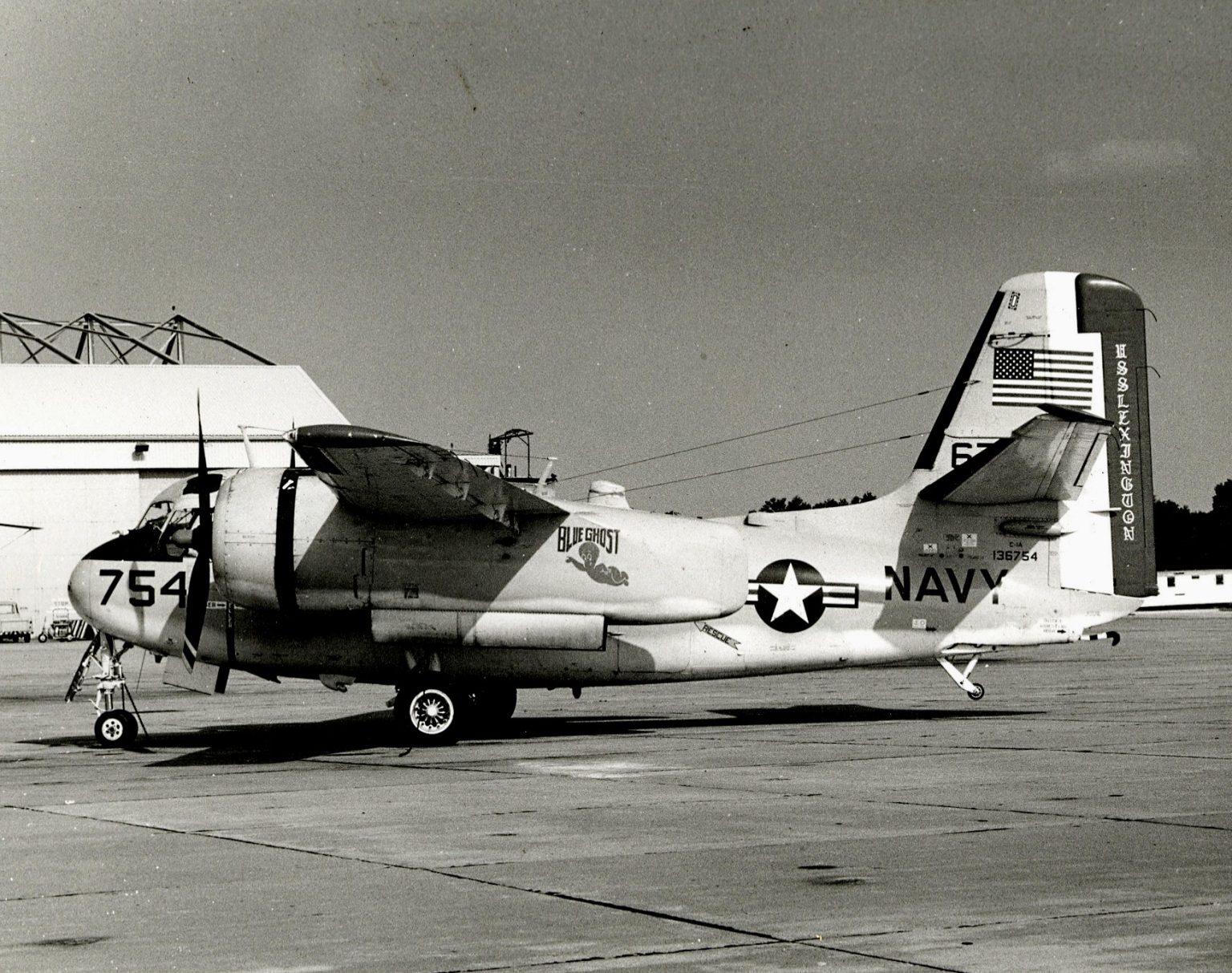
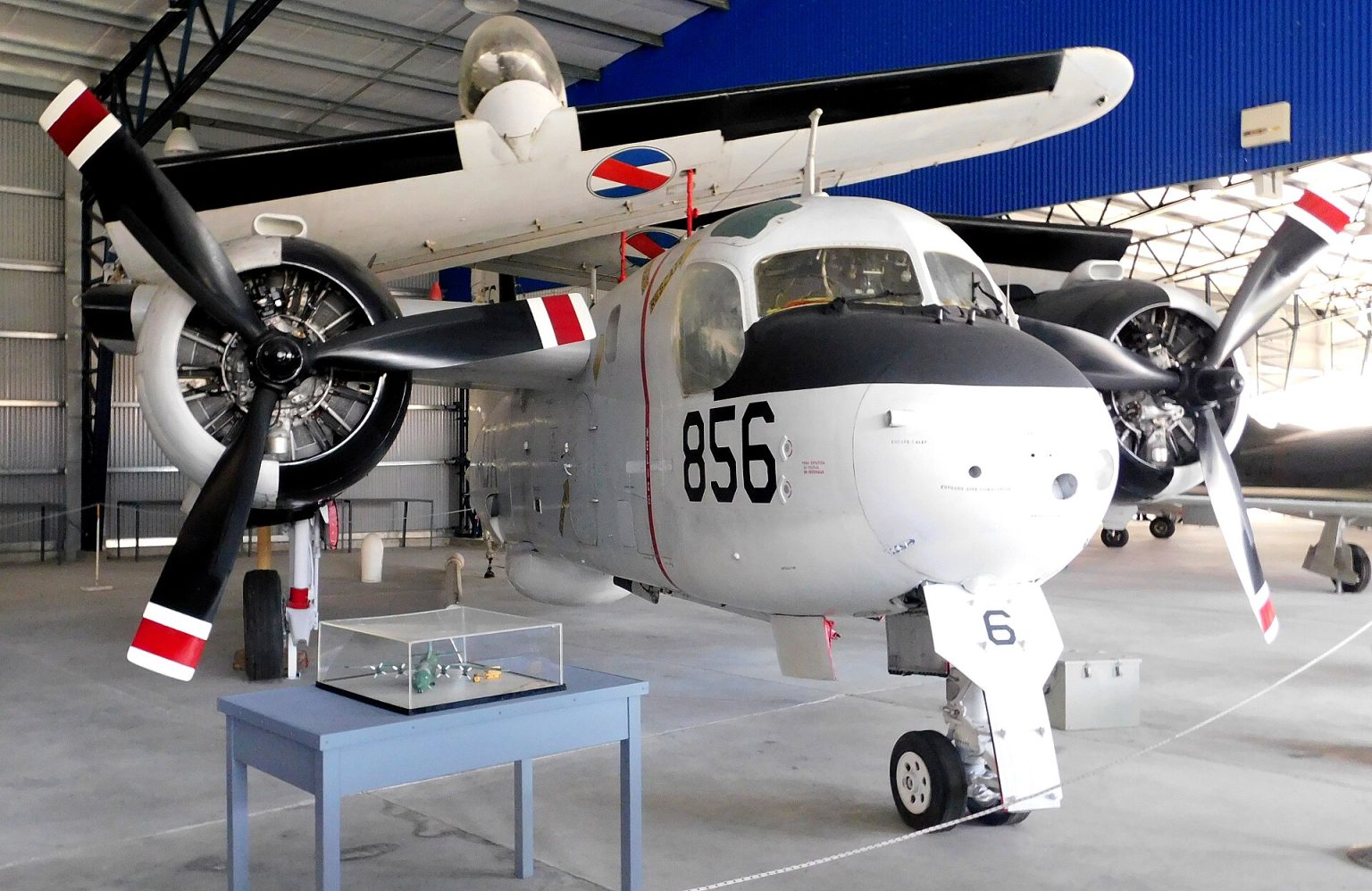
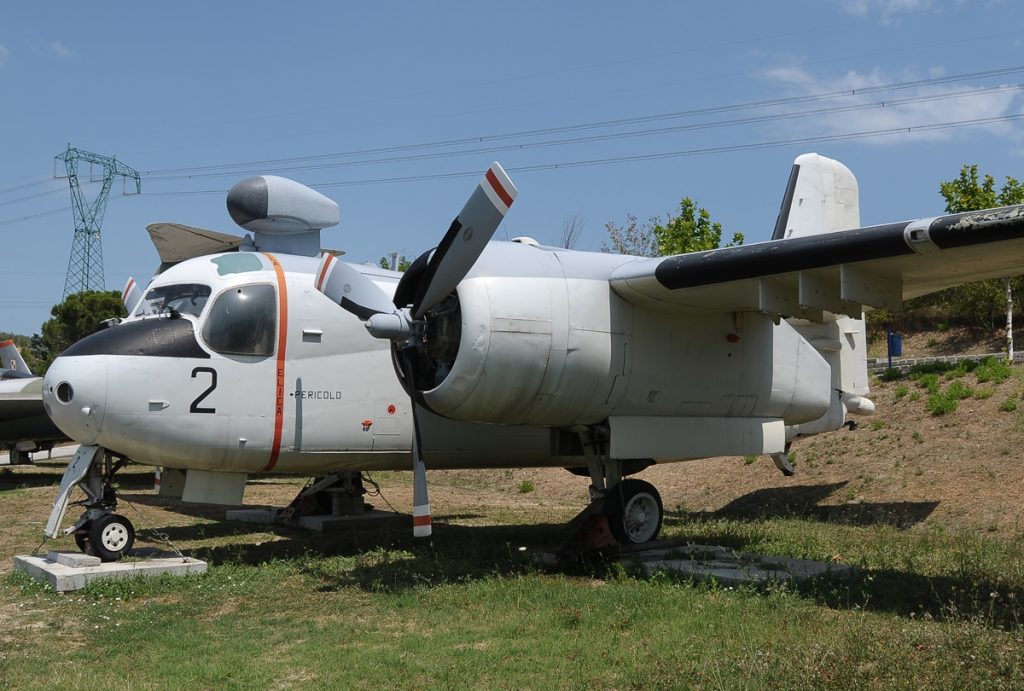
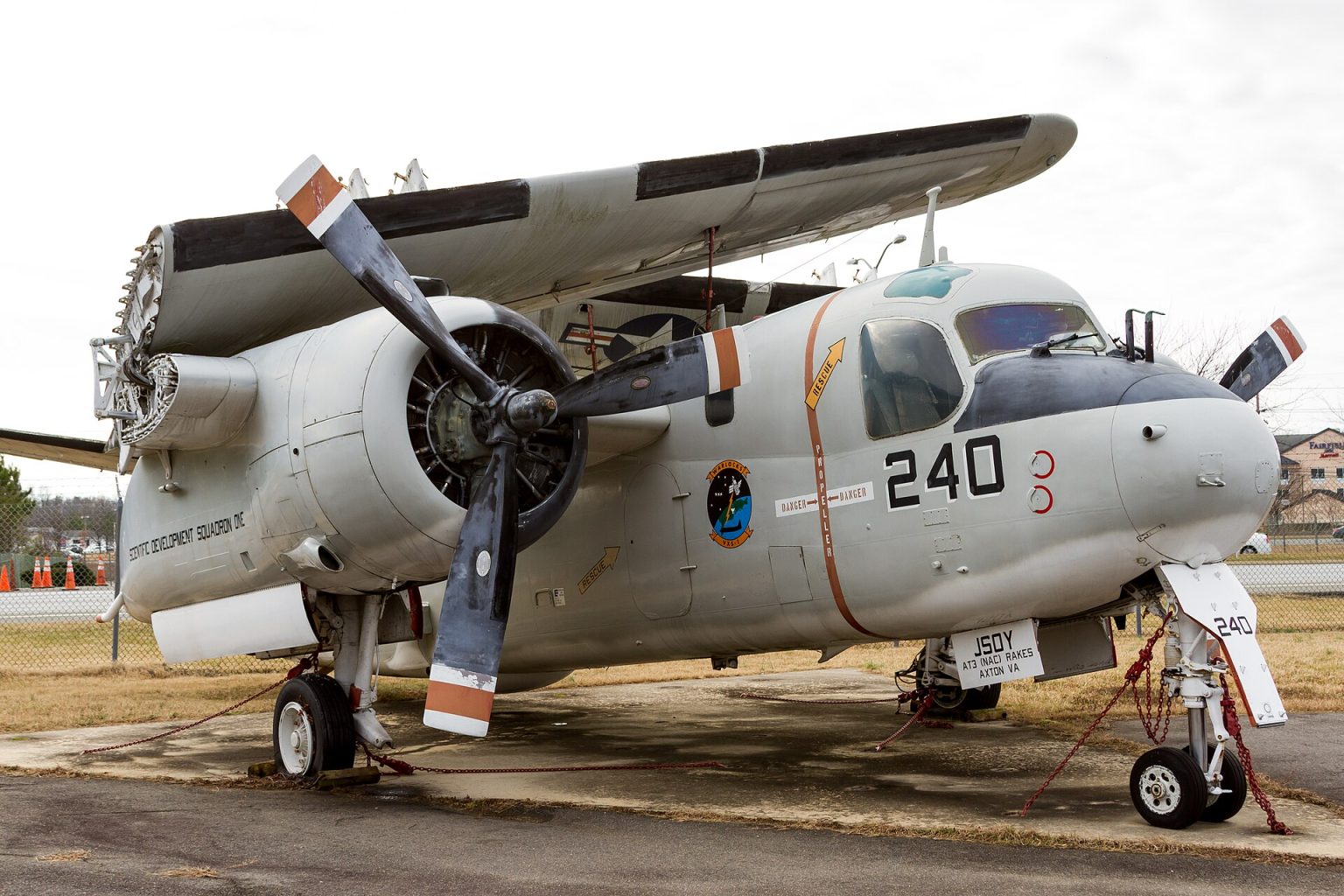
The Grumman S-2 Tracker in photographs
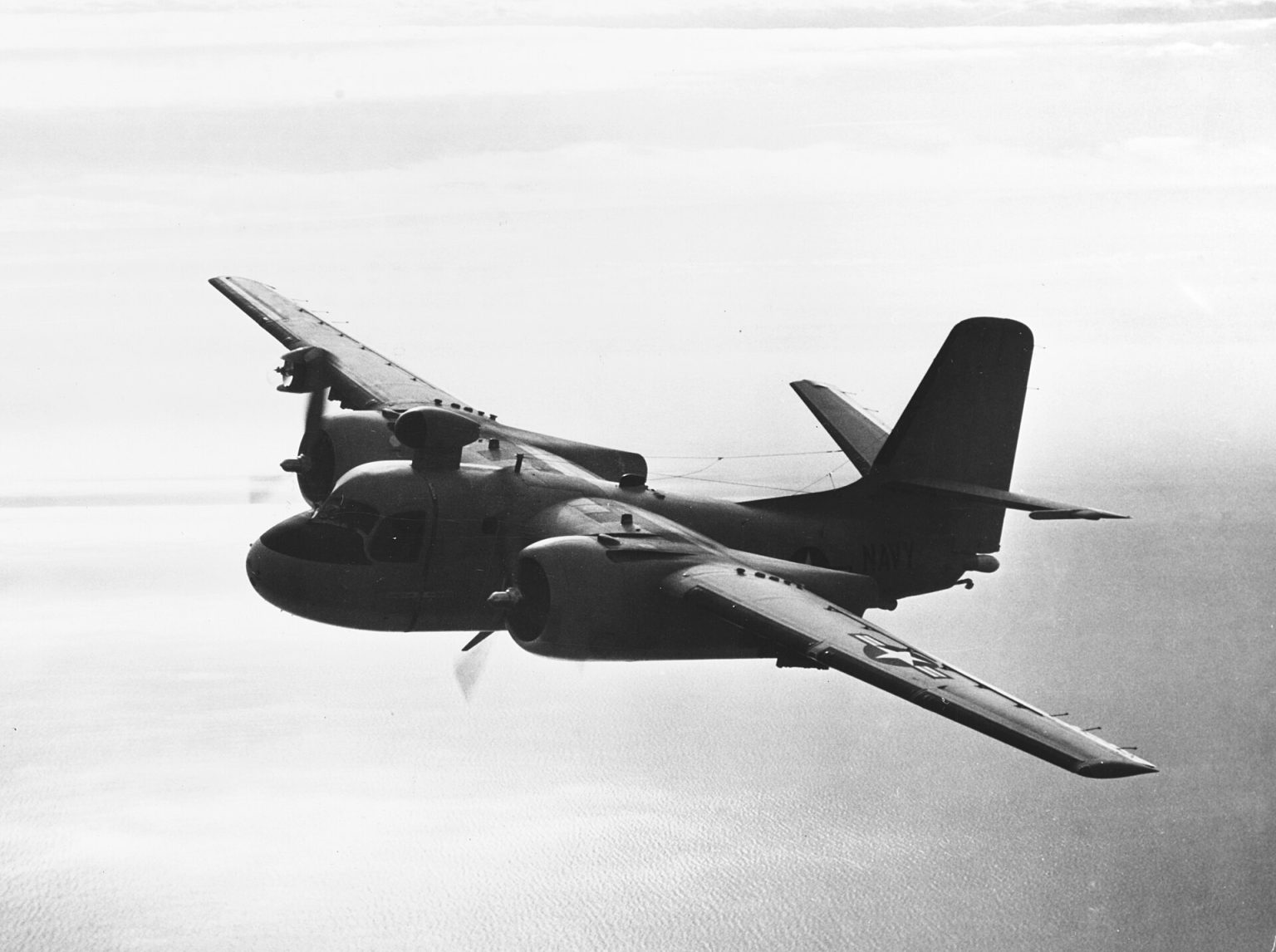
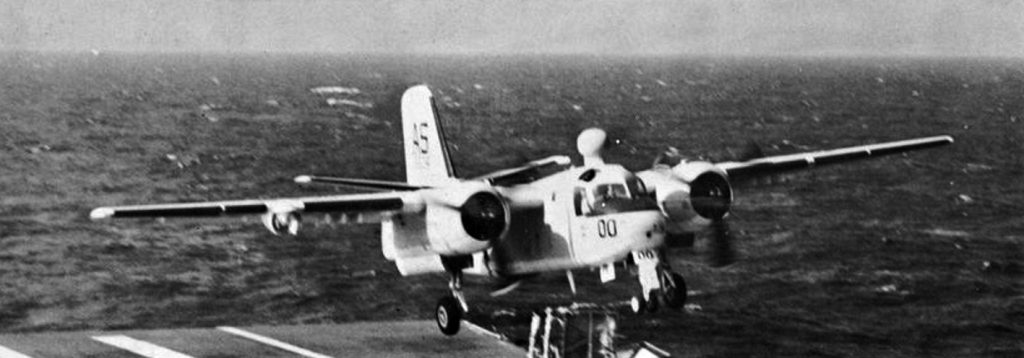
US Navy, export and firefighting photographs of the Tracker and its variants, each credited to its source and licence. Click any photo to enlarge.
On Film
The Grumman S-2 Tracker on video: the carrier sub-hunter
A documentary on the Tracker — the hunter-killer breakthrough, its anti-submarine sensors, its offshoots and its long, varied career from carrier decks to firefighting.
“How did the Grumman S-2 Tracker COMPLETELY change anti-submarine warfare” by JE Documentary (approx. 15,000 views at time of writing; running time ~30 minutes) — a dedicated documentary on the Tracker’s design and significance.
Operations Overview
Where the Grumman S-2 Tracker flew: an operator map
Designed and built in the United States and flown by the US Navy and a long list of allied navies and air arms around the world. Toggle the categories; hover or tap a country for detail. The operator set shown is a documented selection; figures are approximate and hedged.
Categories: Design, Manufacture & US Navy (United States) · NATO Operators (Canada, Netherlands, Italy, Turkey) · Other Export Operators (Argentina, Australia, Brazil, Japan, South Korea, Taiwan) · Survivors & Firefighting Tankers (United States). The Tracker had many operators; this is a documented selection and the list is hedged.
Service Record
The Tracker’s record: a workhorse that would not quit
The Tracker’s contribution was measured in a breakthrough, two important offshoots, a huge export list and a career still running today.
Questions & Answers
Grumman S-2 Tracker: your questions answered
Can I fly in a Grumman S-2 Tracker?
No — there is no bookable Tracker flight experience, and MiGFlug does not offer one. Many Trackers survive in museums, some warbird examples are kept flying, and turbine-converted S-2T tankers still fight fires with CAL FIRE, but none of these are ride platforms. If what you actually want is the real thing — strapping into a genuine military aircraft and flying it — you very much can do that today in other types. MiGFlug arranges flights in real fighter jets and warbirds around the world. Start here: migflug.com/flights-prices.
What made the Grumman S-2 Tracker so significant?
The Tracker was the first purpose-built aircraft to combine the anti-submarine “hunter” and “killer” roles in a single carrier airframe. Before it, the US Navy had to use two separate aircraft — one to detect the submarine and one to attack it — working as a pair. The Tracker carried the sensors, the crew and the weapons all in one machine, so a single aircraft could detect, localise and attack a submarine on its own. It was a genuine step change in carrier anti-submarine warfare.
How did the Tracker hunt submarines?
The Tracker carried a full anti-submarine sensor suite: a search radar in a retractable dome to find submarines on the surface, a magnetic anomaly detector (MAD) on a tail boom to sense submerged steel hulls, sonobuoys stowed in the engine nacelles and dropped into the sea to listen for submarines underwater, and a searchlight under the wing for night attacks. To attack, it carried torpedoes, depth charges and rockets. One crew of four could carry out the entire search-to-strike sequence.
What were the C-1 Trader and E-1 Tracer?
They were two important variants built on the Tracker’s airframe. The C-1 Trader was a carrier-onboard-delivery aircraft that ferried passengers, mail and cargo out to carriers at sea. The E-1 Tracer was an airborne-early-warning aircraft with a large fixed radar dome above the fuselage — nicknamed “Willy Fudd” and “Stoof with a Roof” — and it was the US Navy’s first purpose-built carrier early-warning aircraft, the direct ancestor of today’s E-2 Hawkeye.
Who operated the Grumman S-2 Tracker?
The Tracker was flown by the US Navy and a long list of other nations. Canada built it under licence (as the CS2F) through de Havilland Canada, and export operators included Argentina, Australia, Brazil, Italy, Japan, the Netherlands, South Korea, Taiwan, Turkey and Uruguay, among others — well over a dozen operators. Several flew Trackers from their own aircraft carriers, and many kept them in service long after the US Navy retired its own.
Why is the Tracker still flying today?
After military retirement, the Tracker found a remarkable second career as an aerial firefighting air tanker. Its strong airframe, good low-speed handling and useful load-carrying ability made it ideal for dropping fire retardant, and many were re-engined with modern turboprops as the S-2T. These turbine Trackers still fly with CAL FIRE, the California firefighting agency, attacking wildfires across the state — keeping an aircraft first flown in 1952 in front-line service into the 2020s.
What replaced the Tracker in US Navy service?
In US Navy carrier service the Tracker was replaced from the mid-1970s by the jet-powered Lockheed S-3 Viking, which brought jet speed and a modern digital sensor and processing suite. The Viking took over the carrier anti-submarine role for decades. The Tracker, however, continued to serve many foreign navies for years afterwards, and lives on today in its firefighting form.
Was the Grumman S-2 Tracker a good aircraft?
Yes — it was one of the great workhorses of naval aviation. It solved the carrier anti-submarine problem elegantly by combining the hunter and killer in one airframe, it was rugged, reliable and much liked by its crews, and it was built in large numbers and exported worldwide. Its airframe proved so sound and adaptable that it spawned two important variants, served a dozen navies for decades, and is still fighting fires today — an exceptional record for any aircraft.
Fly For Real
You can’t fly the S-2 Tracker — but these, you can
No Tracker is a bookable ride today. The urge behind it — to strap into a real military aircraft and actually fly — is very much still bookable. MiGFlug puts you in genuine fighters and warbirds around the world.
Fighter Jet Flights
Take the controls of a real ex-military jet with an experienced pilot.
Warbird experiences
Fly in a genuine piston-engined warbird from the Tracker’s era.
All flights are operated by MiGFlug’s vetted partners with professional pilots. Browse every option and current pricing at migflug.com/flights-prices. MiGFlug does not operate Grumman S-2 Tracker flights — no bookable example exists.
Related Aircraft
If the Grumman S-2 Tracker interests you, explore these
Sources & Further Reading
Where this Grumman S-2 Tracker history comes from
Note on figures: dimensions, performance and production numbers for the Tracker vary between sources and by variant, and are hedged here as approximate. Cost fields are listed as not reliably recorded because trustworthy Cold War procurement cost data is not consistently available. The operator map shows a documented selection of the Tracker’s many operators; several other nations also flew the type. Turbine-converted S-2T Trackers remain in firefighting service.