
Handley Page Heyford
The RAF’s last biplane heavy bomber — an unmistakable machine whose fuselage hung from the upper wing, not the lower. The front-line heavy of Britain’s mid-1930s bomber force, it was already obsolescent when war came, was never used in combat, and is best remembered as the aircraft that helped prove radar.
The Story
The Handley Page Heyford: the RAF’s last biplane heavy bomber
Some aircraft are remembered for what they did; the Handley Page Heyford is remembered for what it was — the last biplane heavy bomber the Royal Air Force ever put into front-line service, and one of the strangest-looking aircraft of its age. It was the standard heavy bomber of Britain’s mid-1930s air force, a familiar sight at the great Hendon air displays and over the fields of eastern England, and yet within a few years it had vanished from the front line, swept away by the monoplane revolution before it could ever be tested in war. The Heyford is the very picture of a transitional aircraft: a proud, capable machine that happened to be built at exactly the moment its whole class was becoming obsolete.
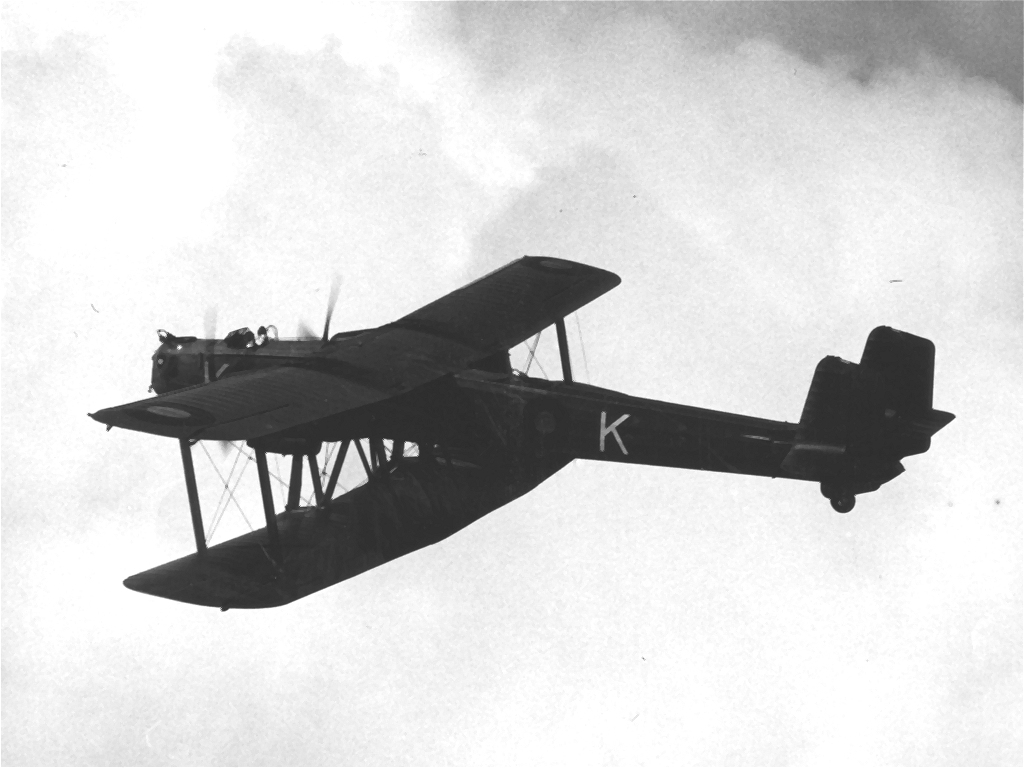
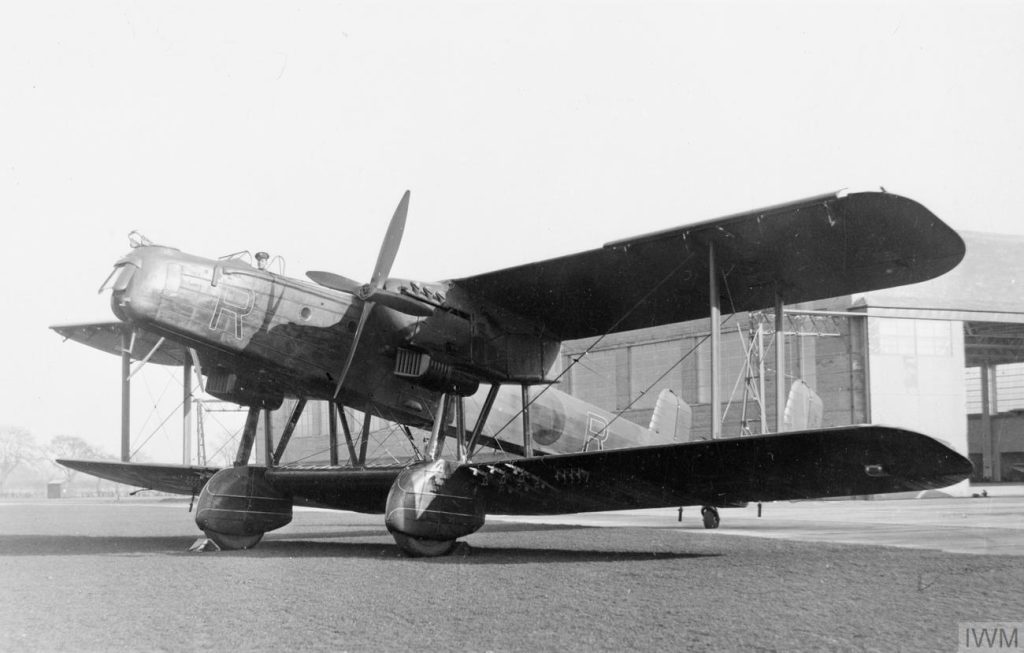
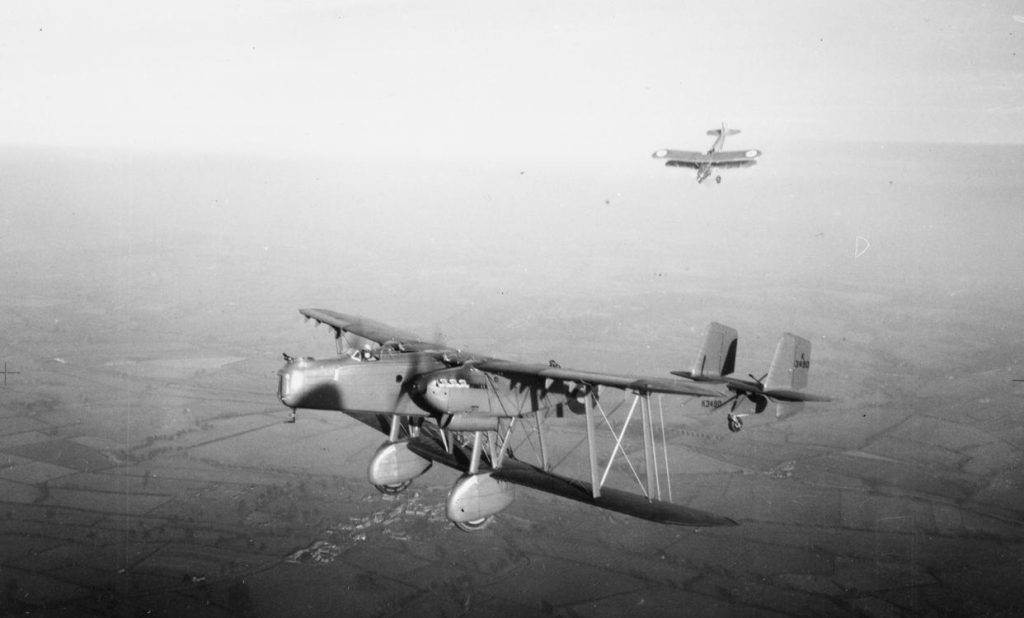
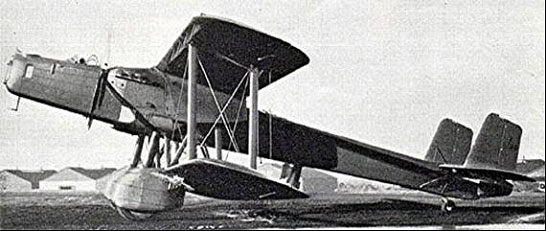
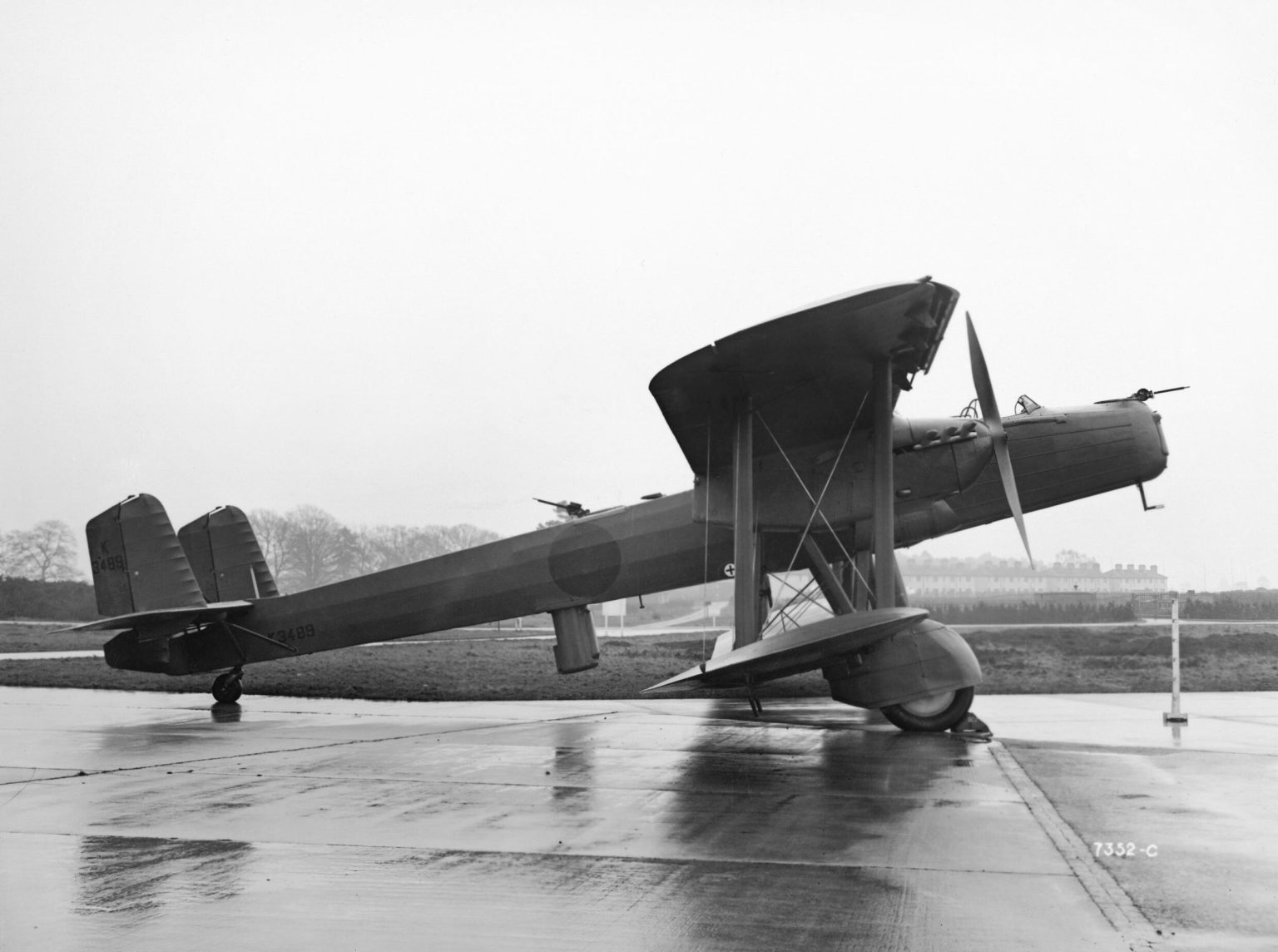
What makes the Heyford unforgettable is its layout. On almost every biplane ever built, the fuselage sits on or just above the lower wing. On the Heyford, uniquely among RAF heavies, the fuselage was attached to the upper wing, leaving the lower wing down near the ground. It was, in effect, a biplane turned upside down in the way that mattered most. The result looked awkward — contemporaries and historians alike have called it ungainly, even ridiculous — but every element of that unusual arrangement was there for a practical reason.
Placing the fuselage against the top wing did several things at once. It gave the nose gunner and the pilot a superb, unobstructed field of view above and around them. It put the two Rolls-Royce Kestrel engines, mounted between the wings, close to the fuselage and easy to reach. And, most importantly, it left the thick lower-wing centre-section free to carry the bombs. The Heyford’s bombs were housed in cells built into that lower wing, close to the ground, which made loading them straightforward: the armourers could work at waist height rather than hauling heavy bombs up into a high fuselage bay. The deep nose gondola gave the bomb-aimer an excellent downward view, and a retractable ventral gun turret — the famous “dustbin” — could be wound down beneath the aircraft to cover the belly.
“A biplane built upside down — fuselage on the top wing, bombs in the bottom — the Heyford was the last of a line, and it looked it.”— the Handley Page Heyford in a sentence
The Heyford was designed by Handley Page, one of the great names of British heavy-bomber design, whose chief designer was George Volkert. It was built to an Air Ministry specification of the late 1920s for a new twin-engined heavy night bomber, and it first flew in 1930. After development it entered RAF service in 1933, and through the middle years of the decade it was the backbone of Britain’s heavy-bomber force, equipping around eleven squadrons at its peak. For a few years, if you had asked what the RAF would send if Britain needed to bomb a European enemy, the answer would have included the Handley Page Heyford.
Power came from two Rolls-Royce Kestrels, the elegant liquid-cooled V-12 that was one of the outstanding British engines of the era and a direct ancestor of the immortal Merlin. Mounted between the wings, the Kestrels gave the Heyford a top speed of around 140 mph and the ability to lift a useful bomb load over a respectable range — solid figures for a heavy bomber of the early 1930s, even if they would look painfully modest only a few years later. The aircraft carried a crew of three or four: pilot, and gunners who doubled as bomb-aimer and wireless operator, manning Lewis guns in the nose, in a dorsal position, and in the retractable ventral turret.
The Heyford has one genuine claim to a place in history, and it is a remarkable one. On 26 February 1935, in a field near Daventry in the English Midlands, the physicist Robert Watson-Watt staged a now-famous experiment to demonstrate that an aircraft could be detected by radio waves. The aircraft chosen to fly back and forth through the beam of a BBC shortwave transmitter — the target that was successfully picked up on a cathode-ray screen — was a Handley Page Heyford. That demonstration, the “Daventry Experiment,” was one of the founding moments of British radar, the technology that would prove decisive in the Battle of Britain. It is a delicious irony that the aircraft which helped launch the radar age was itself an obsolescent biplane.
For all its front-line importance, the Heyford never fired a shot in anger. By the late 1930s it was hopelessly outclassed. The revolution in aircraft design that produced fast, all-metal, monoplane bombers left the fabric-covered biplane heavy far behind, and the RAF was already re-equipping with a new generation — the Armstrong Whitworth Whitley, the Handley Page Hampden and the Vickers Wellington — that could fly faster, higher and further, and carry more. The Heyford was progressively withdrawn from front-line squadrons from around 1937, and by the outbreak of war in September 1939 it had been relegated to second-line duties.
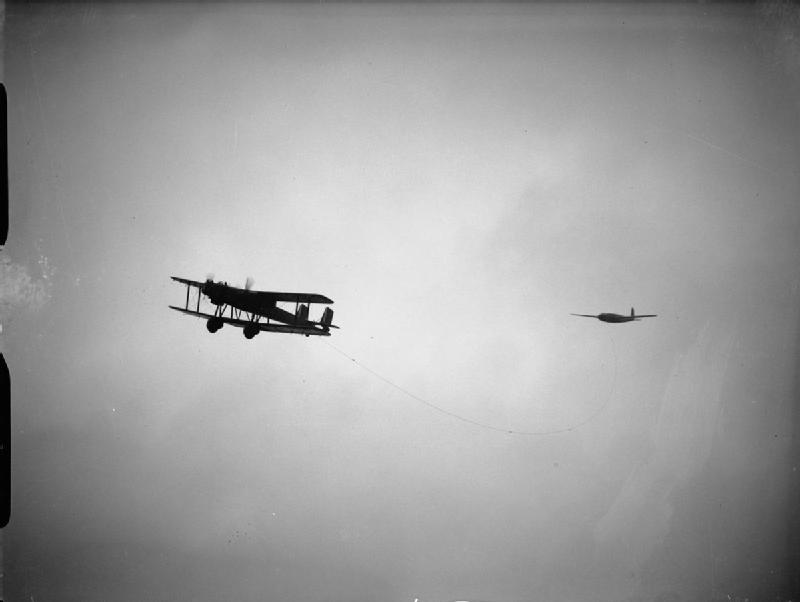
In those twilight years it soldiered on as a trainer, a gunnery and bombing-practice aircraft, and a glider tug, and it served in a variety of experimental and support roles before the last examples were retired during the early war years. It is a slightly melancholy end for what had so recently been the RAF’s premier heavy bomber, but it is also entirely typical of the fate of the interwar biplanes, which were made obsolete not by an enemy but by the sheer pace of technological change.
The Heyford’s service was not without tragedy. In December 1936 a formation of Heyfords returning to their bases in the north of England ran into severe icing and fog, and several were lost in a single night in a series of crashes and forced landings — a stark reminder of how dangerous night flying was in the era before reliable blind-flying instruments and navigation aids. Accidents of that kind, rather than enemy action, were the real hazard of the Heyford’s career, and they underline how much the everyday business of operating a heavy bomber depended on skills and equipment that were still being invented.
How should the Heyford be judged? Not as a war-winner — it never had the chance — but as a capable, well-liked aircraft that did exactly what was asked of it during its brief front-line life, and as a fascinating snapshot of a moment of transition. It was the end of a long tradition of British biplane heavy bombers that stretched back to the Handley Page O/400 of the First World War, and it was flying front-line just a few short years before the monoplane heavies that would carry the war to Germany. Few aircraft so neatly capture the dividing line between two eras of aviation.
Around a hundred and twenty-four Heyfords were built, all for the RAF; the type was never exported. Today no complete Heyford survives — the biplanes were scrapped or worn out and none was preserved intact — but a substantial fuselage section is preserved in the collection of the Royal Air Force Museum, a rare tangible relic of the RAF’s last biplane heavy bomber. For an aircraft that was once the mainstay of Britain’s bomber force, and that played a walk-on part in the birth of radar, even that fragment is a precious survivor.
01The Handley Page Heyford’s upside-down layout: fuselage on the upper wing+
The single most distinctive feature of the Heyford is that its fuselage was attached to the upper wing rather than the lower one — the reverse of almost every other biplane. This gave the aircraft its unmistakable, top-heavy appearance, but it was a deliberate and clever piece of design.
Mounting the fuselage high left the lower wing free and close to the ground. That in turn allowed the bombs to be carried in cells in the thick lower-wing centre-section, where they could be loaded easily at low level, and gave the crew excellent fields of view and fire. What looked ungainly was, in engineering terms, a neat solution to the problems of a heavy night bomber.
02Bombs in the lower wing: the Heyford’s unusual bomb cells+
Because the fuselage sat on the upper wing, the Heyford’s designers were able to build the bomb load into the thick centre-section of the lower wing, close to the ground. The bombs sat in cells within the wing rather than in a conventional fuselage bomb bay.
This had a real practical advantage: ground crews could load heavy bombs at roughly waist height instead of hoisting them up into a high fuselage, which made turning the aircraft around faster and safer. It is a good example of how the whole configuration of the Heyford flowed from the decision to hang the fuselage from the top wing.
03The Rolls-Royce Kestrel: the Heyford’s engines and an ancestor of the Merlin+
The Heyford was powered by two Rolls-Royce Kestrel engines, elegant liquid-cooled V-12s mounted between the wings. The Kestrel was one of the outstanding British aero-engines of the interwar years and a direct design ancestor of the legendary Rolls-Royce Merlin that would power the Spitfire, Hurricane and Lancaster.
Giving the Heyford a top speed of around 140 mph, the Kestrels were reliable and well regarded. Their placement between the wings, close to the fuselage, made them relatively easy to service — another benefit of the aircraft’s unusual layout — and the type went through several marks as engine and equipment improvements were introduced.
04The “dustbin” turret and the Heyford’s defensive armament+
The Heyford was defended by three Lewis machine guns: one in the nose, one in a dorsal position, and one in a retractable ventral turret. That ventral turret, which could be wound down beneath the fuselage to cover the aircraft’s belly and then retracted to reduce drag, was universally known as the “dustbin.”
Retractable ventral turrets of this kind were a feature of several British bombers of the period. By the standards of the coming war a handful of rifle-calibre Lewis guns was feeble defence, but for an early-1930s night bomber it was considered adequate, and the arrangement reflects the thinking of an age before the power-operated multi-gun turrets of the monoplane heavies.
05Handley Page and George Volkert: the Heyford’s makers+
The Heyford was designed and built by Handley Page, one of the great names of British aviation and a company with a long pedigree in heavy bombers stretching back to the Handley Page O/400 of the First World War. Its chief designer was George Volkert, a key figure in the firm’s work through the interwar years.
The Heyford was built to an Air Ministry specification of the late 1920s calling for a twin-engined heavy night bomber. It continued Handley Page’s tradition of large bombers and, in a sense, closed a chapter of it: the Heyford was the last biplane heavy the company — and the RAF — would field before the monoplane era.
06The Handley Page Heyford in RAF service: the mid-1930s heavy bomber+
The Heyford entered RAF service in 1933 and quickly became the standard heavy bomber of the mid-1930s force, equipping around eleven squadrons at its peak. For several years it was the aircraft on which Britain’s strategic bombing capability chiefly rested.
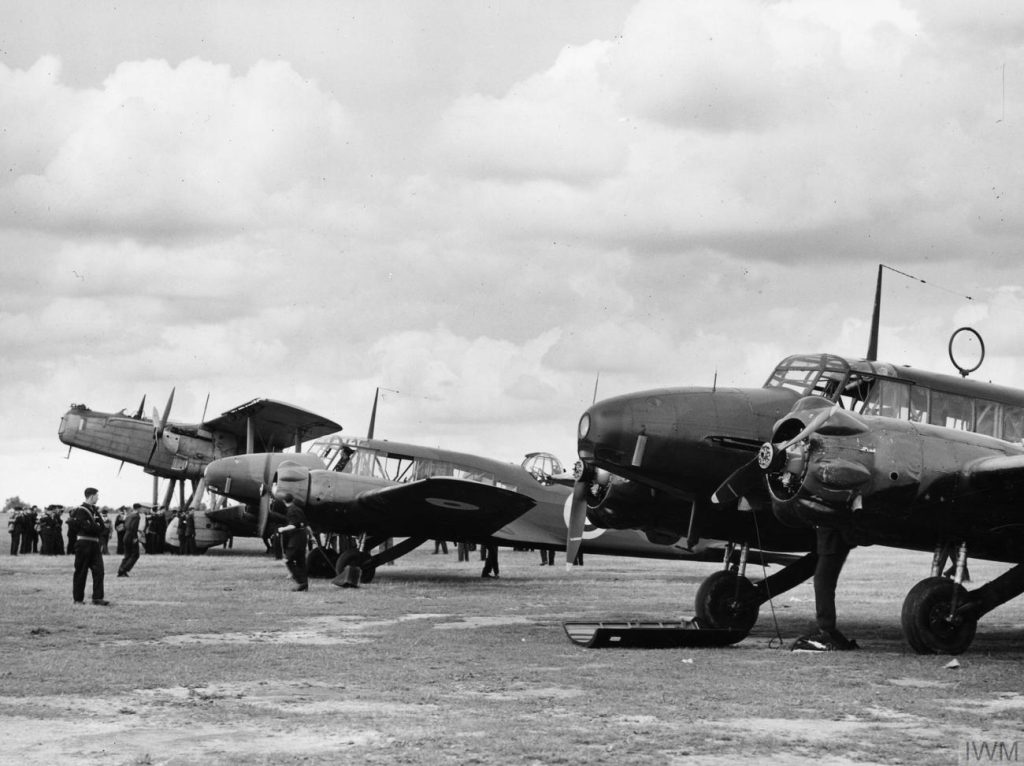
It was a familiar sight at the annual Hendon air displays and on exercises over eastern England, and it looked, at the time, thoroughly modern and formidable. That so front-line an aircraft could become obsolete so quickly is a measure of just how fast aircraft design was moving in the 1930s.
07The Daventry Experiment: how a Heyford helped prove radar+
The Heyford’s greatest claim to fame has nothing to do with bombing. On 26 February 1935, near Daventry in the English Midlands, the physicist Robert Watson-Watt demonstrated that an aircraft could be detected by reflected radio waves — the founding principle of radar.
The aircraft used as the target, flown repeatedly through the beam of a BBC shortwave transmitter and successfully detected on a cathode-ray screen, was a Handley Page Heyford. This “Daventry Experiment” helped launch the crash programme that gave Britain its Chain Home radar network in time for the Battle of Britain. There is a fine irony in the fact that an obsolescent biplane played a part in the birth of one of the war-winning technologies.
08Never in combat: why the Heyford missed the war+
For all its front-line importance in the mid-1930s, the Handley Page Heyford never saw combat. The pace of aircraft development in that decade was extraordinary, and by the late 1930s the fabric-covered biplane heavy was hopelessly outclassed by the new all-metal monoplanes.
The RAF withdrew the Heyford from front-line squadrons from around 1937 and had replaced it well before the outbreak of war in September 1939. It is one of those aircraft that was genuinely important in its day and yet, because its day fell in peacetime, is little remembered — a front-line bomber that never dropped a bomb in anger.
09From heavy bomber to trainer and glider tug: the Heyford’s second-line years+
Once withdrawn from the front line, the Heyford was not immediately scrapped. Its size and docile handling made it useful for a range of second-line tasks, and it served on into the early war years as a crew trainer, a gunnery and bombing-practice aircraft, and a glider tug, among other support roles.
This was the common fate of the interwar biplanes: too obsolete to fight, but too numerous and too useful to throw away, they lived out their final years training the crews who would fly the aircraft that replaced them. The last Heyfords were retired during the early 1940s.
10The December 1936 icing disaster+
The Heyford’s career was marked by one particularly grim episode. In December 1936 a number of Heyfords returning to their bases in the north of England were caught by severe icing and fog, and several were lost in a single night in crashes and forced landings.
The episode was a stark reminder of the dangers of night flying in the era before reliable blind-flying instruments, radio navigation and de-icing equipment. For the interwar heavy-bomber crews, the weather and the limits of their own equipment were often a greater threat than any enemy, and accidents of this kind were the real hazard of the Heyford’s service.
11The end of a line: from the O/400 to the last RAF biplane heavy+
The Heyford stands at the end of a long tradition of British biplane heavy bombers that reached back to the Handley Page O/400 of the First World War. For two decades the twin-engined biplane had been the standard shape of the RAF’s heavy-bomber force, and the Heyford was its final, most refined expression.
What replaced it was not another biplane but a wholly new kind of aircraft. The monoplane heavies that entered service in the late 1930s — the Whitley, Hampden and Wellington, and behind them the four-engined Stirling, Halifax and Lancaster — belonged to a different age. The Heyford was the last of the old line, flying front-line only a few years before the aircraft that would carry the war to Germany.
12Heyford versus its successors: the monoplane revolution+
To understand the Heyford is to understand how fast aviation changed in the 1930s. When it entered service in 1933 it was a thoroughly credible heavy bomber; by the time it left the front line around 1937–38 it had been overtaken by a new generation that flew faster, higher and further and carried far more.
The Armstrong Whitworth Whitley, Handley Page Hampden and Vickers Wellington were all-metal, stressed-skin monoplanes with retractable undercarriages and power-operated turrets — a different world from the fabric-covered, fixed-undercarriage Heyford with its hand-held Lewis guns. The contrast between the Heyford and the aircraft that replaced it is one of the clearest illustrations anywhere of the monoplane revolution.
Design & Engineering
How the Handley Page Heyford was built: a biplane heavy turned upside down
A twin-Kestrel biplane night bomber by Handley Page, unique among RAF heavies in hanging its fuselage from the upper wing — a layout that freed the lower wing for bombs, eased loading and gave the crew fine fields of view and fire.
Fuselage on top
The fuselage attached to the upper wing, not the lower — the reverse of almost every biplane, and the source of the Heyford’s unmistakable look.
Bombs in the wing
Bombs were carried in cells in the thick lower-wing centre-section, close to the ground and easy to load at waist height.
Twin Kestrels
Two Rolls-Royce Kestrel V-12s between the wings — a fine interwar engine and a direct ancestor of the Merlin.
Specifications
Handley Page Heyford specifications: dimensions, performance and cost
Baseline note: the figures describe the Heyford Mk IA and Mk III, the two marks that between them accounted for three-quarters of production. Deltas for the other marks are in grey. Read any published Heyford table with care. Most of them are Mk III figures whatever mark the column heading claims, because the Mk III was the numerous version and its numbers migrated backwards into tables headed Mk I — this is the single commonest error in Heyford sources, and it is worth stating at the top rather than burying in a footnote. Three specific disagreements recur. Bomb load is given as 2,000 lb or 2,500 lb depending on source, with one recorded operational load of 2,660 lb. The Mk II's engines are given as the 640 hp Kestrel IV in some references and a derated Kestrel VI in others. And Wikipedia's specification box quotes the 525 hp Kestrel II-S, which is the prototype's engine, under a Mk IA heading.
Dimensions & weights
- Crew
- 4, pilot, second pilot/navigator, bomb-aimer/gunner and wireless operator/gunner
- Length
- 17.68 m (58 ft 0 in)
- Wingspan
- 22.86 m (75 ft 0 in), upper and lower wings equal
- Height, overall
- 5.33 m (17 ft 6 in)
- Cockpit height above ground
- 5.18 m (17 ft 0 in) — the pilot sat above the gutter line of a house
- Wing area
- 136.6 m² (1,470 sq ft)
- Aspect ratio
- 3.8 (against 8.8 on the Vickers Wellesley of the same decade)
- Empty weight
- 4,173 kg (9,200 lb)
- Gross weight
- 7,666 kg (16,900 lb)
- Wing loading at gross
- 56.1 kg/m² (11.5 lb/sq ft)
- Maximum bomb load
- 1,134 kg (2,500 lb) — 907 kg (2,000 lb) in other sources; one recorded load of 2,660 lb
- Bomb stowage
- cells in the lower-wing centre section, thickened to nearly double normal aerofoil depth
- Undercarriage
- fixed, spatted mainwheels under the lower wing; tailskid
Performance
- Maximum speed
- 229 km/h at 3,960 m (142 mph at 13,000 ft) — the same 142 mph is quoted at 12,500 ft elsewhere
- Cruising speed for range
- 185 km/h at 3,050 m (115 mph at 10,000 ft)
- Range
- 1,480 km (920 miles) at that cruise
- Bomb load at maximum range
- 725 kg (1,598 lb)
- Endurance at range cruise
- about 8 hours
- Combat radius
- ~600 km (~370 miles) with reserve
- Service ceiling
- 6,400 m (21,000 ft)
- Time to 3,050 m
- 15 min 18 s (to 10,000 ft)
- Power loading at gross, Mk III
- 5.5 kg/hp (12.2 lb/hp)
- Radar detection range, Daventry, 26 February 1935
- about 13 km (about 8 miles)
- Speed of the Hurricane entering service in 1937
- 518 km/h (322 mph) — the measure of how far behind the Heyford already was
Propulsion & systems
- Engines
- 2 × Rolls-Royce Kestrel, supercharged liquid-cooled V-12
- Mk I and Mk IA
- Kestrel IIIS, 429 kW (575 hp) at 2,700 rpm at 3,500 m (11,500 ft)
- Mk II
- Kestrel IV, 477 kW (640 hp) — other references give a derated Kestrel VI at the same rating; unresolved
- Mk III
- Kestrel VI, 518 kW (695 hp), supercharged
- Cooling, Mk I and Mk II
- conventional radiators
- Cooling, Mk III
- steam-condenser (evaporative) cooling — corroborated across sources, not a claim
- Propellers
- two-blade fixed-pitch on the Mk I; four-blade fixed-pitch from the Mk IA
- Electrical generation
- wind-driven generator on the Mk I; engine-driven generator from the Mk IA
- Airframe
- fabric-covered two-bay metal-framed wings; aluminium monocoque forward fuselage with fabric-covered structure aft
- Bomb cells
- in the lower-wing centre section, sealed off from the fuselage — no crew access in flight
- Ventral defence
- retractable "dustbin" turret lowered on rails aft of the wing
- Prototype
- H.P.38 J9130, Rolls-Royce F.XIV engines, first flight June 1930
13The Heyford variants: Marks I to III+
The Heyford was produced in several marks, distinguished mainly by their engines and equipment rather than by any change to the basic, unmistakable configuration. The principal versions were the Mk I, the Mk IA, the Mk II and the Mk III, which introduced uprated Kestrel engines and various equipment improvements over the production run.
These were evolutionary changes to a single design rather than distinct aircraft, and together they made up the roughly one hundred and twenty-four Heyfords built for the RAF. There were no export or civil versions: the Heyford was, from first to last, a Royal Air Force heavy bomber.
14The Handley Page Heyford’s cost: what the records show+
As with most RAF aircraft of the early 1930s, there is no reliable, transparent public figure for the Heyford’s unit cost, cost per flight hour or total programme cost. It was procured in modest numbers over a few years under the defence budgets of the period, and consistent lifetime cost data does not survive in a usable, comparable form.
Rather than repeat an invented number, we list the cost fields here as “not reliably recorded.” What can be said is that the Heyford was a relatively conventional, fabric-and-metal biplane built by an established manufacturer, and it would have been considerably cheaper than the complex all-metal monoplanes that soon replaced it — part of the reason the RAF was able to field it in useful numbers during the lean years of the early 1930s.
15Why the Handley Page Heyford matters+
The Heyford’s importance is not that of a combat aircraft — it never fought — but that of a marker in the history of air power. It was the last biplane heavy bomber in RAF front-line service, the final expression of a tradition of British twin-engined biplane bombers reaching back to the First World War, and the aircraft on which Britain’s strategic bombing rested for a few crucial mid-1930s years.
It also has a genuine place in the story of radar through the Daventry Experiment of 1935. Taken together, its role as the RAF’s last biplane heavy, its walk-on part in the birth of radar, and its value as a perfect illustration of the biplane-to-monoplane transition make the Heyford far more interesting and important than its awkward looks might suggest.
16Survivors: the preserved Heyford section+
No complete Handley Page Heyford survives. The biplanes were retired and scrapped in the late 1930s and early 1940s, and none was preserved intact — a common fate for interwar types that were obsolete before anyone thought to save them.
What does survive is a substantial fuselage section, preserved in the collection of the Royal Air Force Museum. Recovered and conserved as a rare relic of the RAF’s last biplane heavy bomber, it is, as far as genuine original Heyford structure goes, essentially all that remains — which makes it a precious link to an aircraft that was once the mainstay of Britain’s bomber force.
Armament & payload
The Heyford put its bombs at waist height on the ground and out of reach in the air
Everything odd about the Heyford follows from one decision about where to put the bombs. Handley Page attached the fuselage to the upper wing rather than the lower, which is why the aircraft sits so low and the crew so high, and did it because the bomb cells live in the lower wing's centre section, thickened to nearly double aerofoil depth. That puts the cells at waist height on the ground, so an armourer can load them quickly and with the engines running, and it clears the nose and dorsal gunners' arcs over the top wing. It is a coherent design, and it has an honest cost: the cells are sealed off from the fuselage, so no member of the crew can see, reach or clear a hung-up bomb once airborne. Bomb load is quoted as 2,000 lb or 2,500 lb depending on source, and at least one recorded operational load exceeded both; the gun fit was standard across marks, but the ammunition provision quoted for the dustbin turret varies.
Gun
- Three 0.303 in Lewis guns: nose ring mounting, dorsal position and a retractable ventral "dustbin" turret
- Drum fed from 97-round pans; no belt feed and no power operation anywhere on the aircraft
- The dustbin lowered on rails aft of the wing and cost speed and range while it was down
- The high-set fuselage was chosen partly so the nose and dorsal gunners had a clear field over the upper wing
- By 1937 three rifle-calibre guns against monoplane fighters was already an anachronism, which is why the Heyford flew at night
Air-to-air
- None. No guided air-to-air weapon existed anywhere when the Heyford was designed, built, flown or withdrawn
- The first operational air-to-air missiles entered service in the mid-1950s, sixteen years after the type left the front line
- Air-to-air defence was three drum-fed Lewis guns and darkness
- The Heyford was a night bomber by necessity: 142 mph and three Lewis guns had no answer to daylight interception
Air-to-surface guided
- None. Guided air-to-surface weapons did not exist in the Heyford's service life
- The first used in action, the German Fritz X and Henschel Hs 293, appeared in 1943, four years after the Heyford was declared obsolete
- Bombs were released from the wing cells and aimed by an optical sight from the nose position
- There was no electrical, control or release provision for any powered or steered store
Bombs
- Cells in the thickened lower-wing centre section; nominal maximum 1,134 kg (2,500 lb)
- One recorded load: 10 × 250 lb plus 8 × 20 lb, 2,660 lb in total
- 725 kg (1,598 lb) with the fuel for the quoted 920-mile range
- Loading at waist height with engines running was the entire point of the layout, and it worked
- The cost of that layout: the cells are sealed from the fuselage, so a hung-up bomb cannot be seen, reached or released by anyone on board
Rockets
- None. Not carried, not trialled, not proposed
- Britain's 3-inch rocket projectile did not reach operational squadrons until 1942
- The Heyford had been formally obsolete for three years by then and struck off charge as a glider tug
- The wing cells were bomb carriers; the wings themselves were fabric over metal frames and unsuited to rail installations
Pods & other stores
- The retractable dustbin turret is the Heyford's one genuinely novel external store
- Reconnaissance and landing flares for night navigation
- Air-to-air refuelling trials equipment flown with Flight Refuelling Ltd in the later 1930s
- Radio and radar trials fits — though the Daventry experiment of 26 February 1935 needed no fit at all: the aircraft was standard and the receiving equipment was on the ground
Three typical loadouts
- Night bombing exercise, 1935
- 10 × 250 lb plus 8 × 20 lb in the lower-wing cells, 2,660 lb total; three Lewis guns with drum pans; dustbin turret manned.
- Long-range night sortie
- 1,598 lb of bombs and full fuel for the 920-mile figure at 115 mph; flares for navigation; dustbin retracted in cruise to recover speed.
- Daventry detection trial, 26 February 1935
- Fuel and crew only. No bombs, no special equipment, no modification — the aeroplane's job was to be a reflector, and it was detected at about 8 miles.
Sourcing caveat. Maximum bomb load is quoted as 2,000 lb and as 2,500 lb with roughly equal frequency, and the recorded 2,660 lb load sits above both, which suggests the lower figures are cell-capacity limits under particular fuel states rather than structural maxima. Ammunition provision for the three Lewis guns is rarely stated at all. On the Daventry experiment: the aircraft was flown by Rowley Blucke through the BBC Empire Service transmitter beam, and Arnold Wilkins's receiving equipment near Weedon detected it at about eight miles. The serial K6902 is widely attached to that flight; it could not be corroborated here and is deliberately omitted.
Variants
Four marks, 125 airframes, and a claim on history made as a radar target rather than a bomber
The Heyford's variant list is unusually dull for an aircraft with so unusual a shape. Four production marks over 125 airframes, distinguished almost entirely by what was bolted to the front and what turned the generator. The airframe itself — fuselage on the upper wing, bombs in the lower, dustbin turret under the tail — did not change.
What did change was the aircraft's place in the world. The Heyford entered service with No. 99 Squadron at RAF Upper Heyford in November 1933 as a modern heavy bomber, equipped eleven front-line squadrons, and was the mainstay of Bomber Command's night strength through the middle of the decade. It was still on front-line strength in 1939, by which time the Whitley and the Wellington were arriving — making it the last biplane heavy bomber in RAF service and, briefly, a contemporary of the aircraft that would bomb Germany.
Its real claim on history has nothing to do with bombing. On 26 February 1935 a Heyford was flown through the BBC Empire Service beam at Daventry while Arnold Wilkins watched a receiver in a field near Weedon. The aircraft returned a detectable signal at about eight miles. That flight is the practical beginning of British radar, and the Heyford's contribution to the defence of Britain was made not as a bomber but as a target.
- Handley Page H.P.38 (1930, one)
- The prototype, J9130, with Rolls-Royce F.XIV engines; first flight June 1930. Established the upper-wing fuselage and lower-wing bomb cells that every production aircraft kept.
- Heyford Mk I (1933–34, 15)
- First production mark. Kestrel IIIS of 575 hp, two-blade propellers, wind-driven generator, strengthened undercarriage. First production aircraft flew 21 June 1933; No. 99 Squadron re-equipped from November 1933.
- Heyford Mk IA (1934–35, 23)
- Four-blade fixed-pitch propellers and an engine-driven generator in place of the wind-driven type. Serials K4021–K4043.
- Heyford Mk II (1935, 16)
- Kestrel IV of 640 hp, serials K4863–K4878. Some references instead credit a derated Kestrel VI at the same power; the point is unresolved.
- Heyford Mk III (1935–37, 70)
- The numerous mark and the source of most published Heyford figures. Supercharged Kestrel VI of 695 hp with steam-condenser cooling; serials K5180–K5199 and K6857–K6906.
- Radar and radio trials aircraft (1935 onward)
- Standard airframes used unmodified as detection targets and later for radio trials. The Daventry flight of 26 February 1935 is the significant one.
- Air-to-air refuelling trials aircraft (later 1930s)
- Airframes used in Flight Refuelling Ltd's early tanker and receiver experiments.
- Training and glider-tug conversions (1939–41)
- Retired front-line aircraft passed to training units and to glider towing, which continued until April 1941.
- Export and licence-built versions (none)
- No overseas customer bought the Heyford and none was built abroad. Every one of the 125 was British-built and RAF-operated.
No Heyford survives. There is no complete original airframe anywhere, no substantially complete original section, and no reproduction has ever been built. What physically remains of the type is a small group of components from Mk III K6875 in the Royal Air Force Museum collection: the wheels, two propeller blades and parts of the tailplane. That is the whole inventory. Production was 125 aircraft including the prototype J9130. On withdrawal, the front-line and formal obsolescence date is July 1939; the 1941 date given in some sources refers to the last training and glider-towing airframes, not to operational service. One episode deserves recording, because it says more about 1930s night bombing than any specification. On 12 December 1936 seven Heyfords of No. 102 Squadron flew from Aldergrove to Finningley. Fog, snow and severe icing broke the formation up. Exactly one aircraft reached Finningley. K6900 crashed near Hebden Bridge, killing three of its crew. The aircraft had no de-icing, no reliable blind-flying instrumentation and an open dorsal position, and this was a routine transit in peacetime.
Timeline
The Handley Page Heyford through the years
The Air Ministry issues a specification for a new twin-engined heavy night bomber, which Handley Page answers with the design that becomes the Heyford.
The prototype Heyford flies for the first time, with its unmistakable fuselage-on-the-upper-wing layout.
The Heyford enters service and becomes the RAF’s standard heavy bomber of the mid-1930s.
At its peak the Heyford equips around eleven RAF squadrons and is a familiar sight at the Hendon air displays.
A Heyford serves as the target aircraft in Robert Watson-Watt’s demonstration that aircraft can be detected by radio — a founding moment of radar.
In December several Heyfords are lost in a single night to severe icing and fog while returning to their northern bases.
New monoplane heavies begin to replace the Heyford, which starts to be withdrawn from front-line squadrons.
By the outbreak of war the Heyford has left the front line and serves as a trainer, gunnery aircraft and glider tug.
The last Heyfords are retired from second-line service; the type never saw combat.
No complete Heyford survives, but a fuselage section is preserved at the Royal Air Force Museum.
Stories & Eyewitnesses
The Handley Page Heyford in stories: the moments that defined it
The RAF’s last biplane heavy bomber — an upside-down biplane that helped prove radar, never saw combat, and vanished before the monoplane heavies it briefly preceded. The Heyford’s history through the moments that stuck.
The Last Biplane HeavyEnd of a line
RAF’s final biplane heavy.
The Heyford was the last biplane heavy bomber the RAF ever put in front-line service.
A tradition that reached back to the First World War ended with it.
Upside DownFuselage on top
Bombs in the bottom wing.
Uniquely, its fuselage hung from the upper wing, leaving the lower wing free for bomb cells.
Ungainly to look at, but clever in design.
The Look“Utterly ridiculous”
Unmistakable silhouette.
Contemporaries and historians alike found the Heyford awkward, even absurd, to look at.
Every odd feature, though, had a practical reason.
Easy LoadingBombs at waist height
The low lower wing.
With the lower wing close to the ground, armourers could load heavy bombs without hoisting them high.
Faster turnarounds were the payoff.
The EnginesTwin Kestrels
Ancestor of the Merlin.
Two Rolls-Royce Kestrel V-12s powered the Heyford to around 140 mph.
The Kestrel was a direct design ancestor of the Merlin.
The DustbinVentral turret
Wound down below.
A retractable ventral gun turret, the “dustbin,” covered the aircraft’s belly.
Retracted, it cut the drag of the exposed gun.
Daventry 1935Proving radar
A Heyford as the target.
In 1935 a Heyford was the aircraft detected in Watson-Watt’s famous radar demonstration near Daventry.
An obsolescent biplane helped launch the radar age.
Front-Line ForceEleven squadrons
The mid-1930s heavy.
At its peak the Heyford equipped around eleven RAF squadrons.
For a few years it was the backbone of Britain’s bomber force.
HendonOn display
A familiar sight.
The Heyford was a regular at the great Hendon air displays of the 1930s.
It looked, at the time, thoroughly modern and formidable.
Never in CombatMissed the war
Obsolete by 1939.
Despite its importance, the Heyford never fired a shot in anger.
It was withdrawn from the front line before war came.
December 1936The icing losses
A tragic night.
Severe icing and fog claimed several Heyfords in a single night in December 1936.
Weather, not the enemy, was the real hazard.
Second LifeTrainer & tug
A quiet ending.
In its final years the Heyford served as a trainer, gunnery aircraft and glider tug.
It trained the crews who flew its replacements.
The SurvivorA single section
At the RAF Museum.
No whole Heyford survives, but a fuselage section is preserved at the Royal Air Force Museum.
A rare relic of the last RAF biplane heavy.
Photo Gallery
The Handley Page Heyford in photographs
Archival photographs of the Handley Page Heyford, each credited to its source and licence. Click any photo to enlarge.
On Film
The Handley Page Heyford on video: the RAF’s last biplane heavy
A look at the Handley Page Heyford — the ungainly, upside-down biplane that was the RAF’s front-line heavy bomber in the mid-1930s and helped prove radar before it was swept away by the monoplanes.
An overview of the Handley Page Heyford, the RAF’s last biplane heavy bomber. Source: Rex’s Hangar (YouTube).
Operations Overview
Where the Handley Page Heyford flew: an operator map
The Handley Page Heyford was flown by one air force only: Britain’s Royal Air Force. It was designed and built by Handley Page in the United Kingdom, served exclusively with the RAF, was never exported, and never saw combat. This map therefore shows a single country — the United Kingdom — as origin, sole operator and the home of the one surviving section. Hover or tap the country for detail.
Categories: Design, Manufacture & RAF Service (United Kingdom) · Surviving Section (United Kingdom — a fuselage section at the Royal Air Force Museum). The Heyford was a Royal Air Force aircraft only, never exported and never used in combat, so just one country is shown.
Service Record
The Handley Page Heyford’s record: Britain’s last biplane heavy
The Heyford’s significance lies in its role as the RAF’s last biplane heavy bomber, its brief reign as the mid-1930s front-line heavy, and its walk-on part in the birth of radar — rather than in any combat record, for it never fought.
Questions & Answers
Handley Page Heyford: your questions answered
Can I fly in a Handley Page Heyford?
No — there is no bookable Handley Page Heyford flight experience, and MiGFlug does not offer one. The type retired in the early 1940s and no complete example survives; only a single fuselage section is preserved at the Royal Air Force Museum. If what you actually want is the real thing — strapping into a genuine military aircraft and flying it — you very much can do that today in other types. MiGFlug arranges flights in real fighter jets and warbirds around the world. Start here: migflug.com/flights-prices.
Why is the Handley Page Heyford historically important?
The Heyford was the last biplane heavy bomber in RAF front-line service and the backbone of Britain’s heavy-bomber force in the mid-1930s. It marks the end of a tradition of British biplane heavies reaching back to the First World War, just before the monoplane revolution. It also has a genuine place in the birth of radar: a Heyford was the target aircraft in the 1935 Daventry Experiment that proved aircraft could be detected by radio.
Why did the Heyford have its fuselage on the upper wing?
This unusual layout — the reverse of almost every other biplane — was a deliberate design choice. Mounting the fuselage on the upper wing left the lower wing close to the ground, which allowed the bombs to be carried in cells in the lower-wing centre-section and loaded easily at waist height. It also gave the crew excellent fields of view and fire and made the engines, mounted between the wings, easy to reach. What looked ungainly was actually a neat engineering solution.
Did the Handley Page Heyford see combat?
No. Despite being the RAF’s front-line heavy bomber in the mid-1930s, the Heyford never fired a shot in anger. Aircraft design moved so fast in that decade that the fabric-covered biplane was obsolete by the late 1930s, and the RAF had withdrawn it from front-line service and replaced it with monoplane heavies before the outbreak of war in 1939. It spent its final years in second-line roles such as training and glider-towing.
What was the Heyford’s role in the invention of radar?
On 26 February 1935, near Daventry, the physicist Robert Watson-Watt demonstrated that an aircraft could be detected by reflected radio waves — the founding principle of radar. The target aircraft, flown repeatedly through the beam of a BBC transmitter and successfully detected, was a Handley Page Heyford. This “Daventry Experiment” helped launch the programme that gave Britain its Chain Home radar network in time for the Battle of Britain.
How many Handley Page Heyfords were built, and who flew them?
Around 124 Heyfords were built, all for the British Royal Air Force. The type was never exported and had no civil versions, so the RAF was its only operator. At its peak in the mid-1930s the Heyford equipped roughly eleven front-line squadrons.
What engines did the Heyford use?
The Heyford was powered by two Rolls-Royce Kestrel engines, liquid-cooled V-12s mounted between the wings, producing in the region of 575 to 695 horsepower each depending on the mark. The Kestrel was one of the outstanding British aero-engines of the interwar years and a direct design ancestor of the famous Rolls-Royce Merlin.
What replaced the Handley Page Heyford?
The Heyford was replaced by a new generation of all-metal monoplane heavy bombers — the Armstrong Whitworth Whitley, the Handley Page Hampden and the Vickers Wellington — which flew faster, higher and further and carried more, with power-operated gun turrets and retractable undercarriages. The contrast between the fabric-covered biplane Heyford and these monoplanes is one of the clearest illustrations of the aircraft revolution of the 1930s.
Fly For Real
You can’t fly the Handley Page Heyford — but these, you can
No Heyford is a bookable ride today — only one section survives. The urge behind it — to strap into a real aircraft and actually fly — is very much still bookable. MiGFlug puts you in genuine fighters and warbirds around the world.
Fighter Jet Flights
Take the controls of a real ex-military jet with an experienced pilot.
Warbird experiences
Fly in a genuine piston-engined warbird from the golden age of aviation.
All flights are operated by MiGFlug’s vetted partners with professional pilots. Browse every option and current pricing at migflug.com/flights-prices. MiGFlug does not operate Handley Page Heyford flights — no bookable example exists.
Related Aircraft
If the Handley Page Heyford interests you, explore these
Sources & Further Reading
Where this Handley Page Heyford history comes from
Note on figures: dimensions, performance, engine and production numbers for the Handley Page Heyford vary between sources and marks, and are hedged here as approximate; the figures given are broadly representative of a typical version. Production is commonly cited as around 124 aircraft across all marks, all for the Royal Air Force. Cost fields are listed as not reliably recorded because trustworthy 1930s procurement cost data is not available in a comparable form. The Heyford never saw combat; its historical importance lies in its role as the RAF’s last biplane heavy bomber, its brief front-line service, and its part in the 1935 Daventry radar experiment. No complete Heyford survives; a fuselage section is preserved at the Royal Air Force Museum, and the operations map shows a single country accordingly.