
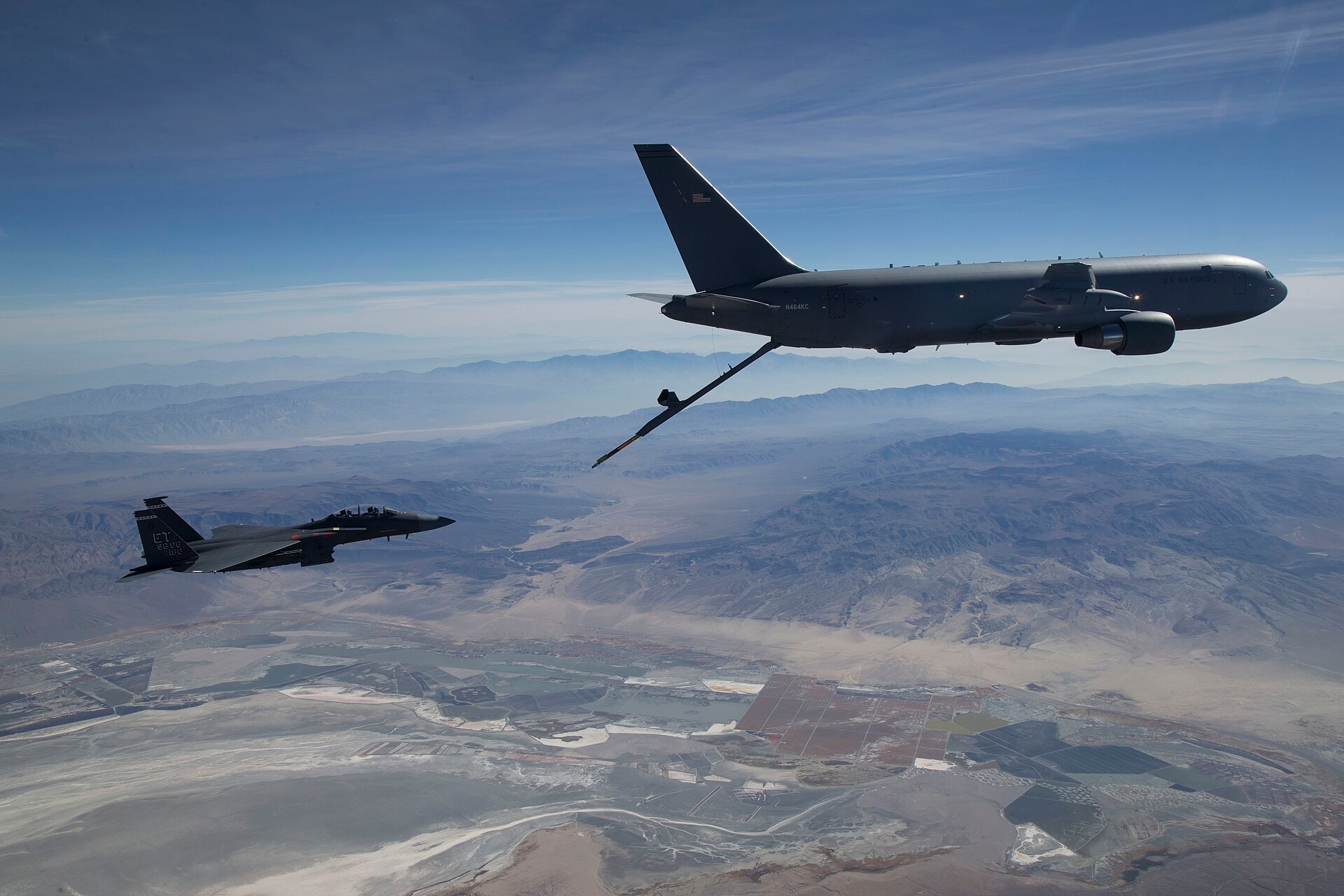
Boeing KC-46 Pegasus
The Tanker That Took Twenty Years
The 767-based tanker that ended two decades of scandal, protest and rebidding, cost Boeing billions in fixed-price overruns, and is now taking over from the KC-135 as the US Air Force’s front-line refueller.
The KC-46: how the US Air Force finally replaced the KC-135
By the end of the 1990s the US Air Force knew it had to start replacing the KC-135, whose youngest airframe dated from 1965. The first attempt was a plan to lease 100 Boeing 767 tankers, agreed in 2003. It collapsed in scandal when it emerged that a senior Air Force acquisition official, Darleen Druyun, had negotiated a job with Boeing while overseeing the deal; she and Boeing’s chief financial officer both went to prison. The second attempt, a competition, was won in February 2008 by Northrop Grumman and EADS with the A330-based KC-45A. Boeing protested, the Government Accountability Office upheld the protest in June 2008, and the contract was cancelled. Only in February 2011, after a third competition, did Boeing win the KC-X contract with the 767-based KC-46A.
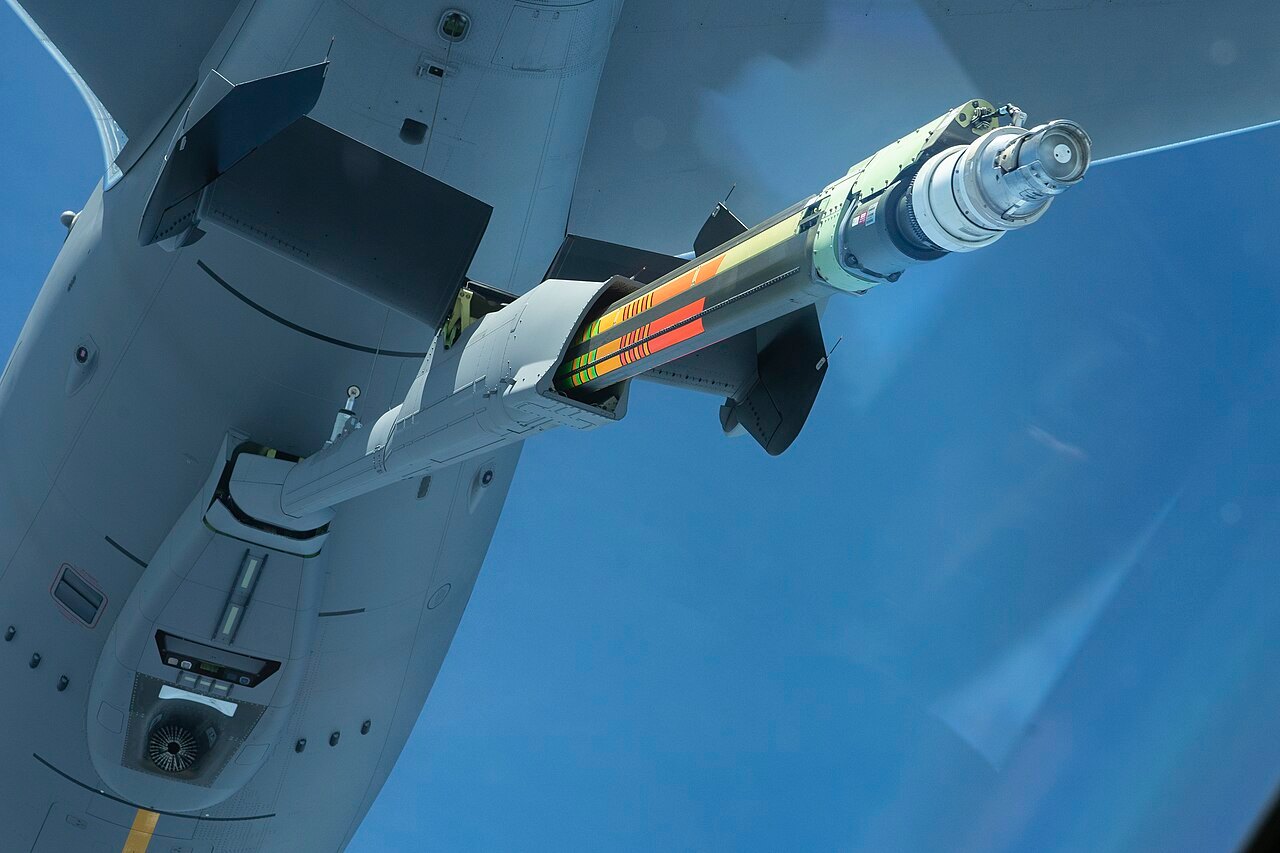
The contract was fixed-price for development, worth about US$4.9 billion, with an initial plan to buy 179 tankers. Boeing based the aircraft on the 767-2C, a hybrid of the 767-200 fuselage with the wings, gear and freighter features of later models, which first flew on 28 December 2014. The first fully equipped KC-46A flew on 25 September 2015, and in January 2016 it passed fuel through its boom to an F-16 for the first time. The aircraft carries a fly-by-wire boom, a centreline hose-and-drogue and wing pods, so it can refuel US Air Force, Navy, Marine Corps and allied aircraft on the same sortie. It is also a transport and an aeromedical evacuation aircraft.
The development was troubled. Wiring, fuel system and boom problems delayed the programme, and the Remote Vision System, the camera-based station from which the boom operator flies the boom while sitting behind the cockpit rather than lying in the tail, produced distorted images in certain light. Deliveries began in January 2019, to McConnell Air Force Base in Kansas, but were halted for weeks that spring after debris was found inside new aircraft. Because the contract was fixed-price, Boeing paid for the fixes, and its total charges have run to several billion dollars. The Air Force cleared the KC-46 for worldwide operations in stages from 2021, and by 2026 more than 100 were in service.
01The KC-46’s long road: lease, scandal, protest and rebid
The KC-46 is better known for how it was bought than for anything it has done, because the tanker competition became one of the longest procurement fights in American defence history. The 2003 lease was meant to be a quick way to get new tankers without a large up-front payment, but critics in Congress, led by Senator John McCain, argued that it would cost far more than buying the aircraft outright. Then came the revelation that Darleen Druyun had favoured Boeing while discussing employment with the company. The lease was dropped and the Air Force had to start again.
The 2008 decision in favour of the Northrop Grumman and EADS KC-45A, based on the Airbus A330, was a political shock in the United States, and Boeing’s protest found that the Air Force had not evaluated the bids according to its own rules. In the third competition, run in 2010 and 2011, Northrop withdrew and EADS bid alone. Boeing won on price. The irony is that the A330 tanker went on to sell widely outside the United States as the A330 MRTT, while the KC-46 has so far found only two export customers.
02The KC-46’s export customers: Japan and Israel
Japan already flew four Boeing KC-767J tankers, an earlier 767 tanker built for the Japan Air Self-Defense Force and Italy, and chose the KC-46A as its next tanker. Its aircraft serve alongside the earlier 767s, refuelling F-15J, F-2 and F-35 fighters and providing long-range transport.
Israel ordered four KC-46As in 2022 to replace its ageing Boeing 707 tankers, which had supported Israeli long-range strikes for decades. The first Israeli aircraft were delivered in 2026. Italy, which also flew KC-767s, considered the KC-46 but in 2026 chose the Airbus A330 MRTT instead.
The small export tally is a point of pride for Airbus and a sore one for Boeing. Most countries choosing a new tanker since 2010 have preferred the larger A330, with its greater fuel load and cabin, while the KC-46 has sold mainly on its close fit with US Air Force equipment, training and support. For allies that operate American fighters and want to plug into US logistics, that commonality is a real advantage. For Japan, it also meant a tanker that could work smoothly with US Air Force units in the Pacific during exercises and crises, and for Israel one that matched its F-15 and F-35 fleets.
What makes the KC-46 special
Three ways to pass fuel
The KC-46 carries a fly-by-wire boom for Air Force receivers, rated by Boeing at up to 1,200 US gallons a minute, a centreline drogue and two wing air refuelling pods at up to 400 gallons a minute each. That means it can refuel a B-52, a Navy F/A-18 and a pair of allied Eurofighters on the same flight without landing to change equipment, something the KC-135 can only do with pods or a ground-fitted adapter. The tanker itself has a receptacle, so it can take fuel from another tanker and stay up longer.
The Remote Vision System
Instead of lying in the tail, the KC-46 boom operator sits at a station behind the flight deck and flies the boom using 3D images from cameras under the rear fuselage. The original system suffered from glare, shadows and distortion in some light conditions, which risked the boom striking receivers. The US Air Force listed it as a Category 1 deficiency, its most serious class. A redesigned system, often called RVS 2.0, with new cameras and displays, was ordered from Boeing at its own cost to resolve the problem.
More than a tanker
Above the fuel tanks, the KC-46 has a 767 freighter deck with a large cargo door. Boeing gives its capacity as eighteen 463L pallets, 58 passengers in normal configuration or 114 in contingency operations, and an aeromedical evacuation fit of up to 54 patients with support pallets, with conversion between roles in about two hours. Defensive systems and armoured cockpit protection let it operate closer to danger than airliner-based transports, and it can share data with fighters and command aircraft during a mission.
03The KC-46’s family: from KC-767 to KC-46A
- KC-767A: Boeing’s first 767 tanker, four built for Italy, delivered from 2011.
- KC-767J: four for Japan, delivered from 2008.
- 767-2C: the provisioned freighter airframe built on the Everett line and converted into a tanker; first flight December 2014.
- KC-46A Pegasus: the US Air Force tanker, also bought by Japan and Israel; first flight September 2015.
Boeing KC-46A Pegasus specifications
Specifications
- Crew
- 3 (pilot, co-pilot, boom operator), with seats for up to 15 crew
- Length
- 50.5 m (165 ft 6 in)
- Wingspan
- 48.1 m (157 ft 8 in)
- Height
- 15.9 m (52 ft 1 in)
- Max take-off weight
- 188,240 kg (415,000 lb)
- Fuel capacity
- about 96,200 kg (212,000 lb)
- Cargo
- 18 × 463L pallets, up to about 29,500 kg (65,000 lb)
- Passengers
- 58 (normal) or 114 (contingency)
- Powerplant
- 2 × Pratt & Whitney PW4062 turbofans, 276 kN (62,000 lbf) each
- Maximum speed
- Mach 0.86
- Service ceiling
- 12,200 m (40,100 ft)
- Boom offload rate
- up to about 4,540 litres (1,200 US gal) per minute
Costs & production
- Unit cost
- Commonly reported programme acquisition unit cost of around US$290 million (2014 estimate, including development); flyaway cost per aircraft lower
- Cost per flight hour
- Hedged estimate: roughly US$10,000–20,000 per hour; Boeing argues that four KC-46s cost about the same to run as three larger tankers, and the two-engine 767 burns markedly less fuel than four-engined types
- Production
- More than 110 delivered by 2026 out of a USAF plan of at least 179
- Programme
- Fixed-price development contract of about US$4.9 billion (2011); Boeing has absorbed several billion dollars of overruns
04The KC-46’s costs: a fixed-price contract that hurt Boeing
Boeing won the KC-X competition partly on price, and the development contract was fixed-price: anything over the agreed amount came out of Boeing’s own pocket. Wiring redesigns, fuel system changes, the debris problems of 2019, cargo lock defects and the redesign of the boom and the Remote Vision System all added cost. Through the late 2010s and early 2020s Boeing reported repeated charges against the programme, and press tallies of its total losses run to several billion US dollars, well above the value of the original development contract.
For the Air Force, the attraction is running cost. The KC-46 uses two engines instead of four, and Boeing claims that four KC-46s cost about as much to operate as three larger tankers. Exact hourly costs depend on what is counted and have not been published in a consistent way, so any figure should be treated as an estimate.
The KC-46 from the lease scandal to front-line service
Lease deal agreed
The Air Force plans to lease 100 Boeing 767 tankers; the deal soon collapses in scandal.
KC-45 wins, then loses
Northrop Grumman and EADS win with the A330-based KC-45A in February; Boeing’s protest is upheld in June.
Boeing wins KC-X
On 24 February the 767-based KC-46A is selected after a third competition.
767-2C flies
The provisioned freighter airframe makes its first flight on 28 December.
KC-46A first flight
The first fully equipped tanker flies on 25 September.
First boom contact
In January the KC-46 passes fuel through its boom to an F-16 for the first time.
First deliveries
The first KC-46A is handed over in January and arrives at McConnell AFB; deliveries pause in spring over debris.
Cleared for wider use
After a long evaluation the Air Force approves the KC-46 for most combat refuelling missions.
Project Magellan
A KC-46 from McConnell flies a roughly 45-hour nonstop round-the-world mission, refuelling allied aircraft along the way.
Israel takes delivery
The first Israeli Air Force KC-46As arrive to replace its old Boeing 707 tankers.
Stories & eyewitnesses: the KC-46 from procurement fight to front line
The Druyun affair
A tanker lease that ended with prison sentences.
Read the full story
The KC-45 that never was
Airbus briefly won America’s biggest tanker deal.
Read the full story
First fuel through the boom
January 2016 over Washington State.
Read the full story
Arrival at McConnell
The tanker capital of the Air Force gets its new jets.
Read the full story
Foreign object debris
Tools and rubbish found inside new tankers.
Read the full story
Flying the boom by screen
Boom operators had to learn a new way of seeing.
Read the full story
Project Magellan
Around the world in about 45 hours.
Read the full story
Aeromedical evacuation
A tanker that can also carry the wounded.
Read the full story
Israel replaces its 707s
Old tankers for long missions, new tankers on the way.
Read the full story
The KC-46 in pictures
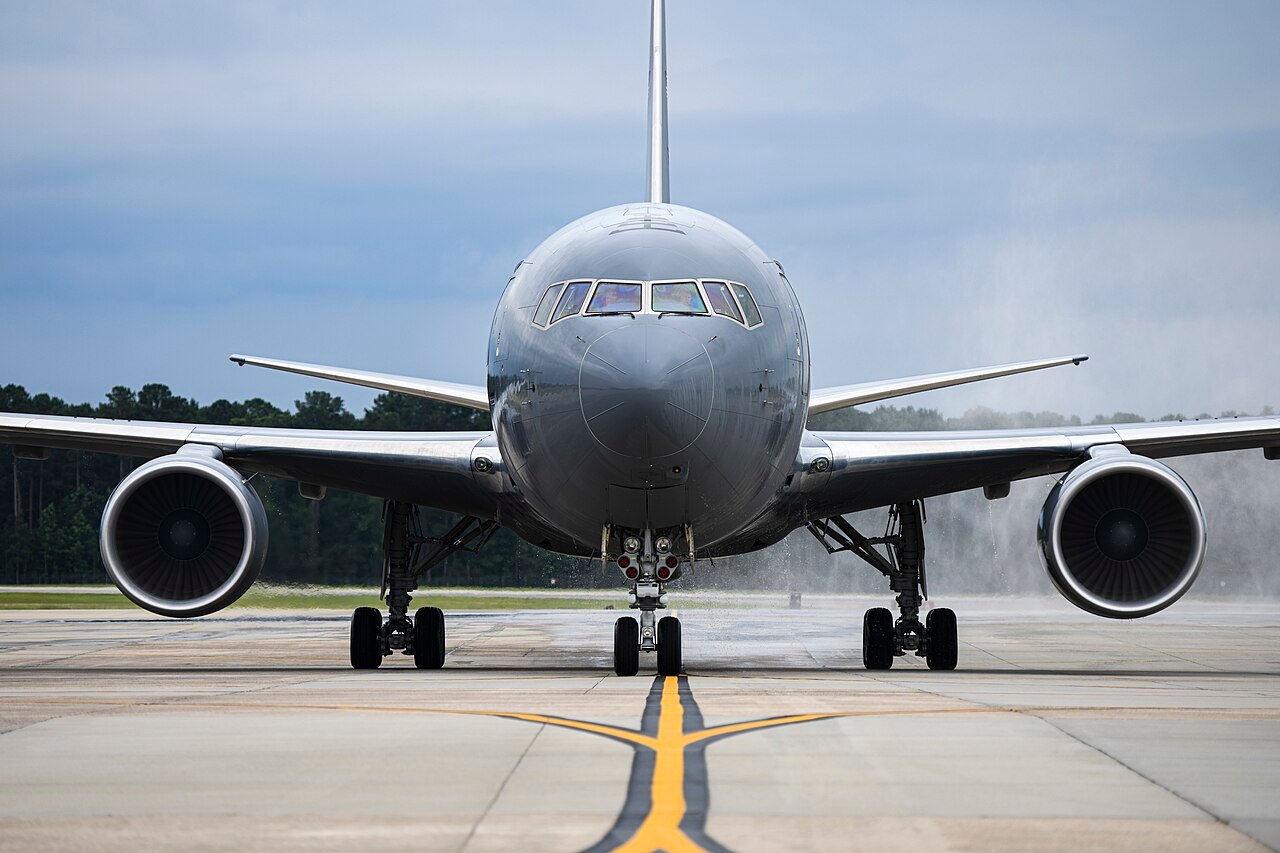
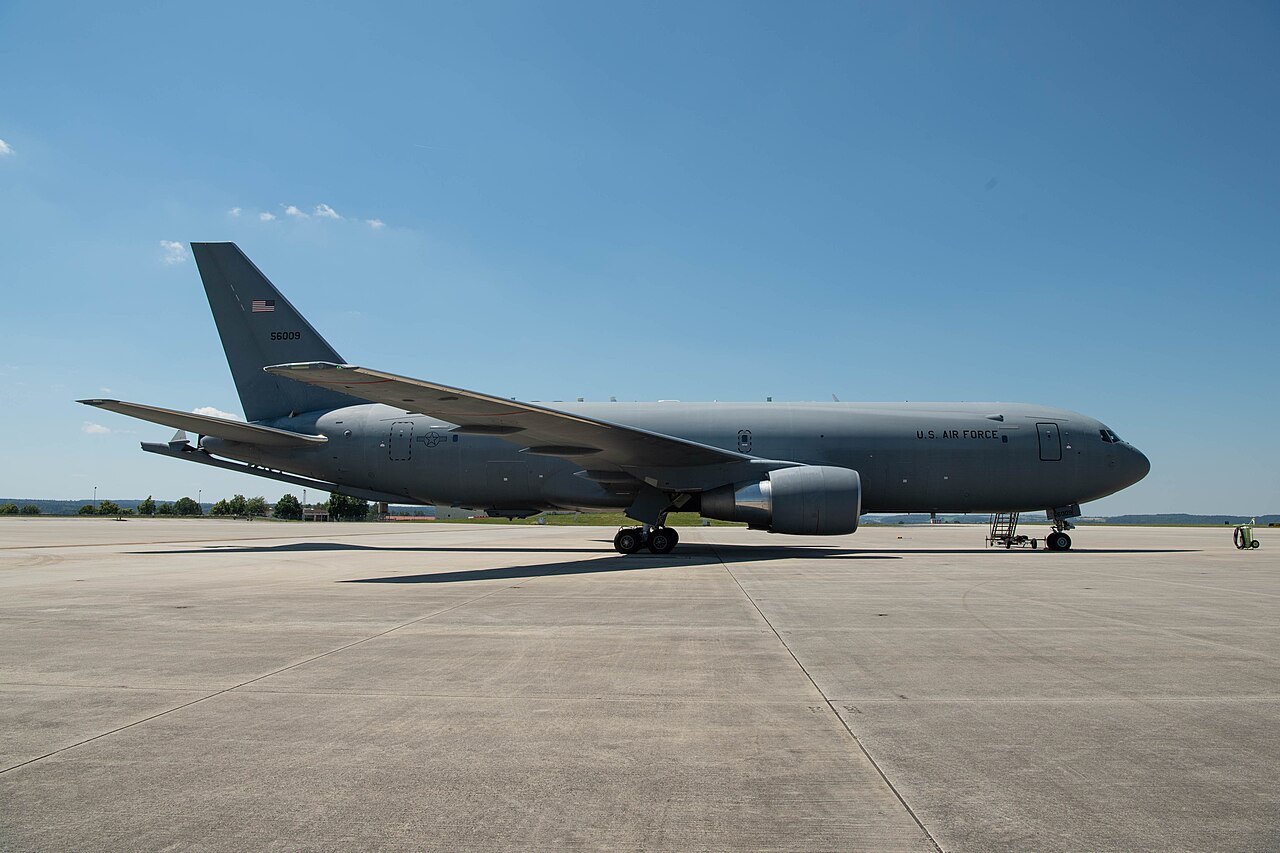
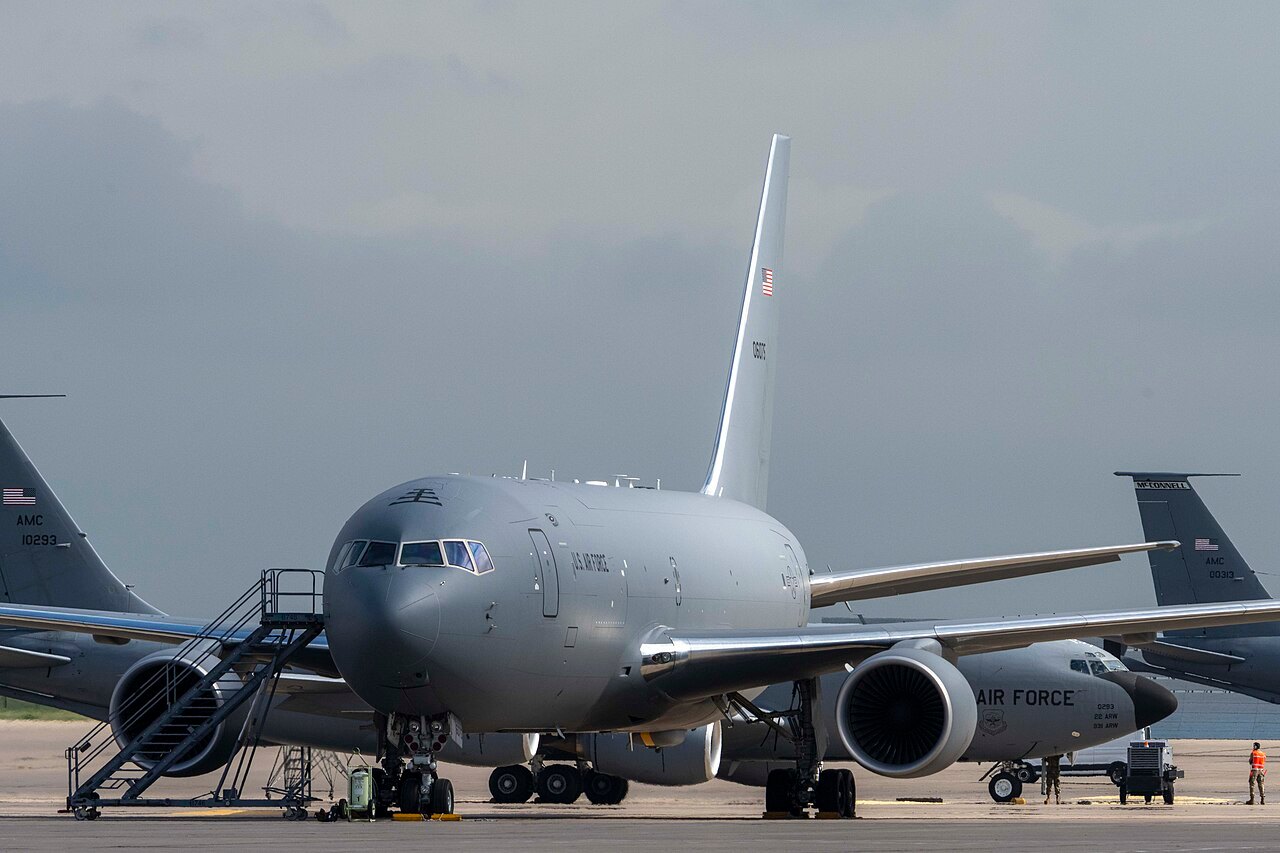
Where the KC-46 flies and flew
The KC-46’s record
The KC-46 is a new aircraft and its operational record is still being written. Since it was cleared for wider use from 2021 it has supported US and allied operations in the Middle East, Europe and the Pacific, but detailed sortie figures have not been published.
See how training and combat types compare in the military aircraft statistics database. Figures are approximate.
Everything people ask about the KC-46
Can I fly in a Boeing KC-46 Pegasus?
Is the KC-46 based on the Boeing 767?
Why did the KC-46 take so long?
What is the Remote Vision System?
How much fuel can a KC-46 carry?
Who flies the KC-46?
You can’t fly the KC-46.
These, you can.
Most of this museum you can only look at. These genuine military jets you can fly yourself with MiGFlug — with aerobatics and time on the controls.
 Fly the L-39 AlbatrosThe world’s most-flown jet trainer — aerobatics included
 Fly the F-104 Starfighter“The missile with a man in it”
 Fly the MiG-21The Cold War’s most-produced jet
 Fly the T-33 Shooting StarAmerica’s first jet trainer
 Fly the DH VampireA piece of early jet history
 Fly the S.211Agile Italian jet trainer
 Fly the MB-326The classic Aermacchi jet
 Fly the MiG-15The Soviet legend of the Korean War
Continue the tour
Every fact, checked
- KC-46 Pegasus tankerBoeing: fuel, offload rates, pallets, passengers, aeromedical, receivers
- KC-46A Pegasus fact sheetUS Air Force official specifications and history
- Government Accountability Office: decision on Boeing’s protest of the KC-X award (B-311344, June 2008)Why the 2008 KC-45 award was overturned
- Government Accountability Office: KC-46 tanker modernization reportsAnnual programme cost, schedule and deficiency reviews
- Air & Space Forces Magazine: KC-46 coverageRemote Vision System, deliveries and operational clearance
- Defense News: KC-46 programme reportingBoeing charges, debris findings, export customers