
Macchi C.200 Saetta
Italy’s nimble “Lightning Bolt” — a racer’s airframe born from Schneider Trophy floatplanes, agile and strong, but held back by a weak engine and just two machine guns.
The Story
The Macchi C.200 Saetta: a thoroughbred airframe with the wrong engine
The Macchi C.200 Saetta — the name means “lightning bolt” or “arrow” — is one of the most quietly frustrating aircraft of the Second World War. Here was a fighter with a superb pedigree, a beautifully balanced airframe, and handling that pilots adored, all fatally compromised by a single decision: the engine bolted to the front of it. The result was a machine that could out-fly almost anything in a turning fight and yet could not catch, out-run or out-shoot the Allied fighters it met. The Saetta is the story of a great aeroplane wrapped around an inadequate powerplant.
Its bloodline was aristocratic. Aeronautica Macchi and its chief designer, Mario Castoldi, had spent the 1920s and early 1930s building the fastest aircraft on earth: the Macchi Schneider Trophy racing floatplanes, culminating in the MC.72, which set a world speed record for piston-engined seaplanes that still stands. When Italy’s air ministry called for a modern monoplane fighter in the mid-1930s, Castoldi drew on that racing experience to produce the C.200: an all-metal, low-wing monoplane with a retractable undercarriage and an enclosed cockpit, first flown on 24 December 1937. In its lines you could see the racer’s DNA — clean, compact and purposeful.
“A pilot’s aeroplane cursed with a peacetime engine — the Saetta could dance, but it could not punch or run.”— a fair summary of the C.200’s wartime reputation
But the C.200 was not chosen for speed. Italy’s aero-engine industry had failed to develop a powerful, mass-producible inline engine, so the Saetta was fitted with the Fiat A.74 RC.38, a reliable but modest fourteen-cylinder radial of around 870 horsepower. That was perhaps two-thirds of the power a contemporary Spitfire or Bf 109 enjoyed, and it capped the C.200’s top speed at roughly 500 km/h — respectable in 1939, distinctly slow by 1941. The radial’s bluff frontal area added drag, and its position blocked much of the pilot’s forward view. The airframe deserved better than it got.
There was trouble early on, too. The first Saettas revealed a nasty tendency to drop a wing and flick into a spin without much warning, and after a series of accidents the type was briefly restricted. Macchi traced the problem to the wing and revised it, curing the vice and turning the C.200 into one of the most honest and manoeuvrable fighters of its generation. At the same time, responding to Italian pilots who disliked the enclosed canopy, Macchi opened the cockpit up — many Saettas flew with a partially open or fully open cockpit, giving the pilot the fresh-air view he wanted at the cost of a little speed.
When Italy entered the war in June 1940, the C.200 was just reaching the squadrons, and it went on to serve in every theatre the Regia Aeronautica fought in. It flew over Malta and the Mediterranean, escorting bombers and tangling with Hurricanes; it fought across the North African desert against the Desert Air Force; and, most successfully, it went to the Eastern Front with the Italian expeditionary corps, where in the lower-intensity air war over the steppe its agility and toughness told and its pilots did well. At home it flew in the air defence of Italy. Everywhere, the verdict was the same: a delight to fly, deadly in a dogfight if it could force one on its own terms, but too slow and too lightly armed to dictate the fight against better-powered, cannon-armed opponents.
That under-gunning was the Saetta’s other great weakness. It carried just two 12.7 mm Breda-SAFAT machine guns firing through the propeller — heavy machine guns, but only two of them, at a time when the RAF was fielding eight-gun fighters and the Luftwaffe was adding cannon. Against fabric-and-wood aircraft that armament was adequate; against increasingly rugged, self-sealing Allied types it often was not. A C.200 pilot could get onto an enemy’s tail and still lack the firepower to bring him down quickly.
The C.200’s real significance, though, lies in what it led to. Castoldi’s airframe was so sound that when Italy finally obtained a powerful engine — the German Daimler-Benz DB 601 inline, built under licence — Macchi simply grafted it onto a refined Saetta airframe to create the C.202 Folgore, a genuinely competitive fighter. The later DB 605-powered C.205 Veltro took the same lineage to its peak. In other words, the Saetta was the flawed but excellent foundation on which Italy’s best wartime fighters were built. Around 1,150 were produced, and after the 1943 armistice they served on both sides of Italy’s divided air forces before fading into training and second-line duties. A handful survive in museums today — rare reminders of a thoroughbred that never got the heart it deserved.
01The Macchi C.200’s origins: from Schneider Trophy racers to a fighter+
The C.200 did not spring from nowhere. Aeronautica Macchi had built its reputation in the 1920s and early 1930s on the Schneider Trophy — the international contest for the fastest seaplanes in the world — producing a line of sleek racing floatplanes designed by Mario Castoldi. The pinnacle was the Macchi-Castoldi MC.72, which in 1934 set a world air-speed record for piston-engined seaplanes that has never been beaten.
When Italy’s air ministry issued a specification for a modern monoplane fighter in the mid-1930s, Castoldi applied the aerodynamic lessons of those racers to a land-based warplane. The C.200 that emerged was clean, compact and beautifully proportioned, with the low wing and careful streamlining of a machine built to go fast. The racing heritage was not just marketing — it showed in the airframe’s balance and in the handling that pilots would come to love.
02Mario Castoldi and the Macchi design lineage+
Mario Castoldi was one of the great fighter designers of the era, and the C.200 sits at the centre of his life’s work. Before it came the record-breaking Schneider racers; after it came the C.202 Folgore and C.205 Veltro, widely regarded as the finest Italian fighters of the war. All three fighters share a family resemblance because they are, quite literally, developments of the same fundamental airframe.
Castoldi’s gift was aerodynamic refinement and structural elegance — building airframes that were light, strong and beautifully behaved in the air. What he could not do was manufacture a powerful engine; that depended on Italy’s wider industry, which lagged badly in high-output inline designs. The story of the Macchi fighters is therefore the story of a brilliant airframe designer waiting years for an engine worthy of his work.
03The Macchi C.200’s early spin problem — and how Macchi fixed it+
The Saetta’s service introduction was troubled. Early aircraft showed a dangerous tendency to drop a wing and flick into an autorotation or spin, sometimes with little warning, and a series of fatal accidents led to the type being temporarily restricted while the cause was investigated. For a brand-new front-line fighter, it was a serious and morale-sapping problem.
Macchi traced the trouble to the wing’s behaviour near the stall and revised the wing accordingly. The modification cured the vice, and the reputation of the aircraft was transformed: from a machine pilots approached warily, the C.200 became known as one of the most forgiving and manoeuvrable fighters of its day, able to be thrown around the sky with confidence. It is a good example of a promising design nearly wrecked by a handling flaw, and rescued by a well-judged fix.
04The Fiat A.74 radial: the power limitation that defined the Saetta+
Everything that held the C.200 back traces to its engine. The Fiat A.74 RC.38 was a fourteen-cylinder, two-row air-cooled radial of around 870 horsepower — reliable, robust and well suited to the heat and dust of North Africa, but simply not powerful enough for a first-line fighter by the early 1940s. Contemporary British and German fighters had inline engines producing well over a thousand horsepower, and the gap only widened as the war went on.
The consequences rippled through the whole design. Top speed was capped at around 500 km/h; the bluff radial cowling added drag and blocked the pilot’s forward view; and climb and high-altitude performance suffered. The tragedy is that the airframe could clearly handle far more power, as the DB 601-engined C.202 later proved. Italy’s failure to field a powerful inline engine in time is the single biggest reason the excellent Saetta airframe never became an excellent fighter.
05The Macchi C.200’s armament: two machine guns in a cannon age+
The Saetta’s firepower was as much a limitation as its speed. It carried just two 12.7 mm Breda-SAFAT machine guns, mounted in the upper cowling and synchronised to fire through the propeller arc. These were hard-hitting heavy machine guns by the standards of the early 1930s, but only two of them — a light battery at a time when the RAF was fielding eight-gun fighters and both the Germans and the Allies were moving decisively to 20 mm cannon.
Against the fabric-covered biplanes and light monoplanes of the war’s opening the armament could suffice, but against increasingly rugged, armoured, self-sealing Allied aircraft it frequently did not deliver a decisive blow. A skilled Saetta pilot could win the positional fight and still watch a damaged enemy escape. Some later aircraft added a pair of 7.7 mm guns in the wings, but the fundamental problem — too few heavy weapons — was never really solved on the C.200 itself.
06The Macchi C.200’s open cockpit: why Italian pilots wanted it+
One of the C.200’s more distinctive features is that many flew with an open or partially open cockpit, even though the prototype had a fully enclosed sliding canopy. This was not an oversight but a response to pilot preference. Many Italian fighter pilots of the era, schooled in open-cockpit biplanes, distrusted enclosed canopies — they disliked the distortion and reflections of the perspex, worried about being trapped in an emergency, and valued the unobstructed view and feel of the air that an open cockpit gave.
Macchi accommodated them, producing the Saetta with a cut-down, semi-open cockpit arrangement. It cost a little in top speed through extra drag, but it gave pilots the situational awareness and confidence they wanted. It is a revealing detail: a reminder that aircraft are shaped not only by engineering ideals but by the culture and preferences of the people who fly them.
07The Macchi C.200 in North Africa and the Mediterranean+
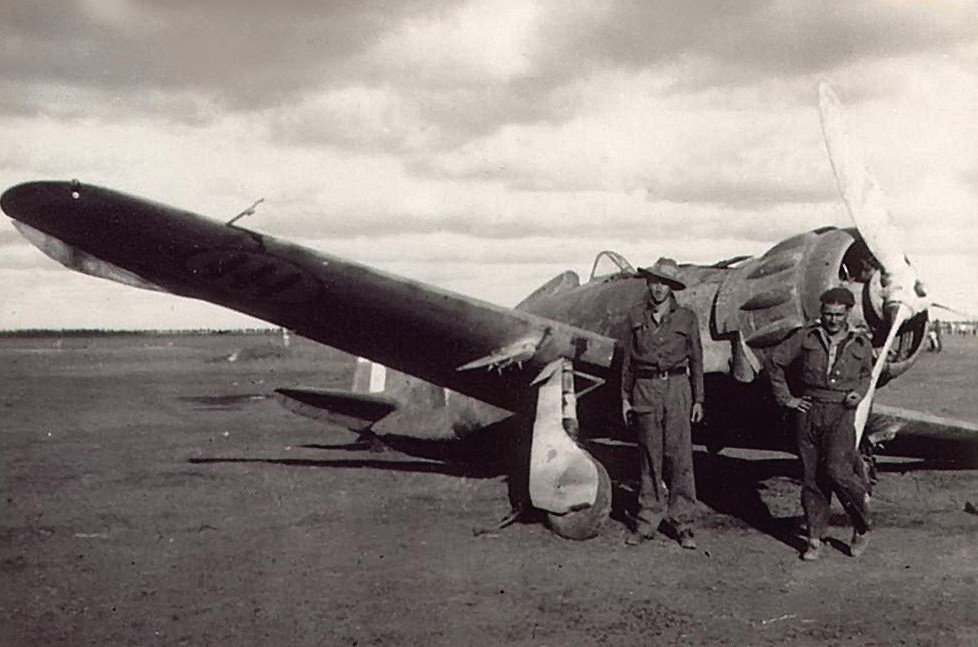
The Saetta was a fixture of the Mediterranean air war. It flew over the great siege of Malta, escorting Italian bombers against the island’s defences and clashing with RAF Hurricanes and, later, Spitfires. It fought across the Western Desert alongside the Germans against the Desert Air Force, in the sprawling to-and-fro campaign over Libya and Egypt. The radial engine was a real asset here: air-cooled and robust, it shrugged off the desert dust and heat that could cripple liquid-cooled inline engines.
In these theatres the C.200’s strengths and weaknesses were both on full display. Its agility let good pilots hold their own in a turning fight, but its lack of speed meant it could rarely force or refuse combat on its own terms, and its light armament made kills hard to secure against tougher Allied aircraft. It was a competitive dogfighter and an honest workhorse, but never a dominant one.
08The Macchi C.200 on the Eastern Front: the Saetta’s best war+
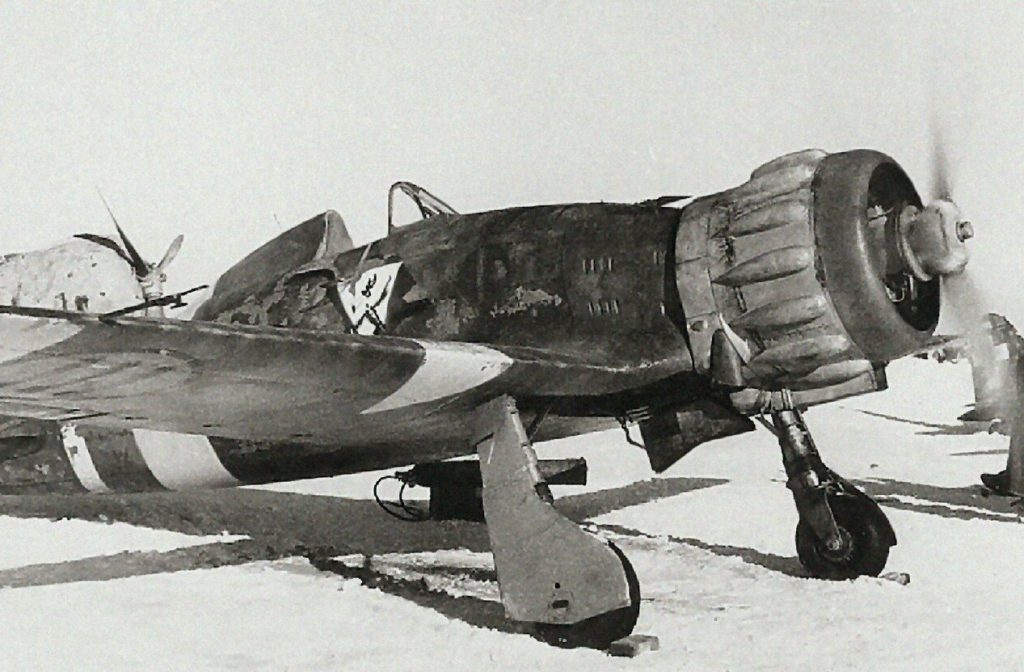
Perhaps the Saetta’s most successful service came far from the Mediterranean, on the Eastern Front. Italy sent an expeditionary corps to fight alongside Germany against the Soviet Union (the CSIR, later expanded into the ARMIR), and with it went C.200 fighter units. In the air war over the steppe — lower in intensity and altitude than the fight against the Western Allies, and often against Soviet aircraft the Saetta could match — the C.200 performed notably well.
Italian pilots flew escort, ground-attack and fighter-sweep missions, and reported favourable exchange rates. The C.200’s robustness, reliability and agility suited the conditions, and its limitations mattered less against the opposition it faced there than against Spitfires over Malta. For once, the Saetta was operating in an environment that played to its strengths, and the results showed it.
09From Saetta to Folgore to Veltro: how the airframe evolved+
The C.200’s lasting importance is as the root of a family tree. Its airframe was so aerodynamically and structurally sound that Macchi used it as the basis for Italy’s best wartime fighters. When licence-built German Daimler-Benz DB 601 inline engines became available, Castoldi mated one to a refined Saetta airframe to create the C.202 Folgore — suddenly the aircraft had the power it had always lacked, and it became a genuinely competitive fighter.
The progression continued with the C.205 Veltro, powered by the still more potent DB 605, widely rated as one of the finest fighters any nation fielded in the war. All three — Saetta, Folgore, Veltro — are recognisably the same basic design, refined and re-engined. Seen this way, the under-powered C.200 was not a dead end but the essential first step: prove the airframe, then wait for an engine to do it justice.
Design & Engineering
How the Macchi C.200 was built: a racer’s airframe, a trainer’s engine
The Saetta was an elegant, structurally strong all-metal monoplane whose fine airframe was consistently let down by the modest radial engine it was forced to use.
A clean monoplane airframe
All-metal, low-wing, with a retractable undercarriage — a modern design drawing directly on Castoldi’s Schneider Trophy racers. Light, strong and beautifully balanced, it gave the C.200 its celebrated agility.
The Fiat A.74 radial
A fourteen-cylinder air-cooled radial of around 870 hp: reliable and desert-proof, but far less powerful than Allied inline engines. It capped the Saetta’s speed and blocked the pilot’s forward view.
Light armament
Just two 12.7 mm Breda-SAFAT machine guns firing through the propeller. Hard-hitting individually, but too few in an age moving rapidly to multi-gun and cannon batteries.
Specifications
Macchi C.200 Saetta specifications: dimensions, performance and cost
Baseline: a mid-production Macchi M.C.200 of 1941—42 — the cut-down, semi-enclosed cockpit that became standard, the reprofiled Stefanutti wing, a Fiat A.74 R.C.38 and no sand filter. That is the aeroplane the Regia Aeronautica actually flew in quantity over Malta, Cyrenaica and the Donets basin, and it accounts for the great majority of the 1,153 airframes built. Deltas for the first enclosed-cockpit block, for the AS and CB sub-types, and for the late aircraft completed on C.202 fuselages are in grey. Two warnings before the figures. First, 504 km/h at 4,500 m is a clean prototype-standard test result: a desert Saetta with a sand filter, two bomb racks and a season of grit through the cowling was 20 to 30 km/h slower, and every combat account should be read against that. Second, Italian and English references disagree slightly on span, height, wing area and empty weight — 10.49 against 10.58 m, 1,900 against 1,964 kg — because they copy different Regia Aeronautica data sheets, not because the aeroplane changed.
Dimensions & weights
- Crew
- 1
- Wingspan
- 10.58 m (34 ft 8 in) Italian sources routinely give 10.49 m (34 ft 5 in); the difference is measurement convention at the tip, not a variant
- Length
- 8.25 m (27 ft 1 in) a very short fighter — almost a metre shorter than a Hurricane, which is part of why it turned as it did and part of why it was twitchy in the stall
- Height
- 3.05 m (10 ft 0 in) 3.04 m in Italian tables; tail attitude, not structure
- Wing area
- 16.82 m² (181 sq ft) 16.80 m² (181 sq ft) in Italian data. Unchanged from prototype to last airframe: the wing that cured the spin was reprofiled, not resized
- Empty weight
- 1,964 kg (4,330 lb) Italian sources give 1,900 kg (4,190 lb). Late aircraft with an armoured seat, a radio and wing guns were heavier again, by perhaps 60 to 80 kg
- Normal loaded weight
- 2,200 kg (4,850 lb) full internal fuel, 740 rounds, no external stores
- Maximum take-off weight
- 2,395 kg (5,280 lb) C.200CB with two 150 L drop tanks or two 100 kg bombs
- Wing loading
- 131 kg/m² (26.8 lb/sq ft) at normal loaded weight; 142 kg/m² (29.2 lb/sq ft) at maximum take-off weight. Against a Hurricane I at roughly 121 kg/m² and a Bf 109E at about 170 kg/m², the Saetta sat where a turning fighter wants to sit
- Power loading
- 2.53 kg/hp (5.6 lb/hp) at normal loaded weight; 2.75 kg/hp (6.1 lb/hp) at maximum take-off weight. This is the number that explains the aircraft. A Hurricane II carried about 2.0 kg/hp. No amount of aerodynamic tidiness closes a gap that size
- Structure
- all-metal stressed-skin semi-monocoque fuselage with a light-alloy frame, and an all-metal two-spar wing whose inner and outer sections were faired with plywood and balsa to give a varying, rather than constant, aerofoil section — Sergio Stefanutti of SAI Ambrosini's fix for the autorotation problem, adopted across all three assembly lines in 1940. Self-sealing fuel tanks were fitted from the start, which put the type ahead of several contemporaries the quoted ultimate load factor of 15.1 is an ultimate, not a limit, figure and reflects a generous safety margin; the airframe's real-world strength in a dive was never seriously in question, and pilots said so
- Cockpit
- the type's signature feature is the humped decking that lifts the seat and the windscreen clear of the cowling, giving a forward and downward view radial-engined fighters of the day rarely had. Macchi's designers had to fight the air ministry to keep it. The first 240 aircraft had a fully enclosed sliding hood; the great majority thereafter had a cut-down, semi-enclosed or open arrangement no heating, and above about 5,000 m in a Russian winter that was a genuine operational limit rather than a comfort complaint
- Undercarriage
- main legs retracting inward into the wing centre section, hydraulically actuated, with a retractable tailwheel. The track was wide enough and the take-off run short enough that the type coped well with rough desert and steppe strips, which is a large part of why it stayed in front-line use after it stopped being competitive
Performance
- Maximum speed
- 504 km/h (313 mph) at 4,500 m (14,800 ft). The best-attested figure, and it belongs to a clean aircraft. The 1936 requirement asked for 500 km/h and the type met it, which in 1937 was respectable and by 1941 was not
- Speed at sea level
- 430 km/h (267 mph) a Hurricane I did about 450 km/h (280 mph) down low, and this is where most desert fighting actually happened
- Speed at 6,000 m
- 490 km/h (304 mph) Italian sources give 465 km/h (289 mph) at the same height. A Hurricane II was doing about 528 km/h (328 mph) there
- Speed at 7,000 m
- 350 km/h (217 mph) the collapse above the supercharger's rated altitude is the single most damning number in the table, and it is why the Saetta could not fight the high-altitude war over Malta in 1942
- Stalling speed
- 128 km/h (80 mph) before the wing was reprofiled the departure from a hard turn was violent and frequently inverted; afterwards the aircraft was docile, and pilots of the 4º and 54º Stormo described it as having no vices
- Rate of climb
- 15.3 m/s (3,010 ft/min) at sea level — genuinely good, and better than a Hurricane I low down. The advantage disappeared with height
- Time to altitude
- 5 min 52 s to 5,000 m (16,400 ft). Italian data give 5 min 40 s to 6,000 m (19,700 ft), which cannot both be right; the 1936 specification demanded 6,000 m in 5 minutes and no service Saetta is documented as having met it
- Service ceiling
- 8,900 m (29,200 ft) reachable, but the aircraft was close to useless in the last 2,000 m of it
- Range
- ~570 km (~354 miles) on internal fuel; ~870 km (~540 miles) with two 150 L drop tanks. Short, and it constrained Sicily-based escort work over Malta as much as any tactical factor did
- Endurance
- ~2 hours clean, which is exactly what the 1936 requirement asked for and no more
- Take-off and landing run
- 260 m (850 ft) to unstick and 300 m (980 ft) to stop — short-field figures that mattered enormously in Libya, Albania and the Ukraine, and that no data sheet comparison with a Spitfire ever credits
- Handling
- the best thing about the aeroplane, once the wing was fixed: an exceptional roll rate, a tight and honest turn, no trace of the Fiat CR.42's biplane drag, and a dive cleared to speeds that startled its opponents — the first prototype was recorded at around 805 km/h (500 mph) in a dive. The 22º Gruppo's pilots called it fast, manoeuvrable and strong, and the first two adjectives were relative while the third was absolute
Propulsion & systems
- Engine
- one Fiat A.74 R.C.38, a 14-cylinder two-row air-cooled radial with a gear-driven single-stage supercharger and a propeller reduction gear Fiat drew on its licence experience with American and French radials in designing it; the frequent claim that it is simply a redesigned Pratt & Whitney R-1830 overstates the relationship
- Displacement
- 31.25 litres (1,907 cu in), bore 140 mm (5.51 in) × stroke 145 mm (5.71 in), compression ratio 6.7:1
- Take-off power
- 870 CV (858 hp) at 2,520 rpm at sea level
- Rated power
- 840 CV (828 hp) at 3,800 m (12,500 ft) — the R.C.38 in the designation is the rated altitude in hundreds of metres. One supercharger speed, one critical altitude, and nothing above it
- Emergency power
- 960 CV (947 hp) at 3,000 m (9,800 ft) for short periods; sources vary on the rating and on how freely units allowed it
- Engine dry weight
- 590 kg (1,300 lb) 565 kg (1,246 lb) in some references
- Propeller
- three-blade metal constant-speed unit, Fiat-built under Hamilton Standard licence
- Fuel
- self-sealing tanks under the pilot's seat and in the wing centre section, ~320 litres (~70 imp gal); published capacities are inconsistent, but the 570 km range implies little more than this. The float carburettor meant sustained inverted flight was not possible — a real tactical limitation in a fighter otherwise built for close manoeuvring
- Cowling and cooling
- long-chord NACA-type cowling with controllable exit gills. The radial gave a fat frontal area and cost speed, but it also put a large air-cooled mass between the pilot and ground fire, which made the type a better strafer than any inline-engined Italian fighter several units flew it as a fighter-bomber for precisely that reason after it stopped being a viable interceptor
- Radio
- not fitted as standard on early production aircraft. Later series received a set together with an armoured seat an air force fighting a radar-directed defence over Malta with fighters that could not all talk to each other was fighting at a disadvantage that no wing profile could fix
- Protection and systems
- no armour plate on early aircraft, armoured seat later; self-sealing tanks throughout; hydraulic undercarriage and flaps; oxygen for the pilot adding the seat armour shifted the centre of gravity aft enough that aerobatics could again provoke a flat spin, which is a neat illustration of how little margin the design had left
10The Macchi C.200’s variants and production+
The C.200 was produced through a series of production batches rather than radically different marks, with detail changes to the cockpit (from enclosed to semi-open), wing (the post-spin revision) and equipment over time. Later aircraft added light-bomb racks for a fighter-bomber role and, in some cases, a supplementary pair of 7.7 mm wing guns. Production was shared between Aeronautica Macchi and other Italian manufacturers, including Breda and SAI Ambrosini, to reach a total commonly cited as around 1,150 aircraft.
The most important “variants” of the C.200, in a sense, were its successors. The airframe was re-engined with the licence-built Daimler-Benz DB 601 to become the C.202 Folgore, and then with the DB 605 to become the C.205 Veltro. These are usually treated as separate types, but they are direct developments of the Saetta, sharing its fundamental structure and layout.
11The Macchi C.200 compared: the Fiat G.50, the CR.42 and Allied opponents+
The Saetta was one of a trio of fighters that equipped the Regia Aeronautica at the start of the war, alongside the Fiat G.50 Freccia — a broadly comparable radial-engined monoplane, similarly under-powered and under-armed — and the Fiat CR.42 Falco, a superb but hopelessly outdated biplane. Among these the C.200 was generally regarded as the best all-rounder, combining modern monoplane performance with outstanding agility.
Against the Allies the comparison was harsher. The Hawker Hurricane and Supermarine Spitfire, and the American P-40, all had significantly more power, higher speed and heavier armament. The Saetta could out-turn most of them, but could not match their speed, climb or firepower. It was, in short, competitive in a dogfight and outclassed in almost every other measure — the recurring verdict on Italy’s early-war fighters.
12The Macchi C.200 after the 1943 armistice: a fighter divided+
Italy’s armistice with the Allies in September 1943 split the country and its air force in two. In the south, the Italian Co-Belligerent Air Force flew on the Allied side; in the German-occupied north, the Aeronautica Nazionale Repubblicana of Mussolini’s rump Italian Social Republic fought on with the Axis. Surviving C.200s ended up on both sides of this divide.
By this stage the Saetta was thoroughly obsolete as a front-line fighter, and it was used mostly for second-line duties — training, liaison, coastal patrol and the like — on both sides. It was an undignified end for a once-promising design, but a common one for early-war types overtaken by the relentless pace of fighter development.
13Surviving Macchi C.200s: where to see one+
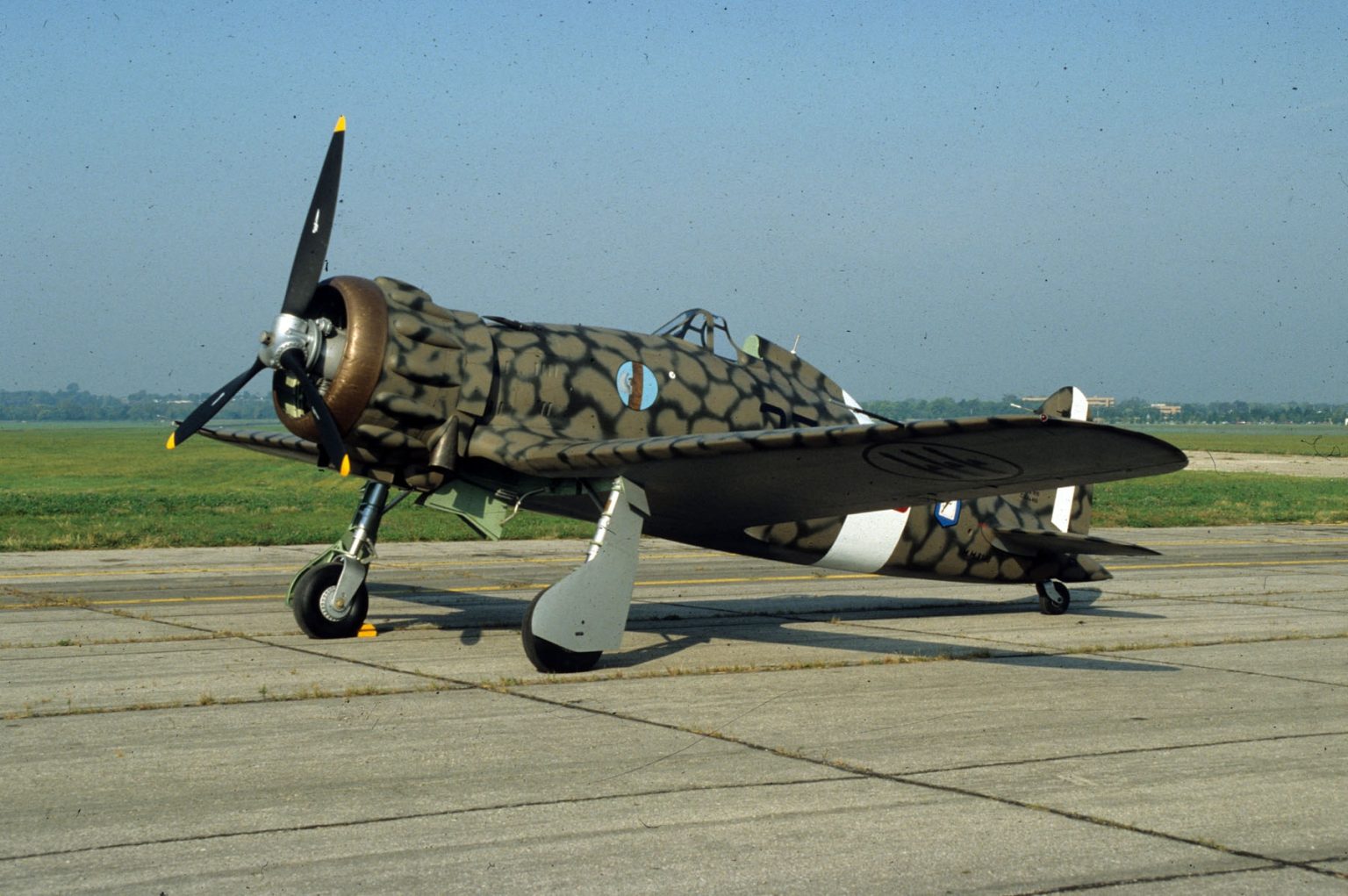
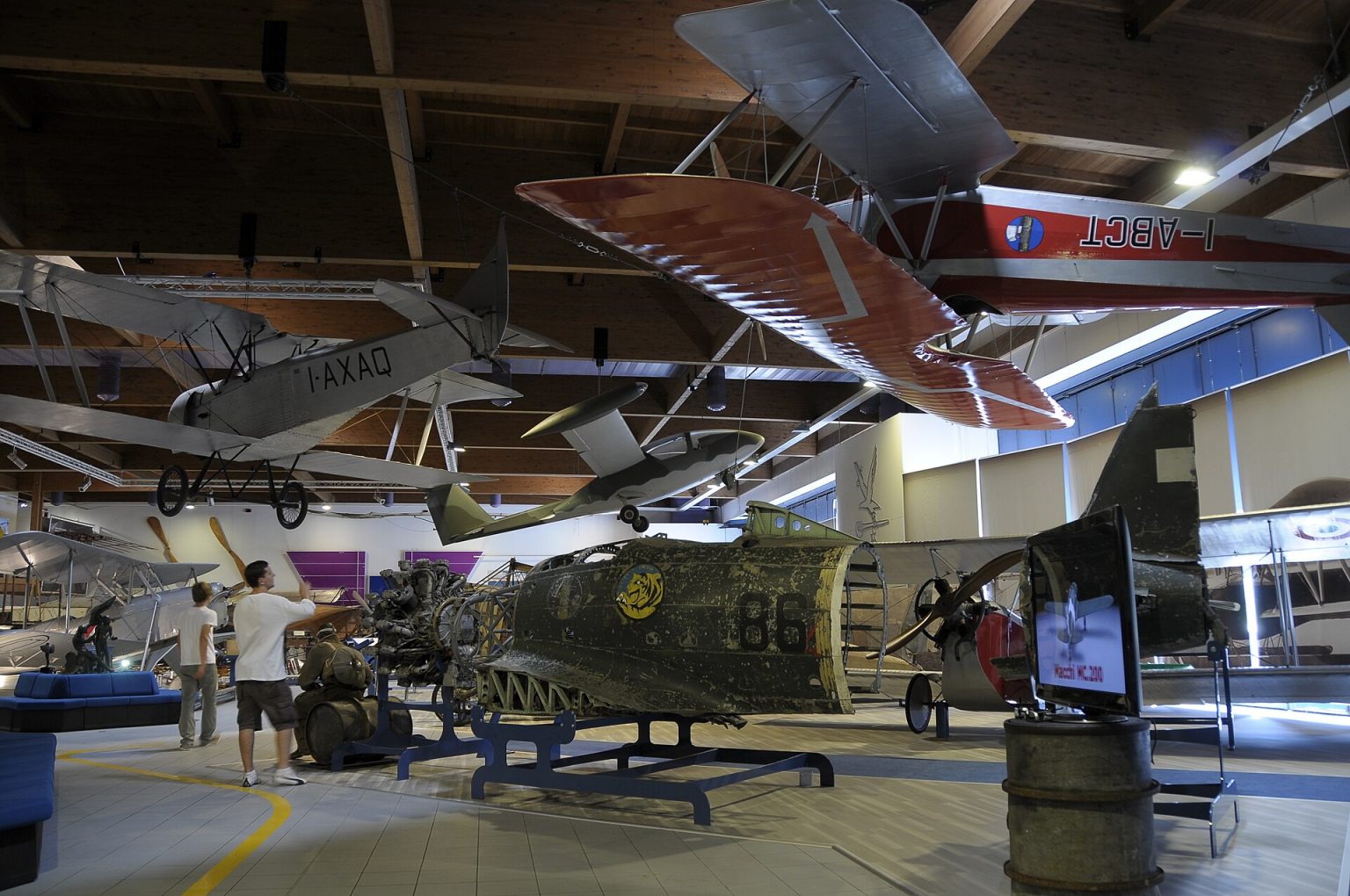
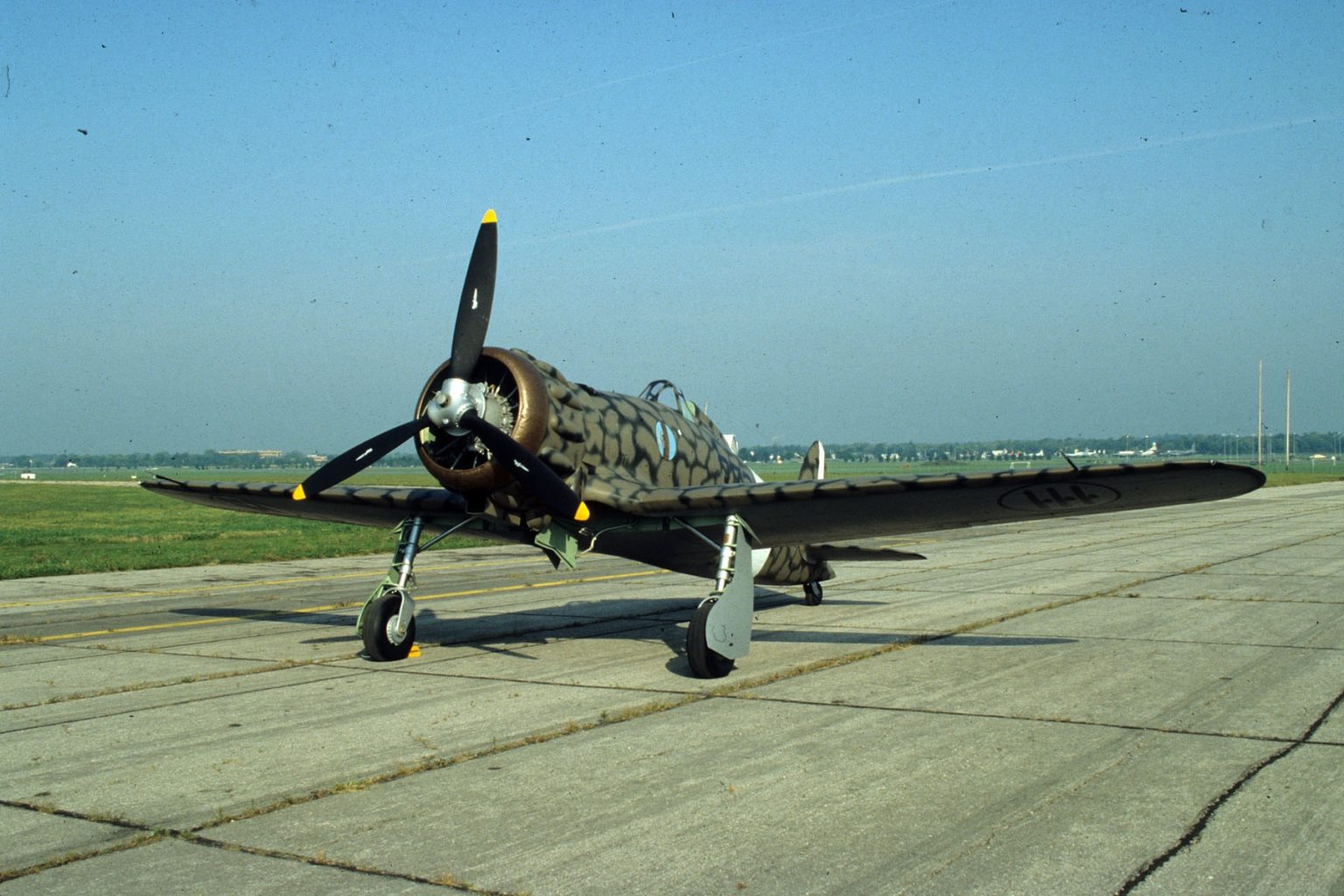
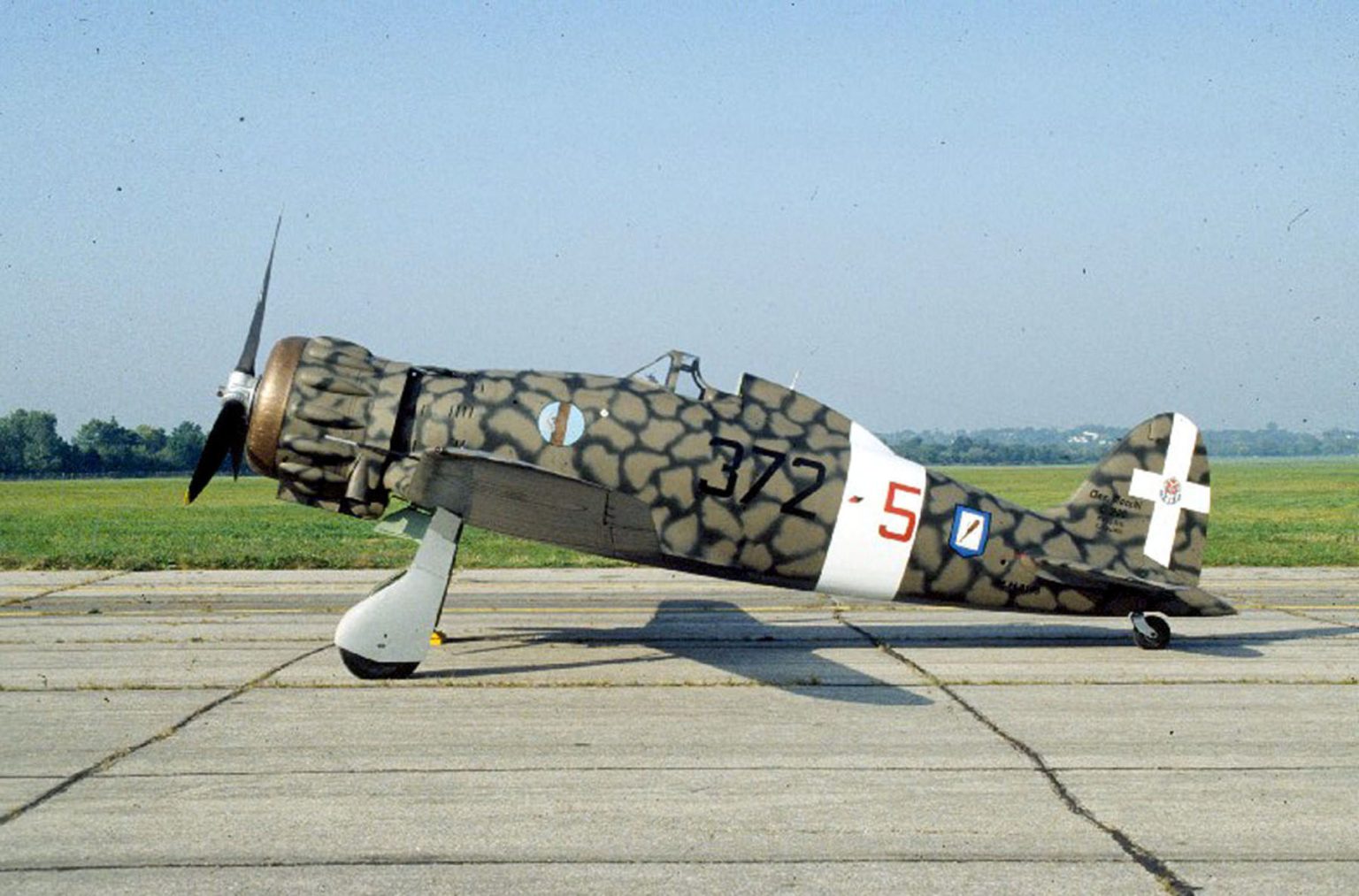
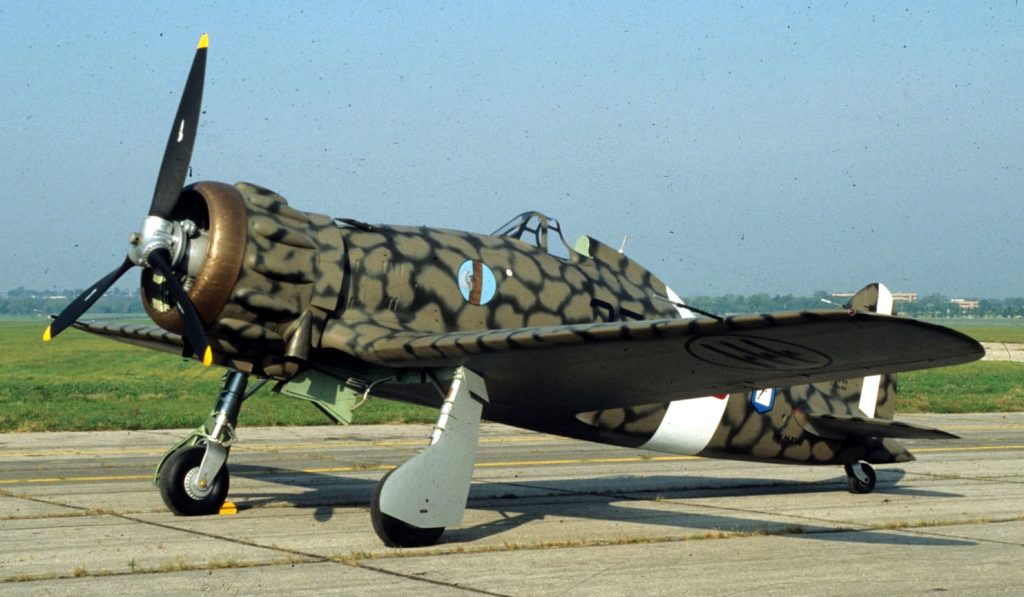
Unlike some Italian types that vanished entirely, a small number of Macchi C.200s survive. One of the best known is preserved in the United States at the Smithsonian National Air and Space Museum, having been brought to America after the war for evaluation. Another is displayed in Italy at the Museo dell’Aeronautica Gianni Caproni in Trento.
These survivors are static museum aircraft rather than airworthy machines — there is no flying Saetta today. But they let visitors stand in front of a genuine example of Castoldi’s design and see, in the metal, the clean racer’s airframe and the bluff radial cowling that together tell the whole story of the aircraft’s promise and its limitation.
Armament & payload
The Saetta went to war with two machine guns and was still carrying two when it left the front line
The February 1936 requirement that produced the M.C.200 specified two 12.7 mm machine guns, and the Regia Aeronautica never seriously revisited that decision for this airframe. A 1937 proposal to add two 7.7 mm guns in the wings was turned down. The result was a fighter with 740 rounds in total, about 0.63 kg of projectile per second, against a Hawker Hurricane I putting out roughly 1.7 kg per second from eight guns — something close to a third of the firepower, in an aircraft that had to turn inside its opponent to use any of it. Against Soviet I-16s and early Yaks at medium height that was survivable; against a four-cannon Hurricane IIC, a P-40 with six .50s, or anything with self-sealing tanks and armour behind the pilot, it was not. Ammunition loads are quoted as either 370 or 400 rounds per gun depending on the source, and the late wing-gun fit appears only on a minority of very late airframes.
Gun
- The standard fit, unchanged from 1939 to 1943: two 12.7 mm Breda-SAFAT machine guns mounted in the upper cowling, synchronised to fire through the propeller disc, with 370 rounds each (some references give 400)
- Cyclic rate 700 rounds/min unsynchronised, about 575 rounds/min through the gear; muzzle velocity 760 m/s (2,490 ft/s) firing the 12.7 × 81 mm SR round. That is roughly 38 seconds of fire per gun — ample duration, inadequate density
- The Breda-SAFAT was reliable and accurate, and Italian pilots trusted it. It was also heavy for its calibre, slow-firing, and loaded with a low-capacity cartridge that gave less velocity than the American .50; the high-explosive incendiary round was widely regarded as ineffective
- A 1937 scheme for two additional 7.7 mm Breda-SAFAT guns in the wings was rejected by the Regia Aeronautica. Very late airframes completed on the C.202 Serie VII wing did finally carry two 7.7 mm wing guns with 500 rounds each — a marginal gain arriving years too late
- Sighting varied between an optical tube and a reflector sight; the aircraft had no gun camera in normal service, which is one reason Italian victory claims are hard to audit
Air-to-air
- None. No guided air-to-air weapon existed in any air force during this aircraft's entire career; the first operational example was more than a decade away
- Interception meant a long climb on a single-speed supercharger, arriving at the bomber's altitude slow and short of ideas, and one firing pass with two cowl guns
- Against RAF Wellingtons and Blenheims over Sicily and Libya that was survivable work; against the four-engined bombers that reached Italian skies from 1943 it was hopeless, and by then the type had been withdrawn from interception anyway
- The one place the battery worked was where the Saetta could get into a turning fight. On 8 December 1941 a C.200 of the 153º Gruppo turned inside an attacking Hurricane of the Desert Air Force and hit it around the cockpit, killing the pilot sources disagree on which RAF pilot was lost that day; the manoeuvre, not the name, is what is well attested
Air-to-surface guided
- None, and no Italian single-seat fighter of the war carried anything of the kind
- The only guided air-to-surface weapons operational during the type's service were the German Fritz X and Henschel Hs 293, both anti-shipping weapons carried by twin- and four-engined bombers, and neither was released to the Regia Aeronautica for fighter use
- Ground attack in a Saetta meant a shallow dive, iron bombs off two racks, and two synchronised machine guns held on the target until the last moment
- It did that work well and did a great deal of it: strafing sorties on the Eastern Front alone ran to 1,310 by the Italian count, against 511 dedicated close-support missions
Bombs
- C.200CB: two underwing racks carrying two 50 kg (110 lb), two 100 kg (220 lb) or two 160 kg (353 lb) bombs, or eight 15 kg (33 lb) spezzoni fragmentation bombs
- Maximum external load usually quoted as ~320 kg (~710 lb). On an aeroplane with 870 hp and no power reserve, a full load was a serious performance penalty and crews knew it
- Racks were also fitted in the field to standard and AS aircraft in North Africa before the CB standard was formalised; a good many Saetta bombing sorties were flown by aeroplanes that were not, on paper, bombers
- Delivery was a shallow dive. There were no dive brakes, no dedicated bombsight, and accuracy was a matter of the pilot's eye
- The widely repeated claim that C.200s sank the destroyer HMS Sikh off Tobruk during Operation Agreement on 14 September 1942 does not survive scrutiny: Sikh was crippled by Italian and German coastal artillery, and air attack was at most a contributory factor. C.200s did sink smaller vessels in the same operation.
Rockets
- None. No air-launched rocket was ever fitted to an M.C.200 in Regia Aeronautica, Co-Belligerent or Republican service
- This was not a limitation of the period. The Soviet I-16s the Saetta fought in 1941 already carried RS-82 rockets; the Luftwaffe fielded the Werfer-Granate 21 against bomber boxes from 1943; the RAF had the RP-3 in the same year
- Italy had no service air-to-ground rocket of its own, and German weapons were not released for Italian fighters
- The gap mattered most in the ground-attack role the type ended up doing, where a rocket would have given it a genuine anti-armour capability that two machine guns and a pair of 100 kg bombs could not
Pods & other stores
- Two 150 litre (33 imp gal) jettisonable fuel tanks on the same underwing points as the bombs, raising range from ~570 to ~870 km. Escort work from Sicily to Malta was flown at the edge of the fuel state either way
- C.200AS: a tropical dust filter over the carburettor intake, plus desert survival kit. It cost a little power and speed and saved a great many engines
- No gun pods, no reconnaissance camera pod, no external electronics of any kind. The aircraft carried what it was designed in 1936 to carry and nothing else was ever developed for it
- The genuinely serious deficiency in the systems fit was not a pod but the radio, absent as standard on early aircraft, which repeatedly cost Italian formations the coordination their pilots' flying deserved
Three typical loadouts
- Bomber escort, Sicily to Malta, 1941
- Clean airframe, 740 rounds of 12.7 mm, full internal fuel. Close escort for SM.79s or, from December 1940, for Fliegerkorps X Ju 87s. Roughly two hours' endurance, no margin for a long fight, and no radio in many aircraft.
- Fighter-bomber sortie, Western Desert, summer 1942
- C.200AS/CB: dust filter fitted, two 100 kg bombs on the wing racks, full gun ammunition. Low-level attack on Eighth Army transport and forward positions, released in a shallow dive, then out at zero feet using the radial as armour.
- Ground attack, Don bend, July 1942
- Eight 15 kg spezzoni and full guns, flown at very low level against Soviet troops and columns. This was the work the 21º and 22º Gruppi did best on the Eastern Front, and it was also the work that exposed the type when Soviet fighters intervened.
Sourcing: ammunition loads, external store limits and the exact composition of late wing-gun aircraft vary between English-language references, Italian archival summaries and manufacturer data sheets. Where they conflict the Italian figures have been preferred. Claims of ships sunk by C.200s in 1942 are treated with caution for the reason given above; the Eastern Front totals are Italian unit claims and have not been reconciled against Soviet loss records.
Variants
The M.C.200 changed its wing and its cockpit repeatedly, and its guns almost never
Mario Castoldi came to the M.C.200 from the Schneider Trophy racers — the M.39 that won in 1926 and the M.C.72 that still holds the piston seaplane speed record. What he produced in 1937 was aerodynamically clean, structurally superb and saddled with the only engine Italy could supply in quantity: the 870 hp Fiat A.74 radial. The prototype flew from Lonate Pozzolo on 24 December 1937 and beat the Fiat G.50 and Reggiane Re.2000 at Guidonia in 1938. Then it very nearly killed the programme.
Major Ugo Borgogno warned on 11 June 1938 that in hard turns past 90 degrees of bank the aircraft would flick inverted, usually to the right, and drop into a violent flat spin. Two fatal accidents in early 1940 stopped production and deliveries outright while the air staff debated scrapping the type as too demanding for an average pilot. Sergio Stefanutti at SAI Ambrosini saved it, not by redesigning the wing but by bonding plywood and balsa fairings to it so that the section varied along the span instead of staying constant. The modified wing became standard across Macchi, Breda and SAI Ambrosini during 1940, and the flick departure went away.
The cockpit story is more tangled than it is usually told. The first 240 aircraft had a fully enclosed sliding hood; it could not be opened above a certain speed because of the pressure differential, and the transparent panels clouded. From the 241st airframe Macchi abandoned the full enclosure in favour of a cut-down, semi-enclosed arrangement — a change usually attributed to conservative pilots raised on the CR.32 and CR.42, and partly true, but driven at least as much by the hood's mechanical failings. Very late aircraft, completed on C.202-standard fuselages when Alfa Romeo could not build DB 601s fast enough, carried an enclosed hood again. Canopy type is therefore no guide at all to when a Saetta was built.
That last point is the whole story of the type's ending. Castoldi's answer to the power problem was to mate the M.C.200's wing, undercarriage and tail to a new, slim fuselage wrapped around a Daimler-Benz DB 601. The C.202 Folgore flew on 10 August 1940, made 600 km/h against the Saetta's 504, and used the same two cowl guns. Engine supply, not design, throttled it: with Alfa Romeo's licence-built R.A.1000 R.C.41 Monsone in short supply, Macchi finished C.202 airframes as radial-engined C.200s to keep the lines moving. The Saetta's last production batches are, quite literally, Folgores that could not get an engine.
- M.C.200 prototypes (1937—38 / 2)
- MM.336 and MM.337, fully enclosed hood, constant-section wing. First flight 24 December 1937 at Lonate Pozzolo with Giuseppe Burei. Fast in the dive, dangerous in a hard turn.
- M.C.200 early production, enclosed cockpit (1939—40 / ~240)
- Production opened at Macchi in June 1939. Sliding hood that jammed at speed and clouded over; no armour, often no radio; the original wing until the Stefanutti fairings were retrofitted or built in from 1940.
- M.C.200 standard production, semi-enclosed cockpit (1940—42 / the great majority)
- Cut-down cockpit from the 241st airframe, reprofiled wing, later an armoured seat and a radio set as standard. This is the aeroplane of Malta, Albania, Cyrenaica and the Ukraine.
- M.C.200 AS (1941—42 / a large proportion of desert aircraft)
- Africa Settentrionale fit: carburettor dust filter and tropical equipment. A small speed penalty in exchange for an engine that survived the Libyan summer.
- M.C.200 CB (1941—43)
- Cacciabombardiere. Two underwing hardpoints for up to ~320 kg of bombs or two 150 L drop tanks. The role the type finished the war in, and the one it was least badly suited to by 1943.
- M.C.200 on C.202 fuselage and Serie VII wing (1942—43 / late batches)
- Airframes laid down as Folgores and completed with A.74 radials because Monsone engines were not available. Enclosed hood, and on some, two 7.7 mm Breda-SAFAT wing guns — the only Saettas with more than two guns.
- M.C.200 bis (1942 / 1)
- Breda-modified airframe with a 1,180 hp Piaggio P.XIX R.C.45, first flown from Milano-Bresso on 11 April 1942 by Luigi Acerbi. 535 km/h on test — a real gain, and irrelevant by then. Not produced.
- M.C.201 (1940 / 1)
- Intended successor with a slimmer fuselage around the 1,010 hp Fiat A.76 R.C.40. Flew on 10 August 1940 with an A.74 instead because the A.76 was not ready; it never was, and the project died with it.
- M.C.202 Folgore (1941—43 / 1,106)
- The direct descendant: the same wing, undercarriage and tail on a new fuselage around the DB 601A and the licence-built Alfa Romeo R.A.1000 R.C.41 Monsone. 600 km/h and the same two cowl guns. Built by Breda (649), Macchi (390) and SAI Ambrosini (67).
- Danish order (1940 / 12 ordered, none delivered)
- Denmark contracted for twelve aircraft to replace its Hawker Nimrods. The German occupation of 9 April 1940 ended it. The Saetta had no export operator.
Production and survivors. Total output was 1,153 including the two prototypes: Macchi 395, Breda 556, SAI Ambrosini 200. From Italy's entry into the war on 10 June 1940 — when 144 to 156 were on strength and only about half serviceable — to the armistice of 8 September 1943, the M.C.200 flew more operational sorties than any other Italian aircraft; on the armistice date just 33 were serviceable. Twenty-three went south to the Co-Belligerent Air Force and finished as advanced trainers at Leverano until 1947. Three airframes survive and none flies. MM.5311, an early aircraft of the 93ª Squadriglia later used as a ground instructional airframe, is on display at the Museo Storico dell'Aeronautica Militare at Vigna di Valle near Rome; it is an original machine, restored more than once, and retains its original wings. MM.8146, a Breda-built 19th-series aircraft delivered in June 1942 to the 372ª Squadriglia and then the 165ª Squadriglia, was abandoned at landing ground K3 near Benghazi on 20 November 1942 after El Alamein, captured by the British, shipped to the United States for war-bond tours, left outdoors in Massachusetts for some twenty years and stored by the Bradley Air Museum before being sold to Aermacchi in 1988; restored in Italy by December 1991 with around 40 per cent of the wing structure replaced, it is now at the National Museum of the United States Air Force at Dayton, Ohio, in the markings 372-5. It is an original airframe, heavily rebuilt, not a reproduction. Fuselage sections of a third machine, serial unconfirmed, are held by the Museo dell'Aeronautica Gianni Caproni at Trento. No airworthy example and no full-scale reproduction is known. English-language references that list a single surviving Saetta are counting only the Dayton aircraft and are wrong.
Timeline
The Macchi C.200 Saetta through the years
Macchi and Castoldi’s MC.72 racing floatplane sets a world piston-seaplane speed record, capping the design lineage the Saetta would draw on.
The C.200 prototype makes its maiden flight on 24 December 1937, a clean monoplane fighter built around the Fiat A.74 radial.
The Saetta enters Regia Aeronautica service. Early spin and handling problems lead to temporary restrictions and a wing redesign.
With Italy’s entry into the war in June 1940, the C.200 begins operations over the Mediterranean and North Africa.
Saettas fight intensively over Malta and the desert, and C.200 units deploy to the Eastern Front with the Italian expeditionary corps, where they perform well.
The DB 601-engined C.202 Folgore — a re-engined Saetta airframe — enters service, beginning to replace the C.200 in front-line fighter units.
The C.200 remains widely used but is increasingly outclassed by newer Allied fighters and superseded by the Folgore in the primary fighter role.
Italy’s armistice splits its air force; surviving Saettas serve on both the Co-Belligerent and Republican sides, mostly in second-line roles.
By the war’s final years the Saetta is thoroughly obsolete, relegated to training, liaison and patrol duties.
The type is retired soon after the war. A few examples are preserved, including at the Smithsonian NASM and the Museo Caproni.
Stories & Eyewitnesses
The Macchi C.200 Saetta in stories: the moments that defined it
A racer’s bloodline, a frightening early flaw and its cure, a weak engine that shaped everything, a fine record in Russia, and a legacy in the fighters it fathered — the Saetta’s history told through the moments that stuck.
Racing BloodBorn from record-breakers
The Saetta’s designer had built the fastest seaplanes on earth.
Mario Castoldi came to the C.200 straight from designing the Macchi Schneider Trophy racers, including the record-setting MC.72. That heritage of pure speed and aerodynamic refinement is written into the Saetta’s clean, compact lines.
It is one of the reasons the airframe was so good: it was drawn by a man who understood, better than almost anyone alive, how to make an aircraft slip through the air. The tragedy was that the engine never matched the airframe’s pedigree.
The Wrong HeartTwo-thirds of a fighter’s engine
The Fiat A.74 radial gave barely two-thirds the power of a Spitfire’s Merlin.
Italy’s failure to develop a powerful inline engine forced the Saetta to use a modest ~870 hp radial. Reliable and desert-proof it certainly was, but it left the C.200 slow, and no amount of aerodynamic finesse could make up the power deficit.
Everything else about the aircraft — its speed, climb, forward view and drag — was compromised by that one choice. The Saetta is the classic case of a great airframe waiting for an engine that came too late.
The SpinA deadly early flaw
Early Saettas would flick into a spin without warning, and pilots died.
The C.200’s introduction was marred by a dangerous tendency to drop a wing and enter a spin, causing fatal accidents and a temporary grounding. For a new front-line fighter it was an alarming start, and it dented confidence in the type.
Macchi found the cause in the wing and revised it, curing the problem completely. What had been a feared aircraft became a trusted one — a reminder of how a single handling flaw can nearly sink an otherwise excellent design.
Open AirThe cockpit the pilots opened
Italian pilots disliked the enclosed canopy, so Macchi opened it up.
Though the prototype had a sliding canopy, many Saettas flew with a cut-down, semi-open cockpit. Italian pilots, raised on open-cockpit biplanes, distrusted enclosed canopies and preferred the clear view and feel of the open air.
Macchi obliged, trading a little speed for pilot confidence. It is a small but telling detail — proof that an aircraft’s form is shaped by the culture of the men who fly it, not just by the engineers.
A Pilot’s AeroplaneAgile beyond its rivals
Once its wing was fixed, the Saetta became a joy to fly and a fierce dogfighter.
Pilots who flew the C.200 praised its handling almost without exception. It was light on the controls, immensely strong, and could out-turn most opponents it met. In a close-in dogfight on its own terms, it was genuinely dangerous.
The problem was forcing that fight. Too slow to catch or escape faster enemies, the Saetta often could not bring its agility to bear — a superb dancer that could not always get onto the floor.
Two GunsUnder-armed for the job
Just two machine guns, when rivals carried eight guns or cannon.
The Saetta’s armament of two 12.7 mm Breda-SAFAT machine guns was light for its era. Against early, flimsy opponents it sufficed; against rugged, self-sealing Allied aircraft it often could not deliver a killing blow quickly enough.
A C.200 pilot could win the positional battle and still lack the firepower to finish the job. It was the second half of the Saetta’s double handicap: too slow, and too lightly armed.
MaltaOver the besieged island
Saettas escorted bombers against Malta and dueled with its Hurricanes and Spitfires.
The C.200 was a regular over Malta, escorting Italian bombers against the island’s ferocious defences and tangling with the RAF fighters based there. It was demanding, costly work against a determined and increasingly well-equipped enemy.
Here the Saetta’s limitations were exposed most starkly: against Spitfires it was outclassed in speed and firepower, and its pilots relied on skill and agility to survive. Malta was the hardest test the type faced.
Desert RadialBuilt for the dust
The air-cooled radial shrugged off desert conditions that crippled inline engines.
In North Africa the Saetta’s much-criticised radial engine became an asset. Air-cooled and rugged, it tolerated the heat and abrasive dust of the desert far better than the liquid-cooled inline engines of many opponents, which were prone to overheating and contamination.
It could not make the C.200 fast, but it did make it dependable in a punishing environment — a reminder that the “right” engine depends on where and how an aircraft has to fight.
Russian SteppeThe Saetta’s best war
On the Eastern Front, against opposition it could match, the C.200 did well.
Italian C.200 units on the Eastern Front, flying with the expeditionary corps against the Soviet Union, enjoyed the Saetta’s most successful service. In a lower-intensity air war, against aircraft the C.200 could match, its agility and reliability told.
Pilots flew escort, sweeps and ground attack and reported good results. It was the one theatre where the Saetta operated on favourable terms, and it showed what the airframe could do when not hopelessly outmatched.
Father of FolgoreThe airframe that grew up
Give the Saetta a real engine and you got the C.202 Folgore.
The clearest proof of how good the Saetta’s airframe was came when Italy obtained the licence-built German DB 601 inline. Bolted to a refined C.200 airframe, it produced the C.202 Folgore — at a stroke, a genuinely competitive fighter.
The lineage continued to the DB 605-powered C.205 Veltro, one of the best fighters of the war. The under-powered Saetta was the foundation on which Italy’s finest fighters were built.
A Fighter DividedBoth sides after 1943
After the armistice, Saettas flew for both the Co-Belligerent and Republican air forces.
Italy’s 1943 armistice split the country, and surviving C.200s ended up serving both the Allied-aligned Co-Belligerent Air Force in the south and the Axis-aligned Republican air force in the north.
By then obsolete as a front-line fighter, the Saetta was used mostly for training and second-line duties on both sides — a quiet, divided end to a once-promising design.
The SurvivorsA rare thing preserved
Unlike many Italian types, a few Saettas still exist in museums.
A small number of C.200s survive, including one at the Smithsonian National Air and Space Museum in the United States and another at the Museo Caproni in Italy. They are static exhibits, not flyers — there is no airworthy Saetta today.
Still, they let visitors see a genuine example of Castoldi’s design in the metal, and appreciate both the elegance of the airframe and the bluff radial that defined its fate.
LegacyThe promising foundation
Not a great fighter itself, but the root of great ones.
Judged alone, the Saetta was a flawed fighter — agile and loved, but too slow and too lightly armed to succeed against the best of its enemies. Judged as the start of a lineage, it was vital: the sound airframe that, re-engined, became the Folgore and the Veltro.
It is best remembered honestly, as a thoroughbred that never got the engine it deserved, and as the necessary first chapter in the story of Italy’s finest wartime fighters.
Photo Gallery
The Macchi C.200 Saetta in photographs
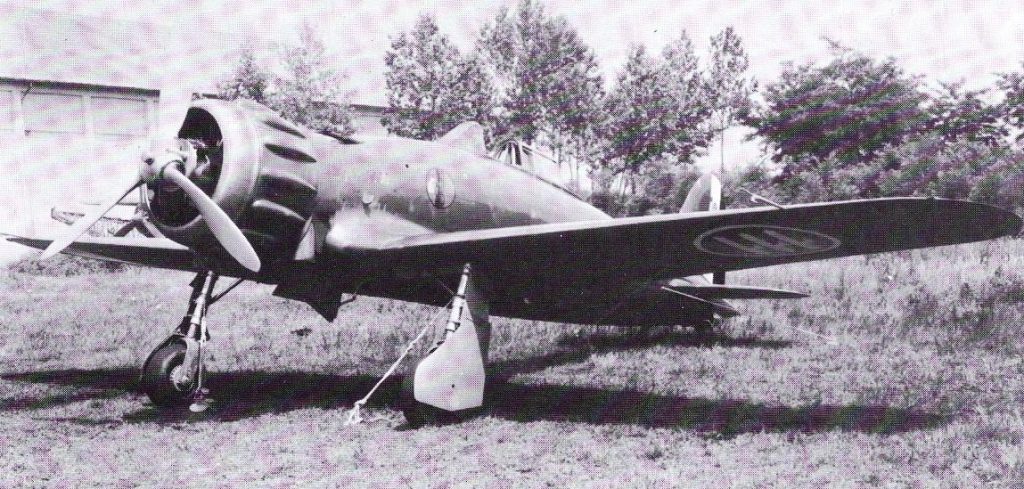
Wartime and museum photographs of the Saetta, each credited to its source and licence. Click any photo to enlarge.
On Film
The Macchi C.200 Saetta on video: a documentary history
A detailed, technically rigorous documentary on the Saetta — its design, its engine problem, its combat record and its evolution into the Folgore and Veltro.
“Macchi C.200 Saetta, Italian Lightning Bolt” by Greg’s Airplanes and Automobiles (approx. 79,000 views at time of writing; running time ~32 minutes). A rigorous, well-sourced technical history of the type.
Operations Overview
Where the Macchi C.200 Saetta flew: an operator map
Designed and built in Italy and flown mainly by the Regia Aeronautica across the Mediterranean, North Africa and the Eastern Front, with a few other operators. Toggle the categories; hover or tap a country for detail. Figures are approximate and hedged.
Categories: Design & Manufacture (Italy) · Axis Ally Operator (Croatia / NDH) · Other Wartime Operator (Germany, small numbers reported) · Surviving Airframe (a Saetta is preserved at the Smithsonian NASM in the USA; another at the Museo Caproni in Italy). Figures are approximate and hedged.
Service Record
The Macchi C.200 Saetta’s record: agile, everywhere, outgunned
The Saetta fought in every theatre the Regia Aeronautica did, valued for its handling and let down by its performance and firepower.
Questions & Answers
Macchi C.200 Saetta: your questions answered
Can I fly in a Macchi C.200 Saetta?
No — there is no airworthy Macchi C.200 anywhere. The few Saettas that survive are static museum exhibits, including one at the Smithsonian National Air and Space Museum in the United States and one at the Museo Caproni in Italy. There is no bookable Saetta flight experience, and MiGFlug does not offer one. If what you actually want is the real thing — strapping into a genuine military aircraft and flying it — you very much can do that today in other types. MiGFlug arranges flights in real fighter jets and warbirds around the world. Start here: migflug.com/flights-prices.
Why was the Macchi C.200 so slow and lightly armed?
Both flaws came from Italy’s wartime industry, not from the design. The Saetta was fitted with the Fiat A.74 radial of around 870 hp because Italy had failed to develop a powerful inline engine — roughly two-thirds the power of a contemporary Spitfire or Bf 109 — which capped its speed near 500 km/h. Its armament of just two 12.7 mm machine guns reflected Italian doctrine and production limits at a time when rivals were fielding eight guns or cannon. The airframe itself was excellent; it was starved of engine power and firepower.
What was good about the Macchi C.200?
Its handling and structure. Once an early wing problem was fixed, the Saetta became one of the most agile and forgiving fighters of its day, able to out-turn most opponents and beloved by its pilots. It was strong, reliable, and its air-cooled radial coped superbly with desert conditions. In a close dogfight on its own terms it was genuinely dangerous — the problem was that it was too slow to force such a fight.
Did the Macchi C.200 fight on the Eastern Front?
Yes, and it was arguably the Saetta’s most successful service. C.200 units deployed to the Eastern Front with Italy’s expeditionary corps against the Soviet Union, and in that lower-intensity air war — against opposition the C.200 could match — its agility and reliability told, and pilots reported favourable results. It flew escort, fighter sweeps and ground-attack missions there.
How many Macchi C.200s were built, and do any survive?
Around 1,150 were built (figures vary), by Aeronautica Macchi and other Italian manufacturers including Breda and SAI Ambrosini. A small number survive as static museum aircraft — notably one at the Smithsonian National Air and Space Museum in the United States and one at the Museo dell’Aeronautica Gianni Caproni in Italy. None is airworthy.
How does the C.200 relate to the C.202 Folgore and C.205 Veltro?
They are direct developments of the same airframe. The C.200 Saetta used the radial Fiat A.74. When licence-built German Daimler-Benz DB 601 inline engines became available, Macchi fitted one to a refined Saetta airframe to create the C.202 Folgore, and later used the DB 605 to create the C.205 Veltro. The Saetta was the sound foundation; the Folgore and Veltro were what it became once it finally had a powerful engine.
What did the name “Saetta” mean, and who designed it?
“Saetta” is Italian for “lightning bolt” or “arrow”. The aircraft was designed by Mario Castoldi of Aeronautica Macchi, the same engineer responsible for Macchi’s record-breaking Schneider Trophy racing floatplanes — a heritage clearly visible in the C.200’s clean, fast-looking airframe.
Was the Macchi C.200 a good fighter?
It is best described as a great airframe let down by its engine and armament. As a flying machine it was superb — agile, strong and a joy to handle — but as a weapon system it was too slow and too lightly armed to compete with the best Allied fighters. Its greatest importance is as the foundation for the excellent C.202 and C.205, which shared its airframe but finally gave it the power it lacked.
Fly For Real
You can’t fly the Macchi C.200 — but these, you can
The Saetta survives only as a museum exhibit; none is airworthy. The urge behind it — to strap into a real military aircraft and actually fly — is very much still bookable. MiGFlug puts you in genuine fighters and warbirds around the world.
Fighter Jet Flights
Take the controls of a real ex-military jet with an experienced pilot.
Warbird experiences
Fly in a genuine piston-engined warbird from the Saetta’s era.
All flights are operated by MiGFlug’s vetted partners with professional pilots. Browse every option and current pricing at migflug.com/flights-prices. MiGFlug does not operate Macchi C.200 flights — no airworthy Saetta exists.
Related Aircraft
If the Macchi C.200 interests you, explore these
Sources & Further Reading
Where this Macchi C.200 Saetta history comes from
Note on figures: dimensions, performance and production numbers for the C.200 vary between sources and are hedged here as approximate. Cost fields are listed as not reliably recorded because trustworthy wartime Italian cost data is not available. A small number of Saettas survive as static museum exhibits (including the Smithsonian NASM and the Museo Caproni); none is airworthy.