
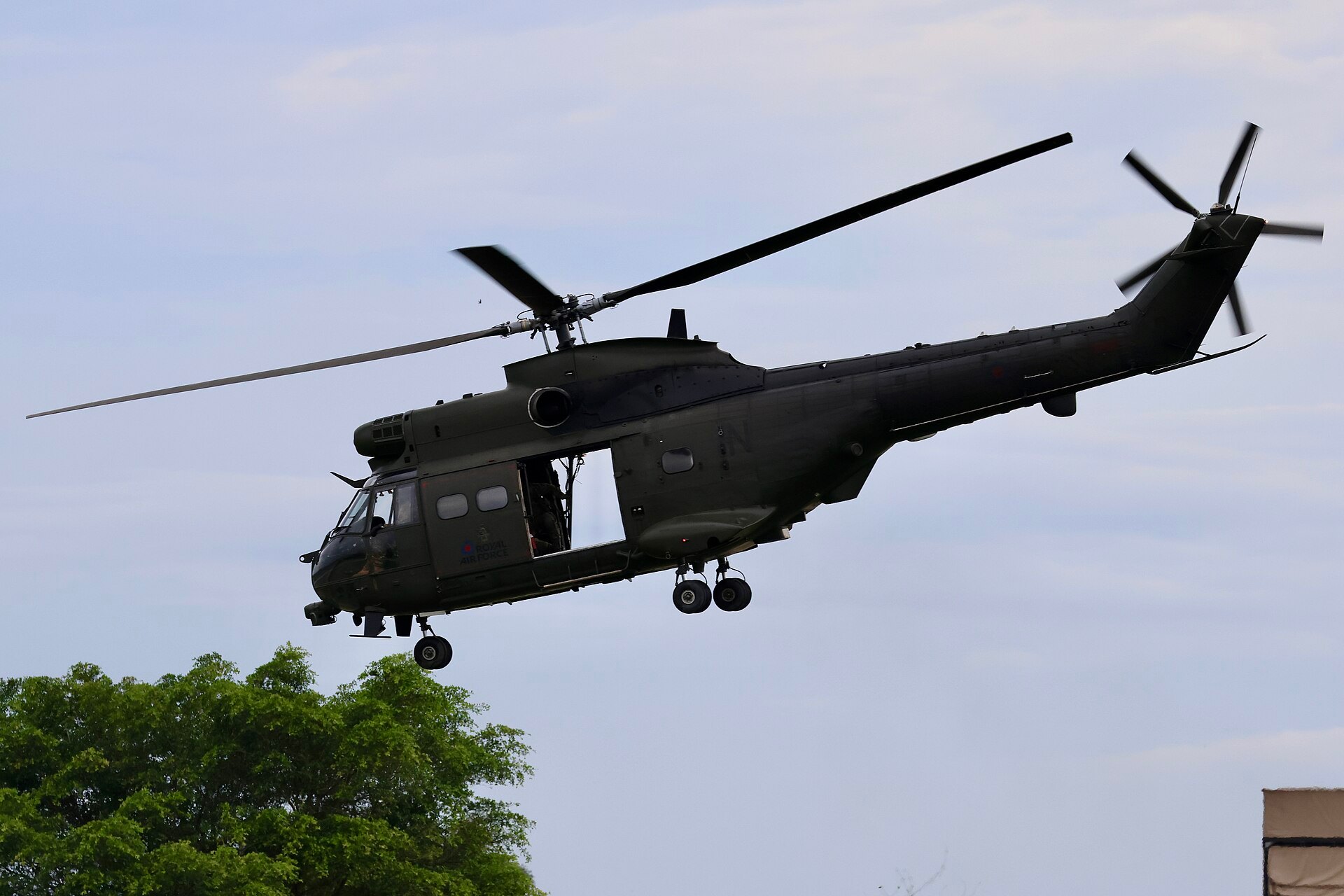
Aérospatiale SA 330 Puma
Europe’s Medium Lifter
France’s twin-turbine troop carrier, built with Westland, Romania and South Africa, flew from the Falklands and Angola to Bosnia, Iraq and Kabul, and served the RAF for 54 years before retiring in 2025.
The Puma: how France built Europe’s first great medium helicopter
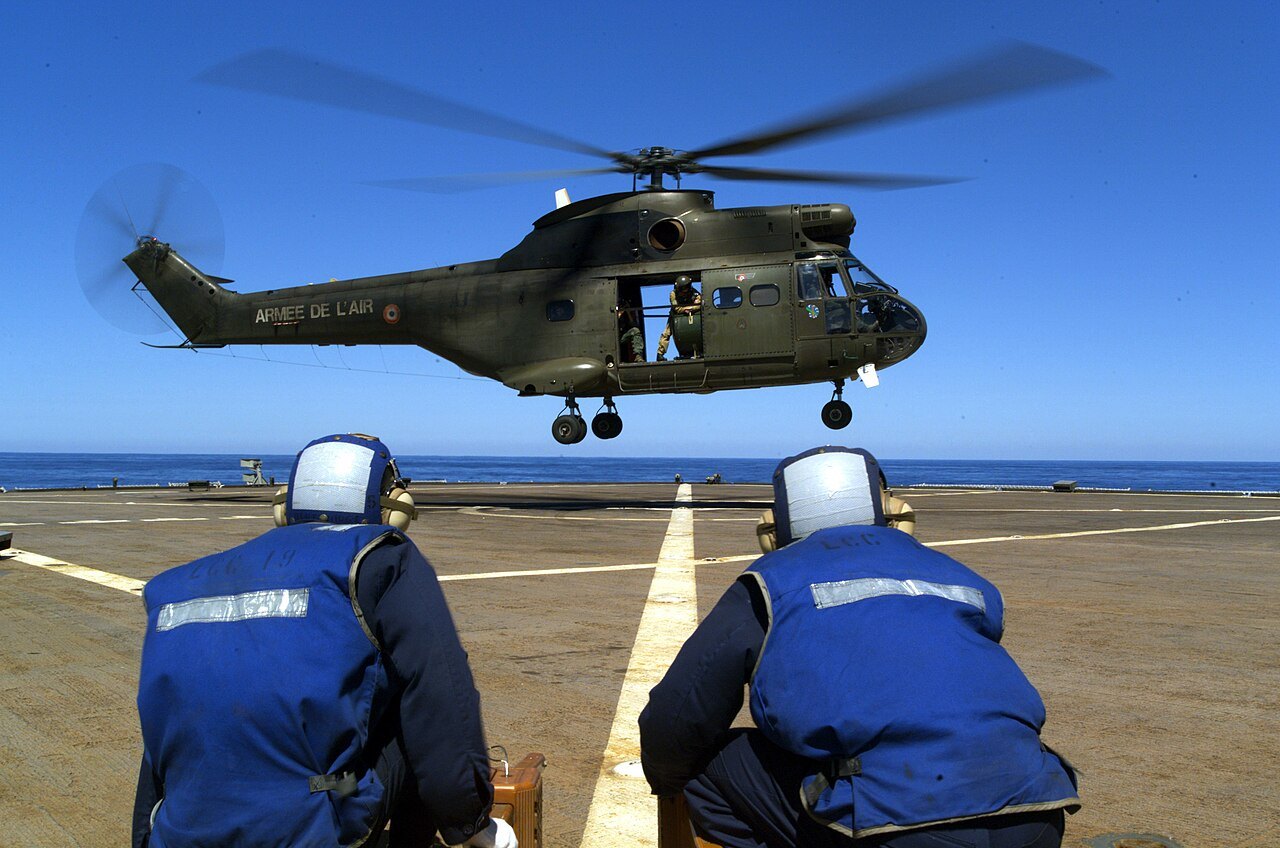
In 1962 the French Army asked for a medium helicopter that could carry up to 20 soldiers in any weather. Sud Aviation began work the following year with government backing and chose to build a new design rather than stretch an existing one. The first of two SA 330 prototypes flew on 15 April 1965. It had two Turbomeca Turmo turboshafts mounted side by side above the cabin, a four-blade main rotor, retractable wheels and a large sliding door on each side. One test aircraft even tried a big fenestron tail, before engineers concluded that it did not scale to a helicopter this size. The first production Puma flew in September 1968 and the French Army received its first in early 1969.
Britain bought it almost immediately. In 1967 the Royal Air Force chose the Puma, and a far-reaching Anglo-French agreement followed: Westland would build Pumas and Gazelles for Britain, while France would take the Westland Lynx. The first RAF Pumas arrived on 29 January 1971 and No. 33 Squadron formed at Odiham that June. Export orders poured in, and through most of the 1970s the Puma was Europe’s best-selling transport helicopter. By July 1978 the worldwide fleet had flown more than 500,000 hours. Aérospatiale built 697 before switching to the Super Puma in 1987, while IAR in Romania built about 163 more and South Africa turned its fleet into the Oryx.
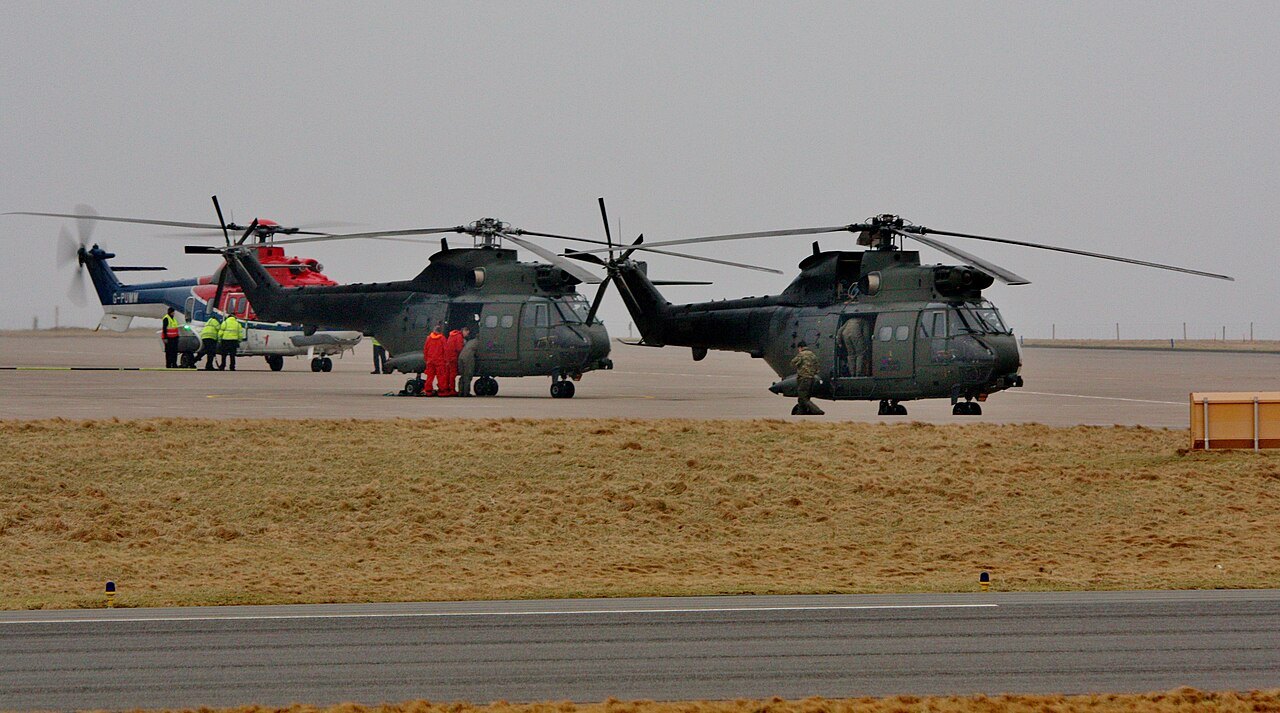
The Puma went everywhere armies went. Portuguese Pumas flew in Angola and Mozambique, South African crews flew them deep into Angola during the Border War, and six Argentine Pumas were lost in the Falklands. RAF Pumas served in Northern Ireland, the Gulf, Bosnia, Kosovo, Iraq and finally Kabul, and lifted flood victims in Mozambique and Jamaica. Upgraded with Makila engines and a glass cockpit as the Puma HC2, the RAF fleet flew on until 31 March 2025. Elsewhere the type remains in uniform from Romania to Pakistan and Morocco, and in 2025 Portugal reportedly passed eight retired Pumas to Ukraine, giving a 60-year-old design yet another war.
01The Puma in Africa: the Border War, the Oryx and the Oceanos
South Africa became one of the Puma’s most intensive users. From 1972 SAAF Pumas flew in South West Africa and Angola, trooping, deploying rapid-reaction forces, relaying radio traffic, evacuating casualties and inserting special forces, and they carried the airborne elements of large cross-border operations such as Savannah, Protea and Modular. Losses could be heavy: in 1982 a Puma brought down in Angola killed 15 servicemen, one of the worst single incidents of the war. Anticipating the 1977 UN arms embargo, South Africa bought most of its Pumas and spares beforehand, and later developed the Atlas Oryx, a remanufactured Puma with Makila engines. the SAAF says Denel assembled 51 of them, which has flown them since 1990, and the Puma’s dynamic system also underpinned the Rooivalk attack helicopter.
The Puma’s best-known African rescue was civilian. On 4 August 1991 the Greek cruise ship Oceanos foundered off the Wild Coast in heavy seas. As many as 13 SAAF Pumas, joined by other helicopters, winched survivors from the listing deck in relays, lifting about 225 people; every one of those aboard survived. Nine years later RAF and SAAF Pumas were back over southern Africa, lifting people from rooftops and trees during the 2000 Mozambique floods.
02The Puma in British service: Odiham, Aldergrove, Basra and Kabul
The RAF ordered 48 Puma HC1s, built by Westland, and added attrition replacements, including one captured from Argentina in 1982 and rebuilt as ZE449. From the 1970s Pumas were based at Odiham with 33 Squadron and the OCU, at Gütersloh with 230 Squadron, in Belize with 1563 Flight and on long detachments to Aldergrove during the Troubles. In 1994 230 Squadron moved to Northern Ireland, and in 2009 both squadrons came together at Benson.
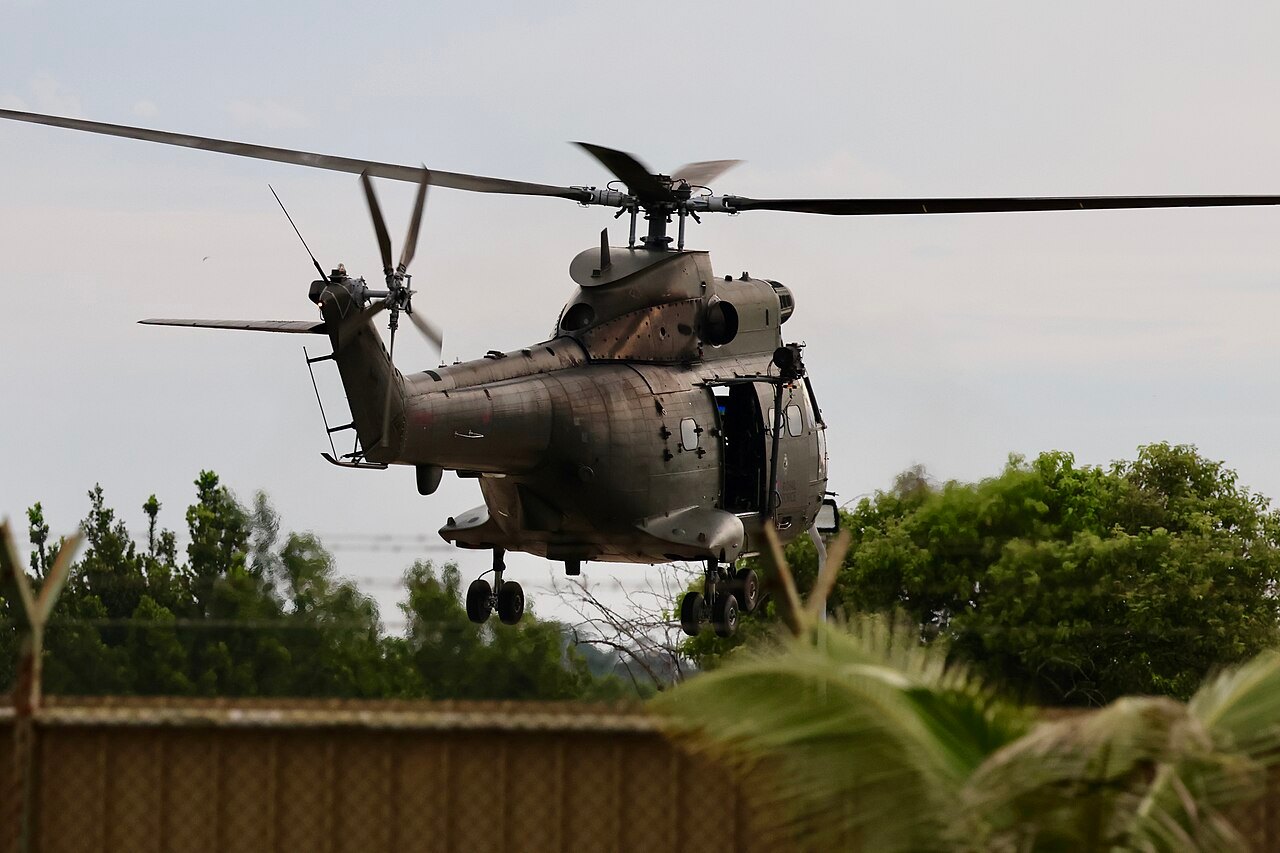
Operations were relentless. In 1991 Pumas of 33 and 230 Squadrons helped move troops quickly enough to stop Iraqi forces sabotaging the Rumaila oil field. From 2003 to 2009 they provided troop mobility across Iraq, where two collided on a special forces mission near Baghdad in April 2007 and another crashed that November, an inquest criticising the lack of night-vision equipment and maintenance shortcomings. Six ex-South African SA 330Ls were bought in 2002, and from 2012 24 aircraft were rebuilt as the HC2, with Makila engines, new gearboxes, digital autopilot and ballistic protection, giving double the payload over three times the range. The HC2 flew in Kabul in support of NATO’s mission, and with 33 and 230 Squadrons until the type’s retirement on 31 March 2025.
What makes the Puma special
Power in reserve
The Puma’s two Turmo turboshafts were deliberately sized with a large power reserve, so a fully loaded aircraft could continue its mission on one engine. That margin also gave good hot-and-high performance, and the design was cleared for everything from Arctic cold to desert heat. The rotors turned at about 265 rpm through a five-stage reduction gearbox, with anti-vibration measures built into both the gearbox and the blades, unusual sophistication for a 1960s design. An automatic blade inspection system warned crews of fatigue cracks in the rotor blades.
A cabin made for soldiers
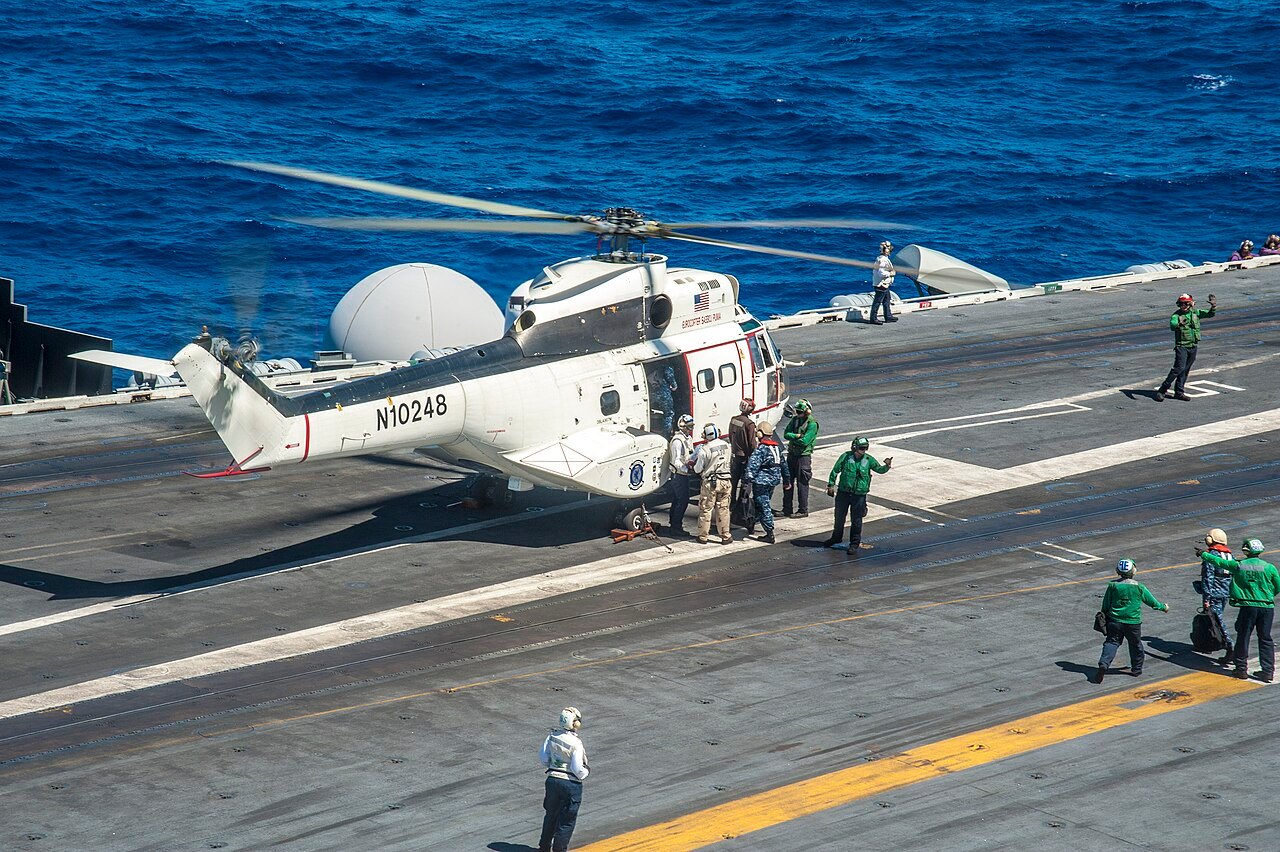
Folding seats along the cabin take 16 equipped soldiers, or six stretchers and four attendants. The floor carries up to 2.5 tonnes of internal cargo, the cargo hook a similar load underslung, and the RAF HC2 lifted 16 passengers, 12 equipped troops or 2 tonnes of freight. Large sliding doors on both sides let troops leave quickly, which suited special forces work. A hoist could be fitted on the starboard side for rescue, and civil operators fitted airline-style seating for offshore oil crews, VIPs and passengers.
Built to be moved
The Puma was designed to fit inside Transall and C-130 transports, with detachable rotor, undercarriage and tail boom. The RAF could prepare an HC2 for a C-17 in about four hours and rebuild it at the far end in the same time. Ease of maintenance was a design aim: components needing regular checks were visible from the ground, life-limited parts were minimised and twin independent hydraulic systems protected the flight controls. That thinking kept fleets flying in remote bases from Belize to the Sahel.
03The Puma’s variants: SA 330B to IAR 330 and Oryx
- SA 330A: prototypes, originally called Alouette IV.
- SA 330B: first French Army production version, Turmo IIIC4 engines; 132 bought.
- SA 330C: first export version, Turmo IVB.
- SA 330E: Westland-built RAF Puma HC1.
- SA 330F / G: civil versions with Turmo IIIC4 and IVC engines.
- SA 330H: upgraded military version with Turmo IVC and composite blades.
- SA 330J / L: civil and military hot-and-high versions with composite blades and higher weights; Brazilian CH-33.
- SA 330S: Portuguese upgrade with Makila engines.
- SA 330 Orchidée: battlefield surveillance radar demonstrator, rushed to the 1991 Gulf War.
- IAR 330: Romanian licence build from 1975, about 163 built by 2008, including the Elbit-upgraded SOCAT anti-tank and naval versions.
- Atlas Oryx: South African remanufactured Puma with Makila engines.
- Puma HC2: RAF upgrade of 24 aircraft, 2012–2014.
Aérospatiale SA 330H Puma specifications
Specifications
- Crew
- 3 (two pilots and crewman)
- Capacity
- 16 troops, or 6 stretchers and 4 attendants, or 2,500 kg cargo
- Length
- 18.15 m (59 ft 6 in) rotors turning
- Main rotor diameter
- 15.00 m (49 ft 2 in)
- Height
- 5.14 m (16 ft 10 in)
- Empty weight
- 3,536 kg (7,795 lb)
- Max take-off weight
- 7,000 kg (15,430 lb)
- Powerplant
- 2 × Turbomeca Turmo IVC turboshafts, 1,175 kW (1,575 shp) each
- Maximum speed
- 257 km/h (159 mph)
- Cruise speed
- 248 km/h (154 mph)
- Range
- 580 km (360 mi)
- Service ceiling
- 4,800 m (15,750 ft)
- Climb rate
- 7.1 m/s (1,400 ft/min)
- Armament
- Usually unarmed; door machine guns on many military aircraft; IAR 330 SOCAT and Lebanese SA 330SM armed variants
Costs & production
- Cost per flight hour
- No official figure published. Hedged estimate: several thousand US dollars per hour in military service, based on the fuel burn of two Turmo turbines and the maintenance burden of an ageing medium twin; costs vary widely between air forces and civil operators
- Production
- 697 built by Aérospatiale (1968–1987); about 163 IAR 330s in Romania (1975–2008); 11 assembled in Indonesia; 51 Oryx assembled in South Africa
- Programme
- French Army requirement 1962; first flight 15 April 1965; RAF HC2 upgrade 2012–2014; RAF retirement 31 March 2025
04The Puma’s operating costs: why the RAF chose to rebuild rather than replace
By the 2000s the RAF’s Pumas were showing their age, and in Iraq the fleet’s limitations in heat, at night and under fire were exposed. Rather than buy new, the Ministry of Defence chose a life-extension programme. Plans for 30 upgraded aircraft were cut to 22 and then raised to 24, and the resulting Puma HC2, flown from 2012, gained Makila engines, new gearboxes and tail rotors, digital autopilot and flight management, ballistic protection and a better defensive aids suite. Airbus said the HC2 could carry double the payload over three times the range of the HC1.
The economics of an ageing medium twin are dominated by maintenance hours and spares rather than fuel, which is why many Puma operators, from Portugal to South Africa, have chosen re-engining and rebuilding. No air force publishes a reliable cost per flight hour for the type, so the figure in the table is a hedged estimate rather than an official number.
The Puma from French prototype to RAF farewell
First flight
The first SA 330 prototype flies on 15 April.
RAF choice and Westland deal
The RAF selects the Puma and an Anglo-French agreement shares Puma, Gazelle and Lynx production.
French Army service
Deliveries begin after the first production aircraft flies in September 1968.
RAF Puma HC1
First RAF Pumas arrive on 29 January; 33 Squadron forms at Odiham on 14 June.
Romanian production
The first IAR 330 flies on 22 October under a 1974 licence.
Falklands
All six Argentine Pumas in the theatre are lost; one captured Puma later joins the RAF.
French production ends
Aérospatiale has sold 697 SA 330s; the Super Puma takes over.
Gulf War and Oceanos
RAF Pumas move troops to secure Rumaila; SAAF Pumas winch survivors from the sinking Oceanos.
Kosovo
Twenty French Pumas insert two companies of paratroopers at Kosovska Mitrovica.
Puma HC2
The first upgraded RAF Puma completes qualification; 24 are rebuilt by 2014.
Tragedy in Congo
A Pakistani Army Puma on UN service crashes in North Kivu on 29 March, killing eight peacekeepers.
RAF farewell
The RAF retires the Puma on 31 March after 54 years.
Stories & eyewitnesses: the Puma at war and at sea
Six Pumas, none came home
Argentina lost every Puma it sent to the Falklands.
Read the full story
The Oceanos airlift
SAAF Pumas winched about 225 people off a sinking liner.
Read the full story
Rumaila, 1991
RAF Pumas raced Iraqi demolition teams to an oil field.
Read the full story
Out of Goražde
In April 1994 a Puma lifted out an SAS team and a downed pilot.
Read the full story
Operation Barracuda
French Pumas carried the troops who ended Bokassa’s empire.
Read the full story
The assassination of Rashid Karami
A bomb aboard a Lebanese Puma killed a prime minister.
Read the full story
Twenty Pumas into Mitrovica
France’s largest Puma lift of the Balkan wars.
Read the full story
Romania’s Puma school
IAR in Ghimbav made the Puma Romania’s helicopter.
Read the full story
Loss in North Kivu
Eight UN peacekeepers died in a Pakistani Puma in 2022.
Read the full story
Last flight to the museum
Indonesia flew a Puma to its air force museum.
Read the full story
The Puma in pictures
Where the Puma flies and flew
The Puma’s record
The Puma has flown in the Portuguese colonial wars, the South African Border War, Western Sahara, the Falklands, Lebanon, the Gulf War, the Balkans, Iraq and Afghanistan, as well as in countless rescues and relief operations. Losses were heaviest where it met modern air defences, as Argentina discovered in 1982.
See how training and combat types compare in the military aircraft statistics database. Figures are approximate.
Everything people ask about the Puma
Can I fly in an Aérospatiale SA 330 Puma?
When did the RAF retire the Puma?
How many Pumas were built?
How many soldiers can a Puma carry?
What is the difference between the Puma and the Super Puma?
What is the Atlas Oryx?
Is the Puma still in service?
You can’t fly the Puma.
These, you can.
Most of this museum you can only look at. These genuine military jets you can fly yourself with MiGFlug — with aerobatics and time on the controls.
 Fly the L-39 AlbatrosThe world’s most-flown jet trainer — aerobatics included
 Fly the F-104 Starfighter“The missile with a man in it”
 Fly the MiG-21The Cold War’s most-produced jet
 Fly the T-33 Shooting StarAmerica’s first jet trainer
 Fly the DH VampireA piece of early jet history
 Fly the S.211Agile Italian jet trainer
 Fly the MB-326The classic Aermacchi jet
 Fly the MiG-15The Soviet legend of the Korean War
Continue the tour
Every fact, checked
- Puma HC2Royal Air Force aircraft page: roles, capacity, C-17 transport, squadrons and out-of-service date
- UK MoD receives first upgraded Puma HC Mk2 helicopterAirforce Technology on the 2012 upgrade and its capabilities
- Atlas OryxSouth African Air Force: 51 aircraft, service from 1990, Project Drummer upgrade
- Argentine Puma shot down by American Stinger missileMercoPress on the 30 May 1982 loss near Mount Kent
- Over 500 Are Rescued as Greek Cruise Ship Sinks Off South African CoastNew York Times report on the Oceanos rescue
- Helicopter Bomb Blast Kills Lebanese PremierLos Angeles Times on the assassination of Rashid Karami, 1 June 1987
- Eight killed as UN helicopter crashes in eastern DRCAl Jazeera on the 29 March 2022 MONUSCO Puma crash
- 1939–2019 Marignane: 80 Years of PioneeringAirbus Helicopters heritage book covering the Puma’s development
- Flood aid ‘not enough’, UNThe Guardian on helicopter relief during the 2000 Mozambique floods