
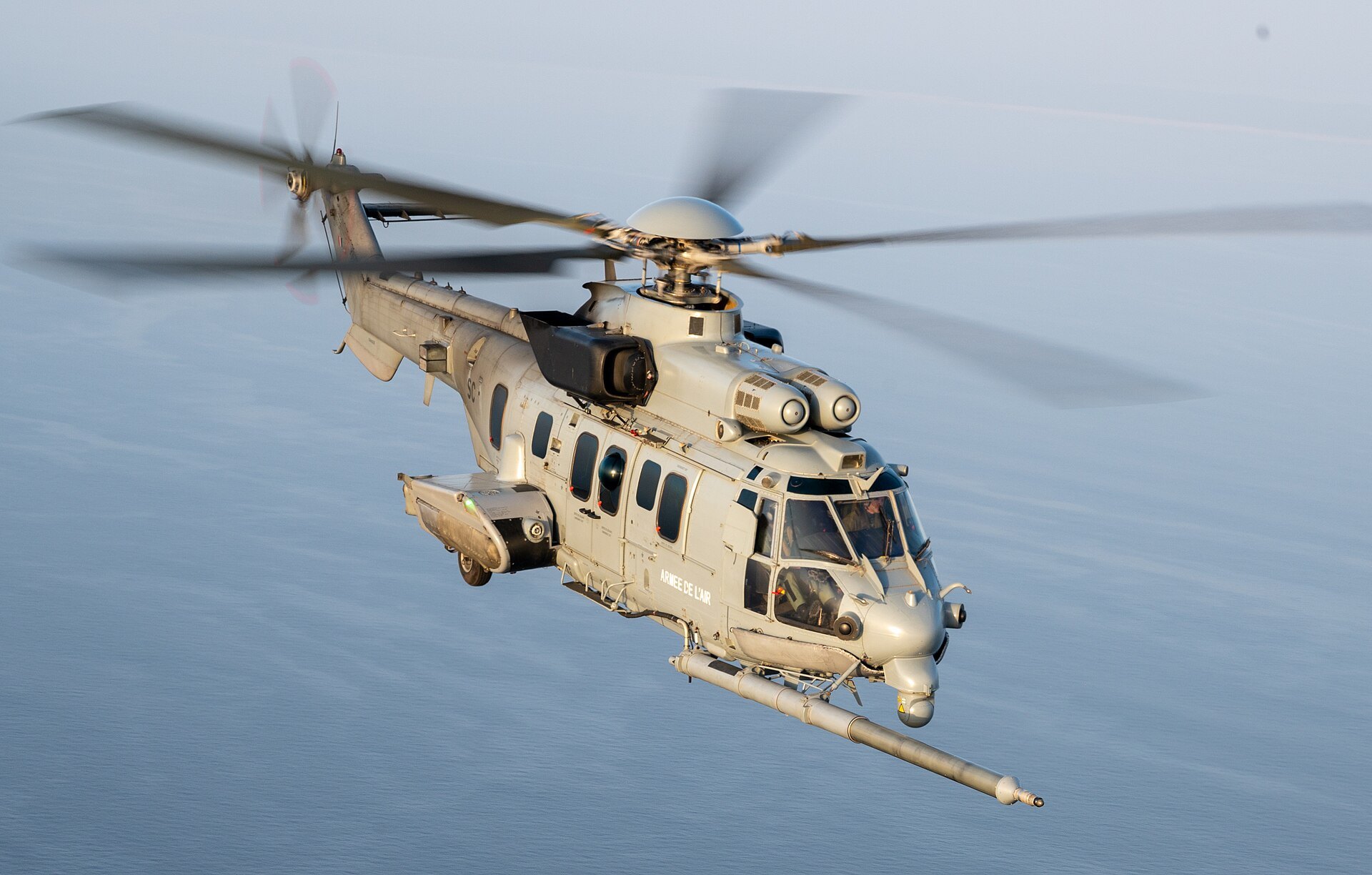
Super Puma, Cougar & Caracal
From AS332 to H225M
One family, three names: the Super Puma ferried North Sea oil crews, the Cougar carried troops from Bosnia to Mali, and the H225M Caracal became Europe’s air-refuellable combat rescue helicopter.
The Super Puma family: how the Puma grew into the Cougar and the Caracal
By 1974 Aérospatiale knew the Puma needed a successor, and it chose evolution over revolution. The new AS332 Super Puma, announced at the 1975 Paris Air Show, kept the Puma’s layout but replaced the Turmo engines with the new Turbomeca Makila, which brought more power and about 17 percent lower fuel consumption. Composite rotor blades, a stronger fuselage, crashworthy landing gear and a ventral fin under the tail completed the changes. A Puma converted as the SA 331 test-bed flew on 5 September 1977, and the first true Super Puma followed on 13 September 1978. From the start it came in short and stretched versions, and military and civil models were developed side by side.
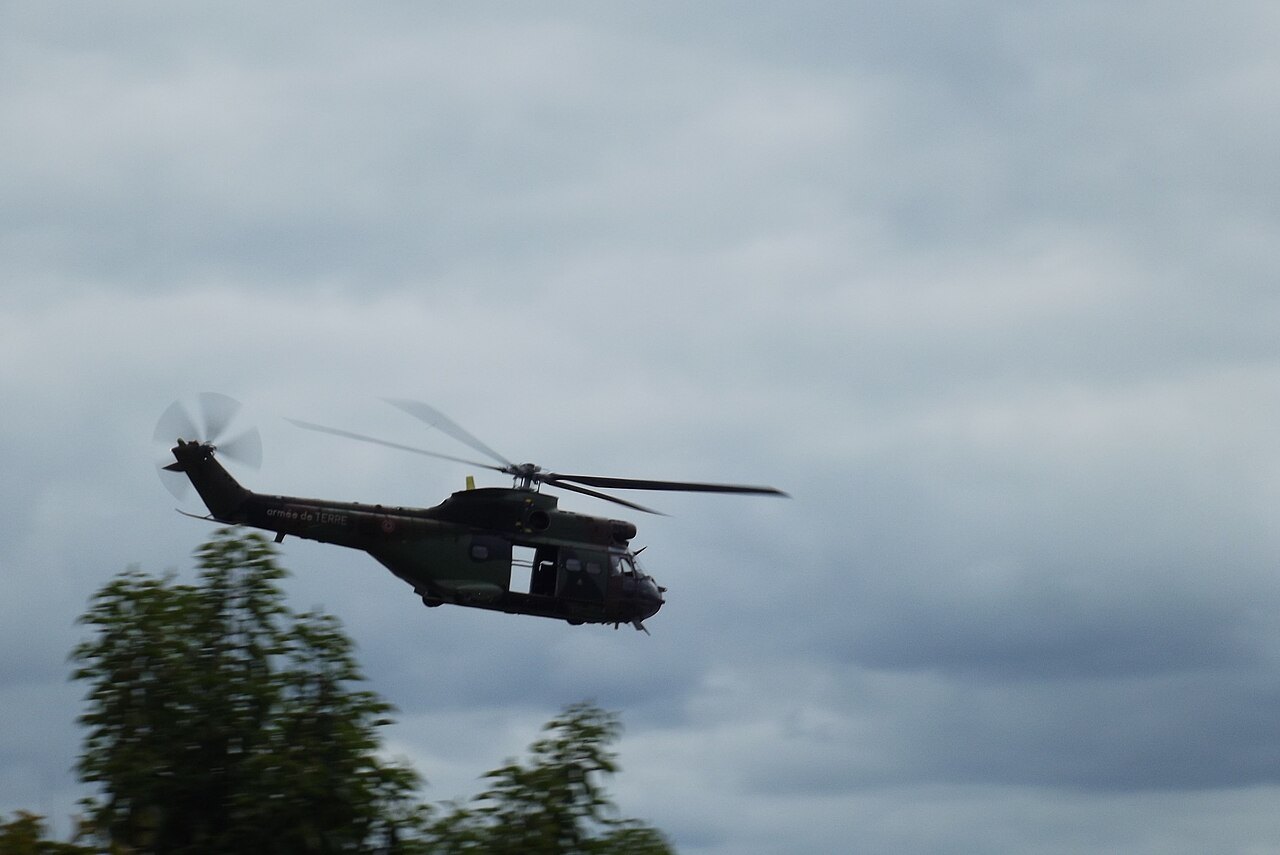
The Super Puma sold quickly. Between 1981 and 1987 Aérospatiale built about three a month, and the type became the backbone of North Sea offshore flying with Bristow, Bond and CHC, as well as a military transport, search-and-rescue and VIP helicopter for dozens of countries. In 1990 the military versions were renamed AS532 Cougar. A decade later Eurocopter answered a French Air Force call for a combat search-and-rescue helicopter with the EC725, a Cougar with a five-blade rotor, Makila 2A engines and glass cockpit, which first flew on 27 November 2000. Its civil twin, the EC225, took over the long-range offshore role, and under Airbus the family became the H215, H215M, H225 and H225M Caracal.
The family’s military record runs from Rwanda and the Gulf to Afghanistan, Mali and Lebanon evacuations, and its civil record includes thousands of rescues and offshore shuttles. It has also known dark days: the loss of Bond’s AS332 L2 off Peterhead in 2009, and the Turoy crash of an H225 in Norway in 2016, which grounded the type in the North Sea. Yet the Caracal keeps winning orders, from Brazil, Kuwait, Singapore, Hungary, the Netherlands, Iraq, Morocco and Romania, and Airbus says more than 150 are in service in 12 nations. The 1,000th Super Puma was delivered in 2016, and production of the H215 moved to Brașov in Romania, where IAR had once built the original Puma.
01The Caracal’s war: from Opération Baliste to Afghanistan and Mexico
The EC725 was born for war. The French Air Force had trialled the AS532 A2 Cougar for combat rescue between 1996 and 1999 and rejected it as underpowered and short-legged, so Eurocopter built a more ambitious derivative. France received its first EC725 in February 2005. Barely six weeks after formal service entry, in the summer of 2006, three were sent to Cyprus to evacuate civilians from Lebanon during Opération Baliste. From December 2006 French EC725s flew from Kabul International Airport in support of coalition forces in Afghanistan, and they became the mount of French special forces and combat rescue crews.
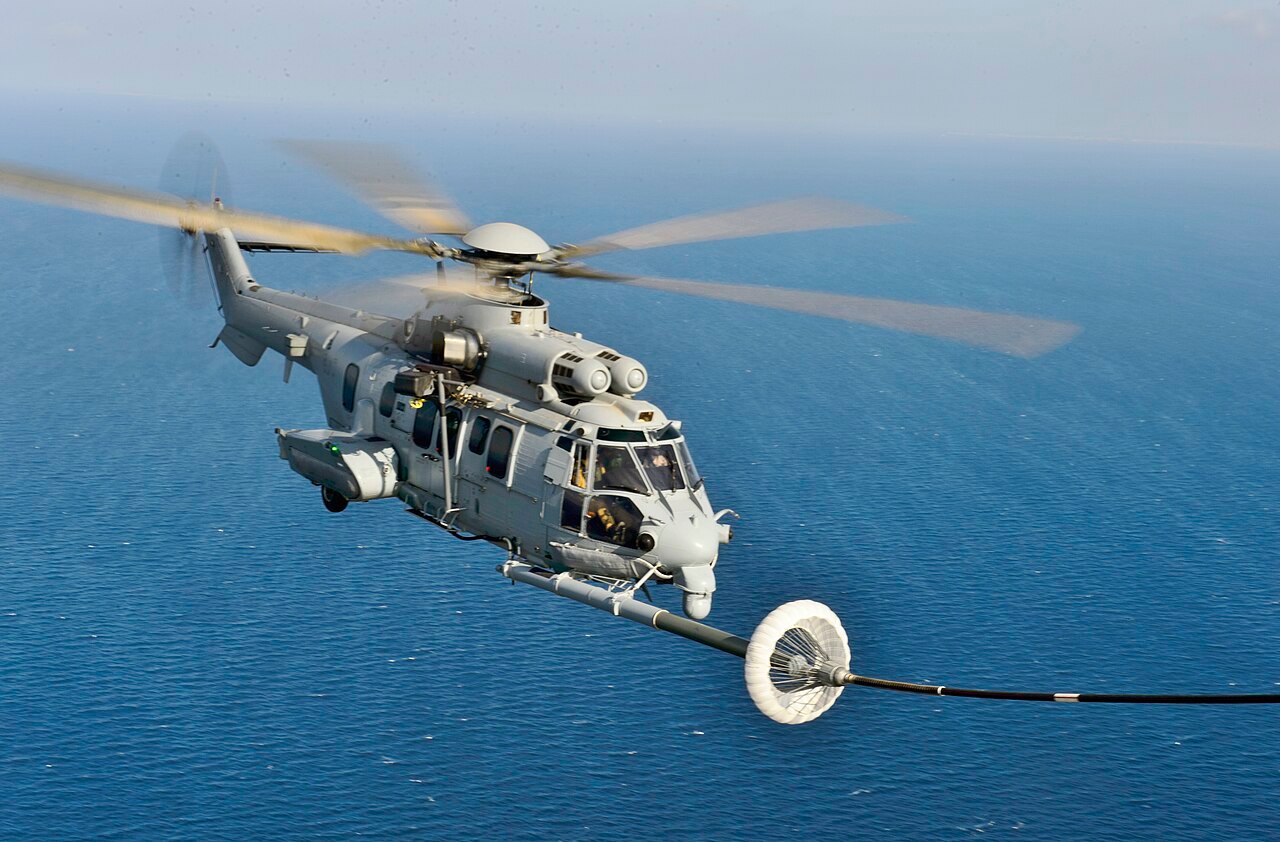
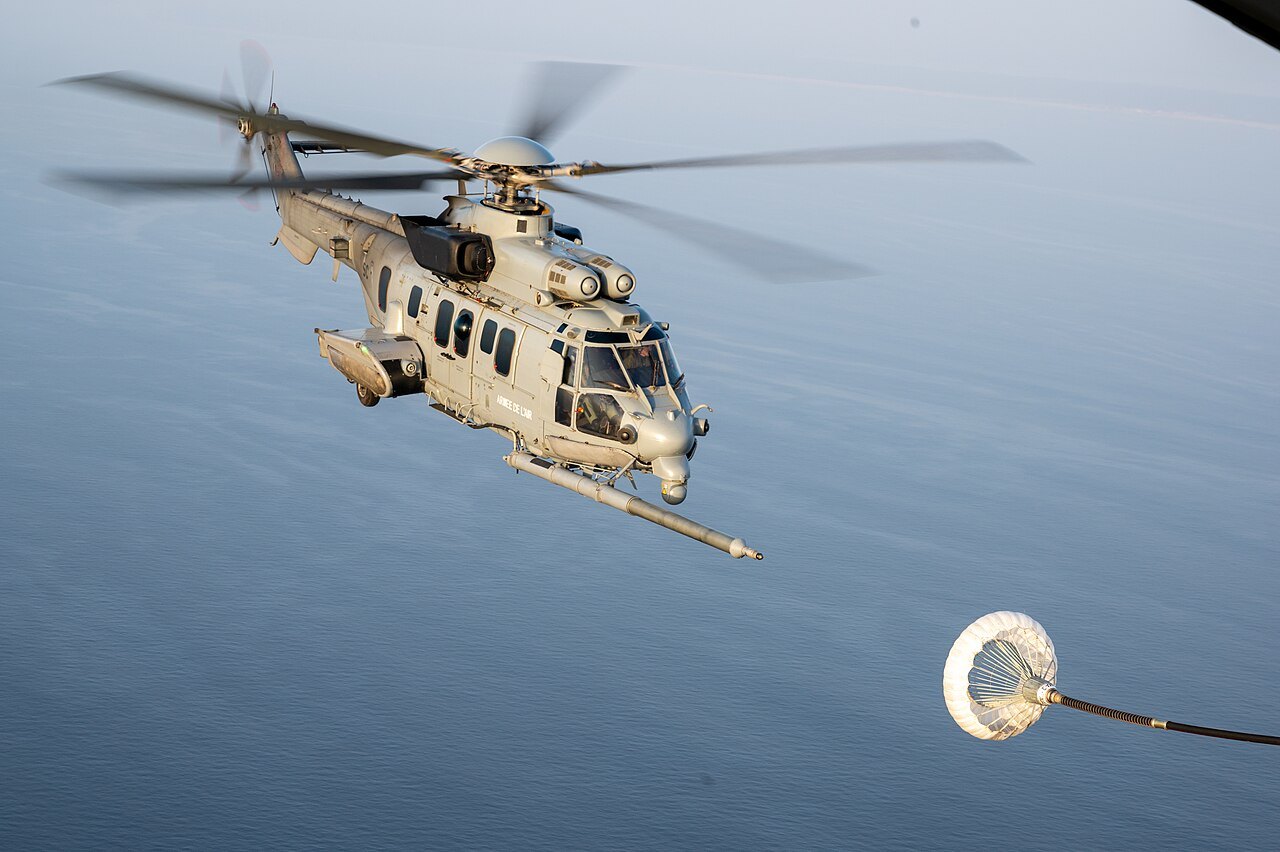
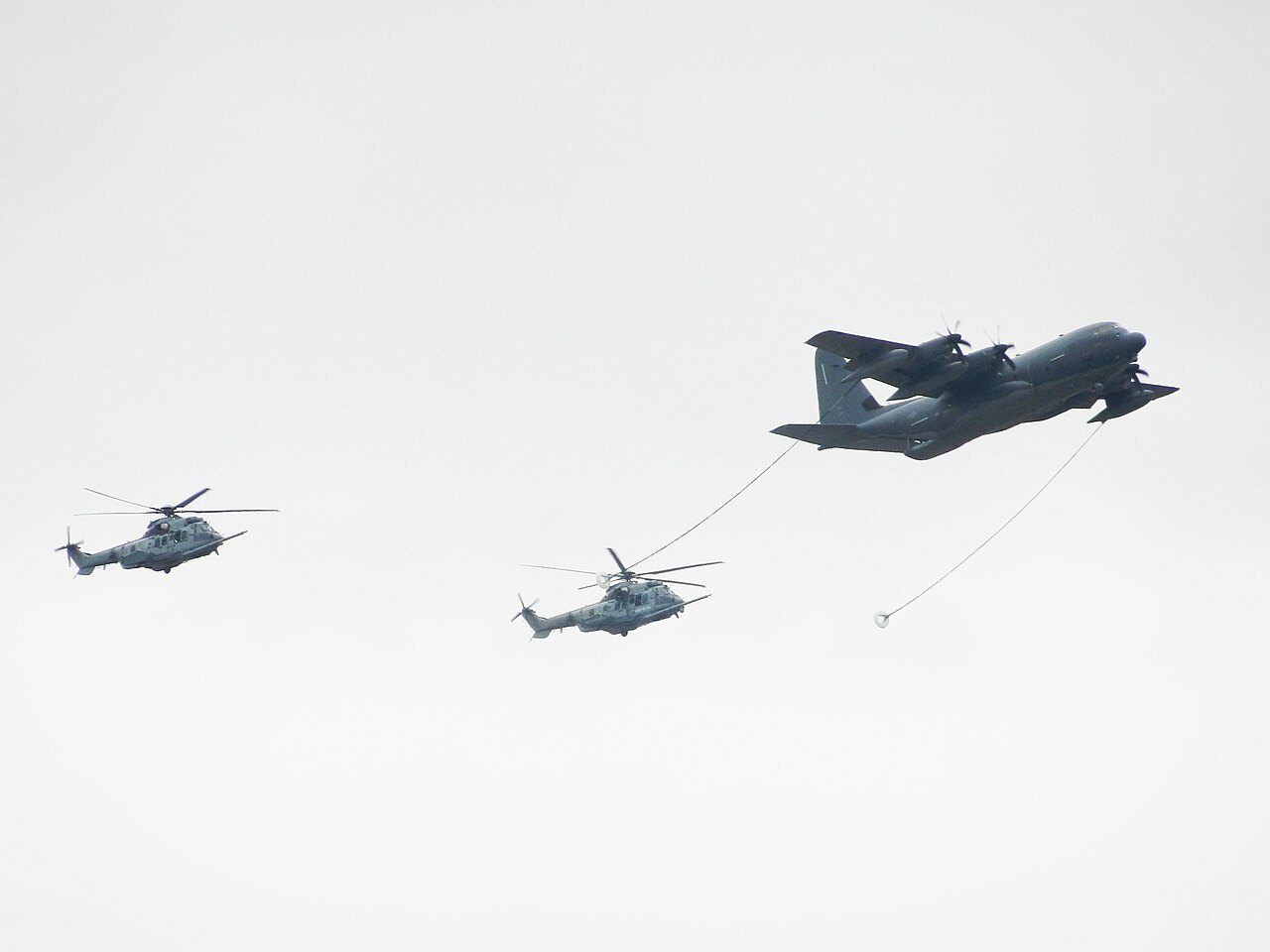
The Caracal can refuel in flight, from a tanker or in the hover, extending its endurance from about four and a half hours to more than ten, according to Airbus. Exports followed. Brazil ordered 50 for its three services in 2008, assembled by Helibras at Itajubá, and its Navy integrated the Exocet anti-ship missile. Malaysia’s EC725s searched for Malaysia Airlines Flight 370 in 2014 and rescued climbers from Mount Kinabalu after the 2015 Sabah earthquake. In Mexico the type met organised crime: in May 2015 a Mexican Air Force EC725 was forced down in Jalisco when a rocket-propelled grenade struck its tail rotor, and six soldiers died. Poland selected 50 H225Ms in 2015, then abandoned the deal in October 2016.
02The Super Puma in the North Sea: workhorse and warning
The Super Puma’s civil fame rests on oil. From the early 1980s Bristow, Bond, CHC and others flew AS332s and later EC225s between Aberdeen, Sumburgh, Stavanger and Bergen and the platforms offshore, in weather that would ground most aircraft. CHC alone had 56 Super Pumas in 2014.
The North Sea also exposed the design’s weak point: the main gearbox. On 1 April 2009 a Bond AS332 L2, G-REDL, lost its main rotor near Peterhead after a catastrophic failure in the gearbox, killing all 16 aboard. In 2012 two EC225s, G-REDW and G-CHCN, ditched safely after fatigue cracks in a bevel gear shaft caused oil-pump failures; the AAIB traced them to corrosion pits and underestimated weld stresses. On 29 April 2016 an H225 carrying oil workers lost its rotor near Turoy, Norway, killing 13, and the type was grounded by British and Norwegian authorities. Norway’s Statoil later dropped the type for good. Airbus redesigned components and the H225 returned slowly to offshore work, but the episode cost the family much of its civil market, even as its military sales held up.
What makes the Super Puma family special
The Makila heart
Every member of the family is built around the Turbomeca Makila. The original 1A1 gave the Super Puma more power and a 17 percent fuel saving over the Puma’s Turmo. The Makila 2A1 in the H225M produces about 1,776 kW each, around 14 percent more than the 1A2, with dual-channel FADEC. That power lets the Caracal carry 28 troops or lift 4.75 tonnes underslung, and keep going on one engine if it has to. Anti-icing options let it work in Nordic winters as well as Saharan heat.
Five blades and a quiet cabin
The EC725 and H225M replaced the Super Puma’s four-blade rotor with a five-blade composite Spheriflex rotor with new aerofoils, which Airbus says gives an exceptionally low vibration level. Combined with a four-axis autopilot that can hold an automatic hover, it makes the aircraft a stable platform for night rescue, hoisting and sensor work, and less tiring for crews and passengers on long sorties far out at sea or deep behind enemy lines. A search radar and forward-looking infrared let crews find survivors at night and in poor weather.
Built to take punishment
From the first AS332 the designers paid special attention to survivability: a stronger fuselage, energy-absorbing landing gear, crashworthy fuel plumbing and self-sealing tanks. Military versions add removable armour, door guns, rocket pods and, through Airbus’s HForce kit, gun pods and Hellfire missiles. Naval Cougars can carry Exocet, and Brazilian Caracals were fitted with chaff and flare dispensers for self-protection against missiles. French Caracals carry Thales self-protection systems for the same reason, a lesson learned over Afghanistan and the Sahel.
03The Super Puma family’s variants: one page, three generations
- SA 331: Puma converted as a Makila test-bed, first flight 5 September 1977.
- AS332 B/C/F/M Super Puma: military short (B, F naval) and long (M) versions; civil AS332 C and L.
- AS332 L1 / L2: stretched civil versions; L2 with longer rotor blades and EFIS, the North Sea standard of the 1990s and 2000s.
- AS532 Cougar: military versions from 1990 – UC/AC short, UL/AL long utility and armed, SC naval with Exocet, U2/A2 Mk II.
- EC725 / H225M Caracal: combat rescue and tactical transport version with five-blade rotor, Makila 2A engines and glass cockpit; first flight 27 November 2000.
- EC225 / H225: civil offshore and SAR counterpart of the EC725.
- H215 / H215M: 2014 rebranding of the AS332 L1e/C1e and AS532 AL/UL, assembled at Brașov, Romania.
- Licence builds: IPTN / PTDI in Indonesia, Helibras in Brazil (HM-3, VH-34, H-36).
04The Cougar in service: Switzerland, the Netherlands and the Sahel
The Swiss Air Force bought 15 AS332M1 Super Pumas (TH89) and later Cougars (TH98), flying search and rescue, transport and humanitarian missions; in August 2021 three of them flew 226 sorties over Euboea and the Peloponnese, dropping more than 386 tonnes of water on Greek wildfires. Spain’s Super Pumas were for a time the only rotorcraft providing combat rescue and medevac cover in western Afghanistan between 2005 and 2011. The Netherlands flew AS532 U2 Cougars from Gilze-Rijen and is replacing them with 12 H225Ms for special operations from 2030. France’s Cougars served in the Sahel, where a Cougar and a Tiger collided at night in Mali on 25 November 2019, killing 13 French soldiers, the country’s heaviest single loss since the 1983 Beirut bombing.
Airbus H225M Caracal specifications
Specifications
- Crew
- 2 pilots plus mission crew
- Capacity
- Up to 28 troops, or 11 stretchers and 4 attendants, or 4,750 kg underslung
- Length
- 19.5 m (64 ft 0 in)
- Main rotor diameter
- 16.20 m (53 ft 2 in)
- Height
- 4.6 m (15 ft 1 in)
- Empty weight
- 5,330 kg (11,751 lb)
- Max take-off weight
- 11,200 kg (24,692 lb)
- Powerplant
- 2 × Safran (Turbomeca) Makila 2A1 turboshafts, 1,776 kW (2,382 shp) each
- Maximum speed
- 324 km/h (201 mph)
- Cruise speed
- 262 km/h (163 mph)
- Range
- 920 km (572 mi); 1,253 km (779 mi) with auxiliary tanks
- Endurance
- About 4.5 hours on standard fuel; over 10 hours with in-flight refuelling
- Service ceiling
- 6,095 m (19,997 ft)
- Armament
- Optional: 7.62 mm door guns, 68 mm rocket pods, HForce gun pods and Hellfire, Exocet (Brazilian Navy), MU90 torpedo
Costs & production
- Unit cost
- Programme-level figures only: Brazil’s 2008 order for 50 H225Ms was about €1.9 billion including local production and support; Kuwait’s 2016 contract for 30 was about US$1 billion
- Cost per flight hour
- No official figure published. Hedged estimate: in the region of US$5,000–10,000 per hour for a military H225M including maintenance, based on its size class and two Makila engines; civil Super Puma operators budget less but still several thousand dollars per hour
- Production
- 1,000 Super Pumas (all versions, including Cougars and H225s) by September 2016; more than 150 H225Ms in service in 12 nations
- Programme
- AS332 first flight 13 September 1978; Cougar name 1990; EC725 first flight 27 November 2000; H215 assembly at Brașov from 2015
05The Super Puma family’s operating costs: what a medium-heavy twin really costs
Medium-heavy twins are expensive aircraft to own. Contract values for the Caracal include far more than airframes: Brazil’s roughly €1.9 billion deal for 50 aircraft paid for a Helibras production line, local content, weapons integration and support, and Poland’s abandoned 2015 deal was priced at about PLN 13.3 billion, 40 percent of it for training and logistics. Dividing such totals by the number of helicopters overstates the price of each airframe.
Running costs are dominated by the dynamic system. After the 2009 and 2016 accidents, main gearbox inspections, component redesigns and life limits rose sharply for the AS332 L2 and H225, which is one reason oil companies moved to newer types. For a military Caracal, fuel for two Makila 2A1s, scheduled maintenance and spares put the cost per flight hour into the thousands of dollars; the figure in the table is a hedged estimate, as no operator publishes an official number.
The Super Puma family from AS332 to H225M
A new Puma
Aérospatiale begins work on a Makila-powered Puma successor and announces it at the 1975 Paris Air Show.
Super Puma flies
The first AS332 prototype flies on 13 September, a year after the SA 331 test-bed.
Into service
The first civil Super Puma is delivered; production reaches about three a month.
Cougar
Military Super Pumas are renamed AS532 Cougar.
Rwanda
Super Pumas provide most of the lift for France’s intervention force.
EC725 flies
The combat rescue EC725 makes its first flight at Marignane on 27 November.
Baliste and Afghanistan
French EC725s evacuate civilians from Lebanon, then deploy to Kabul in December.
G-REDL
A Bond AS332 L2 crashes off Peterhead on 1 April after a main gearbox failure, killing 16.
Turoy and the 1,000th
An H225 crash in Norway kills 13 on 29 April; the 1,000th Super Puma is delivered in September.
Mali collision
A French Cougar and a Tiger collide on 25 November; 13 soldiers die.
Netherlands orders Caracals
The Dutch contract for 12 H225Ms for special operations is signed in November.
Stories & eyewitnesses: the Super Puma, Cougar and Caracal
Out of Lebanon by Caracal
Six weeks into service, the EC725 flew its first real mission.
Read the full story
Rwanda, 1994
Super Pumas carried France’s intervention force into the genocide.
Read the full story
Turoy, 29 April 2016
A rotor separation in Norway grounded the H225.
Read the full story
Fire over Euboea
Swiss Super Pumas dropped 386 tonnes of water in a week.
Read the full story
Hit by an RPG over Jalisco
A Mexican Caracal was forced down by cartel fire in 2015.
Read the full story
Mount Kinabalu
Malaysian Caracals plucked climbers off a shaken mountain.
Read the full story
Spain’s rescue cover in western Afghanistan
For a time, Spanish Super Pumas were the only CSAR in the region.
Read the full story
Darkness over Mali
A Cougar and a Tiger collided in France’s worst loss in decades.
Read the full story
Presidents and prime ministers
Super Pumas carried leaders from Paris to Basra.
Read the full story
The thousandth Super Puma
In 2016 Germany’s federal police took delivery of a milestone.
Read the full story
The Super Puma in pictures
Where the Super Puma flies and flew
The Super Puma family’s record
The family has flown in Rwanda, the Gulf, the Balkans, Afghanistan, Iraq, Mali and Mexico, as well as in countless rescues and evacuations. Airbus says the H225M alone has been combat-proven since 2007 and has flown more than 300,000 hours.
See how training and combat types compare in the military aircraft statistics database. Figures are approximate.
Everything people ask about the Super Puma
Can I fly in a Super Puma, Cougar or Caracal?
What is the difference between the Super Puma, Cougar and Caracal?
When did the Super Puma first fly?
How many troops can the H225M Caracal carry?
Can the Caracal refuel in flight?
Why was the H225 grounded in 2016?
Who operates the H225M?
You can’t fly the Super Puma.
These, you can.
Most of this museum you can only look at. These genuine military jets you can fly yourself with MiGFlug — with aerobatics and time on the controls.
 Fly the L-39 AlbatrosThe world’s most-flown jet trainer — aerobatics included
 Fly the F-104 Starfighter“The missile with a man in it”
 Fly the MiG-21The Cold War’s most-produced jet
 Fly the T-33 Shooting StarAmerica’s first jet trainer
 Fly the DH VampireA piece of early jet history
 Fly the S.211Agile Italian jet trainer
 Fly the MB-326The classic Aermacchi jet
 Fly the MiG-15The Soviet legend of the Korean War
Continue the tour
Every fact, checked
- H225MAirbus Helicopters: capacity, range, refuelling, fleet size and flight hours
- H215MAirbus Helicopters: Super Puma-based military utility helicopter
- EC 725 Cougar Medium Multimission HelicopterAirforce Technology: first flight, orders including Brazil and Kuwait, Makila 2A
- Aircraft Accident Report AAR 2/2014 – G-REDW and G-CHCNUK AAIB on the 2012 EC225 ditchings and bevel gear shaft fatigue
- Swiss helicopters return from Greece wildfiresAirMed&Rescue on the August 2021 Super Puma deployment
- Mali : treize militaires français tués dans l’accident de deux hélicoptèresFrance Bleu on the November 2019 Cougar and Tiger collision