
Lockheed YF-12
The Blackbird interceptor
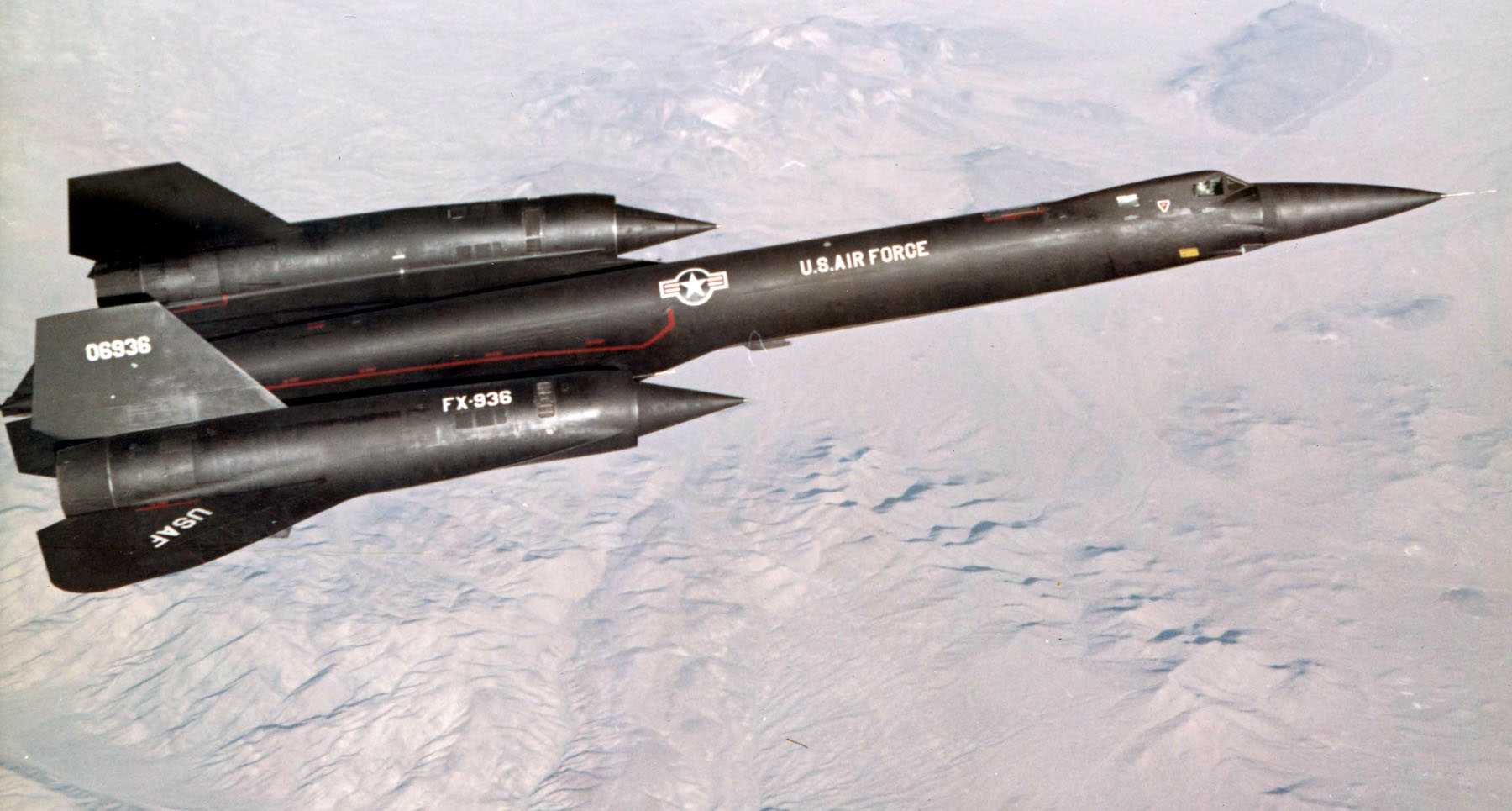
A Mach 3 interceptor carved from the secret A-12 Blackbird — armed with a radar and missiles decades ahead of their time, a record-breaker the Air Force ultimately chose never to build.
The interceptor built from a spyplane
When the U.S. Air Force cancelled the Mach-3 North American XF-108 Rapier interceptor in September 1959, it was left holding two extraordinary orphans: the Hughes AN/ASG-18 pulse-Doppler radar and the long-range GAR-9 / AIM-47 Falcon missile. Both were years ahead of anything flying. What the Air Force lacked was an aircraft fast enough to carry them.
Lockheed’s Skunk Works, under Clarence “Kelly” Johnson, already had one: the secret CIA A-12 “Oxcart” reconnaissance aircraft. Johnson proposed marrying the two, an interceptor he called the “AF-12.” His team added a second cockpit for a fire-control officer, cut a radar nose into the A-12’s chined fuselage, converted three bays to carry AIM-47 missiles internally, and bolted on ventral fins to claw back the stability the radar nose had cost. The result flew as the YF-12A on 7 August 1963 at Groom Lake.
President Lyndon Johnson revealed it to the world on 29 February 1964 — partly, historians agree, as a convenient cover story to draw attention away from the still-classified A-12. On 1 May 1965 two YF-12As set world speed and altitude records that still impress. And yet the interceptor was never built in numbers: Defense Secretary Robert McNamara withheld production money three years running and cancelled the programme in early 1968. The Cold War threat was shifting from manned bombers to intercontinental missiles, and the money was going to Vietnam.
01The YF-12’s cover story: how President Johnson used it to hide the A-12
When President Johnson announced the aircraft on 29 February 1964 he called it the “A-11” and presented it as an experimental interceptor at Edwards Air Force Base. The description was deliberately imprecise. The real purpose of the announcement, most accounts agree, was to give the Blackbird family a public face — the YF-12 — so that the far more sensitive CIA A-12 “Oxcart” spyplane, which shared the same airframe, could keep operating in secret. Reporters flown to Edwards to see the newly revealed jet reportedly found it still warm on the ramp, having just flown in from the classified base at Groom Lake.
What makes it special
A titanium airframe built for Mach 3
The YF-12 shared the titanium-alloy structure of the A-12 and SR-71 — roughly 85–90% titanium, the only practical way to survive skin temperatures that climb past 500 °F in sustained Mach 3 cruise. The same slender chined fuselage that made the Blackbirds possible carried the interceptor, modified only where the radar nose, second cockpit and missile bays demanded.
The ASG-18 radar and AIM-47 Falcon
Its Hughes AN/ASG-18 was the first American pulse-Doppler, look-down/shoot-down airborne fire-control radar, paired with the long-range AIM-47 Falcon missile. The pairing was salvaged from the cancelled F-108 — and it was the direct technological ancestor of the AN/AWG-9 radar and AIM-54 Phoenix that would arm the F-14 Tomcat a decade later.
Records, then a second life with NASA
On 1 May 1965 the YF-12 set an absolute speed record of 2,070.101 mph and a sustained-altitude record of 80,257 ft. After the interceptor was cancelled, the surviving airframes became one of the most valuable Mach 3 research testbeds ever flown, gathering thermal and propulsion data for NASA and the Air Force from 1969 to 1979.
02The YF-12’s fire control: the radar and missile that became the F-14’s Phoenix system
The Hughes ASG-18 and GAR-9/AIM-47 began life for the cancelled XF-108 Rapier, and when that programme died in 1959 the Air Force kept the weapon system alive and looked for a new aircraft to carry it. On the YF-12 it worked: in a series of test firings under Project Kedlock, six of seven guided AIM-47 launches scored kills, including a celebrated shot in which a YF-12A at Mach 3.2 and around 75,000 ft destroyed a drone flying far below it — a genuine look-down/shoot-down intercept decades ahead of its time. The Hughes engineering lineage ran straight on into the AN/AWG-9 radar and AIM-54 Phoenix of the F-14 Tomcat.
03The YF-12’s ventral fins: taming a Mach-3 interceptor’s stability
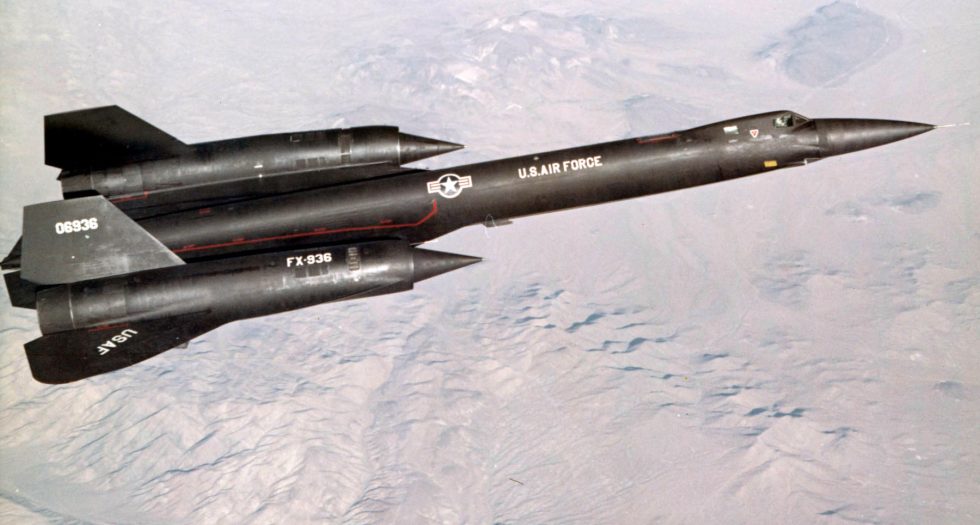
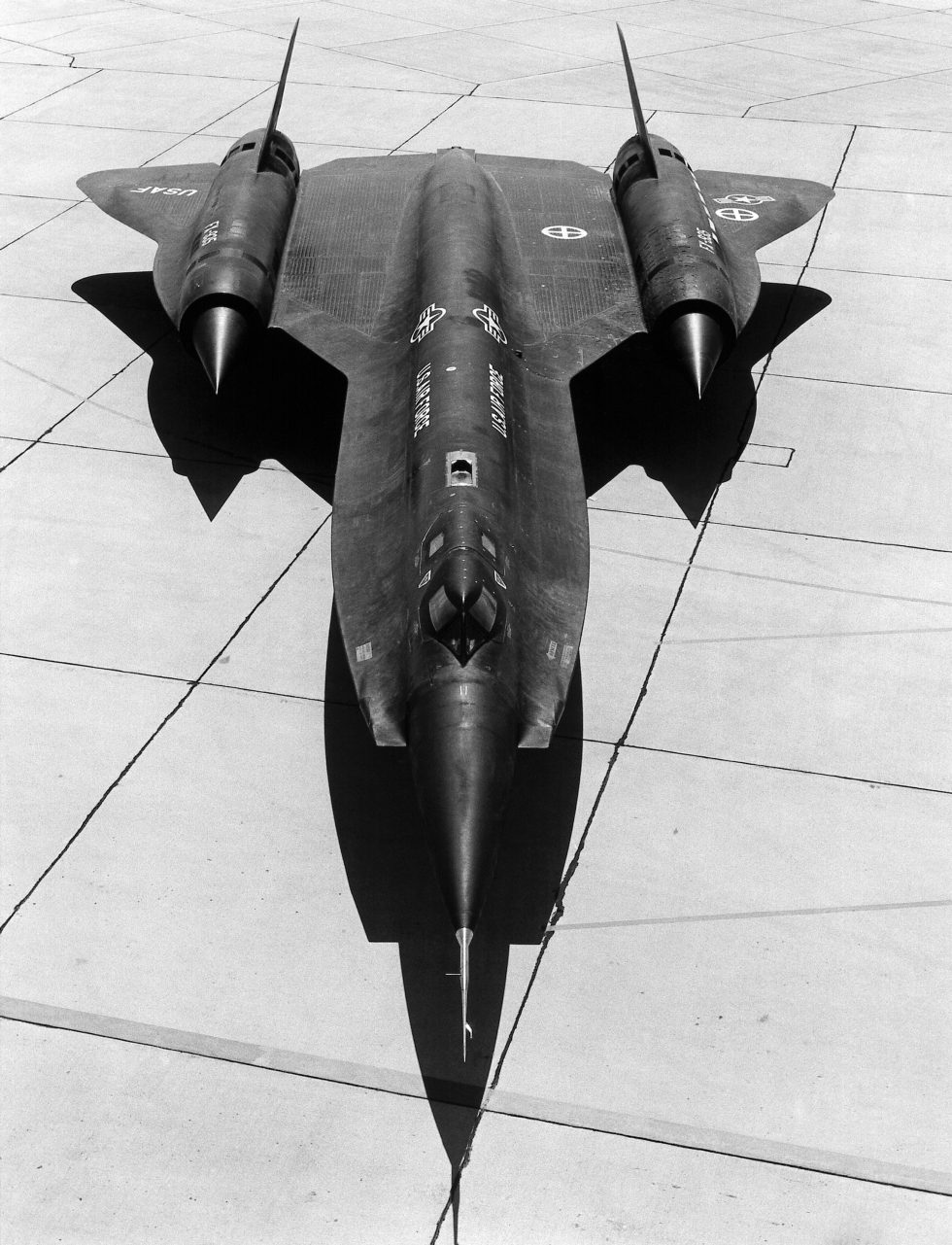
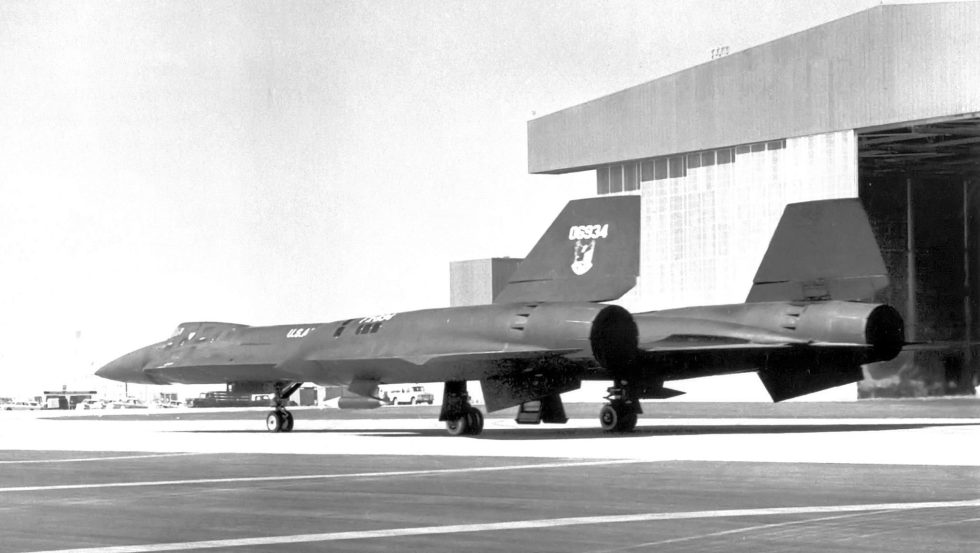
Cutting a radar nose into the A-12’s fuselage interrupted the sharp chines that gave the Blackbird much of its directional stability. To compensate, Lockheed added ventral fins beneath the engine nacelles and a large folding fin on the centreline of the fuselage — the centre fin folded to the side for take-off and landing clearance and extended in flight. It is one of the quickest ways to tell a YF-12 from an SR-71 in a photograph.
Full specifications
Baseline note: every figure below describes a YF-12A as flown from Edwards between 1963 and 1979 — two crew, three AIM-47A bays, two J58 engines, internal fuel only. This is not an A-12, not an M-21 and not an SR-71: the YF-12A was built on the seventh, eighth and ninth A-12 airframes (Articles 1001–1003, serials 60-6934, -6935 and -6936), it first flew on 7 August 1963, sixteen months before the first SR-71, and it is the only Blackbird ever wired to shoot at anything. Where the never-built F-12B production interceptor was to have differed, that is said in grey. Four numbers need settling before the tables start. Afterburning thrust: the YF-12 literature says 140 kN (31,500 lbf), the A-12 and SR-71 literature says 145 kN (32,500 lbf), and Pratt & Whitney’s own installed sea-level figure is 113 kN (25,500 lbf) — all three are true of different definitions, and 140 kN is used here. Service ceiling: 27,400 m (90,000 ft) is the published brochure figure; no YF-12 is recorded above about 25,000 m (82,000 ft). Record altitude: the FAI certificate reads 24,462.596 m, which converts to 80,257.86 ft, while NASA and the USAF have printed 80,257.65 ft for sixty years — the same flight, two roundings, and the second is the one this page uses. Length: at 30.97 m the YF-12A is within an inch of the A-12 and three metres shorter than the SR-71, so the frequent claim that the interceptor was "stretched" for its second seat is wrong.
Dimensions & weights
- Crew
- 2 — pilot in front, fire control officer behind him in what on the A-12 was empty structure. The FCO ran the AN/ASG-18 and had no flight controls. The F-12B would have kept the same two-man crew
- Length
- 30.97 m (101 ft 8 in) — effectively identical to the A-12’s 30.97 m and well short of the SR-71’s 32.74 m (107 ft 5 in). The interceptor is the short Blackbird, not the long one
- Wingspan
- 16.95 m (55 ft 7 in) — unchanged across the whole family. The wing was the one part of the A-12 nobody wanted to touch
- Height
- 5.64 m (18 ft 6 in) over the fins, undercarriage down
- Wing area
- 167.0 m² (1,795 sq ft), aspect ratio 1.7 — a modified delta with a conical-camber leading edge, blended into the fuselage chines rather than joined to a fuselage in the ordinary sense
- Nose and chines
- chines cut back and a radome fitted — the single most consequential change from the A-12. The AN/ASG-18 needed a large forward-looking aperture, so the sharp chine that ran to the tip of the A-12’s nose was truncated and a dielectric nose put in its place. That is what cost the aeroplane its directional stability
- Ventral fins
- two fixed under the nacelles, one folding on the centreline — the price of the radome. Cutting the chines removed forward-body vortex lift and yaw damping, and three ventral surfaces were bolted on to get it back. The centreline fin folded to starboard for take-off and landing because it would otherwise have struck the runway
- Infrared sensors
- two, faired into the chine leading edges — visible as small rounded bulges either side of the nose, and the quickest way to tell a YF-12A from an A-12 in a photograph after the radome itself
- Weapons bays
- three of four Q-bays — the fuselage volume that on the A-12 held cameras. Three were converted for AIM-47A missiles, the fourth for the fire-control electronics. There is no bomb bay in the ordinary sense and never was
- Empty weight
- 27,604 kg (60,730 lb)
- Gross weight
- 56,200 kg (124,000 lb) — the normal mission weight quoted for the type
- Maximum take-off weight
- 63,504 kg (140,000 lb)
- Wing loading
- 337 kg/m² (69 lb/sq ft) at gross weight — low for an aircraft of this speed, which is why it could turn at all at 24,000 m instead of simply flying in a straight line
- Internal fuel
- ~40,100 litres (~10,590 US gal, roughly 31,700 kg / 70,000 lb) of JP-7. Carried in tanks that leaked on the ground by design: the titanium structure was built loose so that it would seal itself when heat expansion closed the joints at speed
Performance
- Maximum speed
- Mach 3.35 — 3,661 km/h (2,275 mph) at 24,400 m (80,000 ft). This is the design limit, not a routine number
- Cruise speed
- Mach 3.2 — about 3,400 km/h (2,100 mph). The aeroplane was happier here than anywhere else; below Mach 2 it was thirsty, draggy and unpleasant
- Record speed, 1 May 1965
- 3,331.507 km/h (2,070.101 mph) over a 15/25 km straight course — FAI absolute world speed record, Col Robert L. Stephens and Lt Col Daniel Andre. It stood until an SR-71 beat it on 28 July 1976
- Record altitude, 1 May 1965
- 24,462.6 m (80,257.65 ft) in sustained horizontal flight — FAI absolute record, same crew, same day. Note this is a sustained-altitude record, not a zoom climb; the aeroplane flew there and stayed there
- Closed-circuit records, same day
- 2,644.2 km/h over 500 km (1,643.042 mph) and 2,718.0 km/h over 1,000 km (1,688.891 mph, also with 1,000 kg and 2,000 kg payloads) — Maj Walter F. Daniel with Maj Noel T. Warner and Capt James P. Cooney. Nine FAI records fell in one afternoon. Sources disagree over which airframe flew which run: 60-6936 for most of them, with 60-6934 credited by some accounts with the altitude record
- Service ceiling
- 27,400 m (90,000 ft) as published — treat with care. Operating altitude in practice was 24,000–25,000 m (78,000–82,000 ft), and the record run is the highest a YF-12 is documented to have flown
- Rate of climb
- 60.0 m/s (11,820 ft/min) initial. Getting to altitude was not the problem; getting there without an inlet unstart was
- Combat range
- 4,800 km (3,000 miles, 2,600 nm) — a genuinely continental figure for an interceptor, and the whole argument for the type. An F-106 could not do a fifth of it
- Combat radius, F-12B projected
- ~2,220 km (~1,200 nm) rising to ~2,500 km (~1,350 nm) in the production aircraft. A squadron based in the centre of the country could have met a bomber stream over the Arctic. That was the pitch, and it was a good one
- Thrust-to-weight ratio
- 0.44 at gross weight — unremarkable. The YF-12 was not accelerated to Mach 3 by its engines alone; see the inlet entry opposite
- Skin temperature
- over 260 °C (500 °F) across most of the airframe at cruise, with leading edges and nacelle lips passing 400 °C (750 °F). The aeroplane grew several inches longer in flight
- Sonic-boom overpressure
- 33.5–52.7 N/m² (0.70–1.10 lb/sq ft) measured in the field — a NASA result from the later research years, and one of the reasons the airframe was worth flying long after it had no military job
- Flight-test and research totals
- 297 joint NASA/USAF flights, about 450 flying hours, 1969–1979 — 60-6935 flew 146 of them between 11 December 1969 and its last flight in early November 1979; 60-6936 flew 62 before it was lost; the "YF-12C" flew the rest. Over 125 technical reports came out of it
Propulsion & systems
- Engines
- 2 × Pratt & Whitney J58 (company designation JT11D-20), afterburning bleed-bypass turbojets, about 2,700 kg (6,000 lb) each, nine-stage axial compressor
- Dry thrust
- 91.2 kN (20,500 lbf) each at sea level, uninstalled
- Afterburning thrust
- 140.1 kN (31,500 lbf) each as quoted for the YF-12. The A-12 and SR-71 literature gives 144.6 kN (32,500 lbf) for the same engine, and Pratt & Whitney’s installed sea-level figures are 113.4 kN (25,500 lbf) wet and 80.1 kN (18,000 lbf) dry. Nobody is lying; they are measuring different things
- Engine cycle
- bleed-bypass turbojet — above about Mach 2 roughly a fifth of the air leaving the fourth compressor stage was piped straight to the afterburner through six external tubes, turning the engine progressively into something closer to a ramjet. It is the reason the J58 could run continuously at Mach 3.2 when every other turbojet of the era would have melted
- Air inlets
- axisymmetric, with a translating spike — each spike moved up to 0.66 m (26 in) aft as speed rose, holding the shock where it belonged. At Mach 3.2 the inlet produced about 54 per cent of net propulsive thrust, the engine 17.6 per cent and the ejector nozzle 28.4 per cent. The aeroplane was, in a real sense, flown by its intakes
- Unstart
- the type’s defining fault — when the shock was expelled from an inlet, thrust collapsed on one side instantly and threw the crew violently sideways. Curing it was the single biggest product of the NASA years: the Cooperative Airframe-Propulsion Control System cut inlet pressure deviations by a factor of ten and, applied to the SR-71, added about 7 per cent to its range
- Fuel and ignition
- JP-7, lit by triethylborane — JP-7 is so unwilling to burn that a shot of TEB was injected to ignite the engine and the afterburner, giving the green flash seen on start-up. Each aircraft carried a finite number of TEB shots, which quietly limited how many afterburner lights a sortie could contain
- Fire-control radar
- Hughes AN/ASG-18 — the first American pulse-Doppler radar with genuine look-down/shoot-down capability, and the first track-while-scan set, though it could hold only one target at a time. About 950 kg (2,100 lb) of equipment filling the nose. Detection of bomber-sized targets was reliable at 160 km (100 miles), with claims of 320–480 km (200–300 miles) under good conditions. The F-12B was to have raised the bomber detection range to 200 km (125 miles)
- Infrared search and track
- two sets in the chine leading edges — used to cue and cross-check the radar. Removed from 60-6935 at some points in the NASA years, which is why photographs of the museum aircraft do not all match
- Radar heritage
- ASG-18 to AWG-9 to APG-71 — the ASG-18 could not engage more than one target; its descendant the AWG-9 in the F-14 Tomcat could handle six. The YF-12’s radar and its missile both went on to serve, on a different aeroplane, for thirty years
- Structure
- about 93 per cent titanium alloy — principally B-120VCA (Ti-13V-11Cr-3Al), with plastic composite chine and fin sections. Much of the titanium ore came, through cut-outs and front companies, from the Soviet Union
- Flight controls and undercarriage
- hydraulic, with a stability augmentation system — three-point retractable gear on tyres impregnated with aluminium against the heat, and a 12.2 m (40 ft) drag chute deployed on landing. Crew escaped by ejection seat rather than the capsule fitted to the XB-70; both men got out of 60-6936 in June 1971
04The YF-12’s costs: why no reliable price exists
The YF-12 grew out of the CIA-funded A-12 — itself one of the most expensive aircraft programmes of its era — and only three were ever built, so there is no meaningful flyaway unit price in the public record. What is documented is that the Air Force wanted 93 production F-12B interceptors and that McNamara judged that fleet too costly to fund against Vietnam-era budgets, withholding the money three years running before cancelling it in early 1968. Any precise per-aircraft dollar figure you see attached to the YF-12 should be read as an estimate, not a sourced number.
Armament & payload
The YF-12A carried three Falcons, no gun, and nothing else at all
The armament of a YF-12A is one radar, three missiles and a hole where the gun would be. Three of the four Q-bays that held cameras on the A-12 were converted to carry a single Hughes AIM-47A Falcon each; the fourth held the AN/ASG-18’s electronics. There were no pylons, no drop tanks, no bombs, no rockets and no external stores of any kind, because at Mach 3.2 anything hung outside the mould line is a drag penalty measured in hundreds of miles of range and a heat problem nobody wanted to solve. That is the entire fit, and it was a deliberate design philosophy rather than an economy: one very long-range guided round fired from beyond visual range, aimed by a radar that could see targets below it, replacing the whole apparatus of nuclear rockets and short-range Falcons that the Air Defense Command had been buying since the mid-1950s.
It worked. Between March 1965 and September 1966 the three aircraft fired seven AIM-47s and destroyed six drones, the single failure caused by a gyroscope in the missile rather than by the aircraft or the radar. The last shot is the one that still reads as improbable: a missile released at Mach 3.2 from about 22,600 m (74,000 ft) that flew down through fourteen miles of altitude and struck a JQB-47E drone flying 150 m (500 ft) above the ground, taking a 1.2 m (4 ft) section off its tail. Nothing else in 1966 could do that, and very little in 1986 could either. Every figure here describes the three YF-12A test aircraft; the production F-12B was to have had an improved fire-control system and greater radius, and no F-12B was ever built, so no operator variation exists to report.
Gun
- None. No YF-12A ever carried a gun, and none was ever wired for one — there is no bay, no port, no ammunition provision and no gunsight anywhere in the aircraft.
- This was doctrine, not oversight. The target was a Soviet bomber approaching over the pole at subsonic speed; the intercept was a single high-closure pass with a missile launched tens of miles out. A gun would have been dead weight.
- The cancelled XF-108 Rapier, whose radar and missile the YF-12 inherited, was likewise gunless. So was the F-106 Delta Dart as delivered — though the F-106 later had an M61 fitted in a bay under Project Six Shooter, which is exactly the kind of second thought the YF-12 never lived long enough to have.
- Tables that list a cannon for this aircraft are confusing it with something else. There is no version of the YF-12 story in which a gun appears.
Air-to-air
- Hughes AIM-47A Falcon (originally GAR-9A), three carried, one per converted Q-bay. About 3.8 m (12 ft 6 in) long and 365 kg (805 lb) in the GAR-9B form, with a Lockheed XSR13-LP-1 solid rocket motor.
- Range grew during development from an initial 24–40 km (15–25 miles) requirement to about 160 km (100 miles), matching the radar. Speed was designed at Mach 6 and settled at about Mach 4 after the motor was changed.
- Guidance was semi-active radar homing, with the ASG-18 illuminating the target throughout; some accounts add infrared terminal homing to the production round. Warhead was a 45 kg (100 lb) high-explosive charge. A 0.25-kilotonne W42 nuclear warhead was studied and abandoned in 1958 — the "250 kilotonne" figure that circulates online is a misplaced decimal point.
- Launch was by ejection: the bay door opened, the missile was pushed clear of the fuselage on a trapeze, and only then did the motor light. Firing a rocket inside a titanium fuselage full of JP-7 at Mach 3 was not an option.
- The AIM-47 was enlarged and improved into the AIM-54 Phoenix, which armed the F-14 Tomcat until 2004. The YF-12’s weapon outlived the YF-12 by four decades.
Air-to-surface guided
- None, of any kind. The YF-12A had no air-to-ground mode in its radar, no ground-mapping capability, no bomb-aiming provision and no attack computer. It was an interceptor and nothing else.
- The confusion usually comes from the family. The A-12 and SR-71 carried cameras and sensors, not weapons; the M-21 carried the D-21 reconnaissance drone on a dorsal pylon; the XB-70 Valkyrie, which shared the YJ93 engine’s era and the same three-Mach ambition, was the nuclear bomber. None of that belongs on this page.
- Lockheed did study strike derivatives of the airframe in the mid-1960s, in the same spirit as North American’s RS-70 proposal. Nothing was ordered, nothing was built, and nothing was fitted to the three aircraft that flew.
- Specification tables that show the Mk 80 series of free-fall bombs against this aircraft are simply wrong, and can generally be traced to a database that filled an empty field.
Bombs
- None. There is no bomb bay. The three weapons bays are converted camera bays sized precisely around one AIM-47 each, with no clearance, no rack and no release gear for anything else.
- Nor could there be an external answer: no hardpoint exists anywhere on the airframe, and the thermal environment at cruise rules out conventional pylons and stores.
- The production F-12B was to have been a pure interceptor as well. At no point in the programme, from the 1960 AF-12 proposal to the January 1968 cancellation, was a bombing role part of the requirement.
- Keep this card in mind when reading the Blackbird literature: the aeroplane that was designed to drop nuclear weapons at Mach 3 was the North American B-70, and it never carried one either.
Rockets
- None. No unguided rocket armament was carried or planned — no FFAR pods, no Mighty Mouse trays, nothing.
- The pointed omission is the AIR-2 Genie, the unguided nuclear air-to-air rocket that the F-89, F-101B and F-106 all carried, and which was Air Defense Command’s standard answer to a bomber formation for a decade. The F-12 concept deliberately replaced it.
- That replacement was the argument: a guided round that could kill a single aircraft at 160 km, in a look-down engagement, from an interceptor cruising above 24,000 m, made the nuclear shotgun obsolete. The AIM-47’s six-from-seven record proved the case.
- It is worth saying plainly that no YF-12 ever carried a nuclear weapon of any type, rocket or missile, in the air.
Pods & other stores
- No external stores, ever, in Air Force service. No drop tanks — the aircraft took off light and refuelled from a KC-135Q almost immediately, because carrying full fuel from the ground was harder on the tyres and the structure than tanking at altitude.
- The fourth Q-bay was not a store but a system: it held the AN/ASG-18’s processing and power equipment, roughly 950 kg (2,100 lb) of it, which is why only three of the four bays could take missiles.
- In the NASA years from 1969 the empty missile bays were filled with instrumentation — thermocouples, strain gauges, pressure transducers and telemetry — and the aircraft carried the only external item in its life: the Coldwall heat-transfer pod, a thermocouple-instrumented stainless steel tube chilled by liquid nitrogen under an insulating jacket that was blown off pyrotechnically at Mach 3 to expose the cold surface to the airflow in an instant.
- Two infrared search and track sets in the chines were the only other sensors carried, and they were structural, not hung.
Three typical loadouts
- Full interception fit, as designed
- Three AIM-47A Falcon in the forward Q-bays; AN/ASG-18 pulse-Doppler radar and its electronics in the fourth bay; two chine-mounted infrared search and track sets; internal fuel only. This is the configuration the aircraft was built for, and the one it was never sent to war in.
- Project Kedlock live-fire sortie, 1965–66
- One live AIM-47A in a single bay, telemetry and range instrumentation in the others, flying against a Q-2C Firebee or JQB-47E drone over the Pacific Missile Range. Seven such shots were fired across the three aircraft; six killed. The last, in September 1966, was released at Mach 3.2 from about 22,600 m against a target at 150 m.
- NASA/USAF research configuration, 1969–1979
- No missiles and no radar in the operational sense; bays packed with recorders, thermocouples and transducers, and on some 1975–76 sorties the Coldwall pod carried under the forward fuselage. In this fit 60-6935 flew 146 times and gave the SR-71 fleet the inlet control laws it had lacked since 1964.
Sourcing caveat: the AIM-47 and AN/ASG-18 figures come from the declassified programme record and from Andreas Parsch’s designation-systems.net summary of it, and they vary between accounts — missile length is given between 3.6 and 3.8 m and radar detection range between 160 and 480 km depending on target size and assumptions. The seven-shots-six-kills record is consistent across sources, but the individual firing dates are not, and no complete official firing log has been published. The nuclear warhead was never fitted to a test round.
Variants
Three aircraft flew, ninety-three were ordered, and one of the survivors is not what its serial says
The YF-12 has fewer variants than almost any aircraft in this encyclopedia and more confusion around them than most, because the designations were deliberately misleading at the time and have stayed that way since. Only one version ever flew: the YF-12A, of which three were built. Everything else on this list is either a paper aeroplane, a relative that people mistake for it, or a deception.
The deception is worth stating up front. The "YF-12C" that NASA flew from 1971 was not a YF-12 at all. It was SR-71A 61-7951, lent to NASA and given the invented serial 06937 and an invented designation because the SR-71’s existence and capabilities were still classified and a fourth YF-12 was a more comfortable public story than an SR-71 in NASA colours. It carried YF-12A-type inlets and engines for part of the programme, which makes the fiction slightly less outrageous than it sounds, but it was an SR-71 and it went back to the Air Force as one.
- AF-12 (1960 / 3 ordered)
- Lockheed’s in-house designation for the interceptor proposed to the Air Force after the XF-108 Rapier was cancelled in September 1959. Three were ordered in mid-1960, taken from the seventh, eighth and ninth A-12 airframes on the line.
- YF-12A (1963–1979 / 3 built)
- The only version flown. Truncated chines, radome for the AN/ASG-18, second cockpit for a fire control officer, two chine infrared sensors, three ventral fins and three AIM-47A bays. First flight 7 August 1963; existence announced by President Johnson on 24 February 1964, partly to give cover to the still-secret A-12.
- F-12B (1965–1968 / none built)
- The production interceptor. Ninety-three were ordered for Air Defense Command on 14 May 1965, with combat radius raised from about 1,200 to about 1,350 nautical miles and bomber detection range from 100 to 125 miles. Robert McNamara declined to release the money three years running, the programme was formally ended in January 1968, and the tooling was destroyed.
- YF-12A, NASA research fit (1969–1979 / 2 aircraft)
- 60-6935 and 60-6936 stripped of armament and instrumented for the joint NASA/USAF supersonic cruise programme: inlet control, airframe-propulsion interaction, structural heating, sonic boom and atmospheric physics. 297 flights, about 450 hours, more than 125 technical reports.
- YF-12A Coldwall (1975–1976 / 1 aircraft)
- 60-6935 fitted to carry the Langley Coldwall heat-transfer experiment under the forward fuselage — an instrumented steel tube held cold by liquid nitrogen, its insulation blown off in flight to expose it to Mach 3 airflow instantly. The only external store the type ever carried.
- YF-12C (1971–1978 / 1, and not a YF-12)
- SR-71A 61-7951 flown by NASA under a false designation and the false serial 06937, to replace 60-6936 after its loss without admitting an SR-71 had been lent out. Returned to the Air Force at the end of the programme.
- SR-71C (1969 / 1 built)
- Not a variant of the YF-12 but a descendant of one: the rear fuselage of the burnt-out YF-12A 60-6934 mated to the forward fuselage of a static-test SR-71 airframe, flown as 61-7981 from March 1969 and nicknamed "The Bastard". It flew 556.4 hours and was grounded in June 1976.
- A-12 (1962–1968 / 13 built)
- The parent and not a variant: a single-seat CIA reconnaissance aircraft, first flown 30 April 1962, operational over North Vietnam and North Korea as Operation Black Shield in 1967–68. Full-length chines, no radome, no second seat, no weapons.
- M-21 (1963–1966 / 2 built)
- Another A-12 relative frequently mixed up with the YF-12 because it too has two cockpits. The second seat belonged to a launch control officer for the D-21 ramjet drone carried on a dorsal pylon. One was lost with the drone in July 1966; the survivor is at the Museum of Flight, Seattle.
- SR-71A / SR-71B (1964–1998 / 32 of all marks)
- The longer, heavier, two-seat strategic reconnaissance Blackbird, first flown 22 December 1964 — sixteen months after the YF-12A. It is the aircraft most people picture when they read "Blackbird", and it is not this one.
Disposition of the three original YF-12A airframes, all long retired and none airworthy. 60-6934 (Article 1001) was damaged beyond economic repair by fire after a landing accident at Edwards on 14 August 1966; its rear fuselage was salvaged and joined to a static-test forward fuselage to make the sole SR-71C, 61-7981, which survives at the Hill Aerospace Museum, Utah — so part of a YF-12 does still exist, under another aeroplane’s serial. 60-6935 (Article 1002) is the only complete original YF-12A anywhere: recalled from storage in 1969 for the joint NASA/USAF programme, flown for the last time in November 1979 and delivered to the National Museum of the United States Air Force at Wright-Patterson on 17 November 1979, where the small patches in its skin below the starboard cockpit sill still mark an emergency evacuation. 60-6936 (Article 1003) was destroyed on 24 June 1971 by an in-flight fire from a failed fuel line just north of Edwards; both crew ejected safely. The "YF-12C" is a fourth survivor only in the loosest sense — it is SR-71A 61-7951, and it stands today at the Pima Air and Space Museum in Tucson under its real identity. No YF-12 was ever licence-built, exported or offered for export, and there are no reproductions.
From cancelled interceptor to Mach-3 research
The F-108 is cancelled
The Mach-3 XF-108 Rapier is axed, but its Hughes ASG-18 radar and GAR-9 missile survive — looking for a new aircraft to carry them.
The AF-12 takes shape
Kelly Johnson proposes an interceptor built on the secret A-12 airframe; the Air Force orders three prototypes.
First flight
The first YF-12A (60-6934) flies on 7 August at Groom Lake, Nevada.
Revealed to the world
On 29 February, President Johnson publicly unveils the aircraft — a useful cover for the still-secret A-12 spyplane.
A day of records
On 1 May, Col. Robert Stephens and Lt. Col. Daniel Andre set absolute speed (2,070 mph) and altitude (80,257 ft) records; a drone is destroyed by an AIM-47 that September.
Programme cancelled
Defense Secretary McNamara cancels the F-12 interceptor after withholding production funding three years in a row.
A second life with NASA
A joint NASA–USAF Mach 3 research programme begins; airframe 60-6936 is lost to an in-flight fire in June 1971, its crew ejecting safely.
The last flight
The surviving YF-12A makes its final flight and is delivered to the National Museum of the U.S. Air Force at Dayton — the only one left.
From the programme: twelve YF-12 stories
The interceptor born from a spyplane
Kelly Johnson pitched the ‘AF-12’ by turning the CIA’s A-12 spyplane into a missile-carrying fighter.
Read the full story
The weapon that outlived its aircraft
When the F-108 died in 1959, its radar and missile were saved and given a new home on the Blackbird.
Read the full story
The not-a-secret secret
President Johnson revealed the YF-12 partly to distract the world from the still-classified A-12.
Read the full story
Still warm from Area 51
Reporters sent to see the newly revealed jet found it had just flown in from the classified base at Groom Lake.
Read the full story
A day of records
On 1 May 1965 two crews set a clutch of world speed and altitude marks in a single afternoon.
Read the full story
The look-down, shoot-down shot
A YF-12A at Mach 3.2 fired an AIM-47 that destroyed a drone flying far below it — in 1965.
Read the full story
Six of seven
Of seven guided AIM-47 launches from the YF-12, six scored kills — a remarkable record for a new system.
Read the full story
The target with kill marks
One much-abused target drone survived the trials and carries three ‘YF-12 kill’ markings.
Read the full story
The DNA of the Tomcat
The YF-12’s radar and missile became the F-14’s AWG-9 and AIM-54 Phoenix.
Read the full story
The fire
A fuel-line failure set 60-6936 ablaze in flight; both crew ejected, and NASA replaced it with a disguised SR-71.
Read the full story
The Coldwall experiment
NASA flew a chilled, insulated tube to Mach 3, then stripped its cover to measure sudden heating.
Read the full story
The lone survivor
After its final flight the last YF-12 went to Dayton — where historians still argue over its serial number.
Read the full story
The YF-12 in pictures
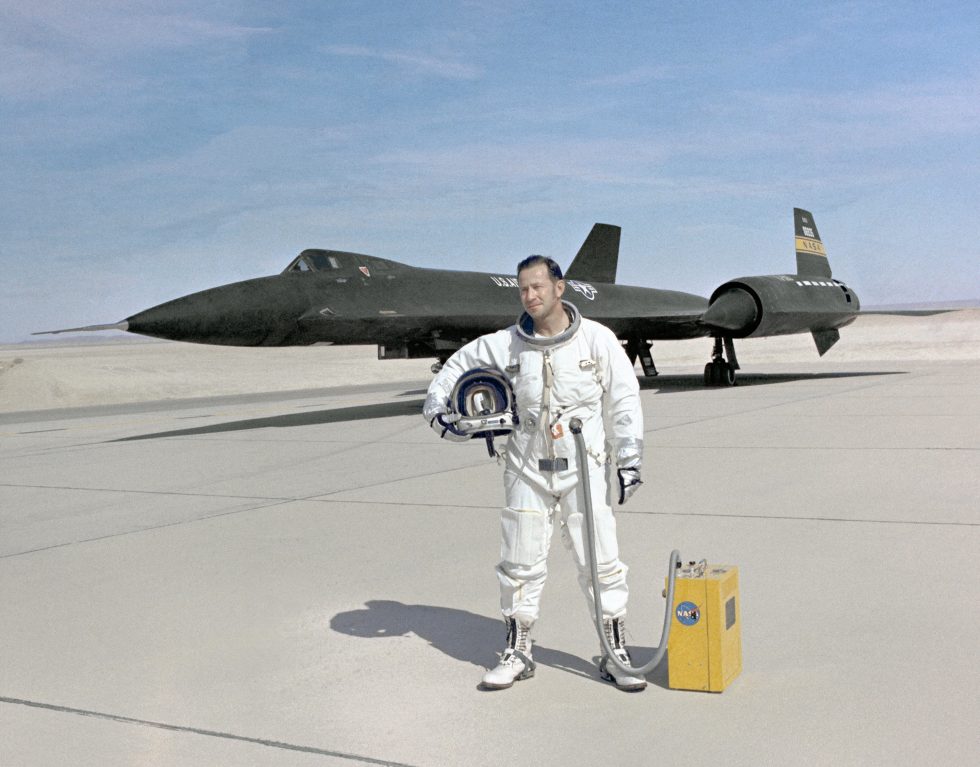
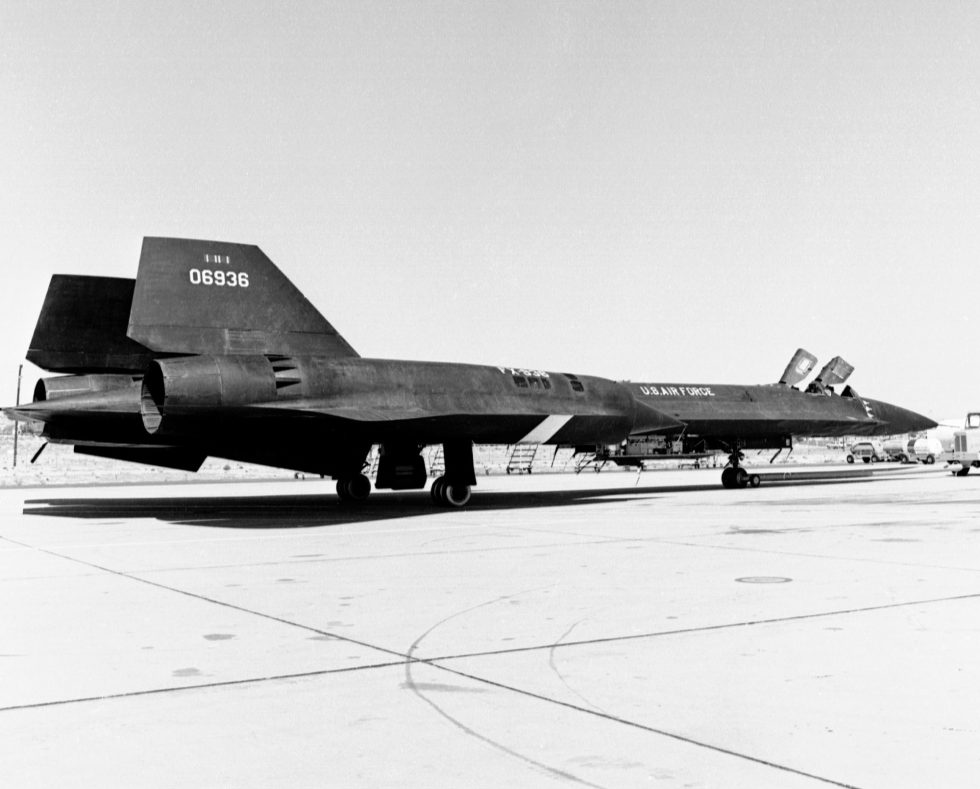
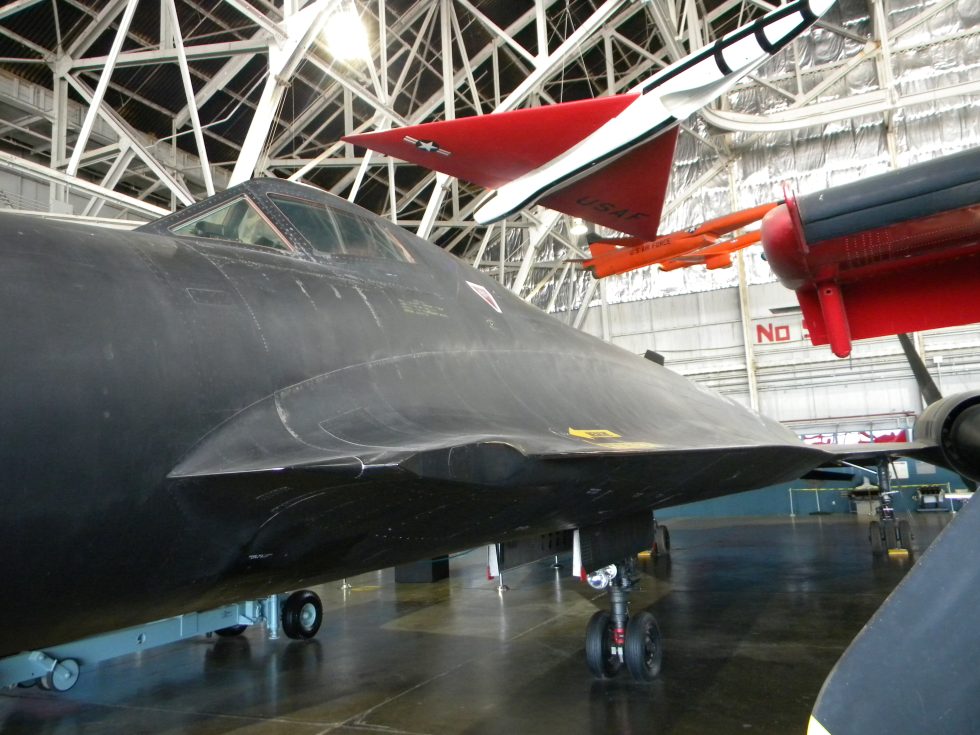
The YF-12 in motion
A dedicated YF-12 video feature is on its way. Video coming soon — in the meantime, explore the photo gallery above and the record-setting story of the fastest interceptor the U.S. Air Force never fielded.
Where the YF-12 flew
The score that defines it
The YF-12 never fired a shot in anger — it was a prototype, and it was cancelled before it could enter service. Its record is written instead in world speed and altitude marks, and in a missile system so far ahead of its time that six of its seven test shots found their targets.
Compare the combat record of every military aircraft. Figures as of July 2026.
Everything people ask about the YF-12
Can I fly in a YF-12?
Was the YF-12 ever operational?
How is the YF-12 different from the SR-71?
What records did the YF-12 set?
Why was the YF-12 cancelled?
What is the YF-12’s connection to the F-14 Tomcat?
How many YF-12s survive, and where?
You can’t fly the YF-12.
These, you can.
Some legends only live in museums — others are fuelled and waiting. MiGFlug has put civilians in real military jet cockpits since 2004.
 Fly the L-39 AlbatrosThe world’s most-flown jet trainer — aerobatics included
 Fly the F-104 Starfighter“The missile with a man in it”
 Fly the MiG-21The Cold War’s most-produced jet
 Fly the T-33 Shooting StarAmerica’s first jet trainer
 Fly the DH VampireA piece of early jet history
 Fly the S.211Agile Italian jet trainer
 Fly the MB-326The classic Aermacchi jet
 Fly the MiG-15The Soviet legend of the Korean War
Continue the tour
Every fact, checked
- NASA Armstrong — YF-12 fact sheet & research historySpecifications, the 1965 records, NASA programme totals, the 1971 fire and the museum transfer.
- National Museum of the U.S. Air Force — Lockheed YF-12AOfficial specs, cancellation rationale and the surviving display aircraft.
- U.S. Air Force — Triplesonic Interceptors: F-103, F-108, YF-12AThe F-108 cancellation and the ASG-18 / GAR-9 weapon-system lineage.
- Vintage Aviation News — Flight Test Files: Lockheed YF-12Development, the records day, the NASA years and airframe disposition.
- The Aviation Geek ClubThe 1964 reveal as a cover story and the Project Kedlock kill markings.
- 19FortyFive — “Meet the YF-12”Cancellation analysis, airframe fates and the AIM-47 / Phoenix lineage.
- White Eagle Aerospace — “A Day of Records”Full breakdown of the 1 May 1965 records, crews and FAI categories.
- Blackbird reference archives (sr-71.org)First-flight detail, the 1965 missile-kill specifics and serial-number histories.