
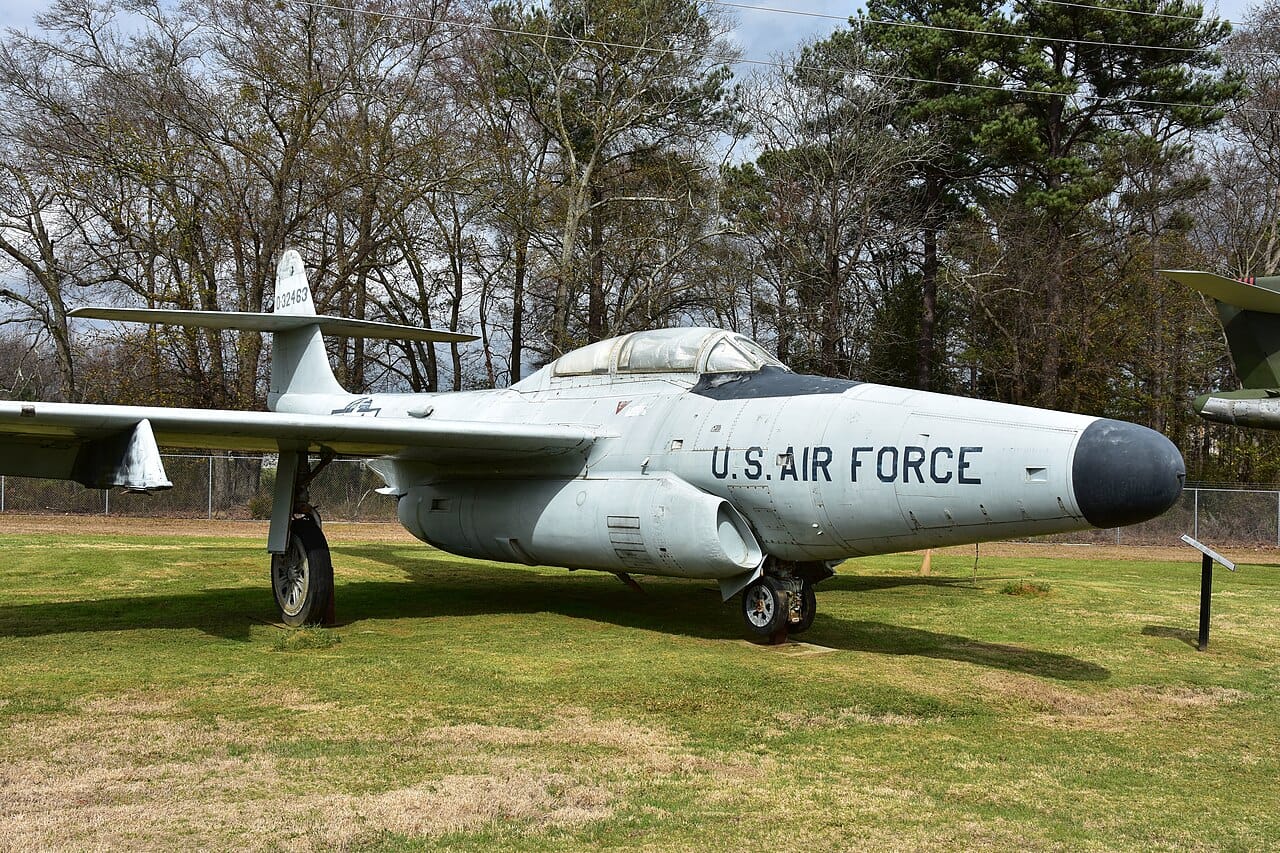
On the afternoon of August 16, 1956, residents of the Los Angeles suburbs looked up to a strange and frankly alarming sight: two jet fighters chasing a lone, pilotless aircraft in tightening circles, hurling rockets at it — and missing, again and again, while the rockets streaked off toward the ground below. Fires broke out in the hills. A car was hit. And the little drone at the center of it all just kept flying.
It has gone down in history, with equal parts affection and embarrassment, as the Battle of Palmdale — the day the US military fought one of its own drones over Los Angeles and lost.
QUICK FACTS
| Event | “The Battle of Palmdale” |
| Date | 16 August 1956 |
| Runaway | An unmanned F6F-5K Hellcat target drone |
| Interceptors | Two USAF F-89D Scorpions from Oxnard |
| Rockets fired | 208 Mighty Mouse rockets — every one missed |
| Result | Brush fires below; the drone crashed on its own |
One runaway Hellcat
It began at the Navy’s Point Mugu range. An unmanned F6F-5K Hellcat — a wartime fighter converted into a radio-controlled target drone — was launched for a missile test. Almost immediately, its controllers lost their grip on it. The Hellcat, blissfully unaware, began flying lazy circles over populated Southern California with no one able to steer it.
Two Air Force F-89D Scorpions scrambled from Oxnard to bring it down. On paper it was no contest: modern jet interceptors versus a decade-old propeller drone puttering along on autopilot. In practice, it was a disaster.
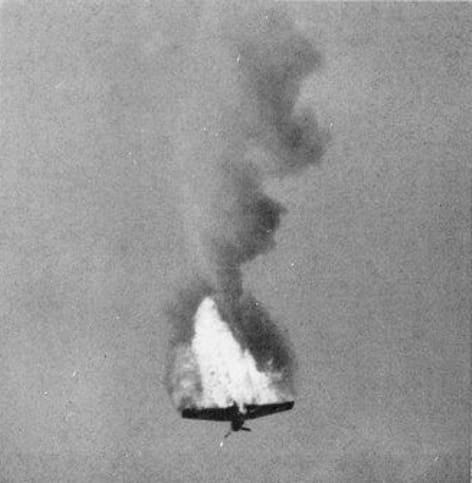
208 rockets, zero hits
The Scorpions were armed not with guided missiles but with Mighty Mouse folding-fin rockets — dozens of small, unguided projectiles meant to be fired in a massed salvo into a formation of enemy bombers. Aiming them at a single, slowly turning drone was another matter entirely. Pass after pass, the fighters volleyed their rockets. Pass after pass, they missed. By the time the Scorpions were empty, they had fired all 208 of their rockets and hit the drone exactly zero times.
The rockets, of course, had to come down somewhere. They rained across the landscape below, igniting brush fires that burned hundreds of acres near Placerita Canyon, Castaic and Palmdale, damaging property and sending residents scrambling. The interceptors had turned a wayward drone into a shooting gallery over their own citizens.
The drone won
And the Hellcat? It simply flew on until it ran out of fuel, then glided down and crashed into the desert near Palmdale — entirely on its own, without a single rocket having touched it. The mightiest air force in the world had been comprehensively beaten by an unmanned target.
The Battle of Palmdale is remembered as farce, and it is. But it also carried a real lesson: unguided rocket salvos were hopeless against a single manoeuvring target, and dangerous to everything downrange. Within a few years, guided air-to-air missiles would take over — in no small part because of embarrassing afternoons exactly like this one.
Sources: U.S. Air Force and U.S. Navy records; contemporary Los Angeles Times reporting; This Day in Aviation.
Related Questions
What was the Battle of Palmdale?
It was a bizarre 1956 incident in which the US military tried and failed to shoot down one of its own runaway target drones over Southern California. Two Air Force F-89 Scorpions fired 208 rockets at an unmanned Navy Hellcat drone, missed every time, and started brush fires on the ground below.
What happened on 16 August 1956?
A Navy F6F-5K Hellcat drone launched from Point Mugu lost radio control and began circling over the Los Angeles area. Two Air Force F-89D Scorpions scrambled and fired all 208 of their unguided Mighty Mouse rockets at it. None hit. The rockets fell to earth, sparked several brush fires, and the drone eventually ran out of fuel and crashed by itself near Palmdale.
How did the fighters miss a slow drone 208 times?
The F-89’s Mighty Mouse rockets were unguided and designed to be fired in a massed salvo against bomber formations, not a single manoeuvring target. Aiming them precisely at one slow, turning drone was almost impossible, and pass after pass simply sent rockets streaking past — and down onto the towns below.
Was anyone hurt in the Battle of Palmdale?
No one was killed. But the falling rockets started brush fires that burned hundreds of acres and caused property damage — including to cars and near-misses of residents — turning a routine test into a genuine public hazard over populated Southern California.
What does the incident teach about unguided weapons?
It is a classic illustration of why guided missiles replaced volleys of unguided rockets for air-to-air combat. Spraying dozens of dumb rockets at a single agile target is wildly inaccurate and dangerous to everything downrange — a lesson the Battle of Palmdale delivered with smoke and brush fires.

0 Comments