
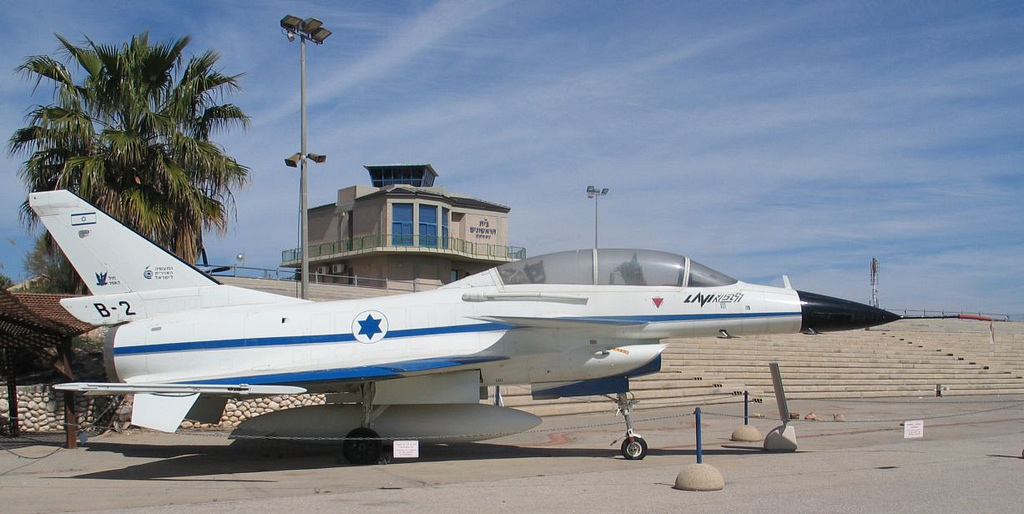
IAI Lavi
“Young Lion”
Israel’s ambitious home-grown multirole fighter — a close-coupled canard delta with fly-by-wire and a single PW1120 engine, flown in 1986 and then killed by a single cabinet vote under American pressure and spiralling cost.
The IAI Lavi: the indigenous fighter Israel built — then cancelled
By the late 1970s Israel had already proved it could build fighters. The IAI Kfir — a Mirage airframe rebuilt around an American J79 engine — equipped its squadrons, but it was a derivative, not an original design. Israel wanted more: a modern, home-designed multirole fighter tailored to its own doctrine, one that would keep Israel Aircraft Industries at the technological frontier and reduce dependence on foreign suppliers. That aircraft became the Lavi (Hebrew for “Young Lion”), formally launched around 1980.
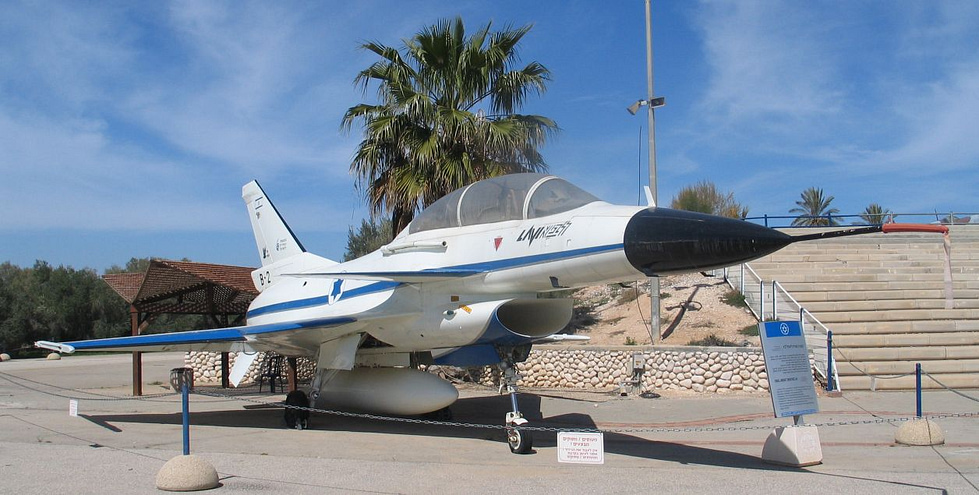
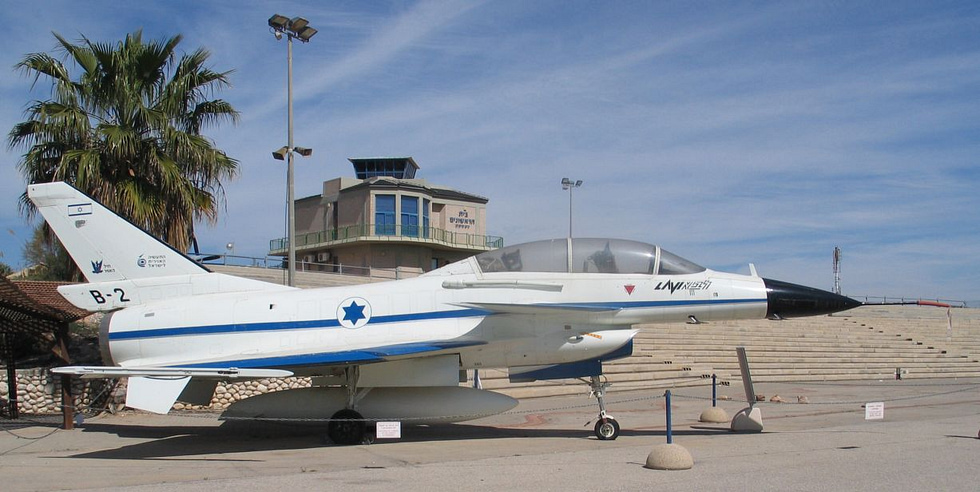
The design that emerged was strikingly modern for its era: a tailless delta wing paired with close-coupled canards, made deliberately unstable for agility and tamed by a quadruplex digital fly-by-wire flight-control system — a configuration in the same broad family as the later Eurofighter, Rafale and Gripen. It was to be powered by a single Pratt & Whitney PW1120 afterburning turbofan, a derivative of the F100 that powers the F-15 and F-16, and packed with advanced Israeli avionics and a wide-angle head-up display. On paper the Lavi was a genuine fourth-generation lightweight fighter.
Crucially, much of the money was American. Under a special arrangement, the United States allowed a large share of its military aid to Israel to be spent on the Lavi, and US firms supplied the engine and key systems. That funding made the programme possible — and, ultimately, gave Washington a powerful say in its fate. The first prototype flew on 31 December 1986, and a second followed in March 1987; by all accounts the aircraft handled well.
But the costs kept climbing. As the projected production run shrank — from around 300 aircraft toward as few as 80 — the unit price soared, and the Lavi began to look like an unaffordable luxury for a small country. In Washington there was unease that a US-funded fighter might one day compete with the F-16 on the export market, and pressure grew for Israel to buy American aircraft instead. The debate split the Israeli defence establishment and cabinet down the middle.
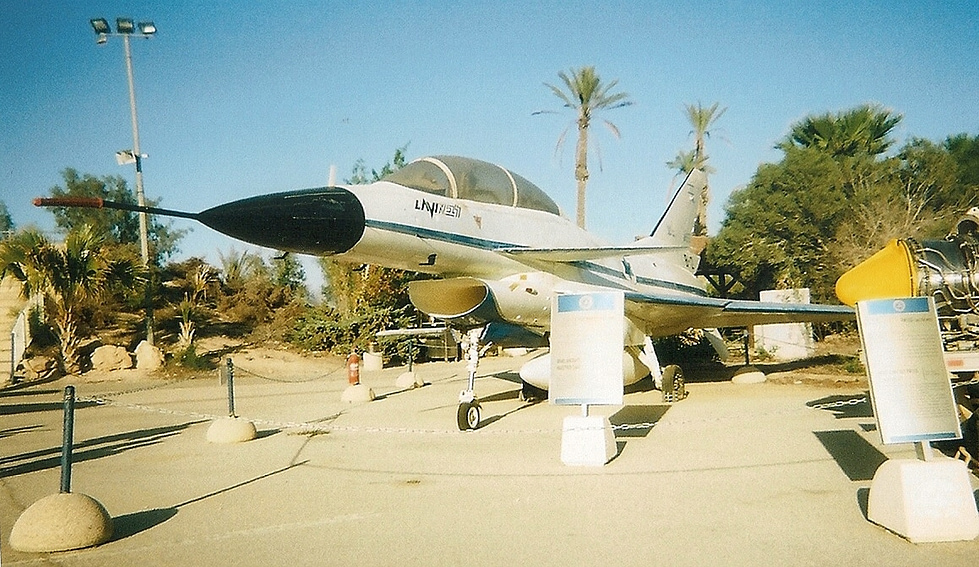
The reckoning came on 30 August 1987. In a divided national-unity cabinet, ministers voted to cancel the Lavi by the narrowest possible margin — reportedly 12 votes to 11, with one abstention often cited as decisive. It remains one of the most contentious defence decisions in Israeli history. The fallout was brutal for IAI: more than 4,000 employees, including over 1,500 engineers, were laid off. Israel instead procured additional F-16s, and two flying prototypes were preserved as museum pieces.
The Lavi’s story did not quite end there. The engineering talent and technology it created flowed into Israel’s avionics, radar and UAV industries for decades afterward. More controversially, US officials later alleged that Lavi-derived expertise and even American technology found its way into China’s Chengdu J-10 fighter, which shares a broadly similar canard-delta layout. Israel and China have denied any improper transfer, and the claim remains disputed and unproven — but the visual resemblance keeps the theory alive to this day.
01The IAI Lavi’s cancellation: how one cabinet vote in August 1987 ended the programme
The decision to cancel the Lavi on 30 August 1987 was as close as a decision can be. Israel’s national-unity government was deeply divided: defence-industrial and nationalist voices argued the Lavi was essential to Israeli independence and to IAI’s future, while others — including then-defence-minister Yitzhak Rabin — concluded the aircraft had simply become unaffordable. As the planned buy shrank, the projected unit cost climbed steeply, and a US Government Accountability Office estimate of development cost around $1.9 billion did little to reassure sceptics once per-aircraft figures ballooned.
The United States, which was funding much of the work, made clear it would rather Israel buy American F-16s — and there was genuine concern in Washington about a subsidised competitor to the F-16 appearing on export markets. When the cabinet finally voted, the tally is most often reported as 12 to 11 against continuing, with a single abstention treated as decisive. IAI laid off thousands; the programme’s defenders never fully forgave the decision. Whether cancelling the Lavi was a hard-headed act of fiscal realism or a strategic mistake is still argued in Israel today.
What made the Lavi special
Close-coupled canard delta with fly-by-wire
The Lavi paired a tailless delta wing with close-coupled canard foreplanes just behind the cockpit — a layout that generates strong lift and agility in hard manoeuvring. To make it controllable, the aircraft was deliberately relaxed-stability and flown through a quadruplex digital fly-by-wire system, cutting-edge technology in the early 1980s and part of the same design philosophy later seen on Rafale and Gripen.
A single PW1120 — an F100 in Israeli service
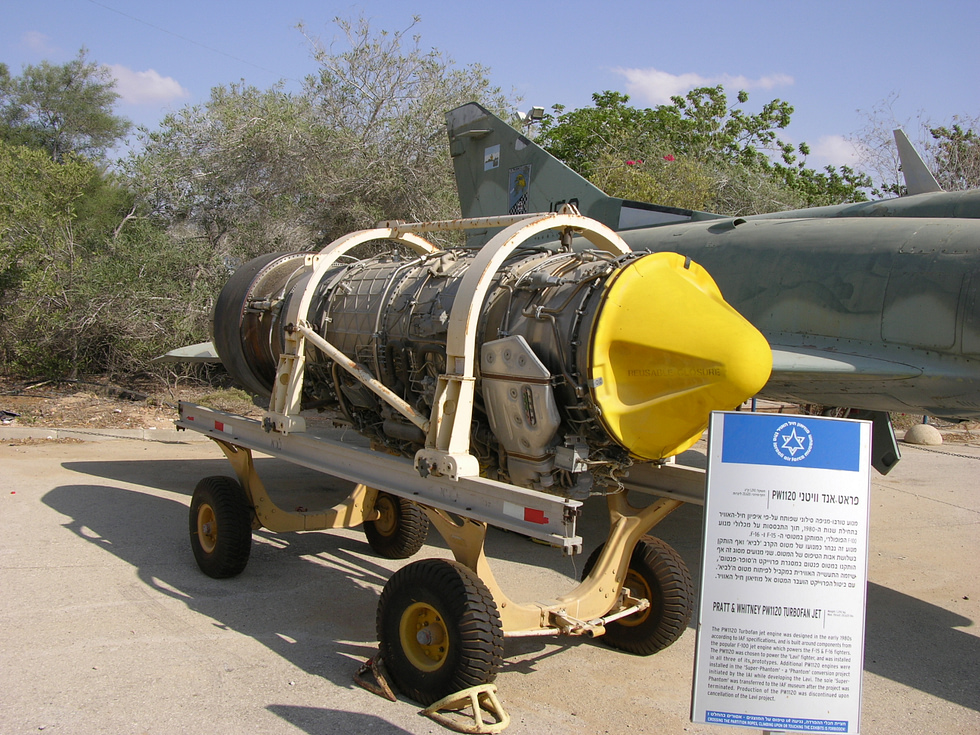
Power came from one Pratt & Whitney PW1120 afterburning turbofan of roughly 91.7 kN (20,600 lbf), derived from the F100 that powers the F-15 and F-16. It was partly built in Israel by Bet Shemesh Engines, giving the Lavi commonality with the engines Israel already knew — and tying the programme tightly to American technology and consent.
Indigenous avionics and composites
The Lavi was built to carry advanced Israeli-designed avionics — radar, mission computers and a wide-angle HUD — and made extensive use of composite materials in its wings and tail to save weight. This home-grown electronics and materials expertise was arguably the programme’s most valuable legacy: it survived the cancellation and fed Israel’s avionics, UAV and upgrade industries for decades.
02The Lavi and the F-16: why Israel wanted its own fighter instead of buying American
On raw performance the single-engine, ~19-tonne Lavi was broadly in the class of the F-16 — a lightweight multirole fighter optimised for agility and ground attack rather than raw speed or long range. Its advocates argued it would be better tailored to Israeli needs, with Israeli avionics and weapons integration, and that building it kept thousands of high-end engineering jobs and know-how inside the country.
The counter-argument was money. The F-16 was already in mass production, its development costs long since paid down; the Lavi had to amortise its entire development over a tiny Israeli order. As the buy shrank, the Lavi’s unit cost rose above what buying more F-16s would cost. That is the core tension the 1987 cabinet vote turned on: strategic independence versus affordability — and affordability, narrowly, won.
03The Lavi and China’s J-10: a widely repeated but disputed technology-transfer claim
After the Lavi was cancelled, some of IAI’s engineering expertise looked for new work, and China was building an indigenous fighter of its own — the Chengdu J-10, which entered service in the 2000s with a canard-delta layout superficially similar to the Lavi. US officials have alleged that Israeli assistance to the J-10 programme included the unauthorised transfer of American technology originally shared for the Lavi, and the episode reportedly caused friction between Washington and Jerusalem.
It is important to be precise about what is known. The visual resemblance between the Lavi and the J-10 is real, and Israeli-Chinese defence cooperation in that era is well documented. But a direct, proven line from the Lavi to the J-10 is not established in open sources; Israel and China have denied improper transfer, and aviation analysts differ on how much the J-10 actually owes to the Lavi versus independent Chinese development with other foreign input. Treat the connection as reported and plausible, but disputed and unproven.
Full IAI Lavi specifications
Airframe & Performance
- Bemanning
- 1 (single-seat fighter; flying prototypes were two-seat)
- Lengte
- ~14.57 m
- Spanwijdte
- ~8.78 m
- Hoogte
- ~4.78 m
- Leeggewicht
- ~7,030 kg
- Max takeoff weight
- ~19,280 kg
- Max speed
- ~Mach 1.8 · ~1,965 km/h at altitude
- Serviceplafond
- ~15,240 m (50,000 ft)
- Ferry range
- ~3,700 km
- Configuration
- Canard delta · relaxed stability · fly-by-wire
Propulsion & Systems
- Motor
- 1 × Pratt & Whitney PW1120
- Thrust
- ~91.7 kN (20,600 lbf) with afterburner
- Cannon
- 1 × 30 mm DEFA 553
- External stores
- ~7,260 kg (16,000 lb) on multiple hardpoints
- Avionics
- Israeli radar, mission computers, wide-angle HUD
- First flight
- 31 December 1986
- Prototypes built
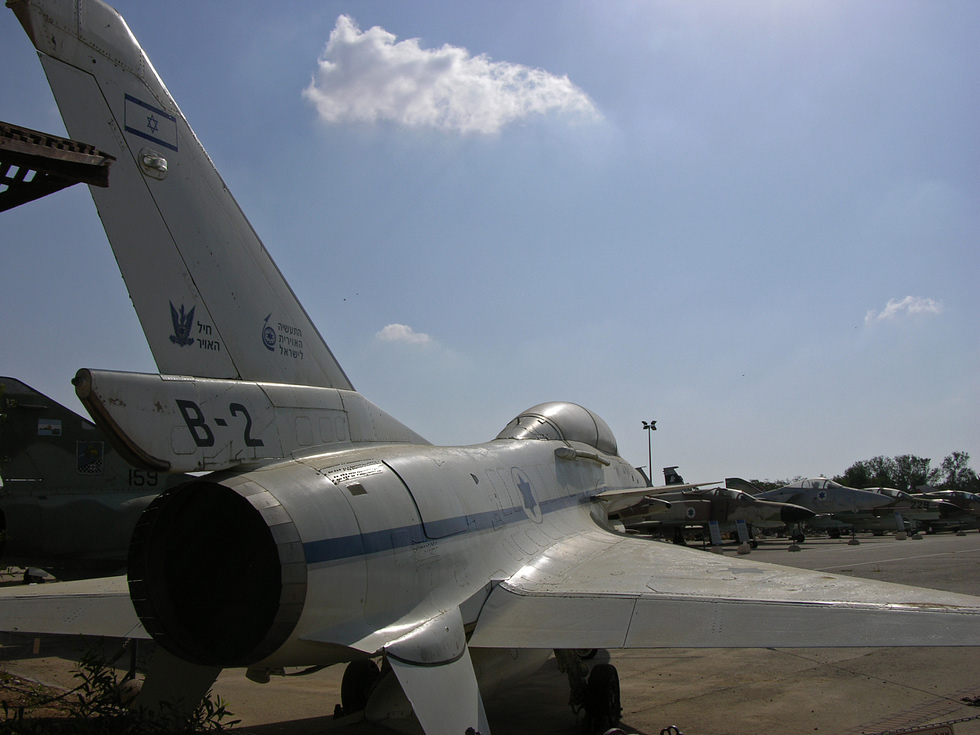
- 5 airframes (B-1 to B-5); 3 flew — 2 before cancellation, plus the two-seat TD (first flight 1989)
- Programme cost (dev.)
- ~$1.9 billion (GAO estimate, 1985 dollars)
- Cost per flight hour
- No reliable public figure
04The IAI Lavi’s operating costs: what a cancelled prototype programme actually reveals
Because the Lavi never entered production, it has no service-life operating cost and no meaningful cost-per-flight-hour figure — only three prototypes ever flew. What it does have is a well-documented development and unit-cost story, and that story is exactly why it was cancelled. A US Government Accountability Office estimate put development at around $1.9 billion in 1985 dollars, and at the original 300-aircraft target the projected flyaway cost was roughly $17.8 million per aircraft.
The problem was that the order kept shrinking. Cutting the planned buy toward 150 aircraft was estimated to raise unit cost by more than half, and the cabinet ultimately weighed an even smaller ~80-aircraft run — at which point buying more F-16s was simply cheaper. Any precise operating-cost figure you see attached to the Lavi is therefore an extrapolation, not a measured number: the aircraft was cancelled precisely to avoid ever paying it.
From national ambition to a single cabinet vote
Programme launched
Israel formally begins the Lavi, an indigenous multirole fighter to succeed the Kfir and keep Israel Aircraft Industries at the technological frontier.
US funding secured
Washington agrees that a large share of US military aid may be spent on the Lavi; American firms supply the PW1120 engine and key systems.
First flight
The first prototype (B-1) takes to the air over Israel; the canard-delta, fly-by-wire fighter is reported to handle well.
Second prototype flies
A second flying prototype joins the test programme as the aircraft moves through its early flight envelope.
Cancelled by one vote
A divided Israeli cabinet votes to terminate the Lavi — reportedly 12 to 11 — on grounds of cost and under US pressure to buy F-16s instead.
The reckoning at IAI
Israel Aircraft Industries lays off more than 4,000 staff, including over 1,500 engineers; Israel orders additional F-16s.
The technology demonstrator flies
The two-seat Technology Demonstrator (B-3) makes its first flight on 25 September 1989 — the third and last Lavi to fly — and keeps testing the accumulated technology into the 1990s.
Legacy — and controversy
Lavi technology feeds Israel’s avionics and UAV industries; US officials later allege — disputed and unproven — that it influenced China’s J-10.
Twelve IAI Lavi stories
Beyond the Kfir
Israel wanted an original fighter, not another rebuilt Mirage.
Read the full story
The canard-delta gamble
A tailless delta and close-coupled canards, flown by wire.
Read the full story
An American heart
The single PW1120 tied the Lavi to Washington’s goodwill.
Read the full story
Paid for in Washington
US aid dollars, not just Israeli ones, built the Lavi.
Read the full story
New Year’s Eve, 1986
The first Lavi flew on the last day of the year.
Read the full story
When the numbers turned
A shrinking order sent the unit price soaring.
Read the full story
A rival to the F-16?
Washington feared a subsidised competitor on the export market.
Read the full story
12 to 11
Israel’s cabinet killed the Lavi by a single vote.
Read the full story
Four thousand jobs
The cancellation gutted IAI almost overnight.
Read the full story
The technology survived
The Lavi died, but its know-how lived on.
Read the full story
The J-10 question
Did the Lavi help shape China’s J-10? It is disputed.
Read the full story
The lion that never roared
A superb aircraft, remembered for the flight it never made.
Read the full story
The IAI Lavi in pictures
Where the Lavi was designed and built
A fighter that never went to war
The Lavi has no combat record and never entered squadron service — it was cancelled in 1987 after five prototype airframes were built, only three of which ever flew. Its story is measured not in kills or sorties but in test flights, technology and a single, decisive cabinet vote. Two prototypes proved the design in the air before the programme ended; a third, a two-seat technology demonstrator, flew in 1989. The Lavi’s real legacy lies in the Israeli avionics, radar and UAV expertise that outlived it.
Explore the wider combat record of every military aircraft. The Lavi never saw combat; figures here describe the programme, not operations.
Everything people ask about the IAI Lavi
Can I fly in a Lavi?
What was the IAI Lavi?
Why was the Lavi cancelled?
Did the Lavi lead to China’s J-10 fighter?
How many Lavi were built?
How did the Lavi compare to the F-16?
You can’t fly the Lavi.
These, you can.
Some legends only live in museums — others are fuelled and waiting. MiGFlug has put civilians in real military jet cockpits since 2004.
 Fly the L-39 AlbatrosThe world’s most-flown jet trainer — aerobatics included
 Fly the F-104 Starfighter“The missile with a man in it”
 Fly the MiG-21The Cold War’s most-produced jet
 Vlieg met de T-33 Shooting StarAmerica’s first jet trainer
 Fly the DH VampireA piece of early jet history
 Fly the S.211Agile Italian jet trainer
 Fly the MB-326The classic Aermacchi jet
 Fly the MiG-15The Soviet legend of the Korean War
Continue the tour
Every fact, checked
- MilitaryFactory — IAI LaviDimensions, weights, PW1120 thrust, performance figures, first flight and prototype numbers.
- Tablet Magazine — Killing the LaviThe 1987 cancellation, GAO cost estimates, the shrinking order and IAI’s layoffs.
- Federation of American Scientists — The United States and the LaviUS funding of the programme and the American role in its cancellation.
- Jewish Virtual Library — IAI LaviProgramme history, design overview and Israeli-service context.
- The National Interest — The Lavi and the J-10The alleged Lavi-to-J-10 technology link, presented with its controversy.
- The Aviation Geek Club — Lavi cancellation and the J-10The one-vote cancellation and the US allegation of unauthorised technology transfer.
- Center for Israel Education — Cabinet Halts LaviPrimary reference for the 30 August 1987 cabinet decision and its politics.
- 19FortyFive — J-10, F-16 and the LaviThe Lavi as an F-16 rival and the disputed Israeli influence on the J-10.