
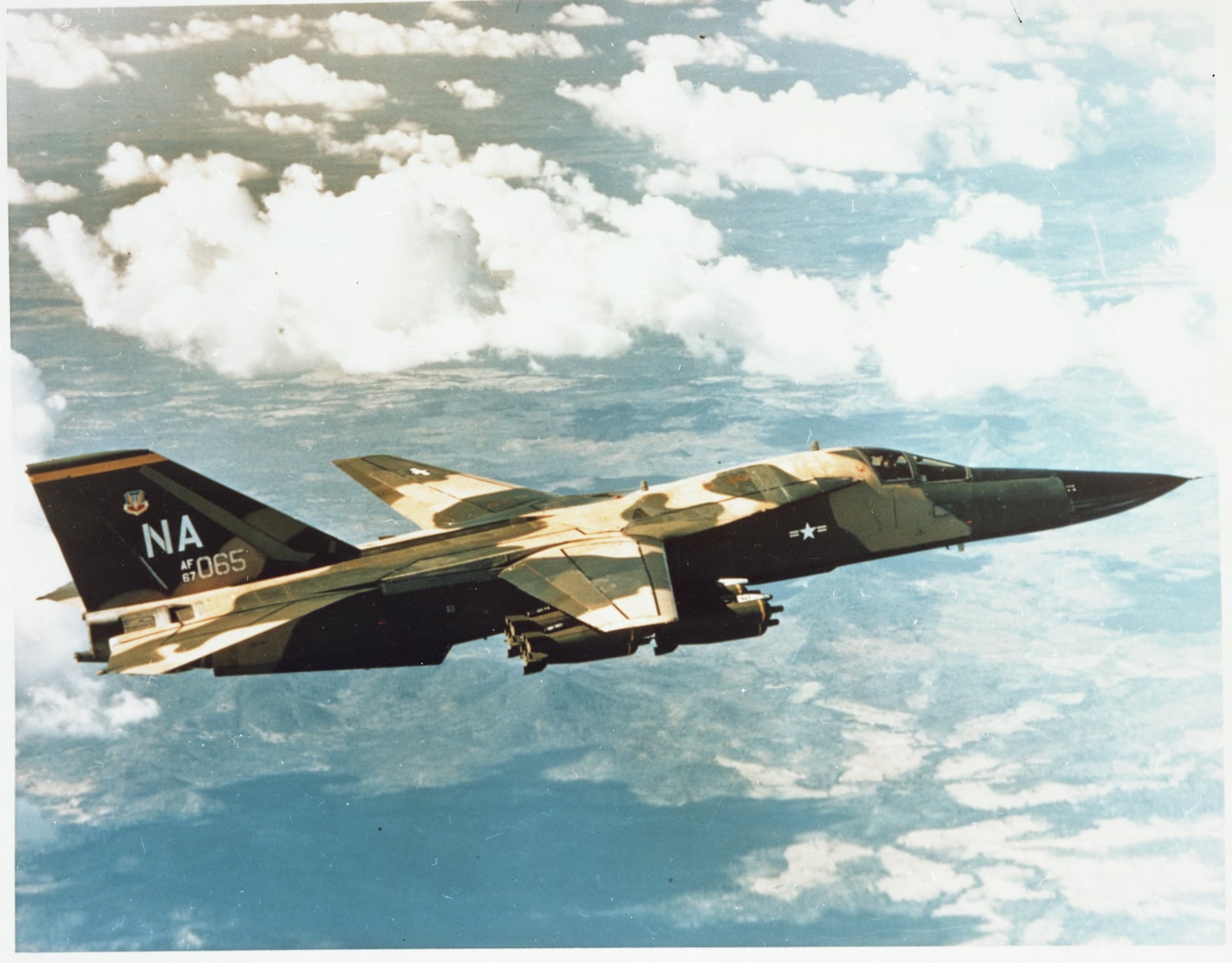
General Dynamics F-111
“Aardvark”
The world’s first production swing-wing aircraft — a troubled political experiment that became one of the most feared low-level strike jets ever flown, hurling itself at the ground at 200 feet in the dark to deliver the bomb load of four Phantoms.
The jet that had to be everything to everyone
The F-111 was born not from an air force requirement but from a political idea. In 1961, US Secretary of Defense Robert McNamara ordered that a single airframe — the Tactical Fighter Experimental, or TFX — satisfy two utterly different needs: the Air Force wanted a fast, long-range, low-level strike aircraft, while the Navy wanted a carrier-based fleet-defence interceptor. Merging them promised savings through commonality. Almost nobody in either service believed it could work.
General Dynamics won the contentious contract in December 1962 and, lacking carrier experience, teamed with Grumman for the naval F-111B. The Navy version was the compromise that broke: too heavy for carrier decks and never able to meet its performance goals, it was cancelled in 1968 after only seven were built. The Navy walked away with the swing wing, TF30 engines, Phoenix missile and AWG-9 radar and turned them into the F-14 Tomcat.
The Air Force’s F-111A survived — barely. Its 1968 combat debut over Vietnam was a disaster, with three jets lost in weeks to a stabiliser fault. Yet the machine underneath the scandal was extraordinary: a variable-sweep wing and terrain-following radar let it scream in under enemy radar at night, in any weather, faster and lower than anything else in the sky. By 1991 it was destroying Iraqi tanks one by one from the dark. The Aardvark went from national embarrassment to the strike aircraft everyone else wanted.
01The TFX scandal: how McNamara forced one F-111 to be two aircraft — and why the Navy version died
McNamara’s insistence on a joint USAF/USN aircraft made the TFX one of the most politically charged procurement fights of the Cold War. The Air Force wanted a heavy, fast interdiction striker; the Navy wanted a loitering fleet-defence interceptor to carry the big AIM-54 Phoenix missile. Forcing both roles into one airframe produced an aircraft that was a reasonable Air Force striker and an unworkable Navy fighter.
The Boeing design was preferred by the evaluation boards, but the General Dynamics bid won on grounds of commonality — a decision that drew a Senate investigation. The naval F-111B, built with Grumman, came out overweight and underpowered for carrier operations; it was cancelled in 1968 after seven airframes. Crucially, the Navy kept the best ideas — the variable-sweep wing, the TF30 engine, the AWG-9 radar and the Phoenix missile — and Grumman recycled them into the F-14 Tomcat. The F-111, in a sense, gave birth to its own replacement in Navy service while going on to a long and effective Air Force career.
What makes the F-111 special
The swing wing and the radar that flew it into the dirt
The F-111 was the first production variable-geometry aircraft, its wings sweeping from 16° for slow, efficient loiter to 72.5° for a Mach-2 dash. Paired with it was the real breakthrough: a terrain-following radar coupled to the autopilot that could fly the jet hands-off at just 200 ft above the ground, at night and in cloud, hugging hills and valleys automatically to slip under enemy radar.
Afterburning turbofans and continental range
Two Pratt & Whitney TF30 afterburning turbofans — the first afterburning turbofans in service — gave the Aardvark both economical cruise and supersonic dash. Combined with a large internal fuel load, they gave it the range to strike deep without tankers: F-111Fs flew the 1986 Libya raid as a round trip of some 6,400 miles, the longest fighter combat mission in history at the time.
A cockpit that ejected as a capsule — and a huge bomb load
Instead of ejection seats, the two crew sat side by side in a sealed crew escape capsule: in an emergency the entire cockpit blew clear, parachuted down and could even float, doubling as a survival raft. Behind them the F-111 could haul up to around 14,000 kg of ordnance — famously the bomb load of four F-4 Phantoms — on internal bay and swivelling wing pylons.
02The F-111’s terrain-following radar: hands-off flight at 200 feet in the dark
The heart of the F-111 as a weapon was its automatic terrain-following radar (TFR). Two independent radar channels scanned the ground ahead and fed the autopilot, which pitched the aircraft up and over ridges and back down into valleys without the pilot touching the stick — at 200 ft and 480 knots or more, in total darkness or thick weather. It was a genuinely nerve-shredding way to fly: the system was designed to command a climb, not a dive, if it ever failed, so a fault meant the jet zoomed skyward rather than into a hillside. This capability let a single Aardvark penetrate defences that would have shredded a formation of conventional bombers, and it made the type the West’s premier all-weather night striker for two decades.
03The F-111’s crew escape capsule: ejecting the whole cockpit
The F-111 did not use conventional ejection seats. Instead the entire two-seat cockpit section was a self-contained escape capsule. Pulling the handle fired an explosive guillotine that severed the module from the fuselage; a rocket motor blasted it clear, and a large parachute lowered the whole capsule — crew still strapped inside, pressurised and protected — to the ground or water. Airbags cushioned the landing, and the sealed module could float, acting as a life raft at sea. The system worked across the entire flight envelope, from the runway to supersonic speed at altitude, and saved numerous crews over the type’s career, though it was heavy and complex compared with ordinary seats.
Full specifications (F-111F)
Baseline note: the figures below describe the F-111F as Tactical Air Command flew it from the mid-1970s — two Pratt & Whitney TF30-P-100 afterburning turbofans, Triple Plow II intakes, the Mark IIB avionics suite, and from the early 1980s the AN/AVQ-26 Pave Tack pod on its rotating cradle in the weapons bay. Deltas for the F-111A, F-111D and F-111E, for the strategic FB-111A, for the Australian F-111C and for the EF-111A Raven conversion are given in grey. Five cautions apply before any number here is quoted. First, there is no such thing as "the" F-111: the A, D, E and F models differ in engines, intakes and avionics to a degree that would justify separate type numbers on almost any other aircraft, and the FB-111A and F-111C are structurally different aeroplanes again, with the longer F-111B wing and heavier undercarriage. Second, the weight rows genuinely disagree — the current Wikipedia specification block, drawn from Miller and Donald, prints 47,200 lb empty and a round 100,000 lb maximum take-off, while Joe Baugher prints 46,172 lb and 98,950 lb for the same variant, and the round number is almost certainly a rounded number rather than a measured one. Third, the 66,000 ft service ceiling in wide circulation is not credible as a sustained ceiling for a 45-tonne strike aircraft; Baugher’s 56,650 ft is the figure that matches the airframe, and the higher number is best read as a zoom altitude. Fourth, the wing area and aspect ratio rows are internally inconsistent in most sources, because 525 sq ft is the reference trapezoidal area used for both aspect ratios while 657.4 sq ft is the gross area at full spread. Fifth, every "range" figure printed for this type needs a qualifier: a 3,210 nautical mile ferry range with drop tanks and a 1,330 mile combat radius are not the same quantity, and they are routinely printed as though they were.
Dimensions & weights
- Crew
- 2 — pilot and weapon systems officer, seated side by side. This was the Navy’s requirement, not the Air Force’s: the Navy wanted both men able to read one radar display, while the USAF had asked for tandem seating for low-level penetration. McNamara gave the Navy this point and it stuck for the whole family, including the variants the Navy never flew. In practice it worked well — the right-hand seat could reach across and physically point at a radar return during a 200 ft night run — and it made the aeroplane wide, which cost drag and made the escape capsule enormous. On the EF-111A the right seat holds an electronic warfare officer and has no flight controls at all beyond the throttles
- Length
- 22.40 m (73 ft 6 in). EF-111A: 23.17 m (76 ft 0 in) with the fin-tip receiver "football" and the ventral jammer canoe. The cancelled naval F-111B was cut to 20.98 m (68 ft 10 in) to fit carrier lifts
- Wingspan, spread
- 19.20 m (63 ft 0 in) at 16° of sweep. FB-111A and F-111C: 21.34 m (70 ft 0 in), using the longer wing designed for the F-111B, which bought range and load at the cost of a slightly lower placarded speed
- Wingspan, swept
- 9.75 m (32 ft 0 in) at 72.5°. FB-111A and F-111C: 10.34 m (33 ft 11 in). Fully swept, the aircraft cannot use its two fixed outboard pylons at all, which is why the advertised maximum ordnance load and the maximum speed are mutually exclusive
- Wing sweep range
- 16° to 72.5° — continuously variable, driven by two screwjacks off a common motor, with the pivots placed well outboard on the recommendation of NASA work published in 1958. That outboard pivot is the whole reason the swing wing became practical: it keeps the aerodynamic centre shift within trimmable limits instead of demanding vast ballast transfers
- Height
- 5.22 m (17 ft 1.5 in). EF-111A: 6.10 m (20 ft 0 in) over the fin-tip pod
- Wing area
- 61.07 m² (657.4 sq ft) spread, 48.77 m² (525 sq ft) swept. Full-span leading-edge slats and double-slotted flaps run the length of each panel, which is what allows an aircraft with a 15-tonne bomb load to approach at fighter speeds
- Aspect ratio
- 7.56 spread, 1.95 swept — both figures are referenced to the 525 sq ft trapezoidal area rather than the gross spread area, which is why the spread value does not reconcile with 63 ft of span over 657.4 sq ft. The spread of nearly four to one between the two states is the point of the whole configuration
- Empty weight
- 21,410 kg (47,200 lb). Baugher prints 46,172 lb for the same variant. F-111A: 20,500 kg (45,200 lb). EF-111A: 25,072 kg (55,275 lb) — nearly four tonnes of jamming equipment above a standard A-model airframe
- Gross weight
- 37,560 kg (82,800 lb) — the weight the handling and performance data below is written around
- Maximum take-off weight
- 45,360 kg (100,000 lb); Baugher gives 98,950 lb. F-111A: 41,960 kg (92,500 lb). F-111C: 49,896 kg (110,000 lb). FB-111A: 54,090 kg (119,250 lb), the heaviest of the family, on strengthened gear. EF-111A: 40,370 kg (89,000 lb)
- Internal fuel
- ~19,090 L (~5,043 US gal) in wing and fuselage tanks, rising to roughly 28,170 L (7,443 US gal) with the maximum external load of 2,270 L (600 US gal) tanks. The FB-111A added about 2,214 L (585 US gal) internally. Sealing and de-sealing those tanks with solvents and polyurethane wrecked the health of RAAF ground crews at Amberley and cost the Australian government more than A$20 million in damages
Performance
- Maximum speed, altitude
- 2,655 km/h (1,650 mph, 1,434 kn) — Mach 2.5. Baugher gives 1,453 mph at 53,450 ft, nearer Mach 2.2, and the lower figure is the more defensible one for a service aircraft with stores pylons fitted. F-111A: Mach 2.3. FB-111A: Mach 2.0 on the longer wing
- Maximum speed, sea level
- 1,470 km/h (915 mph, 795 kn) — Mach 1.2 clean on full afterburner. This is the number that mattered. Supersonic at sea level, at night, in weather, hands off, was something no other aircraft in the American inventory could do in 1968 and few could do in 1998
- Typical low-level penetration
- 890 km/h (555 mph, 480 kn) at 60 m (200 ft) above ground level — the profile flown over North Vietnam and over Iraq. Crews summarised the tactics as "one pass, haul ass"; the North Vietnamese called the aircraft "Whispering Death" because the first warning was the bombs
- Rate of climb
- 131 m/s (25,890 ft/min) clean at sea level. Baugher gives 25,550 ft/min, which is the same aeroplane measured by a different stopwatch
- Service ceiling
- 17,270 m (56,650 ft) per Baugher. The widely reprinted 20,100 m (66,000 ft) is not a sustainable ceiling for this airframe and should be treated as a zoom figure; we print the lower number as the honest one and flag the disagreement
- Combat radius
- ~2,140 km (~1,330 miles) on internal fuel in a strike configuration. Australia bought the type precisely for this: an F-111C could reach Jakarta, drop, and return without a tanker, and the RAAF deliberately declined air-to-air refuelling for it so as not to advertise a longer reach
- Ferry range
- 5,945 km (3,695 miles, 3,210 nmi) with external tanks. The El Dorado Canyon crews flew a 10,300 km (6,400 mile) round trip in about thirteen hours with four silent air refuellings, which remains the longest fighter combat mission ever flown
- Terrain-following clearance
- 60 m (200 ft) at the lowest selectable setting, coupled to the autopilot. The radar looked ahead, computed a ski-toe profile and flew the aeroplane over it without the pilot touching the stick, with a fail-safe pull-up if the system lost confidence. It is the single feature that defines the F-111, and it is why 4,000-odd Vietnam sorties needed no tankers, no escort and no jamming support
- Design load factor
- +7.33 g — the USAF figure. The Navy had asked for only 6 g in the F-111B, one of many requirements that were quietly incompatible. In practice the F-111 was never a manoeuvring aircraft and the TF30 would not tolerate being flown like one
- Wing loading
- 615 kg/m² (126 lb/sq ft) spread, 771 kg/m² (158 lb/sq ft) swept, at gross weight. The swept figure is the one that buys the famously smooth low-level ride; a wing this small and this loaded simply does not respond much to gusts
- Thrust-to-weight ratio
- 0.61 at gross weight — unremarkable, and a reminder that despite the F-for-fighter in the designation this was a bomber in everything but paperwork. The EF-111A works out at about 0.60 on the older TF30-P-9
- Zero-lift drag coefficient
- 0.0186 — a drag area of 0.87 m² (9.36 sq ft), exceptionally low, and the reason a heavy two-seat aircraft on 1960s engines could reach Mach 2.5 at all
Propulsion & systems
- Engines
- 2 × Pratt & Whitney TF30-P-100 afterburning turbofans — the world’s first production afterburning turbofan family, and one of the F-111’s four genuine firsts. The TF30 was also the type’s worst enemy: it surged and stalled when the intake fed it disturbed air, a fault that took two redesigns of the inlet to tame and that dogged the F-14A for years afterwards. F-111A and F-111E: TF30-P-3. F-111D and EF-111A: TF30-P-9. FB-111A: TF30-P-7. F-111C from the 1990s: the Australian-only TF30-P-108, a P-109 core with a P-107 afterburner
- Thrust, military
- 64.8 kN (14,560 lbf) each. TF30-P-3 and -P-9: 53.4 kN (12,000 lbf). TF30-P-7: 55.6 kN (12,500 lbf)
- Thrust, afterburning
- 111.6 kN (25,100 lbf) each — 35 per cent more than the A and E models, which is the single largest reason the F-111F was the variant everyone wanted. TF30-P-3: 82.3 kN (18,500 lbf). TF30-P-9: 87.2 kN (19,600 lbf). TF30-P-7: 90.5 kN (20,350 lbf). TF30-P-108: 92.7 kN (20,840 lbf). F-111F engines were brought to TF30-P-109 standard in 1985–86, so no single engine row covers the variant’s whole life
- Air intakes
- Triple Plow II quarter-round external-compression inlets with a translating spike, set 100 mm (4 in) further off the fuselage than the Triple Plow I fitted to the F-111A, specifically to keep sluggish boundary-layer air out of the compressor. Fitted to the D, E, F, C and all but the first FB-111A
- Attack radar
- General Electric AN/APQ-144 — a simplified derivative of the FB-111A’s set, lacking some modes but adding a 4 km (2.5 mile) display ring for close-in work. F-111A, F-111E, F-111C: AN/APQ-113. F-111D: AN/APQ-130 with Doppler beam sharpening and moving-target indication. EF-111A: AN/APQ-160, principally for ground mapping
- Terrain-following radar
- Texas Instruments AN/APQ-146 — twin-channel, cross-monitored, driving the autopilot directly with selectable clearance planes and an automatic fail-safe climb. F-111A and F-111E: AN/APQ-110. F-111D: Sperry AN/APQ-128. One F-111F aborted its Tripoli attack in 1986 for a terrain-following radar failure, which is exactly the right response and a fair indication of how completely the crews depended on it
- Navigation and attack
- Mark IIB suite — inertial platform, Doppler, digital computer and multi-function displays, mixing Mark II components with FB-111A hardware. The Pacer Strike programme replaced the analogue equipment with digital sets and new displays in the late 1980s. The F-111D’s far more ambitious Mark II suite, with some of the USAF’s first integrated digital microprocessors, was a genuine disaster: the entire fleet sat at Fort Worth for years while the bugs were chased
- Targeting
- AN/AVQ-26 Pave Tack — a forward-looking infrared, optical camera and laser designator on a rotating carriage that stowed the pod inside the weapons bay and swung it out to work. Fitted to the F-111F from the early 1980s and to the F-111C under the Australian Avionics Update Programme. It is what turned an area bomber into the most productive precision striker of Desert Storm
- Crew escape
- Severable crew module — not ejection seats. The whole two-man cockpit, about 1,360 kg (3,000 lb) of it, was cut free by explosive cord and driven clear by a 120 kN (27,000 lbf) rocket, recovered on a single large parachute, cushioned by an impact bag that doubled as a flotation collar, with self-righting bags, a bilge pump and enough stores to serve as a survival shelter. It worked from zero speed at ground level to supersonic speed at altitude and underwater, and it cost weight the F-111B could not spare. The B-1A used the same idea; the B-1B went back to seats
- Self-protection
- AN/ALR-62 radar homing and warning receiver, common to USAF and Australian aircraft, with AN/ALQ-94 internal jamming on early models and podded AN/ALQ-119 or AN/ALQ-131 later. Two ventral stations existed for countermeasures or datalink pods; the fuselage could not carry weapons because of the engine installation and the weapons bay doors
- Wing and flight controls
- Full-span leading-edge slats and double-slotted flaps, spoilers for roll at low sweep, all-moving stabilators for pitch and roll at high sweep, and a main landing-gear door that doubled as the airbrake. The wing carry-through box, a steel D6ac forging, cracked in ground fatigue testing in 1968 and killed a crew in 1969; the fleet was grounded from 22 December 1969 to 31 July 1970 while the structure was redesigned and every box cold-proof tested
04The F-111’s running costs: the jet that ate a quarter of the maintenance budget
The F-111 was capable but famously expensive to keep flying. Its complex swing-wing mechanism, terrain-following radar and dense avionics demanded heavy maintenance: one widely repeated figure holds that the type made up around nine percent of Tactical Air Command’s fleet yet consumed roughly 25 percent of its maintenance budget. No single reliable public cost-per-flight-hour figure exists for the type, and unit-cost numbers vary with variant and accounting method — the low-eight-figure dollar range often quoted should be treated as an approximation, not a sourced flyaway price. Those high running costs, more than any lack of capability, helped drive the F-111 out of US service in the 1990s in favour of the cheaper-to-operate F-15E Strike Eagle and B-1B Lancer.
Armament & payload
The F-111 carried four Phantoms’ worth of bombs to a target at night, alone, and hardly ever fitted its gun
The F-111’s armament story is really a story about delivery rather than about weapons. Nothing it dropped was unique to it; almost everything it dropped had been dropped by something else first. What was unique was that a single F-111 could take the bomb load of four F-4 Phantoms to a defended target in cloud, at night, at 200 ft and 480 kn, without a tanker, without an escort, without a jamming aircraft and without a wingman, and be gone before anyone on the ground knew it had come. In Vietnam that meant sorties on nights when the entire rest of the theatre was weathered in. In Desert Storm it meant sixty-six aircraft — a fraction of the coalition’s strike force — dropping close to 80 per cent of the war’s laser-guided bombs.
The physical arrangement was awkward and stayed awkward. There is an internal weapons bay, but it is a small one: two 750 lb M117s, or one nuclear weapon, or the gun, or a fuel tank, or — on the F-111F and the Australian F-111C — the Pave Tack pod, which is what it was actually used for once precision arrived. There are eight underwing pylons, four of which pivot to stay aligned with the fuselage as the wing sweeps and four of which are fixed and therefore unusable above about 26° of sweep. Nothing can hang under the fuselage between the engines except a countermeasures or datalink pod. The advertised 31,500 lb of ordnance and the advertised Mach 2.5 are two different aeroplanes.
The gun is the strangest entry in the list. An M61A1 Vulcan with a 2,084-round tank could be installed in the weapons bay behind a fairing, and it very nearly never was. Squadrons preferred the bay for Pave Tack, for a tank, or for bombs, and a two-seat interdictor built for one blind pass at night has no business strafing anything. Sidewinders were carried on shoulder rails for self-defence and were never fired in anger by an F-111. The only air-to-air victory in the family’s history was won by an unarmed EF-111A jamming aircraft that manoeuvred an Iraqi Mirage F1 into the ground in January 1991. Stores clearances differed sharply between marks and between operators: the FB-111A alone carried the AGM-69 SRAM, the Australian F-111C alone carried Harpoon and Popeye, and the F-111D’s planned AIM-7G was cancelled in 1970 and never fitted to anything.
Gun
- 1 × 20 mm M61A1 Vulcan six-barrel rotary cannon, mounted in the internal weapons bay behind a removable fairing, with a 2,084-round ammunition tank.
- It was seldom fitted. Every source that mentions the installation says so. The bay was worth more as a home for Pave Tack, a fuel tank or two bombs than as a gun mount.
- No F-111 is credited with a strafing pass in combat. The aeroplane’s tactical doctrine — one blind supersonic pass at night — makes gunnery close to meaningless.
- The EF-111A carried no gun at all, and no armament of any kind. Its defence was acceleration.
- The gun bulge is a useful recognition point on museum aircraft, because so few carry it that its presence usually indicates a display fit rather than an operational one.
Air-to-air
- AIM-9 Sidewinder on shoulder rails fitted to the four inner swivelling pylons, for self-defence only. No F-111 ever launched one at an enemy aircraft.
- AIM-54 Phoenix and the AN/AWG-9 radar were developed for the naval F-111B, which was to carry six. Both went instead to the Grumman F-14 Tomcat, and both worked; it was the airframe that failed, not the weapon system.
- AIM-7 Sparrow was planned for early models — the radars were built with continuous-wave illumination for it — and never fitted. The longer-ranged AIM-7G intended for the F-111D was cancelled in 1970.
- A trapeze launcher for two Sidewinders in the weapons bay was tested by General Dynamics and not adopted.
- One air-to-air victory, and it was scored by a jammer. On 17 January 1991 an EF-111A crewed by Captains James Denton and Brent Brandon manoeuvred an Iraqi Mirage F1 into the ground. It is the only aerial kill in the history of the type, and the aircraft that scored it was unarmed.
Air-to-surface guided
- Paveway laser-guided bombs — GBU-10 (2,000 lb), GBU-12 (500 lb), GBU-24 and the GBU-15 electro-optically guided glide bomb. With Pave Tack in the bay the F-111F designated for itself, which most contemporaries could not do.
- GBU-28, the 4,700 lb laser-guided bunker penetrator improvised in Desert Storm from surplus artillery barrels. It went from finalised design to combat in about two weeks; both weapons dropped in that war were released by F-111Fs against al-Taji on the night of 27–28 February 1991, hours before the ceasefire.
- AGM-130 rocket-boosted stand-off weapon, and BLU-107 Durandal runway-cratering munitions.
- AGM-69 SRAM — the FB-111A only. Two in the weapons bay and four on the inner pylons, a thermonuclear short-range attack missile for suppressing defences ahead of a Strategic Air Command penetration.
- Harpoon and Popeye — the Australian F-111C only, giving the RAAF an anti-shipping and stand-off capability the USAF fleet never had.
Bombs
- Free-fall general purpose: Mk 82 (500 lb), Mk 83 (1,000 lb), Mk 84 (2,000 lb) and M117 (750 lb), the last being the standard Vietnam-era store; a typical Linebacker load was a dozen or more on the swivelling pylons.
- BLU-109 hardened penetration bomb, and BSU-49 high-drag retarded bombs for low-level release — the latter used against the Il-76s at Tripoli airfield in 1986.
- Cluster munitions including CBU-series dispensers.
- Nuclear: B43, B57 and B61 gravity weapons, carried in the bay and on the pylons. The FB-111A’s whole reason for existing was the nuclear load, and it had an automatic stores release system the tactical variants lacked.
- Maximum ordnance ~14,300 kg (31,500 lb) across nine stations, but only with the wings near full forward. Practically, the four fixed outboard pylons were often left off entirely for the drag.
Rockets
- This card barely applies, and it is more honest to say so than to pad it. The F-111 was not a rocket-firing aircraft in any operational sense.
- Unguided rocket pods were physically compatible with the pylons in the way that almost any pylon will take almost any pod, but no F-111 unit built tactics around them.
- The reason is the mission. Rockets are a visual, shallow-dive, multiple-pass weapon; the F-111 existed to make one blind pass in the dark and leave. The two ideas are incompatible.
- Practice bomb dispensers — BDU-33 and similar — were the closest thing to a routinely carried small store, and they were a training item.
- The one rocket that mattered fired inside the aircraft, not off it: the 120 kN motor that drove the crew escape module clear of a dying airframe.
Pods & other stores
- AN/AVQ-26 Pave Tack on its rotating cradle in the weapons bay — F-111F and, after the Avionics Update Programme, F-111C. Forward-looking infrared, optical camera, laser rangefinder and designator in one pod that stowed out of the airflow.
- Electronic countermeasures pods: AN/ALQ-101, AN/ALQ-119 and AN/ALQ-131 on the two ventral stations, one on the weapons bay door and one on the rear fuselage between the engines.
- Fuel: up to four 600 US gal (2,270 L) drop tanks on the pylons, usually the outers. FB-111A crews commonly used the third pylon on each wing for tanks and left the weapons for the inners.
- RF-111C reconnaissance pallet — four cameras and an infrared linescanner in the weapons bay, fitted to four Australian aircraft from 1979–80. The design was bought from General Dynamics for about US$3 million after the USAF abandoned its own RF-111A. The RF-111C retained full strike capability and was rated among the best tactical reconnaissance aircraft in the world.
- AN/ALQ-99E jamming suite — the EF-111A only. The electronics filled the weapons bay, the transmitters sat in a 4.9 m (16 ft) ventral canoe and the receivers in a fin-tip pod, about 2,700 kg (6,000 lb) of equipment in total, with the aircraft’s electrical and cooling systems rebuilt to feed it.
Three typical loadouts
- Combat Lancer night interdiction, March 1968
- F-111A, twelve to twenty-four Mk 82 or M117 bombs on the four swivelling pylons, no tanker, no escort, no jamming support and no wingman. Terrain-following radar coupled to the autopilot at the lowest clearance setting, single pass, straight out. Fifty-five night missions were flown from Takhli before the detachment was stopped. It is the profile that made the F-111’s reputation and, in the spring of 1968, very nearly destroyed it.
- El Dorado Canyon, Bab al-Azizia, 14 April 1986
- F-111F with four GBU-10 Paveway II 2,000 lb laser-guided bombs on the swivelling pylons, Pave Tack in the weapons bay, drop tanks on the outers. Nine aircraft attacked this target with thirty-six GBU-10s; rules of engagement required both radar and Pave Tack identification before release, and only three of the nine placed their weapons on target. One aircraft’s bombs fell into diplomatic and residential Tripoli, narrowly missing the French embassy — an irony not lost on anyone, given that France’s refusal of overflight had added 2,800 km to the route.
- Tank plinking, Kuwait and southern Iraq, February 1991
- F-111F with four GBU-12 500 lb laser-guided bombs and Pave Tack, working in pairs or fours from medium altitude — above the anti-aircraft artillery, and safe from medium-altitude missiles because the air defences had already been dismantled. Dug-in tanks and armoured vehicles showed as warm objects against cold desert on the infrared. The USAF credited F-111s with more than 1,500 Iraqi armoured vehicles destroyed. The crews called it tank plinking; the Air Force disliked the phrase and could not stop it sticking.
Sourcing caveat: stores lists for the F-111 vary by mark, by wing and by decade, and the published compilations copy one another. The weapons named here follow the current Wikipedia article, Bill Gunston’s Modern Fighting Aircraft volume and Joe Baugher’s serial-by-serial histories, cross-checked against the official Desert Storm and El Dorado Canyon accounts for the loadouts. The 31,500 lb maximum ordnance figure is a paper maximum that assumes the fixed outboard pylons are loaded and the wings kept near full forward; no operational sortie is known to have flown it.
Variants
One airframe for the Air Force and the Navy was McNamara’s idea, and it half-worked
The F-111 began as TFX, the Tactical Fighter Experimental, and TFX began as an accounting argument. Robert McNamara arrived at the Pentagon in January 1961 to find the Air Force wanting a supersonic low-level strike aircraft and the Navy wanting a long-endurance fleet air defence interceptor. Both wanted two seats, two engines and a swing wing. On 14 February 1961 McNamara directed them to study one aeroplane for both jobs; in June he ordered TFX ahead over the objections of both services. It was not an unreasonable instinct. It was, however, applied to two requirements that differed in almost every particular that matters: the USAF wanted 7.33 g, Mach 2.5 at altitude, Mach 1.2 on the deck and a 70 ft aircraft, while the Navy wanted 6 g, Mach 2, high subsonic at low level, a 56 ft aircraft to fit carrier lifts and a 48 in radar dish. McNamara split the differences by fiat — a 36 in dish, weight limits of about 60,000 lb for the Air Force and 55,000 lb for the Navy — and in November 1962 chose General Dynamics over Boeing, whose design the selection board had recommended four times, on the explicit ground that the General Dynamics proposal shared more structure between the two versions. Commonality was the whole point, and commonality is what killed the naval half.
The F-111B never had a chance. The escape capsule the Navy itself had asked for, the side-by-side seating it had insisted on and the structural margins the Air Force mission demanded added up to an interceptor far too heavy to operate from a deck. Seven were built. In March 1968 Vice Admiral Thomas Connolly, Deputy Chief of Naval Operations for Air Warfare, was asked by Senator John Stennis whether a more powerful engine would fix it, and answered: "There isn’t enough power in all Christendom to make that airplane what we want!" Both armed services committees declined to fund production in May 1968 and the programme was stopped in July. The swing wing, the TF30 engines, the AWG-9 radar and the Phoenix missile all went straight into the Grumman F-14 Tomcat, which did the job properly. That is the honest verdict on TFX: it produced one outstanding aeroplane and one dead end, and the outstanding one was the half that was never compromised.
Five hundred and sixty-three F-111s of all marks were built between 1964 and 1976. The unit price behaved as such programmes do — the Australians signed at US$5.21 million per aircraft with a cap at US$5.95 million and watched their programme cost rise from US$124.5 million to US$237.75 million by April 1967 — and the delivery delays became a political scandal in Canberra, where commentators nicknamed the aircraft the "Flying Opera House" after the other famous overrun of the day. Britain ordered fifty F-111Ks in February 1967 to replace the cancelled TSR-2 and cancelled them in January 1968 when devaluation pushed the price towards £3 million each; the components already built were absorbed into the FB-111A line. Nobody else ever bought one. Two air forces flew the type: the United States, and Australia.
- F-111A (1967–69 / 159)
- The initial production version: TF30-P-3 engines, Triple Plow I intakes, Mark I analogue avionics with the AN/APQ-113 attack radar and AN/APQ-110 terrain-following radar. Thirty of the 159 were pre-production airframes rebuilt to production standard. Forty-two later became EF-111As, four went to Australia as attrition replacements, three went to NASA, and the thirteenth aircraft became the Transonic Aircraft Technology and Advanced Fighter Technology Integration testbed with supercritical and mission-adaptive wings.
- F-111B (1965–68 / 7, cancelled)
- The naval fleet air defence version, built with Grumman, 8 ft 6 in shorter in the nose to fit carrier lifts and 3 ft 6 in longer in each wingtip for loiter, carrying the AN/AWG-9 radar and AIM-54 Phoenix. Chronically overweight, cancelled by Congress in 1968. One aircraft, BuNo 152715, survives at China Lake; the rest were scrapped, and one was photographed rotting in a Mojave scrapyard as late as 2008.
- F-111C (1968–73 / 24, plus 4 converted A-models)
- The Australian export version and the only one ever sold abroad: an F-111A with the longer F-111B wing and the strengthened FB-111A undercarriage. Ordered on 24 October 1963 during an election campaign, accepted only on 15 March 1973 after the wing carry-through crisis. Four were converted to RF-111C reconnaissance standard in 1979–80. Upgraded in the 1990s with Pave Tack, digital flight controls and the unique TF30-P-108 engine. Retired 3 December 2010.
- F-111D (1970–73 / 96)
- The ambitious one, and the failure. Triple Plow II intakes, TF30-P-9 engines and the Mark II avionics suite with an early glass cockpit and some of the USAF’s first integrated digital microprocessors. The electronics never came right; the whole fleet sat at Fort Worth for years while the bugs were chased. One wing only, the 27th at Cannon. Withdrawn 1991–92.
- F-111E (1969–71 / 94)
- The interim model ordered because the D was late: Triple Plow II intakes on the A-model’s TF30-P-3 engines and Mark I analogue avionics, with an improved stores management system. Unglamorous and, in the words of one pilot, "all analog, just like the A model, but it worked". Mostly flown by the 20th TFW at Upper Heyford; eighteen went to Desert Storm. All retired by 1995.
- F-111F (1970–76 / 106)
- The last and best: TF30-P-100 engines at 25,100 lbf, a strengthened wing carry-through box, the cheaper but effective Mark IIB avionics, an adjustable nozzle for drag, and from the early 1980s Pave Tack. Called "the Cadillac of the F-111 force". It flew El Dorado Canyon and it dominated Desert Storm. Retired 1996, replaced by the F-15E Strike Eagle.
- F-111K (1967–68 / 0, cancelled)
- Fifty ordered for the RAF in February 1967 after the cancellation of the BAC TSR-2, based on the F-111A with FB-111A landing gear, Mark II navigation and attack system, a retractable refuelling probe and a reconnaissance pallet. Cancelled in January 1968 on cost. Two airframes were in final assembly; redesignated YF-111A, then broken up for components in July 1968 without ever flying.
- FB-111A (1968–71 / 76)
- The strategic bomber, bought by Strategic Air Command as a stopgap for ageing B-52s and the retiring B-58 while the Advanced Manned Strategic Aircraft crawled. Longer F-111B wings, redesigned aft fuselage, extra fuel, strengthened gear, a 119,250 lb maximum weight, TF30-P-7 engines, a star tracker for astro-navigation, satellite communications and an automatic stores release. Planned at 263 aircraft in 1968 and cut to 76 in 1969. Armament: up to six AGM-69 SRAM.
- F-111G (1989–93 / 34 conversions)
- Surplus FB-111As reconfigured for conventional tactical use once the B-1B took over the nuclear mission. Transferred from SAC to Air Combat Command and used mainly for training; retired by the USAF in 1993. Australia bought fifteen in 1992 and flew them from 1994 to 2007 alongside its F-111Cs.
- EF-111A Raven (1977–85 / 42 conversions)
- F-111As rebuilt by Grumman into supersonic escort jammers to replace the EB-66, at a total programme cost of about US$1.5 billion. AN/ALQ-99E in the bay, transmitters in a ventral canoe, receivers in a fin-tip pod, all flight controls moved to the pilot’s side. Unarmed and unable to fire anti-radiation missiles, which was its central tactical limitation. First flight 10 March 1977, operational 1983, combat over Libya, Panama and Iraq, retired May 1998 — the last F-111 in American service.
Closing note on survivors: 563 F-111s were built and something over sixty airframes survive worldwide, every one of them an original aircraft — no reproduction F-111 exists, and the escape module makes a partial survivor unusually common, so a substantial minority of the "aircraft" on the display lists are cockpit capsules only. Current listings give roughly forty-six F-111A, D, E, F, FB-111A and F-111G airframes in the United States, the United Kingdom and Russia, eighteen F-111Cs, four EF-111As and the single F-111B, BuNo 152715, held at China Lake. The notable ones: 63-9766, the first F-111, at the Air Force Flight Test Museum at Edwards; 67-0120, the last F-111E to leave Upper Heyford, at the American Air Museum at Duxford; 74-0177 in the National Cold War Exhibition at RAF Cosford; 66-0016, the EF-111A unofficially credited with the Mirage F1, at Cannon; and a single F-111A cockpit module, from 67-0068, in the Museum of the Moscow Aviation Institute, recovered from a machine shot down over Vietnam. Australia’s disposal was different and worth stating plainly: because the airframes contained asbestos, and because scrapping them would have cost more than the alternative, the RAAF buried twenty-three F-111Cs and F-111Gs that had not been selected for preservation at the Swanbank landfill outside Ipswich, Queensland, between 21 and 24 November 2011. Australian sources disagree on how many were spared — one contemporary press account says six, while the current display lists name seventeen surviving F-111Cs in Australia, several of them capsules rather than complete aircraft — but the burial itself is firmly attested. It is a strange end for a type that Australia flew for thirty-seven years and gave up only in December 2010, more than a decade after the United States, which built it, had finished with it altogether.
From political scandal to strike legend
TFX launched
Robert McNamara orders a single airframe to meet both USAF strike and USN fleet-defence needs — the origin of the F-111.
General Dynamics wins
General Dynamics beats Boeing for the contract on grounds of commonality, triggering a Senate investigation.
First flight
The F-111A flies for the first time from Carswell AFB, Texas, on 21 December — the first swing-wing production aircraft airborne.
Service and setback
The F-111A enters USAF service in 1967. In 1968 the F-111B naval version is cancelled and the Combat Lancer debut over Vietnam loses three jets.
Australia joins
The Royal Australian Air Force takes delivery of the F-111C — the export variant that would fly longer than any other.
El Dorado Canyon
F-111Fs strike Libya from British bases in a 6,400-mile round trip — then the longest fighter combat mission in history.
Desert Storm
F-111Fs drop most of the war’s laser-guided bombs and destroy over 1,500 Iraqi armoured vehicles in “tank plinking”; an EF-111 downs a Mirage without firing.
Retirement
The USAF retires its F-111s by 1998; the RAAF flies the last Aardvark until 3 December 2010, closing a 46-year story.
From the cockpit: twelve F-111 stories
One jet for two masters
McNamara forced the Air Force and Navy to share a single airframe — against the wishes of both.
Read the full story
The award that reached the Senate
Boeing’s design was preferred on merit; General Dynamics won on commonality, and Congress wanted to know why.
Read the full story
The F-111B that never went to sea
Too heavy for carrier decks, the naval Aardvark was cancelled after seven were built.
Read the full story
Combat Lancer’s disastrous debut
Three of six deployed F-111As were lost in a matter of weeks — and not to the enemy.
Read the full story
“Whispering Death”
On its return to Vietnam the F-111 flew thousands of night strikes almost unheard — and unhit.
Read the full story
The wing that changed shape
Sweeping from 16 to 72.5 degrees, the F-111 could loiter slow or dash at Mach 2 — on the same wing.
Read the full story
The longest combat mission
F-111Fs flew from England to Libya and back — 6,400 miles — when France and Spain refused overflight.
Read the full story
Tank plinking
Using laser-guided bombs and Pave Tack, F-111Fs picked off Iraqi tanks one by one in the dark.
Read the full story
A kill without a shot
An unarmed EF-111A Raven downed an Iraqi Mirage F1 — by making it fly into the ground.
Read the full story
The Raven and the bomber
Beyond the striker, the F-111 spawned a radar-jamming Raven and a nuclear FB-111 bomber.
Read the full story
The Aardvark down under
The RAAF flew the F-111 for 37 years and gave the world the unforgettable “dump and burn.”
Read the full story
The template for a generation
From the Tomcat to the Tornado, the F-111’s ideas flew on long after it retired.
Read the full story
The Aardvark in pictures
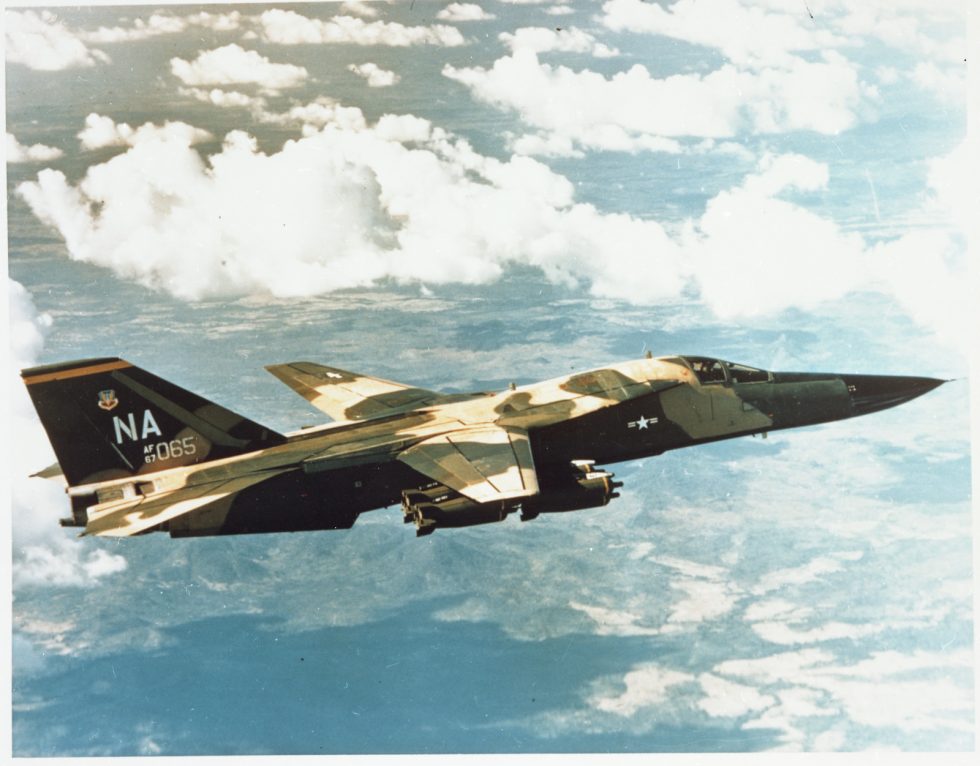
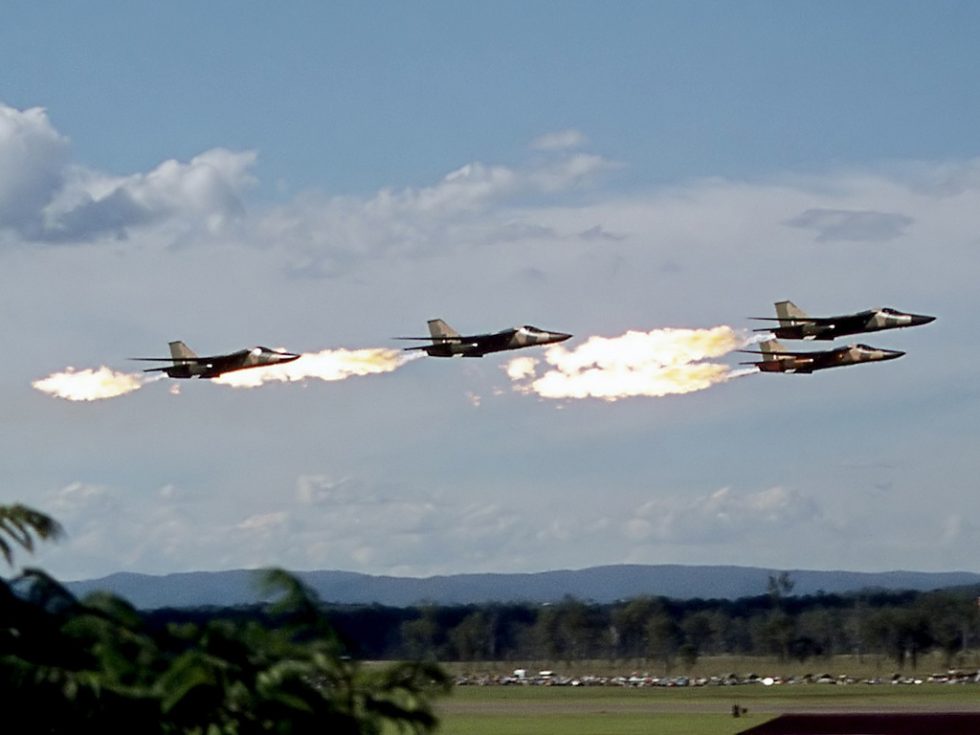
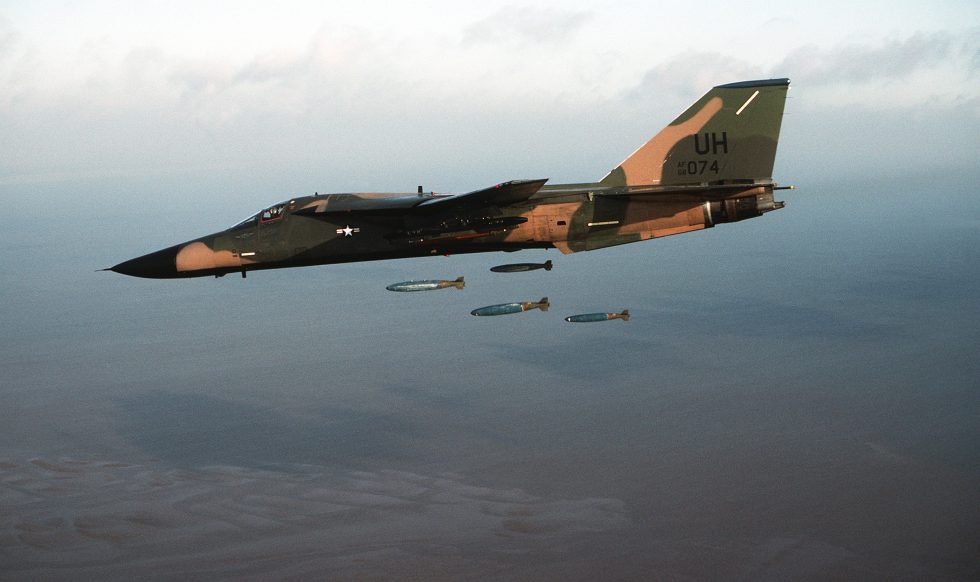
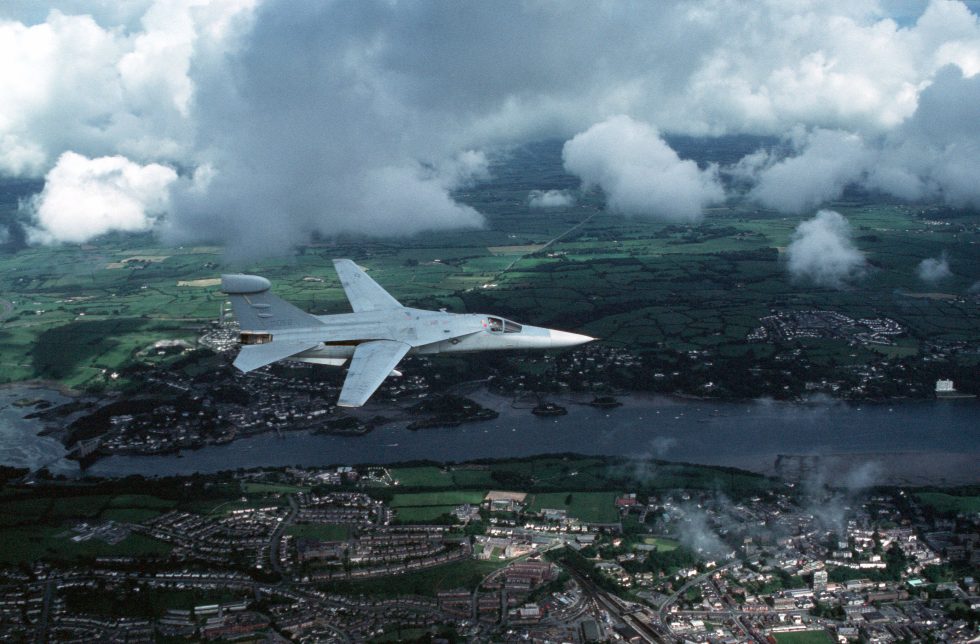
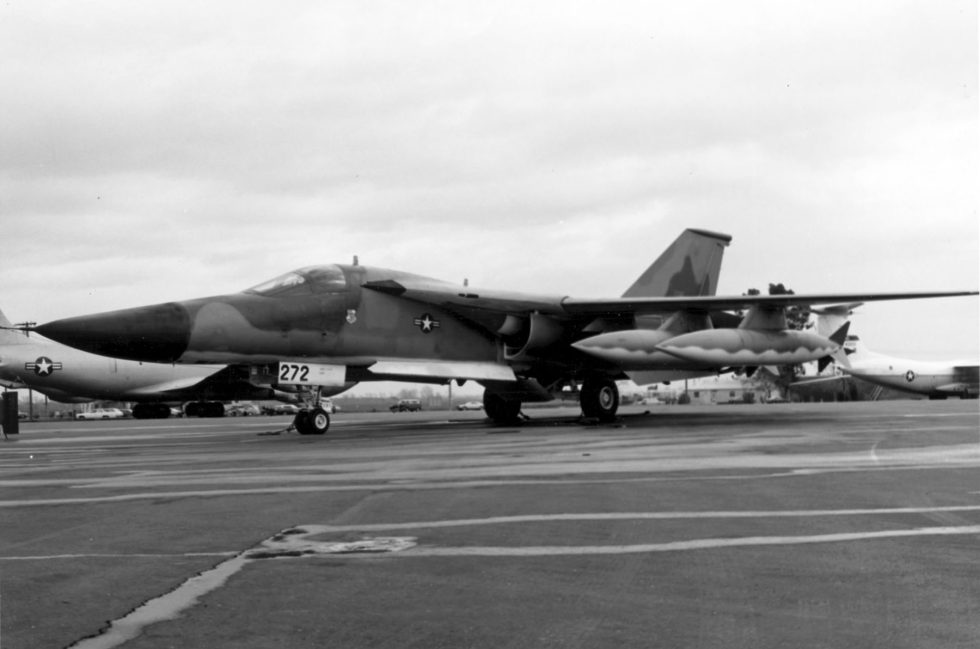
The F-111 Aardvark in motion
A dedicated F-111 Aardvark video feature is coming soon. In the meantime, explore the story, specifications and photo gallery above — and see where the Aardvark served on the operations map below.
Where the F-111 flew
The score that defines it
The F-111 was a striker, not a dogfighter — its record is written in precision bombs delivered at night, not air-to-air kills. After a catastrophic start over Vietnam it became the most effective strike aircraft of the 1991 Gulf War, and even scored a bizarre air-to-air victory without firing a shot.
Compare the combat record of every military aircraft. Figures as of July 2026 and, for contested combat claims, should be read as best estimates.
Everything people ask about the F-111 Aardvark
Can I fly in an F-111?
Why is the F-111 called the “Aardvark”?
What made the F-111 special?
Did the F-111 have ejection seats?
Why was the Navy F-111B cancelled?
Did an F-111 ever shoot down an aircraft?
How good was the F-111 in the Gulf War?
When did the F-111 retire?
You can’t fly the F-111.
These, you can.
Some legends only live in museums — others are fuelled and waiting. MiGFlug has put civilians in real military jet cockpits since 2004.
 Fly the L-39 AlbatrosThe world’s most-flown jet trainer — aerobatics included
 Fly the F-104 Starfighter“The missile with a man in it”
 Fly the MiG-21The Cold War’s most-produced jet
 Fly the T-33 Shooting StarAmerica’s first jet trainer
 Fly the DH VampireA piece of early jet history
 Fly the S.211Agile Italian jet trainer
 Fly the MB-326The classic Aermacchi jet
 Fly the MiG-15The Soviet legend of the Korean War
Continue the tour
Every fact, checked
- National Museum of the US Air Force — F-111F fact sheetOfficial specifications, service history and Gulf War record.
- Smithsonian National Air and Space MuseumTFX programme background and the F-111B naval cancellation.
- Air & Space / Smithsonian MagazineDetailed history of the failed Navy F-111B and its legacy in the F-14.
- RAAF MuseumAustralian F-111C service, the “Pig,” the dump-and-burn and 2010 retirement.
- The Aviation Geek ClubThe EF-111A Raven’s unarmed Mirage kill and El Dorado Canyon accounts.
- We Are The MightyThe 1991 EF-111 air-to-air victory scored without firing a shot.
- Air & Space Forces MagazineDesert Storm “tank plinking” and F-111F precision-strike effectiveness.
- The National InterestTFX controversy, terrain-following radar and the Aardvark’s redemption.