
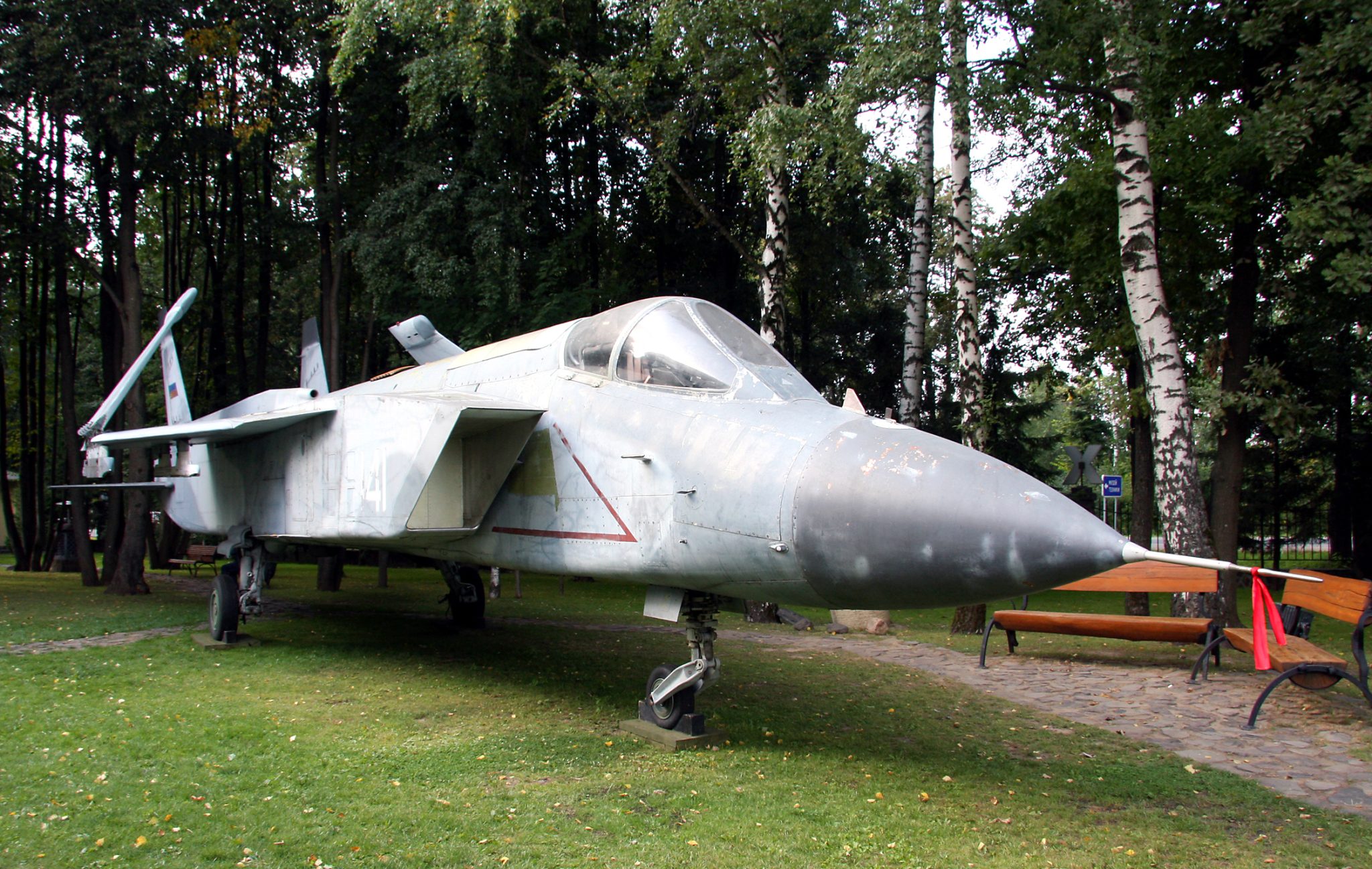
Yakovlev Yak-141
“Freestyle”
The world’s first supersonic vertical-takeoff fighter to fly — a Soviet carrier jet that could hover, then dash past the speed of sound, and whose swivelling nozzle is widely reported to have informed the F-35B lift system.
The Yakovlev Yak-141: the first supersonic jump-jet fighter to fly
By the late 1970s the Soviet Navy had a vertical-takeoff carrier fighter it was not happy with. The subsonic Yak-38 Forger could rise straight off a deck and land vertically, but it was short-legged, lightly armed, carried no useful radar and could not fly supersonically. The Navy wanted a genuine combat aircraft with the same deck flexibility: one that could take off and land vertically or from a short run, yet fight at supersonic speed. The Yakovlev design bureau, the USSR’s specialist in vertical flight, was given the task, and the aircraft it produced — known during development as the Yak-41 and later publicised as the Yak-141 — became the first supersonic vertical-takeoff fighter in the world to actually fly.
The engineering problem was severe. To hover, a jet must balance on its own thrust with the exhaust pointing straight down; to fly fast, that same thrust must point straight back. Yakovlev’s answer was a hybrid layout: a single large afterburning Soyuz R-79V-300 turbofan at the rear, fitted with a three-bearing swivelling nozzle that could rotate from horizontal to roughly vertical, plus two small RD-41 lift jets mounted behind the cockpit that fired only during takeoff and landing. In the hover the main nozzle pointed down and the lift jets added thrust at the front, keeping the aircraft balanced; for forward flight the nozzle swung aft and the lift jets shut down and were faired over.
The prototype made its first conventional runway flight on 9 March 1987, flown by test pilot Andrei Sinitsyn. Hovering came later — the first untethered hover is commonly dated to 29 December 1989, with the first full transition from vertical takeoff to wing-borne flight and back on 13 June 1990. Four airframes were built in total, of which two were used for flight testing. In 1991 the aircraft set a series of vertical-takeoff climb-and-payload records (logged under the cover designation “Yak-141”), and the programme moved toward shipboard trials.
Those trials, aboard the carrier Admiral Gorshkov (the former Baku) in the autumn of 1991, produced the moment the aircraft is best remembered for. On 5 October 1991 one of the prototypes made a hard vertical landing on the deck; the impact ruptured a fuel tank and the aircraft caught fire. The pilot ejected safely and the fire was put out, but the airframe was badly damaged. The accident is often described dramatically, but by most accounts it was a heavy landing and fuel-tank rupture rather than an explosion, and it did not injure the pilot.
What killed the Yak-141 was not the accident but the collapse of the country that was paying for it. As the Soviet Union broke apart, funding for a new naval fighter evaporated; the Navy formally wound down the programme in 1991, and no production aircraft were ever built. Yakovlev kept the surviving airframes flying at airshows to try to attract a partner, displaying the type at Farnborough in 1992 — the first time the West saw it up close.
That search for a partner led to the aircraft’s strangest chapter. In the mid-1990s Yakovlev entered into a brief commercial arrangement with Lockheed (later Lockheed Martin), which was then developing its own STOVL fighter concept that would become the F-35B. Lockheed reportedly provided funding in exchange for access to the Yak-141’s flight-test data and design experience. Because the F-35B also uses a rear three-bearing swivel nozzle, it is frequently claimed that the Soviet jet “shaped” the American one. That link is real as a business relationship but contested as an engineering lineage — the two aircraft use fundamentally different lift systems, and how much the Yak-141 data actually influenced the F-35B is disputed. It is best treated as reported and plausible, not proven.
01The Yak-141’s lineage: how it grew out of the Yak-38 Forger
The Yak-141 was Yakovlev’s attempt to fix everything that was wrong with the Yak-38 Forger, the Soviet Navy’s first operational vertical-takeoff fighter. The Yak-38 used three engines — one vectoring main engine and two dedicated lift jets — but was subsonic, carried little fuel or weaponry and lacked a search radar, which sharply limited its usefulness as a fighter.
The Yak-141 kept the broad idea of a vectoring main engine assisted by lift jets, but pushed it much further: a far more powerful afterburning turbofan with a fully rotating nozzle, a proper radar and air-to-air missile armament, and supersonic performance. It is best described as a supersonic successor in concept to the Yak-38 rather than a direct replacement, and it never reached the fleet the Forger had served.
What makes the Yak-141 special
A swivelling main nozzle plus two lift jets
The Yak-141 balanced the two impossible demands of a jump-jet with a hybrid propulsion layout. A single afterburning Soyuz R-79V-300 turbofan drove a three-bearing swivel nozzle at the tail that could rotate from horizontal to about vertical, while two RD-41 lift jets behind the cockpit added downward thrust only during takeoff and landing. In the hover the nozzle pointed down and the lift jets kept the nose up; in forward flight the nozzle swung aft and the lift jets shut off.
The first supersonic VTOL fighter to fly
Vertical takeoff and supersonic speed pull an airframe in opposite directions, and no vertical-takeoff fighter had combined them in the air before. With its powerful vectoring engine the Yak-141 could take off vertically or from a short run, land vertically, and still reach a top speed commonly cited at around Mach 1.7. That made it the first supersonic vertical/short-takeoff-and-landing fighter design to actually fly — a milestone the subsonic Harrier and Yak-38 never reached.
A design that may have fed into the F-35B
The Yak-141’s rear three-bearing swivel nozzle resembles the one on the F-35B, and in the mid-1990s Yakovlev worked briefly with Lockheed, which reportedly gained access to the Soviet jet’s flight-test data. This is often cited as evidence the Yak-141 “shaped” the F-35B. The claim is plausible but contested: the two aircraft use very different lift systems (the F-35B adds a shaft-driven lift fan), and the extent of any real influence is disputed among historians.
02The Yak-141’s propulsion: how a jet hovers and then goes supersonic
The core difficulty of a supersonic jump-jet is that hovering needs thrust pointing straight down while fast flight needs it pointing straight back, and a fixed engine can only do one. Yakovlev solved this with a three-bearing swivelling nozzle on the main R-79V-300 engine — a segmented pipe whose angled joints let the whole nozzle rotate downward for vertical flight and back to horizontal for cruise — supported by two RD-41 lift jets in the forward fuselage.
During a vertical takeoff or landing all three engines pushed down together, the lift jets ahead of the centre of gravity balancing the main nozzle behind it, with reaction-control jets at the wingtips and nose for stability at zero airspeed. Once moving forward the aircraft accelerated, wing lift took over, the lift jets were shut down and their intake doors closed, and the main nozzle straightened for supersonic flight. It was an elegant but complex arrangement, and carrying two lift engines that were dead weight in normal flight was its main penalty.
03The Yak-141 and the F-35B: what is reported, and what is contested
After the programme lost its funding, Yakovlev sought foreign partners, and in the mid-1990s it reached a commercial arrangement with Lockheed (soon Lockheed Martin). Widely reported figures put Lockheed’s involvement at a few hundred million dollars in exchange for access to years of Yak-141 flight-test results and engineering experience, at a time when Lockheed was developing the STOVL concept that became the F-35B.
Because both aircraft use a rear three-bearing swivel nozzle, it is often said the Yak-141 directly shaped the F-35B. What can be stated with confidence is narrower: the partnership happened, and Lockheed had access to Soviet data. Whether that data meaningfully influenced the F-35B is disputed — the F-35B’s lift system is built around a shaft-driven lift fan the Yak-141 never had, and several analysts regard the resemblance of the nozzles as convergent engineering rather than copying. The honest summary is that the connection is real as history and plausible as influence, but not a proven line of descent.
Full Yakovlev Yak-141 specifications
Baseline note: the figures below describe the Yak-41M as flown in 1991 — the two flying prototypes, izdeliye 48-2 (board 75) and izdeliye 48-3 (board 77), the latter being the pre-production standard. Deltas for the Yak-38 it was meant to replace, for the projected production Yak-141M, for the land-based Yak-43 and for the mid-1990s Yak-201 study are in grey. Four warnings before any number is read. First, this aircraft never completed state acceptance trials, so almost nothing here is a certified figure; the numbers come from Yakovlev publicity, from the bureau history and from Russian journal accounts written after the fact, and they do not always agree. Second, the aeroplane has two of almost every weight and performance figure, one for a vertical take-off and one for a 120 m rolling take-off, and sources routinely quote the better of the pair without saying which it is — a habit that makes the Yak-141 look about 3,700 kg more capable than it was in its defining mode of operation. Third, the widely repeated claim that this was the first supersonic VTOL aircraft to fly is not correct as usually stated; the EWR VJ 101C X-2 exceeded Mach 1 on 29 July 1964 and the Dassault Mirage IIIV reached Mach 2.04 on 12 September 1966. What the Yak-141 can properly claim is to be the first supersonic vertical-take-off aircraft built as a weapon rather than as a research machine, the first aircraft of any kind to fly with a three-bearing swivel nozzle, and the only supersonic VTOL type to have operated from a ship before the F-35B. Fourth, English-language reference works disagree with Russian ones on ceiling, ferry range and dry thrust; where they do, both figures are given.
Dimensions & weights
- Crew
- 1 — one pilot on a Zvezda K-36LV seat, a version of the K-36 developed specifically for jet-lift aircraft. A two-seat trainer, the Yak-41UT (izdeliye 48U), with a lengthened fuselage and tandem cockpits, was ordered by the 1977 decree and again in 1986; it was never built
- Length
- 18.36 m (60 ft 3 in). Russian sources generally round to 18.3 m (60 ft 0 in). The Yak-38M it replaced was 16.37 m (53 ft 8 in)
- Wingspan, spread
- 10.105 m (33 ft 2 in), swept 30° on the leading edge with 4° of anhedral. Rotating leading-edge flaps inboard and outboard, plain flaps inboard, ailerons on the folding panels mechanically interconnected with the wingtip reaction jets
- Wingspan, folded
- 5.90 m (19 ft 4 in) — the outer panels fold to almost halve the span, because Admiral Gorshkov had to strike the aircraft below on lifts sized for the Yak-38
- Height
- 5.00 m (16 ft 5 in) over the twin fins, which are carried on booms extended well aft so that the main nozzle can swivel between them
- Tailplane span
- 5.90 m (19 ft 4 in), all-moving, mounted below the wing plane and interlinked by the digital control system with the throttle settings of all three engines
- Wing area
- 31.7 m² (341 sq ft). The 1979 draft project had 29.3 m² (315 sq ft); tunnel and rig work forced the increase. The Yak-43 study enlarged it again
- Empty weight
- 11,650 kg (25,684 lb). Twenty-six per cent of the airframe by mass is composite — carbon-fibre fin and tailplane skins, flaps, wing leading edges and root extensions — with most of the remainder in corrosion-resistant aluminium-lithium alloy, plus hardened steel and heat-resistant titanium around the engine bays
- Max take-off, short run
- 19,500 kg (42,990 lb) after a 120 m (394 ft) roll. This is the number quoted in almost every table, and it is not a vertical take-off weight
- Max take-off, vertical
- 15,800 kg (34,833 lb). The 3,700 kg (8,157 lb) difference between the two figures is the whole argument about jet-lift fighters, expressed as a mass
- Internal fuel
- 4,400 kg (9,700 lb), over 5,000 litres, in the centre fuselage and in the tail booms — about 1.6 times the Yak-38’s internal capacity
- External fuel
- ~1,750 kg (3,858 lb) in underwing tanks, with a 2,000-litre (528 US gal) tank on the centreline. A conformal ventral tank of the same volume was drawn but not flown
- Wing loading
- 615 kg/m² (126 lb/sq ft) at 19,500 kg; 498 kg/m² (102 lb/sq ft) at the vertical take-off weight. High by fighter standards, which is why the wing carries so much high-lift machinery
- Undercarriage
- Levered-suspension tricycle — KN-31 nosewheel on a 500 × 150 mm tyre retracting aft, single KT-69/4 mainwheels on 880 × 230 mm tyres retracting forward under the intake ducts. Stressed to absorb an impact equivalent to a 5 m (16 ft) drop, which on 5 October 1991 was not enough
Performance
- Max speed, altitude
- 1,800 km/h (1,118 mph, 972 kn) at 11,000 m (36,090 ft), Mach 1.7
- Max speed, sea level
- 1,250 km/h (777 mph, 675 kn), Mach 1.05 — supersonic on the deck, which the Harrier never was and the Yak-38 never approached
- Rate of climb
- 250 m/s (49,200 ft/min) quoted. The measured record is more useful: 12,000 m (39,370 ft) in 1 min 56.15 s from a standing start, on 11 April 1991
- Service ceiling
- 15,000 m (49,210 ft) in Russian sources; English-language tables usually give 15,500 m (50,850 ft). The FAI-homologated altitude with a 1,000 kg payload was 13,115 m (43,028 ft)
- Range, vertical take-off
- 1,400 km (870 mi, 756 nmi) at 10,000–12,000 m; only 650 km (404 mi, 351 nmi) flown at low level. Clean, no external tank
- Range, short take-off
- 2,100 km (1,305 mi, 1,134 nmi) at altitude carrying a 1,000 kg load; 1,010 km (628 mi, 545 nmi) at low level. English-language tables quoting a 3,000 km ferry range are not supported by Russian sources
- Combat radius
- ~690–900 km (429–559 mi, 373–486 nmi) depending on profile and on which account you follow — against roughly 100 km for the Yak-38, which is the single largest improvement in the design
- Loiter
- 90 min on station 100 km (62 mi) from the ship. That is a usable combat air patrol, and it was the whole point of the aeroplane
- Take-off run
- 120 m (394 ft) normally, nozzle deflected to 62° after the roll begins. With the deck restraining chocks fitted to Admiral Gorshkov, 60–80 m (197–262 ft); in the ultra-short mode, nozzle pre-set and full afterburner released against the chocks, about 6 m (20 ft)
- Landing
- Vertical, or conventional with a brake parachute stowed above the main nozzle in case the swivel jams. Rolling-landing braking distance was about 1 km (3,280 ft), roughly 2.5 times shorter than the Yak-38’s, because the nozzle goes to −95° and the last 5° gives reverse thrust
- Thrust-to-weight
- 0.98 at the vertical take-off weight; 0.78 at 19,500 kg. The first figure is why it could hover; the second is why it needed a deck run to be worth arming
- g limit
- +7 — a genuine fighter limit, not a strike-aircraft one. Sinitsyn reported that the Yak could sustain turns on afterburner that the Harrier, having no reheat, could not, while conceding that the Harrier’s four-nozzle vectoring gave it the better instantaneous manoeuvre
Propulsion & systems
- Main engine
- 1 × Soyuz R-79V-300 afterburning vectored-thrust turbofan — designed from the late 1970s at NPO Soyuz (now AMNTK Soyuz) under V. K. Kobchenko as izdeliye 79. English works usually file it under the Tumansky name because Soyuz is the successor to the Mikulin and Tumansky bureau. Two-spool with contra-rotating spools to cancel gyroscopic moments in the hover, 3-stage fan and 11-stage high-pressure compressor, annular combustor with vortex burners, overall pressure ratio 22, bypass ratio 0.80, airflow 180 kg/s (397 lb/s), turbine entry 1,347 °C. Length 5.23 m (17 ft 2 in), inlet diameter 1.10 m (3 ft 7 in)
- Main engine thrust
- 152 kN (15,500 kgf, 34,170 lbf) with full afterburner; 108 kN (10,977 kgf, 24,200 lbf) dry, although some Russian accounts quote 9,000 kgf and one Samara reference gives 103 kN. In the hover with afterburner the usable figure falls to about 122.5 kN (12,500 kgf) and is time-limited to 2.5 minutes; bleeding 10 kg/s for the reaction jets costs a further 15 kN
- Swivel nozzle
- Three-bearing swivel, 0° to −95° — three canted rings that rotate against one another to fold the jet pipe downwards. Crucially it works at any throttle setting including full reheat, which the Yak-38’s simple side nozzles could not. Rated for at least 1,500 swivel cycles. Using afterburner for vertical operations wrecks unprepared surfaces, which is one reason the aircraft was never realistically a road-strip fighter despite the brochures
- Lift engines
- 2 × RKBM RD-41 turbojets — single-shaft, designed at the Rybinsk engine design bureau under A. S. Novikov between 1975 and 1984. 40.2 kN (4,100 kgf, 9,040 lbf) each, some sources 4,260 kgf; dry mass only 290 kg (639 lb) for a thrust-to-weight ratio above 14, length 1.594 m (5 ft 3 in), pressure ratio 6.28, airflow 53.5 kg/s. About thirty were built
- Lift engine installation
- In tandem immediately behind the cockpit — canted 10° forward of vertical, closed in cruise by one upper and two lower doors. Nozzles vector ±12.5° with 10 per cent variable area; in a vertical take-off they are toed towards one another so the two jets merge and do not raise a fountain between them, and in a short take-off both are deflected fully aft. They can only be run below 2,500 m (8,200 ft) and 550 km/h (342 mph)
- Total hover thrust
- ~201 kN (20,500 kgf, 45,200 lbf) at ISA, of which roughly 60 per cent comes from the main engine. Two transverse movable and two fixed longitudinal fences deploy under the intakes to break up hot-gas recirculation and keep debris out
- Reaction controls
- Compressor bleed jets — roll nozzles in the wingtips, yaw from a single swivelling nozzle in the nose on izdeliye 48-3, or from two nozzles in the tail-boom tips on 48-2, the two prototypes flying different arrangements so that the better could be chosen. Pitch is trimmed by differential thrust between lift engines and main engine, not by a jet
- Flight and engine control
- Triplex digital fly-by-wire by NPK Avionika, with a mechanical reversion; one prototype is reported to have flown an analogue system with no mechanical backup. The same computer commands aerodynamic surfaces, reaction jets and all three engines’ nozzles. Below 65° the pilot commands nozzle angle by hand; from there to zero the transition is automatic, with lift-engine thrust bled off to hold the aircraft in balance
- Radar and weapon system
- S-41M with Zhuk (M002) — a multimode pulse-Doppler set with a slotted planar array, related to the MiG-29M’s but physically smaller, 250 kg. Detection 80 km against a 3 m² target and 110 km against a small surface vessel, ten targets tracked and four engaged. It was carried only on the second flying prototype, the aircraft lost on 5 October 1991. A laser and television designation system and a helmet-mounted sight were planned for production aircraft only
- Navigation and landing
- PrNK-48M suite — inertial platform, RSBN-6S Romb short-range navigation, Rezistor-K4 automatic carrier approach and provision for satellite navigation. Parol IFF in the nose; jammers in the wingtips and fin caps; chaff and flare dispensers in the strakes running forward from the fins
- Escape system
- Zvezda K-36LV with SK-EM auto-ejection — second-generation automatic sequencing that arms whenever the main nozzle is deflected more than 30° and fires on a preset combination of attitude and angular rate. If the upper lift-engine door is open the seat goes straight through the canopy. It worked exactly as designed on 5 October 1991
- Engines built
- 26 R-79V-300 by autumn 1992 — of which sixteen were cleared for installation and seven had flown. Engine delivery, not airframe work, was the pacing item for a decade: the aircraft was ordered for state trials in 1982 and the first flight-standard engine at the required 15,500 kgf did not reach the bureau until late 1985
04The Yak-141’s costs: why no reliable price exists
The Yak-141 never entered production, so there is no flyaway unit price and no cost-per-flight-hour figure for it in any meaningful sense — it existed only as four Soviet state-funded prototypes. The programme’s total development cost was borne by the Soviet defence budget and was never disclosed in Western terms. The one financial figure that is widely quoted is not the aircraft’s price at all but Lockheed’s reported few-hundred-million-dollar mid-1990s investment in Yakovlev for access to the test data — and even that number should be read as reported rather than firmly documented. Any precise dollar cost attached to a Yak-141 online is an estimate.
Armament & payload
The Yak-141 could carry 2,600 kg only if it refused to take off vertically
The armament of the Yak-141 is a straightforward late-Soviet fighter fit — a GSh-30-1 cannon, four underwing pylons and a centreline station, the same missiles the MiG-29 and Su-27 were carrying — and the interesting thing about it is not the weapons but the arithmetic. Maximum external load was 2,600 kg after a 120 m rolling take-off. Take off vertically and it fell to 1,000 kg, because 3,700 kg of the aircraft’s permissible weight had been spent on the privilege of leaving the deck without moving. That is the same trade the Harrier makes and the F-35B makes; the difference is that the Yak carried two lift engines that were dead weight, dead volume and dead drag for every minute of the rest of the sortie.
Against the Yak-38 it replaced, the improvement was enormous and should not be understated. The Yak-38 had no radar at all and could attack only what the pilot could see; the Yak-141 had a Zhuk-class set that could find a fighter at 80 km and a patrol boat at 110, track ten contacts and engage four. The Yak-38 carried a thousand kilogrammes to a radius of about a hundred kilometres; the Yak-141 carried more than twice that to six or nine times the distance and could go supersonic to get there. For the first time a Soviet ship without a catapult had the prospect of a real fleet air-defence fighter rather than an armed curiosity.
Set against what it would actually have met, the picture is less flattering. A Sea Harrier FRS.2 with AMRAAM was subsonic but had a proper look-down radar and vastly more operational maturity; an F/A-18 from a catapult deck carried more, further, from a ship that could also launch tankers and airborne early warning. And the weapons integration was never finished. In 1991 the ground rig at Zhukovsky was still being used to measure whether stores hung under the wing would overheat or cook off in the efflux during a vertical landing — a question that tells you exactly how far from service the aircraft was. Not one weapon of any kind was ever fired from a Yak-141. Every store listed below is a design provision or a rig-tested clearance; the only things ever carried aloft were drop tanks, ballast and dummy rounds — and it was mock missiles on the pylons that helped make Yakimov’s aircraft the heavier of the two on the day it was lost.
Gun
- One 30 mm Gryazev-Shipunov GSh-30-1 (GSh-301) single-barrel cannon with 120 rounds, mounted under the fuselage on the port side and partly recessed into the structure.
- The lightest gun of its class anywhere at 50 kg, water-cooled, firing 1,500–1,800 rounds per minute with a misfire-clearing mechanism — the same weapon as the MiG-29 and Su-27.
- High-explosive incendiary and armour-piercing tracer ammunition. Effective against air targets at 200–800 m and against ground or surface targets at 1,200–1,800 m.
- The Yak-38 had no internal gun at all and needed a podded GSh-23 to strafe anything, so this was a real capability gain rather than a token one.
Air-to-air
- R-27R and R-27T (AA-10 Alamo) medium-range rounds, semi-active radar and infrared seekers respectively — the standard Soviet BVR weapon of the period.
- R-77 or RVV-AE (AA-12 Adder) active-radar rounds, up to four; the brochure’s headline air-defence load and the weapon that would have made the aircraft genuinely modern.
- R-73 and R-73E (AA-11 Archer) high-off-boresight infrared dogfight missiles, intended to be cued by a helmet sight that was never fitted to a prototype.
- R-60 and R-60M (AA-8 Aphid) lightweight infrared rounds, carried as an alternative short-range fit.
- None was ever launched. The aircraft’s air-to-air capability rests entirely on rig testing and on the pedigree of weapons proven on other airframes.
Air-to-surface guided
- Kh-35 (AS-20 Kayak) sea-skimming anti-ship missile with an active radar seeker — the weapon that defined the aircraft’s secondary role, with quoted loads of four rounds plus a centreline tank.
- Kh-31A anti-ship and Kh-31P anti-radiation missiles (AS-17 Krypton), ramjet-powered and supersonic, for striking escorts and shipborne radars.
- Kh-25MP anti-radiation missile (AS-12 Kegler) for defence suppression, and Kh-25 family rounds against point targets ashore.
- The anti-ship fit is the most credible of the strike loadouts: a supersonic aeroplane that can be dispersed across small decks and launch Kh-35 at a hundred kilometres is a genuine tactical problem for an opponent.
Bombs
- Up to six free-fall weapons of up to 500 kg (1,102 lb) — FAB-100, FAB-250 and FAB-500 general-purpose, and their OFAB fragmentation equivalents.
- BetAB-500 concrete-piercing and PLAB-250 anti-submarine bombs, reflecting the naval brief.
- ZAB-100, ZAB-250 and ZB-500 incendiaries, and FZAB-500 and OFZAB-500 combined-effect weapons.
- RBK-100, RBK-250 and RBK-500 cluster bombs, plus KMGU submunition dispensers.
- Six 500 kg bombs would consume the entire 2,600 kg external allowance and require a rolling take-off; from a vertical launch the aircraft could lift one tonne of stores in total.
Rockets
- B-8M1 pods, twenty 80 mm S-8 rockets each, empty pod mass 160 kg — the standard Soviet light attack rocket in high-explosive, shaped-charge, thermobaric and illuminating forms.
- B-13L pods, five 122 mm S-13 rockets each, for penetrating hardened targets and runways.
- S-24B 240 mm heavy rockets, one per APU-68U launcher, 235 kg apiece with a 123 kg fragmentation warhead.
- Quoted loads run to four rocket pods plus a centreline tank. Rockets are the least persuasive part of the armoury: an aeroplane this expensive, this short-legged and this precious was never going to be sent to strafe a beach.
Pods & other stores
- Up to four UPK-23-250 gun pods, each with a twin-barrel 23 mm GSh-23L and 250 rounds, 218 kg loaded and 78 kg empty, firing at 3,400 rounds per minute.
- A 2,000-litre (528 US gal) drop tank on the centreline station, present in almost every published loadout because without it the radius figures collapse. A conformal ventral tank of similar volume was studied.
- No targeting pod, no reconnaissance pod and no refuelling probe. The absence of air-to-air refuelling is a real limitation and one the F-35B specifically corrected.
- Sources disagree on the number of stations: Russian references give four underwing pylons plus one centreline, while others state that four were later increased to six. Four plus one is what the surviving airframes carry.
Three typical loadouts
- Fleet air defence, short deck run
- Four R-77 on the underwing pylons and a 2,000-litre tank on the centreline; alternatively two R-27E and two R-73E with the same tank. Launched over the deck restraining chocks in about 60–80 m, recovered vertically. Ninety minutes on task a hundred kilometres from the ship — the mission the aeroplane existed for.
- Anti-ship strike
- Two Kh-35 and two R-73E with a centreline tank, or four Kh-35 with the tank in the pure anti-surface fit. Against a target found by the ship or by a Ka-27 rather than by the aircraft’s own radar, since Zhuk’s 110 km against small vessels assumes a co-operative sea state.
- Land attack from a dispersed site
- Six 500 kg bombs, or four B-8M1 rocket pods with a centreline tank, after a 120 m run from a road strip or a damaged airfield. The dispersal argument was Yakovlev’s strongest selling point and its weakest: the aircraft needs afterburner to go vertical, and afterburner destroys the unprepared surfaces the concept depends on.
Sourcing caveat: no Yak-141 weapon fit was ever certified, because the aircraft never reached state acceptance trials. The lists above are compiled from the Yakovlev bureau history, from Lev Berne’s series in Krylya Rodiny (1994) and from Yefim Gordon’s Soviet Jump Jets (2008); loadout combinations follow the bureau’s own published armament diagram. Weights and ranges quoted for individual missiles are generic type figures, not Yak-141 clearances.
Variants
Yakovlev drew a supersonic jump jet for eighteen years, built four, and flew two
The Yak-141 has a confusing designation history for a type that never entered service, and most of the confusion is deliberate. Work began as the Yak-41, izdeliye 48, in 1975. When the requirement was rewritten in 1986 to make the aircraft multirole, it became the Yak-41M, izdeliye 48M. The designation Yak-141 appears from about 1988 and was used publicly from 1991 — partly, according to the bureau history, because the true designation was classified when the record claims were filed with the FAI, and partly because a new number disguised how badly the programme had slipped against a decree that had promised state trials in 1982.
The four airframes were not four aeroplanes in any useful sense. One was a static-test specimen. One was a ground rig that never flew, spending years on a forces-and-moments stand measuring what the three engines’ efflux did to the aircraft’s own skin. Only two flew, and between them they completed just over 250 flights before the money ran out — barely more than a modern fighter programme flies in a good quarter.
The list below includes the paper derivatives, because in this programme the paper matters. Two of them are directly relevant to the F-35 question: the Yak-43, which kept the lift jets, and the Yak-201, which abandoned them for a shaft-driven lift fan — Yakovlev’s own engineers concluding, by the mid-1990s, that the arrangement they had spent two decades perfecting was the wrong one.
- Yak-41 (izdeliye 48, 1975–1986, none completed)
- The original supersonic carrier interceptor, authorised by decree in November 1977 with state trials promised for 1982. A March 1979 draft project used the R-79V-300 alone; the Ministry of Defence commission instead directed a combined installation with two lift engines, and the requirement was then rewritten repeatedly — to a strike aircraft, back to a fighter, then to a multirole machine.
- Yak-41UT (izdeliye 48U, ordered 1977 and again 1986, none built)
- Two-seat conversion trainer with a lengthened fuselage and tandem cockpits. Ordered twice, funded neither time; also referred to as the Yak-41UB. Its absence mattered: converting squadron pilots onto a jet-lift fighter without a two-seater is close to impossible, as the Yak-38 programme had already demonstrated.
- VTOL carrier attack aircraft (technical proposal 1978, dropped 1986)
- A shipborne strike derivative studied on the Yak-41 airframe under the same 1977 decree. Work stopped when the May 1986 decree consolidated everything into the multirole Yak-41M.
- Yak-39 (from 1979, cancelled 1985, none built)
- Not a Yak-141 variant but its subsonic rival inside the same bureau: a radar-equipped multirole development of the Yak-38 with the R-28V-300, greater fuel and vectoring lift-engine nozzles. Cancelled in favour of the supersonic aircraft — a decision that left Soviet naval aviation with nothing at all when the Yak-41M failed.
- Yak-41M / Yak-141 (izdeliye 48M, 1986–1991, 4 built)
- The aircraft that was actually constructed: multirole, gun-armed, cleared for shipboard and land operation. Izdeliye 48-1 (board 48) was the ground rig, completed in the first quarter of 1984; 48SI was the static specimen, assembled July 1986; 48-2 (board 75) was the first flying aircraft, completed December 1985 and first flown 9 March 1987; 48-3 (board 77) was the pre-production machine, completed June 1987 and first flown 2 April 1989.
- Yak-141M (project, early 1990s, none built)
- Proposed production standard with enlarged leading-edge root extensions, a reworked avionics suite including multifunction displays and the helmet sight, and improved radius and payload. Saratov Aviation Plant had costed the production cycle at 420 days and put the aircraft’s complexity at 1.7 times that of a MiG-29 before preparation was stopped for lack of funds at the end of 1991.
- Yak-43 (izdeliye 201, late 1980s, project only)
- Land-based short-take-off derivative with a larger wing and a single Kuznetsov NK-32 — the 25,000 kgf engine of the Tu-160 bomber — fitted with a swivel nozzle, the lift jets deleted or reduced. Some English sources give the engine as the NK-321 and treat the designation izdeliye 201 as belonging to the Yak-201 instead; the Russian bureau accounts attach it to the Yak-43.
- Yak-201 (mid-1990s, project only)
- A fifth-generation canard design with low-observable shaping, drawn on Yakovlev’s own initiative and at its own expense, offered unsuccessfully into the Russian light fighter competition. Its propulsion is the point: a new 17,500 kgf main engine driving a mechanical shaft to a lift fan, with a projected 21,500 kg lift weight and 4,200 kg of stores. Yakovlev had reached the F-35B’s architecture on its own, and could not fund it.
- Lockheed-Yakovlev proposal (announced 1992, none built)
- Under the partnership announced at Farnborough on 6 September 1992 and confirmed by Lockheed in June 1994, three further flying prototypes and a new static article were to be built, one of them a two-seater, all at increased gross weight. No metal was ever cut. Reported dates for the collaboration run from 1991 to 1997, and Russian naval-aviation histories state that in 1995, with government permission, the bureau sold the Americans its complete Yak-38 and Yak-141 documentation.
Survivors and their locations, precisely. Two original airframes survive, both flying prototypes, and there are no reproductions. Izdeliye 48-2, the first flying aircraft, flew the Farnborough displays of September 1992 wearing the number 141, appeared statically at MAKS in 1993 and 1995, stood for years in the Yakovlev design bureau museum and was transferred in July 2009 to the Vadim Zadorozhny Museum of Technology at Arkhangelskoye outside Moscow, where it is displayed in grey with its original board number 75 restored and dummy R-73 and R-27R rounds on the pylons. Izdeliye 48-3, the pre-production aircraft wrecked on 5 October 1991, was rebuilt as a museum exhibit — reportedly using the tail section of the ground-rig aircraft 48-1 — and is at the Central Air Force Museum, Monino; it has no engine, which is the visible scar of the accident. Note that English-language references, including Wikipedia, still list this aircraft as being at the Yakovlev bureau museum, which has been out of date since 2009, and some photograph captions reverse the two identities. Of the other two airframes, the ground rig 48-1 is unaccounted for apart from its tail, and the location and condition of the static specimen 48SI are unknown.
From the Forger’s shortcomings to a cancelled prototype
The need for a supersonic jump-jet
Dissatisfied with the subsonic Yak-38 Forger, the Soviet Navy calls for a genuine supersonic vertical/short-takeoff carrier fighter. Yakovlev, the USSR’s VTOL specialist, takes on the design as the Yak-41.
First conventional flight
On 9 March the prototype makes its first ordinary runway flight, flown by test pilot Andrei Sinitsyn — the vectoring and lift systems still to be proven in the hover.
First hover
The first free hover is commonly dated to 29 December, demonstrating that the R-79 swivel nozzle and the two lift jets can hold the aircraft in the air at zero speed.
Full vertical-to-horizontal transition
On 13 June the aircraft completes the full sequence — vertical takeoff, transition to wing-borne flight, and vertical landing — the manoeuvre that defines a working jump-jet.
Records and carrier trials
The type sets a series of vertical-takeoff climb-and-payload records under the “Yak-141” name and begins shipboard trials aboard the carrier Admiral Gorshkov.
The deck accident
On 5 October a prototype makes a hard vertical landing on the carrier deck, rupturing a fuel tank and catching fire. The pilot ejects safely; the airframe is badly damaged.
Programme cancelled
As the Soviet Union collapses, naval funding disappears and the Navy winds down the programme. No production aircraft are ever built.
Farnborough and the Lockheed link
Yakovlev shows the Yak-141 at Farnborough in 1992 and, in the mid-1990s, enters a brief partnership with Lockheed — a connection often, and contentiously, linked to the F-35B.
Twelve Yak-141 Freestyle stories
Fixing the Forger
The Yak-141 was born from everything the Soviet Navy disliked about the Yak-38.
Read the full story
The nozzle that rotates
A three-bearing swivel nozzle let one engine point its thrust down to hover, then back to fly fast.
Read the full story
Two engines just for lift
Behind the cockpit sat two small jets that only ran during takeoff and landing.
Read the full story
First to fly supersonic and vertical
No jump-jet had ever combined vertical takeoff with supersonic speed in the air before.
Read the full story
9 March 1987
The prototype’s first flight was an ordinary runway takeoff, the hover still to come.
Read the full story
Learning to hover
The first free hover, in December 1989, showed the balancing act actually worked.
Read the full story
Twelve records in 1991
Before the programme ended, the Yak-141 rewrote the vertical-takeoff record book.
Read the full story
The hard landing on the deck
A heavy vertical landing in October 1991 ruptured a fuel tank and set a prototype ablaze.
Read the full story
Killed by a collapsing country
It was not a design flaw but the end of the USSR that finished the Yak-141.
Read the full story
The West sees it up close
In 1992 the Yak-141 appeared at Farnborough, a Soviet secret suddenly on show in England.
Read the full story
The Lockheed connection
A mid-1990s deal with Lockheed tied the dead Soviet jet to the future F-35B.
Read the full story
A decade too early
The Yak-141 proved a supersonic jump-jet was possible — then vanished before anyone could use it.
Read the full story
The Yak-141 Freestyle in pictures
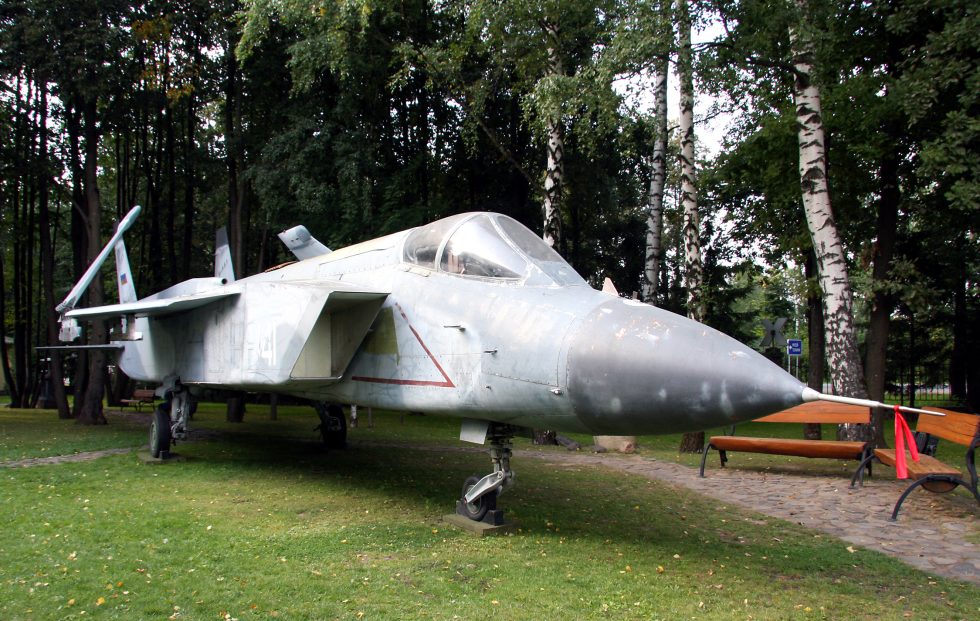
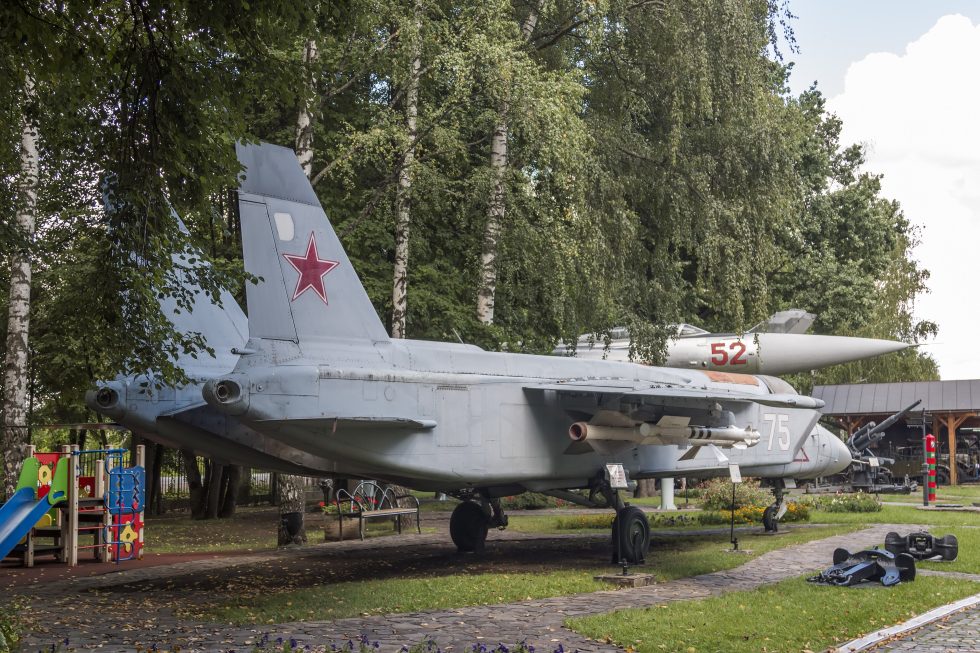
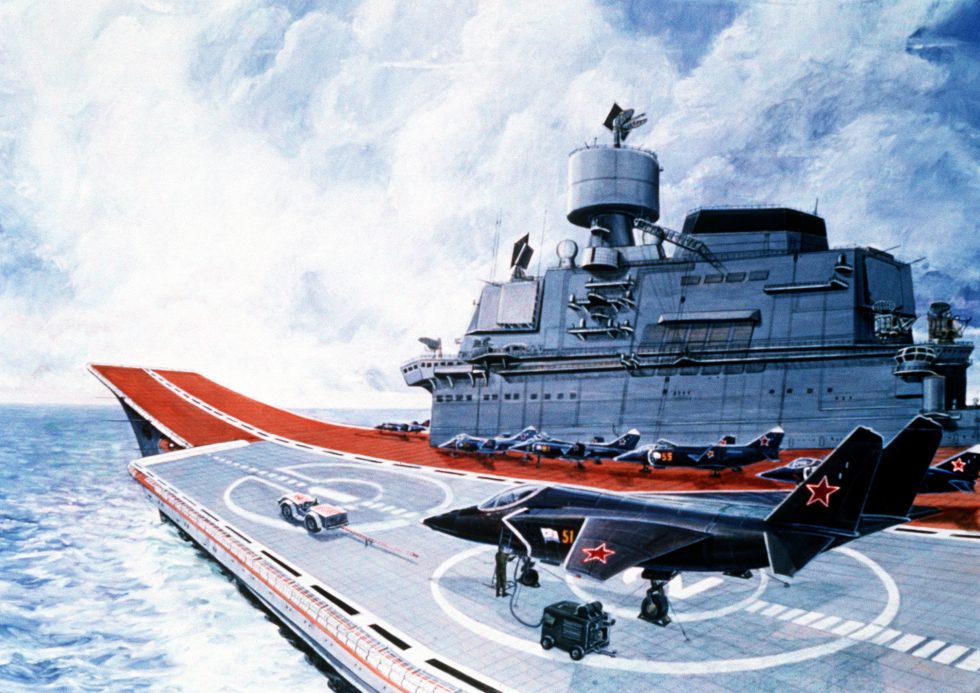
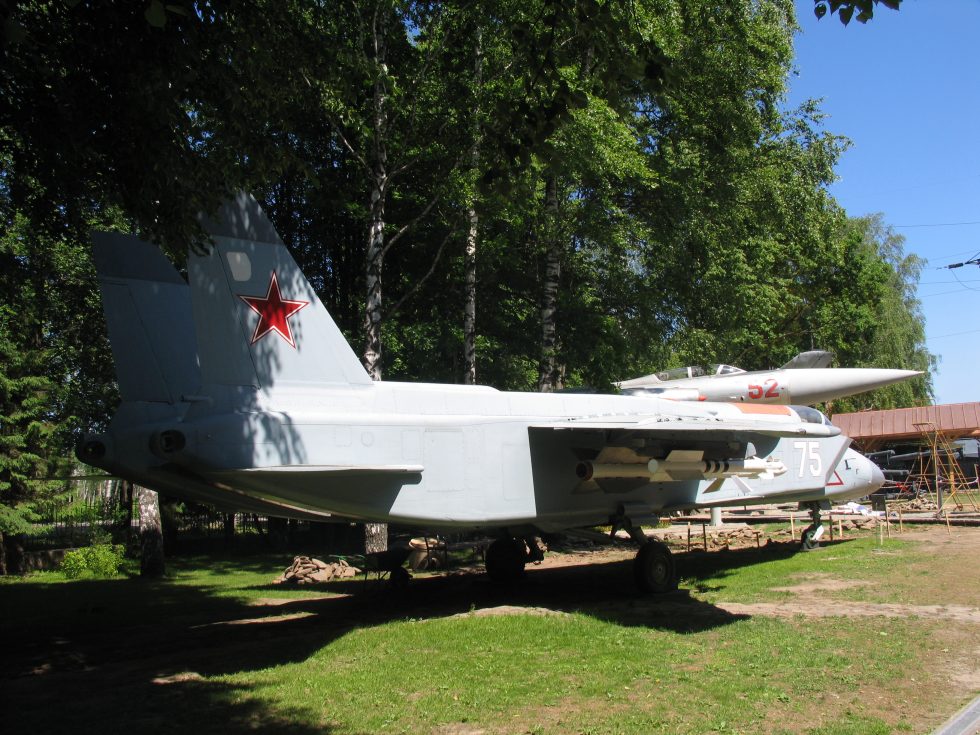
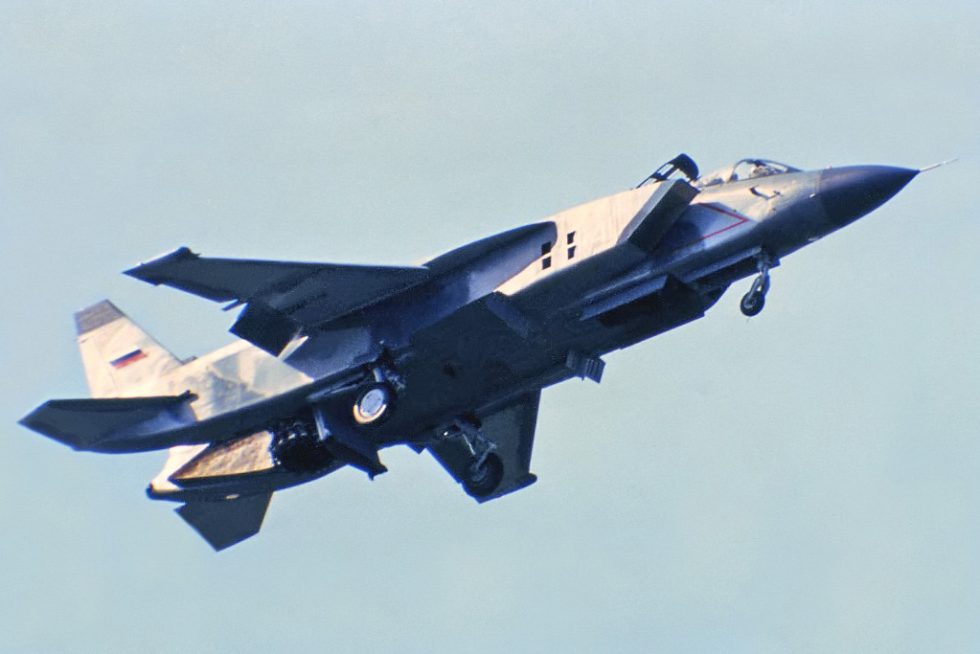
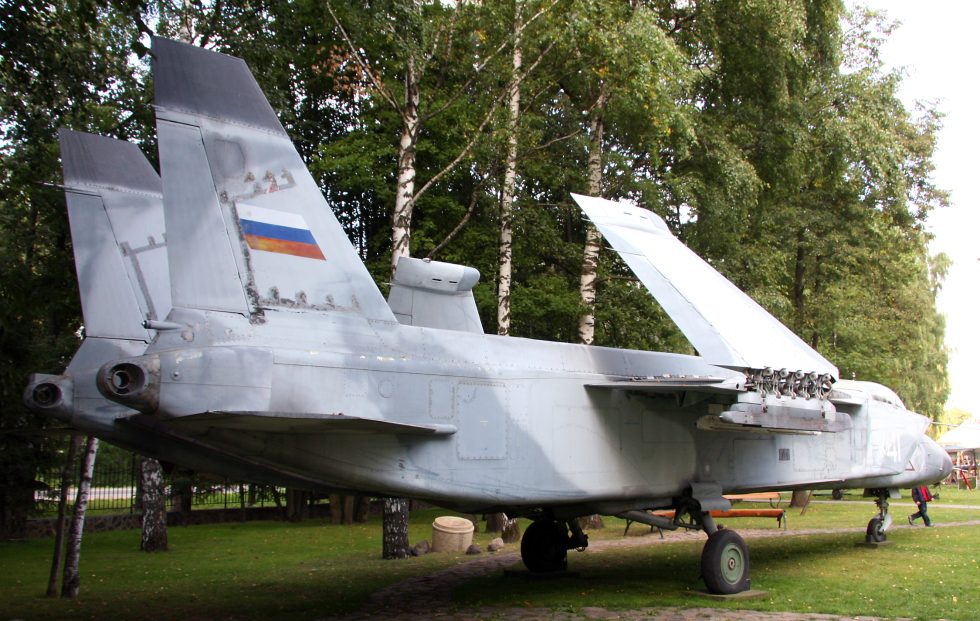
Where the Yak-141 was built and flown
A record measured in firsts, not combat
The Yak-141 never entered service and never saw combat — it existed only as four prototypes. Its record is therefore one of engineering milestones rather than kills: it was the first supersonic vertical-takeoff fighter design to fly, it set a series of vertical-takeoff records in 1991, and it demonstrated the rotating-nozzle propulsion later echoed — contentiously — in the F-35B. Its programme ended not in battle but with the collapse of the Soviet Union, which erased the funding and the carriers it was built to serve.
See the wider combat record of every military aircraft. The Yak-141 carries no combat record; it is presented here as the prototype it remained.
Everything people ask about the Yak-141 Freestyle
Can I fly in a Yak-141?
What was the Yakovlev Yak-141 (Yak-41)?
Did the Yak-141 really influence the F-35B?
How fast could the Yak-141 fly?
Why was the Yak-141 cancelled?
How many Yak-141s were built, and do any survive?
You can’t fly the Yak-141.
These, you can.
Some legends only live in museums — others are fuelled and waiting. MiGFlug has put civilians in real military jet cockpits since 2004.
 Fly the L-39 AlbatrosThe world’s most-flown jet trainer — aerobatics included
 Fly the F-104 Starfighter“The missile with a man in it”
 Fly the MiG-21The Cold War’s most-produced jet
 Fly the T-33 Shooting StarAmerica’s first jet trainer
 Fly the DH VampireA piece of early jet history
 Fly the S.211Agile Italian jet trainer
 Fly the MB-326The classic Aermacchi jet
 Fly the MiG-15The Soviet legend of the Korean War
Continue the tour
Every fact, checked
- MilitaryFactory — Yakovlev Yak-41 (Freestyle)Dimensions, weights, R-79 and RD-41 engines, prototype count and the flight-test dates.
- AeroCorner — Yakovlev Yak-141Specifications, weights, fuel and performance figures for the prototype.
- The National Interest — the Yak-41 and the F-35BThe Lockheed partnership and a sceptical view of the F-35B influence claim.
- Simple Flying — the Soviet supersonic jump-jetThe October 1991 carrier deck accident, cancellation and the Lockheed funding figures.
- GlobalSecurity.org — Yak-141Programme background, propulsion layout and naval requirement.
- Secret Projects Forum — Lockheed Martin and the Yak-141Detailed enthusiast discussion of the contested F-35B lineage and the partnership terms.
- MiGFlug Afterburner — the Yak-141 and the three-bearing nozzleMiGFlug’s own account of the swivel nozzle and the F-35B connection.
- FAI records databaseReference for the 1991 vertical-takeoff climb-and-payload records set by the type.