
General Atomics MQ-1
Predator
The drone that rewrote modern warfare — a slow, propeller-driven reconnaissance aircraft that became the first uncrewed hunter-killer, flown from the other side of the planet.
How the MQ-1 Predator changed the way wars are fought
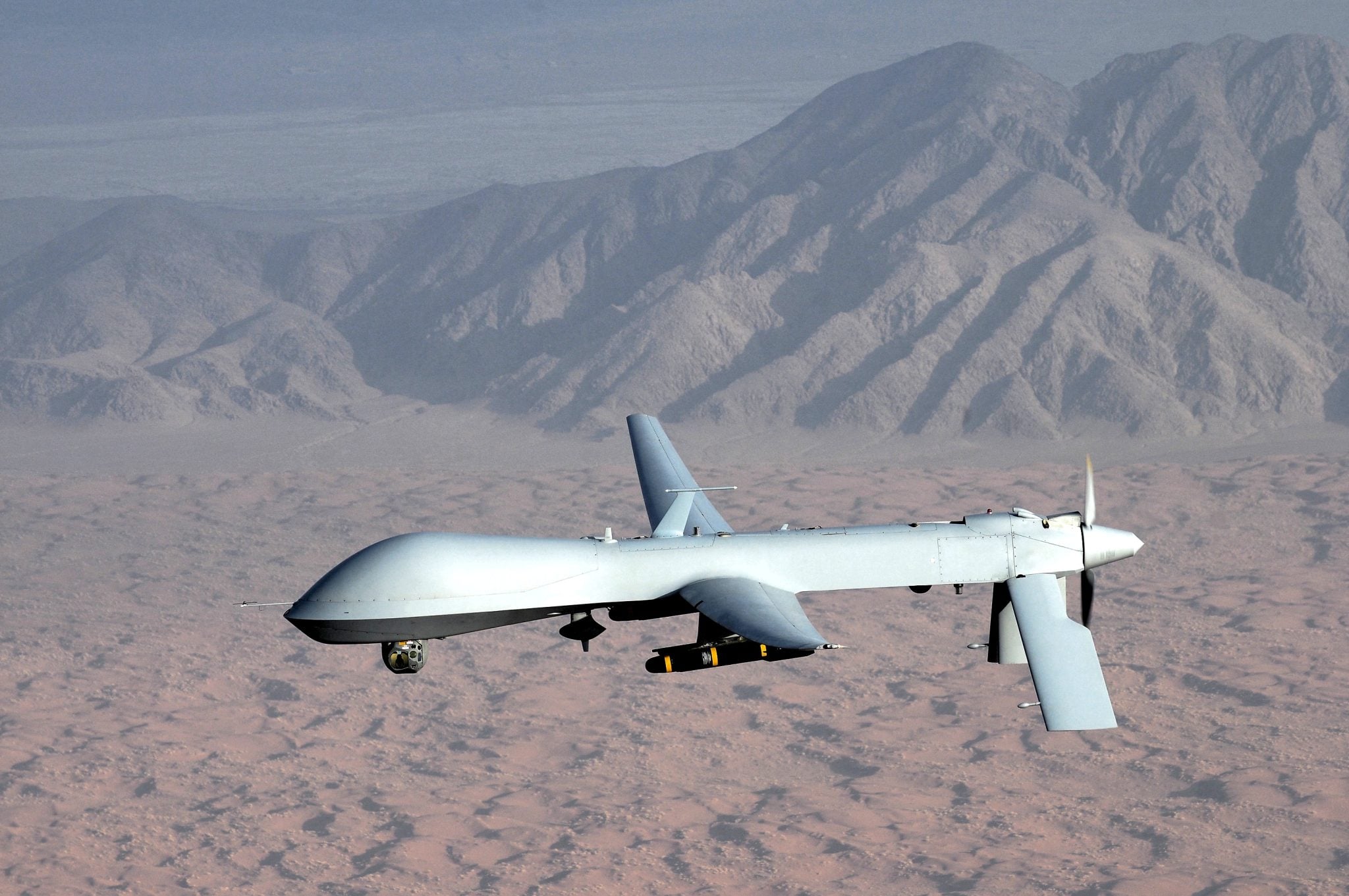
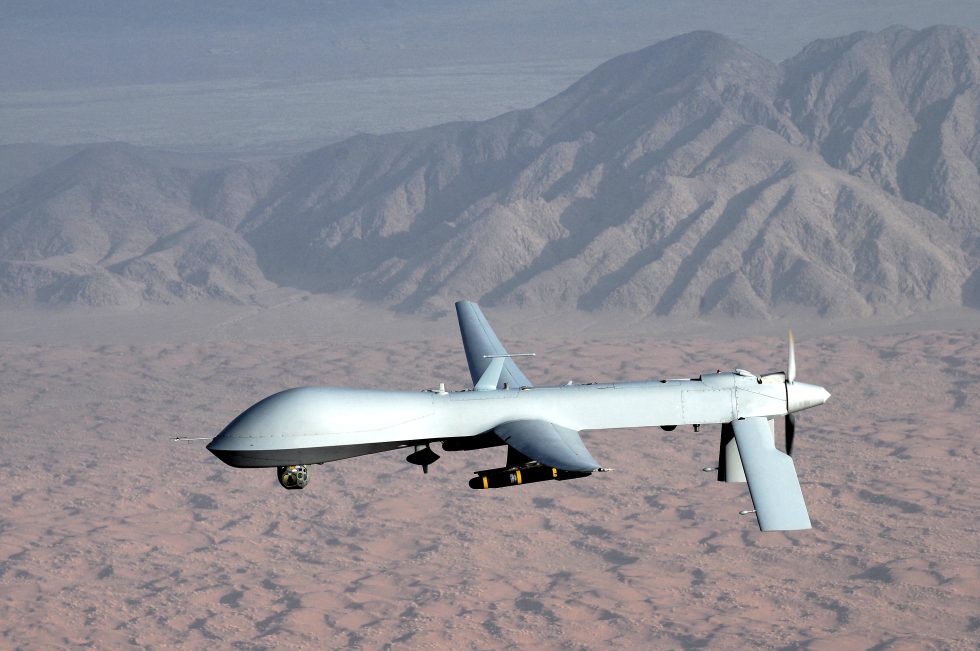
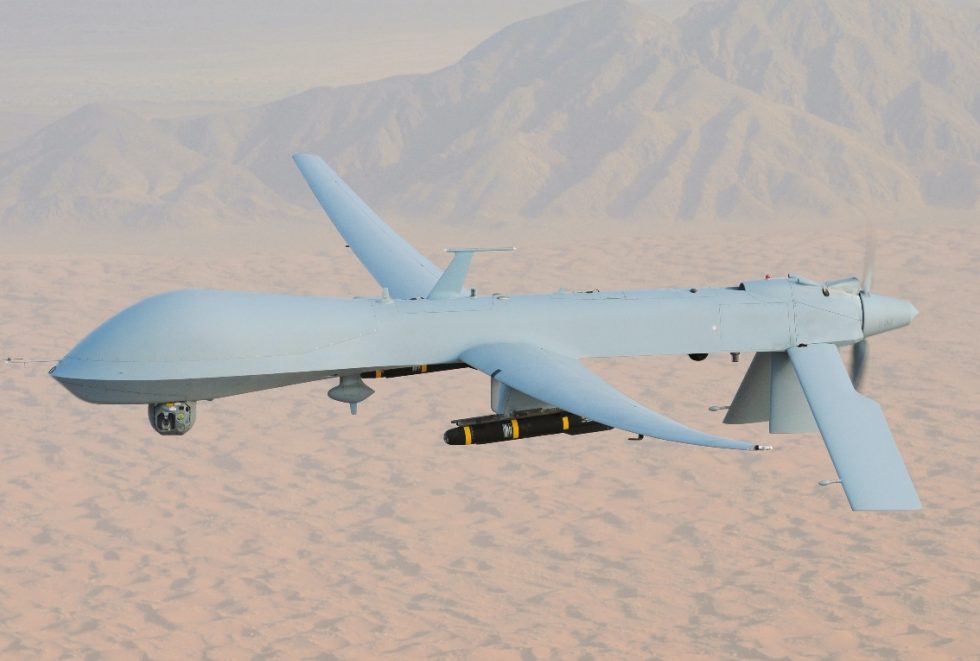
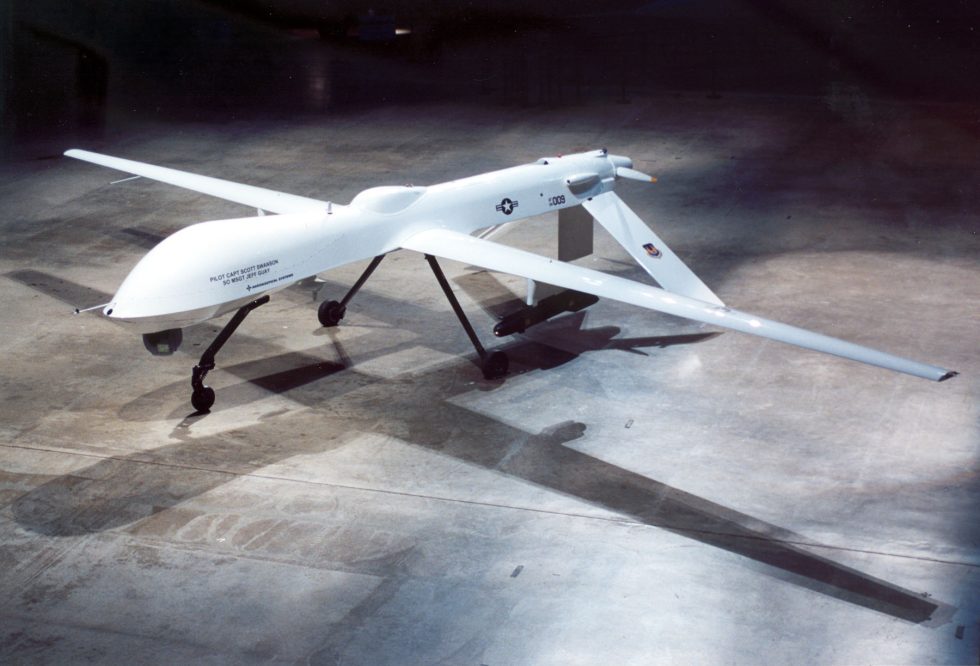
The MQ-1 Predator did not look revolutionary. It was slow, propeller-driven and built largely of composite, with a bulbous nose, an inverted-V tail and a wingspan close to a light aircraft. Yet few machines have reshaped warfare so completely. General Atomics Aeronautical Systems developed it in the early 1990s from earlier Leading Systems designs, and the type first flew in 1994 under an Advanced Concept Technology Demonstration contract. Its purpose then was simple and unarmed: to loiter for a full day and watch.
That watching debuted over the Balkans. From 1995 the RQ-1 Predator — the “R” denoting reconnaissance — flew surveillance over Bosnia, and later Kosovo, streaming near-real-time imagery to NATO commanders who had never before had eyes that could stay overhead for hours. Powered by a turbocharged Rotax 914 piston engine driving a pusher propeller, it cruised at medium altitude — around 25,000 feet — for well over 24 hours at a time. It was a sensor that never had to go home for crew rest.
The transformation came when the sensor was given a weapon. In 2000–2001 the Predator was fitted to carry and fire the AGM-114 Hellfire missile, and the reconnaissance drone became a strike aircraft. Redesignated MQ-1 — “M” for multi-role — it pioneered the armed-ISR “hunter-killer” mission: the same aircraft that found a target could now attack it, in the same orbit, in minutes. The first armed Predator strikes are widely dated to the opening of the war in Afghanistan in late 2001.
What made it stranger still was how it was flown. The Predator had no one aboard. A pilot and a sensor operator sat in a ground control station — many of them at Creech Air Force Base in the Nevada desert — flying the aircraft over Afghanistan, Iraq or Yemen through a satellite link with a roughly one-and-a-half-second delay. For the first time, aircrew commuted to war and drove home for dinner, and the ethical and political debate over remote, persistent, armed surveillance began in earnest.
The Predator became the defining aircraft of the post-2001 wars. Its imagery and its missiles ran through Afghanistan, Iraq, Yemen and beyond; the wider fleet logged more than two million flight hours, the great majority in combat. Italy flew an export version, and its larger sibling — the Predator B — grew into the MQ-9 Reaper and the U.S. Customs and Border Protection border-surveillance fleet. By 2018 the original MQ-1 had been overtaken by that heavier, faster, more heavily armed successor, and the U.S. Air Force retired it on 9 March 2018.
01The MQ-1 Predator’s origins: from Balkan spy drone to armed hunter-killer
The Predator traces back to the GNAT-750, a 1980s design by Leading Systems that General Atomics acquired. The U.S. military wanted an endurance reconnaissance platform, and the Predator answered that need over Bosnia from 1995. For its first years it was purely a camera in the sky. The decision to arm it — integrating the AGM-114 Hellfire, a missile designed to kill tanks — turned a surveillance tool into a weapon system and created the template every armed drone since has followed. The redesignation from RQ-1 to MQ-1 in the early 2000s formalised that shift from reconnaissance-only to multi-role.
What makes the MQ-1 Predator special
A piston engine built for patience, not speed
The Predator was powered by a single Rotax 914 — a turbocharged, four-cylinder piston engine of about 115 horsepower driving a pusher propeller. It was never meant to be fast; cruise speeds were around 84–135 mph. What it bought was endurance: more than 24 hours aloft at roughly 25,000 feet, letting one aircraft watch a target for a full day.
The sensor ball that made it a weapon
Under the nose sat a gimbaled electro-optical / infrared sensor turret with a laser designator, later paired with synthetic-aperture radar. This let crews identify targets day or night and guide the aircraft’s own AGM-114 Hellfire missiles — two on underwing rails — onto them. Find, fix, track, target and strike collapsed into a single orbit.
Flown from the far side of the world
No one flew aboard the Predator. A pilot and sensor operator worked from a ground control station, often at Creech AFB in Nevada, commanding the aircraft over a satellite datalink with a roughly 1.5-second lag. Take-off and landing were handled line-of-sight from the theatre; the long mission was flown from thousands of miles away.
02The MQ-1 Predator’s Hellfire integration: arming a reconnaissance drone
Fitting the AGM-114 Hellfire to a lightweight, low-vibration reconnaissance airframe was not trivial. The missile’s launch shock, the aircraft’s modest structure and the need to keep the sensor locked on target through the shot all had to be solved. Once they were, the Predator could lase its own target and fire, or lase for other aircraft. The result was the first practical armed uncrewed aircraft — and the reason “drone strike” entered everyday language.
03The MQ-1 Predator’s ground control station: how satellite flying worked
Beyond line of sight, the Predator was flown over a Ku-band satellite link. Commands from the ground station travelled up to a satellite and down to the aircraft, and its video came back the same way, introducing a delay of around a second and a half. That lag made take-offs and landings — the riskiest phases — awkward, so those were usually handled by a separate crew in-theatre using a direct radio link before control was “handed off” to the remote station for the long mission.
Full MQ-1 Predator specifications
Baseline note: the figures below describe the MQ-1B Predator in its Block 10/15 configuration — the de-iced, laser-designating, Hellfire-capable aircraft that reached initial operational capability with the United States Air Force in March 2005 and served until March 2018. That is the version worth tabulating, because it flew the overwhelming majority of the type’s operational hours and because it differs in several load-bearing respects from the RQ-1A that deployed to Albania in 1995: an 86 kW (115 hp) turbocharged Rotax 914F in place of the normally aspirated 60 kW (81 hp) Rotax 912, roughly 0.9 m (3 ft) of wingtip extension each side, de-icing on the wing leading edges, a laser designator inside the sensor turret, reinforced wing spars carrying two hardpoints, and the Ku-band satellite antenna that turned a theatre reconnaissance asset into a globally controlled one. Deltas for the RQ-1A, the export Predator XP and the much larger MQ-1C Gray Eagle are in grey. Four published disagreements are worth settling before the tables start. First, the first flight: General Atomics and most secondary sources give 3 July 1994 at El Mirage in the Mojave Desert, while GlobalSecurity and several programme histories say simply June 1994; the Advanced Concept Technology Demonstration contract itself was let in January 1994 and the demonstration ran to June 1996. Second, the wingspan: 14.8 m (48 ft 7 in) and 16.84 m (55 ft 3 in) both circulate as "the" Predator span and both are correct — the shorter figure is the original wing, the longer is Block 10/15 with tip extensions, and tables that mix the two produce nonsense aspect ratios. Third, fuel: the Air Force fact sheet gives 665 lb (100 US gal) while Jane’s-derived tables give 851 lb (386 kg), a gap that is almost certainly usable capacity against total capacity on the extended wing. Fourth, cost: the US$20 million figure quoted everywhere is a system price in fiscal 2009 dollars for four aircraft plus a ground control station plus the satellite link, not the price of an aeroplane; a bare airframe with sensors ran closer to US$4 million, and the Predator’s real economic argument was never the aircraft anyway — it was that losing one cost nobody anything but money.
Dimensions & weights
- Crew
- 0 aboard, 2 on the ground — a rated pilot flying with a stick, rudder pedals and a throttle, and a sensor operator working the turret, seated side by side in a windowless container. A mission intelligence coordinator sat with them from the mid-2000s. That is the crew of one aircraft; the crew of one combat air patrol, meaning one orbit maintained around the clock, ran to some 170 people once launch and recovery teams, maintainers, intelligence analysts and communications staff are counted, which is why the Predator was never as cheap as the airframe price suggested
- Length
- 8.22 m (27 ft 0 in) — unchanged across every Predator A variant. The MQ-1C Gray Eagle stretched to 8.53 m (28 ft 0 in)
- Wingspan
- 16.84 m (55 ft 3 in) on Block 10/15 with the wingtip extensions. The original wing spanned 14.8 m (48 ft 7 in); the Gray Eagle spans 17.07 m (56 ft 0 in). For scale, a Block 10/15 Predator has a wider wing than a Spitfire and weighs about a tenth as much
- Height
- 2.1 m (6 ft 11 in) to the top of the inverted-V tail. The aircraft is small enough that a crew chief can reach the propeller hub standing on the ground
- Wing
- High aspect ratio, no published area — General Atomics has never released a wing area for the Predator and no Air Force fact sheet carries one, so derived figures near 11.5 m² (124 sq ft) should be treated as estimates rather than data. What the geometry says is unambiguous: a long, slender, low-loaded wing of sailplane proportions, sized for hours rather than for speed or for load
- Empty weight
- 512 kg (1,130 lb) — roughly the empty weight of a Cessna 152
- Maximum take-off weight
- 1,020 kg (2,250 lb). Nearly half of that is fuel and payload; the structure is largely graphite composite over an aluminium frame, and the airframe was built light because nothing about it had to keep a human being alive
- Internal fuel
- ~300 kg (665 lb, 100 US gal) per the Air Force fact sheet; Jane’s-derived tables give 386 kg (851 lb). The important point is the fluid rather than the mass: Predator A burned 100LL aviation petrol, a fuel no deployed military unit otherwise stocks, and that logistical absurdity is one reason the Army insisted on a heavy-fuel engine for the Gray Eagle
- Payload, internal
- 204 kg (450 lb) — the sensor turret, the datalink equipment and, on early aircraft, a synthetic aperture radar. The radar was stripped from most airframes to buy back weight, which tells you how tight the margin was
- External stores
- 2 hardpoints, ~2 × 45.7 kg (2 × 100.6 lb) — one AGM-114 Hellfire under each wing, and that is the entire external load. The MQ-9 Reaper that replaced it carries roughly fifteen times as much ordnance; the MQ-1C Gray Eagle carries four Hellfires against 363 kg (800 lb) of payload
- Ground control station
- 9.1 × 2.4 × 2.4 m (30 × 8 × 8 ft) commercial van, air-transportable. A complete Predator system was four aircraft, one ground control station and one Predator Primary Satellite Link with a 6.1 m (20 ft) dish; the modules were sized to load aboard a C-130
- Runway required
- 1,525 × 23 m (5,000 × 75 ft) hard surface, with line of sight from the runway to the launch-and-recovery antenna. This is the constraint that never went away: however far the mission crew sat from the war, the aeroplane still needed a strip inside it, and every Predator base was therefore a political negotiation as much as an engineering one
Performance
- Maximum speed
- 217 km/h (117 kt, 135 mph) — slower than a Sopwith Camel could manage in 1918. The Predator is the only aircraft in modern American service whose top speed is a liability rather than a specification, and it is the reason the type could never be used where an air defence system was intact
- Cruise and loiter speed
- 130 km/h (70 kt, 84 mph) — the speed at which almost every hour of the type’s service life was flown. Sources quoting a 130–165 km/h (70–90 kt) band are describing the same thing at different weights and altitudes
- Stall speed
- ~100 km/h (54 kt, 62 mph) — the gap between stall and cruise is small, and a Predator flown badly in turbulence or ice ran out of margin quickly
- Service ceiling
- 7,620 m (25,000 ft). The turbocharged 914F is what buys this; the earlier Rotax 912 aircraft were meaningfully worse in hot and high conditions
- Typical operating altitude
- 3,000–4,600 m (10,000–15,000 ft) — where the sensor turret works best and, not coincidentally, where the aeroplane is audible from the ground. The buzz of the pusher propeller became one of the defining sounds of the wars in Waziristan and Yemen, and communities under persistent orbits gave it its own name
- Endurance, nominal
- 24 h clean. This is the figure that changed the argument: no manned reconnaissance aircraft can hold a single point on the earth in continuous view for a day, and until the Predator, nobody had to plan against one that could
- Endurance, demonstrated
- Up to 40 h airborne in test; the Smithsonian gives 40 h for its own airframe. Operational sorties usually ran 14–20 h, with mission crews changing over at the console every four to six hours while the aeroplane stayed up
- Range and mission profile
- 1,250 km (675 nm, 770 miles) as published by the Air Force, or, in the form the original requirement was written, 740 km out, fourteen hours on station and 740 km home. The Predator’s range is not a distance so much as a distance traded against a duration — and under remote-split control the number stopped describing the mission at all, because the limit on how far the aeroplane could work from its crew became a satellite footprint rather than a fuel load
- Rate of climb
- Not published — neither General Atomics nor the Air Force ever released one, which is itself informative. With 115 hp hauling a tonne on a sailplane wing, the climb to a working altitude was measured in tens of minutes, and the launch element routinely handed the aircraft to the mission crew while it was still climbing
- Weather limits
- No flight into known icing — the single hardest operational limit on the type. Early aircraft had no ice protection at all, and icing over the Balkans destroyed airframes outright; Block 10/15 added leading-edge de-icing, which mitigated the problem without removing it. Thunderstorms, high crosswinds and low cloud at the recovery field could all end a sortie that the fuel state would happily have continued
- Class A mishap rate
- 61.8 per 100,000 h in the 1990s falling to 11.6 in the 2000s and 3.1 from 2010 to 2018, on RAND’s analysis of Air Force remotely piloted aircraft as a class; destroyed-aircraft rates ran 44.1, 8.4 and 2.8 over the same periods. A separate count in December 2009 put the Predator and Reaper together at 9.7 Class A mishaps per 100,000 hours against 2.42 lifetime for the F-15. Read the trend rather than the headline: the Predator began its career as dangerous to itself as a 1950s fighter and ended it roughly as safe as a modern one, and the causes were exactly what the design invited — icing on an unprotected wing, engine failures on a single engine, lost satellite links, and a landing flown by hand through a fixed camera with no peripheral vision and a two-second delay. Of 70 Predators lost by March 2009, 55 went to equipment failure, operator error or weather and only five to enemy fire. By 2012 the type was being described as the most accident-prone aircraft in the Air Force, which was true, and it never mattered much, which is the point
- Fleet flight hours
- 1,000,000 h by April 2010 for the Predator fleet, and 2,000,000 h for Predator and Reaper combined by October 2013. One airframe, P107, passed 20,000 hours over Afghanistan on 5 May 2013 — more flying than a career fighter pilot accumulates in a lifetime, logged by a single unmanned aeroplane in about a decade
Propulsion & systems
- Engine
- 1 × Rotax 914F four-cylinder, four-stroke, turbocharged, 86 kW (115 hp), driving a two-blade variable-pitch pusher propeller. This is a certified Austrian light-aircraft and microlight engine, bought off a catalogue, and the choice is the whole philosophy of the programme in one line: nothing about the Predator was developed if something adequate could be purchased. Early RQ-1A aircraft used the normally aspirated 60 kW (81 hp) Rotax 912
- Fuel
- 100LL avgas — leaded aviation petrol, in a military that runs on JP-8 kerosene. Every deployed Predator detachment needed its own separate fuel chain. The MQ-1C Gray Eagle exists in large part to solve this, with a 123 kW (165 hp) Thielert Centurion 1.7 heavy-fuel diesel, later a 153 kW (205 hp) Lycoming DEL-120
- Ice protection
- Wing leading-edge de-icing from Block 10/15, with engine intake protection and improved avionics in the same standard. Its absence on the first-generation aircraft is the direct cause of a substantial fraction of the type’s early losses
- Line-of-sight datalink
- C-band — the original control path, good for roughly 300 km (160 nm) and requiring a ground station inside the theatre with a clear view of the aircraft. Everything about the Predator’s first five years, including the aircraft lost in the Balkans, follows from this constraint
- Satellite datalink
- Ku-band SATCOM through a steerable dish behind the nose bulge, working to the Predator Primary Satellite Link and its 6.1 m (20 ft) ground dish. This is the decisive piece of technology in the entire programme: it severed the aircraft from its crew, and everything the Predator became — the persistent orbit, the strike from Nevada, the political geography of the drone war — follows from it rather than from the airframe
- Remote-split operations
- Launch element forward, mission crew continental — the organisational invention that the satellite link made possible, and the reason the Predator matters. The satellite ground terminal is separated from the ground control station and joined to it by fibre-optic cable, so the aircraft can be launched and landed by a small launch-and-recovery element at the forward field on line of sight, then handed on the climb to a mission control element anywhere on earth. In practice that meant a relay through Ramstein in Germany and crews at Nellis and then Creech in Nevada. James Clark’s team stood the first such arrangement up in five days in September 2001; by 2003 it was the standard way the Air Force flew the type. The cost is a control latency of roughly 1.5–2 seconds through the satellite hop — trivial for a loiter at 70 kt, disqualifying for a landing, which is precisely why the launch element existed. The consequences went far beyond efficiency: one squadron in Nevada could hold orbits over three continents, the number of aircrew a war required stopped scaling with the number of aircraft in it, and the act of killing was separated from the place of killing by eleven time zones
- Electro-optical sensor
- AN/AAS-52 Multi-spectral Targeting System — a stabilised turret with colour daylight television, an infrared imager, a laser rangefinder and, crucially, a laser designator. The designator was added at Big Safari’s recommendation in 1999 and reached Kosovo 38 days after approval; before it, the Predator could only tell somebody else where to look. Early aircraft carried the Versatron Skyball Model 18
- Radar
- AN/ZPQ-1 TESAR — a Northrop Grumman tactical endurance synthetic aperture radar with roughly 0.3 m resolution, fitted to see through cloud and dust. It was progressively deleted from the fleet to recover weight, an honest admission that a 1,020 kg aeroplane cannot carry everything. The Predator XP and the Gray Eagle use the lighter Lynx multi-mode radar instead
- Navigation and autopilot
- GPS with inertial backup — the Predator flew its orbits automatically but was landed by hand, the pilot judging the flare through a fixed forward camera with no peripheral vision, no seat-of-the-pants feel and a two-second delay if the satellite path was in use. Automatic take-off and landing came only with the Predator XP and the Gray Eagle, and its absence on the MQ-1 is written all over the accident record
- Video dissemination
- Analogue, and unencrypted for most of the type’s life — in 2009 Iraqi insurgents were found intercepting Predator full-motion video using SkyGrabber, Russian satellite-television software costing about US$26. The vulnerability had been known internally since the Balkans and was left unfixed because encryption cost bandwidth and the enemy was assumed to lack the means. Retrofitting encryption across the fleet took years
- System composition
- 4 aircraft, 1 GCS, 1 satellite link — the unit of account for the whole programme. The Air Force bought and reported Predators by the system, which is why fleet numbers in different sources differ by a factor of four
- Cost
- ~US$20 million per system in fiscal 2009 dollars, or roughly US$4 million for an individual aircraft with sensors around 2010. The ACTD itself funded thirteen systems for about US$118 million across financial years 1997 to 2002. Set against the roughly US$30 million of a contemporary fighter, the arithmetic that made commanders willing to fly Predators into places they would not send pilots is not subtle
04The MQ-1 Predator’s operating costs: what a hunter-killer drone cost to fly
The Predator’s appeal was partly economic. A single aircraft was commonly estimated at around $4 million, and a full “system” — typically four aircraft with a ground control station and satellite link — at roughly $20 million in late-2000s figures. Cost per flight hour is harder to pin down and published numbers vary, but it was widely reported in the region of $3,000–4,000 per hour — a fraction of what a crewed strike aircraft cost to operate, and with no aircrew at physical risk. Treat all of these as order-of-magnitude estimates: the Air Force reported figures shifted over the type’s life, and different sources count the airframe, the system, and contractor support differently.
Armament & payload
The Predator was built to watch, and two Hellfires bolted under its wings in 2001 changed what air power meant
For its first six years the Predator carried nothing but cameras. It was a reconnaissance aircraft in the plainest sense, designated RQ-1 with the R for reconnaissance and the Q for unmanned, and the most it could do about a target was tell somebody else where it was. The change came in stages, and each stage was smaller than the one before in engineering terms and larger in consequence. In 1999 Big Safari put a laser designator in the sensor ball, so the Predator could mark for another aircraft’s bomb. In 2000 the Ku-band satellite link let it be flown from another continent. In February 2001, after General John Jumper told the acquisition community he wanted the job done for three million dollars in three months rather than fifteen million in five years, the same aircraft that carried the designator was given a reinforced wing and told to shoot for itself.
The trials were brisk to the point of indecency by peacetime standards. Aircraft 3034 fired inert rounds over a range near Indian Springs on 16 February 2001 and live AGM-114C Hellfires days later, hitting a stationary tank three times out of three. A second series between 22 May and 7 June 2001 produced excellent accuracy and awkward fuzing problems. In the first week of June a Hellfire launched from a Predator detonated inside a room of a full-scale replica of Osama bin Laden’s Tarnak Farms residence, built in the Nevada desert for the purpose. Sixty-one days of work and about US$2.9 million had turned a surveillance aeroplane into a weapon, and through the summer of 2001 the United States argued with itself about whether to use it. Nobody armed a Predator over Afghanistan before 11 September. Missiles were shipped on 16 September, host-nation approval arrived on 7 October, and the first armed combat mission was flown the same day, over Kandahar. The cards below describe the MQ-1B as fielded; the RQ-1A carried no weapons at all, the export Predator XP is built specifically so that it cannot be armed, and the MQ-1C Gray Eagle roughly doubles the load.
Gun
- There is none, on any Predator ever built, and there was never a serious proposal for one. This is not an oversight to be politely noted — it is a structural fact about the aircraft.
- A gun needs recoil path, ammunition mass and a steady firing platform. An M230 chain gun and a useful belt weigh more than a Predator’s entire payload allowance, and firing anything substantial from a 1,020 kg airframe with a sailplane wing would be a control problem before it was a gunnery one.
- A gun is also a close-range weapon, and closing to gun range means being seen, shot at and hit. The Predator flies at 70 kt with no armour, no manoeuvre and no warning receiver worth the name; the entire tactical premise of the type is to stay high, stay quiet and never be worth engaging.
- The deeper reason is doctrinal. Guns are for aircraft whose pilots must decide in seconds. The Predator’s value was that it could take hours, and its weapon was chosen to match: one missile, one aim point, one deliberate decision.
Air-to-air
- AIM-92 Stinger, the air-to-air adaptation of the shoulder-launched infrared missile, was integrated on the MQ-1 in 2002 — a genuine fit, not a study.
- It was fired in anger exactly once, and lost. On 23 December 2002 an Iraqi MiG-25 intercepted a Predator patrolling the southern no-fly zone; the Predator shot, the MiG shot, and the Stinger’s seeker appears to have gone for the MiG’s missile rather than the aircraft. The Predator was destroyed. It remains the first engagement in history between a manned aircraft and an armed drone. Some references date this to 12 December 2002; the Department of Defense briefing and contemporary reporting give 23 December.
- The fit was quietly abandoned afterwards. A subsonic aircraft that cannot see behind itself, cannot manoeuvre and cannot run has no business in air combat, and the experiment proved it in the least ambiguous way available.
- Air-to-air weapons returned to the family only with the MQ-9 Reaper, which is faster, higher-flying and carries a radar; the MQ-1 never had a realistic self-defence option and was flown, correctly, only where the sky was already owned.
Air-to-surface guided
- AGM-114 Hellfire, two rounds, one per wing pylon — the whole of the type’s offensive capability. Trials used the AGM-114C; service rounds ran through the AGM-114K Hellfire II, the blast-fragmentation M, the thermobaric N and ultimately the AGM-114P, a variant developed specifically for launch from a slow aircraft at high altitude with a wide off-axis envelope.
- The pairing is nearly perfect and almost accidental. Hellfire is an anti-tank missile weighing about 45 kg with a semi-active laser seeker, and the Predator already carried the designator; the aeroplane could therefore find, watch, mark and kill without reference to anybody else, which no reconnaissance platform had ever been able to do.
- AGM-176 Griffin, a 15 kg guided munition, appears in some armament listings at up to six rounds. Evidence of operational carriage on the MQ-1 is thin; it belongs on this card as an option rather than as a record.
- The limitation is severe and worth stating plainly: two shots, then the aircraft is a camera again. A Predator that expended its missiles on the wrong vehicle had nothing left for the right one, and crews rationed shots accordingly.
Bombs
- None. No Predator has ever carried a bomb of any kind, and none could.
- The arithmetic forbids it. The smallest guided bomb in common American service, the 113 kg GBU-12 Paveway II, weighs more than twice a Hellfire and roughly half the Predator’s entire useful load; the 130 kg GBU-38 is worse.
- This single limitation is the reason the MQ-9 Reaper exists. The Reaper was designed from the outset as a hunter-killer with a turboprop, six hardpoints and roughly 1,700 kg of external load, capable of carrying laser-guided bombs alongside Hellfires — and the moment it arrived in numbers, the Predator’s retirement became a question of when rather than whether.
- The distinction matters historically. The Predator did not make the drone a bomber; it made the drone an assassin, and those are different weapons with different consequences.
Rockets
- No rocket pod was ever fielded on the MQ-1, and no operator has been recorded firing unguided rockets from a Predator A.
- The reason is again mass and aim. A seven-tube 70 mm launcher with rounds weighs comparably to both Hellfires together and delivers area effect from a platform whose entire justification is precision.
- Guided 70 mm rockets, in particular APKWS and the laser-guided variants of Hydra, would have suited the airframe well and arrived too late in the type’s life to matter; they went to the Reaper and to the MQ-1C Gray Eagle instead.
- Keep the card, but read it honestly: the Predator had two shots and no third option, and everything about how it was employed — the patient hours, the repeated passes, the decision taken slowly — is downstream of that scarcity.
Pods, sensors and the datalink
- AN/AAS-52 Multi-spectral Targeting System: colour television, infrared imager, laser rangefinder, laser designator and laser illuminator in one stabilised ball. This, not the missiles, is the aircraft’s primary weapon.
- AN/ZPQ-1 TESAR synthetic aperture radar for cloud-penetrating imagery at about 0.3 m resolution — fitted early, stripped from most airframes later to recover weight.
- Ku-band satellite antenna and the Predator Primary Satellite Link. It carries no explosive and it is the most consequential thing the aeroplane ever carried.
- No targeting pod, no jammer, no electronic warfare suite, no defensive aids of consequence and no chaff or flares. The Predator’s survival plan was to operate where nothing could reach it, and where that assumption failed — Bosnia in 1995, Kosovo in 1999, Iraq in 2002, Syria in 2015 — the aircraft simply fell.
Three typical loadouts
- Nomad Vigil, Balkans 1995
- Clean airframe, Versatron Skyball turret, synthetic aperture radar, no weapons, no de-icing, no laser designator, controlled by C-band line of sight from a ground station at Gjader in Albania and downlinked to commanders through Trojan Spirit II. Twelve to fifteen hours over Bosnia at 4,600 m (15,000 ft). Three aircraft were lost in four months, one to a Serb air defence claim and two to weather and engine failure — a loss rate nobody would have tolerated for a manned type, and nobody much minded for this one.
- Armed overwatch, Afghanistan and Iraq 2003–12
- MQ-1B Block 10/15 with the AN/AAS-52 turret and two AGM-114P Hellfires, launched by a line-of-sight crew at a forward field, handed over on the climb to a mission control element at Creech Air Force Base in Nevada, and held over a compound, a road junction or a patrol for fourteen hours or more. The whole point of the fit is asymmetry: an aircraft with almost no payload holding a target under continuous observation for longer than any manned aircraft could, with just enough weapon aboard to act on what it sees.
- Covert strike, Yemen and the tribal areas 2002–11
- The same aircraft under Central Intelligence Agency direction rather than Air Force command, two Hellfires, orbits measured in days across rotating airframes, launched from Shamsi in Pakistan or from Djibouti. On 3 November 2002 a Hellfire from a Predator destroyed a vehicle in Yemen carrying Qaed Salim Sinan al-Harethi, the first American strike of the war on terror outside Afghanistan; on 30 September 2011 the same weapon killed Anwar al-Awlaki, an American citizen, in the same country. This loadout is technically the least interesting configuration the aircraft ever flew and by a wide margin the most consequential.
Sourcing caveat. Weapon integration dates and trial details come from Air Force programme histories and Big Safari accounts, which are unusually well documented for this type because the arming programme was later scrutinised by the 9/11 Commission. Operational figures are much softer: Central Intelligence Agency sorties are not reported at all, strike totals attributed to "Predators" in press accounts frequently include MQ-9 Reapers, and where a strike is described only as being by an unmanned aircraft the platform cannot be determined from open sources. Casualty figures for the covert campaigns are contested by every party that publishes them and none are repeated here. What is documented, and belongs in any honest account of the weapon, is that the distance the satellite link introduced cut both ways: on 6 April 2011 in Afghanistan a Predator strike killed two American servicemen, the type’s first fratricide, after screeners watching the same video feed in Indiana failed to pass their doubts to the crew flying the aircraft from Nevada.
Variants
General Atomics built about 360 Predators, and the design that mattered most was the one that stopped being a Predator
The lineage is unusually clean for a modern aircraft because it is essentially one designer’s idea pursued for thirty years. Abraham Karem, an Israeli Air Force veteran who founded Leading Systems Inc. in a California garage in 1979, built the 90 kg Albatross with 56 hours of endurance, then the DARPA-funded Amber, an aircraft a decade ahead of anything the American services were prepared to buy. Congress cut remotely piloted vehicle funding in 1987, the Army and Navy both declined, the programme was transferred to an office that promptly cancelled it, and Leading Systems went bankrupt. General Atomics bought the wreckage in 1990 and hired Karem’s engineers, and the export-oriented simplification of Amber that they had already flown in 1989 — the Gnat-750 — became the basis of everything that followed.
Two things are worth noticing in the list below. The first is that the Predator itself barely changed: a bigger engine, longer wings, de-icing, a designator, two pylons and a satellite dish, spread over fifteen years, on an airframe whose length never varied by an inch. The programme’s development effort went almost entirely into the ground segment and the communications path, which is exactly where the revolution was. The second is that the successful descendant is not a Predator at all. The MQ-1C Gray Eagle shares the designation, the manufacturer and roughly the silhouette, and differs in every way that the operational record showed mattered: a heavy-fuel engine, four hardpoints instead of two, automatic take-off and landing, and an Army rather than an Air Force behind it.
- Gnat-750 and I-Gnat (1989–2000s / small numbers, 22 to Turkey)
- Leading Systems’ simplified Amber for export, first flown in 1989 with a low-mounted wing and an 85 hp Rotax 912, able to reach an operating area 2,000 km away and loiter twelve hours. Turkey contracted in 1993 and eventually flew 22. The Central Intelligence Agency deployed Gnat-750s over the former Yugoslavia in 1994, flying from Gjader in Albania with a relay aircraft overhead because the control link was line of sight, and the operation failed on weather, serviceability and the sheer awkwardness of the relay. That failure is the direct reason the Predator was specified with a satellite link.
- Predator ACTD, RQ-1A / RQ-1K (1994–97 / 10 aircraft, 3 systems)
- The Advanced Concept Technology Demonstration, contracted to General Atomics in January 1994 and run to June 1996 — the first ACTD ever to graduate directly into an operational system. Rotax 912, 14.8 m wing, no de-icing, no designator, C-band control with Ku-band satellite relay for imagery. The designation convention confuses everyone: RQ-1A denoted the complete system of four aircraft, ground station and satellite link, while RQ-1K was the individual airframe.
- RQ-1B / MQ-1B, Block 10/15 (1997–2011 / about 268 to the USAF)
- The definitive aircraft. Turbocharged Rotax 914F, wingtip extensions taking span to 16.84 m, wing and intake de-icing, upgraded avionics and datalinks, revised tail surfaces, AN/AAS-52 turret with laser designator, and two hardpoints. Initial operational capability March 2005; the last USAF airframe was accepted on 3 March 2011. The letter change from R to M in 2002 is the whole history of the type in one character: reconnaissance to multi-role.
- MQ-1A (2001–02 / redesignation, not new-build)
- The armed first-generation aircraft, retrospectively relabelled when the Hellfire fit became standard. Aircraft 3034, the airframe that fired the first test Hellfire on 16 February 2001 and the first combat Hellfire near Kandahar on 7 October 2001, belongs to this group; it flew 164 operational sorties between September 2001 and January 2003 and is now in the National Air and Space Museum.
- ALTUS I and ALTUS II (1996–97 / 2)
- Unarmed civil derivatives built for the Naval Postgraduate School and NASA’s Environmental Research Aircraft and Sensor Technology programme, with extended wings and a single-stage turbocharger on ALTUS I and a two-stage unit on ALTUS II for high-altitude atmospheric research. They matter mainly as evidence of how straightforwardly the basic airframe could be adapted, and how little of the aircraft’s military value lay in the aircraft.
- Predator A+ (2004–15 / 6 to Italy)
- The principal export standard, close to a late Block 15 with improved sensors. The Italian Air Force flew its aircraft from Amendola over Iraq in 2005–06, Afghanistan from 2007 to 2014 and Djibouti from 2014, and retired the type on 19 December 2022. Italy’s last aircraft, completed in October 2015, closed Predator A production after two decades.
- Predator XP (2014– / United Arab Emirates, Morocco reported)
- First flown 27 June 2014, an export variant engineered so that it cannot be armed, in order to clear United States export licensing for a broader customer base. Winglets, triple-redundant avionics, automatic take-off and landing, Lynx multi-mode radar and up to 35 hours of endurance. The United Arab Emirates signed for the type in February 2013 in a deal reported at US$197 million with deliveries completing in February 2017. Morocco is credibly reported to have received four unarmed Predators, though none has ever been photographed in Moroccan service.
- MQ-1C Gray Eagle (2004– / about 204 built)
- Originally Warrior, then Sky Warrior, the winner of the Army’s Extended-Range Multi-Purpose competition in August 2005 against the IAI and Northrop Grumman Hunter II, on a US$214 million development contract. Renamed Gray Eagle in August 2010. Stretched to 8.53 m with a 17.07 m wing and a 1,633 kg maximum weight, a 165 hp Thielert Centurion heavy-fuel diesel, four hardpoints, 363 kg of payload, automatic take-off and landing, Lynx radar and later signals intelligence and electronic warfare fits. First deployed to Iraq in June 2010 with the 1st Infantry Division; first full company of twelve fielded by June 2012; adopted by the 160th Special Operations Aviation Regiment from November 2013. Its manned-unmanned teaming with the AH-64 Apache, which lets a helicopter crew take control of a Gray Eagle’s sensors from roughly 110 km (70 miles) away, is the single capability the Predator family never had and the Army wanted most.
- Improved Gray Eagle, GE-ER and MQ-1C 25M (2013– / in production)
- The Improved Gray Eagle of 2013 added a deep-belly fuselage with half again the fuel, a 205 hp Lycoming DEL-120 and a 1,905 kg maximum weight, taking endurance past 40 hours. The Extended Range version first flew on 29 October 2016 and entered Army testing in 2018; the 25M is the open-architecture modernisation with new datalinks and modular payloads. In April 2025 the Department of Defense directed the Army to end Gray Eagle procurement as outdated, which is a fair verdict on a slow, non-stealthy propeller aircraft in an era of contested airspace and a harsh one on the most heavily used reconnaissance family in American history.
- NMQ-1B (2019– / 20 ex-USAF airframes)
- Twenty retired Air Force Predators transferred to the Naval Air Warfare Center Weapons Division in 2019 and reworked as test and target assets, the N prefix denoting modifications that are not readily reversible. They were still flying in 2026, which makes the Navy the only operator putting Predator A airframes in the air in any numbers — in a role with no operational content whatsoever.
Where the type stands, and what became of the airframes. No air force flies the Predator A on operations today. The United States Air Force announced retirement on 9 March 2018 after twenty-three years, with just over 100 of its roughly 268 aircraft still on charge; the Italian Air Force, the only other military operator of consequence, retired its six on 19 December 2022. Britain’s involvement was always with American aircraft rather than British ones: No. 1115 Flight of the Royal Air Force crewed USAF Predators at Nellis and Creech from 2004 to 2007 before No. 39 Squadron moved to the Reaper. Retired USAF airframes were not sold on; the fleet went to non-recoverable storage at Davis-Monthan with ground stations and antennas salvaged for other types, and twenty went to the Navy as NMQ-1B test aircraft. Of the export fleets, the United Arab Emirates’ Predator XPs are presumed active and the four Moroccan aircraft have never been confirmed in service. Because the type is recent and unmanned, the question that dominates warbird survivor counts does not arise: not one reproduction Predator exists, and every displayed example is an original General Atomics airframe — though some museum pieces are early development or ground instructional articles rather than aircraft that ever flew a mission, a distinction few labels make. The most historically significant survivor is 3034 at the Smithsonian’s National Air and Space Museum, the aircraft that fired the first Hellfire in test and in combat. Survivor tallies for the type are unusually unreliable: airframes moved between the Central Intelligence Agency, the Air Force and contractor hands without a public register, and the number destroyed in accidents is itself disputed.
The MQ-1 Predator, from spy drone to retirement
First flight
General Atomics’ Predator flies under a U.S. military demonstration contract as an endurance reconnaissance aircraft.
Combat debut over Bosnia
The unarmed RQ-1 flies reconnaissance over the Balkans, feeding real-time imagery to NATO commanders.
Kosovo
Predators support the NATO air campaign over Kosovo, cementing the type as a front-line ISR asset.
Armed with Hellfire
Fitted with the AGM-114 Hellfire, the Predator carries out the first armed drone strikes over Afghanistan.
Redesignated MQ-1
The “M” for multi-role reflects its new find-and-strike role. An Iraqi MiG-25 downs a Predator in a first drone-vs-fighter clash.
Italy joins
The Italian Air Force begins operating an export Predator A+, the type’s main foreign operator.
Two million hours
The Predator/Reaper fleet passes a million and then two million combat flight hours as production of the MQ-1 winds down.
Retired
The U.S. Air Force retires the MQ-1 on 9 March 2018, handing its mission to the larger MQ-9 Reaper.
Twelve stories from the drone age
The drone that started with a snowmobile engine
A turbocharged Rotax piston engine gave the Predator its day-long endurance.
Read the full story
First eyes over the Balkans
The unarmed RQ-1 gave NATO its first day-long stare over a battlefield.
Read the full story
The first armed drone strikes
Fitting the Hellfire turned a spy drone into a weapon and opened the drone-strike era.
Read the full story
Commuting to a war 7,000 miles away
Crews flew combat missions over Asia from a desert control station, then drove home.
Read the full story
Drone versus fighter
An Iraqi MiG-25 shot down a Predator in one of the first clashes between a drone and a crewed jet.
Read the full story
A missile designed to kill tanks
The Hellfire was built for armour — adapting it for a light drone took real engineering.
Read the full story
A full day on station
24-plus hours aloft meant one aircraft could watch a single target from dawn to dawn.
Read the full story
The debate the Predator started
Persistent, armed, remote surveillance raised legal and moral questions still argued today.
Read the full story
The Predator abroad
Italy was the Predator’s principal foreign operator, flying it from 2004 to 2022.
Read the full story
From Predator to Reaper
The bigger, faster Predator B became the MQ-9 Reaper that replaced the original.
Read the full story
Two million hours of war
The Predator and its successors logged more than two million flight hours, most in combat.
Read the full story
The end of the original
The USAF retired the MQ-1 in 2018, but its mission and its shadow live on.
Read the full story
The MQ-1 Predator in pictures
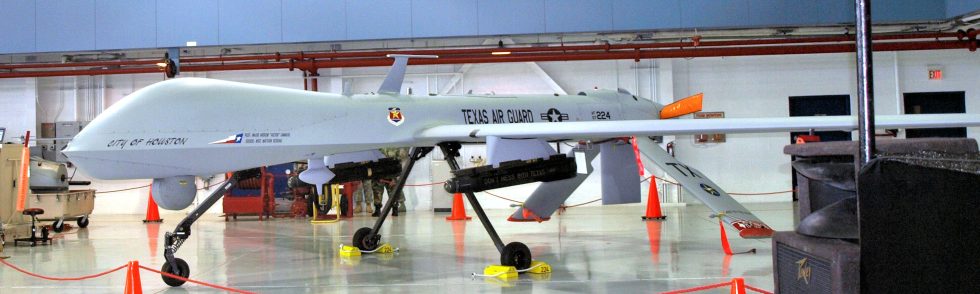
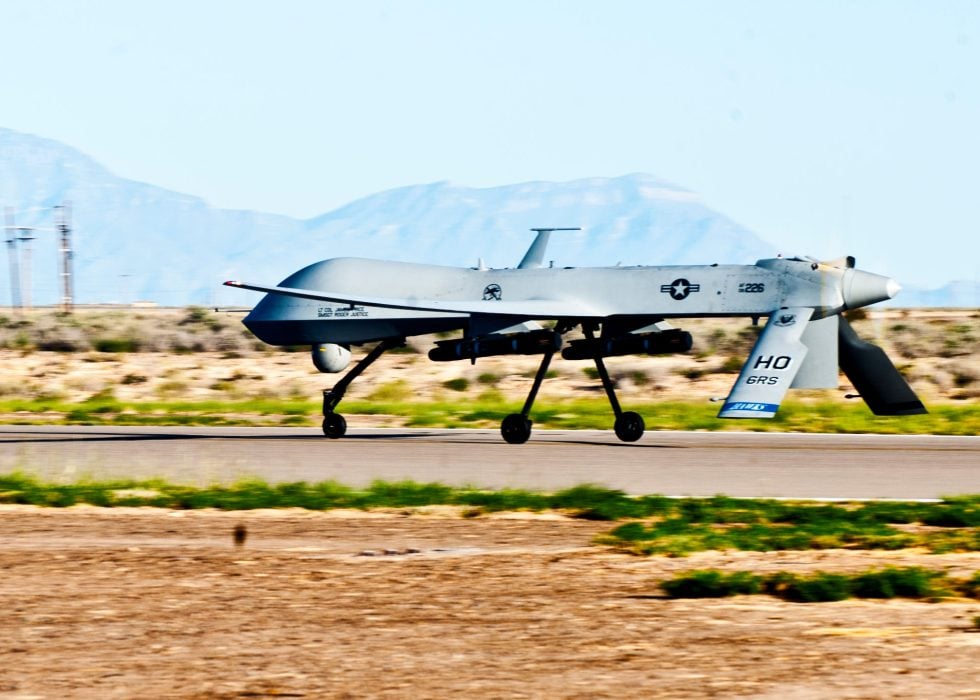
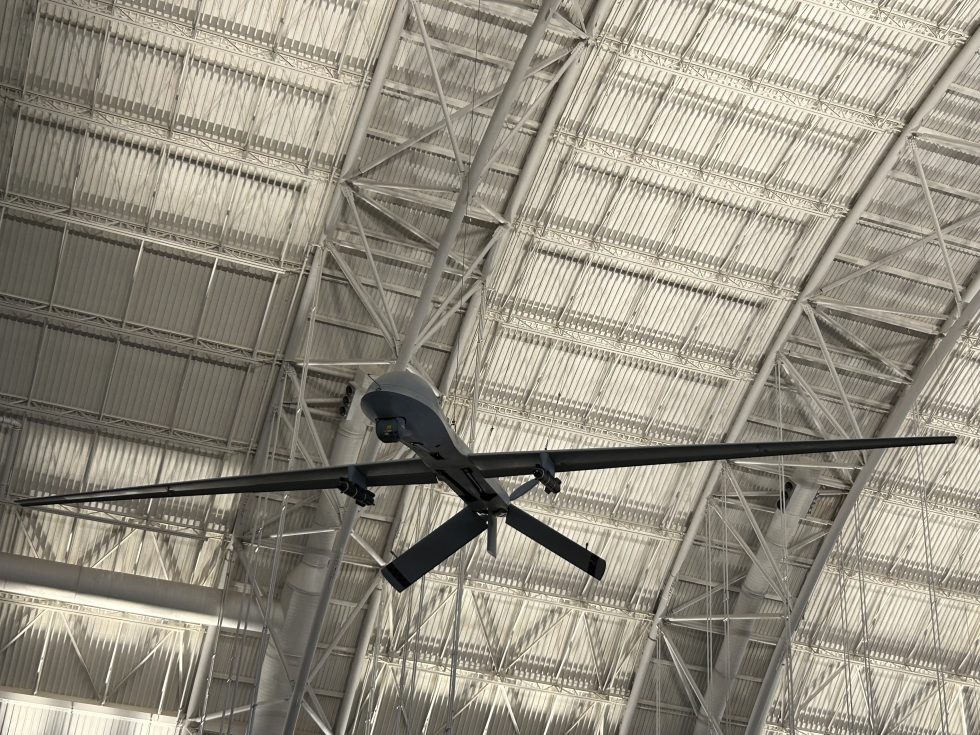
The MQ-1 Predator in motion
Imperial War Museums: How the Predator Drone changed EVERYTHING. A concise, authoritative history from the IWM of how a slow reconnaissance drone reshaped modern warfare.
Where the MQ-1 Predator flew and fought
The MQ-1 Predator’s combat legacy
The Predator’s significance is not measured in dogfights but in persistence and precision. It pioneered the armed-ISR mission over Afghanistan, Iraq and Yemen, and the wider fleet flew more than two million hours, the great majority in combat. It also carries a sober legacy: it made remote, persistent, lethal surveillance a routine instrument of war, and the debate over that is part of its record.
Compare the combat record of every military aircraft. Figures as of 2026.
Everything people ask about the MQ-1 Predator
Can I fly in an MQ-1 Predator?
What was the MQ-1 Predator used for?
Is the MQ-1 Predator still in service?
Did the MQ-1 Predator carry weapons?
How long could the Predator stay airborne?
Who flew the MQ-1 Predator?
How much did an MQ-1 Predator cost?
You can’t fly the MQ-1 Predator.
These, you can.
Some legends only live in museums — others are fuelled and waiting. MiGFlug has put civilians in real military jet cockpits since 2004.
 Fly the L-39 AlbatrosThe world’s most-flown jet trainer — aerobatics included
 Fly the F-104 Starfighter“The missile with a man in it”
 Fly the MiG-21The Cold War’s most-produced jet
 Fly the T-33 Shooting StarAmerica’s first jet trainer
 Fly the DH VampireA piece of early jet history
 Fly the S.211Agile Italian jet trainer
 Fly the MB-326The classic Aermacchi jet
 Fly the MiG-15The Soviet legend of the Korean War
Continue the tour
Every fact, checked
- National Museum of the U.S. Air Force — MQ-1B PredatorOfficial USAF fact sheet: role, systems and service history.
- General Atomics Aeronautical SystemsManufacturer reference for the Predator family and its development.
- Imperial War Museums — How the MQ-1 Predator redefined aerial warfareInstitutional history of the Predator and armed-drone warfare.
- Air & Space Forces Magazine — Elegy for the PredatorDetailed retrospective, production totals and flight-hour figures.
- Air Force Times — MQ-1 retirementThe 9 March 2018 retirement and transition to the MQ-9.
- The Aviationist — Italy retires its PredatorItalian Air Force Predator A+ service and 2022 retirement.
- Airforce Technology — Predator RQ-1 / MQ-1Technical overview, Hellfire integration and operators.
- Smithsonian National Air and Space MuseumReference for the preserved MQ-1 Predator on display.