
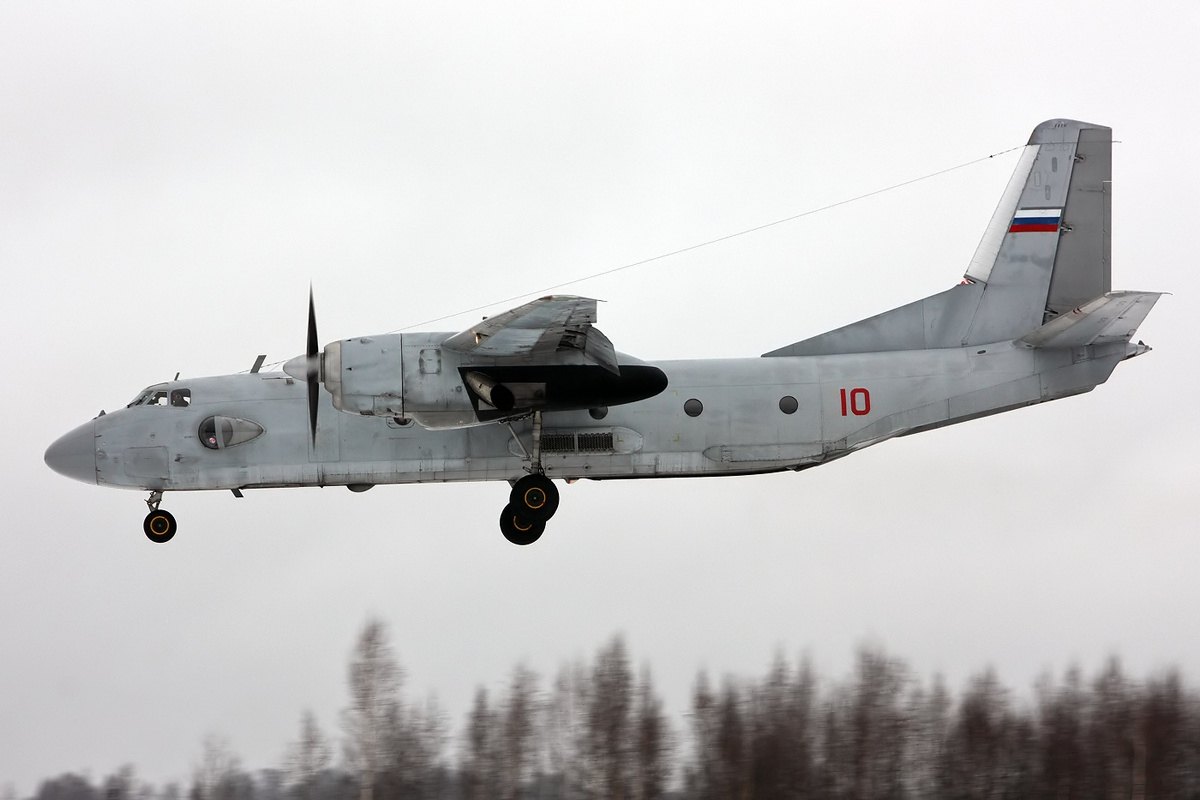
Antonov An-26
The Tactical Airlifter with a Ramp
The twin-turboprop freighter that gave the Warsaw Pact and some 40 air forces a rear ramp on short, rough strips, and flew everything from paratroops and mail to improvised bombs for half a century.
The An-26: how a regional airliner grew a ramp and went to war
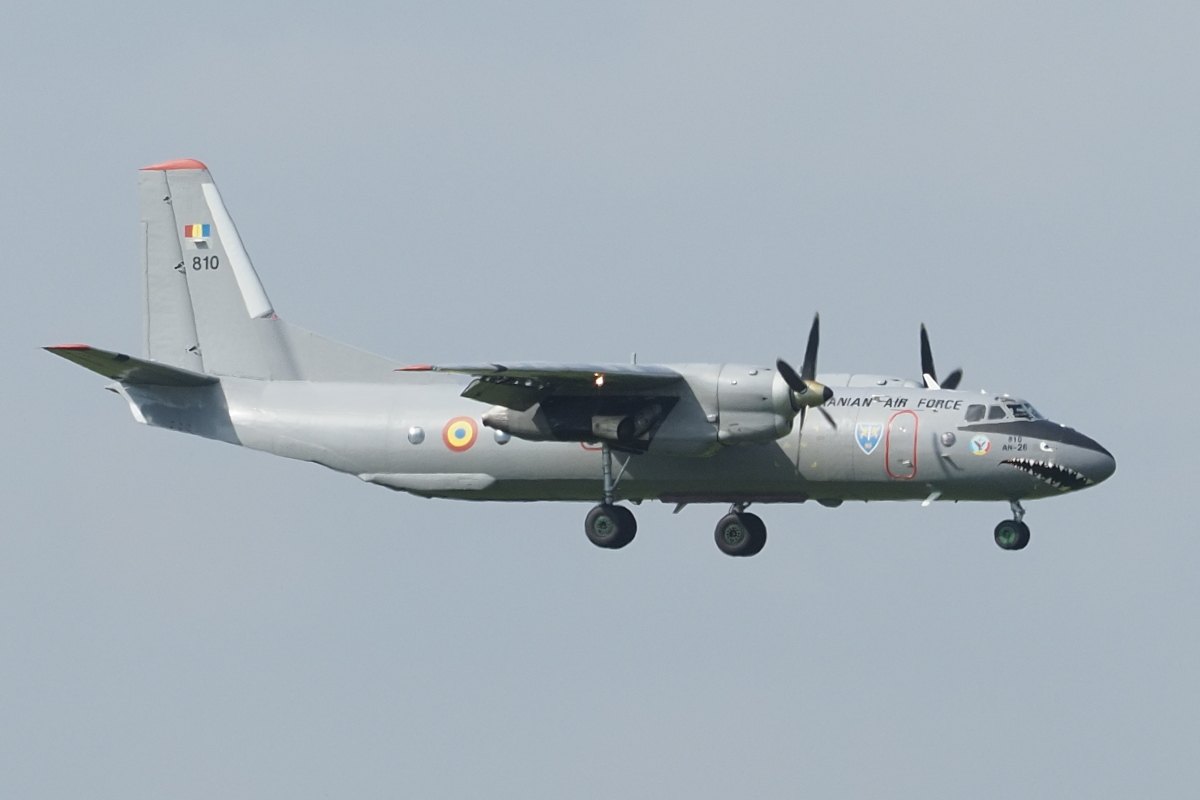
Picture a dirt strip in Angola, Afghanistan or the Russian Far East in the 1980s. A stubby high-wing twin taxis in, swings round, and a strange door under its upswept tail drops and then slides forward beneath the fuselage, leaving the hold open at exactly the height of a lorry bed. That door is the whole point of the Antonov An-26. The Kyiv bureau took its An-24 airliner, redesigned the rear fuselage around a loading ramp that could be lowered to the ground, slid out of the way for air-drops or lined up with a truck, and turned a regional passenger aircraft into a tactical freighter. It first flew on 21 May 1969 and went into production in Kyiv the same year.
The formula suited the Soviet Air Forces and their allies precisely. The An-26 could carry about 5.5 tonnes or around 40 troops, drop paratroops and cargo, evacuate wounded on stretchers and work from unpaved fields. Its two Ivchenko AI-24VT turboprops were supplemented by a small RU-19A-300 turbojet in the right nacelle, which started the main engines, powered systems on the ground and added thrust for hot, heavy or single-engine take-offs. By the time production ended in 1986, Kyiv had delivered roughly 1,400 aircraft, of which about 420 went abroad, and the type served with more than 40 air forces as well as Aeroflot and dozens of smaller airlines from the Arctic to the Andes.
That spread made the An-26 a fixture of the late Cold War’s small wars. It flew in Afghanistan, Angola, Ethiopia, Mozambique, Nicaragua and Cambodia, and in Sudan it became notorious as an improvised bomber rolling munitions out of the ramp. It remained a frontline transport for both sides after 2014 in eastern Ukraine, and civil versions still haul freight and overnight mail on Europe’s margins. Hundreds remain active more than half a century after the first flight, kept going by life-extension programmes in Ukraine and Russia, and the type has proved remarkably hard to replace in the roles it was designed for: short hops, rough fields, and loads that need to come off at truck height.
01The An-26’s origins: from the An-24 to a military freighter
The An-24 had flown in 1959 as a robust 50-seat airliner for Aeroflot’s local routes. By the mid-1960s the Soviet Air Forces wanted a light tactical transport that could replace piston types and complement the much bigger An-12, and the Antonov bureau looked first at the An-24T, a freighter with a ventral cargo door. That aircraft lacked a proper ramp and loading it was awkward, so the bureau redesigned the rear fuselage completely for the An-26.
The result kept the An-24’s wing, cockpit and much of the fuselage, but added a pressurised cabin designed for cargo, a large ventral fin under the upswept tail and the distinctive ramp, which Antonov’s engineers arranged so it could either hinge down to the ground or travel forward along rails under the fuselage. In that second position the aircraft could drop loads in flight and accept cargo straight from a lorry. The An-26 was also fitted with uprated engines and the auxiliary jet, and with a bulged observation window on the left side of the cockpit for the navigator during drops. GlobalSecurity, drawing on Antonov material, gives production as more than 1,100 by 1978 and 1,398 by the time Kyiv closed the line in 1986; other counts give 1,403.
02The An-26 in the small wars: Afghanistan, Africa and Sudan
In Afghanistan both the Soviet 40th Army and the Afghan Air Force used An-26s for supply runs, liaison, casualty evacuation and reconnaissance, and a number were lost to ground fire and shoulder-launched missiles as the mujahideen were armed with them in the late 1980s. Crews adopted steep spiralling approaches and flare dispensers to survive arrivals at Kabul and Kandahar. In Angola, Cuban, Soviet and Angolan An-26s supported the government side in the long civil war, and several were shot down by UNITA.
The darkest chapter came in Sudan. Through the civil wars in the south, in Darfur from 2003 and later in South Kordofan and the Blue Nile, the Sudanese Air Force used An-26s and similar transports as high-altitude bombers, with crews pushing barrel bombs and other unguided munitions out of the rear door. Human rights investigators repeatedly documented these attacks on villages and markets, and the An-26 became, in reports by groups such as Human Rights Watch and Amnesty International, a symbol of indiscriminate bombing. The type’s military record is therefore far wider than its modest design brief suggests, and not all of it is creditable.
What makes the An-26 special
The An-26’s sliding ramp
The rear door is the aircraft’s signature. Mounted beneath the upswept tail, it can be lowered as a conventional ramp for driving vehicles aboard, or retracted forward on rails under the fuselage so the rear of the hold stands open in flight. That allowed paratroops and pallets to leave cleanly and let ground crews back a truck up to the opening and slide cargo across at the same level. An electric hoist and a floor conveyor helped move loads of up to about 5.5 tonnes without ground equipment, which mattered at remote airstrips with nothing but a windsock.
The An-26’s hidden jet
Look closely at the right engine nacelle and there is a small exhaust at the rear. It belongs to the RU-19A-300, a compact turbojet that served as an auxiliary power unit on the ground, starting the main engines without external carts, and as a booster in the air. On hot days, at high-elevation airfields or after an engine failure on take-off, crews could light it for extra thrust. The arrangement was carried over from the An-24RV and is one reason the An-26 coped with short, high and hot strips across Africa and Central Asia.
The An-26’s crew of five
The standard military crew comprised two pilots, a navigator, a flight engineer and a radio operator, typical of Soviet-era transports designed to fly without satellite navigation or sophisticated avionics. The navigator’s station had a bulged side window for observing drop zones and a bombsight-like sighting device for precise air-drops. The workload made the type expensive in people but resilient: an experienced crew could navigate across Siberia or the Sahel with very little support from the ground, which kept it useful long after more automated designs appeared elsewhere.
03The An-26’s systems: pressurised hold, rough-field gear and booster
Unlike many tactical freighters of its generation, the An-26 has a pressurised cargo hold, so troops and casualties could be carried at cruising altitude in reasonable comfort. The high wing keeps the two AI-24VT turboprops and their four-blade propellers clear of debris, while low-pressure tyres on the twin-wheel main gear allow operation from grass, dirt and packed snow. The hold could be configured with folding side seats for about 40 troops or 38 paratroopers, or with stretchers for medical evacuation.
Military examples have provision for external bomb racks on the fuselage sides, used for air-dropped supplies, flares and, in some air forces, bombs. Avionics were basic by Western standards, with radar for weather and ground mapping. Life-extension programmes run by Antonov in Ukraine and by repair plants in Russia have stretched airframe lives well beyond the original design limit, which is why so many aircraft built before 1986 are still flying in the 2020s.
Antonov An-26 specifications
Specifications
- Crew
- 5 (two pilots, navigator, flight engineer, radio operator)
- Capacity
- about 40 troops, 38 paratroopers or 5,500 kg (12,125 lb) of cargo
- Length
- 23.80 m (78 ft 1 in)
- Wingspan
- 29.20 m (95 ft 10 in)
- Height
- 8.58 m (28 ft 2 in)
- Empty weight
- 15,020 kg (33,113 lb)
- Max take-off weight
- 24,000 kg (52,911 lb)
- Powerplant
- 2 × Ivchenko AI-24VT turboprops, 2,103 kW (2,820 shp) each, plus 1 × RU-19A-300 auxiliary turbojet
- Cruise speed
- about 440 km/h (273 mph)
- Range
- about 2,500 km (1,553 mi) with maximum fuel
- Service ceiling
- 7,500 m (24,600 ft)
- Armament
- provision for external bomb racks on military examples
Costs & production
- Unit cost
- No reliable new-build price published; second-hand airframes have long traded far below the cost of new Western twin-turboprop freighters
- Cost per flight hour
- No official figure. A hedged estimate of roughly USD 2,500 to 4,000 per hour covers fuel for two turboprops, a five-person crew and maintenance on an ageing airframe, based on comparable twin-turboprop freighters
- Production
- About 1,400 built in Kyiv, 1969–1986 (1,398 to 1,403 depending on source)
- Programme
- Derived from the An-24 airliner; developed further into the An-30 survey aircraft and the hot-and-high An-32
04The An-26’s variants: from relay aircraft to firebombers
- An-26: baseline military transport with sliding ramp and RU-19 booster.
- An-26B: improved freighter with roller floor and handling gear for faster pallet loading.
- An-26Sh: navigator trainer with extra crew stations, used by Soviet and Ukrainian flight schools.
- An-26M: medical evacuation version, sometimes called a flying hospital.
- An-26RT: communications relay and electronic intelligence platform with extra aerials.
- An-26P: forest firefighting version with external retardant tanks.
- An-26B-100: civil passenger-cargo version, widely used in Russia’s Far East.
- Xian Y-7H / Y-14: Chinese derivative of the An-26 built in small numbers.
More than 30 variants and conversions are recorded in total, including weather research, survey and Arctic reconnaissance versions.
Many aircraft also moved between versions during their lives, with military freighters converted for civil use after 1991 and others modified locally for survey, calibration or electronic tasks, so individual airframe histories are often complicated.
05The An-26’s operating costs: cheap to buy, expensive in people
Few published figures exist, and any number should be treated as an estimate. The An-26’s attraction has always been its low acquisition cost: retired Soviet airframes flooded the market after 1991, and many African, Asian and Latin American operators bought them for a fraction of the price of a new Western freighter. Running costs are another matter. Two thirsty AI-24 turboprops, a booster jet, a crew of four or five and the inspections required to keep life-extended airframes legal add up, and spares supply became harder after 2014 and again after 2022.
Fuel is the largest single variable, since the AI-24VT is an older design with higher consumption than modern turboprops, and the booster jet adds to it whenever crews use it for take-off.
For charter freight in Europe and Africa, operators priced work competitively against newer types by accepting higher crew costs in return for very low capital cost. The hedged figure of USD 2,500 to 4,000 per flight hour given above reflects that balance, not a published rate.
The An-26 from 1969 to the war in Ukraine
First flight
The prototype flew on 21 May 1969 in Kyiv and was shown at the Paris Air Show the same year.
Production begins
Series production started at the Kyiv aircraft plant alongside the An-24.
Warsaw Pact service
The type entered service across the Soviet Air Forces and Warsaw Pact air arms as their standard light tactical transport.
Cambodia
Vietnamese An-26s supported the invasion of Cambodia and were used as improvised bombers against the Khmer Rouge.
Afghanistan and Angola
Soviet, Afghan, Angolan and Cuban An-26s flew supply and evacuation missions; several were shot down.
Worst accident
On 14 January 1982 an Ethiopian Air Force An-26 crashed near Addis Ababa with 73 killed, the type’s deadliest accident.
Production ends
The Kyiv line closed after about 1,400 aircraft; the An-32 continued the family.
Darfur
Sudanese An-26s were documented bombing villages in Darfur by rolling munitions out of the rear door.
Shot down over Luhansk
A Ukrainian Air Force An-26 was shot down over the Luhansk region on 14 July 2014 during the war in the Donbas.
Chuhuiv tragedy
On 25 September 2020 an An-26Sh crashed near Chuhuiv during cadet training, killing 26 of the 27 aboard.
Palana
On 6 July 2021 an An-26B-100 struck a cliff on approach to Palana, Kamchatka, killing all 28 aboard.
Stories & eyewitnesses: the An-26 in war and peace
The An-26 as Vietnam’s bomber in Cambodia
A transport pressed into service to bomb the Khmer Rouge.
Read the full story
The An-26 over Afghanistan: spiralling into Kabul
Steep descents and flares against the Stinger threat.
Read the full story
The An-26 in Angola: UNITA’s targets
A long civil war fought along fragile air bridges.
Read the full story
The An-26 over Darfur: a transport as a weapon
Barrel bombs pushed out of the rear door.
Read the full story
The An-26 over the Donbas, July 2014
A transport downed at an altitude Kyiv said was beyond portable missiles.
Read the full story
The An-26 at Chuhuiv: a generation of cadets lost
Ukraine’s worst military air accident in years.
Read the full story
The An-26 at Palana: Kamchatka’s lifeline
A scheduled service into fog and cliffs.
Read the full story
The An-26 on Europe’s night mail runs
A Cold War freighter in EU colours.
Read the full story
The An-26 you can still see
Museum pieces and working aircraft side by side.
Read the full story
The An-26 in pictures
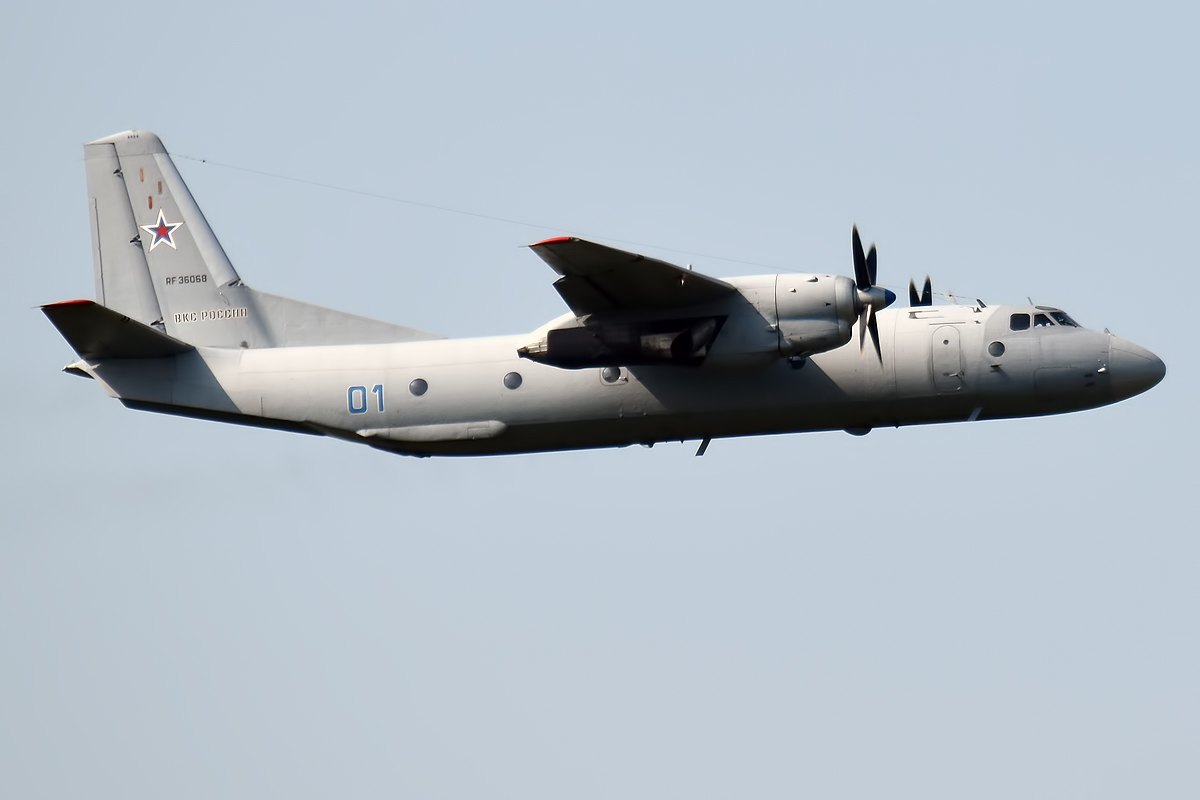
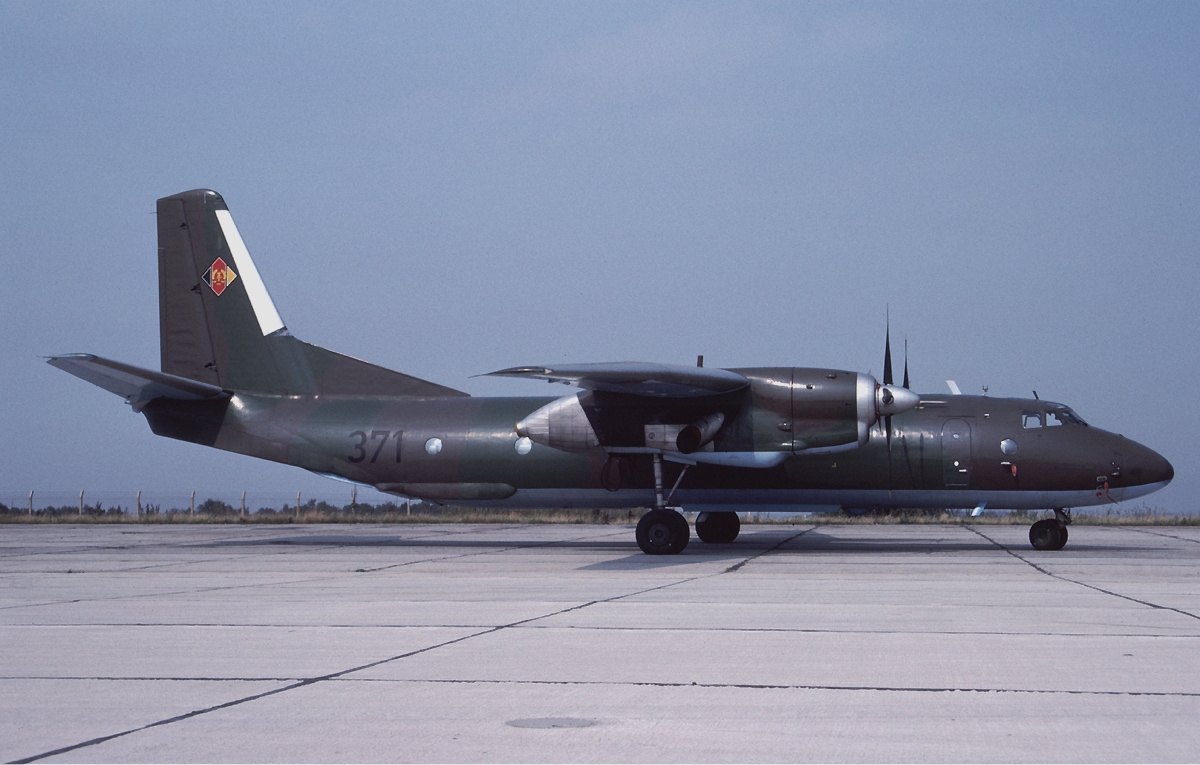
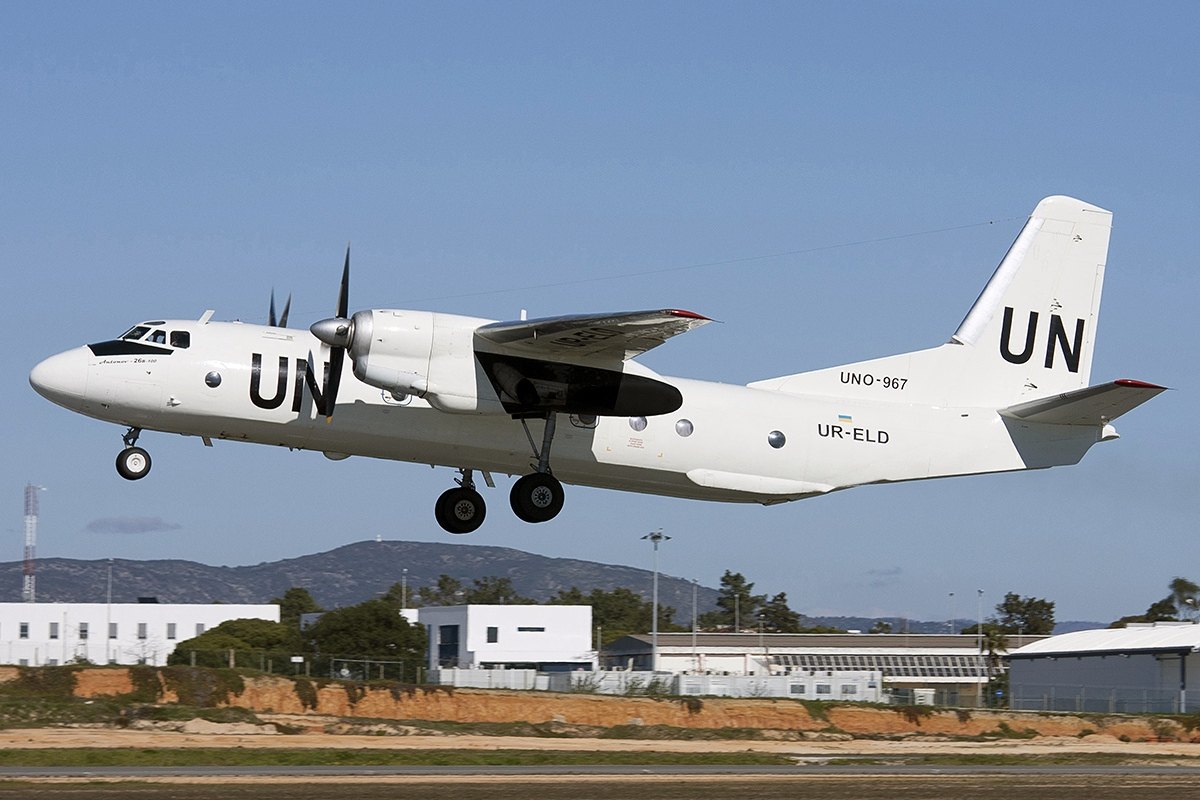
Where the An-26 flies and flew
The An-26’s record
The An-26 was built as a transport, but it has flown in more wars than most combat aircraft: Cambodia, Afghanistan, Angola, Ethiopia, Sudan, the Balkans and Ukraine among them. Most of its work was supply, evacuation and paratroop dropping; in several air forces it was also used as an improvised bomber, sometimes against civilians.
See how training and combat types compare in the military aircraft statistics database. Figures are approximate.
Everything people ask about the An-26
Can I fly in an Antonov An-26?
What is the NATO reporting name of the An-26?
Why does the An-26 have a jet engine in one nacelle?
How many An-26s were built?
What is the difference between the An-24, An-26 and An-32?
Is the An-26 still in service?
How much can an An-26 carry?
You can’t fly the An-26.
These, you can.
Most of this museum you can only look at. These genuine military jets you can fly yourself with MiGFlug — with aerobatics and time on the controls.
 Fly the L-39 AlbatrosThe world’s most-flown jet trainer — aerobatics included
 Fly the F-104 Starfighter“The missile with a man in it”
 Fly the MiG-21The Cold War’s most-produced jet
 Fly the T-33 Shooting StarAmerica’s first jet trainer
 Fly the DH VampireA piece of early jet history
 Fly the S.211Agile Italian jet trainer
 Fly the MB-326The classic Aermacchi jet
 Fly the MiG-15The Soviet legend of the Korean War
Continue the tour
Every fact, checked
- An-24 COKE, An-26 CURL, An-30 CLANK (Antonov)GlobalSecurity: role, capacity, production 1969–1986, exports, variants
- Aviation Safety Network: An-26Sh, Ukraine Air Force, 25 September 2020Chuhuiv training crash, 26 killed, investigation findings
- Aviation Safety Network: An-26B-100 RA-26085, 6 July 2021Palana CFIT accident, 28 killed
- Antonov CompanyManufacturer; An-24/An-26 family and life-extension programmes
- Human Rights Watch: SudanReporting on Antonov bombing in Darfur, South Kordofan and Blue Nile
- Yefim Gordon and Dmitriy Komissarov, Antonov’s Turboprop Twins (Midland, 2003)Book: development, variants and operators of the An-24/26/30/32