
CASA/IPTN CN-235
The Spanish-Indonesian Twin
A Spanish-Indonesian joint venture that produced a pressurised tactical airlifter and maritime patroller now flown by dozens of air forces and coast guards, and the parent of the best-selling C295.
The CN-235: how Spain and Indonesia built an airlifter together
On 17 October 1979, Spain’s CASA and Indonesia’s state aircraft company, then called Nurtanio and soon to become IPTN, formed a joint company called Airtech. Their partnership on the small C-212 had worked, and both wanted something bigger: a pressurised twin-turboprop that could serve as a 40-seat regional airliner and as a military transport with a rear ramp. Indonesia, under the technology minister B. J. Habibie, saw it as the foundation of a national aerospace industry; Spain saw a successor to its own light transports. The workshare was split roughly 65 per cent to IPTN and 35 per cent to CASA, with production lines in both countries. Each partner built its own sections and final assembly lines, a demanding arrangement for two industries of very different size.
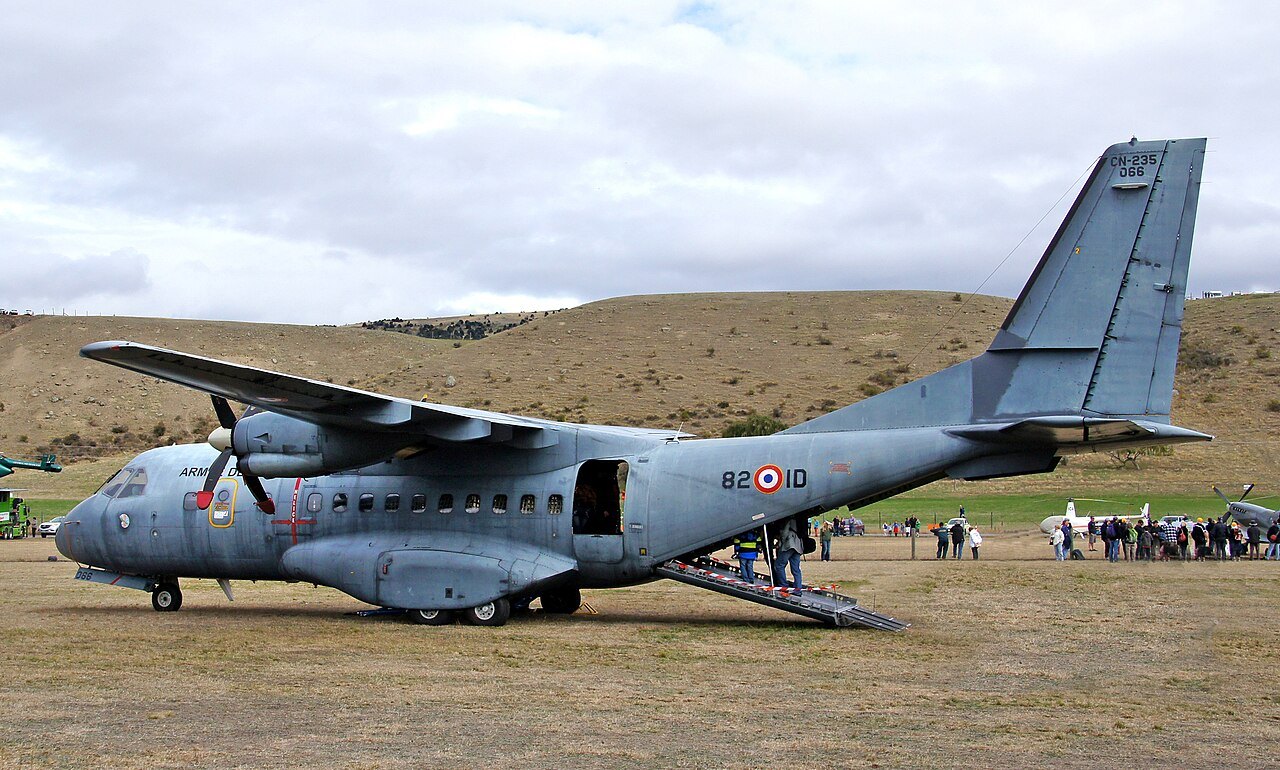
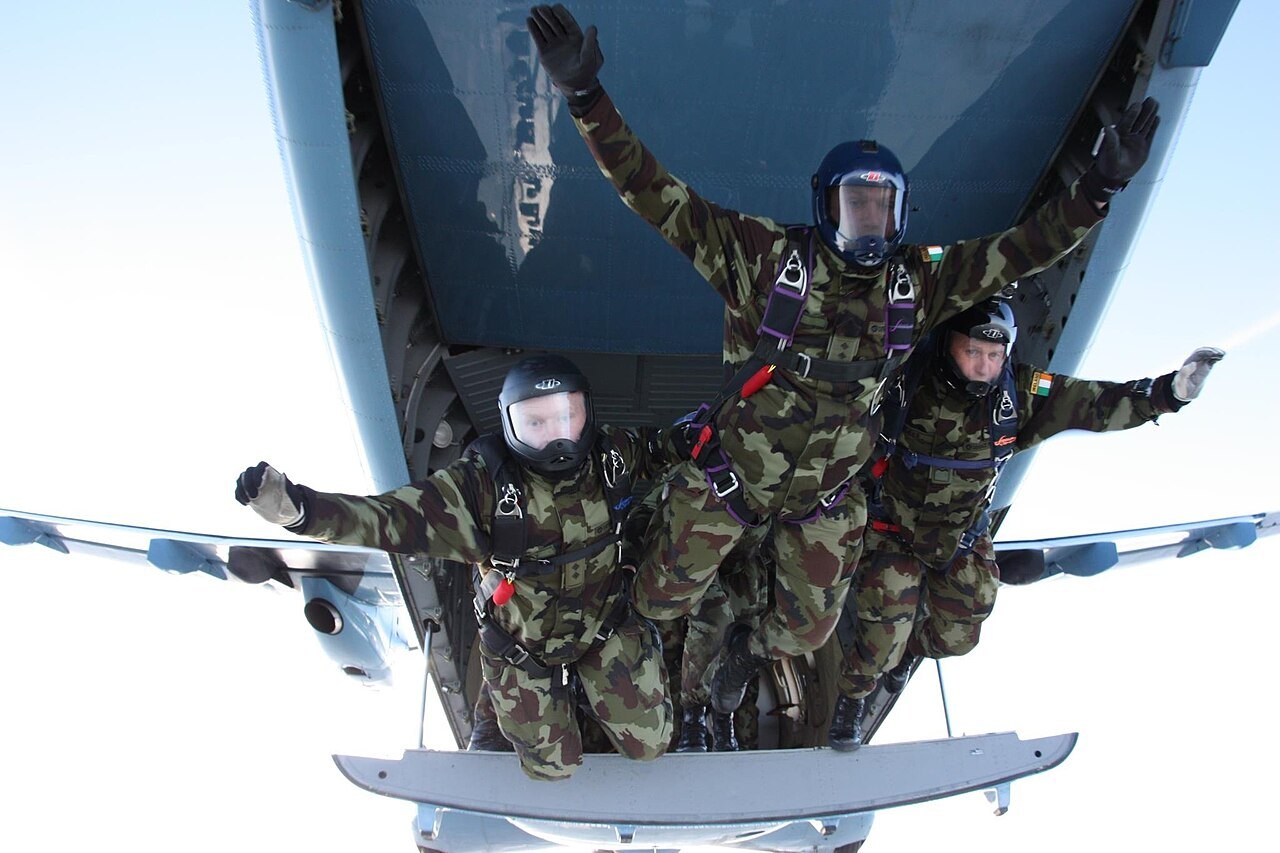
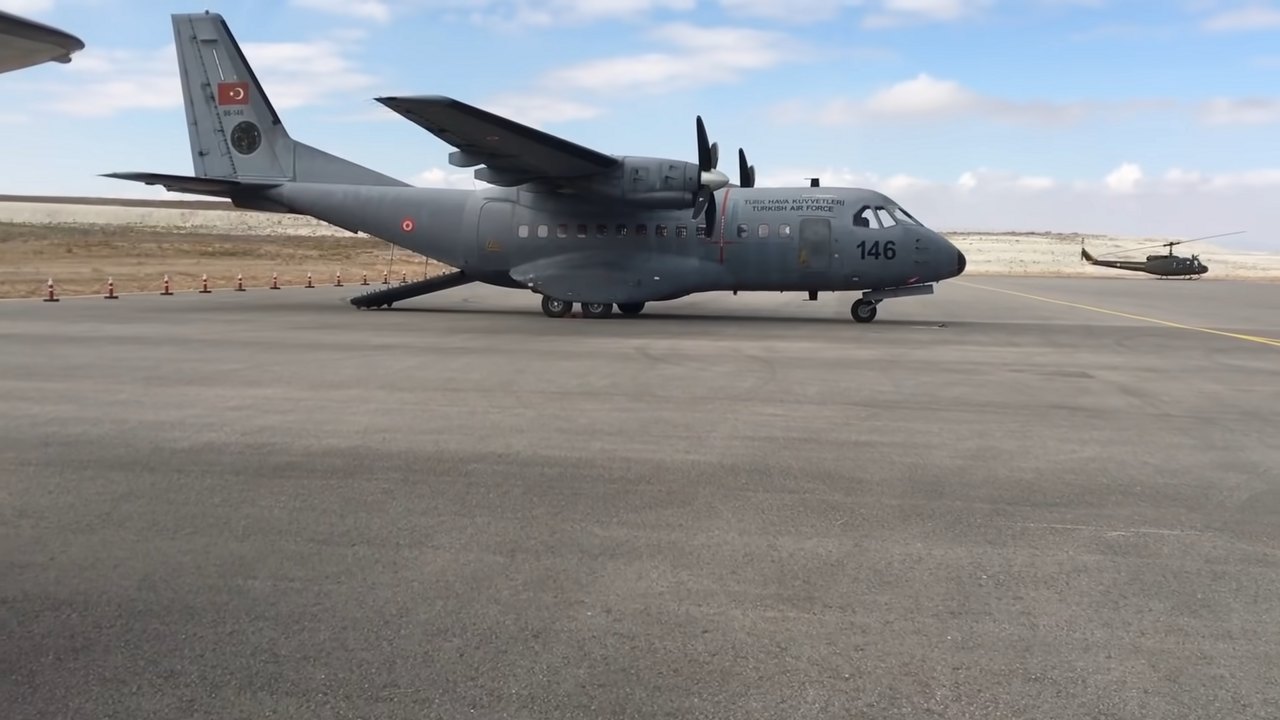
The Spanish-built prototype flew on 11 November 1983, the Indonesian one on 30 December. Airliners entered service first, but the CN-235’s future was military. Its pressurised fuselage, high wing, rear ramp and sturdy retractable gear made it a capable tactical airlifter for air forces that could not justify a Hercules, carrying up to about 6 tonnes, 35 paratroopers or 18 stretchers. The Turkish armed services became the largest customer, with TAI assembling aircraft under licence in Ankara, and orders followed from France, Spain, South Korea, Malaysia, Pakistan, Colombia, Mexico, Ireland and many others. Its CT7 engines, derived from a helicopter powerplant, gave it a lively short-field performance for its size.
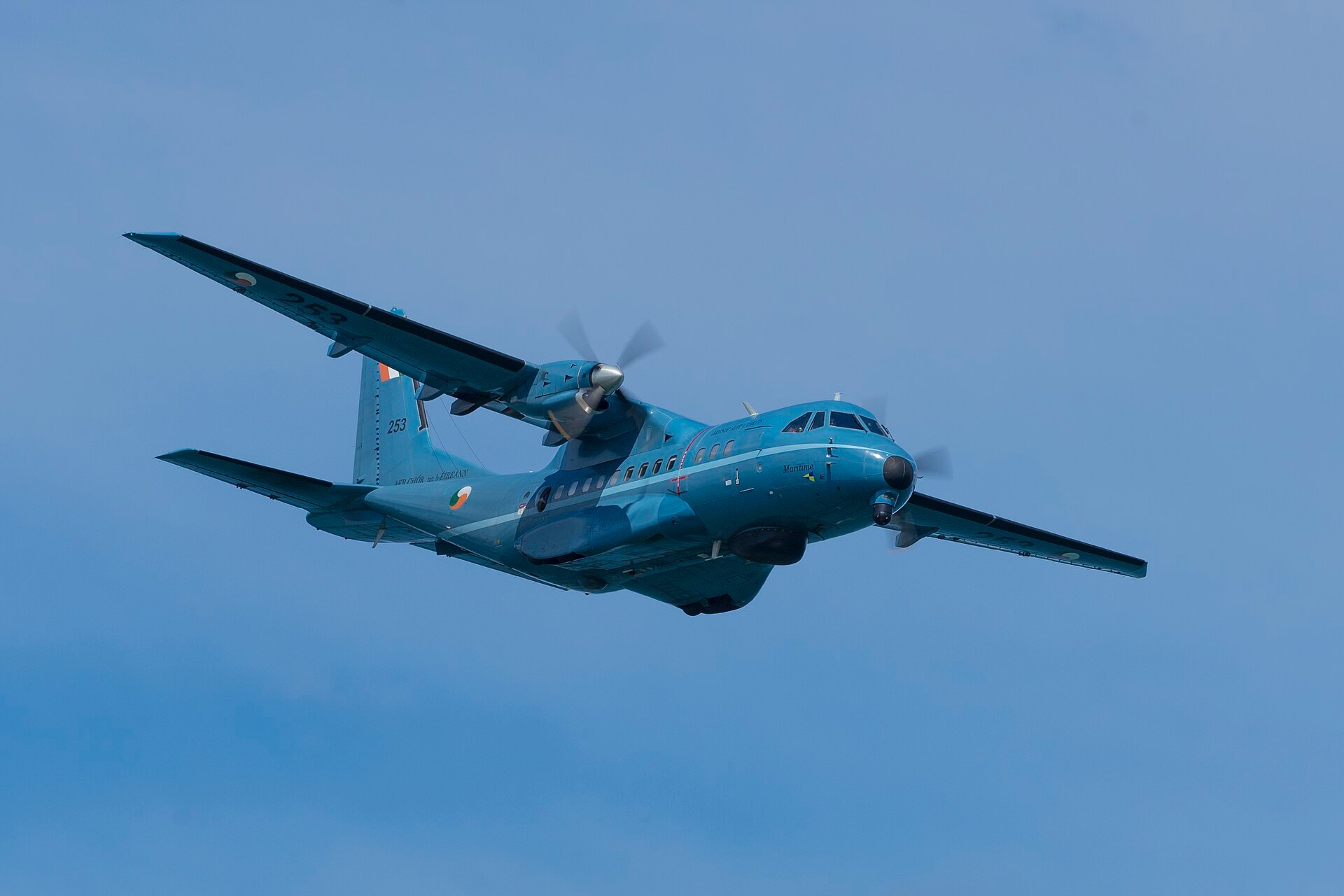
The type’s second career is at sea. Fitted with search radar and sensors, the CN-235 became an economical maritime patrol aircraft, and the US Coast Guard bought it as the HC-144 Ocean Sentry. Turkish Navy CN-235s patrolled the Black Sea after Russia’s 2022 invasion of Ukraine and repeatedly spotted drifting sea mines, and Irish Air Corps aircraft flew medical evacuation missions from Poland in 2022. Jordan even tried a gunship version. Above all, the CN-235 proved the Spanish-Indonesian partnership could design and sell a modern military aircraft, and its stretched descendant, the C295, became one of the most successful transports of its class. It turned a regional airliner project into one of the defining tactical transports of its generation.
01The CN-235’s Turkish chapter: the biggest fleet
Turkey became the CN-235’s most important customer. By October 1998 it had placed cumulative orders for 52 transport-configured aircraft, and it then ordered maritime patrol versions as well. Turkish Aerospace Industries in Ankara assembled most of them under licence, giving Turkey its own production experience with a modern transport. Airbus lists 61 delivered to Turkey and 58 in operation in 2024, across the Turkish Air Force, Army, Navy and Coast Guard, making Turkey the largest operator.
The Turkish fleet has had a hard-working and sometimes costly life. In 2001 alone an Air Force CN-235 was lost in a spin near Kayseri in January, killing three, and a Navy aircraft crashed in May, killing four. Yet the aircraft remained central to Turkish logistics, parachute training and maritime surveillance. When Russia invaded Ukraine in 2022, Turkish Navy CN-235 maritime patrol aircraft flew regular sorties over the Black Sea, where drifting mines had broken loose from Ukrainian and Russian minefields; their crews repeatedly detected mines and helped direct clearance efforts, keeping shipping lanes through the Bosphorus open. For a type designed in Spain and Indonesia, its most visible modern role is above Turkish waters.
What makes the CN-235 special
A pressurised tactical airlifter
Unlike the C-212, the CN-235 is pressurised, so it can carry passengers and patients above weather and terrain at up to about 25,000 ft, then descend to drop paratroopers or land on a short strip. The rear ramp takes pallets and light vehicles, the cabin holds up to 51 passengers four abreast, 35 paratroopers or 18 stretchers, and it can carry around 6 tonnes of cargo. It occupies the gap between light utility twins and the Hercules.
Rough-field landing gear
The main undercarriage retracts into fuselage fairings and uses short, robust legs with low-pressure tyres, allowing operations from unpaved strips. The high wing keeps engines and propellers clear of debris, and the General Electric CT7 turboprops, a relative of the T700 helicopter engine, give good short-field performance and are supported worldwide. It is a design meant to land where airliners cannot.
From patroller to gunship
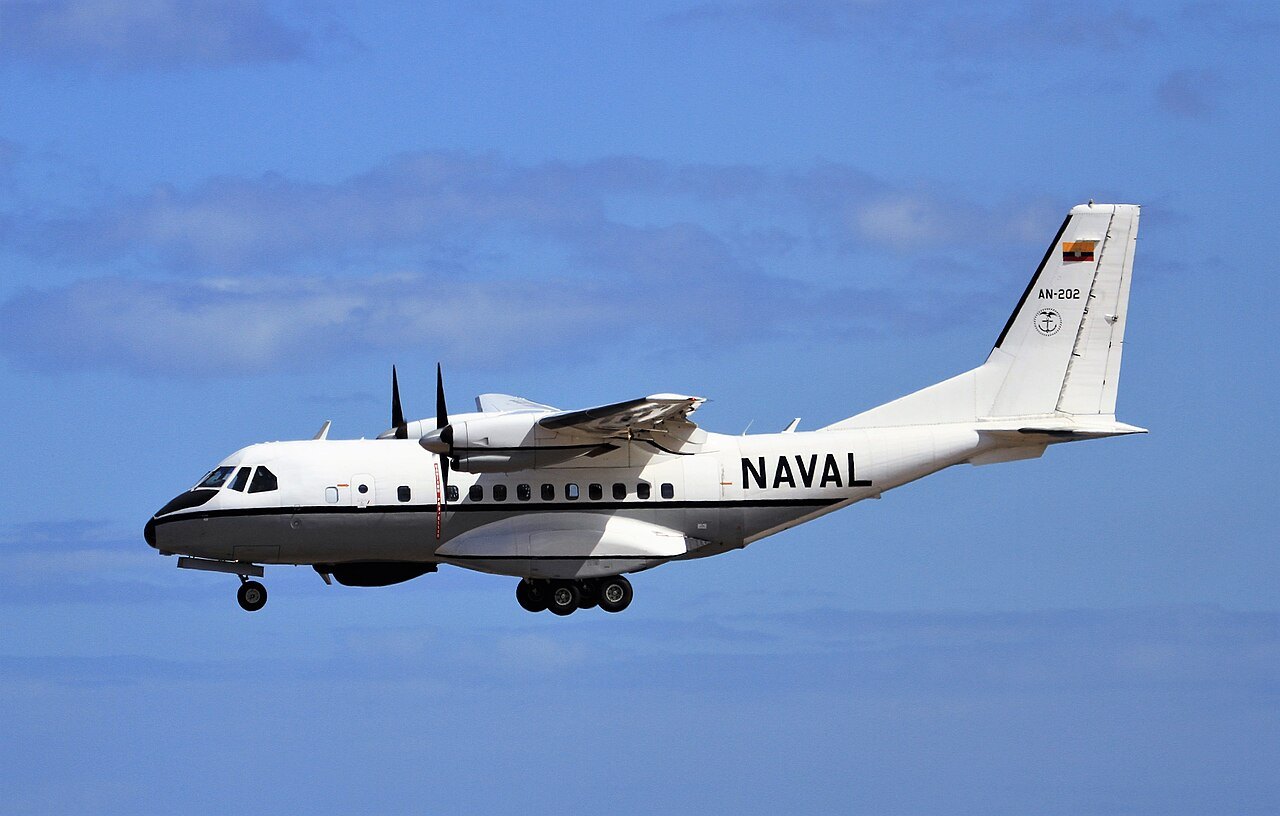
The airframe’s endurance and low cost made it a natural maritime patrol platform. Patrol versions carry surface-search radar, electro-optical sensors and, in some cases, six hardpoints for Exocet missiles or Mk 46 torpedoes. The US Coast Guard’s HC-144 Ocean Sentry flies search and rescue and law enforcement missions, and Jordan’s AC-235 explored a light gunship role with a side-firing 30 mm cannon, rockets and Hellfire missiles.
02The CN-235’s family: series 10 to the HC-144 and AC-235
Early CN-235-10 aircraft used CT7-7A engines; the series 100/110 introduced CT7-9C engines and composite nacelles, and the series 200/220 added structural strengthening, higher weights and improved performance. The series 300 brought a modern cockpit. Maritime versions include the CN-235 MPA, marketed as the Persuader, and the US Coast Guard’s HC-144A Ocean Sentry, of which 18 were delivered from a planned fleet. The AC-235 gunship, developed with Orbital ATK, was delivered to Jordan, which later offered both aircraft for sale.
The CN-235 also became a platform for derivatives. CASA stretched it into the C-295, launched in the 1990s, with more powerful engines and a longer cabin. In Indonesia, the national manufacturer now known as Indonesian Aerospace has developed civil and military updates and continues to build CN-235s in Bandung for Asian and African customers.
CASA/IPTN CN-235 specifications
Specifications
- Crew
- 2 pilots, plus loadmaster or mission crew
- Capacity
- 51 passengers, 35 paratroopers or 18 stretchers; about 6,000 kg (13,100 lb) of cargo
- Length
- 21.40 m (70 ft 2 in)
- Wingspan
- 25.81 m (84 ft 8 in)
- Height
- 8.18 m (26 ft 10 in)
- Empty weight
- 9,800 kg (21,605 lb)
- Max take-off weight
- 16,100 kg (35,420 lb)
- Powerplant
- 2 × General Electric CT7-9C3 turboprops, 1,305 kW (1,750 hp) each
- Cruise speed
- 450 km/h (248 kn)
- Range
- 4,355 km (2,350 nm)
- Service ceiling
- 9,100 m (30,000 ft)
- Climb rate
- 7.8 m/s (1,780 ft/min)
- Armament
- MPA version: up to six hardpoints for anti-ship missiles or torpedoes; AC-235: 30 mm cannon, rockets, Hellfire
Costs & production
- Unit cost
- Reported at about US$6 million per aircraft for early orders (1984); South Korean coast guard maritime patrol versions delivered in 2011 were reported at about US$23 million each
- Cost per flight hour
- Hedged estimate: roughly US$2,000–4,000 per hour for transport versions, based on two CT7-class turboprops and typical regional turboprop maintenance; mission-equipped patrol aircraft cost more; no official figure is published
- Production
- About 286 built, including about 69 by IPTN and licence assembly by TAI in Turkey
- Programme
- Airtech joint venture formed 1979; first flight 1983; in service from 1988; production continues in Indonesia
03The CN-235’s variants: the main versions
- CN-235-10: initial production, CT7-7A engines.
- CN-235-100/110: CT7-9C engines, built in Spain and Indonesia respectively.
- CN-235-200/220: strengthened structure, higher weights.
- CN-235-300: modern avionics.
- CN-235 MPA / Persuader: maritime patrol with radar and optional weapons.
- HC-144A Ocean Sentry: US Coast Guard medium-range surveillance aircraft.
- AC-235: light gunship for Jordan.
04The CN-235’s operating costs: a Hercules alternative
The CN-235 sells on cost. For missions involving a few tonnes of cargo, a platoon of troops or a long patrol over water, it burns a fraction of the fuel of a four-engined C-130 and needs a smaller crew and support footprint. That is why coast guards and medium air forces chose it. Published unit prices span a wide range because they depend on mission equipment: a basic transport in the 1980s cost a few million dollars, while a fully equipped modern patrol aircraft costs several times as much. The hourly figure above is an estimate, not a manufacturer’s number.
The CN-235 from Airtech to the Black Sea
Airtech formed
CASA and Nurtanio (IPTN) create a joint venture on 17 October to develop a new twin-turboprop.
First flights
The CASA-built prototype flies on 11 November, the IPTN prototype on 30 December.
Into service
The CN-235 enters service on 1 March.
Merpati crash
An Indonesian airline CN-235 crashes at Garut, killing all 31 aboard.
Turkey’s big order
Turkey reaches 52 transports ordered and adds maritime patrol aircraft.
Turkish losses
Turkey loses two CN-235s, an Air Force trainer near Kayseri in January and a Navy aircraft in May.
Death of a general
A Guinean Air Force CN-235 crashes near Monrovia, killing Guinea’s army chief and ten others.
Ukraine airlift
Irish Air Corps CN-235s fly medical evacuation flights from Poland linked to the war in Ukraine.
Mines in the Black Sea
Turkish Navy CN-235s patrol the Black Sea and repeatedly detect drifting mines.
Stories & eyewitnesses: the CN-235 in service
Habibie’s aircraft industry
Indonesia built an aerospace nation around a Spanish partnership.
Read the full story
Hunting mines over the Black Sea
Turkish patrol crews spotted drifting mines after the 2022 invasion.
Read the full story
Ireland’s long-range eyes
Two CN-235s patrolled Europe’s largest fishing zone for decades.
Read the full story
The army chief of Guinea
A crash near Monrovia decapitated a military command.
Read the full story
Ditching in a Malaysian swamp
Everyone walked away from a forced landing.
Read the full story
Jordan’s little gunship
A transport armed with a cannon, rockets and Hellfires.
Read the full story
The Coast Guard’s Ocean Sentry
An American service bought a Spanish design for search and rescue.
Read the full story
Merpati Flight 5601
An early airline loss in the Indonesian mountains.
Read the full story
The CN-235 in pictures
Where the CN-235 flies and flew
The CN-235’s record
The CN-235 is a support aircraft and its record is one of logistics, patrol and rescue: airlift for dozens of air forces, maritime surveillance from the Atlantic to the Black Sea, evacuation flights and coast guard operations. A small gunship variant aside, it has rarely been armed.
See how training and combat types compare in the military aircraft statistics database. Figures are approximate.
Everything people ask about the CN-235
Can I fly in a CASA/IPTN CN-235?
Who builds the CN-235?
What is the difference between the CN-235 and the C295?
How much can a CN-235 carry?
What is the HC-144 Ocean Sentry?
Which country flies the most CN-235s?
You can’t fly the CN-235.
These, you can.
Most of this museum you can only look at. These genuine military jets you can fly yourself with MiGFlug — with aerobatics and time on the controls.
 Fly the L-39 AlbatrosThe world’s most-flown jet trainer — aerobatics included
 Fly the F-104 Starfighter“The missile with a man in it”
 Fly the MiG-21The Cold War’s most-produced jet
 Fly the T-33 Shooting StarAmerica’s first jet trainer
 Fly the DH VampireA piece of early jet history
 Fly the S.211Agile Italian jet trainer
 Fly the MB-326The classic Aermacchi jet
 Fly the MiG-15The Soviet legend of the Korean War
Continue the tour
Every fact, checked
- Airbus orders, deliveries and in-operation military aircraft by countryAirbus, March 2024: 286 CN235s delivered, 240 in operation, 61 delivered to Turkey
- The CASA/IPTN CN-235Airways Magazine: Airtech, first flight 1983, service from 1 March 1988, Merpati and Binter fleets, Turkish fleet
- Turkey boosts order for CN-235Flight International, October 1998: nine CN-235MPAs added to 52 transports, TAI assembly at Ankara
- Turkish MPA detects the 3rd sea mine off Turkey coast in the Black SeaNaval News, April 2022: Turkish Navy CN-235 MPA finds drifting mines
- Irish Air Corps Ukraine airlift (RTÉ News)RTÉ, March 2022: Irish Air Corps CN-235 medical evacuation flights from Poland
- RMAF CN235 ditched, crew survivedMalaysian Defence: the 26 February 2016 Kuala Selangor ditching, all eight crew survived
- Indonesian Air Force’s new CN235 MPA unveiledFlightglobal, November 2016: Indonesian CN235 MPA with winglets and ESM
- Picture: France receives first of eight new CN-235 transportsFlightglobal, December 2011: French Air Force follow-on order
- CN-235SAAF: CASA prototype that served Bophuthatswana and the SAAF until 2011, now at the SAAF Museum
- Adaptations bring CN235/C295 sales rewards for AirbusAIN, 2016: mission versions and the market for the CN235/C295 family