
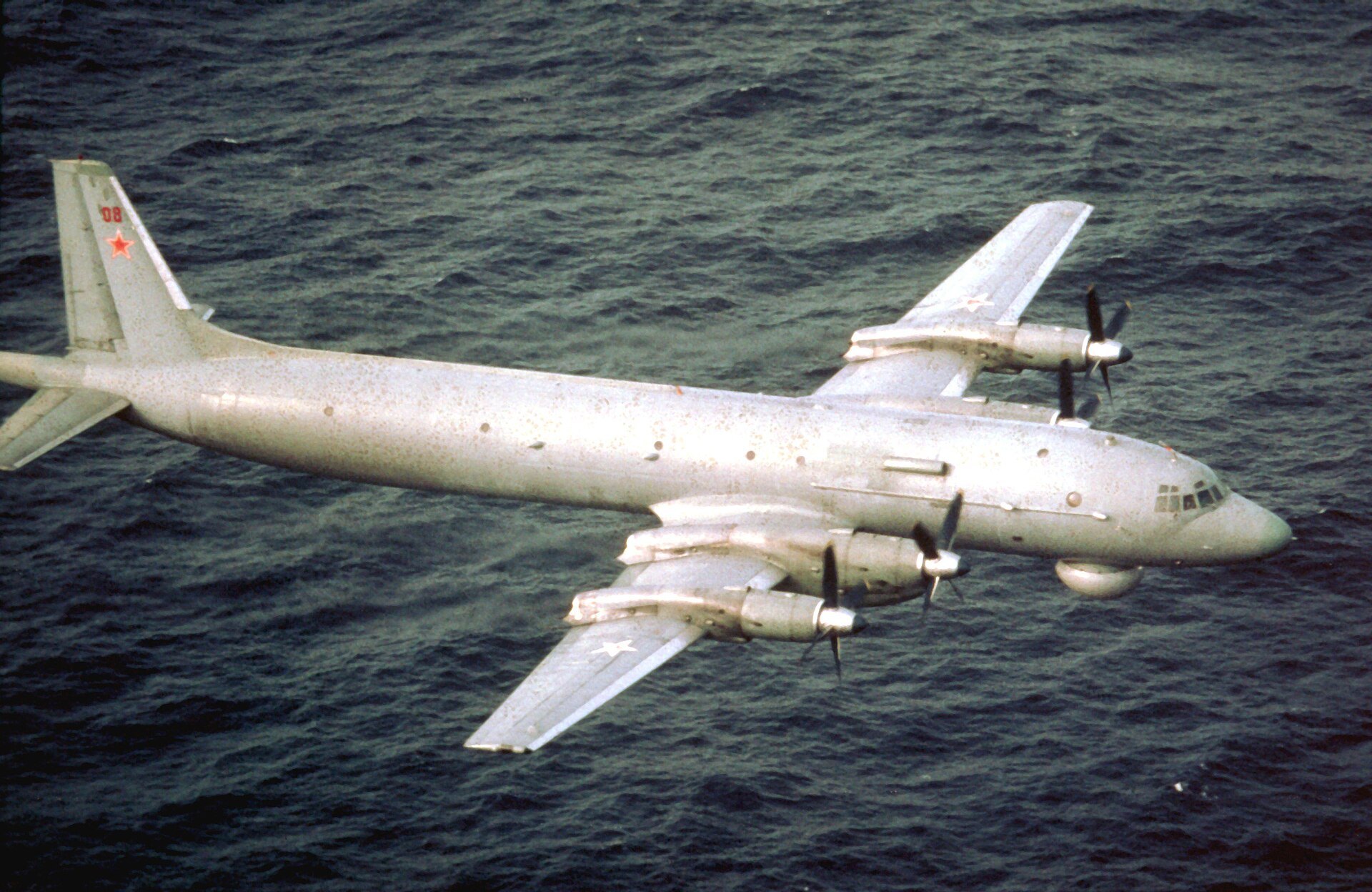
Ilyushin Il-38
“May” Submarine Hunter
The Soviet Union’s answer to the P-3 Orion: an Il-18 airliner turned submarine hunter that shadowed NATO boats for half a century, served India for 46 years and is still flying, and being targeted, in the Black Sea war.
The Il-38: how an airliner became the Soviet Navy’s submarine hunter
By 1960 the Soviet leadership had a problem it could not ignore: American Polaris missile submarines were about to put Soviet cities within reach from the open ocean. On 18 June 1960 the Central Committee and Council of Ministers ordered a new land-based anti-submarine aircraft, and Ilyushin took the quickest route available. It started from the four-engined Il-18 turboprop airliner, kept its fuselage, engines and flight deck, and moved the wing forward by about 3 m to balance the heavy mission equipment in the front fuselage. An aerodynamic prototype flew on 27 September 1961, some sources say the 28th, and the type was formally adopted by the Navy in January 1969.
The result looked like an airliner with most of its windows painted over, a radome under the nose and a long sting in the tail housing a magnetic anomaly detector. Inside were two weapons bays for torpedoes, depth charges and sonobuoys, and the Berkut search and attack system. Production ran only from 1967 to 1972, and only about 58 to 65 were built, far fewer than once planned, because the much longer-ranged Tupolev Tu-142 was coming. Yet the Il-38, NATO code name “May”, became the backbone of Soviet coastal anti-submarine aviation with the Northern, Pacific and Baltic fleets, and its crews spent the Cold War listening for American and British submarines.
The May also travelled. It flew from Egypt in Egyptian markings, from Aden, Asmara, Libya and Syria, and in 1977 it became the first long-range maritime patrol aircraft of the Indian Navy, which flew it for 46 years. In Russia a modernised version, the Il-38N with the Novella mission system, extended its life into the 2020s, and India’s own upgrade became the Il-38SD Sea Dragon. More than sixty years after its first flight the Il-38 is still on duty over the Black Sea, where in December 2025 Ukraine attacked one with a drone before striking a Russian submarine in Novorossiysk. Its long career, spanning the Polaris era, the end of the Soviet Union and a hot war in the Black Sea, makes it one of the longest-serving patrol aircraft in the world.
01The Il-38 at work: what a Cold War patrol looked like
The Il-38 was a coastal and regional patrol aircraft rather than a true ocean-spanning one. Its job was to find foreign submarines approaching Soviet waters and the bastions where Soviet ballistic missile submarines hid, and to work with surface ships and helicopters to hold contact. Crews of seven or eight flew long, monotonous missions laying sonobuoy patterns, watching radar returns and flying low passes with the magnetic anomaly detector.
The figures that survive are impressive for so small a fleet. According to GlobalSecurity, between 1969 and 1981 Il-38 crews flew 4,095 sorties and 24,570 flying hours and detected 172 foreign submarines. Pre-1991 annual flying was typically 300 to 350 hours per aircraft. The same source credits the type with a strong safety record over that period, with one aircraft lost to a lightning strike in a storm over the Pacific.
The May also flew from abroad. A squadron operated from Egypt between 1968 and 1972 with Soviet crews but Egyptian markings, shadowing the US Sixth Fleet in the Mediterranean. Others flew from Aden in South Yemen, from Asmara in Ethiopia, and from Libya and Syria. In 1984 Eritrean guerrillas raided the airfield at Asmara and destroyed or damaged Il-38s on the ground.
02The Il-38 in India: the Winged Stallions
India commissioned INAS 315, the “Winged Stallions”, at Goa on 1 October 1977. It received five Il-38s between 1977 and 1983, and the Soviet Navy was reluctant to part with more; two further ex-Russian aircraft were added around 2009 and 2010 after the 2002 collision. The squadron’s motto was “Victory is my Profession”.
For decades the Il-38 was India’s long-range eye over the Arabian Sea and Indian Ocean, flying alongside the larger Tu-142s. It helped locate the wreckage of Air India Flight 855 off Bombay in 1978, supported Operation Pawan off Sri Lanka, and took part in Operation Cactus in the Maldives in 1988. The aircraft were later upgraded to Il-38SD Sea Dragon standard, with a new radar, sonobuoy processing, electro-optical turret, enhanced magnetic anomaly detector and electronic support measures.
The fleet retired gradually from 2018. Its last appearance in New Delhi was the Republic Day flypast in January 2023, and the type was formally decommissioned at INS Hansa, Goa, on 31 October 2023, after 46 years and more than 52,000 flying hours, replaced by the Boeing P-8I.
What makes the Il-38 special
An airliner rebuilt
The Il-38 kept the Il-18’s fuselage, flight deck and four Ivchenko AI-20M turboprops, but almost everything else changed. The wing was moved forward about 3 m to keep the centre of gravity within limits with the heavy search equipment up front, most cabin windows were deleted, and two internal weapons bays were cut into the fuselage, one ahead of and one behind the wing. The approach saved years of development, at the cost of an airframe never quite optimised for low-level patrol.
Berkut and the tail sting
The original Il-38 mission system was the Berkut search and targeting complex, with a search radar in a radome under the forward fuselage that linked radar, sonobuoy and navigation data to the weapons. The most visible sensor is the long tail sting carrying a magnetic anomaly detector, which picks up the tiny distortion in the Earth’s magnetic field caused by a submarine’s steel hull. A crew of seven or eight worked the sensors on missions of up to about 12 hours.
Novella and Sea Dragon
Two upgrade paths kept the type relevant. Russia developed the Il-38N with the Novella P-38 system, recognisable by a large container above the fuselage, which can track up to 32 surface and underwater targets and detect air targets at up to about 90 km. India’s version, the Il-38SD Sea Dragon, used a related Russian-supplied suite with Israeli and Indian additions, including an IAI Elta surface search radar fitted from 2015. Both upgrades left the Il-18 airframe and AI-20 engines unchanged, concentrating the money on sensors and processing, which had always been the weakest part of the original design.
03The Il-38’s weapons and sensors: how it hunted
A typical anti-submarine sortie began with a long transit to a search area, followed by the laying of passive sonobuoys in a pattern. When one detected a contact, the crew would drop more buoys to localise it, then fly a series of low passes to obtain a magnetic anomaly detector fix before deciding whether to simulate or, in war, carry out an attack with homing torpedoes or depth charges from the internal bays.
Compared with the Lockheed Orion, the Il-38 carried less data processing capacity and fewer operators, which limited how many contacts it could manage at once. That was one reason the Soviet Navy put so much effort into the larger Tu-142 for open-ocean work and kept the Il-38 for regional patrols closer to home. The Il-38N modernisation was largely an attempt to close that gap with digital processing and better sensors.
Ilyushin Il-38 specifications
Specifications
- Crew
- 7–8
- Length
- 40.19 m (131 ft 10 in)
- Wingspan
- 37.42 m (122 ft 9 in)
- Empty weight
- 35,500 kg (78,264 lb)
- Max take-off weight
- 66,000 kg (145,505 lb)
- Powerplant
- 4 × Ivchenko AI-20M turboprops, about 3,150 kW (4,250 shp) each
- Maximum speed
- 645 km/h (348 kn)
- Ferry range
- About 7,500 km (4,050 nmi)
- Endurance
- About 12–13 hours
- Service ceiling
- 11,000 m (36,000 ft)
- Armament
- Torpedoes, depth charges, mines and sonobuoys in two internal weapons bays
Costs & production
- Unit cost
- No official figure; Ukrainian reporting in 2025 put the value of a modernised Il-38N at about US$24 million
- Cost per flight hour
- No published figure; as an order-of-magnitude estimate, roughly US$5,000 to 15,000 per hour, based on the costs of four-engined turboprop patrol aircraft and Il-18-class airliners
- Production
- About 58 to 65 aircraft, 1967 to 1972
- Programme
- Il-38N Novella modernisation for the Russian Navy (about eight delivered by 2017, around 30 once planned); Il-38SD Sea Dragon upgrade for India
04The Il-38’s variants: from May to Sea Dragon
- Il-38: original production anti-submarine and maritime patrol version with the Berkut system.
- Il-38 (Indian): five aircraft delivered from 1977 to 1983, later two ex-Russian aircraft.
- Il-38SD Sea Dragon: Indian upgrade with new radar, sonobuoy processing, electro-optical turret, magnetic anomaly detector and ESM.
- Il-38N: Russian modernisation with the Novella P-38 mission system, able to track 32 targets at once.
05The Il-38’s operating costs: an old airframe kept busy
Neither Russia nor India publishes operating costs for the Il-38. The type’s airframe, engines and systems derive from the Il-18 airliner, which helped with spares in its early decades but made support harder after the Il-18 left airline service. Indian officials repeatedly described the challenge of keeping a small fleet of Soviet-era aircraft flying, and the Indian Navy’s own farewell statement praised crews for overcoming numerous constraints.
For a four-turboprop aircraft of about 66 tonnes with a crew of eight, an hourly cost of several thousand to more than ten thousand US dollars is a reasonable estimate, but it is only an estimate.
The Il-38 from Polaris panic to the Black Sea war
The order
On 18 June the Soviet leadership orders a land-based anti-submarine aircraft based on the Il-18.
First flight
The aerodynamic prototype flies on 27 or 28 September 1961.
Production begins
Series aircraft begin to roll out; production runs until 1972.
Egypt
A squadron deploys to Egypt with Soviet crews and Egyptian markings, staying until 1972.
Formally adopted
The Soviet Navy officially adopts the Il-38 in January 1969.
India’s Winged Stallions
INAS 315 is commissioned at Goa on 1 October with the Il-38.
Asmara raid
Eritrean guerrillas attack Asmara airfield and destroy or damage Soviet Il-38s on the ground.
Operation Cactus
Indian Il-38s join the search for a hijacked ship during the Maldives coup attempt.
Goa collision
Two Indian Il-38s collide near Dabolim on 1 October, killing all twelve aboard.
Il-38N plans
The Russian Navy announces plans to bring about 30 aircraft to Il-38N standard; around eight modernised aircraft have been delivered.
India retires the May
The Indian Navy decommissions the Il-38SD on 31 October after 46 years.
Drone strike at Yeysk
Ukraine says a drone damaged an Il-38N at Yeysk before an attack on a Russian submarine in Novorossiysk.
Stories & eyewitnesses: the Il-38 from the Cold War to the Black Sea
172 submarines: the Cold War tally
A small fleet found a remarkable number of contacts.
Read the full story
Egypt, 1968: Soviet crews in Egyptian colours
The May watched the US Sixth Fleet from Cairo.
Read the full story
Asmara, 1984: destroyed on the ground
The Eritrean war reached a Soviet patrol base.
Read the full story
Bombay, 1978: finding Air India 855
A new Indian squadron’s first grim task.
Read the full story
Maldives, 1988: Operation Cactus
Indian Il-38s helped run down the hijacked ship.
Read the full story
Goa, 1 October 2002: tragedy on the anniversary
Two Il-38s collided over their home base.
Read the full story
Republic Day 2023: a last flypast
The Sea Dragon said goodbye over New Delhi.
Read the full story
Yeysk, December 2025: blinding the submarine hunter
Ukraine attacked an Il-38N before striking a submarine.
Read the full story
Goa, Lothal and Nipani: Il-38s on display
India has kept several of its Stallions.
Read the full story
The Il-38 in pictures
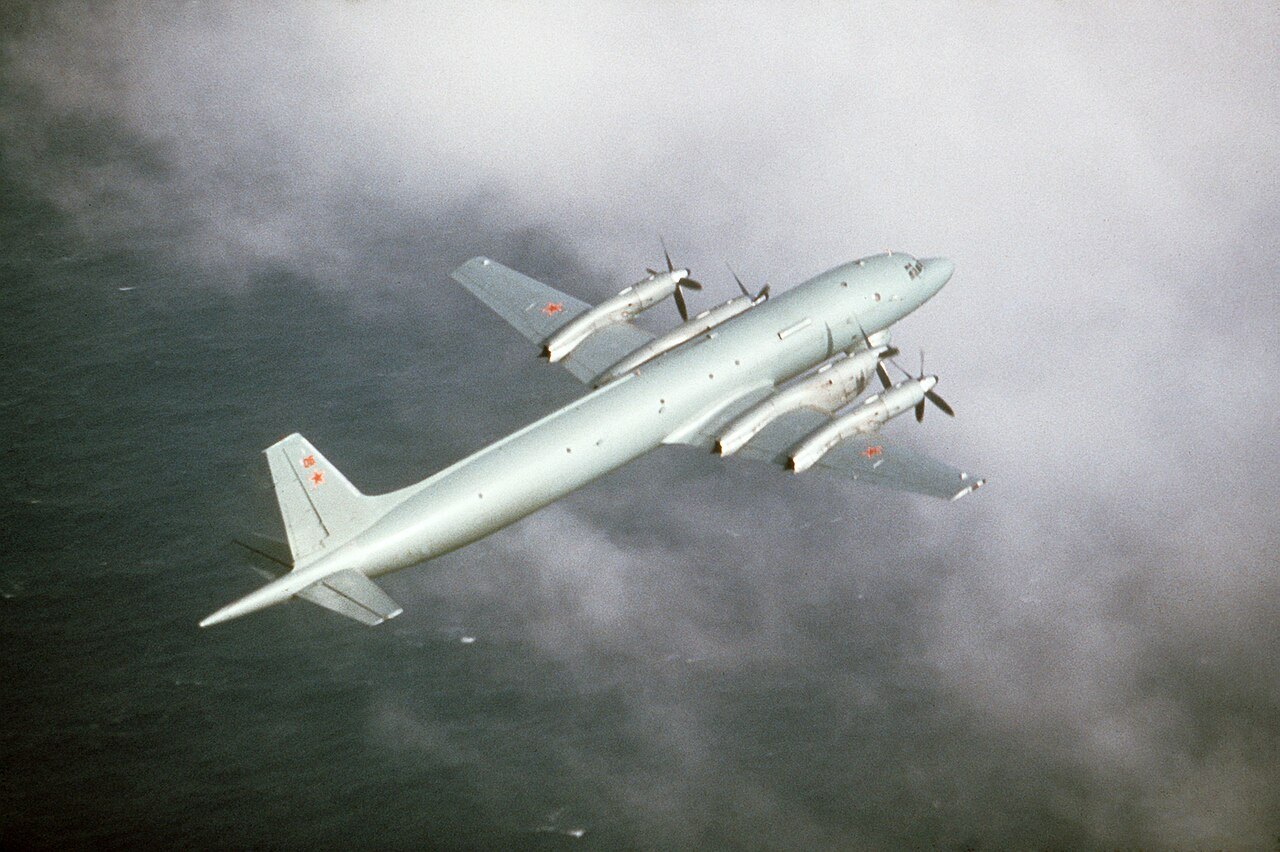
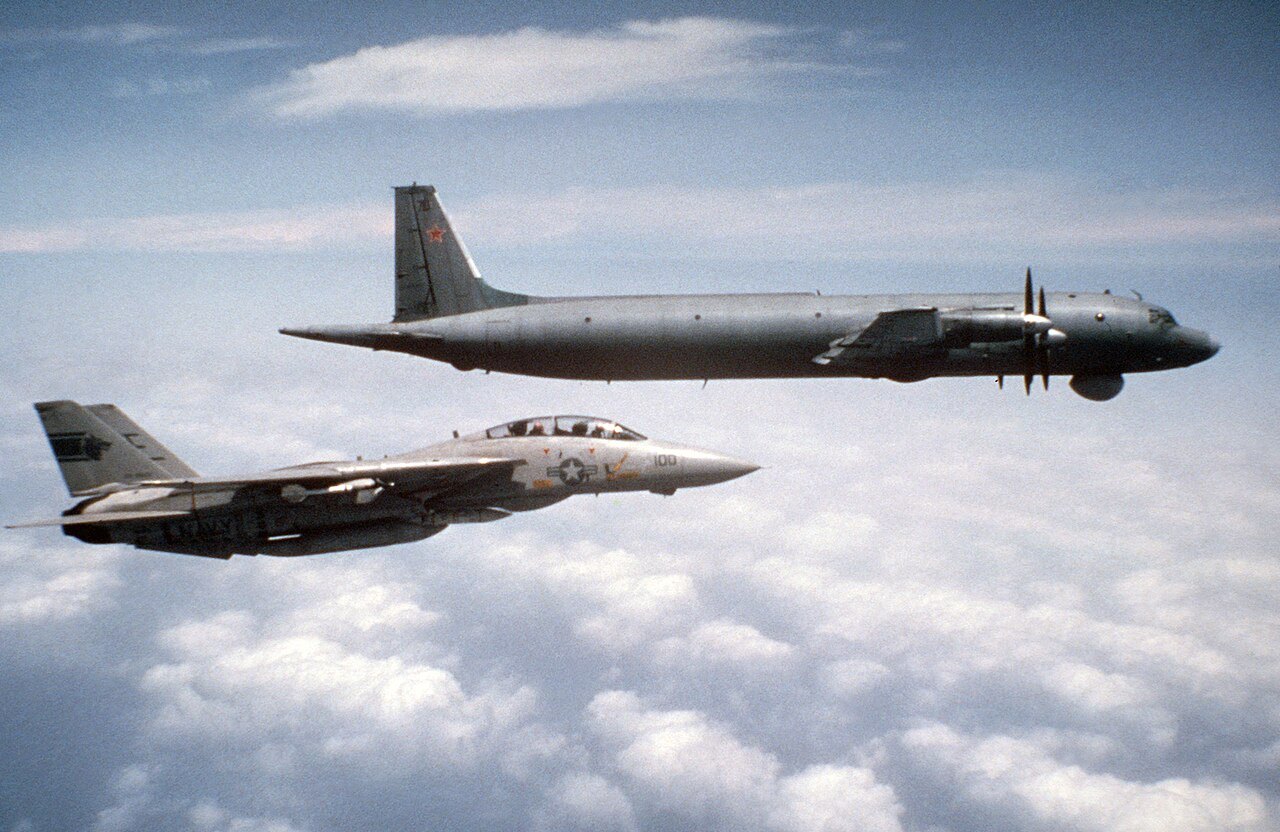
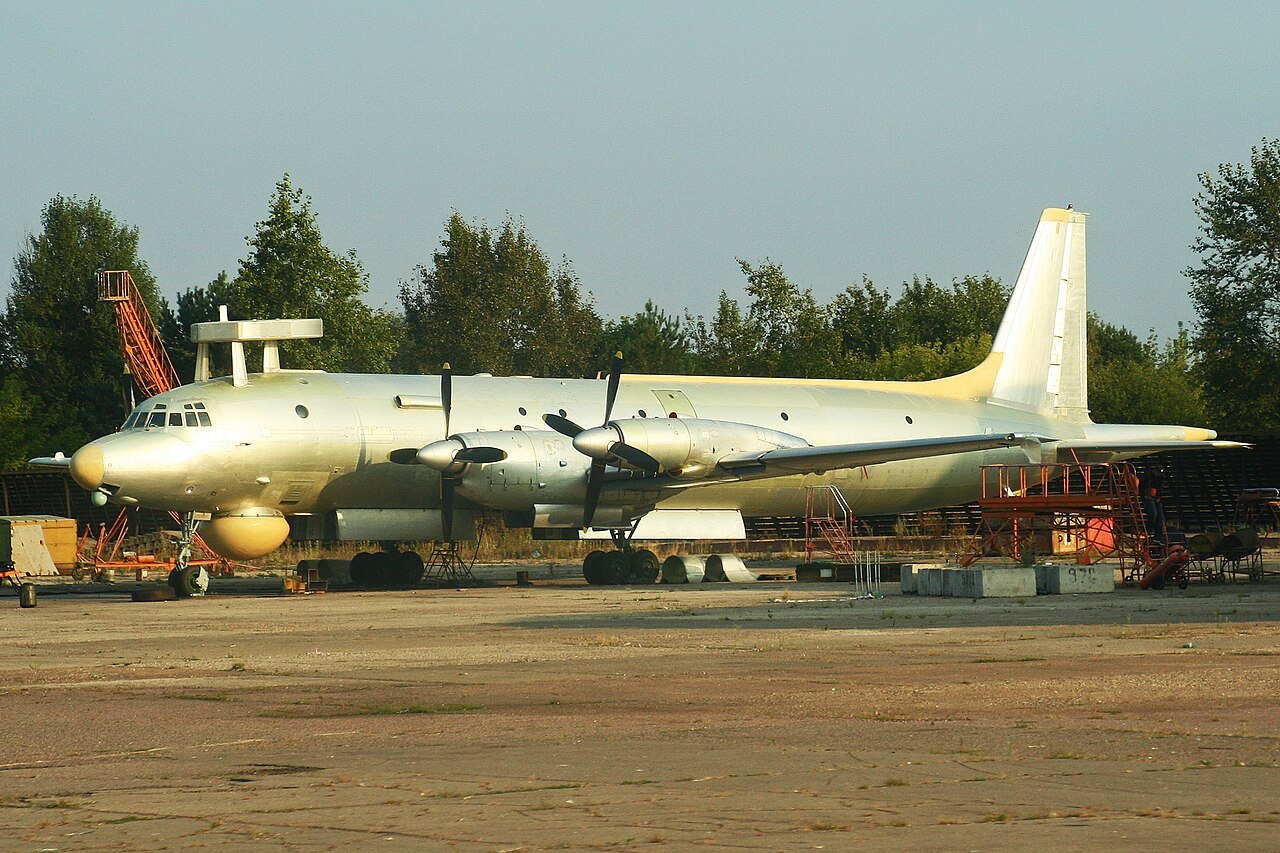
Where the Il-38 flies and flew
The Il-38’s record
The Il-38 never fought a submarine war, but its Cold War record of detections was real, and it lost aircraft on the ground at Asmara in 1984. In India it served for 46 years in search, surveillance and the 1988 Maldives operation, and in Russia it has become a target in the Black Sea war.
See how training and combat types compare in the military aircraft statistics database. Figures are approximate.
Everything people ask about the Il-38
Can I fly in a Ilyushin Il-38?
What does “May” mean?
What is the Il-38 based on?
Is the Il-38 still in service?
How many Il-38s were built?
What replaced the Il-38 in India?
What happened to Indian Il-38s in 2002?
You can’t fly the Il-38.
These, you can.
Most of this museum you can only look at. These genuine military jets you can fly yourself with MiGFlug — with aerobatics and time on the controls.
 Fly the L-39 AlbatrosThe world’s most-flown jet trainer — aerobatics included
 Fly the F-104 Starfighter“The missile with a man in it”
 Fly the MiG-21The Cold War’s most-produced jet
 Fly the T-33 Shooting StarAmerica’s first jet trainer
 Fly the DH VampireA piece of early jet history
 Fly the S.211Agile Italian jet trainer
 Fly the MB-326The classic Aermacchi jet
 Fly the MiG-15The Soviet legend of the Korean War
Continue the tour
Every fact, checked
- Il-38 MayGlobalSecurity: production, 1969-1981 sortie and detection figures, deployments
- Indian Navy bids farewell to IL 38 SD long range maritime patrol aircraftGovernment of India Press Information Bureau, 31 October 2023
- Il-38’s retirement brings an Indian maritime patrol era to an endThe War Zone: Indian service history, upgrades, operations, retirements
- Indian Navy Sea Dragons to be withdrawnScramble: fleet history, ex-Russian additions, preservation
- Ukrainian strike on Russia’s Il-38N aircraft cleared way for submarine attack in NovorossiyskDefense Express (Sofiia Syngaivska, December 2025)
- Russian Navy to receive about 30 upgraded Il-38 maritime patrol aircraftArmy Recognition, 2017: Il-38N programme
- Ilyushin IL-38 May: the Russian OrionMarco P.J. Borst, Airborne Log, summer 1996
- India navy planes collide in mid-airBBC News on the 1 October 2002 Goa collision