
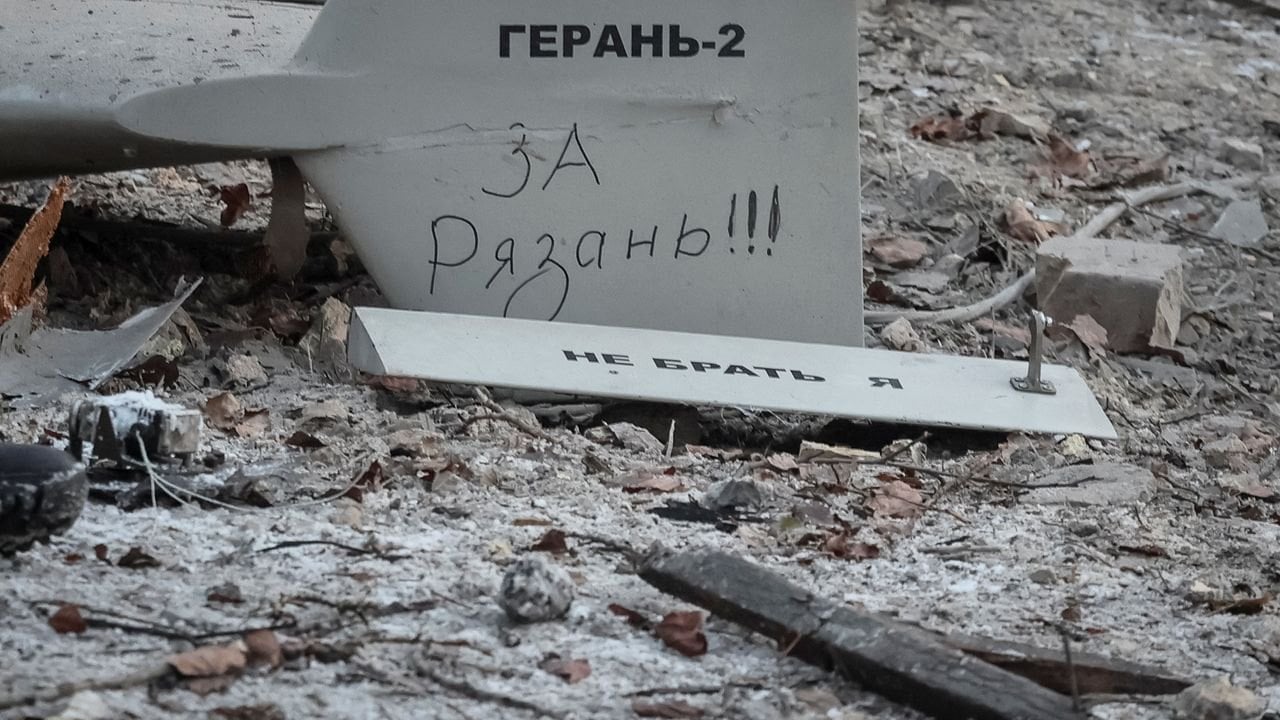
HESA Shahed 136
One-way attack drone
A cheap, slow Iranian one-way attack drone that Russia, as the Geran-2, has launched at Ukraine in the thousands, turning air defence into a contest of cost and numbers.
The Shahed 136: how a cheap Iranian drone became a weapon of attrition
On the morning of 17 October 2022, residents of Kyiv heard a low, droning engine over the rooftops, then explosions. Russia was attacking the capital with small delta-winged drones it called Geran-2, and which Ukraine, the United States and independent analysts identified as the Iranian Shahed 136. Ukraine’s air force reported shooting down at least 13 aimed at Kyiv that morning, but some got through. At least four people were killed in the city, among them a pregnant woman. The attack was not militarily decisive. It showed instead what the Shahed was built for: arriving in numbers, cheaply, against fixed targets such as power stations and heating plants.
The Shahed 136 was designed in Iran by Shahed Aviation Industries in association with the state manufacturer HESA. The first public footage appeared in December 2021. It is a simple aircraft: a blended delta wing about 2.5 m across, a fuselage around 3.5 m long and a small piston engine pushing a propeller at the back. It is launched from a rail with a rocket booster, flies a pre-planned route to a fixed point and does not come back. Estimates of its price have mostly ranged from about US$20,000 to US$50,000, a fraction of the cost of the missiles used to shoot it down. It carries no camera for the pilot to watch and needs no runway, crew or airfield at the launch site: a lorry and a rail are enough, which makes it hard to find and destroy before it flies.
Russia began using the type against Ukraine in September 2022, and in late 2022 agreed with Iran to build it at home. Production moved to the Alabuga special economic zone in Tatarstan. According to a CSIS study, Russian launches rose from about 200 a week in September 2024 to more than 1,000 a week by March 2025. Iran used the Shahed 136 itself in its attack on Israel in April 2024, when almost all the drones were intercepted. Ukraine, for its part, built a dense, layered defence from guns, fighters, electronic warfare and interceptor drones, and most Shaheds are now stopped. Even so, the type has repeatedly damaged the power grid and killed civilians far from the front. Few weapons have done more to change how air defence is paid for and organised.
01The Shahed 136 becomes the Geran-2: Russia’s drone campaign
The first Shahed 136 was reported shot down in Ukraine on 13 September 2022. Within weeks Russia was using the type against cities and the power grid; the US Treasury, sanctioning the designer in November 2022, said Russia had used it against civilian infrastructure in Kyiv, Odesa and the Kharkiv region. Russia gave it the name Geran-2 (geranium) and never acknowledged its Iranian origin. Iran denied supplying drones for use in the war.
A Voice of America report in late 2024 said Iran had supplied Russia with more than 2,000 Shahed-136/131 drones, and that Ukraine counted more than 8,060 Iranian-designed drones launched against it by September 2024, including Russian-built ones. The Russian factory at Alabuga, according to a May 2024 study by the Institute for Science and International Security, was producing about 20 a day by late 2023 under a contract with Iran reported at US$1.75 billion, which included about 600 disassembled drones and the technology to make more.
The CSIS analysts Benjamin Jensen and Yasir Atalan found that from September 2024 Russia launched Shaheds almost every night, often from Primorsko-Akhtarsk and the Chauda airfield in Crimea, accepting losses of more than 75 per cent because the remainder kept getting through.
02The Shahed 136 beyond Ukraine: Iran, Iraq and Israel
Before Ukraine, Iran’s Revolutionary Guards used the Shahed 136 in 2022 against the headquarters of Kurdish opposition groups in northern Iraq, and the US military said groups allied to Iran used it against the American base at al-Tanf in Syria in August 2022. On the night of 13 to 14 April 2024 Iran launched it in large numbers at Israel, together with ballistic and cruise missiles. Israel, the United States, the United Kingdom, France and Jordan shot down nearly all of them; four days later the United States imposed new sanctions on Iranian individuals and companies.
The type’s influence spread further. A turbojet version, the Shahed 238, was shown in 2023. In the United States, SpektreWorks built the LUCAS drone, reported to be largely based on a captured Shahed 136, and US Central Command was reported to have used it against Iran in February 2026. Ukraine, meanwhile, built its own long-range one-way drones and an air-defence system tuned to the Shahed threat.
What makes the Shahed 136 significant
Cheap by design
The Shahed 136 is built from simple materials and commercial-grade parts, and costs a small fraction of a cruise missile. RUSI’s Uzi Rubin put it at US$20,000 to US$30,000 in early 2023; CSIS used a range of US$20,000 to US$50,000. The missiles used to stop it can cost hundreds of thousands of dollars, or around US$1 million for a NASAMS AMRAAM. That imbalance, more than any capability of the drone itself, is why it matters: every interception with a missile costs the defender more than the attack cost the attacker.
Slow, loud and numerous
With a small piston engine and a propeller, the Shahed 136 flies at roughly the speed of a light aircraft, commonly given as about 185 km/h. It is noisy and can be seen and heard from the ground, and it is relatively easy to shoot down one at a time. Its users rely on numbers instead: dozens or hundreds launched in a night, from several directions, so that defences are stretched and some get through. CSIS counted weekly launches against Ukraine of more than 1,000 at the peak in March 2025.
A drone made in two countries
The Shahed 136 was designed in Iran, but most of those used against Ukraine since 2023 are believed to have been built in Russia, at the Alabuga special economic zone in Tatarstan. Researchers at the Institute for Science and International Security described a production hall turning out about 20 drones a day by late 2023. Investigations of wreckage in Ukraine have found electronic parts made in the United States, Europe, Japan and China, despite export sanctions on Iran and Russia.
03The Shahed 136 family: Geran-2, Shahed 131 and Shahed 238
- Shahed 136: the Iranian original, first seen publicly in December 2021.
- Geran-2: the Russian name for the Shahed 136, first for imported drones and then for those built at Alabuga; later Russian versions are reported to carry a heavier warhead.
- Shahed 131 (Geran-1 in Russia): a smaller, similar-looking stablemate with a shorter range, according to RUSI.
- Shahed 238: a turbojet-powered derivative shown in 2023, faster but more expensive and with a larger heat signature.
- Copies elsewhere: the US LUCAS, reported to be based on a captured Shahed 136, and other look-alike designs that followed the type’s success.
Telling these apart from the ground is difficult, and Ukrainian reporting usually counts them together as ’Shaheds’. Russia also launches large numbers of cheaper decoy drones of similar appearance, intended to draw fire and saturate radar screens, which is one reason published totals and interception rates vary between sources and should be treated with caution.
HESA Shahed 136 specifications
Specifications
- Crew
- None (uncrewed, rail-launched one-way drone)
- Length
- about 3.5 m (11 ft 6 in)
- Wingspan
- about 2.5 m (8 ft 2 in)
- Launch weight
- about 200 kg (440 lb), as commonly given
- Powerplant
- 1 × small piston engine (reported as an Iranian copy of the German Limbach L550), pusher propeller
- Maximum speed
- about 185 km/h (115 mph), as commonly given
- Range
- estimates vary widely; RUSI gave about 1,300–1,500 km (800–930 mi)
- Armament
- Built-in explosive warhead; the drone is destroyed on impact
Costs & production
- Unit cost
- Estimates of about US$20,000–50,000 per drone (RUSI, CSIS, Air & Space Forces Magazine), with higher figures reported for Iranian export prices
- Cost per flight hour
- Not a meaningful measure: the Shahed 136 is an expendable munition that flies a single mission of a few hours, so its unit cost is the relevant figure
- Production
- Many thousands; Russia’s Alabuga plant alone was making about 20 a day by late 2023 (ISIS), with output rising sharply afterwards
- Programme
- Iranian design, first public footage December 2021; Russian licence production agreed in late 2022 under a contract reported at US$1.75 billion
04The Shahed 136’s economics: why cheap drones are expensive to stop
The cost argument has been central to the Shahed 136 from its first weeks over Ukraine. In October 2022 The War Zone set a drone worth perhaps US$15,000 against an AIM-120 AMRAAM fired from NASAMS at around US$1 million. Air & Space Forces Magazine put the drone at about US$20,000 against Ukrainian interceptors costing up to US$1 million each.
Ukraine’s answer has been to stop as many as possible with cheaper means: mobile fire groups with machine guns and searchlights, anti-aircraft guns such as the German Gepard, helicopters and fighters, electronic warfare and, from 2025, small interceptor drones. A network of acoustic sensors helps track drones by their engine noise. Russia’s answer has been volume: CSIS found that weekly successful hits rose to about 110 in early 2025 even as most drones were stopped.
For the defender the true cost is not only the interceptors. Every gun crew, radar and fighter assigned to drone defence is unavailable elsewhere, and the damage the survivors cause to power stations and substations takes months to repair. That wider bill is what makes a cheap drone strategically significant.
The Shahed 136 from Iranian prototype to Russian mass production
First public footage
In December 2021 the first footage of the Shahed 136 is released.
Used in Iraq and Syria
Iran’s Revolutionary Guards use it against Kurdish opposition groups in northern Iraq; the US military says Iran-aligned groups used it against al-Tanf.
First downed in Ukraine
On 13 September 2022 Ukraine reports shooting down its first Shahed 136, used by Russia as the Geran-2.
Attack on Kyiv
On 17 October 2022 a drone attack on Kyiv kills at least four people; Ukraine reports at least 13 drones shot down.
US sanctions
On 15 November 2022 the US Treasury sanctions Shahed Aviation Industries Research Center over the transfers to Russia.
Russian production
Production at Alabuga in Tatarstan reaches about 20 drones a day by late 2023, according to the Institute for Science and International Security.
Shahed 238 shown
Iran shows a turbojet-powered derivative, the Shahed 238.
Attack on Israel
On 13–14 April 2024 Iran launches Shahed 136s with missiles at Israel; nearly all are intercepted.
Peak of the campaign
Russian launches exceed 1,000 a week by March 2025, according to CSIS.
Copied by its targets
The US LUCAS, reported to be largely based on a captured Shahed 136, is reported used against Iran in February 2026.
Stories & eyewitnesses: the Shahed 136 at war
Kyiv, 17 October 2022
The morning the drones came to the capital.
Read the full story
The first one down
September 2022: a new shape in Ukrainian skies.
Read the full story
The factory at Alabuga
How an Iranian design moved to Tatarstan.
Read the full story
Sanctions on the designer
Washington names the company behind the drone.
Read the full story
April 2024: Iran fires at Israel
The Shahed 136 in its maker’s own hands.
Read the full story
The mobile fire groups
Ukraine’s low-tech answer to a low-tech weapon.
Read the full story
A thousand a week
CSIS charts the escalation of 2024–25.
Read the full story
The cost-exchange problem
Why a US$20,000 drone worries air forces worldwide.
Read the full story
Strikes in Iraqi Kurdistan
An earlier use, before Ukraine.
Read the full story
The drone copied by its opponents
Imitation as a measure of influence.
Read the full story
The Shahed 136 in pictures
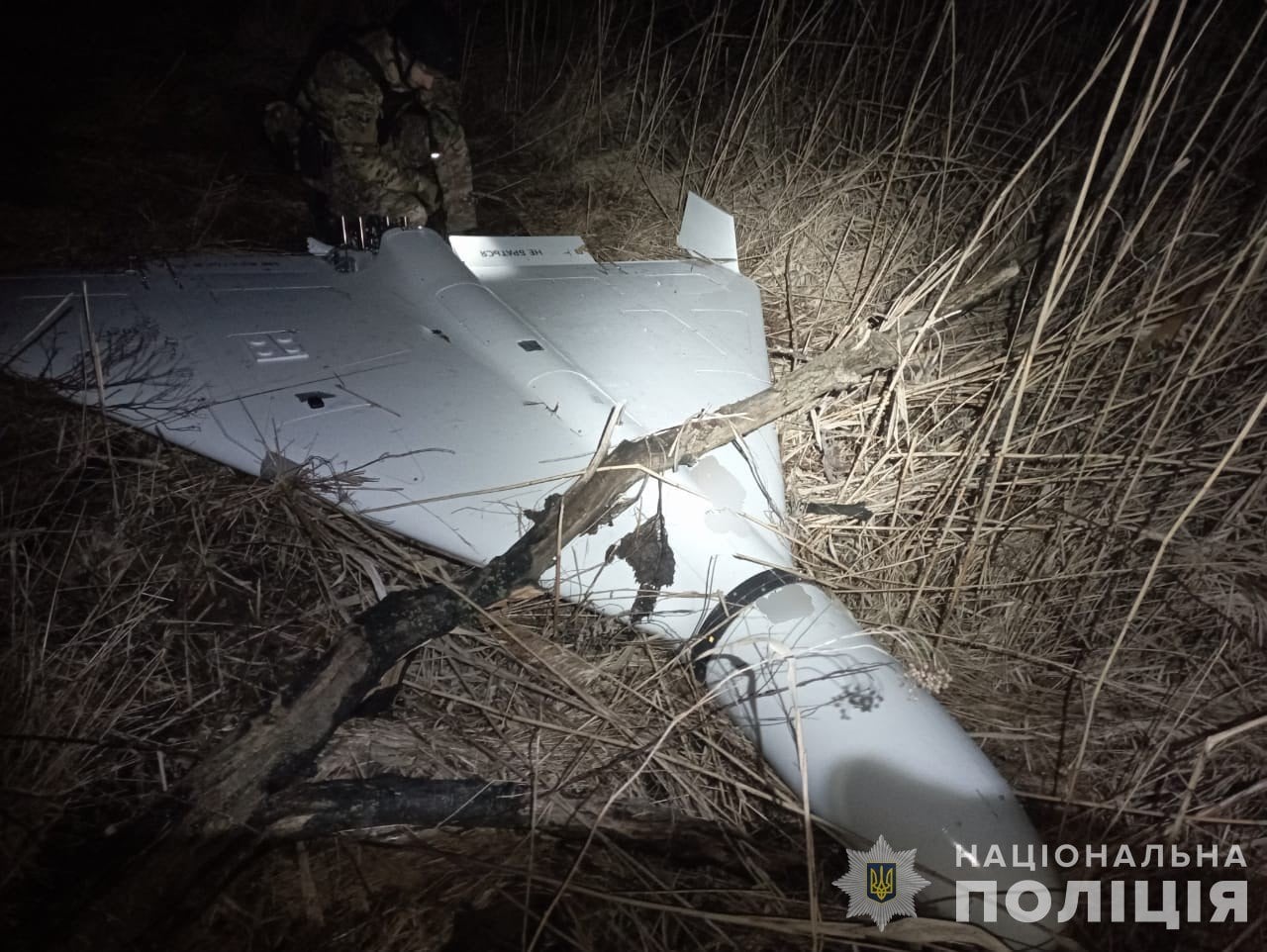
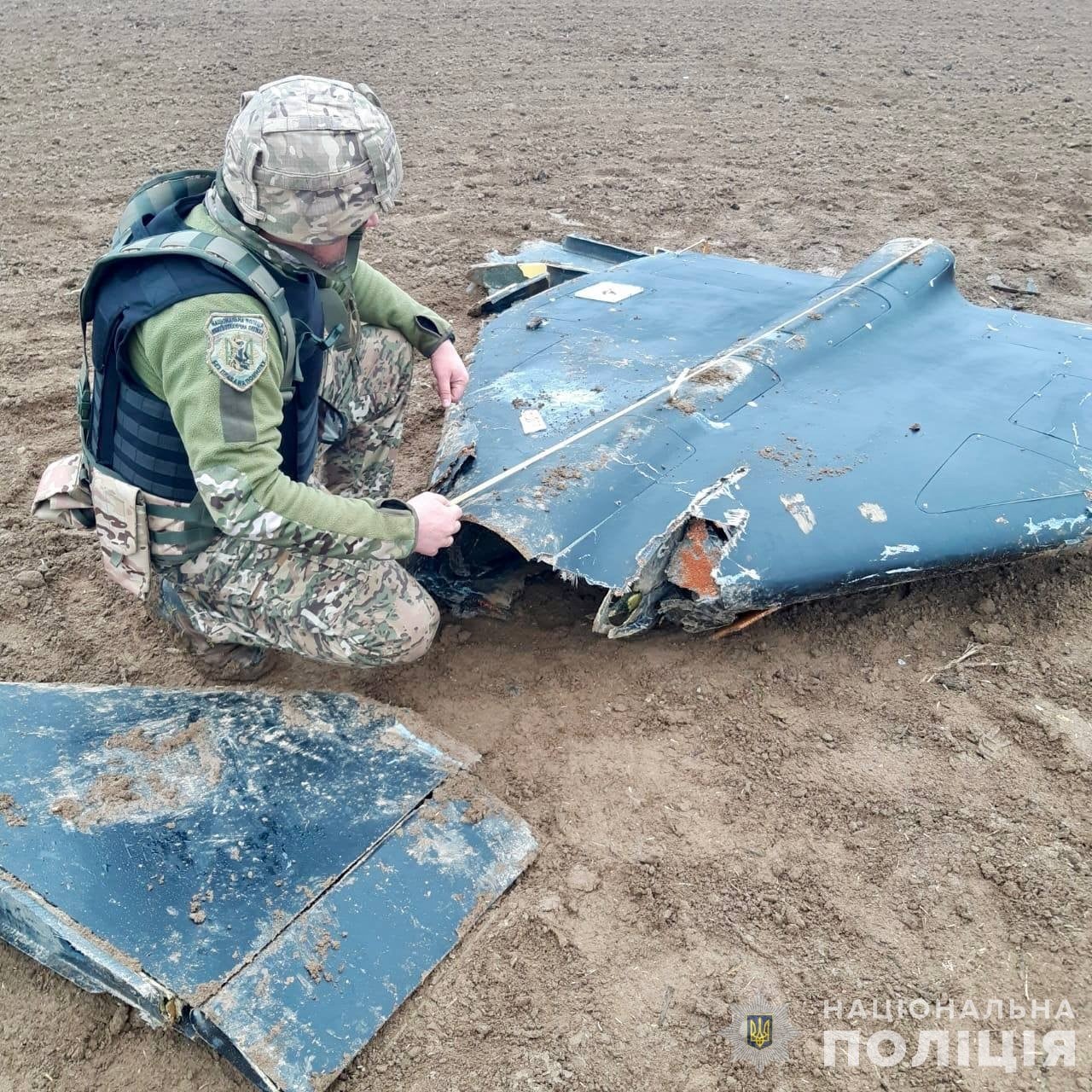
Where the Shahed 136 flies and flew
The Shahed 136’s record
The Shahed 136 has been used by Iran in Iraq, Syria and against Israel, and above all by Russia against Ukraine since September 2022, where most have been shot down or jammed but enough have struck to damage the power grid repeatedly and kill civilians. The figures below are as reported by the sources named.
See how training and combat types compare in the military aircraft statistics database. Figures are approximate.
Everything people ask about the Shahed 136
Can I fly in a HESA Shahed 136?
What is the difference between the Shahed 136 and the Geran-2?
How much does a Shahed 136 cost?
When was the Shahed 136 first used against Ukraine?
Who makes the Shahed 136?
How big is the Shahed 136?
How does Ukraine defend against the Shahed 136?
You can’t fly the Shahed 136.
These, you can.
Most of this museum you can only look at. These genuine military jets you can fly yourself with MiGFlug — with aerobatics and time on the controls.
 Fly the L-39 AlbatrosThe world’s most-flown jet trainer — aerobatics included
 Fly the F-104 Starfighter“The missile with a man in it”
 Fly the MiG-21The Cold War’s most-produced jet
 Fly the T-33 Shooting StarAmerica’s first jet trainer
 Fly the DH VampireA piece of early jet history
 Fly the S.211Agile Italian jet trainer
 Fly the MB-326The classic Aermacchi jet
 Fly the MiG-15The Soviet legend of the Korean War
Continue the tour
Every fact, checked
- Drone Saturation: Russia’s Shahed CampaignCSIS, Benjamin Jensen and Yasir Atalan, May 2025: launch rates, loss rates, launch sites, cost range
- Treasury Targets Actors Involved in Production and Transfer of Iranian UAVs to RussiaUS Treasury, 15 November 2022: sanctions on Shahed Aviation Industries Research Center
- Russia’s Iranian-Made UAVs: A Technical ProfileRUSI, Uzi Rubin, January 2023: dimensions, cost and range estimates
- Alabuga’s Shahed 136 (Geran 2) Warheads: A Dangerous EscalationInstitute for Science and International Security, May 2024: Alabuga production and contract
- Cheap UAVs Exact High CostsAir & Space Forces Magazine, Chris Gordon, January 2023: cost exchange
- Russia Bombards Ukraine With Iranian Kamikaze DronesThe War Zone, Thomas Newdick, 17 October 2022: the Kyiv attack
- Russia increases arms trade with UN-embargoed nations to feed Ukraine warVoice of America, 2024: numbers supplied and launched