
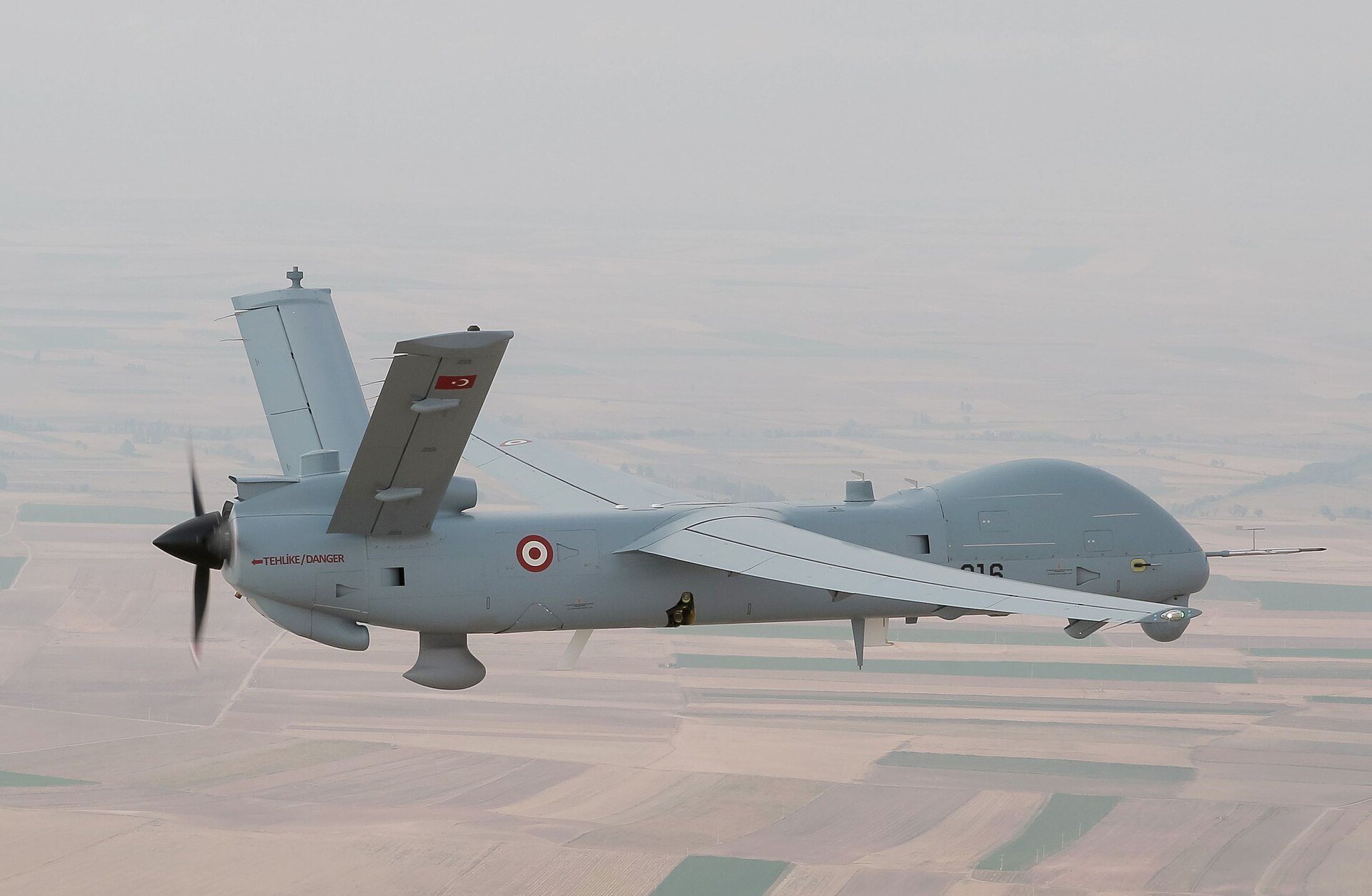
TAI Anka
Turkey’s long-endurance drone
Turkey’s first home-designed long-endurance drone: from a troubled reconnaissance prototype in 2010 to the satellite-linked, armed Anka-S, flown over Syria, Iraq and Libya and sold to air forces from Tunisia to Malaysia.
The Anka: how Turkey built its own long-endurance drone
On 30 December 2010 a large grey drone with a long, slender wing lifted off for the first time in Turkey and flew for 14 minutes. The Anka, named after the phoenix of Turkish legend, was Turkish Aerospace’s first aircraft designed entirely at home, and a statement of intent. Turkey wanted a long-endurance drone of its own rather than relying on foreign suppliers. The programme had begun in 2004, and the early years were not easy. A prototype crashed during testing in 2012, another aircraft crashed in 2013, and Turkey’s private Baykar would soon overtake the state firm in fame with the smaller Bayraktar TB2.
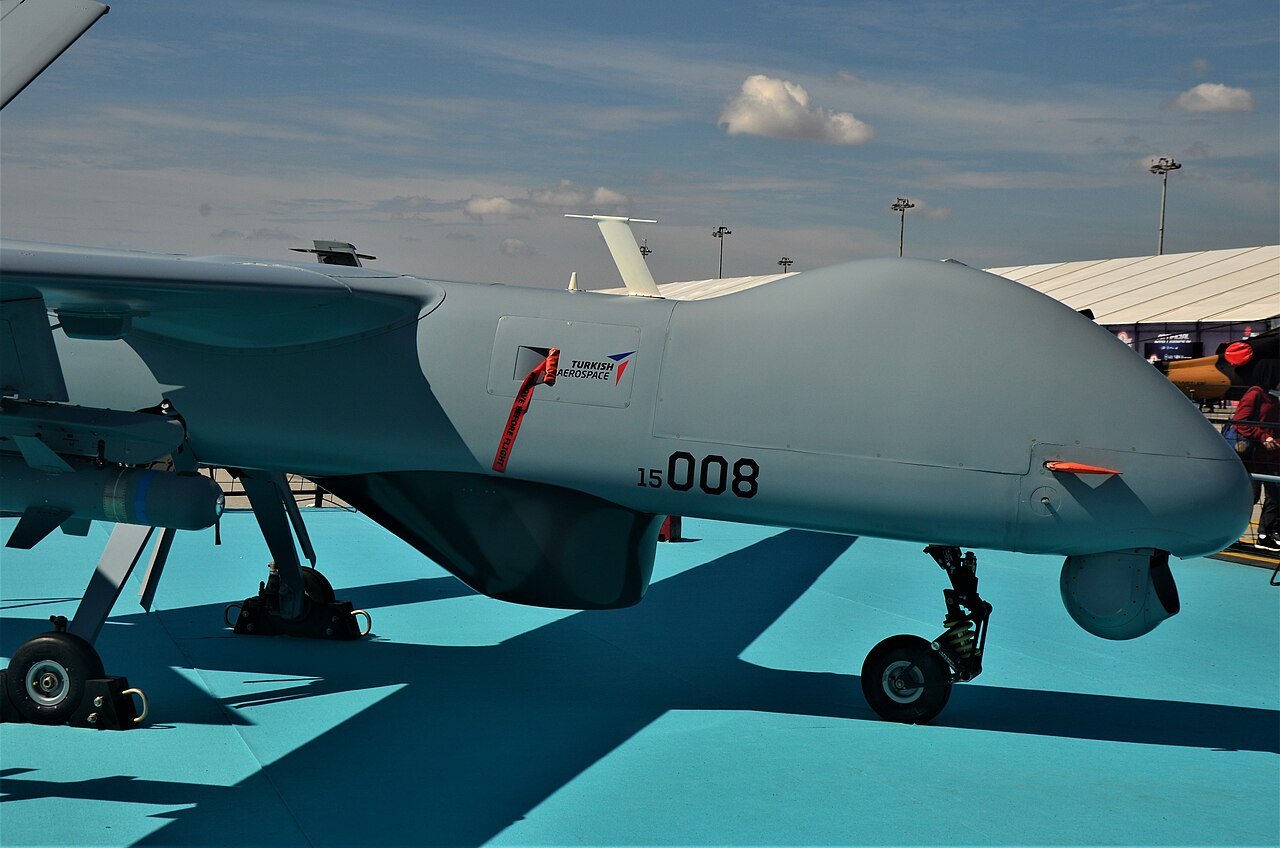
Yet the Anka matured into something the TB2 is not: a true medium-altitude, long-endurance (MALE) drone in the same class as the American Predator. With a 17.5 m wing, a maximum take-off weight of 1,700 kg and an endurance the manufacturer gives as up to 30 hours, it can stay over an area for a day or more. The production Anka-S, ordered in 2013 and delivered from 2017, added a satellite link, which allows it to be flown far beyond the range of its ground station’s radio, and Turkish-made weapons. In August 2018 Turkey said an Anka-S had carried out its first satellite-controlled airstrike.
Since then the Anka has flown in almost every Turkish operation against the PKK and its Syrian affiliates, in Syria’s Idlib province in 2020, and in Libya, where at least two operated for the Tripoli government were shot down. It has also been shot down by Syrian air defences and, in October 2023, by a US F-16 over north-eastern Syria. Tunisia, Kazakhstan, Indonesia and Malaysia have bought it. Turkish Aerospace says Anka fleets have flown more than 400,000 hours, and in 2023 it flew a jet-powered, flying-wing successor, the Anka-3.
01The Anka’s development: from prototype to Anka-S
Turkish Aerospace was contracted to develop the Anka in 2004, as Turkey sought an alternative to foreign drones for watching its south-eastern borders and the PKK. The first prototype flew on 30 December 2010. In 2011 test flights grew to several hours and the aircraft demonstrated automatic take-off and landing. A prototype crashed during a test flight in September 2012, but in January 2013 the Anka completed acceptance tests for the Turkish Air Force, including an 18-hour flight, and a contract for ten production aircraft with ground stations followed in 2013.
The production standard became the Anka-S, with a satellite communications link and the ability to carry weapons. According to Defense News, an Anka flew its first operational mission on 5 February 2016 from Elazığ in eastern Turkey, a four-hour reconnaissance flight at 19,000 ft. Deliveries of the Anka-S began in 2017. In 2018 Turkey announced the type’s first satellite-controlled airstrike and, in December, its first flight with a Turkish-made engine, according to the Bulletin of the Atomic Scientists. An electronic-intelligence version, the Anka-I, was built for Turkey’s intelligence service, MIT.
02The Anka at war: Syria, Iraq and Libya
The Anka has been used extensively against the PKK inside Turkey and in cross-border operations in Syria and northern Iraq since 2016, including Euphrates Shield, Olive Branch, Peace Spring and the Claw operations. Its biggest test came in February and March 2020, when Syrian government forces advancing in Idlib killed Turkish soldiers and Turkey responded with Operation Spring Shield. Anka-S and Bayraktar TB2 drones attacked Syrian army vehicles and air defences in large numbers. Syrian air defences shot down Ankas on 25 February and 1 March 2020.
In Libya, a United Nations panel of experts later reported that a drone shot down near Misrata in April 2020 was an Anka operated for the Tripoli-based Government of National Accord; another was lost near Tarhuna in May. On 5 October 2023 a US F-16 shot down a Turkish drone over north-eastern Syria after it flew, during Turkish strikes, within about a kilometre of US troops; it was widely identified as an Anka, operated by Turkish intelligence. Turkey’s defence ministry said it did not belong to the armed forces.
What makes the Anka special
Satellite reach
The Anka-S carries a satellite communications terminal. Turkish Aerospace gives the radio datalink range as more than 250 km and the satellite range as more than 2,500 km. That allows crews to fly it far from its ground station, over the mountains of northern Iraq or across Syria, and to hand control between stations. It was the first Turkish drone with this capability, and the reason Turkey described an August 2018 strike as its first satellite-controlled airstrike.
A day in the air
With a high-aspect-ratio wing of 17.5 m, a single piston engine and up to 350 kg of payload, the Anka is built for endurance rather than speed. Turkish Aerospace gives its endurance as up to 30 hours and its ceiling as 30,000 ft. It has automatic take-off and landing, anti-icing and a retractable undercarriage that keeps the sensor view clear. Sensors include electro-optical and infrared cameras and synthetic-aperture radar for seeing through cloud.
A family, not a single drone
The Anka is the basis of a whole Turkish Aerospace family. Beyond the original Anka-A and the production Anka-S, there is the electronic-intelligence Anka-I, the larger twin-engine Aksungur that grew from it, and the jet-powered, tailless Anka-3, which first flew on 28 December 2023. Turkish Aerospace says the experience of more than a million flight hours across its drone fleets went into the Anka-3’s design.
03The Anka’s variants: Anka-A to Anka-3
- Anka-A: original reconnaissance prototype, first flight 30 December 2010.
- Anka-B (Block B): improved development aircraft with a larger payload, including synthetic-aperture radar, first flight January 2015.
- Anka-S: production version with satellite link and weapons, delivered from 2017; the main export model.
- Anka-I: electronic and signals-intelligence version for Turkey’s National Intelligence Organisation (MIT).
- Anka-3: a tailless, jet-powered flying-wing combat drone, first flight 28 December 2023, with an internal payload and a maximum take-off weight of about 6,500 kg according to Turkish Aerospace.
TAI Anka specifications
Specifications
- Crew
- None (remotely piloted)
- Length
- 8.6 m (28 ft 3 in)
- Wingspan
- 17.5 m (57 ft 5 in)
- Height
- 3.25 m (10 ft 8 in)
- Max take-off weight
- 1,700 kg (3,750 lb)
- Payload
- 350+ kg (770+ lb)
- Powerplant
- 1 × piston engine (Thielert Centurion 2.0S or TEI PD170), pusher propeller
- Maximum speed
- about 217 km/h (135 mph), as commonly given
- Endurance
- up to 30 hours (manufacturer)
- Service ceiling
- 30,000 ft (9,100 m)
- Datalink range
- 250+ km line of sight; 2,500+ km by satellite (manufacturer)
- Armament
- Small guided munitions and laser-guided rockets on underwing pylons
Costs & production
- Unit cost
- Export packages give an idea: Tunisia paid about US$80 million in 2020 for three Anka-S and three ground stations with training; Malaysia about US$85 million for three
- Cost per flight hour
- Hedged estimate: probably in the low thousands of US dollars, based on a single piston engine and an aircraft of Predator class, plus satellite link and crew costs; no official figure exists
- Production
- More than 100 built by early 2024, as commonly reported
- Programme
- Development contract 2004; first flight 2010; production contract 2013; Anka-S deliveries from 2017
04The Anka’s export customers
The Anka was slower to find export buyers than the Bayraktar TB2; the Bulletin of the Atomic Scientists noted in 2019 that it remained mainly in Turkish service. An early contract with Egypt in 2012 was cancelled. The first export customer was Tunisia, which signed for three Anka-S and three ground stations in March 2020 for about US$80 million, largely financed by Turkey’s Eximbank, according to Military Africa; two more aircraft later brought its fleet to five.
Kazakhstan agreed in 2022 to buy three and build more locally. Indonesia ordered twelve in 2023, part to be assembled in Indonesia, and received the first in 2025. Malaysia bought three Anka-S for its air force’s No. 11 Squadron at Labuan, with deliveries scheduled from February 2026, according to Defence Security Asia. In January 2025 Turkish Aerospace announced a sale to Uzbekistan; the Tashkent Times also listed Algeria and Chad among operators.
The Anka from first flight to Anka-3
Development begins
Turkish Aerospace is contracted to develop a Turkish MALE drone.
First flight
The Anka prototype flies for 14 minutes on 30 December 2010.
Prototype lost
A prototype crashes during a test flight in September 2012.
Acceptance and contract
The Anka completes acceptance tests in January; a production contract for ten aircraft follows.
First operational flight
On 5 February 2016 an Anka flies its first operational mission from Elazığ.
Anka-S delivered
Deliveries of the satellite-linked, armed Anka-S begin.
Satellite-controlled strike
Turkey announces the first satellite-controlled airstrike, and the first flight with a Turkish engine.
Idlib and Libya
Ankas fly in Operation Spring Shield in Syria; several are lost over Idlib and Libya. Tunisia signs the first export contract.
Shot down by an F-16
On 5 October a US F-16 shoots down a Turkish drone near US troops in Syria, widely identified as an Anka.
Anka-3 flies
The jet-powered flying-wing Anka-3 makes its first flight on 28 December 2023.
New customers
Indonesia receives its first Anka; a sale to Uzbekistan is announced.
Stories & eyewitnesses: the Anka in service
Fourteen minutes in December
The phoenix rises, briefly.
Read the full story
First mission from Elazığ
February 2016: the Anka goes operational.
Read the full story
Idlib, spring 2020
Turkish drones over a Syrian battlefield.
Read the full story
Libya’s drone war
Losses far from home.
Read the full story
Shot down by an ally
October 2023: an F-16 over Hasakah.
Read the full story
Tunisia, the first customer
An African air force takes the Anka-S.
Read the full story
Guarding the South China Sea
Malaysia’s first MALE drones.
Read the full story
The first satellite-controlled strike
August 2018: a new capability for Turkey.
Read the full story
Anka-3 takes off
A flying wing for the next generation.
Read the full story
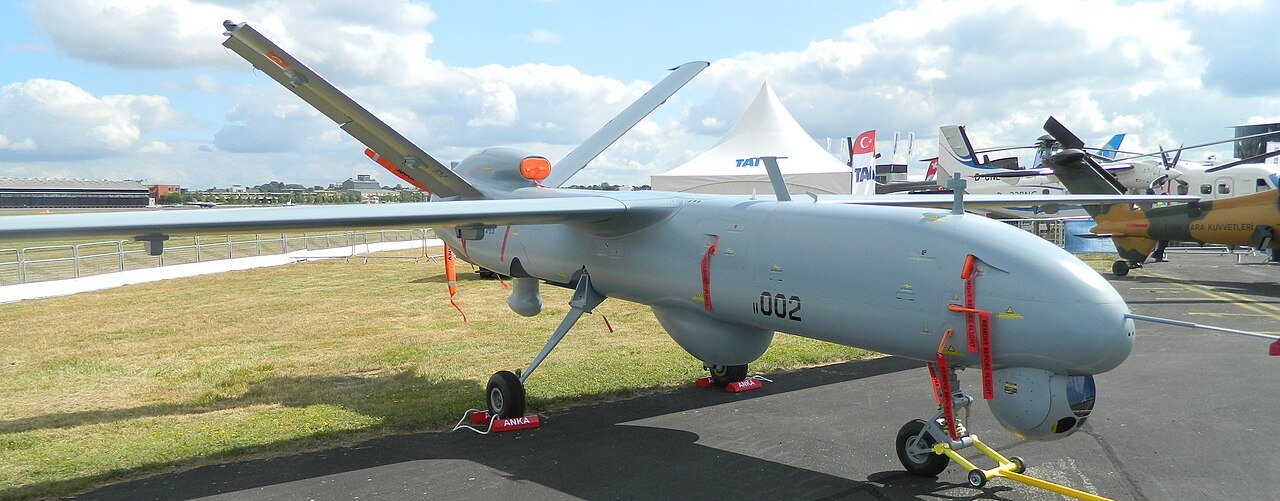
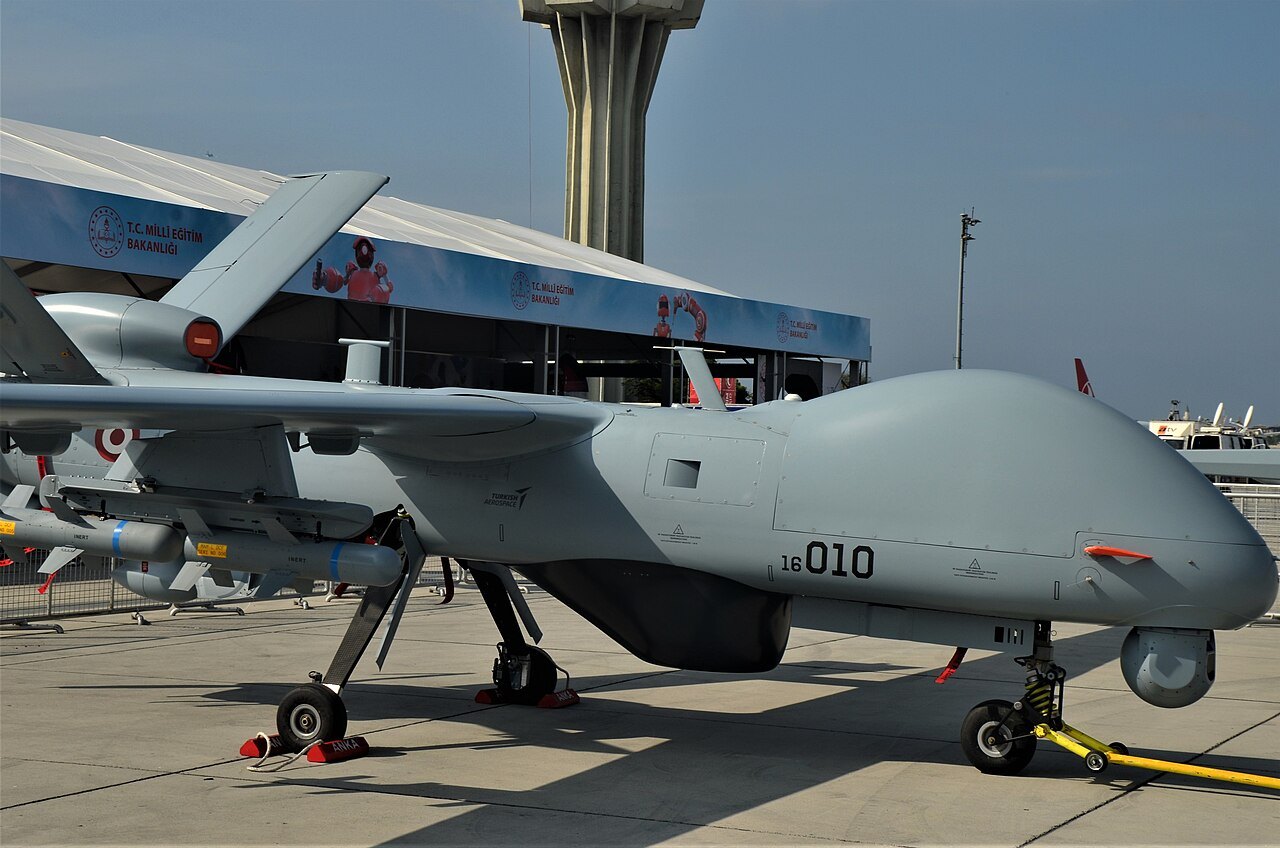
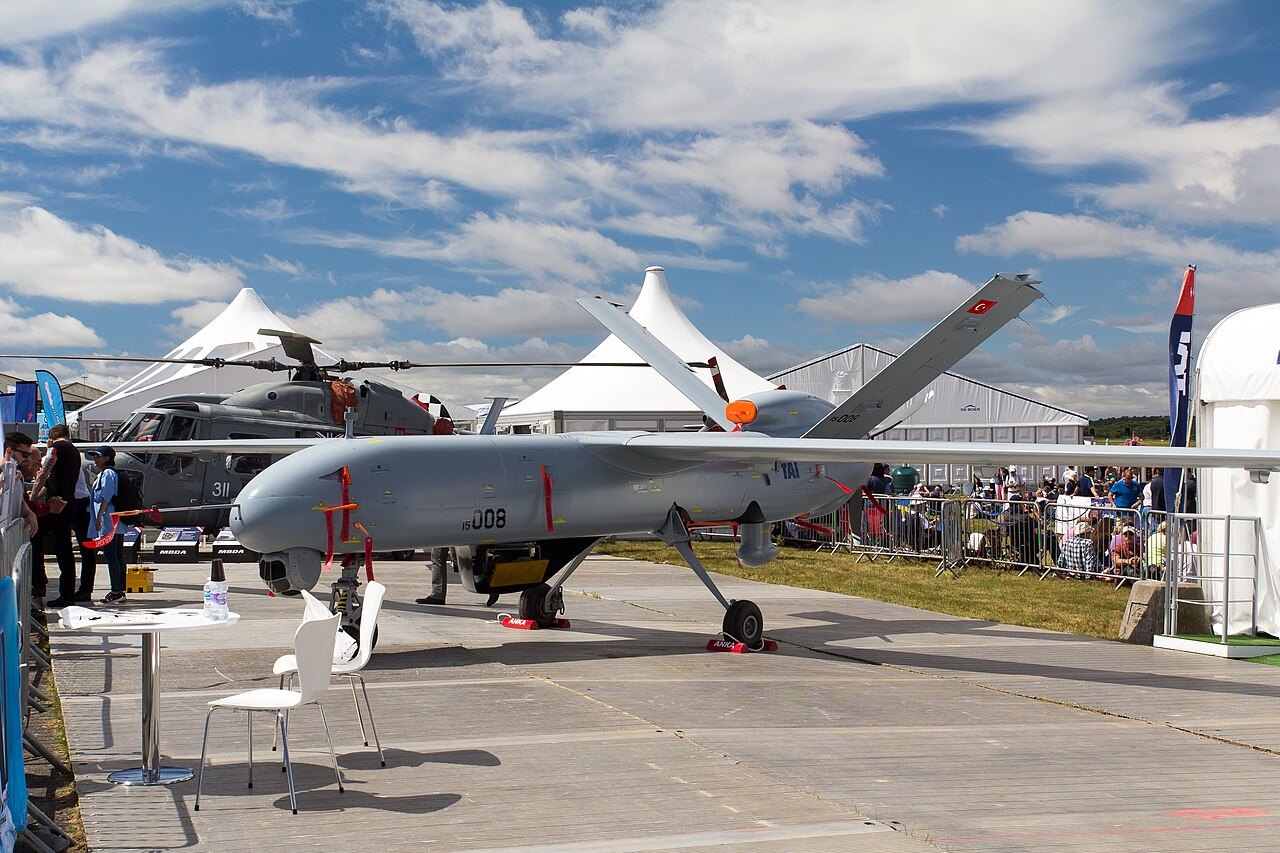
The Anka in pictures
Where the Anka flies and flew
The Anka’s record
The Anka has flown in Turkish operations against the PKK and in Syria and Iraq since 2016, and for the Tripoli government in Libya in 2020. Losses include aircraft shot down over Idlib and Libya in 2020 and one widely identified as an Anka shot down by a US F-16 in 2023.
See how training and combat types compare in the military aircraft statistics database. Figures are approximate.
Everything people ask about the Anka
Can I fly in a TAI Anka?
What is the difference between the Anka and the Anka-S?
How long can the Anka stay airborne?
Who makes the Anka?
How does the Anka compare with the Bayraktar TB2?
Which countries operate the Anka?
What is the Anka-3?
You can’t fly the Anka.
These, you can.
Most of this museum you can only look at. These genuine military jets you can fly yourself with MiGFlug — with aerobatics and time on the controls.
 Fly the L-39 AlbatrosThe world’s most-flown jet trainer — aerobatics included
 Fly the F-104 Starfighter“The missile with a man in it”
 Fly the MiG-21The Cold War’s most-produced jet
 Fly the T-33 Shooting StarAmerica’s first jet trainer
 Fly the DH VampireA piece of early jet history
 Fly the S.211Agile Italian jet trainer
 Fly the MB-326The classic Aermacchi jet
 Fly the MiG-15The Soviet legend of the Korean War
Continue the tour
Every fact, checked
- ANKA Medium Altitude Long Endurance UAVTurkish Aerospace: specifications, first flight, fleet hours
- ANKA-IIITurkish Aerospace: Anka-3 first flight and data
- Turkish Drone Anka Makes Debut FlightDefense News, Burak Ege Bekdil, February 2016: first operational mission, programme history
- Turkey’s military drones: an export product that’s disrupting NATOBulletin of the Atomic Scientists, Dan Gettinger, December 2019: development, combat use, milestones
- U.S. F-16 Shoots Down Turkish Drone Over SyriaThe War Zone, Howard Altman, October 2023: the Hasakah shoot-down
- Tunisia receiving Anka-S armed drones from TurkeyMilitary Africa, October 2021: Tunisian contract, financing, training
- The Tunisian Air Force Receives 2 Additional ANKA UAVs From TAIOvert Defense, June 2023: Tunisian fleet of five
- Malaysia’s ANKA-S Drones Debut on RMAF Social MediaDefence Security Asia, August 2025: Malaysian order, base and training
- Turkish TUSAS sold ANKA drones to UzbekistanTashkent Times, January 2025: Uzbek sale and list of operators