
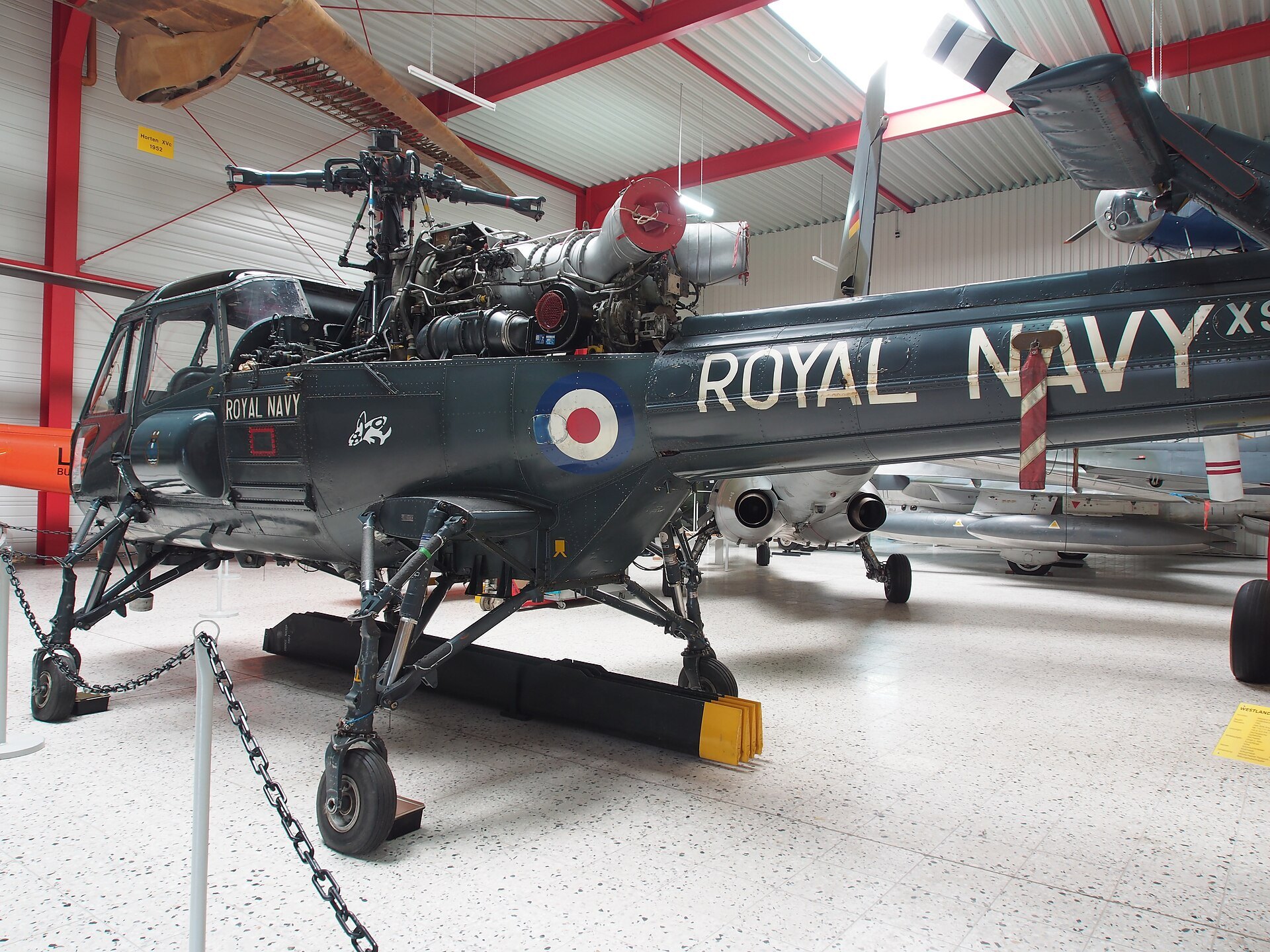
Westland Wasp
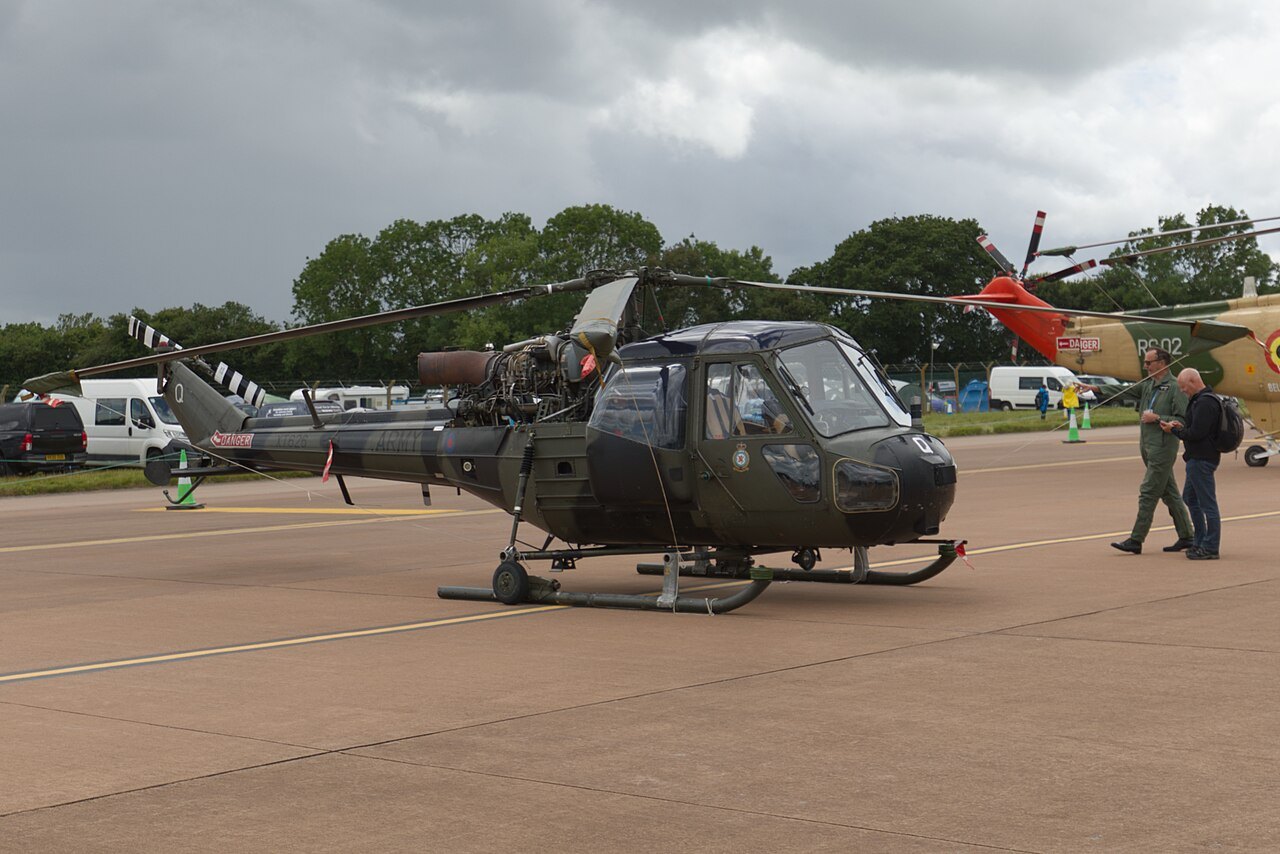
and its Army Twin, the Scout
Britain’s first home-grown turbine helicopters: the Wasp put torpedoes on frigates and helped cripple the submarine Santa Fe in 1982, while its Army twin, the Scout, flew from Borneo and Aden to Goose Green.
The Wasp and the Scout: how a small Saunders-Roe helicopter went to sea and to war
Both helicopters began at Saunders-Roe, the flying-boat company that had moved into rotorcraft and built the Army’s piston-engined Skeeter. Its private-venture P.531 first flew on 20 July 1958, and a version with the new Bristol Siddeley Nimbus turbine flew on 9 August 1959. When Westland took over Saunders-Roe, the design was developed in parallel for both services. The Army’s version, the Scout AH.1, was a five-seater on skids; it flew in August 1960, and the Army placed its first order a month later. The Navy’s version, first called the Sea Scout and then the Wasp HAS.1, had a four-wheeled undercarriage, a folding tail and folding rotor blades so it would fit a frigate’s tiny hangar. The prototype Wasp flew on 28 October 1962.
The Wasp gave a frigate a long arm. The Navy’s requirement was for a Manned Torpedo-Carrying Helicopter: the ship found the submarine with its own sonar, and the Wasp flew out to drop a homing torpedo where the ship told it to, at ranges far beyond the ship’s mortars. It entered service in 1964 with 829 Naval Air Squadron, which provided flights for Leander, Tribal and Rothesay class frigates and the ice patrol ship Endurance. Later it gained the wire-guided AS.12 missile, and in April 1982 three Wasps fired them at the Argentine submarine Santa Fe off South Georgia. The Wasp was exported to New Zealand, the Netherlands, South Africa, Brazil, Indonesia and Malaysia.
The Scout entered Army Air Corps service in 1963, replacing the Skeeter, and became the backbone of British Army aviation for two decades. It was fast, climbed well and could carry troops, casualties, machine guns or SS.11 anti-tank missiles. Early Nimbus engines were notoriously short-lived and serviceability was poor, but the Scout matured into a robust machine. It flew in the Borneo confrontation, Aden and the Radfan, Oman, Rhodesia, Northern Ireland and the Falklands, where Scouts evacuated wounded from Goose Green and fired missiles at Argentine guns near Stanley. The Royal Navy retired the Wasp in 1988 and the Army the Scout in 1994, both replaced by the Westland Lynx.
01The Wasp in the Falklands: Santa Fe and the red crosses
When the Falklands war began in April 1982, the Wasp was nearing the end of its Royal Navy career, but it still flew from the older frigates and from the ice patrol ship HMS Endurance. On 25 April 1982 the Argentine submarine Santa Fe, landing reinforcements at South Georgia, was caught on the surface by a Wessex from HMS Antrim, which attacked with depth charges, and by a Lynx from HMS Brilliant. A Wasp from HMS Plymouth and two from Endurance then fired AS.12 missiles, scoring hits. Unable to dive, Santa Fe limped back to Grytviken, where her crew abandoned her, and the Argentine garrison surrendered later that day. It was the first engagement of the task force.
Other Wasps went south with the survey ships that served as ambulance ships. XT420, now flown by Navy Wings, served aboard HMS Hecla in the casualty evacuation role with large red crosses painted on its fuselage.
02The Scout at war: Borneo, Aden and the South Atlantic
On 2 March 1964 sixteen Scouts left Middle Wallop for the Far East, embarked on the commando carrier HMS Bulwark and reached Singapore four weeks later to re-equip 656 Squadron for the Borneo confrontation. The squadron recorded that the five-seat Scout, the first British home-grown turbine helicopter, was fast, at over 100 knots, could climb to 10,000 ft in less than ten minutes and was a delight to fly after the underpowered Skeeter, but that its early technical defects made for very poor serviceability.
In Aden and the Radfan Scouts were hit by ground fire on several occasions. On 26 May 1964 the commanding officer of 3 PARA, Lieutenant Colonel Anthony Farrar-Hockley, was reconnoitring Wadi Dhubsan in a Scout when it was hit and forced down behind enemy lines; the aircraft was later recovered. Eighteen years later Scouts of 656 Squadron and 3 Commando Brigade Air Squadron went to the Falklands, flying supplies, special forces and casualties, and on 14 June 1982 firing SS.11 missiles at Argentine artillery west of Stanley.
What makes the Wasp special
Four wheels for a pitching deck
The Wasp’s most distinctive feature was its quadricycle undercarriage of four castering wheels, designed so the aircraft could be manoeuvred on a small, moving deck. After landing, the pilot could apply negative rotor pitch to press the helicopter onto the deck until the handlers secured the lashings. The tail boom and main rotor blades folded so the Wasp fitted the small hangars of 1960s frigates, and large inflatable floats in sponsons on either side were later added to stop the top-heavy machine capsizing after a ditching.
A weapons carrier, not a hunter
Unlike the larger Wessex, the Wasp carried no sonar. It was a stand-off weapon delivery system working with its parent ship or other anti-submarine units: the ship detected the submarine and directed the helicopter to the drop point. It could carry two Mk 44 or one Mk 46 homing torpedo, or depth charges, and later the wire-guided SS.11 and then the AS.12, which roughly doubled the range against patrol boats and surfaced submarines. A sight in the cockpit roof was used to guide the missiles.
Scout and Wasp: twins with different jobs
The Scout and Wasp shared their Nimbus engine, transmission and much of their structure. The Army’s Scout stood on skids and seated two crew and three to four passengers. It could carry two stretchers inside or two in external pods, two fixed forward-firing machine guns aimed with a chinagraph cross on the windscreen, a door gun, or four SS.11 anti-tank missiles. Its airframe fatigue life was given as 7,200 hours, though its cockpit layout, with the heater switch beside the fuel cock, cost several aircraft.
03The Wasp and Scout’s Nimbus engine and systems
Both helicopters used the Nimbus free-turbine engine, developed by Blackburn and Bristol Siddeley and later built by Rolls-Royce. Rated at about 1,050 shp, it was torque-limited to around 685–710 shp in service to suit the transmission, which gave the small helicopters useful reserves in hot and high conditions. In early service the engine was notoriously short-lived, with only a few hours between removals; development and experience pushed this up dramatically by the mid-1960s.
The Wasp carried extra fuel in the cabin floor, a rescue winch above the starboard rear door and a cargo hook under the fuselage. With a crew of two, a pilot and an aircrewman who also aimed the missiles, it could seat three passengers or carry one stretcher across the rear cabin, making it a useful ship’s utility helicopter as well as a weapons carrier. Navigation and attack depended largely on the parent ship’s radar and sonar.
Westland Wasp HAS.1 specifications
Specifications
- Crew
- 2 (pilot, aircrewman), plus up to 3–4 passengers
- Length
- 12.30 m (40 ft 4 in) rotors turning; fuselage 9.24 m (30 ft 4 in)
- Main rotor diameter
- 9.83 m (32 ft 3 in)
- Height
- 2.72 m (8 ft 11 in)
- Empty weight
- 1,566 kg (3,452 lb)
- Max take-off weight
- 2,495 kg (5,500 lb)
- Powerplant
- 1 × Rolls-Royce Nimbus 103 turboshaft, 710 shp (de-rated from 1,050 shp)
- Maximum speed
- 193 km/h (120 mph, 104 kt)
- Cruise speed
- about 177 km/h (110 mph, 96 kt)
- Range
- about 480 km (300 mi)
- Service ceiling
- 3,720 m (12,200 ft)
- Climb rate
- 7.3 m/s (1,440 ft/min)
- Armament
- 2 × Mk 44 or 1 × Mk 46 torpedo, or depth charges; 4 × SS.11 or 2 × AS.12 missiles; door-mounted GPMG
Costs & production
- Unit cost
- No reliable contract figure found in the sources used
- Cost per flight hour
- No official figure. A rough estimate for a privately operated Wasp or Scout today is in the low thousands of pounds per hour, based on a single small turboshaft, a light airframe and the specialist support needed for an out-of-production type; an order of magnitude only, not a quoted rate
- Production
- About 133 Wasps (around 96–98 for the Royal Navy) and about 150 Scouts, built mainly at Westland’s Hayes factory
- Programme
- P.531 first flight 1958; Scout first flight 1960 and service 1963; Wasp first flight 1962 and service 1964; Royal Navy Wasp retired 1988; Army Scout retired 1994
04The Wasp and Scout family: versions and operators
- Saro P.531: private-venture prototypes, first flight 20 July 1958; Nimbus-powered from 1959.
- Scout AH.1: British Army five-seat skid version, about 150 built; also used by the Royal Navy, the Royal Australian Navy, Jordan, the South African Air Force and various police forces.
- Sea Scout HAS.1 / Wasp HAS.1: naval version with quadricycle undercarriage, folding tail and rotors; Royal Navy 1964–1988.
- AH-12A: Royal Netherlands Navy designation; 12 delivered 1966–67 for Van Speijk class frigates, retired 1981, later refurbished for Indonesia.
- UH-2 / UH-2A: Brazilian Navy designations; three new in 1966 and seven ex-Royal Navy in 1977.
- South Africa: 17 ordered, 16 delivered for President class frigates, flown from Ysterplaat until 1990.
- New Zealand and Malaysia: RNZN Wasps from 1966 to 1998; Royal Malaysian Navy from 1988 for about a decade.
05The Wasp’s operating costs: cheap to buy, hungry for maintenance
The Wasp was a small, simple helicopter by later standards, and it let navies put an air arm on ordinary frigates. Its costs lay in support: a maintenance team had to go to sea with every flight, often provided by another service, as New Zealand’s RNZAF technicians were. Early Nimbus engines needed changing after only a few flying hours, which made the first years expensive for both the Navy and the Army. Mature engines, two or three engine changes per 1,000 flying hours by 1964 by some accounts, brought costs under control.
The Wasp and Scout from Saunders-Roe to the Lynx
P.531 flies
The Saunders-Roe P.531 prototype makes its first flight on 20 July.
Turbine power
A Nimbus-powered P.531 flies on 9 August; Westland takes over Saunders-Roe and the project.
Scout flies
The pre-production Army Scout flies in August; the Army places its first order a month later.
Wasp flies
The prototype Wasp, at first called the Sea Scout, flies on 28 October.
Into service
The Scout joins the Army Air Corps in 1963; the Wasp HAS.1 enters Royal Navy service in 1964 after intensive trials.
Borneo and Radfan
Sixteen Scouts sail for Singapore aboard HMS Bulwark; in May a Scout carrying Lt Col Farrar-Hockley is forced down in the Radfan.
Exports
HMNZS Waikato commissions with a Wasp; Dutch and Brazilian Wasps follow.
Falklands
Wasps attack the submarine Santa Fe on 25 April; Scouts fly casualty evacuation at Goose Green on 28 May.
Royal Navy retirement
The Lynx completes the Wasp’s replacement in Royal Navy service.
Scout retires
The Army Air Corps retires its last Scouts.
Last navies
New Zealand retires its Wasps after 32 years; Indonesian and Malaysian Wasps leave service around the same time.
Stories & eyewitnesses: the Wasp and Scout at sea and at war
Missiles against the Santa Fe
On 25 April 1982 three Wasps helped stop an Argentine submarine at South Georgia.
Read the full story
Red crosses on XT420
A Wasp flew casualties to the hospital ships in 1982.
Read the full story
Waikato’s Wasp
In 1966 a Leander-class frigate gave New Zealand’s navy wings again.
Read the full story
Seventeen ordered, sixteen delivered
South Africa’s Wasps flew from the President class frigates.
Read the full story
The many lives of XT431
A Bournemouth museum Wasp survived Chesil Beach, a tail rotor strike and a marshaller’s foot.
Read the full story
Sixteen Scouts to Singapore
In 1964 the Army sent its new turbine helicopters to the jungle war.
Read the full story
Farrar-Hockley’s forced landing
In the Radfan in May 1964 a Scout carrying a battalion commander was shot down.
Read the full story
Goose Green: the casualty runs
Two 656 Squadron Scouts became flying ambulances on 28 May 1982.
Read the full story
Shot down by Pucarás
The only Argentine air-to-air victory of the war was a Scout.
Read the full story
SS.11s at Stanley racecourse
On the last day of the war a Scout HELARM silenced Argentine guns.
Read the full story
XT626 still flies
The Historic Army Aircraft Flight keeps a Scout in the air.
Read the full story
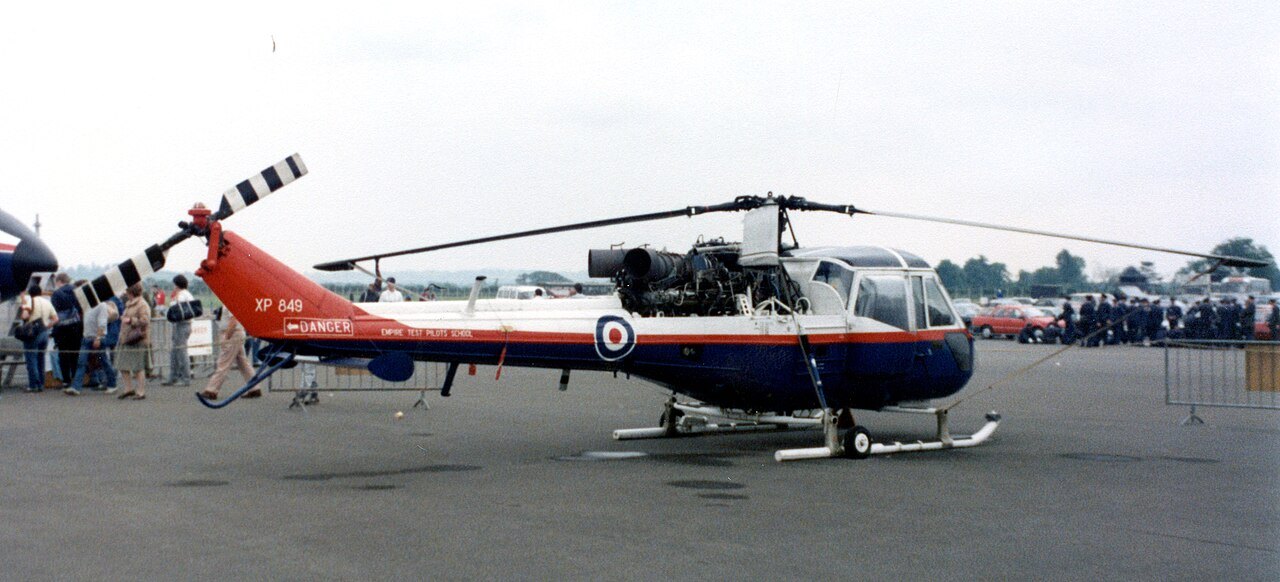
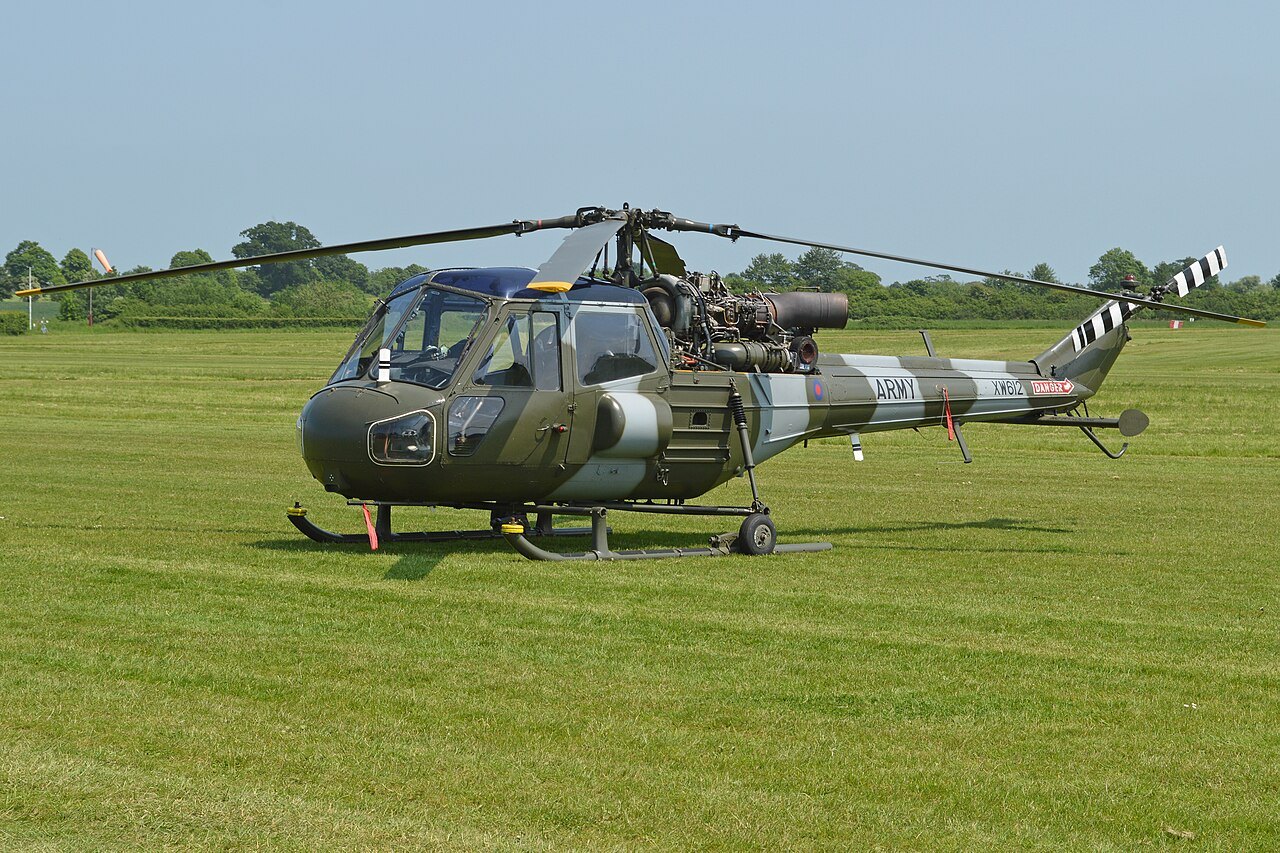
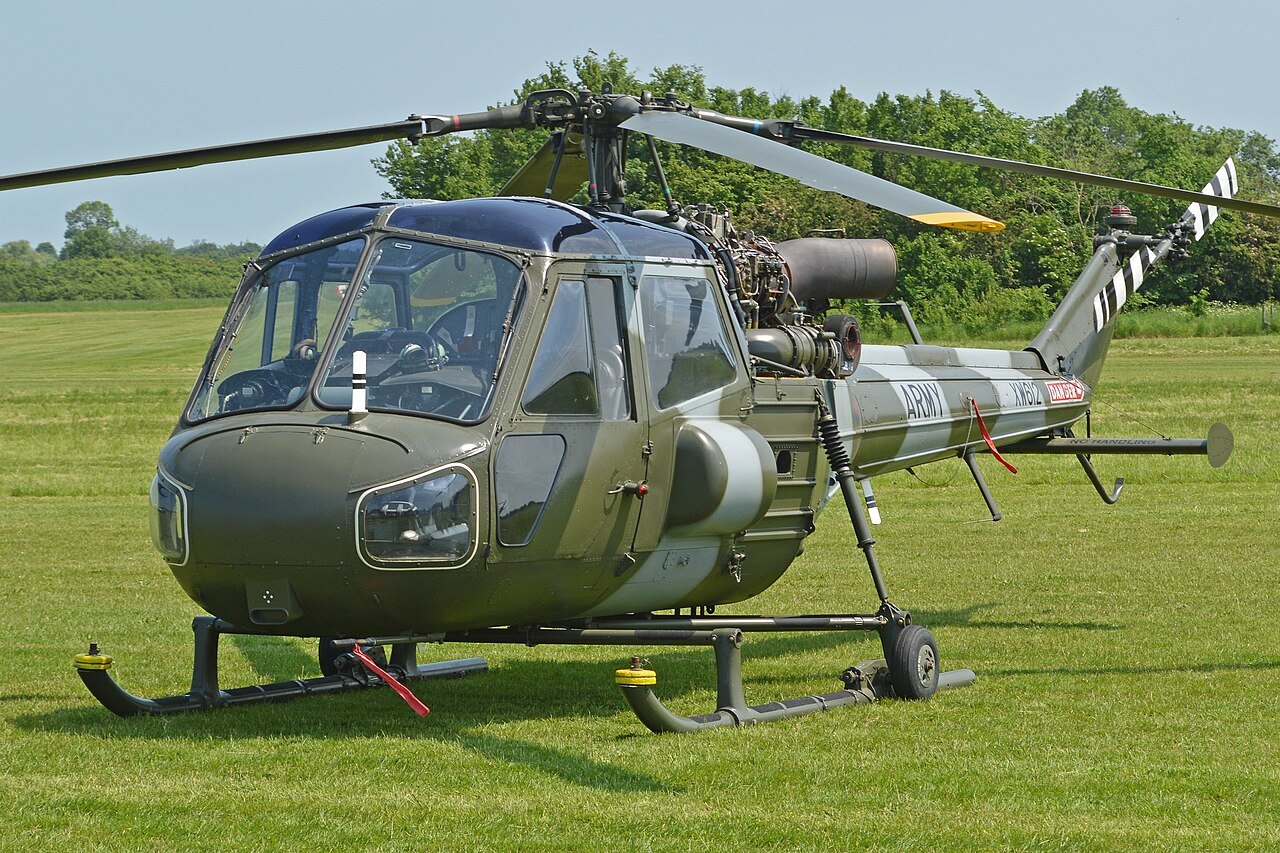
The Wasp in pictures
Where the Wasp flies and flew
The Wasp and Scout’s record
The Wasp spent most of its life on Cold War anti-submarine patrols and ship’s flight duties, but in 1982 Wasps helped disable the submarine Santa Fe and flew casualties to hospital ships. The Scout saw far more fighting, from the Borneo confrontation and the Radfan to Northern Ireland and the Falklands.
See how training and combat types compare in the military aircraft statistics database. Figures are approximate.
Everything people ask about the Wasp
Can I fly in a Westland Wasp?
What is the difference between the Wasp and the Scout?
What did the Wasp do?
Did the Wasp see combat?
How many Wasps and Scouts were built?
Which countries flew the Wasp?
Can I still see a Wasp or Scout fly?
You can’t fly the Wasp.
These, you can.
Most of this museum you can only look at. These genuine military jets you can fly yourself with MiGFlug — with aerobatics and time on the controls.
 Fly the L-39 AlbatrosThe world’s most-flown jet trainer — aerobatics included
 Fly the F-104 Starfighter“The missile with a man in it”
 Fly the MiG-21The Cold War’s most-produced jet
 Fly the T-33 Shooting StarAmerica’s first jet trainer
 Fly the DH VampireA piece of early jet history
 Fly the S.211Agile Italian jet trainer
 Fly the MB-326The classic Aermacchi jet
 Fly the MiG-15The Soviet legend of the Korean War
Continue the tour
Every fact, checked
- Wasp HelicopterNational Museum of the Royal New Zealand Navy: P.531, Scout and Wasp first flights, HMNZS Waikato, RNZAF maintenance
- Wasp HAS Mk1 XT420Navy Wings: XT420 history incl. HMS Hecla casualty evacuation, Santa Fe attack, type history and data
- Westland Wasp XT431Bournemouth Aviation Museum: XT431 career, Wasp production at Hayes, retirement 1988, specifications
- Westland Wasp HAS. Mk1South African Aviation Foundation Museum: SAAF Wasps, 17 ordered and 16 delivered, President Kruger
- Scout informationHistoric Army Aircraft Flight: Scout development, 1963 service entry, operational theatres, XT626
- 656 Squadron history: Malaya, Borneo, Brunei656 Squadron Association: 1964 deployment of Scouts to Borneo, performance and early serviceability
- The Falklands War online exhibitionArmy Flying Museum: 656 Squadron Scouts, Goose Green casualty evacuation, Swan Inlet, oral histories