
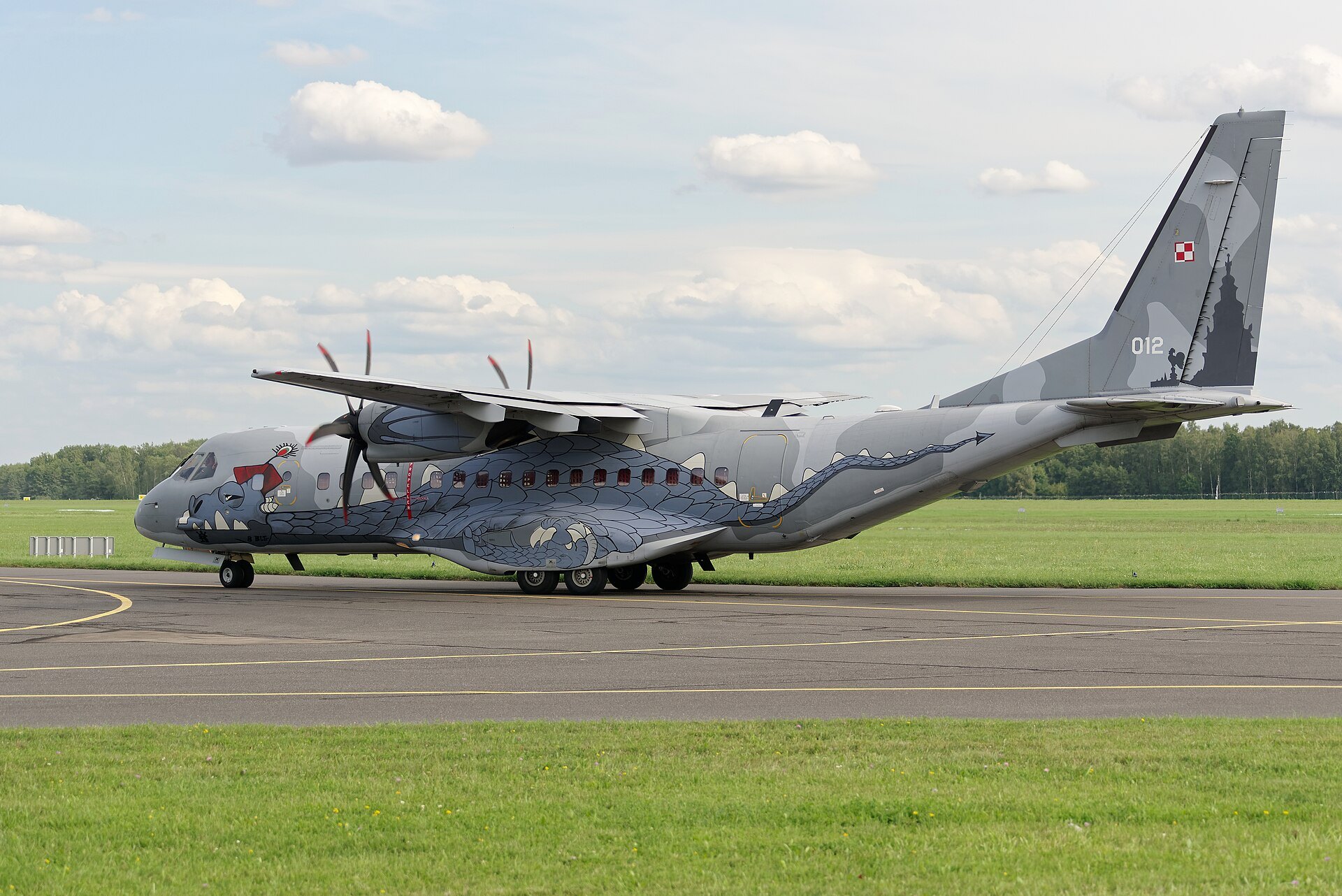
Airbus C295
The Medium Airlifter
The stretched heir to the CN-235 became the world’s best-selling medium tactical transport, flown by 39 countries for airlift, rescue and maritime patrol, and is now built in India as well as Spain.
The C295: how a stretched CN-235 conquered a market
By the mid-1990s the CN-235 had shown that there was a large market for a twin-turboprop airlifter smaller than a Hercules, and CASA reasoned that a bigger, more powerful version would sell even better. It stretched the fuselage by about three metres, strengthened the wing and undercarriage, and swapped the General Electric engines for Pratt & Whitney Canada PW127G turboprops of more than 2,600 shp. The prototype C-295 flew from Seville on 28 November 1997. Spain ordered nine in April 1999, and the type entered Spanish Air Force service in November 2001. The cockpit was all-glass from the start, and the aircraft kept the CN-235’s sturdy, rough-field undercarriage and rear ramp so that existing operators could move up without relearning the basics.
Its timing was good. Many air forces were retiring old C-47s, Antonov An-26s, Fokker F27s and early Hercules and wanted something cheaper to run than a C-130 for most of their missions. The C295 offered up to 9 tonnes of payload, 71 troops or around 50 paratroopers, a rear ramp, a pressurised cabin and short-field performance that let it use strips as short as about 670 metres. CASA became part of EADS in 2000 and of Airbus in 2015, and the aircraft followed its parent through each rebranding while orders came in from Europe, Latin America, Africa, the Middle East and Asia. It was built in the same San Pablo plant in Seville that had produced the C-212 and CN-235, by engineers who knew what small air forces actually needed.
Airbus now lists 337 aircraft ordered for 39 countries, with more than 750,000 flight hours flown. Poland, Egypt, Algeria, Mexico, Brazil, Portugal, Indonesia, Kazakhstan and many others operate it; Canada bought it as the CC-295 Kingfisher for search and rescue; and in 2021 India ordered 56, of which 40 are being assembled by Tata Advanced Systems at Vadodara, the first private-sector military aircraft final assembly line in the country. Maritime patrol, anti-submarine, airborne early warning, firefighting, signals intelligence and tanker versions have broadened its reach, making it a family rather than a single aircraft. More versions continue to be added as operators find new uses for the same basic airframe.
01The C295’s Indian chapter: Make in India at Vadodara
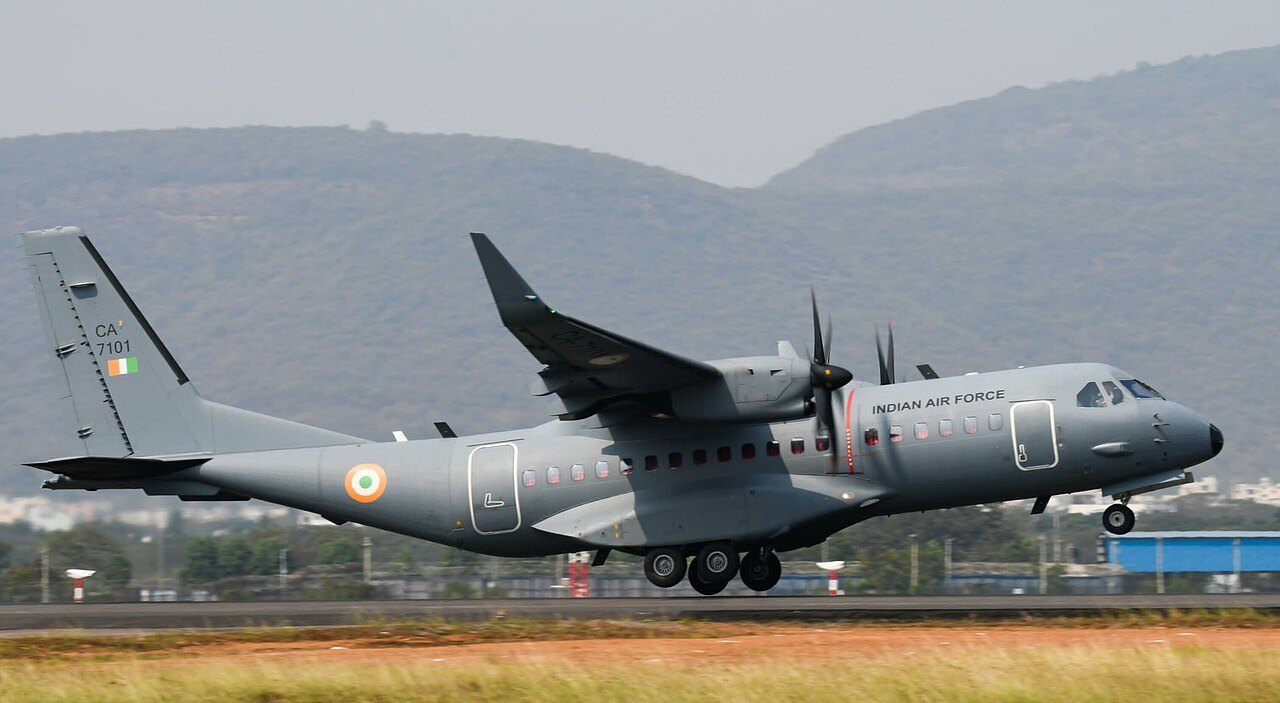
India’s Avro 748 transports, built by HAL from the 1960s, needed replacing, and in September 2021 the Indian Ministry of Defence signed a contract worth about ₹21,935 crore for 56 C295MW aircraft. The first 16 would be delivered from Seville; the remaining 40 would be built in India by Tata Advanced Systems in partnership with Airbus, at a new final assembly line in Vadodara, Gujarat. The foundation stone was laid on 30 October 2022, and the facility was inaugurated on 28 October 2024, with an initial capacity of about eight aircraft a year.
The programme matters beyond the aircraft. It is the first time a private Indian company has been entrusted with full final assembly of a military aircraft, and it brings Indian suppliers into the C295 supply chain for parts and sub-assemblies. A further contract in early 2024 for maritime patrol versions for the Indian Navy and Coast Guard, valued at about ₹29,000 crore, extended the family in Indian service. For Airbus, Vadodara is a second home for an aircraft whose design began in Spain and whose ancestry runs through Indonesia.
02The C295’s search-and-rescue role: from Canada to Brazil
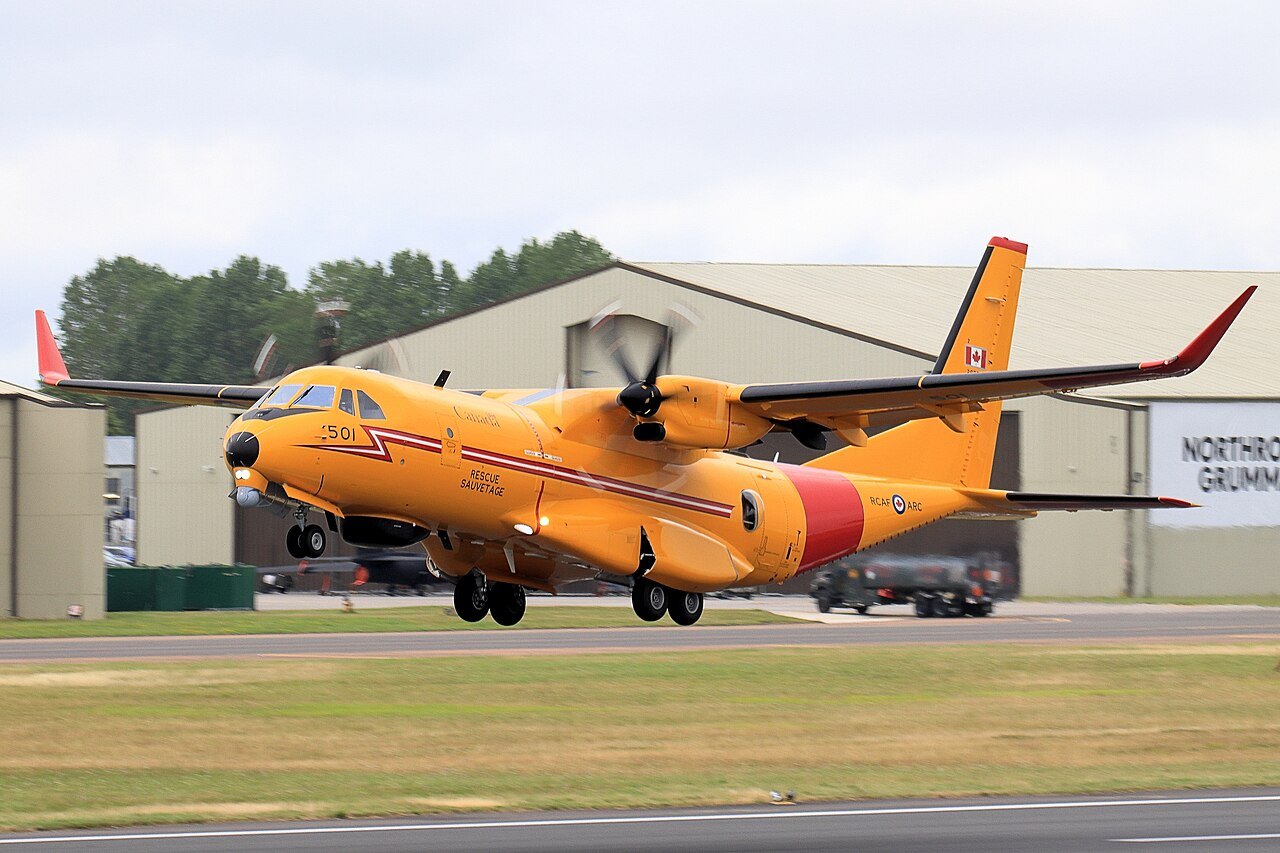
Fixed-wing search and rescue demands range, endurance, good sensors and the ability to drop survival equipment and parachutists to people in the water or on remote ground. The C295 has become a favourite platform for it. Brazil bought SAR versions for its huge territory and maritime area, and in December 2016 Canada chose 16 aircraft, designated CC-295 Kingfisher, to replace its veteran CC-115 Buffalo and CC-130H Hercules in the fixed-wing search-and-rescue role.
The Canadian aircraft carry electro-optical and infrared sensors, search radar and a crew including search-and-rescue technicians who can parachute to survivors. The first was delivered in 2020, but certification and training took longer than planned, and the type was declared operational in 2025, based at Greenwood, Trenton, Winnipeg and Comox. The Kingfishers now cover one of the largest rescue areas in the world, from the Arctic to the Atlantic and Pacific coasts.
What makes the C295 special
A longer, stronger CN-235
The C295 keeps the CN-235’s general layout of high wing, pressurised fuselage, rear ramp and fuselage-mounted main gear, but its cabin is about three metres longer, 12.69 m to the ramp. It carries up to five standard military pallets, 71 seated troops or 24 stretchers with seven medical attendants, and its stronger structure takes a maximum payload of about 9 tonnes. Operators often describe it as filling the gap between light utility aircraft and the C-130.
Short fields, long legs
Two PW127G turboprops of 2,645 shp with six-blade propellers give a cruise speed of about 260 knots and take-off runs of around 670 m at maximum weight at sea level, with landing runs of about 320 m. With a modest payload it can fly about 5,000 km, and the C295W version with winglets and more power settings improves hot-and-high performance and fuel burn. Endurance of up to 11 hours or more suits patrol work.
A family of mission versions
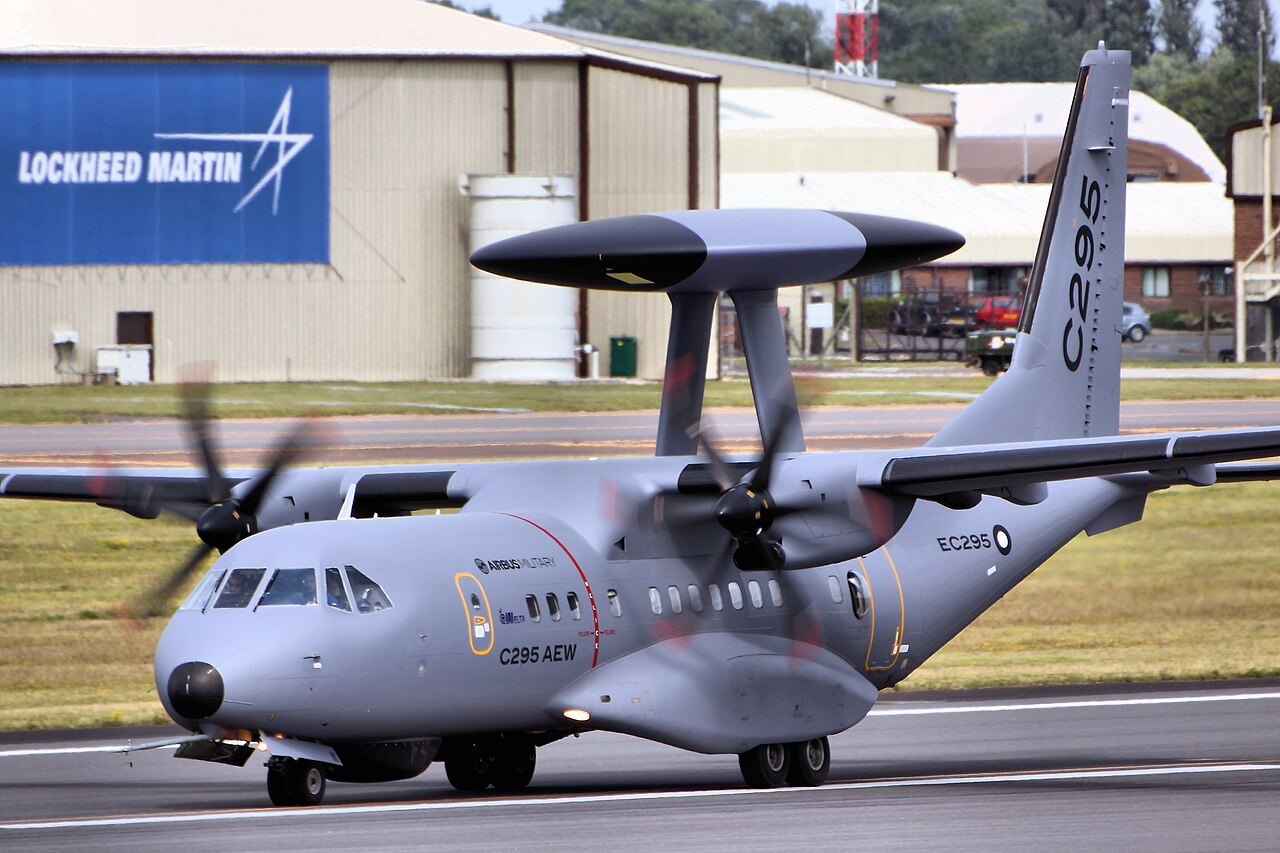
Beyond transport, Airbus offers the C295 for maritime surveillance and anti-submarine warfare with its FITS tactical system, sonobuoys and weapons on six hardpoints; signals intelligence; airborne early warning with a rotodome-mounted radar; firefighting with a roll-on water tank; and air-to-air refuelling as a tanker. An armed version with guns and missiles has been marketed too. One airframe, supported worldwide, can thus serve several roles within one air force.
03The C295’s cockpit and systems: the Thales Topdeck and beyond
The C295 was designed for a two-pilot crew with a modern glass cockpit. Early aircraft used the Thales Topdeck avionics suite with large liquid-crystal displays, an integrated engine data and warning system, a Honeywell weather radar and night-vision-compatible lighting. Later production aircraft move to the Collins Aerospace Pro Line Fusion avionics, with touchscreen displays and improved navigation for operations in modern airspace.
The cargo hold measures about 12.69 m long, 2.70 m wide and 1.90 m high, with a rear ramp that can be opened in flight for airdrops and parachuting. The cabin can be reconfigured quickly between troop seats, stretchers, pallets and mission consoles. For the maritime versions, consoles for the tactical system and observers’ bubble windows are added, while the AEW demonstrator carried a large rotating radar dome above the fuselage. Common systems across versions keep training and support simpler for operators who use more than one variant.
Airbus C295 specifications
Specifications
- Crew
- 2 pilots plus loadmaster or mission crew
- Capacity
- 71 troops, about 50 paratroopers, 24 stretchers plus 7 attendants, or 9,000 kg (19,842 lb) of cargo
- Length
- 24.50 m (80 ft 4 in)
- Height
- 8.66 m (28 ft 5 in)
- Max take-off weight
- 23,200 kg (51,147 lb)
- Powerplant
- 2 × Pratt & Whitney Canada PW127G turboprops, 1,972 kW (2,645 shp) each
- Cruise speed
- 482 km/h (260 kn)
- Range
- 5,000 km (2,700 nm) with 3,000 kg; 3,704 km (2,000 nm) with 6,000 kg; ferry 5,750 km (3,100 nm)
- Service ceiling
- 7,620 m (25,000 ft)
- Take-off run
- 670 m (2,198 ft) at sea level, ISA
Costs & production
- Unit cost
- No official list price; India’s 2021 contract for 56 aircraft with support was worth about ₹21,935 crore (roughly US$2.9–3.0 billion at the time)
- Cost per flight hour
- Hedged estimate: roughly US$3,000–5,000 per hour for transport versions, based on two PW127-class turboprops of the kind used on regional airliners plus military support costs; mission-equipped versions cost more; no official figure is published
- Production
- 337 ordered, 244 delivered and 241 in operation according to Airbus
- Programme
- First flight 1997; in service from 2001; final assembly in Seville and, from 2024, at Vadodara in India
04The C295’s variants: transport to early warning
- C295M: the military transport.
- C295W: improved version with winglets and higher engine ratings.
- C295 MPA / Persuader and ASW: maritime patrol and anti-submarine versions with the FITS mission system and weapons hardpoints.
- C295 MSA: maritime surveillance without weapons.
- CC-295 Kingfisher: Canadian search and rescue version.
- SC-105 Amazonas: Brazilian search and rescue version.
- C295 AEW: airborne early warning demonstrator with a rotodome radar.
- C295 SIGINT, firefighter and tanker: specialised versions offered by Airbus.
05The C295’s operating costs: why it outsold its rivals
The C295’s selling point is the cost of everyday operations. Its PW127G engines are a version of the engine family used on ATR regional airliners, so parts, tooling and expertise are widely available. Two engines burn much less fuel than the four on a C-130, and a two-pilot cockpit with a loadmaster keeps crew requirements low. For most real-world missions, carrying a few tonnes of cargo or a company of troops a few hundred kilometres, it does the job at a fraction of the cost. The hourly figure above is an estimate based on that class of engine and aircraft, not a manufacturer’s figure.
The C295 from Seville to Vadodara
First flight
The C-295 prototype flies from Seville on 28 November.
Spain orders
The Spanish Air Force orders nine aircraft in April as the launch customer.
Into service
The first C-295s enter Spanish service in November.
Mirosławiec disaster
A Polish Air Force C-295 crashes on approach to Mirosławiec on 23 January, killing all 20 on board.
Algerian loss in France
An Algerian C-295 crashes in Lozère, France, on 9 November, killing all six aboard.
Canada chooses the Kingfisher
Canada orders 16 C295s for fixed-wing search and rescue.
India’s big order
India signs for 56 aircraft, 40 to be built by Tata in Vadodara.
Vadodara opens
The Tata Advanced Systems final assembly line is inaugurated on 28 October.
Kingfisher operational
Canada’s CC-295 is declared operational for search and rescue.
Stories & eyewitnesses: the C295 in service
Mirosławiec, January 2008
Poland’s worst military air disaster of its time killed its air force leaders.
Read the full story
Canada’s Kingfisher
A Spanish airlifter now covers one of the world’s largest rescue zones.
Read the full story
The first private-sector line in India
Tata’s Vadodara plant changed Indian defence manufacturing.
Read the full story
An Algerian aircraft lost in France
A ferry flight ended in the mountains of the Lozère.
Read the full story
Ireland’s new patrol aircraft
The C295 replaced its own ancestor over the Atlantic.
Read the full story
750,000 hours and counting
An airlifter that keeps flying in many different roles.
Read the full story
An armed C295
Airbus showed a transport with guns and missiles.
Read the full story
Seville’s production line
The C295 is built where its ancestors were.
Read the full story
The C295 in pictures
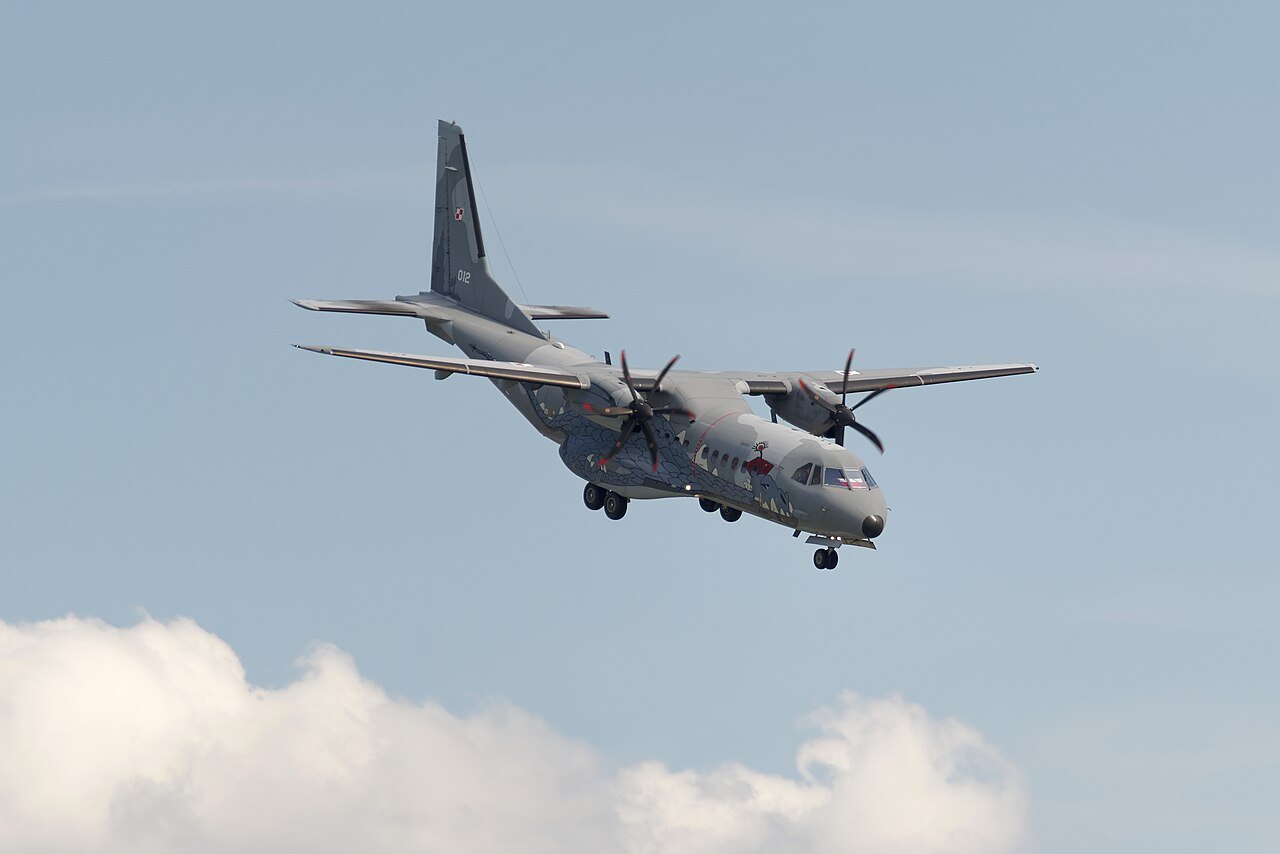
Where the C295 flies and flew
The C295’s record
The C295 is a support aircraft whose record lies in airlift, search and rescue, maritime patrol and humanitarian work rather than combat. It has flown in support of operations in Africa, the Middle East and Europe, and its fleet has accumulated a large number of hours with relatively few losses.
See how training and combat types compare in the military aircraft statistics database. Figures are approximate.
Everything people ask about the C295
Can I fly in an Airbus C295?
Is the C295 the same as the CASA C-295?
How much can the C295 carry?
Which countries fly the C295?
Where is the C295 built?
How does the C295 compare with the C-130?
You can’t fly the C295.
These, you can.
Most of this museum you can only look at. These genuine military jets you can fly yourself with MiGFlug — with aerobatics and time on the controls.
 Fly the L-39 AlbatrosThe world’s most-flown jet trainer — aerobatics included
 Fly the F-104 Starfighter“The missile with a man in it”
 Fly the MiG-21The Cold War’s most-produced jet
 Fly the T-33 Shooting StarAmerica’s first jet trainer
 Fly the DH VampireA piece of early jet history
 Fly the S.211Agile Italian jet trainer
 Fly the MB-326The classic Aermacchi jet
 Fly the MiG-15The Soviet legend of the Korean War
Continue the tour
Every fact, checked
- C295Airbus product page: orders, deliveries, flight hours, payload and capabilities
- Investigation launched after Algerian C295 crashes in FranceFlightglobal on the 2012 Lozere accident
- Canada’s first C295 gains air force liveryFlightglobal on the CC-295 Kingfisher programme
- Canada selects Airbus C295W for search and rescueTrade press on the 2016 Canadian SAR order
- IAF to get 56 C-295 Airbus aircraft as Modi govt clears Make in India dealThePrint on India’s C295 contract and Tata assembly
- Airbus displays comprehensive range of weapons for armed C295Airbus press release on the armed C295