
North American A-5
“Vigilante”
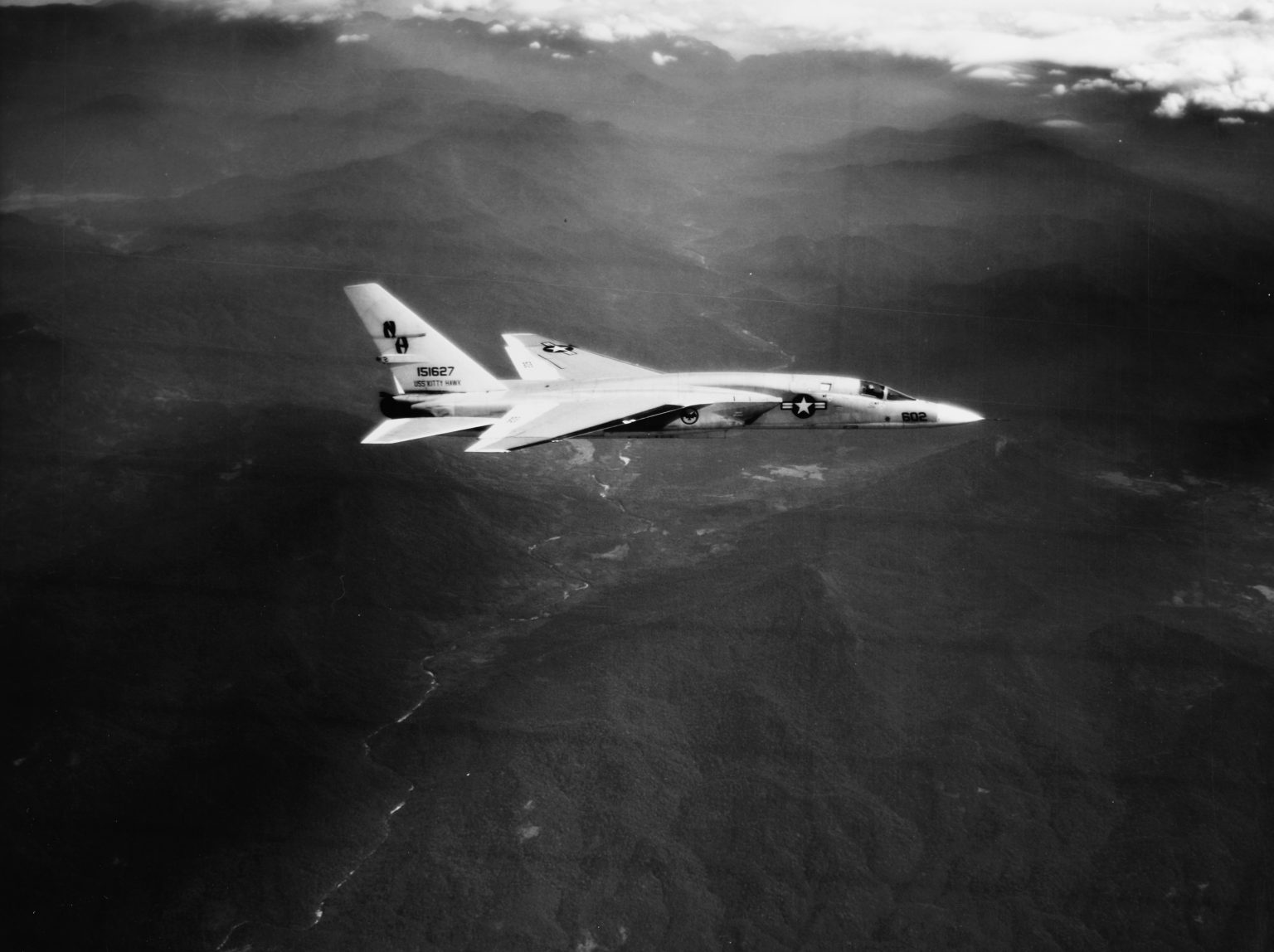
The US Navy’s big, beautiful Mach-2 carrier nuclear bomber — undone by a bomb bay that fired its weapon backwards out of the tail, then reborn as the fastest, most dangerous reconnaissance jet of the Vietnam War.
The most beautiful bomber that never bombed
In the late 1950s the US Navy wanted something audacious: a carrier aircraft that could sprint at Mach 2, climb near the edge of space and deliver a nuclear bomb deep into enemy territory — all while launching from and recovering on a pitching flight deck. North American Aviation, fresh from building the F-86 Sabre and the X-15 rocket plane, answered with the A3J Vigilante. It was, and remains, one of the largest and fastest aircraft ever operated from an aircraft carrier — a sleek, twin-engined machine bristling with technology a decade ahead of its time.
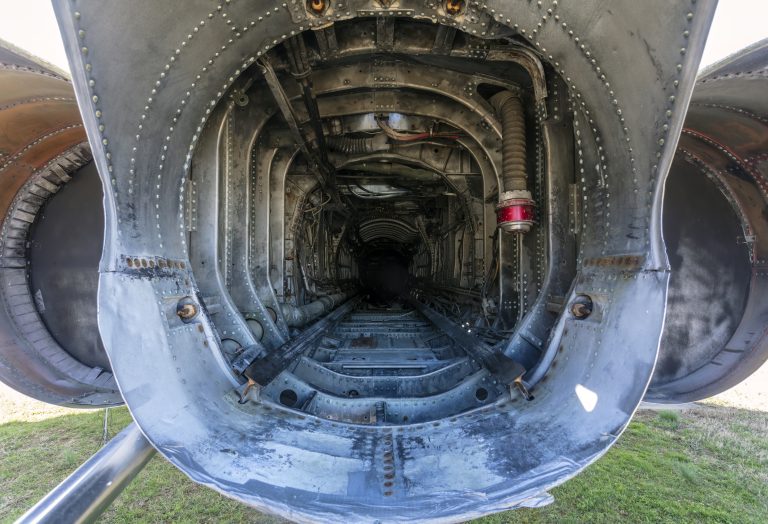
The Vigilante first flew in 1958 and entered service in 1961, packed with firsts: an early head-up display, a digital nav-attack computer, fly-by-wire-assisted controls, variable-geometry engine inlets and an all-moving tail. But its signature feature was also its fatal flaw. The nuclear weapon lived in a “linear bomb bay” — a tunnel running between the two engines — and was meant to be ejected rearward out of the tail, stacked behind two disposable fuel cans, so it would decelerate and fall behind the speeding aircraft. In practice the system worked poorly. As one naval aviator put it, it “didn’t work very well at all, to the point of being hazardous to the crew.” Weapons could tumble; the bomber never delivered a weapon in anger.
Rather than scrap a superb airframe, the Navy did something clever: it filled that troublesome tunnel with fuel and sensors and turned the Vigilante into the RA-5C, a Mach-2 reconnaissance platform carrying cameras, side-looking radar and electronic intelligence gear in a long belly canoe. In that role it excelled — and paid for it. Streaking low and fast over the most heavily defended airspace on earth in the skies of Vietnam, the RA-5C flew the lonely, predictable, straight-line photo runs that made it a magnet for flak and missiles. It is commonly cited as having suffered the highest loss rate of any US aircraft type in the war. Around 26 were lost in Southeast Asia. The Vigilante retired in 1979, remembered as a magnificent aircraft the Navy never quite used the way it intended.
01The North American A-5 Vigilante’s origins: the Navy’s bid for a supersonic carrier nuclear bomber
By the mid-1950s the US Navy feared being locked out of the nuclear-strike mission that the Air Force’s big bombers dominated. Its answer was to put a strategic nuclear weapon on a carrier deck and make it fast enough to survive. North American won the contract in 1956 for what was then called the A3J, and the prototype flew on 31 August 1958. Redesignated the A-5 in the 1962 tri-service system, it entered fleet service in 1961 with heavy-attack squadron VAH-3.
To show what it could do, an A3J-1 set a world altitude record on 13 December 1960, lifting a 1,000-kilogram payload to 91,451 feet (27,874 m) — a stunning demonstration of raw performance. Yet the strategic-bomber mission it was built for was already slipping away: the Navy’s nuclear-deterrent role was passing to the Polaris ballistic-missile submarines, and the Vigilante’s troubled weapon-delivery system did the rest. The bomber that broke records never dropped a weapon in combat.
What makes it special
A Mach-2 giant off a carrier deck
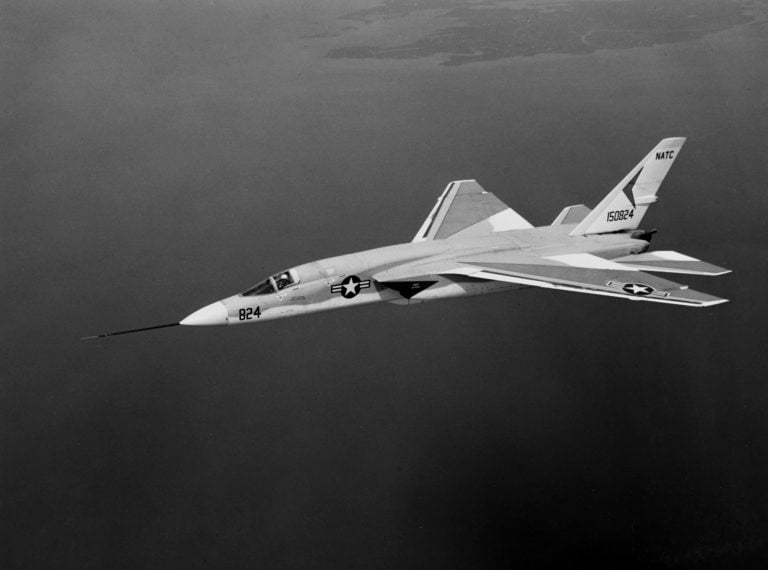
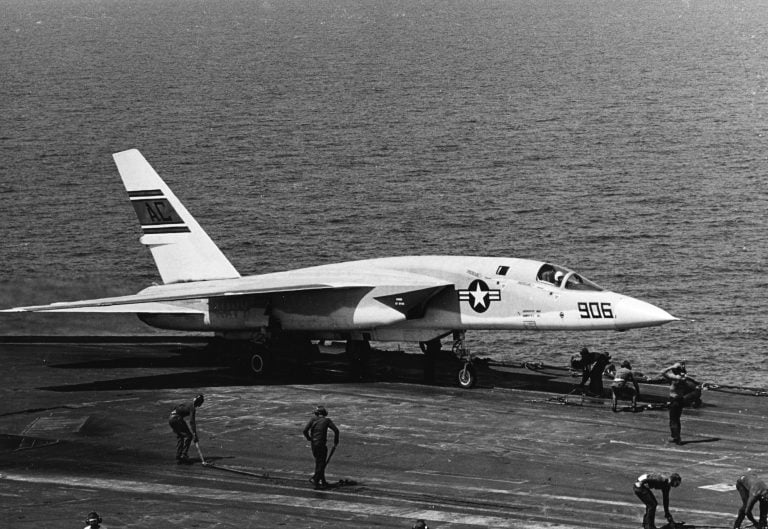
The Vigilante was huge and fast for a carrier aircraft — roughly 23 m long with a ~16 m wingspan and a max weight commonly cited near 36 tonnes, yet capable of Mach 2. Two afterburning General Electric J79 turbojets, variable-geometry inlets, an all-moving tail (it had no conventional ailerons) and a single-piece wraparound windscreen made it one of the largest and fastest machines ever flown from a flight deck.
The linear bomb bay: a bomb fired out of the tail
Its defining idea was a “linear bomb bay” — a tunnel between the engines holding a nuclear store behind two disposable fuel cans, all capped by the tail cone. On release the cone blew off and the weapon was ejected rearward, meant to fall behind the jet. In practice it was unreliable and, by pilots’ accounts, hazardous. The Vigilante never delivered a weapon operationally.
A cockpit a decade ahead of its time
The Vigilante pioneered technology that became standard only years later: one of the first operational head-up displays, a digital nav-attack computer (the AN/ASB-12 system), an early fly-by-wire-assisted flight-control channel and inertial navigation. As the RA-5C, it added side-looking airborne radar, cameras and ELINT to become a true multi-sensor reconnaissance platform.
02The A-5 Vigilante’s linear bomb bay: why the backwards-firing nuclear bomb never worked
The linear bomb bay was an elegant solution to a hard problem. A Mach-2 aircraft cannot simply open a conventional bay and drop a bomb — airflow at that speed would fling it dangerously. So North American ran a tunnel down the aircraft’s spine, between the two J79 engines, and stored the nuclear weapon there with two cylindrical fuel tanks stacked behind it. The idea was that the fuel would be burned on the way to the target, then the tail cone and the empty cans, followed by the weapon, would be ejected straight out the back. Freed at high speed, the bomb would decelerate and arc down onto the target while the Vigilante escaped.
Reality was messier. The rearward ejection was unreliable, and crews reported the whole arrangement was, in the words of one aviator, hazardous to the aircraft itself. Combined with the shift of the Navy’s nuclear deterrent to Polaris submarines, the weapon-delivery problems ended the Vigilante’s bombing career almost before it began. The airframe, however, was far too good to waste.
03The RA-5C Vigilante: how a failed bomber became the Navy’s finest reconnaissance jet
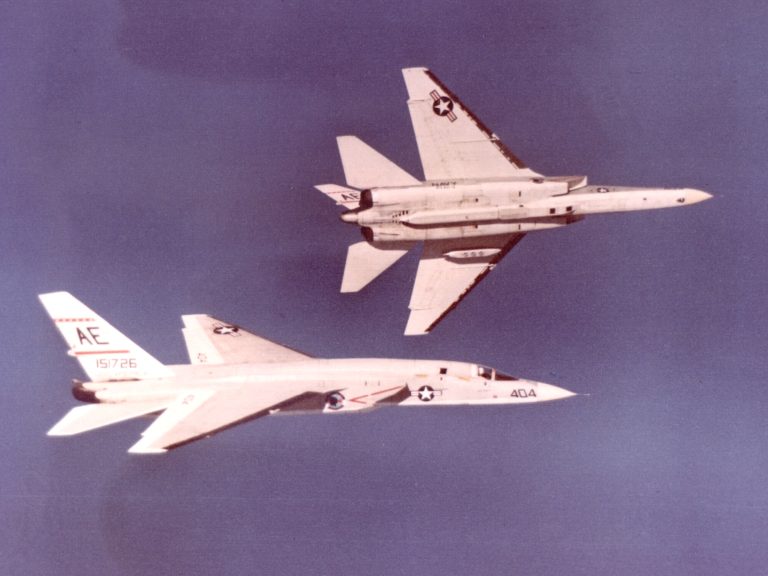
The reconnaissance conversion turned the Vigilante’s weakness into strength. Engineers filled the linear bomb-bay tunnel with fuel and hung a long “canoe” sensor pod under the belly, packing in optical and panoramic cameras, side-looking airborne radar (SLAR), infrared line-scan and electronic-intelligence receivers. The wing was reworked and the fuel load increased. The result, the RA-5C, could photograph a battlefield at Mach 2 and feed its imagery into the carrier’s Integrated Operational Intelligence Center — an early, ambitious attempt at near-real-time fleet intelligence.
Ten Reconnaissance Attack Squadrons (RVAH) flew the type, and eight of them deployed to Vietnam. The RA-5C gathered pre- and post-strike imagery no other Navy platform could match — but its high-speed runs were fast, straight and predictable, and North Vietnamese gunners and SAM crews learned to wait for them. Its reconnaissance record is one of genuine achievement bought at a heavy price.
Full specifications
Figures are for the RA-5C reconnaissance variant; the earlier A-5A / A-5B bomber versions differed in equipment and weight. Contested values are hedged.
Baseline note: the figures below describe the North American RA-5C Vigilante (originally A3J-3P), the reconnaissance rebuild in which the type spent almost the whole of its service life — the enlarged 754 sq ft wing, the long ventral sensor canoe, the dorsal fuel spine inherited from the A-5B, and, on the 1968–70 attrition-replacement block, two General Electric J79-GE-10 turbojets. It is the right baseline because the strike aeroplane barely existed: the A-5A equipped front-line heavy attack squadrons for roughly two years, never carried a live weapon, and was overtaken by Polaris before it had finished working up. Deltas for the A-5A (A3J-1) and the six completed A-5B (A3J-2) nuclear strike aircraft are in grey. Six cautions before any number here is used. First, and most important, almost every English-language specification table that carries the heading "RA-5C" is in fact printing the A-5A’s numbers: the widely copied 32,783 lb empty weight, 63,085 lb maximum take-off weight, 701 sq ft wing and J79-GE-8 engines all belong to the strike version. The reconnaissance aircraft was roughly five tons heavier — 37,498 lb empty and some 79,600 lb at maximum weight — and any table that gives the RA-5C the A-5A’s weights is not describing the aeroplane that flew over North Vietnam. Second, engines: the first RA-5C production block was delivered with J79-GE-8s, identical to the A-5A’s, and only the later airframes and rebuilds received the J79-GE-10, whose reheat rating is quoted as 17,860 lbf by some sources and 17,900 lbf by others. Third, rate of climb: figures of 33,900 ft/min and 8,000 ft/min both circulate for the same aeroplane; the first is a light-weight A-5A initial climb, the second is far closer to a loaded RA-5C, and the two must never be printed side by side as though they described one machine. Fourth, ceiling: 52,100 ft is the published service ceiling for the type, but it was established on the lighter strike aircraft; the 67,000 ft that appears in one widely mirrored database is a zoom altitude, not a sustained one. Fifth, range: 974 nautical miles is given as combat range in most tables and 1,121 nautical miles as combat radius in others, which cannot both be true of the same profile — the smaller figure is the safer one to quote. Sixth, production: 156 airframes of all versions is the total most serious accounts reach, and 167 also appears because different compilers count ordered, completed, redesignated and converted airframes differently. Where this page gives a single number it gives the better-attested one and says so.
Dimensions & weights
- Crew
- 2 — pilot and, in tandem behind him, the reconnaissance attack navigator (RAN) who ran the radar, the inertial system and the whole sensor suite. On the A-5A and A-5B the back-seater was a bombardier-navigator (BN) with the same station and a different job. Both sat on North American HS-1A ejection seats, a company design rather than a Martin-Baker, and one of the reasons the type’s escape record was worse than it should have been
- Length overall
- 23.32 m (76 ft 6 in), unchanged across every mark. This made the Vigilante the longest aircraft ever to operate routinely from an aircraft carrier deck, and the length was as much of a handling problem on a crowded deck as the weight was on the catapult
- Wingspan
- 16.16 m (53 ft 0 in). The outer panels folded upward, and so did the top of the fin and the nose radome — three separate folds on one aeroplane, an unusually elaborate carrier-stowage arrangement that tells you how tight the fit was in a Forrestal-class hangar
- Height
- 5.91 m (19 ft 4¾ in) to the tip of the fin, which is why the fin tip folded. Some tables give 5.90 m and some 5.92 m; the difference is rounding, not a different aeroplane
- Wing area
- 70.0 m² (754 sq ft) on the RA-5C, achieved by extending the leading edge inboard. The A-5A and A-5B had 65.1 m² (700 sq ft); the extra 54 sq ft was bought to claw back some of the approach speed that five tons of reconnaissance equipment had taken away, and it did not buy back enough
- Wing layout
- High-mounted, sharply swept, cropped tip, no ailerons of any kind — roll came from upper-surface spoiler-deflectors working with the differentially moving all-flying tailplanes. Full-span leading-edge and trailing-edge flaps were blown by engine bleed air (boundary-layer control), which is the only reason an aeroplane with this wing loading could be brought aboard a ship at all
- Empty weight
- 17,009 kg (37,498 lb) for the RA-5C. The A-5A came out at 14,870 kg (32,783 lb); Naval Historical sources and the fandom compilations both give the lower figure, and the roughly 2,100 kg difference is the canoe, its sensors, the recording gear, the extra fuel structure and the heavier undercarriage
- Normal take-off weight
- 21,605 kg (47,631 lb) as published for the A-5A at gross weight. No comparable single "normal" figure is published for the RA-5C, which routinely launched between 27,000 and 32,000 kg (60,000–70,000 lb) depending on tanks and mission; treat any single RA-5C gross weight in a table with suspicion
- Maximum take-off weight
- 36,101 kg (79,588 lb); aero-web rounds this to 36,281 kg (80,000 lb). The A-5A was limited to 28,615 kg (63,085 lb). At maximum weight the RA-5C was the heaviest aeroplane ever launched from an American carrier catapult in routine squadron service, and every one of those pounds had to be stopped again by an arresting wire
- Internal fuel
- ~10,618 litres (2,805 US gal) in the A-5A. The A-5B added a dorsal spine tank of about 1,740 litres (460 US gal) behind the cockpit — the "hump" that gives the later aircraft their humpbacked profile — and the RA-5C inherited it. Published RA-5C internal totals vary because compilers disagree about whether to count the fuel cans in the linear bay
- Linear bay capacity
- 2 fuel cans plus one store — the tunnel between the engines held a "stores train": two cylindrical disposable fuel tanks behind the weapon, all three ejected rearward together. On the RA-5C the bay carried fuel cans only, or an AN/ALQ-61 electronic intelligence package, and never a weapon
- External stores
- 4 wing stations — introduced on the A-5B and retained on the RA-5C, typically carrying up to four 1,514-litre (400 US gal) drop tanks. In reconnaissance service these stations carried fuel and nothing else for the type’s entire operational life
Performance
- Maximum speed, altitude
- 2,124 km/h at 12,190 m (1,320 mph, 1,147 kt at 40,000 ft) — Mach 2.0. The A-5A is credited with Mach 2.1 clean; the RA-5C, with its canoe, its extra weight and its four pylons, did not repeat that, though it remained genuinely fast in level flight and could outrun anything the North Vietnamese put in its way except a missile
- Maximum speed limit
- Mach 2 class, heat-limited — the airframe was structurally and thermally capable of the speed but the J79 installation and the aluminium structure set the practical ceiling. This is why titanium appears in the hot areas and why the inside of the engine bay was gold-plated: at sustained Mach 2 the surrounding structure needed the radiant heat thrown back at the engines rather than soaked up
- Cruising speed
- 900 km/h (560 mph, 486 kt) as published in the standard tables. In Vietnam the RA-5C did not cruise on its runs: crews crossed the coast at about 1,019 km/h (550 kt) and accelerated from there
- Approach speed
- 287 km/h (155 kt) on the ball. This is the number that defines the aeroplane. Contemporary carrier aircraft came aboard nearer 125–135 kt; the Vigilante arrived twenty knots or more faster, at a high angle of attack, with poor over-the-nose visibility and very little margin. It was not forgiving of a slow scan or a late correction, and pilots who learned it late in a tour rarely learned it well
- Combat range
- ~1,804 km (974 nmi, 1,121 miles). Several tables instead give 1,121 nmi as a combat radius, which would be an extraordinary figure for a Mach 2 aeroplane on internal fuel and is almost certainly a transcription of the same number into the wrong column
- Ferry range
- ~2,909 km (1,571 nmi, 1,807 miles) with external tanks. One Polish compilation gives 3,299 km, which is plausible for a four-tank RA-5C at optimum altitude and is quoted here because the discrepancy is real rather than an error
- Service ceiling
- 15,880 m (52,100 ft), the published figure for the type and established on the lighter strike aircraft. A loaded RA-5C worked considerably lower. The 20,421 m (67,000 ft) that appears in one mirrored database is a zoom figure and should not be quoted as a service ceiling
- Rate of climb
- 172 m/s (33,900 ft/min) is the figure most widely reproduced online tables give; 40.6 m/s (8,000 ft/min) appears in other compilations of the same aeroplane. The gap is a factor of four and cannot be reconciled: the first belongs to a light A-5A in reheat, the second to something much closer to an operational reconnaissance load
- Wing loading
- 393 kg/m² (80.4 lb/sq ft) at the A-5A’s gross weight. At the RA-5C’s maximum take-off weight over the enlarged wing the figure is 516 kg/m² (105.6 lb/sq ft), which is the arithmetic behind the 155-knot approach and the reason blown flaps were not optional
- Thrust-to-weight
- 0.72 at the A-5A’s gross weight in full reheat. The RA-5C, heavier by five tons on only marginally better engines, was worse off; the type had superb top-end speed and unremarkable acceleration, which is exactly the wrong way round for an aeroplane that had to escape a defended target area
- Load factor limit
- +5 g — modest, and a reminder that this was a bomber airframe rather than a fighter one. The Vigilante was described by its crews as surprisingly agile for its size, but agility at high speed and structural g limits are different things
- Altitude record
- 27,874 m (91,450.8 ft) — set on 13 December 1960 by an A3J-1 carrying a 1,000 kg payload, beating the previous record by more than four miles and, briefly, making the Navy’s new bomber the highest-flying aeroplane in the world
Propulsion & systems
- Engines
- 2 × General Electric J79-GE-10 afterburning turbojets on the later RA-5C blocks, 11,870 lbf (52.8 kN) dry and 17,860 lbf (79.4 kN) in reheat; several widely reproduced references give 17,900 lbf (80 kN). The A-5A, the A-5B and the first RA-5C production block had the J79-GE-8 at 10,900 lbf (48 kN) dry and 17,000 lbf (76 kN) reheat, and the prototypes flew on J79-GE-2s. The same engine family powered the F-4 Phantom II and the F-104
- Air intakes
- Two-dimensional variable-geometry external-compression inlets with movable ramps and bleed doors, automatically scheduled to hold the shock system in place and deliver subsonic air to the compressor face at Mach 2. The visibly raked, sharply slanted intake lip was first used on the Vigilante and became standard practice on supersonic combat aircraft afterwards — one of the type’s few unambiguous, permanent contributions to the art
- Flight controls
- Electrically signalled, irreversible hydraulic, with mechanical and hydraulic backup — among the first such installations on an operational aeroplane, and the reason the Vigilante is routinely described as an early fly-by-wire aircraft. It is fairer to call it fly-by-wire adjacent: the electrical path was primary, but the mechanical reversion was real and was there because nobody in 1958 was prepared to bet a crew on electronics alone
- Control surfaces
- Spoiler-deflectors, all-moving tailplanes, all-moving fin — there were no ailerons. Roll was produced by upper-surface spoilers working with differential tailplane, and directional control came from a single, very large, one-piece slab fin. All three were novel in combination on a carrier aeroplane, and all three worked
- High-lift system
- Full-span blown flaps — leading-edge and trailing-edge flaps with boundary-layer control, engine bleed air ducted over the surfaces to keep the flow attached at high angles of attack. Lose an engine on approach and you lost half the blowing with it, which is one reason a Vigilante approach went bad quickly when it went bad at all
- Structure and materials
- Aluminium-lithium alloy wing skins, titanium hot structure, gold-plated engine bay — the Vigilante was the first production aeroplane to use an aluminium-lithium alloy in primary structure, chosen for stiffness at low density. The alloy proved notch-sensitive and troublesome in service and the industry abandoned it for a generation. Titanium was used where the structure ran hot, and gold plating inside the engine bay reflected radiant heat away from the surrounding airframe
- Nav/attack system
- AN/ASB-12 bombing and navigation system — a multi-mode radar, a television camera under the nose, an inertial platform and a digital computer integrated into a single system. Ambition on this scale had not been attempted in a carrier aeroplane before, and for the first several years it did not work: mean time between failures on the early system is reported at about fifteen minutes
- Computer
- Autonetics VERDAN (Versatile Digital Analyzer) — a serial digital differential analyser, and the first digital computer carried by an operational bomber anywhere. Its descendants ran Minuteman. Crews of the period called it, with feeling, "very effective replacement for a dumb-ass navigator", and the joke survived the aeroplane
- Inertial navigation
- REINS — Radar-Equipped Inertial Navigation System — derived directly from the guidance developed for North American’s Navaho intercontinental cruise missile, a cancelled programme whose most valuable output turned out to be this. REINS gave the Vigilante genuine self-contained navigation at a time when most naval aircraft were still navigating by stopwatch, radio beacon and prayer
- Head-up display
- Pilot’s Projected Display Indicator (PPDI) — one of the earliest head-up displays fitted to any operational aircraft, projecting flight and attack symbology, and radar or television imagery, onto a combining glass in the pilot’s forward field of view. Everything a modern fast-jet pilot takes for granted about a HUD begins in installations like this one
- Reconnaissance suite
- Ventral canoe fairing — a long pack under the fuselage carrying five cameras (vertical, forward and oblique at 19.75°, 37.5° and 52° for overlapping coverage), the AN/APD-7 side-looking airborne radar, the AN/AAS-21 infrared line scanner and passive electronic countermeasures receivers, with the AN/ALQ-61 electronic intelligence package optionally in the linear bay. Imagery and signals were recorded on magnetic tape and fed on landing into the carrier’s Integrated Operational Intelligence Center
- Refuelling and carrier fit
- Fully retractable probe; three-way folding — unusually for the period the air-refuelling probe retracted completely flush into the forward fuselage rather than standing in the airflow, a Mach 2 aeroplane’s answer to a subsonic problem. Wings, fin tip and nose radome all folded for stowage, and the undercarriage was tall and long-stroked to absorb the arrival
04The A-5 Vigilante’s operating costs: why the numbers are hard to pin down
The Vigilante was an expensive, technologically ambitious aircraft — small production runs of a complex, cutting-edge airframe rarely come cheap. But no single, reliable open-source flyaway unit price or cost-per-flight-hour figure exists for the type in a form that can be quoted with confidence, and 1960s dollar figures are difficult to translate meaningfully. What is clear is that its sophistication, low production numbers (about 156 aircraft of all variants) and demanding maintenance made it a costly machine to buy and operate. Any precise dollar figure attached to the A-5 should be read as an estimate rather than an audited number.
Armament & payload
The Vigilante was built around a bomb bay that fired backwards, and it never once dropped a weapon in anger
The linear bomb bay is the whole argument of this aeroplane. North American’s designers wanted supersonic nuclear delivery from a carrier, and a conventional bomb bay with doors in the belly of a Mach 2 aircraft is an aerodynamic and structural nightmare. Their answer was a tunnel running fore and aft between the two engines, closed at the rear by the fuselage tailcone. Into it went a "stores train": the nuclear weapon at the front, two cylindrical disposable fuel cans coupled behind it, the whole assembly ejected rearward by an explosive drogue gun at about 50 ft/sec relative to the aircraft. The idea was elegant to the point of beauty. Fire the train backwards at the speed of the aircraft’s own forward motion and the weapon is left effectively motionless in the air, falling vertically from a known point, while the aeroplane goes on at Mach 2. The fuel cans, emptied on the way in, went with it and cost nothing.
It did not work. The train had to leave cleanly through the wake of two afterburning engines and past the base of a very large fin, and it frequently did not: separation was unpredictable, the store was disturbed by the airflow it had to pass through, and accuracy suffered accordingly. Worse, on three separate occasions the shock of a catapult launch shook the fuel cans loose and dumped them onto the flight deck of the ship — a fuel tank ejected rearward across a deck full of armed and fuelled aircraft is not a minor defect, and the phenomenon is credited with the loss of one aircraft. No live nuclear weapon was ever carried by a Vigilante, and no Vigilante of any mark ever released an operational weapon on an enemy in twenty-one years of service.
By the time the bay might have been made to work, the mission had gone. The Polaris submarine-launched ballistic missile did what the carrier-based nuclear bomber had been built to do, did it from under the ocean, and did it without asking a two-man crew to fly a 155-knot approach back onto a pitching deck afterwards. Procurement of the strike version ended in 1963. What survived was the airframe, the speed and the systems — and those were turned into the fastest reconnaissance aircraft the United States Navy ever put to sea. The cards below therefore describe an aeroplane with no gun, no missile and no rocket of any kind, whose real payload was a camera. The six headings here are repurposed rather than padded with empty "none carried" entries: on this type the absence of armament is the fact, and the interesting payload questions are about stores trains, sensor canoes and fuel.
Guns, missiles and rockets
- None, on any mark, ever. No cannon, no machine gun, no air-to-air missile, no air-to-surface missile, no unguided rocket was fitted to or cleared for any A-5A, A-5B or RA-5C.
- This was deliberate on the strike version: a supersonic nuclear penetrator was expected to survive by speed and altitude, and defensive armament was weight that bought nothing.
- On the RA-5C it became a defining operational condition. Over North Vietnam the aircraft was entirely dependent on speed, on its own electronic countermeasures and on escorting F-4 Phantom IIs; a Vigilante that was caught had no answer of its own.
- The only armed Vigilante ever proposed was the unbuilt NR-349 Retaliator of 1968, an Air Force interceptor derivative with a third J79 in the upper fuselage and six AIM-54 Phoenix missiles. It was studied, priced and rejected.
- Compilations that credit the RA-5C with Sidewinders or bomb loads are extrapolating from the airframe’s four wing stations. Those stations carried fuel tanks, and only fuel tanks, for the type’s entire operational career.
The linear bomb bay
- A cylindrical tunnel running fore and aft between the two engines in the rear fuselage, exiting under the base of the fin. There were no belly doors and no conventional bomb bay of any kind.
- Loaded as a stores train: weapon forward, two disposable cylindrical fuel cans coupled behind it, extendable stabilising fins on the rearmost can.
- Ejected rearward by an explosive drogue gun at roughly 50 ft/sec (30 kt) relative to the aircraft, so that at release speed the store was left nearly stationary over the ground and fell on a near-vertical path.
- In practice separation through the wake of two engines was unreliable and accuracy was poor. Three catapult launches shook the cans free onto the deck; one aircraft loss is attributed to the phenomenon.
- On the RA-5C the bay carried fuel cans, or an AN/ALQ-61 electronic intelligence package, and was never loaded with a weapon.
Nuclear stores
- The design store was a single free-fall thermonuclear bomb in the forward position of the stores train — the Mk 27 and then the Mk 28 are the weapons associated with the type in the open literature.
- One weapon, and one only. There was no provision for a second store, no dispersal of the load, and no way to bring the weapon home if the release sequence had begun.
- The delivery profile was a high-altitude supersonic run to the release point using the ASB-12 and REINS, with the weapon ejected rearward and the aircraft continuing away at Mach 2 — the "toss" problem solved by arithmetic rather than by manoeuvre.
- No live weapon was ever loaded operationally. The strike squadrons carried shapes and trainers, worked up, and were then converted before the system was ever trusted with a warhead.
- The mission itself was withdrawn: by 1963 the Navy’s strategic nuclear task had passed to the Polaris submarine force and the carrier-based bomber was surplus to the deterrent.
Conventional bombs and wing stores
- The A-5B introduced four underwing hardpoints, retained on the RA-5C. On paper they were stressed for conventional ordnance up to 2,000 lb class weapons.
- In practice they carried 1,514-litre (400 US gal) drop tanks and nothing else. No RA-5C squadron ever flew an operational bombing sortie.
- The RA-5C retained the full ASB-12 bombing system and its release computers throughout its life — the aircraft could in principle have bombed, and the capability was carried as dead weight for sixteen years.
- This is the reason the type kept an attack designation and the squadrons were titled Reconnaissance Attack (RVAH) rather than simply reconnaissance: the attack half of the name was a legal and doctrinal fiction by 1965.
- The single most-quoted line about the type in the American naval literature is that it "never dropped a bomb in anger". It is accurate.
Reconnaissance payload
- Ventral canoe fairing running most of the length of the belly, carrying the entire sensor fit and giving the RA-5C its unmistakable profile.
- Five cameras — vertical, forward-facing and obliques set at 19.75°, 37.5° and 52° so that successive frames overlapped into continuous coverage, with image motion compensation to keep the frames sharp at speed and low altitude.
- AN/APD-7 side-looking airborne radar for standoff mapping through cloud and at night, and the AN/AAS-21 infrared line scanner for heat imagery — a genuinely modern multi-sensor fit for 1963.
- AN/ALQ-61 electronic intelligence package, carried in the linear bay, plus passive countermeasures receivers. The Vigilante collected signals as well as pictures, which is why its tapes were treated as high-value intelligence rather than squadron photographs.
- Everything was recorded on magnetic tape and hundreds of feet of five-inch film, processed immediately on landing in the carrier’s Integrated Operational Intelligence Center — strike damage assessment available to the air wing within the hour.
Fuel, tanks and the probe
- ~10,618 litres (2,805 US gal) internal on the A-5A, with the A-5B adding a dorsal spine tank of about 1,740 litres (460 US gal) that the RA-5C inherited — the "hump" behind the canopy.
- Up to four 1,514-litre (400 US gal) drop tanks on the wing stations. In reconnaissance service these were the only external stores the aircraft ever carried.
- Two disposable fuel cans in the linear bay, burned on the way to the target and, on the strike version, thrown away with the weapon. On the RA-5C they were carried as plain internal fuel.
- Fully retractable air-refuelling probe, stowed flush in the forward fuselage rather than left standing in the airflow — unusual for the period and necessary on a Mach 2 airframe.
- Fuel was the type’s permanent constraint. Two J79s in reheat at low level empty a Vigilante fast, and the tanker was a routine part of every combat sortie rather than a contingency.
Three typical loadouts
- Nuclear strike as designed, A-5A, 1962
- One Mk 28-class thermonuclear store forward in the linear bay with two disposable fuel cans coupled behind it, two 400 US gal underwing tanks, full internal fuel. High-altitude supersonic run to a computed release point on REINS and ASB-12, stores train ejected rearward, egress at Mach 2. Flown in training with shapes; never once flown with a warhead.
- Post-strike damage assessment, RA-5C, Route Package VI, 1967
- Full canoe fit — five cameras, SLAR, infrared line scan, passive ECM — fuel cans in the bay, two 400 US gal underwing tanks, no armament of any kind. Coast-in at about 550 kt, level between 900 and 1,500 m (3,000–5,000 ft), constant changes of heading and altitude over a target the enemy knew had just been hit and was waiting for someone to come and photograph. Two F-4 escorts. This is the mission that killed eighteen aircraft.
- Night infrared and electronic intelligence run, RA-5C
- AN/ALQ-61 ELINT package in the linear bay in place of one fuel can, AAS-21 infrared line scanner and APD-7 side-looking radar working, cameras idle, four underwing tanks for endurance. Flown offshore or along a defined route at medium altitude to map emitters and traffic on the Ho Chi Minh Trail; the tape, not the film, was the product.
Sourcing caveat: no comprehensive declassified loading manual for the linear bomb bay is in open circulation, and the weapon types associated with the stores train are drawn from secondary literature rather than from a release document. The 50 ft/sec ejection velocity, the three catapult incidents and the single attributed aircraft loss are consistently reported but rest on a small number of accounts. Reconnaissance sensor fits varied by production block and by year, and the descriptions above are a composite of the mid-Vietnam standard rather than a fixed configuration.
Variants
Two years as a bomber, sixteen as a spy, and almost every airframe rebuilt at least once
The Vigilante’s variant history is unusually simple in shape and unusually messy in the numbers. There were three service marks — a bomber, a longer-ranged bomber, and a reconnaissance aircraft — and the third consumed the other two. Forty-three A-5As and all six completed A-5Bs were rebuilt as RA-5Cs, so that by the late 1960s almost nothing survived in its delivered configuration. Layer on top of that the 1962 tri-service redesignation, which turned A3J-1 into A-5A, A3J-2 into A-5B and A3J-3P into RA-5C in the middle of the production run, and the result is a type whose paperwork is harder to follow than its airframe.
The production totals genuinely disagree between authorities. The most defensible arithmetic gives 156 airframes of all versions: two prototypes, 57 A-5As, six A-5Bs, 55 new-build RA-5Cs in 1962–66 and 36 more in 1968–70. Other compilations reach 167 by counting ordered-but-cancelled aircraft, redesignated aircraft and conversions differently, and at least one widely reproduced variant table cannot be reconciled with its own totals. Where a number below is contested it is flagged.
- XA3J-1 / YA3J-1 (1958–59, 2 built)
- Prototypes, first flight 31 August 1958 from Columbus, Ohio, on J79-GE-2 engines. One was lost in a 1959 accident; the survivor was eventually converted to RA-5C standard. Nothing about the aeroplane looked like a naval aircraft of its generation, and that was the point.
- A3J-1 / A-5A (1960–63, 57 built)
- The production nuclear bomber: J79-GE-8 engines, 700 sq ft wing, linear bomb bay with the stores train, ASB-12 and REINS, no wing pylons. Entered service with VAH-3 at NAS Sanford in June 1961 and deployed aboard Enterprise in February 1962. Forty-three were later rebuilt as RA-5Cs. Some sources give 58 or 59 built against six cancelled.
- A3J-2 / A-5B (1962, 6 completed of 18 ordered)
- The long-range bomber: a dorsal spine tank of about 460 US gal behind the cockpit giving the humpbacked profile that all later Vigilantes carry, four underwing hardpoints, leading-edge blown flaps and stronger undercarriage. Only six were finished as bombers before the strike mission was cancelled; the balance of the order was completed as reconnaissance aircraft, and all six A-5Bs were converted to RA-5C. No A-5B ever served operationally as a bomber.
- YA-5C / XA3J-3P (1962–63, 4–5 aircraft)
- Airframes taken from the A-5B order and completed with the reconnaissance aircraft’s structure but without its sensors, used for pilot familiarisation and transition while the real equipment was still being developed. All were later brought up to full RA-5C standard. Sources give four or five; the discrepancy is one airframe counted in two places.
- A3J-3P / RA-5C, first block (1962–66, ~55 built)
- The reconnaissance aircraft as originally delivered: ventral sensor canoe with five cameras, AN/APD-7 SLAR and AN/AAS-21 infrared line scanner, enlarged 754 sq ft wing, full ASB-12 bombing system retained but never used. Still on J79-GE-8 engines. First delivered to VAH-3 (soon RVAH-3) at NAS Sanford in July 1963.
- RA-5C, attrition-replacement block (1968–70, 36 built)
- Ordered specifically because Vietnam was consuming the fleet faster than anyone had planned for. Fitted with the more powerful J79-GE-10 engines and detail improvements. These are the last Vigilantes built, and the very last airframe, BuNo 156643, survives.
- RA-5C conversions (1963–70, 49 airframes)
- Forty-three A-5As and all six A-5Bs rebuilt to reconnaissance standard with the canoe, the enlarged wing and the sensor fit. The rebuild was extensive enough that a converted A-5A and a new-build RA-5C are effectively the same aeroplane, which is why fleet strength figures and production figures for this type never quite agree.
- NR-349 Retaliator (1968, proposal only)
- North American’s bid for the Air Force’s Improved Manned Interceptor: a Vigilante with a third J79 mounted in the upper rear fuselage and six AIM-54 Phoenix missiles, offered as a cheaper alternative to a clean-sheet interceptor. Not proceeded with. It is the only armed Vigilante ever seriously proposed.
Survivors and disposition. No Vigilante has flown since 20 November 1979, when an RA-5C made the type’s last flight out of NAS Key West; none is airworthy, none is being restored to flight, and there are no reproductions — every survivor is an original airframe. Twelve are recorded on public display in the United States. BuNo 146697 at NAS Patuxent River is the oldest and the only one preserved in original A-5A nuclear strike configuration; BuNo 156608 at Naval Support Activity Mid-South, Tennessee, was the last operational RA-5C and wears RVAH-7 markings from the final 1979 deployment; BuNo 156643 at the Patuxent River Naval Air Museum was the last one built; BuNo 156615 at the Castle Air Museum, California, was the last Vigilante ever to land aboard a carrier, trapping on Ranger in August 1979. The rest are at the Pima Air & Space Museum (149289), the Pueblo Weisbrod Aircraft Museum (151629), NAS Key West as a gate guard (156612), the Empire State Aerosciences Museum (156621), the National Naval Aviation Museum at Pensacola (156624), Orlando Sanford International Airport as a memorial to the type’s first home (156632), NAS Fallon (156638) and the USS Midway Museum (156641). One further A-5A, BuNo 146698, was destroyed in transit when it became unstable beneath the helicopter lifting it from Lakehurst and had to be jettisoned from altitude — an undignified end for an aeroplane that had already survived being the wrong answer to the right question.
From record-setting bomber to Vietnam spy plane
Contract awarded
North American wins the Navy contract for the A3J, a Mach-2 carrier-based nuclear strike bomber.
First flight
The A3J-1 prototype flies on 31 August 1958, revealing a sleek twin-engined machine years ahead of its time.
World altitude record
On 13 December an A3J-1 lifts a 1,000 kg payload to 91,451 ft (27,874 m) — a world record.
Enters service
The Vigilante joins heavy-attack squadron VAH-3 as a carrier-based nuclear bomber.
Redesignated A-5
Under the new tri-service system the A3J becomes the A-5; the linear bomb bay proves troublesome.
Becomes a spy plane
The RA-5C reconnaissance version enters service and makes its first Vietnam deployment aboard USS Ranger.
Flint River 603
On 28 December a MiG-21 downs an RA-5C near Hanoi — the only Vigilante lost to a fighter, and the last US aircraft downed by a MiG in the war.
Retirement
The last Vigilantes fly their final carrier deployment aboard USS Ranger; the type passes into history.
Twelve Vigilante stories
The Navy’s supersonic nuclear bomber
The A3J was built to put a nuclear weapon on a carrier deck and fly it at Mach 2.
Read the full story
91,451 feet, with a tonne aboard
On 13 December 1960 an A3J-1 set a world altitude record carrying a 1,000 kg payload.
Read the full story
A bomb fired out of the back
The Vigilante’s nuclear weapon was meant to eject rearward through the tail — and it did not work.
Read the full story
The bomber that never bombed
For all its power, the A-5 never delivered a weapon in anger.
Read the full story
From bomber to spy plane
The Navy filled the useless bomb bay with fuel and sensors and created the RA-5C.
Read the full story
Fast, lonely photo runs
RA-5Cs streaked over North Vietnam gathering the imagery the fleet depended on.
Read the full story
The highest loss rate of the war
Predictable high-speed runs over the world’s densest air defenses made the RA-5C a target.
Read the full story
The SAM that missed by 104 feet
An RA-5C once photographed an SA-2 missile passing just feet from its belly.
Read the full story
The only Vigilante downed by a MiG
On 28 December 1972 a MiG-21 shot down an RA-5C near Hanoi — the last US aircraft lost to a MiG in the war.
Read the full story
Flipped inverted by a thunderstorm
An RA-5C and its escort dived into a storm to escape flak — and popped out upside down.
Read the full story
Among the biggest and fastest ever off a carrier
The Vigilante set a benchmark for size and speed on the flight deck that has rarely been matched.
Read the full story
The end, and what came after
The Vigilante retired in 1979, its reconnaissance mission passing to the F-14 and its TARPS pod.
Read the full story
The Vigilante in pictures
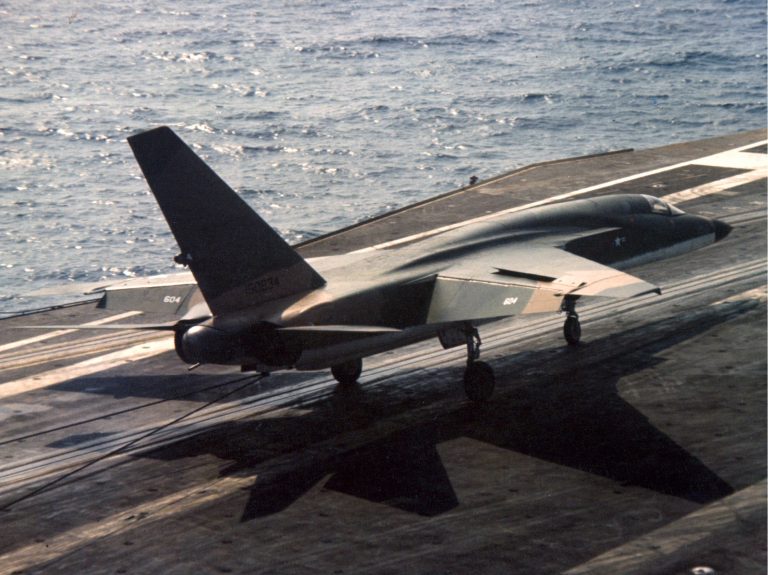
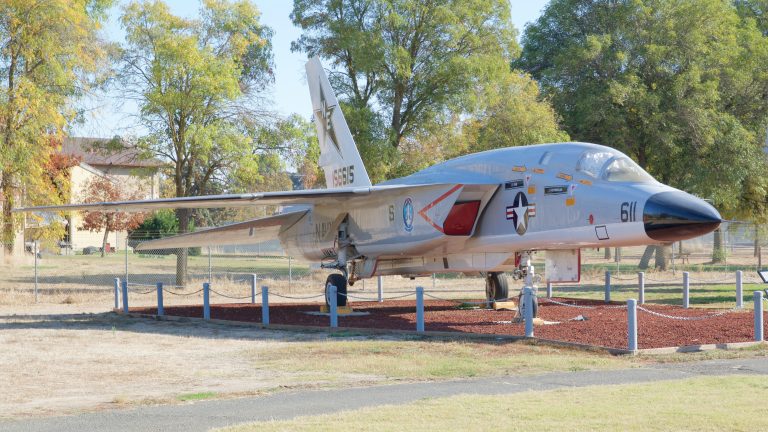
The Vigilante in motion
A curated video feature for the North American A-5 Vigilante is coming soon. In the meantime, explore the photo gallery above and the operations map below.
Where the Vigilante flew
The record that defines it
The Vigilante’s combat story is not one of kills but of images — and of extraordinary risk. As a bomber it never delivered a weapon in anger; as the RA-5C it flew the most dangerous reconnaissance missions of the Vietnam War, streaking fast and straight over the world’s densest air defenses to bring back the photographs the fleet depended on. That work came at a steep cost: the type is commonly cited as having the highest loss rate of any US aircraft in the war.
Compare the combat record of every military aircraft. Figures as of July 2026.
Everything people ask about the A-5 Vigilante
Can I fly in an A-5 Vigilante?
Why is the A-5 called “the bomber that never bombed”?
What was the linear bomb bay?
What was the RA-5C?
How many Vigilantes were lost in Vietnam?
Was the Vigilante really one of the biggest aircraft flown from a carrier?
Are any A-5 Vigilantes still flying?
You can’t fly the Vigilante.
These, you can.
Some legends only live in museums — others are fuelled and waiting. MiGFlug has put civilians in real military jet cockpits since 2004.
 Fly the L-39 AlbatrosThe world’s most-flown jet trainer — aerobatics included
 Fly the F-104 Starfighter“The missile with a man in it”
 Fly the MiG-21The Cold War’s most-produced jet
 Fly the T-33 Shooting StarAmerica’s first jet trainer
 Fly the DH VampireA piece of early jet history
 Fly the S.211Agile Italian jet trainer
 Fly the MB-326The classic Aermacchi jet
 Fly the MiG-15The Soviet legend of the Korean War
Continue the tour
Every fact, checked
- Naval History and Heritage Command — RA-5C VigilanteOfficial US Navy history of the type, its development and service.
- The National Interest — the Navy’s forgotten A-planeThe bomber-to-recon story and its Vietnam service.
- The Aviation Geek Club — Flint River 603The only Vigilante downed by a MiG, December 1972.
- This Day in Aviation — 13 December 1960The A3J-1 world altitude record with a 1,000 kg payload.
- GlobalSecurity — A3J (A-5) VigilanteDevelopment timeline, bomber role and reconnaissance conversion.
- MiGFlug Afterburner — the beautiful bomber that never workedThe linear bomb bay and the aircraft’s central paradox.
- U.S. Naval Institute — The Tale of the VigiNaval History magazine account of flying and operating the type.
- Vietnam Aviation Resource Center — RA-5C operationsSquadron deployments and combat-loss breakdown in Southeast Asia.