
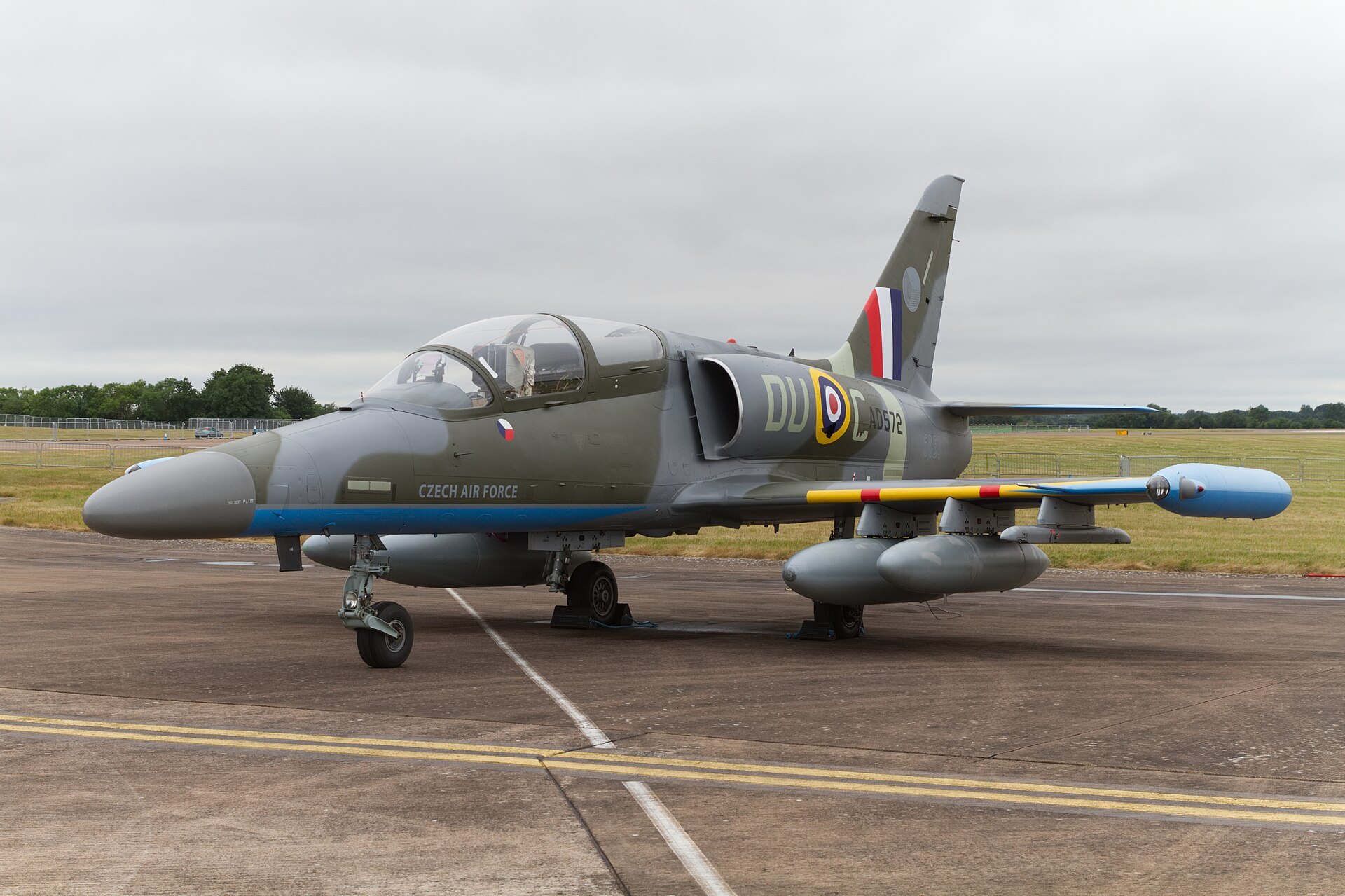
Aero L-159 ALCA
The Czech Light Combat Jet
Born from the L-39 trainer line, the L-159 became the Czech Republic’s own light fighter, bombed Islamic State for Iraq and now plays the enemy for American and British fighter pilots.
The L-159 ALCA: how a trainer family became a Czech light fighter
After the Velvet Revolution the Czechoslovak and then Czech air force was left with a fleet of ageing Soviet jets and a defence industry that wanted to survive the end of the Cold War. In 1993 Czech military planners began looking for a domestic replacement. A supersonic fighter, the L-X, was judged far too expensive, so they chose a subsonic answer from Aero Vodochody, the company that had built thousands of L-29 Delfín and L-39 Albatros trainers. The ALCA, for Advanced Light Combat Aircraft, took the airframe of the stretched L-59 and filled it with Western equipment: an American F124 turbofan, an Italian Grifo L radar, a NATO-standard cockpit and weapons. The contract for 72 single-seat L-159As was signed on 4 July 1997, and a two-seat prototype first flew on 2 August 1997.
In 1998 Boeing became Aero’s strategic partner, and the first production L-159A reached the Czech Air Force on 10 April 2000. Then reality arrived. The order had been sized for a much larger air force than the Czech Republic could afford, and in 2003 the government decided to keep only 24 in service. Dozens of nearly new jets went into storage, and Boeing withdrew from the company in 2004. For a decade the surplus L-159 became a symbol of an expensive mistake. Yet the aircraft that remained gave the Czech Air Force a precise, radar-equipped light attack jet for close air support training with NATO, and the two-seat L-159T1, converted from stored airframes from 2007, gave the air force a modern two-seat trainer for pilots on their way to the Gripen.
The stored jets eventually found work. From 2015 Iraq took a dozen, and with them its Squadron 115 flew strikes against Islamic State around Fallujah and Mosul in 2016; a Czech adviser later counted more than 200 sorties and over 800 bombs. In the United States Draken International bought 21 to play the enemy in Red Flag and other exercises, nicknaming them Honey Badger, and from 2022 Draken flew them for the RAF from Teesside. In 2017 Aero restarted production after 13 years to build a new two-seater for Iraq. In January 2026 President Petr Pavel offered L-159s to Ukraine as drone hunters, but the government refused to part with them. Nearly three decades after its first flight, the L-159 is still in demand.
01The L-159’s surplus fleet: from storage to Baghdad and Nevada
The decision of 2003 to keep only 24 of 72 L-159s left the Czech state with roughly 40 almost-new combat jets and no use for them. Selling them proved slow. Ireland was offered L-159As as replacements for its Fouga Magisters, with three L-39s thrown in, and declined. In 2009 Spain’s EADS-CASA took three L-159As and two L-159T1s as part of a deal in which the Czech Republic bought four C-295 transports; the single-seaters later went to Lewis Fighter Fleet in the United States.
The breakthrough came in the next decade. An agreement with Iraq, first announced in 2012, ended in a deal for 12 aircraft: ten single-seat and one two-seat jet from Czech stocks, plus a new-build two-seater. Because Czech law on surplus equipment required it, the ministry sold the aircraft to Aero, which then supplied them to Baghdad. The first two arrived in Iraq on 5 November 2015. At almost the same time Draken International in Florida agreed to take 21 ex-Czech jets, receiving the first on 30 September 2015. By 2016 the stored L-159s were flying for two new owners on two continents, one at war and one pretending to be.
02The L-159 and Ukraine: the offer that was withdrawn
Russia’s war against Ukraine brought the L-159 back into Czech politics. In May 2023 President Petr Pavel said in a radio interview that the aircraft could help Ukraine. On 16 January 2026, during a visit to Kyiv, he went further, saying that the Czech Republic “can in relatively short time provide several medium combat planes, which are highly effective in fighting drones”. Ukraine had asked for four, which Pavel described as an acceptable level of risk.
Three days later the new government of Prime Minister Andrej Babiš rejected the idea. Defence Minister Jaromír Zůna argued that the air force needed all its aircraft, and Foreign Minister Petr Macinka complained that the president had not informed the government beforehand. The episode showed both the L-159’s strengths, a radar-equipped, relatively cheap jet with real combat experience against slow targets, and its scarcity: the Czech Air Force had only 24 left, 16 single-seat L-159As and eight two-seaters.
What makes the L-159 special
The L-159’s Western heart
The L-159 uses the Honeywell/ITEC F124-GA-100, a non-afterburning turbofan of about 28 kN developed in the United States and Taiwan. It replaced the Soviet-era engines of the L-39 family, giving better fuel economy and reliability and simplifying support in NATO. Nearly 2,000 litres of fuel in eight internal tanks, including wingtip tanks, give the L-159 a range of about 1,570 km, and up to four drop tanks can be carried under the wings for longer missions.
The L-159’s radar and NATO avionics
Unlike most light jets of its class, the single-seat L-159A carries a real fighter radar: the Italian FIAR (later Selex) Grifo L, a multi-mode pulse-Doppler set. It is tied to a ring-laser-gyro inertial and GPS navigation system, a MIL-STD-1553 databus, a head-up display and multifunction displays. A Sky Guardian 200 radar warning receiver and chaff and flare dispensers protect it. This is why Draken values it as an aggressor: it can emit and see like a modern fighter.
The L-159’s armour and weapons
The L-159 was built for low-level close air support, so its cockpit is protected by composite and ceramic armour, and the pilot sits on a zero-zero VS-2B ejection seat. Seven hardpoints carry up to 2,340 kg: Sidewinder air-to-air missiles on the outer pylons, Mk 82 and Mk 83 bombs, cluster munitions, rocket pods, gun pods and laser-guided Paveway bombs. Iraq’s aircraft used precisely this mix against Islamic State positions in 2016.
03The L-159’s versions: from ALCA to ALX
- L-159A: single-seat light combat aircraft with Grifo L radar; the main production version for the Czech Air Force.
- L-159B: two-seat advanced trainer prototype, first flown on 1 June 2002; only the prototype was built, later rebuilt as the L-159T2X demonstrator.
- L-159T1: two-seat trainer converted from stored L-159A airframes, without radar; first flight on 8 March 2007, first four delivered in November 2007.
- L-159T1+: T1 upgraded with radar and a new mission system, giving the same combat capability as the L-159A.
- L-159T2: two-seat trainer with full combat capability and radar; three ordered by the Czech Air Force for delivery in 2018.
- L-159E: designation for Draken International’s civilian-registered aggressor jets.
- L-159 ALX: combat-capable version shown at Farnborough in July 2018 with Israel Aerospace Industries, offered for the US light attack competition.
04The L-159’s cockpit: an L-39 shape with a NATO brain
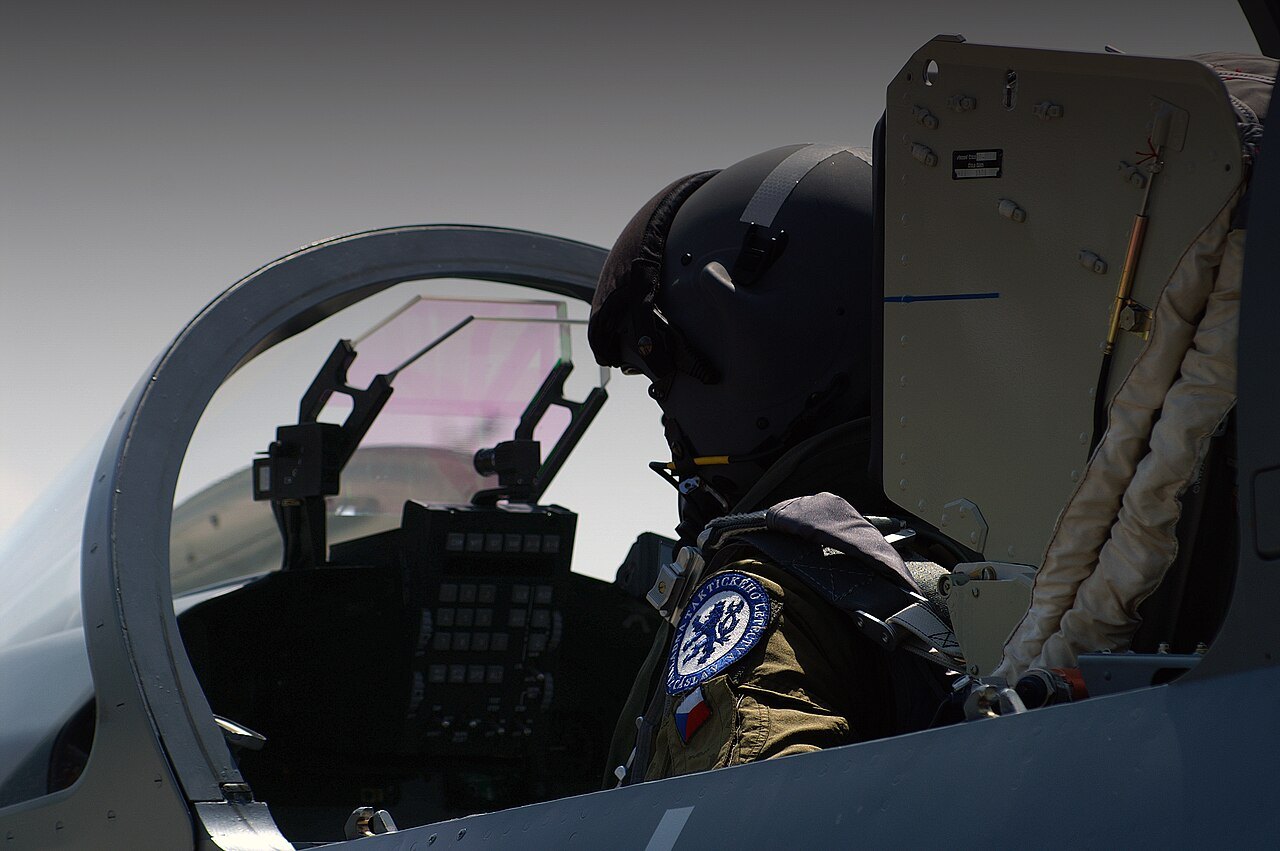
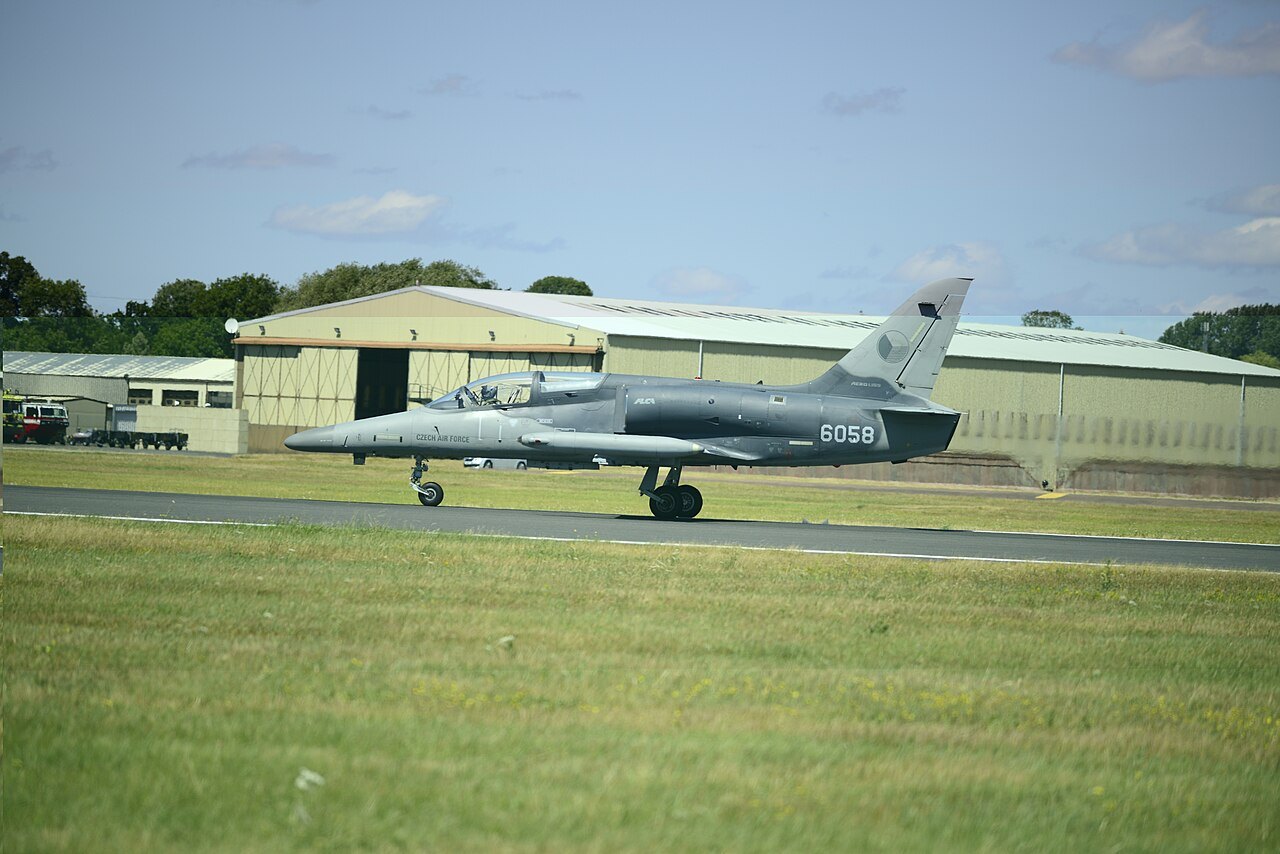
From the outside the L-159 is clearly a member of the L-39 family, with the long nose of the L-59, wingtip tanks and a stepped canopy. Inside, it was rebuilt to NATO standards. The pilot has a head-up display, hands-on-throttle-and-stick controls and multifunction displays; early aircraft used Honeywell 4 × 4 inch displays, later upgrades V-Dot units of 5 × 6.7 inches after V-Dot Systems became avionics integrator in 2009. Communications use Collins ARC-182 radios.
The upgrades have kept the aircraft relevant. In June 2016 Aero received an order to modernise the Czech Air Force’s 16 single-seaters, and the T1+ and T2 two-seaters brought radar to the training fleet. A student moving to the Gripen now learns radar handling, datalink-era cockpit management and weapons employment on a jet that costs far less to fly.
Aero L-159 ALCA specifications
Specifications
- Crew
- 1 (L-159A); 2 in tandem (L-159B, T1, T2)
- Length
- 12.72 m (41 ft 9 in)
- Wingspan
- 9.54 m (31 ft 4 in) with tip tanks
- Height
- 4.87 m (16 ft 0 in)
- Wing area
- 18.8 m² (202 sq ft)
- Empty weight
- 4,350 kg (9,590 lb)
- Max take-off weight
- 8,000 kg (17,637 lb)
- Powerplant
- 1 × Honeywell/ITEC F124-GA-100 turbofan, 28.2 kN (6,300 lbf)
- Maximum speed
- 936 km/h (582 mph, 505 kn)
- Range
- 1,570 km (980 miles)
- Combat radius
- 565 km (351 miles) lo-lo-lo with gun pod, two Mk 82 bombs, two Sidewinders and two drop tanks
- Service ceiling
- 13,200 m (43,300 ft)
- Climb rate
- 62 m/s (12,200 ft/min)
- Armament
- up to 2,340 kg (5,159 lb) on 7 hardpoints: AIM-9 Sidewinder, AGM-65 Maverick, Mk 82/83 and Paveway II bombs, CBU-87, CRV7 rocket pods, 20 mm gun pods
Costs & production
- Unit cost
- the 72-aircraft Czech programme of 1997 is commonly given at about CZK 50–51 billion, roughly CZK 700 million per aircraft including support and development
- Cost per flight hour
- no official figure published; an estimate of roughly USD 3,000–6,000 per hour, based on comparison with other single-engined subsonic jets of its class such as the Hawk
- Production
- 72 L-159A for the Czech Air Force plus prototypes; production resumed in 2017 for one new two-seater for Iraq
- Programme
- development 1993–1997; Czech fleet cut to 24 in 2003; surplus sold to Iraq, Draken International and EADS-CASA
05The L-159’s price: why it became a political symbol
The L-159 programme was approved in the mid-1990s at around CZK 50 billion for 72 aircraft, an enormous sum for a country of ten million people. Within six years the government concluded it could only afford to operate a third of the fleet. The Czech press and parliament returned to the story repeatedly, and the stored jets became shorthand for the procurement failures of the era.
The later sales recovered only part of the cost, since second-hand jets sold at prices far below new. Judged as an aircraft rather than as a purchase, however, the L-159 has been well regarded by its crews, and the Czech Air Force chose to upgrade its fleet rather than replace it.
06The L-159’s operating costs: a cheap way to look like a fighter
Neither the Czech Air Force nor Draken publishes an hourly cost. A single, non-afterburning F124 engine and a simple airframe put the L-159 in the same economic class as the BAE Hawk and other advanced jet trainers. Our estimate of roughly USD 3,000–6,000 per flying hour is based on that comparison.
That is the L-159’s commercial appeal. For the price of an advanced trainer, an air force or a contractor gets a jet with a fighter radar, a radar warning receiver and NATO weapons. For aggressor work it can simulate a hostile fighter’s radar emissions and tactics at a fraction of the cost of flying an F-16 or Typhoon against another F-16 or Typhoon.
The L-159 from the Velvet Revolution to Teesside
A Czech fighter project
Czech planners reject a supersonic L-X as too expensive and choose the subsonic ALCA.
Contract and first flight
A contract for 72 L-159As is signed on 4 July; the two-seat prototype flies on 2 August.
Boeing arrives
Boeing becomes Aero Vodochody’s strategic partner; the single-seat prototype flies on 18 August.
Into service
The first production L-159A is delivered to the Czech Air Force on 10 April.
Fatal crash and fleet cut
A pilot is killed near Jince on 24 February; the government decides to keep only 24 aircraft.
The T1 trainer
The first two-seat L-159T1 converted from a stored airframe flies on 8 March.
Second fatal accident
An L-159A crashes near Kolín on 22 November; the pilot is killed and the fleet grounded.
New owners
Draken International receives its first L-159 on 30 September; the first two reach Iraq on 5 November.
Combat against Islamic State
Iraqi L-159s strike targets around Fallujah in May and near Mosul in October and November.
Production restarts
Aero resumes L-159 production after 13 years to build a new two-seater for Iraq.
Aggressors for the RAF
Draken wins a six-year contract to provide aggressor training for the RAF, flying L-159s from Teesside.
The Ukraine offer
President Pavel offers L-159s to Ukraine on 16 January; the government rejects the transfer three days later.
Stories & eyewitnesses: the L-159 in Czech, Iraqi and contractor hands
The fighter the Czechs could not afford
Why a supersonic L-X became a subsonic ALCA.
Read the full story
Jince, 24 February 2003
The first fatal L-159 crash.
Read the full story
Jets for transports: the Spanish swap
Surplus L-159s as currency.
Read the full story
Kolín, 22 November 2012
A night training flight ends in a field.
Read the full story
A vulture over Zaragoza
A bird strike that nearly took a wing.
Read the full story
Squadron 115 over Fallujah and Mosul
The L-159 goes to war in Iraqi colours.
Read the full story
The line restarts after 13 years
A new L-159 for Baghdad.
Read the full story
Honey Badgers at Red Flag
Ex-Czech jets play the enemy for the USAF.
Read the full story
Red Air over Friesland
Four Honey Badgers for Dutch weapons instructors.
Read the full story
Replacing the Hawks of 100 Squadron
The L-159 trains RAF fighter pilots.
Read the full story
A president’s offer
Petr Pavel and the L-159 for Ukraine.
Read the full story
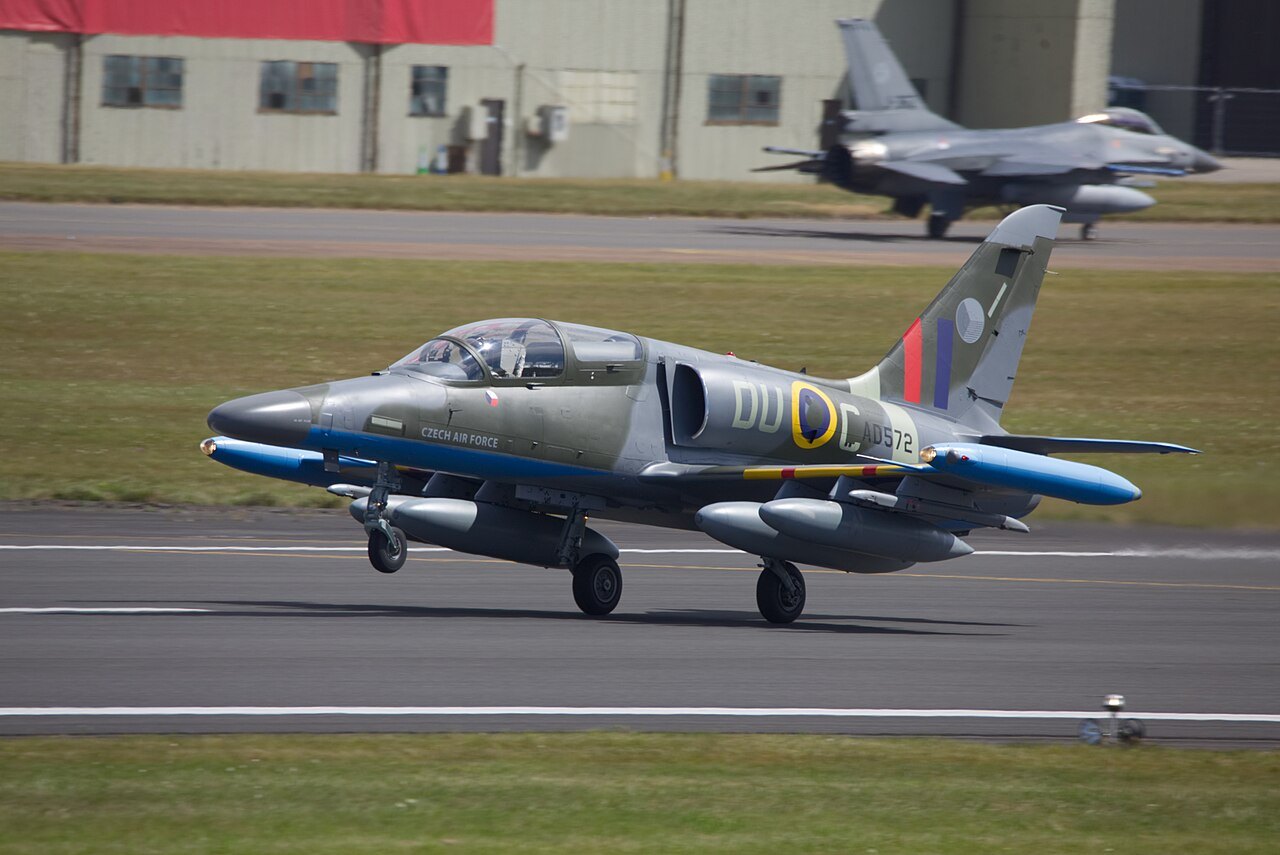
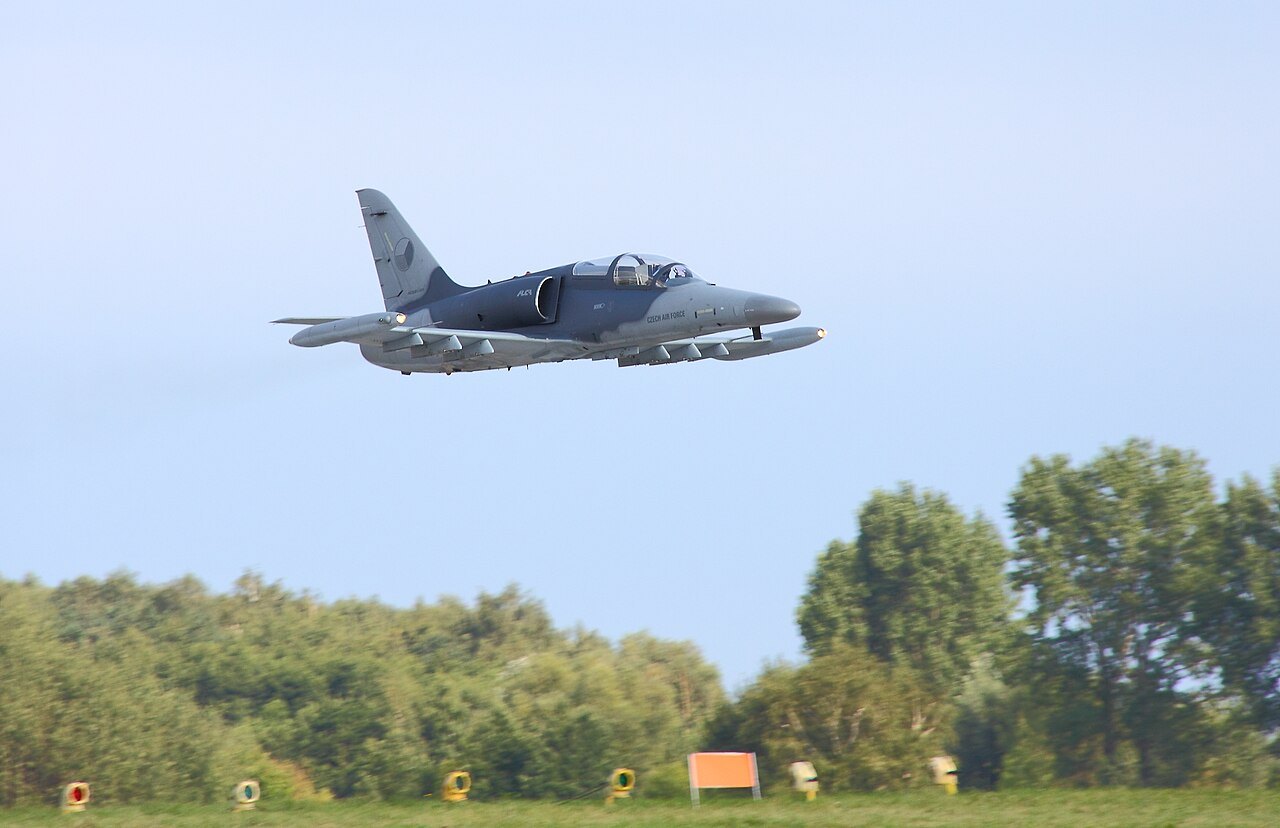
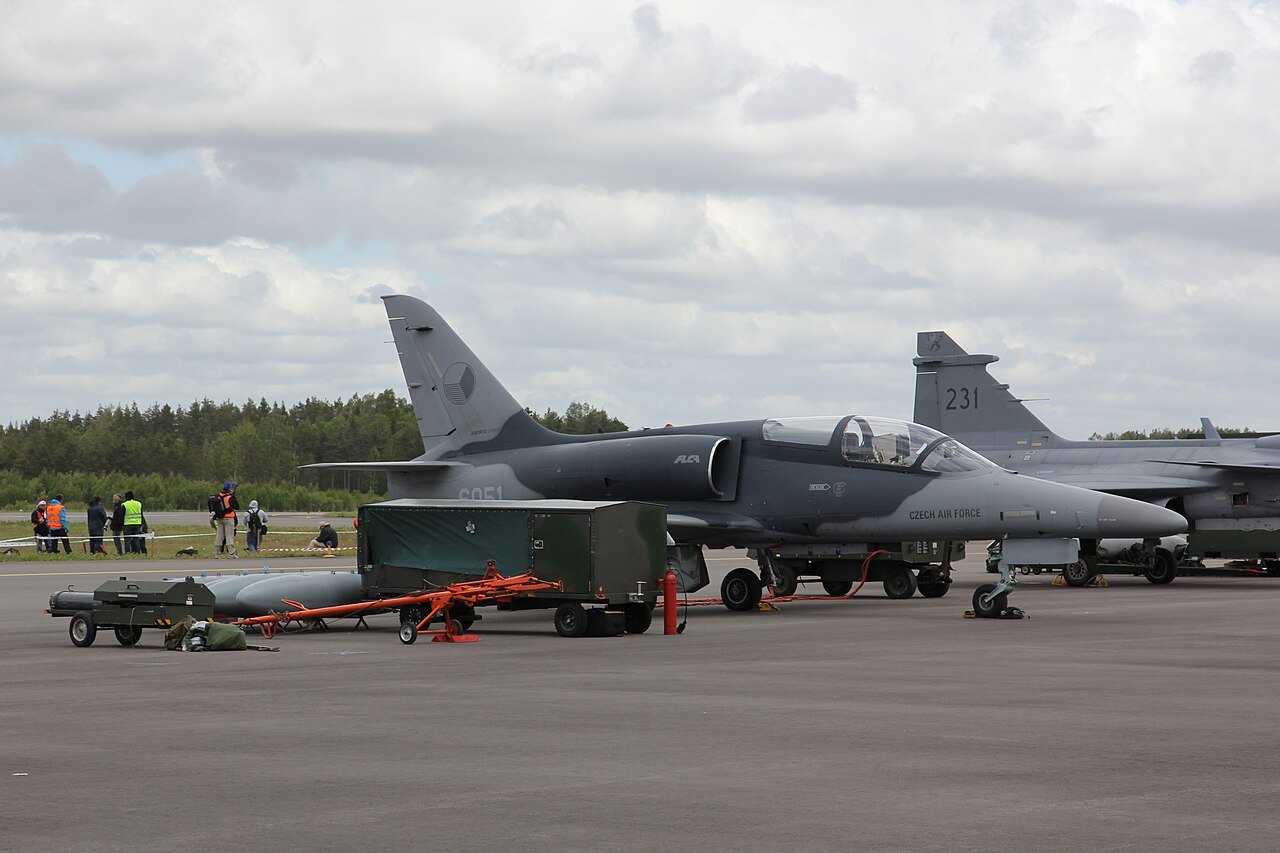
The L-159 in pictures
Where the L-159 flies and flew
The L-159’s record
The L-159 never fought in Czech service, but in Iraqi hands it became one of the few modern light combat jets to see sustained combat, striking Islamic State in 2016 and again in 2021. Its other war is simulated: as a contract aggressor it has trained US, British and Dutch fighter pilots.
See how training and combat types compare in the military aircraft statistics database. Figures are approximate.
Everything people ask about the L-159
Can I fly in an Aero L-159 ALCA?
Is the L-159 related to the L-39?
Is the L-159 supersonic?
Has the L-159 seen combat?
Why did the Czech Republic store most of its L-159s?
Who flies the L-159 today?
Did the Czech Republic send L-159s to Ukraine?
You can’t fly the L-159.
These, you can.
Most of this museum you can only look at. These genuine military jets you can fly yourself with MiGFlug — with aerobatics and time on the controls.
 Fly the L-39 AlbatrosThe world’s most-flown jet trainer — aerobatics included
 Fly the F-104 Starfighter“The missile with a man in it”
 Fly the MiG-21The Cold War’s most-produced jet
 Fly the T-33 Shooting StarAmerica’s first jet trainer
 Fly the DH VampireA piece of early jet history
 Fly the S.211Agile Italian jet trainer
 Fly the MB-326The classic Aermacchi jet
 Fly the MiG-15The Soviet legend of the Korean War
Continue the tour
Every fact, checked
- Plane crash sees fleet of L-159 fighter jets groundedRadio Prague on the 2012 Kolín crash and fleet grounding
- U Kolína havaroval bitevník L-159, pilot nepřežilE15 on the 2012 crash and earlier accidents
- Crash of Aero L-159 comes at critical timeAviation Week on the February 2003 Jince crash
- Aero poprvé po 13 letech vyrobí nový bitevník L-159 pro irácké sílyIraqi contract composition and production restart
- Český bitevní letoun se srazil se supemTN.cz on the 2015 vulture strike in Spain
- Aero L-159E Honey BadgerRoyal International Air Tattoo on Draken’s RAF aggressor contract
- Draken L-159s debut in the NetherlandsKey.Aero on the Leeuwarden deployment
- Aero’s L-159E jet starts flight training operations with US Air ForceDraken L-159E entry into USAF support, 2016
- Czech government blocks L-159 transfer to UkraineThe Aviationist on the January 2026 offer and fleet numbers
- Czech Republic to supply aircraft to UkraineThe Defense Post quoting President Pavel