
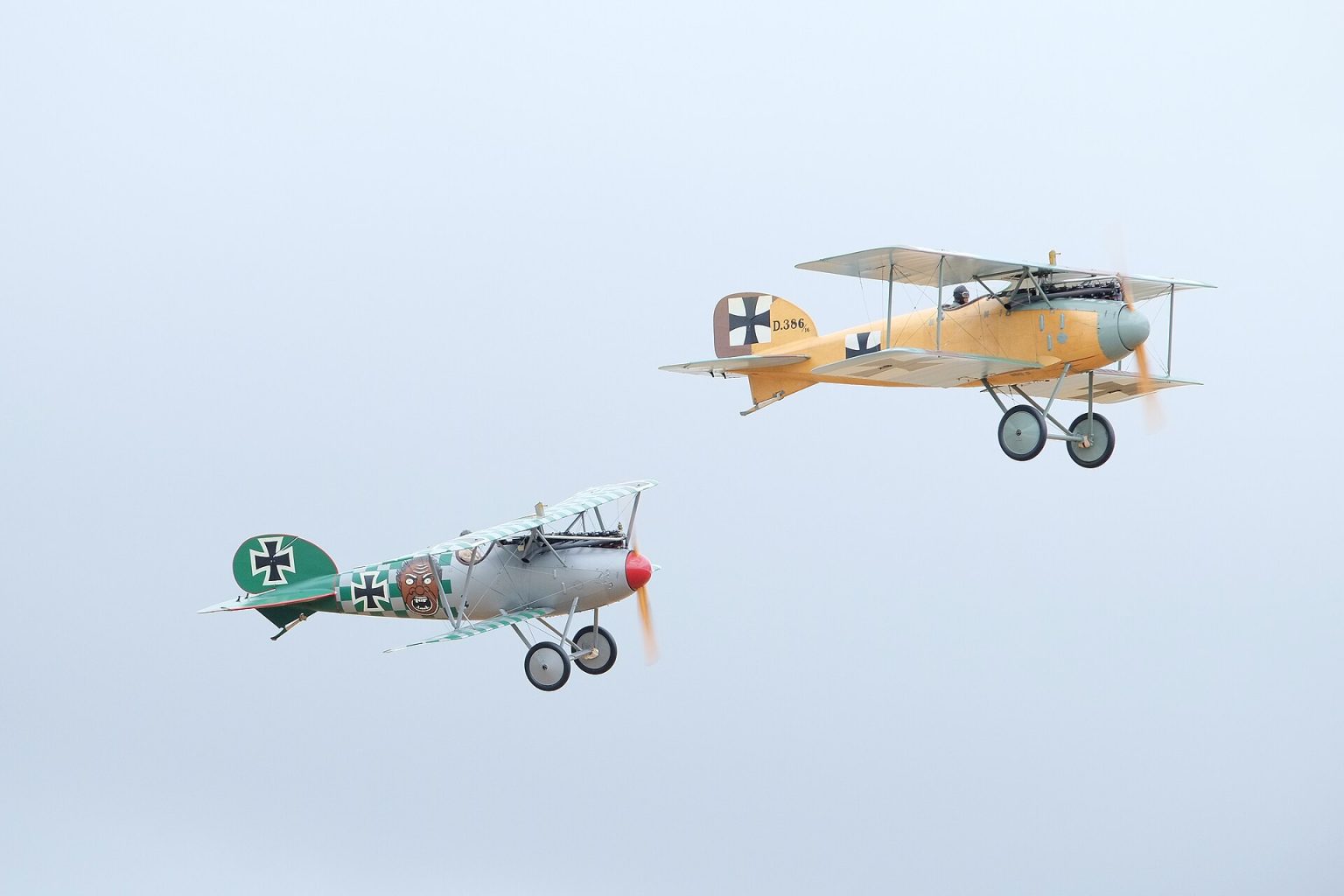
Albatros D.I & D.II
The story of the Albatros D.I and D.II
By the summer of 1916 the German air service had a problem it could not turn its way out of. The Fokker Eindecker's brief reign — the so-called Fokker Scourge — was over, ended by the agile French Nieuport 11 and the British DH.2. Germany needed a fighter that could take back the sky. The answer came from the Albatros Flugzeugwerke in Johannisthal, on the edge of Berlin.
Albatros's chief designer, Robert Thelen, and his team did not chase agility. They built speed, strength and firepower into one airframe. The heart of the design was a beautifully streamlined fuselage of moulded plywood — a semi-monocoque shell in which the skin carried much of the load, rather than a fabric-covered box of wire-braced timber. It was light, strong and smooth, and it became an Albatros hallmark that ran through the whole D-series. Onto that body they bolted a comparatively powerful Mercedes D.III water-cooled inline-six of roughly 160 horsepower.
Then came the decisive touch. Where most Allied single-seat fighters of 1916 carried a single machine gun, the Albatros D.I mounted two synchronised 7.92 mm lMG 08 "Spandau" guns, firing forward through the propeller arc. Twice the volume of fire, aimed simply by pointing the aeroplane. Combined with the type's speed and structural strength, that firepower made the Albatros formidable — a genuine leap over the Nieuports and DH.2s it was built to beat.
The D.I first flew in August 1916 and reached the front in September. It went straight to the elite: Oswald Boelcke's newly formed Jasta 2 was among the first units to receive it. Boelcke — already Germany's leading ace and, more importantly, the intellectual father of fighter tactics — used the Albatros to devastating effect, and his squadron became the template for the whole German fighter arm.
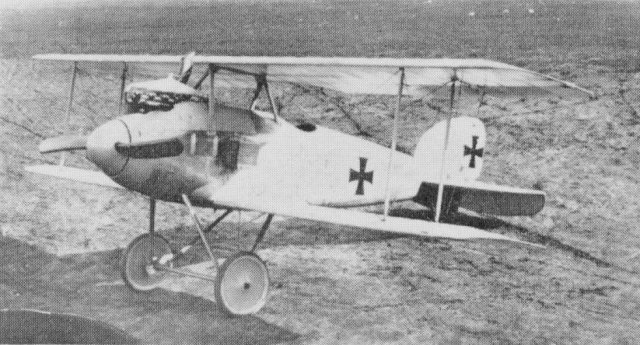
The D.I was not perfect. Its upper wing sat high and close to the fuselage, directly in the pilot's line of sight — a serious flaw in a machine whose whole tactic was to see the enemy first and dive on him. The D.II, which followed into production in October 1916, fixed exactly that: the upper wing was lowered closer to the fuselage and the cabane struts were revised (to splayed N-struts), opening up the pilot's upward and forward view. Cooling arrangements were also cleaned up. In most respects the D.II was simply the better fighting aeroplane, and pilots preferred it.
The tactical impact was quick and visible. Concentrated in the new Jagdstaffeln and led by men schooled in Boelcke's methods, the Albatros squadrons stopped fighting as scattered escorts and started hunting. They used their speed and height to pick their moment, dived on Allied reconnaissance machines and fighters, fired their two guns and climbed away before the enemy could turn the fight into the kind of low-speed scrap the lighter Nieuports preferred. Through October and November 1916 the balance over the Somme swung back toward Germany.
Roughly 50 D.I and something over 200 D.II were built before the improved D.III superseded them at the front in early 1917 (production figures vary between sources; some give around 260 of both types in service at peak). But numbers understate their importance. The D.I and D.II were the machines on which the Jagdstaffeln learned their trade in late 1916, on which Boelcke wrote his rules of air combat in blood and ink, and on which a young Manfred von Richthofen began his climb. They started the run of Albatros fighters that carried Germany through the bloodiest air fighting of the war — and they are the reason the name ‘Albatros’ still means ‘fighter’ to anyone who knows the history.
01The Albatros D.I and D.II in one paragraph: what they were and why they mattered+
The Albatros D.I and D.II were German single-seat biplane fighters that reached the Western Front in the autumn of 1916. They combined three things that, taken together, no earlier fighter had balanced so well: a strong, aerodynamically clean plywood fuselage; a relatively powerful ~160-hp Mercedes D.III inline-six; and a battery of two synchronised machine guns. The result was fast, tough and unusually heavily armed for its day. Within weeks the type helped the new Jagdstaffeln wrest air superiority back from the Allied Nieuport and DH.2 fighters that had ended the earlier ‘Fokker Scourge’. The D.I and D.II were the opening chapter of an Albatros dynasty — the D.III, D.V and D.Va — that would dominate much of 1917.
What makes them worth a museum page in their own right, rather than a footnote to the more numerous D.III and D.V, is that they were the machines on which the whole German fighter method was invented. The dedicated single-seat fighter squadron, the doctrine of attacking from height and surprise, the idea that fighters should be concentrated and led rather than scattered as escorts — all of this crystallised in the autumn of 1916 around the Albatros D.I and D.II and the man who flew them, Oswald Boelcke. To understand 1917's air war, you start here.
02Why the twin-gun, plywood-bodied Albatros arrived exactly when Germany needed it+
Through the first half of 1916 the German air service was on the back foot. The nimble French Nieuport 11 and the British Airco DH.2 pusher had neutralised the Fokker Eindecker’s synchronised-gun advantage, and Germany had — for a time — lost command of the air. The Albatros design office answered not with a more agile machine but with a faster, stronger, harder-hitting one. It is a recurring theme in fighter development: when you cannot out-turn the enemy, out-run and out-gun him. The Albatros D.I and D.II did exactly that, and the doctrine that grew up around them — concentration of fighters in dedicated squadrons, attacking with height and surprise — turned individual quality into a decisive operational advantage.
Timing mattered as much as design. The German high command reorganised its fighter aircraft into dedicated Jagdstaffeln (‘hunting squadrons’, or Jastas) from August 1916, precisely as the first Albatros fighters were coming off the line. A superb fighter with no organisation to exploit it, or a good organisation with mediocre aircraft, would have achieved far less. Getting both at once — the twin-gun Albatros and the Jasta system — is what produced the swing in air superiority that autumn.
03The situation in the air in 1916: from the Fokker Scourge to the Albatros ascendancy+
The air war of 1915–1917 swung like a pendulum, and the Albatros D.I/D.II mark one of its decisive turns. In late 1915 the Fokker Eindecker, with its interrupter gear letting a single gun fire through the propeller, gave Germany the so-called ‘Fokker Scourge’, when Allied reconnaissance crews spoke of being ‘Fokker fodder’. That advantage was purely one of armament, not of the aeroplane, and it did not last. Through the first half of 1916 the French Nieuport 11 ‘Bébé’ and the British DH.2 — one agile, one a gun-armed pusher with a clear forward field of fire — restored Allied command of the air over the Somme.
The Albatros D.I and D.II reversed that pendulum again in the autumn of 1916, and this time the swing rested on the aeroplane itself: it was faster than its opponents, stronger, and armed with two guns rather than one. Combined with the new Jasta organisation and Boelcke's tactics, it set up the German air superiority that would peak, brutally, in the ‘Bloody April’ of 1917. It is worth hedging that air superiority in the First World War was always local and temporary, and driven by many factors at once — but the Albatros fighters were unmistakably at the centre of this particular turn.
Design & engineering: three ideas that made the Albatros formidable
Strip the Albatros D.I and D.II down to their essentials and three design decisions explain almost everything about them.
A plywood shell, not a fabric box
The Albatros semi-monocoque fuselage used load-bearing plywood skins wrapped over light formers for a shape that was clean, strong and light. It cut drag, resisted the twisting loads of a fast dive, and made a steady gun platform — an aerodynamic and structural edge, and the visual signature of the whole D-series through to the D.Va.
Two guns, not one
Twin synchronised 7.92 mm "Spandau" machine guns doubled the firepower of most Allied single-gun fighters of 1916. In the two or three seconds of a firing pass that roughly halves the time needed to down an enemy — turning a fast aeroplane into a genuinely dangerous one, and setting the standard every later fighter copied.
See first, strike first (the D.II fix)
A fighter built to spot the enemy and dive on him has to let its pilot see. The D.I's high wing blocked the view; the D.II lowered the upper wing and splayed the struts to clear it. A small change on paper, but exactly the one a diving-attack fighter needed — and the reason pilots preferred the D.II.
04The Albatros D.I/D.II's semi-monocoque plywood fuselage: the idea that shaped the whole D-series+
Most 1916 fighters were built as fabric-covered frames: a wire-braced wooden box that carried the loads, with doped linen stretched over it for shape. Albatros did something different. The fuselage was a true semi-monocoque — thin plywood skins wrapped over a light internal framework of formers and a small number of longerons, with the plywood itself carrying much of the structural load. The shells were built up over a form from layers of plywood, producing a rounded, aerodynamically clean shape that a fabric-and-wire box simply could not achieve, and it was both strong and reasonably light. It also happened to look superb.
The practical payoffs were real. A stiff monocoque shell resists twisting better than a wire-braced frame, so the aeroplane was a steady gun platform and could take the stresses of a fast dive without shaking itself apart — exactly what Boelcke's diving-attack tactics demanded. The clean shape cut drag, helping the modest 160 hp deliver a genuinely high speed for 1916. The idea was carried forward with little fundamental change through the D.II, D.III, D.V and D.Va, and it is one of the reasons the Albatros fighters are still regarded as among the most elegant aircraft of the war. We should be honest that ‘semi-monocoque’ here means load-bearing plywood-shell construction, not the aluminium stressed-skin of later decades — but for 1916 it was genuinely advanced, and Allied engineers who examined captured Albatros fuselages took careful note.
05Two Spandau guns versus one: the firepower advantage that helped Germany regain air superiority+
The single most consequential feature of the Albatros D.I and D.II was not speed or strength but armament. Each carried two belt-fed 7.92 mm lMG 08 machine guns — the aircraft version of the Maxim, universally nicknamed ‘Spandau’ after the arsenal where many were made — synchronised to fire forward through the spinning propeller. The Allied fighters they faced in late 1916, the Nieuport 11 and the DH.2, generally carried a single gun; the Nieuport's was often mounted awkwardly on the upper wing to fire over the propeller. Doubling the weight of fire in the two or three seconds of a firing pass is an enormous tactical advantage: it roughly halves the time on target needed to bring an enemy down, which in turn means the attacker is exposed for less time and can break away sooner.
This is a large part of why the Albatros-equipped Jagdstaffeln were able to help Germany claw back command of the air in the last months of 1916, setting the stage for the German ascendancy of ‘Bloody April’ 1917. The synchronisation itself relied on a mechanical interrupter linkage driven off the engine, timing each gun so its bullets passed between the propeller blades — a technology only a couple of years old and still being refined. It is fair to hedge that many factors drove the swing in air superiority — tactics, numbers, training, aircraft quality — but the twin-gun Albatros was central to it, and twin forward-firing guns quickly became the standard every serious fighter aspired to.
06How the D.II improved on the D.I: lowering the wing to let the pilot see+
The D.I flew well and hit hard, but it had a genuine ergonomic problem: the upper wing was mounted high and close to the top of the fuselage on tall cabane struts, sitting squarely across the pilot's forward and upward field of view. For a fighter built around the doctrine of spotting the enemy first and attacking from above and behind, that blind spot directly undercut the aeroplane's whole reason for being. Pilots complained, and Albatros listened.
The D.II answered it directly. Engineers lowered the upper wing closer to the fuselage and replaced the tall central cabane with outward-splayed N-struts running from the fuselage sides to the wing, so the pilot could see over and around the centre section rather than through it. The gap between the wings was reduced, which also cleaned up the aerodynamics slightly. Cooling arrangements evolved too: early D.IIs used side-mounted ‘ear’ radiators on the fuselage flanks before a wing-mounted Teves & Braun radiator, set into the upper-wing centre section, became standard — a layout carried on into the D.III. None of these changes was dramatic in isolation, but together they made the D.II the more effective combat aircraft, and the version front-line pilots asked for by name.
07The Mercedes D.III engine: the powerful, reliable heart of the early Albatros fighters+
Power came from the Mercedes D.III, a water-cooled, inline six-cylinder engine of roughly 160 horsepower with a displacement of about 14.8 litres (some early D.I airframes instead used the 150-hp Benz Bz.III). It was a relatively large, heavy, unsupercharged engine built to run reliably for hours rather than to spin fast, with individual steel cylinders, an overhead camshaft and a substantial cooling system. By 1916 standards this was a strong, dependable powerplant, and it is exactly what let Albatros build a fighter that was fast and heavy rather than merely light and agile.
The inline layout also suited the streamlined plywood fuselage perfectly: the tall, narrow engine could be faired in with a clean cowling and a spinner, and the radiators tucked into the wing or the fuselage sides. The Mercedes D.III family was developed further — the higher-compression D.IIIa raised output — and went on to power the later Albatros D.III, D.V and D.Va as well as many other German types. In other words, the D.I and D.II introduced not just an airframe philosophy but the engine that would carry the whole dynasty through to the end of the war.
08Wings, structure and handling: what the Albatros D.I and D.II were like to fly+
The D.I and D.II were conventional two-bay biplanes: two pairs of interplane struts each side, wings of roughly equal chord braced by flying and landing wires, and ailerons on the upper wing only. That layout was strong and predictable but not especially manoeuvrable — the Albatros was a heavier, faster machine than the featherweight Nieuports it fought, and it fought accordingly. Pilots did not try to out-turn a Nieuport; they used speed and height to choose the moment, dived, fired their two guns and climbed away. The stout plywood fuselage and robust wing bracing made the fast dive safe, which was central to the tactic.
The trade-off is worth stating honestly: in a sustained turning fight a skilled Nieuport or DH.2 pilot could get inside an Albatros. The German answer, again, was doctrine — never accept the turning fight on the enemy's terms. It is a pattern that recurs throughout fighter history, from the Albatros to the F-4 Phantom: raw performance plus the right tactics beats agility alone. The later D.III would trade some of this structural solidity for a Nieuport-style sesquiplane lower wing to improve manoeuvrability and downward view — a change that brought its own well-known lower-wing weakness, and one reason the ‘square’ two-bay D.I and D.II retain a reputation as particularly sturdy.
Full specifications: Albatros D.I and D.II
Figures are representative period values and vary between sources; contested numbers are flagged. Where the D.I and D.II differ, both are noted.
Baseline: the Albatros D.II as it was flown by Jagdstaffel 2 and its imitators between September 1916 and the spring of 1917 — one 160 hp Mercedes D.III, one man, two synchronised 7.92 mm lMG 08/15 Spandau guns and a plywood-shelled fuselage — because the D.II is the machine that actually equipped the Jastas in numbers (275 built against about 50 D.Is) and the machine on which the German air service recovered air superiority over the Somme. Deltas for the D.I, for Benz Bz.III–engined machines and for the Austro-Hungarian Oeffag series 53 are in grey. Four corrections before the figures, because this aircraft is badly served by the data tables in circulation. First, the Vee struts. The D.II is often described as having gained "Vee struts", which invites confusion with the D.III: the D.III's Vees were interplane struts, the feature that earned it the RFC nickname "V-strutter". What late-production D.IIs gained were splayed cabane struts — the centre-section struts joining the upper wing to the fuselage — replacing the two pairs of near-vertical struts that had boxed in the pilot's forward view. The D.II kept parallel interplane struts and a two-spar lower wing to the end. Second, wing area. The D.I is routinely published at 22.9 m² and the D.II at 24.0 or 24.5 m² although the cellule was essentially unchanged between the two; the difference is a measuring convention, not a redesign, and any wing-loading figure derived from it should be read as approximate. Third, the climb table. The most commonly reprinted German figures give 4 min 50 s to 1,000 m, 9 min 30 s to 2,000 m and 12 min 40 s to 3,000 m, which is arithmetically impossible — it has the third thousand metres taking less time than the second. The 2,000 m figure is the suspect one and is flagged below rather than quietly repeated. Fourth, Oeffag production of the D.II: English-language sources say 16 aircraft, German-language sources say 20, and no one has reconciled them.
Dimensions & weights
- Crew
- 1 A single-seat fighter with no observer, no wireless and no second opinion. Everything the D.II achieved over the Somme it achieved because Boelcke had worked out how eight or ten such men should fly together, and had written it down.
- Length
- 7.33 m (24 ft 1 in) The D.I is generally published at 7.40 m (24 ft 3 in). The fuselages were to all intents the same structure; the small difference is measurement practice at the tailskid and the propeller boss.
- Upper wingspan
- 8.50 m (27 ft 11 in)
- Lower wingspan
- 8.00 m (26 ft 3 in) — equal-chord planes of unequal span, not a sesquiplane; the single-spar sesquiplane arrived with the D.III and brought its failures with it
- Height
- 2.64 m (8 ft 8 in) Against 2.95 m (9 ft 8 in) for the D.I. That 31 cm is the whole point of the D.II: the upper wing was brought 36 cm (14 in) closer to the fuselage, which is why the aeroplane sits lower on its wheels and why the pilot could see over the centre section instead of through it.
- Wing area
- 24.5 m² (264 sq ft) Also published as 24.0 m² for the D.II and 22.9 m² for the D.I. The cellule did not change; the numbers did.
- Gap and stagger
- Upper wing lowered 36 cm (14 in) from the D.I and staggered slightly further forward, with the cabane struts rearranged The D.I's upper wing sat high on a four-strut cabane pyramid that put a plywood centre section and two struts directly across the pilot's line of sight above and ahead. In a fighter whose tactics depended on seeing an enemy before he saw you, this was not a detail. Late D.IIs went further and splayed the cabane struts outwards into a Vee, clearing the view forward and upward almost completely.
- Fuselage cross-section
- Flat-sided with a rounded upper decking, built as a plywood shell rather than a wire-braced box The deep, faired fuselage is what makes an Albatros recognisable at a glance and what made it fast on 160 hp. It is also the reason the type photographs so well: there is no fabric to sag between stringers.
- Empty weight
- 637 kg (1,404 lb) The D.I is given as 647 kg (1,426 lb).
- Loaded weight
- 888 kg (1,958 lb) 898 kg (1,980 lb) is also widely printed, usually attached to the D.I. The ten-kilogramme spread is smaller than the variation between individual airframes, engines and gun installations, and nothing should be inferred from it.
- Wing loading
- 36.2 kg/m² (7.4 lb/sq ft) at loaded weight High for 1916 — a Nieuport 17 was nearer 25 kg/m² and a DH.2 lower still — and the single most important number on this page after the gun count. It is why the Albatros would not turn with a Nieuport, why it dived and zoomed instead, and why the Dicta Boelcke reads as it does.
- Power loading
- 5.6 kg/hp (12.2 lb/hp) on 160 hp Excellent for the date. The Albatros carried two guns and a heavy water-cooled six and still out-climbed and outran the single-gun rotary-engined fighters it met; the Fokker E.III it replaced had 100 hp to push one gun.
Performance
- Maximum speed, sea level
- 175 km/h (109 mph, 94 kt) The same figure is quoted for D.I and D.II, which is credible: the marks differed in wing position, not in drag of any consequence. Against the 150 km/h of a DH.2 and roughly 165 km/h of a Nieuport 17, this was a decisive margin in 1916 — it meant an Albatros pilot chose whether to fight.
- Cruising speed
- 143 km/h (89 mph)
- Climb to 1,000 m
- 4 min 50 s (3,280 ft) Period practice was to state climb as time to a stated height rather than a rate, because the rate collapsed with altitude and a single number would have misled. Some sources give a round 4 minutes for the Mercedes-engined machine.
- Climb to 2,000 m
- 9 min 30 s (6,560 ft) as published This figure cannot stand beside the 3,000 m figure below, which would make the third thousand metres quicker than the second. Something between 7 and 8 minutes is the likely true value; the published number is reproduced here because it is what the tables say, and flagged because it is wrong.
- Climb to 3,000 m
- 12 min 40 s (9,840 ft) — the height at which most Somme patrols were flown
- Climb to 5,000 m
- 37 min 10 s (16,400 ft) More than half an hour to a height the aeroplane could barely hold. In practice a Jasta formed up over its own aerodrome, climbed to three or four thousand metres and waited for the westerly wind to bring British machines to it. The climb figures explain German tactics better than any account of doctrine.
- Initial rate of climb
- 3.3 m/s (650 ft/min) at sea level 2.8 m/s (550 ft/min) is published for the D.I. Both are creditable for a two-gun fighter of 1916 and poor by the standards of 1918.
- Service ceiling
- 5,200 m (17,050 ft) Sources give 5,000 m, 5,200 m and 6,000 m. The disagreement is real and unresolved; 6,000 m is almost certainly an absolute rather than a service ceiling, and no D.II pilot without oxygen was doing useful work up there in any case.
- Endurance
- 1 h 30 min The figure that governed operations, and the one this page leads with. A Jasta patrol was an hour and a half from chocks to chocks, of which perhaps forty minutes were spent at operational height on the German side of the line. The Albatros was not built to escort anything to Germany; it was built to hold a sector of sky above its own trenches for as long as the tank lasted.
- Range
- 230 km (143 miles) nominal Endurance multiplied by cruising speed, with no allowance for climb, combat or wind. It is an arithmetic figure rather than an operational one and should not be read as a radius of action, which was perhaps 60–70 km at best.
- Typical patrol height
- 3,000–4,000 m (10,000–13,000 ft), unpressurised, unheated and without oxygen Boelcke's first maxim was to secure the advantages of attack before attacking, and height was the first of those advantages. Men flew there in leather and fur, in an open cockpit, at temperatures of twenty degrees below, and were expected to shoot straight afterwards.
- Dive behaviour
- No published dive limit; the two-spar lower wing was strong and the type was not restricted Worth stating explicitly because it is the D.I and D.II's quiet virtue. When Albatros went to a single-spar sesquiplane lower wing for the D.III in January 1917, wings began to fail, the fleet was grounded on 27 January 1917, and pilots were warned off steep dives for the rest of the family's life. The D.II had none of that.
Propulsion & systems
- Engine
- 1 × Mercedes D.III, water-cooled six-cylinder upright inline, 160 hp (119 kW) at 1,400 rpm, 14.78 litres (902 cu in), bore 140 mm and stroke 160 mm, dry weight 310 kg Single overhead camshaft driven by a vertical shaft at the rear, separate steel cylinders with welded sheet-steel water jackets bolted to an aluminium crankcase, twin magnetos and two plugs per cylinder. It was the best aero engine any combatant had in quantity in 1916, and the whole German fighter programme of 1916–18 was built around its availability. The same engine, progressively uprated to the 180–200 hp D.IIIa and D.IIIaü, powered the D.III, D.V, the Pfalz D.III and the Fokker D.VII.
- Alternative engine
- 1 × Benz Bz.III, water-cooled six-cylinder inline, 150 hp (112 kW) at 1,400 rpm, 14.3 litres Fitted to a minority of D.Is when Mercedes deliveries fell short. Ten horsepower does not sound like much; on an aeroplane with this wing loading it cost climb, and units swapped Benz machines for Mercedes ones whenever the depots allowed.
- Austro-Hungarian engine
- 1 × Austro-Daimler, 185 hp (138 kW) in the Oeffag series 53 The Austrians had the better engine and the worse guns. Oeffag's Albatros derivatives were, on the whole, better aeroplanes than the German originals: more power, thicker ribs and spar flanges, and none of the wing failures that plagued the German D.III.
- Propeller
- Two-blade fixed-pitch laminated wood, direct drive, tractor Usually a Garuda, Axial, Wolff, Reschke or Heine unit; propellers were interchangeable within a pitch class and squadrons fitted what the depot sent.
- Gun synchronisation
- Albatros-Hedtke Steuerung — a rigid push-rod interrupter gear driven from the rear of the Mercedes crankshaft Named here because it is the least celebrated and most consequential part of the aeroplane. Fokker's Stangensteuerung had been designed around a rotary engine's cam wheel and did not transfer well to an upright inline or to two guns; an Albatros works foreman named Hedtke rebuilt the idea for the Mercedes, and it is that gear which made the twin-gun Albatros possible. It was superseded on the D.V by the Albatros-Semmler Steuerung and finally, by an order of 24 July 1917, by Fokker's flexible-shaft Zentralsteuerung across the whole Luftstreitkräfte.
- Cooling, early production
- Two Windhoff box radiators on the fuselage sides between the wings The "ear" radiators of the D.I and early D.II. Idflieg banned them in November 1916, on the ground that they sat below the level of the engine crankcase they were supposed to cool — an arrangement that emptied itself of water at the worst moment and was in any case an obvious target.
- Cooling, late production
- Teves und Braun aerofoil-section radiator built into the upper wing centre section Cleaner and less vulnerable, and the arrangement carried forward to the D.III and D.V. It also introduced a hazard peculiar to the family: a bullet through the radiator sent boiling water directly back into the pilot's face. Later Albatros marks offset the radiator to starboard for exactly that reason.
- Fuel
- Main tank behind the engine with a gravity tank in the upper wing centre section; roughly ~80 litres (~18 imp gal) No reliable published capacity has been found for the D.II. The figure given is derived from the quoted 1½-hour endurance and the Mercedes D.III's measured consumption of about 53 litres an hour, and is offered as an estimate, not as a source figure.
- Fuselage structure
- Semi-monocoque: thin four-sided plywood panels over six spruce longerons and light formers, screwed and glued, with the shell carrying much of the load The family's real technical contribution, and the reason it belongs in an encyclopaedia at all. Everyone else in 1916 was building wire-braced wooden boxes under fabric. Albatros built a stressed plywood shell that was lighter for its strength, aerodynamically clean, cheap in labour, and could be assembled by semi-skilled hands in a factory rather than trued up by a rigger. Every German fighter fuselage of consequence for the next two years followed it, and the technique reappears in the de Havilland Mosquito a quarter of a century later.
- Wings and tail
- Two-spar wooden wings with rectangular box spars, spruce-flanged ribs with lightening holes, fabric covered; welded steel-tube ailerons on the upper wing only; upper wing attached by adjustable eye bolts The adjustable attachment mattered in service: rigging an Albatros for a particular pilot's taste in stability was a matter of turning eye bolts rather than restringing the aircraft.
- Undercarriage and cockpit
- Steel-tube Vee undercarriage on rubber-cord springing with a tailskid; open cockpit with tachometer, altimeter, fuel pressure gauge, compass and gun-cocking handles No radio, no oxygen, no heating, no armour and no parachute — German fighter pilots did not receive the Heinecke parachute until the spring of 1918, eighteen months after the D.II had left the front line.
09The Albatros D.I and D.II variants and family: from D.I to the dynasty that followed+
The line runs from the D.I (1916), to the D.II (1916, lowered wing, revised struts and cooling), to the D.III (1917, a Nieuport-inspired sesquiplane with a V-strut single-spar lower wing), and on to the D.V and D.Va (1917–18, refined fuselage). The D.I and D.II are the ‘square’ two-bay biplanes at the start of that run; from the D.III onward the type adopted the narrow-chord lower wing that gives the later Albatros fighters their distinctive look. A number of D.IIs were also built by the OAW (Ostdeutsche Albatros Werke) and by LVG under licence, which is one reason production figures vary between sources.
Austria-Hungary’s Oeffag (Oesterreichische Flugzeugfabrik) built Albatros fighters under licence — and those Oeffag-built machines are often regarded as among the best of the whole family — but that story belongs mainly to the D.III, so we flag any Austro-Hungarian D.I/D.II use as limited and uncertain. When you see an ‘Albatros’ in a 1917–18 context, it is far more likely to be a D.III, D.V or D.Va than one of the original D.I/D.II pair.
10The Albatros D.I/D.II's operating costs: why there is no honest number+
Modern museum pages usually quote a unit cost and a cost-per-flight-hour. For a 1916 fighter, any such figure would be invented. Wartime aircraft were procured under emergency contracts in a collapsing wartime economy, priced in 1916–17 Goldmark, with costs buried in military budgets that were never published in a form comparable to a modern programme. We therefore record unit cost and cost per flight hour as not reliably recorded (WWI), rather than fabricate a precise-looking number.
What can be said qualitatively is that the Albatros was a relatively sophisticated machine for its day — the moulded plywood fuselage took skilled labour, and the Mercedes D.III was an expensive precision engine — but it was mass-produced in the hundreds because it worked. The real ‘cost’ of these aircraft was measured less in Marks than in the extraordinary attrition of the men who flew them: the life expectancy of a front-line fighter pilot in the worst periods of 1917 was measured in weeks.
11Comparing the Albatros D.I/D.II with its 1916 rivals+
Set the Albatros against the fighters it actually met in late 1916 and its design choices come into focus. The Nieuport 11 ‘Bébé’ was a tiny, agile French sesquiplane — a superb dogfighter but lightly built and armed with a single gun, often mounted on the top wing. The Airco DH.2 was a British pusher with a clear forward field of fire for its single Lewis gun, nimble but slow and, by late 1916, outclassed. The earlier Fokker E.III Eindecker, Germany's own previous edge, was a wing-warping monoplane with one synchronised gun and mediocre performance.
Against all three, the Albatros brought more speed, a far stronger structure and — decisively — two guns. It gave up agility to get them, but paired with the Jasta system and Boelcke's tactics that was a trade well worth making. The Albatros did not have to win every turning fight; it had to choose its fights, and win the ones it chose. That is a very modern idea of what a fighter is for.
12Why so few WWI German aircraft survive — and what that means for the Albatros D.I/D.II+
It is genuinely difficult to see an original Albatros D.I or D.II today because so little of Germany's WWI air force survived the peace. Under the Armistice and the Treaty of Versailles, huge quantities of German military aircraft were surrendered and destroyed; the German aviation industry was heavily restricted; and the aircraft that were shipped abroad as war trophies were mostly stored badly, cannibalised or scrapped over the following decades. Wood-and-fabric aeroplanes do not survive neglect well. The famous surviving Albatros fighters — such as the D.Va airframes in major museum collections — are later marks, and even those are a tiny handful.
For the D.I and D.II specifically, genuine originals are essentially non-existent. What keeps the type alive is reproduction: most visibly the airworthy machines built and flown in New Zealand, plus static replicas in museums around the world. When we say ‘surviving airframes’ on the map for these two types, we are being deliberately careful — the honest word is mostly ‘reproductions’.
13The Jagdstaffel system: how Germany reorganised its fighters around the Albatros+
A great fighter is only as good as the way it is used, and the Albatros D.I/D.II arrived hand-in-hand with a revolution in organisation. Until mid-1916 German single-seat fighters had largely been distributed in ones and twos among reconnaissance units — the Kampfeinsitzer-Kommandos — as escorts. In August 1916 the high command created dedicated fighter squadrons, the Jagdstaffeln (Jastas), each intended to field around a dozen single-seat fighters under a single commander whose job was to seek out and destroy enemy aircraft. It was a decisive shift from defence to offence.
The Albatros was the machine that filled these new squadrons, and Boelcke's Jasta 2 was the proving ground. The combination — good aircraft, concentrated in aggressive squadrons, led by a tactician — is what actually produced the swing in air superiority in late 1916. By 1917 the Germans would push the idea further still, grouping several Jastas into larger ‘Jagdgeschwader’ (fighter wings), the most famous being Richthofen's ‘Flying Circus’. The lineage of the concentrated, offensive fighter force runs straight back to the autumn of 1916 and the Albatros-equipped Jastas.
14Gun synchronisation: the technology that let the Albatros shoot through its own propeller+
Firing a fixed forward gun through the arc of a spinning propeller is not obvious — do it wrong and you shoot your own blades off. The solution is synchronisation (an ‘interrupter’ gear): a mechanical linkage, driven off the engine, that permits the gun to fire only when no blade is in front of the muzzle. The Germans had pioneered practical synchronisation on the Fokker Eindecker in 1915; by 1916 the technology had matured enough to synchronise two guns reliably on the Albatros.
That reliability mattered. A synchroniser slightly reduces a gun's rate of fire and demands careful maintenance, but it lets the pilot aim the whole aeroplane at the target — infinitely simpler than the wing-mounted, over-the-propeller guns some Allied fighters used, which were hard to aim and awkward to reload in the air. Twin synchronised guns, aimed by pointing the nose, is the template every fighter would follow for the next quarter-century, until wing-mounted batteries took over in the monoplane era. The Albatros D.I and D.II were among the first fighters to get it fully right.
15The Somme, autumn 1916: the battle the Albatros was thrown into+
The Albatros D.I and D.II did not enter a quiet sky. They arrived over the Somme in the autumn of 1916, during one of the most intense and costly battles of the entire war, where the Royal Flying Corps was flying relentless offensive patrols deep over the German lines. British doctrine under Hugh Trenchard was aggressively offensive — always pushing over enemy territory — which exposed RFC crews to exactly the kind of concentrated, defensive-then-pouncing fighter response the new Jastas were designed to deliver.
Into that environment the Albatros squadrons brought speed, height and twin guns, and the results were felt quickly. Boelcke's Jasta 2 ran up a startling tally in its first weeks of operations, and the wider RFC loss rate climbed. It was a grim preview of 1917. The Somme air battle is where the abstract advantages of the Albatros — the plywood fuselage, the Mercedes engine, the two guns, the Jasta organisation, the Dicta Boelcke — were first cashed out in combat, and where the type proved that the sum was even greater than the parts.
16An honest reckoning: the Albatros D.I/D.II's real strengths and limits+
It would be easy to present the Albatros as a wonder-weapon; the truth is more interesting. Its genuine strengths were speed, structural strength and firepower, multiplied by superb organisation and leadership. Those were real and decisive in late 1916. But it had real limits too. It was not especially manoeuvrable — a good Nieuport or DH.2 pilot could out-turn it, so the Albatros had to fight on its own terms or not at all. The D.I's high wing badly compromised visibility until the D.II fixed it. And the whole type was a first-generation effort that would be improved on within months by the D.III.
None of that diminishes it. Almost every important fighter in history has been a bundle of compromises made to work by doctrine and training, and the Albatros D.I/D.II is a textbook case: not the most agile aeroplane over the front, but arguably the most effective, because everything about how it was built, armed, organised and flown pointed in the same direction. That is the honest verdict — and it is a more impressive one than any myth.
17Colours, markings and the look of the 1916 Albatros+
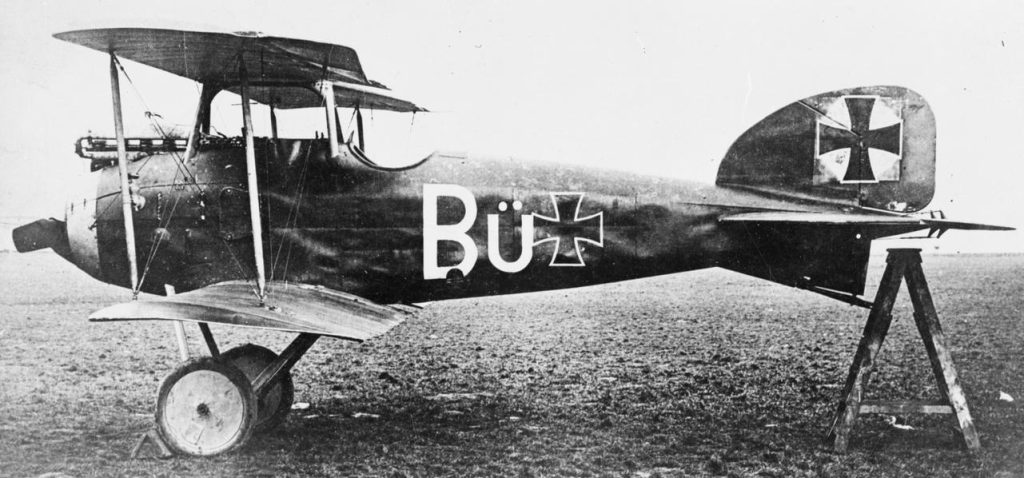
Early Albatros D.I and D.II fighters typically wore clear-doped linen and varnished plywood — the natural wood of the fuselage giving them a warm, almost furniture-like finish — with the straight-armed black Iron Cross (the Eiserne Kreuz, later replaced by the straight-sided Balkenkreuz) on wings, fuselage and rudder. Personal and unit markings were still relatively restrained in 1916 compared with the flamboyant colour schemes of 1917–18, when aircraft like Richthofen's all-red machines became famous.
The shape, though, was already unmistakable: the deep, rounded plywood fuselage, the neat inline engine with its prominent exhaust manifold, the two-bay wings and — on the D.II — the wing-mounted radiator and splayed struts. It is a genuinely handsome aeroplane, and much of what modern reproductions and museum replicas try to capture is exactly that combination of purposeful proportions and fine woodwork. For all the talk of guns and tactics, part of the Albatros's enduring appeal is simply that it is beautiful.
Armament & payload
The Albatros D.I and D.II carried two guns when almost everything they met carried one, and that single fact reorganised the air war
This is an aeroplane whose armament section is the whole story. In the summer of 1916 the standard single-seat fighter of every air force carried one machine gun: the DH.2 had a Lewis on a pillar mount, the Nieuport 11 and 17 a Lewis above the wing or a synchronised Vickers, the Fokker Eindecker one lMG 08. The Albatros arrived with two synchronised 7.92 mm lMG 08/15 Spandau guns mounted side by side on the fuselage decking, firing through the propeller arc, in front of the pilot where he could reach both to clear a jam. It could do this because it had 160 hp to carry the weight and because an Albatros works foreman had built a synchronising gear that would work with an inline engine and two guns at once. The result was a fighter that could open fire at a range and with a weight of fire nothing on the British side could answer, from a position of superior height and speed that its performance let it choose.
The rest of the aeroplane carried nothing at all. There were no bombs, no camera, no wireless, no flares of any operational consequence: the D.II is as pure a gun platform as the war produced, an engine and two Spandaus joined by a plywood shell. That purity is the point. Boelcke's Jagdstaffel was a formation built around the proposition that a small number of aeroplanes that did one thing supremely well, flown by men trained to fight together, would defeat a larger number of aeroplanes that did several things adequately. He was right, and the Royal Flying Corps paid for the lesson through the autumn of 1916 and again, catastrophically, in April 1917.
What the armament could not do is worth stating as plainly as what it could. Two rifle-calibre guns firing through a synchroniser produced perhaps 700 aimed rounds a minute between them, at a cyclic rate cut by the gear itself, from a mounting fixed rigidly to the airframe — which meant the pilot aimed the aeroplane. Against a fabric-covered two-seater this was lethal at 100 metres and useless at 400. There was no deflection-shooting aid beyond a ring-and-bead sight, no gun heating for the cold at 4,000 metres, and no way to clear a serious stoppage except by hand, in the open, in a slipstream, while flying the aeroplane. Gun fits varied. A handful of early D.Is are recorded with a single gun, some Austro-Hungarian Oeffag machines carried the 8 mm Schwarzlose in one and later two-gun installations, and individual pilots fitted telescopic sights, non-standard ring sights and personal ammunition mixes without troubling the paperwork.
Guns
- Two fixed forward-firing 7.92 mm (0.312 in) lMG 08/15 "Spandau" machine guns, mounted side by side on the upper fuselage decking immediately ahead of the cockpit and firing through the propeller arc
- The lMG 08/15 was the air-service adaptation of the Maxim-pattern MG 08: recoil-operated, water-cooled by origin but with the jacket slotted or replaced by a perforated barrel casing for air cooling in flight, belt-fed and capable of roughly 450–500 rounds per minute unsynchronised
- Both guns sat within the pilot's reach, which was a deliberate and much-copied design decision: stoppages in a Maxim-action gun are frequent, and a gun a pilot cannot reach is a gun he has lost for the sortie
- A very small number of the earliest D.Is are recorded with a single gun, and the Austro-Hungarian Oeffag series 53 substituted the 8 mm Schwarzlose M.7/12, a shorter-ranged and slower-firing weapon that its makers found awkward to synchronise
- The two-gun fit was not an Albatros invention — the Fokker E.IV had tried it and failed, because its rotary-driven gear could not keep two guns clear of the blades. The Albatros was the first aeroplane on which twin synchronised guns worked reliably enough to become the standard, and from the D.I onwards every German D-type carried two.
Ammunition and sights
- Commonly 500 rounds per gun in fabric belts, giving something over a minute of continuous fire per gun and, in practice, ten to fifteen short bursts
- Belts were fed from boxes in the fuselage decking and the spent links and cases collected internally rather than thrown into the slipstream and the tailplane
- Aiming was by ring-and-bead sight over the gun breeches; some pilots fitted an Oigee telescopic sight, which magnified beautifully and narrowed the field of view to the point of danger
- Ammunition was standard 7.92 mm S-Patrone ball with tracer and, later in the family's life, incendiary rounds for balloon work — incendiary against aircraft was formally forbidden by convention and informally universal
- Round counts for the D.I and D.II are inherited from later Albatros marks rather than attested by a surviving loading table, and should be read as the type's normal practice rather than a documented figure for these two marks specifically.
Synchronisation gear
- Albatros-Hedtke Steuerung: a rigid push-rod interrupter gear taken off the rear of the Mercedes D.III crankshaft, designed at Albatros by a works foreman named Hedtke specifically to solve two problems the Fokker gear could not — an upright inline engine instead of a rotary, and two guns instead of one
- Like all gears of the period it was semi-automatic in effect: firing impulses arrived continuously, most of them caught the gun mid-cycle and did nothing, and the gun fired only when an impulse found it ready. The consequence was a rate of fire meaningfully below the gun's free-firing rate, and a rate that varied with engine rpm
- Each gun needed its own linkage and its own adjustment, and a gear out of adjustment shot the propeller off. Ground crews test-fired on the aerodrome with the tail up and the aircraft picketed
- The D.V received an improved development, the Albatros-Semmler Steuerung; an official order of 24 July 1917 then standardised Fokker's flexible-drive Zentralsteuerung across all German aircraft, ending the era of firm-specific gears
- This is the component that deserves the credit usually given to the airframe. A twin-gun fighter is an arithmetic proposition — twice the weight of fire — only if the gear is reliable enough that both guns can be fired together without shooting the aeroplane down. Hedtke's gear was, and the Fokker E.IV's had not been.
Payload carried
- None. The D.I and D.II had no bomb racks, no external stores of any kind, no camera installation and no provision for one
- The useful load was fuel, oil, water, the pilot, two guns and about 1,000 rounds of ammunition — roughly 250 kg (550 lb) all told, or a little over a quarter of the loaded weight
- Very light signalling equipment was carried on some machines — streamers on the struts for a formation leader, occasionally a Very pistol stowed in the cockpit for recall and recognition
- Where an Albatros needed to communicate with the ground it did so by dropping a weighted message bag or by flying low over the aerodrome and waggling its wings, exactly as its opponents did
- The absence is the design statement. German fighter policy from the summer of 1916 was that fighters fight and two-seaters do everything else, and the Albatros D-types were built to that policy with no compromises for secondary roles. Compare the RFC's habit of hanging 20 lb Coopers under fighters and sending them to strafe trenches, a practice that cost it aircraft and pilots it could not spare.
Cockpit, sights and view
- Open cockpit with a small windscreen; tachometer, altimeter, fuel pressure gauge and compass, with a hand pump for fuel pressure and a magneto switch to hand
- The D.I's view was its cardinal fault: the upper wing sat high on a four-strut cabane and its centre section blanked the sky forward and above — precisely the quarter from which an attack was launched and precisely where Boelcke's own doctrine told a pilot to look
- The D.II answered it by lowering the upper wing 36 cm and rearranging the cabane struts; late machines splayed those struts outwards into a Vee and moved the radiator into the wing, clearing the sightline almost entirely
- Downward view over the nose was poor in the manner of every tractor biplane with a six-cylinder engine in front of the pilot, and landing was done by looking out to the side
- It is worth being exact about the Vee struts, because the point is routinely garbled. The D.II's late Vees were cabane struts, joining the upper wing to the fuselage. The Vee interplane struts that gave the D.III its RFC nickname of "V-strutter" were a different feature on a different mark, and came with the single-spar lower wing that then started to fail.
What it did not carry
- No parachute. The Heinecke static-line parachute reached German fighter units in the spring of 1918, roughly eighteen months after the D.II left the front line; Albatros pilots of 1916 flew with nothing
- No armour, no self-sealing tanks and no fire extinguisher. The fuel tank sat behind the engine and immediately in front of the pilot, which is where fuel tanks sat on almost every fighter of the war
- No oxygen and no cockpit heating, on an aeroplane routinely worked at 3,000–4,000 m in a north European winter
- No wireless. Jasta tactics were worked out on the ground before take-off and executed by hand signal, by watching the leader, and by the Dicta Boelcke's insistence that a formation fights as a formation
- Boelcke was killed on 28 October 1916 in a collision that damaged his upper wing; he had not fastened his safety belt and was not wearing his flying helmet, and he died of a fractured skull. No item on this list would have saved him — but the list is a reminder of how bare an aeroplane a leading ace of 1916 actually flew.
Three typical loadouts
- Jasta offensive patrol, Somme, autumn 1916
- Two lMG 08/15 with 500 rounds a gun, full tank, four to six aircraft in loose line abreast at 3,000–3,500 m over the German side of the lines, waiting for the prevailing westerly to carry RFC formations to them. An hour and a half from chocks to chocks. This is the sortie the aeroplane was designed for and the one that broke the RFC's ascendancy of mid-1916.
- Escort and protection of a working two-seater
- Same fit, flown as a pair or a Kette weaving above and behind an Albatros C-type or LVG on artillery observation or photography. Tedious, unpopular and strategically the more important half of the fighter's job: the whole purpose of holding air superiority in 1916 was to let one's own two-seaters correct artillery fire and to stop the enemy's doing the same.
- Oeffag series 53, Isonzo front, 1917
- Austro-Daimler of 185 hp, Schwarzlose guns, wing-mounted radiator, flown against Italian Nieuports and Hanriots over mountainous ground where the climb figures mattered far more than they did in Flanders. A small number of aircraft and a footnote in the type's history, but the beginning of the Oeffag line that would produce the best Albatros fighters anyone built.
Sourcing caveat: German gun and ammunition returns for 1916 are thin, and the round counts, sight fits and belt arrangements described above are the type's general practice as recorded across the Albatros D-family rather than figures documented for the D.I and D.II specifically. Where a detail is attested only for the later D.III or D.V it has been described as such. The Oeffag armament in particular varied from batch to batch and the surviving Austro-Hungarian records are incomplete.
Variants
Fifty D.Is and 275 D.IIs began a line of some four thousand aircraft and one very expensive structural mistake
The Albatros D-family is one of the most consequential and least understood lineages of the First World War. It begins in the summer of 1916 with a fast, strong, conventional two-bay biplane that happened to carry twice the firepower of anything it met, and it ends in November 1918 with the same fuselage, the same engine family and a wing that Idflieg had been trying to make safe for two years. Between those points the family equipped the Jagdstaffeln through the period of German air superiority that ran from the autumn of 1916 to the summer of 1917, and it is Albatros D.IIIs, not D.IIs, that did the killing in Bloody April 1917, when the RFC lost between 245 and 275 aircraft and over 300 aircrew killed, missing or taken prisoner in a single month.
The D.I and D.II are the honest members of the family. They were designed as biplanes, with two spars in each wing and parallel interplane struts, and they did not break. What followed was a decision to chase manoeuvrability by copying the French: the D.III took the Nieuport 11's sesquiplane layout, with a narrow-chord single-spar lower wing and Vee interplane struts, and bought a better rate of climb and a better downward view at the cost of a wing whose main spar sat too far aft and which twisted under load. Ribs and leading edges began failing in January 1917, the fleet was grounded on 27 January, Richthofen himself found a cracked lower wing on a new machine, and the family flew under a dive restriction from then on. The Austrians, building the same aeroplane under licence at Oeffag with thicker ribs and spar flanges and progressively more powerful Austro-Daimler engines, largely engineered the problem out and finished the war with the best Albatros fighters anyone made.
A word on Jagdstaffel 2, because the D.I and D.II cannot be separated from it. The unit was formed on 10 August 1916 at Bertincourt under Oswald Boelcke, who had been given leave to hand-pick his pilots and chose, among others, Erwin Böhme and a cavalry officer of no particular distinction named Manfred von Richthofen. Its first aircraft arrived on 1 September 1916: two Fokker D.IIIs and a single Albatros D.I. On 16 September five more D.Is and a D.II for Boelcke himself were delivered; that evening Leutnant Otto Höhne scored the first victory for the type, and on the afternoon of 17 September Boelcke led five pilots against British bombers near Marcoing, brought down three, and gave Richthofen his first confirmed victory. Boelcke had 40 victories by 26 October and was dead two days later, killed when Böhme's undercarriage brushed his upper wing during a chase after a DH.2 and the fabric stripped from the spars. He was 25. The eight maxims of the Dicta Boelcke, written while he was grounded after his nineteenth victory, outlived the aeroplane, the squadron and the air force that produced them, and remain recognisable in fighter doctrine today.
- D.I (1916 / about 50 pre-series and series aircraft)
- The original: 160 hp Mercedes D.III, two lMG 08/15, plywood semi-monocoque fuselage, two-bay wings with parallel struts, Windhoff box radiators on the fuselage sides, upper wing mounted high on a four-strut cabane. Ordered June 1916, in squadron service from August and with Jasta 2 from 1 September; some 50 were at the front by November 1916. Fast, strong, heavily armed and half-blind upwards.
- D.I with Benz Bz.III (1916 / a minority of D.I production)
- A 150 hp Benz in place of the Mercedes, fitted when Mercedes engines were short. Ten horsepower down on an already heavily loaded airframe, and correspondingly unloved. The installation is otherwise identical and the two are hard to tell apart in photographs.
- D.II (1916–1917 / 200 built by Albatros)
- The fix, and the version that mattered. Upper wing lowered 36 cm and staggered slightly forward, cabane struts rearranged, everything else unchanged — same fuselage, same engine, same guns, same performance. An initial 100 were ordered in August 1916. It was the standard German fighter of the winter of 1916–17, with 214 on the Western Front in January 1917.
- D.II (LVG-built) (1916–1917 / 75 built under licence)
- Luft-Verkehrs-Gesellschaft built a quarter of all D.IIs under licence at Johannisthal. Externally indistinguishable; the licence arrangement is a small illustration of how German aircraft production actually worked, with designs moved between firms by Idflieg as capacity dictated rather than left with the originator.
- D.II, late production (from November 1916)
- Windhoff side radiators deleted after the Idflieg ban of November 1916 and replaced by a Teves und Braun aerofoil-section radiator in the upper wing centre section; splayed Vee cabane struts on many aircraft. The definitive D.II silhouette, and the configuration carried straight over to the D.III.
- D.II (Oef), Oeffag series 53 (1916–1917 / 16 or 20 built)
- Austro-Hungarian licence production by Oesterreichische Flugzeugfabrik AG at Wiener Neustadt: 185 hp Austro-Daimler, wing-mounted radiator, 8 mm Schwarzlose machine guns. English-language sources give 16 aircraft and German-language sources 20; the discrepancy is unresolved and both figures are reported here rather than averaged. A tiny production run, but the start of the most successful Albatros programme of the war.
- D.III (1917 / roughly 1,300 by Albatros Johannisthal and OAW Schneidemühl)
- The sesquiplane. Nieuport-inspired narrow-chord single-spar lower wing, Vee interplane struts, better climb and a much better view downwards. Also the mark that failed structurally: rib and leading-edge failures from January 1917, a grounding order on 27 January, reinforcement by 19 February, and a standing warning against steep dives thereafter. 446 were on the Western Front in November 1917. This is the Bloody April aeroplane.
- D.III (Oef), series 53.2, 153 and 253 (1917–1918 / about 526 built, 586 by some accounts)
- The Austrian D.III, in three engine standards of 185, 200 and 225 hp, with thicker ribs and spar flanges that largely cured the wing problem, and from the 112th aircraft of series 153 a rounded spinnerless nose that became its signature. Faster-climbing and stronger than the German original, and by 1918 arguably the best aircraft either Albatros or Oeffag built.
- D.IV (1917 / prototypes only)
- The road not taken: an unstaggered two-spar biplane wing cellule — effectively a return to D.II practice — combined with a fully cowled geared Mercedes D.III. Built to test the geared engine rather than as a fighter, and abandoned when the engine proved unready. Had it been pursued, the family would have been spared the sesquiplane and its failures.
- D.V and D.Va (1917–1918 / about 900 D.V and 1,612 D.Va)
- A new elliptical-section fuselage 32 kg lighter, the upper wing 121 mm closer, and the same suspect lower wing carried over. The D.V's aileron cables were run inside the upper wing and it kept shedding lower wings; the D.Va reverted to the D.III cable routing and added stronger spars, heavier ribs and a diagonal brace from the forward interplane strut to the lower wing leading edge. Richthofen called the D.V "so obsolete and so ridiculously inferior to the English". 131 D.V and 928 D.Va were still on the Western Front in May 1918 because there was nothing else to give the Jastas until the Fokker D.VII arrived.
Survivors, stated precisely, because this is a subject on which captions lie. No original Albatros D.I survives. No original Albatros D.II survives. No original Albatros D.III, German or Oeffag-built, survives. Nothing of the aeroplane described on this page exists anywhere in the world as a complete airframe. The only original Albatros single-seat fighters of any mark are two D.Vas, and both are worth naming exactly. The first is D.7161/17, flown by Jasta 46 and captured in April or May 1918, presented to the De Young Museum in San Francisco in 1919, acquired by what is now the National Air and Space Museum in 1949, restored from 1977 and on display in Washington since 1979; it carries the personal marking "Stropp" and it is an original airframe. The second is D.5390/17, shot down on 17 December 1917 by an Australian Flying Corps R.E.8, its pilot Leutnant Rudolf Clausz of Jasta 29 taken prisoner, the wreck recovered by the 21st Infantry Battalion of the Second Australian Division and ceded to the AFC as a trophy in February 1918; it is at the Australian War Memorial in Canberra, restored at the Treloar Technology Centre between 2001 and 2008. Everything else with Albatros markings is new. The Albatros D.Va at the Royal Air Force Museum in London is a modern New Zealand-built reproduction, as are Kermit Weeks's aircraft in Florida and two flying with The Vintage Aviator in New Zealand; Cole Palen's flying D.Va at Old Rhinebeck and the Hall-Scott-engined machine at the San Diego Air and Space Museum are likewise reproductions. The nearest thing to a flying Albatros of this family is a pair of Oeffag series 253 reproductions built in Austria by Koloman Mayrhofer, one airworthy behind a genuine Austro-Daimler and one for static display at the Flugmuseum Aviaticum near Wiener Neustadt — superb work, and still new aeroplanes. For a type built in the thousands, that gave Germany control of the air for the better part of a year and on which Boelcke and Richthofen made their names, the physical record is two captured D.Vas and a great deal of plywood cut since 1970.
The Albatros D.II in context: how it compared with its 1916 rivals
Representative figures for the fighters that met over the Western Front in the second half of 1916. Numbers are approximate and vary between sources.
| Aircraft | Origin | Guns | Engine | Top speed | Character |
|---|---|---|---|---|---|
| Albatros D.II | Germany | 2 × 7.92 mm | Mercedes D.III, ~160 hp | ~175 km/h | Fast, strong, heavily armed; fought by diving, not turning |
| Albatros D.I | Germany | 2 × 7.92 mm | Mercedes D.III, ~160 hp | ~175 km/h | As the D.II but with a higher wing that blocked the view |
| Nieuport 11 ‘Bébé’ | France | 1 × 7.7/8 mm | Le Rhône rotary, ~80 hp | ~155 km/h | Tiny and very agile; lightly built and single-gunned |
| Airco DH.2 | Britain | 1 × 7.7 mm | Gnôme/Le Rhône rotary, ~100 hp | ~150 km/h | Agile pusher with a clear forward gun; slow and dated by late 1916 |
| Fokker E.III | Germany | 1 × 7.92 mm | Oberursel rotary, ~100 hp | ~140 km/h | The Eindecker of the ‘Fokker Scourge’; outclassed by 1916 |
The pattern is clear: the Albatros gave up the rotary-engined agility of its rivals to gain speed, structural strength and a second gun — a trade that, combined with the new Jasta tactics, paid off decisively.
Timeline: the Albatros D.I and D.II in the war
Stories & eyewitnesses: twelve ways to understand the Albatros
Tap a card to open it. Twelve short stories, from the plywood fuselage to Boelcke's last flight.
01 · The setupWhen the Fokker Scourge ended, Germany needed an answer
Read the story
The synchronised gun that made the Fokker Eindecker feared in 1915 was no longer a secret weapon by 1916. The Nieuport 11 and DH.2 could out-fly the Eindecker, and through the spring and summer the Allies took command of the air over the Somme. German reconnaissance crews paid the price. The reply, when it came, was not a better dogfighter but a faster, stronger, twin-gun machine designed to fight on its own terms: the Albatros D.I. It reached the front in September 1916, and within weeks the balance began to shift back.
02 · ConstructionRobert Thelen's plywood revolution
Read the story
Instead of a fabric-covered wooden box braced with wire, the Albatros used a moulded plywood shell in which the skin itself carried much of the load — a semi-monocoque. It was clean, strong, light and beautiful, and it gave the aeroplane a rounded, streamlined form that fabric could never match. The stiffness of the shell also made it a steady gun platform and a safe machine to dive fast, which suited the tactics it was built for. The idea defined every Albatros fighter that followed, right through to the D.Va of 1918. For 1916, it was genuinely advanced engineering.
03 · FirepowerTwo guns where the enemy had one
Read the story
The D.I and D.II each carried two synchronised 7.92 mm lMG 08 ‘Spandau’ machine guns, firing forward through the propeller arc. Most Allied single-seaters of the moment — the Nieuport 11, the DH.2 — carried just one. In the two or three seconds of a firing pass, doubling the weight of fire roughly halves the time you need on target to bring an enemy down. That is a decisive edge, and it is central to why the Albatros helped Germany take back the sky in late 1916. Twin forward-firing guns soon became the standard every serious fighter copied.
04 · PowerThe 160-hp Mercedes heart
Read the story
The water-cooled Mercedes D.III inline-six, of roughly 160 hp and about 14.8 litres, gave the Albatros the power to be fast and heavy rather than merely nimble. It was built for reliability, not revs, and it faired cleanly into the streamlined fuselage. Developed further as the higher-compression D.IIIa, the same engine family went on to power the later D.III, D.V and D.Va — so the D.I and D.II introduced the powerplant that carried the whole dynasty through the war.
05 · The unitBoelcke and Jasta 2
Read the story
The D.I went straight to the elite. Germany reorganised its fighters into dedicated Jagdstaffeln from August 1916, and Oswald Boelcke — hand-picked to form and lead Jasta 2 — received some of the first Albatros fighters. Boelcke had personally toured the front selecting promising pilots for his squadron, among them a young cavalry officer named Manfred von Richthofen. Jasta 2 turned the Albatros, and the tactics built around it, into the template for the entire German fighter arm.
06 · DoctrineThe Dicta Boelcke
Read the story
Boelcke distilled air fighting into a short set of rules: secure the advantages of height and sun before attacking; once you begin an attack, carry it through; fire only at close range and only when the enemy is squarely in your sights; always keep your eye on your opponent; attack from behind; if attacked, turn to meet the attacker; over enemy lines never forget your own line of retreat; and, for the squadron, attack in groups of four or six and never let many chase one. The Dicta Boelcke outlived its author and shaped fighter tactics for decades — much of it still holds.
07 · The flaw and the fixThe D.I's blind spot, the D.II's answer
Read the story
The D.I's upper wing sat high and close to the fuselage on tall struts, directly across the pilot's forward and upward view — a serious flaw in a machine whose whole method was to see the enemy first and dive on him. Pilots complained, and the D.II fixed it: the wing came down, the cabane was replaced with outward-splayed N-struts, and the sightline opened up. Cooling was tidied at the same time. Mechanically the two were near-identical, but the D.II was the one pilots asked for.
08 · The apprenticeRichthofen's early mount
Read the story
Among the young pilots Boelcke chose for Jasta 2 was Manfred von Richthofen, who scored his first confirmed victory with the squadron in September 1916 flying the new Albatros. The future ‘Red Baron’ cut his teeth on the early Albatros fighters before rising, on later Albatros and Fokker machines, to become the war's top-scoring ace with 80 victories. The line from the D.I/D.II to the legend of the Red Baron is direct.
09 · The loss28 October 1916 — Boelcke's last flight
Read the story
In a crowded dogfight against British DH.2s, Boelcke's Albatros D.II touched the machine of his friend and wingman Erwin Böhme. It was the lightest of contacts, but it damaged Boelcke's upper wing and the aeroplane spiralled down. Accounts note he was not wearing his safety harness, and that his crash helmet was off; he died of a fractured skull in a crash that might otherwise have been survivable. Germany lost its greatest tactician at just 40 victories — and Böhme was left to carry the guilt.
10 · The turnRegaining the sky in late 1916
Read the story
With the Jagdstaffeln equipped with Albatros fighters and Boelcke's doctrine spreading through the service, the German fighter squadrons swung air superiority back over the Western Front in the closing months of 1916. It was the prelude to the punishing air fighting of spring 1917, when the Albatros-equipped Jastas inflicted such losses on the Royal Flying Corps that April 1917 is remembered as ‘Bloody April’.
11 · The dynastyFrom D.I and D.II to D.III and beyond
Read the story
The D.I and D.II were the opening act. Early in 1917 the sesquiplane D.III took over at the front, its narrow lower wing borrowed from the Nieuport for better manoeuvrability and view; the D.V and D.Va followed later that year. Together the Albatros fighters were the backbone of the German fighter force for much of the war, and among the most-produced German aircraft of the conflict — a dynasty that began with these two 1916 machines.
12 · SurvivalNo originals — but the type still flies
Read the story
Genuine original D.I and D.II airframes are essentially non-existent today; so much of Germany's WWI air force was destroyed after the Armistice, and wood-and-fabric aircraft rarely survive decades of neglect. What keeps the type in the air is a small number of meticulous reproductions — most famously those built and flown in New Zealand by The Vintage Aviator — which let us see, and hear, how the 1916 Albatros actually looked and moved. It is as close as anyone now gets to the real thing.
Oswald Boelcke, the Albatros D.II, and the invention of the fighter squadron
More than any single machine, the Albatros D.I and D.II are bound up with one man — the pilot who turned air fighting from a duel into a system, and who died in one.
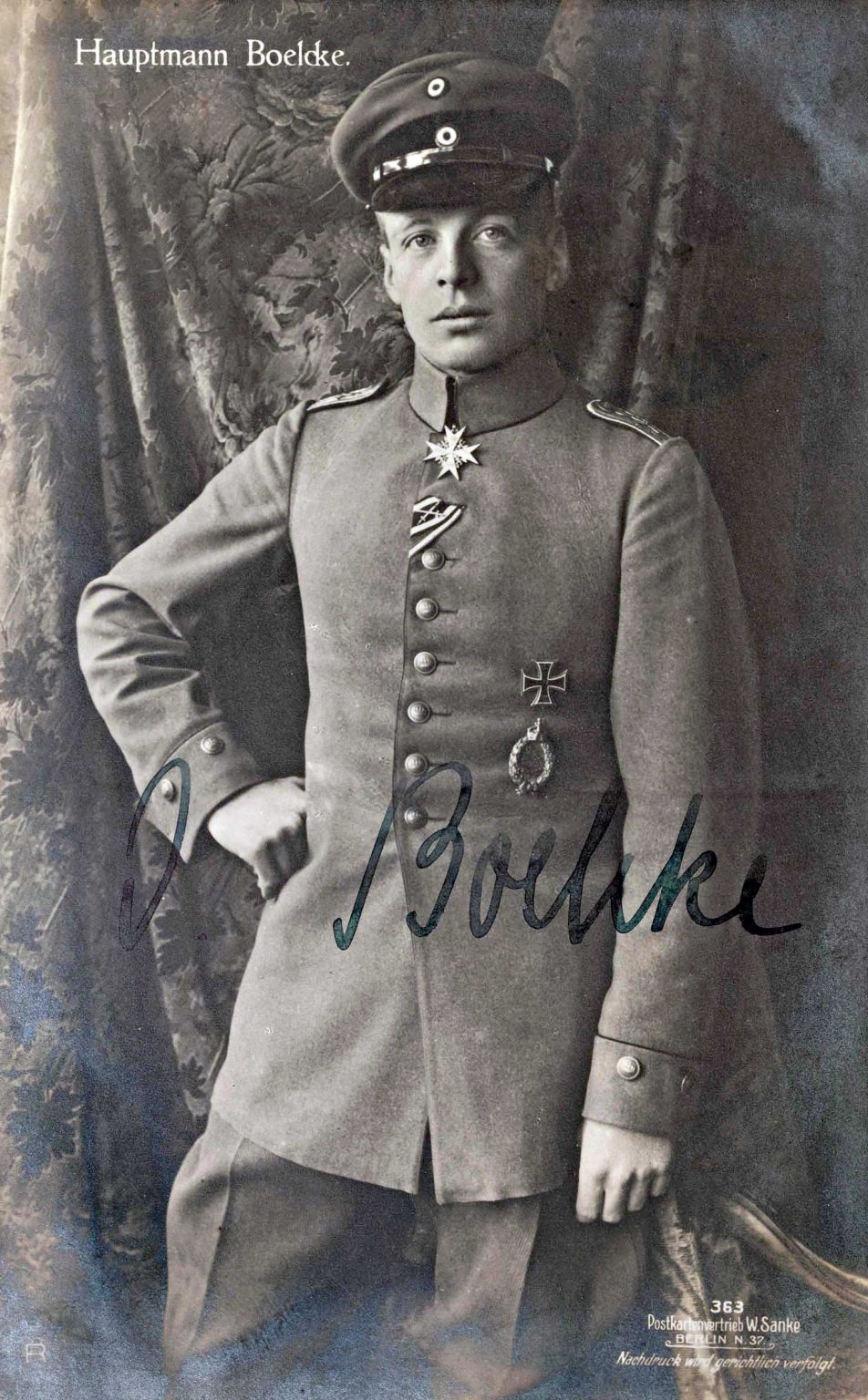
By 1916 Oswald Boelcke was already famous. He and Max Immelmann had been Germany's first great fighter pilots in the Eindecker, and Boelcke had thought harder than anyone about how to fight in the air. When the German command created the dedicated Jagdstaffeln in the late summer of 1916, Boelcke was given Jasta 2 and, crucially, freedom to select his own pilots and to receive the new Albatros fighters first.
What he built was not just a squadron but a method. Boelcke wrote down his principles as the Dicta Boelcke — a compact set of rules that any modern fighter pilot would still recognise. He drilled his men in them, led from the front on his Albatros D.I and then D.II, and ran up his score rapidly against the British over the Somme. Under his hand Jasta 2 became the model on which the whole German fighter arm was organised.
The Dicta Boelcke
On 28 October 1916, leading his men against British DH.2s, Boelcke's D.II brushed wings with the aircraft of his friend Erwin Böhme in the confusion of the fight. The contact damaged his upper wing; the Albatros went down and Boelcke — not wearing his safety harness, his helmet off — was killed. He had 40 victories. His funeral was a national event, and among the mourners were the pilots he had trained, including Manfred von Richthofen, who would carry the method forward. The aeroplane he died in, and made famous, was the Albatros D.II.
The legacy of the Albatros D.I and D.II: what they started
It is tempting to treat the D.I and D.II as a footnote — the warm-up act before the more numerous D.III and D.V. That undersells them. These two 1916 machines established almost everything that defined the German fighter force for the rest of the war, and a good deal that defined fighters generally.
They set the configuration: a streamlined plywood monocoque fuselage, a water-cooled inline Mercedes engine, and two synchronised guns firing forward. Every later Albatros followed it, and the twin-gun forward-firing layout became the universal standard. They set the organisation: the dedicated Jagdstaffel, concentrating fighters under a leader instead of parcelling them out as reconnaissance escorts. And they set the doctrine: the Dicta Boelcke, the diving attack, the emphasis on seeing first and fighting only on favourable terms.
The human legacy is just as direct. Jasta 2 — soon renamed Jasta Boelcke in its founder's honour — became the most famous fighter unit of the war, and the pilots Boelcke selected and trained went on to lead the German fighter arm. Chief among them was Manfred von Richthofen, whose first victory came on the Albatros in September 1916 and who would end the war as its highest-scoring ace. When people picture WWI air combat — the circling dogfight, the diving attack out of the sun, the ace with his personal tally — they are, whether they know it or not, picturing a world the Albatros D.I and D.II helped create.
And when, decades later, a Czech factory wanted a name for a sleek new jet trainer that would itself be built in the thousands and flown by air forces around the world, it reached back to this lineage and called it the L-39 Albatros. The name survived even when the biplanes did not — which, given how few original D.I and D.II airframes remain, may be the most fitting memorial of all.
Photo gallery: the Albatros D.I and D.II
Historical photographs plus modern airworthy reproductions. Click any image to enlarge. All images public domain unless noted.
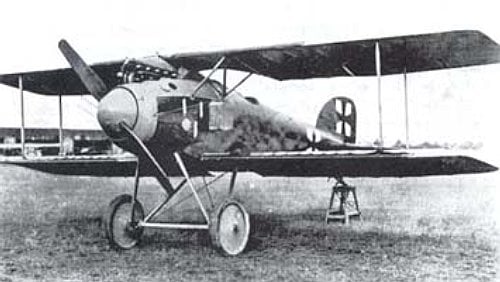
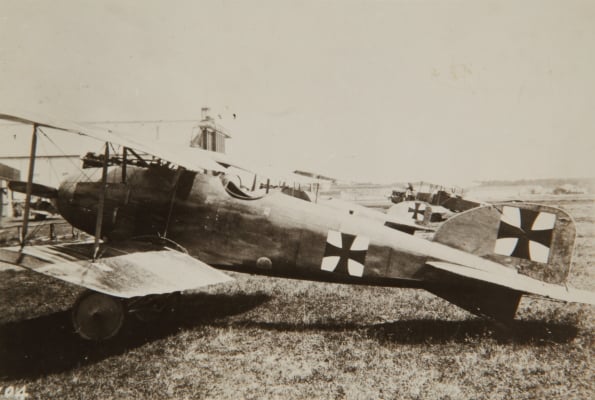
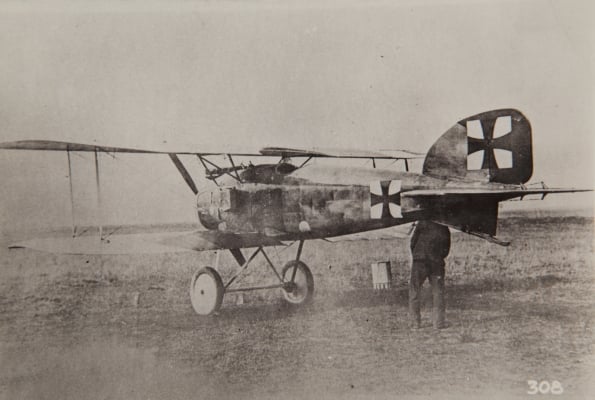
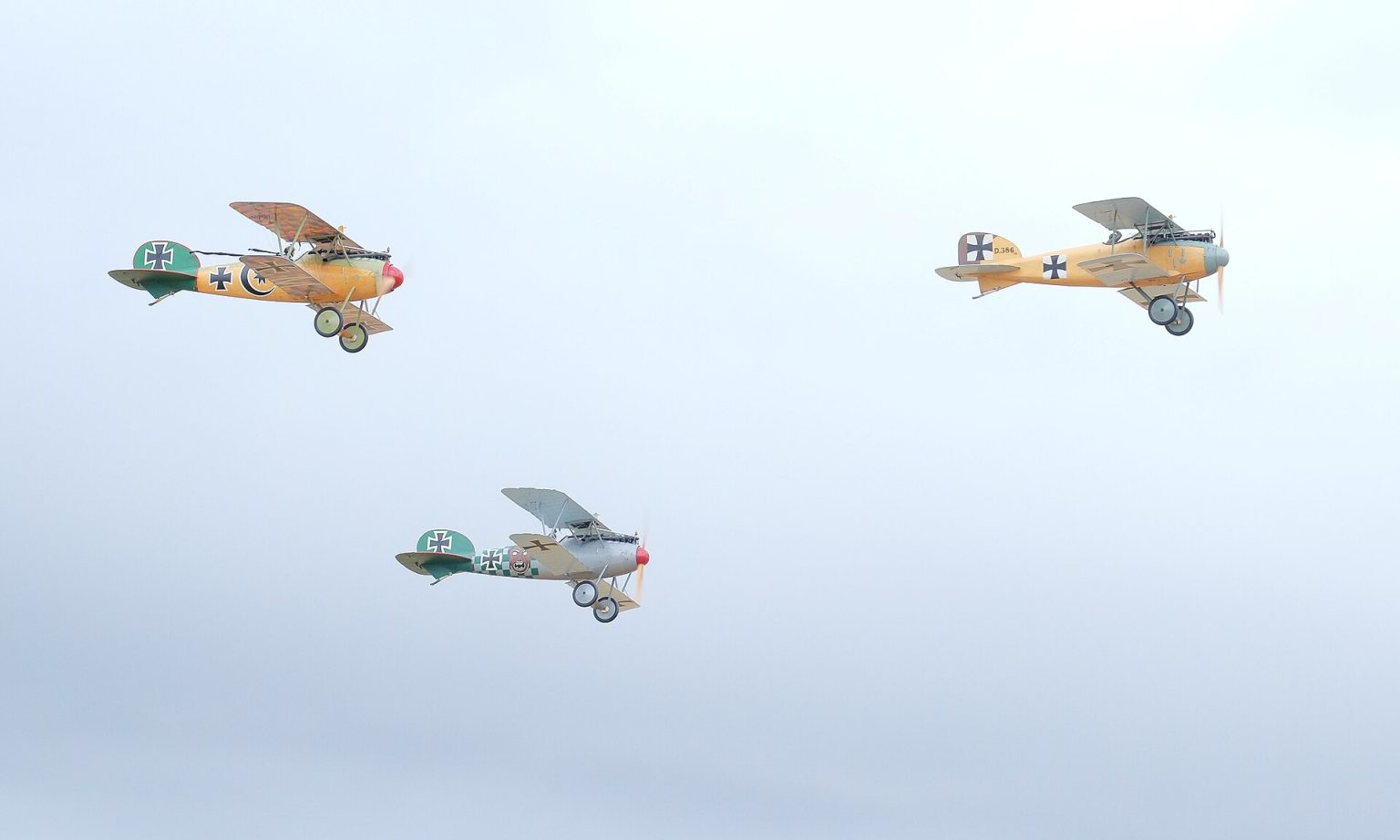
Watch: the Albatros D.II and Oswald Boelcke
A feature from the Historical Aviation Film Unit (The Vintage Aviator Collection), whose team builds and flies airworthy Albatros reproductions — telling the story of the D.II and Boelcke's fatal last flight.
Video: Historical Aviation Film Unit / The Vintage Aviator Collection — an authoritative source that operates real Albatros reproductions.
Operations overview: where the Albatros D.I and D.II belong on the map
The Albatros D.I and D.II are not a globe-spanning story like a Cold-War jet — they are a concentrated one. This was a 1916 German fighter, designed and built in Germany, thrown into battle over the French and Belgian Western Front, and today surviving essentially only as reproductions. The map reflects that honestly: a tight cluster in Europe, plus the far-flung places where reproductions and replicas now keep the type visible. Toggle the categories to explore each layer.
Categories: blue = origin and manufacture (Germany); camo = Western Front theatre where the D.I/D.II fought (France, Belgium); dark grey = wartime operators (Germany; Austria-Hungary in small numbers — hedged); light grey = countries where surviving airframes or reproductions exist. Austria-Hungary is shown via modern Austria and Hungary.
The Albatros D.I and D.II by the numbers
Estimates; individual figures are contested between sources and are flagged for fact-checking.
How to tell a D.I from a D.II — and both from the later D.III
The Albatros fighters are often confused with one another. Here is the honest, practical way to keep the 1916 pair straight from each other, and from the very different 1917 D.III.
Albatros D.I (1916). Look at the upper wing. On the D.I it sits high above the fuselage on a tall central cabane structure, close over the pilot's head, with the gap between wings quite deep. Two-bay wings of roughly equal chord, parallel interplane struts. Early machines often carried side-mounted ‘ear’ radiators on the fuselage flanks. If the top wing looks like it is blocking the pilot's forward view, you are almost certainly looking at a D.I.
Albatros D.II (1916). Same basic aeroplane, but the upper wing has been lowered closer to the fuselage and the tall cabane replaced by outward-splayed N-struts running from the fuselage sides. The pilot can see over the centre section. Production D.IIs typically carry a wing-mounted Teves & Braun radiator set into the upper-wing centre section rather than fuselage ‘ears’. Lower wing, splayed struts, wing radiator: that is the D.II.
Albatros D.III (1917) — a different aircraft. This is where confusion does real harm, so we say it plainly: the D.III is not the D.I or D.II. It adopted a Nieuport-style sesquiplane layout — a much narrower lower wing on a single spar, with V-shaped interplane struts instead of the D.I/D.II's parallel pair. If you see a slim lower wing and V-struts, that is a D.III (or a D.V/D.Va), a 1917 machine, and a separate exhibit. The ‘square’, two-bay, equal-chord wings with parallel struts are the signature of the 1916 D.I and D.II.
One more honest caveat: because genuine D.I and D.II airframes essentially do not survive, most photographs you will find online of a ‘flying Albatros’ are either a later mark or a modern reproduction. The wartime images in the gallery above are the real 1916 machines; the crisp colour in-flight shots are faithful reproductions, credited as such.
Seeing the Albatros D.II fly today: the reproductions that keep it alive
No original flies. But thanks to a handful of dedicated builders, the 1916 Albatros is not only a museum silhouette — you can still watch one take off.
Because genuine D.I and D.II airframes effectively no longer exist, everything we can experience of these aircraft in motion comes from reproductions. The most celebrated are those built in New Zealand by The Vintage Aviator and its associated Historical Aviation Film Unit — organisations that have made a speciality of constructing WWI aircraft to original drawings, with correct or faithfully re-created engines, and then actually flying them. Their Albatros machines are as close as the modern world gets to seeing a 1916 fighter in its element: the deep plywood fuselage, the inline Mercedes-pattern engine, the two-bay wings, all moving through the air as they did over the Somme.
This matters for honesty as much as for spectacle. A static museum replica can show you the shape; only a flying reproduction shows you the behaviour — the climb, the turn, the sound, the way the pilot has to crane around the structure to keep sight of an opponent (and, on a D.I replica, why that high wing was such a problem). It is also why the survivor category on our operations map is labelled ‘Surviving Airframes & Reproductions’ rather than simply ‘survivors’: for the D.I and D.II, the truthful answer is that reproductions are the survivors.
If you want to feel something of what these pilots felt — the noise, the wind, the sheer physical business of flying a fast, powerful machine on the edge of control — the honest modern route is not a WWI biplane but a genuine historic jet. That is exactly what MiGFlug arranges, and it is where this story connects to something you can actually book. See the section below, and migflug.com/flights-prices.
Albatros D.I and D.II: questions and answers
Can I fly in an Albatros D.I or D.II?+
No — not in a genuine original. No airworthy original Albatros D.I or D.II is known to survive, and the meticulous reproductions that do fly (for example those built and flown in New Zealand) are private, one-off aircraft, not a bookable experience. It is not a MiGFlug flight. MiGFlug does not offer Albatros D.I/D.II flights.
However, you can fly today in genuine military jets — from the L-39 Albatros jet trainer to the MiG-29, the Hawker Hunter and the F-104 Starfighter. Browse what is actually flyable at migflug.com/flights-prices.
What made the Albatros D.I and D.II so effective?+
Three things working together: a fast, strong, aerodynamically clean plywood semi-monocoque fuselage; a relatively powerful ~160-hp Mercedes D.III engine; and, crucially, two synchronised Spandau machine guns when most Allied fighters of 1916 had one. Speed, strength and double firepower made it a serious step up over the Nieuport 11 and DH.2.
How were the Albatros D.I and D.II different?+
Mostly visibility. The D.I's upper wing sat high and close to the fuselage, blocking the pilot's forward and upward view. The D.II lowered that wing and revised the cabane struts (to splayed N-struts), clearing the sightline, and tidied the cooling arrangements. Mechanically they were very similar; the D.II was simply the better fighting aeroplane, and pilots preferred it.
Who was Oswald Boelcke, and what was the Dicta Boelcke?+
Oswald Boelcke was Germany's leading early ace and the father of organised fighter tactics. Commanding the new Jasta 2, he flew the Albatros D.I and D.II and wrote the Dicta Boelcke — a short set of air-combat rules (attack from above and out of the sun, press an attack home, fire at close range, keep the enemy in sight, fight as a team) that shaped fighter doctrine for generations.
How did Boelcke die?+
On 28 October 1916, in a crowded dogfight, Boelcke's Albatros D.II collided with the aircraft of his own wingman and friend, Erwin Böhme. The D.II's upper wing was damaged and it went down. Accounts note Boelcke was not wearing his safety harness or crash helmet and died of a fractured skull. He had 40 victories — a devastating loss to the German air service.
How many Albatros D.I and D.II were built?+
Roughly 50 D.I and something over 200 D.II, with sources differing; some give around 260 of both types in front-line service at peak. Treat the exact numbers as approximate — wartime production records are inconsistent.
Did Manfred von Richthofen fly the Albatros D.I/D.II?+
Yes, early in his career. The future Red Baron served in Boelcke's Jasta 2 and flew the early Albatros fighters before achieving his greatest fame on later Albatros and Fokker types. Many future aces began on the D.I and D.II.
Are there any surviving Albatros D.I or D.II?+
Essentially no genuine originals — surviving airframes of the D.I and D.II are extraordinarily rare to non-existent. What keeps the type visible is a small number of high-quality reproductions, most famously those built and flown in New Zealand by The Vintage Aviator / Historical Aviation Film Unit, plus static replicas in museums.
How fast was the Albatros D.II?+
Around 175 km/h (roughly 109 mph) is the figure most commonly quoted, though sources vary and some cite up to about 190 km/h. Either way it was fast for late 1916 — fast enough to dictate when to fight and when to break off, which suited Boelcke's diving-attack tactics.
What replaced the Albatros D.I and D.II?+
The Albatros D.III, which reached the front early in 1917. It kept the plywood fuselage and Mercedes engine but adopted a Nieuport-inspired sesquiplane wing (a narrow-chord lower wing on a single spar) for better manoeuvrability and view. The D.V and D.Va followed later in 1917. Note that the D.III is a different, later aircraft — do not confuse the ‘square’ two-bay D.I/D.II of 1916 with the narrow-winged D.III of 1917.
What does ‘Spandau’ mean, and why two guns mattered so much?+
‘Spandau’ was the universal front-line nickname for the German air-cooled 7.92 mm lMG 08 machine gun, an aircraft development of the Maxim, named after the Spandau arsenal. Mounting two of them, synchronised to fire through the propeller, meant the Albatros could put roughly twice the weight of fire onto a target in a firing pass as a single-gun Nieuport or DH.2. In a fight measured in seconds, that is the difference between damaging an enemy and destroying him — which is why twin forward-firing guns quickly became the fighter standard.
Was the Albatros D.I/D.II related to the L-39 Albatros jet?+
Only by name and heritage, not by design. The L-39 Albatros is a Czechoslovak jet trainer of the 1960s–70s, built by Aero Vodochody and flown by air forces worldwide — and today one of the aircraft you actually can fly with MiGFlug. It borrowed the evocative ‘Albatros’ name from this WWI lineage. If you want the closest bookable experience to flying a historic ‘Albatros’, the L-39 jet is it.
Did Austria-Hungary use the Albatros D.I and D.II?+
In small numbers, yes, but with a big caveat. Austria-Hungary operated some German-built Albatros D-types, and its Oeffag company later licence-built Albatros fighters — but that licence production, which produced some of the finest Albatros fighters of all, related mainly to the later D.III, not the D.I/D.II. So while Austro-Hungarian use of the earliest marks is part of the story, we flag it as limited and treat the well-known Oeffag machines as a D.III chapter.
Where can I see an Albatros D.I or D.II today?+
Realistically, you cannot see a genuine original in flying condition anywhere — none is known to survive. What exists are high-quality reproductions and static replicas: airworthy reproductions built and flown in New Zealand by The Vintage Aviator / Historical Aviation Film Unit, and replica airframes in various aviation museums. If you see an ‘Albatros D.II’ flying at an airshow, it is a modern reproduction — a superb one, but not a 1916 original.
Why is the aircraft called ‘Albatros’?+
Simply because it was built by the Albatros Flugzeugwerke, the Berlin aircraft company founded in 1909–10. ‘Albatros’ is the manufacturer's name, not a nickname — the same way ‘Sopwith’ or ‘Fokker’ identifies a maker. The company built many types beyond the fighters, but the D-series scouts made the name famous. Decades later the Czechoslovak L-39 jet trainer borrowed the same evocative name, which is why there is a modern jet ‘Albatros’ you can actually fly today.
How reliable are the specifications on this page?+
They are representative period figures drawn from standard references, and we have deliberately hedged the contested ones. Top speed is usually given as around 175 km/h but sources range higher; production is roughly 50 D.I and 200+ D.II, with some sources citing about 260 combined in service; dimensions and weights vary slightly between marks and references. Cost figures are recorded as ‘not reliably recorded (WWI)’ rather than invented. Where a number matters and is uncertain, we say so on the page.
You can't fly the Albatros — but these, you can
No original Albatros D.I or D.II will ever carry a passenger again. But the thrill of flying a genuine, historic fighter is very much bookable today. Here is a selection of real aircraft you can fly with MiGFlug — including the modern jet that borrowed the Albatros name.
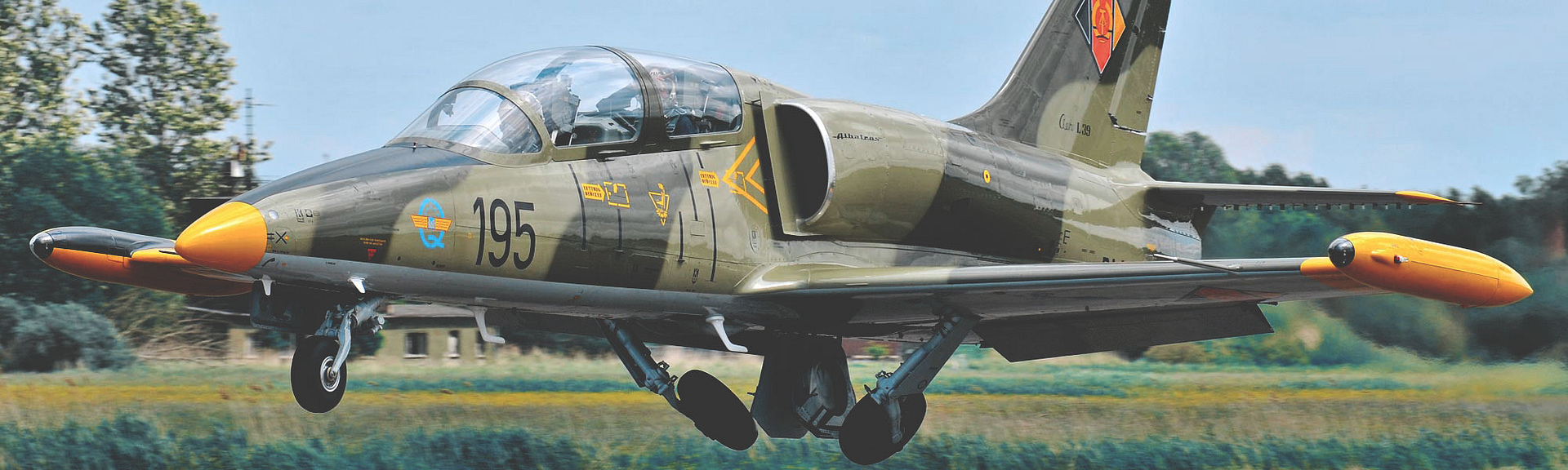 L-39 AlbatrosFlorida, USA — the modern jet that took the Albatros nameView this flight
 L-39 AlbatrosSwiss AlpsView this flight
 MiG-15Prague, CzechiaView this flightF-104 StarfighterFlorida, USAView this flightT-33 Shooting StarToronto, CanadaView this flight
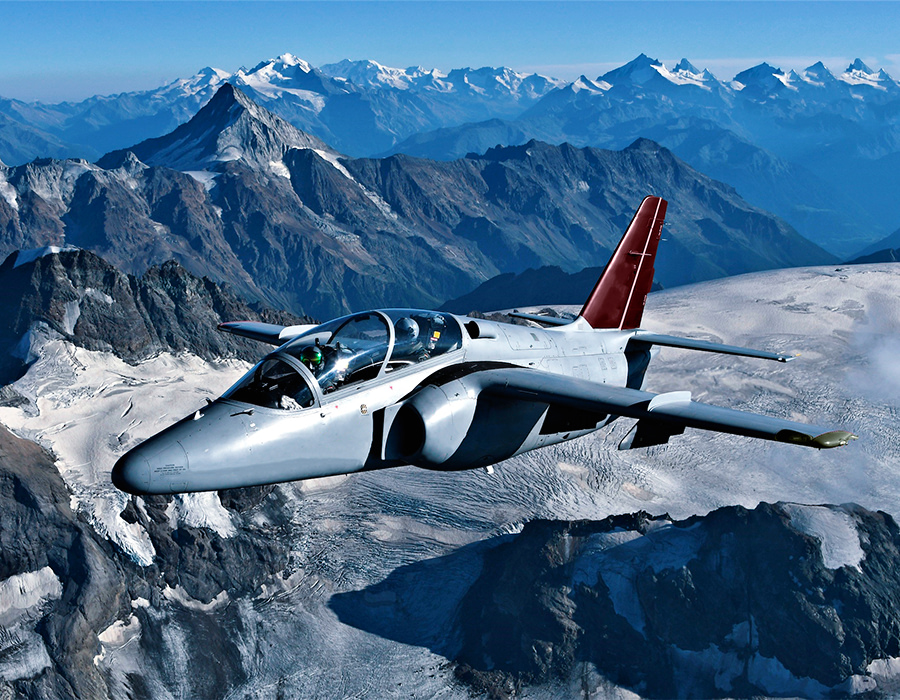 S.211 JetMunich, GermanyView this flightMB-326ItalyView this flight
 L-39 AlbatrosCalifornia, USAView this flight
Related aircraft in the museum
Albatros D.IIIThe 1917 sesquiplane that succeeded the D.I and D.II and led the German fighter arm into Bloody April.Fokker EindeckerThe synchronised-gun monoplane of the Fokker Scourge — the fighter the Albatros dynasty followed.Nieuport 11 BébéThe agile French sesquiplane that helped end the Fokker Scourge — and that the Albatros was built to beat.Sources & further reading
Photographs via Wikimedia Commons under public-domain or noted licences; individual credits appear in each caption. Specifications are representative period figures and vary between sources.