
Avia B-534
Widely regarded as one of the finest biplane fighters ever built — the fast, strong, four-gun pride of the Czechoslovak Air Force, ready in 1938 to defend its country, yet dismembered by politics before it could ever fight the war it was built for.
The Story
The Avia B-534: the great biplane fighter that never fought its war
The Avia B-534 is one of the great might-have-beens of aviation history. When it appeared in the mid-1930s it was, by common consent, one of the finest fighter aircraft in the world — fast, immensely strong, heavily armed and beautifully aerobatic, the pride of the Czechoslovak Air Force and a match for anything then flying. Yet it is remembered less for what it did than for what it was never allowed to do: prepared to the last rivet to defend its country, it was rendered impotent not in battle but by the diplomacy of Munich, and Czechoslovakia was carved up before its splendid biplane fighter could fire a shot in its intended defensive war.
The B-534 was the work of the Czechoslovak designer František Novotný at the Avia works, and it grew out of a line of earlier Avia biplane fighters. The prototype first flew in 1933, and the aircraft that emerged was a superb piece of engineering: a single-seat biplane with a slim, powerful in-line engine, a robust metal structure, and performance that put it at the very front rank of fighters in the world at its debut. Where many biplane fighters of the era were lightly built and lightly armed, the B-534 was fast, sturdy and carried a heavy battery of four machine guns.
The B-534 did not appear from nowhere. It was the culmination of a line of Avia biplane fighters — the earlier B-34 in particular — that Novotný had progressively refined, each design feeding lessons into the next. Avia, based near Prague, was one of the pillars of a Czechoslovak arms industry that in the 1930s ranked among the most capable in the world, home also to the famous Škoda works. The B-534 was the aviation expression of that industrial confidence: a fighter designed and built at home, owing little to foreign sources except its engine, and turned out in numbers that few countries of Czechoslovakia’s size could have matched.
“One of the best biplane fighters ever built — and a tragic symbol of a nation ready to fight that was never given the chance.”— the B-534’s place in history, in a sentence
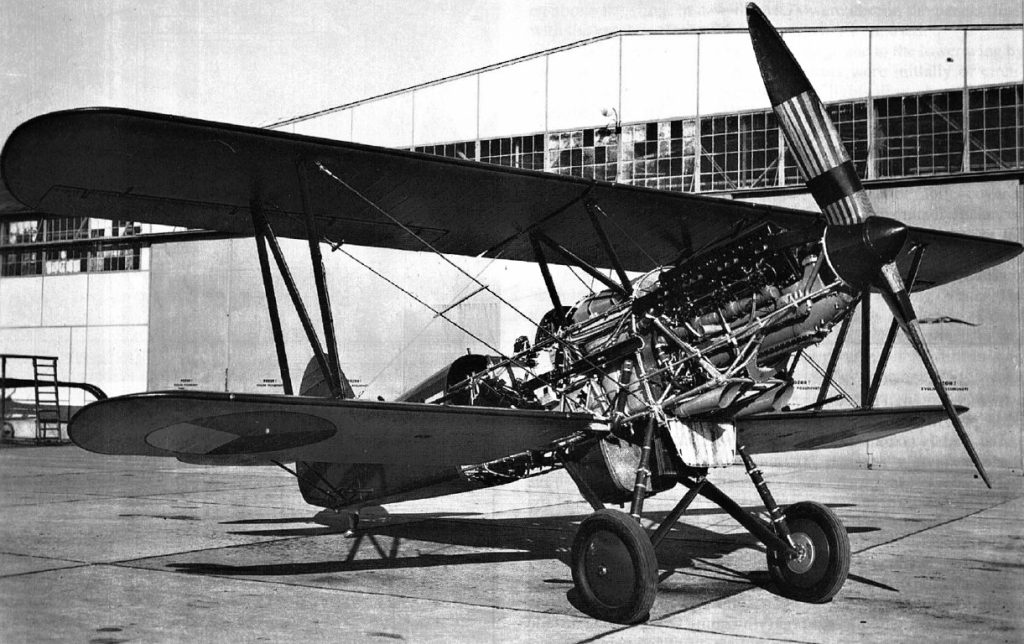
Power came from a Hispano-Suiza 12Ydrs V-12 engine, built under licence by Avia, giving the fighter a top speed of around 245 miles per hour — remarkable for a biplane, and enough to keep it competitive with the early monoplane fighters just beginning to appear. Later production aircraft gained an enclosed, sliding cockpit canopy, a rarity on biplanes of the period, and the definitive versions carried four 7.92mm machine guns, a formidable armament for the mid-1930s that gave the little fighter real hitting power.
Pilots regarded the B-534 highly. It was fast and responsive, climbed strongly and turned tightly, and its robust structure let them fly it hard without fear. In mock combat it could out-turn and out-manoeuvre most of what it was likely to meet, and its four guns meant that when a pilot did bring his sights to bear the result was decisive. For the middle years of the 1930s it came very close to the ideal of what a biplane fighter could be — a machine that flattered a good pilot and forgave a lesser one.
The B-534 quickly became a source of national pride. Its combination of speed, strength and agility made it a spectacular aerobatic performer, and it announced itself to the world at the great international flying meeting at Zürich in 1937, where the Czechoslovak team and their B-534s made a deep impression on foreign observers, performing superbly against the best fighters other nations could field. To a small country conscious of the growing threat from Nazi Germany, the B-534 was both a practical shield and a symbol of national capability and pride.
Behind the aircraft lay a serious strategy. Czechoslovakia, ringed by hostile or unstable neighbours and facing an increasingly aggressive Germany, invested heavily in its defences through the 1930s — a chain of border fortifications on the ground and a modern air force above. The B-534 was the sharp point of that air defence, and by 1938 several hundred were in service with the fighter squadrons. On paper Czechoslovakia had one of the stronger air arms in Europe, and its aircrew believed, with reason, that they could make an invader pay dearly for every mile.
By 1938 the Czechoslovak Air Force operated the B-534 in large numbers, and it formed the backbone of the nation’s fighter defence. When the Munich crisis came to a head that autumn, Czechoslovakia stood ready to fight: its aircrew were trained, its fighters were dispersed to war stations, and the B-534, though a biplane, was still a genuinely dangerous opponent. But the war never came. Under the Munich Agreement of September 1938, Britain and France pressed Czechoslovakia to cede the Sudetenland to Germany without a fight, and the country’s superb air force was never unleashed. It was a bitter humiliation for the men who flew the B-534, ready to defend their homeland and denied the chance.
Worse followed. In March 1939 Germany occupied the Czech lands entirely, establishing the Protectorate of Bohemia and Moravia, while Slovakia became a nominally independent client state of the Reich. The Czechoslovak Air Force was dissolved and its aircraft seized. The finest biplane fighter in the world had been handed over, almost intact, without ever having fought for the nation that built it — one of the saddest chapters in the history of any great aircraft.
There is a further poignancy in what became of the men who flew it. Denied the chance to fight at home, thousands of Czechoslovak airmen escaped abroad, many making their way to Britain, where they flew with great distinction in the Royal Air Force during the Battle of Britain and beyond — but in modern monoplanes, not their beloved biplanes. The B-534 stayed behind, in the hands of the occupier, while its pilots carried their fight to the skies over other countries.
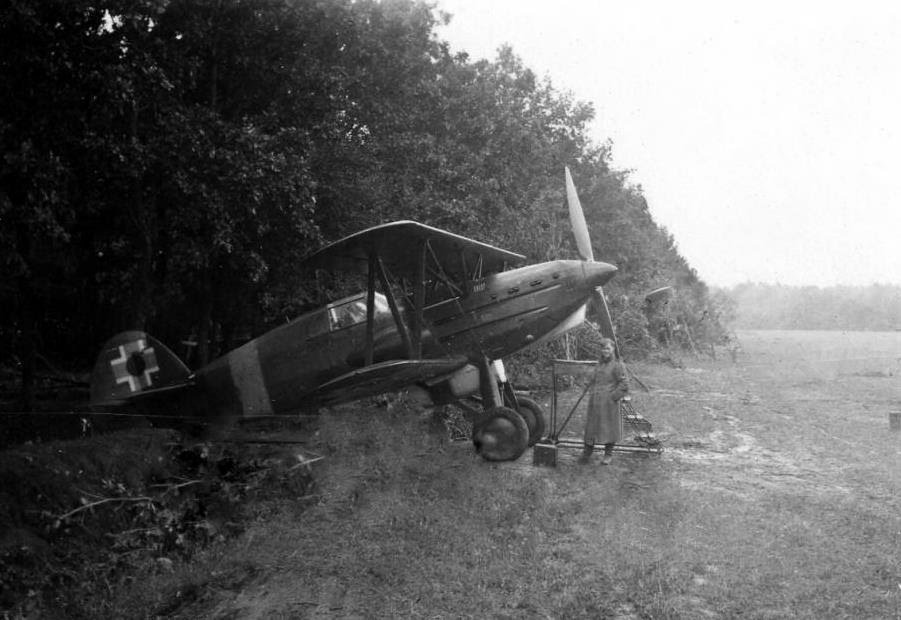
The B-534’s combat career, when it finally came, was therefore fought under other flags. The new Slovak Air Force operated numbers of B-534s during the Second World War, flying them on the Eastern Front after 1941 in support of the German invasion of the Soviet Union, and later in the Slovak National Uprising of 1944, when Slovak airmen turned against Germany. It was in this confused and tragic period that the B-534 is credited with one of the very last air-to-air victories ever scored by a biplane fighter — an event often recounted, though, as with many such claims, the details are debated and should be treated with due caution.
Germany, meanwhile, made use of the many B-534s it had seized. With the type already obsolescent as a front-line fighter, the Luftwaffe employed them mostly in second-line roles — as advanced trainers, as target tugs, and notably as glider tugs, towing assault gliders. A specialised cannon-armed variant, the Bk-534, even featured in one of the more curious footnotes of the war: fitted with an arrestor hook, examples were used in deck-landing trials intended for the German aircraft carrier Graf Zeppelin, a ship that was never completed. Other B-534s passed to Bulgaria and, in small numbers, to one or two other states, extending the fighter’s service still further from its origins.
In the Czech lands, meanwhile, the B-534 never lost its hold on the national imagination. It came to stand for the army that was mobilised but never allowed to fight — for a moment in which national readiness and national betrayal were fused together in a single autumn. Long after the last airframe was scrapped, the aircraft remained a fixture of Czech aviation memory: modelled, painted, written about and, eventually, rebuilt to fly again. Few aircraft anywhere carry so heavy a symbolic weight for the country that produced them, and fewer still earned it not through victories won but through a war they were forbidden to wage.
By 1945 the B-534 was thoroughly obsolete, overtaken many times over by the monoplane fighters that had transformed air warfare, and it was retired. Around 560 or more were built in all, across several production series and the cannon-armed Bk-534. Today a small number survive in the Czech Republic, including preserved and restored examples and a famous airworthy reproduction, keeping alive the memory of a magnificent aircraft. The Avia B-534 endures as one of the best biplane fighters ever built — and as a poignant reminder of a nation that stood ready to fight for its freedom with a first-class air force, and was denied the chance by the politics of its age.
01Novotný’s design and the first flight of 1933+
The B-534 was designed by František Novotný at the Avia company, one of Czechoslovakia’s principal aircraft manufacturers, and it built on a family of earlier Avia biplane fighters. The prototype took to the air in 1933, and development quickly showed that Novotný had produced something exceptional.
Czechoslovakia in the 1930s had a sophisticated and capable aviation industry, and the B-534 was its finest fighter achievement. Refined through a series of prototypes and production batches, it emerged as a thoroughly modern biplane — strong, fast and well armed — that could stand comparison with any fighter in the world at the time.
02“One of the best biplane fighters ever built”+
The B-534 is routinely described by aviation historians as one of the best biplane fighters ever built, and at its mid-1930s debut it ranked among the finest fighter aircraft of any kind then in service. This was no small claim for a small nation’s design, but it was earned on merit: the aircraft combined speed, strength, firepower and agility to a degree few contemporaries could match.
Its reputation rests on being a biplane perfected at the very end of the biplane era — taking that classic configuration about as far as it could go. It arrived just as the monoplane revolution was beginning, which is part of its poignancy: a near-perfect example of a type that was about to be superseded.
03The Hispano-Suiza engine and its performance+
The B-534 was powered by a Hispano-Suiza 12Ydrs V-12 in-line engine, built under licence in Czechoslovakia by Avia. This liquid-cooled engine gave the fighter a slim, streamlined nose and around 245 miles per hour top speed — genuinely fast for a biplane, and enough to keep the aircraft competitive even as the first monoplane fighters appeared.
Good power combined with the biplane’s inherent agility gave the B-534 an excellent all-round performance: a strong climb, a high service ceiling and superb manoeuvrability. It was this blend of speed and agility, unusual in a biplane, that put it at the front rank of fighters in the mid-1930s and made it such a formidable dogfighter.
04Four machine guns and the enclosed cockpit+
The definitive B-534 carried four 7.92mm machine guns, a heavy battery for a mid-1930s fighter and considerably more firepower than many contemporary biplanes, which often made do with two guns. This concentration of armament gave the little fighter real destructive power against the aircraft of its day.
Later production aircraft also featured an enclosed, sliding cockpit canopy — a modern refinement still uncommon on biplanes, most of which left their pilots in open cockpits. It gave the B-534 pilot better comfort and protection at the high speeds the aircraft could reach, and it was one of several touches that marked the design as unusually advanced for its configuration.
05Strong, agile and built to last+
The B-534 was notably strongly built, with a welded steel-tube fuselage structure and metal framing, fabric-covered in the manner of the day. This robustness made it able to withstand the stresses of hard aerobatic and combat manoeuvring, and gave it a reputation as a tough, dependable aircraft.
That structural strength, combined with its power and the aerodynamic advantages of the biplane layout, made the B-534 a superb aerobatic performer. Pilots could throw it around the sky with confidence, and its displays became famous. Strength and agility together defined the aircraft’s character — a fighter that was both a joy to fly and able to take punishment.
06Zürich 1937: international acclaim+
The B-534 announced its quality to the world at the great international flying meeting held at Zürich in 1937, one of the most important pre-war gatherings of military aircraft, where the leading air forces of Europe brought their best fighters to compete and compare.
The Czechoslovak team and their B-534s performed impressively at the meeting, holding their own against the most modern fighters other nations could field and drawing admiring attention from foreign observers. For a small country, it was a moment of real prestige, and it confirmed the B-534’s standing as a first-rate fighter on the international stage — a reputation that has endured ever since.
07The pride of the Czechoslovak Air Force+
By the later 1930s the B-534 was the backbone of the Czechoslovak Air Force’s fighter arm, operated in large numbers and forming the core of the nation’s aerial defence. For a young republic acutely aware of the danger posed by Nazi Germany on its border, this fleet of modern fighters was a vital shield and a source of genuine national pride.
The B-534 embodied the confidence and capability of interwar Czechoslovakia, one of the more industrially advanced states of central Europe. Its pilots were well trained and proud of their machines, and the aircraft featured prominently in the country’s military display and public life. It was, in every sense, the pride of the force.
08Munich 1938: the fighter that never fought+
In September 1938 the Munich crisis brought Czechoslovakia to the brink of war. The country mobilised, its air force was brought to readiness and its B-534 fighters were dispersed to war stations, prepared to defend the homeland against German attack. The pilots were ready and the aircraft were a real threat.
But under the Munich Agreement, Britain and France pressed Czechoslovakia to surrender the Sudetenland to Germany without resistance, and the war for which the B-534 had been prepared never took place. It was a profound humiliation: a first-class air force, ready to fight, stood down by the decisions of others. The tragedy of the B-534 — a superb fighter denied its defensive war — was sealed in that moment.
09Occupation and dismemberment, 1939+
The reprieve was brief. In March 1939 Germany occupied the remaining Czech lands, creating the Protectorate of Bohemia and Moravia, while Slovakia was split off as a nominally independent state aligned with the Reich. The Czechoslovak Air Force was dissolved and its aircraft, including the large B-534 fleet, were seized largely intact.
So the finest biplane fighter in the world passed into the hands of the very power it had been built to resist, without ever having fought for its own country. It is one of the most poignant facts of the B-534’s history: a magnificent weapon, prepared and ready, surrendered by political dismemberment rather than lost in battle.
10Slovak service: the Eastern Front and the 1944 Uprising+
The B-534’s wartime combat service was flown chiefly under the flag of the Slovak state. The Slovak Air Force operated numbers of the fighters, using them on the Eastern Front from 1941 in support of the German campaign against the Soviet Union, though by then the biplane was increasingly outclassed by modern monoplanes.
The aircraft’s most dramatic moment came in the Slovak National Uprising of 1944, when Slovak forces rose against Germany. B-534s took part in the fighting on the insurgent side, a strange late chapter in which the old biplane found itself in action against the very power that had inherited it. It was in this period that the type is credited with one of the last biplane air-to-air victories.
11One of the last biplane victories (a claim, hedged)+
Among the most frequently retold stories about the B-534 is that, during the Slovak National Uprising in 1944, one of the fighters scored what is often described as one of the very last air-to-air victories ever achieved by a biplane — a Slovak pilot reportedly shooting down an enemy transport aircraft. It is a striking image: an obsolete biplane claiming a kill in the last full year of the war.
As with many such “last” claims, the precise details are debated among historians, and the story should be treated with appropriate caution rather than as settled fact. What is not in doubt is that the B-534 saw genuine combat late in its life, long after the biplane fighter had, everywhere else, been rendered obsolete.
12German and Bulgarian use, and the Bk-534 carrier trials+
Germany found itself with a large number of seized B-534s, but by 1939 the biplane was no longer a front-line fighter. The Luftwaffe therefore used them mostly in second-line roles — as advanced trainers, as target tugs for gunnery practice, and as glider tugs, towing assault gliders into the air. In these humble duties the once-proud fighter served out much of the war.
One variant produced a memorable curiosity. The Bk-534, a cannon-armed version, was fitted with an arrestor hook and used in deck-landing trials intended for the German aircraft carrier Graf Zeppelin — a warship that was laid down but never completed, so the naval biplane fighter never went to sea. Other B-534s were supplied to Bulgaria and, in small numbers, to one or two other states.
13Survivors and preservation+
Given its age and the destruction of the war, genuine B-534s are rare today, and the survivors are concentrated in the Czech Republic, the successor state to its homeland. Preserved and restored examples are held in Czech aviation collections, where the type is rightly treated as a national treasure.
The B-534 is also kept alive in the air. A famous airworthy reproduction was built to flying condition, allowing modern audiences to see and hear this superb biplane fighter as it once was — a rare chance to appreciate an aircraft that, for all its excellence, was cheated of the career it deserved. These survivors ensure the B-534’s remarkable story is not forgotten.
Design & Engineering
How the B-534 was built: a biplane perfected
Strong, fast, four-gun and beautifully aerobatic, the B-534 took the biplane fighter about as far as the configuration could go — arriving just as the monoplane was about to make it obsolete.
Hispano-Suiza power
A licence-built Hispano-Suiza 12Ydrs V-12 gave a slim nose and around 245 mph — fast for a biplane and competitive with early monoplanes.
Four-gun punch
Four 7.92mm machine guns, a heavy battery for the mid-1930s, plus later an enclosed sliding canopy — both unusually modern for a biplane.
Strong and agile
A welded steel-tube structure made it tough and able to take hard manoeuvring, while the biplane layout made it a superb, confident aerobatic performer.
Specifications
Avia B-534 specifications: dimensions, performance and cost
Baseline: the B-534-IV of 1937—38, construction numbers 174—445, because at 272 aircraft it is by some distance the most numerous mark and the one nearly every photograph shows — enclosed sliding hood, Letov Hd-43 metal propeller, four synchronised guns in the fuselage. Deltas for the first three series and for the cannon-engined Bk-534 are in grey. One warning before the figures: Czech authorities and English-language references do not agree on this aeroplane's top speed, and the gap is 25 km/h. The Czech Military History Institute and cs-letectvi both publish 380 km/h; almost every English source repeats 405 km/h at 4,400 m. Both figures appear below.
Dimensions & weights
- Crew
- 1
- Wingspan
- 9.40 m (30 ft 10 in) upper and lower panels of nominally equal span, single-bay, wire-braced — a very compact fighter for 850 hp
- Length
- 8.10 m (26 ft 7 in) Bk-534: 8.19 m (26 ft 10 in), the cannon engine being longer
- Height
- 3.15 m (10 ft 4 in) some tables give 3.10 m (10 ft 2 in); the difference is tailskid against tailwheel
- Wing area
- 23.56 m² (253.6 sq ft)
- Empty weight
- 1,460 kg (3,219 lb) Bk-534: 1,631 kg (3,596 lb)
- Loaded weight
- 1,980 kg (4,365 lb) Bk-534: 2,222 kg (4,899 lb). Several English tables give 2,120 kg (4,674 lb) as a maximum overload figure
- Wing loading
- 84 kg/m² (17.2 lb/sq ft) at loaded weight — low, and the reason the aeroplane turned and climbed as it did
- Power loading
- 2.3 kg/hp (5.1 lb/hp) at the 860 hp altitude rating
- Fuselage
- welded steel-tube truss, light-alloy panels forward, fabric aft orthodox for 1933 and stronger than it needed to be, which is why the type survived a decade of rough handling
- Wings
- steel box spars with metal leading edges and fabric covering, ailerons on both upper and lower planes
- Undercarriage
- fixed divided legs with oleo-pneumatic shock absorbers; spats standard from the III series, routinely removed in the field because they packed with mud on grass strips. Tailskid on the earlier series, tailwheel on most IV series aircraft
Performance
- Maximum speed
- 380 km/h (236 mph) Czech sources. English-language references give 405 km/h (252 mph) at 4,400 m (14,440 ft); the lower figure comes from the aircraft's own air force and is the safer one to quote
- Maximum speed, Bk-534
- 375 km/h (233 mph) — the cannon version was heavier by 171 kg (377 lb) empty and paid for it
- Cruising speed
- 345 km/h (214 mph)
- Rate of climb
- 15.1 m/s (2,970 ft/min) initial — better than any Bf 109 of 1937 and the single best thing about the aeroplane
- Time to 5,000 m
- 4 min 28 s to 5,000 m (16,400 ft). Other tables give 5 min 30 s; the discrepancy tracks the same disagreement as the speed figures
- Service ceiling
- 10,600 m (34,800 ft) Bk-534: 9,500 m (31,200 ft)
- Range
- 600 km (373 miles) Bk-534: 500 km (311 miles)
- Endurance
- about 1 h 45 min derived from the published range at cruising speed; Czechoslovak data sheets quoted range rather than endurance by the mid-1930s
- Against the Bf 109 B-1
- 465 km/h (289 mph) — 85 km/h (53 mph) faster than the Avia, and the gap grew with every Messerschmitt mark. The B-534 out-climbed and out-turned it and could not catch it, which in 1939 settled the argument
- Against later biplanes
- Polikarpov I-153 444 km/h (276 mph), Fiat CR.42 441 km/h (274 mph), Gloster Gladiator about 410 km/h (255 mph). On raw speed the Avia was beaten by all three — but it flew in 1933 and reached squadrons in 1935, years before the Italian and Soviet machines, and it carried four synchronised guns and a supercharged V-12 when the Gladiator had a radial
- Handling
- light, well harmonised and forgiving, with an exceptional ceiling for a biplane fighter; pilots rated it a delight and it stayed in flying schools long after it stopped being a fighter
- Take-off and landing
- a grass-field aeroplane throughout its career; no take-off run figure appears in the standard published data for any series
Propulsion & systems
- Engine
- one Avia-built Hispano-Suiza 12Ydrs, water-cooled 60° V-12 of 36.0 litres (2,197 cu in), bore and stroke 150 × 170 mm (5.91 × 6.69 in). Built under licence at Avia Motors, Prague-Čakovice
- Rated power
- 650 hp (485 kW) at ground level, 750 hp (559 kW) for two minutes, and 850—860 hp (633—641 kW) at about 4,000 m (13,100 ft)
- Supercharging
- single-stage geared supercharger. This is the whole point of the design: the engine made more power at 4,000 m than at sea level, which is where the 10,600 m ceiling came from and where most 1930s biplanes had nothing left
- Bk-534 engine
- Hispano-Suiza 12Ycrs, mechanically the same unit with a hollow reduction-gear shaft so that a cannon could fire through the propeller boss — the French moteur-canon arrangement
- Propeller
- two-blade fixed-pitch wooden on the I to III series; two-blade metal Letov (Hochfeld) Hd-43 of 3.10 m (10 ft 2 in) on the IV series, worth a useful margin of speed on its own
- Fuel
- about 347 litres (76 imp gal, 92 US gal) in two fuselage tanks some sources give 320 litres; no drop tank was ever fitted
- Cooling
- water, with the radiator slung under the centre fuselage between the undercarriage legs
- Gun installation
- four 7.92 mm LK vz.30 in the fuselage, firing through the propeller disc, 250 rounds each the I series carried two in the nose and two in the lower wing; the wing pair was troublesome and was deleted from airframe B-534.47 onwards
- Synchronising gear
- the vz.30 was supplied in a pilot's belt-fed version expressly designed to be synchronised, cycling at 900—1,000 rounds a minute unsynchronised. The gear itself is rarely named in the literature
- Cockpit
- open on the I to III series; a sliding enclosed hood on the IV series, which is the quickest way to identify the mark in a photograph. A bubble canopy was tried on a few II series machines and not adopted
- Production
- 445 B-534 and 121 Bk-534 plus the prototypes, about 568 aircraft in all, built 1935—39 a stray figure of 666 circulates on one wiki and is not supported by Czech records
14The B-534’s variants, from series I to the Bk-534+
The B-534 was built in several production series, progressively refined. Early series had a partly open cockpit and a slightly lighter armament; the definitive later series introduced the enclosed sliding canopy and the full battery of four machine guns, along with detail improvements. Together these series accounted for the great majority of the roughly 560-plus aircraft produced.
The most distinctive derivative was the Bk-534, a cannon-armed version in which a cannon was intended to fire through the propeller hub, with a correspondingly reduced machine-gun fit. It was examples of this variant that were adapted with an arrestor hook for the German carrier deck-landing trials. The variants trace the B-534’s evolution from a fine mid-1930s fighter to the specialised late-war curiosities of its final years.
15The Avia B-534’s cost: what the records show+
As with almost all 1930s military aircraft, there is no reliable, transparent public figure for the B-534’s unit cost, cost per flight hour or total programme cost. It was procured through Czechoslovak state contracts in the 1930s, and consistent lifetime cost data for a type whose career was so disrupted by war and occupation simply does not exist in a usable form.
Rather than repeat an invented number, we list the cost fields here as “not reliably recorded.” What can be said is that Czechoslovakia built the type in large numbers — over 560 aircraft — which for a nation of its size represented a very substantial investment in its air defence, an investment tragically wasted by the events of 1938 and 1939.
16B-534 versus the coming monoplanes+
The B-534’s great misfortune of timing was that it reached its peak just as the monoplane fighter was transforming air combat. Aircraft like the Messerschmitt Bf 109, with their retractable undercarriages, enclosed cockpits and far higher speeds, represented a generational leap that no biplane, however excellent, could answer. By 1939 the B-534 was already being overtaken.
Had the war for Czechoslovakia come in 1938, the B-534 would still have been a genuinely dangerous opponent, and against the aircraft of that moment it could have given a very good account of itself. But the rapid pace of fighter development meant its window of front-line excellence was short. It stands as the finest expression of a design philosophy that was, even as it triumphed, on the point of disappearing.
17Surviving B-534s and where to see them+
Original B-534s are very rare, and those that survive are held in the Czech Republic, the homeland’s successor state, where the aircraft is treasured as part of the national heritage. Preserved and restored examples can be seen in Czech aviation museum collections.
Beyond the static survivors, an airworthy reproduction has been built and flown, giving modern audiences the rare chance to see this superb biplane fighter in the air — the sight and sound of an aircraft that, in period, was among the best of its kind. For anyone wishing to encounter the B-534, the Czech Republic is the place.
Armament & payload
The B-534 fought with four rifle-calibre machine guns, and the cannon it was named for never worked
The B-534's battery was four 7.92 mm LK vz.30 machine guns in the fuselage sides and decking, synchronised to fire through the propeller disc with 250 rounds apiece. In 1935 that was a heavy fighter armament — twice what the Hawker Fury carried and equal to the Gladiator that followed — and it was aimed by a pilot sitting behind a supercharged V-12 that still made power at 4,000 m. By 1940 four rifle-calibre guns were what you gave a trainer. The intended answer was the Bk-534, an airframe built around the 12Ycrs moteur-canon engine with a 20 mm Oerlikon firing through the propeller boss; the installation never worked, and by the summer of 1938 Czechoslovakia gave up and put a third machine gun and more ammunition in the cannon's place. Gun designations vary between sources: the earliest aircraft are usually given vz.28 guns and later ones vz.30, and some references simply write "Mk 30" or credit the guns to Česká zbrojovka Strakonice rather than Uherský Brod.
Gun
- Four 7.92 mm LK vz.30 machine guns, fixed and forward-firing in the fuselage, synchronised through the propeller disc
- 250 rounds per gun, 1,000 rounds in all, belt-fed from the pilot's version of the gun
- 900—1,000 rounds/min cyclic each, cut substantially by the synchronising gear; gun weight 10.4 kg (22.9 lb)
- I series aircraft up to B-534.46 had two guns in the nose and two in the lower wing; the wing installation was unreliable and was abandoned
- Bk-534 as delivered: three fuselage machine guns with an enlarged ammunition supply, not the cannon its designation implies
Air-to-air
- None. No guided air-to-air weapon existed anywhere while the B-534 was a front-line fighter
- The first operational air-to-air missile was the American AIM-9B Sidewinder of 1956, two decades later
- Interception in 1938 meant climbing above the target, diving behind it and firing four rifle-calibre guns from a few hundred metres
- The Avia's advantage in that game was height: it could still fight at 9,000 m, where most of its contemporaries were wallowing
Air-to-surface guided
- None, and nothing of the kind existed during the type's fighter career
- The first guided air-to-ground weapons used in anger were the German Fritz X and Henschel Hs 293, both operational in 1943
- By 1943 the surviving B-534s were towing gliders and target drogues for the Luftwaffe
- Ground work meant strafing and small free-fall bombs, and nothing else
Bombs
- Underwing racks for six 10 kg bombs, 60 kg (132 lb) in total
- Alternatively four 20 kg bombs, 80 kg (176 lb)
- A token capability on paper that turned out to matter: Slovak B-534s used it on anti-partisan work from 1942, and Bulgarian machines used it against German columns after Bulgaria changed sides on 9 September 1944
- No dive-bombing equipment, no bomb sight worth the name, no provision for anything heavier
Rockets
- None. No air-launched rocket was ever fitted to a B-534 in any air force that flew it
- This was not a limit of the era. Soviet I-153 biplanes — direct contemporaries in every sense — carried eight RS-82 rockets over Khalkhin Gol in 1939
- Czechoslovakia had no equivalent weapon in development, and the aircraft's later operators had no reason to invest in one
- The omission is a fair measure of how quickly the type slid out of the front line
Pods & other stores
- No drop tank, no gun pod, no camera pod, no airborne interception radar. As a fighter the B-534 carried its guns and nothing else
- German aircraft were fitted with towing gear for the DFS 230 assault glider and flew resupply tows on the Eastern Front
- Others were given target-towing equipment for gunnery schools, which is what most surviving airframes actually did in the war
- Three Bk-534s were converted with an arrester hook and catapult fittings for carrier trials in 1940—41
- Ski undercarriages of Polish manufacture were tested in Czechoslovak service; they were not adopted in quantity
Three typical loadouts
- Day interception, Czechoslovak Air Force, September 1938
- Four vz.30 guns, 250 rounds each, clean airframe. On 1 September 1938 some 328 B-534s and Bk-534s equipped 21 fighter squadrons. Not one of them fired at a German aircraft; the Munich Agreement was signed on 30 September and the air force was stood down without a battle.
- Slovak Air Force, anti-partisan work and the Uprising, 1942—44
- Four guns plus six 10 kg bombs, flown at low level against partisan positions in Slovakia and the occupied east. This was the type's real war — a 1933 fighter doing counter-insurgency because there was nothing else to give the squadrons — and it ended in the Slovak National Uprising, where four B-534s served in the insurgent Combined Squadron at Tri Duby. On 2 September 1944, guns only, Master Sergeant František Cyprich took off in B-534.217 after a test flight and shot down an unarmed Junkers Ju 52/3m in Hungarian markings whose crew appear not to have known the Uprising had begun. It is the first air victory of the Uprising and the last air-to-air victory generally credited to a biplane fighter. His commander told him off for destroying an aeroplane he could have forced down and captured.
- Glider tug and target tug, Luftwaffe, 1942—44
- Towing gear in place of any combat fit, guns often removed. B-534s hauled DFS 230 gliders to encircled German troops on the Eastern Front and pulled drogues for gunnery schools. Germany also lent them to the film industry, painted as Polish PZL P.11s for the propaganda feature Kampfgeschwader Lützow.
Ammunition loads, gun marks and even the fuel capacity differ between the standard references. Czech-language sources are the more reliable for this aircraft and have been preferred where they conflict with English ones; where a figure rests on a single source that is said in the entry. On the "last biplane victory": Cyprich's 2 September 1944 claim is consistently recorded in Slovak and Czech accounts and the airframe is identified as B-534.217, but no Hungarian loss record corroborating it could be traced. A later claim exists — a Fiat CR.42LW of Nachtschlachtgruppe 7 claimed a P-38 near Sisak in Croatia on 8 February 1945 — and if allowed it would displace the Avia. American records show no P-38 lost to that engagement, so the German claim is unconfirmed while the Slovak one is at least uncontested. The honest formulation is that the B-534 scored the last biplane victory that anyone has been able to verify, not the last one ever claimed.
Variants
Four production series, a cannon version without its cannon, and a naval experiment that tore itself off the airframe
The B-534's development is unusually tidy. František Novotný's B-34 of 1932 was rebuilt around the licence-built Hispano-Suiza V-12 and flew as the B-534.1 on 25 May 1933; a second prototype took a Czechoslovak national speed record of 365.7 km/h in the hands of Václav Kočí on 14 April 1934; four production series followed, each a modest refinement of the last, and a cannon variant closed the line in 1939. There were no radical redesigns because there was no time for one.
The claim usually made for this aeroplane — that it was the finest biplane fighter of its generation — needs qualifying rather than repeating. On top speed the later Fiat CR.42 and Polikarpov I-153 both beat it, and the Gloster Gladiator was close. What the Avia had was the combination: a supercharged V-12 giving a 10,600 m ceiling and a 15 m/s climb, four synchronised guns, and squadron service from October 1935, three and four years before the Italian and Soviet machines flew. Judged by what was in the air when it entered service, the claim stands. Judged in 1939, it does not, and the Czechoslovak air staff knew it — the monoplane Avia B-35 was already flying when the Germans arrived.
What follows is the airframe sequence. Construction-number blocks are given where Czech records support them.
- B-34 (1932—33, 2 prototypes)
- Novotný's parent design, tried with several engines. The second machine was rebuilt around the Hispano-Suiza 12Ydrs and redesignated, which is where the B-534 begins.
- B-534.1 (first flight 25 May 1933)
- First prototype, open cockpit. Won the Czechoslovak fighter competition against the Praga E-44 and Letov Š-231.
- B-534.2 (September 1933)
- Second prototype with an enclosed cockpit and revised undercarriage — the shape the IV series would return to. Set the 365.7 km/h (227 mph) national record in April 1934.
- B-534-I (cn 2—101, 100 aircraft, from October 1935)
- First production series. Open cockpit, wooden propeller, four guns with two in the nose and two in the lower wing; the wing guns were deleted from cn 47 and the aircraft rearmed with four in the fuselage.
- B-534-II (cn 102—147, 46 aircraft)
- Completed the original order. Four fuselage guns as standard from the outset. A bubble canopy was flown on a small number of these machines and did not become standard.
- B-534-III (cn 148—173, 26 aircraft, in service March—April 1937)
- Aerodynamic clean-up, chiefly a streamlined carburettor air intake. Wheel spats fitted as standard and removed by squadrons almost as standard.
- B-534-IV (cn 174—445, 272 aircraft, 1937—39)
- The definitive mark and the majority of all production. Enclosed sliding hood, Letov Hd-43 metal propeller, tailwheel. This is the aircraft that impressed everyone at Zürich in 1937.
- Bk-534 (cn 501—620, 121 aircraft, 1938—39)
- Cannon version on the 12Ycrs moteur-canon engine, intended to carry a 20 mm Oerlikon through the propeller boss plus two machine guns. The installation defeated Avia; from summer 1938 a third machine gun went in the cannon's place. Fifty-four aircraft reached the Czechoslovak air force from the first block and only three from the second; the remaining 63 were completed for the Germans after March 1939.
- Bk-534 carrier conversions (3 aircraft, 1940—41)
- Fitted with an arrester hook and catapult points and tested against the requirements of the never-completed carrier Graf Zeppelin. The fuselage had not been designed for arrested landings and the A-frame hook pulled out of its mounting more than once. The trials ended before the ship did, and the Bf 109T got the job on paper.
- Foreign designations (1937—42)
- Bulgaria bought 78 from German stocks and called them Dogan, the hunting hawk. Slovakia inherited 79 B-534 and 11 Bk-534 in 1939. Hungary flew a single captured example as HA-VAB, later G.192. Yugoslavia, Greece, Croatia and Romania took small numbers, the last as glider tugs.
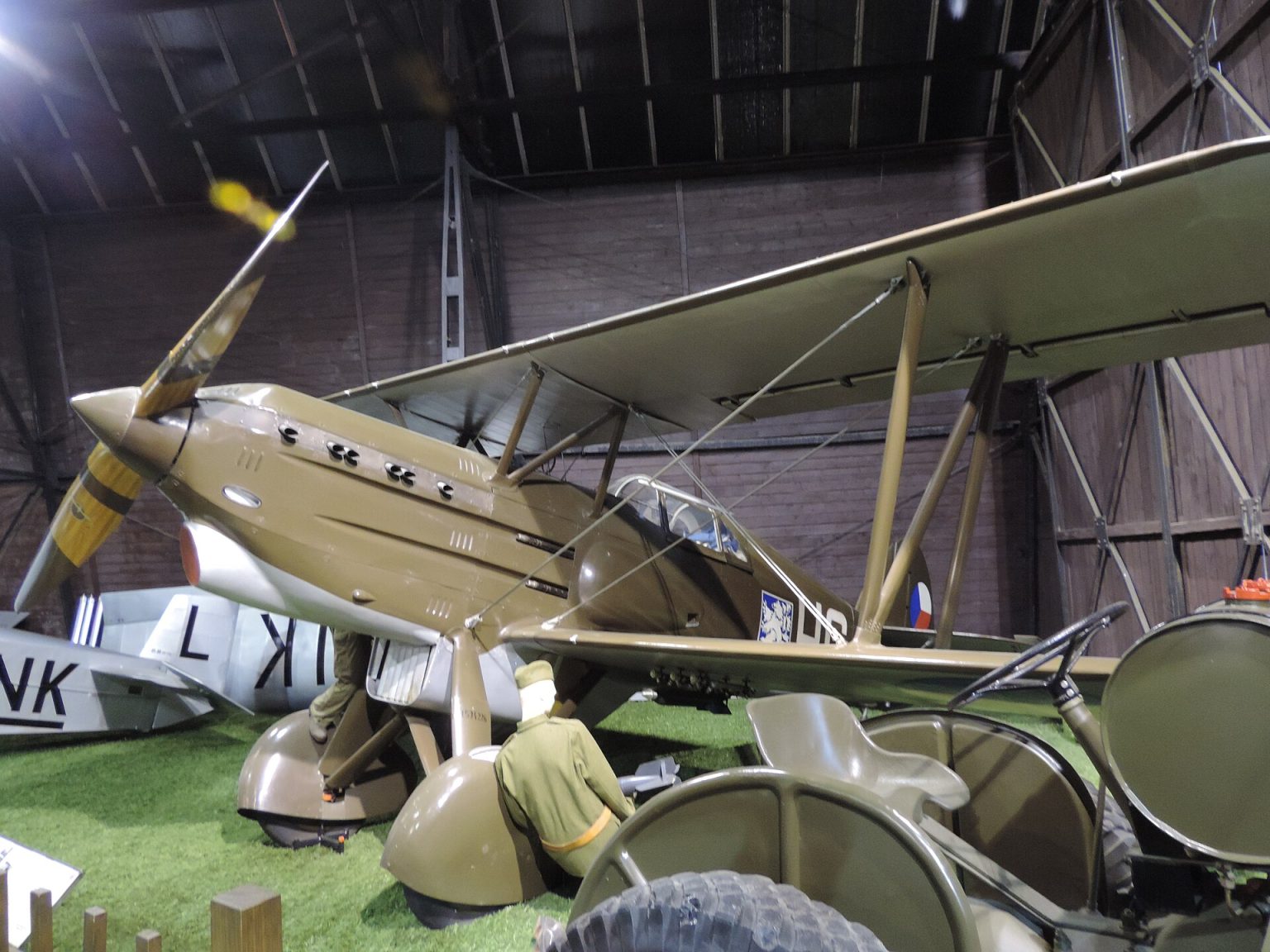
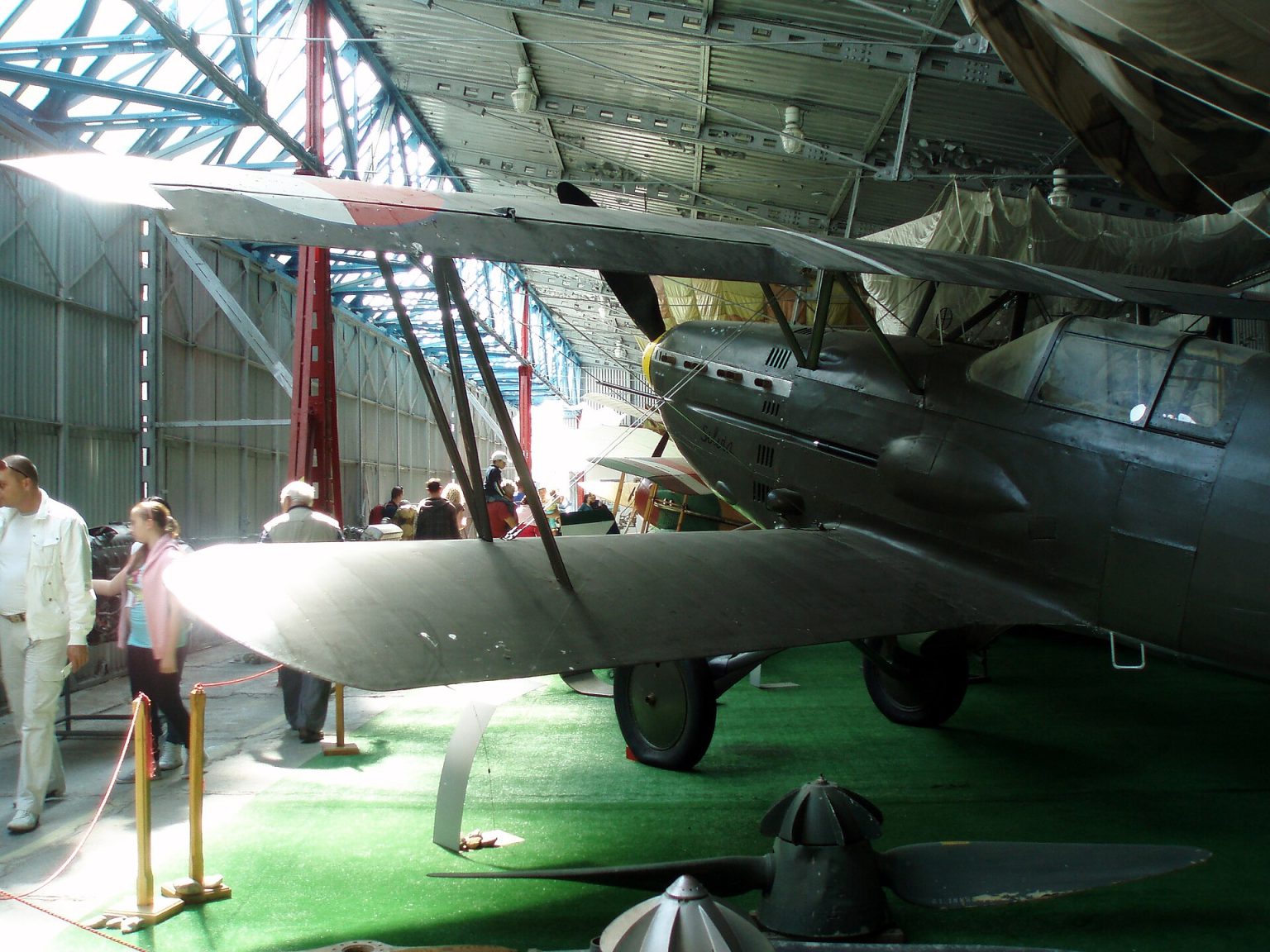
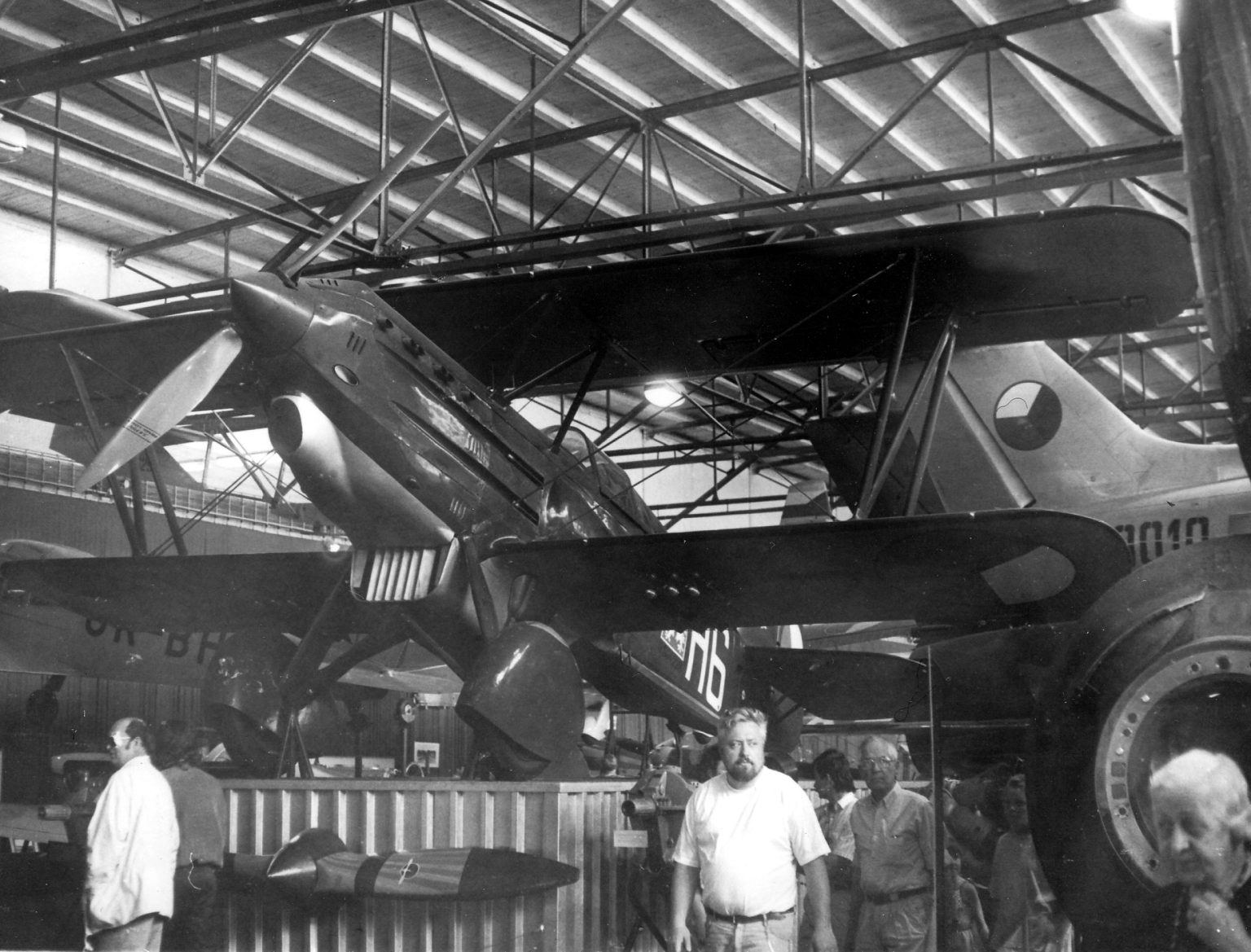
No original B-534 survives complete. What is displayed as a B-534-IV at the Kbely aviation museum in Prague is a replica built in 1975; the Bk-534 at the Museum of Aviation at Košice in Slovakia is a second replica. Both incorporate some original components recovered from wrecks and stores, and neither is an airframe that flew in service. Claims of an eight-aircraft Soviet NKVD unit flying captured B-534s appear in several popular accounts and could not be corroborated in any primary or specialist source; treat them as unverified. The count of aircraft passed to Slovakia in 1939 is given as roughly 71 in some English references and as 79 B-534 plus 11 Bk-534 in Slovak order-of-battle documents; the latter is the better attested.
Timeline
The Avia B-534 through the years
The prototype B-534, designed by František Novotný at Avia, takes to the air — the start of one of the finest biplane fighters ever built.
The B-534 enters Czechoslovak Air Force service and rapidly becomes the backbone of the nation’s fighter arm.
Czechoslovak B-534s impress at the international flying meeting at Zürich, confirming the fighter’s world-class reputation.
Czechoslovakia mobilises and its B-534s stand ready for war — but the Munich Agreement forces surrender of the Sudetenland without a fight.
Germany occupies the Czech lands and Slovakia splits off; the Czechoslovak Air Force is dissolved and its B-534s seized largely intact.
The Luftwaffe uses seized B-534s as trainers, target tugs and glider tugs, and trials the cannon-armed Bk-534 for carrier landings.
The Slovak Air Force flies B-534s on the Eastern Front in support of the German invasion of the Soviet Union.
B-534s fight on the insurgent side in the 1944 uprising, and the type is credited with one of the last biplane air-to-air victories.
Thoroughly obsolete, the B-534 is withdrawn as the war ends, its front-line days long over.
Survivors and a famous airworthy reproduction are preserved in the Czech Republic, keeping the great biplane fighter alive.
Stories & Eyewitnesses
The Avia B-534 in stories: the moments that defined it
A world-class biplane, national pride, the humiliation of Munich, combat under other flags and one of the last biplane victories — the B-534’s history told through the moments that stuck.
World ClassAmong the best of its kind
The B-534 was a first-rank fighter at its debut.
At its mid-1930s debut the B-534 ranked among the finest fighters in the world, and it is still regarded as one of the best biplane fighters ever built.
Fast, strong, four-gun and agile — a small nation’s design that could stand with anyone’s.
NovotnýThe 1933 design
Designed by František Novotný at Avia.
The B-534 was the work of Czechoslovak designer František Novotný, first flying in 1933 as the culmination of a line of Avia biplane fighters.
It showed how sophisticated interwar Czechoslovakia’s aviation industry had become.
Four GunsA heavy punch
Four machine guns and an enclosed canopy.
The definitive B-534 carried four 7.92mm machine guns — heavy armament for the era — and later gained an enclosed sliding canopy, rare on biplanes.
Both marked it out as unusually modern for its configuration.
AerobatA joy to fly
Strong and superbly aerobatic.
Its welded steel-tube structure made it tough, and its power and biplane agility made it a spectacular aerobatic performer.
Pilots could throw it around the sky with confidence, and its displays became famous.
Zürich 1937Impressing the world
Acclaim at the great international meet.
At the international flying meeting at Zürich in 1937, Czechoslovak B-534s held their own against Europe’s best and drew admiring attention.
It was a moment of real prestige for a small nation.
National PrideThe pride of the force
The backbone of Czechoslovak fighter defence.
By the late 1930s the B-534 was the core of the Czechoslovak Air Force, a vital shield against Nazi Germany and a genuine source of national pride.
Well-flown and much admired, it embodied the confidence of interwar Czechoslovakia.
Munich 1938Ready, but stood down
The fighter that never got to fight.
In September 1938 Czechoslovakia mobilised and dispersed its B-534s for war — but Munich forced surrender of the Sudetenland without a fight.
A first-class air force, ready to defend its homeland, was denied the chance.
1939Seized intact
Handed over without a battle.
In March 1939 Germany occupied the Czech lands and dissolved the air force; the B-534 fleet was seized largely intact.
The finest biplane fighter in the world passed to the power it had been built to resist — unfought.
Slovak ServiceCombat under another flag
Eastern Front and the 1944 Uprising.
The Slovak Air Force flew B-534s on the Eastern Front from 1941 and, in 1944, on the insurgent side of the Slovak National Uprising.
The old biplane found itself in action against the very power that had inherited it.
Last VictoryA biplane’s late kill
One of the last biplane air-to-air victories.
During the 1944 uprising a B-534 is credited with one of the very last air-to-air victories ever scored by a biplane fighter.
As with many such ‘last’ claims the details are debated, and the story is best treated with due caution.
LuftwaffeTrainers and tugs
Germany used them behind the lines.
With the biplane obsolete as a fighter, Germany used its seized B-534s mostly as trainers, target tugs and glider tugs.
The once-proud fighter served out much of the war in humble second-line duties.
Graf ZeppelinThe naval biplane
The Bk-534 and the carrier that never sailed.
The cannon-armed Bk-534, fitted with an arrestor hook, was used in deck-landing trials for the German carrier Graf Zeppelin.
The ship was never completed, so the naval biplane fighter never went to sea — a curious wartime footnote.
SurvivorsPreserved and flying
Survivors and a famous reproduction.
Rare survivors are preserved in the Czech Republic, and a famous airworthy reproduction lets modern audiences see the B-534 in the air.
They keep alive the memory of a magnificent, ill-fated fighter.
Photo Gallery
The Avia B-534 in photographs
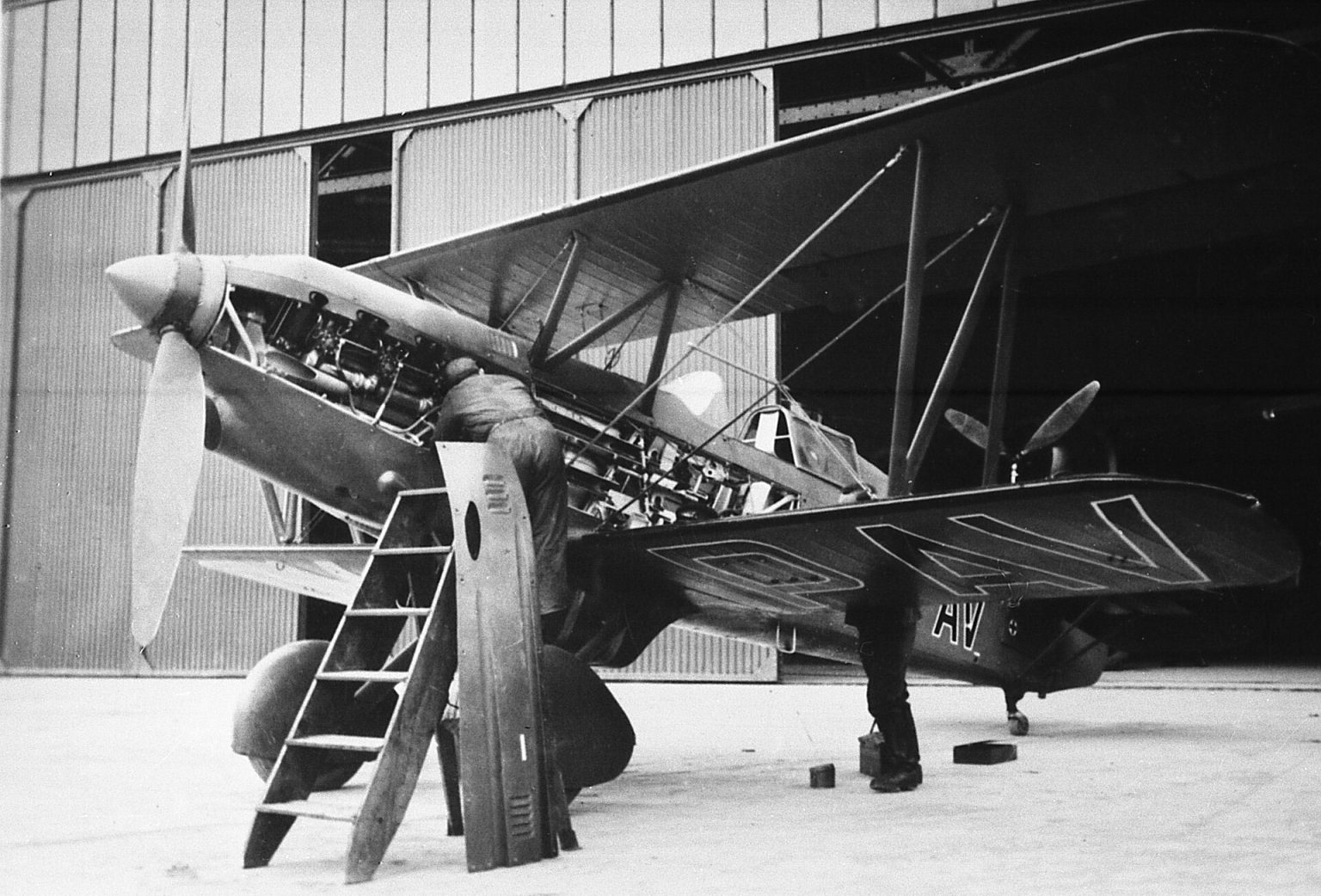
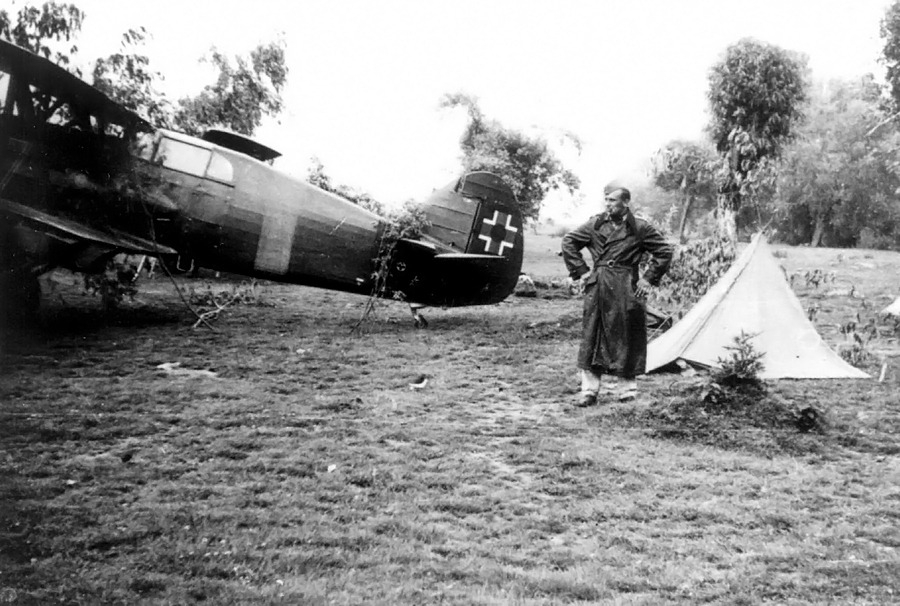
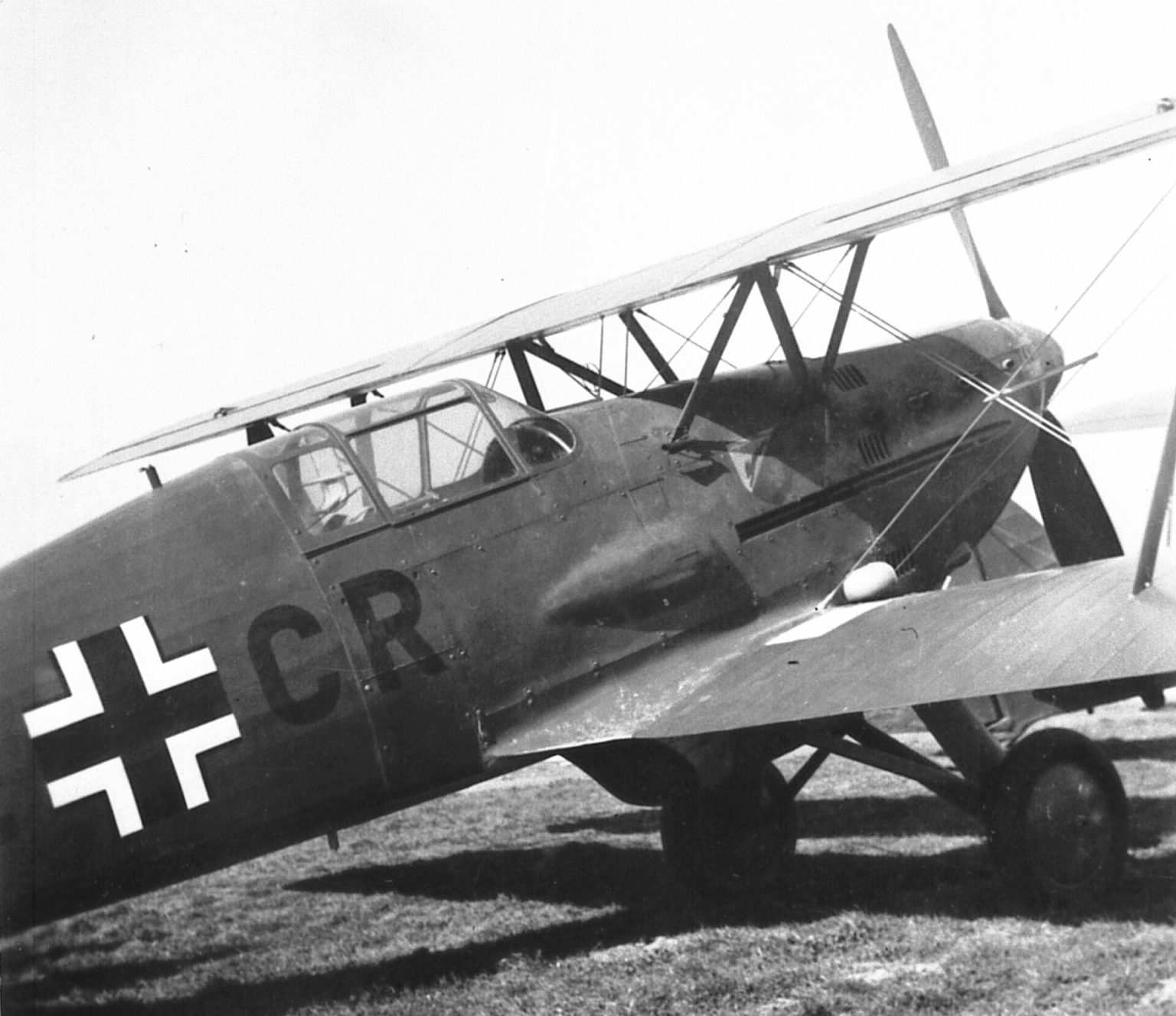
Museum, archival and preserved-aircraft photographs of the B-534, each credited to its source and licence. Click any photo to enlarge.
On Film
The Avia B-534 on video: the great biplane in the air
A look at the Avia B-534 — its design, its history and the surviving aircraft that keep this superb biplane fighter alive.
“Built To Defend A Country That No Longer Existed | Avia B-534” by Rex’s Hangar (approx. 105,000 views at time of writing; running time ~31 minutes) — a documentary history of the Avia B-534, its excellence and its tragic fate.
Operations Overview
Where the Avia B-534 flew: an operator map
Designed and built in Czechoslovakia, the B-534 saw its combat service mostly under other flags after 1939 — with the Slovak Air Force, in German second-line hands and with Bulgaria. Because Czechoslovakia no longer exists as a state, its origin role is shown on the modern Czech Republic. Hover or tap a country for detail.
Categories: Origin & Czechoslovak Air Force (shown on the Czech Republic, successor to Czechoslovakia) · Wartime Operators (Slovakia, Germany, Bulgaria) · Surviving Airframes (Czech Republic). Combat service was flown mainly by the Slovak Air Force after 1939.
Service Record
The B-534’s record: a great fighter, cheated of its war
The B-534’s significance lies in its excellence, its scale of production and the tragedy of its history — a first-class fighter that never fought for the nation that built it.
Questions & Answers
Avia B-534: your questions answered
Can I fly in an Avia B-534?
No — there is no bookable Avia B-534 flight experience, and MiGFlug does not offer one. The type was retired by 1945, and the rare survivors are preserved museum aircraft or an airworthy reproduction flown only by its expert operators, not a ride you can buy. If what you actually want is the real thing — strapping into a genuine military aircraft and flying it — you very much can do that today in other types. MiGFlug arranges flights in real fighter jets and warbirds around the world. Start here: migflug.com/flights-prices.
Why is the Avia B-534 historically important?
The B-534 is widely regarded as one of the best biplane fighters ever built, and at its mid-1930s debut it ranked among the finest fighters in the world. It was the pride of the Czechoslovak Air Force and the backbone of the nation’s fighter defence. It is also historically poignant: prepared to defend Czechoslovakia, it was denied that war by the Munich Agreement of 1938 and the occupation of 1939, and fought its combat career only later, under other flags.
Why didn’t the B-534 fight for Czechoslovakia?
Czechoslovakia mobilised in September 1938 and its B-534s were dispersed and ready for war, but under the Munich Agreement Britain and France pressed the country to cede the Sudetenland to Germany without resistance. Then, in March 1939, Germany occupied the Czech lands entirely and dissolved the air force, seizing the B-534 fleet largely intact. So the fighter never got to fight the defensive war it had been built and prepared for — one of the saddest aspects of its story.
Who flew the B-534 in combat?
Its main combat service was with the Slovak Air Force during the Second World War, on the Eastern Front from 1941 and, in 1944, on the insurgent side of the Slovak National Uprising. Germany used its seized aircraft mostly in second-line roles — trainers, target tugs and glider tugs — and Bulgaria and one or two other states also operated the type. The B-534 thus saw action, but almost entirely under flags other than the Czechoslovakia that created it.
What was the last biplane victory story?
During the Slovak National Uprising in 1944, a B-534 is credited with what is often described as one of the very last air-to-air victories ever scored by a biplane fighter — a Slovak pilot reportedly shooting down an enemy transport aircraft. It is a memorable image of an obsolete biplane still fighting late in the war. As with many such “last” claims, the exact details are debated by historians, so it is best treated with due caution rather than as settled fact.
What was the Bk-534 and the Graf Zeppelin connection?
The Bk-534 was a cannon-armed version of the fighter, with a cannon intended to fire through the propeller hub. Some examples were fitted with an arrestor hook and used in deck-landing trials for the German aircraft carrier Graf Zeppelin. That carrier was laid down but never completed, so the naval biplane fighter never actually operated at sea — a curious footnote to both the B-534’s story and Germany’s abandoned carrier programme.
How many B-534s were built, and do any survive?
Around 560 or more were built across several production series and the cannon-armed Bk-534 variant — a large number for a country of Czechoslovakia’s size, reflecting how central the type was to its air defence. Genuine survivors are rare and are held in the Czech Republic, along with a famous airworthy reproduction that allows the aircraft to be seen flying today.
Was the Avia B-534 a good aircraft?
Yes — it was an excellent aircraft, genuinely one of the best biplane fighters ever built, and at its debut a first-rank fighter by world standards: fast, strong, well armed and superbly aerobatic. Its tragedy was timing. It reached its peak just as the monoplane fighter was making biplanes obsolete, and it was denied its defensive war by politics. Judged on its own merits as a biplane fighter, however, the B-534 was outstanding.
Fly For Real
You can’t fly the B-534 — but these, you can
No Avia B-534 is a bookable ride today. The urge behind it — to strap into a real military aircraft and actually fly — is very much still bookable. MiGFlug puts you in genuine fighters and warbirds around the world.
Fighter Jet Flights
Take the controls of a real ex-military jet with an experienced pilot.
Warbird experiences
Fly in a genuine piston-engined warbird from the golden age of aviation.
All flights are operated by MiGFlug’s vetted partners with professional pilots. Browse every option and current pricing at migflug.com/flights-prices. MiGFlug does not operate Avia B-534 flights — no bookable example exists.
Related Aircraft
If the Avia B-534 interests you, explore these
Sources & Further Reading
Where this Avia B-534 history comes from
Note on figures: dimensions, performance and production numbers for the B-534 vary between sources and by production series, and are hedged here as approximate. Cost fields are listed as not reliably recorded because trustworthy 1930s procurement cost data is not consistently available. The 1944 “last biplane victory” claim is recounted as it is commonly told but with due caution, as the details are debated. Czechoslovakia no longer exists as a state; on the map, its origin role is shown on the modern Czech Republic. A small number of B-534s survive in the Czech Republic.