
Heinkel He 51
The biplane that made the Luftwaffe a fighter force — and was already out of date the day it arrived. Germany’s first operational fighter, and its first hard lesson in Spain.
The Story
The Heinkel He 51: the Luftwaffe’s first fighter, obsolete on arrival
When Germany began openly rebuilding an air force in the mid-1930s, in defiance of the Treaty of Versailles, it needed a fighter to put in the shop window. The aircraft it chose was the Heinkel He 51 — a neat, single-bay biplane with a big inline engine, two machine guns and a look that would have been thoroughly at home over the Western Front fifteen years earlier. That is the paradox at the heart of the He 51. It was the machine that gave the new Luftwaffe its first fighter squadrons, and it was already a generation behind the aircraft that would decide the next war.
The design came from the drawing boards of Siegfried and Walter Günter, Heinkel’s gifted young engineers, who developed it from the earlier He 49. The prototype first flew in 1933, and in 1935 the He 51 entered service as the Luftwaffe’s first operational fighter, equipping the famous Jagdgeschwader 132 “Richthofen”. For a brief moment it was a genuine source of national pride: modern-looking, well-built, pleasant to fly, and paraded at every opportunity as proof that Germany was once again an air power to be reckoned with.
To understand why the Luftwaffe accepted an aircraft that was already conceptually dated, it helps to remember the pressure of the moment. Germany had been without a legal air force since 1918, and when rearmament began there was an overwhelming need to field something — real aircraft to fly, mechanics to train, a production line to prove out. A conservative, buildable biplane like the He 51 met that need far better than a still-experimental monoplane would have.
The trouble is that the future arrived faster than anyone expected. Between the He 51’s first flight and its combat debut in Spain, only a handful of years passed — and in those same years the monoplane fighter went from an interesting idea to a proven reality. An aircraft that looked respectable in 1935 was visibly behind the times by 1937.
“A good aeroplane that arrived at the wrong moment in aviation history.”— a fair summary of the He 51’s reputation
Then it went to war, and the illusion cracked. In 1936 He 51s were shipped to Spain with the Condor Legion, the German force sent to fight for Franco’s Nationalists in the Spanish Civil War. At first they held their own. But when the Republicans received Soviet fighters — the nimble Polikarpov I-15 biplane and, far more seriously, the fast monoplane I-16 — the He 51 was comprehensively outclassed. It was slower, it climbed worse, and it simply could not catch or escape its opponents. German pilots who expected air superiority found themselves on the wrong end of it.
The Luftwaffe’s answer was pragmatic. If the He 51 could no longer win the fight for the sky, it could still be useful closer to the ground. Condor Legion He 51s were switched to ground-attack work, strafing and bombing in support of Nationalist troops — a role in which a rugged, docile biplane with a pilot willing to press home the attack could still do real damage. Among the young pilots who flew He 51 ground-attack sorties in Spain was Adolf Galland, later one of Germany’s most senior fighter commanders. The experience helped shape German ground-attack doctrine for the war to come.
Back home, the writing was already on the wall. The Messerschmitt Bf 109 monoplane reached Spain in 1937 and instantly rendered the biplane fighter obsolete. From 1938 the He 51 was pushed out of front-line service and into the fighter schools, where it spent its final years teaching a new generation of pilots the basics before they moved on to the machines that would actually fight the Second World War. Around 700 were built by Heinkel and a handful of licensees, and a small number reached export operators. The He 51 never became a legend of aerial combat — but as the aircraft that re-taught Germany how to build and operate a fighter arm, and as an honest early casualty of the monoplane revolution, it earned its place in the story.
01The Heinkel He 51’s origins: from the secret He 49 to Germany’s first fighter+
The He 51 did not appear from nowhere. Under the restrictions of the Treaty of Versailles, Germany was forbidden a military air force, so fighter development in the early 1930s was carried out quietly and often under civil or export cover. Heinkel’s He 49, first flown in 1932, was the direct ancestor: a clean biplane built around a powerful inline engine, developed by the brothers Siegfried and Walter Günter.
The He 51 refined that formula — a slightly larger, stronger airframe with a metal-framed fuselage, wooden wings and a BMW VI V-12 up front. When the existence of the Luftwaffe was openly announced in 1935, the He 51 was ready to be its first fighter. It was ordered in quantity and produced not only by Heinkel but under licence by Arado, Erla, Fieseler and Ago, which is how a relatively modest design reached a total commonly cited as around 700 aircraft.
02The Heinkel He 51 in the Spanish Civil War: from air combat to ground attack+
The He 51 is remembered above all for Spain. The first examples arrived with the Condor Legion in 1936 and initially performed well against the assortment of older types the Republicans first fielded. That advantage evaporated once Soviet aid arrived. The Polikarpov I-15 could out-turn the He 51, and the monoplane I-16 — faster in level flight and in the dive — could dictate every engagement, choosing when to fight and when to leave.
Rather than keep losing an unwinnable fight for air superiority, the Germans re-tasked the He 51 as a ground-attack aircraft, carrying small bombs and strafing enemy positions. It was dangerous, low-level work, but it kept the type useful and fed directly into the close-support tactics the Luftwaffe would later use across Europe. The arrival of the Bf 109 from 1937 confirmed the He 51’s demotion: the future of the fighter was a monoplane, and everyone in Spain could see it.
Design & Engineering
How the Heinkel He 51 was built: a well-made answer to yesterday’s question
The He 51 was a thoroughly conventional biplane executed to a high standard — sound, pleasant and reliable, but built around ideas the rest of aviation was already leaving behind.
A clean biplane of wood and metal
Single-bay, staggered wings of wooden construction, a fuselage of welded steel tube with metal and fabric covering, and a fixed, spatted undercarriage. Tidy and strong — but with two wings and their bracing came the drag that capped its speed.
The BMW VI V-12
A big BMW VI liquid-cooled V-12 of roughly 750 hp gave the He 51 its long nose and steady performance. It was dependable and well understood, but it was 1920s-generation technology, and there was little more speed to be wrung from the airframe.
Two machine guns — and not much else
Armament was two rifle-calibre 7.92 mm MG 17 machine guns firing through the propeller. Adequate against 1920s opponents, it was thin firepower by the late 1930s, when cannon-armed monoplanes were arriving.
Specifications
Heinkel He 51 specifications: dimensions, performance and cost
Baseline: the He 51B-1 of 1936—37, the structurally strengthened main production mark and the one the largest single block of airframes conforms to. The A-1 came first and the C-1 ground-attack machine last, but the aeroplane barely changed: same wing, same BMW VI, same two guns from the 1933 prototype to the last trainer struck off in 1944. Deltas for the A-1, the twin-float B-2 and the C-1 are in grey.
Dimensions & weights
- Crew
- 1
- Wingspan
- 11.00 m (36 ft 1 in) upper panel; the He 51 was an unequal-span single-bay biplane and the lower wing was shorter, but no source gives its span separately
- Length
- 8.40 m (27 ft 7 in)
- Height
- 3.20 m (10 ft 6 in)
- Wing area
- 27.20 m² (292.8 sq ft)
- Empty weight
- 1,460 kg (3,219 lb) French and German references give 1,473 kg (3,247 lb); the difference is equipment fit, not disagreement about the aeroplane
- Loaded weight
- 1,900 kg (4,189 lb)
- Wing loading
- 69.9 kg/m² (14.3 lb/sq ft) computed from the figures above
- Power loading
- 2.53 kg/hp (5.6 lb/hp) at the take-off rating
- Fuselage
- welded steel tube, light-alloy panels forward of the cockpit and fabric aft entirely orthodox; Walter Günter drew a handsome aeroplane, not an inventive one
- Wings
- two-spar metal framework, fabric covered, one bay of interplane struts with wire bracing
- Undercarriage
- fixed divided main legs with a tailskid the B series added twin-wire bracing to the legs after the A-1 proved too easily broken on rough fields
- Floatplane
- He 51A-2 and B-2: twin all-metal floats on struts. Published weights and dimensions for the seaplanes are scarce; they were several hundred kilogrammes heavier on the same power and correspondingly slower
Performance
- Maximum speed
- 330 km/h (205 mph) at sea level
- Maximum speed, disputed
- Some German references quote 340 km/h (211 mph) at 3,500 m (11,480 ft). On an unsupercharged engine that is improbable, and the sea-level figure is the one to trust.
- Cruising speed
- 280 km/h (174 mph)
- Climb to 1,000 m
- 1 min 24 s (3,280 ft)
- Climb to 2,000 m
- 3 min 5 s (6,560 ft)
- Climb to 6,000 m
- 16 min 30 s (19,685 ft) — the last 4,000 m took four times as long as the first 2,000. Without a supercharger the BMW simply ran out of air
- Initial rate of climb
- about 11.9 m/s (2,340 ft/min), derived from the time to 1,000 m; the Ar 68 managed 12.6 m/s and Udet made the point in public
- Service ceiling
- 7,700 m (25,260 ft)
- Range
- 570 km (354 miles) on internal fuel about 700 km (435 miles) with the jettisonable belly tank of the B-1
- Endurance
- about 2 hours at cruising speed derived from range; the Luftwaffe quoted range rather than endurance by the mid-1930s
- Against the Polikarpov I-15
- 350 km/h (217 mph) and four 7.62 mm ShKAS against the Heinkel’s two MG 17, with an armoured seat. A biplane, and it still beat the He 51 on every count that mattered
- Against the Polikarpov I-16 Type 5
- 454 km/h (282 mph) — 124 km/h (77 mph) faster, retractable undercarriage, cantilever monoplane. The He 51 could not catch it, could not escape it and could not reach it
- Against the Tupolev SB-2
- about 420 km/h (261 mph). The bomber the He 51 was supposed to intercept was 90 km/h (56 mph) faster than the fighter sent to intercept it
- Handling
- docile, honest and strong. Forgiving stall, sturdy undercarriage, no vices worth the name which is precisely why it lasted until 1944 as a fighter trainer after failing as a fighter
Propulsion & systems
- Engine
- one BMW VI 7.3Z, 60° water-cooled V-12 of 46.9 litres (2,862 cu in) 7.3 is the compression ratio, not a mark number
- Rated power
- 750 hp (559 kW) at take-off; about 600 hp (447 kW) continuous
- Supercharging
- none. Power bled away with every thousand metres, which is why the climb figures collapse above 2,000 m and why the Ar 68E was given a Jumo 210 instead
- Propeller
- two-blade wooden fixed-pitch one widely mirrored reference lists a variable-pitch unit; for a design frozen in 1933 that is doubtful, and period photographs show a plain wooden airscrew
- Cooling
- water, with the radiator in a bath beneath the forward fuselage
- Fuel
- one fuselage tank; the B-1 added provision for a jettisonable auxiliary tank under the belly, worth roughly 130 km of extra range internal capacity is not consistently published; the auxiliary tank is given as 50 litres in one modelling reference and nowhere else
- Gun installation
- two 7.92 mm MG 17 in the upper fuselage decking ahead of the cockpit, firing through the propeller disc, 500 rounds per gun
- Synchronising gear
- engine-driven mechanical synchroniser. The MG 17 was redesigned from open-bolt to closed-bolt operation specifically so that it could be synchronised at all German sources rarely name the gear, unlike the British Constantinesco or the American Nelson gear
- Sighting and cockpit
- open cockpit throughout; ring-and-bead sight on early machines, a Revi reflector sight on later ones
- Radio
- none on the A-1 and most B-1s. The C-1 was built around a radio set, which mattered far more to ground attack under an air controller than it ever did to a fighter pilot
- External stores
- underwing or under-fuselage racks for six 10 kg (22 lb) bombs on the B-2 and C series; the A-1 and B-1 carried none
- Production
- about 700 aircraft, built by Heinkel with Arado, Ago, Erla and Fieseler as subcontractors the published variant totals sum to nearer 790. Both figures are in wide circulation and both cannot be right; “about 700” is the conventional one
03The Heinkel He 51’s operating costs: what the numbers do and don’t tell us+
Unlike modern jets, the He 51 has no reliable published unit price, cost-per-flight-hour or programme cost. It was built in the mid-1930s by a secretive, rapidly rearming state that did not publish transparent defence accounts, and the surviving records are patchy. Any specific figure quoted online should be treated with caution.
What can be said in general terms is that the He 51 was, by design, a cheap and simple aircraft to build and maintain relative to the monoplanes that followed. Wood-and-steel-tube construction, a well-understood BMW engine and light armament made it economical to produce in quantity and easy to keep serviceable at a training school — which is exactly why it lingered in the flying schools long after it left the front line. We list its cost fields as “not reliably recorded” rather than invent numbers.
04The Heinkel He 51’s variants: A, B, C and the He 51W floatplane+
The He 51 was produced in several closely related versions. The He 51A was the initial fighter; the He 51B introduced a strengthened structure and, in the B-2 sub-variant, provision for a jettisonable belly fuel tank to extend range. The He 51C was optimised for the ground-attack role that Spain forced on the type, with racks for light bombs.
Most unusual was the He 51W, a twin-float seaplane conversion produced in small numbers for shipboard and coastal evaluation. None of the variants transformed the aircraft’s fundamental performance — the basic biplane layout and BMW VI engine set hard limits — but together they let one airframe cover fighter, attack, training and float roles across roughly a decade of service.
05The Heinkel He 51’s engine and why it could not go faster+
Almost everything that limited the He 51 traces back to a sensible, conservative choice: the BMW VI. This liquid-cooled V-12 was one of the most widely used German aero-engines of the late 1920s and early 1930s. Reliable, well understood and available in quantity, it was exactly what a rearming air force wanted for a first fighter that had to be fielded quickly and kept flying by mechanics still learning the trade.
The problem was that the BMW VI was already mature technology, with little development potential left in it. Hung on a draggy biplane airframe with fixed landing gear and a forest of interplane struts and bracing wires, its roughly 750 horsepower translated into a top speed of only around 330 km/h. Contemporary monoplanes were already pushing well beyond that — and no amount of tuning the He 51 could close the gap.
This is the honest technical heart of the He 51’s story. It was not badly engineered; it was competently built around assumptions the rest of aviation was in the middle of abandoning.
06The Heinkel He 51 versus the Polikarpov I-15 and I-16: an honest comparison+
The He 51’s reputation was made and broken by two Soviet aircraft supplied to the Spanish Republicans. The Polikarpov I-15 was itself a biplane, agile and a close match for the He 51 in a turning fight. Where the He 51 ran into real trouble was the monoplane Polikarpov I-16.
The I-16 had a retractable undercarriage and a top speed comfortably above the He 51’s. That speed advantage was decisive: a faster aircraft chooses whether to fight at all, climbing above its opponent, diving to attack, then using its speed to disengage. The He 51, unable to catch the I-16 or to run from it, was left reacting to an enemy that controlled the tempo of every encounter.
It would be wrong to paint the He 51 as helpless — skilled German pilots still scored victories — but the trend was unmistakable, and the Luftwaffe read it correctly, moving the type to ground attack and hurrying the Bf 109 into service.
07The Heinkel He 51’s real legacy: rebuilding a fighter arm and inventing a doctrine+
Judged purely as a fighter, the He 51 was a short-lived disappointment. Judged by what it left behind, it mattered a great deal. It was the aircraft on which the reborn Luftwaffe re-learned how to build fighters in quantity, organise fighter squadrons, and train fighter pilots — institutional knowledge that had lapsed since 1918.
Its second legacy was doctrinal. Forced out of the air-superiority role in Spain, the He 51 became a ground-attack aircraft, and the lessons its pilots learned about low-level attack and coordination with ground forces fed directly into the close-support methods the Luftwaffe used in 1939 and 1940.
So the He 51 occupies an odd but genuine place in history: not a war-winner, but a foundational aircraft whose failures were as instructive as any success.
Armament & payload
The He 51 carried two rifle-calibre machine guns, and by the winter of 1936 that was the whole problem
The He 51 went to Spain armed exactly as German fighters had been armed in 1918: two synchronised rifle-calibre machine guns in the fuselage decking, firing through the propeller disc. Two 7.92 mm MG 17 with 500 rounds apiece was enough against the Nieuports and Bréguets the Republican air force flew in August 1936, and the Heinkels duly shot several down. It was not enough against a Polikarpov I-15 carrying four ShKAS behind an armoured seat, and it was irrelevant against an I-16 that could decline combat whenever it chose. The type’s second career — six 10 kg fragmentation bombs on underwing racks, delivered from very low level — was an improvisation that turned into Luftwaffe doctrine. Bomb fits differ by mark and by source: the C-1 is usually credited with six 10 kg bombs, but at least one reference gives four 50 kg bombs, which would be a great deal to hang under a 1,900 kg aeroplane.
Gun
- Two 7.92 mm Rheinmetall-Borsig MG 17, fixed and forward-firing in the upper fuselage decking
- 500 rounds per gun, belt-fed; about 25 seconds of firing at the synchronised rate
- 1,200 rounds/min cyclic each, cut appreciably by the synchronising gear
- Muzzle velocity about 905 m/s (2,970 ft/s) with AP tracer; gun weight 10.2 kg (22 lb)
- No He 51 mark ever carried more than two guns. The Ar 68H tested four; the Bf 109 arrived with three and then four, and that argument was settled without the Heinkel
Air-to-air
- None, and none was possible. No guided air-to-air weapon existed anywhere in the world in the 1930s
- The first operational example was the American AIM-9B Sidewinder in 1956, twenty-two years after the He 51 entered service
- Air combat for an He 51 pilot meant closing to a few hundred metres astern and firing until the target came apart or he ran out of ammunition
- This is not a deficiency of the aeroplane; it is the state of the art in 1936
Air-to-surface guided
- None. Nothing of the kind was in service while the He 51 was a front-line type
- Germany fielded the first practical examples in 1943 — the Fritz X armour-piercing glide bomb and the Henschel Hs 293 rocket-boosted glide bomb
- By then the He 51 had been a training aeroplane for five years
- Its ground attack was strafing and free-fall bombs delivered by eye, from low enough that the pilot could see what he was aiming at
Bombs
- Six SC 10 fragmentation bombs of 10 kg each, 60 kg (132 lb) total, on underwing or under-fuselage racks
- Fitted to the He 51B-2 floatplane and standard on the C-1 and C-2; the A-1 and B-1 day fighters carried no bombs at all
- One reference gives four 50 kg bombs for the C-1. Treat that with caution: it is not corroborated and the airframe is small
- A 60 kg load is trivial by 1940 standards. What mattered was not the tonnage but the method — repeated low passes, called in by radio, against troops in contact
Rockets
- None. Air-launched rockets were not in German service during the He 51’s career
- The Luftwaffe did not field one until the 21 cm Werfer-Granate 21 and the R4M of 1943—45
- The technology existed: Soviet RS-82 rockets were being fired from I-16s at Khalkhin Gol in 1939, by the same design bureau whose fighters had humiliated the Heinkel
- No He 51 ever carried one
Pods & other stores
- One jettisonable auxiliary fuel tank under the fuselage, introduced on the B-1. This is the only true external store the type ever carried besides bombs
- No gun pods, no camera pods, no armour kits, no external cannon of any kind
- Twin all-metal floats on the A-2 and B-2, which is a conversion rather than a store, and cost the aeroplane speed and climb it could not spare
- No radio on the day fighters, no oxygen system worth the name, no armour behind the pilot — the I-15 had all three
- The honest summary: a gun platform with a fuel tank, and later a bomb rack bolted on in the field and then in the factory
Three typical loadouts
- Day fighter patrol, JG 132 “Richthofen”, 1935—37
- Two MG 17, 500 rounds per gun, clean airframe, no radio. This was the standard fit for the great majority of He 51 sorties, almost all of them flown over Germany in exercises against an enemy that never appeared.
- Close support, 4.J/88 over Brunete and Teruel, 1937—38
- Two MG 17 plus six 10 kg fragmentation bombs, radio fitted on the C-1. Flown in threes at very low level against trenches, lorry columns and gun positions, working to a ground liaison officer. This is the loadout that produced the Luftwaffe’s close air support doctrine, and it was chosen because the aeroplane could do nothing else.
- Coastal patrol on floats, Küstenjagdgruppe 136, 1936—38
- He 51B-2 on twin floats, two MG 17, occasionally the light bomb racks. A seaplane fighter is a contradiction in terms and this one proved it: the floats cost speed and climb that the landplane could not afford to lose in the first place.
Ammunition loads, bomb weights, fuel capacity and even the propeller type differ between the standard secondary references for this aeroplane. No manufacturer’s data sheet is in general circulation, no original drawings survive, and the He 51 was obsolete before anyone thought it worth documenting properly. Where sources conflict the more conservative figure is given here and the disagreement stated rather than hidden.
Variants
Ten designations, one airframe, and an engine that never changed
The He 51 has an unusually simple development history because almost nothing about it developed. Heinkel drew it around the BMW VI in 1932, and every mark from the first prototype to the last ground-attack machine kept that engine, that wing and those two guns. The differences between marks come down to how strong the undercarriage was, whether floats were fitted, and whether there were bomb racks and a radio under the fabric.
One correction to the popular account is worth making. The He 51 is often called the Luftwaffe’s first fighter; it is more accurate to say it was the first fighter to enter service with the Luftwaffe after that service was publicly admitted in March 1935. The clandestine fighter units of 1933—34 flew the Arado Ar 65, and the He 51A-1 was ordered specifically to replace it. Nor did the first Heinkels arrive in Spain with the Condor Legion: six were delivered on 6 August 1936 under Operation Feuerzauber, three months before the Legion formally existed.
- He 49a, He 49b, He 49c (1932—33, three aircraft)
- The ancestor, officially an advanced trainer because Germany was not permitted fighters. It was a fighter. The He 49c introduced the revised engine installation and lengthened fuselage that the He 51 inherited.
- He 51a, He 51b, He 51c (1933, three prototypes)
- First flight May 1933. Aerodynamic clean-up of the He 49, directional stability cured with a redrawn fin and extended exhausts.
- He 51A-0 and A-1 (1934—35, 9 and 150 aircraft)
- Pre-production and first production mark, built by Heinkel and Arado, deliveries from July 1934. One reference gives 10 A-0s rather than 9.
- He 51A-2 (1935, 8 aircraft)
- The first floatplane conversion, on twin struts-mounted floats. A small batch, and an experiment rather than a service type.
- He 51B-0 and B-1 (1935—37, 12 and about 450 aircraft)
- The main production mark and the one most He 51s were. Strengthened airframe, twin-wire bracing on the undercarriage legs, provision for a jettisonable belly tank. Built by Heinkel, Ago, Erla and Fieseler.
- He 51B-2 (1936—37, 46 aircraft)
- Twin-float seaplane fighter with light bomb racks, flown by coastal fighter units including Küstenjagdgruppe 136 at Kiel-Holtenau. Some sources give 38 rather than 46, and captions occasionally place these aircraft aboard cruisers, which the shipboard He 60 and Ar 196 did and the He 51 did not.
- He 51B-3 (1937, a handful)
- Modified interplane bracing, described in some sources as a high-altitude experiment. Quantities are not recorded and it led nowhere; a related single high-altitude airframe is sometimes designated He 52.
- He 51C-1 (1937, about 100 aircraft)
- The ground-attack mark, built as such rather than converted: radio, underwing racks for six 10 kg bombs, strengthened for repeated low-level work. Most went to Spain. Sources give either 79 or 100 built, and either 39 or 79 delivered to Spain; the figures cannot be reconciled from published material.
- He 51C-2 (1937—38, 21 aircraft)
- C-1 with improved radio equipment. The last new-build He 51s, delivered as the Bf 109B was already replacing them.
- Export and foreign service (1936—52)
- Bulgaria bought 12. Spain was the only other operator: aircraft handed over by the Legion Condor served the Nationalist air arm through the civil war and on into the 1950s, 46 survivors reportedly joined by 15 further airframes, the last retired in 1952. There was no licence production abroad.
Survivors: none. Not one original He 51 exists anywhere in the world. The Luftwaffe scrapped its trainers during the war, Spain scrapped the last of hers after 1952, and no museum thought a failed biplane worth preserving. The original factory drawings are gone too, which is why the modern reconstruction of the type had to be reverse-engineered from photographs and a surviving maintenance manual. Any He 51 you see today is a reproduction, and should be labelled as one.
Timeline
The Heinkel He 51 through the years
Heinkel flies the He 49, the Günter brothers’ biplane fighter developed under the cover of Versailles-era restrictions. It is the direct ancestor of the He 51.
The He 51 prototype takes to the air, a refined and strengthened development of the He 49 powered by the BMW VI V-12.
Series production is organised, with manufacture shared between Heinkel and licensees, as Germany quietly builds up the fighter force it is about to reveal.
With the Luftwaffe openly unveiled, the He 51 enters service as its first operational fighter, equipping Jagdgeschwader 132 “Richthofen”.
He 51s deploy to Spain with the Condor Legion to fight for the Nationalists in the Spanish Civil War, at first with some success.
Soviet Polikarpov I-15 and I-16 fighters overwhelm the He 51 in air combat. It is switched to ground-attack, and the arrival of the Bf 109 seals its obsolescence.
The He 51 is withdrawn from front-line fighter units and reassigned to advanced flying training, a role it fills into the early war years.
Worn out and long obsolete, surviving He 51s are retired from training duties during the Second World War. Only reproductions survive today.
Stories & Eyewitnesses
The Heinkel He 51 in stories: the moments that defined it
A shop-window fighter, a hard war in Spain, a switch to the mud-and-bullets business of ground attack, and a long second life teaching cadets — the He 51’s history told through the moments that stuck.
National SymbolThe fighter in the shop window
In 1935 the He 51 was proof that Germany had a fighter arm again — and it was shown off relentlessly.
When the Luftwaffe was publicly unveiled, the He 51 was its poster aircraft. Neat, modern-looking and pleasant to fly, it featured in displays and propaganda as evidence that Germany was once again a serious air power. For a year or two the image held — before combat exposed how quickly the state of the art had moved on.
There was a hard logic to the display flights and photo opportunities. A visible, credible fighter arm was a diplomatic instrument as much as a military one, meant to impress rivals and reassure the public. For that purpose the He 51 was ideal: it looked purposeful, flew well in a demonstration, and existed in numbers when much of the rest of the rearmament programme was still on the drawing board.
Jagdgeschwader RichthofenFirst to a famous name
The He 51 armed JG 132 “Richthofen”, carrying the most storied name in German fighter aviation into a new era.
Equipping the wing that bore the Red Baron’s name gave the He 51 an outsized symbolic role. It was the aircraft on which many of the Luftwaffe’s earliest fighter pilots learned their trade, forming the nucleus of squadrons that would soon convert to the Bf 109.
In that sense the He 51 was a bridge aircraft. The pilots, ground crews and squadron structures built up around it did not disappear when the type was retired — they carried straight over to the monoplanes, taking with them the habits and discipline learned on the biplane.
Spain 1936The first real test
The Condor Legion took the He 51 to Spain expecting superiority. It did not last.
Against the Republicans’ early, mixed fleet the He 51 did well enough. But the balance of the air war shifted the moment modern Soviet fighters appeared. What had looked like a capable front-line fighter at home was revealed as a machine already overtaken by events.
Spain was the first time the reborn Luftwaffe tested its equipment in real combat rather than on the exercise field, and the He 51 took that test. The verdict it returned — that biplane fighters were finished and that speed now trumped agility — was uncomfortable, but it arrived early enough to act on.
Chato & MoscaBeaten by the Polikarpovs
The I-15 out-turned it and the I-16 simply out-ran it. The He 51 could neither catch nor escape.
Spanish and Soviet pilots nicknamed their Polikarpovs the Chato (“snub-nose”, the I-15) and Mosca (“fly”, the I-16). The monoplane I-16 in particular could choose the terms of every fight. For He 51 pilots it was a brutal lesson in what a faster, more modern aircraft could impose on an older one.
The experience left a deep mark on German fighter thinking. Pilots who came home from Spain were convinced that speed, climb and the freedom to choose when to fight mattered more than tight turning — a conviction that shaped how they later flew the Bf 109, favouring fast, energy-based slashing attacks over swirling close-in dogfights.
Change of JobDown into the ground-attack role
If it could not win the sky, it could still hit the ground. The He 51 became a strafer and light bomber.
Rather than throw the type away, the Germans put it to work at low level, attacking troops and positions. The work was hazardous but valuable, and it helped the Luftwaffe develop the close-support methods it would use to devastating effect in the opening campaigns of the Second World War.
Ground attack in a slow biplane was punishing work. Pilots ran the gauntlet of rifle fire and light flak at low altitude, with little armour and less speed to protect them. That the He 51 kept doing useful damage says as much about the courage of its pilots as about the aircraft — a reminder that an obsolete design can still be dangerous in determined hands.
Galland in SpainA future general in the mud
Adolf Galland flew ground-attack sorties on the He 51 in Spain before his fame as a fighter leader.
Galland, who would later command Germany’s fighter arm, cut his combat teeth flying low-level attack missions in the He 51. It was unglamorous, dangerous flying — a long way from the high-altitude duels he became known for — but it was formative experience for one of the war’s most influential airmen.
Galland was not alone. A whole cohort of future Luftwaffe leaders rotated through Spain, and the He 51 was often the aircraft on which they first heard shots fired in anger. The combat experience they gained gave the German fighter arm a cadre of battle-tested commanders that few other air forces could match in 1939.
The Bf 109 ArrivesOvertaken in a single season
When the Messerschmitt monoplane reached Spain in 1937, the biplane fighter’s day was visibly over.
The Bf 109’s speed, climb and firepower made the contrast with the He 51 stark and immediate. The monoplane revolution was no longer a theory to be argued in staff colleges; it was flying overhead in Spain, and the He 51 was on the wrong side of it.
For the He 51 the arrival of the Bf 109 was both a rescue and a retirement notice. It relieved the biplane of a job it could no longer do, and made explicit what Spain had already implied: the He 51’s front-line career was over.
Nationalist SpainHanded to Franco’s air arm
As the Germans moved on to newer types, He 51s passed to the Spanish Nationalist air force.
Spanish crews continued to operate the He 51 in the ground-attack and training roles, flying the type into the early 1940s. For Spain it remained a useful workhorse long after Germany had relegated it to secondary duties.
This hand-me-down pattern was typical of the era: front-line aircraft that had lost their edge were passed to allies and second-line units rather than scrapped. In Spanish service the He 51 soldiered on in the attack and training roles into the early 1940s, outlasting its German front-line career by several years.
ExportA few went abroad
Beyond Germany and Spain, Bulgaria received a small batch of He 51 fighters.
The He 51 was never a major export success — by the time it was available for sale it was already dated — but Bulgaria took a small number, operating them as fighters and trainers. Export figures for the type are modest and not always precisely recorded.
The He 51’s limited export record is itself telling. By the time it was available abroad it was neither cutting-edge nor especially cheap relative to newer designs. Its small overseas footprint is another quiet measure of how narrow its window of relevance really was.
On FloatsThe He 51W experiment
A twin-float seaplane version was built in small numbers for maritime evaluation.
The He 51W swapped the wheeled undercarriage for twin floats, exploring the idea of a shipboard or coastal fighter. It never entered widespread service, but it is a reminder of how many roles designers tried to squeeze from a single interwar airframe.
Float-fighter experiments were common in the 1930s, when navies were still working out how to project air power without a full carrier fleet. The He 51W was Germany’s modest contribution to that line of thought. It went nowhere — floats cost too much speed for too little gain — but it shows how open the design questions of the period still were.
The SchoolroomA long second life as a trainer
Its front-line career was short; its training career kept it flying for years.
Docile, forgiving and available in numbers, the He 51 made a serviceable advanced trainer. Thousands of hours were flown teaching cadets the fundamentals of a powerful single-seater before they graduated to the aircraft that would actually fight the war.
It is easy to overlook the training role, but it may be where the He 51 did its most lasting work. Every hour a cadet spent mastering a powerful single-seater on a forgiving biplane made him safer and more effective on a Bf 109. In that unglamorous job the He 51 quietly contributed to the Luftwaffe’s early-war strength.
LegacyThe honest first step
The He 51 did not win battles — it rebuilt an institution and absorbed a hard lesson.
Judged as a combat aircraft the He 51 was a disappointment. Judged as the machine that re-established German fighter production, trained the first Luftwaffe fighter pilots and delivered the unambiguous message that the biplane era was over, it did an important job. Sometimes the most useful aircraft are the ones that teach you what you can no longer get away with.
That is why the He 51 deserves to be remembered honestly rather than dismissed. It was obsolescent almost on arrival, beaten in its only serious air war, and left no roll of famous victories. Yet it rebuilt an institution, blooded a generation of pilots and delivered a clear verdict on the direction of air combat — all in a few years.
Photo Gallery
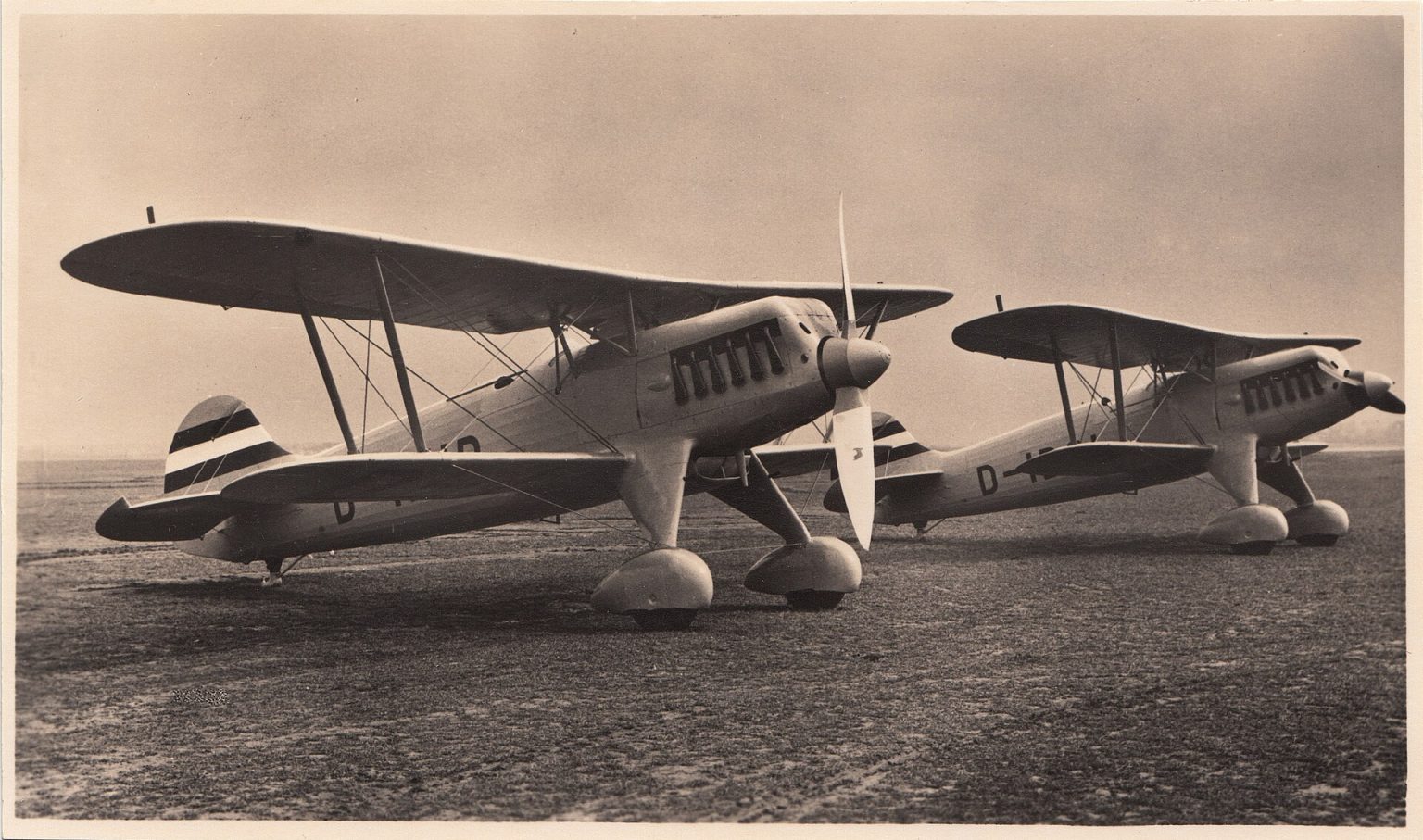
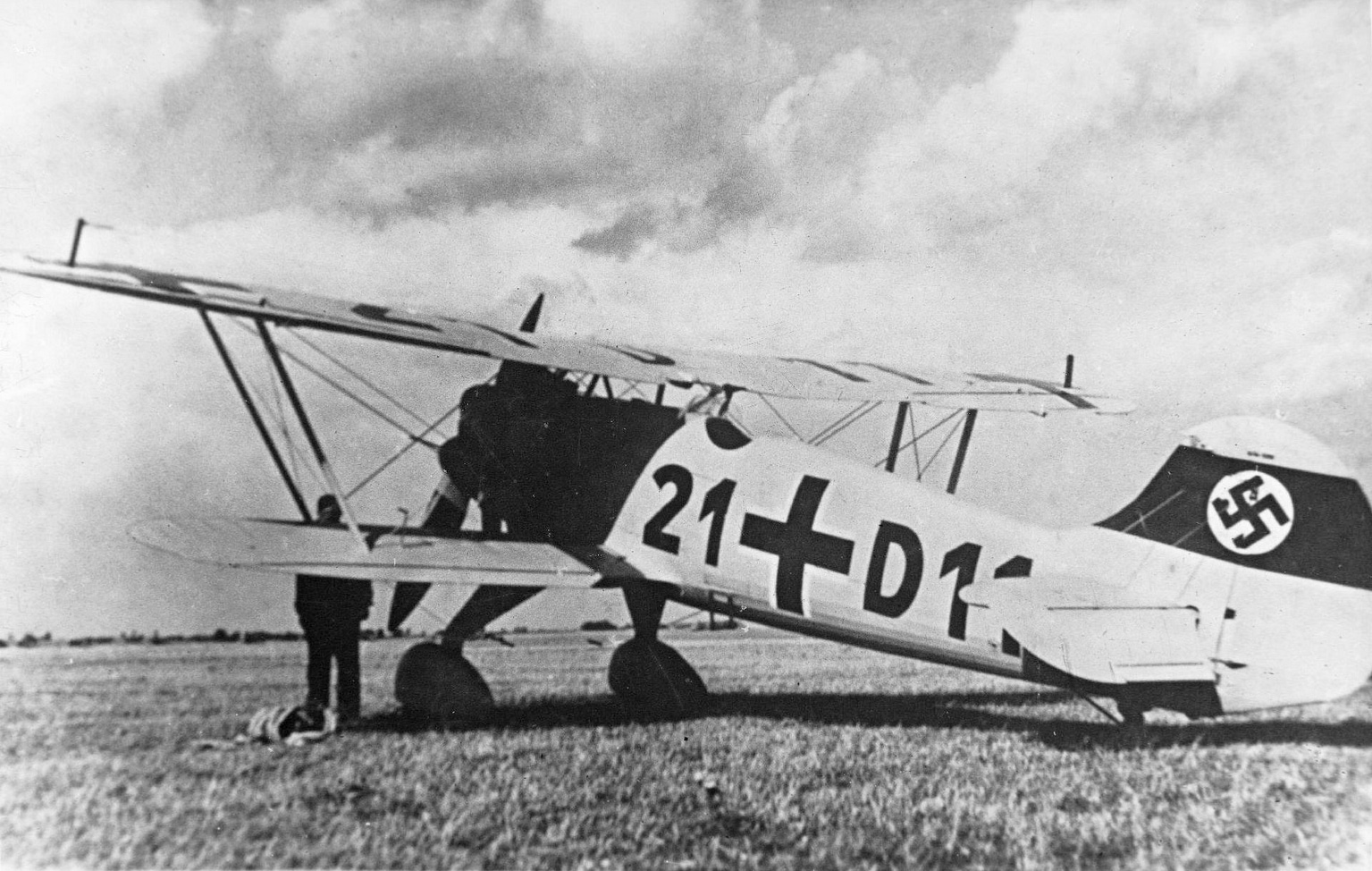
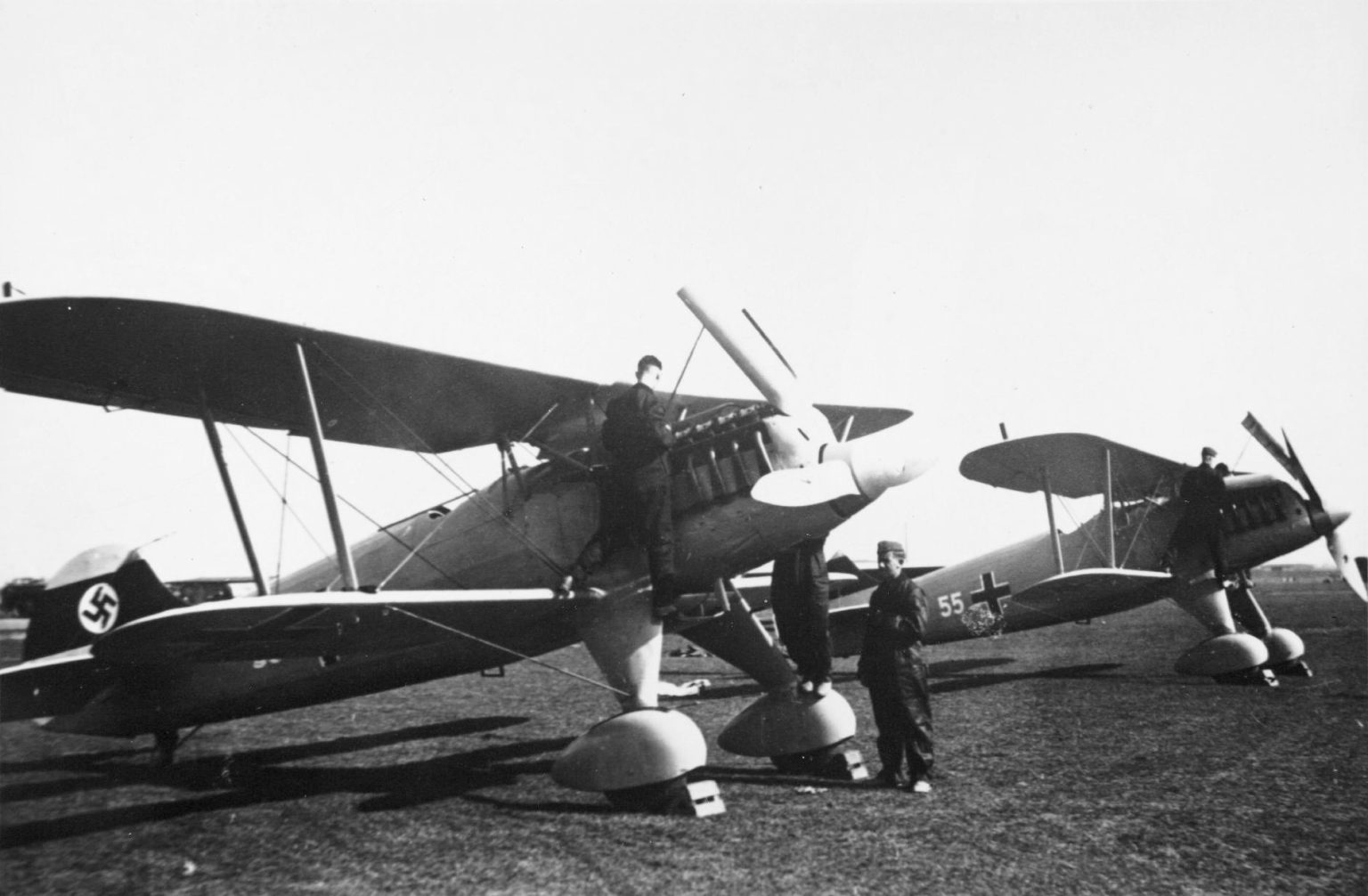
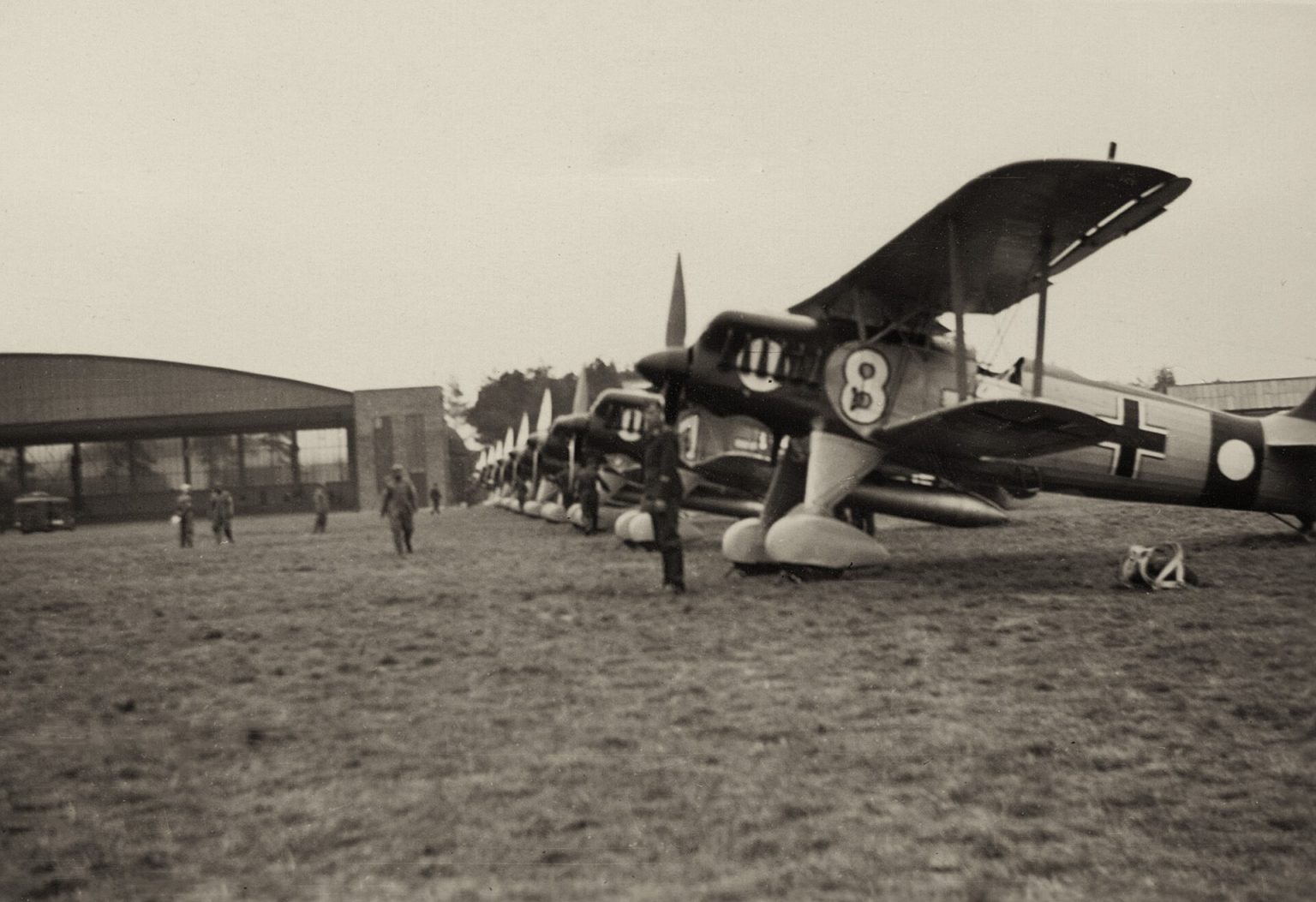
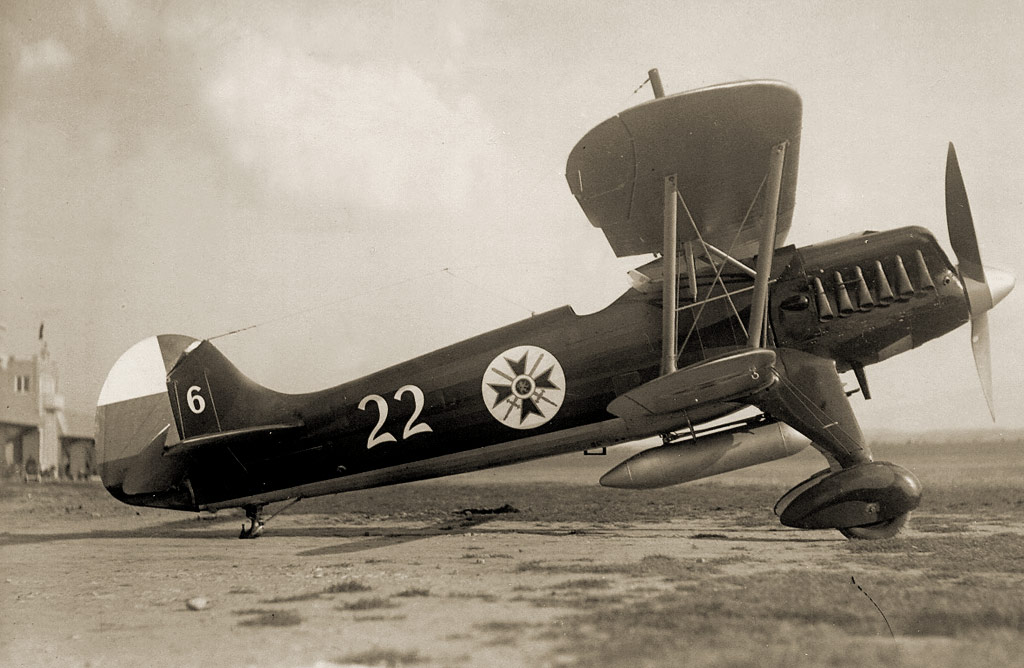
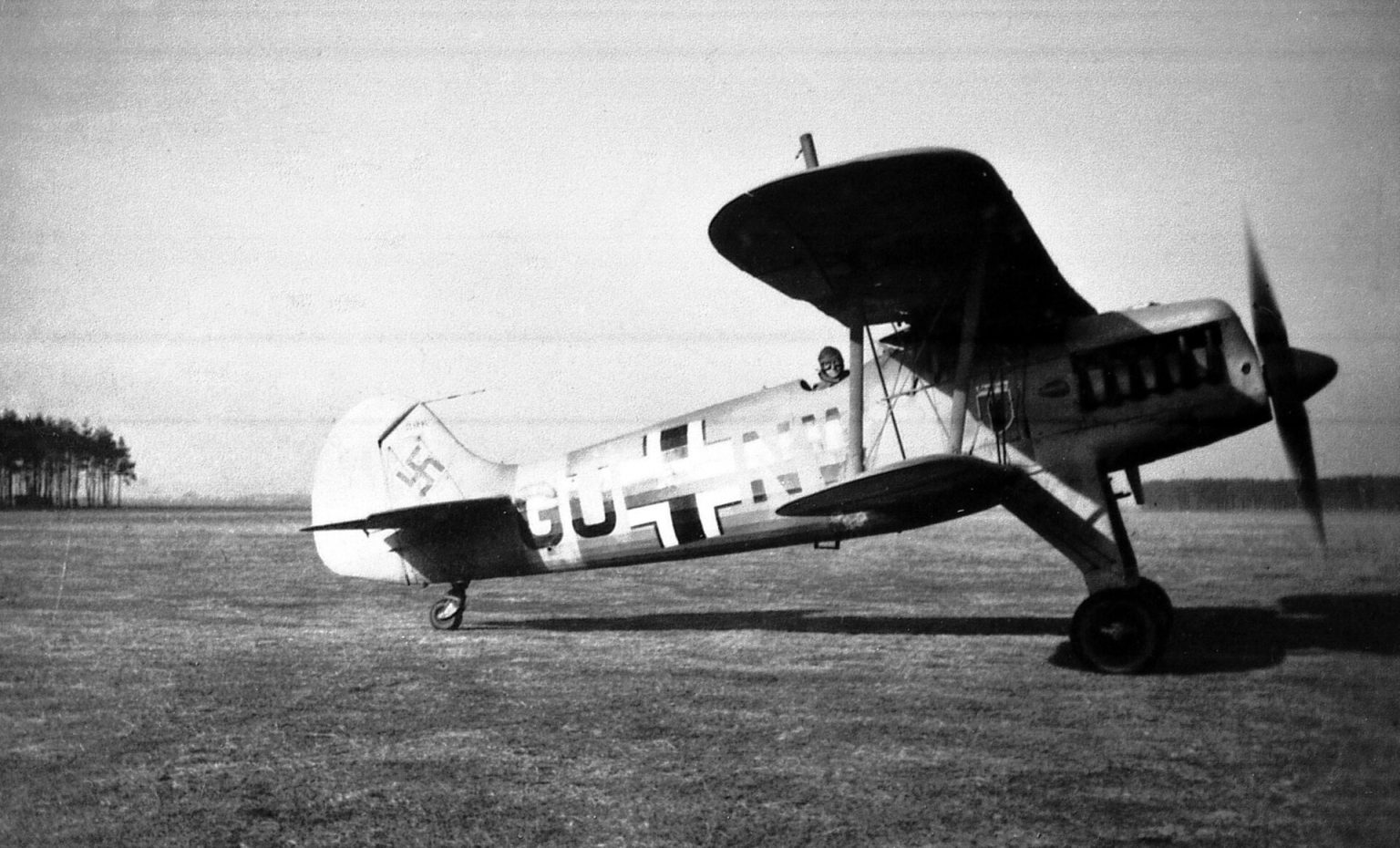
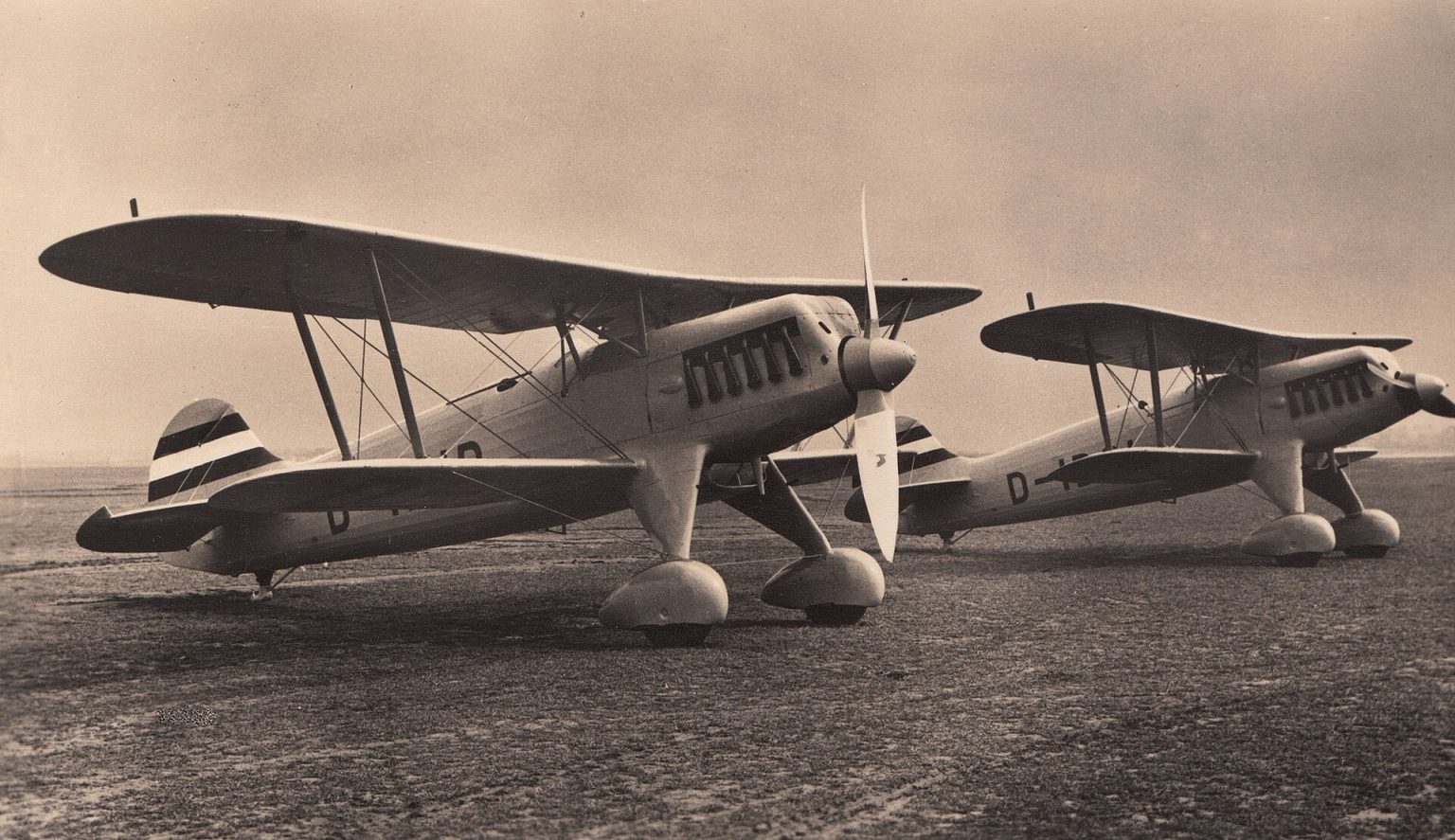
The Heinkel He 51 in photographs
Period photographs and images of preserved airframes and reproductions, each credited to its source and licence. Click any photo to enlarge.
On Film
The Heinkel He 51 on video: a documentary history
A dedicated documentary on the He 51 — how it became the Luftwaffe’s first fighter, why it struggled in Spain, and how it ended its days as a trainer.
“Heinkel He-51: The Luftwaffe’s Phoenix” by War Machines (approx. 25,000 views at time of writing; running time ~15 minutes). A focused documentary treatment of the type’s design, combat debut in Spain and decline.
Operations Overview
Where the Heinkel He 51 flew: an operator map
Designed and built in Germany, blooded in Spain with the Condor Legion, and operated by a small circle of air forces. Toggle the categories to see the He 51’s reach; hover or tap a country for detail. Figures are approximate and hedged.
Categories: Design & Manufacture (Germany) · Combat Use (Spain, Condor Legion, 1936–39) · Air Force Operator (Germany, Spain, Bulgaria) · On Display (full-scale reproductions; no confirmed original airframe is known to survive). Fleet figures are approximate and hedged.
Combat Record
The Heinkel He 51’s combat record: a hard debut in Spain
The He 51’s combat career was concentrated in one conflict, and its main lesson was written in the losses that pushed it out of the fighter role.
Questions & Answers
Heinkel He 51: your questions answered
Can I fly in a Heinkel He 51?
No — and realistically nobody can. The He 51 is a single-seat fighter, no genuine airworthy original is known to exist, and the airframes on public display are museum reproductions rather than flyable aircraft. There is no bookable He 51 flight experience, and MiGFlug does not offer one. If what you actually want is the real thing — strapping into a genuine military aircraft and flying it — you very much can do that today in other types. MiGFlug arranges flights in real fighter jets and warbirds around the world. Start here: migflug.com/flights-prices.
Why was the Heinkel He 51 obsolete so quickly?
Because aviation was changing faster than any single design could keep up with. The He 51 was a biplane with two rifle-calibre machine guns and a top speed around 330 km/h at a moment when fast, cannon-capable monoplanes were arriving. In Spain the Soviet Polikarpov I-16 monoplane could out-run it and dictate every fight, and Germany’s own Bf 109 confirmed the point in 1937. The He 51 was well made; it was simply on the wrong side of the monoplane revolution.
What role did the He 51 play in the Spanish Civil War?
It was the Condor Legion’s first fighter in Spain from 1936. After it lost air superiority to Soviet-supplied fighters, it was re-tasked as a ground-attack aircraft, strafing and bombing in support of Nationalist forces — experience that helped shape later Luftwaffe close-support tactics. Aircraft were also handed to the Spanish Nationalist air arm, which flew the type into the early 1940s.
How many Heinkel He 51s were built?
Around 700 in total, a figure commonly cited but not precise. Production was shared between Heinkel and licensees including Arado, Erla, Fieseler and Ago, and covered the He 51A, He 51B and He 51C variants plus the small-run He 51W floatplane.
Do any Heinkel He 51s survive today?
No complete original He 51 is confirmed to survive in flyable condition. The He 51s seen in museums are generally full-scale reproductions built to represent the type in Luftwaffe markings. As an early-1930s aircraft used hard and then discarded, the He 51 largely vanished — which is why reproductions now stand in for it.
Who flew the Heinkel He 51?
Primarily the German Luftwaffe, which used it as its first fighter and later as a trainer, and the Condor Legion in Spain. Aircraft passed to the Spanish Nationalist air force, and Bulgaria took a small batch. Among its pilots was Adolf Galland, who flew ground-attack missions on the He 51 in Spain before his later fame as a fighter commander.
What engine powered the Heinkel He 51?
A BMW VI, a liquid-cooled V-12 of roughly 750 horsepower that was one of the most common German aero-engines of its day. It was reliable and well understood, which suited a first fighter that had to be fielded quickly — but it was mature 1920s technology with little growth left in it, and on the He 51’s draggy biplane airframe it could manage only about 330 km/h.
Was the Heinkel He 51 a good aircraft?
It depends what you measure. As a piece of engineering it was sound, sturdy and pleasant to fly, and it did its foundational jobs — rebuilding German fighter production, equipping the first squadrons and training pilots — well. As a combat fighter it was a disappointment, outclassed in Spain and pushed out of front-line service within a few years.
Fly For Real
You can’t fly the Heinkel He 51 — but these, you can
The He 51 is a museum piece and a reproduction. The urge behind it — to strap into a real military aircraft and actually fly — is very much still bookable. MiGFlug puts you in genuine fighters and warbirds around the world.
Fighter Jet Flights
Take the controls of a real ex-military jet with an experienced pilot.
Warbird experiences
Fly in a genuine piston-engined warbird from aviation’s golden age.
All flights are operated by MiGFlug’s vetted partners with professional pilots. Browse every option and current pricing at migflug.com/flights-prices. MiGFlug does not operate Heinkel He 51 flights — no genuine flyable He 51 exists.
Related Aircraft
If the Heinkel He 51 interests you, explore these
Sources & Further Reading
Where this Heinkel He 51 history comes from
Note on figures: performance, weight and production numbers for the He 51 vary between sources and are hedged here as approximate. Cost fields are listed as not reliably recorded because trustworthy interwar German cost data is not available. No confirmed airworthy original He 51 is known to survive; museum aircraft are reproductions.